Posts tagged ‘India’

13/08/2014

India Wants to Find the Saraswati River and Bring It Back to Life – India Real Time – WSJ

ndia’s new government says it plans to find and possibly bring back to life a long-lost river mentioned in sacred Hindu texts.

In answer to a question in Parliament Tuesday, Uma Bharti, the water resources and river development minister said India wants to “detect and revive,” the Saraswati River, described in Vedic texts.

“There are enough scientific evidences on the presence of the river Saraswati in some parts of the country through which it flowed about five to six thousand years ago,” she said on the floor of the lower house of Parliament. “Saraswati is not a myth.”

Geologists have known for more than 100 years about ancient river beds passing through northern India that could be the Saraswati, said the Times of India. But reviving the river by bringing any underground water to the surface is “an impossible task,” Umesh Chaube, professor emeritus of water resource development and hydrology at IIT –Roorkee told the Hindustan Times.

Critics were quick to suggest it would be a waste of government money and a potential wild goose chase aimed at strengthening the ruling Bharatiya Janata Party’s ties to its Hindu nationalist supporters.

A BJP spokesman did not respond to a request for the party response on Wednesday morning.

It wouldn’t be the first time that scientists have had to follow the hunches of politicians. Last year a team of government archaeologists had to excavate the ruins of an old palace in the state of Uttar Pradesh, after a famed Hindu holy man declared that there was 1,000 tons of gold buried under it. No gold was found.

via India Wants to Find the Saraswati River and Bring It Back to Life – India Real Time – WSJ.

13/08/2014

Class divide puts English to the test in India’s civil services

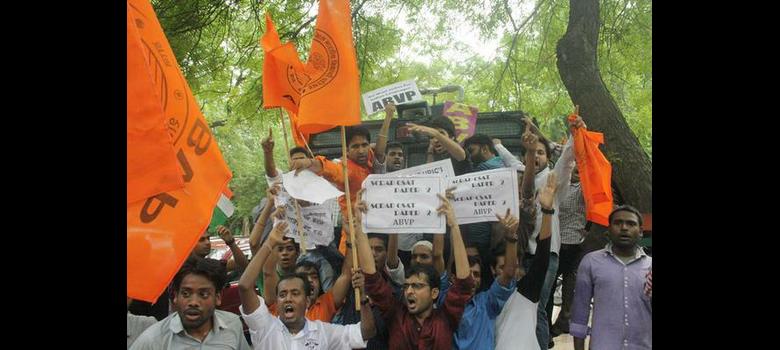
Indian students in recent weeks have protested the use of English in the country’s difficult civil service examinations. The students, usually from Hindi-speaking regions of India, say that the exams reflect a class divide: if you speak and write English well, you are seen as part of the educated, urban elite. If you do not, it’s because you are one of the disadvantaged, usually from smaller towns or villages.

English is a tricky subject in India. A language imposed by colonists who exploited the people and resources of the land for centuries, it also was the one language that people seeking independence from the British could use to speak to one another. It remains one of two official languages across India, though many people do not speak it well or at all. I spoke to some of the civil service aspirants who have complained about the language requirement and the structure of the exams, and learned about the role that they hope the exam will play in their lives.

Ashutosh Sharma is a 25-year-old psychology graduate from Basti district of Uttar Pradesh, who has been camping in Delhi’s Mukherjee Nagar neighbourhood for the past two years, hoping that he will crack the examination one day.

“The entire protest is presented as a language issue. It’s much more than that. It’s about how a group of elite people in the country want to govern the things. How they cannot digest that a villager, who doesn’t match their lavish lifestyle, rises to the ranks on the basis of his knowledge and hard work,” he said.

Ashutosh said he comes from a village, and is better acquainted with the problems the country faces in these places. “When I was in the village primary school, I remember that the teacher would hardly come to take classes. There was no accountability. As a district magistrate, I would know better how the problem can be fixed and I can deal with the problem regardless of whether I speak English or not.”

via India Insight.

13/08/2014

Chennai, home of Indian coffee, scoffs as Starbucks enters the market

When Starbucks opened its first coffeehouse in Chennai last month, its 50th in India, many people wondered why the chain had waited so long to come to the city. Was it because it was summoning up courage to enter the land of filter coffee?

The US chain, which has entered India in partnership with the Tata group, opened its first outlet in Mumbai in October 2012. But it took two years for Starbucks to come to Chennai, where it opened its first outlet in the Velachary area on July 10. It plans to open a second outlet soon, in the Alwarpet locality.

Chennai is famous for its ubiquitous filter coffee, a potent brew made in a cylindrical metal device with two compartments separated by a fine filter that allows water to percolate through a bed of coffee powder. The decoction that drips through into the bottom compartment is then mixed with milk and sugar to produce the famous Chennai filter coffee.

For now, youngsters are thronging the new Starbucks outlet, but filter coffee, brewed in most Chennai homes and available in low-cost eateries around the city, might yet prove to be formidable competition.

Starbucks’ representatives did not reply to specific queries about the chain’s prospects in Chennai. But because Starbucks is not a pioneer, it will not have to create a market for its style of coffeehouse: another chain has already done that.

Indeed, the first battle for coffee in Chennai took place a good 15 years ago, when the city got its first Western-style coffee house with Café Coffee Day‘s first outlet in Nungambakkam in 1999. Since then, the chain has grown to 74 cafés, becoming the largest in the city.

Starbucks, therefore, not only has another competitor in Café Coffee Day but also a fellow-traveller, albeit one that got an early start.

via Scroll.in – News. Politics. Culture..

10/08/2014

Modi has realised that India needs to be a regional power before it can be a global one

One of the many pet projects of those inclined more to the right has been turning the dream of “Akhand Bharat“, or Undivided India, into a reality. The Rashtriya Swayamsevak Sangh’s education saffroniser-in-chief, Dinanath Batra, has even written about the subject in his book Tejomay Bharat, which will now be stocked in Gujarat school libraries. “Undivided India is the truth, divided India is a lie,” Batra writes, referring to a vision of the nation that begins as far west as Afghanistan and goes all the way till Burma, including everything in between. “Division of India is unnatural and it can be united again,” Batra suggests.
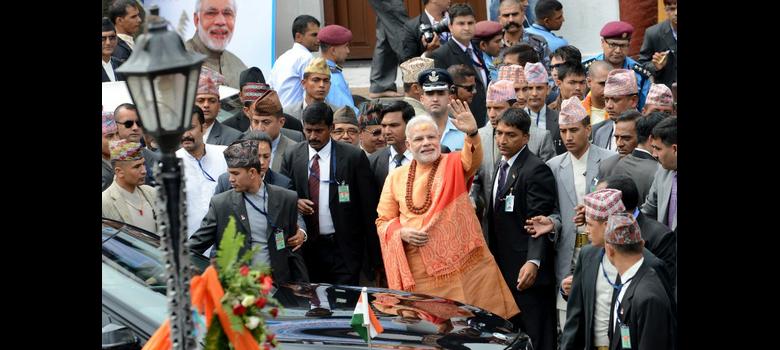
Of course, no one in the government has spoken of Akhand Bharat and Prime Minister Narendra Modi has never clearly explained his understanding of the concept. There is no indication that the government intends to implement any policy that aims to reinstate this fanciful notion of what India once was and there is no reason to believe there will be.

But the concept could be a rubric by which to understand the Modi government’s approach to foreign policy, particularly in the neighbourhood. From the very get-go Modi announced his intention to reinvigorate ties with India’s neighbours by inviting to his swearing-in ceremony each of the leaders from the South Asian Association for Regional Cooperation — the primary multilateral forum for subcontinental nations.

Just two-and-a-half-months in, the PM has visited two of India’s neighbours, his foreign minister has visited four, and India is set to become part of multilateral organisations that will give it many more opportunities to project itself as a regional powerhouse. This is Akhand Bharat 2.0.

Regional power

Foreign minister Sushma Swaraj is currently in Myanmar, the fourth neighbourhood country that she has visited in the last three months. But it was the trip made by Modi to Nepal that really sent a statement, since it was the first visit by an Indian prime minister to the country in 17 years. He received an enthusiastic reception.

“All governments that come to power in India feel that we must improve our relationship with the neighbourhood,” said Kanwal Sibal, a former foreign secretary. “But the difference is that, whereas in the past it remained at the level of rhetoric, in this case they are translating it into concrete initiatives. The fact that an Indian PM visited Nepal after 17 years is a testimony to the fact that, despite our professed position about needing a secure neighbourhood, we have actually neglected it… that is changing.”

That message was sent at the very beginning with the invitations handed out to each of the SAARC leaders for Modi’s swearing-in, all of which were accepted — with the exception of Bangladesh’s Sheikh Hasina, but only because she was on another diplomatic visit at the time. The sight of all the leaders in front of Rashtrapati Bhavan, and Modi dedicating his first day in office to bilateral talks with them, sent a very clear signal. The PM made his first foreign visit to Bhutan, a country deeply connected to India but not particularly important in terms of foreign policy.

“It shows that they understand that unless India is a dominant regional power, we can hardly be an extra-regional power or a world power,” said Manoj Joshi, a distinguished fellow at the Observer Research Foundation. “They seem to definitely be working on this understanding, especially because we are facing stiff competition from the Chinese when it comes to projecting power in the neighbourhood.”

Leading South Asia

It’s not just symbolism and rhetoric either. Modi’s visits to Bhutan and Nepal have been accompanied by important agreements, such as a $1 billion line of credit to Kathmandu, as well as the promise of further talks. Discussions with Bangladesh have also indicated progress on key stumbling blocks between the two nations. Modi has also spoken of using the SAARC framework to further cooperation in the neighbourhood. His suggestion of a SAARC space satellite, for example, while criticised by some as a gimmick, certainly sent a message that he is looking beyond the potential disputes towards projects that would allow the countries to work together.

“He has staked his leadership of the region, and this is important,” Sibal said. “There is a gesture to friendship in the neighbourhood, but he has also put across the message that India is leading the region. India is not going to neglect its neighbourhood, and it will take the lead in creating synergies that can benefit all.”

via Scroll.in – News. Politics. Culture..

08/08/2014

Rats On Planes — A Distressingly Common Problem – India Real Time – WSJ

After a rat was discovered aboard an Air India Ltd. plane at the Delhi airport, a spokesman for the country’s state-owned flag carrier said rodent stowaways are a “rare occurrence.”

If only that were true. In fact, rats and other pests often find their way onto jetliners in India and around the world.

With thousands of flights each day handling large quantities of food for passengers as well as baggage, rodents and insects sometimes manage to hitch a ride on food catering trucks or luggage trollies to get inside planes despite hygiene checks.

“We get requests to fumigate four or five planes each month,” said an official of India’s state-run Central Warehousing Corp., which offers pest-control services to airlines, ports, railways, shipping companies and government offices in India.

The official, who declined to be named, said Central Warehousing offers two types of pest treatment to airlines. The most common is spraying pesticides inside aircraft cabins to keep out mosquitoes, cockroaches and other insects.

“The second is fumigation and it is done only when a rat or rat droppings are spotted inside an aircraft,” he said.

Fumigating an aircraft isn’t easy. The plane needs to be isolated, sealed and then pumped full of lethal gas. After about six hours, the aircraft is ventilated to clear the toxic fumes.

The official said the fumigation procedure was carried out on the Air India Airbus A321 that had rodent issues this week. The official said he wasn’t sure whether there was one or more rats inside the plane.

An Air India official had said there was only one rat inside the Airbus A321 jet when it landed at New Delhi on a flight from the eastern metropolis of Kolkata. He denied a Times of India report that said there were “scores” of rats inside the plane.

Pests afflict all airlines. A pest-control company in Southeast Asia said his company has helped clear rats out of planes belonging to two Asian airlines. But airline companies like to keep such matters quiet, and often ask exterminators to sign confidentiality agreements, he said.

The Central Warehousing official said the company’s pest control business for Indian carriers suffered a setback after Kingfisher Airlines stopped flying in 2012 but is now optimistic that business will rebound as new airlines like AirAsia India Pvt.  and Tata SIA Airlines Ltd. set up base in the country.

via Rats On Planes — A Distressingly Common Problem – India Real Time – WSJ.

07/08/2014

Rahul Gandhi Wakes Up to New Role as Rebel Leader – India Real Time – WSJ

There’s nothing particularly newsworthy about boisterous Indian lawmakers blocking debate on the floor of Parliament when they don’t get their way, unless one of the lawmakers is the usually-reticent Rahul Gandhi.

The typically uninvolved Parliamentary back-bencher and Congress party vice president made the front pages of Indian newspapers Thursday after he and others mobbed the desk of the lower house of Parliament’s speaker, demanding to be heard.

“Rip Van Winkle Rahul Finally Rises Out of Slumber,” read an Economic Times headline paired with a recent photograph of Mr. Gandhi nodding off during a parliamentary session.

Mr. Gandhi, who is part of a diminished Congress camp of 44 representatives in the 545-member Lok Sabha, also made a rare statement to reporters outside Parliament complaining that opposition parties were not being allowed to speak. He accused speaker Sumitra Mahajan of bias after she shot down a proposal to discuss recent communal violence.

“There is a mood in Parliament that only one man’s voice counts,” Mr. Gandhi said in an apparent reference to Prime Minister Narendra Modi.

On the campaign trail a few months ago, Mr. Gandhi had said a Modi-led government would polarize Indians and trigger religious unrest.

Mr. Gandhi’s outburst was described as “surprisingly belligerent” in the Times of India that also carried a front-page story about what they called his “new-found combativeness.”

The fourth-generation scion’s occasional public outbursts are closely covered by the national media. In October when he called an executive order by his own party’s government “complete nonsense,” his tantrum was reported, discussed and debated for days.

On Wednesday, television news channels questioned what may have prompted a reaction from a leader who in his decade-long career in Parliament has rarely engaged in debate or taken the lead on policy issues.

The governing Bharatiya Janata Party offered one theory.

Finance Minister Arun Jaitley said Mr. Gandhi’s show of aggression was a result of internal rumblings – a “palace coup” – in the beleaguered Congress that is struggling to bounce back after its worst ever electoral defeat in national elections.

The party’s dynastic leadership by president Sonia Gandhi and her son, Rahul, must be struggling and Mr. Gandhi’s actions Wednesday were an attempt “to show they are also capable of aggression,” Mr. Jaitley said.

Congress spokesman Randeep Singh Surjewala said there “wasn’t an iota of doubt or question” within his party on the Gandhis’ leadership. Some “disgruntled elements hankering for immediate power” had abandoned the Congress after the electoral defeat, Mr. Surjewala said, but added that his party had weathered numerous challenges in the past and, like before, would emerge stronger.

He said the Modi-led government couldn’t run away from a discussion on religious violence by making personal attacks against Congress or its leaders.

via Rahul Gandhi Wakes Up to New Role as Rebel Leader – India Real Time – WSJ.

07/08/2014

The BJP’s real opposition turns out to be a far-Left-far-Right combination

When the final results of the general election were tallied up, it was hard not to marvel at the sheer size of the Bharatiya Janata Party’s victory and the unprecedented defeated delivered to the Indian National Congress. With the BJP emerging not just as the single largest party but also the first since 1984 to cross the halfway mark by itself and the Congress not even having enough seats to automatically be given the Leader of the Opposition post, there were genuine concerns about unbridled majoritarianism. Where would the opposition to the BJP come from?

Since the Congress continues to occupy the muddled middle and has pinned all its hopes on  Rajya Sabha numbers, where it has more seats than the BJP, the answer actually turns out to be an unusual combination of players both to the right and the left of the BJP. From labour law reform to the introduction of further foreign direct investment in insurance, it is BJP-affiliated organisations making common cause with pro-labour and Leftist outfits that have caused the most headaches for the new government.

With the Left and Right managing to converge on swadeshi issues, those who fall more in the pro-market camp within the BJP — many of whom were seen as the intellectual leaders of the campaign that brought Prime Minister Narendra Modi to power — are starting to get disconcerted with  government’s actions.

FDI in insurance

This appears to be the new government’s first big legislative battle, as the opposition parties have attempted to use their superior numbers in the Rajya Sabha to stand in the way of an attempt to increase the foreign direct investment cap in insurance from 26% to 49%. The government can resort to a joint sitting of the houses to bulldoze its legislation through the Parliament, but it is the reaction from trade unions and state insurance companies that has got the BJP concerned.

Crucially, the Bharatiya Mazdoor Sangh, the BJP-affiliated organisation that counts itself as the largest centrally organised trade union in the country, has joined forces with an array of other labour organisations as well as employees of state insurance corporations in threatening to strike if the cap is raised. The communist parties have always been staunch opponents of additional foreign investment. They have now come together with outfits like the BMS to prevent a move that finance minister Arun Jaitley has said is crucial to help reinvigorate economic activity.

Genetically modified crops

Shortly after representatives of the Swadeshi Jagran Manch and the Bharatiya Kisan Sangh met with environment minister Prakash Javadekar, he announced that the government was putting field trials of the genetically modified crops on hold. The news prompted loud howls from many who believe GM crops are important for Indian agriculture to take its next step forward. But it was welcomed by both the Sangh Parivar organisations that had met Javadekar as well as by many on the Left who have sought to halt GM crops for years now.

Swadeshi education

The Akhil Bharatiya Vidya Parishad, the BJP’s Youth Wing, sensed during last year’s Delhi University Student Union elections that opposition to the new Four Year Undergraduate Programme could be a key plank in remaining popular on campus. Incidentally, the FYUP had been opposed by the more left-wing organisations on campus from the very get-go, so the ABVP joined up with them to call for a roll-back of the four-year programme. The agitation quickly became a national issue, and eventually the FYUP was rolled back.

This ABVP-Left combine has now re-emerged in the agitation against the Union Public Service Commission’s Common Scholastic Aptitude Test, which is being fought on grounds that it is biased towards urban students. Yet again, the combined forces have managed to extract a concession from the government — despite opposition from the more reformist sections of the BJP.

Labour law reforms

Trade unions from across the country are meeting this week to try and decide how to approach the issue of labour law reforms, after the Rajasthan government last month passed legislation that made it easier for companies to retrench employees. These unions include both those on the Left, including the Communist Party of India (Marxist)-backed Centre of Indian Trade Unions  as well as the BJP-affiliated Bharatiya Mazdoor Sangh. Any decision to strike or launch a nationwide campaign by these groups could have a significant impact on a government that has insisted it is working primarily for the poor.

Foreign relations

The Modi government’s decision to vote against Israel at a United Nations forum shocked many supporters, who believe that India must be stand with Tel Aviv and remain steadfast against Islamic terrorism. It came as a pleasant surprise to those on the Left, however, who have always pushed India to speak up for those who live under Israeli occupation in Gaza and the West Bank.

The foreign relations convergence of the Left and Right was given a bigger boost after the Modi government decided to stand in the way of the World Trade Organisation’s Bali Package. Although the two factions here are unlikely to work together in pressuring the government to make decisions, particularly in the neighbourhood, the pressure to keep India relatively insulated from the West is likely to gain purchase from both sides.

via Scroll.in – News. Politics. Culture..

07/08/2014

One lakh children go missing in India every year: Home ministry – The Times of India

On February 5, 2013, a Supreme Court bench, angry over 1.7 lakh missing children and the government’s apathy towards the issue, had remarked: “Nobody seems to care about missing children. This is the irony.”  (Ed note: 1 lakh = 100,000)

English: Children in Raisen district (Bhil tri...

English: Children in Raisen district (Bhil tribe), MP, India. Français : Enfants dans le district de Raisen (tribu Bhil), M.P., Inde. (Photo credit: Wikipedia)

Close to one and a half years later, government data show over 1.5 lakh more children have gone missing, and the situation remains the same with an average of 45% of them remaining untraced.

Data on missing children put out by the home ministry last month in Parliament show that over 3.25 lakh children went missing between 2011 and 2014 (till June) at an average of nearly 1 lakh children going missing every year.

Compare this to our trouble-torn neighbour Pakistan where according to official figures around 3,000 children go missing every year. If population is an issue, then one could look at China, the most populous nation, where official figures put the number of missing children at around 10,000 every year.

National Crime Records Bureau, in fact, deciphers missing children figures in India in terms of one child going missing in the country every eight minutes.

More worryingly, 55% per cent of those missing are girls and 45% of all missing children have remained untraceable as yet raising fears of them having been either killed or pushed into begging or prostitution rackets.

Maharashtra is one of the worst states in terms of missing children with over 50,000 having disappeared in the past three and half years. Madhya Pradesh, Delhi and Andhra Pradesh are distant competitors with all recording less than 25,000 missing children for the period.

Worryingly, however, all these states have more missing girls than boys. In Maharashtra, 10,000 more girls went missing than boys. In Andhra Pradesh, the number of girls missing (11,625) is almost double of boys (6,915). Similarly, Madhya Pradesh has over 15,000 girls missing compared to around 9,000 boys. Delhi, too, has more girls (10,581) missing compared to boys (9,367).

via One lakh children go missing in India every year: Home ministry – The Times of India.

07/08/2014

These ten historical monuments earn India the most revenue

As airfares become cheaper and the world gets more adventurous, India’s tourism sector has been reaping the benefits. Revenues are expected to rise by 7.9% over the next decade. In 2012, according to the World Travel and Tourism Council, tourism accounted for 6.6% of India’s GDP.

Here’s a list of India’s most lucrative historical sites, based on the revenues they earned in 2013-2014.

1) Taj Mahal, Agra

Revenue: Rs. 21,84,88,950

Mughal emperor Shah Jahan’s marble tribute to third wife, Mumtaz Mahal, the Taj is by far the most iconic structure in India, as well as the country’s biggest-earning monument.

2) Qutab Minar complex, Delhi

Revenue: Rs 10,16,05,890

The Qutub Minar was built in the early 13th century and is the second-tallest tower in India (after Mohali’s Fateh Burj). It is made out of red and buff sandstone and is a UNESCO World Heritage Site.

3) Agra Fort, Agra

Revenue: Rs 10,22,56,790

Agra Fort, another UNESCO World Heritage site, was constructed under the third Mughal emperor Akbar over the remains of the ancient site known as Badalgarh.

4) Humayun’s Tomb, Delhi

Revenue: Rs 7,12,88,110

The tomb of the Mughal emperor Humayun was built in 1572 by his widow, Bega begum.

5) Red Fort, Delhi

Revenue: Rs 6,15,89,750

The Red Fort was originally built as the fortified palace of Shahjahanabad under Shah Jahan. It was the residence of the Mughal emperors for nearly 200 years.

6) Group of monuments, Fatehpur Sikri

Revenue: Rs 5,62,14,640

The city of Fatehpur Sikri was founded in 1569 by the Mughal emperor Akbar. It served as his capital from 1571 until 1585.

7) Group of monuments at Mahabalipuram

Revenue: Rs 2,72,93,480

The sculpted temples and buildings in this town, 60 kms south of Chennai, are the remains of a port from where ancient Indian traders travelled to South East Asia.

8) Sun Temple, Konarak

Damien Roué/Flickr

Revenue: Rs 2,43,52,060

This 13th-century temple in Odisha was conceived of as a gigantic solar chariot with 12 pairs of exquisitely-ornamented wheels pulled by seven rearing horses.

9) Group of temples, Khajuraho

Revenue: Rs 2,24,47,030

Khajuraho, in Madhya Pradesh, is synonymous with this large group of medieval Hindu and Jain temples, some of which have erotic sculptures.

10) Ellora Caves

Revenue: Rs 2,06,72,820

Ellora Caves are among the largest rock-hewn monastic-temple complexes in the entire world. The site includes one of the world’s largest monolithic structures, the Kailash temple.

via Scroll.in – News. Politics. Culture..

06/08/2014

Air India Loses Money to Dodge Giant Billboards in Mumbai – Businessweek

In the legion of problems that can beset an airline, here’s a novel one: gigantic billboards.

Super-sized advertisements stand in the flight path of Mumbai’s main airport, forcing departures to climb rapidly on takeoff. But Air India’s daily 15-hour flight to Newark, N.J., which requires a full load of fuel, would be too heavy to clear the billboard with its full load of passengers.

As a result, Air India now leaves 51 passengers off the Boeing (BA) 777-300ER. Flying 15 percent under capacity means losing 100 million rupees ($1.6 million) per month on the route, an Indian aviation minister told legislators on Monday, according to my Bloomberg News colleague, Anurag Kotoky.

Photograph by Dhiraj Singh for Businessweek.com

Airport officials at Chhatrapati Shivaji International have so far removed 13 of the 15 offending billboards in flight paths.

Air India has not reported a profit for eight years and required a government-funded rescue in 2012. United Airlines (UAL) uses a smaller 777-200 for the same route and has not experienced similar problems on departures, a spokeswoman told Bloomberg News.

via Air India Loses Money to Dodge Giant Billboards in Mumbai – Businessweek.

Law of Unintended Consequences

continuously updated blog about China & India

ChiaHou's Book Reviews

continuously updated blog about China & India

What's wrong with the world; and its economy

continuously updated blog about China & India