Posts tagged ‘India’

06/08/2014

Insurance Bill Struggle Pokes Another Hole in the Notion of Modi Magic – India Real Time – WSJ

The new government in New Delhi is struggling this week to get an insurance-industry liberalization bill— an important part of its campaign to revamp the economy—to the floor of the upper house of Parliament.

Opening up the insurance business to more foreign investment was one of the main deregulation measures unveiled in Prime Minister Narendra Modi’s first budget last month.

But already it is bogged down. Mr. Modi’s Bharatiya Janata Party does not control the upper house and other parties want to stall a vote on the bill.

The legislative tussle is a sign of the challenges Mr. Modi faces, despite his party’s landslide electoral victory and the BJP’s lower-house majority, as he tries to push through even modest changes in the way India manages its economy.

Mr. Modi swept to power this spring on a surge of anti-incumbency sentiment and hope that the BJP could break the policy deadlock in the capital. Supporters expected Mr. Modi bring the “achche din,” or good days, back to Asia’s third-largest economy.

But India’s complicated national politics, its decentralized federal system and Mr. Modi’s own desire not to get too far ahead of public opinion in a country long used to large-scale welfare schemes and a heavy state hand in the economy, is likely to slow any change.

The new administration’s national budget, announced in July, was bland and disappointing to many. It did not include the kind of big-bang reforms many optimists had anticipated.

In response to criticism of the budget, India’s new Finance Minister Arun Jaitley told a television news channel that the government is waiting for the right time to implement some changes.

“You don’t do reforms in a manner that the political system is unwilling to accept them,” Mr. Jaitley said during a July interview on Headlines Today. “The more challenging ones, you go on that course in times to come.”

Last week, Mr. Modi’s government blocked an important trade agreement that all 160 members of the World Trade Organization—including India—had agreed to in December. India demanding more freedom ratchet up market-distorting food subsidies.

“This is an inauspicious start for the new Modi government,” said Orrin Hatch, a Republican U.S. senator from Utah and member of the Senate Finance Committee in response to India’s decision.

M. J. Akbar, a BJP spokesman, says the party is happy with its progress. He said the government has focused on dealing with inflation, encouraging growth and reaching out to neighboring countries.

“On the insurance bill, the government has shown complete firmness in pushing it through,” and will use a joint-session of Parliament to vote on it if the upper house refuses, he said.

Still, the gradual deflation of the Modi bubble can be seen in the stock and currency markets. The benchmark Sensex index, has basically been going sideways for the last two months, after a sharp run up as the scale of Mr. Modi’s election win became clear.

The rupee has also been giving up some of this year’s gains against the dollar.

Of course the less excitable analysts and executives have always said the complexity of running the world’s largest democracy means that decision making will remain a slow and often painful process, even with a majority in the lower house of Parliament.

Many of the biggest challenges to improving the lives for India’s 1.2 billion citizens—such as reducing corruption, building modern infrastructure and providing hundreds of millions of good jobs–will take years, if not decades, surmount, even with the right policies and a charismatic leader.

“If a handful of people decide that (the progress so far) is insufficient, we have to ignore them and recognize that the majority of India is both relieved that the return of governance as well as the return of hope,” said the BJP’s Mr. Akbar. “Files are being cleared after ages of stagnation.”

–Prasanta Sahu contributed to this story.

via Insurance Bill Struggle Pokes Another Hole in the Notion of Modi Magic – India Real Time – WSJ.

06/08/2014

Key questions that have been lost in the din of protests against the civil services exam

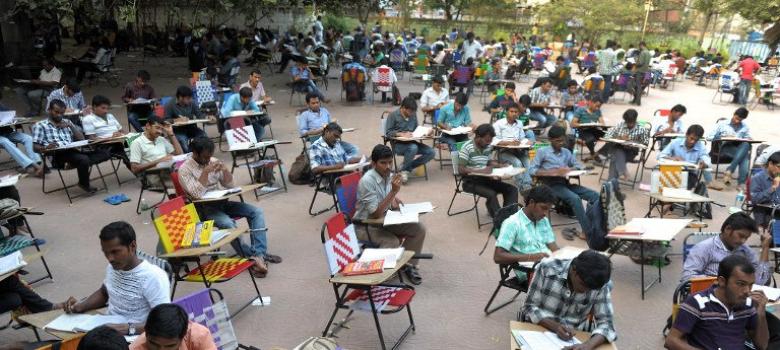
In the midst of protests against the new format of the civil services examination, several key issues have gone unaddressed. An opportunity for meaningful debate about the exam has quickly turned into a slanging match.

The matter has assumed an unnecessarily adversarial tone, with English pitted against other Indian languages. But the issues are far more complex and far less binary than politicians believe. Here are some key questions that have got lost in the din.

Should the Civil Services Aptitude Test be scrapped altogether?

The answer is a clear no. The CSAT gauges logical reasoning, problem-solving skills, analytical abilities, basic numeracy and English proficiency up to class 10 level. To argue that an administrator can do without any of these skills is unrealistic. An administrator has to deal with huge amounts of quantitative and qualitative information and any deficiency in these skills would mean a sub-par performance on the job.

Does the CSAT discriminate against students doing the exam in Hindi or regional languages?

No, but it does employ very poor translation software. The Union Public Service Commission, which conducts the exam, must acquire competent translators or purchase translation software that is up to the mark. This should do the trick.

Is there a grain of truth in what the protestors are alleging?

At the heart of the uproar lies the allegation that the exam is biased towards those who take the exam in English. Since the revised format came into force in 2011, the number of students who take the exam in Hindi has steadily fallen. (However, to really judge whether this is significant, one would have to look not at the absolute numbers of successful candidates who do the exam in Hindi, but the percentage of such candidates out of all those who take the exam in Hindi. But data about the number of test takers in each language is not available).

There may be a kernel of truth to this claim. But the blame lies to a large extent with the coaching and publishing industry. There is simply not enough study material available in Hindi and other regional languages. It is this paucity of study material that hurts students from vernacular backgrounds in the long run.

Surely, pelting stones and burning vehicles is not acceptable behaviour?

Some protestors, by resorting to violence, have demonstrated their unsuitability for the job. It is safe to say that many students have spent hundreds of hours preparing for the exam in its current format. What about their efforts? Do they count for nothing? By taking to the streets and letting political players into the mix, the protestors have probably done more harm than good.

Does the civil services exam in its current format select the best and the brightest?

Opinions differ considerably. An IAS probationer who did not want to be named told this writer: “The civil service exams, in its existing format, put less emphasis on rote learning and that is a good thing. The less this examination focuses on retention of information, the better.”

The civil services exam in its current format has three key components. The prelims, the mains and the interview. The first stage of the exam is the prelims, which has two parts, of which the second is the dreaded CSAT. As argued earlier, however, the CSAT is essential for ensuring that only candidates who possess minimum competencies and skill sets make it through to the far more difficult second round, the mains.

The Union Public Service Commission, with its recent revision in format for the mains, has reduced much of the burden on students. Earlier, a student had to master two subjects of their choice (neither of which he or she may have studied before). But now a student just has to choose just one subject of his or her choice. By emphasising general studies and critical thinking, the UPSC has levelled the playing field to a large degree.

How about allowing lateral entry?

The UPSC could also perhaps increase the number of vacancies in the civil services. It is a fact that we don’t have enough administrators for the population. According to various media reports, Right to Information applications and 2011 census figures, India has slightly more than 1,600 government servants for every 100,000 residents, which many studies say is a low ratio.

If quality of candidates is an issue, then the UPSC could look into the lateral entry of specialists, and even pay them market wages, a system used in the developed world. India’s political establishment must separate policy functions from service delivery and stop interference in operational matters. Simultaneously, the political class must establish uniform standards and guidelines across the country.

via Scroll.in – News. Politics. Culture..

06/08/2014

Why Modi’s reference to Buddha’s birthplace was among the highest points of his Nepal visit

Nepal has long been irked by the common misconception that Buddha was from India, even though his accepted birthplace, Lumbini, is across the border.

The Nepalese are so outraged about the Indian appropriation of Buddha, some cable operators blocked Zee TV in the country last year for misidentifying the Enlightened One‘s birthplace.  To correct the record, the country has issued special Rs 100 currency notes proclaiming, “Lumbini: The Birthplace of Lord Buddha.” The controversy has even led a musician named Dhiraj Rai to record an overwrought pop song on the subject.

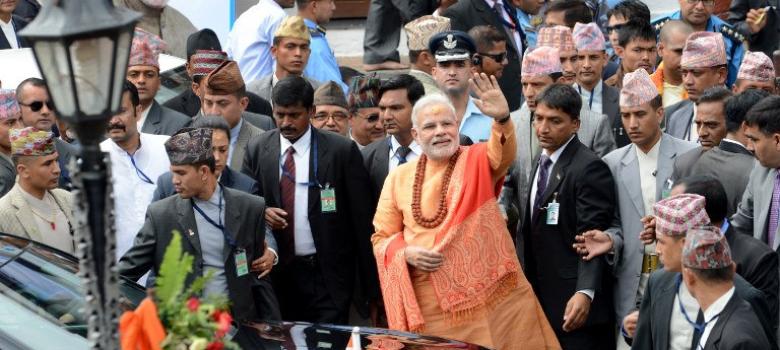
So for many residents of the mountain-kingdom, the highest point of Indian Prime Minister Narendra Modi‘s two-day state visit to their country came during his address to parliament on Sunday, when he referred to Nepal as “the birthplace of Lord Buddha”.

Though the Indian prime minister’s speech to lawmakers included the announcement of a $1 billion line of credit to Nepal and suggested how energy cooperation could be enhanced, the country’s Telegraph Weekly reported the address under the headline, “Indian PM Modi admits Lord Buddha was born in Nepal.”

The Khatmandu Post added more details. “Nepali lawmakers gave a thunderous applause when he mentioned that Buddha was born in Nepal – an issue that rouses deep passion in the country when various quarters of India claim that the former was born in India,” it wrote. “He uttered the word Buddha five times.”

Many Nepalese Twitter users expressed their delight at Modi’s statement.

via Scroll.in – News. Politics. Culture..

05/08/2014

India central bank cautiously optimistic on growth – Businessweek

RBI head office, Delhi

RBI head office, Delhi (Photo credit: Wikipedia)

India’s central bank said Tuesday it sees signs of recovery in Asia’s third-largest economy even though the monsoon season, which is crucial for agriculture, had a weak start.

The Reserve Bank of India left its key interest rate unchanged at 8 percent Tuesday, maintaining a tough stance against stubbornly high inflation. It has faced calls to cut interest rates to help revive flagging growth.

“Domestic economic activity appears to be reviving, with incoming data suggesting a firming up of industrial growth and exports,” RBI Gov. Raghuram Rajan said in a statement.

The central bank remains on guard against inflation partly because of the slow start to the monsoon, which could drive up food costs, hurting the hundreds of millions of poor Indians who live on less than $2 per day.

Wholesale inflation eased to 5.4 percent in June.

“We are not against growth,” Rajan told reporters in a press briefing. But he said growth should be beneficial, not a short-lived mini-boom engineered by easy monetary policy.

via India central bank cautiously optimistic on growth – Businessweek.

05/08/2014

Samsung Loses Top Spot to Micromax in India – India Real Time – WSJ

Samsung Electronics Co.005930.SE -0.08% was dethroned as the top cellphone seller in India last quarter as local rival, Micromax Informatics Ltd., undercut and outsold the Korean company for the first time in Asia’s third-largest economy.

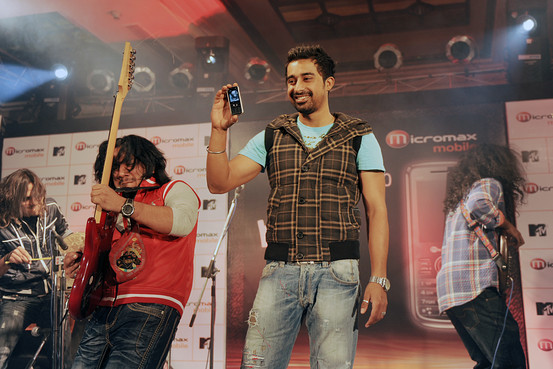
Micromax which was launched only five years ago, has taken the pole position in the Indian market—the second largest in the world in terms of handset sales—by undercutting the prices of Samsung and other international brands.

In the April-through-June quarter Micromax’s market share reached 17% of the Indian market compared to Samsung’s 14%, according to Counterpoint Technology Market Research, a research and consulting company based in Hong Kong.

Samsung, the world’s largest cellphone company by sales, is facing tough competition from Micromax and other Indian handset sellers. The South Korean company lost its top spot in terms of handset volumes as it has shifted its focus to smartphones and away from the less-expensive feature phones, said Neil Shah an analyst at Counterpoint.

Micromax has been more successful than most at targeting the Indian consumer. In the past five years it has come out of nowhere by investing heavily in advertising, distribution and developing a portfolio of relatively inexpensive handsets for Indians.

Samsung may be trying to claw back some of its market share. The company, last week, added three more smartphones to its “affordable” category of handsets priced below 10,000 rupees.

via Samsung Loses Top Spot to Micromax in India – India Real Time – WSJ.

30/07/2014

Indian online retailer Flipkart raises $1 billion – Businessweek

India’s largest online e-commerce company, Flipkart, says it has raised $1 billion in new capital as the company gears up for competition with Amazon‘s push into the Indian market.

Flipkart Flipkart Flipkart!!

Flipkart Flipkart Flipkart!! (Photo credit: samratm)

The company says the funds will be used to invest in expansion, especially in mobile technology.

Flipkart is sometimes called the Amazon of India. It was founded by two Indian brothers who left Amazon and came home to found their own online retailer.

Flipkart says it has 22 million registered users and handles 5 million shipments per month.

Amazon’s India division has been making a big push in the country’s small but fast-growing online retail market. It has been running front-page advertisements in newspapers and touting one-day delivery.

Flipkart itself recently acquired Indian online fashion retailer Myntra to strengthen market share.

via Indian online retailer Flipkart raises $1 billion – Businessweek.

30/07/2014

US official vows to expand India trade, investment – Businessweek

The U.S. secretary of commerce has pledged to help expand investment in India’s infrastructure and to promote trade.

Penny Pritzker spoke Wednesday to business leaders in the Indian financial capital, Mumbai.

She said two-way trade has lagged in recent years but has still expanded by fivefold to $96 billion a year since 2000.

via US official vows to expand India trade, investment – Businessweek.

29/07/2014

Why India’s family planning program is unhappy with parents

It’s not just politicians resisting sex education, but parents as well, according to Mahinder Watsa, former president of the Family Planning Association of India, which turned 65 last week.

Watsa, perhaps better known today for his newspaper column dispensing often wry advice on sex, was also the first to push for the inclusion of sex education in the FPAI’s programmes in the late 1970s.

“You need to have special classes for parents,” he said. “Parents should be the ones who should be involved deeply, but they pass the job on to teachers.” But teachers, he said, do not take an active part in sex education for fear of being criticised by both parents and politicians.

This fear might partly stem from the pronouncements of political leaders. In the latest instance, last month, health minister Harsh Vardhan, a qualified doctor, advocated the Gandhian route to birth control through abstinence and yoga and said that sex education in its current form should not be taught in schools. He later clarified that he was only against graphical representation of what he termed “vulgarity”.

But his remarks have yet again underlined the political class’s confused and often misguided approach to sex education.

In contrast, over the years, the focus of the FPAI, which was founded in 1949, has expanded from issues of fertility and controlling the number of children a healthy family should have to the rights of young people in accessing information and knowledge about their sexuality.

via Scroll.in – News. Politics. Culture..

25/07/2014

What Happened to India’s Girls? A New U.N. Report On Sex Selection Offers Some Answers – India Real Time – WSJ

India’s census data consistently shows two things: the country’s inexorably expanding population and its deep preference for sons over daughters.

A new United Nations study takes a deep look at how parents keep choosing boys over girls, despite laws that seek to block the use of ultrasounds and other pre-natal tests to determine the sex of an unborn child.

India’ child sex ratio – the number of girls for every 1,000 boys under the age of 6 — has deteriorated sharply over the past 20 years, dropping to 918 in 2011 from 945 in 1991.

India’s sex gap “demonstrates that the economic and social progress in the country has had minimum bearing on the status of women and daughters in our society,” said Lakshmi Puri, an Indian who is a U.N. assistant secretary general.

Here are five significant takeaways from the U.N. study, written by Mary E. John, a senior fellow at the New Delhi-based Centre for Women’s Development Studies.

Improvements in the Overall Sex Ratio are More Nuanced Than You Think

Since 1991, the number of women per 1,000 men has been rising, though it remains far below normal. In 1991, there were 927 women for every 1,000 men. In 2011, the year of the most recent census, that number had risen to 943. The U.N. study argues that much of the improvement isn’t because fewer girls are being born and surviving into adulthood. In India, in the past, women had a shorter life expectancy than men – unlike the situation in most of the rest of the world. That has changed. Indian women now outlive men, in part because of lifestyle changes and “diseases that take a greater toll on” men.

via What Happened to India’s Girls? A New U.N. Report On Sex Selection Offers Some Answers – India Real Time – WSJ.

25/07/2014

India’s human development index in 2013 improved slightly from the previous year

India’s human development index in 2013 improved slightly from the previous year, while it ranked 135 out of 187 countries, according to the 2014 UNDP Human Development Report.

This is only seven positions ahead of Bangladesh, but well behind Sri Lanka, which is at 73. Nepal and Pakistan fall in the low development category, at 145 and 146 respectively.

The human development index is derived from a measurement of life expectancy, education, and income indices and is used to rank countries into four tiers of human development: very high, high, medium and low.

The report, released on Thursday morning, shows that India’s index is 0.586 out of a maximum of 1. India’s index was below the average of 0.614 for countries in the medium human development group.

via Scroll.in – News. Politics. Culture..

Law of Unintended Consequences

continuously updated blog about China & India

ChiaHou's Book Reviews

continuously updated blog about China & India

What's wrong with the world; and its economy

continuously updated blog about China & India