Posts tagged ‘Pakistan’

18/03/2013

* China replaces Britain in world’s top five arms exporters

reuters: “China has become the world’s fifth-largest arms exporter, a respected Sweden-based think-tank said on Monday, its highest ranking since the Cold War, with Pakistan the main recipient.

A visitor to the China Aviation Museum, located on the outskirts of Beijing, takes a photograph of a row of old anti-aircraft guns on display in this August 17, 2010 file photo. REUTERS-David Gray-Files

China’s volume of weapons exports between 2008 and 2012 rose 162 percent compared with the previous five-year period, with its share of the global arms trade rising from 2 percent to 5 percent, the Stockholm International Peace Research Institute (SIPRI) said.

China replaces Britain in the top five arms-dealing countries between 2008 and 2012, a group dominated by the United States and Russia, which accounted for 30 percent and 26 percent of weapons exports, SIPRI said.”

via China replaces Britain in world’s top five arms exporters: report | Reuters.

06/02/2013

* India concerned by China role in Pakistan port

Reuters: “China’s role in operating a strategically important port in Pakistan is a matter of concern for India, its defense minister said on Wednesday, as New Delhi and Beijing jostle for influence in the region.

India's Defence Minister A.K. Antony waits to speak at a plenary session of the 11th International Institute of Strategic Studies (IISS) Asia Security Summit: The Shangri-La Dialogue in Singapore in this file photo taken June 2, 2012. REUTERS/Tim Chong

Indian policy-makers have long been wary of a string of strategically located ports being built by Chinese companies in its neighborhood, as India beefs up its military clout to compete with its Asian rival.

Management of Gwadar port, around 600 km (370 miles) from Karachi and close to Pakistan’s border with Iran, was handed over to state-run Chinese Overseas Port Holdings last week after previously being managed by Singapore’s PSA International.

“It is a matter of concern to us,” Indian Defense Minister A.K. Antony told reporters when asked about Chinese control of the port.

When complete, the port, which is close to the Strait of Hormuz, a key oil shipping lane, is seen opening up an energy and trade corridor from the Gulf, across Pakistan to western China, and could be used by the Chinese Navy, analysts say.

“It will enable (China) to deploy military capability in the region,” said Jay Ranade, of the Centre for Air Power Studies and a former additional secretary at the government of India. “Having control of Gwadar, China is basically getting an entry into the Arabian Sea and the Gulf.”

China has also funded ports in Hambantota, Sri Lanka, and Chittagong in Bangladesh, both India’s neighbors.

“Gwadar is a more serious development than the others,” Ranade said, as the Pakistani port gives China base facilities.”

via India concerned by China role in Pakistan port | Reuters.

See also: https://chindia-alert.org/political-factors/geopolitics-chinese/

09/01/2013

* Pak’s action highly objectionable: Defence minister

Following from the death of a Pakistani soldier, this retaliation – if proven to be accurate – is not acceptable of any national army in the 21st century.

Times of India: “Defence minister A K Antony on Wednesday blasted Pakistan for the gruesome way in which an Indian soldier was beheaded by its troops who intruded into Indian territory in the Mendhar sector of J&K on Tuesday.

Indian soldiers carry coffin reported to contain body of colleague killed by Pakistani soldiers (9 January)

“The Pakistan Army’s action is highly objectionable and also the way they treated the body of the Indian soldier is inhuman,” said Antony.

“We will take it up with the Pakistan government and our ​Director General of Military Operations (DGMO) will talk to his counterpart in Pakistan. We are closely monitoring the situation,” he added.

As reported by TOI, an Indian soldier was beheaded and another’s body mutilated by Pakistani troops after they crossed over into Indian territory in Mendhar at about 11 am on Tuesday, in a grim reminder of the barbarism exhibited in the Captain Saurabh Kalia case during the bloody Kargil conflict in 1999.”

via Pak’s action highly objectionable: Defence minister – The Times of India.

See also: https://chindia-alert.org/political-factors/indian-tensions/


21/11/2012

* Hope rule of law will prevail in Pak in 26/11 case: Khurshid

The Hindu: “With the execution of lone surviving Mumbai attacks gunman Ajmal Kasab, India hopes “rule of law” will prevail in Pakistan as well, said External Affairs Minister Salman Khurshid even as civil society organisations were saddened by the end to the country’s moratorium on capital punishment.

Mr. Khurshid was referering to a trial in Pakistan of seven persons accused of masterminding the Mumbai attacks. The Minister said India had not received any request from Pakistan for handing over the body of Kasab whose hanging came barely 12 hours after India voted against a non-binding resolution in the United Nations banning the death penalty.”

via The Hindu : News / National : Hope rule of law will prevail in Pak in 26/11 case: Khurshid.

12/11/2012

* An Indian in Afghanistan

Reuters: “Racing through the deserted streets of Kabul at nighttime, you are likely to be stopped at street corners by policemen once, twice or even more. If you are a South Asian, as I am, their guard is up even more. “Pakistani or Indian?” the cop barks out as you lower your window. When I answer “Indian”, he wants me to produce a passport to prove that, and as it happens, I am not carrying one. So I am pulled out of the car in the freezing cold and given a full body search, with the policemen muttering under his breath in Dari that everyone goes around claiming to be an Indian, especially Pakistanis.

Photo

To be an Indian in Kabul is to be greeted warmly wherever you go, whether it is negotiating a security barrier or seeking a meeting with a government official. There is an easing of tensions (in Afghanistan, the fear uppermost in the mind is that the stranger at the door could be an attacker and you don’t have too long to judge), Bollywood is almost immediately mentioned, and your hosts will go out of their way to help.

To be a Pakistani is a bit more fraught. The body search is rigorous, the questioning hostile, and, more often than not, you have to be rescued by a Western colleague especially if you are entering one of those heavily guarded, unmarked restaurants frequented by foreigners.

To the ordinary Afghan, India and Pakistan have followed two different paths in the country beginning from the ouster of the Taliban in 2001 when there was hope in the air and you could walk in the streets of Kabul (instead of trying to escape it) to the current time when the Taliban have fought back and hold the momentum as the West withdraws after a long and ultimately, unsuccessful engagement.

While the Indians have been applauded for helping build roads, getting power lines into the capital, running hospitals and arranging for hundreds of students to pursue higher education in India, the Pakistanis are accused of the violence that Afghans see all around them, from the attacks in the capital to the fighting on the border and the export of militant Islam.  It’s become  reflexive: minutes into an attack, the blame shifts to Pakistan. “They must have done it.””

via India Insight.

12/08/2012

* Pakistani Hindu pilgrims allowed to cross into India after detention

BBC News: “Pakistan officials have allowed a group of Hindu pilgrims who were detained at the border to cross into India.

More than 200 Pakistani Hindus were held at the Wagah crossing near Lahore after local media reported that they intended to emigrate.

Although the group had valid pilgrimage visas, it was rumoured they planned to remain in India because of growing attacks against minorities in Pakistan.

They were allowed to pass after they assured officials they would return.

A spokesperson for the pilgrims, Santosh Puri, told the BBC the group had assured the authorities that “this is a pilgrimage” and no one intends to emigrate.

Pakistani rights activists say dozens of Pakistani Hindu families have moved to India to escape killings, abductions and forced conversions in recent years.

According to Indian officials, Pakistani Hindus have often entered India on visit visas, only to settle there permanently.”

via BBC News – Pakistani Hindu pilgrims allowed to cross into India after detention.

02/08/2012

* India allows Pakistan investment

BBC News: “India has announced that it will allow investment from Pakistan in what is seen as a boost for bilateral economic ties.

The commerce ministry said a citizen or a company of Pakistan is permitted to make investments in India.

However, no such investments can be made in defence, space or atomic energy, the ministry said.

India and Pakistan resumed formal peace talks last year after they were broken off following the 2008 Mumbai attacks.

India blamed the attacks on Pakistan-based militants.

A commerce ministry release on Wednesday said all foreign direct investment proposals from Pakistan would need the clearance of the country’s Foreign Investment Promotion Board (FIPB).

“It is a great decision… Now Pakistan should also implement the most favoured nation (MFN) trading status to India,” Rajiv Kumar of the Federation of Indian Chambers of Commerce and Industry (FICCI) was quoted as saying by the state-run Doordarshan news channel.

Earlier this year, Pakistan indicated that it would offer India MFN trading status, which India has already extended to Pakistan.

The move is part of a pledge made last year to liberalise trade with India. Formal trade between the countries is worth $2.7bn a year, while informal trade, by way of smuggling, is believed to be three times that, experts say.”

via BBC News – India allows Pakistan investment.

Related articles

29/07/2012

* Thirsty South Asia’s river rifts threaten “water wars”

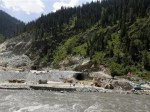
WSJ: “As the silver waters of the Kishanganga rush through this north Kashmir valley, Indian labourers are hard at work on a hydropower project that will dam the river just before it flows across one of the world’s most militarised borders into Pakistan.

The loud hum of excavators echoes through the pine-covered valley, clearing masses of soil and boulders.

The 330-MW dam shows India’s growing focus on hydropower but also highlights how water is a growing source of tension with downstream Pakistan, which depends on the snow-fed Himalayan rivers for everything from drinking water to agriculture.

Islamabad has complained to an international court that the dam in the Gurez valley, one of dozens planned by India, will affect river flows and is illegal. The court has halted any permanent work on the river for the moment, although India can still continue tunneling and other associated projects.

In the years since their partition from British India in 1947, land disputes have led the two nuclear-armed neighbours to two of their three wars. The next flashpoint could well be water.

“There is definitely potential for conflict based on water, particularly if we are looking to the year 2050, when there could be considerable water scarcity in India and Pakistan,” says Michael Kugelman, South Asia Associate at the Woodrow Wilson International Center for Scholars in Washington.”

via India Insight

16/07/2012

* Pakistan cricket team to visit India in December

BBC News: “India looks set to resume bilateral cricketing ties with Pakistan after a gap of several years, with plans for Pakistani cricketers to tour India.

India’s cricket board says three One Day Internationals and two Twenty20 matches have been planned for December.

Pakistan Cricket Board welcomed the proposal and said that millions of fans would be delighted.

The last bilateral series between India and Pakistan was in 2007-2008 when the Pakistani team visited India.

Cricketing ties were suspended after the 2008 Mumbai attacks, blamed on a Pakistan-based militant group.

Indian government approval is still needed for the series to go ahead but analysts say this is just a formality.”

via BBC News – Pakistan cricket team to visit India in December.

19/03/2012

* India displaces China as world’s largest arms importer

Times of India: “India has become the worlds biggest importer of arms, displacing China by accounting for 10 per cent of global arms sales volumes. Over the past five years, Indias imports of major weapons increased by 38 per cent between 2007-11, a Swedish security think tank said with Asia topping other regions in arms imports.

The Stockholm International Peace Research Institute SIPRI in its new report said that India was closely followed by China and Pakistan whose weapons imports constituted 5 per cent each of global sales. Pakistan took delivery of “significant numbers of combat aircrafts during this period : 50 JF-17s from China and 30 F-16s from US,” SIPRI said. The Swedish think tank said China which had been world’s top arms importer in 2006-2007 has now dropped to fourth place, attributing this to improvements in the country’s arms industry and its rising arms exports.

SIPRI said China is now world’s sixth largest world exporter of weapons behind the US, Russia, Germany, France and UK.But “while the volume of Chinas arms export is increasing, this is largely a result of Pakistan importing more arms from China. “Beijing has not achieved a major breakthrough in any other significant market,” the report said. According to SIPRI estimates India is likely to spend more than USD 100 billion on weapons and systems in the next 15 years.”

via India displaces China as worlds largest arms importer – The Times of India.

Related articles

Law of Unintended Consequences

continuously updated blog about China & India

ChiaHou's Book Reviews

continuously updated blog about China & India

What's wrong with the world; and its economy

continuously updated blog about China & India