Posts tagged ‘Twitter’

25/11/2014

Priyanka Chopra in Pink Rubber Gloves Joins Modi’s Clean India Campaign – India Real Time – WSJ

In pink rubber gloves and a surgical mask, former Miss World and Bollywood movie star Priyanka Chopra is the latest celebrity to be enlisted to Indian Prime Minister Narendra Modi’s Clean India Campaign.

In an 11-minute-film posted on YouTube, Ms. Chopra can be seen beginning a cleanup of an area where she filmed part of the movie “Agneepath.”

“I remember that there are people who live here and children who play on mounds of garbage and that is their life,” Ms. Chopra says in the short film as she directs a group picking up garbage in Versova in Mumbai. “The idea of doing this is to create something that is long-lasting,” Ms. Chopra adds during the video. “ I wanted to do something a little more than just cleaning a few piles of garbage.”


Embed from Getty Images

The film ends with shots of the area spruced up with murals and flower pots.

The Clean India campaign is Mr. Modi’s plan to create a sanitized India by 2019 in honor of the 150th anniversary of independence leader Mahatma Gandhi’s birth. Ms. Chopra is the latest Bollywood star to get involved after Salman Khan and Amitabh Bachchan who have both been pictured with brooms in hand pledging support at the prime minister’s request.

via Priyanka Chopra in Pink Rubber Gloves Joins Modi’s Clean India Campaign – India Real Time – WSJ.

02/10/2014

Facebook’s Mark Zuckerberg to Meet Modi in India – India Real Time – WSJ

Mark Zuckerberg, the founder of Facebook, will visit India next week to meet Prime Minister Narendra Modi and take part in a summit to find ways to get more people online–and probably signed up for his website.

India has around 200 million Internet users, a tiny fraction of its 1.2 billion population, and just over half of them have Facebook profiles. Mr. Modi is one of India’s most social-media savvy politicians and used Facebook and Twitter TWTR -3.04% heavily during his campaign ahead of elections which took place in April and May. But Internet use in general in India is still a minority affair with only 15% of the population online.

A report by McKinsey published Wednesday ahead of the internet.org summit which begins next Thursday said that between 2012 and 2013, the number of Internet users in India grew 22% compared to 9% growth in China and 7% increase in the U.S. over the same period. Over half (59%) of Internet users in India use mobile phones rather than computers to get online.

But, like Egypt, Indonesia, the Philippines and Thailand, India faces infrastructure challenges to getting more people online, the report said.

Almost half (45%) of the huge rural population has no access to electricity and further up the chain, the country is only in the early stages of deploying 3G networks.

There are some bright spots on the horizon for Internet usage in India however. The report says that India’s huge young population–around one in three people is currently aged under 15–will push the country online.

“We expect this younger age segment to be a significant driver of Internet adoption in developing countries, given their generally greater familiarity with technology and willingness to adopt it,” the report said.

via Facebook’s Mark Zuckerberg to Meet Modi in India – India Real Time – WSJ.

05/09/2014

China’s ‘Birthplace of Kung Fu’ Hopes to Train CEOs to Meditate – Businessweek

The ancient Shaolin Temple, perched on a leafy mountaintop in eastern China, is widely recognized as the birthplace of kung fu. For at least 1,500 years, its resident monks have preserved the physical and psychological training regimen of the legendary martial work. Now they’re trying to master commercial arts, too.

A monk practicing kung fu at the Shaolin Temple in Dengfeng, China

The temple is hiring a media director and social media editor, according to state-run Chinese newswire Xinhua. “The need arises from an internationalizing Shaolin,” a monk who works for the temple’s “Intangible Assets Management Center” told the newswire. The ideal candidate would be versed in China’s fast-growing social media platforms, especially Twitter (TWTR)-like Sina Weibo (SINA), as well as fluent in both Mandarin and English.

Shaolin already offers high-end, live-in meditation courses for chief executive officers willing to live on the mountain as martial arts apprentices for a month, as China Daily recently reported. For those with less time to spare, one-time sit-down sessions with the temple’s abbot are also available. Earlier this year, members of the elite China Entrepreneurs Club attended a private conference at the temple with the theme “self cultivation of entrepreneurs.”

Last year, about 800 foreign executives also came to study and train on the mountain. A marketing manager from Greece who came to Shaolin for a two-week course told the newspaper: “In business, you have to be flexible; you have to find new paths and change. You have to see a crisis and avoid it. Kung fu teaches you to be fluid, like water, because everything in kung fu flows, and stagnation is bad.”

Once its social media marketing team is in place, Shaolin hopes to expand outreach to overseas business leaders who seek to cultivate kung fu mindfulness. Its courses are a relative bargain compared to executive MBA programs, ranging from $800 to $10,000.

via China’s ‘Birthplace of Kung Fu’ Hopes to Train CEOs to Meditate – Businessweek.

06/08/2014

Why Modi’s reference to Buddha’s birthplace was among the highest points of his Nepal visit

Nepal has long been irked by the common misconception that Buddha was from India, even though his accepted birthplace, Lumbini, is across the border.

The Nepalese are so outraged about the Indian appropriation of Buddha, some cable operators blocked Zee TV in the country last year for misidentifying the Enlightened One‘s birthplace.  To correct the record, the country has issued special Rs 100 currency notes proclaiming, “Lumbini: The Birthplace of Lord Buddha.” The controversy has even led a musician named Dhiraj Rai to record an overwrought pop song on the subject.

So for many residents of the mountain-kingdom, the highest point of Indian Prime Minister Narendra Modi‘s two-day state visit to their country came during his address to parliament on Sunday, when he referred to Nepal as “the birthplace of Lord Buddha”.

Though the Indian prime minister’s speech to lawmakers included the announcement of a $1 billion line of credit to Nepal and suggested how energy cooperation could be enhanced, the country’s Telegraph Weekly reported the address under the headline, “Indian PM Modi admits Lord Buddha was born in Nepal.”

The Khatmandu Post added more details. “Nepali lawmakers gave a thunderous applause when he mentioned that Buddha was born in Nepal – an issue that rouses deep passion in the country when various quarters of India claim that the former was born in India,” it wrote. “He uttered the word Buddha five times.”

Many Nepalese Twitter users expressed their delight at Modi’s statement.

via Scroll.in – News. Politics. Culture..

19/04/2014

A Panda Watches TV in China: Caption Contest Winners – China Real Time Report – WSJ

How many words is a picture really worth? In an ongoing feature, China Real Time is asking readers to dream up captions for a recent news photo. This week, a giant panda munches bamboo while contemplating a TV screen in Yunnan Province.

UPDATE: We have our winner via Twitter

First runner up is from “Glen” in the comments:

“A rerun! Dang it!”

And the best of the rest, also from the comments section:

Slim: “Chinese TV really IS as bad as everyone says! How can I stream House of Cards?”

Saif Ali: “Hmm, the camera adds 10 pounds.”

_____________________________________

via A Panda Watches TV in China: Caption Contest Winners – China Real Time Report – WSJ.

Enhanced by Zemanta
16/04/2014

A Green Group Sees Hope in ‘The End of China’s Coal Boom’ – NYTimes.com – NYTimes.com

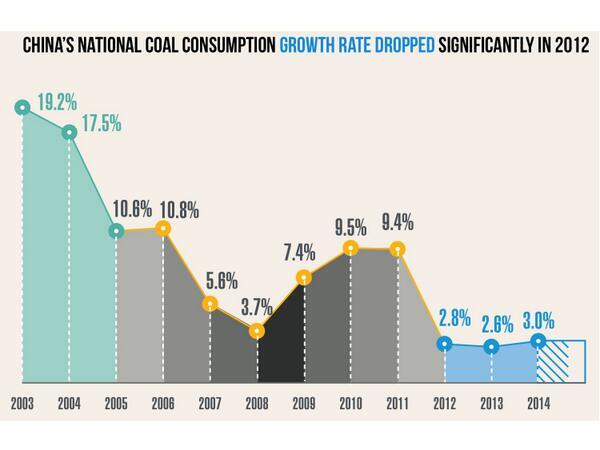
A report from Greenpeace charts slowing growth in China’s coal use.

Through much of its history, Greenpeace has been big on what I call “woe is me, shame on you” messaging on the environment. As I explained at a TEDx event in Portland, Ore., over the weekend, fingerpointing (including Greenpeace’s) is appropriate in many instances, but doesn’t work well with human-driven global warming. The blame game too often ends up resembling a circular firing squad.

This is why “The End of China’s Coal Boom,” a valuable new report from Greenpeace’s East Asia office, is so refreshing and worth exploring. I was led to it by a Twitter item from the group’s outgoing director, Phil Radford, that focused on a telling graphic:

View image on Twitter

via A Green Group Sees Hope in ‘The End of China’s Coal Boom’ – NYTimes.com – NYTimes.com.

Enhanced by Zemanta
26/03/2014

2nd-child policy hurts female job application – China – Chinadaily.com.cn

China has loosened its family planning policy by allowing couples to have a second child if either parent is an only child. Unfortunately, the policy has resulted in discrimination against some married women who are looking for jobs or are already employed, according to the Xinhua News agency.

2nd-child policy hurts female job application

Xia Fang, a Changsha local who gave birth to her first child 10 months ago, said that during job interviews she is always asked if she is an only child or if she plans to have a second child.

“I don’t plan to have a second child. But when potential employers learn that my first child is a girl, they think I’m likely to have another baby,” said Xia.

Before the second-child policy was introduced, married women with children and work experience had an advantage in the job market, but now they are being confronted with gender discrimination again, Xia added.

Female employees of child-bearing age are being affected, as well. A white collar worker surnamed Liu said she was passed over for a promotion that went to a young man, because her boss thought she might plan to have a second child.

“Women have to work harder to be given equal status in the workplace. And many face pressure from their families to have second children, which can affect their career prospects,” Liu said.

“Companies can predict the cost of a female employee’s maternity leave when they’re allowed to give birth to only one child,” said Li Bin, a professor of sociology at Zhongnan University. “But some middle and small-sized companies can’t bear the costs of two leaves in a few years.”

via 2nd-child policy hurts female job application – China – Chinadaily.com.cn.

Enhanced by Zemanta
28/02/2014

Chinese criticize state firm behind Three Gorges dam over graft probe | Reuters

A scathing report on corruption at the company that built China’s $59-billion Three Gorges dam, the world’s biggest hydropower scheme, has reignited public anger over a project funded through a special levy paid by all citizens.

Ships sail on the Yangtze River near Badong, 100km (62 miles) from the Three Gorges dam in Hubei province August 7, 2012. REUTERS/Carlos Barria

The report by the ruling Communist Party’s anti-graft watchdog last week found that some officials at the Three Gorges Corporation, set up in 1993 to run the scheme, were guilty of nepotism, shady property deals and dodgy bidding procedures.

Between 1992 and 2009, all citizens had to pay a levy built into power prices across China to channel money to the dam’s construction, a project overshadowed by compulsory relocations of residents and environmental concerns.

“The relatives and friends of some leaders interfered with construction projects, certain bidding was conducted secretly … and some leaders illicitly occupied multiple apartments,” the graft watchdog said on its website(www.ccdi.gov.cn).

The Three Gorges Corporation published a statement on its website on Tuesday saying it would look into the issues the probe raised, and strictly punish any corrupt conduct and violations of the law and party discipline.

The accusations – made as part of President Xi Jinping‘s crackdown on deep-rooted corruption – have spread rapidly across China’s popular Twitter-like service Sina Weibo, and some of China’s more outspoken newspapers have weighed in too.

via Chinese criticize state firm behind Three Gorges dam over graft probe | Reuters.

Enhanced by Zemanta
18/01/2014

The internet: From Weibo to WeChat | The Economist

WHEN Luo Changping, an investigative journalist, tried on November 22nd to post the latest chapter of his big scoop on WeChat, a popular Chinese mobile messaging service, censors blocked it. But he was able to work round them. In a follow-up message he told his subscribers they could send him the words “Chapter Seventeen”; users who did so automatically received the post on their mobile phones, uncensored.

WeChat, or Weixin in Chinese, is known mostly for private chatting and innocuous photo-sharing among small circles of friends. With more than 270m active users, it has become the star product from Tencent, an internet conglomerate. Some have compared it to WhatsApp, an American messaging service. More quietly, it has become the preferred medium for provocative online discussion—the latest move in China’s cat-and-mouse game of internet expression and censorship.


Mr Luo began posting his serialised stories on WeChat in May. They related how he had exposed the alleged corruption of Liu Tienan, a senior economic official. He had tried tweeting them on Sina Weibo, a Twitter-like microblog on which he had accused Mr Liu of corruption months earlier, but internet censors blocked him from doing so: hence his switch to WeChat. Though his initial attempts there were also blocked, the loophole that enabled him to send out the file is typical of WeChat’s more relaxed approach to censorship.

A WeChat account works much less publicly than accounts on microblogs (of which Sina Weibo is the most prominent). Anyone using Sina Weibo can see almost anyone else’s tweets and forward them on, meaning a single tweet can spread very quickly. On WeChat, it is usually only subscribers to a public account who will see a post (though such posts may also be viewed on a separate web page), and if a subscriber forwards a post, only that subscriber’s circle of friends see it. Its non-public accounts are even less open. Information on WeChat spreads at such a slow burn that authorities feel they have more control over it. Also in contrast to microblogs, many types of public account (like Mr Luo’s) can send out only one post to subscribers a day, making them much easier for authorities to monitor.

Mr Luo does not always have problems sending out his stories on WeChat and, since switching to the service, he has posted the equivalent of a blog post every week or two, and built a following of more than 60,000—“higher than the actual subscription figure of many Chinese magazines”, he says. WeChat is now his prime delivery platform for newsy titbits, including sensitive information that would be censored more rigorously on microblogs. (He has not published for Caijing magazine, his former employer, since being transferred in November to a non-reporting position at an affiliated research institute.) Meanwhile, he makes much less use of his Sina Weibo account, even though it has more than four times as many followers: “The ground for public opinion has begun to shift toward WeChat,” he says.

The rise of WeChat is a business phenomenon in its own right (see article). But it is also a measure of how adaptive and resilient China’s political and social discourse has become—almost as adaptive as the censorship regime that seeks to contain it. Recently a number of public intellectuals have lamented the decline of meaningful discussion on weibo. The microblogs were full of user-led activism in 2012 but, starting in 2013, officials have dramatically escalated their efforts to control them. Propaganda outlets have intensified attacks on the spread of rumours online, authorities browbeat online celebrities to be “more responsible” (at least two have been arrested on unrelated charges), and microbloggers can now be jailed for up to three years for tweeting false information that is forwarded 500 times or viewed 5,000 times. President Xi Jinping, in a speech to party leaders in August, said that the internet was the prime battleground in the fight over public opinion, and that officials must seize control of it.

via The internet: From Weibo to WeChat | The Economist.

Enhanced by Zemanta
18/01/2014

Sunanda Pushkar, Wife of Indian Minister Tharoor, Found Dead – India Real Time – WSJ

Sunanda Pushkar, the wife of federal minister Shashi Tharoor, was found dead in a five-star-hotel in New Delhi late Friday after being involved in a spat on Twitter with someone she accused of stalking her husband.

Ms. Pushkar’s body was discovered by Mr. Tharoor, his personal secretary, and employees of The Leela Palace, where the couple had checked in, after she failed to open the door, Deepak Mishra, who heads the crime division of the Delhi Police, said. Ms. Pushkar was 52.

Mr. Tharoor found his wife’s body sprawled across the bed, Mr. Mishra said. Abhinav Kumar, Mr. Tharoor’s personal secretary, confirmed this sequence of events.

Mr. Tharoor–a minister for human resource development, author and former senior United Nations official– had returned to the hotel around 7.30 p.m. after the day-long national meet of India’s ruling-Congress party, of which he is a senior member. The 57-year-old has previously served as the under-secretary-general of the United Nations and a junior foreign minister.

Police said they were still looking into the cause of death.

“Only after a postmortem report will we be in a position to pin-point what happened,” Mr. Mishra of the police said.

via Sunanda Pushkar, Wife of Indian Minister Tharoor, Found Dead – India Real Time – WSJ.

Enhanced by Zemanta
Law of Unintended Consequences

continuously updated blog about China & India

ChiaHou's Book Reviews

continuously updated blog about China & India

What's wrong with the world; and its economy

continuously updated blog about China & India