Posts tagged ‘Zhejiang’

13/03/2013

* China pulls nearly 6,000 dead pigs from Shanghai river

BBC: “Officials say the number of pig carcasses found in Shanghai‘s Huangpu River has risen to nearly 6,000.

In a statement, Shanghai authorities said that 5,916 dead pigs had been removed from the river by Tuesday.

But they said water from the river was safe, with water quality meeting government-set standards.

It is believed that the pigs may have come from Jiaxing in the neighbouring Zhejiang province, although the cause of their deaths is still not clear.

In a statement, the Shanghai municipal government said that the water in Huangpu River, which is a major source of drinking water for Shanghai, was safe. It also said that no diseased pork had been detected in markets.

However, the news has been met with scepticism by some users on weibo, China’s Twitter equivalent, where the hashtag “Huangpu River dead pigs” has emerged.

“Cadres and officials, we are willing to provide for you, but please don’t let us die from poisoning. Otherwise who will serve you? Please think twice,” said netizen Shi Liqin.

“This river’s colour is about the same as excrement, even if there weren’t dead pigs you couldn’t drink it,” said another, with the username Yuzhou Duelist.

The general mood is of concern, rather than outrage or panic, reports the BBC’s John Sudworth in Shanghai, as the Chinese public are well used to food scandals, such as the use of oil scraped from sewers for cooking, and plasticiser found in baby formula.”

via BBC News – China pulls nearly 6,000 dead pigs from Shanghai river.

22/12/2012

* Yiwu’s purveyors of Christmas tat give China a dose of ho-ho-ho

This article illustrates extremely well our view that the Chinese mindset is practical, materialistic and down-to-earth. And I am talking about the entrepreneurs at Yiwu City and the shopkeepers embracing the Christmas spirit (or at least the Christmas decorations anyway); as well as the average urbanite who wants to celebrate international festivals whatever the origin and raison d’etre.

The Times: “On Thursday the Ling Guo massage parlour, in the central business district of Beijing, suddenly turned festive.

A vendor hangs Christmas decorations in between Santa Claus dolls at her stall ahead of Christmas at a wholesale market in Wuhan, Hubei province, ChinaAn outsized image of Father Christmas beamed from the window, flanked by a manic array of snowmen, reindeer and present-stuffed stockings. The masseuses greeted customers in Santa hats.

It is not a triumph of Western culture, but of raw Chinese salesmanship, entrepreneurial flair and desperation.

Elsewhere, the festive decorations are up, adorning everything from roadside noodle shops to suburban shopping malls. Where China’s Christmas lights used to be restricted to the big hotels and stores in Beijing and Shanghai, the briskest sales are now to small shops in provincial cities.

“We are absolutely focused more on the Chinese market and we are shifting 2,000 plastic Christmas trees a day domestically,” said Liu Qing, from Yanghang Art and Crafts, who has been part of the all-out push by manufacturers to persuade the Chinese to celebrate someone else’s season of goodwill.

“Our biggest buyers are now from Shandong and Chongqing, which is so different from a couple of years ago,” Mr Liu said. “Chinese people’s living standards have improved so much, so people start going after something more spiritual. Christmas is a lively holiday. The younger generations like it.”

For a growing number of Chinese businesses making Christmas-related goods, domestic sales now represent their single biggest — and often fastest-growing — market. It is an unexpected development in a country that does not celebrate Christmas. Without it, though, hundreds of factories would be driven to bankruptcy because, despite strong sales, Santa’s Chinese elves are working on tiny margins.

The key to the tinsel-strewn, gold-baubled Christmas-ification of China is to be found on the country’s east coast in Yiwu, the acknowledged world hub of yuletide tat — or “ornamental handicrafts” as they are described by the city’s factory owners.

It is from these workshops that Yiwu annually exports about £200 million of plastic trees, self-illuminating angel choirs and every other Christmas decoration conceivable. Other manufacturing centres in China also feed into the great £1.3 billion flow of Christmas exports, but none do it with such determination and concentration as Yiwu.

The problem, however, is that Yiwu became too good at its trade at just the wrong moment. In 2010 the city had 400 companies making Christmas products; now there are more than 750, with about 120,000 workers engaged in making Christmas goods.

The huge jump in capacity and competition coincided with a drop of about 25 per cent in what had traditionally been Yiwu’s strongest markets for its tawdry wares, Europe and the United States. The effect on profits has been harsh. This year labour costs in Yiwu have risen by 15 per cent and material prices have risen by about 10 per cent.

Chen Jinlin, from the Yiwu Christmas Products Industry Association, said that some of his members have suffered 20 per cent to 25 per cent declines in orders. “There are nearly twice as many companies as there were two years ago fighting for pieces of a smaller cake,” he said. “We are encouraging manufacturers to develop new products, especially lower-cost ones, to adjust to the new economic reality.”

But the longer-term answer, said Mr Hu, the sales manager of the Youlide Art & Crafts Company, has to be to look for new markets, China being the most convenient and potentially vast. Many of Yiwu’s Christmas goodsmakers have seen the domestic share of their sales rocket to 20 per cent of the total over one or two years.

They have also changed the way that they look at opportunities abroad: a shift of marketing focus has made Brazil the largest export destination for Yiwu’s Christmas goods, accounting for 12 per cent of the total. A similar drive has proved successful in Russia, where sales of Yiwu’s seasonal goods have tripled in the past year.

“About 80 per cent of our products go to South America, so we’ve had to change things to reflect that,” Mr Hu said. “Brazilians like their artificial Christmas trees in a paler shade of green than the Europeans.””

via Yiwu’s purveyors of Christmas tat give China a dose of ho-ho-ho | The Times.

Related articles

01/12/2012

* China home marooned in middle of road is bulldozed

Not what he asked for but more than originally offered – ends the stand-off.

BBC: “A five-storey home marooned in the middle of a new road in China for more than a year because its owner refused to leave has finally been demolished.

Home demolished in Wenling in China's eastern Zhejiang province, 1 Dec 2012

The road, in China’s’s eastern Zhejiang province, was built around the house because duck farmer Luo Baogen was holding out for more compensation.

Mr Luo, 67, said he had just finished the home at a cost of $95,000 and had been offered only $35,000 to move.

Officials say he finally accepted $41,000, and the bulldozers moved in.

Media attention

The home had earned the nickname “nail house” because, like a stubborn nail, it was difficult to move.

China’s official Xinhua news agency said Mr Luo and his wife had accepted the new compensation offer and had moved to a relocation area with the help of relatives on Saturday morning.”

via BBC News – China home marooned in middle of road is bulldozed.

12/11/2012

* Buried in a bleak text, hope for a Chinese political experiment

Thanks to Reuters for discovering this ‘gem’.

Reuters: “Chinese Communist Party leader Hu Jintao‘s opening speech at the ongoing 18th Party Congress was a disappointment to many listeners, offering no major signals that the leadership is willing to advance political reform.

People walk in front of a large screen displaying propaganda slogans on Beijing's Tiananmen Square November 12, 2012. REUTERS/David Gray

The 64-page keynote speech he delivered was couched in the usual conservative and Marxist terminology, but one paragraph buried deep in the text was just what proponents of a long-running experiment in public policy consultations have been waiting for.

The section in question urged the ruling party to “improve the system of socialist consultative democracy”.

Academics and officials say the mention of “consultative democracy” is the first ever in such an important document, and it is seen by some as a strong endorsement of the long-standing experiment with this form of democracy, in Wenling, a city of 1.2 million in Zhejiang province, south of Shanghai.

The city has formalized public consultation on public projects and government spending at the township level, although there is no voting and decisions remain the preserve of the state machinery.

Xi Jinping, almost certain to be named the next party general secretary on Thursday, was party boss in Zhejiang in 2002-2007, as the Wenling project deepened.

The congress report is the most important political speech in China. Delivered once every five years by the party’s general secretary, it sets down political markers and charts a development course for the coming five to 10 years.

“Of course this is a good thing,” said Chen Yimin, a Wenling propaganda official who has been a driving force behind the system of open hearings, where citizens can weigh in on things like proposed industrial projects and administrative budgets – providing at least a bit of check on their local officials.

“This shows that the democratic consultations… that we have been doing for 13 years since 1999, have finally gained recognition and approval from the centre. It opens up space for further development. It says our democratic consultations are correct,” he said by phone from Zhejiang.

Chen Tiexiong, a delegate to the congress and party boss of Taizhou, the city that oversees Wenling, which itself has rolled out Wenling-style consultations in recent years, agreed.

“I looked at that part of the speech closely because in terms of promoting democratic politics Taizhou has done a lot, and it has been in the form of consultative democracy,” he told Reuters on the sidelines of the congress.”

via Buried in a bleak text, hope for a Chinese political experiment | Reuters.

26/05/2012

* Chinese fashion group has global designs

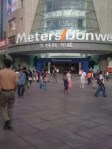
FT: “When research agency Millward Brown Optimor released rankings of the fastest growing global brands this week, at number 10 was a company that most Financial Times readers have probably never heard of: Chinese youth fashion brand Metersbonwe.

Some mainland brands are becoming household names in the west – such as Lenovo, Haier or Huawei – but they were not on the list. Instead, unknown Metersbonwe appeared, just a few slots below Apple.

Present in even the smallest Chinese cities, Metersbonwe will soon be coming to a high street near you if Zhou Chengjian, founder and chairman of the board, has his way. Within three to five years, he plans to push into the fashion markets of London, Paris, New York and Milan with his youthful and inexpensive designs.With revenue last year of Rmb10bn ($1.6bn) and net profit of Rmb1.2bn – up 32 and 59 per cent respectively year on year – Metersbonwe has done what so few other Chinese brands have been able to: outpace foreign rivals in the hyper-competitive mainland fashion market.

Millward Brown Optimor ranked Metersbonwe tenth in the world for “brand momentum” – advertising-speak for growth potential and consumer popularity. The result was based entirely on the company’s performance in China, where Euromonitor says Shenzhen-listed Metersbonwe is the third-largest apparel brand by sales behind Nike and Anta, a local sportswear brand. Even China’s economic slowdown seems not to be dimming the company’s lustre: Metersbonwe is predicting a 20 per cent rise in revenues and net profit this year, with sales so far appearing recession-proof.

The Metersbonwe story embodies the phrase “rags to riches”. Mr Chengjian, 46, who created the company 17 years ago, started out as a penniless tailor. Now he is the second richest person in Shanghai – a city of the stunningly wealthy – with a fortune of nearly $5bn, according to the latest Hurun rich list. A peasant from a tiny village in coastal Zhejiang province, he says he was no good at school, did not enjoy working in the sun and rain on construction sites, but did like the soft feel of fabric under his fingers so became a tailor. “My dream is to be the world’s tailor,” he told the FT in an interview this week, in an office decorated with posters of Chinese leaders Mao Zedong and Deng Xiaoping. His staff say he reveres Mao because he “made China free” and Deng because he “made China open”.

Mr Zhou says there is no particular secret to his success, apart from keeping his head amid all the fabulous opportunities for making money. “I work very hard and China is developing very fast,” he said. “Other Chinese companies dabble in too many things. But we set out 10 years ago to focus only on fashion.” He created a downmarket version of H&M and Zara, targeting college students and recent graduates, with a brand that many think is European.

Although Mr Zhou claims Metersbonwe was first a Mandarin name, many of its shops carry most prominently only the English transliteration, an obvious attempt to appeal to Chinese consumers who equate foreign brands with better style and quality.

“They did the right thing at the right time,” says Wu Xiaobo, dean of the school of management of Zhejiang University, who points out that Metersbonwe was the first garment company in China to adopt the international practice of outsourcing all manufacturing. …

With international retailers beating a path to China to make money, why is Mr Zhou so intent on launching overseas? In his typically earthy way, Mr Zhou says he is like a frog in boiling water, where the water is the increasingly competitive Chinese fashion scene. If he hangs around too long, he will die; there is no alternative but to jump out while there is still time – to become a household name around the world.”

via Chinese fashion group has global designs – FT.com.

Related posts: 

23/04/2012

* China Court Overturns Death Penalty for Wu Ying in Fraud Case

New York Times: “The Supreme People’s Court on Friday overturned the death penalty against a 31-year-old woman who was convicted of financial fraud three years ago after becoming rich through a company that sold beauty products and other goods. The case of the woman, Wu Ying, ignited an enormous outcry in China, especially on the Internet, and strengthened public criticism of the death penalty.

Xinhua, the state news agency, reported that the supreme court, which agreed in February to review the case, refused to approve the death sentence imposed by a lower court and said that the sentence needed to be revised by the High People’s Court of Zhejiang, a coastal province that is home to Ms. Wu and many other entrepreneurs. Ms. Wu was sentenced to death in December 2009 by the Jinhua Intermediate People’s Court in Zhejiang for cheating investors out of $60.2 million. Ms. Wu, the founder of Bense Holding Group, raised $122 million from investors between 2005 and 2007, according to official reports.”

via China Court Overturns Death Penalty for Wu Ying in Fraud Case – NYTimes.com.

11/03/2012

* A tale of two (Chinese) regions

China Daily: “China’s economic development over the last 30 years has been “a tale of two regions” — prosperous coastal areas where GDP matches some developed countries and inland areas that have lagged behind. …

In 2011, China laid out a 10-year development plan for the middle and western areas of the country, demarcating 14 impoverished regions and creating development plans for each region. Three of the 14 regions are in southwest China’s Guizhou province, which has a total of 65 counties listed as impoverished.

“When these areas develop, it will help to effectively close the gap with the eastern part of the country,” said Li Zhanshu, secretary of the Guizhou provincial committee of the Communist Party of China and a deputy to the National People’s Congress (NPC), which is meeting now in Beijing.

The gap between the coast and many other parts of China is indeed large. From 1978 to 2011 per capita GDP in coastal Zhejiang province has risen on average 11.6 percent per year to $9,000 in 2011, far above the national average. This figure is about three times the amount for Tibet and Gansu province, in China’s west.

Closing this gap has been a major topic of the current annual NPC session and the concurrent meeting of the Chinese People’s Political Consultative Conference, China’s leading political advisory body.”

via A tale of two regions|Economy|chinadaily.com.cn.

Given China’s success at creating a major ‘municipality’ of Chongqing in 1997 to act as a magnet in the centre of China, we shouldn’t be surprised if in 15 years these impoverished regions start to become more like the coastal regions of China.

Related page: https://chindia-alert.org/prognosis/chinese-challenges/

Law of Unintended Consequences

continuously updated blog about China & India

ChiaHou's Book Reviews

continuously updated blog about China & India

What's wrong with the world; and its economy

continuously updated blog about China & India