Archive for March, 2015

06/03/2015

Chinese city shuts factories as environmental law bites | Reuters

An industrial city in eastern China has closed several factories, including many steel and nickel pig iron producers, in an apparent sign the government is stepping up enforcement of a new environmental law in the face of growing public discontent over pollution.

Premier Li Keqiang told the annual session of the National People’s Congress, or parliament, on Thursday his government would do everything it could to fight pollution.

China’s vast and energy-intensive steel sector is at the heart of the government’s war on pollution, but it also encapsulates the challenges of curbing smog without denting the economy. Complying with stricter standards would have knock-on effects throughout industry and raise costs for steel producers who are already feeling the pinch of tepid demand.

Most steel producers in Linyi, a city in coastal Shandong province, appear to have been shuttered, industry sources said.

“Almost all the steel-making production in Linyi has closed, and there is no date for when to resume production,” said an official with Linyi Yuansheng Casting Co Ltd, one of the mills in the city, who declined to be identified.

via Chinese city shuts factories as environmental law bites | Reuters.

06/03/2015

China’s Fosun buys 5 percent stake in British travel group Thomas Cook | Reuters

China’s Fosun International (0656.HK) has bought a 5 percent stake in Thomas Cook Group (TCG.L), deepening its foray into Europe’s tourism sector and potentially helping the British company to compete with travel leviathan TUI Group (TUIT.L)

Fosun paid 92 million pounds ($140 million) for the Thomas Cook stake and will seek to double its holding in the world’s oldest travel group to 10 percent, it said in a filing to the Hong Kong stock exchange on Friday.

News of the investment, which the companies said came after two years of talks, sent Thomas Cook shares soaring by as much as 22 percent in morning trade. At 6.20 a.m. ET the shares were up 18.8 percent at 143 pence.

Thomas Cook said that it expects the tie-up to enhance earnings in the financial year to Sept. 30, 2016, assuming plans under the partnership are implemented in 2015.

One of the plans is to explore collaboration opportunities with Club Mediterranee (CMIP.PA), the French holiday company Fosun bought last month, where it is seeking to turn around a business that is struggling in Europe and move more aggressively into fast-growing markets such as China.

via China’s Fosun buys 5 percent stake in British travel group Thomas Cook | Reuters.

05/03/2015

China 2015 defense budget to grow 10.1 pct, lowest in 5 years – Xinhua | English.news.cn

China on Thursday announced a 10.1-percent rise in its national defense budget in 2015, the lowest growth in five years as the country confronts mounting pressure in the face of an economic slowdown.

According to a budget report released shortly before the country’s top legislature starts its annual session, the government plans to raise defense budget to 886.9 billion yuan (about 144.2 billion U.S. dollars).

That would make China the second largest military spender in the world following the U.S., whose defense budget amounted to 600.4 billion U.S. dollars in 2013.

Nonetheless, the 10.1-percent rise represented the lowest expansion in China since 2010, when the defense budget was set to grow by 7.5 percent.

The figure has thereon been riding on a multi-year run of double-digit increases, expanding 12.2 percent last year.

Thursday’s budget report did not explain the rationale behind this year’s abated growth, but a government work report to be presented by Chinese Premier Li Keqiang may offer some clues.

According to the report, national defense development would be coordinated with the country’s economic growth.

The Chinese economy grew 7.4 percent in 2014, registering the weakest annual expansion in more than two decades. The government set this year’s growth target to approximately 7 percent, brewing new concerns that the world’s economic powerhouse is losing steam.

But the report played down such concerns, stressing that China is now in a “new normal” state, where a balance ought to be stricken between growth and structural optimization.

via China 2015 defense budget to grow 10.1 pct, lowest in 5 years – Xinhua | English.news.cn.

05/03/2015

China’s nuclear plant plans get new momentum – Business – Chinadaily.com.cn

State Council gives green light for two reactors at Hongyan River in Liaoning

China's nuclear plant plans get new momentum

China’s nuclear energy development plans got a fresh impetus on Wednesday after the State Council gave the green light for new reactors at the Hongyan River nuclear power plant.

According to industry sources, units 5 and 6 of the Hongyan River nuclear plant in the northeastern Liaoning province got construction approval from the State Council before the Lunar New Year.

“It is a big step forward for China to revive the industry and more nuclear projects are expected to start construction this year. However, the official documents are yet to be finalized,” a source in a State-owned nuclear company told China Daily.

New nuclear projects are also in the pipeline, the source said, adding that the moves would help optimize China’s energy mix amid mounting pressure from air pollution.

Tang Bo, an official at the National Nuclear Safety Administration, said earlier that the regulatory body has been working on the environmental impact assessment and safety inspection of nuclear projects including the Hongyan River nuclear project, the Shidao Bay nuclear demonstration project in Shandong province and units 5 and 6 of the Fuqing nuclear power plant in Fujian province.

“We have drawn up a draft list of new projects for final approval,” he told China Daily earlier. “Our job is to clear the potential risks and help with the technical preparation of the nuclear sites before the government’s final approval,” he said.

Following the Hongyan River nuclear project, units 5 and 6 of the Fuqing nuclear power plant are the next possible candidates for approval, experts said.

“The Fuqing nuclear project will possibly get the nod from the government in April at the earliest,” the source said.

The equipment purchase order for units 5 and 6 of the Fujing nuclear power plant, which uses the Hualong One reactor design, known as the third-generation nuclear technology, is nearly complete, the source said.

China, with the world’s largest number of nuclear power plants under construction, is now pushing ahead to embark on a program of new nuclear projects to reduce the proportion of fossil fuels in its primary energy consumption.

Last year, the State Council rolled out an energy plan to have a more efficient, self-sufficient, green and innovative energy production and consumption mechanism.

The plan targets to have 58 gigawatts of nuclear power in operation by 2020 and at least 30 gW under construction. To meet that target, China needs to add at least another 10 gW of installed capacity with approval of six to eight reactors each year, according to estimates from industry experts.

After the Fukushima Daiichi nuclear disaster in Japan in 2011, China suspended approval for nuclear plants in order to revise its safety standards. However, it lifted the ban on new nuclear power stations at the end of 2012, and said it would only approve projects proposed for coastal areas within 2015.

via China’s nuclear plant plans get new momentum – Business – Chinadaily.com.cn.

05/03/2015

5 Takeaways From China’s State-of-the-Nation Speech – WSJ

With a state-of-the-nation speech, Chinese Premier Li Keqiang announced an era of slower growth, saying “China’s economic development has entered a new normal.” The nearly 100-minute speech inside Beijing’s Great Hall of the People on Thursday outlined the Chinese government priorities for the coming year. The overriding imperative: generating enough growth to keep people happy while the government guides a transition away from smokestack industries to services.   

1 China’s ‘new normal’ is slower, but not slow.

The lowered growth target of about 7% is the lowest in over a decade, but still — Chinese state media reminded — fast for a major economy. A willingness to see an economic free-fall after years of heady growth it isn’t. Mr. Li several times cited the need to keep the economy humming along. He said maintaining “medium-high-level growth” is crucial to boosting living standards, creating jobs and finding new growth drivers.

2 Is smaller better?

While China’s large and often unpopular state enterprises typically capture a large share of bank loans and other government support, Mr. Li gave more than a shout-out to small businesses. He promised to make it easier to start new businesses and encourage people to do so. It isn’t so much an ideological retreat from state control to the private sector. The reason, he said, is that China needs to create jobs and smaller businesses do that.

3 The government isn’t going away

For all the progress, China’s government still believes strongly in the state’s hand over the invisible hand. The deficit is being widened – to 2.3% of gross domestic product from 2.1% – to spend more money to create growth. Big infrastructure projects are still in vogue, with the government promising 800 billion yuan (about $127.6 billion) for new railways and a similar amount for water projects. One of President Xi Jinping’s pet projects, a bevy of cross-border infrastructure projects to bind neighboring economies to China’s orbit known as the new Silk Road, received three mentions.

4 What about the environment?

Expected to be a hot topic, the environment didn’t feature highly in government priorities. Last year, Mr. Li vowed to “declare war on pollution” in a bow to rising middle-class complaints about noxious air, especially in Beijing. A documentary by a former state TV reporter released last weekend went viral. Mr. Li’s speech, however, offered tinkering on already-laid plans. Energy intensity – a measure of energy used to create economic growth – is to be cut 3.1%, lower than last year’s 4.8% but enough to reach a long-term target.

5 China still has a long way to go.

For all China’s tremendous success in becoming an economic powerhouse, income gaps are wide and many people — especially in rural areas — struggle. These government reports are a good reminder of that. This year, Mr. Li said, 60 million more rural Chinese will get access to safe drinking water. Some 200,000 people live without electricity, though more will get it, he said. The social safety net the government has struggled to build out is still thin. The government’s raising pensions, but even so the lowest basic pension across urban and rural China will be 70 yuan a month, less than $12.

via 5 Takeaways From China’s State-of-the-Nation Speech – WSJ.

05/03/2015

Funding the unfunded: India helps small business borrow to grow | Reuters

A new bank announced in the annual budget last week could boost loans and cut borrowing costs for India’s cash-starved small businesses — tailors, mechanics and phone booth operators who account for around a fifth of the economy.

A worker operates a lathe machine as he makes a steel cutter at a manufacturing unit in Noida, on the outskirts of New Delhi November 3, 2014. REUTERS/Anindito Mukherjee/Files

MUDRA bank – to be set up with $3.2 billion of capital to help microfinancing firms to lend more – should help leverage up firms which account for 40 percent of India’s exports, just as India tries to rekindle growth, lenders and entrepreneurs say.

India’s small businesses employ more than 106 million workers, according to government statistics, in a country that brings a million new workers into the workforce every month.

Yet according to government estimates, only 4 percent of 57.7 million small business units in India have access to institutional finance, leaving many to rely on informal lenders. Industry experts estimate that demand for loans from the sector outstrips supply by more than $80 billion.

Rating agency Crisil estimates that microfinance lenders have loan assets totalling $5.6 billion. But they have had a limited impact on small businesses as they primarily target lending to individuals or groups of individuals among the poor.

Even for the microfinance institutions that would like to lend more to businesses, rules cap the amount they can lend to a single borrower at 50,000 rupees ($803), making them an unviable option for many businesses.

via Funding the unfunded: India helps small business borrow to grow | Reuters.

05/03/2015

Modi to ramp up help for Indian Ocean nations to counter China influence | Reuters

(Reuters) – Prime Minister Narendra Modi will offer island nations in the Indian Ocean a broad range of military and civilian assistance next week in a bid to wrest back some of the influence China has gained by spending billions of dollars in the region.

Sri Lanka's President Mithripala Sirisena (C) shakes hands with Indian Prime Minister Narendra Modi (R) as his wife Jayanthi Sirisena looks on during Sirisena's ceremonial reception at the forecourt of India's Rashtrapati Bhavan presidential palace in New Delhi February 16, 2015. Sirisena is on a four-day state visit to India. REUTERS/Adnan Abidi

Modi will make the pledges during a visit to Sri Lanka, the Maldives, Mauritius and Seychelles after decades of neglect by successive Indian governments. His trip to Sri Lanka will be the first in 28 years by an Indian prime minister.

China has built seaports, power plants and highways across the small island nations. Its navy has also made forays into the Indian Ocean, including when submarines docked last year in Sri Lanka, rattling New Delhi, which has an uneasy relationship with Beijing.

New Delhi is hoping to tie the islands into a closer security embrace, Indian officials said.

“India has a role as a net security provider in the Indian Ocean region,” said a defence official involved in preparations for Modi’s trip, which begins on March 10. “We are providing patrol ships, surveillance radars and ocean mapping for the island states.”

At the top of Modi’s agenda is Sri Lanka, the tear-shaped island off the southern coast of India where a new government, concerned at Beijing’s growing influence, is reviewing infrastructure contracts the previous administration awarded to China. It has also ruled out additional Chinese submarine visits in the near future.

Modi is expected to tighten defence and security cooperation and push for final approval for a 500 MW power plant to be built by India’s state-run National Thermal Power Corporation under a 2012 agreement in Trincomalee, a strategic port in eastern Sri Lanka, Indian officials said.

The two sides were also in talks to upgrade military training, a Sri Lankan government official said.

via Modi to ramp up help for Indian Ocean nations to counter China influence | Reuters.

04/03/2015

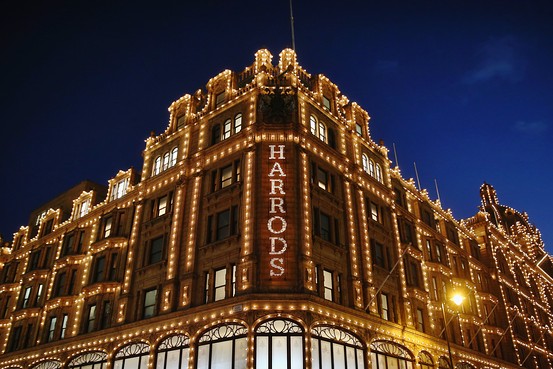
Harrods Hopes Prince William Hoopla in China Will Bring a Boost – China Real Time Report – WSJ

For every five pounds spent by a Chinese tourist in the United Kingdom, just over one quid is spent at upscale department store Harrods.

No wonder, then, that company managing director Michael Ward is in Shanghai this week, hoping the hoopla around Britain’s Prince William’s four-day visit to China will bring even more Chinese shoppers through Harrods’ doors.

“It’s a hugely important part of our business,” Mr. Ward told China Real Time Tuesday. He said such tourists would become increasingly important as outbound tourism from China takes off.

Hong Kong brokerage firm CLSA expects the total number of Chinese outbound travelers to hit 200 million annually in 2020—that’s around double last year’s figures.

Mr. Ward declined to share specific figures for Chinese tourists, but he said by nationality, they top the league of store visitors in terms of spending.

By contrast, Americans barely scraped into the top ten—far behind shoppers from countries such as Nigeria and Thailand, he said.

While Chinese tourists may top the list of spenders at high-end Harrods, a report issued last year by British bank Barclays saBCS -2.61%id Chinese tourists ranked tenth in terms of tourist spending in the U.K, spending around £550 million in 2013 (around $850 million),. Barclay’s forecasted that by 2017, Chinese tourists would have moved up to fifth place with annual total spending in the U.K. in excess of £1 billion.

Still, the chilling effects of China’s current economic woes are being felt in faraway Harrods of London. “This year we’ve seen a much slower takeup,” said Mr. Ward.

via Harrods Hopes Prince William Hoopla in China Will Bring a Boost – China Real Time Report – WSJ.

04/03/2015

Shaolin Monks Put Payment Down on First Foreign Temple – China Real Time Report – WSJ

China’s Shaolin Temple, known for its legendary martial arts, wants to replicate its ancient ways Down Under – and it is prepared to pay up to support its vision.

Abbot Shi Yongxin handed over a check of more than 4 million Australian dollars ($3.13 million) to Joanna Gash, mayor of Shoalhaven, in southeast Australia, clearing the outstanding payment on the sale of a slot of land, according to a statement posted on the coastal city government’s website late last month. The payment is part of an expected US$300 million investment in Australia to open a temple there, the Shaolin Temple’s first outside China.

The deal marks the latest move by Mr. Shi – sometimes called the CEO Monk in China – to extend and commercialize the legend of the ancient Chinese temple. The Shaolin brand, which is managed by the Shaolin Intangible Assets Management Co. Ltd., has set up more than 40 cultural institutions around the globe, Xinhua said.

Mr. Shi himself is a member of Chinese People’s Political Consultative Conference, a national political advisory group that is currently holding its once-a-year meeting in Beijing.

Mr. Shi told the official Xinhua News Agency that the construction of a Shaolin culture center has been kicked off in New South Wales of Australia and will likely be completed next year, Xinhua reported on Tuesday. A preliminary blueprint includes a Buddhist temple, a Kung Fu school, a medical center, a golf course as well as a resort hotel.

via Shaolin Monks Put Payment Down on First Foreign Temple – China Real Time Report – WSJ.

04/03/2015

China hopes novice environment chief will be breath of fresh air | Reuters

One year after “declaring war” on pollution, China has appointed an inexperienced outsider as its new environment minister tasked with breathing life into a massive clean-up campaign that even optimists say will take decades to complete.

A woman covers her nose and mouth with her scarf amid heavy haze, as she rides a bicycle at the Pudong financial area in Shanghai, February 12, 2015.  REUTERS/Aly Song

Beijing has vowed to reverse the damage done to its skies, rivers and soil during China’s three-decade dash for growth, putting its under-resourced environment ministry under pressure to deliver results.

Leading that drive will be Chen Jining, 51, an environmental scientist and president of China’s prestigious Tsinghua University, who was appointed the country’s Minister of Environmental Protection on Friday.

As China’s annual parliament opens this week, Chen will need to show an increasingly angry public that the environment remains one of the top priorities, while reassuring thousands of regional delegates that there is still room for economic growth.

via China hopes novice environment chief will be breath of fresh air | Reuters.

Law of Unintended Consequences

continuously updated blog about China & India

ChiaHou's Book Reviews

continuously updated blog about China & India

What's wrong with the world; and its economy

continuously updated blog about China & India