Archive for December, 2018

15/12/2018

India boy travels 280km to meet cricket idol Navjot Singh Sidhu

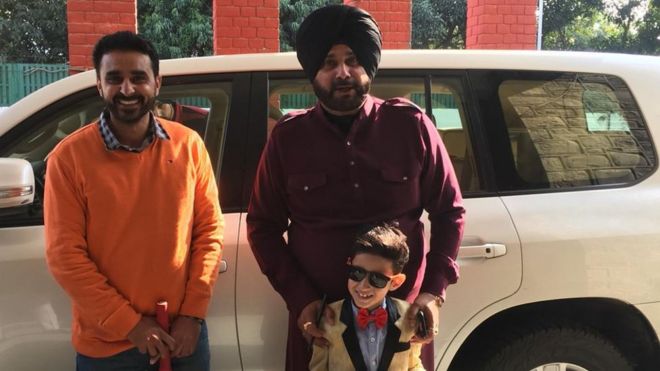
Waris Dhillon's father, Waris Dhillon and Navjot Singh Sidhu
Image captionNavjot Singh Sidhu (R) with Waris Dhillon and his father

A seven-year-old boy in the northern Indian state of Punjab travelled 280km (124 miles) from his home to get an autograph from cricketer turned politician Navjot Singh Sidhu.

Waris Dhillon had begged his father to drive him to Chandigarh city so that he could meet his idol.

Dressed in a gold jacket and red bow tie, Waris waited for six hours before Mr Sidhu signed his cricket bat.

“He is my favourite cricketer,” the boy told BBC Punjabi’s Arvind Chhabra.

Waris waited patiently for his turn on Friday amid the many journalists who had gathered outside the home of Mr Sidhu, who is in charge of three ministries in Punjab.

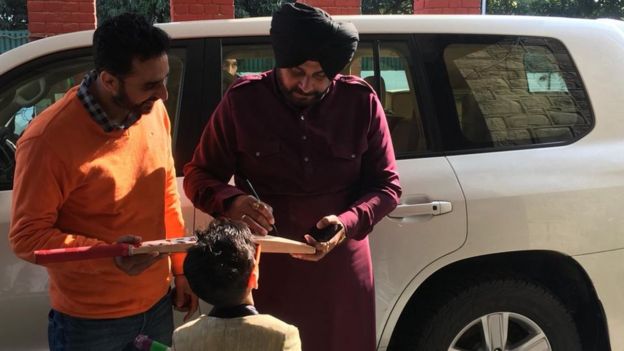
After the crowd dispersed, someone told Mr Sidhu that a “little fan” had been waiting for hours to get an autograph. The politician called him in and hugged him before signing two cricket bats that Waris had brought along.

Waris Dhillon gets his cricket bats signed by Mr Sidhu
Image captionWaris, 7, said he was inspired by Mr Sidhu

“I have been asking my father to take me to meet him for months now,” said Waris, adding that he loves to play cricket and was inspired by Mr Sidhu.

His father said they drove from Bathinda to Chandigarh, which took about six hours, so that Waris could finally meet his cricket idol.

Mr Sidhu played cricket for more than 19 years and rose to fame for his hard-hitting and flamboyant batting skills. After retirement, he became a popular sports commentator, gaining attention for his wisecracks, which are often referred to as Sidhuisms.

He joined politics in 2004 and quickly became known for being outspoken and controversial.

He was convicted in 2006 for manslaughter by a high court in Punjab for beating up a man during a parking dispute. The man later died.

In May 2018, his conviction was overturned by the Supreme Court on appeal.

15/12/2018

Thirteen miners trapped in coal mine in northern India after flooding

GUWAHATI, India (Reuters) – Rescue workers were trying on Friday to reach 13 miners trapped underground in a coal mine in India’s remote northeastern Meghalaya state since the previous day, authorities said.

The mine is an old, illegal so-called rat-hole mine, they said. Rat-hole mines are common in Meghalaya as they are dug by villagers but are very dangerous as the coal is pulled out from narrow, horizontal seams.

Meghalaya Chief Minister Conrad Sangma said authorities had no information on the condition of the miners.

“We are praying that they come out alive,” he told Reuters by telephone from the state capital Shillong.

A flash flood from a nearby river on Thursday raced through the mine, which is located near a dense forest, said Sylvester Nongtngr, police chief of the East Jaintia Hills district of Meghalaya.

Nearly all mines in Meghalaya, which borders Bangladesh, use the rat-hole mining method, even though they are not legal and authorities try to crack down on them.

Workers, often children, descend hundreds of feet on bamboo ladders to dig out the coal from small holes, often leading to accidents.

15/12/2018

Seven dead as Indian police fire on Kashmir protesters

SRINAGAR, India (Reuters) – Seven civilians died and dozens were injured when Indian security forces opened fire at people protesting the killing of three militants in a gun battle in restive Kashmir on Saturday, police said.

People offer the funeral prayers of Zahoor Ahmad, a suspected militant, who according to local media reports was killed during a gun battle with Indian soldiers, in Sirnoo village in south Kashmir’s Pulwama district

December 15, 2018. REUTERS/Danish Ismail


Defence spokesman Colonel Rajesh Kalia said an operation was launched in the morning in response to intelligence reports about the presence of militants in a village in Pulwama district, south of the state’s summer capital Srinagar.

“During the operation militants fired upon troops, leading to a gun battle in which three militants were killed,” he said.

A senior police officer, who was not authorised to speak to the media, said large numbers of local people then gathered at the site, leading to clashes between them and security forces in which seven people were killed and about 50 injured.

An eyewitness, Mohammad Ayuob, told Reuters Indian troops fired at the locals when they tried to retrieve the body of a militant.

Jammu and Kashmir is mainly Hindu India’s only Muslim-majority state. India and Pakistan both rule the region in part but claim in full. India accuses Pakistan of fomenting trouble in its part of Kashmir, a charge Islamabad denies.

The Himalayan state has been particularly tense over the past few months as Prime Minister Narendra Modi’s Hindu nationalist party pulled out of local government, leaving a power void.

Widespread protests have broken out in Srinagar and other parts of Kashmir over the killings. Security has been tightened and troops rushed to potential hotspots. A curfew was imposed in Pulwama town and surrounding areas, according to media reports.

The separatist group Hurriyat Conference called for a three-day strike and protests across Kashmir.

“Bullets and pellets rain!” its Chairman Mirwaiz Omar tweeted, adding that their supporters would march towards an army cantonment on Monday so that the Indian government can “kill all of us at one time rather than killing us daily”.

Authorities have suspended train services in the Kashmir Valley and shut down mobile internet services to try and prevent the unrest from spreading.

Indian security forces say they have killed 242 militants this year. In addition, 101 civilians and 82 security officials have also died, according to officials. The total death toll in violence is the highest in more than a decade.

15/12/2018

Mystery shrouds death of 11 people who consumed temple food in Karnataka

Police confirm that the symptoms of the patients are consistent with poisoning through organophosphate,a common pesticide. Samples of the food have been sent for analysis.

INDIA Updated: Dec 15, 2018 20:16 IST

Vikram Gopal
Vikram Gopal
Sulawadi (Karnataka)
temple,prasad,Karnataka
Eleven people died and around 90 are in hospital, with the condition of many, including around 10 children, critical after eating food served at the Kicchugathi Maramma temple. (HT Photo)

A posse of policemen sits in the shade, keeping an eye on the people gathered in front of the unimposing structure of the Kicchugathi Maramma temple. On farmland opposite the temple, three forest officials are trying to manage a crowd gathered to see the carcasses of dead crows, around 20 of them.

This is the scene at Sulawadi, 200 km from Bengaluru, a day after 11 people died after eating food served at the temple. Around 90 are in hospital, with the condition of many, including around 10 children, critical. The crows died when they ate the food that was thrown away. By Saturday afternoon, Sulwadi has become a magnet for people from neighbouring villages.

Police confirm that the symptoms of the patients are consistent with poisoning through organophosphate,a common pesticide. Samples of the food have been sent for analysis.

Japamalai, a former gram panchayat member of the village, which is located 5 km from the Tamil Nadu border, stands at the centre of the clearing in front of the temple, eager to tell all the outsiders about the politics of the village, which he believes is at the heart of the tragedy, and others pitch in to fill the gaps.

According to them, tensions flared up in the village over the control of the temple, highly revered in the area. It is one of the temples that believers of the Om Shakti cult visit on the way to Melmaruvathur in Tamil Nadu, which has traditions much like the Sabarimala temple, including vows of purity that range from one week to 48 days.

Chinnappi, one of five persons taken in for questioning, was the chief trustee of the temple and nurtured ambitions of building a new dome for the temple. This was opposed by Immadi Mahadeva Swamy, “who also wished to have control of the trust”, Japamalai said. Many claim it was this fight that led to one faction adding pesticide in the food.

On Friday, Chinnappi held a small feast for about 100 people as part of a stone laying ceremony for the construction of the new dome. Among those who were present at the time were a large number of Om Shakti devotees who were passing by and decided to partake of the meal.

Around 20 crows died when they ate the food that was thrown away. (HT Photo)

Murugappa, one of the locals, said there was a foul smell in the food, but people continued to eat it. “Only a few of us threw the food away because there is a belief that you can’t refuse temple food.”

The only problem with this conspiracy theory is that the three cooks ate the food and are in hospital. Dharmender Singh Meena, Superintendent of Police for the district, said the three, Eeranna, Lokesh and Puttaswamy are in critical condition in a hospital in Mysuru.

Puttaswamy’s daughter Anita died after consuming the food, he added. “While it is almost certain at this point that there was poisoning we cannot be sure if there was criminal intent involved because the cooks have taken ill,” Meena said.

Indeed, locals at Sulawadi find it hard to understand how the food could have been poisoned. The kitchen is located behind the temple, where the trust has built a shelter for devotees who wished to rest there. All three cooks were on the payroll of the temple trust for years, Japamalai said.

Japamalai and Murugappa said the trouble began around 1 pm when some people complained of feeling sick. “Soon, people were throwing up on the side of the road and others just fell down,” Murugappa said.

About 40 km from Sulawadi, a large group of people have gathered at the government hospital in Hanur town, waiting to collect the body of Shantaraju, a Dalit from nearby Bidarahalli, who was at the temple as part of the Om Shakti devotees’ group.

Nagaraj, Shantaraju’s brother-in-law, asks his other relatives who gathered at the spot to sit down for a flash protest. “We will not leave this place till the accused is produced in front of us and we are allowed to dispense justice,” he says, before the policemen present at the spot calm him down.

Currently, 93 people are undergoing treatment at various hospitals in Mysuru, the minister in charge of the district, C Puttarangashetty said. “It is clear that there is foul play involved and we have asked the police to bring the guilty to book at the soonest,” he said. Of the 93, 29 are said to be in a critical condition.

The police are awaiting the results of tests conducted by the forensics lab in Mysuru to see if it throws up any more clues. “At present, we are questioning five people, Chinnappi, Mahadesha, Mahadeva and two others, whose identities cannot be revealed at this moment,” Meena said. “We have sent viscera and food samples to the forensics lab and I personally asked them to expedite the process,” he added.

Karnataka Chief minister HD Kumaraswamy announced a compensation of Rs 5 lakh each for the families of the deceased.

15/12/2018

China jails boss of 100 billion yuan pyramid scheme for inciting protests

BEIJING (Reuters) – A Chinese court has jailed for 17 years a businessman who ran a 100 billion yuan pyramid scheme and organised a rare street protest in Beijing against police investigations into his activities, state media reported.

Zhang Tianming and nine other staff from his company, Shenzhen-based Shan Xin Hui, were found guilty in a hearing on Friday of running a multi-level marketing company and of disturbing social order.

Shuangpai County People’s Court in central Hunan province handed Zhang a 17-year jail sentence and a 100 million yuan fine after he used social media to organise a public protest involving more than 600 people from his marketing platform, state broadcaster CCTV reported late on Friday.

The investors took to the streets of the capital in July last year, holding banners and shouting slogans, which obstructed and defied police work, the court said.

Zhang’s company had lured investors with promises of high rates of return on projects that were meant to help the poor, but had instead paid out early members purely using funds from new joiners, a court investigation found.

Nearly 6 million people and over 100 billion yuan ($14.48 billion) were involved in the scheme, the court said.

The nine other executives were handed prison sentences ranging from 18 months to 10 years, it said.

Reuters was unable to contact Zhang or the other nine individuals.

Beijing police detained 67 Shan Xin Hui investors for disturbing social order in July last year after they staged a rare protest on the heavily guarded streets of the capital.

Investors told Reuters at the time that they had come to complain that the company had been dealt a huge injustice and that it had genuinely helped a lot of poor people. They said by detaining its leaders, the government had unfairly targeted the company, which they called a charity.

The government has repeatedly vowed to crack down on financial crime and fraud. In 2016, Chinese authorities shut down peer-to-peer lender Ezubao over an online scam that state media said took in some 50 billion yuan from about 900,000 investors.

15/12/2018

Boeing opens first 737 plant in China amid U.S.-Sino trade war

ZHOUSHAN, China (Reuters) – Boeing Co (BA.N) opened its first 737 completion plant in China on Saturday, a strategic investment aimed at building a sales lead over arch-rival Airbus (AIR.PA) in one of the world’s top travel markets that has been overshadowed by the U.S-China trade war.

The world’s largest planemaker also delivered the first of its top-selling 737s completed at the facility in Zhoushan, about 290 km (180 miles) southeast of Shanghai, to state carrier Air China (601111.SS)(0753.HK) during a ceremony on Saturday with top executives from both companies.

The executives, alongside representatives from China’s state planner and aviation regulator, unveiled the plane at an event attended by hundreds of people.

Boeing and Airbus have been expanding their footprint in China as they vie for orders in the fast-growing aviation market, which is expected to overtake the United States as the world’s largest in the next decade.

Boeing invested $33 million last year to take a majority stake in a joint venture with state-owned Commercial Aircraft Corp of China (COMAC) to build the completion center, which installs interiors and paints liveries.

Chicago-based Boeing calls itself the top U.S. exporter and delivered more than one out of every four jetliners it made last year to customers in China, where it forecasts demand for 7,700 new airplanes over the next 20 years valued at $1.2 trillion.

However, the plant’s inaugural ceremony was overshadowed by tensions between the United States and China as they engage in a bruising tit-for-tat tariff war. The world’s two largest economies are in a 90-day detente to negotiate a trade deal.

“Am I nervous about the situation? Yeah, of course. It’s a challenging environment,” John Bruns, President of Boeing China, told reporters on a conference call earlier on Saturday.

“We have to keep our eye on the long game in China. Long term, I’m optimistic we will work our way through this,” he said.

While the trade frictions have hurt businesses such as U.S. soy bean farmers and Chinese manufacturers, their impact on Boeing has been unclear. U.S.-made aircraft have so far escaped Beijing’s tariffs.

Bruns said he remained optimistic about the outcome of trade talks between the United States and China and described aviation as a “bright spot” amid tensions between the two countries.

Asked about the possibility of technology transfer agreements between Boeing and COMAC, Bruns stressed that the purpose of the plant was for installing seats, painting vehicles, and completing the planes’ final delivery.

“That’s only a part of what we do in the production of airplanes,” he said.

Officials and executives made no direct reference to the trade tensions in public remarks at the planemaker’s Zhoushan facility.

Boeing aims eventually to hit a delivery target of 100 planes a year at Zhoushan, although Bruns deflected a question on how quickly it would reach that level and said Boeing had no plans to expand work to other aircraft types.

Boeing also hopes the plant will relieve pressure at the Seattle-area facility where it plans to boost production next year of its best-selling 737 narrowbody aircraft but has struggled with production delays.

15/12/2018

Chinese sociology professor under fire for plagiarising academic papers

  • Nanjing University sociologist Liang Ying has had more than 130 papers published, but at least 15 of them were fraudulent, reports say
  • Academic also criticised for her lackadaisical attitude to teaching, including letting her father take her class
PUBLISHED : Saturday, 15 December, 2018, 9:09pm
UPDATED : Saturday, 15 December, 2018, 10:20pm

A sociology professor known for publishing scores of academic papers in both English and Chinese has been removed from her teaching post by Nanjing University for professional misconduct, according to a statement issued by her employer.

Liang Ying, who is on the faculty of the School of Social and Behavioural Sciences, became the subject of several media reports in October accusing her of plagiarising other people’s work or submitting duplicate manuscripts of at least 15 of her papers. The university said at the time it would investigate the allegations.

In its latest statement, the school said that Liang had “academic ethics and other moral problems” and described her violations as “serious”.

It also said it had “instructed relevant departments … to undertake deep self-reflection and serious self-criticism, and take practical measures to prevent such incidents from happening again”.

Liang, 39, joined Nanjing University in 2009 – where she had earlier completed her doctorate – after gaining a master’s degree from Suzhou University, and doing her postdoctoral research at Peking University and the University of Chicago.

In 2015 she was awarded a place on the Changjiang Scholars Programme, a prestigious award scheme set up by the Ministry of Education.

The university said in its statement that it was applying to have Liang stripped of all of her teaching qualifications and honorary titles.

By the time she joined Nanjing, the then 30-year-old had already had more than 30 papers published. Between 2009 and 2014 she managed to get a further 60 Chinese-language papers into print, and in the years after 2014 had 43 English-language papers published, according to the university’s website.

Despite her prolificacy, investigators discovered that in some instances her work had been either plagiarised or submitted to more than one publication, with only minor changes, China Youth Daily said in a recent report.

The article said that before her dismissal, Liang had since 2014 been asking online publishers to take down her Chinese-language papers on the grounds that her early work was fundamentally flawed.

Her efforts paid off as she succeeded in having more than 120 documents removed from an academic database. She also earned the nickname Professor 404, in reference to the 404 error message displayed online when a webpage cannot be found.

Aside from the allegations of cheating, Liang was also criticised by her students for her lack of commitment and lackadaisical attitude.

According to the newspaper report, the entire student body of her school signed a letter to the university’s administrators complaining about her misconduct as a teacher, including showing up late for lectures, and allowing other students – and sometimes even her father – take the class.

Other students accused Liang of leaving class early, playing with her phone during lectures and threatening to give them low grades if they scored her poorly in their reviews of her.

The university also received complaints about controversial remarks Liang was said to have made in class, including insensitive comments about the “comfort women” who were forced into sexual slavery by the Japanese during their occupation of China in the 1930s and 1940s, the report said.

In another instance, she is said to have boasted about using harrowing videos to trigger distressing memories in survivors of the 1937 Nanking massacre, it said.

Liang defended the research saying she used it to show how traumatic memories had a persistent impact on those areas of the brain that control emotion.

15/12/2018

After the Doolittle Raid: across the generations, second world war ties that bind China and the United State

  • As a museum to the Doolittle Raiders opens, family members visit Chinese villages that rescued the airmen after the 1942 US attack on Tokyo
PUBLISHED : Sunday, 16 December, 2018, 12:01am
UPDATED : Sunday, 16 December, 2018, 12:21am

Weeks ago, in the cool of late October, Thomas Macia finally saw the mountainous land and village homes of Gangfeng county in Jiangxi province he had heard about all his life, territory his father would describe in stories from the second world war.

It was there James Macia, a B-25 navigator, had to bail out and parachute into the rainy night of April 18, 1942 – just hours after bombing Tokyo in the Doolittle Raid, the first-ever air attack on Japan’s home islands, and a turning point in the United States war in the Pacific.

James Macia and his four fellow airmen of Crew 14, including one who was injured, were eventually rescued by local villagers amid bombing by the Japanese army and travelled west until they reached Chongqing, then the capital of Nationalist China.

Thomas Macia, 71, had always been curious about the route his father took through China. He began to identify those locations after James died in 2009, at 93. During a three-day trip in late October, Macia saw the hill where his father landed and spent the night, and spoke with people whose parents or grandparents helped move him to safety.
“It was very gratifying to actually see the terrain and the locations and meet people whose ancestors had protected and assisted my father. Without them, I would not be here today,” said Macia in an email interview from the United States.

Before he left Jiangxi, he wrapped some stones in part of the parachute his father used 76 years ago, and brought them back to his home in Arlington, Virginia.

“I wanted to have a piece of China that represented the area where my father was in 1942. It serves as a tangible connection with the location in China of this very historic and important event in his life, and in the memory of my family,” Macia said.
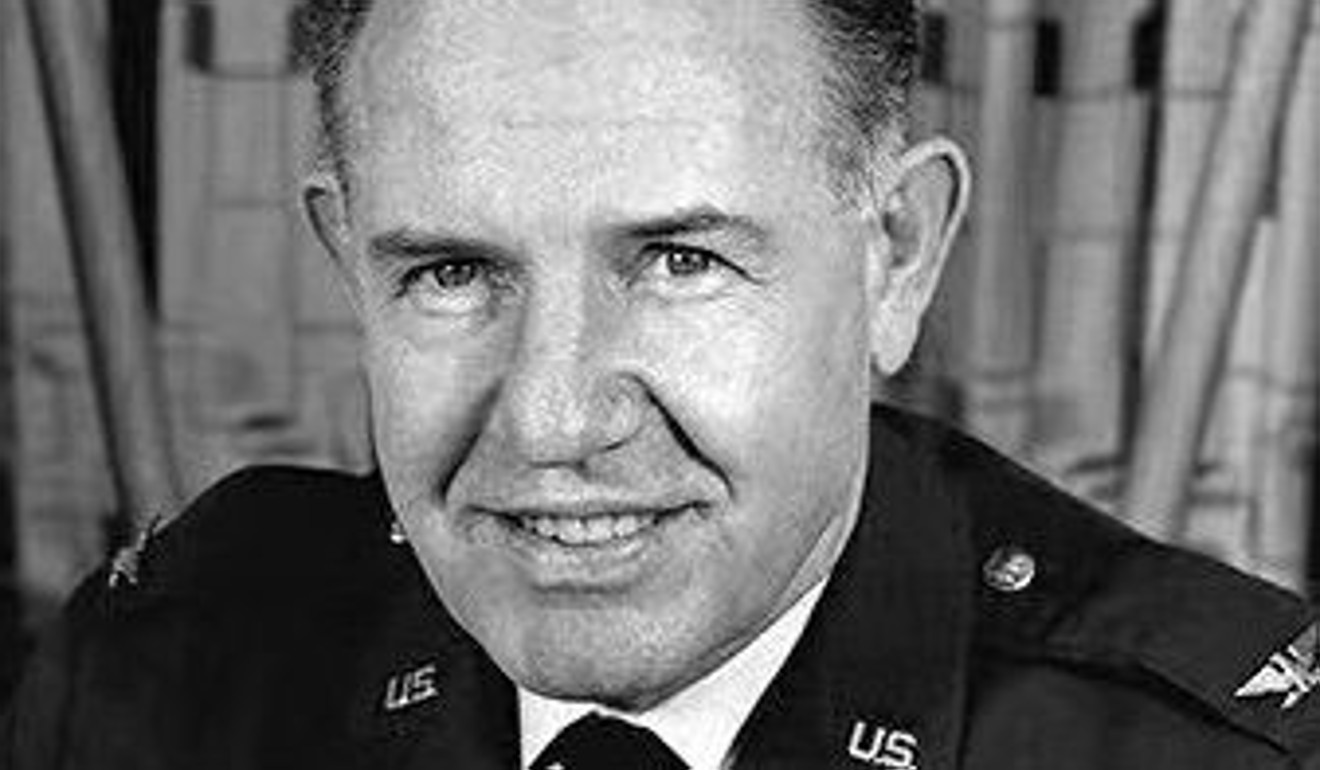
Thomas Macia is a member of Children of Doolittle Raiders, a group of families of the men who took part in the Doolittle Raid. First the men themselves, and now their families, maintained ties with China over the years, even though the Chinese and US governments had their ups and downs in official relations. For the families, the relations formed through the blood and death of their fathers should continue to be nurtured.

The Doolittle Raid involved 80 airmen aboard 16 B-25s, and 75 crash-landed or had to bail out of their planes in Jiangxi, Anhui and Zhejiang provinces, including three who were killed in action and eight captured by the Japanese troops.

Chinese civilians and soldiers helped 64 of the raiders, using stretchers, jampans, doolees, trucks and trains to move the men through war zones to safety within a month.

Over the years, some of the raiders’ children have tried to retrace their steps in China, an act that not only commemorates their fathers’ heroism, but firms their bonds into another generation. Along the way, they lighted the hearts of many Chinese who may not have known the bravery of their own fathers as unsung rescuers.

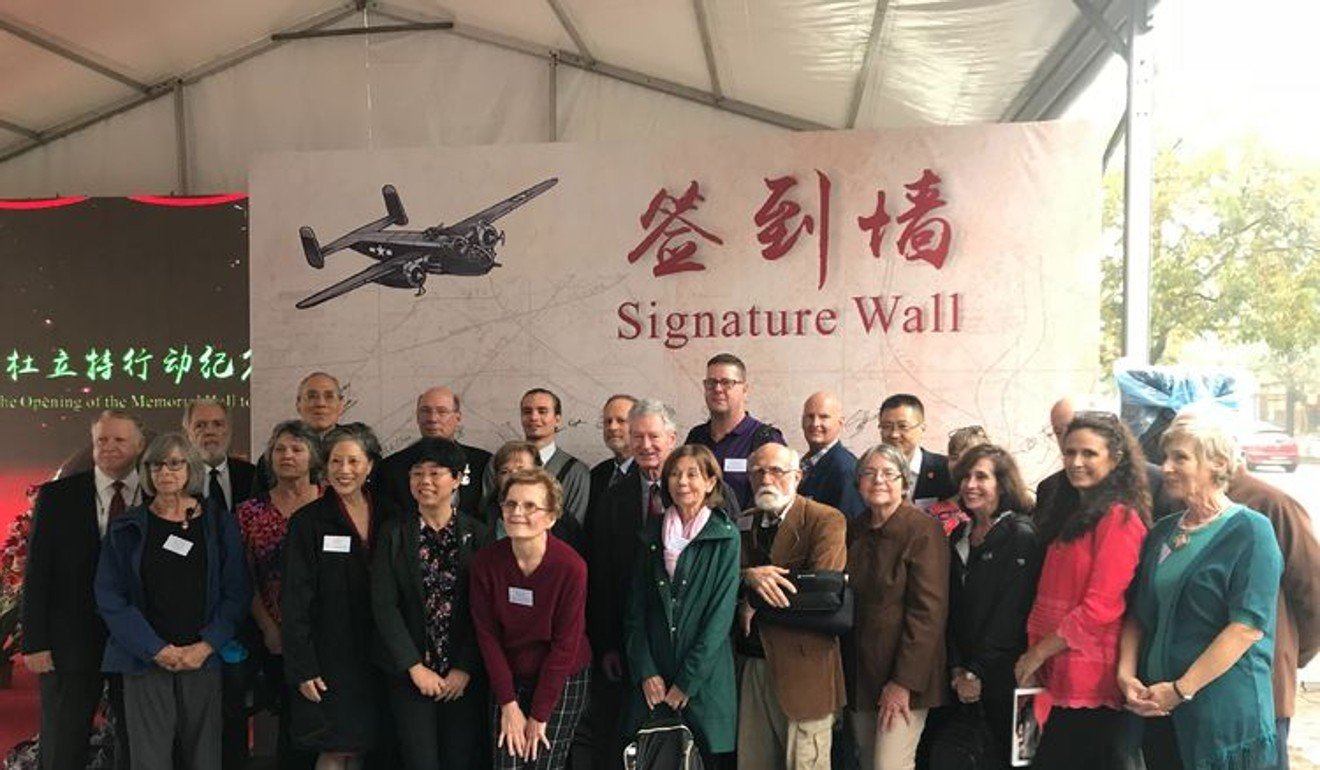
Last month a museum dedicated to the Doolittle Raid opened in a scenic spot in Quzhou, Zhejiang province. Situated in an ancient courtyard with white walls and dark cornices, the museum featured photographic introductions to each raider and exhibited 200 items from the raid, including wreckage from some of the crashed planes.

Quzhou was home to one of three airstrips the raiders planned to land on, had the operation not started hours earlier and farther from Japan than scheduled because the US Navy had been spotted by Japanese picket boats. The Chinese side was not notified of the change in plans and the airfields, where the planes were supposed to land on April 19 to refuel, were not open the night of April 18.

Short of fuel and with no response from the airfields, the raiders had to bail out or crash-land, not knowing for sure whether the area was controlled by Chinese or Japanese troops. In all, 51 raiders ended up in Quzhou before they were smuggled out to safety.

A delegation of 24 Children of Doolittle Raiders members travelled from the US to take part in the museum’s opening ceremony. Also present was a local historian from Shangrao, who later would inform Thomas Macia about the people involved in his father’s rescue.
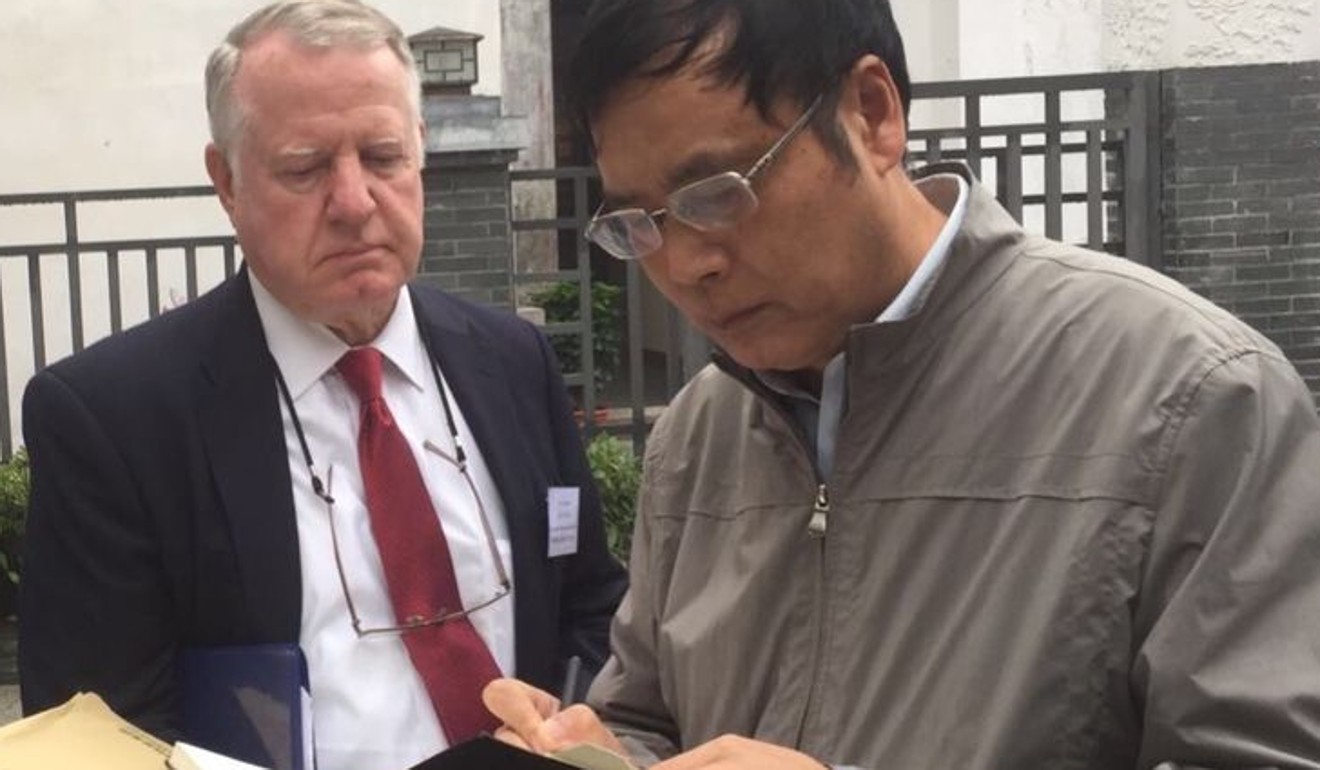
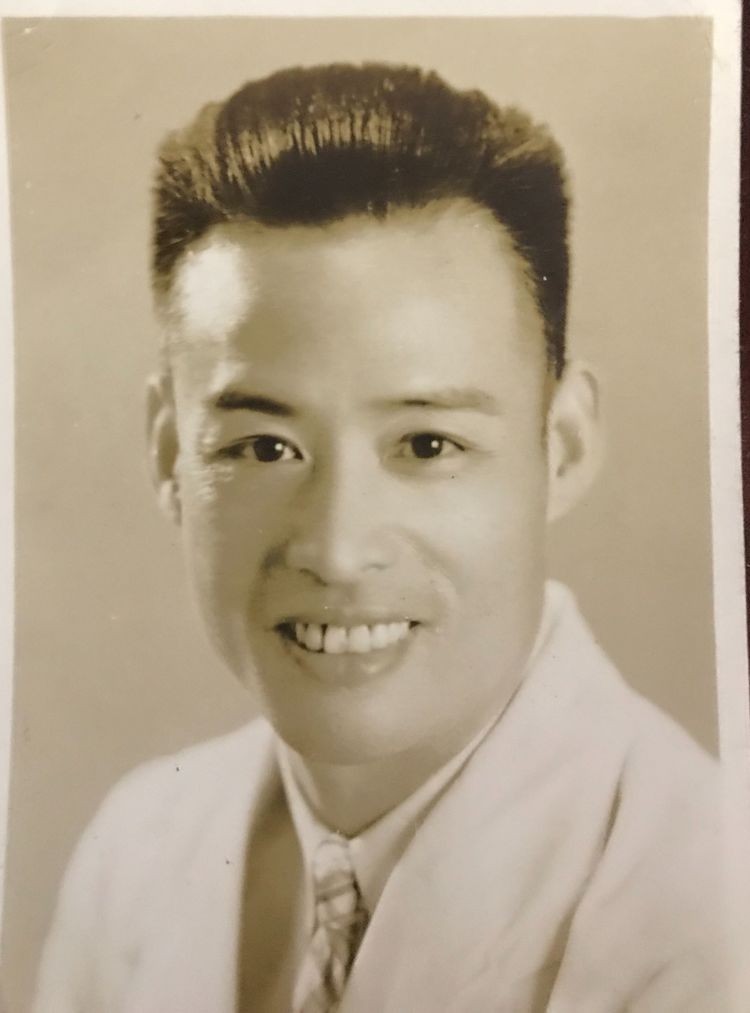
Luo Shiping, a history professor from Shangrao, Jiangxi province, saw the photo album Macia brought along and noticed a name card, which read Dr B C Chen and included an address in Shangrao.

Dr B C Chen was on the list James Macia provided to the US government of those who helped rescue him, but the identity of the man had always been unknown to the son.

With wide connections, Luo sent out a message in his circle and within hours he received word: the card belonged to Dr Chen Baocong, who had been a senior army doctor in the No 3 War Zone Hospital.

Trained in Tongji Medical School in Shanghai, Chen spoke fluent German and English. During the war, he worked as a translator in the hospital and helped treat injured pilots – four crews from Doolittle’s Raid parachuted into the Shangrao area and some had been injured, Luo said.

Chen was better known as one of the organisers of a student movement in Tianjin in 1925 and was thrown in the same prison cell with Zhou Enlai, later the first premier of the People’s Republic of China.

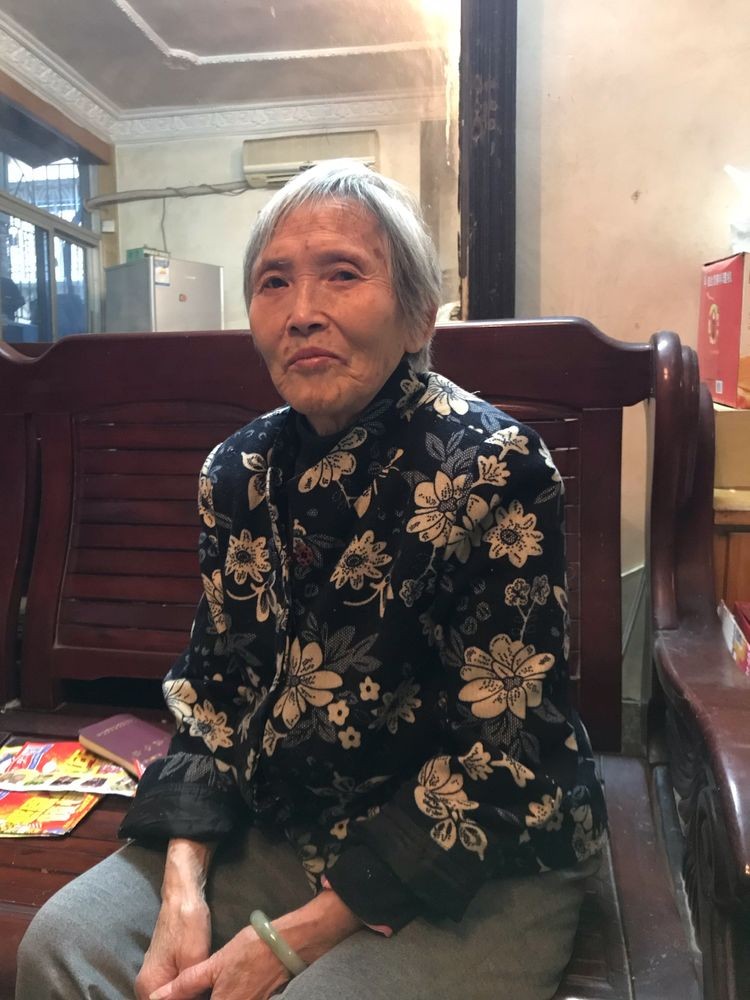
Chen Kangqian, Dr Chen’s youngest daughter, said she was only three in 1942 and had no memory of her father talking about the rescue. She remembered her father as a warm-hearted man who sometimes did not charge patients for consultation and even gave them rice instead.

“I am not surprised that he could be friends with some American airmen,” Chen, now 81, said.

Professor Luo said the tumultuous political environment surrounding the second world war, and the Chinese civil war that followed it, might have led Chen to be quiet about his experience.

Dr Chen was convicted as an anti-revolutionary and thrown into a labour camp in 1951. His wife, Kong Cangzhen, killed herself after seeing others being tortured; their eldest daughter, a first-year medical school student, killed herself a year later, in 1952.

Dr Chen had his name cleared in 1954. He continued his medical career and died in 1983, a highly esteemed doctor.
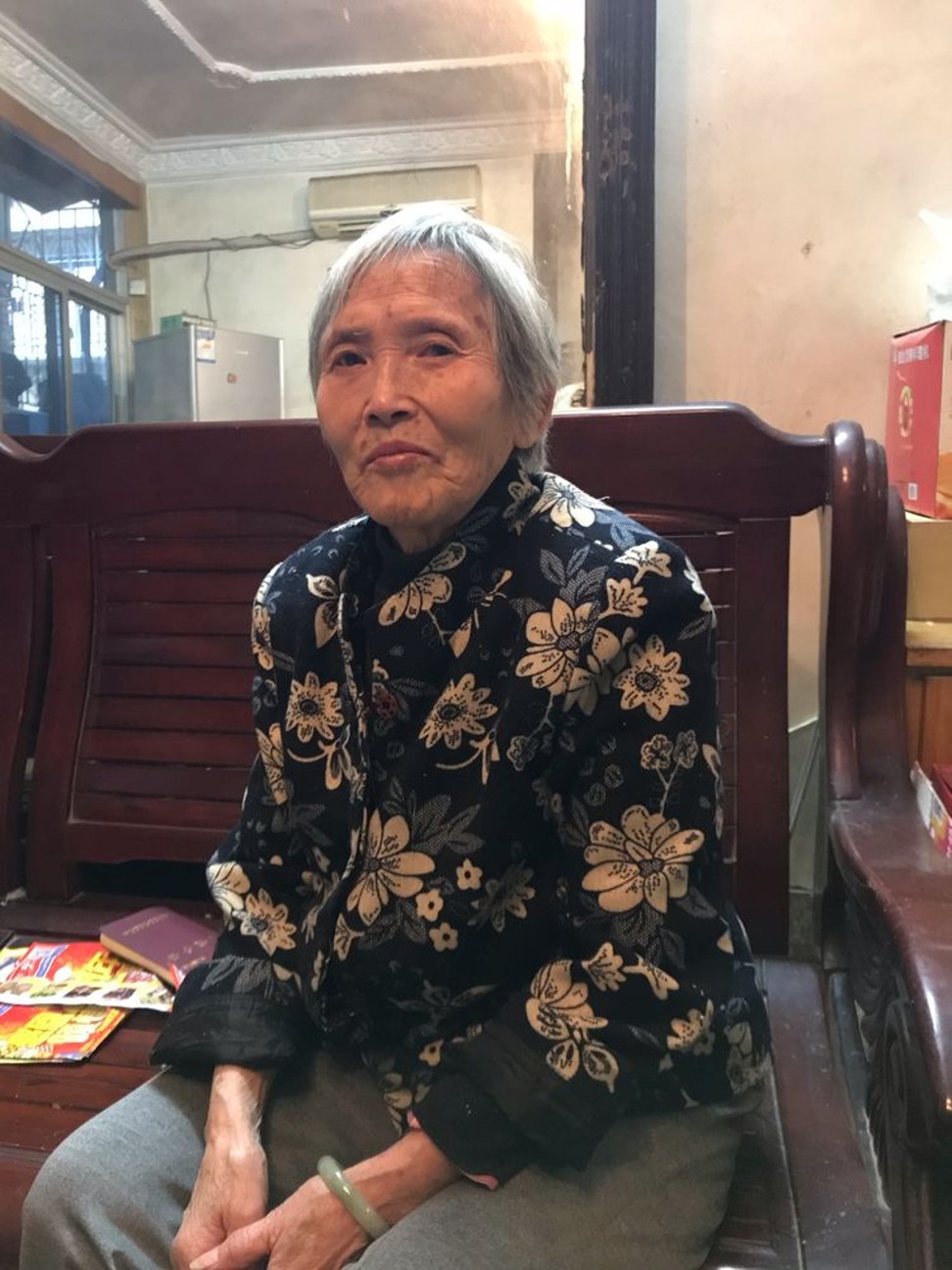
Seeing a picture of her father’s calling card, Chen Kangqian said she felt very emotional.

“If I could meet Mr Macia, I would tell him how grateful I was that the card was kept so well. I am very touched that this card has been cherished by them.”

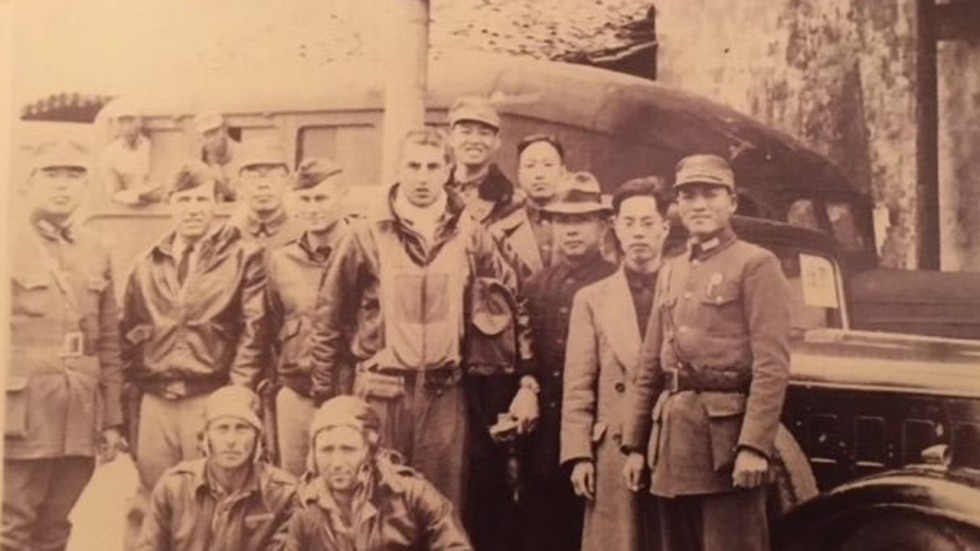
Macia, who maintained an email correspondence with Luo after returning to the United States, sent another photograph of Crew No 14 with three Chinese men before they left Guangfeng county for the No 3 War Zone Headquarters in Shangrao. He asked the professor if he could find the children of those men.

With help of local historians, Luo spent 10 days digging up local archives and was able to identify the men. Wang Fengling was an official in charge of Kuomintang (KMT) party matters; Zhang Renshi, then the Guangfeng county chief; and Zhang Mutao, then the chief of the gendarme regiment.

Wang Fengling died in 1943 and was survived by a son who is now a retired worker in Shangrao. Zhang Mutao followed the KMT to Taiwan in 1949 and died in 1985. He was survived by five children. Zhang Renshi worked in primary school education and died in 1966. Three of his four children have died; the youngest is living in the US.

“The children of the men in this photograph had little memory of their fathers – except that they recognised their father the moment they saw the picture,” Luo said. “Zhang Renshi’s daughter called me from the US and said she had never known her father was Guangfeng county chief and helped save some Americans. She felt so amazed.”

Macia, who had not expected to learn about the men in the picture his father had passed to him, said he felt very fortunate to meet Luo, and through him, the stories of these people.

“It has been very important and informative to me to understand exactly who some of those people were and their roles in saving my father,” Macia said.

China paid dearly for the rescue. Japan retaliated with massacres in at least three villages, and villagers who helped the Doolittle raiders were tortured and killed. Airfields in Zhejiang and Jiangxi endured heavy bombing and the Japanese launched a Zhejiang-Jiangxi campaign a month after the air attack, which eventually saw 250,000 people in the region killed, according to Zheng Weiyong, a historian in Quzhou and author of Fall in China – Doolittle Tokyo Raid.
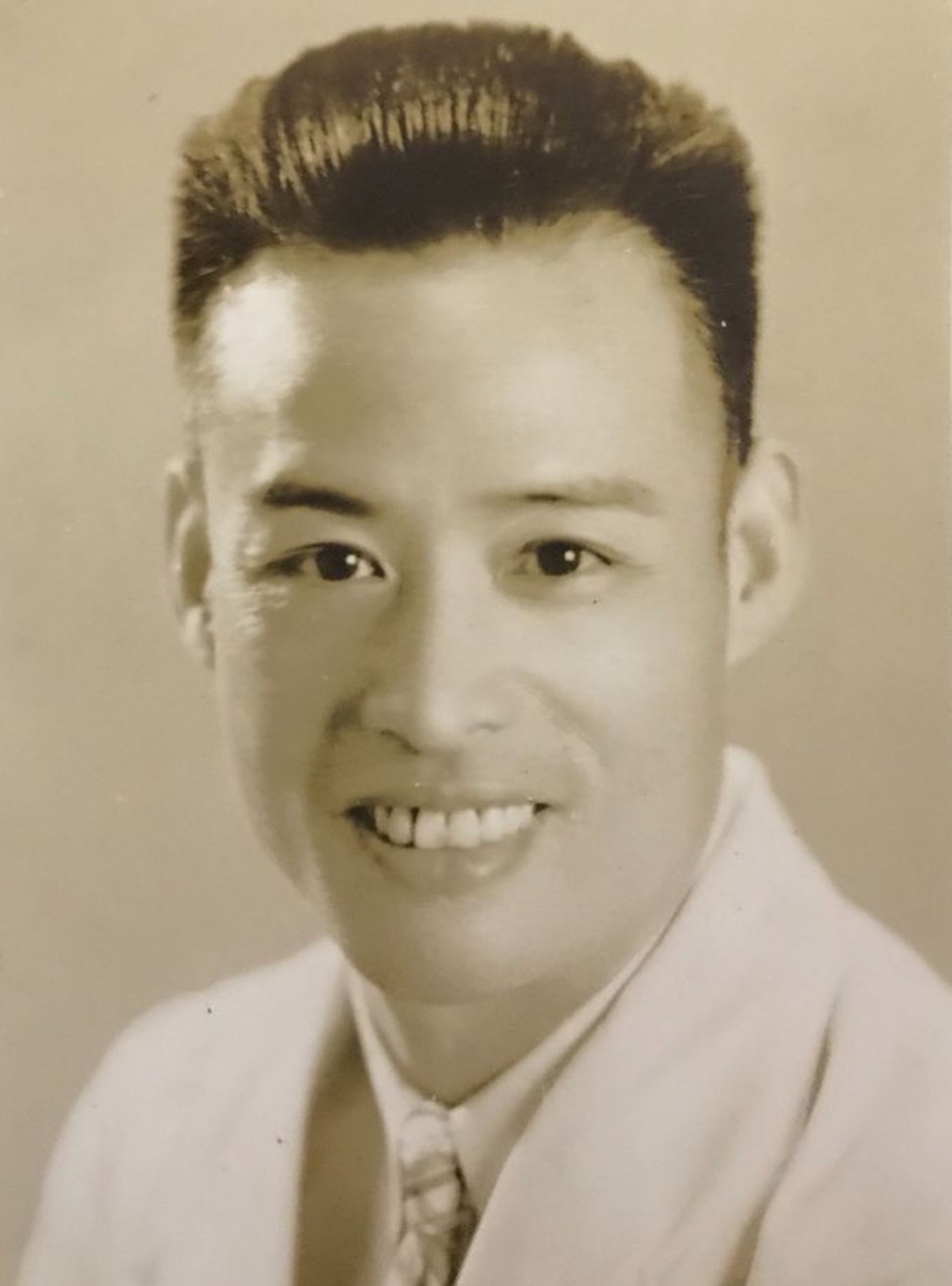
Some rescuers were officially recognised by the US government. Dr Chen Shenyan, who ran the Enze Hospital in Taizhou, Zhejiang, treated the injured airmen and escorted five of them from Taizhou all the way south to Guilin, in Guangxi, and Kunming, Yunnan province, was recommended to work as an army doctor and later invited by the US government to study medicine in the States, which he did: and Johns Hopkins and the University of Southern California.

President Harry Truman played Thirty Seconds Over Tokyo, the 1944 movie depicting the Doolittle Raid and its aftermath, for Chen; according to Zheng, his eyes brimmed with tears when he saw himself depicted in the film.

After the end of the civil war in 1949, contacts between the raiders, their families and China stopped for decades. After the US and China officially established diplomatic ties in 1979, though, contact resumed when John Hilger, the pilot of Crew 14, sent a letter in 1987 to the Shaorang government to express gratitude. Henry Potter, the navigator from crew 1, revisited crash sites in Jiangxi and Zhejiang provinces in 1990 and met Dr Chen Shenyan again.

Over the years since, several raiders and their families have come to China, and some of their rescuers have visited the US.

In 2015 Jeff Thatcher, son of David Thatcher, engineer and gunner of Crew No 7, attended the grand military parade in Beijing commemorating the 70th anniversary of victory over Japan in the second world war.
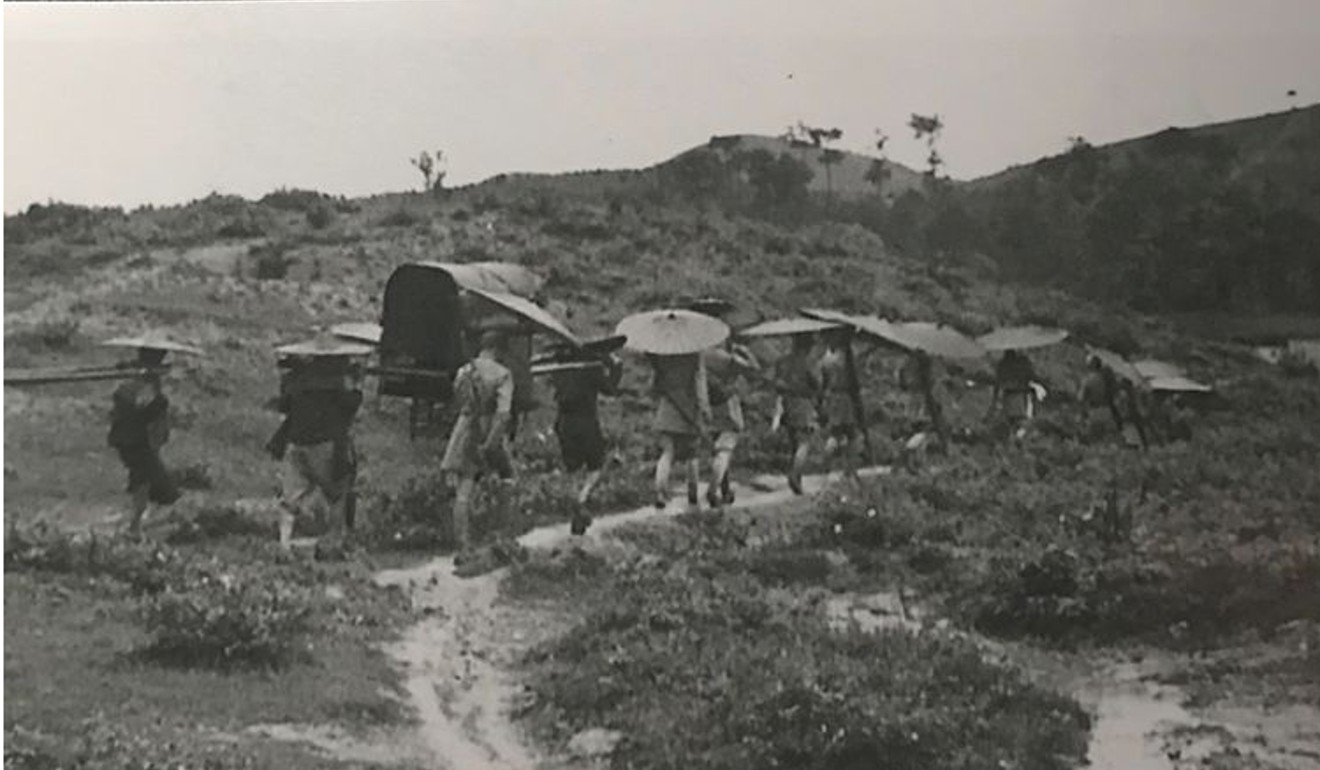
Before attending the parade, Jeff Thatcher interviewed his father about his experience in China. David Thatcher recalled that they had been “treated like royalty”.

Plane 7, nicknamed the Ruptured Duck, crash-landed off Zhejiang province’s Nantian Island and all five crew members were injured, including two seriously. They were found by fishermen who would escort them in doolees to Sanmen and, later, Enze Hospital in Taizhou. The crew eventually travelled more than a month before reaching Guilin, Guangxi.

“They did not have anything, but they gave us all they had,” Thatcher recounted his father as saying. “We played a game of basketball with the Chinese one day. They had never played basketball before.”

After the parade, Jeff Thatcher travelled to Ningbo, Zhejiang province, with two Children of Doolittle Raiders to follow the route his father trekked more than seven decades earlier, from the beach where they landed through stops in Sanmen county, Linhai city and then Quzhou. It was an emotional experience.

“My epiphany occurred the morning I was standing on the beach on Nantian Island close to where my father’s plane had crash-landed. Like the waves crashing in from the South China Sea, I was suddenly overcome by emotion and touched deeply by the scene,” Thatcher said.

“I feel a kinship and a huge debt of gratitude to the Chinese people. If they had not rescued my father and the other members of his crew, I doubt that they would have avoided capture by Japanese troops.”

Three of the airmen captured by the Japanese were executed. Five others were sentenced to life in prison, one of whom died in prison, and the remaining four eventually were rescued in 1945.

On Thatcher’s way from the beach to the village above, where his father’s crew spent the night in a hut, an elderly woman came to him and gave him a metal fire suppression rod. It was made from the engine of the Ruptured Duck that her husband found on the beach after the crash.

Thatcher called his father and told him about the visit to the beach that morning.

“Even though we were half a world apart, I could feel his emotion through the phone,” Thatcher said. David Thatcher died a year later at age 94.

That trip prompted an idea between the raiders’ children and the local historians, to build a museum and start a scholarship at a local school. Thatcher wrote to Quzhou municipal officials to consider building a Doolittle Raid Memorial Hall and the project was agreed.

For the past two years pupils of Quzhou No 2 Middle School wrote essays in English about the Doolittle Raid’s impact on China and three recipients were to receive certificate and a cash prize in US dollars. This year all 12 shortlisted received the prize because the essays were all “creative and well-written”.

Thatcher was proud of the two projects because they brought “new chapters in the history of the Doolittle Raid in China”.

“Both of these endeavours represent cooperative efforts on the parts of our two countries to engender the spirit of friendship and gratitude that began when the Doolittle Raiders bombed Japan on April 18, 1942,” he said.

The historians regarded their dives into the archives and the sharing of memories beyond a quest for the past. Their efforts serve as a lesson for the future, especially when the two countries are sliding into a trade war.

Zheng said that the Doolittle Raiders museum reminded people of both countries that the special friendship was formed during a cruel war and that friendly ties must be nurtured.

“The American friends are grateful for the Chinese who helped them and we wanted to maintain the friendship, too. We should remember the lesson of war, not to repeat it and to let future generations continue to keep the friendly relations,” he said.

15/12/2018

Heavily polluted weather likely to hit parts of China in 10 days: forecast

BEIJING, Dec. 15 (Xinhua) — Affected by “adverse atmospheric diffusion conditions,” heavily polluted weather is like to haunt the Beijing-Tianjin-Hebei area and its surrounding regions in the next 10 days, an official forecast said Saturday.

Beijing, in particular, will see a drastic change in air quality, with moderate or serious pollution to come from Dec. 19 to 22. The arrival of northernly winds will help improve the city’s air quality starting from Dec. 23.

Air pollution in the Beijing-Tianjin-Hebei region will gradually ease around Dec. 24 thanks to a cold air effect, said the Ministry of Ecology and Environment in an air quality report for the rest of December.

In the Yangtze River Delta, air quality is expected to stay good or slightly polluted, while in Fenhe and Weihe river basin in Shanxi and Shaanxi provinces, the chances of lasting serious air pollution are slim.

In the next 10 days, air quality in northeastern China will be about average. The central and western part of Liaoning however might suffer from moderate or serious air pollution on Saturday, with PM 2.5 being the primary pollutant. The pollution process will gradually ease from Sunday to Monday thanks to good atmospheric diffusion.

Air pollution of various degrees is also likely to appear in southern, southwest and northwest China.

15/12/2018

China, Afghanistan, Pakistan reach broad consensus on cooperation, Afghan peace process, anti-terrorism

KABUL, Dec. 15 (Xinhua) — China, Afghanistan and Pakistan reached broad consensus on trilateral cooperation during the foreign ministers’ dialogue between the three sides, Chinese State Councilor and Foreign Minister Wang Yi said here Saturday.

Wang made the remarks when speaking to the press after attending the 2nd China-Afghanistan-Pakistan Foreign Ministers’ Dialogue in Kabul.

Firstly, the three sides agreed to make use of the foreign ministers’ dialogue and relevant mechanisms to strengthen coordination and communication in planning and promoting trilateral cooperation in various fields, Wang said.

Secondly, amid important opportunities in Afghanistan’s reconciliation process, the three sides are willing to strengthen coordination and push for the Taliban’s early return to the negotiation table and reintegration into mainstream politics, Wang said.

Afghanistan is willing to continue push forward the peace plan and push for the resume of peace talks, while China and Pakistan firmly support the Inclusive Afghan-led and Afghan-owned reconciliation process, he said.

Thirdly, Afghanistan and Pakistan agreed to further improve bilateral ties, implement the Afghanistan-Pakistan Action Plan for Peace and Solidarity, boost positive interactions in political, military, economic and security fields, handle disputes through friendly consultation, and properly manage temporarily intractable differences to avoid undermining the improvement of the bilateral ties, said Wang.

Fourthly, the three sides committed to a tightened trilateral cooperation, promising to explore possibilities for projects regarding people’s livelihood and transportation infrastructures, on the basis of personnel exchanges and training, Wang said.

Fifthly, the three sides agreed to promote the construction of the China-proposed Belt and Road Initiatives in a bid to boost regional connectivity and economic development, said the Chinese top diplomat.

China and Pakistan supported Afghanistan to make itself a regional pivot by giving a full play of its geographical advantages and to benefit from regional cooperative projects including the China-Pakistan Economic Corridor, he noted.

Sixthly, the three sides also vowed to implement the newly signed Memorandum of Understanding (MoU) on Counter-Terrorism, enhance dialogues on counter-terrorism policies and push forward pragmatic counter-terrorism cooperation, while taking a strong and firm stand against terrorist organizations including the East Turkestan Islamic Movement, said Wang.

China would offer support and help to Afghanistan and Pakistan regarding counter-terrorism causes and cooperation, he added.

Law of Unintended Consequences

continuously updated blog about China & India

ChiaHou's Book Reviews

continuously updated blog about China & India

What's wrong with the world; and its economy

continuously updated blog about China & India