Chindia Alert: You’ll be Living in their World Very Soon
aims to alert you to the threats and opportunities that China and India present. China and India require serious attention; case of ‘hidden dragon and crouching tiger’.
Without this attention, governments, businesses and, indeed, individuals may find themselves at a great disadvantage sooner rather than later.
The POSTs (front webpages) are mainly 'cuttings' from reliable sources, updated continuously.
The PAGEs (see Tabs, above) attempt to make the information more meaningful by putting some structure to the information we have researched and assembled since 2006.
BEIJING (Reuters) – China’s central bank on Sunday pledged to further support the slowing economy by spurring loans and lowering borrowing costs, following data that showed a sharp drop in February’s bank lending due to seasonal factors.
The central bank is widely expected to ease monetary policy further this year to encourage lending especially to small and private firms vital for growth and job creation.
The central bank’s “prudent” monetary policy will emphasize on counter-cyclical adjustments, said People’s Bank of China (PBOC) Governor Yi Gang, using a phrase that implies the need to fight an economic slowdown.
“The global economy still faces some downward pressure and China faces many risks and challenges in its economy and financial sector,” Yi said at a press conference on the sidelines of the country’s annual meeting of parliament.
There is still some room for the PBOC to cut reserve requirement ratios (RRRs), although the amount of room is less compared with a few years ago, Yi said.
The PBOC has cut the amount of cash that commercial banks need to set aside as reserves five times in the past year to spur lending to small businesses in the private sector. The RRR for big banks is now at 13.5 percent and the ratio for small- to medium-size banks is at 11.5 percent.
Yi said lending rates for small firms are still relatively elevated due to higher risk premiums and the central bank will forge ahead with reforms to lower such risk premiums.
High risk premiums on loans to small firms reflect commercial banks’ traditional reluctance to extend credit to the sector because of concerns about their creditworthiness.
PBOC data on Sunday showed new bank loans in China fell sharply in February from a record the previous month, but the drop was likely due to seasonal factors, while policymakers continue to press lenders to help cash-strapped firms stay afloat.
A pull-back in February’s tally had been widely expected as Chinese banks tend to front-load loans at the beginning of the year to get higher-quality customers and win market share.
Chinese banks made 885.8 billion yuan ($131.81 billion) in net new yuan loans in February, down sharply from a record 3.23 trillion yuan in January, when several other key credit gauges also picked up modestly in response to the central bank’s policy easing.
Yi said combined January-February new loans and total social financing (TSF), a broad measure of credit and liquidity in the economy, could paint a more accurate picture as they showed a rise of 374.8 billion yuan and 1.05 trillion yuan from a year earlier, respectively.
DEBT DEFAULTS
Analysts say China needs to revive weak credit growth to help head off a sharper economic slowdown this year, but investors are worried about a further jump in corporate debt and the risk to banks as they relax their lending standards.
Corporate bond defaults hit a record last year, while banks’ non-performing loan ratio notched a 10-year high.
Pan Gongsheng, a vice governor at the PBOC, told the same briefing that China will control the amount of bond defaults in 2019, using both legal and market means.
Pan conceded that bond defaults increased last year, but the level of defaults was not high compared with China’s average bad loan ratio.
Premier Li Keqiang told parliament on Tuesday that monetary policy would be “neither too tight nor too loose”. Li also pledged to push for market-based reforms to lower real interest rates.
Chinese policymakers have repeatedly vowed not to open the credit floodgates in an economy already saddled with piles of debt – a legacy of massive stimulus during the global financial crisis in 2008-09 and subsequent downturns.
Sources have told Reuters the central bank is not ready to cut benchmark interest rates just yet, but is likely to cut market-based rates.
Yi said the downward trend in TSF has been initially curbed and broad M2 money supply growth will be more or less in line with nominal gross domestic product growth in 2019, Yi added.
Central bank data showed growth of outstanding TSF, a rough gauge of broad credit conditions, slowed to 10.1 percent in February from January’s 10.4 percent, versus a record low of 9.8 percent in December.
M2 money supply grew 8.0 percent in February from a year earlier, missing forecasts, the central bank data showed. Yi said China’s macro leverage ratio, or the amount of debt relative to GDP, was at 249.4 percent at the end of 2018, a fall of 1.5 percentage points from a year earlier, Yi said.
Analysts note there is a time lag before a jump in lending will translate into growth, suggesting business conditions may get worse before they get better.
Most economists expect a rocky first half before conditions begin to stabilize around mid-year as support measures begin to have a greater impact.
China’s economic growth is expected to cool to around 6.2 percent this year, a 29-year low, according to Reuters polls.
Growth slowed to 6.6 percent last year, with domestic demand curbed by higher borrowing rates and tighter credit conditions and exporters hit by the escalating trade war with the United States.
Image copyrightGETTY IMAGESImage captionAn Indian man watches the news broadcasting images of the released Indian pilot
As tensions between India and Pakistan escalated following a deadly suicide attack last month, there was another battle being played out on the airwaves. Television stations in both countries were accused of sensationalism and partiality. But how far did they take it? The BBC’s Rajini Vaidyanathan in Delhi and Secunder Kermani in Islamabad take a look.
It was drama that was almost made for television.
The relationship between India and Pakistan – tense at the best of times – came to a head on 26 February when India announced it had launched airstrikes on militant camps in Pakistan’s Balakot region as “retaliation” for a suicide attack that had killed 40 troops in Indian-administered Kashmir almost two weeks earlier.
A day later, on 27 February, Pakistan shot down an Indian jet fighter and captured its pilot.
Abhinandan Varthaman was freed as a “peace gesture”, and Pakistan PM Imran Khan warned that neither country could afford a miscalculation, with a nuclear arsenal on each side.
Suddenly people were hooked, India’s TV journalists included.
Image copyrightAFPImage captionIndian PM Narendra Modi is accused of exploiting India-Pakistan hostilities for political gain
So were they more patriots than journalists?
Rajini Vaidyanathan: Indian television networks showed no restraint when it came to their breathless coverage of the story. Rolling news was at fever pitch.
The coverage often fell into jingoism and nationalism, with headlines such as “Pakistan teaches India a lesson”, “Dastardly Pakistan”, and “Stay Calm and Back India” prominently displayed on screens.
Some reporters and commentators called for India to use missiles and strike back. One reporter in south India hosted an entire segment dressed in combat fatigues, holding a toy gun.
And while I was reporting on the return of the Indian pilot at the international border between the two countries in the northern city of Amritsar, I saw a woman getting an Indian flag painted on her cheek. “I’m a journalist too,” she said, as she smiled at me in slight embarrassment.
Print journalist Salil Tripathi wrote a scathing critique of the way reporters in both India and Pakistan covered the events, arguing they had lost all sense of impartiality and perspective. “Not one of the fulminating television-news anchors exhibited the criticality demanded of their profession,” she said.
Media captionIndia and Pakistan’s ‘war-mongering’ media
Secunder Kermani: Shortly after shooting down at least one Indian plane last week, the Pakistani military held a press conference.
As it ended, the journalists there began chanting “Pakistan Zindabad” (Long Live Pakistan). It wasn’t the only example of “journalistic patriotism” during the recent crisis.
Two anchors from private channel 92 News donned military uniforms as they presented the news – though other Pakistani journalists criticised their decision.
But on the whole, while Indian TV presenters angrily demanded military action, journalists in Pakistan were more restrained, with many mocking what they called the “war mongering and hysteria” across the border.
In response to Indian media reports about farmers refusing to export tomatoes to Pakistan anymore for instance, one popular presenter tweeted about a “Tomatical strike” – a reference to Indian claims they carried out a “surgical strike” in 2016 during another period of conflict between the countries.
Media analyst Adnan Rehmat noted that while the Pakistani media did play a “peace monger as opposed to a warmonger” role, in doing so, it was following the lead of Pakistani officials who warned against the risks of escalation, which “served as a cue for the media.”
What were they reporting?
Rajini Vaidyanathan: As TV networks furiously broadcast bulletins from makeshift “war rooms” complete with virtual reality missiles, questions were raised not just about the reporters but what they were reporting.
Indian channels were quick to swallow the government version of events, rather than question or challenge it, said Shailaja Bajpai, media editor at The Print. “The media has stopped asking any kind of legitimate questions, by and large,” she said. “There’s no pretence of objectiveness.”
In recent years in fact, a handful of commentators have complained about the lack of critical questioning in the Indian media.
Image copyrightAFPImage captionIndians celebrated news of the strikes
“For some in the Indian press corps the very thought of challenging the ‘official version’ of events is the equivalent of being anti-national”, said Ms Bajpai. “We know there have been intelligence lapses but nobody is questioning that.”
Senior defence and science reporter Pallava Bagla agreed. “The first casualty in a war is always factual information. Sometimes nationalistic fervour can make facts fade away,” he said.
This critique isn’t unique to India, or even this period in time. During the 2003 Iraq war, western journalists embedded with their country’s militaries were also, on many occasions, simply reporting the official narrative.
Secunder Kermani: In Pakistan, both media and public reacted with scepticism to Indian claims about the damage caused by the airstrikes in Balakot, which India claimed killed a large number of Jaish-e-Mohammad (JeM) militants in a training camp.
Hamid Mir, one of the most influential TV anchors in the country travelled to the area and proclaimed, “We haven’t seen any such (militant) infrastructure… we haven’t seen any bodies, any funerals.”
“Actually,” he paused, “We have found one body… this crow.” The camera panned down to a dead crow, while Mr Mir asked viewers if the crow “looks like a terrorist or not?”
There seems to be no evidence to substantiate Indian claims that a militant training camp was hit, but other journalists working for international outlets, including the BBC, found evidence of a madrassa, linked to JeM, near the site.
Image copyrightPLANET LABS INC./HANDOUT VIA REUTERSImage captionThe satellite image shows a close-up of a madrassa near Balakot in Pakistan’s Khyber Paktunkhwa
A photo of a signpost giving directions to the madrassa even surfaced on social media. It described the madrassa as being “under the supervision of Masood Azhar”. Mr Azhar is the founder of JeM.
The signpost’s existence was confirmed by a BBC reporter and Al Jazeera, though by the time Reuters visited it had apparently been removed. Despite this, the madrassa and its links received little to no coverage in the Pakistani press.
Media analyst Adnan Rehmat told the BBC that “there was no emphasis on investigating independently or thoroughly enough” the status of the madrassa.
In Pakistan, reporting on alleged links between the intelligence services and militant groups is often seen as a “red line”. Journalists fear for their physical safety, whilst editors know their newspapers or TV channels could face severe pressure if they publish anything that could be construed as “anti-state”.
Who did it better: Khan or Modi?
Rajini Vaidyanathan: With a general election due in a few months, PM Narendra Modi continued with his campaign schedule, mentioning the crisis in some of his stump speeches. But he never directly addressed the ongoing tensions through an address to the nation or a press conference.
This was not a surprise. Mr Modi rarely holds news conference or gives interviews to the media. When news of the suicide attack broke, Mr Modi was criticised for continuing with a photo shoot.
Image copyrightAFPImage captionImran Khan was praised for his measured approach
The leader of the main opposition Congress party, Rahul Gandhi, dubbed him a “Prime Time Minister” claiming the PM had carried on filming for three hours. PM Modi has also been accused of managing his military response as a way to court votes.
At a campaign rally in his home state of Gujarat he seemed unflustered by his critics, quipping “they’re busy with strikes on Modi, and Modi is launching strikes on terror.”
Secunder Kermani: Imran Khan won praise even from many of his critics in Pakistan, for his measured approach to the conflict. In two appearances on state TV, and one in parliament, he appeared firm, but also called for dialogue with India.
His stance helped set the comparatively more measured tone for Pakistani media coverage.
Officials in Islamabad, buoyed by Mr Khan’s decision to release the captured Indian pilot, have portrayed themselves as the more responsible side, which made overtures for peace.
On Twitter, a hashtag calling for Mr Khan to be awarded a Nobel Peace Prize was trending for a while. But his lack of specific references to JeM, mean internationally there is likely to be scepticism, at least initially, about his claims that Pakistan will no longer tolerate militant groups targeting India.
NEW DELHI (Reuters) – India’s election commission issued a notice asking political parties not to use images of the country’s armed forces in their campaign posters and other advertising during its upcoming general election.
The notice followed pictures posted to social media recently showing the ruling Bharatiya Janata Party used images in their campaign posters of a captured Indian Air Force pilot recently returned by Pakistan after a clash with India over the disputed Kashmir territory.
The Election Commission said in a notice on its website on Saturday that political parties must refrain from using photographs of defence personnel in advertisements or their election campaign propaganda as the armed forces are “apolitical and neutral stakeholders in a modern democracy.”
The commission cited a 2013 order that said photographs of defence personnel should not be used “in any manner in advertisement/propaganda/campaigning or in any another other manner in connections with elections by political parties and candidates.”
It called for “strict compliance” with the order.
The pilot, Abhinandan Varthaman, was shot down on Feb. 27 by Pakistani aircraft during clashes between the two nuclear-armed powers that began after a terror attack last month in Kashmir that killed 40 Indian paramilitary police.
India blamed Pakistan for the attack and harbouring the militants that claimed responsibility for the attack. Pakistan denies the charges.
India later attacked a site inside Pakistan it claimed was a militant training camp. That triggered aerial clashes that led to Varthaman’s capture. Pakistan released him last week as a peace gesture.
Indian Prime Minister Narendra Modi hailed his release and claimed the clashes with Pakistan were an Indian victory. Nationalistic passions in India have risen since the terror attack.
Recent social media posts showed a campaign poster on a billboard in Indian capital of New Delhi with Varthaman’s face alongside Modi’s, along with the words: “If Modi is in power, it is possible! NaMo again 2019!” NaMo is an acronym for Modi.
Later on Sunday, the Election Commission is due to announce the polling schedule for the upcoming general election, which will be the world’s biggest democratic exercise.
Prime Minister Narendra Modi on Sunday praised the Central Industrial Security Force (CISF) for playing a major role in ensuring the security of the country’s national assets.
SNS Web | New Delhi | March 10, 2019 2:18 pm
Prime Minister Narendra Modi on Sunday praised the Central Industrial Security Force (CISF) for playing a major role in ensuring the security of the country’s national assets.
At the 50th Raising Day ceremony of the central armed police force, the PM pointed at the threat from Pakistan.
“Enough is enough,” he said, while referring to the terror attacks in Pulwama and Uri, adding, “We cannot keep suffering till eternity.”
The PM said that protecting nation is a challenging thing because of the hostile neighbour.
“Your achievement is important because when neighbour is hostile, incapable to fight war, conspiracies to hit the nation internally find a safe haven there, and terrorism shows its face in different forms then protecting the nation becomes challenging,” said the PM.
He acknowledged that providing security to establishments where lakhs of people come daily is a task that is incomparable to any.
“The task of providing security to an establishment where over 30 lakh people come daily and every face is different is far more than security to a VIP,” he said at the golden jubilee ceremony in Indirapuram in Uttar Pradesh’s Ghaziabad.
The PM added that there was a need to spread awareness among the public regarding the security aspect.
“There is a need to educate the citizens because if they do not cooperate then the task of CISF becomes even more difficult,” he said.
Recalling the services of the CISF in the rescue efforts following the Kerala floods, the PM said that the force has given an invaluable contribution in tackling natural calamities and humanitarian crises in India and abroad.
“Your contribution in natural calamities is praiseworthy. You saved the lives of thousands in the recent Kerala floods,” he said, adding, “CISF has also played its role whenever humanity has come under threat in the world.”
Before addressing the CISF personnel, the PM laid a wreath at the Martyr’s Memorial.
He also reviewed the parade of the CISF and presented the Police and Fire Service Medals for distinguished and meritorious services.
The event was attended by Minister of State for External Affairs VK Singh, Ministers of State for Home Affairs Kiren Rijiju and Hansraj Gangaram Ahir.
Raised in 1969, the CISF has currently over 1.5 lakh personnel who provide security to vital installations of the country, including 61 airports, seaports, Delhi Metro and various state-owned industries.
FUZHOU, March 9 (Xinhua) — Youth-led startups in cultural and creative industries are adding new vitality to economic development in Quanzhou, a city which is more than 1,700 years old and has been a crucial hub of global maritime commerce for centuries.
In an active commercial area in urban Quanzhou, Fujian Province, one can hardly imagine a finely refurbished cluster of buildings — accommodating more than 6,000 young people with creative ideas — were once deserted plants built in the 1980s and 1990s.
“It was like an area totally forgotten by the city that was developing so well,” Zhang Shunan, one of the developers, recalled his amazement when he encountered the industrial heritage with some friends ten years ago. “We wanted to add value to it in the city’s economic growth process.”
With support from the local government, Zhang and his two friends led a group of young people to transform the space into a cultural and creative industrial park, known as Live SHOW Wonderland.
“Quanzhou has a strong base in the manufacturing industry, with many national brands and listed enterprises. But youth-led startups in the service industry have not sufficiently matched the city’s development,” said Zhang.
“We see this gap as an opportunity,” he said. “We want to gather them to play a role in the city’s industrial development.”
Zhang and his team founded Live Show Culture & Tourism Development Group, to take charge of the park’s management.
“We provide them with various support and services, such as helping enterprises deal with the government and other industries, and organize seminars and forums on entrepreneurship and creative industries,” said Wu Fong-yu, general manager of Live SHOW Wonderland.
Many startups draw inspiration from Quanzhou’s history and culture and provide services to enhance the city’s charm.
Quanzhou Film and Picture Center in the park is equipped with advanced studios and technologies to integrate the city’s images, catering to governmental and corporate needs to produce promotional videos.
“Quanzhou is a city of entrepreneurship,” said Wu, who was encouraged by the spirit of young urbanites. “Young people here act fast and have a strong will to cooperate.”
Yang Shufen, an illustrator who had been working for companies since she graduated, finally has her own studio and a chance to realize her dream.
“I’ve always wanted to integrate my paintings with local cultural elements into gadgets for daily use,” she said with a smile, hands softly stroking colorful silk scarves hanging in the studio. “Quanzhou embraces open ideas and has a long tradition of business engagement. Young people are brave enough to explore new things, but their minds are deeply attached to their hometown.”
WASHINGTON, March 8 (Xinhua) — The Chinese Embassy in Washington D.C. will hold a celebration marking the 40th anniversary of sister city relationships between Chinese and U.S. cities, it said in a statement Friday.
Officials of U.S. states, cities, and towns that have sister city ties with their Chinese counterparts are expected to join the celebration on Wednesday, which will be co-hosted by both the Chinese embassy and Sister Cities International (SCI), a non-profit organization that promotes local level ties between the United States and other countries.
The event would also celebrate the 40th anniversary of the China-U.S. diplomatic relations, the embassy’s statement said.
BEIJING, March 9 (Xinhua) — China will expand the mixed ownership reform to more than 100 state-owned enterprises (SOEs), an official with the country’s state-asset regulator said Saturday.
“There will be more than 100 SOEs in the fourth batch of mixed ownership reform, which will be pushed ahead in key areas,” Xiao Yaqing, head of the State-owned Assets Supervision and Administration Commission of the State Council, said at a press conference on the sidelines of the annual legislative session.
Since 2016, China has selected 50 SOEs in three batches to conduct the pilot reform in fields including power, energy, civil aviation, telecommunications, and defence.
The first three batches have done a good job in exploring and experimenting with the means, equity ratio and governance structure of mixed ownership, Xiao said.
Next, China will create a sound environment for the reform so that enterprises of all kinds of ownership can realize integrated and common development, he added.
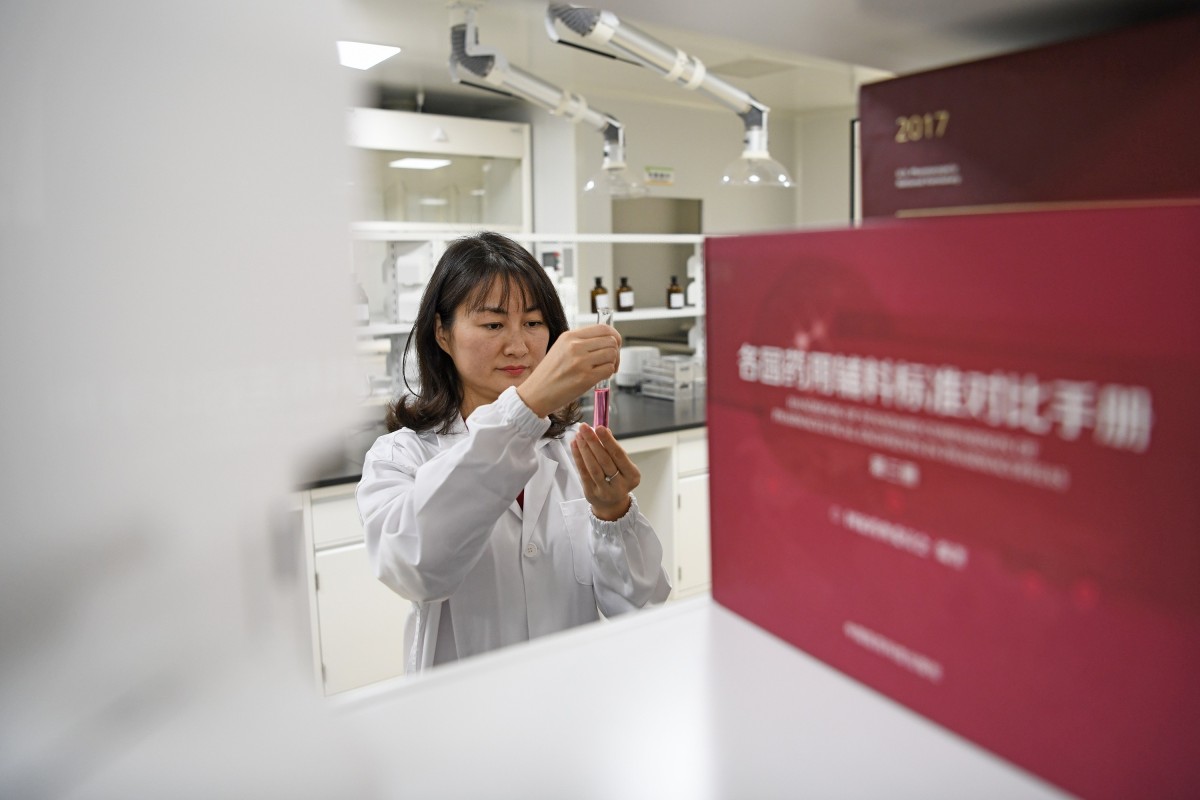
Researchers say they spend so much time on grant applications that they get no time to do science
Funding applications are said to be too onerous and inflexible
Chinese scientists say funding applications are too onerous and restrictive. Photo: Xinhua
Chinese scientists are appealing for a bigger say over research funding as they buckle under a rigid and bureaucratic application system.
The appeal from delegates to the country’s peak advisory body, the Chinese People’s Political Consultative Conference, comes as the central government prepares to launch a pilot project that will give research teams greater flexibility in the way funds are used.
Despite slowing economic growth, the central government also plans to increase the budget for science and technology by 13.4 per cent this year to 354.31 billion yuan (US$52.7 billion) as Beijing tries to challenge the United States in the race for high technology.
But researchers have been hampered by a funding structure that demands they clearly state the use of their research and submit a detailed plan with a deadline for delivery of results.
Application rules have become stricter in the last few years, partly a result of a crackdown on corruption, which has led to a dozen university presidents and top scientists being arrested for embezzling research and infrastructure funding.
Chinese science minister warns scientists not to overstep ethical bounds after He Jiankui’s gene-edited babies scandal
CPPCC delegate Yuan Zhiming, an agricultural scientist from the Chinese Academy of Sciences in Wuhan, said he spent so much time filling out funding applications that he did not have time to do any research.
“It’s not easy to complete the budget with detailed outcomes, because I don’t already know my research results,” Yuan said in an open panel discussion on the sidelines of the CPPCC.
Wang Liming, a CPPCC delegate from China National Nuclear Corporation, agreed, saying funding applications were too onerous and inflexible. “Money earmarked for buying soy sauce cannot be used to buy vinegar,” he joked.
People’s Daily, the Communist Party’s mouthpiece, reported in December 2016 that it took a scientist a month to finish an annual report for a regular research project and much longer for a major one.
The fears about more bureaucracy in research intensified last year when the National Natural Science Foundation – which manages science funding and promotes research – was downgraded and put under the Ministry of Science and Technology.
The authorities said the change was aimed at strengthening the government’s “research-driven development strategy” and “optimising the distribution of funding on science and technology”, while scientists said it meant funding approval would be more stringent.
China’s science and tech minister calls on private enterprises to develop ‘core technologies’
But senior Chinese officials said they understood the need to speed up research for China to transform itself into an innovation powerhouse.
Science and Technology Minister Wang Zhigang said on Friday that China would overhaul the way funding was managed to give researchers more incentives.
“The ministry [of science and technology] has done a series of things to ease the burden on researchers, so that they will not be bothered by forms, reimbursements, titles and prizes and have more time to do real research,” Wang said.
“The upcoming reforms will be centred on how to ignite researchers’ enthusiasm, initiative and creativity.”
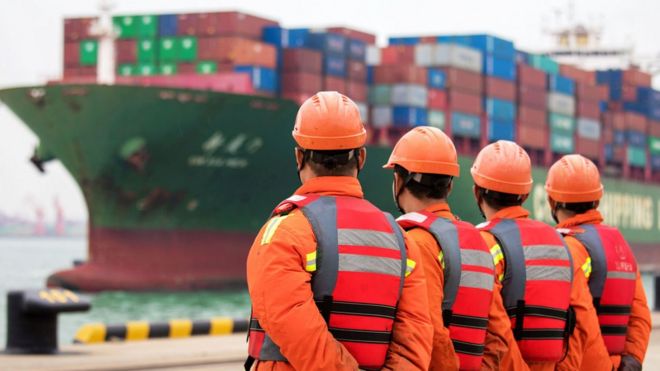
Even though officials have sounded more positive about negotiations with the US recently, failure to achieve a deal would see tariffs on $200bn (£152bn) of Chinese goods rise almost immediately and could see the US impose fresh tariffs.
Still, Mr Evans-Pritchard said “broader weakness in global demand means that, even if Trump and Xi finalise a trade deal soon, the outlook for exports remains gloomy.”
HANOI (Reuters) – Vietnam is seeking clarification of how a fishing boat came to sink this week in the contested South China Sea, the Foreign Ministry said on Saturday, days after a local rescue agency said it was rammed by a Chinese vessel.
Vietnam and China have long been embroiled in maritime disputes in the potentially energy-rich stretch of water, called East Sea by Vietnam.
The boat sank on Wednesday near Da Loi island in the Paracel Archipelago, the ministry said in an emailed statement. It said all five fishermen on board were rescued by another Vietnamese fishing boat.
“Vietnamese authorities are continuing to clarify the cause of the incident,” the ministry said, without elaborating.



 CHINDIA ALERT: You'll be living in their world, very soon
India and Pakistan: How the war was fought in TV studios
As tensions between India and Pakistan escalated following a deadly suicide attack last month, there was another battle being played out on the airwaves. Television stations in both countries were accused of sensationalism and partiality. But how far did they take it? The BBC’s Rajini Vaidyanathan in Delhi and Secunder Kermani in Islamabad take a look.
It was drama that was almost made for television.
The relationship between India and Pakistan – tense at the best of times – came to a head on 26 February when India announced it had launched airstrikes on militant camps in Pakistan’s Balakot region as “retaliation” for a suicide attack that had killed 40 troops in Indian-administered Kashmir almost two weeks earlier.
A day later, on 27 February, Pakistan shot down an Indian jet fighter and captured its pilot.
Abhinandan Varthaman was freed as a “peace gesture”, and Pakistan PM Imran Khan warned that neither country could afford a miscalculation, with a nuclear arsenal on each side.
Suddenly people were hooked, India’s TV journalists included.
So were they more patriots than journalists?
Rajini Vaidyanathan: Indian television networks showed no restraint when it came to their breathless coverage of the story. Rolling news was at fever pitch.
The coverage often fell into jingoism and nationalism, with headlines such as “Pakistan teaches India a lesson”, “Dastardly Pakistan”, and “Stay Calm and Back India” prominently displayed on screens.
Some reporters and commentators called for India to use missiles and strike back. One reporter in south India hosted an entire segment dressed in combat fatigues, holding a toy gun.
And while I was reporting on the return of the Indian pilot at the international border between the two countries in the northern city of Amritsar, I saw a woman getting an Indian flag painted on her cheek. “I’m a journalist too,” she said, as she smiled at me in slight embarrassment.
Print journalist Salil Tripathi wrote a scathing critique of the way reporters in both India and Pakistan covered the events, arguing they had lost all sense of impartiality and perspective. “Not one of the fulminating television-news anchors exhibited the criticality demanded of their profession,” she said.
Secunder Kermani: Shortly after shooting down at least one Indian plane last week, the Pakistani military held a press conference.
As it ended, the journalists there began chanting “Pakistan Zindabad” (Long Live Pakistan). It wasn’t the only example of “journalistic patriotism” during the recent crisis.
Two anchors from private channel 92 News donned military uniforms as they presented the news – though other Pakistani journalists criticised their decision.
But on the whole, while Indian TV presenters angrily demanded military action, journalists in Pakistan were more restrained, with many mocking what they called the “war mongering and hysteria” across the border.
In response to Indian media reports about farmers refusing to export tomatoes to Pakistan anymore for instance, one popular presenter tweeted about a “Tomatical strike” – a reference to Indian claims they carried out a “surgical strike” in 2016 during another period of conflict between the countries.
Media analyst Adnan Rehmat noted that while the Pakistani media did play a “peace monger as opposed to a warmonger” role, in doing so, it was following the lead of Pakistani officials who warned against the risks of escalation, which “served as a cue for the media.”
What were they reporting?
Rajini Vaidyanathan: As TV networks furiously broadcast bulletins from makeshift “war rooms” complete with virtual reality missiles, questions were raised not just about the reporters but what they were reporting.
Indian channels were quick to swallow the government version of events, rather than question or challenge it, said Shailaja Bajpai, media editor at The Print. “The media has stopped asking any kind of legitimate questions, by and large,” she said. “There’s no pretence of objectiveness.”
In recent years in fact, a handful of commentators have complained about the lack of critical questioning in the Indian media.
“For some in the Indian press corps the very thought of challenging the ‘official version’ of events is the equivalent of being anti-national”, said Ms Bajpai. “We know there have been intelligence lapses but nobody is questioning that.”
Senior defence and science reporter Pallava Bagla agreed. “The first casualty in a war is always factual information. Sometimes nationalistic fervour can make facts fade away,” he said.
This critique isn’t unique to India, or even this period in time. During the 2003 Iraq war, western journalists embedded with their country’s militaries were also, on many occasions, simply reporting the official narrative.
Secunder Kermani: In Pakistan, both media and public reacted with scepticism to Indian claims about the damage caused by the airstrikes in Balakot, which India claimed killed a large number of Jaish-e-Mohammad (JeM) militants in a training camp.
Hamid Mir, one of the most influential TV anchors in the country travelled to the area and proclaimed, “We haven’t seen any such (militant) infrastructure… we haven’t seen any bodies, any funerals.”
“Actually,” he paused, “We have found one body… this crow.” The camera panned down to a dead crow, while Mr Mir asked viewers if the crow “looks like a terrorist or not?”
There seems to be no evidence to substantiate Indian claims that a militant training camp was hit, but other journalists working for international outlets, including the BBC, found evidence of a madrassa, linked to JeM, near the site.
A photo of a signpost giving directions to the madrassa even surfaced on social media. It described the madrassa as being “under the supervision of Masood Azhar”. Mr Azhar is the founder of JeM.
The signpost’s existence was confirmed by a BBC reporter and Al Jazeera, though by the time Reuters visited it had apparently been removed. Despite this, the madrassa and its links received little to no coverage in the Pakistani press.
Media analyst Adnan Rehmat told the BBC that “there was no emphasis on investigating independently or thoroughly enough” the status of the madrassa.
In Pakistan, reporting on alleged links between the intelligence services and militant groups is often seen as a “red line”. Journalists fear for their physical safety, whilst editors know their newspapers or TV channels could face severe pressure if they publish anything that could be construed as “anti-state”.
Who did it better: Khan or Modi?
Rajini Vaidyanathan: With a general election due in a few months, PM Narendra Modi continued with his campaign schedule, mentioning the crisis in some of his stump speeches. But he never directly addressed the ongoing tensions through an address to the nation or a press conference.
This was not a surprise. Mr Modi rarely holds news conference or gives interviews to the media. When news of the suicide attack broke, Mr Modi was criticised for continuing with a photo shoot.
The leader of the main opposition Congress party, Rahul Gandhi, dubbed him a “Prime Time Minister” claiming the PM had carried on filming for three hours. PM Modi has also been accused of managing his military response as a way to court votes.
At a campaign rally in his home state of Gujarat he seemed unflustered by his critics, quipping “they’re busy with strikes on Modi, and Modi is launching strikes on terror.”
Secunder Kermani: Imran Khan won praise even from many of his critics in Pakistan, for his measured approach to the conflict. In two appearances on state TV, and one in parliament, he appeared firm, but also called for dialogue with India.
His stance helped set the comparatively more measured tone for Pakistani media coverage.
Officials in Islamabad, buoyed by Mr Khan’s decision to release the captured Indian pilot, have portrayed themselves as the more responsible side, which made overtures for peace.
On Twitter, a hashtag calling for Mr Khan to be awarded a Nobel Peace Prize was trending for a while. But his lack of specific references to JeM, mean internationally there is likely to be scepticism, at least initially, about his claims that Pakistan will no longer tolerate militant groups targeting India.
Source: The BBC
Posted in Adnan Rehmat, airstrikes, airwaves, Al Jazeera, Balakot, BBC, BBC reporter, campaign schedule, casualty, combat fatigues, commentators, congress party, critical questioning, Dastardly Pakistan, Delhi, escalation, factual information, fought, general election, Hamid Mir, hashtag, Imran Khan, India alert, Indian jet fighter, international border, Islamabad, Islamist militant groups, Jaish-e-Mohammad (JeM), JeM, jingoism and nationalism, Journalist, Kashmir, madrassa, Masood Azhar, Media analyst, media editor, militant camps, militants, missiles, nationalistic fervour, Nobel Peace Prize, Pakistan, Pakistani, Pakistani military, Pallava Bagla, pilot, PM Narendra Modi, press, press conference, Prime Time Minister, rahul gandhi, Rajini Vaidyanathan, red line, retaliation, Reuters, Salil Tripathi, Secunder Kermani, Senior defence and science reporter, sensationalism and partiality, Shailaja Bajpai, signpost's, suicide attack, Surgical strike, The Print, Tomatical strike, toy gun, training camp, TV anchors, TV journalists, TV studios, Twitter, Uncategorized, war, war mongering and hysteria, warmonger, Wg Cdr Abhinandan Varthaman | Leave a Comment »