Chindia Alert: You’ll be Living in their World Very Soon
aims to alert you to the threats and opportunities that China and India present. China and India require serious attention; case of ‘hidden dragon and crouching tiger’.
Without this attention, governments, businesses and, indeed, individuals may find themselves at a great disadvantage sooner rather than later.
The POSTs (front webpages) are mainly 'cuttings' from reliable sources, updated continuously.
The PAGEs (see Tabs, above) attempt to make the information more meaningful by putting some structure to the information we have researched and assembled since 2006.
Driver who used map app to find construction site sent to crossing for light traffic
Villagers say bridge was used by pedestrians and cars only
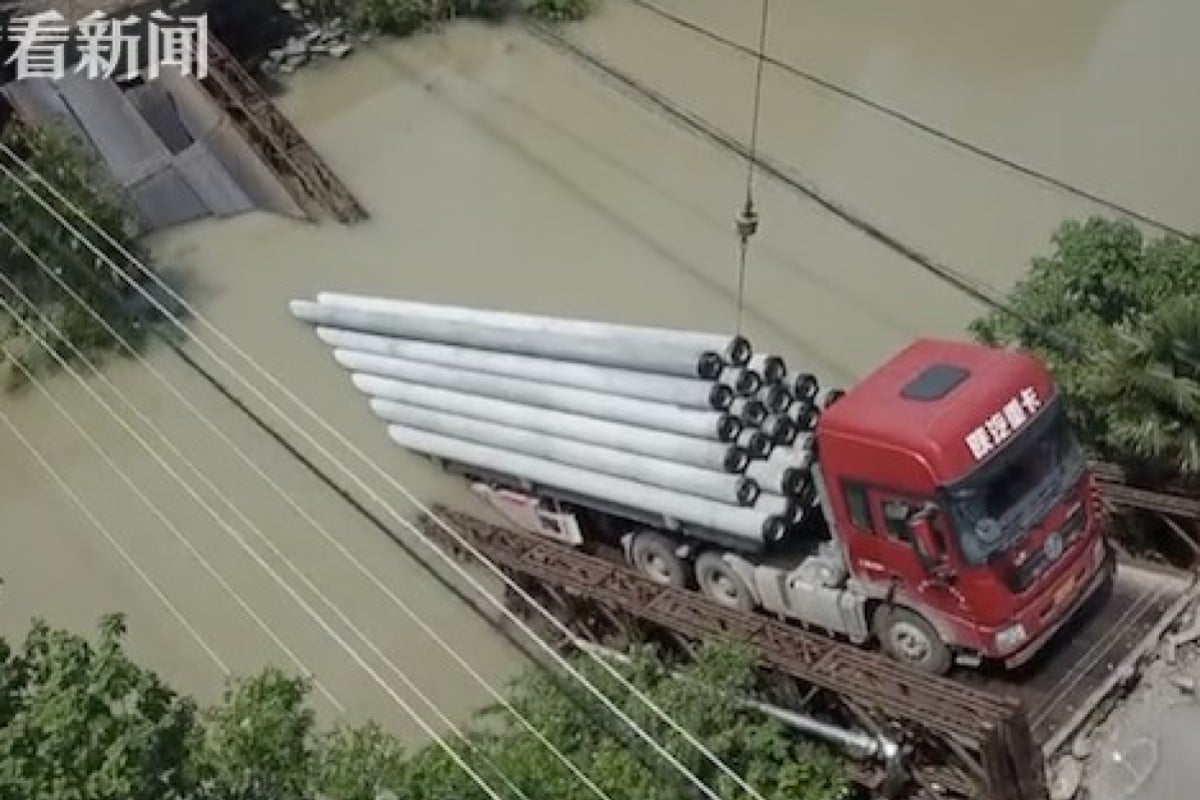
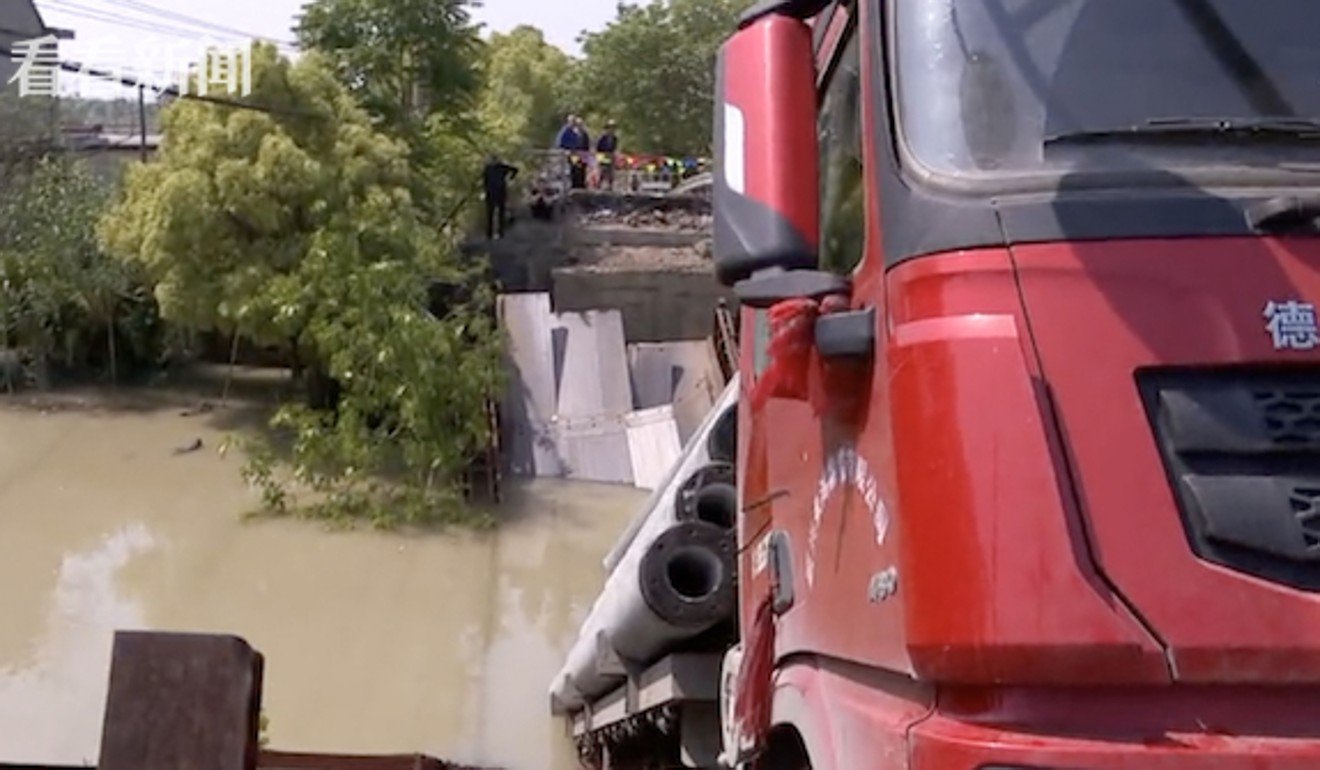
Recovery crews attempt to pull the truck and its load from the river in eastern Zhejiang province. Photo: Weibo
A trucker in eastern Zhejiang province collapsed a steel bridge by crossing it with a load weighing 50 times the bridge’s capacity.
The driver, surnamed Zhang, said he missed the two-tonne load warning sign when he tried to take dozens of concrete pipes to a construction site on Thursday morning, Kankannews.com reported.
He was not familiar with the area and used the bridge suggested by his digital map.
When the laden truck, weighing about 100 tonnes, was halfway across, the structure gave way, pitching the vehicle and its cargo into the water below. The driver managed to escape.
The truck’s load was 50 times the bridge’s breaking capacity. Photo: Weibo
Truck driver left hanging after crane smashes into bridge
Residents of a nearby village said a concrete bridge on the site fell into disrepair and was dismantled. It was replaced with a temporary steel structure a couple of years ago.
The new span was intended only for foot traffic and light vehicles, they said.
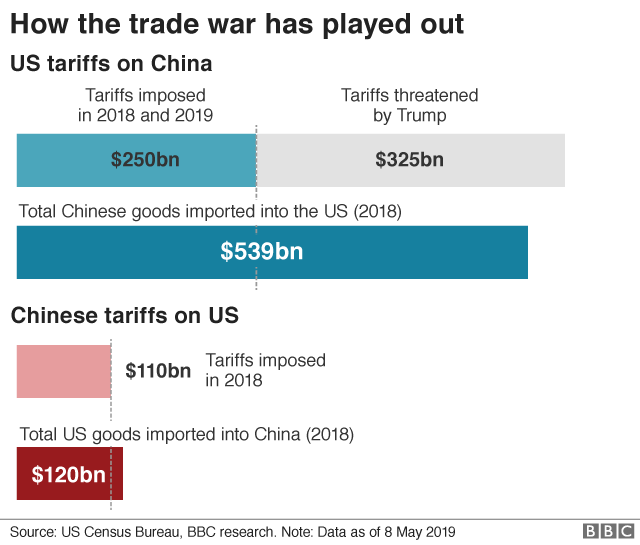
The US has more than doubled tariffs on $200bn (£153.7bn) worth of Chinese products, in a sharp escalation of the countries’ damaging trade war.
Tariffs on affected Chinese goods have risen to 25% from 10%, and Beijing has vowed to retaliate.
China says it “deeply regrets” the move and will have to take “necessary counter-measures.”
It comes as high-level officials from both sides are attempting to salvage a trade deal in Washington.
Only recently, the US and China appeared to be close to ending months of trade tensions.
China’s Commerce Ministry confirmed the latest US tariff increase on its website.
“It is hoped that the US and the Chinese sides will work together… to resolve existing problems through co-operation and consultation,” it said in a statement.
Tariffs are taxes paid by importers on foreign goods, so the 25% tariff will be paid by American companies who bring Chinese goods into the country.
Even though Mr Trump has downplayed the impact of tariffs on the US economy, the rise is likely to affect some American companies and consumers as firms may pass on some of the cost, analysts said.
Deborah Elms, executive director at the Asian Trade Centre, said: “It’s going to be a big shock to the economy.
“Those are all US companies who are suddenly facing a 25% increase in cost, and then you have to remember that the Chinese are going to retaliate.”
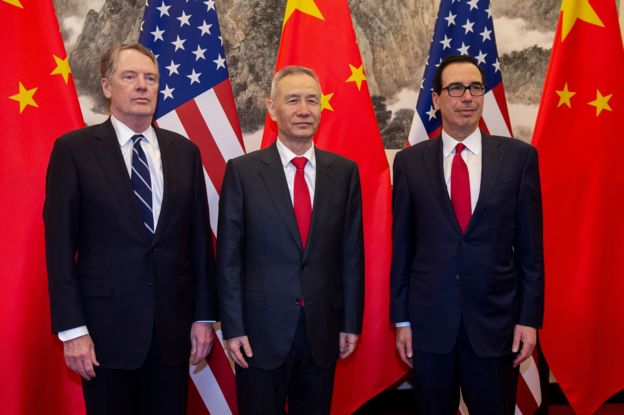
Image copyright GETTY IMAGESImage caption US and Chinese officials have held several round of talks in an attempt to strike a deal to end the trade war.
In a statement, the American Chamber of Commerce in China said it was committed to helping both sides find a “sustainable” solution.
“While we are disappointed that the stakes have been raised, we nevertheless support the ongoing effort by both sides to reach agreement on a strong, enforceable deal that resolves the fundamental, structural issues our members have long faced in China.”
French Finance Minister Bruno Le Maire warned that the trade dispute escalation threatened jobs across Europe.
“There is no greater threat to world growth,” Mr Le Maire told CNews. “It would mean that trade tariffs go up, fewer goods would circulate around the world… and jobs in France and in Europe would be destroyed.”
‘Serious escalation’ of the trade war
No breakthrough, and no deal – just, more tariffs.
With this move, US President Donald Trump has effectively dealt a fresh blow to not just the Chinese economy – as he had presumably hoped – but also to US’s.
The previous set of tariffs of 10% on $200bn of Chinese goods have to some extent been absorbed by American importers, but economists say a 25% tariff will be much harder for them to stomach.
They will almost certainly have to pass on that cost to American consumers – and that means higher prices.
Make no mistake, this is a serious escalation – and the trade war between the world’s two largest economies is back on.
This means the rest of us should be prepared for more pain ahead.
How will the tariff increase affect negotiations?
Despite this week’s escalation in tensions, talks were held between Chinese Vice-Premier Liu He, US Trade Representative Robert Lighthizer and Treasury Secretary Steven Mnuchin on Thursday.
A White House spokesman said US officials had agreed with the vice-premier to resume talks on Friday morning, according to media reports.
Even though there had been growing optimism about progress in trade talks recently, sticking points have persisted throughout.
These have included issues around intellectual property protection, how fast to roll back tariffs and how to enforce a deal.
Analysts say the Chinese are still willing to negotiate to retain the moral high ground and because they recognise the importance of solving the trade war.
“A trade war will be bad for China, both the real economy and the financial markets. It will also be bad for the world economy,” said Gary Hufbauer of the Peterson Institute for International Economics.
“Better for China to play the role of conciliatory statesman than angry retaliator.”
Why are the US and China at odds?
China has been a frequent target of Donald Trump’s anger, with the US president criticising trade imbalances between the two countries and Chinese intellectual property rules, which he says hobble US companies.
Some in China see the trade war as part of an attempt by the US to curb its rise, with Western governments increasingly nervous about China’s growing influence in the world.
Both sides have already imposed tariffs on billions of dollars worth of one another’s goods. The situation could become worse still, as Mr Trump has also warned he could “shortly” introduce 25% duties on $325bn of Chinese goods.
What exactly sparked the US president’s latest actions, which apparently took China by surprise, is unclear.
Ahead of the discussions, Mr Trump told a rally China “broke the deal” and would pay for it.
The International Monetary Fund said the row poses a “threat to the global economy”.
“As we have said before, everybody loses in a protracted trade conflict,” the body which aims to ensure global financial stability said in a statement, calling for a “speedy resolution”.
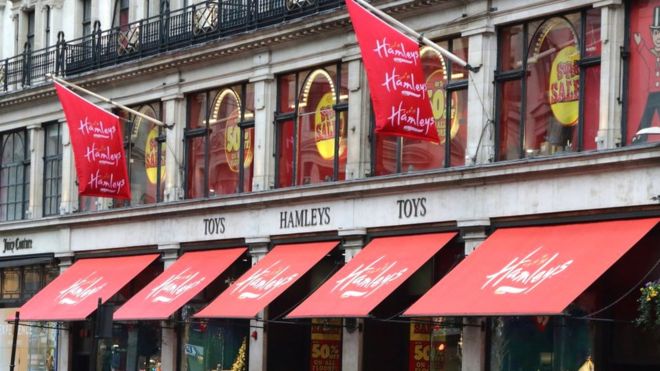
Image copyright GETTY IMAGESImage caption Hamleys is the world’s oldest toy retailer
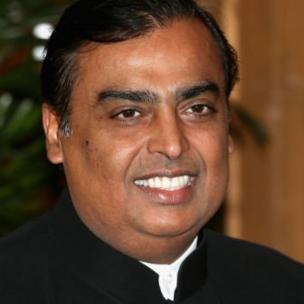
India’s richest man Mukesh Ambani has bought the iconic British toy retailer Hamleys for an undisclosed sum.
Reliance Brands Limited, which is owned by Mr Ambani, said it had signed an agreement to buy the company from China’s C Banner International which had acquired it in 2015.
Hamleys, which was founded in 1760, is the world’s oldest toy retailer and has 167 stores across 18 countries.
Reliance Industries already operates 88 Hamleys stores across 29 Indian cities.
“The worldwide acquisition of the iconic Hamleys brand…. is a long cherished dream come true,” Darshan Mehta, the CEO of Reliance Brands Limited, said in a statement.
Hamleys had last year reported a £9.2m loss, blaming Brexit and the threat of terrorism for the downturn.
It had opened four stores in the UK but later closed two.
However its flagship store in London’s Regent Street, which opened in 1881, continues to be one of the city’s major attractions.
Set over seven floors, it has an estimated 50,000 lines of toys on sale.
BEIJING, May 8 (Xinhua) — Chinese President Xi Jinping held a telephone conversation with Saudi King Salman bin Abdulaziz Al Saud on Wednesday.
Xi said that China attaches great importance to developing the comprehensive strategic partnership between the two countries and regards Saudi Arabia as an important cooperation partner in promoting the joint construction of the Belt and Road Initiative (BRI).
Xi said that he and King Salman have in recent years successfully exchanged visits to each other’s nation, which has guided the all-round and fast growth of China-Saudi Arabia ties.
In February, Saudi Crown Prince Mohammed bin Salman Al Saud visited China and attended the third meeting of the China-Saudi Arabia High-level Joint Committee, which yielded fruitful results and injected new impetus into bilateral exchanges and cooperation in various fields, Xi said.
China appreciates Saudi Arabia’s objective and fair stance on issues concerning China’s core interests and major concerns. China firmly supports Saudi efforts to safeguard its national sovereignty, security and stability, and supports Saudi Arabia in promoting its economic transformation and achieving greater development, Xi said.
Xi said that China is ready to work with Saudi Arabia to strengthen the synergy between the BRI and the Saudi Vision 2030, and enhance bilateral practical cooperation in energy and other fields. China appreciates the positive efforts made by Saudi Arabia to promote relations between China and Arab countries as well as Islamic countries.
China welcomes and actively supports Saudi Arabia’s hosting of the Group of 20 (G20) summit in 2020, Xi said, noting that China is ready to strengthen coordination and cooperation with Saudi Arabia and jointly help the G20 make greater contribution to upholding multilateralism, building an open world economy and improving global economic governance.
For his part, Salman congratulated China for successfully holding the second Belt and Road Forum for International Cooperation, and said he believes that it will play an important role in promoting international development and cooperation.
The two countries are committed to national development and world peace and stability. Saudi Arabia attaches great importance to deepening the comprehensive strategic partnership between the two countries and wishes China greater achievements in its development, Salman said.
The Saudi king also said that Saudi Arabia is willing to strengthen exchanges with China at all levels and promote cooperation in various fields in a bid to better serve the two countries and peoples, and boost cooperation between East and West Asia.
He said that Saudi Arabia is willing to continue to help improve the friendly and cooperative relations between China and Arab countries as well as the Islamic world.
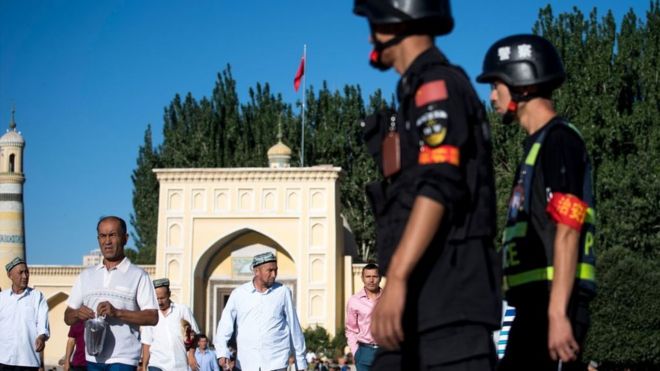
Image copyright GETTY IMAGESImage caption Police in Xinjiang now have one more way to record data about its citizens
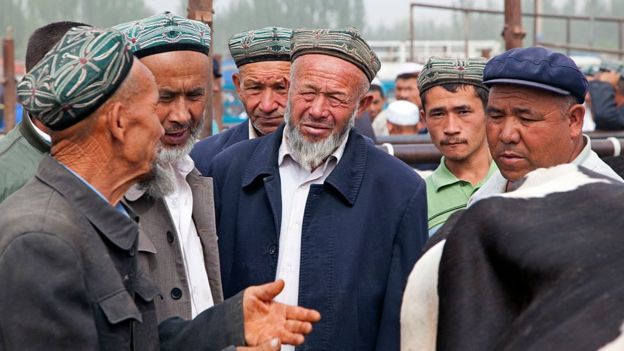
Chinese police are using a mobile app to keep data on millions of ethnic Uighurs in Xinjiang province, according to Human Rights Watch (HRW).
In a report released on Thursday, HRW said it had reverse engineered the app to see how mass surveillance worked.
The app is used to closely monitor behaviours, it said, including lack of socialising, using too much electricity or having acquaintances abroad.
Rights groups say Uighur Muslims are being severely persecuted in China.
The UN has said there are credible reports up to a million Uighurs are being held in detention in Xinjiang, in what China says are “re-education centres”.
In particular, it targets “36 person types” that authorities should pay attention to.
These include people who seldom use their front door, use an abnormal amount of electricity and those that have gone on Hajj – an Islamic pilgrimage – without state authorisation.
The report does not make explicit mention of any ethnic groups specifically targeted, but the “36 person types” include “unofficial” imams – Islamic leaders – and those who follow Wahhabism, an Islamic doctrine.
Image copyrightHRWImage captionThe 36 person types listed in the HRW report
The information taken from the app will be fed into the central system of the Integrated Joint Operations Platform (IJOP) – the main system for mass surveillance in Xinjiang, says HRW.
“It gathers information from checkpoints on the street, gas stations, schools… pulls information from these facilities and monitors them for ‘unusual’ behaviour that triggers alerts [to the]authorities.”
The app was obtained and analysed by HRW in partnership with Cure53, a Berlin-based security firm.
Media caption In your face: China’s all-seeing surveillance system
As well as its Xinjiang operations, China has 170 million CCTV cameras in place across the country and by the end of 2020, an estimated 400 million new ones will be installed.
All this is part of China’s aim to build what it calls “the world’s biggest camera surveillance network”.
China’s also setting up a “social credit” system that is meant to keep score of the conduct and public interactions of all its citizens.
The aim is that by 2020, everyone in China will be enrolled in a vast national database that compiles fiscal and government information, including minor traffic violations, and distils it into a single number – ranking each citizen.
China’s detention camps
Xinjiang is a semi-autonomous region and in theory at least, has a degree of self-governance away from Beijing.
The Uighurs, a mostly Muslim ethnic minority, make up around 45% of its population.
HRW’s report comes as China faces increasing scrutiny over its treatment of them and other minorities in Xinjiang.
Up to one million Uighurs are being held in detention camps across Xinjiang, a UN human rights committee heard last year.
Image copyright GETTY IMAGESImage caption Uighurs make up around 45% of Xinjiang’s population
One member said she was concerned by reports that Beijing had “turned the Uighur autonomous region into something that resembles a massive internment camp”.
A BBC investigation last year revealed that what appear to be “large prison-type structures” have been built across Xinjiang in the past few years.
China says these buildings are “vocational training centres” used to educate and integrate Muslim Uighurs and steer them away from separatism and extremism.
A Chinese Foreign Ministry spokeswoman, Hua Chunying, said, “everyone can see that people of all ethnicities in Xinjiang live and work in peace and contentment and enjoy peaceful and progressing lives”.
NEW DELHI (Reuters) – Economists and investors are increasingly showing that they have little or no confidence in India’s official economic data – presenting whoever is elected as the next prime minister with an immediate problem.
There have been questions for many years about whether Indian government statistics were telling the full story but two recent controversies over revisions and delays of crucial numbers have taken those concerns to new heights.
The government itself has admitted there are deficiencies in its data collection.
A study conducted by a division of the statistics ministry in the 12 months ending June 2017 found that as much as 36 percent of the companies in the database used in India’s GDP calculations could not be traced or were wrongly classified.
But the ministry said there was no impact on GDP estimates as due care was taken to adjust corporate filings at the aggregate level.
Last December, the government held back the release of jobs data but an official report leaked to an Indian newspaper showed the unemployment rate had touched its highest level in 45 years.
Economists and investors are now voting with their feet – by using alternative sources of data and in some cases creating their own benchmarks to measure the Indian economy.
Ten economists and analysts at banks, think-tanks and foreign funds interviewed by Reuters said they were moving to use alternative data sources, or at least official data of a different kind.
Among the numbers they prefer are fast-moving indicators like car sales, air and rail cargo levels, purchasing managers’ index data, and proprietary indices created by the institutions themselves to track the economy.
Many economists said they were stunned when the government upwardly revised GDP growth for 2016/17 to 8.2 percent from 6.7 percent, although the demonetization of high value notes hit businesses and jobs in that financial year.
“Our response has been to spend time developing an Indian Activity Index, which takes a range of time series data that in the past were strongly correlated with real GDP growth and extract the common signal from them,” said Jeremy Lawson, chief economist at Aberdeen Standard Investments, which manages more than $700 billion in assets.
The preliminary evidence from the index, which includes components like car sales, air cargo and purchasing managers’ index data suggests the government has over-estimated GDP growth, he said.
Our index would suggest that there was stable growth, rather than the rapid acceleration suggested by the GDP figures,” he said, referring to three years of data from 2014.
Even those close to the government have said the lack of accuracy in the official data makes it much more likely that authorities will miss major swings in activity and be unable to react quickly to head off a crisis. It is also a problem for investors who may be misled into thinking the economy is more robust than it really is.
The economic wing of the Rashtriya Swayemsewak Sangh, the fountainhead of the ruling Hindu nationalist Bharatiya Janata Party, said the government and the Indian central bank missed anticipating a farm crisis that has now gripped the countryside, with low crop prices driving down farmers’ incomes.
“The fact is the government advisers and the monetary policy committee of the central bank could not diagnose the farm crisis, deflationary conditions in rural economy, and ignored the need to boost growth,” said Ashwani Mahajan, the co-convenor of the group, Swadeshi Jagran Manch, adding the government was now taking steps to address the problem.
The delayed response has cost Prime Minister Narendra Modi at least some support in the countryside in the current general election – although most political strategists still think he can probably hang onto power.
The opposition and other critics have said Modi suppressed jobs data and “massaged” economic growth numbers in an attempt to show that his government has done better than the previous administration.
A spokesman at Modi’s office said no official was available for comment as they were busy with the election while a finance ministry spokesman referred to Finance Minister Arun Jaitley’s previous comments.
In a blog in March, Jaitley criticized economists for doubting the credibility of data and accused them of running a fake campaign against the government.
IDLE CAPACITY
Some investors have been burned by believing in India’s high growth story.
Private power producers invested billions of dollars based on expectations of electricity demand that didn’t pan out in the rural economy. With economic growth pegged at over 8 percent a year, they had expected a pick up in demand by small businesses and household.
Many of the power producers are now facing bankruptcy and legal disputes as many of the new plants they built are working at about 60 percent of capacity.
In the real estate sector, developers said, it could take 3-4 years to clear about 500,000 unsold flats in and around New Delhi that were built on the assumption of higher income jobs in urban areas.
To be sure, the proportion of the Indian economy that is based on the unofficial sector, such as household enterprises, makes it a nightmare to assess economic activity.
P. C. Mohanan, former acting chairman of the national oversight body for statistics, who resigned to protest government interference over the release of the jobs figures and back series data on GDP, said the government hasn’t allocated the resources it needs to measure activity given the growth in the economy.
Gita Gopinath, the International Monetary Fund’s chief economist, told an Indian TV channel last month the IMF had raised the issue of “transparency” with Indian officials in data collection and, in particular, measurement of the GDP deflator – the adjusted inflation rate used to estimate real GDP.
In a statement, the statistics ministry said it was working to address the issue.
A senior official earlier said they were open to suggestions for improvement, just not “politically motivated” criticism.
There are already plans to revamp data compilation and capture the nuanced relationship between prices and real GDP, he said.
China’s Permanent Representative to the United Nations Ma Zhaoxu (Front) addresses a Security Council open debate on “Investing in Peace: Delivering Quality Training and Capacity Building to Improve Safety and Security and Performance of UN Peacekeepers” at the UN headquarters in New York, on May 7, 2019. Ma Zhaoxu said Tuesday that the international community must pay attention to the real needs of troops-contributing countries (TCCs) in peacekeeping. (Xinhua/Li Muzi)
UNITED NATIONS, May 7 (Xinhua) — A Chinese envoy said Tuesday that the international community must pay attention to the real needs of troops-contributing countries (TCCs) in peacekeeping.
“The international community must pay attention to the real needs of TCCs, in particular, those of developing countries, enhance capacity building in the area of peacekeeping and ensure the availability of targeted training and resources,” Ma Zhaoxu, China’s permanent representative to the United Nations, told the Security Council open debate on “Investing in Peace: Delivering Quality Training and Capacity Building to Improve Safety and Security and Performance of UN Peacekeepers.”
“Thorough and effective training and capacity building must be conducted to keep improving the safety, security and performance of peacekeepers,” said the Chinese ambassador.
As for the role of the Secretariat, the Chinese envoy noted that efforts must be made to “fully leverage the role of the Secretariat. The Secretariat should keep improving training policies for peacekeeping and provide updated training materials in a timely manner in light of the situation in the task areas,” said Ma.
“The Secretariat, on the basis of its own advantages, can play a coordinating role between the supply and demand in the area of capacity building for peacekeeping,” he said.
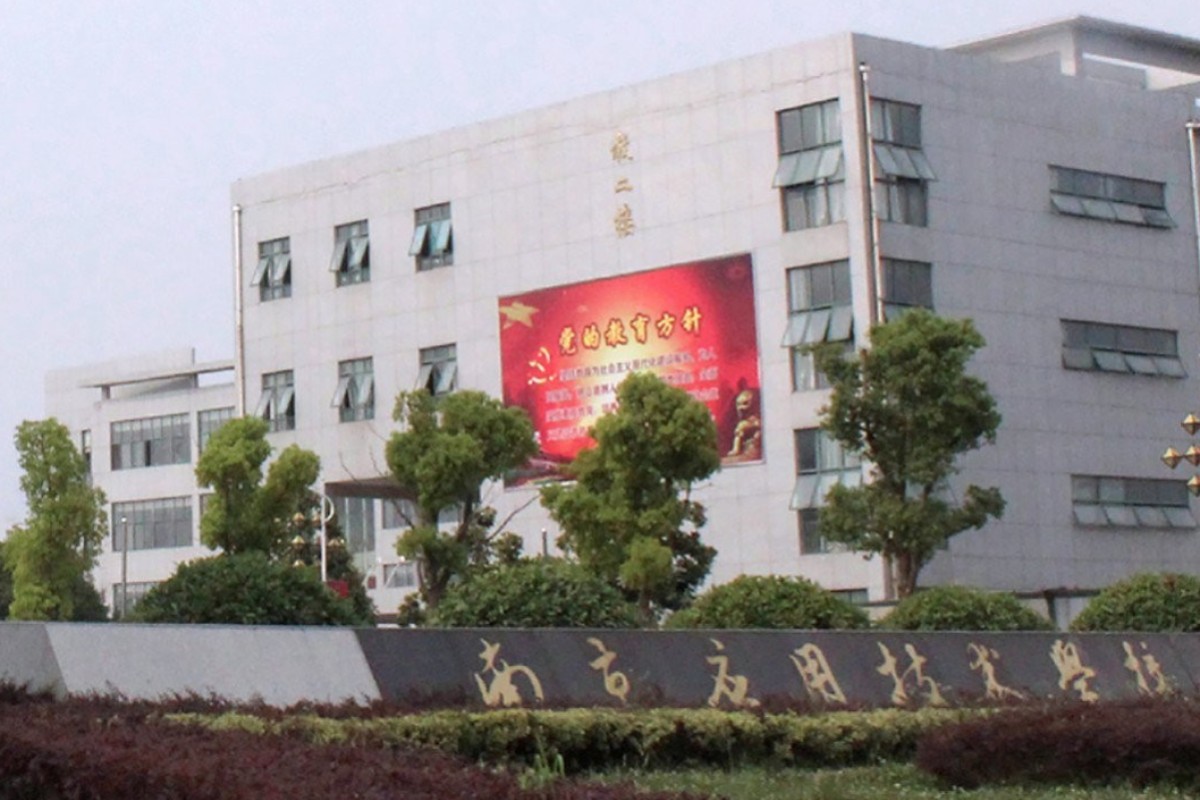
Investigation follows violent protest at Nanjing school
Students discovered nursing qualification was actually a home economics degree
An investigation into enrolment practices at eastern China’s Nanjing Institute of Applied Technology has been widened into a country-wide check for similar frauds. Photo: Handout
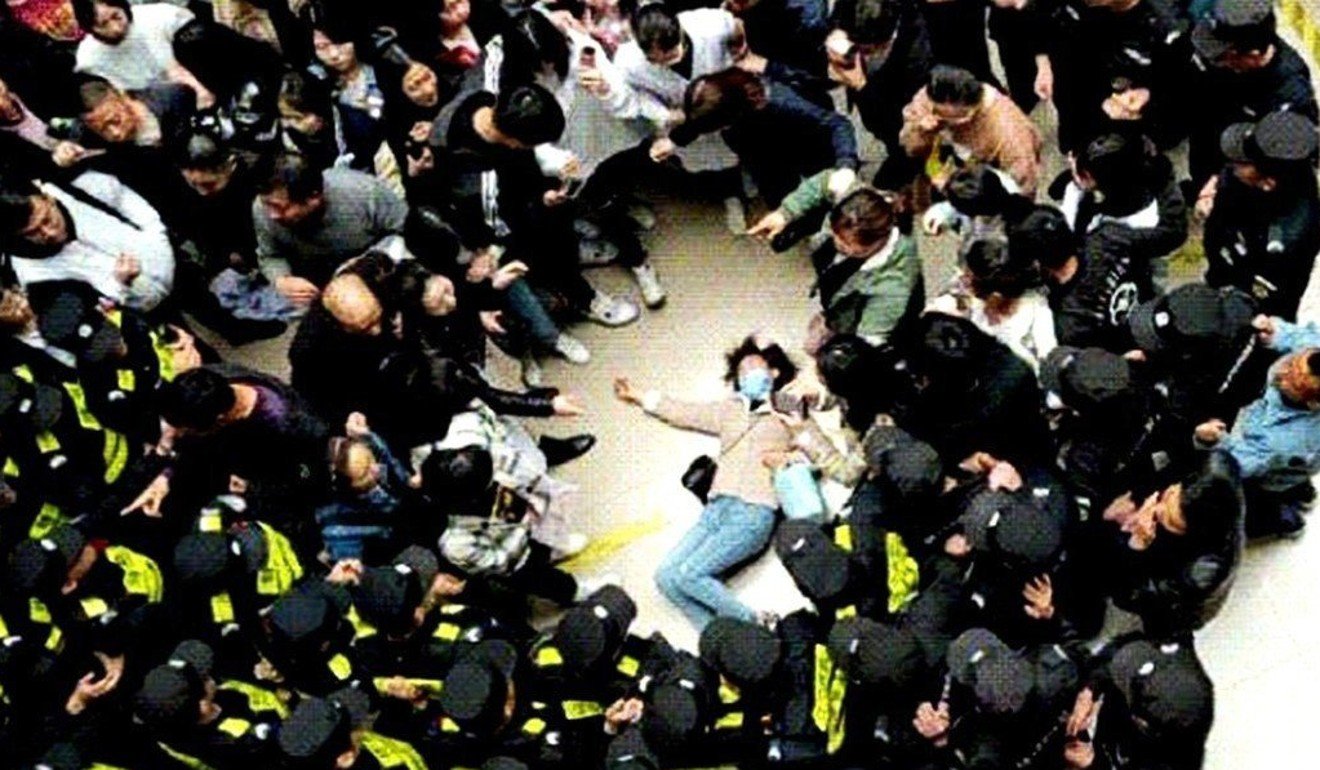
A protest by technical school students over fake degrees that led to a
in eastern China last month has prompted the Ministry of Education to order local governments across the country to check for similar frauds in their regions.
Wang Jiping, director of the ministry’s vocational education department, said the authorities had been cracking down on fraudulent promotions in student enrolment – cause of the disturbance at Nanjing School of Applied Technology – for a long time.
“But some schools still irresponsibly cheated parents and students,” Wang said at a press conference on Wednesday.
“For this kind of phenomenon, our attitude is one of firmly stopping and seriously punishing.”
Dozens of students clashed with police and security staff at the Nanjing School of Applied Technology in eastern China last month after the discovery that their nursing course only provided a degree in home economics. Photo: Weibo
In a statement on Weibo, China’s Twitter-like microblogging service, the city government in Nanjing, capital of Jiangsu province, said on Tuesday the rally by students and parents at the school had attracted the attention of city and provincial authorities.
Investigations showed that when the school enrolled new students for its home economics major in 2016, it promised they would receive associate degrees and a nursing certificate upon graduation. The students were also guaranteed jobs.
Students about to graduate this summer were angry when they learned the school could not fulfil any of its promises.
At the end of last month, some parents started petitioning the local government. On the evening of April 26, dozens of students clashed with police and security staff, with two students sustaining leg injuries. Police took several people away for “stirring up trouble among students”, the police said on Weibo.
The city government said that, with the intervention of its education and human resources departments, 405 out of the 409 affected students had been transferred to higher level institutions, and the students and their parents had accepted that arrangement.
The investigation is continuing and school officials will be held accountable, it said.
The Nanjing government said some people had spread rumours online after the incident. The government statement said two people, both surnamed Wang, had falsely claimed a female student was beaten to death by school staff and her parents knocked unconscious by police in the incident.
The pair also claimed in their article, published on Monday, that the school’s security guards were armed during the confrontation with students.
The article went viral and the authors – one from Wuhan, Hubei province, and the other in Changsha, Hunan province, both in central China – were detained for causing trouble.
According to the government statement, they confessed to cooking up the rumour to attract online traffic and solicit rewards from readers.
They made 32,000 yuan (US$4,700) from the article.
The document was riddled with reversals by China that undermined core U.S. demands, the sources told Reuters.
In each of the seven chapters of the draft trade deal, China had deleted its commitments to change laws to resolve core complaints that caused the United States to launch a trade war: theft of U.S. intellectual property and trade secrets; forced technology transfers; competition policy; access to financial services; and currency manipulation.
U.S. President Donald Trump responded in a tweet on Sunday vowing to raise tariffs on $200 billion (153 billion pounds) worth of Chinese goods from 10 to 25 percent on Friday – timed to land in the middle of a scheduled visit by China’s Vice Premier Liu He to Washington to continue trade talks.
The stripping of binding legal language from the draft struck directly at the highest priority of U.S. Trade Representative Robert Lighthizer – who views changes to Chinese laws as essential to verifying compliance after years of what U.S. officials have called empty reform promises.
RELATED COVERAGE
Explainer – How U.S.-China talks differ from any other trade deal
Lighthizer has pushed hard for an enforcement regime more like those used for punitive economic sanctions – such as those imposed on North Korea or Iran – than a typical trade deal.
“This undermines the core architecture of the deal,” said a Washington-based source with knowledge of the talks.
“PROCESS OF NEGOTIATION”
Spokespeople for the White House, the U.S. Trade Representative and the U.S. Treasury Department did not immediately respond to requests for comment.
Chinese Foreign Ministry spokesman Geng Shuang told a briefing on Wednesday that working out disagreements over trade was a “process of negotiation” and that China was not “avoiding problems”.
Geng referred specific questions on the trade talks to the Commerce Ministry, which did not respond immediately to faxed questions from Reuters.
Lighthizer and U.S. Treasury Secretary Steven Mnuchin were taken aback at the extent of the changes in the draft. The two cabinet officials on Monday told reporters that Chinese backtracking had prompted Trump’s tariff order but did not provide details on the depth and breadth of the revisions.
Liu last week told Lighthizer and Mnuchin that they needed to trust China to fulfil its pledges through administrative and regulatory changes, two of the sources said. Both Mnuchin and Lighthizer considered that unacceptable, given China’s history of failing to fulfil reform pledges.
One private-sector source briefed on the talks said the last round of negotiations had gone very poorly because “China got greedy”.
“China reneged on a dozen things, if not more … The talks were so bad that the real surprise is that it took Trump until Sunday to blow up,” the source said.
“After 20 years of having their way with the U.S., China still appears to be miscalculating with this administration.”
FURTHER TALKS THIS WEEK
The rapid deterioration of negotiations rattled global stock markets, bonds and commodities this week. Until Sunday, markets had priced in the expectation that officials from the two countries were close to striking a deal.
Investors and analysts questioned whether Trump’s tweet was a negotiating ploy to wring more concessions from China. The sources told Reuters the extent of the setbacks in the revised text were serious and that Trump’s response was not merely a negotiating strategy.
Chinese negotiators said they couldn’t touch the laws, said one of the government sources, calling the changes “major.”
Changing any law in China requires a unique set of processes that can’t be navigated quickly, said a Chinese official familiar with the talks. The official disputed the assertion that China was backtracking on its promises, adding that U.S. demands were becoming more “harsh” and the path to a deal more “narrow” as the negotiations drag on.
Liu is set to arrive in Washington on Thursday for two days of talks that just last week were widely seen as pivotal – a possible last round before a historic trade deal. Now, U.S. officials have little hope that Liu will come bearing any offer that can get talks back on track, said two of the sources.
To avert escalation, some of the sources said, Liu would have to scrap China’s proposed text changes and agree to make new laws. China would also have to move further towards the U.S. position on other sticking points, such as demands for curbs on Chinese industrial subsidies and a streamlined approval process for genetically engineered U.S. crops.
The administration said the latest tariff escalation would take effect at 12:01 a.m. Friday (0401 GMT), hiking levees on Chinese products such as internet modems and routers, printed circuit boards, vacuum cleaners and furniture.
The Chinese reversal may give China hawks in the Trump administration, including Lighthizer, an opening to take a harder stance.
Mnuchin – who has been more open to a deal with improved market access, and at times clashed with Lighthizer – appeared in sync with Lighthizer in describing the changes to reporters on Monday, while still leaving open the possibility that new tariffs could be averted with a deal.
Trump’s tweets left no room for backing down, and Lighthizer made it clear that, despite continuing talks, “come Friday, there will be tariffs in place.”
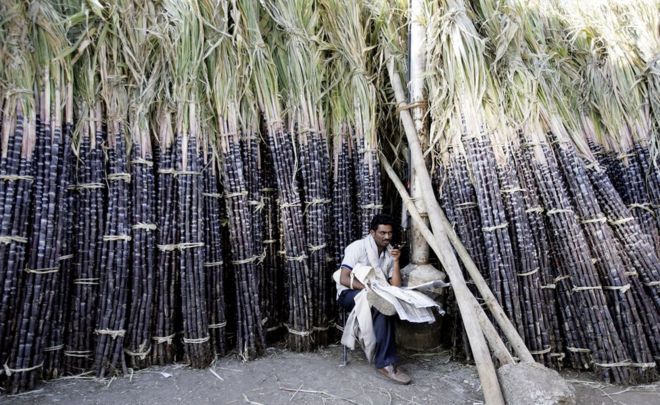
Image copyright AFPImage caption Some 30 million farmers are engaged in cane farming in India
When Prime Minister Narendra Modi held a recent election meeting in the northern Indian state of Uttar Pradesh, he was compelled to make a promise relating to sugar, a diet staple.
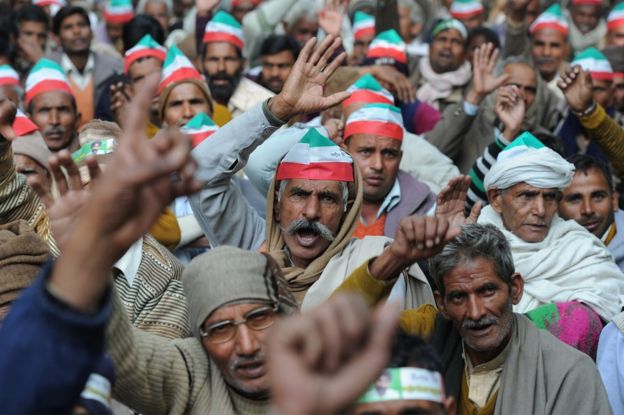
Farmers who grow cane in the politically crucial state ruled by Mr Modi’s Bharatiya Janata Party (BJP) were angry because sugar mills had not paid their dues in time. They held protests and blocked railway tracks. “I know there are cane dues. I will make sure every penny of yours will be paid,” Mr Modi told the audience.
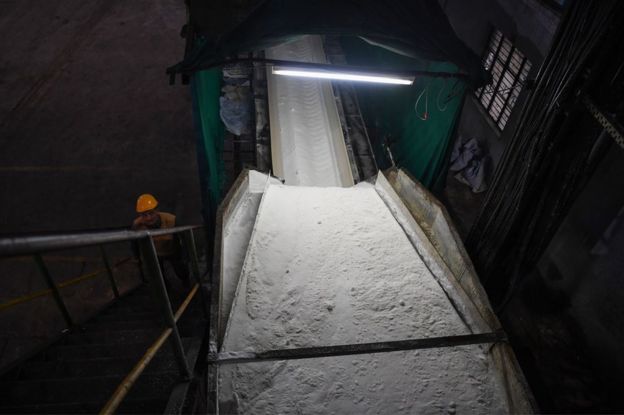
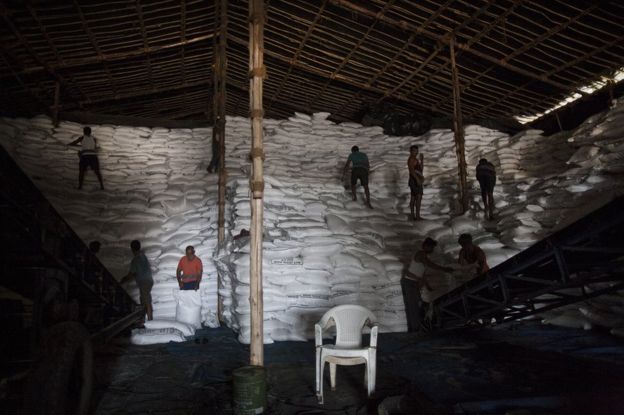
India’s sugar mills are bleeding money and collectively owe billions of dollars to 50 million cane farmers, many of whom haven’t been paid for nearly a year. Niti Ayog, a government think tank, says the arrears have reached “alarming” levels. More than 12 million tonnes of unsold sugar have piled up in factories. There is little incentive to export more as India’s sugar price is higher than the international price.
Sugar is serious business in India. Around 525 mills produced more than 30 million tonnes of sugar in the last crushing season, which lasted from October to April. This makes it the world’s largest producer, unseating Brazil. A large number of mills are run by cooperatives where farmers own shares proportional to the land they own and pledge their produce to the mill.
Image copyrightAFPImage captionIndia is the world’s largest producer of sugar
That’s not all. Some 50 million farmers, tightly concentrated geographically, are engaged in cane farming. Millions more work in the mills and farms and are engaged in transportation of cane.
As with much of India’s politics, cane growers appear to be a reliable “vote bank”. Uttar Pradesh and Maharashtra, which together produce 60% of the country’s sugar, send 128 MPs to the parliament. The price of cane can swing votes in more than 150 of the 545 seats in the ongoing general election, according to one estimate. Sugar is possibly the “most politicised crop in the world”, says Shekhar Gaikwad, the sugar commissioner of Maharashtra.
Indians are also voracious consumers of sugar. The bulk of the supply goes into making sweets, confectionary and fizzy drinks that are beginning to contribute to a rising obesity problem, like elsewhere in the world. “The world’s sweet tooth continues to rely on cane sugar, much as it did four centuries ago,” says James Walvin, author of How Sugar Corrupted the World.
Image copyright AFPImage caption Cane farmers have held protests, demanding higher crop prices
On the face of it, cane growers and owners of sugar mills should be happy.
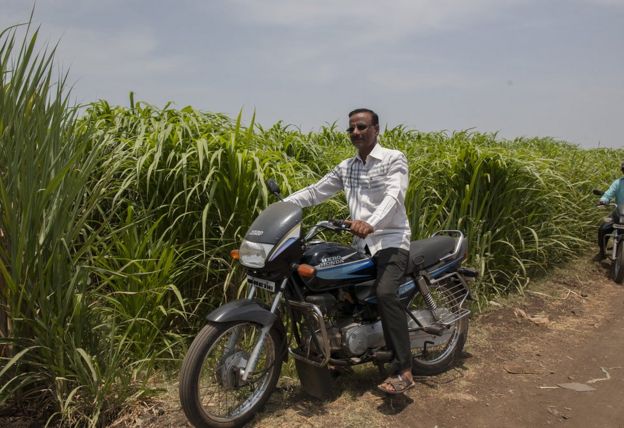
The government sets cane and sugar prices, allocates production and export quotas, and hands out ample subsidies. State-run banks give crop loans to farmers and production loans to mills. When mills run out of cash, public funds are used to bail them out. “I earn around 7,000 rupees ($100; £76) from growing sugar every month. It’s not a lot of money, but it’s an assured income,” says Sanjay Anna Kole, a fourth-generation, 10-acre cane farm owner in Maharashtra’s Kolhapur district.
But protectionism may be yielding diminishing returns. Generous price support for the crop means the price at which mils buy cane has outstripped the price at which they sell sugar. Among large producers – Thailand, Brazil and Australia – India pays the highest cane price to farmers. It also spends more than Brazil, for example, in producing sugar.
Image copyrightMANSI THAPLIYALImage captionFarmer Sanjay Anna Kole says cane farming provides an ‘assured income’
The involvement of politicians may not be helping matters. Since the inception of the first mills in the 1950s, politicians have owned or gained control of them by winning mill co-operative elections. Almost half a dozen ministers in Maharashtra, India’s second-biggest cane growing state, own sugar mills.
A study on the links between politicians and sugar mills by Sandip Sukhtankar, associate professor of economics at University of Virginia, found that 101 of the 183 mills – for which data was available – in Maharashtra had chairmen who competed for state or national elections between 1993 and 2005.
He also found that cane prices paid by “politically controlled” mills fell during election years, and that this was not entirely due to loss of productivity.
These mills have also been blamed for holding on to arrears and releasing them before elections to win over voters; and political parties have been accused of using money from the mills to finance campaigns. “One would think that perhaps political parties that don’t benefit from links to sugar might have incentives to reform the sector, but we have seen parties everywhere want a piece of the action,” says Dr Sukhtankar. “There are resources in the sugar industry to be extracted for political purposes.”
Image copyright MANSI THAPLIYALImage caption Sugar stocks have piled up in factories across India
Whatever the case, India’s world-beating crop is mired in crisis. The farmers and the mills grumble that they aren’t getting a fair price for their crop and sugar respectively. “It looks like a sunset industry for me. There’s no future in cane until the government completely overhauls farm policies,” Suresh Mahadev Gatage, an organic cane-grower in Kolhapur, told me.
The unrest among the farmers is worrying. In January, several thousand angry cane farmers descended on Shekhar Gaikwad’s office in the city of Pune, demanding the mills pay their dues in time. The negotiations lasted 13 hours.
One of the farmers’ demands was to arrest a state minister, who was heading three mills in the state, and had defaulted on his cane dues. When negotiations ended way past midnight, authorities issued orders to seize sugar from the offending mills and sell it in retail. In India’s lumbering bureaucracy, that took another eight hours because 500 copies of the orders had to be printed. “My office is pelted by stones every other day by irate farmers,” says Mr Gaikwad.
Image copyright MANSI THAPLIYALImage caption Cane grower Suresh Mahadev Gatage says there is ‘no future in cane’
Meanwhile, what is completely forgotten is how much sugar has hurt India’s ecology. More than 60% of the water available for farming in India is consumed by rice and sugar, two crops that occupy 24% of the cultivable area. Experts say crop prices should begin to reflect the scarcity and economic value of water.
But before that, as Raju Shetti, MP and a prominent leader of sugarcane farmers, says, price controls should be eased and bulk corporate buyers like soft drink companies and pharmaceuticals should pay more for sugar.
“We need differential pricing for sugar. Cheap sugar should be only provided to people who can’t afford it. The rest should pay a higher price,” he told me.
“Otherwise, the industry will collapse, and farmers will die. Even politicians will not be able to save it.”









 CHINDIA ALERT: You'll be living in their world, very soon