28/05/2019
- Coordination Council for North American Affairs becomes Taiwan Council for US Affairs, island’s foreign ministry says
- Move signifies ‘firm and close relationship between Taiwan and the US’, President Tsai Ing-wen says
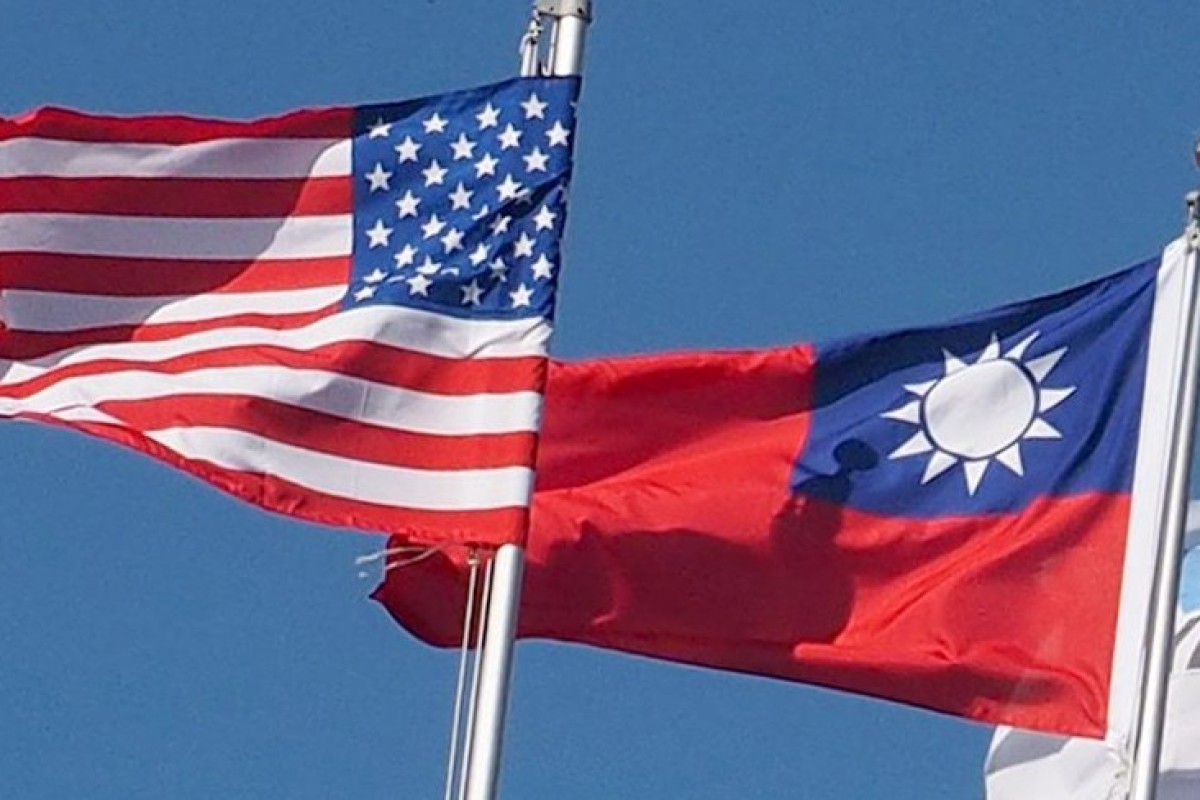
Taiwan has changed the name of its de facto embassy in the United States to better reflect ever-improving ties between the sides. Photo: EPA
Taiwan has changed the name of its de facto embassy in the United States to better reflect relations between the sides, which are at their strongest in decades, Taipei said on Saturday.
Once the necessary formalities have been completed, the agency formerly known as the Coordination Council for North American Affairs will be called the Taiwan Council for US Affairs, the island’s foreign ministry said.
“The new name better reflects the [agency’s] role in coordinating US-Taiwan affairs. It also symbolises the close and amicable relations between Taiwan and the United States,” it said.
Observers said the name change was significant as it appeared to drop the pretence that the council was non-diplomatic or political in nature.
The name change was possible because of the consensus between Taiwan and the US. Photo: CNA
Although Washington severed formal diplomatic ties with Taipei in 1979 in favour of Beijing, the two sides retained unofficial relations that have grown ever-closer in recent years, including an increase in military exchanges and cooperation.
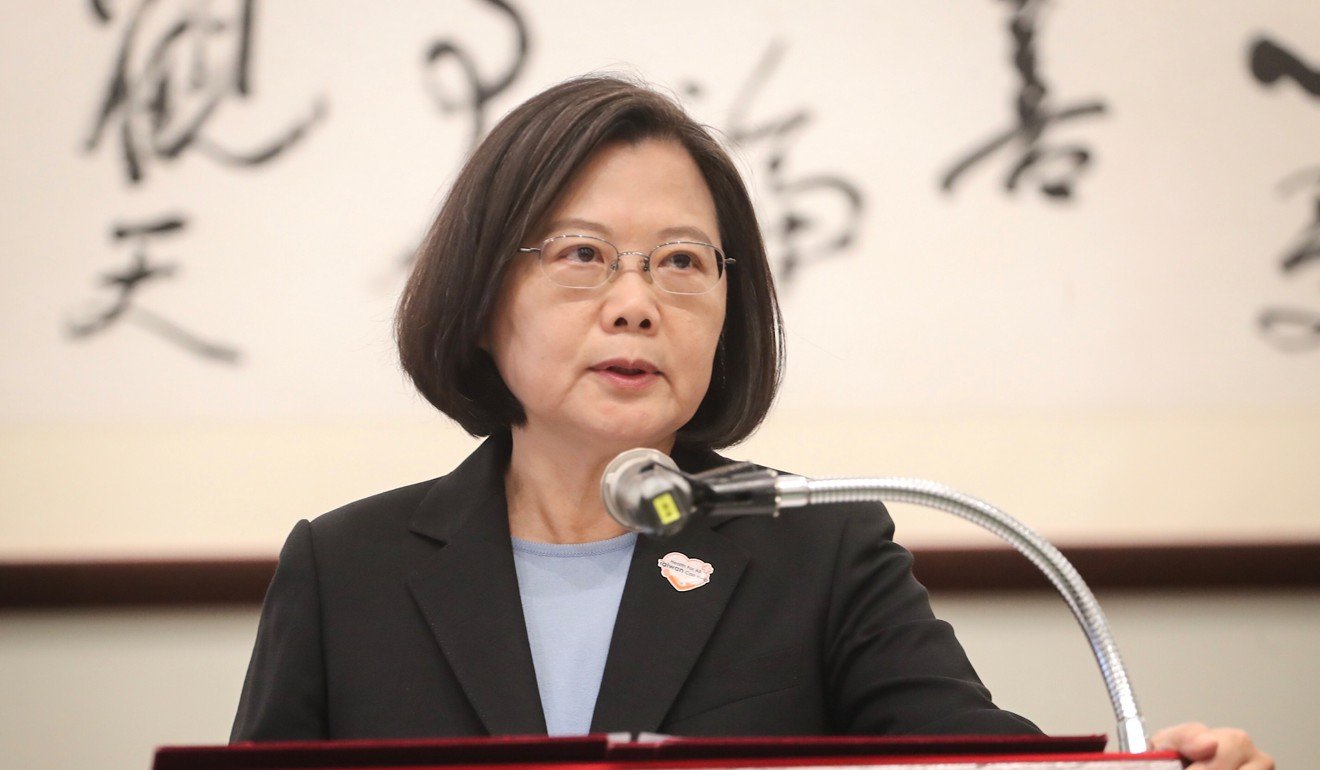
“The new name [was made possible] as a result of the consensus between Taiwan and the US,” the island’s President Tsai Ing-wen said in a Facebook post. “This is the first time the designations ‘Taiwan and the US’ have been used to refer to each other’s affairs office on an equal basis, signifying the firm and close relationship.”
Taiwan begins mass production of missile corvettes, minelayers
Taiwan had been forced to use the old title because of the “special historical background” related to the change in diplomatic allegiance 40 years ago, Tsai said.
Beijing, which considers Taiwan a wayward province awaiting reunification, by force if necessary, has demanded that Washington observe the one-China policy by not officially recognising Taiwan or allowing it to use either “Republic of China” – the island’s official name – or “Taiwan” in the title of its representative offices in the US.
Washington also enacted the Taiwan Relations Act in 1979 to prescribes relations with the island and includes a commitment to supply it with arms to protect itself.
“After continuous efforts and coordination by the two sides, and in 2019, the 40th anniversary of the Taiwan Relations Act, our office handling relations with the US is finally able to change its name,” Tsai said.
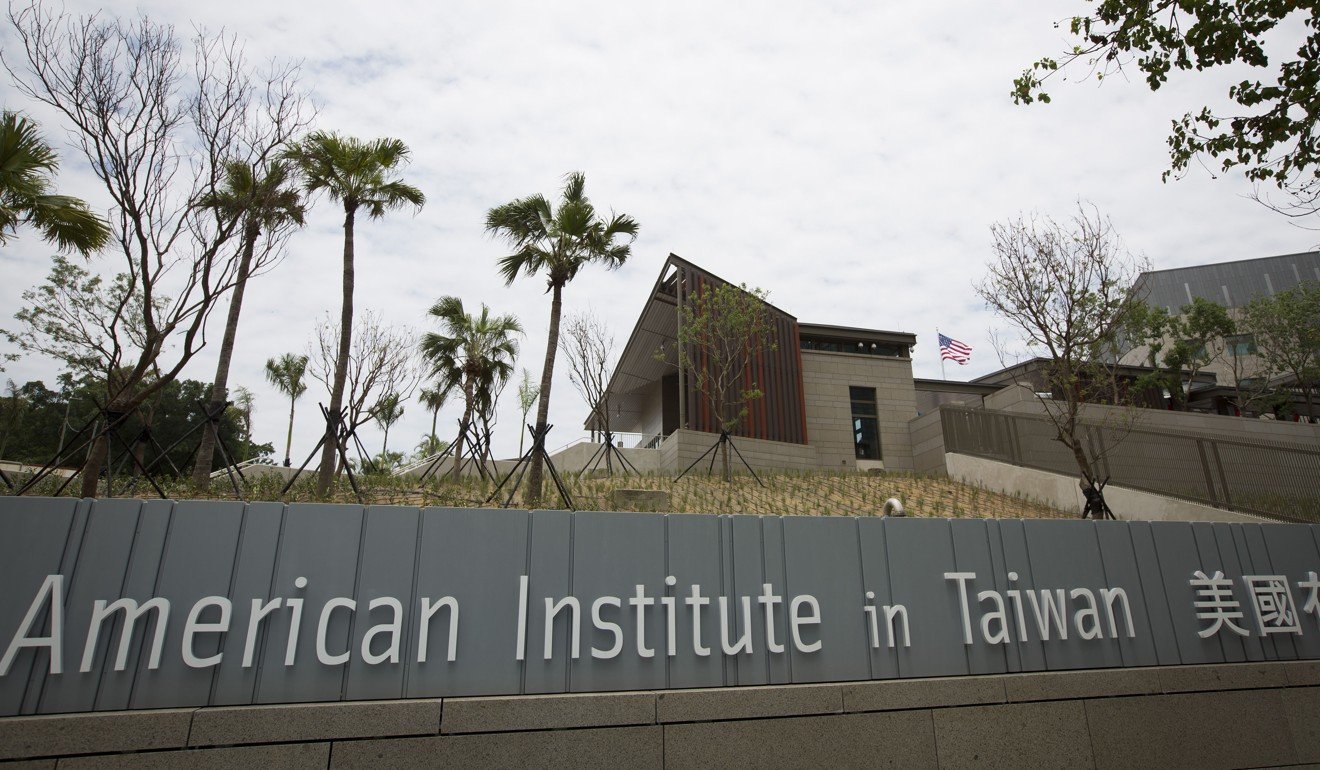
The American Institute in Taiwan relocated to a larger, purpose-built compound last month. Photo: Bloomberg
Presidential spokesman Alex Huang said the name change was due mainly to an improvement in relations between Taiwan and the US as a result of a greater cooperation on the promotion of regional peace and the Indo-Pacific security agenda.
“In the past few years, the US government has given Taiwan strong and firm support in terms of national security and participation in international events, as well as support from Congress and think tanks,” he said, referring to bills signed by US President Donald Trump that allow for exchanges between high-level officials and military personnel, and the approval of new sales of arms and logistical support to the island.
US official urges Pacific island nations to maintain diplomatic ties with Taiwan
Also, last week, Taiwan’s national security chief David Lee met US National Security Adviser John Bolton in Washington for the first talks of their kind since 1979, Taiwan’s Central News Agency reported on Saturday.
Last month, the American Institute in Taiwan – the United States’ unofficial embassy in Taipei – relocated to a significantly larger, purpose-built compound, in yet another sign of improving relations.
US support for Taiwan has increased under Trump’s leadership as he regards Beijing as a hostile competitor, not only on trade, but also in military and global influence terms.
Tensions between Taipei and Beijing have flared since Tsai became president in 2016 and refused to accept the one-China principle. The mainland subsequently halted all official exchanges with the island and embarked on a campaign to squeeze its diplomatic allies around the world.
Source: SCMP
Posted in American Institute in Taiwan, ‘reflect stronger ties’, Beijing, changes name, Congress, cooperation, Coordination Council for North American Affairs, de facto embassy, Foreign Ministry, Indo-Pacific security agenda, John Bolton, mass production, military exchanges, minelayers, missile corvettes, one-China policy, Pacific island nations, President Tsai Ing-wen, Republic of China, reunification, Taipei, Taiwan, Taiwan Council for US Affairs, Taiwan Relations Act, think tanks, Uncategorized, United States, US National Security Adviser, US President Donald Trump, Washington, wayward province |
Leave a Comment »
28/05/2019
- Asia has a rich but largely forgotten history of acceptance of queer relationships
- It was not until the colonial era that sexual and gender diversity came to be seen as a sin
An LGBT pride parade in support of Taiwan’s same-sex marriage law. Photo: Reuters
A
nyone reading the headlines about
legalisation of same-sex marriage
would get the impression this was Asia’s first taste of marriage equality. They would be quite wrong.
While Taiwan may be the first jurisdiction in Asia to legalise the modern form of same-sex marriage, such unions have been recognised across the region in various guises for centuries.
It may be true that Asia does not have a great reputation among the
community, but it does have a rich history of acceptance of sexual and gender diversity – one that has largely been forgotten.
When Europeans first encountered Chinese society, they praised many aspects of it, from its efficient government to the sophisticated lifestyles of the upper-class. But they were shocked and repulsed about one aspect of Chinese society: the “abominable vice of sodomy”.
Opinion: Three lessons for Hong Kong from Taiwan’s LGBT journey
One Portuguese Dominican friar, Gaspar da Cruz, even wrote an apocalyptic tract which portrayed China as the new Sodom – beset by earthquakes, floods, and other natural disasters due to their acceptance of that “filthy abomination, which is that they are so given to the accursed sin of unnatural vice”, that is, sodomy.
Southern China, in particular, was known for a widespread acceptance of homosexual relationships. Shen Defu, a Chinese writer during the Ming dynasty, wrote that it was common for men of all social classes in Fujian province to take male lovers. While men generally took on these lovers while maintaining respectable marriages to women, there were some men who took their lover-relationships to a quasi-marriage level. The older man would be considered qixiong (adoptive older brother) and the younger qidi(adoptive younger brother).
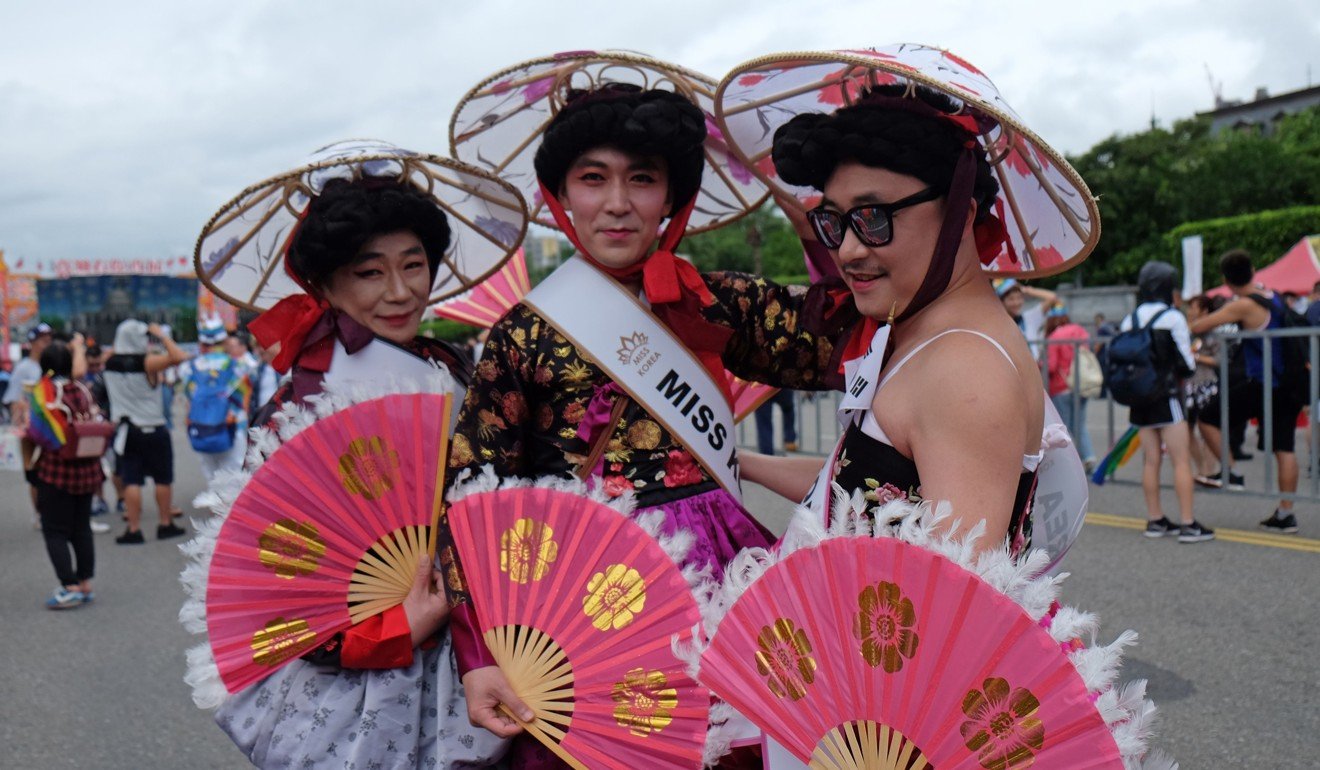
South Korean men take part in Taiwan’s annual LGBT pride parade in Taipei. Photo: AFP
Bret Hinsch, a professor of history in Taiwan, describes the ceremony based on the narration of a Chinese playwright, Li Yu (1610-1680): “Two men sacrifice a carp, a rooster, and a duck. They then exchange their exact times of birth, smear each other’s mothers with the blood of their sacrifices, and then swear eternal loyalty to one another.
The ceremony concludes with feasting on the sacrificial victims …. The younger qidi would move into the qixiong’s household. There he would be treated as a son-in-law by his husband’s parents. Throughout the marriage, many of which lasted for 20 years, the qixiong would be completely responsible for his younger husband’s upkeep.
The marriage would typically dissolve after a number of years so that the younger man could find a bride to marry to procreate and further the family lineage. The elder man was expected to pay the bride a price for the younger man.
These forms of gay “marriage” were prevalent enough in Fujian that there was even a patron deity of homosexuality, the rabbit. Many Han people from Fujian migrated to Taiwan starting in the 17th century; they now make up 80 per cent of the population.
Explained: gay rights, LGBTQ and same-sex marriage in Asia
Most literary accounts of homosexual relationships in China involve men, and there is a lively debate among scholars as to whether women enjoyed the same freedom.
Nevertheless, the most documented of female “quasi-marriages” are the “Golden Orchid Associations” in Guangdong. (Around 15 per cent of Taiwan’s population is Hakka, which historians trace specifically to Han migrants from Guangdong and surrounding areas.) The Golden Orchid Society was a movement based in Guangdong that lasted from the late Qing dynasty until the early 1900s. It provided a “sisterhood” alternative to women who did not want to get married for various reasons.
To announce her intentions, one woman would offer another gifts of peanut candy, dates and other goods. If the recipient accepted the gift, it was a signal she had accepted the proposal. They would swear an oath to one another, where sometimes one woman was designated “husband” and the other “wife”.
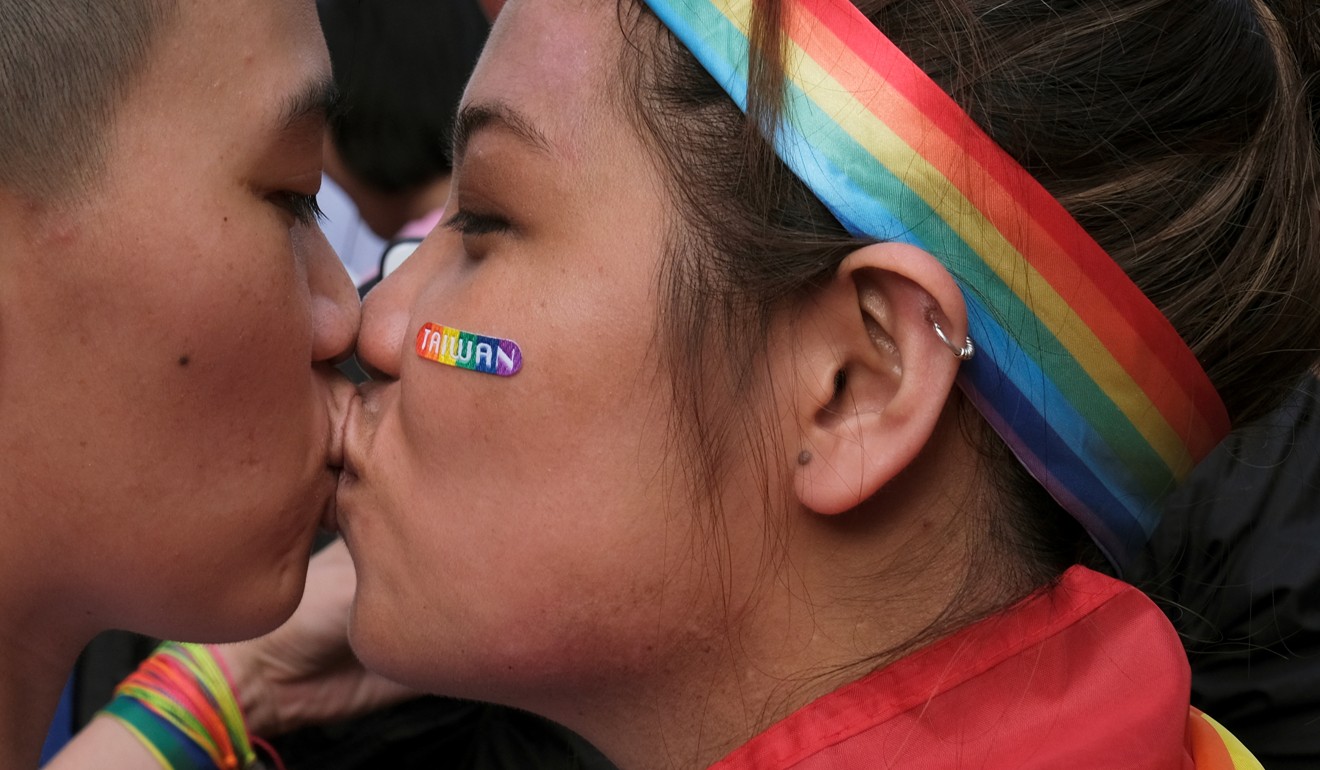
A couple kiss as they celebrate Taiwan’s legalisation of same-sex marriage. Photo: Reuters
Hinsch describes the ceremony in this way: “After an exchange of ritual gifts, the foundation of the Chinese marriage ceremony, a feast attended by female companions served to witness the marriage. These married lesbian couples could even adopt female children, who in turn could inherit family property from the couple’s parents.”
While these “marriages” are not equivalent to the same-sex marriages of today, they nevertheless are historical precedents for what is now happening in Taiwan.
And China is far from being the only country in Asia with a queer history – Southeast Asia’s LGBTQ history is even richer.
Why some members of Singapore’s LGBT community prefer life in the shadows
In the early modern period, marriages between two people of the same assigned sex but who identified as different genders, were fairly normal in many parts of Southeast Asia. We know this primarily from the records Europeans kept when they landed on Asian shores.
For instance, here is a letter by a Portuguese missionary, Antonio de Paiva, to his Catholic bishop in 1544 about his observations of the Bugis people in what is now
: “Your lordship will know that the priests of these kings are generally called bissus. They grow no hair on their beards, dress in a womanly fashion, and grow their hair long and braided; they imitate [women’s] speech because they adopt all of the female gestures and inclinations. They marry and are received, according to the custom of the land, with other common men, and they live indoors, uniting carnally in their secret places with the men whom they have for husbands …”
After this scandalised description, the author concludes with amazement that the Christian god, who had destroyed “three cities of Sodom for the same sin”, had not yet destroyed such “wanton people” who were “encircled by evil”.
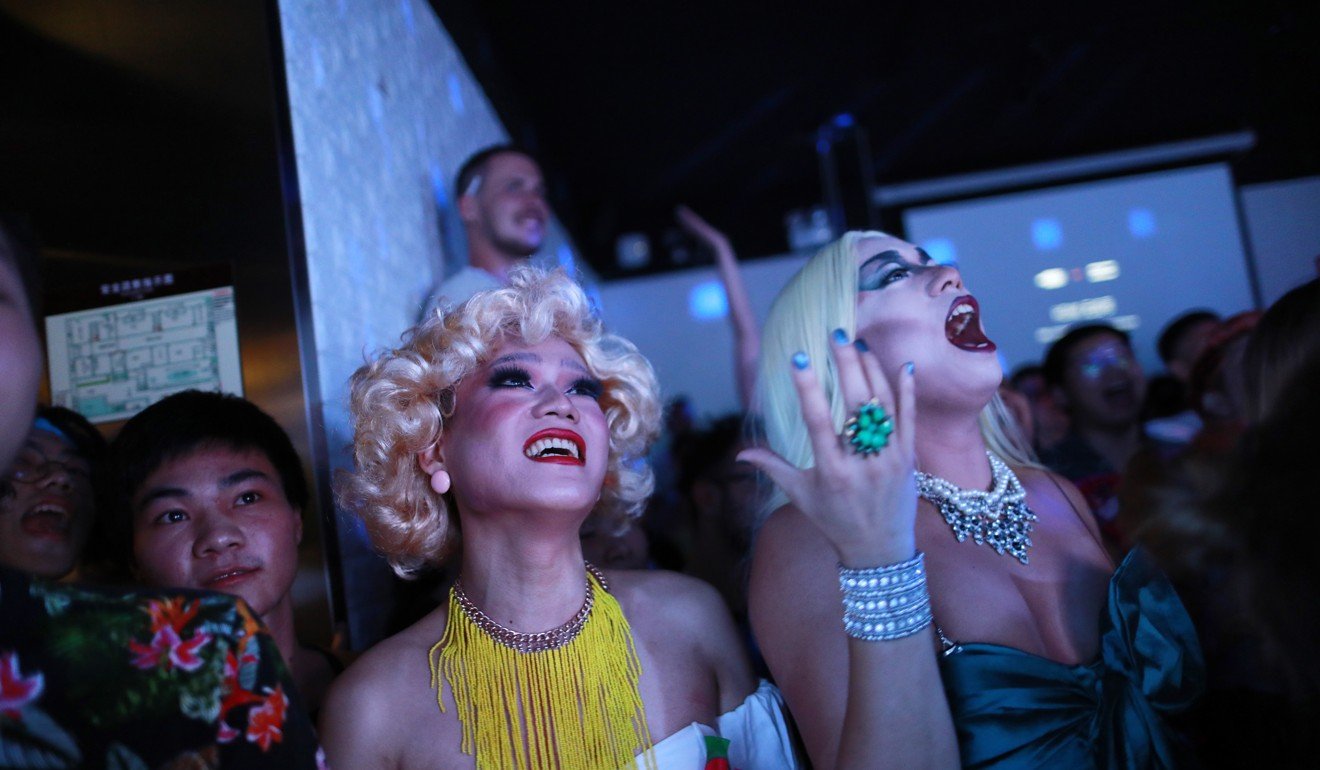
Drag queens at a gay nightclub in Beijing. Despite its reputation, Asia has a long history of accepting diversity. Photo: EPA
Dating as far back as the 13th century, bissu have traditionally served as council to kings and guarded sacred manuscripts. They are considered a fifth gender within the Bugis’ gender-system: oroané (male men), makkunrai (female women), calabai (male women), calalai (female men), and bissu, who were neither male nor female (or both).
Brunei’s LGBT residents face up to new death by stoning law against gay sex
Today, their ranks have thinned – in one area, the population has dwindled to just six people – but the tradition remains, and they still perform important blessings. Contemporary bissu are typically male-bodied individuals who adopt feminine and masculine elements in their appearance. Although in the past bissu were married men, today they are required to be celibate.
In pre-Islamic Bugis culture, bissu were accorded priestly honours and tasked with mediating between the gods and people precisely because of, not in spite of, their gender. According to professor Halilintar Lathier, an Indonesian anthropologist, Bugis culture “perceived the upper world as male and this world as female, and therefore only a meta-gender would be able to become an intermediary”.
This pattern of a “gender-expansive” priest able to marry others of the same sex recurs throughout Southeast Asia.
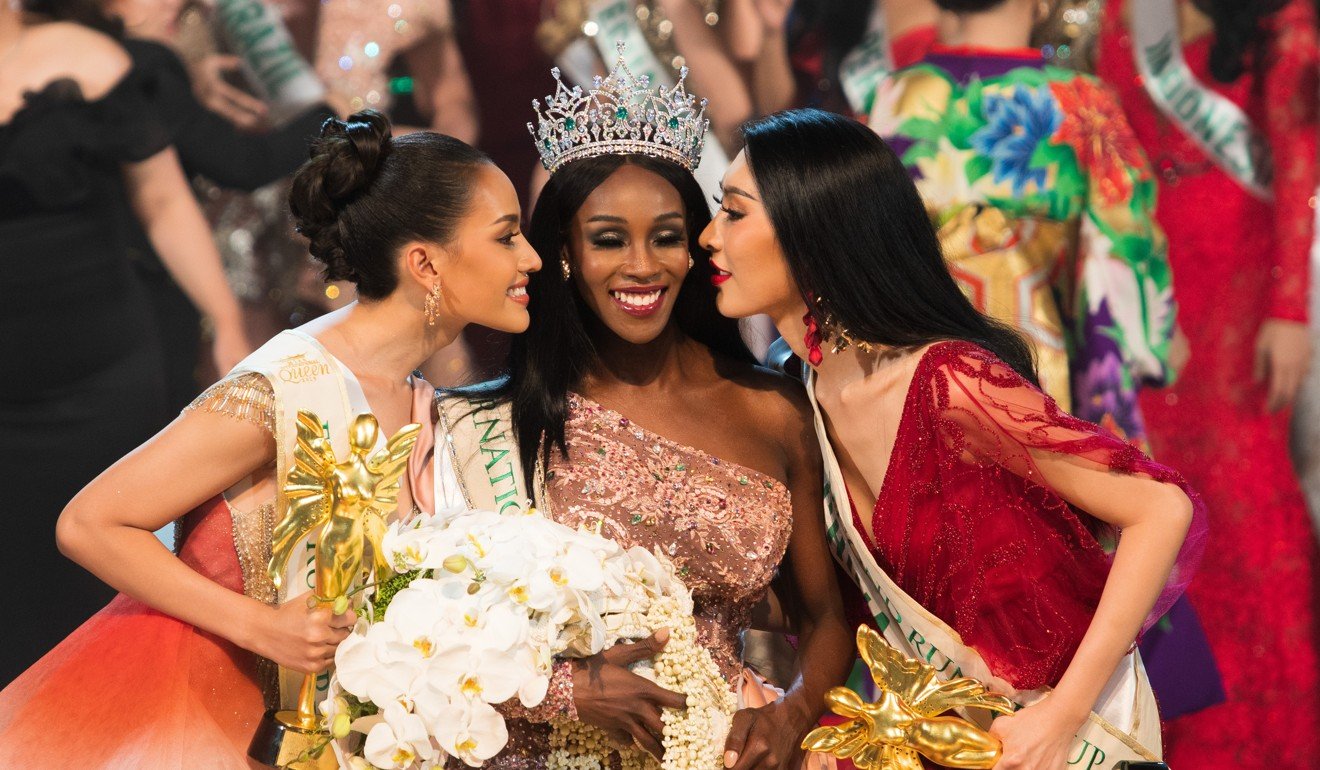
A transgender beauty contest in Pattaya, Thailand. Despite its reputation, Asia has a long history of accepting diversity. Photo: Handout
To the west of South Sulawesi is Borneo, a large island that contains all of Brunei and parts of Indonesia and
. Borneo is home to many indigenous communities, including the Iban. The Iban historically respected manang bali, who were typically male-bodied shamans who adopted feminine dress and demeanour, and who took men as their husbands. Manang bali were mediators and held roles of great ritual importance; they were typically wealthy village chiefs known for their healing arts.
West of Borneo is the Malay Peninsula, where there are records from the Malay Annals and Misa Melayu dating as far back as the 15th century about priests, called sida-sida, who served in the palaces of the Malay sultans. They were responsible for safeguarding women in the palace as well as the food and clothing of royalty, and overseeing ritual protocol. The sida-sida undertook “androgynous behaviour” such as wearing women’s clothing and doing women’s tasks. A Malay anthropologist in the 1950s, Shamsul A.B., recalls seeing male-bodied sida-sida in the royal palace in his childhood, who were believed by the population to either be celibate and asexual, or attracted to men. Michael Peletz, an anthropologist and author of Gender Pluralism in Southeast Asia, notes that based on the evidence, it is “highly likely” that sida-sida involved both male- and female-bodied people who were involved in transgender practices, and who engaged in sexual relationships with people of the same and opposite sex.
How a gay student’s suicide is helping Japan’s LGBT community speak up
Northeast of Malaysia is the
, where pre-colonial communities were religiously led by babylan: women healers and shamans who were responsible for mediating between the gods and people. Male-bodied people (asog, bayog), sometimes considered a third sex, could also hold these roles so long as they comported themselves like women. A 16th century Spanish Catholic manuscript records asog in the following manner:
“Ordinarily they dress as women, act like prudes and are so effeminate that one who does not know them would believe they are women … they marry other males and sleep with them as man and wife and have carnal knowledge.”
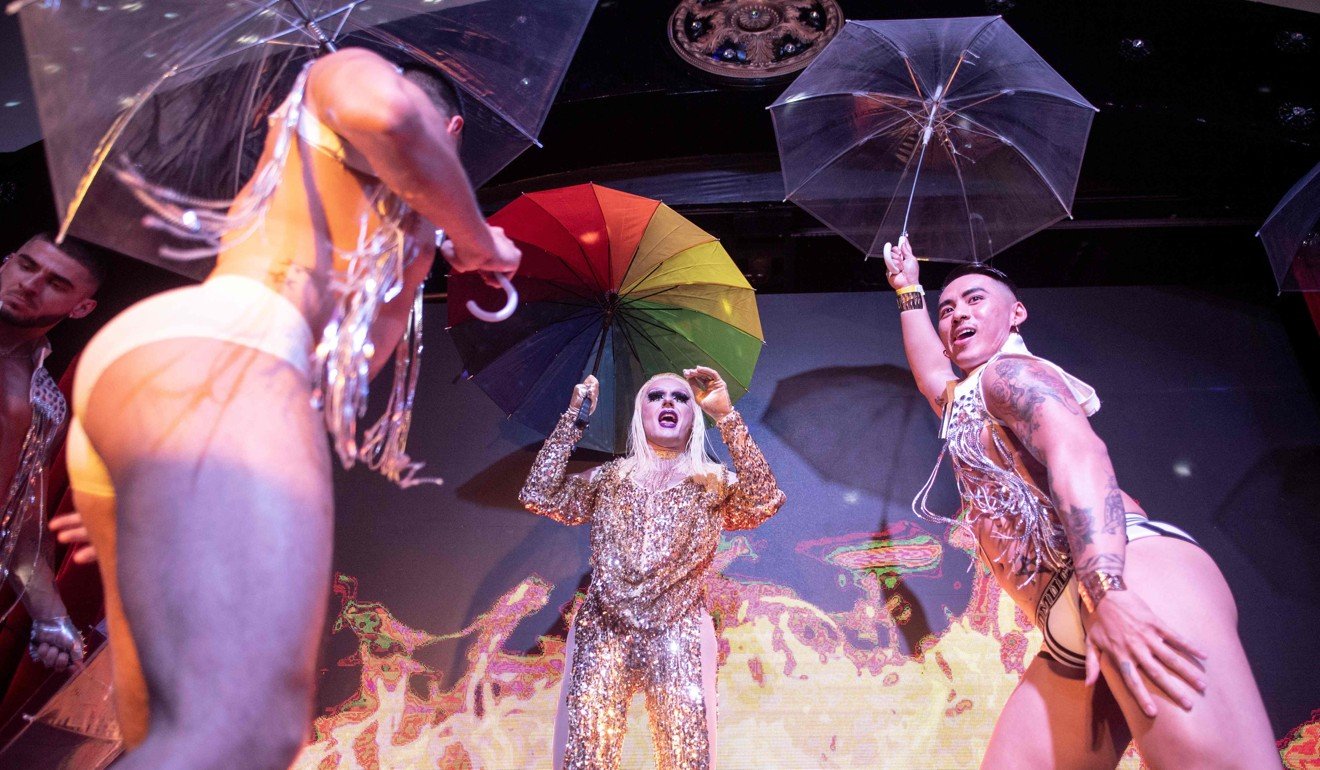
Dancers perform at the Shanghai PRIDE opening party. Despite its reputation, Asia has a long history of accepting diversity. Photo: AFP
The Spanish priests saw these asog as “devil-possessed”, particularly because they habitually practised “sodomy” among one another. Due to the Chinese reputation for homosexuality and various Sinophobic attitudes, some even attributed the prevalence of sodomy to the Chinese, whom they said had “infected the natives” and introduced the curse to the “Indians”, although there is no evidence of this.
COLONIAL CURVEBALL
Although these examples relate to the religious arena, anthropologists believe the respect accorded to these ritual specialists were an indicator of a wider societal acceptance of gender and sexual diversity in Southeast Asia – an acceptance that began to be eroded through the introduction of world religions (particularly Christianity), modernity, and colonialism. For example, in Malaysia, Brunei,
, Myanmar and throughout the commonwealth, the British enforced a penal code that legislated against sodomy. More than half of the countries that currently legally prohibit sodomy do so based on laws created by the British.
On gay sex, India has assumed an ancient position. Read the kama sutra
Similarly, after the Chinese were defeated by Western and Japanese imperialists, many Chinese progressives in the early 20th century sought to modernise China, which meant adopting “modern” Western ideas of dress, relationships, science and sexuality.
Concubinage was outlawed, prostitution was frowned upon, and women’s feet were unbound. It also meant importing European scientific understandings of homosexuality as an inverted or perverted pathology. These “scientific ideas” were debunked in the 1960s in the West, but lived on in China, frozen in time, and have only recently begun to thaw with the rise of LGBTQ activists in Asia.
A recent headline on the news from Taiwan read: “First in Asia: marriage equality comes to Taiwan”, as if the recent bill was an unprecedented “first” for Asia and that marriage equality – which, presumably, the headline writer associates with the West – has finally reached Asian shores.
But when we zoom out historically, it is evident that what happened in Taiwan is not so much a novel “breakthrough” for Asia. It is more a reconnection to its queer Chinese and Asian heritage, as well as a rejection of outdated Western ideas that it once adopted.
There is still much more work to be done to advance LGBT rights in Taiwan and the rest of Asia, but perhaps looking backwards in time can help us move forward.
Source: SCMP
Posted in adoptive older brother), adoptive younger brother, anthropologist, Antonio de Paiva, Asia, “Golden Orchid Associations”, “sisterhood” alternative, babylan, Beijing, bissu, Borneo, Bret Hinsch, Brunei, Bugis people, Bugis’ gender-system, calabai (male women), calalai (female men), carnal knowledge, carp, celibate, China alert, Chinese playwright, Chinese progressives, Chinese Society, colonial era, Concubinage, Drag queen, duck, embraced, encountered, Europeans, female “quasi-marriages”, Fujian Province, gay ‘marriage’, gay nightclub, gender diversity, Gender Pluralism in Southeast Asia, Guangdong, Hakka, Han, History, homosexual relationships, Iban, imperialists, Indians, Indonesia, Japanese, jurisdiction, Li Yu (1610-1680), makkunrai (female women), Malay Annals, Malay Peninsula, Malaysia, male lovers, Michael Peletz, Ming Dynasty, Misa Melayu, Myanmar, neither male nor female (or both), oroané (male men), patron deity of homosexuality, Pattaya, perverted, Portuguese missionary, professor of history, Prostitution, qidi, qixiong, queer relationships, rabbit, rooster, sexual and gender diversity, sin, Singapore, Sinophobic attitudes, Sodom, South Korean men, South Sulawesi, southern China, Spanish priests, Taiwan, Taiwan’s law, Thailand, times of birth, transgender beauty contest, Uncategorized, West, Western |
Leave a Comment »
28/05/2019
- Tsai meets leaders of 1989 pro-democracy movement to bolster credentials for protecting island’s democracy
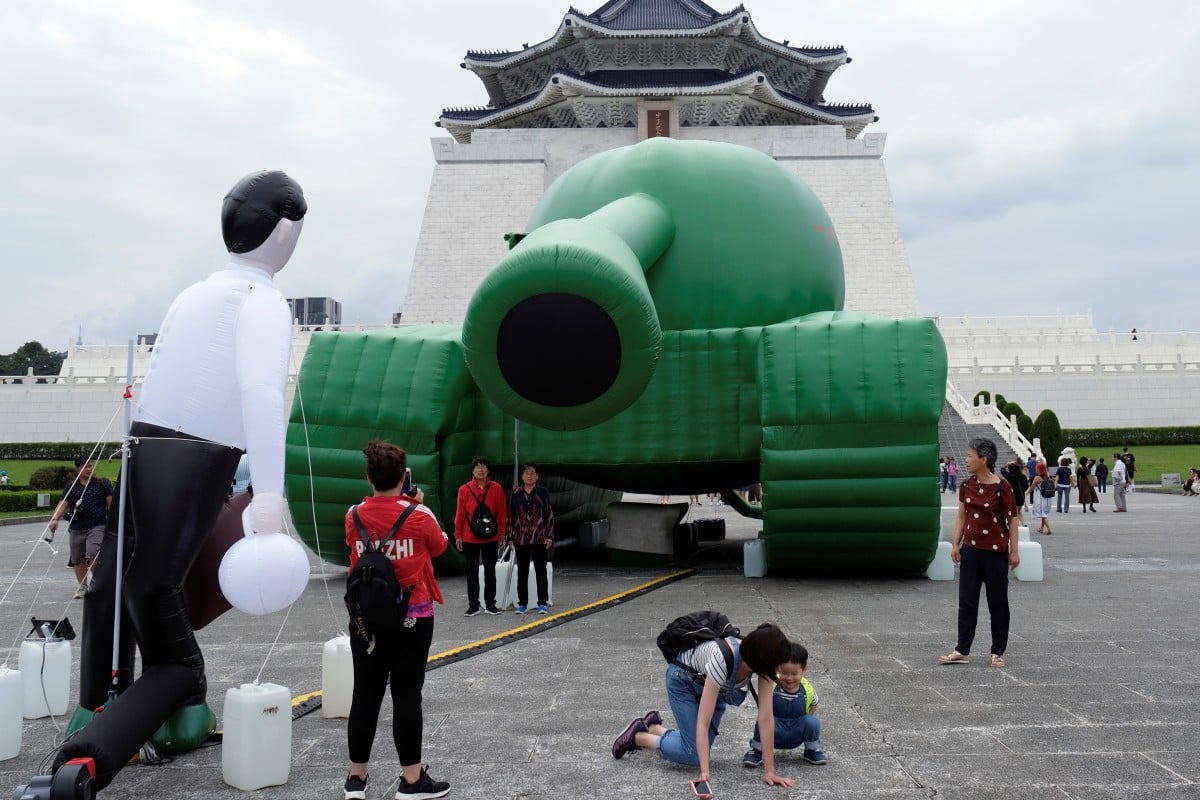
An installation recreating the celebrated Tank Man photograph in Taipei’s liberty square. Photo: Reuters
Taiwanese President Tsai Ing-wen met a group of exiled Tiananmen protesters on Thursday, a move that further burnishes her credentials for standing up to Beijing.
She said the bloody crackdown on the student protesters in 1989 should remind Taiwan that it must firmly reject the “one country, two systems” formula put forward by Beijing for reunification to safeguard its sovereignty, freedom and democracy.
“We don’t want to mislead the other side into making a wrong judgment nor do we want to let down those who support democracy and freedom as a result of an ambiguous answer by a Taiwanese president,” Tsai told her visitors.
“There is no room for ambiguity or dodging when the ‘one country, two systems’ proposal was raised, and we must clearly state that this is not a proposal that we, who have enjoyed freedom, democracy and human rights, could accept.”
The group of mainland émigrés included former Tiananmen student leaders such as Wang Dan, Wang Juntao, Deng Biao, Zhou Fengsuo and Fang Zheng, who were visiting Taiwan for a three-day international forum held to mark the 30th anniversary of the crackdown.
At the start of the year Chinese President Xi Jinping proposed that the two sides should start cross-strait unification talks under the one country, two systems model used to reunite Hong Kong and Macau with the mainland – a model that Tsai flatly rejected saying the two cities had no real autonomy.
In a statement issued by the presidential office, Tsai also noted the different course Taiwan and mainland China had taken over the past 30 years, with the island developing a fully fledged democracy while Beijing has tightened its curbs on freedom of speech.
She also accused Beijing of infiltrating free societies and undermining others’ freedoms using disinformation or hi-tech and commercial weapons.
Taiwanese President Tsai Ing-wen says the 1989 killings highlight the importance of standing up to Beijing. Photo: EPA-EFE
In the meeting, Tsai sharply criticised Chinese Communist leaders for suppressing the pro-democracy student movement in 1989 and failing to restore the activists’ rights.
Teng Biao, one of the visitors, said it was the first time Tsai had set up a meeting with so many pro-democracy activists.
Despite her sharply worded comments, Tsai and her independence-leaning Democratic Progressive Party have generally kept their distance from the Tiananmen exiles, some of whom support cross-strait unification.
Since the DPP’s first election victory in 2000, increasing numbers of people on the island have identified themselves primarily or exclusively as Taiwanese rather than Chinese, and events to mark the 1989 crackdown have dwindled.
On the 20th anniversary of the June 4 killing more than 200,000 people took part in a memorial event in Hong Kong, a sharp contrast to the handful of people who marked the event in Taiwan.
“I guess that might be because we no long cared that much about the [1989] incident over the years. June 4 is just a symbol we use to justify our push for further democracy in Taiwan,” said Chen Wei-ting, a former leader of the Sunflower movement that formed in 2014 to protest against a cross-strait trade deal with the mainland.
Analysts said Tsai hoped the Tiananmen anniversary would remind people of the need to reject the mainland’s overtures to protect Taiwan’s hard-won democracy.
“By reiterating her stand against one country, two systems, Tsai has built up her image as being the leader who is willing to defend Taiwan’s sovereignty despite mounting pressure from Beijing,” said Wang Kung-yi, a professor of political science at Chinese Culture University in Taipei.
Tsai, who is running for a second four-year term in January, has seen her approval rating rebound recently to around 40 per cent from a low of 20 per cent after the DPP’s humiliating defeat in last year’s local government elections.
The mainland-friendly Kuomintang made a string of gains at the DPP’s expense to punish it for unpopular labour and pension reforms and the economy’s poor performance.
Source: SCMP
Posted in Beijing, Chen Wei-ting, Chinese Culture University, DPP, highlights, Hong Kong, Kuomintang, local government elections, professor of political science, Sunflower movement, Taipei, Taiwanese President, Tiananmen crackdown, Tsai Ing-wen, Uncategorized, Wang Kung-yi |
Leave a Comment »
28/05/2019
- President Tsai Ing-wen says Taipei should ‘maintain a high degree of vigilance’
- Exercise simulates response to attack from mainland on military bases
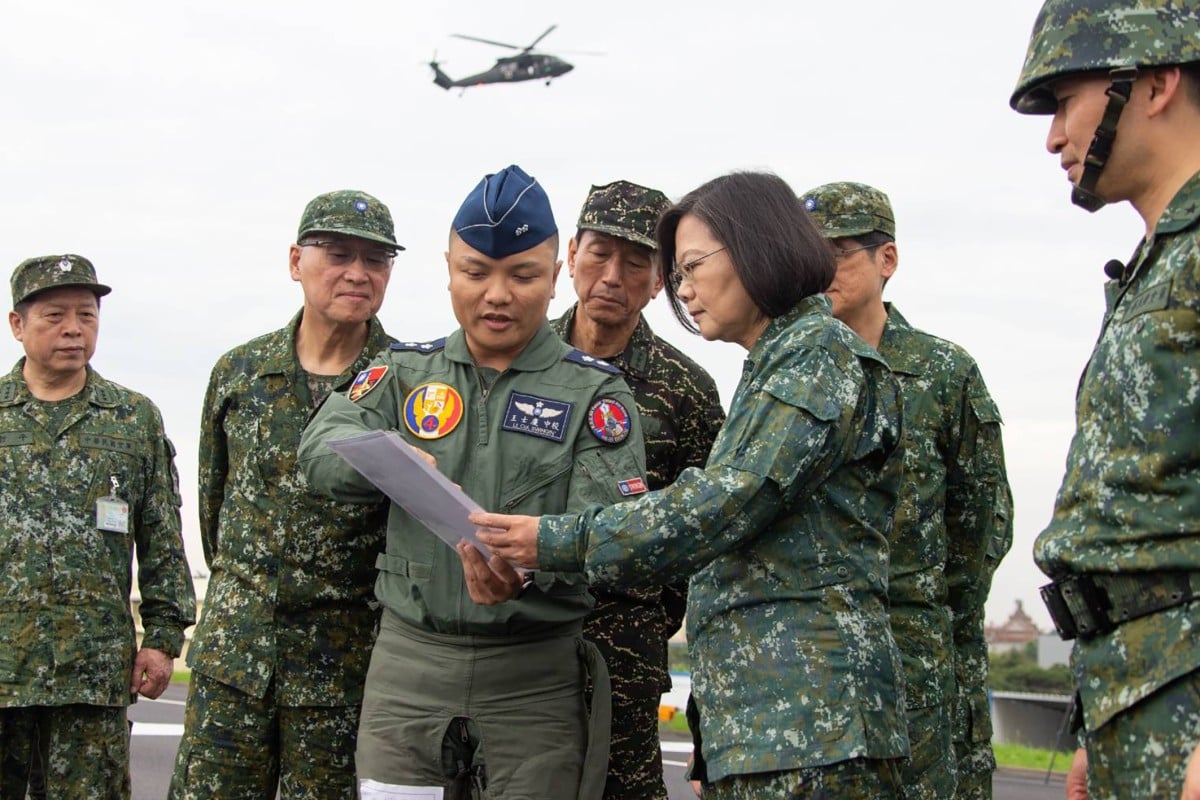
President Tsai Ing-wen and senior Taiwanese military staff during an exercise in southern county Changhua, not far from one of the island’s main airbases at Taichung. Photo: Facebook
Taiwanese warplanes landed on a highway on Tuesday as part of annual exercises designed to test the island’s military capabilities and resolve to repel an attack from the mainland across the Taiwan Strait.
President Tsai Ing-wen watched the exercise in the southern county of Changhua, not far from one of Taiwan’s main airbases at Taichung.
“Our national security has faced multiple challenges,” Tsai said. “Whether it is the Chinese Communist Party’s [People’s Liberation Army] long-distance training or its fighter jets circling Taiwan, it has posed a certain degree of threat to regional peace and stability.
“We should maintain a high degree of vigilance,” she said.
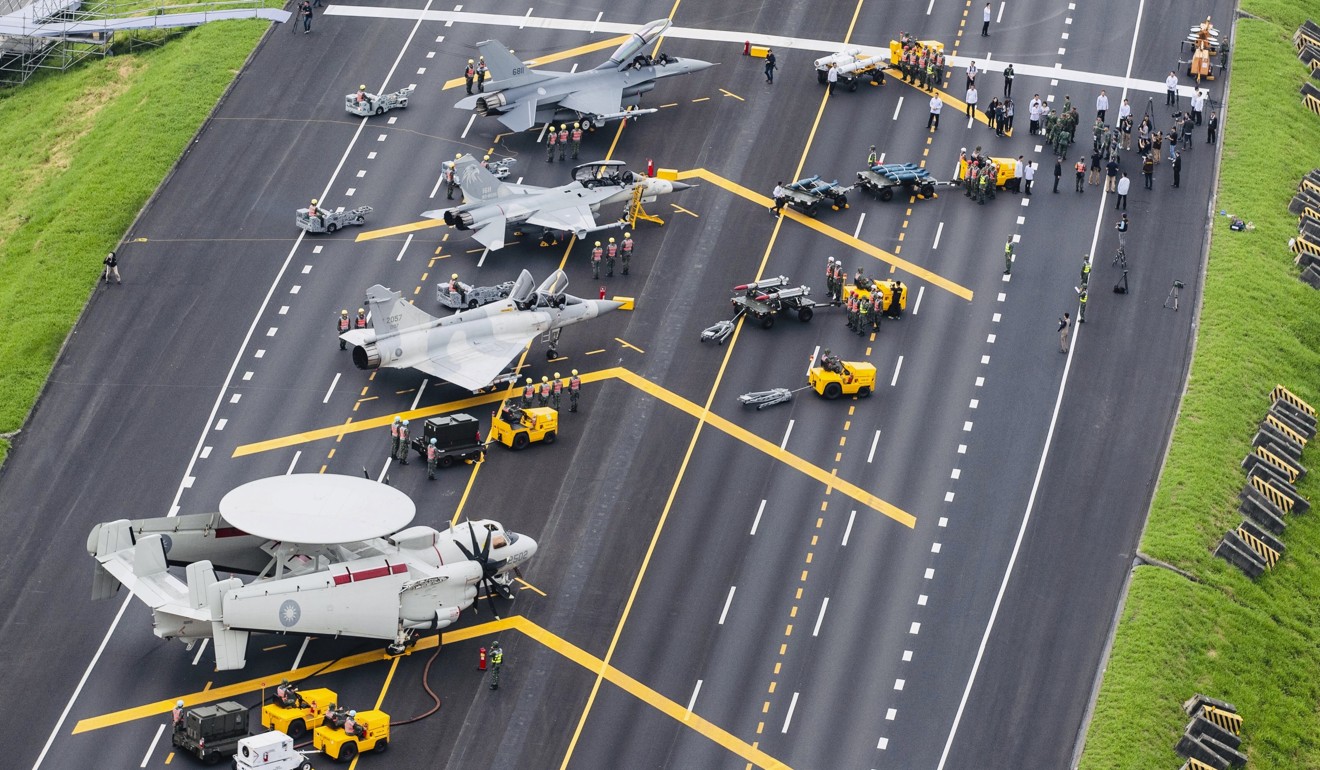
Taiwanese warplanes are parked on a highway during an exercise to simulate a response to a mainland attack on its airfields in Changhua. Photo: AP
Aircraft involved in the exercise included US-made F-16 Fighting Falcons, French Mirage 2000s, Taiwan-made IDF fighter jets and US-built Northrop Grumman E-2 Hawkeye surveillance aircraft.
Ground crews practised refuelling and ammunition replenishment before the aircraft returned to the air. About 1,600 service personnel were mobilised in Tuesday’s exercise.
The event marked the exercise debut of the first F-16 upgraded to the V variant, featuring advanced radar and combat capabilities. Taiwan is spending about US$4.21 billion to upgrade 144 F-16As and Bs to the F-16V version.
Rare meeting between Taiwanese, US security officials angers Beijing
Taiwan buys military hardware mainly from the US and has asked to purchase new F-16V fighters and M1 Abrams tanks.
American arms sales to Taiwan have long been a thorn in the side of US relations with China, routinely drawing protests from Beijing that Washington had reneged on commitments.
Beijing has also been angered by warming relations between Taipei and Washington since Tsai came to power in 2016.
On Monday, Beijing reacted frostily to photos showing a rare meeting between uniformed Taiwanese officers and their US counterparts this month.
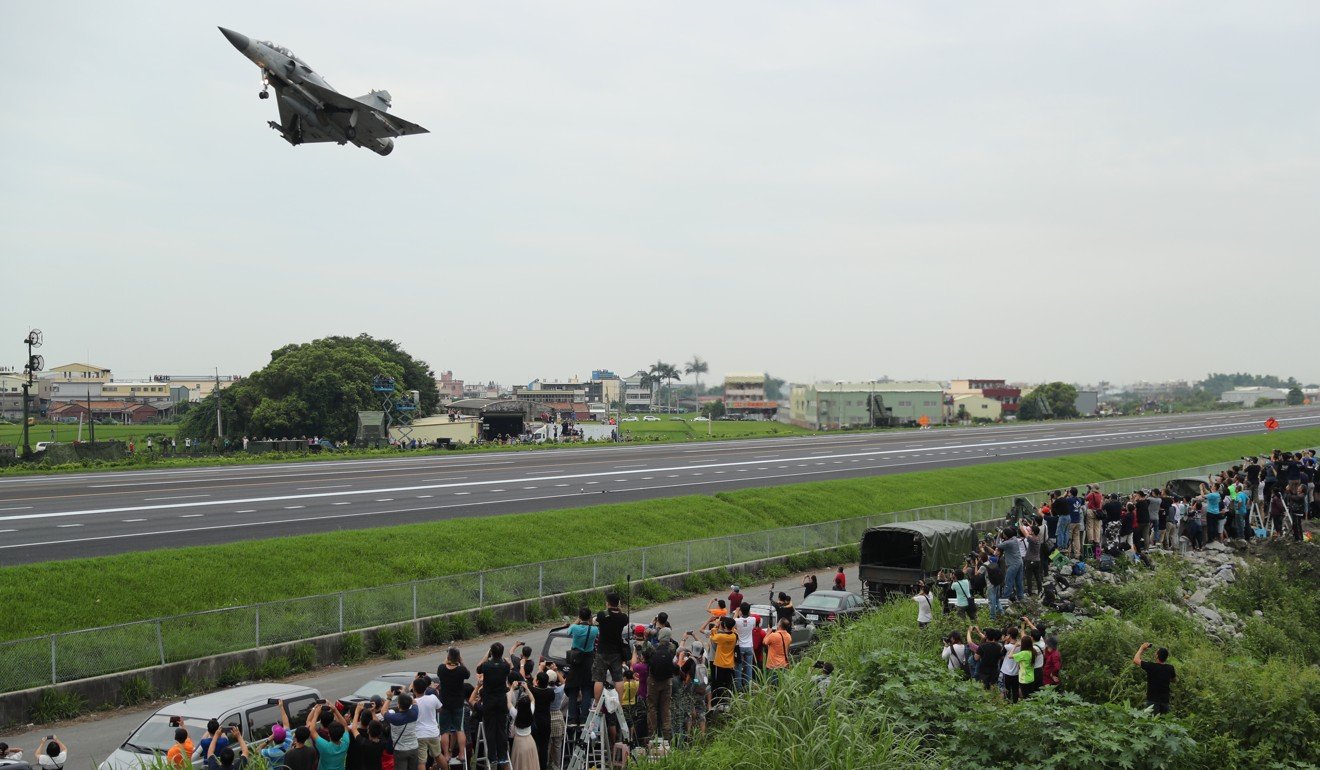
A Mirage 2000-5 fighter jet takes off from a highway during an emergency take-off and landing drill in Changhua, Taiwan. Photo: EPA
Last week, Beijing lodged a protest with Washington after two US warships sailed through the Taiwan Strait.
Taiwan expected to be outgunned in terms of troop numbers and firepower in any war with mainland China but it claimed to have had developed sophisticated asymmetric warfare tactics to make any invasion costly for Beijing.
“There are only a few military airbases which would become the prime targets in the event of an attack. The highway drill is necessary as highway strips would be our priority choice if the runways were damaged during a war,” air force Colonel Shu Kuo-mao.
Taiwan changes name of de facto embassy in United States to ‘reflect stronger ties’
Taiwan’s Central News Agency said highway take-off and landing drills last took place in 2014. A military source told CNA that Tuesday’s drill was not much different from those conducted by the military during the Han Kuang exercises, but it was still challenging.
Among the challenges were that the drill could not be rehearsed and it required clear communications between the military, police and the National Freeway Bureau, said the source.
Source: SCMP
Posted in air force, Beijing, Central News Agency, Changhua, chinese communist party, Colonel Shu Kuo-mao, Han Kuang exercises, Highway, lands, mainland, military airbases, military bases, Military exercise, National Freeway Bureau, People’s Liberation Army, President Tsai Ing-wen, Taichung, Taipei, Taiwan, Taiwan Strait, Uncategorized, US warships, vigilance, warplanes, Washington |
Leave a Comment »
28/05/2019
SHANGHAI (Reuters) – Asian shares rose on Tuesday, lifted by gains in China and as auto firms climbed on merger news, but broad uncertainties over trade and economic growth kept investor enthusiasm in check.
European equity markets were expected to open higher. In early European trade, pan-region Euro Stoxx 50 futures were up 0.39% at 3,365, German DAX futures were up 0.39% at 12,112, FTSE futures were up 0.5% at 7,299.5, and France’s CAC 40 futures were up 0.41% at 5,319.
MSCI’s broadest index of Asia-Pacific shares outside Japan rose 0.38%, and U.S. S&P 500 e-mini futures rose 0.22% to 2,837.25, pointing to gains when U.S. markets reopen on Tuesday after a holiday.
Despite the day’s gains, Joanne Goh, Asia equity strategist at DBS in Singapore, said broad market sentiment remained uncertain ahead of a possible meeting between the Chinese and U.S. presidents at the G20 summit next month.
“There’s still a lack of direction in the markets in terms of all the different asset classes,” she said.
“You actually see Chinese bond yields are ticking up, but that shouldn’t be the case because we are expecting stimulus and bond yields should start to come off…there’s quite a lot of uncertainty in the markets right now.”
Chinese blue-chips climbed 0.61% a day after data showed Chinese industrial firms’ profits shrank in April, which could prompt more government stimulus to support the slowing economy.
A planned increase in the weighting of Chinese A-shares in MSCI indexes after the market close later on Tuesday also boosted shares.Seoul’s KOSPI added 0.37%, while Australian shares gained 0.45%. Japan’s Nikkei stock index finished 0.37% higher.
In China’s debt markets, 10-year government bond futures for September delivery, the most-traded contract, rebounded 0.34% on Tuesday having dropped as much as 0.71% the day before, after China’s takeover of a troubled bank sparked concerns of wider financial risks.
“With economic indicators mixed and trade war risks lingering, the bias is still tilted towards loose monetary policy to cushion growth. We think that the rise in longer-term (Chinese) govvie…yields is probably not warranted,” DBS analysts said in a note.
The equity market gains in Asia followed a relatively light session in Europe on Monday, with UK and U.S. financial markets closed for holidays.
European auto shares had rallied after Italian-American carmaker Fiat Chrysler confirmed it had made a “transformative merger” proposal to French peer Renault in a deal that would create the world’s third-biggest carmaker. That sector rally spilled into Asia with Mitsubishi Motors Corp in Japan adding 5.95% and Nissan Motor Co gaining 2.31%.
Shares in Hong Kong-listed Geely Automobile Holdings Ltd jumped 5.47%. Provisional results from EU elections also buoyed markets after pro-union parties kept a firm grip on power in elections to the European Parliament. The pan-European STOXX 600 added 0.22%.
“Although Eurosceptic and anti-establishment parties didn’t win as many seats as expected, their influence has increased significantly. This could have implications for the political colour of key EU positions,” said Rodrigo Catril, senior FX strategist at National Australia Bank.
“The Parliament composition is also likely to have implications on the priority agenda for future EU reform, particularly with respect to things like immigration, fiscal spending and fiscal union,” he added, noting a decrease in bond yields pointed to continued risk aversion.
The yield on benchmark 10-year German Bunds fell to -0.147% on Monday, its lowest since September 2016.
On Tuesday, U.S. yields were also lower. Benchmark 10-year Treasury notes yielded 2.3097%. The two-year yield touched 2.1724%.
Trade worries remain high on investors’ list of concerns. U.S. President Donald Trump said on Monday that Washington was not ready to make a deal with Beijing but he expected one in the future, while at the same time pressing Japanese Prime Minister Shinzo Abe to even out a trade imbalance with the United States.
The dollar was flat against the yen at 109.50, and fell 0.13% against the euro, with the common currency buying $1.1182.
The dollar index, which tracks the greenback against a basket of six major rivals, was 0.17% higher at 97.782.
In commodity markets, oil prices extended gains after rising more than 1% on Monday on tensions in the Middle East and OPEC-led supply cuts, as well as continuing Russian supply disruptions after a contamination problem discovered last month.
Brent crude 0.29% higher at $70.31 per barrel, having earlier dipped below the $70 mark, and U.S. West Texas Intermediate crude added 1.16% to $59.31 per barrel.
Spot gold was down 0.12% at $1,283.30 per ounce.
Bitcoin, which on Monday touched $8,939.18, its highest in more than a year, was down 0.55% at $8,722.61. The cryptocurrency topped $8,000 for the first time since July 2018 on May 13.
Source: Reuters
Posted in Asian shares, auto sector, China gains, fragile, lift, sentiment, Uncategorized |
Leave a Comment »
28/05/2019
ISLAMABAD (Reuters) – Pakistani Prime Minister Imran Khan on Sunday spoke to Narendra Modi and congratulated the Indian leader on the runaway election victory of his Hindu-nationalist Bharatiya Janata Party (BJP), both countries said on Sunday.
“Prime Minister Imran Khan spoke to Prime Minister Narendra Modi today and congratulated him on his party’s electoral victory in the Lok Sabha elections in India,” Pakistan’s foreign ministry said in a statement.
“The Prime Minister expressed his desire for both countries to work together for the betterment of their peoples.”
Tensions between India and Pakistan, both nuclear-armed countries, flared in February with cross-border air strikes and a brief battle between fighter jets above Kashmir.
India’s Ministry of External Affairs confirmed Khan had called Modi on Sunday, adding the two leaders had discussed fighting poverty together.
He (Modi) stressed that creating trust and an environment free of violence and terrorism were essential for fostering cooperation for peace, progress and prosperity in our region,” the ministry added in a statement.
Source: Reuters
Posted in battle, Bharatiya Janata Party (BJP), congratulated, cross-border air strikes, fighter jets, Foreign Ministry, Imran Khan, India alert, Kashmir, lok sabha elections, Narendra Modi, nuclear-armed countries, Pakistan, Prime minister, Uncategorized |
Leave a Comment »
28/05/2019
The meeting between Priyanka and Rahul Gandhi comes in the backdrop of reports that the powerful working committee of the party may meet in the next three-four days to discuss the leadership issue.
INDIA Updated: May 28, 2019 13:42 IST
Congress president Rahul Gandhi with his sister and AICC General Secretary Priyanka Gandhi. (ANI file photo)
Congress general secretary Priyanka Gandhi Vadra met her brother, Congress president Rahul Gandhi amid reports that he wants to quit after the crushing defeat in the Lok Sabha elections.
Priyanka Gandhi, Rajasthan chief minister Ashok Gehlot, his deputy Sachin Pilot and Congress spokesperson Randeep Surjewala arrived at Rahul Gandhi’s 12, Tughlaq Lane residence on Tuesday morning. The meeting between Rahul Gandhi and senior Congress leaders comes in the backdrop of reports that the powerful working committee of the party may meet in the next three-four days to discuss the leadership issue
Rajasthan’s ruling duo Ashok Gehlot and Sachin Pilot calling on him amid rumblings of discontent in the state and his insistence on quitting.
The Congress has denied that any such meeting has been scheduled in the near future. “These reports are baseless,” KC Venugopal, general secretary in-charge of organization who is responsible for convening Congress Working Committee meetings.
On Monday, Congress treasurer Ahmed Patel and KC Venugopal met Rahul Gandhi. But Patel insisted that he had gone to meet Rahul Gandhi for routine administrative work. “I had sought time before the CWC to meet the Congress President to discuss routine administrative work. The meeting today was in that context. All other speculation is incorrect and baseless,” Patel tweeted.
Three more state Congress chiefs resigned on Monday taking ‘moral responsibility’ for party’s poor performance in Lok Sabha elections. Other than Sunil Jakhar (Punjab) and Ajoy Kumar (Jharkhand) and Ripun Bora (Assam), HK Patil, who was tasked to oversee the Karnataka Congress campaign in December, also put in his papers.
Posted in Ahmed Patel, AICC General Secretary, Ajoy Kumar, Ashok Chavan, Ashok Gehlot, Assam, Congress campaign, Congress chief, Congress treasurer, Congress Working Committee (CWC), HK Patil, Jharkhand, Karnataka, KC Venugopal, lok sabha elections, lok sabha polls, Maharashtra, Narendra Modi, National Democratic Alliance (NDA), Niranjan Patnaik, Odisha, Priyanka Gandhi,, Punjab, quitting, rahul gandhi, Raj Babbar, Rajasthan chief minister, Randeep Surjewala, Ripun Bora, Sachin Pilot, Sunil Jakhar, Uncategorized, UP party chief |
Leave a Comment »
26/05/2019
Infrared camera image taken on April 20, 2019 shows an all-white giant panda in the Wolong National Nature Reserve in southwest China’s Sichuan Province. A rare all-white panda has been captured on cameras in the Wolong National Nature Reserve in southwest China’s Sichuan Province, the reserve management authorities said on Saturday. (Xinhua)
CHENGDU, May 25 (Xinhua) — A rare all-white panda has been captured on camera in the Wolong National Nature Reserve in southwest China’s Sichuan Province, the reserve management authorities said on Saturday.
The panda was captured in mid-April by an infrared camera about 2,000 meters above sea level in the wild, the authorities said.
The panda has no spots on its body and its eyes look red. It was crossing the forest at the time.
“Judging from pictures, the panda is an albino, one to two years old,” said Li Sheng, a researcher with Peking University and a specialist in bears, who studied the pictures.
The panda is a rare all-white individual in wild pandas, which showed that the albinism genes exist in the wild population of giant pandas in Wolong, he said.
“The panda looked strong and its steps were steady, a sign that the genetic mutation may not have quite impeded its life,” Li said, adding that the gender of the panda cannot be decided based on current data.
Albinism exists in different vertebrate species. The albino mutation inhibits melanin synthesis in animal’s body. Albino usually does not affect animal’s physical makeup and functions. It could make them easier to be discovered and more sensitive to direct sunlight, Li said.
The albino mutation is a recessive gene. Only when the parent pandas both carry such gene, can the baby show the albino traits.
If this white panda would mate with a normal panda, their first generation babies will still be black and white. But their babies, carrying the albino gene, will possibly give birth to all-white pandas if their partners also carry such genes, Li said.
In order to better protect the ecosystems, the Wolong nature reserve has been using infrared cameras to monitor the distribution and activities of wild animals in its seven demonstration areas.
Previously, some rare brown giant pandas were found in China’s Qinling Mountains. The cause of the brown fur color was also considered as genetic mutation by some researchers.
Source: Xinhua
Posted in albino, brown fur color, China alert, Peking University, Qinling Mountains, Rare all-white panda, sichuan province, spotted, Uncategorized, Wolong National Nature Reserve |
Leave a Comment »
26/05/2019
BEIJING (Reuters) – It’s the most sensitive day of the year for China’s internet, the anniversary of the bloody June 4 crackdown on pro-democracy protests at Tiananmen Square, and with under two weeks to go, China’s robot censors are working overtime.
Censors at Chinese internet companies say tools to detect and block content related to the 1989 crackdown have reached unprecedented levels of accuracy, aided by machine learning and voice and image recognition.
“We sometimes say that the artificial intelligence is a scalpel, and a human is a machete,” said one content screening employee at Beijing Bytedance Co Ltd, who asked not to be identified because they are not authorised to speak to media.
Two employees at the firm said censorship of the Tiananmen crackdown, along with other highly sensitive issues including Taiwan and Tibet, is now largely automated.
Posts that allude to dates, images and names associated with the protests are automatically rejected.
“When I first began this kind of work four years ago there was opportunity to remove the images of Tiananmen, but now the artificial intelligence is very accurate,” one of the people said.
Four censors, working across Bytedance, Weibo Corp and Baidu Inc apps said they censor between 5,000-10,000 pieces of information a day, or five to seven pieces a minute, most of which they said were pornographic or violent content.
Despite advances in AI censorship, current-day tourist snaps in the square are sometimes unintentionally blocked, one of the censors said.
Bytedance declined to comment, while Weibo and Baidu did not respond to requests for comment.
SENSITIVE PERIOD
The Tiananmen crackdown is a taboo subject in China 30 years after the government sent tanks to quell student-led protests calling for democratic reforms. Beijing has never released a death toll but estimates from human rights groups and witnesses range from several hundred to several thousand.
June 4th itself is marked by a cat-and-mouse game as people use more and more obscure references on social media sites, with obvious allusions blocked immediately. In some years, even the word “today” has been scrubbed.
In 2012, China’s most-watched stock index fell 64.89 points on the anniversary day here, echoing the date of the original event in what analysts said was likely a strange coincidence rather than a deliberate reference.
Still, censors blocked access to the term “Shanghai stock market” and to the index numbers themselves on microblogs, along with other obscure references to sensitive issues.
While companies censorship tools are becoming more refined, analysts, academics and users say heavy-handed policies mean sensitive periods before anniversaries and political events have become catch-alls for a wide range of sensitive content.
In the lead-up to this year’s Tiananmen Square anniversary, censorship on social media has targeted LGBT groups, labour and environment activists and NGOs, they say.
Upgrades to censorship tech have been urged on by new policies introduced by the Cyberspace Administration of China (CAC). The group was set up – and officially led – by President Xi Jinping, whose tenure has been defined by increasingly strict ideological control of the internet.
The CAC did not respond to a request for comment.
Last November, the CAC introduced new rules aimed at quashing dissent online in China, where “falsifying the history of the Communist Party” on the internet is a punishable offence for both platforms and individuals.
The new rules require assessment reports and site visits for any internet platform that could be used to “socially mobilise” or lead to “major changes in public opinion”, including access to real names, network addresses, times of use, chat logs and call logs.
One official who works for CAC told Reuters the recent boost in online censorship is “very likely” linked to the upcoming anniversary.
“There is constant communication with the companies during this time,” said the official, who declined to directly talk about the Tiananmen, instead referring to the “the sensitive period in June”.
Companies, which are largely responsible for their own censorship, receive little in the way of directives from the CAC, but are responsible for creating guidelines in their own “internal ethical and party units”, the official said.
SECRET FACTS
With Xi’s tightening grip on the internet, the flow of information has been centralised under the Communist Party’s Propaganda Department and state media network. Censors and company staff say this reduces the pressure of censoring some events, including major political news, natural disasters and diplomatic visits.
“When it comes to news, the rule is simple… If it is not from state media first, it is not authorised, especially regarding the leaders and political items,” said one Baidu staffer.
“We have a basic list of keywords which include the 1989 details, but (AI) can more easily select those.”
Punishment for failing to properly censor content can be severe.
In the past six weeks, popular services including a Netease Inc news app, Tencent Holdings Ltd’s news app TianTian, and Sina Corp have all been hit with suspensions ranging from days to weeks, according to the CAC, meaning services are made temporarily unavailable on apps stores and online.
For internet users and activists, penalties can range from fines to jail time for spreading information about sensitive events online.
In China, social media accounts are linked to real names and national ID numbers by law, and companies are legally compelled to offer user information to authorities when requested.
“It has become normal to know things and also understand that they can’t be shared,” said one user, Andrew Hu. “They’re secret facts.”
In 2015, Hu spent three days in detention in his home region of Inner Mongolia after posting a comment about air pollution onto an unrelated image that alluded to the Tiananmen crackdown on Twitter-like social media site Weibo.
Hu, who declined to use his full Chinese name to avoid further run-ins with the law, said when police officers came to his parents house while he was on leave from his job in Beijing he was surprised, but not frightened.
“The responsible authorities and the internet users are equally confused,” said Hu. “Even if the enforcement is irregular, they know the simple option is to increase pressure.”
Source: Reuters
Posted in anniversary, artificial intelligence (AI), Baidu, Baidu Inc, Bytedance, cat-and-mouse game, China alert, Communist Party’s Propaganda Department, crank up, Cyberspace Administration of China (CAC), diplomatic visits, Human, Inner Mongolia, LGBT groups, machete, major political news, natural disasters, Netease Inc, President Xi Jinping, pro-democracy protests, robot censors, scalpel, Shanghai stock market, Sina Corp, taboo subject, Taiwan, Tencent Holdings Ltd, Tiananmen Square, TianTian, Tibet, Uncategorized, Weibo, Weibo Corp |
Leave a Comment »
25/05/2019
LEXINGTON, the United States, May 24 (Xinhua) — Chinese and U.S. governors gathered here on Thursday, competing to promote their state or province for investment at the Fifth China-U.S. Governors Forum.
“I want to be a little bit more objective. I’ll tell you not what I think, but what U.S. News (and World Report) just said,” said Cyrus Habib, lieutenant governor of the U.S. state of Washington, grabbing the opportunity when he took the podium to present his state. “In the U.S. News ranked states in the United States, they ranked Washington state No. 1 overall.”
The national media U.S. News and World Report published its yearly Best States Rankings on May 14, putting Washington state on top based on several criteria including health care, education, economy and opportunity.
“It is not a coincidence for Washington to get ranked the No. 1 place to do business and the No. 1 place to live,” he said. “I always tell them the key is international relationships … We are the No. 1 exporter per capita of any state in the country.”
“We are the No. 1 source of U.S. imports into China and so our relationship with China is absolutely key central to the success that we have had now economically in terms of trade,” he added.
Dianne Primavera, lieutenant governor of the U.S. state of Colorado, advertised her state by saying “according to the U.S. News and World Report, Colorado is home to the No. 1 economy in the United States.”
“Our business climate is an active mix of knowledge-based industries and entrepreneurial activity that drives successful startups,” Primavera said. “Colorado welcomes the opportunity to do business with China.”
Matt Bevin, governor of Kentucky and host of the event, was also eager to grasp the opportunity to talk about the benefits of his state.
“We have rivers and roads and railways that transect through this state. You can put goods on the Ohio River and take them straight to any port in China,” he said. “We want you here, we want your investment here.”
U.S. state of Tennessee Governor Bill Lee introduced his state as a neighbor of Kentucky, saying “when Kentucky or Tennessee has investment from companies, from countries like China, then we both benefit. We are a regional economy and what is good for one state and our region is good for another state in our region.”
Local Chinese officials also presented their province or municipality.
Mayor of Chongqing Tang Liangzhi said the southwestern Chinese municipality has an important role in regional development and China’s opening-up layout, and that he hopes to cooperate with U.S. states in many fields like intelligent industry, auto manufacturing, and environmental protection.
Liu Guozhong, governor of China’s northwestern Shaanxi Province, deliberated on the long-standing history and culture, as well as the recent tax-cutting policies of his province, hoping to expand cooperation in technological innovation and environmental protection between the two countries.
Chinese and U.S. companies signed three cooperation agreements at the forum on Thursday. Meanwhile, China’s southeastern province of Jiangxi and the U.S. state of Kentucky signed a memorandum of understanding.
Initiated in 2011, the China-U.S. Governors Forum has become an important platform to promote exchanges and cooperation between the local governments of the two countries.
Source: Xinhua
Posted in China-U.S. Governors Forum, Cyrus Habib, Dianne Primavera, economy, education, governor, Governor Bill Lee, governor of Kentucky, Health care, Jiangxi Province, lieutenant governor, Liu Guozhong, Matt Bevin, Mayor of Chongqing, Ohio River, opportunity, shaanxi province, Tang Liangzhi, U.S. governors, U.S. News and World Report, U.S. state of Colorado, U.S. state of Tennessee, U.S. state of Washington, Uncategorized |
Leave a Comment »










 CHINDIA ALERT: You'll be living in their world, very soon