Archive for June, 2019

12/06/2019

Chandrayaan-2: India unveils spacecraft for second Moon mission

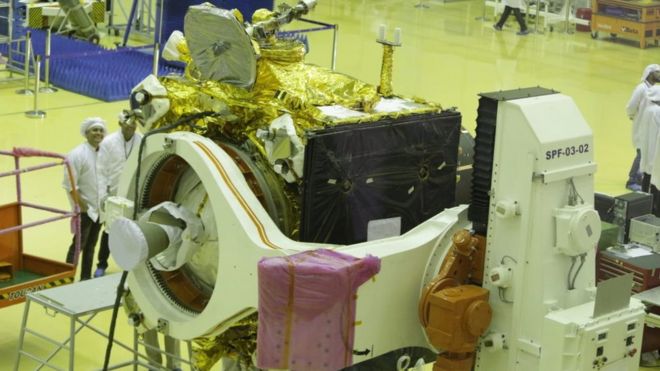
Lander of Chandrayaan-2Image copyright PRESS INFORMATION BUREAU, INDIA

India’s space agency has unveiled its spacecraft that it hopes to land on the Moon by September.

If successful, India will be the fourth country to achieve a soft landing on the Moon, following the US, the former Soviet Union and China.

Chandrayaan-2 will be the country’s second lunar mission.

Its first mission, Chandrayaan-1 which launched in 2008, was an orbiter and did not actually land on the surface of the Moon.

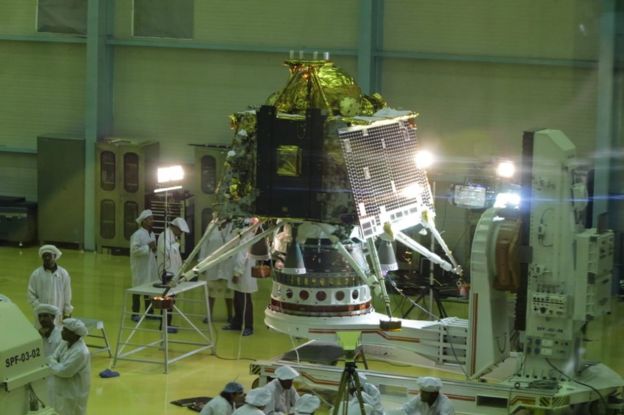
Rover of Chandrayaan-2Image copyright PRESS INFORMATION BUREAU, INDIA

This mission will focus on the lunar’s surface and gather data on water, minerals and rock formations.

The new spacecraft will have a lander, an orbiter and rover.

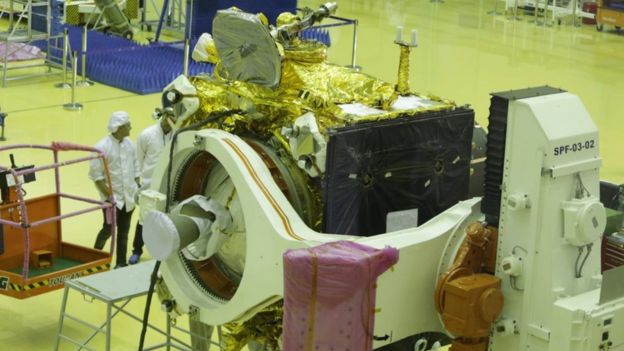
These are photos of the craft in the Indian Space and Research Organisation’s (ISRO) lab, where scientists have been busy getting the spacecraft ready:

Lander of Chandrayaan-2Image copyright PRESS INFORMATION BUREAU, INDIA

Media caption Is India’s prime minister right when he calls his country a space superpower?

If all goes according to plan, the lander and rover will touch down near the lunar south pole in September. If successful, it would be the first ever spacecraft to land in that region.

The rover is expected to operate for 14 days on the Moon, ISRO chairperson K Sivan told the Times of India newspaper. “The rover will analyse the content of the lunar surface and send data and images back to the earth,” he said.

Source: The BBC

11/06/2019

China sees over 6 mln entries, exits during Dragon Boat Festival holiday

BEIJING, June 10 (Xinhua) — China’s border check agencies saw about 6.13 million inbound and outbound trips made during the three-day Dragon Boat Festival holiday, up 6.3 percent year on year, the National Immigration Administration (NIA) said Monday.

During the holiday that ended Sunday, Chinese mainland residents made more than 3.2 million entries and exits, up 11.3 percent from the previous year, NIA data showed. Entries and exits made by residents from Hong Kong, Macao and Taiwan stood on a par with the same period last year at about 2.1 million.

Entries and exits made by foreign citizens increased by 5.3 percent to 812,000, according to the NIA.

Compared with major airports in places such as Beijing, Shanghai and Guangzhou, some small and medium-sized airports reported an obvious rise in their trans-border passenger volumes during the holiday this year, said the NIA, citing that of an airport in the port city of Tianjin surging 28.6 percent.

Source: Xinhua

11/06/2019

Washington and Beijing in ‘contest of wills’ in South China Sea

  • Latest US mission in disputed waters may prompt China to step up its countermeasures
The USS Preble. Photo: Handout
China and the United States have entered a “contest of wills” in the South China Sea, according to analysts.
The assessment follows the latest passage of a US warship through disputed waters near the Scarborough Shoal on Sunday.

It was the second such incident this month and follows a number of missions earlier this year, as the US seeks to challenge China’s activities in the South China Sea.

But analysts predicted that China would step up its countermeasures to show that it would not compromise on sovereignty. However, Beijing and Washington appear to have kept communication channels open to avoid military miscalculations.

Lieutenant Commander Tim Gorman of the US Pacific Fleet defended Sunday’s mission, which saw the USS Preble passing within 12 nautical miles of Scarborough Shoal, an area claimed by both China and the Philippines.

Gorman said the mission was designed “to challenge excessive maritime claims and preserve access to the waterways as governed by international law”.

“All operations are designed in accordance with international law and demonstrate that the United States will fly, sail and operate wherever international law allows,” he continued.

“We conduct routine and regular freedom of navigation operations (FONOPs) as we have done in the past and will continue to in the future. FONOPs are not about any one country, nor are they about making political statements.”

The US is known to have conducted four freedom of navigation operations this year – one in the Paracel Islands and three in the Spratley chain. It carried out seven last year and six in 2016, according to the Pentagon.

‘Divide and conquer Asean’: China tries to go one on one with Malaysia to settle South China Sea disputes
China’s Southern Theatre Command issued a strong response to the latest incident, saying it endangered the ships and personnel of both sides, undermined China’s sovereignty and security, violated basic norms and undermined regional peace and stability.
Senior Colonel Li Huamin, a spokesman for Southern Theatre Command, said its troops would be kept on high alert and take all necessary measures to resolutely safeguard China’s sovereignty and security.
Washington has also urged its allies to help it to counter China’s activities in the region, where it is accused of building up its military infrastructure, and so far this year the US has conducted join exercises with Britain, the Philippines, Japan and India.
The past 12 months have also seen French and British warships sailing through the Taiwan Strait and Paracel Islands respectively.
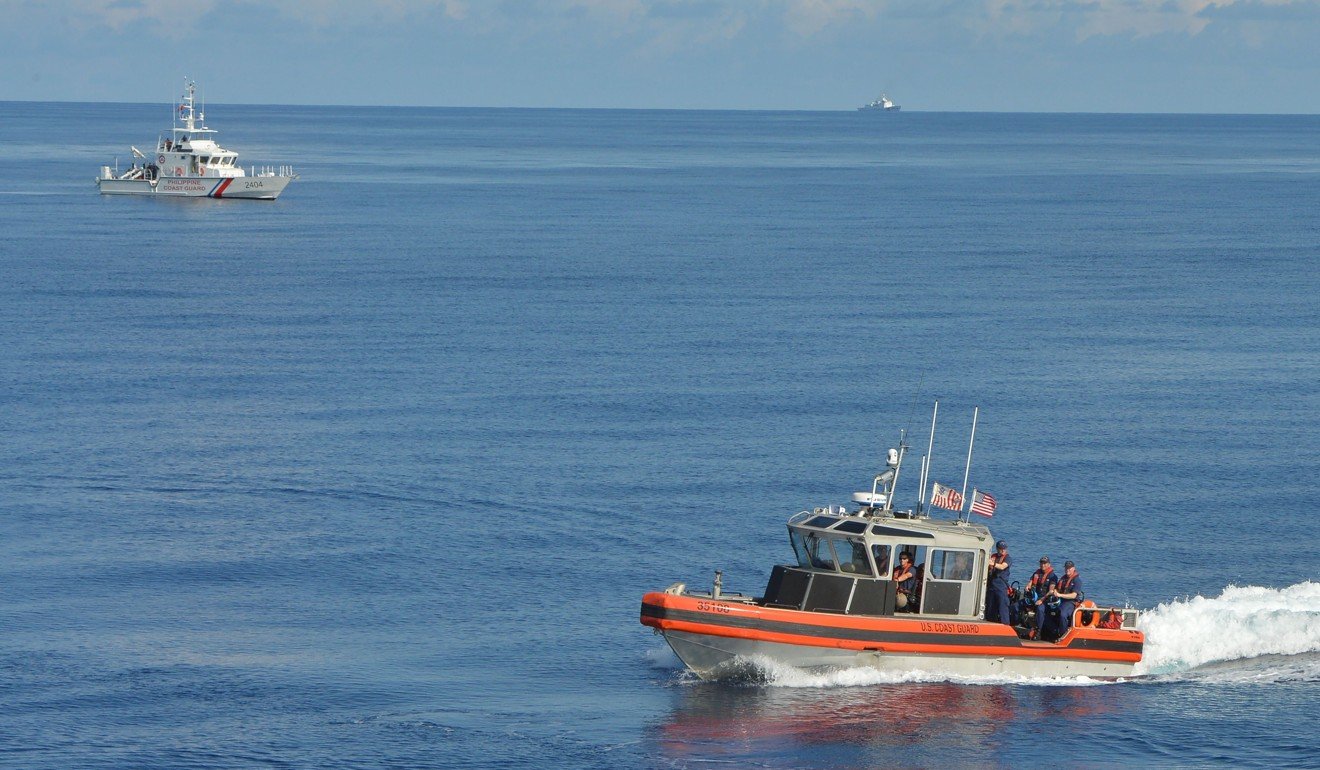
US and Philippine coastguard vessels during a joint operation near the Scarborough Shoal. Photo: AFP

Collin Koh, a maritime security expert at Nanyang Technological University in Singapore, said the US and China were now engaged in a “contest of wills” but “weren’t keen to come to blows considering their mutual interdependence”.

He also said the US military was keen to publicise its operations to “normalise them”, adding: “My sense is that the US side seeks to enhance strategic communication to the wider international community about these operations, and which would also become ‘visible’ to the regional governments as a form of strategic assurance.”

Song Zhongping, a Hong Kong-based military analyst, agreed that “the US has normalised the FONOPs to repeatedly provoke China, which won’t stop”.

He continued: “China should step up its countermeasures to let the US know that Beijing won’t make any concessions on its maritime sovereign claims.”

Song also argued that China also needed to strengthen its coastguard’s capability and the navy and air force’s ability to fight away from China’s coastline.

US naval chief says ‘freedom of navigation’ exercises in South China Sea get more attention than they deserve

Shi Yinhong, an international relations professor specialising in US studies, said US President Donald Trump’s administration “has already greatly increased the frequency and intensity of US FONOPs in the past two years”.

Shi added that this situation “had become or was becoming the new normal” and China was “having to restrain itself a little” to prevent the risk of conflict.

However, he said the country’s programme to reclaim land and step up its military capabilities in the waters had given it “real military advantages” that the US “cannot change by an inch”.

But the US and China have continued their mutual dialogue.

Koh noted that both Chinese Defence Minister Wei Fenghe would be attending the Shangri-La Dialogue in Singapore, an event senior Chinese officials have skipped in recent years.

Wei’s US counterpart, Patrick Shanahan, will also be there and “this could mean that both sides wish to maintain channels of communications to manage their rivalry”, Koh said.

Source: SCMP

11/06/2019

Why are Chinese workers so unpopular in Southeast Asia?

For decades Chinese migrants have sought refuge from upheavals at home by building new lives and businesses across Southeast Asia

  • But as a new breed of overseas worker from an ascendant China ruffles feathers, a fresh backlash threatens to derail their immigrant dreams
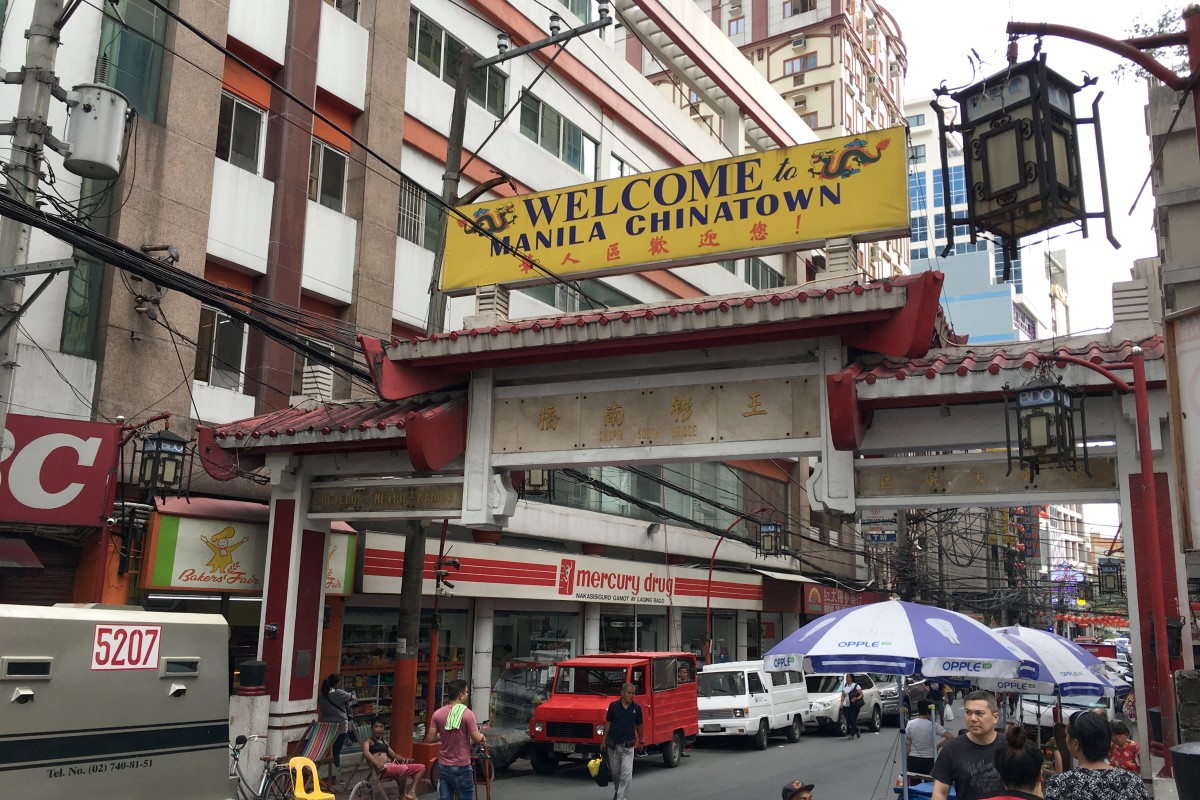
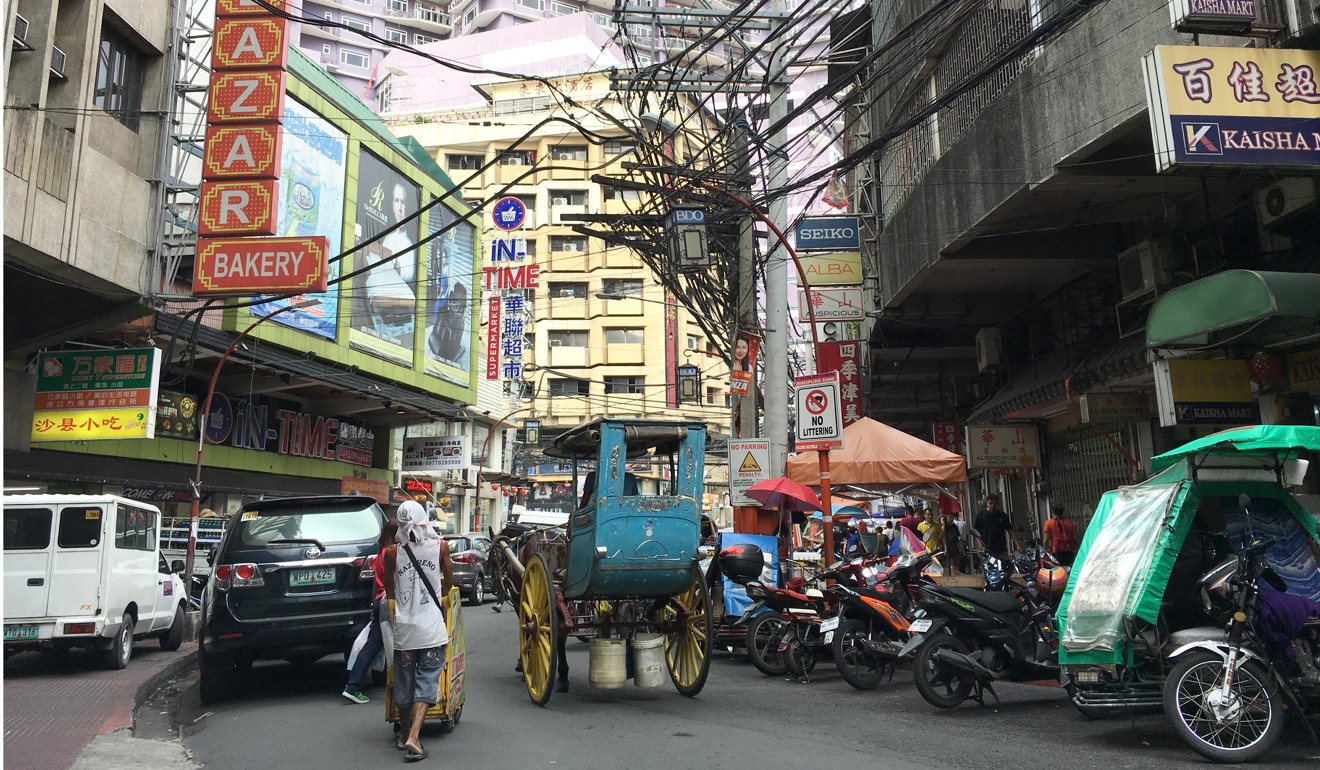
Manila’s Chinatown in Binondo district. Photo: Phila Siu
When Michael Xu arrived in Manila 22 years ago to pursue his “Philippine dream”, he was just another Chinese teenager fresh out of high school with little idea of what lay ahead. Making his way from the airport to his flat for the first time, Xu was surprised to see slum after slum. The youngster was left with the impression that the 
Philippines

was even more backward and poverty stricken than the

China

he recalled from the 1980s.

Xu, then 17 years old, had made the journey from his native Fujian province to help his family set up a small business. The coming years would give him a front-row seat on the local Chinese immigrant experience, as workers and entrepreneurs from the Middle Kingdom streamed into the Philippines in search of opportunity. Some opened shops and restaurants. Others became the labour that powered those businesses.
But he and other Chinese who have spent many years in Manila say the influx has become particularly acute in recent years. More Filipinos have been openly complaining about the upwards 
pressure on property prices and inflation

. The surge has been made worse by scores of foreign

workers recruited by online casinos

based in the Philippines to cater to their biggest customer group – the Chinese.

Xu says he and his immigrant friends all believe Filipinos are generally friendly and the Chinese in the country rarely ever feel like outcasts.
What’s driving Indonesian paranoia over Chinese workers?
But last month he had the shock of his life when he walked out of a restaurant in Manila’s Chinatown, in Binondo district, and saw five Filipinos on motorbikes all pointing guns at him and two friends.
Friend was forced to the ground and one of the robbers was pointing a gun to his head. They took my stuff and left. We started yelling but they fired a shot in the air and warned us not to follow. I was scared.”

Xu says he might have been robbed because Filipinos tend to think the Chinese are well off. It is a perception not always rooted in reality but it persists, not just in the Philippines but also elsewhere in the region.

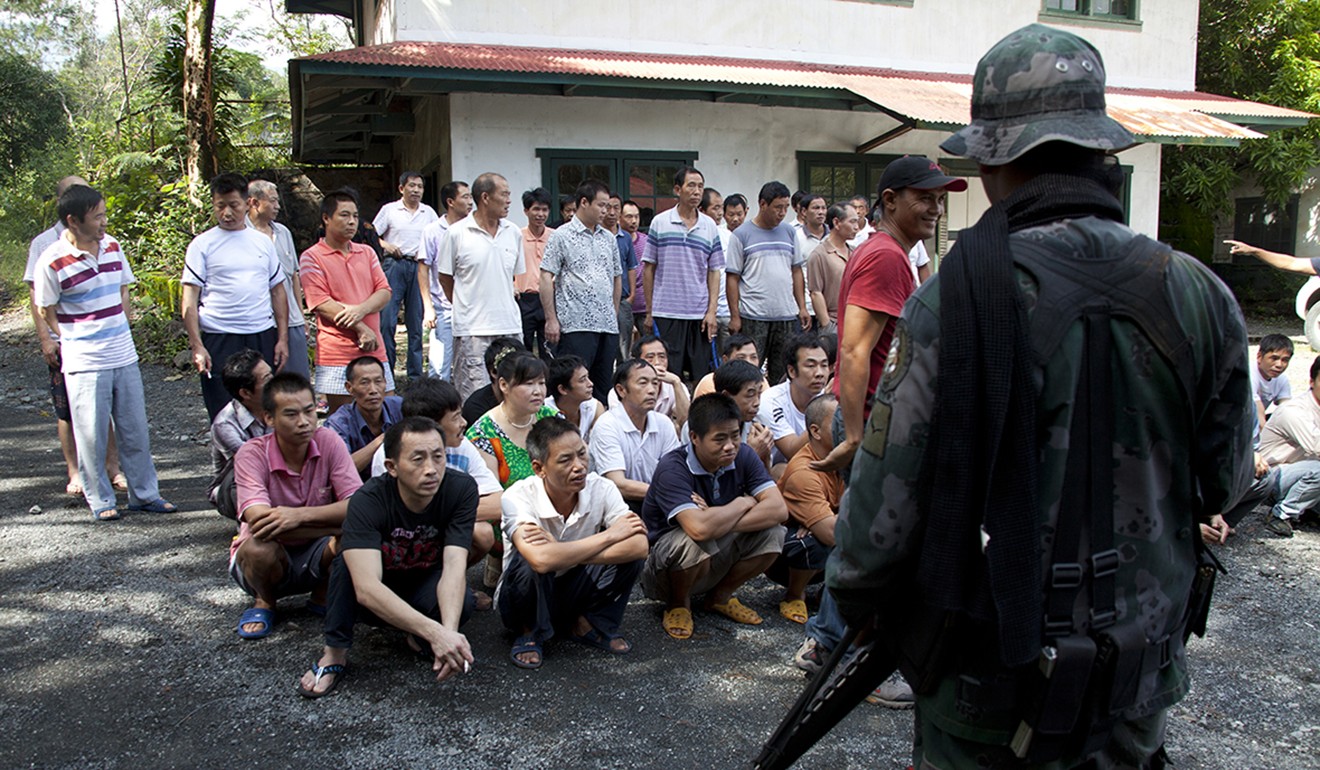
Filipino policemen guard Chinese nationals detained for allegedly working illegally at a mining site in the town of Masinloc, north of Manila. Photo: AFP
The Chinese have been migrating to

Southeast Asia

for centuries, and periodically, problems over their place in their adopted society have emerged. These problems have sometimes been resolved with time, but sometimes they have resulted in violent clashes.

Many Chinese flooded the region in the wake of their nation’s communist revolution of 1949, bringing with them new vigour but also issues of absorption for their host countries.
In recent decades, as China grew richer and its companies eager for overseas markets, fresh waves of workers and investors have ventured to Nanyang, the Chinese reference to Southeast Asian lands. Various communities have had to adapt to having them in their midst, some fearing they take away jobs and crowd out locals in the competition for real estate, amenities and school places, even as their presence helps the economy grow.
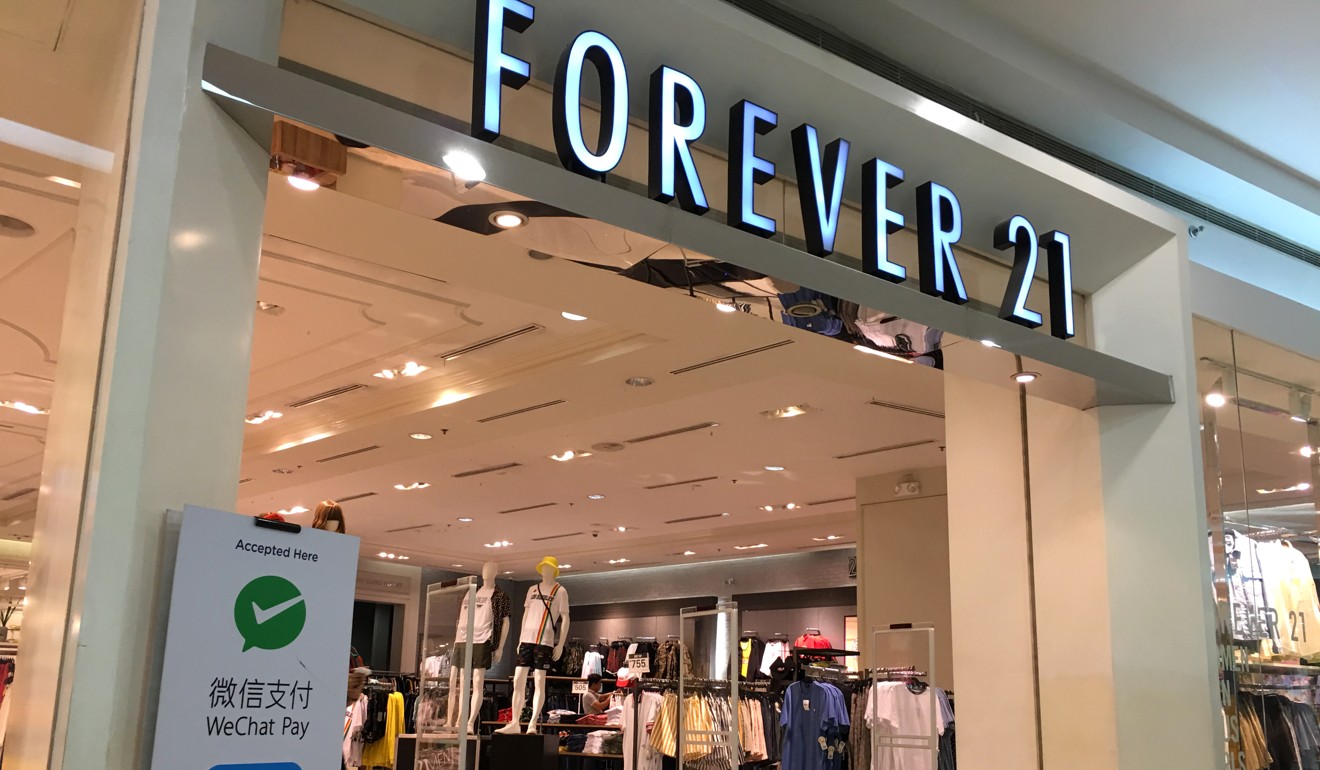
Stores in major Manila malls have started taking payments via WeChat Pay and Alipay, the two dominant forms of digital transaction in China. Photo: Phila Siu
Anxieties about Chinese workers wax and wane, depending on myriad factors such as the prevailing economic situation, the tenor of local politics and other vested interests. Thus in recent years, for example, trade unions in

Indonesia

have accused Chinese firms of spurning local jobseekers in favour of their own nationals.

In

Cambodia

, residents in the beach town of Sihanoukville say the traditionally tranquil destination has been

transformed into a massive Chinatown

, with locally run stores replaced by casinos and Chinese restaurants.

Indonesian-Chinese in Taiwan recall how lives changed after the 1998 riots

But among these countries, it is perhaps the Philippines that has felt the heavy presence of Chinese workers the most in recent years. The government is currently finalising new rules to crack down on illegal workers, but doubts linger about the difference the measures will make.

“The problem here is that there is a lot of corruption at the Department of Labour and Employment, and also the Bureau of Immigration. If illegal Chinese workers pay off the immigration officers and the department of labour, if you multiply that by, say, 100,000 to 200,000, that’s a lot of money,” says Pilo Hilbay, a former solicitor general.

He represented the Philippines when it took China to an international tribunal at The Hague over conflicting sovereignty claims in the 

South China Sea

. Manila won the case in 2016, but Beijing refused to accept the court’s decision.

MONEY AND MURDER

When Xu was a teenager, his parents ran an underwear shop in Fujian. Some of their biggest customers were Filipino Chinese traders who bought garments in bulk and sold them on in the Philippines. It was this that eventually prompted the family to embark on their Philippine adventure, and in 1997 Xu visited the country for the first time to scout out opportunities. Two years later their decision had been made, and Xu’s father completed the paperwork to emigrate, bringing the rest of the family as dependants.

Their early days there were rough. They had no language skills in either Tagalog or English, and Xu says the authorities frequently shut down businesses in Chinatown, partly because many were evading taxes. He found himself in a police station on more than one occasion.

Chinese Indonesians fear attacks as anti-China hoaxes spread online

“I would get in there and everyone arrested would be Chinese. I was scared. I was so young at the time,” he says.

Now the owner of a range of businesses offering services from rice imports to printing, Xu believes Chinese immigrants must adjust and integrate into the local culture, which he says includes small but significant idiosyncrasies such as the tendency for Filipinos to dislike Chinese bosses disciplining staff in front of other workers.

He does not see a great deal of 

anti-Chinese sentiment

outside of a small group of Filipinos he believes are seeking to incite hatred.

Chinese gangsters and loan sharks have been lending cash to gamblers in the Philippines at sky-high interest rates, according to one Chinese migrant. Photo: Phila Siu
Chinese gangsters and loan sharks have been lending cash to gamblers in the Philippines

Fellow immigrant Ken Hong, 43 and also from Fujian, has done almost every job imaginable since he arrived in Manila nine years ago. He went house to house selling curtains. He cooked up lunchboxes at home to sell to friends. Surviving in a strange city has not been easy for newcomers like him.

“I came here empty-handed. A good friend told me to come. I did not want to at first but eventually did. I felt there might be more opportunities here,” says Hong, who is now a restaurant boss.

Another catering entrepreneur, Tony Gan, knows Chinatown like the back of his hand after living in the area for 36 years. The composition of the Chinese community in Manila has changed for the worse in recent times, Gan believes.

I would get in there and everyone arrested would be Chinese. I was scared. I was so youngMichael Xu

Gangsters and loan sharks have infiltrated local businesses, lending cash to casino punters at sky-high interest rates, sparking social ills. Gan says he has a friend whose son four years ago borrowed 2 million yuan to 3 million yuan (US$290,000 to US$430,000) from Chinese underground lenders, who then demanded repayment of 5 million yuan.

Unable to meet the gangsters’ demands, the young man was murdered and his body dumped in a river.

Academic Leo Suryadinata, a senior visiting fellow at the ISEAS-Yusof Ishak Institute in Singapore, says early Chinese migrants to Southeast Asia were usually poor with little education.

Singapore crackdown on sex trade, booze, gambling driving out Chinese

“Many maritime Southeast Asian states were ‘indigenous states’ and were less open to migrants, especially Chinese migrants. But in the age of globalisation, it is impossible to halt migration,” he says.

That resistance has remained but is now targeted at a new type of migrant – one with a different culture that has emerged from a changing China.

“Some of the local population, often also including the Southeast Asian Chinese, feel rather resentful towards new migrants. Apparently, this is not only due to the economic competition but also the different culture they bring,” Suryadinata says.

Some police vehicles in Manila carry the Chinese national flag with the words: “Donated by the embassy of the People’s Republic of China”. Photo: Phila Siu

China’s state-owned or state-linked firms have begun branching out overseas, armed with cash and the confidence born of an ascendant nation. They have brought with them Chinese workers who sometimes rub locals the wrong way or create the perception they are stealing jobs and not sharing the fruits of prosperity with the community.

“Indonesia is a 

Southeast Asian country with many anti-Chinese riots

. It harbours a rather strong prejudice against China and the Chinese overseas, especially among the elites of the political opposition. Therefore the Joko Widodo government has been quite careful in dealing with mainland Chinese workers,” Suryadinata says, referring to the Indonesian president.

GAMBLER’S PARADISE

About 12,000 foreign nationals are working without the required permit for Philippine gaming operators serving overseas gamblers, the country’s labour department said last month. It is believed many of these unofficial employees are Chinese since the punters are often their countrymen seeking a way round gambling restrictions at home. Betting is illegal in mainland China, with the exception of state-run lotteries.

The new employment rules proposed by the Philippine government state foreign workers must obtain a tax identification number before securing permission to take a job.

Chinese entrepreneurs say work permits are currently easy to obtain even for semi-skilled positions such as chefs. But the business owners also insist they mostly hire locals because these applicants accept lower wages.

Pilo Hilbay, a former Philippine solicitor general, says corruption is a problem at the country’s labour authority. Photo: Phila Siu

Adverts for positions in online gaming companies are readily visible on social media despite the government’s crackdown. One recruiter says his company offers a monthly wage of 6,000 yuan plus a bonus and benefits, with a raise of 500 yuan every month. Such salaries can be enticing compared with employment in mainland China, where the average urban wage in the private sector was 3,813 yuan in 2017, according to official statistics.

Another employment agent says jobseekers enter the Philippines on tourist visas before their companies secure them work permits. Women from China often become dealers for gamblers on live-streaming platforms. Others work as customer service officers, helping these gamers with any queries.

Chinese gang threatens chaos in Cambodian province as rift deepens

They are frequently lured abroad by pictures of spacious dormitories, gyms and swimming pools, but in reality many workers complain of having passports confiscated and being crammed into tiny bedrooms.

Ex-solicitor general Hilbay says he knows of one commercial building in Manila containing accommodation stacked with Chinese workers.

“I asked the security guard, how many Chinese are working here? He replied that more than half of the floors were occupied by Chinese workers,” Hilbay says. “They are brought in by van. The security guard did not know what they did there.”

Chinese shoppers are an increasing source of income for businesses. Photo: Phila Siu

Other Filipinos have also shared stories of seeing their neighbourhoods and shopping districts flooded with new arrivals. Stores in major malls have started taking payments via WeChat Pay and Alipay, the two dominant types of digital transactions in China.

Philippine immigration laws must ensure every foreign worker coming to the Philippines is properly scrutinised, Hilbay says. He proposes migrants be made to obtain work permits before coming.

But in February 

President Rodrigo Duterte

indicated he was content with the status quo because of the large number of Filipinos working in China.

“The mindset of the president is to not do anything about it,” Hilbay says.
Why are ethnic Chinese leaving South Korea in their thousands?
Congressman Tom Villarin believes

Duterte is wary of antagonising Beijing

.

“If these new rules are to be adopted, strict compliance is important as there will be more opportunities for corruption when regulatory pressures are brought down in this lucrative business,” he says.
Law enforcers and local governments sometimes “even lay down the red carpet” for firms hiring foreign workers, he adds. “Filipinos are uneasy and even angry that foreigners have taken over their jobs, public spaces and even social services that should have been given to them.”
Locals say the Philippines is less welcoming to Chinese migrants than in the past. Photo: Phila Siu

REWARDS AMID RACISM

According to Luis Corral, vice-president of the Associated Labour Unions-Trade Union Congress of the Philippines, the Chinese ambassador in Manila, Zhao Jianhua, told unionists this year that Filipinos sometimes displayed a racist attitude towards Chinese workers.

Corral recalls: “He asked how come Filipinos don’t have that attitude towards the 

South Koreans and the Japanese

?”

But the labour leader adds that the issue is not racism but about ensuring the rights of Filipinos. Unemployment and underemployment rates are high in the country, which means foreign workers are unnecessary in some industries such as construction, Corral says.
What do Filipinos have against Chinese Filipinos? Meet the Tsinoys

He estimates between 5,000 and 15,000 Chinese construction workers are toiling away in Manila at jobs Filipinos are more than capable of undertaking. Authorities should restrict immigrants to certain positions using a clearly defined list, the unionist insists.

However, the opposing commercial pressures on the government from businesses eyeing profits are fierce. Lester Yupingkun, managing director of Strongbond Products

Philippines, which provides structural repairs and retrofitting services, says the firm’s gross revenue rose by 33 per cent last year compared with 2017’s figure, largely on the back of projects serving the online gambling industry.

“I personally find it unfortunate that the mood surrounding the arrival of these Chinese immigrant workers leans more towards fear rather than opportunity. These workers do not necessarily represent the more selfish interests of the Chinese government,” he says.

“It is ironic because Filipino immigrant workers became the backbone of our own economy. Why deny the Chinese the same privilege offered to our compatriots abroad?”

A new breed of Chinese tourist emerges: meet the FITs

About 2.3 million of the Philippines’ population of 100 million work overseas, many as domestic workers, and the money they send home is a vital source of income for the domestic economy.

Yupingkun worries about the consequences of any reciprocal crackdown from Beijing. He also says stemming the 

flow of
Chinese cash into the Philippines

could hit the property, retail and hotel markets hard.

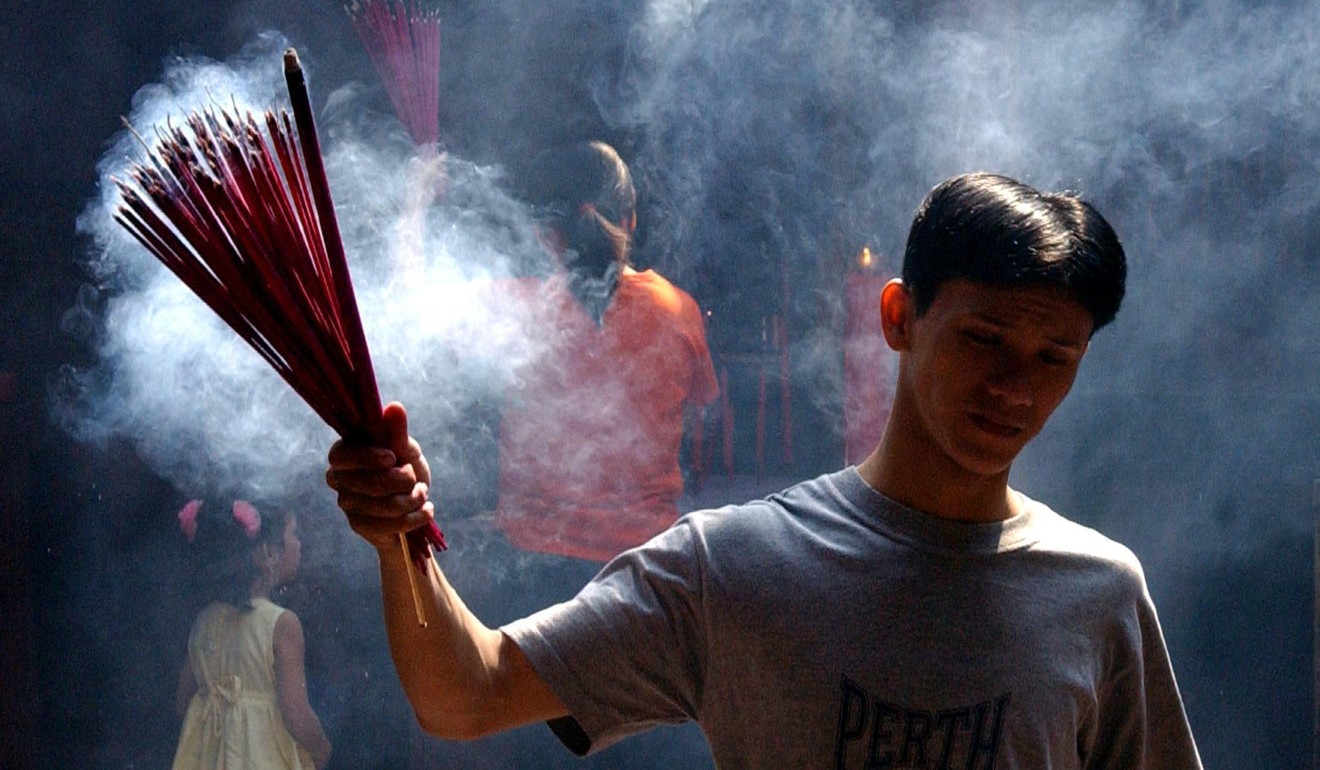
A Chinese Indonesian man offers incense as he prays at the 300-year-old Buddhist temple Vihara Dharma Bhakti in Jakarta’s Chinatown. Photo: AFP

PROSPERITY AND PAIN

Professor Maria Ela Atienza, from the political science department at the University of the Philippines Diliman, believes Filipinos are generally tolerant and welcoming of immigrants, as a multicultural nation in which many households have a member of the family overseas.

“Filipinos of Chinese descent mingle or have assimilated well with the rest of the population. However, Filipinos nowadays are wary of Chinese from mainland China because there have been instances where they have violated laws such as anti-smoking and anti-littering regulations,” she says. “In surveys, anti-Chinese sentiment is rising, especially if they are here illegally and not paying taxes.”

‘Victimised for being Chinese’: the hard lives of South Korea’s Joseon-jok

Authorities started out tolerant of the Chinese influx, she says, but have since come under pressure to act.

“When Filipinos got angry, government agencies started to respond more strongly. However, we are not sure if this stricter policy will continue.”

Dr Parag Khanna, author of new book The Future is Asian, says the two-way flow of people between China and Southeast Asia has been mutually beneficial.

“There have been centuries of trading relations among merchants across the South China Sea, and today most Asean countries have China as their largest trading partner,” he says, referring to the 10-member Association of Southeast Asian Nations.

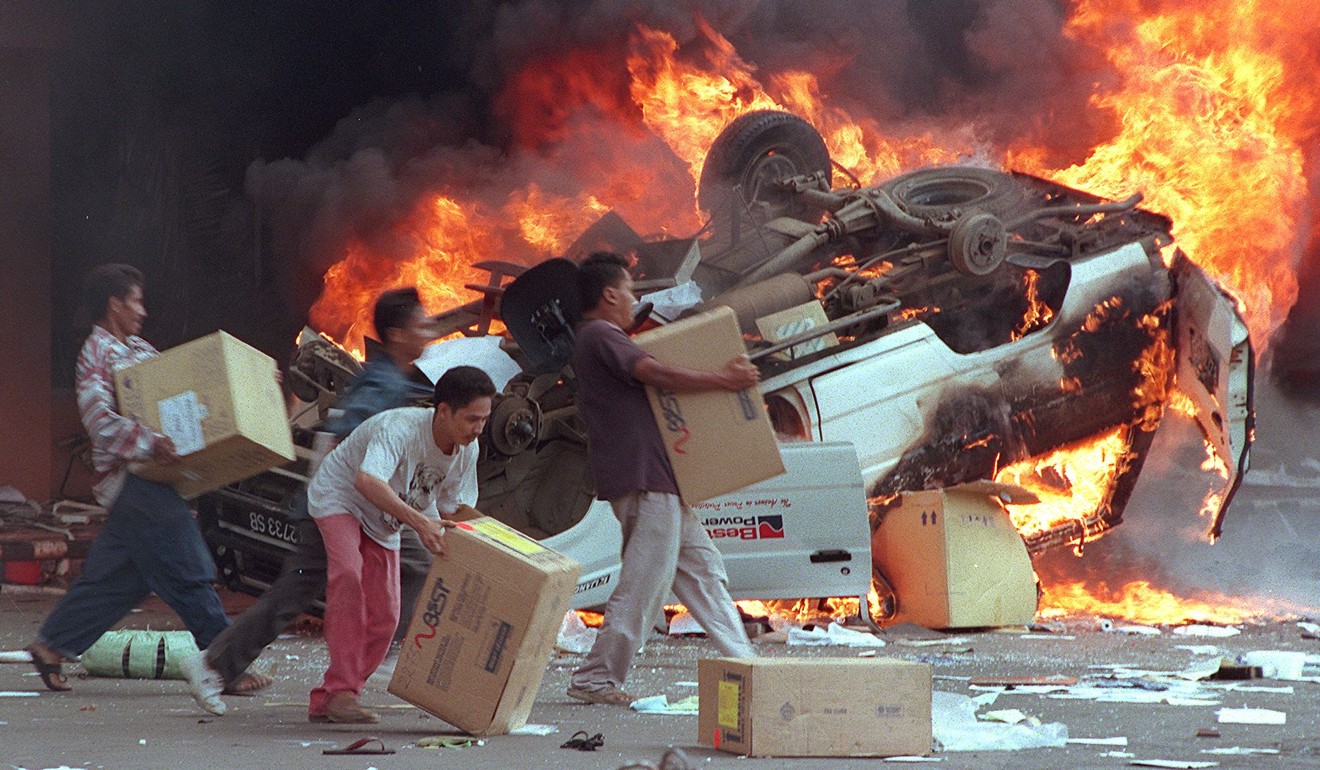
Indonesian mobs burn cars and Chinese businesses as they plunder stores in Jakarta during rioting in 1998. Photo: AFP

In Cambodia, the government has launched an investigation into the employment status of Chinese migrants running businesses in Sihanoukville. Of the 210,000 Chinese nationals living in the country, 78,000 live in the town, according to official figures. But only 20,000 hold a work permit.

“There are now 

more Chinese businesses in Cambodia

– restaurants, hotels, massage parlours, karaoke lounges, casinos. Even the small businesses in Sihanoukville are run by the Chinese,” says Noan Sereiboth, a political blogger who attends a weekly forum titled Politikoffee in Phnom Penh set up to discuss politics and youth-related issues.

Chinese workers ‘flood’ Philippines, yet Duterte’s men ‘don’t know’ how many

Last month Cambodian police revealed the Chinese had been the country’s top perpetrators of crime in the first quarter of 2019. Of 341 foreigners arrested, 241 were from China, followed by 49 Vietnamese nationals and 26 Thais.

The Middle Kingdom has been both a source of prosperity and pain for its Southeast Asian neighbours, with a history of immigration spanning centuries. As many in the region look to China to be the economic motor behind this much touted “Asian century”, signs are the Chinese will keep coming. 

Source: SCMP

11/06/2019

Row over China flags sold in Philippine park: Chinese embassy in Manila speaks out

  • Images claiming to show four people selling the flags at Manila’s Luneta Park days before the Philippines’ Independence Day have sparked fury online
  • Under Philippine law, it is illegal for foreign flags to be displayed in public or used in commercials
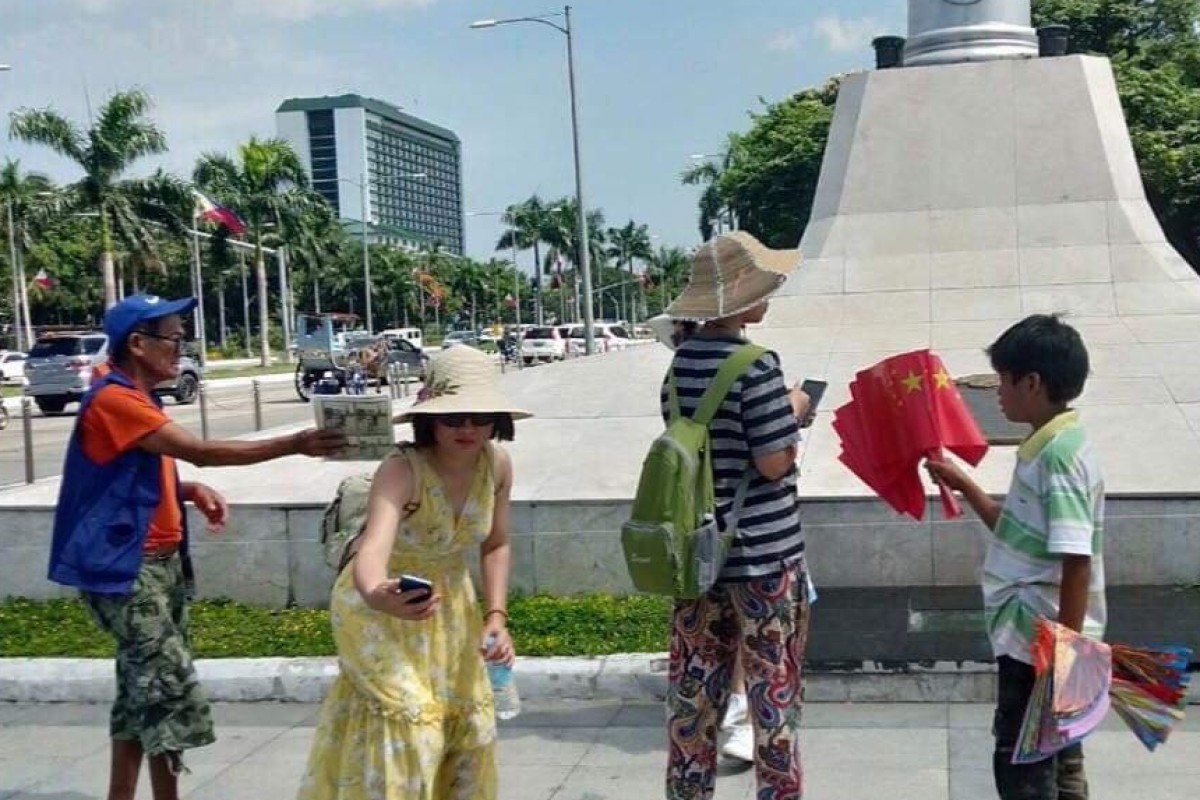
Four people seemingly selling Chinese flags at the Luneta Park in Manila. Photo: Facebook
Staged photographs showing vendors selling Chinese flags in a Philippine park ahead of the country’s Independence Day should be condemned if they were an attempt to undermine bilateral relations, the Chinese embassy has said.
The embassy’s intervention comes after the photos, which purportedly show four people selling the flags at Luneta Park in Manila, sparked fury online at the weekend and reignited a debate about Chinese influence in the country.
Under Philippine law, it is illegal for foreign flags to be displayed in public or used in commercials.
Many social media users in the Philippines reacted negatively to the pictures, hitting out at what they perceived as undue influence from Beijing. In one post typical of the public’s response, Facebook user Martin Masadao criticised Philippine President

Rodrigo Duterte,

writing: “Chinese flags are sold in Luneta! Are we going to be a province of China?”

However, an investigation by the national park authorities has since found the four people in the photograph were paid to pose as if they were selling the flags.

JUST IN: National Parks Development Committee clarifies that there are no vendors selling Chinese flags in Luneta Park,and that the trending photos are fake.Their CCTV caught three Filipinos who allegedly paid the vendors to pose as if selling/buying the Chinese flags. @gmanews pic.twitter.com/KlTpazfeTO— Mav Gonzales (@mavgonzales) June 9, 2019

Taking to Twitter on Tuesday, the Chinese embassy noted that the incident had occurred on China-Philippines Friendship Day.

“We noticed the staged photos of [vendors] selling Chinese flags, which have caught widespread attention,” it said. “If this was done with good intentions to celebrate China-Philippines Friendship Day, you are welcome. However, if it was done to undermine the China-Philippine relationship, we condemn it.”

Manila’s booming logistics property attracts Chinese investment

Manila police on Tuesday said they were searching for suspects “who maliciously ordered the display and selling of Chinese flags in an unauthorised place”.

Anti-China sentiments have been rising in the Philippines over fears the Duterte administration is aligning itself too closely with Beijing.

Duterte: ‘I love China but is it right for a country to claim whole ocean?’
A surge in Chinese migrant workers has also caused resentment domestically. Some Filipinos accuse these workers of taking jobs from locals and adding pressure to the housing market.
On Tuesday, the Philippines announced it would tighten rules for foreign workers. The move follows figures showing that more Chinese workers are entering the country, many of them illegally. Foreign workers will now need a work permit as well as a working visa and a tax number.
Source: SCMP
11/06/2019

China Focus: Central, Eastern European businessmen pursuing opportunities at Chinese expo

NINGBO, June 10 (Xinhua) — The China-Central and Eastern European Countries (CEEC) Expo has become an arena where businessmen from CEE countries can show the competitiveness of their products in the Chinese market.

The expo, which opened in the eastern city of Ningbo on June 8, has attracted more than 700 government officials and businessmen from the CEE countries, as well as over 6,700 buyers from more than 40 Fortune 500 firms and other leading international enterprises in 22 countries and regions.

Businessmen from 17 CEE countries have been promoting dairy products, wine, logistics and other products and services at the expo, which is scheduled to close on June 12.

Jan Chaloupka, head of the export business development of Rajo, is confident about the competitiveness of his products in the Chinese market.

“We export more than 57,000 tonnes of our products every year to over 70 countries around the world,” he said. “All of our products are healthy and of high quality, which are based on the advanced technologies and knowledge that Rajo owns to meet the needs of customers.”

“I believe that our products can be one of the best in the Chinese market,” he added.

“The Chinese market is the most important one for companies in Greece,” said Nikoletta Kaperoni, managing director of Athens-based Kaperoni Business Financial Group (BFG).

“I am sure that Chinese customers will like our products such as olive oil because they are all made from natural raw material without any additives,” she added.

Klemen Boncina, deputy director of Posta Slovenije, a logistics provider from Slovenia, believes his company is a bridge between China and Europe.

“Our company has a wide-spread network of logistics in Slovenia and even in Europe, which I believe can deliver products from China over the last mile to the customers,” he said.

Under the theme of deepening opening-up and cooperation for mutual benefit, the expo includes more than over 20 events such as the European commodity exhibition.

According to China’s Ministry of Commerce, the total trade volume between China and Central and Eastern European countries reached 28.55 billion U.S. dollars in the first four months this year, up 7.9 percent year on year.

Source: Xinhua

11/06/2019

Huawei: ‘We stand naked in front of the world’

Huawei logoImage copyrightAFP

Huawei has denied that it has any links to the Chinese government.

Huawei’s cyber-security chief John Suffolk told MPs on Monday that the tech giant had never been asked by China or any other government to “do anything untoward”.

Mr Suffolk said Huawei welcomed outsiders to analyse its products and detect engineering or coding flaws.

“We stand naked in front of the world, but we would prefer to do that, because it enables us to improve our products.”

He added: “We want people to find things, whether they find one or one thousand, we don’t care. We are not embarrassed by what people find.”

Huawei was invited to the Technology and Science Select Committee to answer questions from MPs on the security of its equipment, and its links to the Chinese government.

The US has encouraged allies to block Huawei – the world’s largest maker of telecoms equipment – from their 5G networks, saying the Chinese government could use its products for surveillance.

Huawei cyber-security chief John SuffolkImage copyright PARLIAMENT TV
Image caption Huawei’s cyber-security chief John Suffolk said the tech giant has no access to mobile networks

“We’ve never had a request from the Chinese government to do anything untoward at all,” said Mr Suffolk.

“We have never been asked by the Chinese government or any other government, I might add, to do anything that would weaken the security of a product.”

MPs raised concerns about Chinese human rights abuses, such as reports that up to a million Muslims are in detention centres in Xinjiang province.

They asked whether Huawei was required to provide equipment to Xinjiang province, especially in light of the 2017 Chinese intelligence law, which requires individuals and associations to comply with Chinese intelligent agencies.

Mr Suffolk said: “We have had to go through a period of clarification with the Chinese government, that has come out and made it quite clear that that is not the requirement of any company.

“We’ve had that validated via our lawyers and revalidated by Clifford Chance…according to our legal advice, that does not require Huawei to undertake anything that weakens Huawei’s position in terms of security.”

Remote access

MPs asked whether Huawei would be able to remotely access the UK’s 5G mobile networks via its equipment.

A woman using 5G to access the internet on her smartphoneImage copyright GETTY IMAGES
Image caption Huawei said it would have no access to any data on a 5G mobile network

In reply, Mr Suffolk stressed that Huawei is a provider of telecommunications equipment to mobile network operators.

“We don’t run networks, and because we don’t run the network, we have no access to any of the data that is running across that network,” he said.

He also explained that Huawei is only one of about 200 vendors who would be providing various different bits of equipment that would eventually make up a 5G network in the UK.

However, if an operator were to have a problem with Huawei equipment, a support centre based in Romania would be able to remotely access the equipment to fix the problem.

MPs wanted to know whether it would be possible for a 5G network to be used to track an individual user.

In response, Mr Suffolk explained that mobile phone technology requires the mobile operator to constantly track a user’s phone, in order to be able to connect them to the mobile network.

By that logic, the operator is constantly tracking all of its customers, all the time.

He also told MPs that only about 30% of the the components in Huawei products are actually made by the company – the rest of the components are obtained from a global supply chain that Huawei closely monitors in order to prevent security breaches.

Source: The BBC

11/06/2019

Aarey forest: The fight to save Mumbai’s last ‘green lung’

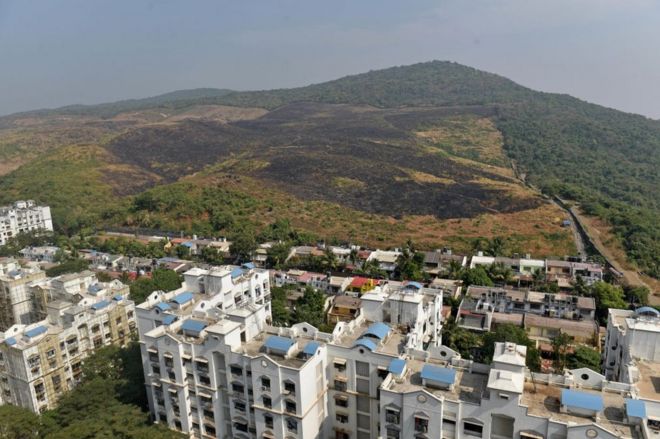
Aarey ForestImage copyright GETTY IMAGES
Image caption Aarey forest is in Mumbai city

The Aarey forest, a verdant strip that lies at the heart of India’s bustling Mumbai city, is often referred to as its last green lung. But now, locals say, it’s under threat from encroachment. BBC Marathi’s Janhavee Moole reports.

As a child, Stalin Dayanand used to picnic in the Aarey forest.

“It was the only place where you could go and play, climb trees or just sit and eat under the shade of a tree and be close to nature,” says Stalin, who prefers to go by his first name.

Now the 54-year-old is the director of an NGO that works to protect forests and wetlands. He is fighting for Aarey.

On 6 June, the government cleared 40 hectares (99 acres) of the 1,300 hectare forest to build a zoo, complete with a night safari.

Another slice of it is being claimed by Mumbai’s new metro rail which is currently under construction. Thousands of trees will have to be felled to construct a new multi-level parking unit for the metro.

Media caption What happens if you ban plastic?

Stalin has petitioned India’s Supreme Court challenging the construction, but the case is still pending.

Locals and environmental activists like him are up in arms because they fear the government will eventually clear the way for private builders to encroach on the Sanjay Gandhi National Park, which lies to the north of Aarey. Spread over 104 sq km (40 sq miles), this protected area makes Mumbai one of the rare cities to have a jungle within its boundaries.

Their concern is partly fuelled by the fact that this is prime location in a city where land is scarce and real estate prices are among the most expensive in the world.

But officials dismiss these fears as unfounded and point out that the construction for the metro only requires 30 hectares of the 1,300 hectares that make up the Aarey forest.

“This is the most suitable land due to its size, shape and location,” says Ashwini Bhide, managing director of the Mumbai metro rail corporation.

Residents of Aarey colony and Aam Aadmi Party members protest against cutting of trees to build a metro shed at Aarey Colony on 2 October 2018 in Mumbai, India.Image copyright GETTY IMAGES
Image caption Plans to fell trees in the forest have led to protests

She adds that the city badly needs a “mass rapid transport system”. India’s financial hub is congested and infamous for its crawling traffic jams and its local train system heavily overburdened.

Officials say that the metro will eventually carry around 1.7 million passengers every day and bring down the number of vehicles on the road by up to 650,000. The city’s current colonial-era railway system, which is effectively its lifeline, ferries some 7.5 million people between Mumbai’s suburbs and its heart on a daily basis.

But they have been up against the city’s residents, including activists and conservationists, ever since news emerged in 2014 that trees would be cut to make way for the metro.

Presentational grey line

Read more India stories

Presentational grey line

What makes the issue complicated is that the Aarey forest is the site of competing claims.

It’s locally known as the Aarey “milk colony” because most of the land was given to the department of dairy development in 1951. But they are allowed to grow cattle fodder only on a fraction of the land. The rest of it is densely forested and dotted with lakes, and the Mithi river flows through it.

Aarey is also home to tribal communities who live in settlements known as “padas”.

“We are not getting basic facilities here, and now metro authorities want to take away the jungle which belongs to us too,” says Asha Bhoye, who belongs to the Konkani tribe and lives in one of the 29 padas. Plans to relocate some of the tribal communities have also met with resistance and led to protests.

Stalin alleges that instead of declaring the Aarey forest a protected area, the state government has used the opportunity to parcel away pieces of it first to the dairy development department and now to other projects.

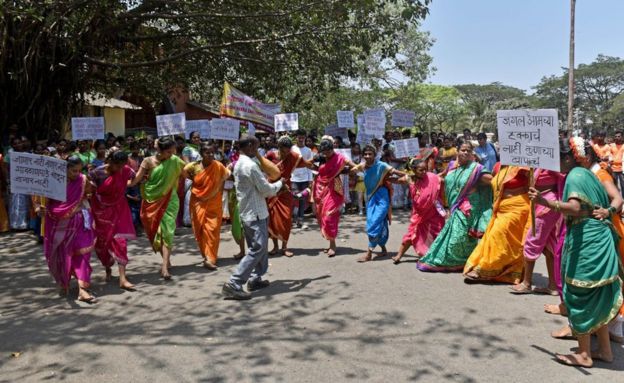
Aadivasi Halka Sanvardhan Samiti and Tribals of Aarey colony protesting to demand protection of Aare forest.Image copyright GETTY IMAGES
Image caption Tribals who live in Aarey demand that it be declared a protected area

“Aarey Forest is part of the same forest as Sanjay Gandhi National Park and we are fighting for the national park itself. In the name of public good, the land is being opened up for developers. It’s a systematic effort to destroy the forest.”

Activists fear that after the parking units are built, other projects will be permitted, further threatening the area’s ecology and wildlife, which includes leopards.

So locals have joined the fight enthusiastically, even leading hikes into the forest to raise awareness. “We bring people here, make them familiar with the forest – there are many species of spiders like trapdoor spiders, the site [of the parking unit] is a leopard site,” says Yash Marwa, a screenwriter who is among those campaigning for the forest.

“Mumbai needs to be liveable”, he adds. “We need to talk about good quality of air and life before talking about infrastructure and development.”

Stalin agrees, saying that “air quality and temperature seem to be last among people’s priorities.”

But he is determined to not give up.

“If I couldn’t do something for my city I’d consider I’ve failed myself.”

Source: The BBC

10/06/2019

Why China struggles to win friends and make itself heard

  • Beijing has to reconcile the competing needs to appear tough to the Chinese public and conciliatory to an international audience
  • China feels US has long had the advantage in shaping global opinion but it now needs to make itself heard
China must appear tough for an increasingly nationalistic audience at home and be conciliatory to an international audience wary of China’s assertive foreign and defence policy. Photo: Xinhua
In just the last week, a Chinese official posed a question that would resonate among his fellow cadres: as China rises, why are we not making more friends and why are our voices not heard?
The question has gained weight as the trade war with the United States has deepened, and Chinese officials have scrambled to win the battle of public opinion at home and abroad.
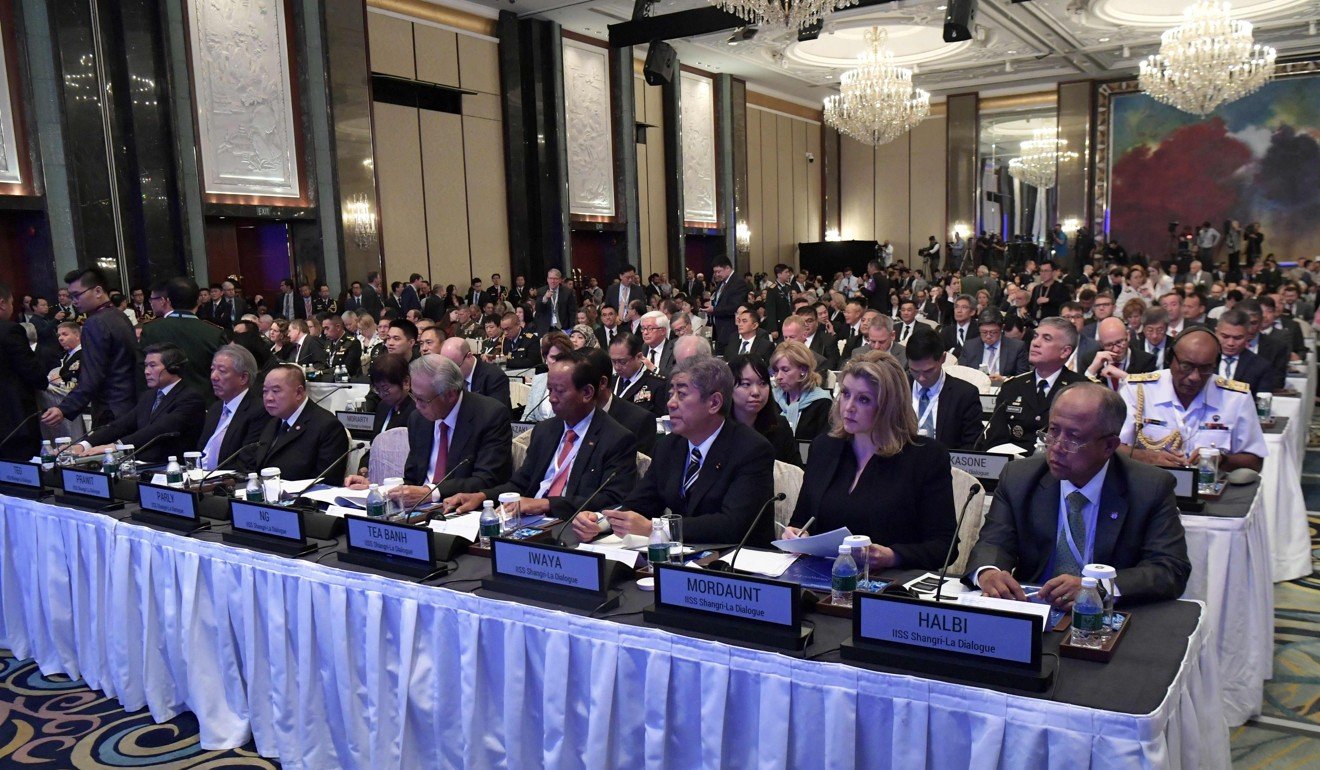
It also came to the fore at the annual Shangri-La Dialogue security forum in Singapore on the weekend, when Chinese officials were faced with balancing the need to appear tough for an increasingly nationalistic audience at home and being conciliatory to an international audience wary of China’s assertive foreign and defence policy.
Senior Colonel Zhao Xiaozhuo, a senior fellow at the People’s Liberation Army’s Academy of Military Sciences and a public diplomacy veteran for the military, said the expectations clashed in Singapore.
“Currently there are two parallel worlds in the public opinion landscape, one domestic and another international, and the two of them are basically split and in two extremes,” Zhao said.
“[The Shangri-La Dialogue] is a place where the two worlds clash. As the Chinese delegation [at the forum] we need to show our position, but it is becoming more difficult to balance [the expectations of the two sides].
“If you are tough, the domestic audience will be satisfied, but it won’t bode well with the international audience. But if we appear to be soft, we will be the target of overwhelming criticism at home.”
China asks state media to pick battles carefully with long US trade war looming, sources say

Zhao said this was an unprecedented challenge for Chinese cadres, who must also satisfy the expectations of the leadership.

“Our task was about diplomacy and making friends. But [with the tough position] you may not be able to make friends, and might even exacerbate the tension,” he said.

The pressure was immense when Chinese Defence Minister General Wei Fenghe took to the stage on Sunday in a rare appearance at the forum. Concerned about how Wei’s performance would be received at home, Beijing ordered Chinese media to minimise their coverage of acting US defence secretary Patrick Shanahan’s address in case it made China appear weak, according to a source familiar with the arrangements for Chinese media.

In his speech, Wei struck a defiant tone, vowing that the PLA would “fight at all costs” for “reunification” with Taiwan and that China was ready to fight the US to the end on the trade front.

Chinese Defence Minister Wei Fenghe makes a rare appearance at the Shangri-La Dialogue in Singapore. Photo: Reuters

Major General Jin Yinan, from the PLA’s National Defence University, a member of the Chinese delegation to the Singapore summit, said Wei’s speech defied expectations that China would show restraint with the US, and demonstrated China’s confidence on the world stage.

The public response at home was immediate and positive. Tens of thousands of Chinese internet users flooded social media platforms such as the Twitter-like Weibo service to express their approval for Wei’s hard line.

“This is the attitude that the Chinese military should show to the world,” one commenter said.

“I am proud of my country for being so strong and powerful,” another said.

Over the past year, Beijing’s propaganda apparatus has tightly controlled the domestic media narrative on the trade war, barring independent reporting on the tensions. But since the breakdown of trade talks in early May, the authorities have gone one step further by escalating nationalistic rhetoric in newspapers and on television.

How Donald Trump’s tweets outgunned China’s heavy media weapons in the trade war publicity battle

China has also tried to make its case to the world with an official statement. On the same day that Wei addressed the gathering in Singapore, the State Council, China’s cabinet, put China’s side of the dispute in a white paper, saying the US should bear responsibility for the breakdown of the trade talks.

A Chinese delegate at the forum said Beijing felt Washington had long had the advantage in shaping global opinion and there was an urgent need for China to make itself heard.

“We should get more used to voicing our position through Western platforms. The US has been criticising us on many issues. But why should the Americans dominate all the platforms and have the final say over everything?” the delegate said.

Before Wei’s appearance at the dialogue, China had not sent such a high-ranking official for eight years. It had long sought to play down the importance of the forum, seeing it as a platform wielded by the US and its Western allies to attack China.

In 2002, China set up the Beijing Xiangshan Forum to rival the Singapore gathering and amplify its voice on security issues.

But Chinese officials are well aware that Xiangshan does not have the same impact and profile as the Shangri-La Dialogue, according to Collin Koh, a research fellow at the S. Rajaratnam School of International Studies at Nanyang Technological University in Singapore.

“[At the same time, the long absence of high-level Chinese representation to the Shangri-La Dialogue also] raises the question of whether it might be sustainable in the long run for [the dialogue] if they continue to not have such ministerial representation [from China],” Koh said.

Zhao, who is also the director of the Xiangshan forum’s secretariat office, agreed that China lagged the US in promoting the image of the military and in winning public opinion.

“China has not fought a war in 30 years. We have only built some islands in the South China Sea and yet have received so much criticism from the international media. The US has engaged in many wars but they are seldom criticised. This reflects that China is in a disadvantaged position in international discourse,” he said.

Expectations collided at the Shangri-La Dialogue in Singapore this month. Photo: AFP
In a rare conciliatory gesture – and just days before the 30th anniversary of the crackdown on pro-democracy protesters in Tiananmen Square – Wei took questions from a room of international delegates on a range of sensitive issues, including the crackdown and China’s mass internment camps in Xinjiang. While he largely toed the official line in his reply, his presence at the forum and willingness to address the questions raised hopes that China would become a more responsible partner in global affairs despite its continuing disputes with the US.
Andrea Thompson, US undersecretary of state for arms control and international security, said Wei’s attendance at the Singapore gathering was a “positive sign” and she hoped that China would be more open and transparent in addressing issues such as arms control and cybersecurity.
“I appreciate that he is here. I think it’s important to have a dialogue … There will be areas where we will agree, and some areas where we disagree, but you still have to have dialogue,” Thompson said.
Source: SCMP
10/06/2019

China’s massive military spending is creating a ripple effect across the Asia-Pacific region

  • With a defence budget second only to the US, China is amassing a navy that can circle the globe and developing state-of-the-art autonomous drones
  • The build-up is motivating surrounding countries to bolster their own armed forces, even if some big-ticket military equipment is of dubious necessity
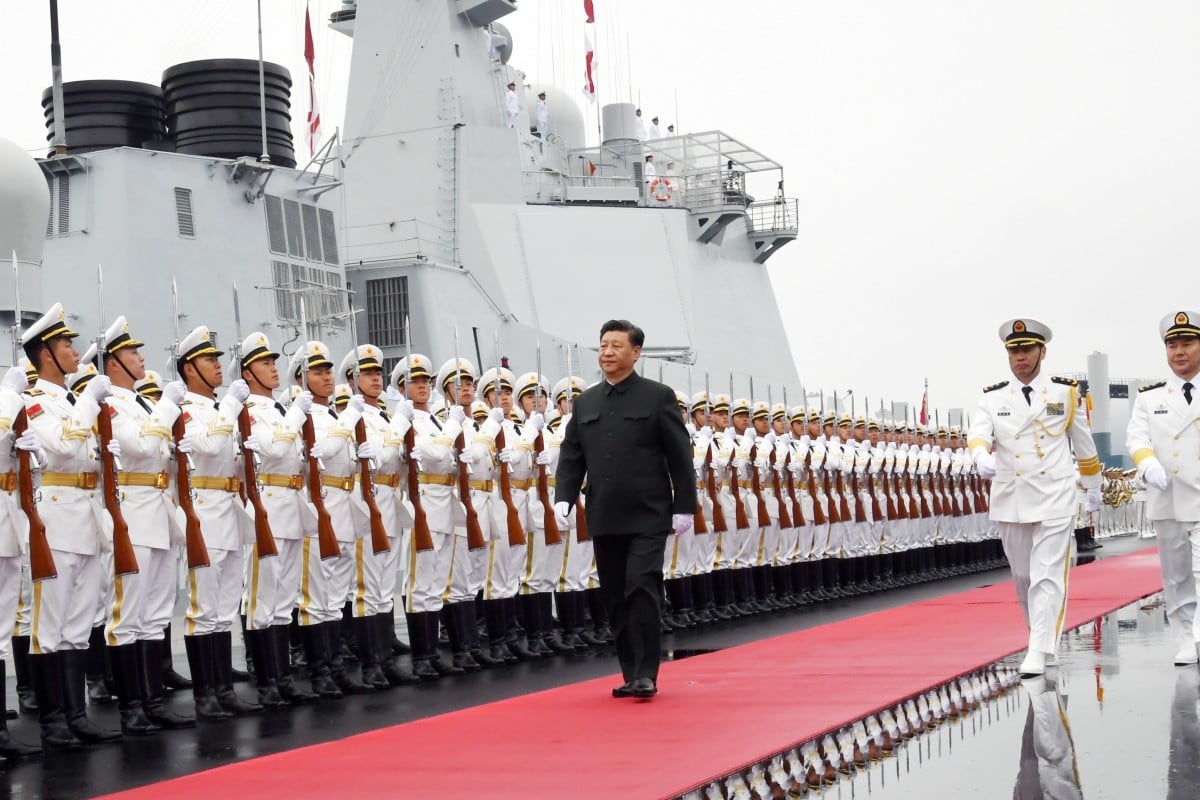
Chinese President Xi Jinping reviews an honour guards before a naval parade in Qingdao. Photo: Xinhua
The Asia-Pacific region is one of the fastest-growing markets for arms dealers, with economic growth, territorial disputes and long-sought military modernisation propelling a 52 per cent increase in defence spending over the last decade to US$392 billion in 2018, according to the Stockholm International Peace Research Institute.
The region accounts for more than one-fifth of the global defence budget and is expected to grow. That was underscored last week by news of 
Taiwan

’s bid to strike a

US$2 billion deal

to purchase US tanks and missiles.

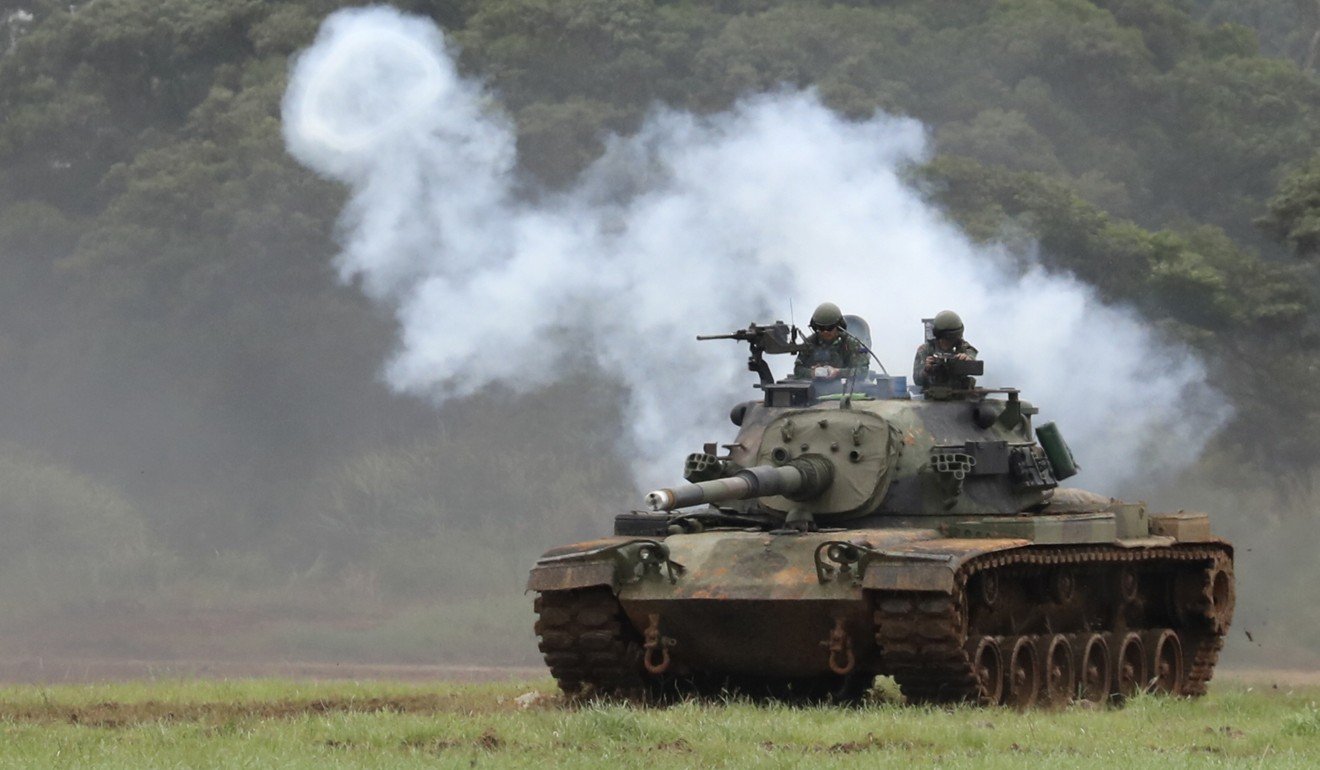
Taiwanese Soldiers on a CM11 battle tank, jointly developed with US arms manufacturer General Dynamics. Photo: EPA
The biggest driver in arms purchases, however, is 
China

– responsible for 64 per cent of military

spending in the region. With a defence budget that is second only to the

US

, China is amassing a navy that can circle the globe and developing state-of-the-art autonomous drones. The build-up is motivating surrounding countries to bolster their armed forces too – good news for purveyors of submarines, unmanned vehicles and warplanes.

It is no coincidence that the recent 
Shangri-La Dialogue

in

Singapore

, a security conference attended by

defence

chiefs, was sponsored by military contractors including Raytheon,

Lockheed Martin

and

BAE Systems

.

Opinion: How the Shangri-La Dialogue turned into a diplomatic coup for China

Kelvin Wong, a Singapore-based analyst for Jane’s, a trade publication that has been covering the defence industry for 121 years, has developed a niche in infiltrating China’s opaque defence industry by attending obscure trade shows that are rarely advertised outside the country.

He said the US is eager to train allies in Asia and sell them arms, while also stepping up its “freedom of navigation” naval operations in contested waters in the

South China Sea

and Taiwan Strait. It has lifted a ban on working with

Indonesia

’s special forces over atrocities committed in

East Timor

. And it is considering restarting arms sales to the

Philippines

.

In his speech at the Shangri-La Dialogue, acting US Defence Secretary Patrick Shanahan touted American advancements in technology “critical to deterring and defeating the threats of the future” and said any partner could choose to win access to that technology by joining the US defence network.
Wong said the message was clear: “Buy American.”
Analysts say Chinese soldiers have less training, motivation and lower morale than their Western counterparts. Photo: Reuters
The analyst said there is a growing admission among the Chinese leadership that the

People’s Liberation Army

has an Achilles’ heel: its own personnel.

He said one executive at a Chinese defence firm told him: “The individual Chinese soldier, in terms of morale, training, education and motivation, (cannot match) Western counterparts. So the only way to level up is through the use of unmanned platforms and 
artificial intelligence

.”

To that end, China has developed one of the world’s most sophisticated drone programmes, complete with custom-built weapon systems. By comparison, Wong said,
US drones rely on weapons originally developed for helicopters.
Wong got to see one of the Chinese drones in action two years ago after cultivating a relationship with its builder, the state-owned China Aerospace Science & Technology Corporation. He viewed a demonstration of a 28-foot-long CH-4 drone launching missiles at a target with uncanny ease and precision.
“Everyone knew they had this,” Wong said. “But how effective it was, nobody knew. I could personally vouch they got it down pat.”
China unveils its answer to US Reaper drone – how does it compare?

That is what Bernard Loo Fook Weng, a military expert at Singapore’s S. Rajaratnam School of International Studies, told the author Robert Kaplan for his 2014 book, Asia’s Cauldron, about simmering tensions in the South China Sea.

He was describing the competition for big-ticket military equipment of dubious necessity.

Southeast Asia

is littered with examples of such purchases.

Thailand

owns an aircraft carrier without any aircraft. Indonesia dedicated about one-sixth of its military budget to the purchase of 11

Russian

Su-35 fighter jets. And

Malaysia

splurged on two

French

submarines it could not figure out how to submerge.

“It’s keeping up with the Joneses,” Wong said. “There’s an element of prestige to having these systems.”

Submarines remain one of the more debatable purchases, Wong said. The vessels aren’t ideal for the South China Sea, with its narrow shipping lanes hemmed in by shallow waters and coral reefs. Yet they provide smaller countries with a powerful deterrence by enabling sneak attacks on large ships.

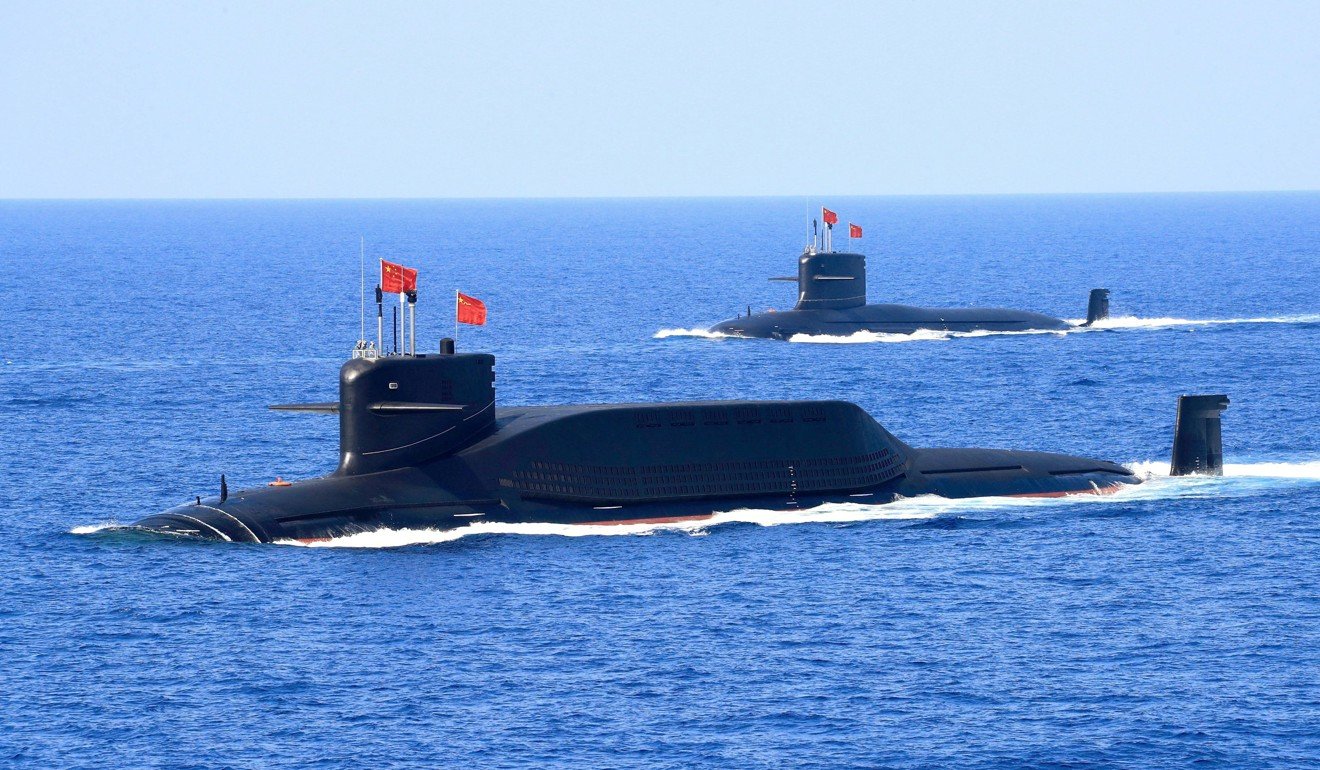
Nuclear-powered PLA Navy ballistic missile submarines in the South China Sea. Photo: Reuters
Asia and

Australia

are home to 245 submarines, or 45 per cent of the global fleet, according to the US-based naval market intelligence firm AMI International.

The Philippines remains one of the last coastal nations in the region without a sub – though it is in talks with Russian builders to acquire some.
Singapore recently received the first of four advanced

German

Type 218 submarines with propulsion systems that negate the need to surface more frequently. If the crew did not need to eat, the submarine could stay under water for prolonged periods. Wong said the craft were specially built for Asian crews.

“The older subs were designed for larger Europeans so the ergonomics were totally off,” he said.
Singapore, China deepen defence ties, plan larger military exercises
Tiny Singapore plays a crucial role securing the vital sea lanes linking the Strait of Malacca with the South China Sea. According to the

World Bank,

the country dedicates 3.3 per cent of its gross domestic product to defence, a rate higher than that of the United States.

State-of-the-art equipment defines the Singapore Armed Forces. Automation is now at the centre of the country’s military strategy, as available manpower is shrinking because of a rapidly ageing population.
Wong said Singapore is investing in autonomous systems and can operate frigates with 100 crew members – 50 fewer than they were originally designed for.

“We always have to punch above our weight,” he said.

Source: SCMP

Law of Unintended Consequences

continuously updated blog about China & India

ChiaHou's Book Reviews

continuously updated blog about China & India

What's wrong with the world; and its economy

continuously updated blog about China & India