Archive for June, 2019

10/06/2019

‘There is no water. Why should people stay here?’

Hatkarwadi
Image caption Hatkarwadi hasn’t seen decent rains in three years

Every morning Dagadu Beldar, 75, wakes up and cooks rice and lentils in his village home in India’s western state of Maharashtra. After that, there’s little else to do.

For the past three years, Mr Beldar has lived alone in his gloomy one-room hut in Hatkarwadi, a stony hillside outback ringed by forests. Drought forced his wife and three sons out of the village. The earth was parched and the wells were dry. There was little water to drink and bathe in, and the family’s millet farm lay barren.

Two sons found work at a sugar factory in Sangli, a cane-growing district some 400km (248 miles) away. Their mother looked after the third son, who went to school there. Hatkarwadi had become a bad memory.

With age, Mr Beldare is going deaf. He mostly keeps to himself in his dark room.

“He’s a very lonely man. He hasn’t seen his family in three years. All because of water,” says Ganesh Sadgar, a neighbour.

Dagadu Beldar
Image caption Dagadu Beldar lives alone after his family left the village because of lack of water

Across the lane, 75-year-old Kishan Sadgar’s only son left home a decade ago to work in a sugar factory far away. He lives with his wife and a pet dog. “My son hardly comes home,” he says. “And when he comes he wants to leave after two or three days because there’s no water here.”

A few doors away, Saga Bai lives with her 14-year-old deaf mute daughter, Parvati. Her only son, Appa, left home years ago to work in a factory. “He hardly comes home. He says he will come only if it rains,” says Ms Bai.

And Ganesh Sadgar, the only graduate in the village, is unable to find a bride because “no woman wants to come here because there’s no water”.

Hatkarwadi is located in Beed, a sprawling sun-baked district which has been impoverished by lack of rain. Not long ago, more than 1,200 people lived in its 125 squat homes. More than half of them, mostly men, have left, leaving behind bolted, abandoned homes. These water refugees eke a living in faraway towns and cities, where they have found work in cane farms, sugar factories, construction sites or as taxi drivers.
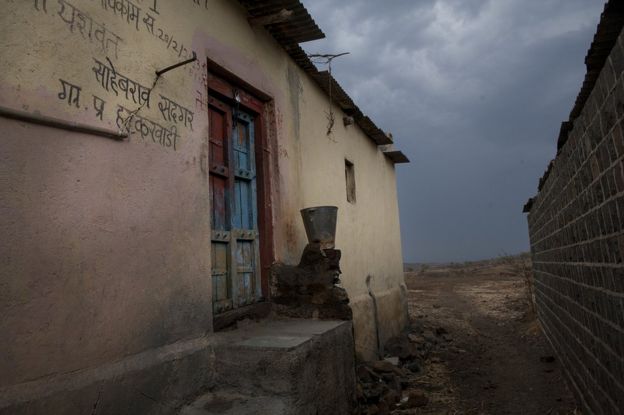
Abandoned house in Hatkarwadi
Image caption Yashwant Sahibrao Sadgar locked his home and left the village a year ago because of lack of water

“There is no water. Why should people stay here?” says Bhimrao Beldar, the 42-year-old headman of the village.

The night before I arrived in the village, there had been a brief burst of rain. Next morning, promising grey clouds seemed to be the harbinger of bountiful rains. By mid-afternoon, however, the sky began burning again, extinguishing any such hopes. That’s how fickle hopes are here. The last time the village had “decent rains” was three years ago.

The cruel summer has sucked the life out of Hatkarwadi. The earth is brown and cracked. Cotton and millet farms have withered away. Only two of the 35 wells have some water left. There are a dozen borewells, but the fast receding water table is forcing farmers to drill deep – up to 650ft – to extract water.
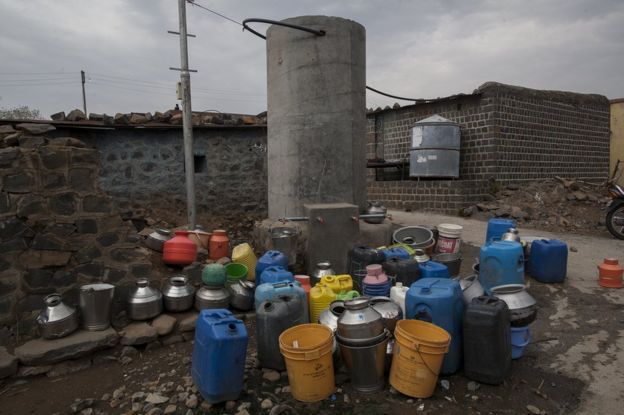
Hatkarwadi pump
Image caption The only source of water is a few functioning borewells

Even a minor gale snaps electricity lines, so the borewells often don’t work. Water tankers – the lifeline of the drought-hit – refuse to supply because of the precarious state of the narrow strip of tar which serves as the connecting road to the village.

There’s nothing to feed the animals, so 300 buffaloes have been moved to a fodder camp uphill where the animals live with their owners under tarp. Some 75 new toilets built under a federal government programme to end open defecation lie unused because there’s no water. Most villagers borrow drinking and bathing water from well-to-do neighbours who own borewells.

Hatkarwadi is a speck on the map of Beed, where more than a million people have been hit by the drought. Deforestation has reduced forest cover to a bare 2% of the total area of the district. Only 16% of the farms are irrigated. When monsoons are good, the rain-fed farms yield cotton, soya bean, sugarcane, sorghum and millet for 650,000 farmers.
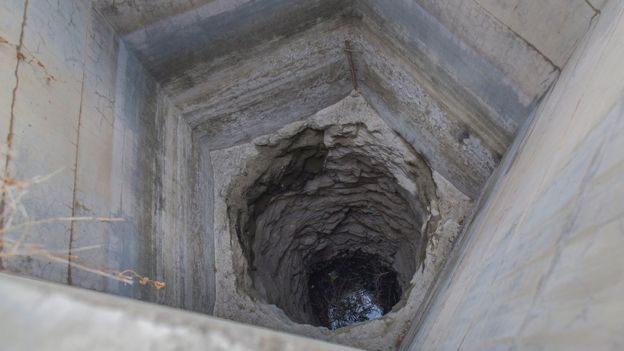
Hatkarwadi well
Image caption Most of the village’s 35 wells are dry

For the last six years, Beed has seen declining rainfall. Irregular rainfall patterns have been playing havoc with crops. A 10-day-pause in rainfall can end up damaging crops. Last year’s abundant rains – 99% of the average yearly rainfall of 690mm – still led to crop failure because there were four long interruptions.

The main Godavari river is running dry. Nearly all of the 140 big and small dams in Beed are out of water, as are the 800-odd wells. Two of the major dams now have what officials call “dead water” – low lying stored water, contaminated with sediments and mud. This is the water which is being pumped into ponds from where nearly a thousand tankers pick up supplies, spike them with chlorine and transport them to 300-odd thirsty villages.
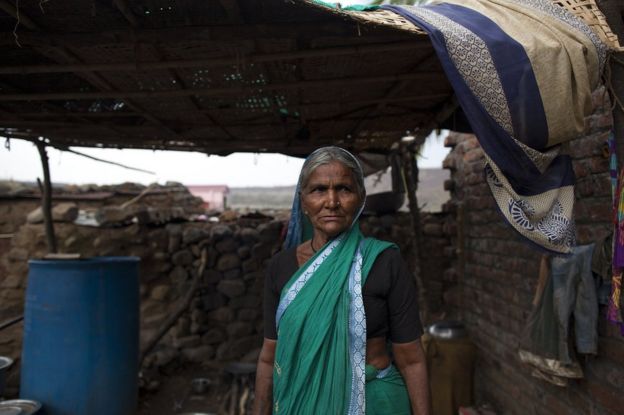
Saga Bai
Image caption Saga Bai says her son returns to the village ‘only when it rains’

Half of Beed’s 800,000 cattle have been moved to more than 600 cattle camps because of lack of fodder. More than 40,000 people have taken up work under a jobs for work scheme, and officials are opening it up for others to prevent people from going into penury. The drought hasn’t spared people living in towns: the 250,000 residents of Beed town are getting piped water only once a week or sometimes a fortnight.

“This is the worst drought in a decade,” says Astik Kumar Pandey, the senior-most official of Beed. “We are hoping that our drinking water supplies last until end of July and then we have abundant rains”.

The crippling drought in Maharashtra is part of a larger climate catastrophe which has gripped India. More than 40% of the land, by one estimate, is facing drought and more than 500 million people living in at least 10 states are badly affected.

Media caption ‘Men don’t care about drought as women fetch the water’

P Sainath, the founder and editor of the online People’s Archive of Rural India, says the lack of water is an “explosive problem”. But drought alone has not contributed to the crisis, he says. It also has to do with the appropriation of water by the well-to-do at the expense of the poor, and the skewed allocation of water.

“The transfer of water from the farms to the industry, from food crops to water guzzling cash crops, from rural to urban areas, and from livelihood to lifestyle purposes for multiple swimming polls in urban high-rises has also led to this situation.”

Back in his office in Beed, Astik Kumar Pandey peers over a live map tracking the movement of GPS-tagged water tankers in the district. It’s a dense mass of red (stationary tankers picking up supplies) and green (tankers on their way with water) trucks clogging the heart of the district.

“This is how bad the situation is. We are hoping that the rains arrive soon”.

Source: The BBC
09/06/2019

China, Japan express willingness to enhance communication, cooperation

TOKYO, June 9 (Xinhua) — Cai Qi, member of the Political Bureau of the Communist Party of China (CPC) Central Committee and secretary of the CPC Beijing Municipal Committee wrapped up a visit to Japan on Sunday, with both sides expressing willingness to maintain the good momentum of bilateral relations and further enhance cooperation and communication.

At the invitation of the Liberal Democratic Party and the Komeito Party, Cai led a delegation of the CPC to Japan from Thursday to Sunday. During the visit, he met with Secretary-General of the ruling Liberal Democratic Party Toshihiro Nikai and other party leaders and government officials.

Cai said that currently Sino-Japanese relations are returning to the right track and showing positive development momentum. The Chinese side is ready to work with Japan to implement the important consensus reached by the two leaders of the states, strengthen high-level exchanges, enhance political mutual trust, tighten public opinion ties, increase inter-party, local and Olympic exchanges and cooperation, and jointly open up new prospects for bilateral relations.

He also stated China’s stance on the trade frictions between China and the United States, saying that China and Japan should strengthen communication and coordination, jointly address the challenges of protectionism and unilateralism, promote the construction of an open world economy, and make important contributions to promoting the development and prosperity of Asia and the world.

The Japanese side said that Japan attaches great importance to Chinese President Xi Jinping’s upcoming attendance at the G20 Summit in Osaka and hopes to take this opportunity to achieve positive results in promoting free trade and raise bilateral relations to a new level.

Japan is willing to continue to deepen exchanges and cooperation with China in political parties, localities, the Olympics, youth and other fields, and inject new impetus into the improvement and development of bilateral relations, the Japanese side added.

Source: Xinhua

09/06/2019

China Focus: Marine ranching restores ecology on desertified seabeds

SHIJIAZHUANG, June 9 (Xinhua) — A decade after the launch of a pilot project to restore ecology in overexploited offshore seawaters, some local fish species which had disappeared, returned to the coastal area of Tangshan, a major industrial city in north China’s Hebei Province.

Algae, shellfish and other fish grow abundantly and form the marine biologic chain in the 4,000-mu (266 hectares) seawater area, run by Tangshan Marine Ranching Co., Ltd.

In collaboration with leading domestic ocean research institutes, the private company has succeeded in transforming the desertified seabeds into an “undersea forest” and rebuilding the marine ecosystem, through dropping artificial reefs into the sea, artificial breeding and releasing of fish since 2009.

“The biomass in the area with artificial reefs underneath is 30 times that of the neighboring seawaters without reefs,” said Zhang Zhenhai, chairman of the company.

“The ecological environment is in good shape in the piloted area,” he said. This condition is in sharp contrast to what Zhang saw in the early 2000s when he planned to develop marine tourism but realized that the worsening offshore environment would only lead tourism to a dead end. Then he decided to restore the environment for sustainable development.

China’s marine ranching must put ecological restoration and construction in the first place because the offshore areas in many regions have suffered severe damage due to excessive fishing and pollution, Zhang said.

At an accumulative investment of 150 million yuan (21.7 million U.S. dollars), the marine ranch at Xiangyun Bay in Tangshan is one of the first group of state-level demonstration marine ranching zones. The ranch’s investment comes from government subsidy, bank loans and the company’s own fund.

Nearly 200 local villagers have stopped traditional fishing methods due to decreasing fishery resources. They work for Zhang’s marine ranch to offer tourists an ocean fishing experience, part of the company’s recreational fishery program.

After making a living by fishing for 26 years, Yang Xingwu bought a leisure boat in 2011 and joined the fleet of 19 boats to showcase fishing for tourists at the Tangshan marine ranch developed by Zhang’s company.

“We earned 40,000 to 50,000 yuan a year in the past from fishing, which was a tiring job and sometimes dangerous due to strong winds on the sea,” said Yang, 52, from a village along the coast of the Bohai Sea.

Now, Yang invites tourists to his boat to experience the life of a fisherman. “It is much safer and stable. My annual income has doubled.”

Zhang Hongrong, 86, from a fishing village in Laoting County in Tangshan, said until the 1970s, the Bohai Sea still abounded in fish, yet in recent years, some fish became almost extinct due to overfishing and pollution.

“It is really a blessing in my lifetime to see some fish species reappear in the sea,” the old fisherman said.

Based on the restoration experiment, Tangshan Marine Ranching plans to plant eelgrass on a preliminary seawater area of around 6.5 hectares and extend the restoration project to 1,300 hectares of seawater area.

“The rehabilitation of marine ecology needs a big environment,” said Zhang, chairman of the company. “After two or three years, the restoration project will show its ecological and economic benefits.”

By the end of 2018, China had completed the construction of 233 marine ranches, which include 86 state-level demonstration marine ranching zones, producing considerable output in both economic and ecological terms, data with the Ministry of Agriculture and Rural Affairs show.

This year, the country aims to build more than ten national demonstration marine ranches, according to the ministry.

Source: Xinhua

09/06/2019

India’s Modi calls for global conference on terrorism

MALE, Maldives (Reuters) – Indian Prime Minister Narendra Modi has called for a global conference to tackle the threat of terrorism in the region and around the world.

During a speech on his first foreign visit since winning re-election, he told the Maldivian parliament in Male that “terrorism is not just a threat for a country, but to the entire civilisation”.

“The international community has actively arranged for global convention and many conferences on the threat of climate change. Why not on the issue of terrorism?” Modi said.

He called for a global conference “so that there can be meaningful and result-oriented discussions for plugging the loopholes that terrorists and their supporters exploit”.

India is pursuing what it calls a “neighbourhood first” foreign policy centred on its allies in South Asia, although there is little sign of a warming in relations with arch rival Pakistan.

His trip to the Maldives is being viewed as a statement of intent to counter the rise of China, which has been making strategic inroads in the Indian Ocean in recent years and seeking closer military ties, to the alarm of New Delhi.

“In the neighbourhood, Maldives is priority,” Modi said in his speech.

During the visit, Modi has signed a slew of agreements with the island nation encompassing ferry services, port terminals and a new national cricket stadium.

His next stop is Sri Lanka’s capital, Colombo, where security is likely to be high on the agenda.

A wave of bombings on Easter Sunday killed more than 250 people across Sri Lanka despite repeated warnings from Indian intelligence services about a militant plot.

Source: Reuters

08/06/2019

Factbox: China, Africa to embrace closer economic, trade ties

BEIJING, June 8 (Xinhua) — China and African countries will see more intimate economic and trade ties as the first China-Africa Economic and Trade Expo will open on June 27 in Changsha, the capital city of Hunan Province.

A total of 53 African countries have confirmed to attend the expo, and international organizations including the United Nations Industrial Development Organization, the World Food Programme and the World Trade Organization will also send representatives to attend the event.

Here are some facts and figures revealing the growing vitality of trade between China and Africa as well as broader economic exchanges.

— China has been the largest trading partner of Africa for 10 consecutive years.

— In 2018, trade volume between China and Africa amounted to 204.2 billion U.S. dollars, up 20 percent year on year.

— China’s imports of non-resource products from Africa have increased significantly. In 2018, China’s imports from Africa went up 32 percent year on year, with the imports of agricultural products up 22 percent.

— China’s exports of mechanical, electrical and high-tech products accounted for 56 percent of its total exports to African countries.

— China has finished the negotiations of a free trade agreement with Mauritius.

— More than 3,700 Chinese enterprises have been set up in Africa by the end of 2018, with combined direct investment over 46 billion dollars.

— China’s financial institutions have established more than 10 branches in Africa.

— South Africa and seven other countries have included the Chinese currency renminbi (RMB), or the yuan, in their foreign exchange reserves.

— China has formed RMB clearing arrangements with Zambia and signed currency swap agreements with four African countries including Morocco.

Source: Xinhua

08/06/2019

China, India vow to enhance mutual trust, expand cooperation

NEW DELHI, June 8 (Xinhua) — A delegation of the Communist Party of China (CPC) concluded its four-day visit to India on Saturday, and both sides pledged to enhance mutual trust and boost cooperation in various fields.

During the visit, head of the CPC delegation Li Xi, who is a member of the Political Bureau of the CPC Central Committee and the secretary of the CPC Guangdong Provincial Committee, met with Indian External Affairs Minister S. Jaishankar, National General Secretary of the Bharatiya Janata Party Ram Madhav, President of Indian National Congress Rahul Gandhi, and Gujarat Chief Minister Vijay Rupani, and also attended the Guangdong-Gujarat economic and trade exchange activities.

Li said that under the guidance of the leaders of both countries, China-India relations have shown a strong momentum of development, adding that his visit is aimed at implementing the important consensus of the leaders, enhancing mutual trust and expanding pragmatic cooperation.

Li introduced China’s firm position, confidence and determination on China-U.S. trade frictions.

China and India share common interests in promoting world multi-polarization, economic globalization, and maintaining multilateralism, said Li, adding that China is willing to work with India to jointly meet challenges and share development opportunities.

Li briefed the Indian side about the historic achievements and changes that have been making in China since the founding of the People’s Republic of China in 1949 and over 40 years of implementing the reform and opening-up policy, especially after the 18th CPC National Congress in 2012.

The CPC is willing to exchange experiences in governance with the major political parties in India and consolidate the political foundation of China-India relations, said the senior official.

Guangdong Province hopes to deepen exchanges and cooperation with India’s local governments so as to continuously inject momentum into the closer development partnership between China and India, he added.

The Indian side, speaking highly of the significance of Li’s visit, said it would help maintain the good momentum of the bilateral relations.

They expressed their willingness to maintain high-level exchanges with China, strengthen exchanges and cooperation with the government, political parties and localities, and continuously enhance understanding and mutual trust to promote the continuous development of India-China relations and jointly promote world peace, stability and prosperity.

Source: Xinhua

06/06/2019

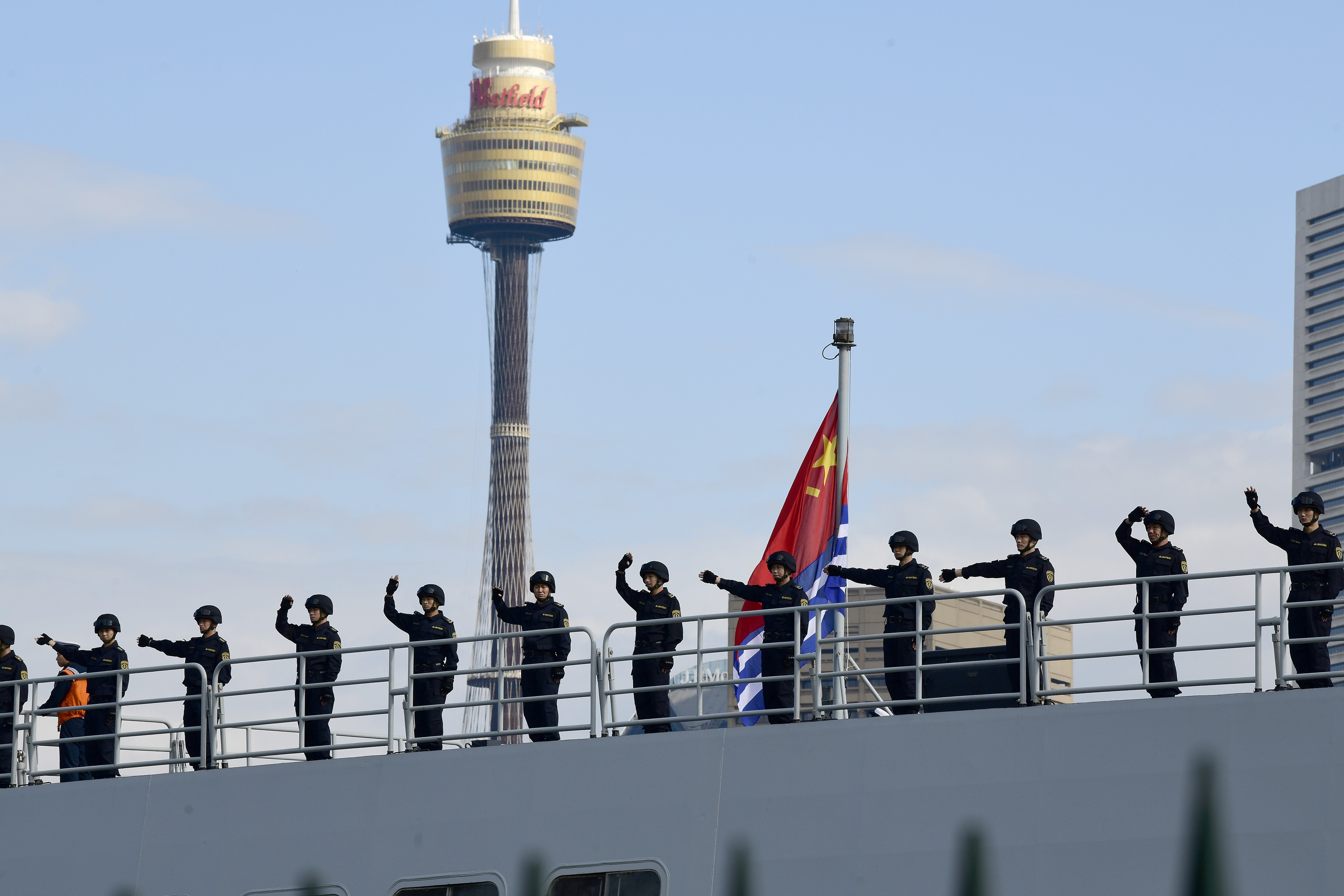
Chinese warships in Sydney: a surprise for the Australian public, and a show of strength from Beijing?

  • Prime Minister Scott Morrison says the visit was reciprocal, while to experts it showed China’s ability to carry out naval operations globally
  • The flotilla has also been described as a ‘public relations disaster’, since it followed other controversies involving Australian and Chinese vessels
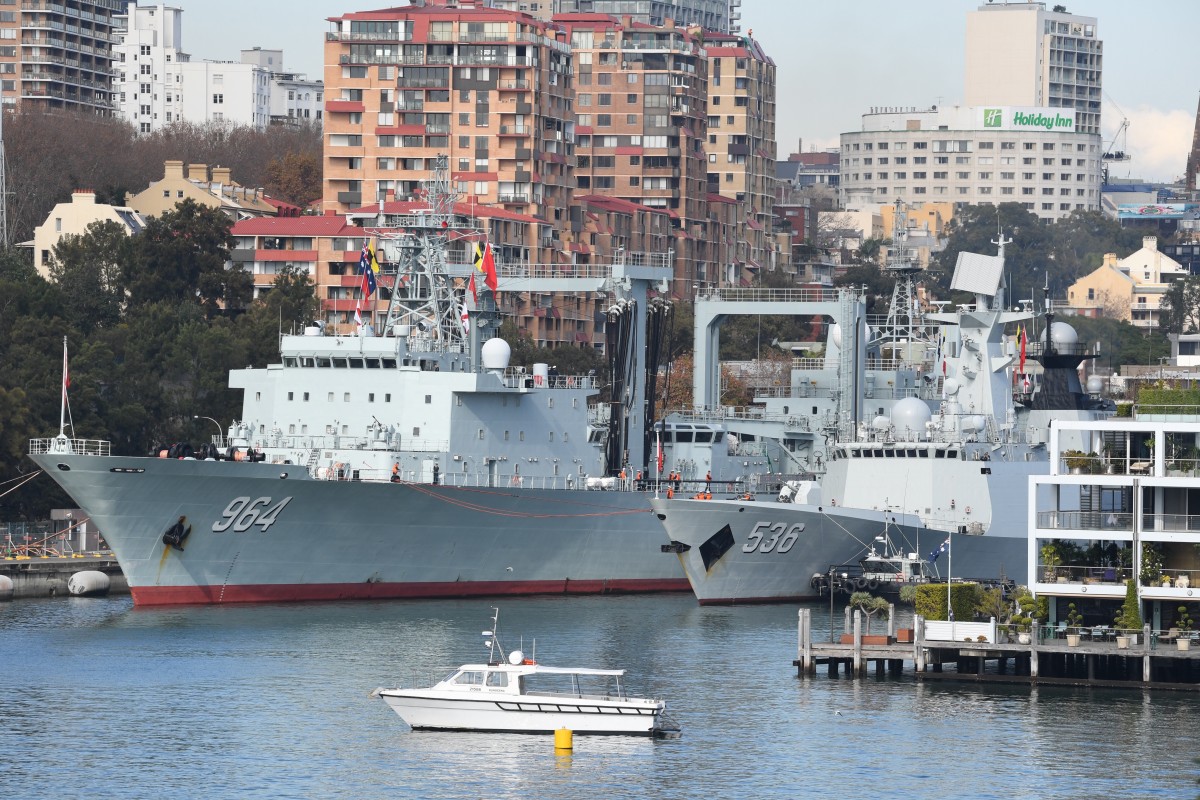
Two warships from the People’s Liberation Army Navy at Garden Island Naval Base in Sydney, Australia. Photo: EPA
The docking of 
three Chinese warships

in Sydney for a publicly unannounced stopover on Monday set off a flurry of speculation about Beijing’s intentions amid rising anxiety about Chinese influence in the southern Pacific.

The visit by a Chinese frigate, auxiliary replenishment ship and amphibious vessel – with some 700 sailors in total – caught social media users and academics by surprise, with some questioning the visit’s timing and why the government had not given them advance notice.

It’s turning into a public relations disaster for ChinaJohn Fitzgerald, Swinburne University

“The People’s Liberation Army (PLA) Navy visit might have been intended as an act of diplomacy but it’s turning into a public relations disaster for China,” said John Fitzgerald, a China scholar at Swinburne University in Melbourne, noting that it followed 
a number of controversies involving Australian and Chinese vessels

.

The stopover, as the ships returned from the Middle East, came days after reports emerged that an 
Australian

navy vessel in the South China Sea was tailed by the Chinese navy and Australian navy pilots had been targeted by lasers from Chinese fishing vessels.

Rory Medcalf, the head of Australian National University’s National Security College, said on Twitter that Beijing appeared to be making “a serious show of presence in the South Pacific”.
Medcalf said previous visits by Chinese navy ships typically involved a single vessel and that Sydney was not a convenient stopover for vessels returning from the Gulf of Aden, the body of water bordered by Yemen and Somalia.

Peter Jennings, executive director of the Australian Strategic Policy Institute think tank, told local media the government was remiss for not telling the public about the visit in advance.

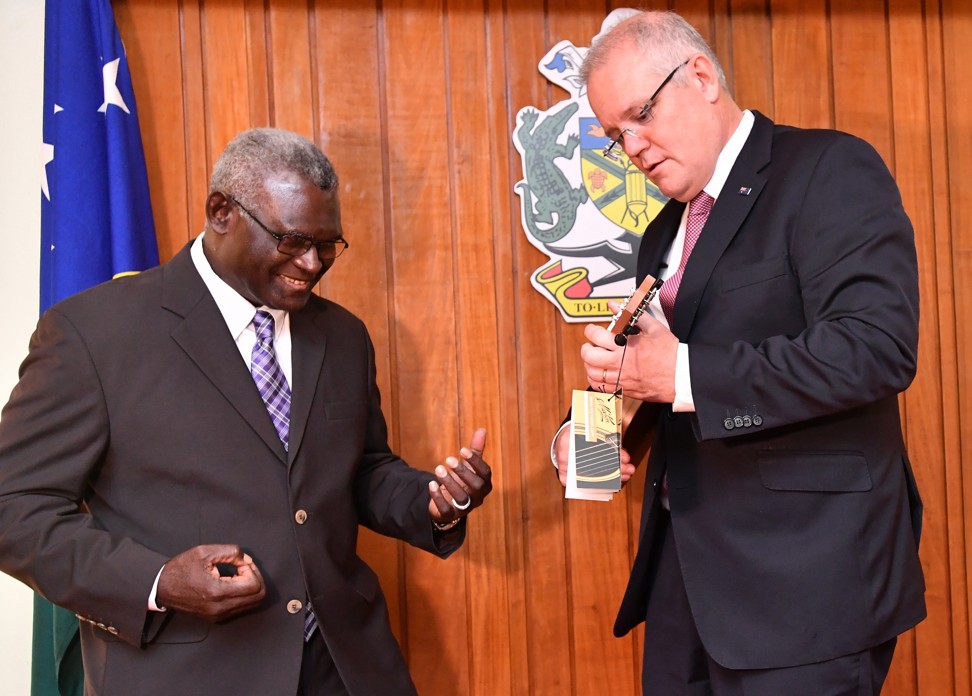
Speaking to reporters from the Solomon Islands, Australian Prime Minister Scott Morrison said the government had “known about [the Chinese navy visit] for some time”.

“This was an arrangement, a reciprocal visit because Australian naval vessels have visited China,” said Morrison as he wrapped up a trip aimed at boosting Canberra’s standing among Pacific island nations and countering Chinese influence in the region.

Chinese sailors wave from a PLA Navy ship after it arrives at Garden Island Naval Base in Sydney. Photo: EPA

Collin Koh, a research fellow at the S. Rajaratnam School of International Studies in Singapore, said it was not unusual for naval visits to not be announced in advance, depending on factors such as operational security requirements and expectations in the given country.

“Some visits are pre-announced and made public in the open domain, but some not,” Koh said.

Scholar points to Beijing’s ‘maritime militia’ in the South China Sea after lasers force Australian navy helicopter to land

“It’s not necessarily the case that foreign naval visits need to be publicised, though that, of course, depends on the sociopolitical circumstances of the host country which mandate a specific system of transparency and accountability.”

Morrison, who had earlier announced a A$250 million (US$173.36 million) grants programme for the Solomon Islands, said the Chinese ships were returning after a counter drug-trafficking operation in the Middle East.

Solomon Islands Prime Minister Manasseh Sogavare (left) and Australian Prime Minister Scott Morrison. Morrison is visiting the Solomon Islands on his first post-election overseas trip. Photo: EPA

[The visit] is a further demonstration of the relationship that we have and this had been in train for some time,” he said. “It may have been a surprise to others but it certainly wasn’t a surprise to the government.”

The Australian Defence Force (ADF) said China had asked for the visit in April, and that the government was committed to fostering a “long-term constructive relationship with China”.

“Australia regularly hosts foreign navy vessels in its ports,” said an ADF spokesperson. “Notification to the public is not standard practice and is usually considered on a case-by-case basis.”

Since coming to power in 2012, China’s President Xi Jinping has invested heavily in the PLA Navy in a bid to project Chinese influence across the Pacific and beyond.

Singapore, China deepen defence ties, plan larger military exercises including joint navy drill

Beijing is locked in maritime disputes in the East and South China Seas with a number of countries including the Philippines, Japan, Vietnam and Brunei.

John Blaxland, a professor at the Strategic and Defence Studies Centre at the Australian National University, said it was interesting to consider what the PLA Navy flotilla would be doing after its Sydney port call.

“The Australian Government’s Pacific reset follows a period of some disengagement by Australia and has been, in part at least, triggered by China’s renewed interest in the Pacific – notably the remaining micro states that continue to support Taiwan,” Blaxland said.

The Kunlun Shan amphibious transport dock of the PLA Navy at Garden Island Naval Base in Sydney. Photo: EPA

Singapore-based research fellow Koh said the most significant takeaway from the visit was that it showed China’s emerging capability to carry out naval operations globally.

“The PLA Navy has since December 2008 been making long voyages across the globe – to the Baltic, Mediterranean, Caribbean and Latin America – and it’s been able to gain experience and exposure to such sustained long-duration missions,” he said.

What is the US Navy doing on Japan’s Iwo Jima, nearly 75 years after World War II?

“Hence, this visit to Australia – sailing from the Indian Ocean across to the far eastern end of Australia – represents no mean feat, and the coming of age of a blue-water-capable PLA Navy.”

Asked by reporters whether the stopover was appropriate given that it came on the eve of the 30th anniversary of Beijing’s bloody crackdown in Tiananmen Square in 1989, Morrison said: “No, I think any reading into timing could be subject to a bit of overanalysis.”

Neil James, executive director of the independent watchdog Australia Defence Association, said the timing of the visit appeared to be an “accidental coincidence” and could be awkward for Beijing as it drew further attention to the Tiananmen anniversary.

US warships made 92 trips through the Taiwan Strait since 2007
“The timing is far more of a problem for the PLA Navy than Australia,” James said.

“The Tiananmen anniversary might have been known in China but they either ignored it, or it was a left-hand versus right-hand coordination glitch inside the People’s Republic of China government.”

Source: SCMP

06/06/2019

Russia and China sign deals worth US$20 billion as Xi Jinping and Vladimir Putin’s growing friendship bears fruit

  • Agreements to boost cooperation in spheres such as energy and technology highlight closer partnership in face of tensions with US
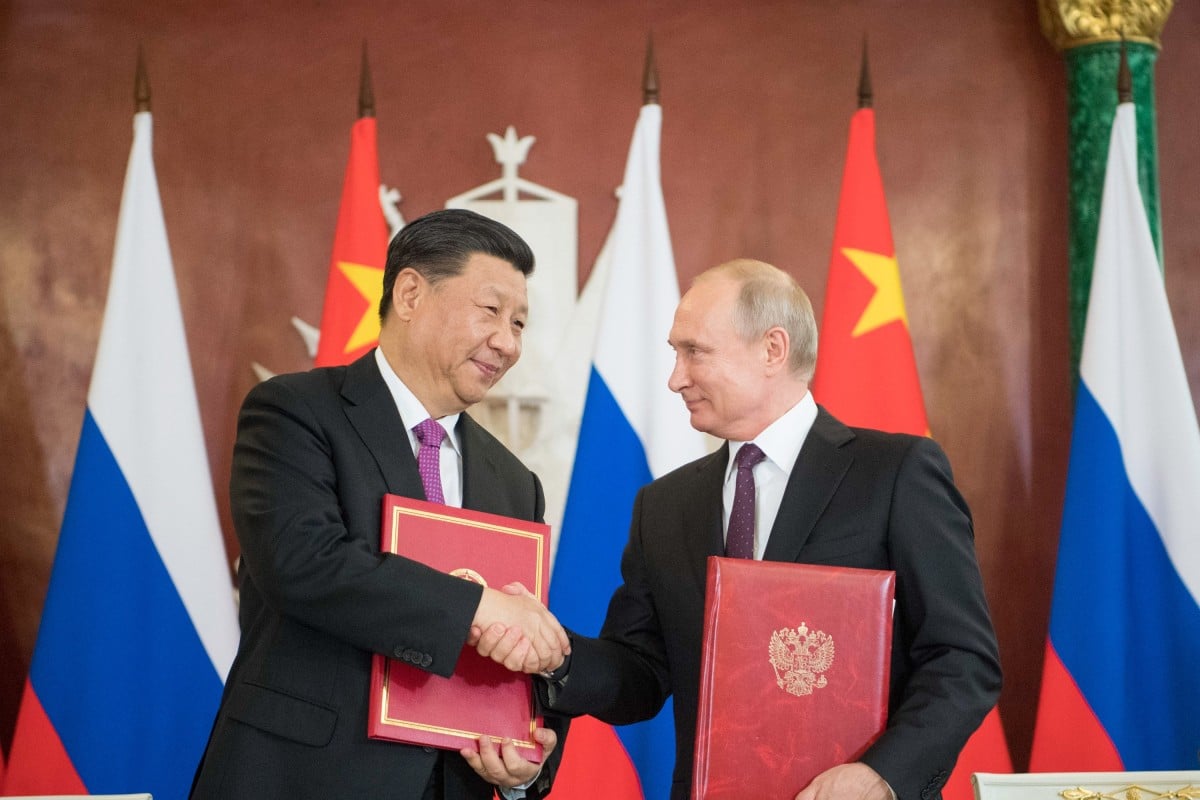
Xi Jinping and Vladimir Putin agreed to deepen their unprecedented partnership. Photo: Xinhua

China and Russia have signed more than US$20 billion of deals to boost economic ties in areas such as technology and energy following Xi Jinping’s summit with his “best friend” Vladimir Putin.

Wednesday’s meeting between the two presidents, who have spoken of their desire to boost practical cooperation in the face of increasing rivalry with the United States, marked the start of Xi’s three-day visit to Russia to commemorate the 70th anniversary of the establishment of diplomatic relations between Moscow and Beijing.

On Thursday the Chinese commerce ministry said that the two sides aimed to increase the volume of trade between the two countries to US$200 billion a year following last year’s 24.5 per cent rise to a record level of US$108 billion.

Gao Feng, a spokesman for the ministry, said the deals covered areas such as nuclear power, natural gas, automobiles, hi-tech development, e-commerce and 5G communications.

The deals were the first concrete results of the warm words exchanged between the leaders, who agreed to deepen their “unprecedented” strategic partnership for “mutual advantage”.

“We discussed the current state of, and prospects for, bilateral cooperation in a businesslike and constructive manner, and reviewed, in substance, important international issues while paying close attention to Russia-China cooperation in areas that are truly important for both countries,” Putin said in a joint press statement with Xi on Wednesday.

Xi – who had previously told Russian media that he “treasured” the relationship with Putin, whom he described as “my best friend” – said the two countries would work to “build mutual support and assistance in issues that concern our key interests in the spirit of innovation, cooperation for the sake of mutual advantage, and promote our relations in the new era for the benefit of our two nations and the peoples of the world”.

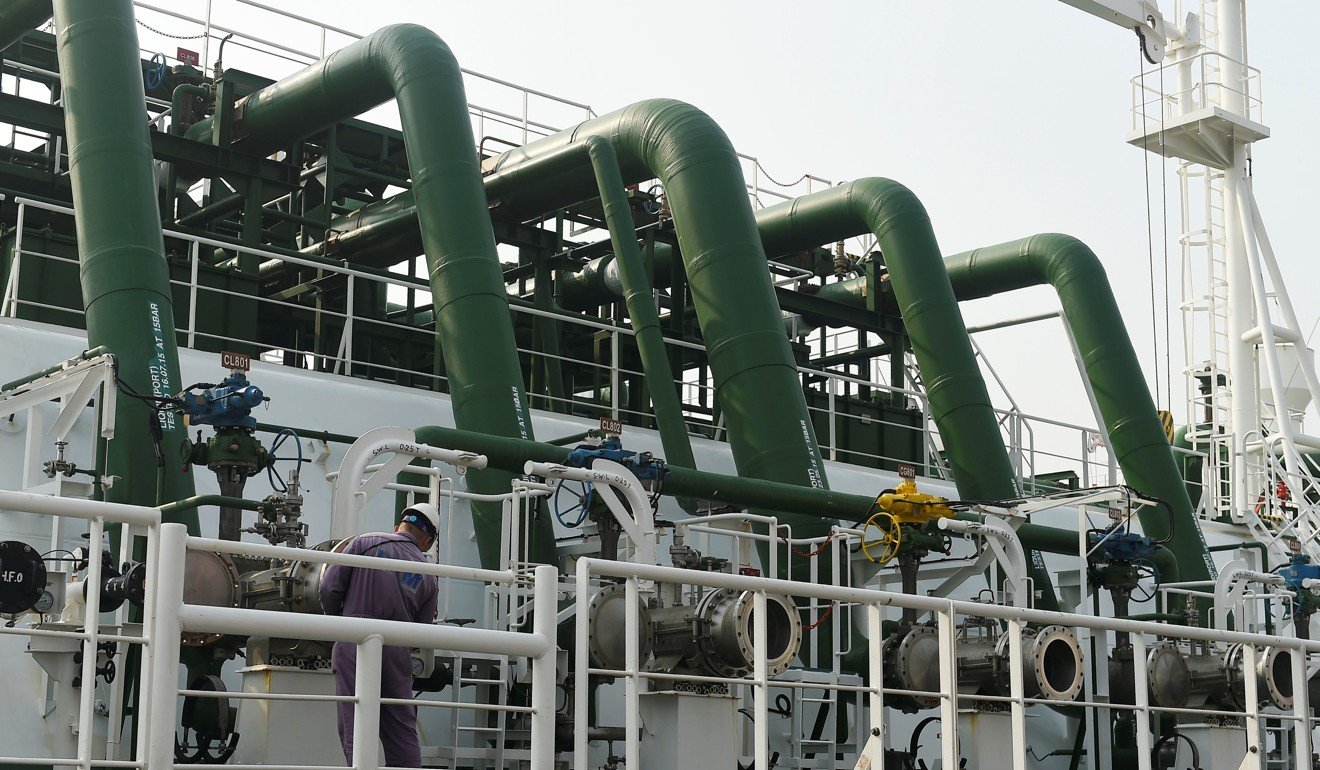
Russia is already China’s biggest oil exporter, and has agreed to further joint ventures. Photo: Reuters

Putin also highlighted the energy cooperation between the two countries, adding that Russia was China’s leading oil exporter and the eastern route of a gas pipeline between Russia and China will enter service in December.

China and Russia seek closer economic ties to counter US pressure

Novatek and Sinopec, Russian and China’s leading natural gas companies, signed a preliminary deal with Russian state-owned bank Gazprombank on Wednesday to set up a joint venture to market gas in China.

The Russian natural gas company is also forming a partnership with China Natural Petroleum Corporation and China National Offshore Oil Corporation to develop an Arctic natural gas facility, with both Chinese companies holding a 10 per cent stake in the project, according to S&P Global Platts, an energy information provider.

A general contract was also signed to build extra units of the Xudabao Nuclear Power Plant, located on the coast of the northeastern Chinese province of Liaoning.

Chinese tech giant Huawei has agreed a deal with Russian telecoms firm MTS. Photo: Xinhua

The Chinese commerce ministry also said that Moscow had agreed to increase its soybean exports after imports from America declined sharply due to the ongoing trade war.

Andrey Denisov, Russia’s ambassador to China, was quoted by Chinese media as saying that the country should “double” its soybean exports to China, which currently make up a tiny proportion of the overall quantities bought by China.

The two sides are also discussing a US$153.3 million investment to create a joint agricultural holding company in Primorsky in Russia’s far east.

Russia’s Putin calls time on UK spy scandal: ‘it’s your agent, not ours’

Meanwhile, Chinese telecoms giant Huawei, which has been targeted by US sanctions after it was accused of spying and undermining national security, signed a deal with Russian telecoms company MTS to develop a 5G network.

China Investment Corporation and RDIF, a Russian sovereign wealth fund, were also reported to have agreed to set up a US$1 billion joint technology research fund, according the US-based analysts Sovereign Wealth Fund Institute.

Shi Yinhong, an international relations professor at Renmin University of China, said the two sides were boosting their strategic and diplomatic collaboration at a time of “extraordinary” tensions between Washington and Beijing.

“Though concrete cooperation in hi-tech areas [between Beijing and Moscow] is necessarily limited, in the purely military field it is assured,” Shi, an adviser to China’s State Council, said.

China’s Huawei signs deal to develop 5G in Russia

Last September, 300,000 soldiers from the two countries took part in

Vostok 20
18

a joint military exercise in eastern Siberia, the largest such drill in Russia in nearly four decades.

While Xi is highlighting his rapport with his “best friend” Putin, the professor added, “the romance has gone out of the personal relationship between Xi and [Donald] Trump”.
Source: SCMP
06/06/2019

People celebrate upcoming Dragon Boat Festival across China

CHINA-DUANWU-FOLK CUSTOMS (CN)

Participants perform land boating in Huixingu resort in Miaoshan Village of Miaoxi Township, Huzhou City, east China’s Zhejiang Province, June 6, 2019. Various activities have been held to celebrate the upcoming Dragon Boat Festival, or Duanwu, which falls on June 7 this year. (Xinhua/Huang Zongzhi)

Source: Xinhua

05/06/2019

National WeChat mini-program launched to promote e-government services

BEIJING, June 5 (Xinhua) — A national WeChat mini-program was launched Wednesday to enable users to enjoy over 200 e-government services via the cross-region and cross-department digital platform.

The mini-program, a small application embedded within China’s popular social media platform WeChat, connects users with services offered by six government agencies including the National Development and Reform Commission and the Ministry of Commerce, according to a statement from WeChat’s developer Tencent.

Individual users can search information about their education and traffic violation record, among others, while enterprises can apply for certain licenses and certificates online via the mini-program.

The mini-program is also connected with local government online service platforms in several provinces including Guangdong and Zhejiang, while more local e-government services will be connected in the future, the statement said.

E-government services via apps and mini-programs are increasingly popular in China amid national and local efforts to cut administrative red tape to benefit residents and businesses alike.

A total of 30 provincial-level regions have established integrated e-government platforms that incorporate the services of provincial, city and county governments, according to a report released in May.

In 2018, the number of real-name users on provincial e-government platforms reached 145 million, an increase of 38 million over the previous year, the report showed.

Source: Xinhua

Law of Unintended Consequences

continuously updated blog about China & India

ChiaHou's Book Reviews

continuously updated blog about China & India

What's wrong with the world; and its economy

continuously updated blog about China & India