Chindia Alert: You’ll be Living in their World Very Soon
aims to alert you to the threats and opportunities that China and India present. China and India require serious attention; case of ‘hidden dragon and crouching tiger’.
Without this attention, governments, businesses and, indeed, individuals may find themselves at a great disadvantage sooner rather than later.
The POSTs (front webpages) are mainly 'cuttings' from reliable sources, updated continuously.
The PAGEs (see Tabs, above) attempt to make the information more meaningful by putting some structure to the information we have researched and assembled since 2006.
Customs authority at southern port of Sanshan brings forward deadline for scrap cargoes to arrive
Capacity has been ‘seriously exceeded’ and there are temporary controls on how many boats can dock
China is restricting imports of scrap metal as part of its efforts to reduce pollution. Photo: Reuters
The port of Sanshan in southern China’s Guangdong province stopped accepting scrap metal shipments on Thursday after an excessive build-up of stockpiles caused by importers racing to bring in cargoes ahead of new rules starting next week.
China, the world’s biggest metals consumer, is restricting imports of eight types of scrap metal, including high-grade copper scrap, from July 1 in a
Because scrap stockpiles at the port have grown too large, customs decided to bring forward the deadline for scrap cargoes to arrive at Sanshan from June 29 to June 26, according to a notice from the Sanshan port authority sent to customers and reviewed by Reuters.
Shipments arriving from June 27 could not be accepted, said the notice, whose authenticity was confirmed by a port official who asked to remain unidentified.
Sanshan’s import capacity had “already been seriously exceeded” and there were temporary controls on the number of boats allowed to dock, the official added.
It was not immediately clear when shipments would be able to resume. Firms that have received quotas from China’s Ministry of Ecology and Environment will still be allowed to import the soon-to-be-restricted metal after July 1, but no quotas have been issued so far for Guangdong and its key scrap hub of Foshan.
The Sanshan port official said cargoes declared to customs before July 1 would be able to pass.
The environment ministry last week released the first batch of quotas, which for copper scrap totalled around 240,000 tonnes, mostly for companies in Zhejiang, another of China’s metal recycling centres.
China to issue scrap metal import licences as restrictions tighten
The port of Sanshan, which is near Foshan and under the jurisdiction of Guangzhou customs, is one of only 18 seaports in China authorised to handle solid waste imports.
Guangzhou customs did not immediately respond to a faxed request for comment.
The $430m iconic Statue of Unity in the western state of Gujarat was hailed as a symbol of development in the state. But for those who live near the statue, they’re afraid they will lose their homes and livelihoods.
NEW DELHI (Reuters) – U.S. Secretary of State Mike Pompeo met India’s Prime Minister Narendra Modi on Wednesday for talks on trade and defence issues that have strained ties between the countries.
Just days before Pompeo’s visit, India slapped higher retaliatory tariffs on 28 U.S. products following Washington’s withdrawal of key trade privileges for New Delhi.
Indian broadcasters showed footage of Pompeo exchanging handshakes with Modi at the prime minister’s official residence in the capital New Delhi on Wednesday morning. Neither side released details of the meeting.
India’s relations with Russia and Iran – both under U.S. sanctions – are also a sore point.
Under U.S. pressure, India has stopped buying oil from Iran, one of its top suppliers. The United States has also stepped up pressure on India not to proceed with its purchase of S-400 surface-to-air missile systems from Russia.
Pompeo is scheduled to have lunch with foreign minister Subrahmanyam Jaishankar, followed by a news conference at 1400 local time (0930 GMT), the foreign ministry said.
He is expected to round off the trip with a policy speech hosted by the U.S. Embassy on Wednesday evening, before departing on Thursday for the G20 summit in Japan.
Yang Jiechi, a member of the Political Bureau of the Central Committee of the Communist Party of China (CPC) and director of the Office of the Foreign Affairs Commission of the CPC Central Committee, meets with South African Foreign Minister Naledi Pandor in Beijing, capital of China, June 25, 2019. (Xinhua/Zhang Ling)
BEIJING, June 25 (Xinhua) — China on Tuesday vowed to work with African countries to enhance cooperation based on equality and openness to build a community of shared future.
That came as Chinese State Councilor and Foreign Minister Wang Yi addressed the opening ceremony of the Coordinators’ Meeting on the Implementation of the Follow-up Actions of the Beijing Summit of the Forum on the China-Africa Cooperation (FOCAC).
After reading Chinese President Xi Jinping’s congratulatory letter to the meeting, Wang said the letter fully expressed Xi’s profound friendship toward African countries and their people, and demonstrated the Chinese government’s strong willingness to engage in friendly cooperation.
In delivering on the blueprint for China-Africa cooperation in the new era, China stands ready to work with the African side in implementing promises with concrete and effective actions, and achieving full implementation of consensus and outcomes concluded at the FOCAC Beijing Summit, Wang said.
Wang also called for sticking to the fundamental purpose of building a community of shared future and the development path of jointly constructing the Belt and Road, upholding multilateralism, and safeguarding the common interests of developing countries and emerging markets.
“Any disturbance will not affect our resolve to enhance cooperation, and any difficulty will not hinder our joint advancement in achieving rejuvenation,” he said.
After the opening ceremony, Yang Jiechi, a member of the Political Bureau of the Central Committee of the Communist Party of China (CPC) and director of the Office of the Foreign Affairs Commission of the CPC Central Committee, met with four foreign ministers from African countries, including Nabeela Tunis from Sierra Leone, Simeon Oyono Esono Angue from Equatorial Guinea, Naledi Pandor from South Africa, and Amadou Ba from Senegal.
Also on Tuesday, Wang Yi met with foreign ministers from Zimbabwe, Lesotho, Cote d’Ivoire, Equatorial Guinea, Ghana, Uganda and Libya, and an official on economics from Eritrea.
BEIJING, June 25 (Xinhua) — Chinese President Xi Jinping and visiting Ugandan President Yoweri Museveni agreed to lift their countries’ relationship to a comprehensive cooperative partnership on Tuesday.
At present, China-Uganda ties are at their best in history, as the political mutual trust has been continuously enhanced, pragmatic cooperation has yielded fruitful results, and the two sides maintain close collaboration in international and regional affairs, Xi said.
He said China was willing to work with Uganda to promote the ties in the process of the joint building of the Belt and Road and the implementation of the outcomes of the Forum on China-Africa Cooperation (FOCAC) Beijing Summit.
Xi said China and Uganda should continue to understand and support each other on issues related to each other’s core interests and major concerns.
He said China is willing to strengthen exchanges with Uganda on the experience of governance, and deepen cooperation in areas such as infrastructure construction, trade, energy, agriculture, epidemic prevention and control, human resources, industrial parks and tourism.
“Chinese enterprises are encouraged to invest in Uganda in accordance with market-oriented principles,” Xi said.
The Chinese side appreciates the positive role played by Uganda in maintaining regional peace and stability and supports Uganda’s efforts to safeguard its own security, he said.
The Chinese president called on the two sides to jointly and clearly oppose protectionism and unilateralism, safeguard the international system and international order with the United Nations as the core, and commit themselves to building a new type of international relations and fostering a community with a shared future for mankind.
Uganda will take the establishment of the comprehensive cooperative partnership as an opportunity to deepen cooperation with China, Museveni said, expressing the willingness to learn from the Communist Party of China’s experience in state governance.
Museveni added that unilateralism was very dangerous, and that Uganda and China should strengthen communication and coordination in multilateral affairs such as those within the framework of the United Nations.
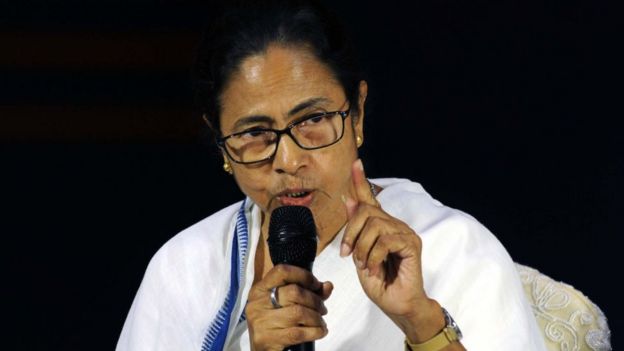
But there is some indication that her popularity has been waning in recent months, which correspondents say has left her rattled.
It could be that this latest statement is an attempt to regain some of the ground she lost to Prime Minister Narendra Modi’s ruling Bharatiya Janata Party (BJP) in the recently concluded general election.
Her party won only 22 of West Bengal’s 42 seats – a big drop from the 32 she won in 2014 – in an election marred by violence which saw a number of political activists in the state killed.
SRINAGAR (Reuters) – Police arrested the publisher of one of the most widely read newspapers in Indian-controlled Kashmir in a midnight raid over a decades-old case, the police and his brother said on Tuesday, highlighting the difficulties facing media in the region.
Tension has run high in the Himalayan region since more than 40 Indian police were killed in a February suicide car bomb attack by a militant group based in Pakistan.
Muslim-majority Kashmir is at the heart of more than seven decades of hostility between nuclear archrivals India and Pakistan. Each claims it in full but rules only a part.
Ghulam Jeelani Qadri, 62, a journalist and the publisher of the Urdu-language newspaper Daily Afaaq, was arrested at his home in the region’s main city of Srinagar, half an hour before midnight on Monday.
“It is harassment,” his brother, Mohammad Morifat Qadri, told Reuters. “Why is a 1993 arrest warrant executed today? And why against him only?”
Qadri was released on bail after a court appearance on Tuesday.
The case dates from 1990, when Qadri was one of nine journalists to publish a statement by a militant group fighting against Indian rule in Kashmir. An arrest warrant for Qadri was issued in 1993, but it was never served.
Qadri had visited the police station involved in the arrest multiple times since the warrant was issued, most recently in 2017 to apply for a passport, his brother added.
Asked why Qadri was arrested at night, Srinagar police chief Haseeb Mughal told Reuters, “Police were busy during the day.”
The Kashmir Union of Working Journalists condemned the arrest, saying it seemed to be aimed at muzzling the press.
“Qadri was attending the office on a daily basis and there was absolutely no need for carrying out a midnight raid at his residence,” it said in a statement.
Journalists in Kashmir find themselves caught in the crossfire between the Indian government and militant groups battling for independence.
Both sides are stepping up efforts to control the flow of information, with the situation at its worst in decades, dozens of journalists have told Reuters.
India is one of the world’s worst places to be a journalist, ranked 138th among 180 countries on the press freedom index of international monitor Reporters Without Borders, with conditions in Kashmir cited as a key reason.
XINING, June 24 (Xinhua) — Northwest China’s Qinghai Province completed a 15-day all clean energy power supply trial, setting a new record following a successful nine-day trial last year, the State Grid Qinghai Electric Power Company announced on Monday.
Nearly 6 million people in the province, which borders Tibet Autonomous Region, only used electricity generated from wind, solar and hydro power stations, from June 6 to 23.
During the 15 days, Qinghai achieved zero carbon emission in power use.
This is the third province-wide clean energy trial in Qinghai. It relied solely on renewable energy for nine and seven consecutive days in 2018 and 2017.
Qinghai is the source of China’s three major rivers, the Yellow, Yangtze and Lancang, and has strong hydro and solar-power facilities.
During the trial, the whole province consumed a total 2.84 billion kwh, with the maximum load hitting 8.47 million kw, said Fang Baoming from the company.
The province’s cumulative capacity during the period reached nearly 4 billion kwh, with new energy taking a large share of 34.7 percent.
Power generated by thermal power plants only accounted for 1.8 percent of the gross generation in Qinghai during the period, and was all transmitted out of the province on demand of the market.
“The 15-day all clean energy power supply reduced coal burning of up to 1.29 million tonnes, and carbon dioxide emission of 2.32 million tonnes,” Fang said.
Qi Taiyuan, general manager of the company, said Qinghai’s electric grid has been expanded this year, with an installed capacity of 2.4 million kilowatts, up 50 percent from last year’s trial.
Qinghai’s installed capacity of new energy has reached 13.9 million kw, accounting for 46.7 percent, surpassing hydropower as the province’s largest power source.
According to the provincial 13th five-year plan, Qinghai will expand its solar and wind capacity to 35 million kilowatts by 2020 and supply 110 billion kilowatt hours of clean electricity every year to central and eastern parts of China, preventing the burning of 50 million tonnes of coal.
China’s enthusiasm for clean energy is pushing the world to transition toward a low-carbon future, with plans to invest 2.5 trillion yuan (370 billion U.S. dollars) in renewable energy by 2020, creating more than 13 million jobs, according to the National Energy Administration.
BEIJING, June 24 (Xinhua) — A commemorative envelope was issued Monday by the China National Philatelic Corp. to mark the 55th anniversary of China-French diplomatic ties.
The envelope uses a painting, featuring two doves flying over the Great Wall, created jointly by prominent Chinese painter Han Meilin and France-based artist JonOne, said a press release from the company.
An ink painting of a panda by Han and a graffiti artwork inspired by the French national flag by JonOne are printed as the stamps on the envelope.
The envelope was part of a project launched by the China Foundation for Peace and Development (CFPD), in which leading foreign artists are invited to design commemorative envelopes together with Chinese artists to mark the 70th anniversary of the People’s Republic of China.
The project aims to showcase different cultures across the world and improve understanding between China and other countries, said Xu Jianguo, secretary-general of the CFPD.
BEIJING, June 25 (Xinhua) — China sent a new satellite of the BeiDou Navigation Satellite System (BDS) into space from the Xichang Satellite Launch Center in Sichuan Province at 2:09 a.m. Tuesday.
Launched on a Long March-3B carrier rocket, the satellite was sent to the inclined geosynchronous earth orbit. It is the 46th satellite of the BDS satellite family and the 21st satellite of the BDS-3 system.
The design of the BDS constellation is unique, including medium earth orbit (MEO), geostationary earth orbit (GEO) and inclined geosynchronous earth orbit (IGEO) satellites.
So far, there are already 18 MEO BDS-3 satellites, one GEO BDS-3 satellite, and two IGEO BDS-3 satellites sent into space.
After in-orbit tests, the new satellite will work with those BDS satellites already in orbits to improve the coverage and positioning accuracy of the system.
The new satellite and the carrier rocket were developed by the China Academy of Space Technology and the China Academy of Launch Vehicle Technology under the China Aerospace Science and Technology Corporation.
The launch was the 307th mission for the Long March series of carrier rockets.



 CHINDIA ALERT: You'll be living in their world, very soon