Archive for July, 2019

07/07/2019

Floods threaten middle and lower reaches of Yangtze River

WUHAN, July 6 (Xinhua) — The middle and lower reaches of the Yangtze River, China’s longest river, is likely to see flooding as a new round of sustained strong rainfall is forecast to lash the region from Sunday to next Wednesday, the Changjiang Water Resources Commission said Saturday.

Hydrometeorological forecasts show heavy rain with a precipitation ranging between 120 mm and 210 mm will hit the Yangtze’s middle and lower reaches in the following four days, causing the water levels of the mighty river’s many tributaries to reach alarming levels.

Some small and medium-sized rivers in Chongqing Municipality and the provinces of Hunan, Hubei, Jiangxi, Anhui, Jiangsu and Guizhou are also likely to see relatively serious flooding, according to the commission.

The commission activated an emergency response for flooding Saturday noon and advised local governments in affected areas to take precautions against possible disasters.

Source: Xinhua

07/07/2019

Lhasa launches 80 new energy buses to protect environment

LHASA, July 6 (Xinhua) — Eighty buses using new energy have been put into use Saturday morning in Lhasa, the capital city of China’s southwest Tibet Autonomous Region, which will help reduce vehicle exhaust emissions and further improve the local air quality.

The new buses are all plug-in hybrid electric vehicles, equipped with Tibetan-Mandarin bilingual station announcements, driving monitoring and management systems, and auto-alarms, according to the city’s bus operation company.

The company purchased 110 new energy buses after the city’s 104 old buses reached their service lives. The other 30 buses are scheduled to be put into operation by the end of this month. By then, Lhasa will have 422 new energy buses, accounting for more than 80 percent of the city’s total buses.

“Our goal of vigorously promoting new energy vehicles is to implement the low-carbon and green way of traveling, to reduce greenhouse gas emissions, and to protect the clear water and blue sky of the snowy plateau,” said Gogyi, general manager of the company.

Lhasa plans to replace its old buses with new energy ones by batches, and all of the city’s buses are expected to be powered by new energy by 2021, said Gogyi.

Currently, Lhasa has 522 buses and 41 bus routes, covering the main urban areas, suburbs and surrounding counties, making it more and more convenient for locals to travel by public transportation.

Source: Xinhua

07/07/2019

Interview: President Xi’s letter inspires more contributions to Japan-China friendship — Japanese youth

TOKYO, July 6 (Xinhua) — “When I wrote the letter, I didn’t expect to receive a reply from President Xi Jinping. I was surprised and honored,” said Daichi Nakashima with excitement.

The 27-year-old Japanese man said he had received the reply from Xi before the Chinese leader attended the Group of 20 summit in Osaka. “When my friend told me on WeChat, I was shocked!” Nakashima said in an exclusive interview with Xinhua.

Nakashima had several times been a winner in the Panda Cup Japan Youth Essay Contest. Founded in 2014, the competition is co-sponsored by People’s China magazine, the Chinese embassy in Japan and the Japan Science Society, aiming to help Japanese youths have a more comprehensive, objective and rational understanding of China.

Nakashima began learning Chinese in college and has participated in several short-term exchange programs in China.

When talking about his original intention of writing a letter to Xi, Nakashima said, “I wanted to convey the warmth and friendship of the Chinese people I felt during my visit to China and the importance of mutual understanding and exchanges between Japanese and Chinese youths.”

Xi, in his reply, said he was glad to see that Nakashima has been studying the Chinese language and literature for a long time and, by participating in essay contests and exchange activities in China, has learned more about China and strengthened his bonds with Chinese friends.

“It’s the best affirmation and recognition of my persistence for so many years. I’m very touched,” Nakashima said.

Born in 1992, Nakashima first learned about China through classics like “Romance of the Three Kingdoms” and “Outlaws of the Marsh,” but it was a two-week trip to Tianjin in 2011 that gave him a glimpse of a vibrant China.

After that, he visited Beijing, Sichuan, Guangdong and other places. Last year, he went to Fudan University in Shanghai and studied for half a year.

Nakashima found that Chinese youth are very familiar with Japanese anime, music and so on, while Japanese youngsters do not know much about China. Their impression of China is restricted to Chinese tourists, “not knowing about Chinese movies and popular music,” he said.

Nakashima said he believes that the friendship between the two peoples needs more bilateral youth exchanges, as President Xi said in the letter.

Noting that China and Japan are close neighbors separated by only a narrow strip of water, Xi said the friendship between the two countries is rooted in the people, and that the future of the friendship between the two peoples is in the hands of the young people.

Xi said he hopes that the youth of China and Japan will strengthen exchanges and mutual learning, enhance mutual understanding, develop long-lasting friendships, and contribute to creating an even brighter future for bilateral relations.

Xi also encouraged Nakashima to continue to promote the China-Japan friendship. Nakashima said this is an encouragement, a mission and also motivation for him to move forward.

Nakashima graduated with a master’s degree in April and has begun to work in a publishing house. He has been determined to introduce excellent works such as Chinese picture books and science fiction to Japan, so that Japanese teenagers can feel the affinity between the two countries.

“I have met many friendly Chinese people and made many friends that are very important to me. In the future, I will continue to make efforts to help Japanese and Chinese youth deepen mutual understanding,” he said.

Source: Xinhua

07/07/2019

China’s Sichuan earthquake death toll rises to 12, with 134 injured

  • Authorities report roads closed and 10,000 buildings damaged after magnitude 6.0 quake on Monday night
  • More than 100,000 people affected
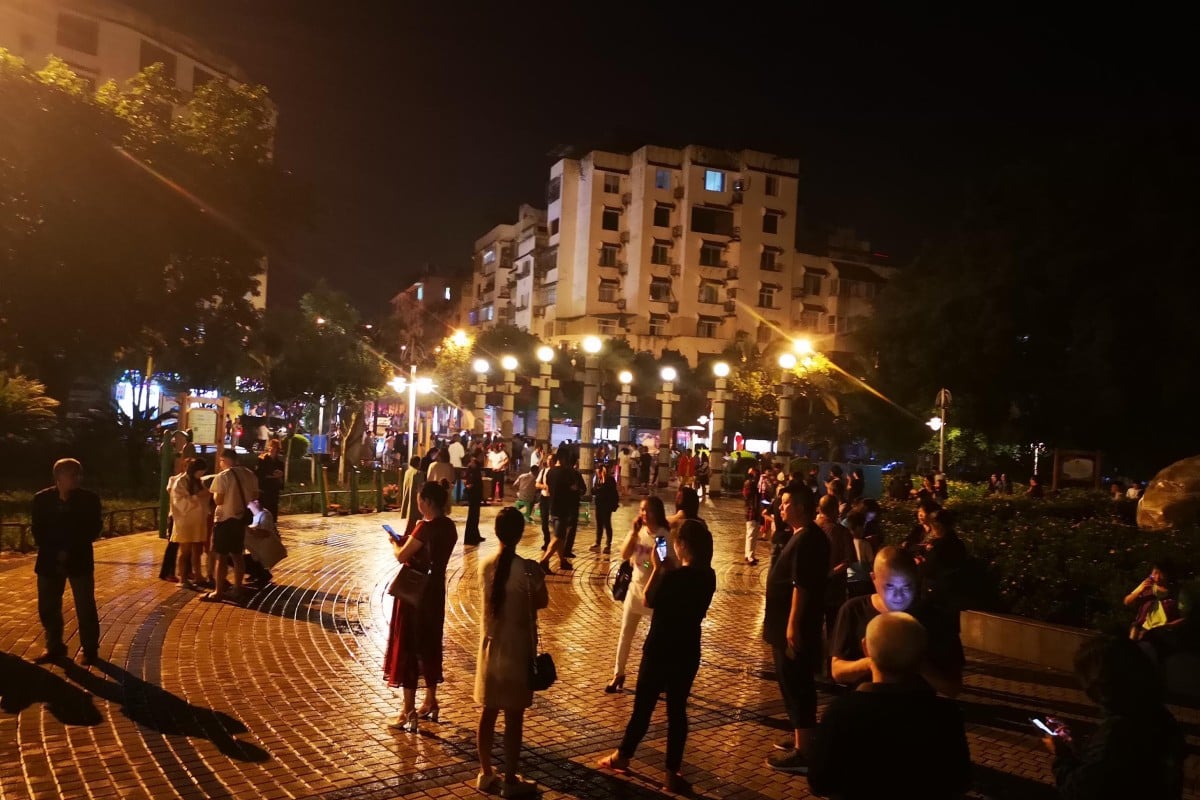
Residents gather in the open in Changning county on Monday night after a magnitude 6.0 hit the area. Photo: Xinhua
The death toll from a strong earthquake which hit the southern Chinese province of Sichuan late on Monday night has risen to 12, with 134 people injured.
More than 100,000 people were affected – mostly in the epicentre at Changning county in Yibin, while more than 10,000 buildings were damaged, according to a statement by the local government on Tuesday.
Land subsidence and a landslide caused by the magnitude 6.0 quake, blocked a highway, several major roads and numerous village roads, the statement said, while a major bridge in the area was also at risk.
The Yixu highway in Changning had been closed and authorities were assessing the Dongdi Bridge. The Yibin government statement also said workers had been sent to clear the affected village roads.

According to the US Geological Survey, the earthquake was centred at a fairly shallow depth of 10km (6 miles). Shallow earthquakes tend to cause more damage to buildings and infrastructure.

An aftershock measuring magnitude 5.2 later hit the same area, the USGS said.

More than 300 firefighters were sent to the scene overnight, as well as rescue personnel with 5,000 tents, 10,000 folding cots and other emergency supplies, according to state news agency Xinhua.

In 2008, China’s worst earthquake in recent years struck the mountainous western portion of Sichuan province, leaving 87,000 dead, 370,000 injured and 5 million people homeless. That earthquake was about 400km (249 miles) from Monday’s earthquake.

A 1976 earthquake centred in the northeastern city of Tangshan killed at least 250,000 people.

Source: SCMP

07/07/2019

Ancient Chinese city ruins become country’s latest Unesco World Heritage Site

  • Five thousand-year-old ruins in Zhejiang province are the earliest known example of Chinese civilisation
  • Country passes Italy to become home to the largest number of World Heritage Sites
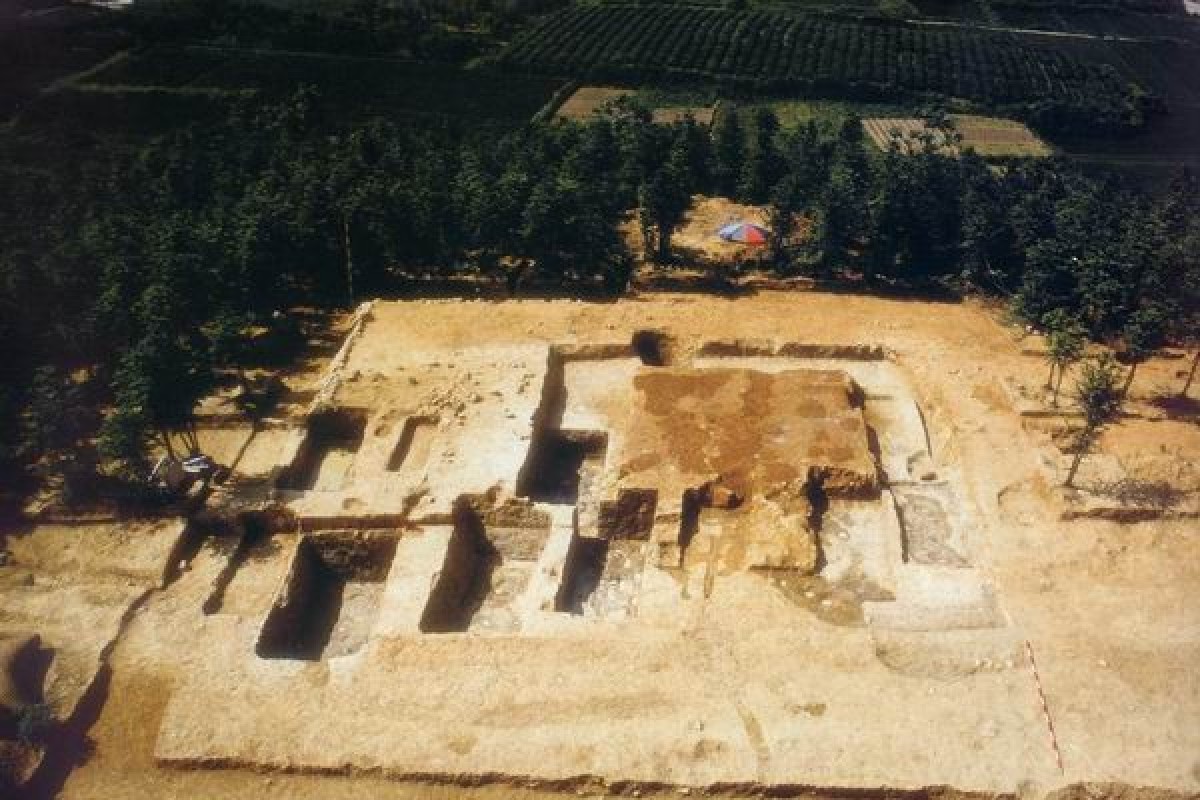
The Liangzhu site in Zhejiang dates back to 3,500BC. Photo: Thepaper.cn
A 5,300-year old Chinese city that provides the earliest example of civilisation in the country has been named as the country’s latest Unesco World Heritage Site.
The Liangzhu Archaeological Site in Zhejiang province was designated a “cultural site” at the latest Unesco meeting in Azerbaijan, bringing the total number of Chinese heritage sites to 55 – passing Italy as the country with the largest number in the world.
The ruins, located on the outskirts of the modern city of Hangzhou, sits on the plain of river networks in the basin of the Yangtze River and date back to 3,300BC.
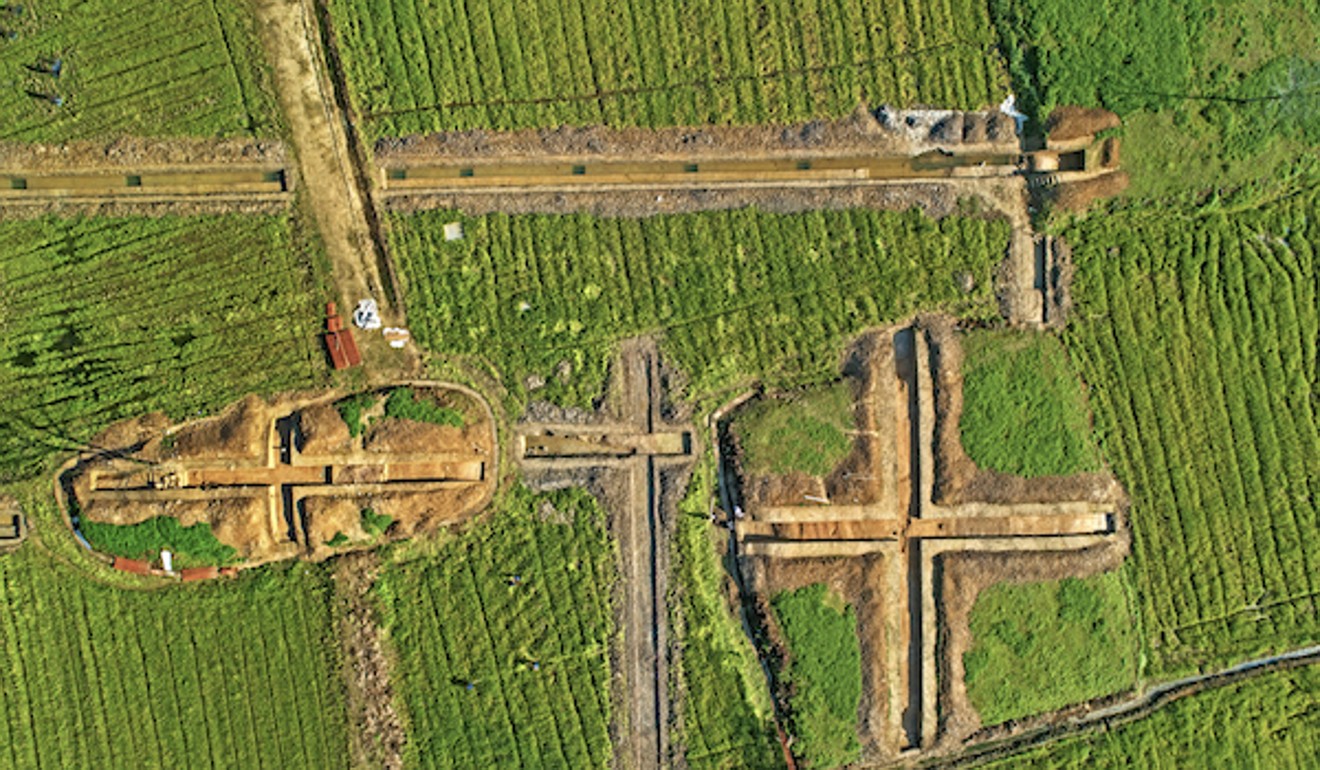
The site covers an area of 14.3 square kilometres, and mainly consists relics of 11 dams, cemetery sites, water conservancy system and walls that gives evidence to an early Chinese urban civilisation, with rice cultivation as the economic foundation.
An aerial view of the site. Photo: Thepaper.cn

The discovery of the site was of “primary importance” as it provides evidence of compelling evidence that Chinese civilisation started 5,000 years ago, 1,000 years earlier than previously thought, Colin Renfrew, a retired professor of archaeology at University of Cambridge, told state news agency Xinhua.

“So when we are talking of the origins of state society in China, we can think of the Liangzhu … instead of the Shang civilisation around 1,500BC.

The site was first discovered in 1936 when a team of archaeologists unearthed some pottery and began searching for further evidence

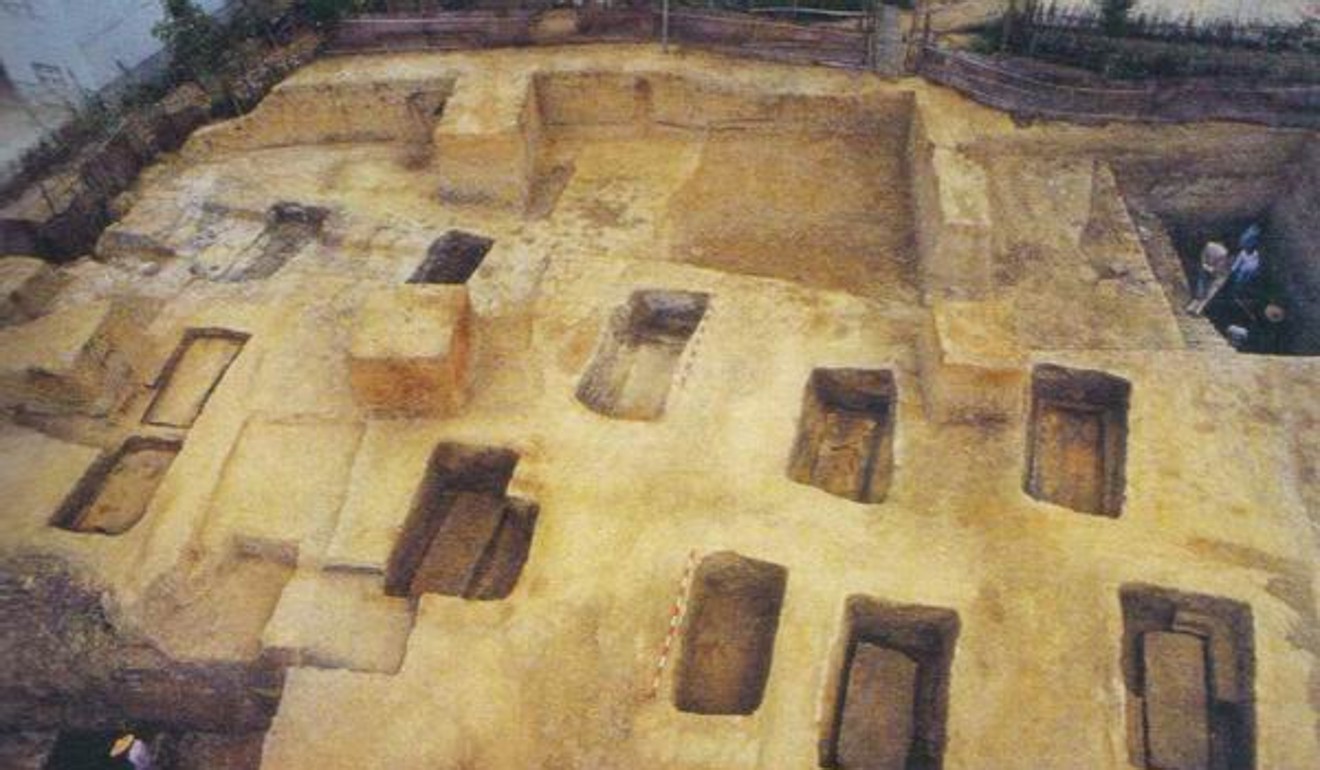
Liangzhu is China’s 55th Unesco World Heritage Site. Photo: Thepaper.cn

A breakthrough came in 1986 when a burial site with around 1,200 artefacts made from jade, pottery and ivory was uncovered.

The walls of the city were discovered in 2007 and the surrounding water conservancy system was unearthed in 2015.

Archaeologists estimate that it would have taken 4,000 people working for a decade to build the system, according to Xinhua.

The decision to add the site to the Unesco list is the culmination of more than two decades’ work, with preliminary work starting in 1994.

The site is now open to tourists, but a maximum number allowed to visit the site is limited to 3,000 a day and bookings must be made online.

Source: SCMP

07/07/2019

China says briefed by U.S. on latest Trump-Kim meeting

BEIJING (Reuters) – China has received a briefing from the United States on the latest meeting between U.S. President Donald Trump and North Korean leader Kim Jong Un, China’s Foreign Ministry said on Saturday, in a call between two senior diplomats.

Trump became the first sitting U.S. president to set foot in North Korea on Sunday when he met Kim in the Demilitarized Zone (DMZ) at Panmunjom between the two Koreas and agreed to resume stalled nuclear talks.

Chinese Vice Foreign Minister Luo Zhaohui and U.S. Special Representative for North Korea Stephen Biegun discussed that meeting in a telephone call on Friday, China’s Foreign Ministry said in a short statement.

“Biegun introduced the meeting between the U.S. and North Korean leaders at Panmunjom, and said the U.S. side is willing to strengthen communication and coordination with the Chinese side on the peninsula issue,” the ministry added.

Luo told Biegun the recent “positive interactions” on the North Korean issue by all parties had important meaning for the peace talks process, the ministry said.

“China supports U.S.-North Korea exchanges and dialogue and hopes that the two sides will meet each other halfway and follow the consensus of the leaders of the two countries to resume consultations at the working level as soon as possible,” it added.

Trump’s meeting with Kim came around a week after Chinese President Xi Jinping met Kim himself during a state visit to Pyongyang.

While China has not officially announced it, Luo is likely China’s new special envoy for the North Korea issue, after predecessor Kong Xuanyou became China’s new ambassador in Tokyo in late May.

Luo was also involved in a briefing to Chinese reporters on Xi’s visit to North Korea before Xi went, according to state media.

Luo is an urbane career diplomat who speaks good English, according to diplomats who have met him.

He previously served as China’s ambassador in Canada, Pakistan and India, and also worked in the Chinese embassy in Washington from 1996-2000.

Source: Reuters

07/07/2019

In drought-hit Delhi, the haves get limitless water, the poor fight for every drop

NEW DELHI (Reuters) – In this teeming capital city of more than 20 million people, a worsening drought is amplifying the vast inequality between India’s rich and poor.

The politicians, civil servants and corporate lobbyists who live in substantial houses and apartments in central Delhi pay very little to get limitless supplies of piped water – whether for their bathrooms, kitchens or to wash the car, dog, or spray a manicured lawn. They can do all that for as little as $10-$15 a month.

But step into one of the slum areas in the inner city, or a giant disorganized housing estate on the outskirts and there is a daily struggle to get and pay for very limited supplies of water, which is delivered by tanker rather than pipe. And the price is soaring as supplies are fast depleting.

India’s water crisis is far from even-handed – the elite in Delhi and most other parts of the country remain unaffected while the poor scramble for supplies every day. Prime Minister Narendra Modi’s official residence and those of his cabinet are in central Delhi, as are those of most lawmakers.

That may help to explain why it took until this week for Modi to call for a massive water conservation program, the first big initiative by the government despite years of warnings about dry reservoirs and depleted water tables, policy makers and water industry experts said.

Telecom sales representative Amar Nath Shukla, who lives in a giant unauthorized housing sprawl on the south side of Delhi, says he is now paying 700 rupees ($10) for a small tanker to bring him, his wife and three school-age children 2,000 liters of water, their weekly quota.

A year ago, Shukla would buy two of the rusty, oval-shaped tankers a week for 500 rupees each but he cut back to one as the price climbed 40 percent.

“Why should a densely populated settlement get so little of water and why should the sparsely-populated central district of New Delhi receive so much of extra supply?” asked Shukla.
More than 30 other residents Reuters spoke to in his Sangam Vihar district also complained about the quality of water.
“Until last year I was drinking the water sold by a few local suppliers but then I fell ill and the doctor asked me to buy water bottles made by only big, reputed companies,” said Dilip Kumar Kamath, 46, waving a prescription which listed abdominal pain and stomach infection as his ailments.

WATER GANGS

Delhi’s main government district and the army cantonment areas get about 375 liters of water per person per day but residents of Sangam Vihar on average receive only 40 liters for each resident per day. The water comes from boreholes and tankers under the jurisdiction of the Delhi water board, run by the city government.

But residents say some of the boreholes have been taken over by private operators associated with criminal gangs and local politicians. These gangs also have a major role in providing private tankers, which are all illegal, making people liable to price gouging.

And all this when temperatures, and demand, are soaring. Delhi was the second driest it has been in 26 years in June, and recorded its highest ever temperature for the month at 48 degrees Celsius on June 10.

Monsoon rains reached the capital on Thursday, more than a week later than usual, with only a light drizzle.

Most private tanker operators in Delhi either illegally pump out fast depleting ground water or steal the water from government supplies, various government studies show.

In Delhi, nearly half of the supply from the Delhi water board either gets stolen with the connivance of lowly officials or simply seeps out via leaky pipes, several studies show.

The board’s 1,033 tanker fleet is well short of the city’s requirements. Hundreds of private water tankers are operating this summer, though there are no official numbers.

WATER WARS

The water scarcity is even more acute in the Bhalswa Dairy locality of northwestern Delhi, more than 30 km (20 miles) from Sangam Vihar. The water from a couple of community taps and hand pumps are too toxic to use, forcing people to queue up for a government tanker that comes just once a day.

As a result, fights frequently break out when people, mostly can-carrying women and children, sprint towards the arriving tanker. Last year, at least three people were killed in scuffles that broke out over water in Delhi.

“Fights over water supplies have gone up since May and these fights now constitute almost 50% of our daily complaints,” said a police official at the Bhalswa Dairy Police station, who declined to be named.

Some tanker operators have also started selling bottled water, underlining concerns over the quality of water in their tanks and how costs for ordinary people can mount, said the police official.

Nearly 200,000 people living in the Bhalswa area are vulnerable to liver-related disease such as jaundice and hepatitis, said Kamlesh Bharti, president of non-governmental organization Kamakhya Lok Sewa Samiti, which works in the areas of health and education.

The Bhalswa area is next to a big waste landfill, which has contaminated both surface and groundwater in the area.

According to UK-based charity WaterAid, about 163 million people in India, roughly 12 percent of the population, do not have access to clean water close to their homes, the most of any country.

Almost all middle-class residents in the city have either water purifiers at home or they buy big cans of water from Bisleri, India’s top bottled water brand, Coca-Cola Co (KO.N) or PepsiCo Inc (PEP.O).

Bottled water suppliers reported a nearly three-fold jump in sales in India between 2012 and 2017, according to market research company Euromonitor.

India’s dependence on groundwater and the country’s failure to replenish aquifers have exacerbated the crisis, said V.K. Madhavan chief executive of WaterAid.

Both individual households and myriad industries mostly use fresh water and the reuse and recycling of water “is almost an alien concept” in the country, Madhavan said.

Still, Delhi authorities said the plan to build three dams in the upper reaches of the Yamuna river, which passes through the city, would help Delhi overcome the shortage.

It will take 3-4 years to construct them, said S. K. Haldar, a top official of the Central Water Commission.

But issues such as land acquisition, resettlement and environmental clearances could make such an aggressive timetable untenable, Madhavan said.

Source: Reuters

06/07/2019

Shanghai aims to have full 5G coverage by 2020

SHANGHAI, July 6 (Xinhua) — Shanghai will realize full 5G coverage by 2020, said a guideline for promoting 5G network coverage and application over the next three years released by the municipal government on Friday.

According to the guideline, 10,000 5G base stations will be built to cover the whole of downtown and main suburban areas in Shanghai by the end of 2019.

By 2020, the city will have full 5G coverage throughout the city with 20,000 5G base stations. A total of 20 billion yuan (about 2.9 billion U.S. dollars) will be invested in the area.

By 2021, Shanghai will have 5G related industries worth 100 billion yuan and 100 innovative companies in 5G application industries. The city will add 10,000 more base stations and 10 billion yuan investment based on 2020 numbers.

Shanghai will roll out a three-year action plan to promote 5G in key industries such as manufacturing, transport, medical care, education, leisure and entertainment and the city’s administration.

The city will also push forward innovative application of “5G+4K/8K+AI” in important venues such as China International Import Expo and AI World Conference & Expo, as well as key transport hubs.

Demonstrative regions will be established to promote the in-depth integration of 5G with intellectual manufacturing, industrial internet, big data, artificial intelligence, ultra-high-definition video and industrial control security, according to the guideline.

China is currently testing 5G across all major cities, provinces and regions, including Shanghai. It is forecasted that 28 percent of China’s mobile connections will be running on 5G networks by 2025, accounting for about one-third of all 5G connections globally, according to a report by telecoms lobby group GSMA, which represents the interests of 750 mobile operators.

Source: Xinhua
06/07/2019

China-Africa trade increases in Jan-May

BEIJING, July 6 (Xinhua) — China’s trade with Africa saw a mild increase in the first five months this year, official data showed.

China-Africa trade volume stood at 84.76 billion U.S. dollars during the period, up 3 percent year on year, as compared with a drop of 1.6 percent in China’s overall foreign trade in U.S. dollar terms during the period, according to the General Administration of Customs (GAC).

In breakdown, China’s exports rose 6.3 percent year on year to hit 43.57 billion U.S. dollars from January to May, while imports from Africa declined 0.3 percent to 41.19 billion U.S. dollars, leading to a surplus of 2.38 billion U.S. dollars.

In May, China-Africa trade expanded 1.7 percent to 18.67 billion U.S. dollars, with China seeing a surplus of 1.89 billion U.S. dollars, said the GAC.

China’s exports in the month stood at 10.28 billion U.S. dollars, up 8.7 percent year on year while the imports totaled 8.39 billion U.S. dollars, down 6 percent than a year earlier.

In 2018, China-Africa trade reached 204.2 billion U.S. dollars, up 20 percent year on year, and China has been Africa’s largest trading partner for 10 straight years.

Source: Xinhua

06/07/2019

China Focus: Tea seedling donation seeds new prospect for poverty alleviation

BEIJING, July 6 (Xinhua) — Valuable tea plants are flourishing on around 67 hectares of tea farms in Qingchuan County of southwest China’s Sichuan Province, bringing new hope to impoverished locals.

“Tea plants are growing so well that I believe our lives will be better and better in the future,” said Jiao Yuan’en, a 66-year-old local villager, in the upbeat mood.

Jiao’s tea plants are grown from seedlings donated by tea farmers, thousands of miles away in Anji of eastern Zhejiang Province, as a gift to help alleviate poverty.

In April 2018, 20 tea farmers from Huangdu village of Anji, a well-known tea planting area, wrote a letter to Xi Jinping, general secretary of the Communist Party of China Central Committee, proposing to donate 15 million tea seedlings to poor areas.

Responding to their letter, Xi praised their move and called on Party members to share the Party’s burdens and encourage those who get rich first to help latecomers in the battle against poverty.

With Xi paying close attention to this project, the State Council Leading Group Office of Poverty Alleviation and Development chose 34 impoverished villages in provinces of Guizhou, Hunan and Sichuan to receive the seedlings.

By the end of March this year, a total of 16.65 million seedlings from Huangdu village were planted in around 358 hectares of land, involving 1,862 needy households, and more than 95 percent of the seedlings have survived.

In Guizhou, the donated tea seedlings helped inspire other locals to engage in tea planting, and in Hunan, tea farms were incorporated into local tourism.

The kind-hearted action from Anji farmers is expected to help 5,839 villagers improve their livelihood and lift them out of poverty when the tea plants are ripe for harvest in the spring of 2020.

China aims to lift all rural residents living below the current poverty line out of poverty by the year 2020.

Source: Xinhua

Law of Unintended Consequences

continuously updated blog about China & India

ChiaHou's Book Reviews

continuously updated blog about China & India

What's wrong with the world; and its economy

continuously updated blog about China & India