Chindia Alert: You’ll be Living in their World Very Soon
aims to alert you to the threats and opportunities that China and India present. China and India require serious attention; case of ‘hidden dragon and crouching tiger’.
Without this attention, governments, businesses and, indeed, individuals may find themselves at a great disadvantage sooner rather than later.
The POSTs (front webpages) are mainly 'cuttings' from reliable sources, updated continuously.
The PAGEs (see Tabs, above) attempt to make the information more meaningful by putting some structure to the information we have researched and assembled since 2006.
Development minister leads high-level investment forum in Beijing
Points to free trade agreements and preferential duty deals to offset trade war pressures for Chinese factories
Sri Lankan Minister for Development Strategies and International Trade Malik Samarawickrama at the Sri Lanka Investment Forum in Beijing on Wednesday. Photo: Simon Song
Sri Lanka is wooing Chinese manufacturers, urging them to make use of its preferential duty-free treatment by the US and Europe as a way to offset the growing tariff pressure of the trade war.
The country’s development minister, Malik Samarawickrama, was in Beijing on Wednesday as part of an investment forum at the Sri Lankan embassy attended by dozens of Chinese businesspeople.
“China has invested heavily in infrastructure and they are assisting us to invest in ports, roads, railways, water supplies and so on. Now we would like China to get involved in setting up their manufacturing plants in Sri Lanka, primarily for the purpose of exports,” he said.
“They can make use of the preferential market access we have – we have duty free access to the European Union countries and we have free trade agreements with Pakistan, Singapore and India. And, since the cost of manufacturing in China is going up, we would like the Chinese to look at Sri Lanka for their manufacturing and we want it to be exported back to China.”
Sri Lanka, bruised from Easter bombings, seeks US$1 billion loan from China
Along with trade officials and diplomats, Samarawickrama, one of Sri Lanka’s most senior government ministers, was also keen to boost investor confidence following the deadly Easter Sunday bombings in Colombo which killed 253 people.
“Let me assure you, absolutely, Sri Lanka is safe for investment,” he told the dozens of representatives from Chinese state-owned and private companies who attended the forum.
“We must bring to your notice that none of the industries have been affected as a result of the bombings and none of the export orders were cancelled or delayed. This is a testament to the resilience of the economy.”
China is one of Sri Lanka’s largest trading partners and – sometimes controversially – the largest financier of its booming new infrastructure. Other big lenders to the island nation are the Asian Development Bank and Japan.
Earlier this year the Sri Lankan government signed a US$989.5 million loan agreement with China’s Export-Import Bank for a major new motorway project. And last month Sri Lanka’s finance ministry confirmed it was in talks with the China-led Asian Infrastructure Investment Bank (AIIB) for a further loan of nearly US$1 billion for energy and motorways.
Did Japan and India just launch a counter to China’s Belt and Road?
The surge of Chinese investment has raised concerns that Sri Lanka could become caught up in the rivalry between China and India as Beijing seeks to expand its influence in South Asia and the Indian Ocean.
Last month, Sri Lanka signed an agreement with India and Japan to jointly develop the East Container Terminal at the Port of Colombo, which some observers said could become a competitor to the China-funded Hambantota Port, and was perhaps a sign that the island nation was seeking to neutralise the growing influence of China.
Samarawickrama denied claims the involvement of Japan and India in Sri Lanka’s biggest port project was to counter China’s influence.
Under the agreement, he said, the terminal was owned by Sri Lanka Port Authority, with a 51 per cent stake, while Japan and India would develop the remaining 49 per cent.
“We need the expertise from Japan,” Samarawickrama said. “We need the Indians to get involved in the operation because 75 per cent of the transshipment cargoes in the Colombo port come from India and India is extremely important to us.
“They are the operators of the terminal and they are not building any ports.”
BEIJING/LONDON (Reuters) – China told Britain to keep its hands off Hong Kong on Wednesday while London called for Beijing to honour the agreements made when the city was handed over in 1997, escalating a diplomatic spat over the former British colony.
Beijing denounced British Foreign Secretary Jeremy Hunt as “shameless” and said it had made a diplomatic complaint to London after he warned of consequences if China neglected its commitments to guarantee basic freedoms.
“In the minds of some people, they regard Hong Kong as still under British rule. They forget … that Hong Kong has now returned to the embrace of the Motherland,” China’s ambassador to London, Liu Xiaoming, said.
“I tell them: hands off Hong Kong and show respect. This colonial mindset is still haunting the minds of some officials or politicians,” Liu told reporters.
The growing war of words between China and Britain follows mass protests in Hong Kong against a now suspended bill that would allow extradition to mainland China.
Hundreds of protesters in the former British colony besieged and broke into the legislature on Monday after a demonstration marking the anniversary of return to Chinese rule.
RELATED COVERAGE
Britain summons Chinese ambassador over Hong Kong comments -source
China scolds Britain over Hong Kong, warns Johnson over future ties
China called the violence an “undisguised challenge” to the “one country, two systems” model under which Hong Kong has been ruled for 22 years.
On Tuesday, Hunt warned of consequences if China did not abide by the Sino-British Joint Declaration in 1984 on the terms of the return of Hong Kong, which allows freedoms not enjoyed in mainland China, including the right to protest.
“We can make it clear we stand behind the people of Hong Kong in defence of the freedoms that we negotiated for them when we agreed to the handover in 1997 and we can remind everyone that we expect all countries to honour their international obligations,” Hunt told Reuters.
Hunt is one of two contenders vying to replace Theresa May as British prime minister and his rival Boris Johnson told Reuters on Wednesday that he also backed the people of Hong Kong “every inch of the way”.
The comments clearly irked Beijing. China’s London envoy scolded Britain and said meddling in Hong Kong would cause a “problem in the relationship” between them.
“The UK government chose to stand on the wrong side: it has made inappropriate remarks not only to interfere in internal affairs of Hong Kong but also to back up the violent law-breakers,” Liu said.
‘SHAMELESS’
Earlier, Foreign Ministry spokesman Geng Shuang chided Hunt, saying that only after Hong Kong’s return to China did its people get an “unprecedented” guarantee about democracy and freedom.
“To say that the freedoms of Hong Kong residents is something Britain strived for is simply shameless,” he told a news briefing. “I would like to ask Mr. Hunt, during the British colonial era in Hong Kong, was there any democracy to speak of? Hong Kongers didn’t even have the right to protest.”
China had lodged “stern representations” with Britain both in Beijing and London about Hunt’s remarks, he added.
Britain said it had summoned Liu to the foreign office following his “unacceptable” comments, a government source said.
“Message to Chinese govt: good relations between countries are based on mutual respect and honouring the legally binding agreements between them,” Hunt said on Twitter after Liu’s media briefing.
“That is the best way to preserve the great relationship between the UK and China.”
RESETTING TIES
The turbulence in Hong Kong was triggered by an extradition bill opponents say will undermine Hong Kong’s much-cherished rule of law and give Beijing powers to prosecute activists in mainland courts, which are controlled by the Communist Party.
Hong Kong’s Beijing-backed leader Carrie Lam had strongly promoted the bill, but suspended it on June 15 in the face of public protests against it. Critics have called on her to officially kill the bill, but she has resisted.
Britain and China had been seeking to reset ties after a row over the disputed South China Sea last year, with Chinese Vice Premier Hu Chunhua visiting London last month to oversee the start of a link between its stock exchange and that of Shanghai.
Confrontation and lawlessness in Hong Kong could damage its reputation as an international business hub and seriously hurt its economy, China’s top newspaper, the People’s Daily, said in an editorial.
“It will not only serve no purpose, but will also severely hinder economic and social development,” the ruling Communist Party’s official paper said, denouncing what it called artificially created division and opposition.
China has blamed Western countries, particularly the United States and Britain, for offering succour to the protests.
In an editorial, the official China Daily, an English-language newspaper Beijing often uses to send its message to the world, condemned “outside agitations”.
“What has also been notable is the hypocrisy of some Western governments – the United States and United Kingdom most prominently – which have called for a stop to the violence, as if they have had nothing to do with it,” the paper said.
“But, looking back at the whole protest saga, they have been deeply involved in fuelling it since its inception.”
SHANGHAI, July 2 (Xinhua) — Many Shanghai residents may be experiencing headaches as they face daily tests as to which piece of garbage goes in dry refuse and which goes in recyclable.
A man surnamed Liu, however, may not be that grumpy after all because he managed to retrieve 18 pieces of gold ornaments from his trash.
The Shanghai police told Xinhua that a resident surnamed Liu, who lives in the Putuo District of the city, threw a cardboard carton away a few days ago. He sorted it correctly by putting it into a waste bin labeled recyclable, but he received a call about his trash from the local residents’ committee.
Xun Siwei, a garbage collector in the neighborhood, found that the carton contained a plastic bag full of golden accessories.
“I looked at the gold, and my heartbeat went up. They are gold, but I know they belong to someone else. I can not keep them,” said Xun.
Xun reported his finding to the police on June 28. Police checked the accessories and found a name and birth date inscribed onto a golden badge. Based on the details, police contacted the residential neighborhood Liu lives in and got in touch with him.
Liu said had been searching for the gold for three years, but failed to locate it.
“Getting these valuables back is the boon of garbage sorting,” he said. “My family will spare no effort in carrying out the garbage sorting campaign.”
Shanghai is widely promoting a mandatory garbage sorting system, which requires residents to throw away garbage at a fixed time and place. A disposal site is designated for every 300 to 500 households, where volunteers carefully check whether the household waste is accurately classified.
The city enacted a set of regulations on household garbage sorting and recycling starting Monday, which requires residents to sort household garbage into four categories: dry refuse, wet trash, recyclable waste and hazardous waste. Individuals who fail to sort garbage may be fined up to 200 yuan (about 29 U.S. dollars).
Mr Liu’s gold being retrieved has gathered interested commentators online. “There is really hidden gold in your garbage,” one netizen exclaimed.
“Have faith in garbage sorting, it will bring you good luck,” anther netizen commented.
Chinese President Xi Jinping holds a welcome ceremony for Turkish President Recep Tayyip Erdogan before their talks in Beijing, capital of China, July 2, 2019. Xi held talks with Erdogan at the Great Hall of the People in Beijing on Tuesday. (Xinhua/Yin Bogu)
BEIJING, July 2 (Xinhua) — Chinese President Xi Jinping held talks with his Turkish counterpart Recep Tayyip Erdogan at the Great Hall of the People on Tuesday, pledging more efforts to promote strategic cooperation between the two sides and work for sound bilateral ties.
Noting China and Turkey are both major emerging markets and developing countries, Xi said enhancing strategic cooperation is of great significance.
He called on the two sides to deepen political mutual trust, beef up strategic communication, respect each other’s core interests and major concerns on issues pertaining to national sovereignty, independence and territorial integrity, and consolidate the political foundation underlying the development of China-Turkey strategic cooperative relationship to keep bilateral ties on a healthy and stable track.
On anti-terrorism security cooperation, Xi said China appreciates Erdogan’s reiteration on many occasions about not allowing anti-China separatist activities instigated by any force in Turkey, and highly values the repeated emphasis by the Turkish side on supporting China’s anti-terrorism efforts, noting that China is ready to strengthen cooperation with Turkey in the field of international anti-terrorism.
Speaking of synergizing development strategies and expanding pragmatic cooperation, Xi called Turkey an important partner in jointly building the Belt and Road.
“China is willing to move faster in dovetailing the Belt and Road Initiative with the Middle Corridor project, steadily promote cooperation on trade, investment, science and technology, energy, infrastructure and major projects and actively seek cooperation in small and medium-sized programs and those that benefit the people, to deliver concrete benefits to more enterprises and the people,” the Chinese president said.
Xi also called for expanding people-to-people exchanges and tourism cooperation for better mutual understanding between the two peoples, to solidify the popular support for China-Turkey friendship.
In the face of major shifts in the international situation, China and Turkey should firmly uphold the international system with the United Nations at the core and the international law as the basis, safeguard multilateralism and international fairness and justice, as well as the multilateral trading regime with World Trade Organization at the core, Xi said.
He urged the two sides to deepen the strategic cooperative relationship, guard the common interests of China and Turkey as well as developing countries at large and jointly forge a new type of international relations featuring mutual respect, fairness and justice, and win-win cooperation.
“We should keep in contact and coordination in regional affairs and jointly advance political settlements for hotspot issues, to contribute to regional peace, stability and development,” Xi said.
Noting that the time-honored Turkey-China friendship which can be traced back to the time of ancient Silk Road is consolidated today, Erdogan said the close bilateral ties are significant for regional peace and prosperity.
Turkey stays committed to the one-China policy, Erdogan said, stressing that residents of various ethnicities living happily in Xinjiang Uygur Autonomous Region thanks to China’s prosperity is a hard fact, and Turkey will not allow anyone to drive a wedge in its relations with China. He also expressed the readiness to deepen political mutual trust and strengthen security cooperation with China in opposing extremism.
Voicing firm support for the Belt and Road Initiative, the Turkish president said he hopes the two sides can step up cooperation in areas such as trade, investment and 5G networks as well as exchanges in educational, cultural and scientific research sectors.
Prior to the talks, Xi held a welcoming ceremony for Erdogan.
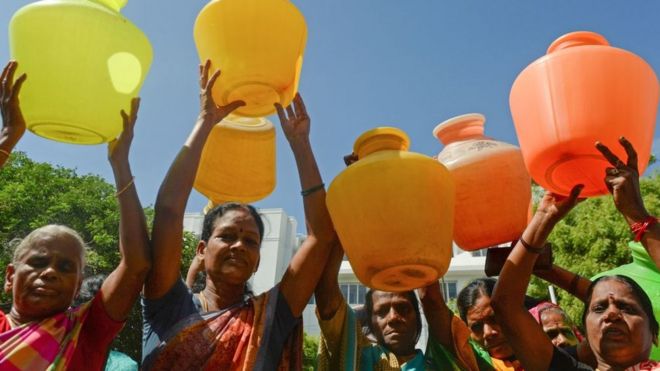
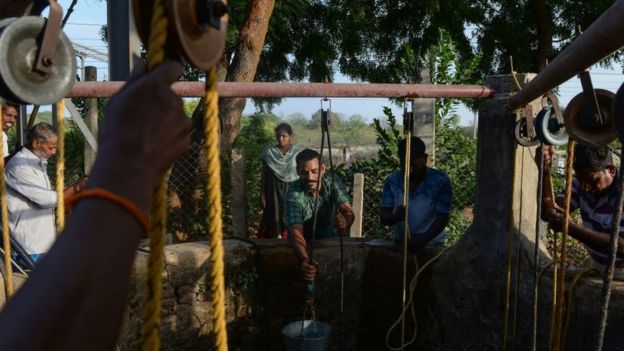
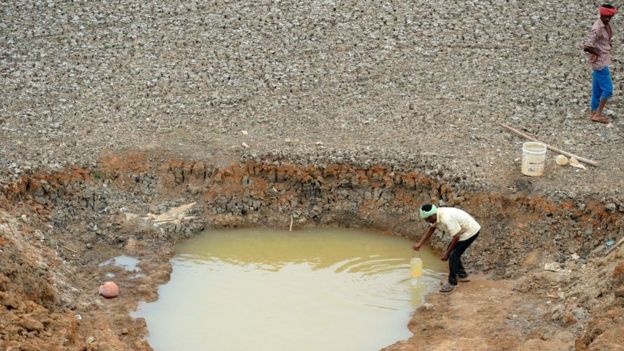
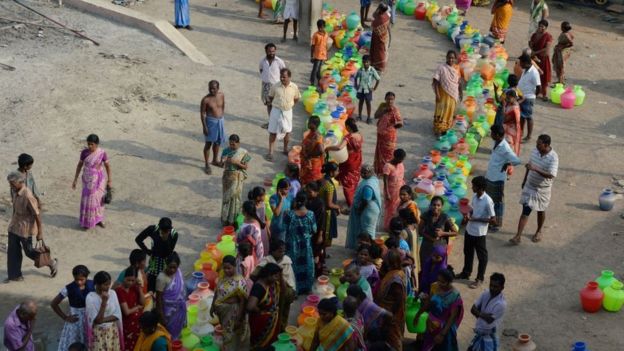
Chennai (formerly Madras), the capital of India’s southern Tamil Nadu state, is gaining notoriety as the disaster capital of the world – floods one year, cyclone the next, and drought the year after. But it is not alone. Environmental activist Nityanand Jayaraman explains why.
As I write this, it has rained in Chennai – the first real welcome shower, but one that lasted only 30 minutes. But, still, that has been enough to flood the streets and stall traffic. The irony is that Chennai’s vulnerability to floods and its water scarcity have common roots. Blinded by a hurry to grow, the city has paved over the very infrastructures that nurtured water.
Between 1980 and 2010, heavy construction in the city meant its area under buildings increased from 47 sq km to 402 sq km. Meanwhile, areas under wetlands declined from 186 to 71.5 sq km.
The city is no stranger to drought or heavy rains. The north-east monsoon, which brings most of the water to this region in October and November, is unpredictable. Some years it pours, and in other years, it just fails to show up.
Any settlement in the region ought to have been designed for both eventualities – with growth limited not by availability of land but of water. Early agrarian settlements in Chennai and its surrounding districts did exactly this.
Shallow, spacious tanks – called erys in Tamil- were carved out on the region’s flat coastal plains by erecting bunds with the same earth that was scooped out to deepen them. Essentially, the infrastructure for water to stay and flow was created first; the settlements came later.
Image copyright GETTY IMAGES
This agrarian logic valourised open spaces. Each village had vast tracts of land, including water bodies, grazing grounds and wood lots, demarcated as Poromboke or commons. Construction was outlawed in the commons. The three districts of Chennai, Thiruvallur and Kanchipuram alone had more than 6000 erys – some as old as 1,500 years.
So rather than transport water over long distances against gravity, early settlers had the technology and good sense to harvest water where it fell.
But this faded with the advent of modern technology.
As urban logic took root, built-up spaces began to be seen as more valuable than open earth. In fact, one could argue that Chennai’s date with “zero water” was made in the 17th Century when it was incorporated as a city by Royal Charter. Born a colony of the British, the city rapidly became a coloniser of the countryside.
The British commandeered a small irrigation ery in a village called Puzhal, and vastly expanded its capacity to supply drinking water to the city, in response to the Madras famine of 1876. Renamed the Redhills Reservoir, this was Chennai’s first centralised, big-budget drinking water project.
Reliance on a distant water source disconnected residents of the fast urbanising settlement from local water and landscapes. For the urban agenda, this was great as it freed up inner-city water bodies for real estate development.
In the 1920s for instance, the ancient 70 acre Mylapore tank was filled up to create what is now a bustling residential and commercial area called T Nagar.
The city has pursued its aspirations to become an economic hub by promoting itself as a major IT and automotive manufacturing centre. In addition to attracting new settlers to Chennai and vastly increasing the pressure on scant resources, these industries have dealt death blows to the region’s water infrastructure.
Land-use planning today is a far cry from the simple principles that prevailed in medieval Tamil Nadu.
Wetlands were off-limits for construction, and only low-density buildings were permitted on lands immediately upstream of tanks. The reason: These lands have to soak up the rainwater before letting it to run to the reservoir.
It is this sub-surface water that will flow to the lake as the levels go down with use and time. Unmindful of such common sense, the IT Corridor (a road which houses a large number of IT companies in the city) was built almost entirely on Chennai’s precious Pallikaranai marshlands.
Image copyright GETTY IMAGESImage caption Puzhal reservoir was Chennai’s first centralised, big-budget drinking water project
And the area immediately upstream of Chembarambakkam – the city’s largest drinking water tank – has now been converted into an automotive special economic zone (SEZ).
Other water bodies have been treated with similar disdain.
The Perungudi garbage dump spreads out through the middle of the Pallikaranai marshlands.
The Manali marshlands were drained in the 1960s for Tamil Nadu’s largest petrochemical refinery. Electricity for the city comes from a cluster of power plants built on the Ennore Creek, a tidal wetland that has been converted into a dump for coal-ash.
The Pallavaram Big Tank, which is perhaps more than 1,000 years old, has over the last two decades been bisected by a high-speed road with the remainder serving as a garbage dump for the locality.
In Chennai, the water utility supplies are barely a fourth of the total water demand. The remainder is supplied by a powerful network of commercial water suppliers who are sucking resources in the region dry.
Along the periphery of Chennai, and far into the hinterland, the land is dotted with communities whose water and livelihoods have been forcibly taken to feed the city. The water crises in these localities desiccated by the city never make it to the news.
Image copyright GETTY IMAGES
The world won’t change unless we replace capitalism with other ways of doing business that are not premised on the exploitation of nature and people.
Our dominant economic model, with its blind faith in technology, is doomed.
Modern economy views open, un-built land as useless. It believes that value can be extracted from such lands only by digging, drilling, filling, mining, paving or building on it.
Degrading land use change is colliding with climate change in all the modern cities of the world, exposing their vulnerabilities.
Chennai’s struggles with water – be it flooding or scarcity – cannot be addressed unless the city re-examines its values, and how it treats its land and water.
Further growth and more buildings are not an option – it needs to actively shrink in size instead.
By ushering in policies to promote land-friendly economies in the state’s hinterland, the government can make it easier for people to migrate out of the city in a planned and feasible way.
Although difficult, this would be less painful than what would happen if they were to wait for nature to do the job.
MUMBAI (Reuters) – Monsoon rains caused wall collapses that killed 27 people in India on Tuesday, as a second day of bad weather disrupted rail and air traffic in the financial capital Mumbai, prompting officials to shut schools and offices, though markets were open.
During every monsoon season, which runs from June to September, India experiences fatal incidents of building and wall collapses as rainfall weakens the foundations of poorly-built structures.
Heavy rain brought a wall crashing down on shanties built on a hill slope in Malad, a western suburb of Mumbai, a fire brigade official said, killing 18 people.
“Rescue work is still going on,” the official added. “So far we have rescued more than two dozen people.”
Three people died when a school wall collapsed in the city of Kalyan, 42 km (26 miles) north of Mumbai.
In the nearby western city of Pune, six people were killed in a wall collapse on Tuesday, a fire brigade official said, after a similar incident on Saturday killed 15.
Mumbai is looking to turn itself into a global financial hub but large parts of the city struggle to cope with annual monsoon rains, as widespread construction and garbage-clogged drains and waterways make it increasingly vulnerable to chaos.
More than 300 mm (11.8 inches) of rain fell over 24 hours in some areas of Mumbai, flooding streets and railway tracks, forcing the suspension of some suburban train services, which millions of commuters ride to work each day.
About 1,000 people stranded in low-lying areas of the city were rescued after a swollen river began to overflow, municipal authorities said.
As weather officials forecast intermittent heavy showers and isolated extremely heavy rainfall, authorities called a holiday for government offices and educational institutions.
“Rain is expected to remain intense even today,” city authorities said on Twitter. “We request you to stay indoors unless there’s an emergency.”
Financial markets were open on Tuesday, though trading volumes were expected to be lower than normal. Many firms asked employees to work from home.
The main runway at Mumbai airport, India’s second biggest, was closed from midnight after a SpiceJet flight overshot the runway while landing, an airport spokeswoman said.
The secondary runway is operational, but 55 flights were diverted and another 52 were cancelled due to bad weather, she said.
In 2005, floods killed more than 500 people in Mumbai, the majority in shantytown slums home to more than half the city’s population.
SHANGHAI, July 1 (Xinhua) — As Shanghai starts mandatory garbage sorting on Monday, games and toys that explore fun ways to spread garbage sorting knowhow are gaining popularity among young people.
A 15-second video of a VR game went viral on Chinese social media in the past few days. In the video, players wearing VR equipment could see four different types of trash cans in front of them, and they threw different types of garbage appearing in front of them into the corresponding buckets to score.
This garbage sorting VR game debuted at the Mobile World Congress Shanghai last week. Although this is not the only VR game in the venue, visitors lined up around the booth to explore the game because of its garbage sorting theme.
“As a Shanghai resident, I am in great need of this game. Maybe I won’t need to check how to categorize each garbage on my phone while going through all my garbage every day if I play this game more often,” said Zhou Zhou, a young Shanghai resident. Although the game has not launched officially, Zhou said she was very much looking forward to it.
Some social media users have recently complained about the difficulties in sorting different types of garbage in Shanghai.
Wu Xia, founder and CEO of VitrellaCore, the company that created the game, said the purpose of this VR game is to provide an interesting method for learning garbage sorting.
“It’s simple and easy to understand. Residents can practice garbage sorting knowledge without actually going through the rubbish, and it is also a more effective method than paper materials when training garbage sorting volunteers,” Wu Said.
GARBAGE SORTING NO CHILD’S PLAY
Shanghai is widely promoting a mandatory garbage sorting system, which requires residents to throw away garbage at a fixed time and place. There is a designated garbage disposal site for every 300-500 households, where volunteers carefully check whether household waste is accurately classified.
The city enacted a set of regulations on household garbage sorting and recycling from Monday, which requires residents to sort household garbage into four kinds: dry refuse, wet trash, recyclable waste and hazardous waste. Individuals who fail to sort garbage may be fined up to 200 yuan (about 29 U.S. dollars).
Wu said many streets and neighborhoods in Shanghai have expressed their willingness to cooperate, and the company hopes to launch VR games in more places for residents to experience for free.
“GARBAGE SORTING IS FUN”
On Taobao, an e-commerce platform under Alibaba, the sales volume of a garbage sorting toy increased by nearly 300 pieces on Sunday. This set of toys consists of four miniature sorting bins, with cards representing various types of garbage.
Most of the buyers of this toy are from Shanghai, and the toy is almost out of stock due to strong sales, according to the shop’s customer service representative.
One residential community called Jiayou in Shanghai’s Jiading District ordered several toys for its residents. “We hope to raise children’s interest in garbage sorting,” said Xing Minxia, secretary of the Jiayou Community branch of the Communist Party of China.
“Most garbage sorting volunteers are retired people, while young people are less involved. These innovative ways can win young people’s hearts and make them feel that garbage sorting is fun instead of a burden,” said Mao Qing, director of a community cultural activity center in Changning District.
Residents of this community have recently been keen on a mobile game called “Race Against Time.” In 45 seconds, players are required to move a trash bin of a specific category to accurately catch the garbage belonging to this category. Players who pass the game can participate in a lucky draw.
Fan Weicheng, deputy director of Shanghai Oriental Publicity and Education Service Center that developed the game, said about 21,000 people have played it since they launched the game in early June.
“We often see the elderly gathering around the garbage sorting knowledge boards in residential communities, but young people are hardly ever there,” Fan said. “We hope to involve more young people through mobile games.”
The garbage sorting VR game will be launched on the Steam platform and China’s Tencent WeGame platform in August this year, according to Wu.
“There will be more types of garbage and more gameplay at that time, but the core of the game will always be to teach people about garbage sorting in a fun way,” Wu said.
BEIJING, July 1 (Xinhua) — Monday marks the 98th anniversary of the founding of the Communist Party of China (CPC). Across the country, various types of events — book readings, concerts, visits to memorials, and renewing vows — have been held to mark the occasion.
Founded in 1921, the CPC has grown from a small party of about 50 members into the world’s largest ruling party, with more than 90 million members.
A brick-and-wood building on Xingye Road in Shanghai, where the CPC held its first national congress, has been packed with visitors in days leading to the anniversary.
In 1921, delegates representing about 50 CPC members nationwide convened the first national congress in the building, though they later had to move to a boat on Nanhu Lake in Jiaxing of east China’s Zhejiang Province due to harassment by local police.
The historic building has been open to the public as a museum since 1952.
Near Nanhu Lake, hundreds of members of the public gathered on a city square to present a chorus to wish the CPC a happy birthday. A relay run was held on Monday to commemorate the occasion.
Zhang Xianyi, the curator of the Nanhu Lake Revolution Museum, said the museum has become increasingly popular. On average, 11,000 people visit the museum and the boat every day. Last year, over 1.25 million people paid visits to the sites, he said.
Also on Monday, Li Jian, deputy manager-in-general of a private electronics maker in Zhengzhou, capital city of central Henan Province, had a new title. He was elected as head of a seven-member CPC branch in the company.
Li works in the Henan branch of the China Communication Technology Co., Ltd., a private company headquartered in Shenzhen.
Over the past decades, a growing number of private companies have set up CPC branches.
“By establishing a CPC branch, I hope the organizational life of CPC members can facilitate progress in achieving company goals,” Li said.
“As a CPC member myself, I hope I can play a leading role in guiding our staff forward,” he added.
Zhao Lei, an employee of the company and also a CPC member, said the spirit of Party building is in line with the entrepreneurial spirit in that it strengthens the sense of responsibility, innovation, attention to details and persistent learning.
“A strong CPC organization attracts people to the company and lends a competitive edge to it,” he said.
“Establish a CPC branch — only a good company actively seeks to do such a thing, if you ask me. This company has been an honest one. We have complaints, and it responds to them,” said company driver Su Nanju, who is not a CPC member.
Across the country, an education campaign on the theme of “staying true to our founding mission” has been launched throughout the Party in which members are called on to keep firmly in mind the fundamental purpose of whole-heartedly serving the people and its historic mission of realizing national rejuvenation.
In southwest China’s Guizhou Province, a conference was held on Monday to commend outstanding CPC members in the battle against poverty. China vows to eradicate absolute poverty by 2020. In areas still perplexed by impoverishment, dedicated CPC members are leading the people to exert transformational changes.
“People say if you have a daughter, never marry her to someone from Qinggangba, because she would have nothing to eat but pickled vegetables,” said Leng Chaogang, Party chief of the Qinggangba village at the conference.
“But now, people here have become rich thanks to good policies of the Party, dedicated work of the cadres, and the relentless strength of the people. We will continue to work harder to make our lives better,” he said.
BEIJING, July 1 (Xinhua) — China on Monday said it welcomed the recent trilateral meeting among leaders of the Democratic People’s Republic of Korea, the United States and the Republic of Korea in Panmunjom truce village.
While describing the friendly meeting held at the demilitarized zone Sunday afternoon “constructive,” Foreign Ministry spokesperson Geng Shuang said the meeting achieved positive outcomes.
“In particular, the DPRK and the U.S. agreed to resume working-level dialogue in the immediate future, which is of great significance,” Geng said at a press briefing, adding that China supports the decision.
China remains committed to realizing the denuclearization of the Korean Peninsula, safeguarding its peace and stability, and settling problems via dialogue, said Geng, noting that President Xi Jinping’s recent visit to the DPRK has injected new vitality into the political settlement of the Korean Peninsula issue.
The interaction among the three parties is in line with their common interests and conforms to the general expectation of the international community, the spokesperson said.
“Under the current circumstances, China hopes the relevant sides can seize the opportunity to meet each other halfway, and actively explore effective ways of addressing each other’s concerns, so as to promote denuclearization on the Peninsula and strive for new progress in the political settlement of the Peninsula issue,” Geng added.
Chinese Premier Li Keqiang, also a member of the Standing Committee of the Political Bureau of the Communist Party of China Central Committee, hears a briefing on development driven by the opening-up of Liaoning’s coastal areas while inspecting the Liaoning Port Group in Dalian, northeast China’s Liaoning Province, July 1, 2019. Li on Monday went on an inspection tour to Dalian. (Xinhua/Liu Weibing)
DALIAN, July 1 (Xinhua) — Implementing the policy of reform and opening-up is a crucial step toward the revitalization of northeast China, Chinese Premier Li Keqiang said Monday.
Li, a member of the Standing Committee of the Political Bureau of the Communist Party of China (CPC) Central Committee, made the remarks during his tour in Dalian, a coastal city in northeast China’s Liaoning Province.
The province should maximize the market’s decisive role in allocating resources while strengthening governmental regulation, Li said, calling for more efforts to improve the business environment by reducing administrative burdens and enhancing services.
Hailing Liaoning’s excellent geographic conditions for opening-up, Li said it should be dedicated to deepening domestic and international cooperation and pioneering the revitalization of the northeastern region.
In his visit to an innovation center for major equipment manufacturing, Li emphasized the significance of innovation in revitalizing northeast China, encouraging scientific researchers to produce more market-oriented products and push forward the upgrading of the industry.
At Dalian University of Technology, Li stressed the employment of university graduates and urged Chinese universities to place more emphasis on vocational training and education.





 CHINDIA ALERT: You'll be living in their world, very soon