Archive for August, 2019

05/08/2019

Article 370: India strips disputed Kashmir of special status

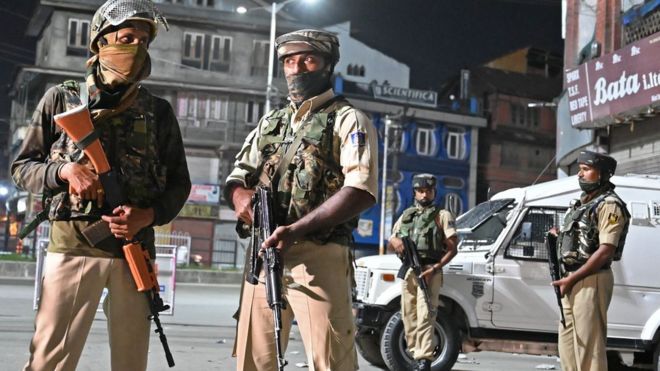
Indian paramilitary troopers stand guard at a roadblock at Maisuma locality in Srinagar on August 4, 2019.Image copyright AFP
Image caption India has deployed tens of thousands of troops to Indian-administered Kashmir in recent days

India’s government has revoked part of the constitution that gives Indian-administered Kashmir special status, in an unprecedented move likely to spark unrest.

Article 370 is sensitive because it is what guarantees significant autonomy for the Muslim-majority state.

There has been a long-running insurgency on the Indian side.

Nuclear powers India and Pakistan have fought two wars and a limited conflict over Kashmir since 1947.

The BBC’s Geeta Pandey in Delhi says that for many Kashmiris, Article 370 was the main justification for being a part of India and by revoking it, the BJP has irrevocably changed Delhi’s relationship with the region.

Pakistan condemned India’s decision to revoke the special status of its part of Kashmir as illegal, saying it would “exercise all possible options” to counter it.

“India is playing a dangerous game which will have serious consequences for regional peace and stability,” said Foreign Minister Shah Mehmood Qureshi.

But an Indian government source said there was no external implication as the Line of Control, the de facto border, and boundaries of Kashmir had not been altered.

Why are there tensions over Kashmir?

During the partition of the Indian subcontinent in 1947, some expected Jammu and Kashmir, like other Muslim-majority regions, to go to Pakistan.

But the ruler of the princely state, who had initially wanted Jammu and Kashmir to become independent, joined India in return for help against an invasion of tribesmen from Pakistan.

War broke out between India and Pakistan, and Kashmir effectively became partitioned.

The region, which remains one of the most militarised zones in the world, has been a flashpoint between India and Pakistan for more than six decades.


Atmosphere of fear

By Aamir Peerzada, BBC News, Srinagar

By the time we woke up this morning, the internet was gone and we now have no mobile connectivity.

If people step out of their homes, they see paramilitary forces on every street. Almost every major road is shut – we are hearing that more troops are being deployed.

No-one knows what is happening in other parts of the state – we can’t talk to anyone else.

People are concerned – they don’t know what is happening, they don’t know what is going to happen.

It’s an atmosphere of fear. People are scared to come out, they have stockpiled food for months.

Kashmiris have always been willing to defend the state’s special status. It looks like a long road ahead, and no-one knows what’s next.


What is Article 370?

In 1949, a special provision was added to India’s constitution providing autonomy to Jammu and Kashmir.

Article 370 allows the state to have its own constitution, a separate flag and independence over all matters except foreign affairs, defence and communications.
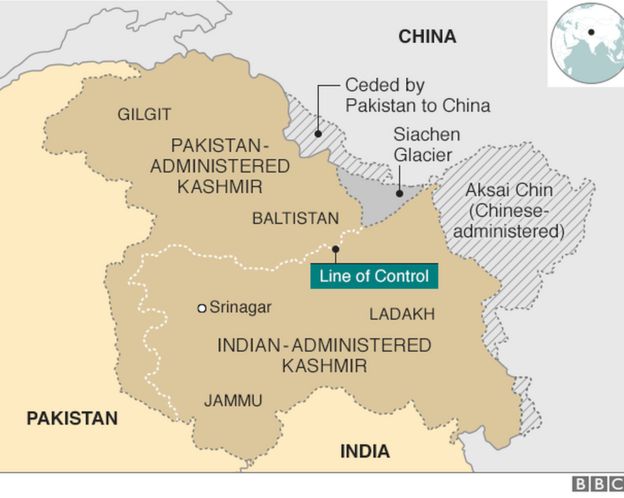
kashmir mapAnother provision later added under Article 370 – 35A – gives special privileges to permanent residents, including state government jobs and the exclusive right to own property in the state.

It is seen as protecting the state’s distinct demographic character as the only Muslim-majority state in India.

So why is India’s move controversial?

The move by the Hindu nationalist BJP government prompted outrage in parliament, and some legal experts have called it an attack on the constitution.

Critics fear the move is designed to change the demographic make-up of India-administered Kashmir – by giving people from the rest of the country to right to acquire property and settle there permanently.

The state’s former chief minister, Mehbooba Mufti, told the BBC she felt there was a “sinister design” to the decision.

“They just want to occupy our land and want to make this Muslim-majority state like any other state and reduce us to a minority and disempower us totally.”

She added Article 370 was not given to the people of the state as a “gift”, but “a matter of constitutional guarantees given by the very same Indian parliament to the people of Jammu and Kashmir”.

Why is the government doing this?

The ruling BJP made revoking Article 370 part of the party’s 2019 election manifesto – and it won a landslide victory earlier this year.

It has argued that Article 370 has prevented the region’s development and its integration with India.
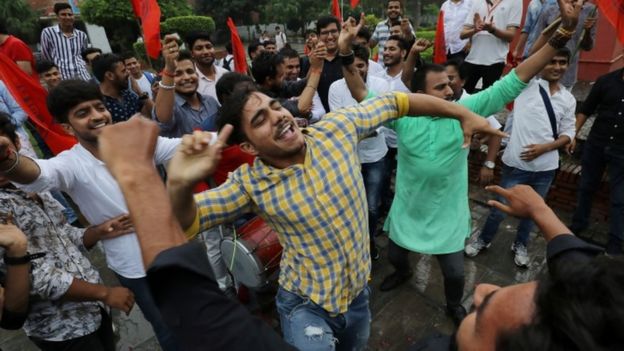
Supporters of the ruling BJP's student wing celebrate in DelhiImage copyright REUTERS
Image caption Supporters of India’s ruling BJP have been celebrating the move

An Indian government source said on Monday that the region’s special status had discouraged outside investment and affected its economy, while terrorism and smuggling were rife.

“A set of anachronistic provisions were not allowing the progress of Kashmir,” the source said. “The huge sum of money and resources which were going into the state were not being optimised.”

How did the government make the change?

India’s government announced a presidential order revoking all of Article 370 apart from one clause which says that the state is an integral part of India.

The order was met by massive protests from the opposition – but has now been signed into law by President Ram Nath Kovind.

The government also proposed dividing the state into two regions ruled by the central government, and a bill to that effect passed the upper house on Monday and will now go to the lower house where the BJP has a majority.
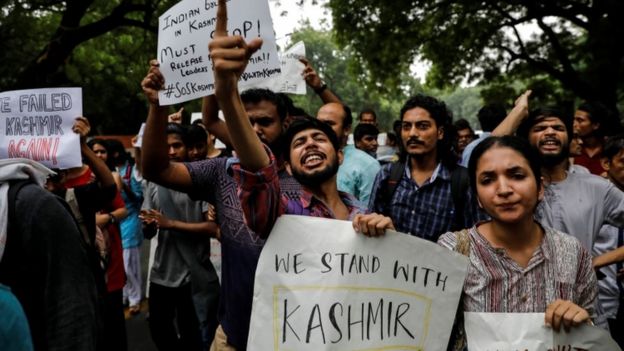
Opponents of the move protest in DelhiImage copyright REUTERS
Image caption Opponents of the move have also been out in the streets of Delhi

Changing Article 370 also requires the assent of the state government, but Jammu and Kashmir has been under the rule of a governor since June 2018 when the BJP pulled out of a state government coalition with the regional People’s Democratic Party (PDP).

This effectively means the state has been ruled directly by Delhi through a governor, who has agreed to the bills.

What has been happening in Kashmir?

Indian-administered Kashmir is in a state of lockdown.

Curfew-like conditions have been imposed, and orders preventing the assembly of more than four people have been introduced.

Tens of thousands of Indian troops were deployed to the region ahead of Monday’s announcement and tourists were told to leave under warnings of a terror threat.
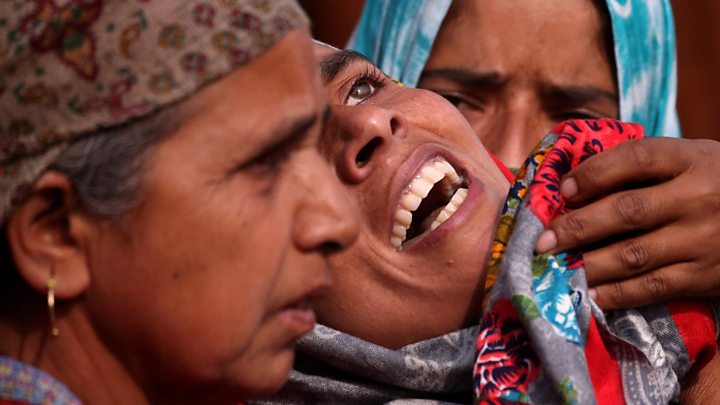
Media caption In December Yogita Limaye examined why there had been a rise in violence in Kashmir

In the hours before Monday’s announcement, two of the state’s former chief ministers – Omar Abdullah and Mehbooba Mufti – were placed under house arrest.

Source: The BBC

04/08/2019

China competitions for Int’l Army Games 2019 kicks off

CHINA-XINJIANG-KORLA-INT'L ARMY GAMES-OPEN (CN)

Rocket artilleries fire in a military presentation in Korla, northwest China’s Xinjiang Uygur Autonomous Region, Aug. 3, 2019. The opening ceremony for the competitions hosted by China as part of the International Army Games 2019 was held on Saturday in Korla, northwest China’s Xinjiang Uygur Autonomous Region. The Chinese army will host four contests in areas such as infantry combat vehicles and weapon repair. Teams coming from 12 countries in Asia, Europe, Africa and South America will take part. (Photo by Wang Junqiang/Xinhua)

URUMQI, Aug. 3 (Xinhua) — The opening ceremony for the competitions hosted by China as part of the International Army Games 2019 was held on Saturday in Korla, northwest China’s Xinjiang Uygur Autonomous Region.

The Chinese army will host four contests in areas such as infantry combat vehicles and weapon repair. Teams coming from 12 countries in Asia, Europe, Africa and South America will take part.

During the period of the competitions, cultural exchanges and equipment exhibitions will be held.

The Chinese army has taken part in the games since 2014 and became a host in 2017.

Source: Xinhua

03/08/2019

China attaches great importance to cooperation with UN: envoy

UN-CHINA-ENVOY-PRESS BRIEFING


Zhang Jun (R), China’s permanent representative to the United Nations, speaks to journalists at the UN headquarters in New York, Aug. 2, 2019. Zhang Jun said Friday that China attaches great importance to its cooperation with the United Nations while meeting with reporters from major international media at the UN headquarters in New York. (Xinhua/Li Muzi)

UNITED NATIONS, Aug. 2 (Xinhua) — A Chinese envoy said Friday that China attaches great importance to its cooperation with the United Nations while meeting with reporters from major international media at the UN headquarters in New York.

“We attach great importance to our cooperation with the United Nations, and everything goes well,” Zhang Jun, China’s permanent representative to the UN, told reporters from The Associated Press (AP), Reuters, Bloomberg News, and others.

The ambassador stated that China will “stand firm” with the United Nations and “give strong support” to the organization “by defending multilateralism and supporting an international system with the United Nations at its center.”

He also said that China will support “an international order on the basis of international law and the purposes and the principles of the UN Charter.”

As one of the five permanent members of the UN Security Council, “China will continue to play a responsible and a constructive role in addressing global political and security issues,” he said.

Noting that the world is “far from being peaceful,” the envoy said that China will continue to work hard on issues including in the Middle East and in other parts of the world.

In general, he said, China will continue to promote peace “through diplomatic means and political dialogues,” adding it will always be China’s basic position.

“We will try our best to be helpful and to be contributing more to world peace and security,” he noted. “China will continue to be positively engaged in peacekeeping operations for that purpose.”

Zhang started his role as China’s new permanent representative to the UN earlier this week.

Source: Xinhua

03/08/2019

China’s Wang Yi meets foreign ministers from Malaysia, Mongolia, Timor-Leste, Canada, Australia

THAILAND-BANGKOK-WANG YI-MALAYSIAN FM-MEETING


Chinese State Councilor and Foreign Minister Wang Yi (R) meets with Malaysian Foreign Minister Saifuddin Abdullah in Bangkok, Thailand, Aug. 2, 2019. (Xinhua/Zhang Keren)

BANGKOK, Aug. 2 (Xinhua) — Chinese State Councilor and Foreign Minister Wang Yi met here Friday with foreign ministers from Malaysia, Mongolia, Timor-Leste, Canada and Australia.

Meeting with Malaysian Foreign Minister Saifuddin Abdullah, Wang hailed the sound momentum of China-Malaysia relations, saying that this year marks the 45th anniversary of the establishment of the diplomatic ties between the two countries.

China stands ready to work with Malaysia to implement the important consensus reached by the leaders of the two countries, consolidate strategic mutual trust and further promote mutually beneficial cooperation, he said.

Noting that the China-proposed Belt and Road Initiative upholds the principles of extensive consultation, joint contribution and shared benefits; adopts open, green and clean approaches and promotes high-standard, livelihood-improving and sustainable development, Wang said the initiative focuses on interconnectivity and is highly matched with the development strategies of Malaysia and the Association of Southeast Asian Nations.

The Chinese state councilor called on the two sides to step up the development of the joint industrial park in each other’s country and boost industrial and innovative cooperation, saying that China welcomes the relaunch of the East Coast Rail Link project.

China and Malaysia should enhance coordination and cooperation in multilateral affairs and resolutely supports multilateralism and free trade.

Saifuddin, for his part, said that Malaysian Prime Minister Mahathir Mohamad have made two visits to China in half a year since assuming office, which fully showed the importance the country attaches to the relations with China.

Malaysia-China relations enjoy a long history and transcends trade and business ties, he said, noting that Malaysia is willing to actively participate in the Belt and Road development.

When meeting with Mongolian Foreign Minister Damdin Tsogtbaatar, Wang said this year marks the 70th anniversary of the establishment of diplomatic ties between the two countries, calling on the two sides to take this opportunity to further synergize the Belt and Road Initiative and Mongolia’s Steppe Road program in a bid to achieve substantive results at an early date.

Hailing the initiative a symbol of multilateralism, Tsogtbaatar said Mongolia is ready to spare no effort to support and participate in the initiative which is conducive to promoting sustainable growth in the region.

The two sides vowed to consolidate mutual political trust and strengthen pragmatic cooperation so as to bring the bilateral relations to a new high.

In his meeting with Timor-Leste’s Foreign Minister Dionisio da Costa Babo Soares, Wang said China and Timor-Leste are good partners. In recent years the two countries have actively carried out cooperation on jointly building the Belt and Road, with a number of projects built by Chinese companies benefitting the people’s livelihood in Timor-Leste and welcomed by the locals.

Wang said China is ready to draw up cooperation plans with the Timor-Leste side on Belt and Road cooperation at an early date and expand cooperation in such areas as petrochemical industry, trade as well as framing and fishing sectors.

China supports Timor-Leste in playing a bigger role in regional and international affairs, Wang said.

Soares said bilateral relations between Timor-Leste and China have maintained healthy and stable development.

He said Timor-Leste sees China as a trustworthy friend, and is grateful to the assistance China has provided for the country’s economic development. Timor-Leste is willing to actively participate in Belt and Road cooperation, enhance inter-connectivity, and work with the Chinese side toward greater development of the bilateral comprehensive cooperative partnership.

In his meeting with Canadian Foreign Minister Chrystia Freeland, Wang said it is regrettable that Canada arbitrarily detained a Chinese citizen in December last year, which aroused strong indignation of the Chinese people and brought serious difficulties to the China-canada relations.

The Chinese government firmly upholds the legitimate rights and interests of Chinese citizens and enterprises. “We hope that this issue will be properly resolved as soon as possible so as to bring the China-Canadian relations back to the right and healthy track at an early date,” he said.

For her part, Freeland said there was no historical grudge between both countries. It is indeed heartbreaking that China-Canada relations are what they are today.

Next year marks the 50th anniversary of the establishment of diplomatic ties between the two countries. Canada values the relations with China and is willing to work with China for healthy and stable development of bilateral relations, she said.

While meeting with Australian Foreign Minister Marise Payne, Wang hoped that Australia will meet China halfway, uphold the principles of mutual respect and treating each other equally, properly handle differences, promote consensus and trust so as to push the China-Australia relations back to the right track.

Welcoming Australia to share the opportunities brought by China’s reform and opening up, the Chinese state councilor also hoped that Australia sticks to openness and inclusiveness to create a fair, transparent and indiscriminative business environment for Chinese enterprises.

Payne said the Australian side values and recognizes China’s growth and its development potential and speaks highly of China’s significant achievements in poverty reduction and development.

Although there are some differences in the bilateral ties, Australia is ready to join hands with China to promote dialogue and communication, seek more consensus, expand cooperation on trade and investment and push forward healthy development of bilateral ties on the basis of mutual respect, the Australian foreign minister said.

On the issue of 5G, Australia will make its decision independently and adopt no policies discriminating specific countries or enterprises, Payne said.

Source: Xinhua

03/08/2019

A boy, a girl and two mothers: how a trailblazing Chinese lesbian couple are creating a family

  • Cai Rui and Wu Chen are the proud parents of twins but they had to go abroad for the IVF treatment they needed to bring the children into the world
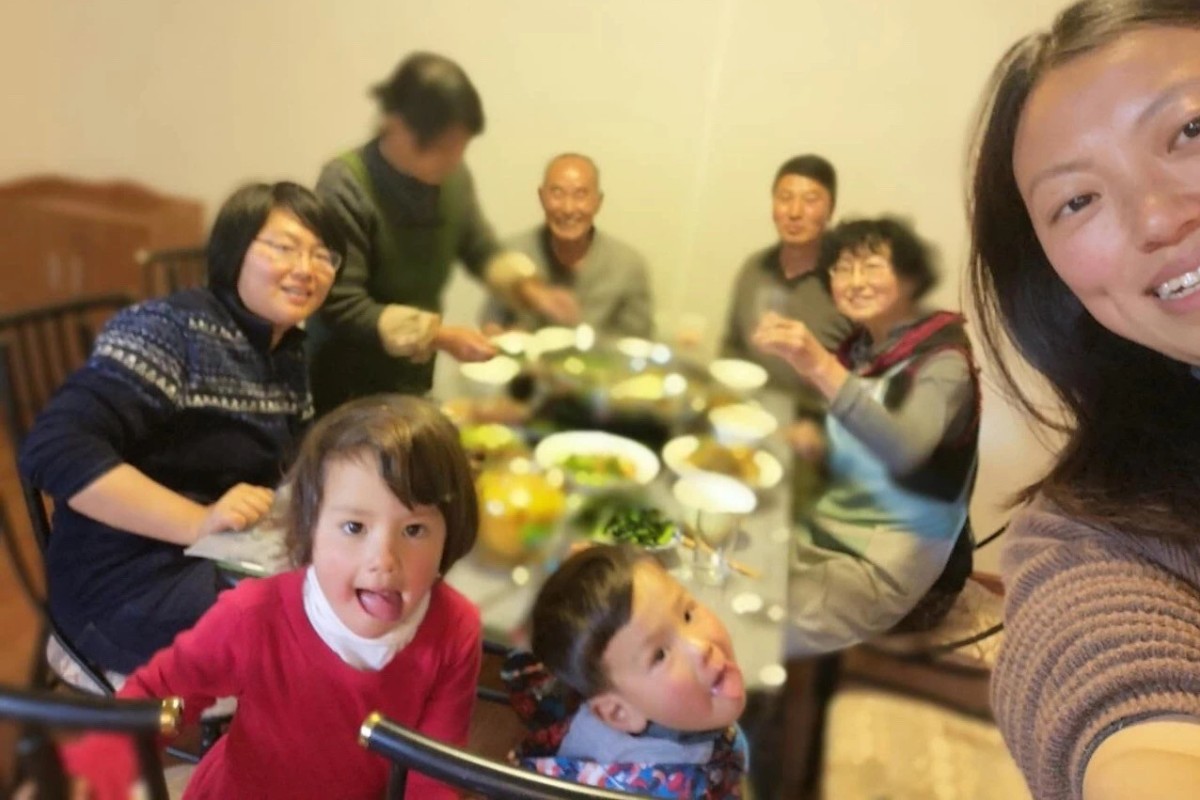
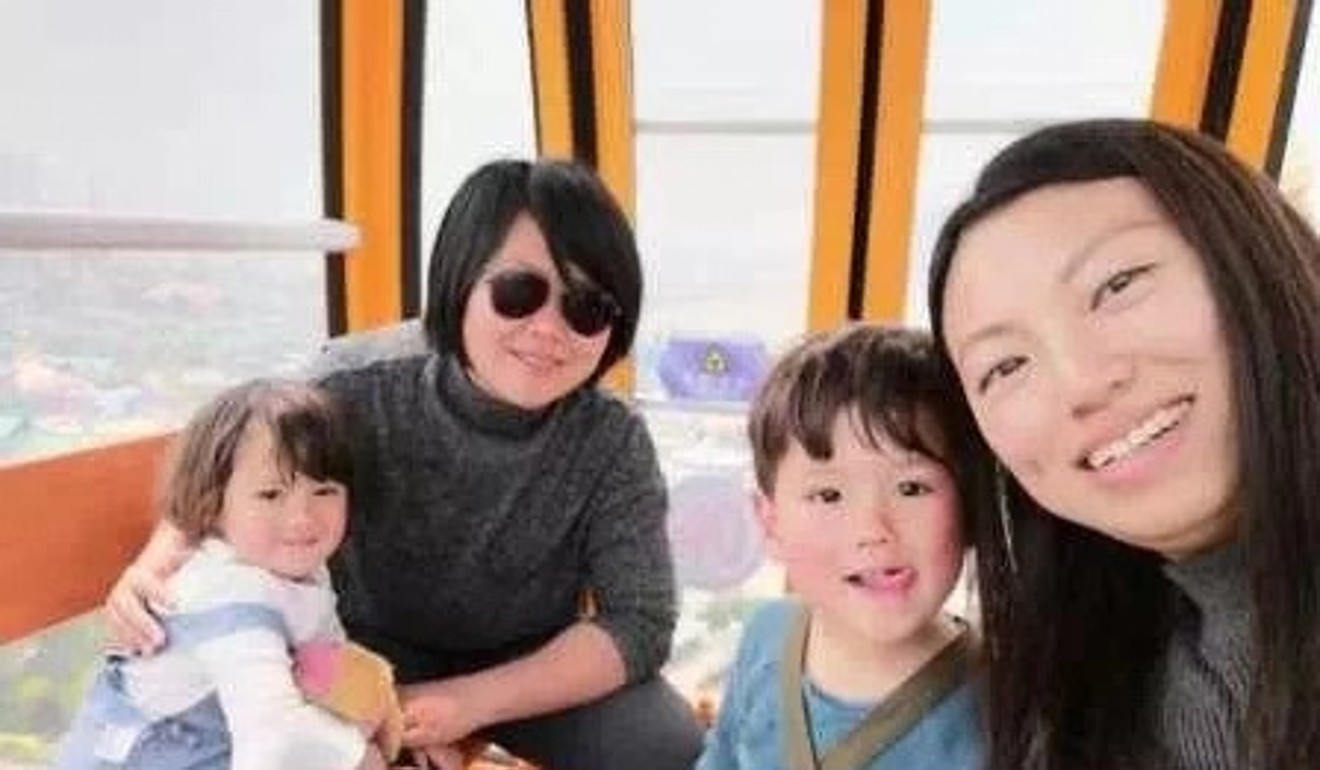
Wu Chen (far left) and Cai Rui (right) are raising their young family together in China. Photo: Cai Rui
When three-year-old twins Harry and Helen are asked about their dad, they have a set answer.
The children tell the curious that they do have a father but he lives in the United States.

Harry and Helen live on the outskirts of Kunming in the southwestern Chinese province of Yunnan with their two mothers, Cai Rui and Wu Chen.

Cai gave birth to the twins after being implanted at a US IVF clinic with ova from Wu and sperm from an American donor.

The couple were forced to seek treatment abroad because Chinese clinics will only perform IVF procedures on couples who can produce a marriage certificate – something limited to heterosexuals.

For Cai and Wu, it was a leap into the unknown – there was little information in China and few others had gone public about their experience.

But their biological clocks were ticking and the couple were used to taking difficult paths.

Gay Chinese find a place to be themselves on ‘Rainbow Cruise’ to Vietnam

Cai and Wu met while studying in Britain and registered their marriage there in 2014. Both women were in their thirties and soon began thinking about having children.

They looked forward to being mothers and felt the experience would strengthen their relationship even more, Cai said.

“I think it’s natural for a woman to aspire to be a mother once she turns 30,” she said. “We were both aware that the older a woman is, the harder it is for her to get pregnant. So it’s an immediate thing for us.”

Their parents were also worried about the couple’s welfare as they grew older.

“Our parents have accepted our relationship, thinking it’s our own choice. However, they worried that when we are old, there will be no children to look after us,” Cai said.

Wu Chen (left) and Cai Rui (right) brought their twin children Helen and Harry into the world with help from IVF treatment in the United States. Photo: Cai Rui

The couple embarked on two rounds of IVF in London, with Cai impregnated with Wu’s fertilised ova, but both rounds failed.

They then returned to China and searched for other options but at the time there were few posts by Chinese lesbians sharing their experience of having babies abroad, Cai said.

So they contacted three clinics in the US and finally decided to go through one in Portland, Oregon, in large part because of the city’s gay-friendly reputation.

Cai said that when it came time to choose a sperm donor, they were less concerned about his outward appearance and more focused on his physical and mental health, his academic record and his experience growing up.

“We wanted to make sure our baby’s father was a healthy and interesting guy,” she said.

The couple chose the sperm of a white man and implanted two fertilised eggs into Cai’s body to raise the chances of success. Twelve weeks later, the couple flew back to Beijing where Harry and Helen were born on April 1, 2016.

Thanks to a more relaxed population policy since 2016, Cai was able to register the children as a single mother while the children were given her partner’s surname.

“So my lover is their biological mother and I am their birth mother,” Cai said.

Small victory for China’s online lesbian community as censored forum is restored, but another remains blocked
The family lived in Beijing for about a year before moving to Yunnan for work commitments. Cai said there had not been any big problems raising the children there apart from some annoying questions from neighbours about why the children are biracial and why the father is not in the home.
“These questions are like flies around us. But they’re not a big deal and won’t affect our life,” she said.
She said she told various villagers in their community about the children’s conception and they responded by saying, “What an advanced lifestyle you have!”
Twins Harry and Helen celebrate Lunar New Year. Photo: Cai Rui

The couple have also tried to explain the situation to the twins.

“We instilled diverse family values in them from a very young age, through everything including cartoon books they read and stories we made up by ourselves,” Cai said.

“So we told [them] that you have a father. But the reason for forming a family is love. We don’t have love with your father, so he doesn’t live with us.”

About four years ago the couple opened a public account on social media app WeChat called Rainbow Babies, to share their experience with other lesbians on the mainland. Cai said the account had more than 17,000 followers, many responding by relating their own stories about IVF.

One woman wrote on the platform that she and her partner had been together for 10 years and after having a daughter they were pregnant with a boy.

“I am not confident of us lesbians raising a boy. Do you have any tips to share with us?” the woman wrote.

Why China’s gays and lesbians are still stuck in the closet

Another woman wrote that since she and her partner decided to have a baby, they had confronted obstacles at every step in the process, but the biggest benefit was that “after so many hardships, our love has been consolidated and we have cherished each other more than before”.

Cai said the most popular destinations for mainland lesbians seeking IVF treatment were the US, Thailand and Cambodia, with at least 1,000 either pregnant or having given birth.

“Some people are hesitant to have babies because of social pressure. [But] as times goes by and women get older, the possibility of them getting pregnant becomes lower,” Cai said.

Cai said she and Wu were often praised for their courage but they were in the habit of choosing a tougher road.

“On many occasions, this habit is the most reliable way to push us to keep our innocent heart and to do things to be ourselves,” she said.

Source: SCMP

03/08/2019

India accuses Pakistan-backed militants of targeting Hindu pilgrims in Kashmir

SRINAGAR/NEW DELHI (Reuters) – Indian security officials said on Friday they had found evidence of attacks planned by Pakistani military-backed militants on a major Hindu pilgrimage in the disputed Muslim-dominated region of Kashmir.

Tension has run high in the mountainous region since a vehicle laden with explosives rammed into an Indian police convoy on Feb. 14, killing 40 paramilitary policemen, and leading to aerial clashes between the two nations.

Indian officials said a mine with Pakistan ordinance marking was among caches of ammunition, explosives and weapons retrieved following intelligence reports of likely attacks on routes used by hundreds of thousands of devout Hindus who trek to the region’s holy Amarnath cave every year.

In an order issued on Friday, the government in the Indian state of Jammu and Kashmir effectively called off the pilgrimage and asked the gathered pilgrims to return home, citing the intelligence reports.

“The Pakistan ordinance factory markings (on the mine)…clearly indicate (the) Pakistan army is involved in terrorism in Kashmir,” Indian military commander Lieutenant-General K.J.S. Dhillon told a news conference in Srinagar.

There was no immediate comment from spokesmen for Pakistan’s military and its foreign ministry.

Muslim-majority Kashmir has been the site of decades of hostility between nuclear arch-rivals India and Pakistan. Both countries claim it in full but rule it in part.

India accuses Pakistan of funding armed militants, along with separatist groups in India’s portion of the region considered non-violent by international observers.

Islamabad denies the Indian accusation, saying it provides only diplomatic and moral support to the separatist movement.

In recent months, Pakistan says it has cracked down on Islamic militant groups, including arresting Hafiz Saeed, the alleged mastermind of the militant attack on India’s financial capital of Mumbai in 2008 that left 166 people dead.

Pakistani Prime Minister Imran Khan, who is battling an economic crisis at home, said in April that his country had nothing to gain from allowing armed militants to infiltrate into Indian-controlled Kashmir, and that Pakistan was doing its best to stop such incursions.

Khan is also working on rebuilding Pakistan’s image in Washington after an extended period of acrimony. The United States is relying on Islamabad’s support to seal a deal with the Taliban in Afghanistan that would allow U.S. troops to be pulled out after a protracted war lasting almost 18 years.


PANIC BUYING

Dhillon said security forces in Kashmir, where more than 300 people have died in just the last six months, were still being targeted with improvised explosive devices.

“All these things are an indication that Pakistan and the Pakistani army is desperate to disrupt peace in Kashmir Valley,” he said.

Police had received intelligence reports there could be an increase in militant-led violence, Kashmir police chief Dilbagh Singh told the briefing in the region’s main city of Srinagar.

India has moved an additional 10,000 paramilitary troops into the restive region because of the security situation, training requirements and the need for rotation, a home ministry official said on Friday.

The influx swells an estimated 40,000 troops already in the region to provide security for the Amarnath pilgrimage. The new deployment has caused concern among residents that Indian security forces planned another major crackdown.

They are fearful that a curfew may be imposed, affecting their ability to go out, and supplies coming in. There has been some panic buying at grocery stores in the past week and long queues at petrol stations.

Regional leaders indicated they are worried that Indian Prime Minister Narendra Modi’s government will now try to remove decades-old special rights for the people of the state, including an amendment to the Indian constitution made in 1954 known as Article 35A. That amendment prevents people from outside the state from buying property there.

“Various speculations are rife including removal of 35A to change the demography of the state and its Muslim majority character,” separatist leader Mirwaiz Umar Farooq told Reuters.

“As in the past, people and the leadership have to be ready to resist every attempt to undo it,” said Farooq, who is the chairman of Hurriyat, a political movement that wants independence from India.

Source: Reuters

02/08/2019

U.S. pressure on WTO reform discords with facts, WTO principles: MOC

CHINA-BEIJING-MINISTRY OF COMMERCE-PRESS CONFERENCE (CN)

Gao Feng, spokesperson of China’s Ministry of Commerce, gestures at the ministry’s press conference in Beijing, capital of China, Aug. 1, 2019. (Xinhua/Zhang Yuwei)

BEIJING, Aug. 1 (Xinhua) — U.S. denial of “developing country status” of some members including China in the World Trade Organization (WTO) is neither in line with the facts nor with the principles and spirit of the organization, said the Ministry of Commerce Thursday.

Development issues are at the heart of the WTO work, Gao Feng, spokesperson for the ministry, remarked at a news conference when answering questions related to the United States applying pressure on the WTO.

Although some members in the WTO have developed rapidly in recent years, the overall gap between the developing and developed countries still exists and even tends to enlarge, Gao said.

He pointed out that the developing nations still need policy space to promote all-round development, and their endowed rights of “special and differential treatment” should be effectively protected.

“China is the largest developing country in the world, and it would take a long time for the country to catch up with developed countries in many aspects,” Gao said.

Citing a recent report issued by the United Nations Conference on Trade and Development, Gao pointed out that China’s human development index ranked 86th in the world, which was just slightly above the world average level.

He also said that the gap of absolute per capita income between China and the United States has widened from 43,000 U.S. dollars to 46,000 U.S. dollars between 2000 and 2016.

As a responsible developing country, China will continue to shoulder its international responsibilities commensurate with its economic development, Gao said.

He stressed that China, together with other developing countries in the WTO, will firmly uphold its lawful rights and interests and will play a constructive role in the WTO reform.

“We hope that the U.S. side could abandon erroneous practices of unilateralism and bullying and work with other WTO members to push forward the WTO reform in a positive direction,” Gao said.

Source: Xinhua

02/08/2019

China, EU agree to safeguard Iran nuclear deal

THAILAND-BANGKOK-CHINA-WANG YI-EU-FREDERICA MOGHERINI-MEETING

Chinese State Councilor and Foreign Minister Wang Yi (R) meets with Frederica Mogherini, High Representative of the European Union (EU) for Foreign Affairs and Security Policy, in Bangkok, Thailand, Aug. 1, 2019. (Xinhua/Zhang Keren)

BANGKOK, Aug. 1 (Xinhua) — China and the European Union (EU) on Thursday agreed to continue safeguarding the Joint Comprehensive Plan of Action (JCPOA), or the Iran nuclear deal, during a meeting here Thursday between Chinese State Councilor and Foreign Minister Wang Yi and European Union (EU) High Representative for Foreign Affairs and Security Policy Federica Mogherini.

Regarding the Iran nuclear issue, both sides also agreed to safeguard the United Nations-centered multilateralism and oppose the campaign of “maximum pressure,” while calling on relevant parties to maintain restraint and prevent the escalation of the situation.

With regard to the China-EU ties, Wang said China is pleased to see the successful change of leadership of the EU institutions, and expects the EU to achieve greater achievement in promoting integration and addressing challenges.

China will maintain the stability and continuity of its policies toward the EU and provide continuous support in the European integration process, for the unity and growth of the EU, and a more important role by Europe in international affairs, Wang said.

China hopes that the new EU institutions will also maintain continuous and forward-looking policies towards China, he said.

China is willing to join hands with EU to actively implement the outcome of meetings between Chinese and EU leaders, follow the right direction of China-EU relations, enhance communication and cooperation, and push forward the democratization of international relations and multi-polarization of the world, safeguard multilateralism and free trade, and jointly push for greater development of China-EU relations in the new era, said Wang.

For her part, Mogherini said the new EU leadership will continue attaching importance to relations with China, and is willing to deepen cooperation with China and implement the leaders’ consensus, so as to expand EU-China connectivity and advance the healthy and stable development of EU-China relations.

Both sides also exchanged views on international and regional issues including the Afghanistan issue.

Source: Xinhua

01/08/2019

Chinese, Colombian presidents pledge to promote ties

CHINA-BEIJING-XI JINPING-COLOMBIAN PRESIDENT-TALKS (CN)

Chinese President Xi Jinping (R) holds talks with visiting Colombian President Ivan Duque Marquez at the Great Hall of the People in Beijing, capital of China, July 31, 2019. (Xinhua/Li Xueren)

BEIJING, July 31 (Xinhua) — Chinese President Xi Jinping and visiting Colombian President Ivan Duque Marquez on Wednesday pledged to promote bilateral relations to new heights.

The year 2020 marks the 40th anniversary of the establishment of diplomatic ties between China and the Latin American country.

During their talks at the Great Hall of the People in Beijing, Xi said Duque’s father, as a member of the then Colombian government, firmly supported the decision to forge diplomatic ties 40 years ago and witnessed the birth of the bilateral relationship.

“The relay baton of China-Colombia bilateral ties is passed to us now,” Xi told the Colombian president.

“I highly appreciate your visit to China, which shows that you are committed to enhancing the traditional friendship and mutually beneficial cooperation between China and Colombia,” said Xi.

Xi called on both countries to intensify high-level exchanges and exchanges of governance experience, deepen mutual political trust, mutual understanding and mutual support.

China will continue to support Colombia in promoting the peace process and post-conflict reconstruction, said Xi.

He also encouraged both countries to further explore potential for pragmatic cooperation, consolidate cooperation in traditional areas and expand to new areas.

China welcomes Colombia to take part in the Belt and Road construction so as to realize the alignment of development strategies of both sides, Xi said, calling on the two to enhance people-to-people exchanges, jointly safeguard the existing international system with the United Nations at its core, promote the reform of global governance mechanisms and make more efforts to help the economic globalization process become more open, inclusive and balanced, and develop towards win-win results.

Xi called Latin American and Carribean countries “a force to be reckoned with in the international arena” as they boast huge potential and broad prospects.

He said China has always respected the rights of Latin American people to choose a development path of their own, supported Latin America in speeding up its integration process and backed the proper handling of the Venezuela issue via dialogue and consultation.

China stands ready to continue to play a role in encouraging dialogue and talks and would like to maintain contacts with Colombia, Xi said.

He added that China is willing to strengthen the building of the Forum of China and Community of Latin American and Carribean States.

Duque offered his congratulations for the 70th anniversary of the founding of the People’s Republic of China.

He said he admired Xi’s outstanding leadership and prominent international influence and would like to learn from China’s governance experience.

Duque said as the two countries will embrace the 40th anniversary of forging diplomatic ties in February 2020, he hoped to further step up bilateral ties and expand cooperation in areas including economy and trade, energy, infrastructure construction, connectivity, the digital economy and creative industries.

Colombia welcomes investment from Chinese enterprises, said Duque, adding that he believed every bilateral project would help support the peace process of Colombia and the country’s economic and social development.

Hailing the significance of the Belt and Road construction to world connectivity and international cooperation, Duque said Colombia will take an active part in the initiative.

Colombia attaches great importance to China’s role in international and regional affairs and is willing to contribute to the development of Latin America-China ties, Duque said.

After the talks, the two presidents witnessed the signing of 12 bilateral agreements in areas including judicial cooperation, trade, agriculture, education and customs.

Duque is paying the state visit at the invitation of Xi from July 28 to 31. This is his first state visit to China. Before his arrival in Beijing, he visited the city of Shanghai, an economic hub in eastern China.

Source: Xinhua

01/08/2019

Malaysia-China friendship in focus as second panda cub born in country named Yi Yi

  • Born last January after being conceived in mid-October 2017, Yi Yi is the offspring of giant pandas Xing Xing and Liang Liang
  • Her parents were sent to Malaysia by China in May 2014 to mark 40 years of diplomatic ties between the two countries
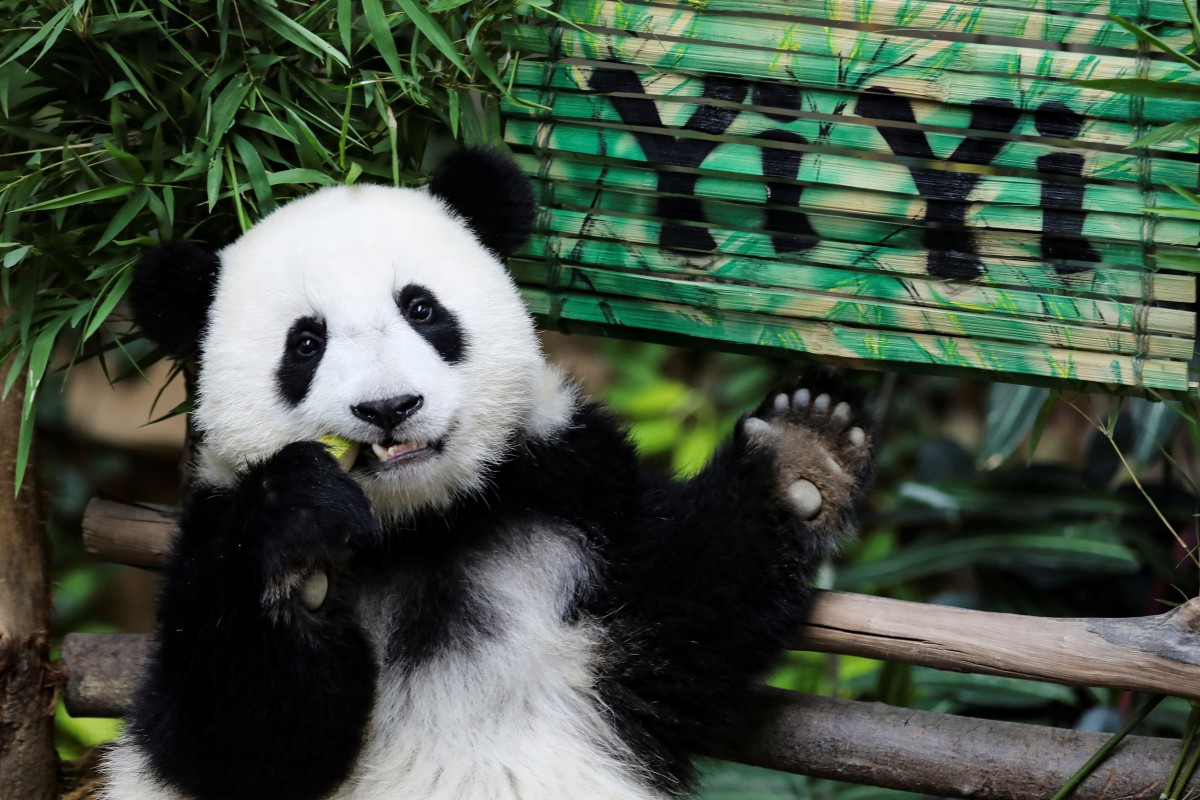
Yi Yi, born 19 months ago to parents Liang Liang and Xing Xing on loan from China, eats during her naming ceremony. Photo: Reuters
A name has finally been given to the second giant panda cub born in Malaysia
, 19 months after her birth.
Yi Yi, meaning friendship, was chosen to emphasise the country’s close ties with 
China

as the two mark 45 years of diplomatic relations this year.

Water, Land and Natural Resources Minister Xavier Jayakumar said Yi Yi’s birth was “momentous” as mother panda Liang Liang had conceived her outside the usual mating season.

Protective panda won’t let Malaysian zookeepers near her newborn cub
“[Yi Yi] is active, bonds well with her mother and is in good health. Though the cub still feeds on milk, it has also been exposed to other diets such as bamboo leaves and carrots,” he said.
Born last January after being conceived in mid-October 2017, Yi Yi is the second offspring of giant pandas Xing Xing and Liang Liang, who were sent to Malaysia by China in May 2014 to mark 40 years of diplomatic ties
.
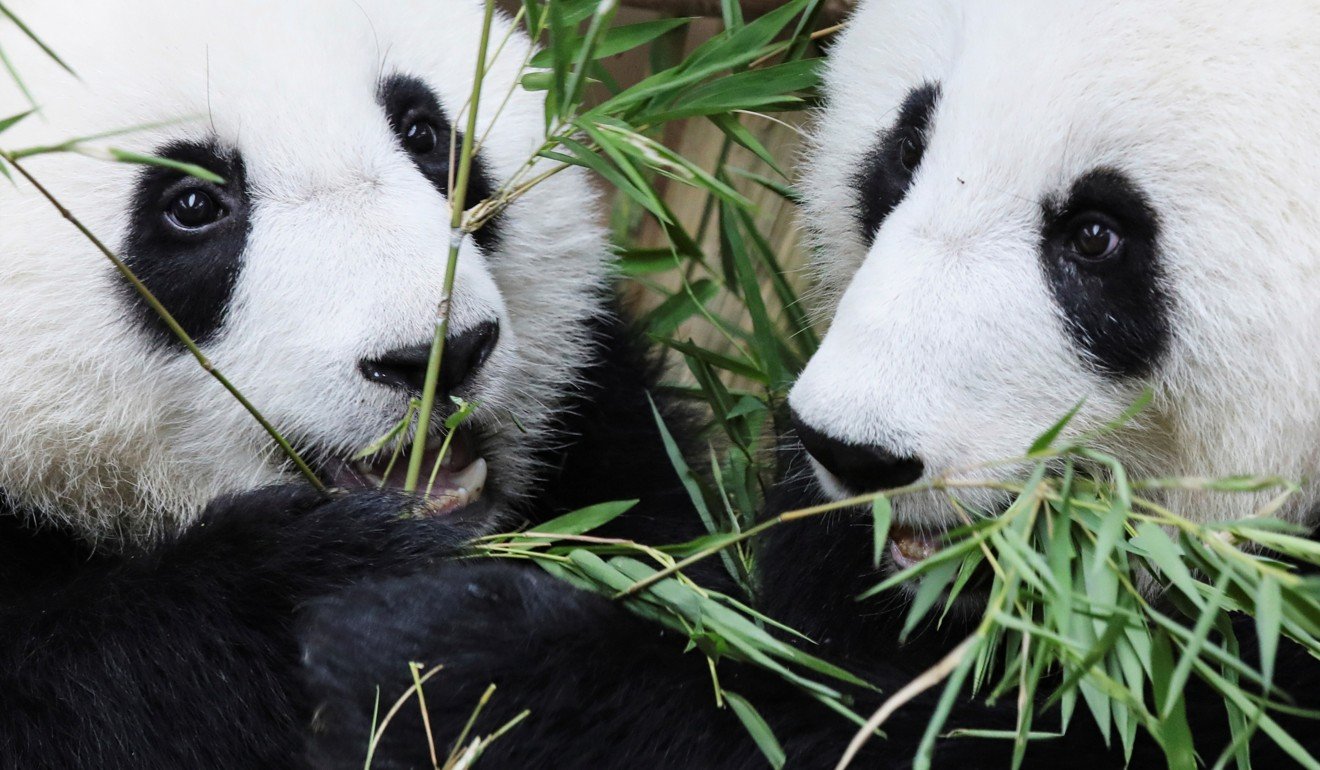
Yi Yi (left) plays with her mother Liang Liang during her naming ceremony at Malaysia’s National Zoo. Photo: Reuters

Their first cub, Yi Yi’s sister Nuan Nuan, was born in August 2015 and sent back to China in late 2017 as part of an agreement that cubs born in captivity must be returned at 24 months old.

Chinese Ambassador to Malaysia Bai Tian, who was also present at the naming ceremony, described the pandas as “friendship emissaries”, adding that Xing Xing and Liang Liang were now the “most productive giant pandas overseas”.

Chinese panda loans to Malaysia still on track despite outcry

“That fully shows that friendship really multiplies. It also shows the fact that Malaysia is really a very beautiful and very comfortable home for the Chinese giant pandas,” he said.

Malaysia is among the few countries where Chinese giant pandas have successfully procreated, and holds the record for the quickest conception at just 15 months after the original pair were settled in the National Zoo.

China’s use of panda diplomacy – sending giant pandas to other countries as diplomatic gifts – has been criticised by some Malaysians who were perturbed by the high costs of “renting” the animals.

Water, Land and Natural Resources Minister Xavier Jayakumar (centre) with Malaysian Prime Minister Mahathir Mohamad (second from left). Photo: DPA
Disgraced former prime minister Najib Razak, who is currently on trial for corruption and abuse of power linked to the looting of the 1MDB sovereign wealth fund, signed the initial agreement that stipulates an annual payment of 4.18 million ringgit (US$1 million) be paid to China for the pandas, as well as a yearly insurance premium of 50,000 ringgit per animal.
In 2018, Xavier announced that the Malaysian government had spent 4.65 million ringgit that year on managing the National Zoo’s Giant Panda Conservation Centre, with costs expected to balloon to 7.38 million ringgit this year because of a “one-off” conservation fee of about 2.38 million ringgit.
Despite this, Prime Minister Mahathir Mohamad in January described the pandas as an offering from China and “an important diplomatic symbol”.
Source: SCMP
Law of Unintended Consequences

continuously updated blog about China & India

ChiaHou's Book Reviews

continuously updated blog about China & India

What's wrong with the world; and its economy

continuously updated blog about China & India