Archive for April, 2020

03/04/2020

Taiwan talks WHO role with U.S., China denounces ‘manipulation’

TAIPEI/BEIJING (Reuters) – Taiwan and the United States this week discussed how to get “closer coordination” between the island and the World Health Organization (WHO) during the coronavirus outbreak, drawing a rebuke from China for “political manipulation” of the epidemic.

Taiwan’s is excluded from the WHO due to diplomatic pressure from China, which considers it merely a wayward province with no right to the trappings of state.

Its omission has become a major source of anger for the Taiwan, which says it has been unable to get first hand information from the WHO, putting lives on the island in danger for the sake of politics. Both the WHO and China say Taiwan has been given the help it needs.

The U.S. State Department said on Thursday senior officials from the United States and Taiwan on Tuesday held a “virtual forum on expanding Taiwan’s participation on the global stage”, with particular focus on the WHO and how to share Taiwan’s successful model of fighting the coronavirus.

“Participants also discussed ongoing efforts to reinstate Taiwan’s observer status at the World Health Assembly, as well as other avenues for closer coordination between Taiwan and the World Health Organization,” it said.

The World Health Assembly is the WHO’s decision-making body.

Taiwan attended it as an observer from 2009-2016 when Taipei-Beijing relations warmed, but China blocked further participation after the election of Taiwan President Tsai Ing-wen, who China views as a separatist, charges she denies.

Taiwan’s Foreign Ministry expressed thanks to the United States on Friday for its “continued taking of concrete actions to support Taiwan’s participation in the WHO and other international organisations”.

In Beijing, Chinese Foreign Ministry spokeswoman Hua Chunying said the United States and Taiwan were both well aware that members of the WHO must be sovereign states, and accused Taiwan of seeking political capital from the outbreak.

“We hope they will not attempt to use this epidemic to engage in political manipulation,” she told a daily news briefing.

U.S. President Donald Trump signed a new law last month requiring increased support for Taiwan’s international role. China threatened unspecified retaliation in response.

Like most countries the United States has only unofficial ties with the island, but is its strongest backer on the world stage.

Taiwan has been far more successful than many of its neighbours keeping the virus in check thanks to early and stringent steps to control its spread. It has reported 348 cases and five deaths to date.

In its latest measure, Health Minister Chen Shih-chung said on Friday people who don’t wear face masks on public transport would face fines of up to T$15,000 (nearly $500).

($1 = 30.2040 Taiwan dollars)

Source: Reuters

02/04/2020

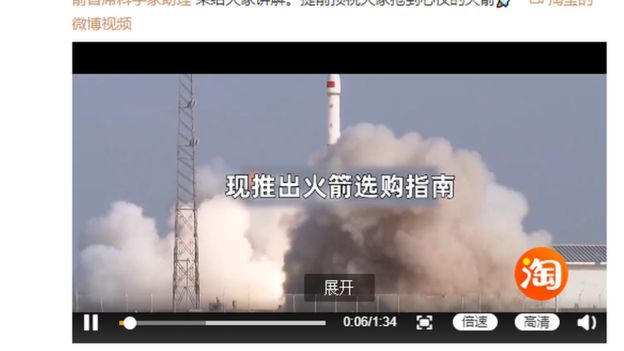
Shopper buys $6m rocket launch in China

China hosted 'the world’s first live broadcast of a rocket sale'Image copyright TAOBAO/SINA WEIBO
Image caption Taobao confirmed that this was no April Fools joke

An online buyer has won an opportunity to launch a commercial rocket for 40 million yuan ($5.6m; £4.5m) in central China, it’s reported.

According to the official People’s Daily, popular online shopping platform Taobao live-streamed the sale of a commercial rocket yesterday evening.

The official China Daily said that the rocket was “a small launch vehicle” in the city of Wuhan, Hubei Province, which has already seen eight commercial launches.

Buyers were told that they could paint the body of the rocket and the launch platform, and that they could visit the launch site and control the launch.

China hosted 'the world’s first live broadcast of a rocket sale'Image copyrightT AOBAO/SINA WEIBO
Image caption Celebrity sales anchor Wei Ya has more than seven million Weibo followers

Posters advertising the livestream, headed by celebrity shopping anchor Wei Ya, went viral on Wednesday 1 April, leading many to speculate they were part of an April Fools joke.

You may also be interested in:

But national newspaper Global Times says that Taobao confirmed that “this is for real” in an online post.

It hints that the decision to sell a rocket experience, headed by Chinese entrepreneur Luo Yonghao, followed an earlier online poll where netizens were asked whether they’d rather win a “rocket, a satellite, a partner or a cleaning lady”.

‘How to choose the first rocket in your life?’

China Daily says that this was “the world’s first live broadcast of a rocket sale” and the livestream has attracted considerable attention online.

More than 620,000 Weibo users have used the hashtag #WeiYaSellsARocket and more than two million online viewers tuned in to watch the sale.

Media have noted that the livestream of the event, watched by millions, has been an opportunity to re-promote what Wuhan has to offer, since it made international attention as the original epicentre of the Covid-19 virus.

As well as promoting Wuhan’s Aerospace Science and Technology & Rocket Technology, the livestream was also interspersed by footage highlighting the hard-working efforts of medical workers in the city.

The name of the buyer has not been revealed, but this is not the first time that an online buyer has purchased an air vehicle for millions of dollars. In November 2017, two Boeing 747 jets were bought on Taobao in an online auction.

China hosted 'the world’s first live broadcast of a rocket sale'Image copyright TAOBAO/SINA WEIBO
Image caption Taobao confirmed shoppers could buy a rocket on their platform

Reporting by Kerry Allen

Source: The BBC

02/04/2020

Coronavirus latest: more than 21,000 dead as UN warns of threat to ‘whole of humanity’

  • US$2 trillion rescue package passes US Senate, heads to House
  • Malaysia’s king and queen in ‘self-quarantine’ after staff test positive
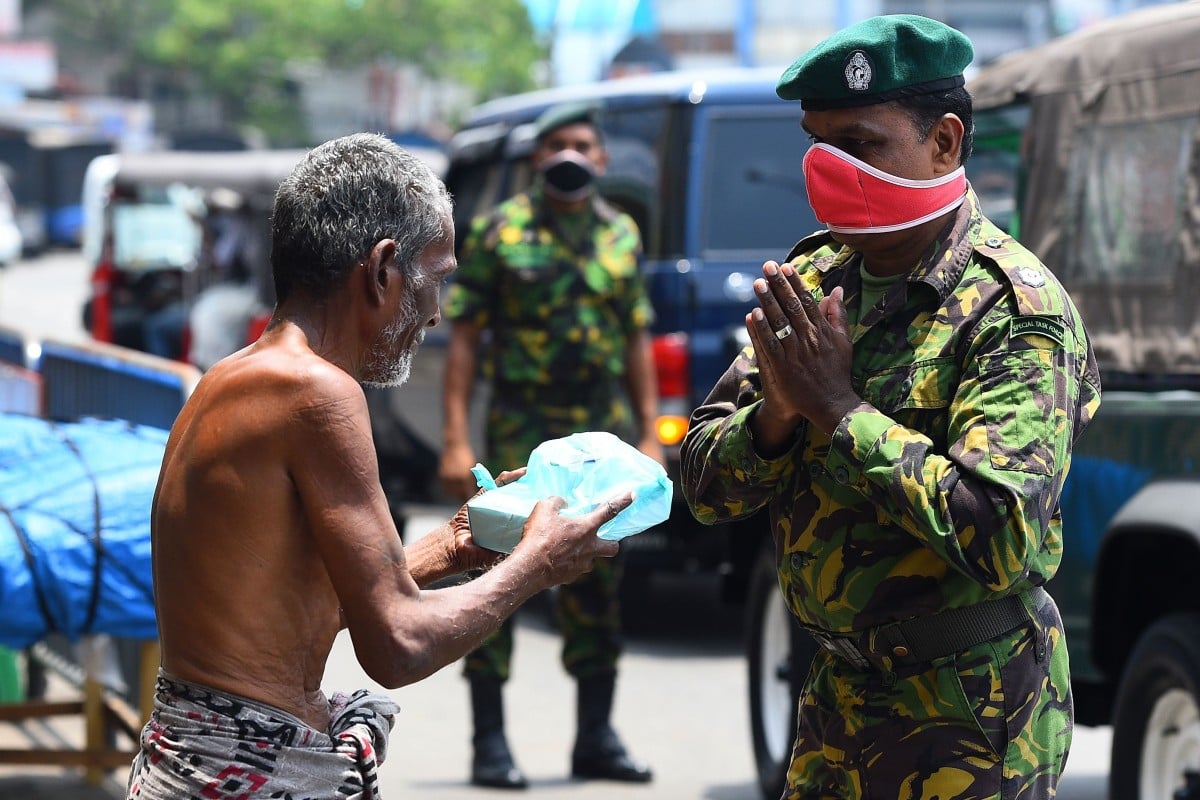
Police commandos in Sri Lanka hand out food to homeless people during a nationwide curfew against the spread of coronavirus. Photo: AFP

More than three billion people are living under lockdown measures as soaring death tolls in Europe and the US underlined a United Nations warning that the coronavirus, which has now infected nearly half a million people globally, threatens all of humanity.

The global death toll from the virus now stands at more than 21,000, with Spain joining Italy in seeing its number of fatalities overtake China, where the virus first emerged just three months ago.

“Covid-19 is threatening the whole of humanity – and the whole of humanity must fight back,” UN Secretary General Antonio Guterres said, launching an appeal for US$2 billion to help the world’s poor.

“Global action and solidarity are crucial. Individual country responses are not going to be enough.”

The G20 major economies will hold an emergency videoconference on Thursday to discuss a global response to the crisis, as will the 27 leaders of the European Union, the outbreak’s new epicentre.

The economic damage of the virus – and the lockdowns – could also be devastating, with fears of a worldwide recession worse than the financial meltdown more than a decade ago.

Here are the developments:

US$2 trillion rescue package passes US Senate

The US Senate passed the nation’s largest-ever rescue package late Wednesday, a US$2 trillion lifeline to suffering Americans, depleted hospitals and an economy all ravaged by a rapidly spreading coronavirus crisis.

The monster deal thrashed out between Republicans, Democrats and the White House includes cash payments to American taxpayers and several hundred billion dollars in grants and loans to small businesses and core industries. It also buttresses hospitals desperately in need of medical equipment and expands unemployment benefits.

The measure cleared the Senate by an overwhelming majority and was headed next to the House of Representatives, which must also pass it before it goes to President Donald Trump for his signature.

US President Donald Trump has voiced hope the US will be “raring to go” by mid-April, but his optimism appeared to stand almost alone among world leaders.

Unemployment benefit filings by Americans workers to surge to 3.3 million last week – the highest number ever recorded, the Labour Department reported on Thursday.

The normally routine report is at the front lines of the economic crisis caused by the outbreak, which has forced widespread closures of restaurants, shops and hotels, and brought airline travel to a virtual halt, prompting the stunning increase in people filing for benefits nationwide in the week ending March 21.

Nearly every state cited Covid-19 for the jump in initial jobless claims, with heavy impacts in food services, accommodation, entertainment and recreation, health care and transport, the report said.

Malaysia’s king and queen in quarantine after staff test positive

The official residence of Malaysia’s monarchy on Thursday confirmed seven of its staff have tested positive for Covid-19 and are currently receiving treatment at the Kuala Lumpur Hospital.

Malaysia’s king, Sultan Abdullah Sultan Ahmad Shah and queen, Tunku Azizah, have also been tested, but their results showed a clean bill of health, a spokesman for the Istana Negara said in a statement.

“Nevertheless, Their Majesties are now observing a 14-day self-quarantine, starting yesterday, ” he said.

Meanwhile, Prime Minister Muhyiddin Yassin, along with all federal ministers and their deputies, announced they will take a two-month pay cut, with the savings to be donated to Putrajaya’s Covid-19 fund.

The Prime Minister’s Office said the decision was made during a cabinet meeting and showed the government’s sincerity in helping those affected by the pandemic.

“The Covid-19 fund was launched on March 11 as part of the government’s efforts to help those who were affected by the disease outbreak,” the office said, adding that 8.5 million ringgit (US$1.97 million) has been collected, including government grants.

Malaysia on Wednesday announced a two-week extension of a national lockdown as part of stepped-up measures to contain the coronavirus outbreak.

The “movement control order,” which requires people to stay home and was originally set to expire on March 31, will now continue until April 14.

Moscow monitors people in coronavirus quarantine with 100,000 ‘under the skin’ surveillance cameras

Russia to ground international flights

Russia will halt all international flights from midnight on Friday under a government decree listing new measures against the coronavirus outbreak.
The decree published on Thursday orders aviation authorities to halt all regular and charter flights, with the exception of special flights evacuating Russian citizens from abroad.
The announcement came after Russia on Wednesday recorded its biggest daily spike in confirmed coronavirus infections so far, with 163 new cases for a total of 658 across the country.
Denis Protsenko, head doctor of Moscow’s new hospital treating coronavirus patients, told President Vladimir Putin that Russia needed to be ready for an “Italian scenario”, referring to what is now the hardest-hit country in the world in terms of deaths.

Singapore boosts stimulus package to 11 per cent of GDP

Singapore reported 52 new coronavirus cases on Thursday, taking its tally to 683 infections.

The health ministry said that out of the 52, 28 were imported while 24 were locally transmitted.

The city state earlier on Thursday unveiled more than $30 billion in new measures to help businesses and households fight the coronavirus pandemic that threatens to push the bellwether economy into a deep recession.

Drawing on national reserves for the first time since the global financial crisis to support an economy heading for recession, the additional spending will push up the government’s virus-related relief to almost S$55 billion, or 11 per cent of gross domestic product, Finance Minister Heng Swee Keat said in a speech in parliament Thursday. It also will widen the budget deficit for the financial year starting April 1 to 7.9 per cent of GDP, from a previous target of 2.1 per cent.

“This extraordinary situation calls for extraordinary measures,” Heng said. “We have saved up for a rainy day. The Covid-19 pandemic is already a mighty storm, and is still growing.”

Coronavirus: Italy’s slowing infection rate boosts case for lockdowns

26 Mar 2020
‘If you catch it, don’t spread it to others’, 1949 flu advice still applies to coronavirus pandemic

Imported cases rise in China

Mainland China reported a second consecutive day of no new local coronavirus infections as the epicentre of the epidemic Hubei province opened its borders, but imported cases rose as Beijing ramped up controls to prevent a resurgence of infections.

A total of 67 new cases were reported as of end-Wednesday, up from 47 a day earlier, all of which were imported, China’s National Health Commission said in a statement on Thursday.

The total number of cases now stands at 81,285.

The commission reported a total of 3,287 deaths at the end of Wednesday, up six from the previous day.

All of the new patients were travellers who came to China from overseas, with the mainland reporting no locally transmitted infections on Wednesday.

Fearing a new wave of infections from imported cases, authorities have ramped up quarantine and screening measures in other major cities including Beijing, where any travellers arriving from overseas must submit to centralised quarantine.

Coronavirus could become seasonal

There is a strong chance the new coronavirus could return in seasonal cycles, a senior US scientist said Wednesday, underscoring the urgent need to find a vaccine and effective treatments.

Anthony Fauci, who leads research into infectious diseases at the National Institutes of Health, told a briefing the virus was beginning to take root in the southern hemisphere, where winter is on its way.

“What we’re starting to see now … in southern Africa and in the southern hemisphere countries, is that we’re having cases that are appearing as they go into their winter season,” he said.

“And if, in fact, they have a substantial outbreak, it will be inevitable that we need to be prepared that we’ll get a cycle around the second time.

“It totally emphasises the need to do what we’re doing in developing a vaccine, testing it quickly and trying to get it ready so that we’ll have a vaccine available for that next cycle.”

There are currently two vaccines that have entered human trials -one in the US and one in China – and they could be a year to a year-and-a-half away from deployment.

British Columbia is testing for Covid-19 faster per head than South Korea
27 Mar 2020

Spain extends emergency by two weeks

Spain’s parliament has voted in favour of the government’s request to extend the state of emergency by two weeks that has allowed it to apply a national lockdown in hopes of stemming its coronavirus outbreak.

The parliamentary endorsement will allow the government to extend the strict stay-at-home rules and business closings for a full month. The government declared a state of emergency on March 14. It will now last until April 11.

Spain’s government solicited the two-week extension after deaths and infections from the Covid-19 virus have skyrocketed in recent days. Spain 47,600 total cases. Its 3,434 deaths only trail Italy’s death toll as the hardest-hit countries in the world.

The parliament met with fewer than 50 of its 350 members in the chamber, with the rest voting from home to reduce the risk of contagion.

Greece locks down Muslim towns

Greek authorities have quarantined a cluster of Muslim-majority towns and villages in the country’s northeast after several cases and a death from the new coronavirus in the area.

The area in Xanthi prefecture was placed in lockdown as of Wednesday evening as nine people in the region overall have tested positive for the virus over the past six days, civil protection deputy minister Nikos Hardalias told reporters.

“All residents have been temporarily confined at home. No exceptions are allowed,” Hardalias said.

The centre of the outbreak appears to be the small Pomak town of Ehinos, a community of about 2,500.

“Ehinos residents will be provided with food and medicine,” Hardalias said.

Police were deployed on Thursday on a bridge leading into town to enforce the lockdown, television footage showed.

One 72-year-old Ehinos man has died from the virus, local mayor Ridvan Deli Huseyin told Antenna television.

“It’s better to take some measures now than to cry about this later,” said Huseyin, the mayor of the local administrative centre of Miki.

The Pomaks are a Muslim group of Slavic origin who live mainly in neighbouring Bulgaria.

They make up part of Greece’s roughly 110,000-strong Muslim minority in the country’s northeast bordering Turkey.

Many of them work as migrant industrial workers in other European countries.

Economy seats go for business-class fares as travellers flee
27 Mar 2020

Colombia goes into lockdown, Chile extends schools closures

Countries across Latin America tightened measures on Wednesday to halt the spread of the deadly novel coronavirus, with more lockdowns, border closings and school closures as well as increased aid to the region’s poorest.

As cases of Covid-19 cases continue to rise – more than 7,400 and 123 deaths up to now – Bolivia and Colombia became the latest countries to impose a total lockdown, while Chile extended its schools closures until the end of April.

Brazil’s President Jair Bolsonaro has warned of possible “chaos” and the “looting” of supermarkets if state shutdowns ordered by the governors of Sao Paulo and Rio de Janeiro aren’t ended.

Bolsonaro, who has repeatedly scoffed at the severity of the deadly pandemic, had previously criticised the closing of schools and businesses in Sao Paulo and Rio states, two of the country’s most populous states.

Germany ramps up testing, approves huge bailout

Germany has boosted its coronavirus test rate to 500,000 a week, Christian Drosten, who heads the Institute of Virology at Berlin’s Charite University Hospital, said on Thursday, adding that early detection has been key in keeping the country’s death rate relatively low.

Drosten also highlighted Germany’s dense network of laboratories spread across its territory as a factor contributing to early detection.

The news came after Chancellor Angela Merkel’s government secured emergency spending, unlocking a historic rescue package designed to cushion the blow of the coronavirus pandemic.

A majority of lawmakers in the Bundestag voted on Wednesday to allow additional borrowing to combat the crisis, according to the legislature’s president. The Bundesrat, or upper house of parliament, will vote on Friday.

The extraordinary authorisation is part of a packet of legislation aimed at protecting German jobs and businesses. The new borrowing of €156 billion (US$169 billion) is equivalent to half of the country’s normal annual spending.

The country, which tightened lockdown measures this week, has about 32,700 cases and more than 150 deaths.

Trump and Widodo back chloroquine treatment, but fake news is deadly

25 Mar 2020

Ukraine declares ‘emergency situation’

Ukraine on Wednesday declared a month-long “emergency situation” to slow the coronavirus outbreak, as the number of confirmed cases jumped to 113.

Ukraine has already closed schools, universities and public spaces to stem the spread of the disease, but the measures were due to expire at the beginning of April.

The emergency situation announced on Wednesday effectively extends existing measures for 30 days until April 24, a government spokesperson said.

“We are extending quarantine and imposing an emergency situation in Ukraine,” Prime Minister Denys Shmygal said.

Unlike an official state of emergency, the initiative announced by the prime minister does not have to be rubber stamped by both the parliament and president. Ukraine has confirmed 113 cases of Covid-19 and four deaths, according to official statistics.

Prince Charles tests positive for coronavirus

Mexican governor says poor are ‘immune’

The governor of a state in central Mexico is arguing that the poor are “immune” to the new coronavirus, even as the federal government suspends all non-essential government activities beginning Thursday in a bid to prevent the spread of the virus.

Puebla Governor Miguel Barbosa’s comment on Wednesday was apparently partly a response to indications that the wealthy have made up a significant percentage of Mexicans infected to date, including some prominent business executives.

Officials say three-quarters of Mexico’s 475 confirmed cases are related to international travel, and the poor do not make many international trips. Some people apparently caught the virus on ski trips to Italy or the United States. The country has seen six deaths so far.

“The majority are wealthy people. If you are rich, you are at risk. If you are poor, no,” Barbosa said of the coronavirus. “We poor people, we are immune.”

Barbosa also appeared to be playing on an old stereotype held by some Mexicans that poor sanitation standards may have strengthened their immune systems by exposing them to bacteria or other bugs.

There is no scientific evidence to suggest the poor are in any way immune to the virus that is causing Covid-19 disease around the world.

No agreement on ‘Wuhan virus’ name as G7 spars over infection source

26 Mar 2020

Japan belatedly bans entry from Europe, Iran

Japanese Prime Minister Shinzo Abe has established a task force under the country’s revised emergency law to deal with the global rise in coronavirus infections and deaths.

In Tokyo on Thursday, Abe said it was necessary for people to act as one to overcome what can be described as a national crisis.

Japan will ban entry from 21 European countries as well as Iran, to take effect from Friday, he added.

The country has already begun asking visitors and its nationals arriving from some countries in Southeast Asia, the Middle East and Africa to self-quarantine for 14 days.

Arrivals from a total of seven Southeast Asian countries and four in the Middle East and Africa are also asked to refrain from using public transport.

Similar steps are in place for visitors from China, South Korea, most of Europe and the United States.

Malaysia to lock down two communities to curb spread

Malaysia on Thursday announced that 3,570 residents in two communities in the country’s south will be placed under complete lockdown due to their high coronavirus infection rates.

Defence Minister Ismail Sabri Yaakob said in a statement that the residents in Kluang district of Johor state are banned from leaving home for two weeks beginning Friday, to enable the health authorities to conduct door-to-door screening.

The tough measure was taken after 73 per cent of the 83 infection cases found in the district were traced to the two small communities of Kampung Dato Ibrahim Majid and Bandar Baru Dato Ibrahim Majid.

Ismail said the residents cannot leave home, not even to buy food, as the welfare department will supply them with two weeks’ worth of food. All businesses must close and all access into the two areas will be sealed. The police and army have been deployed to ensure compliance.

Australia scraps haircut time limit

The Australian government scrapped a time limit on haircuts following a backlash.

The government had imposed a rule on hairdressers and barbers on Tuesday that haircuts should take less than 30 minutes, as part of social distancing restrictions to deal with the coronavirus outbreak.

The restriction put around 40,000 hairdressers at risk, the Australian Hairdressing Council said in response.

“This decision is outrageous,” the council’s chief executive Sandy Chong said in a statement.

“Whilst many barbers can do a male haircut within that time frame, it really isn’t feasible for a majority of hairdressing salons.”

Australian Prime Minister Scott Morrison issued a statement Thursday saying the policy would be reversed with immediate effect.

But salons and barbers must still strictly observe new rules that there may only be one person per four square metres within the premises, Morrison said.

India unveils US$22.6 billion stimulus package

India’s government announced a 1.7 trillion rupee (US$22.6 billion) stimulus package, as it stepped up its response to the coronavirus pandemic.

The measures will include cash transfers as well as steps on food security, Finance Minister Nirmala Sitharaman said in New Delhi on Thursday, adding that the package will benefit migrant workers.

Asia’s third-largest economy joins countries from the US to Germany that have pledged spending to contain the economic fallout of the pandemic. India is on a total lockdown for three weeks from Wednesday in the world’s biggest isolation effort, as Prime Minister Narendra Modi seeks to prevent the virus from spreading locally.

The government will also provide an insurance cover of 5 million rupees to medical workers, Sitharaman said.

Source: SCMP

02/04/2020

China’s race to produce ‘super pigs’ destined to fail amid haphazard biosecurity, experts say

  • China’s pig herd has begun to build again after African swine fever devastated hog populations across the country 18 months ago
  • Scientists are racing to create disease-resistant pigs, but analysts say that will be undermined by basic hygiene problems in China’s pork industry
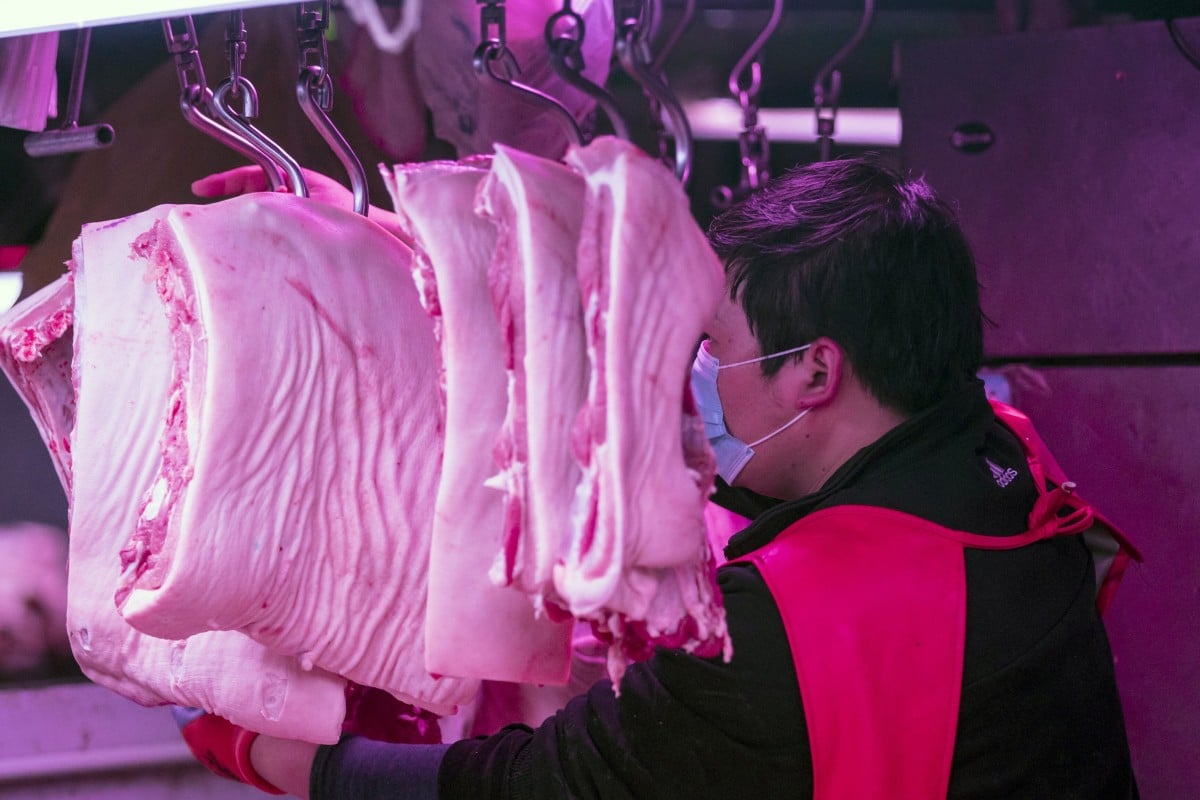
China’s pork industry has been severely dented by African swine fever disease in the past 18 months. Photo: Bloomberg

China should focus less on developing disease-resistant “super pigs” to protect its hog herd from infection and do more to improve basic biosecurity, analysts say, as several companies claim to be close to a breakthrough treatment for African swine fever.

China’s hog herd has begun to steadily rebuild after swine fever spread across the country a year and a half ago, killing or forcing the culling of 60 per cent of the pig population, according to authorities.

But poor biosecurity – including the transport of pigs in filthy trucks and a lack of disinfection at farms – still threaten the industry, observers said.

There is no commercially available vaccine for the disease – which is not harmful to humans – but a number of researchers claim they are close.

Swine fever could kill 25% of the world’s pigs, scientists say
China’s Harbin Veterinary Research Institute, the country’s top research body on animal diseases, said last month it had developed a vaccine for African swine fever (ASF) that laboratory testing showed was safe and effective. However, it did not give a timetable on when it would be available for commercial use.

Meanwhile,Shandong Landsee Genetics, a company in China’s eastern Shandong province, was reported this week to have successfully bred ASF-resistant pigs. The pigs, called Lansibai-2, are from the large white breed, one of the most common raised in China.

When approached for comment, a spokeswoman for the company said the research was confidential and she was not authorised to speak to media.

Despite the apparent progress, analysts are generally sceptical that a silver bullet to prevent the disease will be developed on a large scale any time soon.

“Because this disease has been found in many countries, I don’t think there has been major progress [when it comes to eliminating the disease],” said Chenjun Pan, senior analyst for animal protein at Rabobank. “There have been some vaccines, but the effectiveness of the vaccines is not that satisfactory. So far there haven’t been any solutions from a medical perspective.”

There have been some vaccines, but the effectiveness of the vaccines is not that satisfactory – Chenjun Pan

China’s swine fever problem was complicated by an unwillingness from local governments to diagnose and report ASF cases, said E.W. Johnson, of Enable AgTech Consulting in Beijing. It was also complicated by basic hygiene problems, he added.

“Pigs with ASF are sold to slaughter every day, and dirty trucks are going everywhere, spreading the disease as much as they did when the ASF outbreak began,” Johnson said.

“There is no doubt that people are very excited and extremely zealous about these super-pigs. [But] China seems intent on living with ASF rather than getting rid of it.”

“The most important problem now is how to control the ASF epidemic, and this is not the way to do it,” said Feng Yonghui, chief analyst at pork industry website Soozhu.com. “The whole global industry recognises that the greatest preventive measure is improving biosecurity.”

he whole global industry recognises that the greatest preventive measure is improving biosecurity – E.W. Johnson

Improved hygiene can lower the risk of disease in production, said Feng, including sickness caused by bacteria and viruses, like transmissible gastroenteritis, a coronavirus found in pigs.
“It’s a system – you can’t just do one step in the process,” he said. “The whole industry has to study it, and we still need time to improve.”
Basic controls – like keeping pig transport trucks clean, or disinfecting protective equipment used by workers on pig farms – is simple but comes at a price, and some smaller pig farms are struggling to keep up.
China’s outbreak of African swine fever pushes pork off the Lunar New Year menu
“What we’re worried about are the people on the lower rungs of the ladder who aren’t able to keep up with better practises,” Feng said. “If we are to get pig stocks back up to where they were before the outbreak within three years, this is the key issue that stands in the way.”
China’s pork industry is at a turning point in production unlike at any other time in history, he said.
“In the past, when it came to upgrading production, or when the industry went into loss, all producers big and small began again at the same starting line,” he said. “That’s because there was no threat of disease. Now, those with money get to run first.”
Pork prices in China, the world’s top consumer and producer of pork, have surged since AFS began cutting back supply, driving margins up for both domestic and imported pork.
The world’s biggest pork processor, Hong Kong-listed WH Group, reported a 32 per cent jump in profits last year as record high pork prices in China boosted the value of the company’s exports from the United States and lifted margins on its China sales.
China’s deadly African swine fever epidemic is spreading across Asia
China’s total pork production in 2019 was 42.55 million tons, a decrease of 21.3 per cent from 2018, data from the National Bureau of Statistics showed. In 2018, the total pork output was 54.037 million tons, down 0.9 per cent from 2017.
While researchers race to find a cure for swine fever, new cases keep cropping up across the country. On Wednesday, the Ministry of Agriculture and Rural Affairs said local authorities in Sichuan had detected infections in piglets transported from outside the province.
Another outbreak was recorded in Inner Mongolia, where local authorities detected the disease in a herd of 200 piglets on a farm in Ordos city, which killed 92 of the animals, according to the agriculture industry.
Authorities are also monitoring cases of ASF in piglets smuggled into the country and would launch a 60-day investigation into illegal transport of hogs this month.
Source: SCMP
02/04/2020

Shenzhen becomes first Chinese city to ban eating cats and dogs

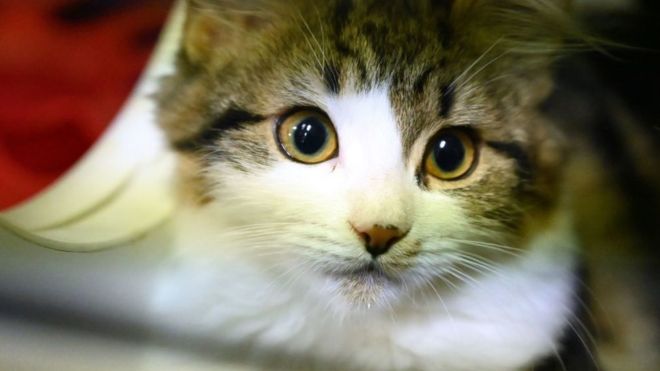
A cat waiting to be adopted looks out of its cage at the Royal Society for the Prevention of Cruelty to Animals (RSPCA)Image copyright GETTY IMAGES
Image caption Most Chinese people don’t actually consume dogs and cats and never plan to

Shenzhen has become the first Chinese city to ban the sale and consumption of dog and cat meat.

It comes after the coronavirus outbreak was linked to wildlife meat, prompting Chinese authorities to ban the trade and consumption of wild animals.

Shenzhen went a step further, extending the ban to dogs and cats. The new law will come into force on 1 May.

Thirty million dogs a year are killed across Asia for meat, says Humane Society International (HSI).

However, the practice of eating dog meat in China is not that common – the majority of Chinese people have never done so and say don’t want to.

“Dogs and cats as pets have established a much closer relationship with humans than all other animals, and banning the consumption of dogs and cats and other pets is a common practice in developed countries and in Hong Kong and Taiwan,” the Shenzhen city government said, according to a Reuters report.

“This ban also responds to the demand and spirit of human civilization.”

Animal advocacy organisation HSI praised the move.

“This really could be a watershed moment in efforts to end this brutal trade that kills an estimated 10 million dogs and 4 million cats in China every year,” said Dr Peter Li, China policy specialist for HSI.

However, at the same time as this ruling, China approved the use of bear bile to treat coronavirus patients.

Bear bile – a digestive fluid drained from living captive bears – has long been used in traditional Chinese medicine.

The active ingredient, ursodeoxycholic acid, is used to dissolve gallstones and treat liver disease. But there is no proof that it is effective against the coronavirus and the process is painful and distressing for the animals

Brian Daly, a spokesman for the Animals Asia Foundation, told AFP: “We shouldn’t be relying on wildlife products like bear bile as the solution to combat a deadly virus that appears to have originated from wildlife.”

Banner image reading 'more about coronavirus'
Banner

A wildlife market

In February, Chinese authorities banned the trade and consumption of wild animals.

The move came after it emerged that a market in Wuhan selling wild animals and wildlife meat could have been the starting point for the outbreak of the new coronavirus, providing the means for the virus to travel from animals to humans.

News of this led the Chinese government to crack down strongly on the trade and on the markets that sold such products.

Covered market in ShenzhenImage copyright GETTY IMAGES
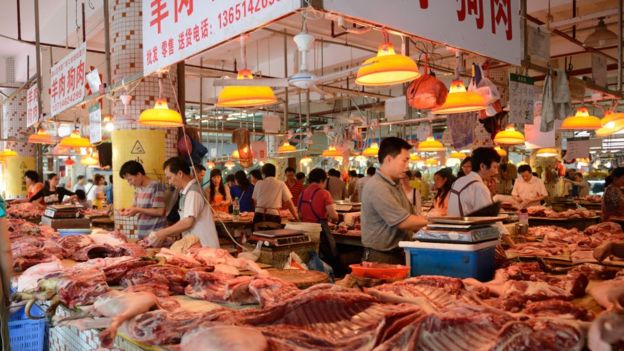
Image caption File photo of a wet market in China

There are now close to one million confirmed cases of the virus worldwide, and more than 47,000 deaths, according to a Johns Hopkins University tally.

In China alone, there are 81,589 confirmed cases and 3,318 deaths, said the National Health Commission.

Scientists and researchers are still no closer to finding out what the source of the virus is and how it could have spread to humans.

Source: The BBC

02/04/2020

Medics finish 14-day quarantine after return from Hubei to Shaanxi

CHINA-SHAANXI-XI'AN-MEDICS-QUARANTINE-FINISH (CN)Min Yuting (C), a member of the national emergency medical rescue team from Shaanxi Province, weeps at the Shaanxi Provincial People’s Hospital in Xi’an, northwest China’s Shaanxi Province, April 1, 2020. As one of the 43 members of the national emergency medical rescue team from Shaanxi Province, Min and her colleagues finished a 14-day quarantine on Wednesday after their return from virus-hit Hubei. The team, dispatched by Shaanxi Provincial People’s Hospital, has worked in two temporary hospitals together with colleagues from Wuhan City and Henan Province, managed 988 beds and treated 1,235 patients since their arrival in Wuhan on Feb. 4. (Xinhua/Li Yibo)

Source: Xinhua

02/04/2020

Chinese air force’s drill ‘aimed at signalling deterrent around Taiwan’

  • 36-hour exercise simulates countering enemy planes during wartime, report says
  • People’s Liberation Army placing increasing emphasis on airborne early-warning and control aircraft, observers say
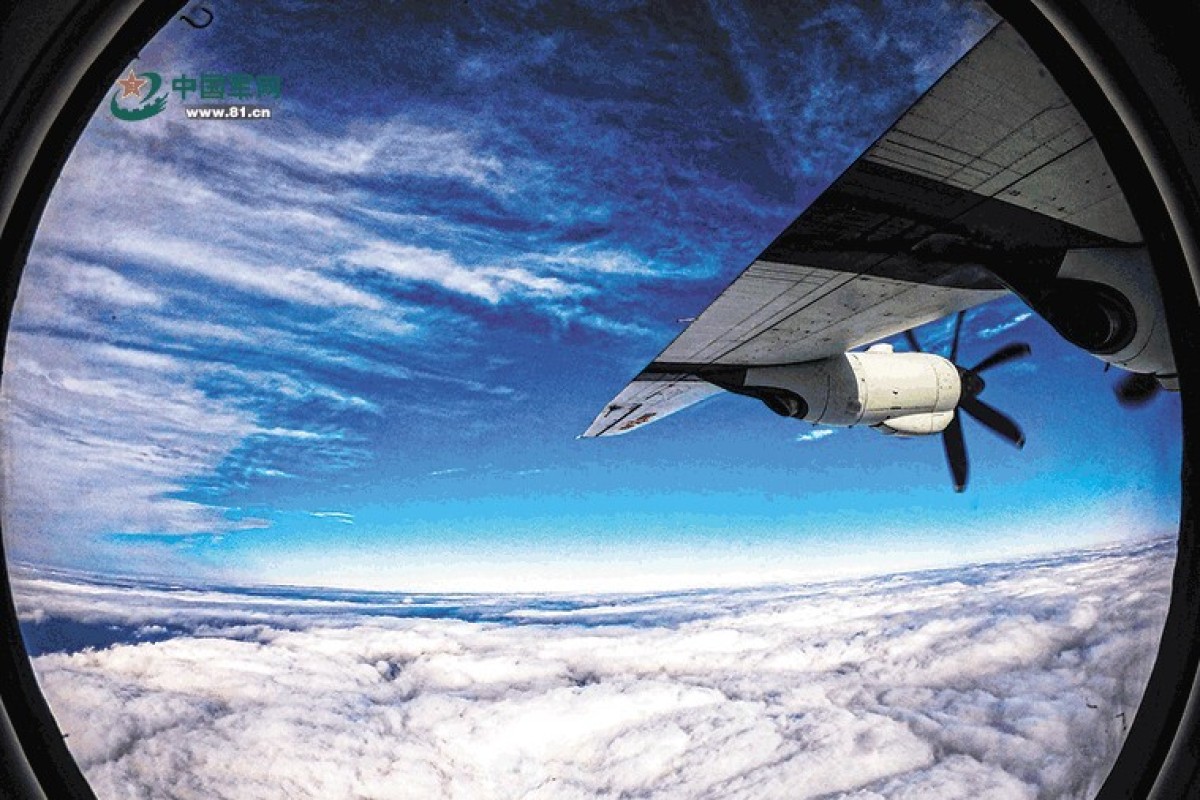
The Eastern Theatre Command’s latest exercise follows joint air and naval drills near Taiwan in February. Photo: Handout
The Chinese military command responsible for patrols around Taiwan stepped up its drills by staging a long-endurance early-warning exercise in March, the official PLA Daily reported on Wednesday.
A warplane conducted tactical acrobatics, which were not specified, immediately after taking off, the report said. The move had not been common during previous drills, and was intended to simulate quickly countering enemy planes during wartime, the report quoted the plane’s captain Liu Yin as saying.
The plane performed reconnaissance, early-warning and surveillance work, tested airborne strikes, and an unspecified number of fighter jets in two groups staged a confrontation in a combat scenario.
The drill lasted for about 36 hours, the report said.
Taiwan shows off its military power after presidential election
Zi Kun, an officer from the division’s training unit, said the drill was a test for both pilots and equipment because it involved planning and coordination to meet actual combat requirements.

The exercise came after the Eastern Theatre Command in early February launched joint drills featuring naval and air forces near Taiwan and a combat-readiness drill in which its warplanes encircled the self-ruled island.

It also came after the United States sent EP-3E Aries electronic warfare and reconnaissance aircraft to fly near Kaohsiung, in southern Taiwan, and Hong Kong in late March.

Beijing may step up drills in South China Sea amid US military tensions

29 Mar 2020

Beijing views the self-governed Taiwan as a renegade province that must be united with mainland China by force if necessary.

Experts said the drill was designed to enhance China’s intelligence-gathering capabilities to better monitor activities at sea and in the air.

Taiwan’s re-elected president Tsai Ing-wen meets US and Japanese envoys to call for closer ties
“The People’s Liberation Army’s Air Force used to rely only on ground-based early-warning radar. Only in the past two decades, it started to acquire airborne early-warning and control aircraft, which could allow the air force to extend their radar coverage beyond the limits of ground-based radars,” said Collin Koh, a research fellow from the S Rajaratnam School of International Studies at Singapore’s Nanyang Technological University.

“The problem with ground-based radars is they are often limited by line of sight and Earth curvature, whereas the airborne early-warning assets can help to address these radar gaps and also have a better ability to pick up low-flying targets and those obscured by terrain,” Koh said.

Taiwan military stages exercise to fight off mock invasion

25 Mar 2020

Zhou Chenming, a Beijing-based military expert, said that China did not have enough early-warning planes to support its expanding military ambitions and needed to maximise its capabilities through various exercises to act as a credible deterrent.

The command’s ongoing drills in recent months would be intended to send signals to the outside world on two fronts, according to Koh.

“The Eastern Theatre Command’s primary area of responsibility would cover Taiwan. And by extension, it also means targeting US forces concentrated not just in the nearby bases in Japan but also further afield beyond the First Island Chain, especially Guam,” he said.

Source: SCMP

01/04/2020

Xi says China-India relations at new starting point

BEIJING, April 1 (Xinhua) — China-India relations are standing at a new starting point and facing new opportunities, Chinese President Xi Jinping said Wednesday when exchanging congratulatory messages with his Indian counterpart, Ram Nath Kovind, on the 70th anniversary of bilateral diplomatic ties.

In his message, Xi said China-India relations have experienced extraordinary development during the past 70 years. With joint efforts of both sides, the two countries have established a strategic and cooperative partnership for peace and prosperity, and are endeavoring to build an even closer partnership of development, he added.

The two sides enjoy increasingly deepening bilateral exchanges and cooperation in various fields, and constantly improving coordination on important regional and international affairs, he said.

Xi said he attaches great importance to the development of bilateral relations and is willing to work with President Kovind to elevate China-India ties to a higher level, so as to bring more benefits to the two countries and peoples and contribute more positive energy to Asia as well as the world.

Kovind, in his message, said India-China relations have achieved substantive development in the past 70 years, with bilateral linkages increasingly strengthened in such fields as politics, economy and people-to-people exchanges.

India and China are neighboring countries, and both are ancient civilizations and major emerging economies, Kovind said, adding that keeping a good relationship is in line with both countries’ interests and of great importance to regional and even global peace and prosperity.

The Indian side is ready to work with China to expand and deepen their closer partnership of development, Kovind added.

On the same day, Chinese Premier Li Keqiang and Indian Prime Minister Narendra Modi also exchanged congratulatory messages.

In his message, Li said that friendly cooperation of mutual benefit between China and India accords with the fundamental interests of both countries and their people, and also benefits Asia and the world.

China is willing to work with India, taking the 70th anniversary as an opportunity, to continue to push for new achievements in their strategic and cooperative partnership, he said.

For his part, Modi said that over the past 70 years, bilateral relations in such areas as politics, economy and people-to-people exchanges have achieved stable development.

He added that the two countries should strengthen coordination and solidarity and address global challenges together.

Source: Xinhua

01/04/2020

In Taiwan, anger at China over virus drives identity debate

TAIPEI (Reuters) – Anger at being confused with China amid the coronavirus outbreak and Beijing’s stepped-up efforts to assert sovereignty is stirring heated debate in Taiwan about how to further distance itself from its giant and often threatening neighbour

At its core is a debate about whether to drop “China” from the island’s official name, the Republic of China.

During the virus crisis, the World Health Organization (WHO), which considers the island part of China, has listed Taiwan’s far lower case number under China’s, and China has repeatedly insisted only it has the right to speak for Taiwan on the global stage, including about health issues.

Taipei says this has confused countries and led them to impose the same restrictions on Taiwanese travellers as on Chinese, and has minimised Taiwan’s own successful efforts to control the virus.

Taiwan has been debating for years who it is and what exactly its relationship should be with China – including the island’s name. But the pandemic has shot the issue back into the spotlight.

Lin I-chin, a legislator for the ruling Democratic Progressive Party (DPP), said in parliament last month that Taiwan should change its English name to “Republic of Chunghwa”, an English rendering of the word Taiwan uses for China in its name.

“Taiwan has been brought to grief by China,” she said.

On Sunday, the New Power Party, one of Taiwan’s smaller opposition groups, released the results of a survey in which almost three-quarters of respondents said Taiwan passports should only have the word “Taiwan” on them, removing any reference to China.

“During this epidemic period, our people have been misunderstood by other countries, highlighting the urgency of changing the English name,” it said in a statement.

Taiwan’s Foreign Ministry has given a cautious response to the passport idea, noting that according to the constitution, the official name is Republic of China and that the word Taiwan was already added to passport covers in 2003.

“In the future, if there is consensus between the ruling and opposition parties on this new name, the Foreign Ministry shall cooperate in handling it,” spokeswoman Joanne Ou said.

But the government is wary of a name change for Taiwan, saying there is no consensus for such a radical move.

Although the DPP supports the island’s independence – theoretically meaning the official formation of a Republic of Taiwan – President Tsai Ing-wen says there is no need to do so, as the island is already an independent country called the Republic of China. She often refers to the island as the Republic of China, Taiwan.

‘REPUBLIC OF TAIWAN’

Premier Su Tseng-chang has said changing the island’s name isn’t the most urgent issue facing Taiwan.

“If we want to change then it might as well be to ‘Republic of Taiwan’. Taiwan is more well known,” Su said in parliament. “But if there’s no national consensus, a name change isn’t the most important thing for now.”

Taiwan’s official name is a throwback to when the Kuomintang party fled to the island after losing the Chinese civil war to the Communists in 1949, and continued to claim to be China’s legitimate government.

“The Republic of China is a country, Taiwan is not,” Chen Yu-jen, a Kuomintang legislator from the island of Kinmen, which sits just offshore from the Chinese city of Xiamen, told parliament on Monday.

The statement drew a sharp rebuke from Su, who told reporters it meant Chen had no right to be a member of the legislature. Chen said she was simply stating the facts, and that Taiwan is a geographic name, not a national name.

China’s pressure on Taiwan diplomatically and militarily during the virus crisis has also reduced Beijing’s already low standing in the eyes of many Taiwanese.

A March poll commissioned by Taiwan’s China-policy making Mainland Affairs Council and carried out by Taipei’s National Chengchi University showed more than three-quarters of respondents believed China’s government was unfriendly to Taiwan’s, the highest level in a decade.

Any name change would infuriate China, which has a law mandating the use of force to stop Taiwan independence.

Source: Reuters

01/04/2020

TikTok, a Chinese soft-power time bomb in US living rooms?

  • The coronavirus has fuelled explosive growth of the app, which now has 800 million users, few of whom will know it is owned by China’s ByteDance
  • While videos of dancing teens may seem benign, there are growing fears in America it could be a Trojan Horse for mass surveillance by Beijing
TikTok is seen by some as the latest front in the US-China tech war. Photo: Shutterstock
Your average, not-so-hip adult would have probably drawn a blank at the mention of

TikTok

not long ago – unless they have a child addicted to the wildly popular app, on which users make and share short, amusing videos.

It has grown explosively since its 2016 launch, with 800 million monthly active users now – 300 million of them outside China in places such as India (120 million) and the 
United States

(37 million). And many have no idea it is owned by a Chinese company, ByteDance.

The first Chinese app to mount a real global challenge to Facebook and Instagram, it is seen as one of the shiniest new weapons in the US-China technology war. And a boost, perhaps, to Chinese soft power.
TikTok, the missing link between Hong Kong and Indian protesters?
9 Feb 2020
It experienced a growth spurt in 2019 that analysts predicted would slow a little this year. That, however, was before the coronavirus, which seems to be giving the app a bump, especially beyond its core teenage fan base.
As pandemic fears rise and millions are stuck indoors, major Hollywood celebrities such as Jennifer Lopez, 50, have taken to posting their own all-singing, all-dancing videos, which then go viral on other media platforms.
Even the World Health Organisation has jumped on the bandwagon, joining the app in late February to share public health advice.
The TikTok logo on a smartphone. Photo: Getty Images
But to some, the growth of TikTok is far from benign.

Privacy advocates and several US congressmen want to rein in the app over concerns it may censor and monitor content for the Chinese government, and be used for misinformation and election interference. This despite the fact that TikTok keeps its servers outside China and swears it will not hand over user data.

Are these fears justified – or fuelled by political and anticompetitive motives?

Thinkers such as Yuval Noah Harari warn that the coronavirus pandemic could be a watershed in the history of mass surveillance.
But Eric Harwit, a professor of Asian studies at the University of Hawaii, does not buy such arguments against TikTok, especially given that 60 per cent of its US users are aged 16 to 24.

“ByteDance has done a pretty good job of having a firewall between TikTok and the Chinese version of it, Douyin.

TikTok, iPhone: all you need to escape Mumbai’s slums – for 15 seconds

1 Nov 2019

“Also, many users in the US are teens and they’re not a particularly useful source of national security information.

“So I’d say the concerns are motivated more by a general fear of any kind of Chinese telecommunication application rather than actual attempts to siphon off valuable US intelligence information.

“And Facebook and other American companies have similar products,” Harwit points out. “US government officials will always want to protect American commercial interests.”

Sarah Cook, a China analyst for Freedom House – the US government-funded think tank – disagrees.

“We have concerns about how Facebook and Twitter deal with information affecting electoral politics, and that’s magnified if you’re talking about a Chinese company that now has a user base that rivals theirs.”

Chinese officials, she argues, have shown a willingness to censor and manipulate information well beyond their country’s borders – for instance, regarding the scale of the initial outbreak in Wuhan, an obfuscation that may have exacerbated its impact abroad.

“For those who think Chinese government censorship is only Chinese people’s problem, this pandemic shows how much that’s not the case.

“And even if it’s not happening right now with TikTok, the concern is that Chinese companies are beholden to their government, whether they want to be or not.

“I’m not saying block TikTok entirely,” she says. “It’s a question of looking at it in a democratic system and deciding on reasonable oversight and safeguards to protect users and information flows when that time comes.”

When it comes to expanding China’s cultural influence, though, neither Cook nor Harwit believes the app is especially effective.

Most people are oblivious to its Chinese origins, which the user experience does not reflect in any way. So there is no goodwill-generating soft power of the sort wielded by, say, 

South Korea

through the K-pop industry.

If anything, TikTok often promotes the increasingly homogenous, Western-leaning culture seen on many globally popular social media apps.
So says Morten Bay, a lecturer in digital and social media at the University of Southern California’s Annenberg School for Communication and Journalism.
“A semi-Western culture, with small variations of local culture, is becoming the norm on social media. And Chinese soft power is difficult to assert because there’s no value difference.”
And even if Chinese tech companies keep taking bigger bites of the Western market, he is sceptical of China’s “ability to leverage that for soft power in a geopolitical sense”.

“Because there is a very big apparatus pushing against China in that regard. As soon as TikTok started gaining traction in the US, people came out against it, trying to make everyone aware of the privacy and geopolitical issues.

The #KaunsiBadiBaatHai campaign on TikTok aims to raise awareness about women's safety issues in India. Image: TikTok
The #KaunsiBadiBaatHai campaign on TikTok aims to raise awareness about women’s safety issues in India. Image: TikTok
“So China faces a lot of resistance,” Bay concludes. “And I’m not sure a social media platform on its own can do much about that.”
Still, if you had to back a horse in this race, TikTok would be it, says Zhang Mengmeng.

When she and her colleagues from global industry analysis firm Counterpoint Research visited the company, they were impressed by its research and development capabilities.

“Because they’re a very young company, their pace for incubating new projects is a lot faster, especially compared to successful but older internet companies in China which have been around for 15 to 20 years.

Indian invasion of Chinese social media apps sparks fear and loathing in New Delhi

28 Apr 2019

“They have lots of little start-up projects within the company and their organisational structure is very flat – it doesn’t matter what your age is, if you have a good idea, you get promoted very quickly.”

TikTok’s rise is also emblematic of a broader role reversal in the US-China tech war, she believes.

“Before, the US was more advanced in terms of internet development and China seemed to just copy its new ideas. Now, this is reversing. There are so many people in China using the internet that start-ups there can test ideas very easily.

“So now it seems like a lot of US companies are trying to see what ideas are coming out of China.” 

Source: SCMP

Law of Unintended Consequences

continuously updated blog about China & India

ChiaHou's Book Reviews

continuously updated blog about China & India

What's wrong with the world; and its economy

continuously updated blog about China & India