Chindia Alert: You’ll be Living in their World Very Soon
aims to alert you to the threats and opportunities that China and India present. China and India require serious attention; case of ‘hidden dragon and crouching tiger’.
Without this attention, governments, businesses and, indeed, individuals may find themselves at a great disadvantage sooner rather than later.
The POSTs (front webpages) are mainly 'cuttings' from reliable sources, updated continuously.
The PAGEs (see Tabs, above) attempt to make the information more meaningful by putting some structure to the information we have researched and assembled since 2006.
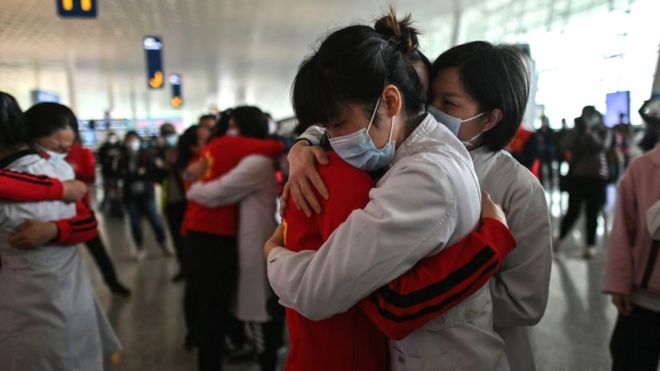
Image copyright GETTY IMAGESImage caption Testing everyone in 10 days would be a huge challenge
China is drawing up ambitious plans to test the entire population of Wuhan, the city where the Covid-19 pandemic began.
The announcement came after the emergence of six new coronavirus cases in the city – the first ones since early April.
The authorities had originally promised to test all 11 million people in 10 days.
But it now appears they might be aiming for a less ambitious timetable.
How long will the testing take?
In late April, the Hubei provincial government reported 63,000 people were being tested in Wuhan every day.
And by 10 May, that figure had dropped to just under 40,000.
There are more than 60 testing centres across the city, according to the official Hubei Daily newspaper.
These have a maximum capacity of 100,000 tests a day at most, making it hard to see how a target of testing the entire population in just 10 days could be met.
So the authorities have indicated the tests will not all start and finish within the same 10-day period.
“Some districts [in the city] will start from 12 May, others from 17 May, for example,” the Wuhan Centre for Disease Control said.
“Each district finishes its tests within 10 days from the date it started.”
The authorities say they have now tested more than three million people in the city.
Wuhan University pathogen biology department deputy director Yang Zhanqiu told the Global Times newspaper he believed up to five million Wuhan residents may have already been tested.
The population of the city – originally 11 million – has also fluctuated over time.
The authorities said up to five million people had left the city for the lunar New Year holiday before it was locked down on 23 January.
The lockdown then lasted until 8 April, but it is unclear how many of these residents have now returned.
Should everyone be tested?
Wuhan University’s Yang Zhanqiu said there was no need to test everyone living in neighbourhoods with no reported cases.
Image copyright GETTY IMAGESImage caption There are worries about asymptomatic coronavirus cases
The authorities have said they will begin with people considered most at risk – for example in the older, more densely populated areas, as well as those in key jobs such as healthcare.
Also, people who have been tested in the previous seven days will not need to be tested again.
But Chinese Center for Disease Control and Prevention chief epidemiologist Wu Zunyou told state TV: “The virus could take longer to manifest itself in patients with weak immunity and these people are also prone to ‘on’ and ‘off’ symptoms.”
Yang Zhanqiu adds: “You’ll never know if people were infected after testing negative.”
And US-based Council for Foreign Affairs senior fellow for global health Yanzhong Huang said: “There would still be the possibility of isolated outbreaks in the future, which even large-scale testing will not address.”
NEW YORK/SAN FRANCISCO (Reuters) – Amazon.com Inc (AMZN.O) has bought cameras to take temperatures of workers during the coronavirus pandemic from a firm the United States blacklisted over allegations it helped China detain and monitor the Uighurs and other Muslim minorities, three people familiar with the matter told Reuters.
China’s Zhejiang Dahua Technology Co Ltd (002236.SZ) shipped 1,500 cameras to Amazon this month in a deal valued close to $10 million, one of the people said. At least 500 systems from Dahua – the blacklisted firm – are for Amazon’s use in the United States, another person said.
The Amazon procurement, which has not been previously reported, is legal because the rules control U.S. government contract awards and exports to blacklisted firms, but they do not stop sales to the private sector.
However, the United States “considers that transactions of any nature with listed entities carry a ‘red flag’ and recommends that U.S. companies proceed with caution,” according to the Bureau of Industry and Security’s website. Dahua has disputed the designation.
The deal comes as the U.S. Food and Drug Administration warned of a shortage of temperature-reading devices and said it wouldn’t halt certain pandemic uses of thermal cameras that lack the agency’s regulatory approval. Top U.S.-based maker FLIR Systems Inc (FLIR.O) has faced an up to weeks-long order backlog, forcing it to prioritize products for hospitals and other critical facilities.
Amazon declined to confirm its purchase from Dahua, but said its hardware complied with national, state and local law, and its temperature checks were to “support the health and safety of our employees, who continue to provide a critical service in our communities.”
The company added it was implementing thermal imagers from “multiple” manufacturers, which it declined to name. These vendors include Infrared Cameras Inc, which Reuters previously reported, and FLIR, according to employees at Amazon-owned Whole Foods who saw the deployment. FLIR declined to comment on its customers.
Dahua, one of the biggest surveillance camera manufacturers globally, said it does not discuss customer engagements and it adheres to applicable laws. Dahua is committed “to mitigate the spread of the COVID-19” through technology that detects “abnormal elevated skin temperature — with high accuracy,” it said in a statement.
The U.S. Department of Commerce, which maintains the blacklist, declined comment. The FDA said it would use discretion when enforcing regulations during the public health crisis as long as thermal systems lacking compliance posed no “undue risk” and secondary evaluations confirmed fevers.
Dahua’s thermal cameras have been used in hospitals, airports, train stations, government offices and factories during the pandemic. International Business Machines Corp (IBM.N) placed an order for 100 units, and the automaker Chrysler placed an order for 10, one of the sources said. In addition to selling thermal technology, Dahua makes white-label security cameras resold under dozens of other brands such as Honeywell, according to research and reporting firm IPVM.
Honeywell said some but not all its cameras are manufactured by Dahua, and it holds products to its cybersecurity and compliance standards. IBM and Chrysler’s parent Fiat Chrysler Automobiles NV (FCHA.MI) did not comment.
The Trump Administration added Dahua and seven other tech firms last year to the blacklist for acting against U.S. foreign policy interests, saying they were “implicated” in “China’s campaign of repression, mass arbitrary detention, and high-technology surveillance against Uighurs, Kazakhs, and other members of Muslim minority groups.”
More than one million people have been sent to camps in the Xinjiang region as part of China’s campaign to root out terrorism, the United Nations has estimated.
Dahua has said the U.S. decision lacked “any factual basis.” Beijing has denied mistreatment of minorities in Xinjiang and urged the United States to remove the companies from the list.
A provision of U.S. law, which is scheduled to take effect in August, will also bar the federal government from starting or renewing contracts with a company using “any equipment, system, or service” from firms including Dahua “as a substantial or essential component of any system.”
Amazon’s cloud unit is a major contractor with the U.S. intelligence community, and it has been battling Microsoft Corp (MSFT.O) for an up to $10 billion deal with the Pentagon.
Top industry associations have asked Congress for a year-long delay because they say the law would reduce supplies to the government dramatically, and U.S. Secretary of State Mike Pompeo said last week that policies clarifying the implementation of the law were forthcoming.
FACE DETECTION & PRIVACY
The coronavirus has infected staff from dozens of Amazon warehouses, ignited small protests over allegedly unsafe conditions and prompted unions to demand site closures. Temperature checks help Amazon stay operational, and the cameras – a faster, socially distant alternative to forehead thermometers – can speed up lines to enter its buildings. Amazon said the type of temperature reader it uses varies by building.
To see if someone has a fever, Dahua’s camera compares a person’s radiation to a separate infrared calibration device. It uses face detection technology to track subjects walking by and make sure it is looking for heat in the right place.
An additional recording device keeps snapshots of faces the camera has spotted and their temperatures, according to a demonstration of the technology in San Francisco. Optional facial recognition software can fetch images of the same subject across time to determine, for instance, who a virus patient may have been near in a line for temperature checks.
Amazon said it is not using facial recognition on any of its thermal cameras. Civil liberties groups have warned the software could strip people of privacy and lead to arbitrary apprehensions if relied on by police. U.S. authorities have also worried that equipment makers like Dahua could hide a technical “back door” to Chinese government agents seeking intelligence.
In response to questions about the thermal systems, Amazon said in a statement, “None of this equipment has network connectivity, and no personal identifiable information will be visible, collected, or stored.”
Dahua made the decision to market its technology in the United States before the FDA issued the guidance on thermal cameras in the pandemic. Its supply is attracting many U.S. customers not deterred by the blacklist, according to Evan Steiner, who sells surveillance equipment from a range of manufacturers in California through his firm EnterActive Networks LLC.
“You’re seeing a lot of companies doing everything that they possibly can preemptively to prepare for their workforce coming back,” he said.
City at centre of outbreak finally able to declare itself clear of disease after months in lockdown and thousands of deaths
Risk of infection remains, however, with some patients testing positive for coronavirus that causes disease without showing symptoms
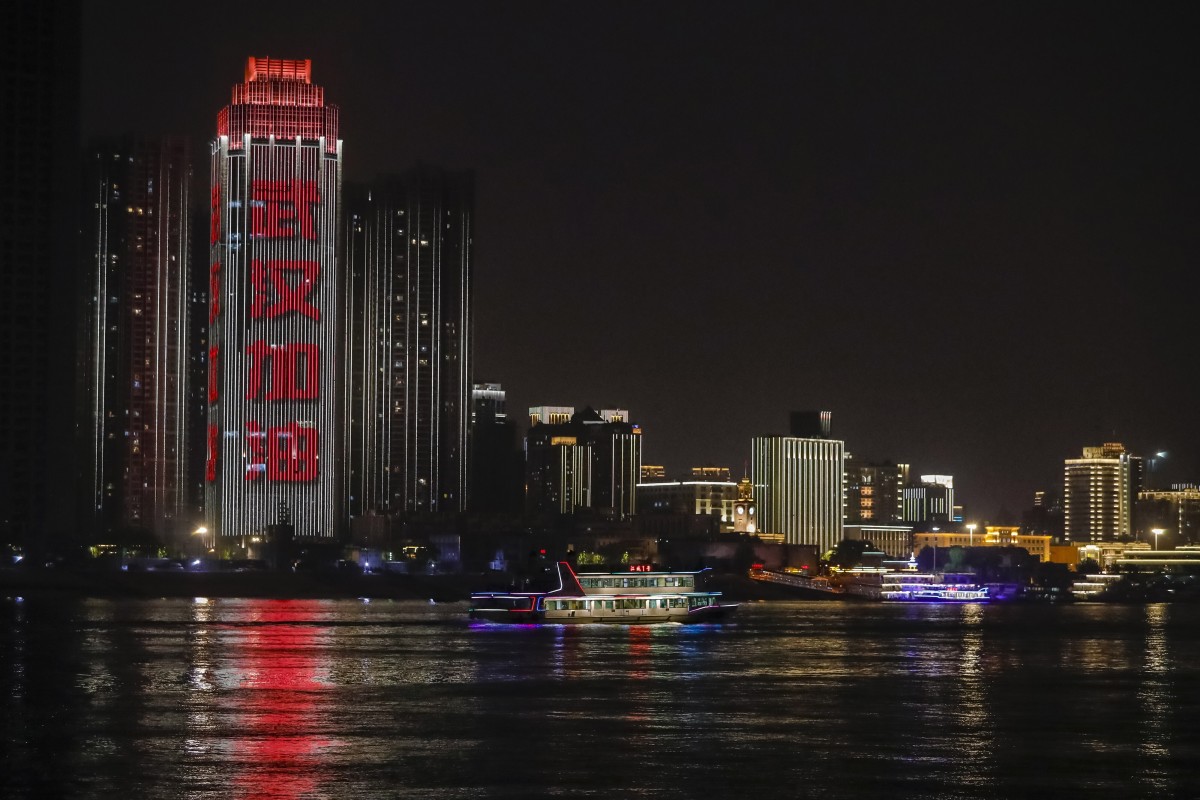
Ferries and other public transport services resumed in Wuhan last week. Photo: Xinhua
The city of Wuhan, the initial epicentre of the coronavirus pandemic, no longer has any Covid-19 patients in hospital after the last 12 were discharged on Sunday.
Their release ended a four-month nightmare for the city, where the disease was first detected in December. The number of patients being treated for Covid-19, the disease caused by a new coronavirus, peaked on February 18 at 38,020 – nearly 10,000 of whom were in severe or critical condition.
“With the joint efforts of Wuhan and the national medical aid given to Hubei province, all cases of Covid-19 in Wuhan were cleared as of April 26,” Mi Feng, a spokesman for the National Health Commission said on Sunday afternoon.
The announcement came only one day after the city discharged the last patient who had been in a severe condition. That patient also was the last severe case in Hubei province.
The last patient discharged from Wuhan Chest Hospital, a 77-year-old man surnamed Ding, twice tested negative for Sars-CoV-2, the virus that causes Covid-19, and was released at noon on Sunday.
“I missed my family so much!” Ding told Changjing Daily.
Another unidentified patient exclaimed as he left the hospital: “The air outside is so fresh! The weather is so good today!”
Wuhan faced a long journey to bring its patient count down to zero.
The city of 11 million, the capital of Hubei province and a transport hub for central China, was put under a strict lockdown on January 23 that barred anyone from entering or exiting the city without official approval for 76 days until it was officially lifted on April 8.
Coronavirus: Wuhan, Los Angeles officials discuss getting back to work after lockdown
22 Apr 2020
Residents were ordered to stay in their apartments as the city stopped public transport and banned private cars from city streets. As the epidemic worsened, more than 42,000 medical staff from across the country were sent to the city and to Hubei province to help ease the burden on the local health care system.
Wuhan was the hardest hit city in China, accounting for 50,333 of the 82,827 locally transmitted Covid-19 cases recorded in China. More than 4,600 died in the country from the disease.
On March 13, the city reported for the first time that there were no new suspected cases of the infection, and five days later there were no confirmed cases.
The number of discharged patients bottomed out at 39.1 per cent at the end of February, gradually climbing to 92.2 per cent by last Thursday.
“Having the patients in the hospital cleared on April 26 marks a major achievement for the city’s Covid-19 treatment,” the Wuhan Health Commission said in a statement.
However, having no severe cases in hospital does not mean all the discharged patients will require no further treatment as they may still need further care.
“Clearing all the severe cases marks a decisive victory for the battle to safeguard Wuhan,” health minister Ma Xiaowei told state broadcaster China Central Television on Saturday.
“Some patients who have other conditions are being treated in specialised hospitals. It has been properly arranged.”
Coronavirus: Chinese writer hit by nationalist backlash over diary about Wuhan lockdown
18 Apr 2020
Ten patients aged between 42 and 85 who have been declared coronavirus-free are still in intensive care at the city’s Tongji Hospital where they are being treated for kidney problems and other complications arising from Covid-19. Some still need ventilators to help them breathe.
These 10 patients are under 24-hour care, with 190 nurses on four-hour rotations. There are other patients in a similar condition in two other hospitals in Wuhan, according to the Hubei Broadcasting and Television Network.
However, the discharge of the last batch of Covid-19 patients does not mean that the risk of infection is gone.
The city reported 20 new cases of people testing positive for Sars-CoV-2, the official name for the coronavirus that causes the disease, but who do not yet show symptoms.
There are 535 such carriers under medical observation. Past data shows some of these asymptomatic carriers will develop symptoms, and so will be counted as Covid-19 patients under China’s diagnosis and treatment plan.
China’s coronavirus infection curve has flattened out with about 694 imported cases of Covid-19 on top of about 800 locally transmitted ones now under treatment.
The national health commission spokesman warned that people still need to be on high alert as the virus is continuing to spread around the globe, with no sign yet of a slowdown.
“[We] must not drop our guard and loosen up. [We] must discover cases in time and deal with them quickly,” Mi said, citing the continued pressure from cases imported by people returning from overseas.
“The next step will be to implement the requirements of the central government and continue to guard against imported cases and a rebound of domestic transmitted cases.”
SHANGHAI (Reuters) – China’s smog-prone northern province of Hebei met its air quality targets by a big margin over the winter after concerted efforts to tackle emissions, a local official said on Sunday, without mentioning coronavirus-related factory shutdowns.
Average PM2.5 concentrations over the October-March period dropped 15% from a year earlier to 61 micrograms per cubic metre, while sulphur dioxide also fell by a third, said He Litao, vice-head of the provincial environmental bureau.
Most experts have attributed the significant decline in air pollution throughout China in the first quarter to the coronavirus outbreak and tough containment measures, which saw cities and entire provinces locked down and sharply reduced traffic and industrial activity throughout the country.
With millions staying at home, concentrations of lung-damaging PM2.5 particles fell by nearly 15% in more than 300 Chinese cities in the first three months of 2020.
Shanghai saw emissions fall by nearly 20% in the first quarter, while in Wuhan, where the pandemic originated, monthly averages dropped more than a third compared to last year.
However, He of the Hebei environmental bureau attributed the local decline in pollution to the “conscientious implementation” of government decisions even in the face of unfavourable weather conditions.
According to a winter action plan published last year, 10 cities in Hebei were expected to cut lung-damaging small particles known as PM2.5 by 1%-6% compared to the previous year.
Despite the decline, average PM2.5 was still much higher than China’s official standard of 35 micrograms, and the recommended World Health Organization level of 10 micrograms.
BEIJING (Reuters) – China will cut its subsidies on new energy vehicles (NEV) by 10% this year, and will expand government purchases of NEVs, the finance ministry said on Thursday.
China will in principle cut such subsidies by 20% in 2021 and 30% in 2022, the finance ministry said in a statement. However, it will not cut subsidies on qualified new energy commercial vehicles earmarked for public purposes this year.
Under the plan, China would extend subsidies for NEV purchases to 2022, rather than ending them this year, and extend their purchase tax exemption for two years.
China will slightly lift the requirements for the driving range and power efficiency of cars qualified for the subsidies, the statement said, adding authorities will support the sales of cars with swappable batteries, a technology that has been pursued by Chinese electric vehicle makers Nio Inc (NIO.N) and BAIC BluePark (600733.SS).
Only passenger cars cheaper than 300,000 yuan (34,330.23 pounds) will be offered subsidies, it said. The price is higher than starting price of Tesla Inc’s (TSLA.O) China-made Model 3 sedans.
China also said authorities will give priority to purchase new energy vehicles for government use but did not give further details.
The new policy is effective from April 23. NEVs include battery-powered electric, plug-in hybrid and hydrogen fuel-cell vehicles.
China has set an aggressive goal for NEVs to account for a fifth of auto sales by 2025 compared with the current 5%, as it seeks to reduce pollution and cultivate homegrown champions.
Sales of NEVs, however, contracted for a ninth month in a row in March and were down over 50% from a year earlier, according to data from the China Association of Automobile Manufacturers (CAAM).
Faced with a backlash from the West over its handling of the early stages of the pandemic, Beijing has been quietly gaining ground in Asia
Teams of experts and donations of medical supplies have been largely welcomed by China’s neighbours
Despite facing some criticism from the West, China’s Asian neighbours have welcomed its medical expertise and vital supplies. Photo: Xinhua
While China’s campaign to mend its international image in the wake of its handling of the coronavirus health crisis has been met with scepticism and even a backlash from the US and its Western allies, Beijing has been quietly gaining ground in Asia.
Teams of experts have been sent to Cambodia, the Philippines, Myanmar, Pakistan and soon to Malaysia, to share their knowledge from the pandemic’s ground zero in central China.
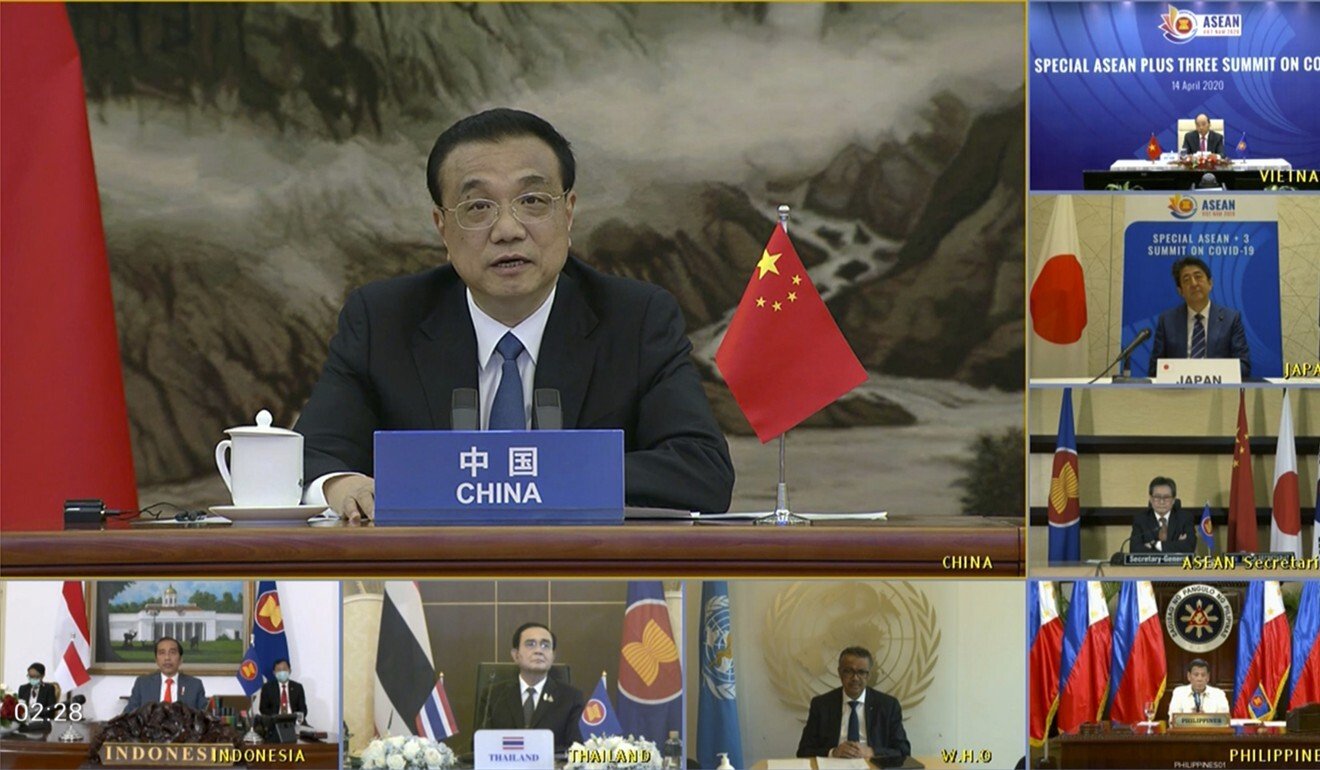
China has also held a series of online “special meetings” with its Asian neighbours, most recently on Tuesday when Premier Li Keqiang discussed his country’s experiences in combating the disease and rebooting a stalled economy with the leaders of the Association of Southeast Asian Nations (Asean), Japan and South Korea.
Chinese Prime Minister Li Keqiang speaks to Asean Plus Three leaders during a virtual summit on Tuesday. Photo: AP
Many Western politicians have publicly questioned Beijing’s role and its subsequent handling of the crisis but Asian leaders – including Philippine President Rodrigo Duterte and Japanese Prime Minister Shinzo Abe – have been reluctant to blame the Chinese government, while also facing criticism at home for not closing their borders with China soon enough to prevent the spread of the virus.
An official from one Asian country said attention had shifted from the early stages of the outbreak – when disgruntled voices among the public were at their loudest – as people watched the virus continue its deadly spread through their homes and across the world.
“Now everybody just wants to get past the quarantine,” he said. “China has been very helpful to us. It’s also closer to us so it’s easier to get shipments from them. The [medical] supplies keep coming, which is what we need right now.”
The official said also that while the teams of experts sent by Beijing were mainly there to observe and offer advice, the gesture was still appreciated.
Another Asian official said the tardy response by Western governments in handling the outbreak had given China an advantage, despite its initial lack of transparency over the outbreak.
“The West is not doing a better job on this,” he said, adding that his government had taken cues from Beijing on the use of propaganda in shaping public opinion and boosting patriotic sentiment in a time of crisis.
“Because it happened in China first, it has given us time to observe what works in China and adopt [these measures] for our country,” the official said.
Experts in the region said that Beijing’s intensifying campaign of “mask diplomacy” to reverse the damage to its reputation had met with less resistance in Asia.
Why China’s ‘mask diplomacy’ is raising concern in the West
29 Mar 2020
“Over the past two months or so, China, after getting the Covid-19 outbreak under control, has been using a very concerted effort to reshape the narrative, to pre-empt the narrative that China is liable for this global pandemic, that China has to compensate other countries,” said Richard Heydarian, a Manila-based academic and former policy adviser to the Philippine government.
“It doesn’t help that the US is in lockdown with its domestic crisis and that we have someone like President Trump who is more interested in playing the blame game rather than acting like a global leader,” he said.
Shahriman Lockman, a senior analyst with the foreign policy and security studies programme at Malaysia’s Institute of Strategic and International Studies, said that as the US had withdrawn into its own affairs as it struggled to contain the pandemic, China had found Southeast Asia a fertile ground for cultivating an image of itself as a provider.
China’s first-quarter GDP shrinks for the first time since 1976 as coronavirus cripples economy
Beijing’s highly publicised delegations tasking medical equipment and supplies had burnished that reputation, he said, adding that the Chinese government had also “quite successfully shaped general Southeast Asian perceptions of its handling of the pandemic, despite growing evidence that it could have acted more swiftly at the early stages of the outbreak in Wuhan”.
“Its capacity and will to build hospitals from scratch and put hundreds of millions of people on lockdown are being compared to the more indecisive and chaotic responses seen in the West, especially in Britain and the United States,” he said.
Coronavirus droplets may travel further than personal distancing guidelines
16 Apr 2020
Lockman said Southeast Asian countries had also been careful to avoid getting caught in the middle of the deteriorating relationship between Beijing and Washington as the two powers pointed fingers at each other over the origins of the new coronavirus.
“The squabble between China and the United States about the pandemic is precisely what Asean governments would go to great lengths to avoid because it is seen as an expression of Sino-US rivalry,” he said.
“Furthermore, the immense Chinese market is seen as providing an irreplaceable route towards Southeast Asia’s post-pandemic economic recovery.”
Aaron Connelly, a research fellow in Southeast Asian political change and foreign policy with the International Institute for Strategic Studies in Singapore, said Asian countries’ dependence on China had made them slow to blame China for the pandemic.
“Anecdotally, it seems to me that most Southeast Asian political and business elites have given Beijing a pass on the initial cover-up of Covid-19, and high marks for the domestic lockdown that followed,” he said.
“This may be motivated reasoning, because these elites are so dependent on Chinese trade and investment, and see little benefit in criticising China.”
China and Vietnam ‘likely to clash again’ as they build maritime militias
12 Apr 2020
The cooperation with its neighbours as they grapple with the coronavirus had not slowed China’s military and research activities in the disputed areas of the South China Sea – a point of contention that would continue to cloud relations in the region, experts said.
Earlier this month an encounter in the South China Sea with a Chinese coastguard vessel led to the sinking of a fishing boat from Vietnam, which this year assumed chairmanship of Asean.
And in a move that could spark fresh regional concerns, shipping data on Thursday showed a controversial Chinese government survey ship, the Haiyang Dizhi 8, had moved closer to Malaysia’s exclusive economic zone.
The survey ship was embroiled in a months-long stand-off last year with Vietnamese vessels within Hanoi’s exclusive economic zone and was spotted again on Tuesday 158km (98 miles) off the Vietnamese coast.
Image copyright GETTY IMAGESImage caption The Chinese city of Wuhan recently lifted its strict quarantine measures
The Chinese city of Wuhan, where the coronavirus originated last year, has raised its official Covid-19 death toll by 50%, adding 1,290 fatalities.
Wuhan officials attributed the new figure to updated reporting and deaths outside hospitals. China has insisted there was no cover-up.
It has been accused of downplaying the severity of its virus outbreak.
Wuhan’s 11 million residents spent months in strict lockdown conditions, which have only recently been eased.
The latest official figures bring the death toll in the city in China’s central Hubei province to 3,869, increasing the national total to more than 4,600.
China has confirmed nearly 84,000 coronavirus infections, the seventh-highest globally, according to Johns Hopkins University data.
What’s China’s explanation for the rise in deaths?
In a statement released on Friday, officials in Wuhan said the revised figures were the result of new data received from multiple sources, including records kept by funeral homes and prisons.
Deaths linked to the virus outside hospitals, such as people who died at home, had not previously been recorded.
Media caption Learn how Wuhan dealt with the lockdown
The “statistical verification” followed efforts by authorities to “ensure that information on the city’s Covid-19 epidemic is open, transparent and the data [is] accurate”, the statement said.
It added that health systems were initially overwhelmed and cases were “mistakenly reported” – in some instances counted more than once and in others missed entirely.
A shortage of testing capacity in the early stages meant that many infected patients were not accounted for, it said.
A spokesman for China’s National Health Commission, Mi Feng, said the new death count came from a “comprehensive review” of epidemic data.
In its daily news conference, the foreign ministry said accusations of a cover-up, which have been made most stridently on the world stage by US President Donald Trump, were unsubstantiated. “We’ll never allow any concealment,” a spokesman said.
Why are there concerns over China’s figures?
Friday’s revised figures come amid growing international concern that deaths in China have been under-reported. Questions have also been raised about Beijing’s handling of the epidemic, particularly in its early stages.
In December 2019, Chinese authorities launched an investigation into a mysterious viral pneumonia after cases began circulating in Wuhan.
China reported the cases to the World Health Organization (WHO), the UN’s global health agency, on 31 December.
But WHO experts were only allowed to visit China and investigate the outbreak on 10 February, by which time the country had more than 40,000 cases.
The mayor of Wuhan has previously admitted there was a lack of action between the start of January – when about 100 cases had been confirmed – and 23 January, when city-wide restrictions were enacted.
Around that time, a doctor who tried to warn his colleagues about an outbreak of a Sars-like virus was silenced by the authorities. Dr Li Wenliang later died from Covid-19.
Wuhan’s death toll increase of almost exactly 50% has left some analysts wondering if this is all a bit too neat.
For months questions have been asked about the veracity of China’s official coronavirus statistics.
The inference has been that some Chinese officials may have deliberately under-reported deaths and infections to give the impression that cities and towns were successfully managing the emergency.
If that was the case, Chinese officials were not to know just how bad this crisis would get in other countries, making its own figures now seem implausibly small.
The authorities in Wuhan, where the first cluster of this disease was reported, said there had been no deliberate misrepresentation of data, rather that a stabilisation in the emergency had allowed them time to revisit the reported cases and to add any previously missed.
That the new death toll was released at the same time as a press conference announcing a total collapse in China’s economic growth figures has led some to wonder whether this was a deliberate attempt to bury one or other of these stories.
Then again, it could also be a complete coincidence.
China has been pushing back against US suggestions that the coronavirus came from a laboratory studying infectious diseases in Wuhan, the BBC’s Barbara Plett Usher in Washington DC reports.
US President Donald Trump and some of his officials have been flirting with the outlier theory in the midst of a propaganda war with China over the origin and handling of the pandemic, our correspondent says.
Mr Trump this week halted funding for the World Health Organization (WHO), accusing it of making deadly mistakes and overly trusting China.
“Do you really believe those numbers in this vast country called China, and that they have a certain number of cases and a certain number of deaths; does anybody really believe that?” Mr Trump said at the White House on Wednesday.
On Thursday, UK Foreign Secretary Dominic Raab said: “We’ll have to ask the hard questions about how [coronavirus] came about and how it couldn’t have been stopped earlier.”
But China has also been praised for its handling of the crisis and the unprecedented restrictions that it instituted to slow the spread of the virus.
Image copyright GETTY IMAGESImage caption The Chinese city of Wuhan recently lifted its strict quarantine measures
The Chinese city of Wuhan, where the coronavirus originated last year, has raised its official Covid-19 death toll by 50%, adding 1,290 fatalities.
Wuhan officials attributed the new figure to updated reporting and deaths outside hospitals. China has insisted there was no cover-up.
It has been accused of downplaying the severity of its virus outbreak.
Wuhan’s 11 million residents spent months in strict lockdown conditions, which have only recently been eased.
The latest official figures bring the death toll in the city in China’s central Hubei province to 3,869, increasing the national total to more than 4,600.
China has confirmed nearly 84,000 coronavirus infections, the seventh-highest globally, according to Johns Hopkins University data.
What’s China’s explanation for the rise in deaths?
In a statement released on Friday, officials in Wuhan said the revised figures were the result of new data received from multiple sources, including records kept by funeral homes and prisons.
Deaths linked to the virus outside hospitals, such as people who died at home, had not previously been recorded.
Media caption Learn how Wuhan dealt with the lockdown
The “statistical verification” followed efforts by authorities to “ensure that information on the city’s Covid-19 epidemic is open, transparent and the data [is] accurate”, the statement said.
It added that health systems were initially overwhelmed and cases were “mistakenly reported” – in some instances counted more than once and in others missed entirely.
A shortage of testing capacity in the early stages meant that many infected patients were not accounted for, it said.
A spokesman for China’s National Health Commission, Mi Feng, said the new death count came from a “comprehensive review” of epidemic data.
In its daily news conference, the foreign ministry said accusations of a cover-up, which have been made most stridently on the world stage by US President Donald Trump, were unsubstantiated. “We’ll never allow any concealment,” a spokesman said.
Why are there concerns over China’s figures?
Friday’s revised figures come amid growing international concern that deaths in China have been under-reported. Questions have also been raised about Beijing’s handling of the epidemic, particularly in its early stages.
In December 2019, Chinese authorities launched an investigation into a mysterious viral pneumonia after cases began circulating in Wuhan.
China reported the cases to the World Health Organization (WHO), the UN’s global health agency, on 31 December.
But WHO experts were only allowed to visit China and investigate the outbreak on 10 February, by which time the country had more than 40,000 cases.
The mayor of Wuhan has previously admitted there was a lack of action between the start of January – when about 100 cases had been confirmed – and 23 January, when city-wide restrictions were enacted.
Around that time, a doctor who tried to warn his colleagues about an outbreak of a Sars-like virus was silenced by the authorities. Dr Li Wenliang later died from Covid-19.
Wuhan’s death toll increase of almost exactly 50% has left some analysts wondering if this is all a bit too neat.
For months questions have been asked about the veracity of China’s official coronavirus statistics.
The inference has been that some Chinese officials may have deliberately under-reported deaths and infections to give the impression that cities and towns were successfully managing the emergency.
If that was the case, Chinese officials were not to know just how bad this crisis would get in other countries, making its own figures now seem implausibly small.
The authorities in Wuhan, where the first cluster of this disease was reported, said there had been no deliberate misrepresentation of data, rather that a stabilisation in the emergency had allowed them time to revisit the reported cases and to add any previously missed.
That the new death toll was released at the same time as a press conference announcing a total collapse in China’s economic growth figures has led some to wonder whether this was a deliberate attempt to bury one or other of these stories.
Then again, it could also be a complete coincidence.
But China has also been praised for its handling of the crisis and the unprecedented restrictions that it instituted to slow the spread of the virus. WHO Director General Dr Tedros Adhanom Ghebreyesus has hailed China for the “speed with which [it] detected the outbreak” and its “commitment to transparency”.
US President Donald Trump this week halted funding for the WHO, accusing it of making deadly mistakes and overly trusting China.
“Do you really believe those numbers in this vast country called China, and that they have a certain number of cases and a certain number of deaths; does anybody really believe that?” Mr Trump said at the White House on Wednesday.
On Thursday, UK Foreign Secretary Dominic Raab said: “We’ll have to ask the hard questions about how [coronavirus] came about and how it couldn’t have been stopped earlier.”
SUIFENHE, China (Reuters) – China’s northeastern border with Russia has become a frontline in the fight against a resurgence of the coronavirus epidemic as new daily cases rose to the highest in nearly six weeks – with more than 90% involving people coming from abroad.
Having largely stamped out domestic transmission of the disease, China has been slowly easing curbs on movement as it tries to get its economy back on track, but there are fears that a rise in imported cases could spark a second wave of COVID-19.
A total of 108 new coronavirus cases were reported in mainland China on Sunday, up from 99 a day earlier, marking the highest daily tally since March 5.
Imported cases accounted for a record 98. Half involved Chinese nationals returning from Russia’s Far Eastern Federal District, home to the city of Vladivostok, who re-entered China through border crossings in Heilongjiang province.
RELATED COVERAGE
Number of people crossing China borders cut 90% as part of virus efforts: official
“Our little town here, we thought it was the safest place,” said a resident of the border city of Suifenhe, who only gave his surname as Zhu.
“Some Chinese citizens – they want to come back, but it’s not very sensible, what are you doing coming here for?”
The border is closed, except to Chinese nationals, and the land route through the city had become one of few options available for people trying to return home after Russia stopped flights to China except for those evacuating people.
Streets in Suifenhe were virtually empty on Sunday evening due to restrictions of movement and gatherings announced last week, when authorities took preventative measures similar to those imposed in Wuhan, the central Chinese city where the pandemic ripping round the world first emerged late last year.
The total number of confirmed cases in mainland China now stands at 82,160 as of Sunday, and at the peak of the first wave of the epidemic on Feb 12 there were over 15,000 new cases.
Though the number of daily infections across China has dropped sharply from that peak, China has seen the daily toll creep higher after hitting a trough on March 12 because of the rise in imported cases.
Chinese cities near the Russian frontier are tightening border controls and imposing stricter quarantines in response.
Suifenhe and Harbin, the capital of Heilongjiang, are now mandating 28 days of quarantine as well as nucleic acid and antibody tests for all arrivals from abroad.
In Shanghai, authorities found that 60 people who arrived on Aeroflot flight SU208 from Moscow on April 10 have the coronavirus, Zheng Jin, a spokeswoman for the Shanghai Municipal Health Commission, told a press conference on Monday.
Residents in Suifenhe said a lot of people had left the city fearing contagion, but others put their trust in authorities’ containment measures.
“I don’t need to worry,” Zhao Wei, another Suifenhe resident, told Reuters. “If there’s a local transmission, I would, but there’s not a single one. They’re all from the border, but they’ve all been sent to quarantine.”
BEIJING (Reuters) – China will promote the sales of export products in domestic markets, as foreign trade faces unprecedented challenges due to the coronavirus pandemic, an assistant commerce minister said on Friday.
As the coronavirus spreads to almost all of China’s trading partners, the world’s second-largest economy is set to reach a grim milestone for full year growth, with the pace of expansion likely to be the slowest since the Cultural Revolution ended in 1976. And, the export sector is facing millions of job losses and factory shutdowns.
“Due to the rapid spread of the epidemic in the world, foreign demand has slumped and the biggest difficulty facing foreign trade companies is the plunge in orders,” said Ren Hongbin, the assistant minister at the Ministry of Commerce.
He said firms across the board have had their orders cancelled or delayed, and new orders are “very hard to sign”.
“The uncertainty about the pandemic has become the biggest uncertainty for foreign trade development.”
Forecasters expect China’s 2020 growth could be nearer the 2.0% mark – the slowest in over 40 years – due to the sweeping impact of the pandemic both at home and overseas. The economy grew 6.1% last year.
China’s overseas shipments fell 17.2% in January-February from the same period a year earlier, marking the steepest fall since February 2019. Imports sank 4% from a year earlier.
Among the government measures to support the sector, China is accelerating efforts to build online trade fairs and guiding exporters to work with e-commerce retailers for sales in domestic markets and coordinating with its trading partners to stabilise supply chains, said Ren.
The Canton Fair, China’s oldest and biggest trade fair due to take place online, will feature live-streaming services for participants, Li Xingqian, another commerce ministry official, told the same briefing. The fair was originally scheduled to begin on April 15, but was postponed due to the coronavirus outbreak.
China is willing to boost trade relations with other countries, including the United States, under the new circumstances, said Ren, adding that Beijing hopes to work together with Washington to promote bilateral trade.
Both countries have been engaged in a near two-year long trade war with tit-for-tat tariffs on each other’s goods, before negotiators called a truce with an interim trade deal in January.


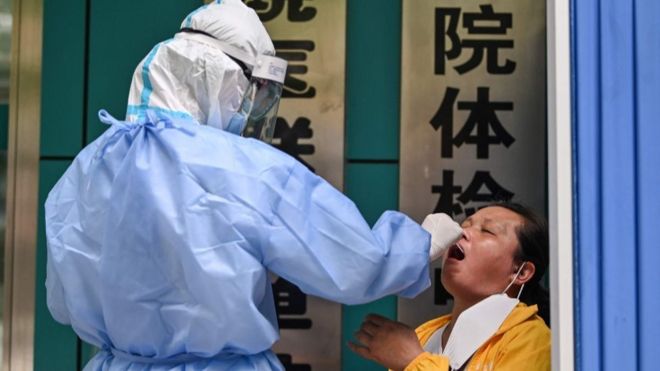 Image copyright GETTY IMAGES
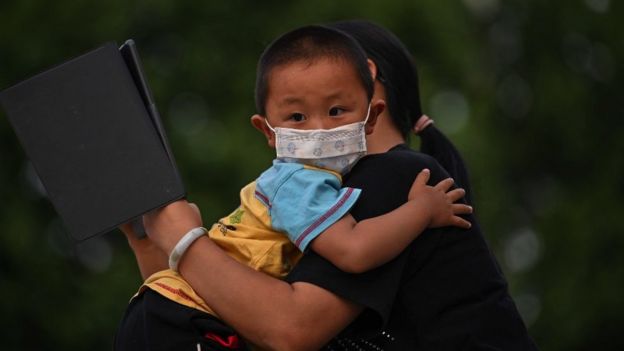 Image copyright GETTY IMAGES





 CHINDIA ALERT: You'll be living in their world, very soon