Chindia Alert: You’ll be Living in their World Very Soon
aims to alert you to the threats and opportunities that China and India present. China and India require serious attention; case of ‘hidden dragon and crouching tiger’.
Without this attention, governments, businesses and, indeed, individuals may find themselves at a great disadvantage sooner rather than later.
The POSTs (front webpages) are mainly 'cuttings' from reliable sources, updated continuously.
The PAGEs (see Tabs, above) attempt to make the information more meaningful by putting some structure to the information we have researched and assembled since 2006.
Buffett’s Berkshire posted a record quarterly net loss of nearly US$50 billion
Company sells entire stakes in US airlines, Buffett says ‘world has changed’
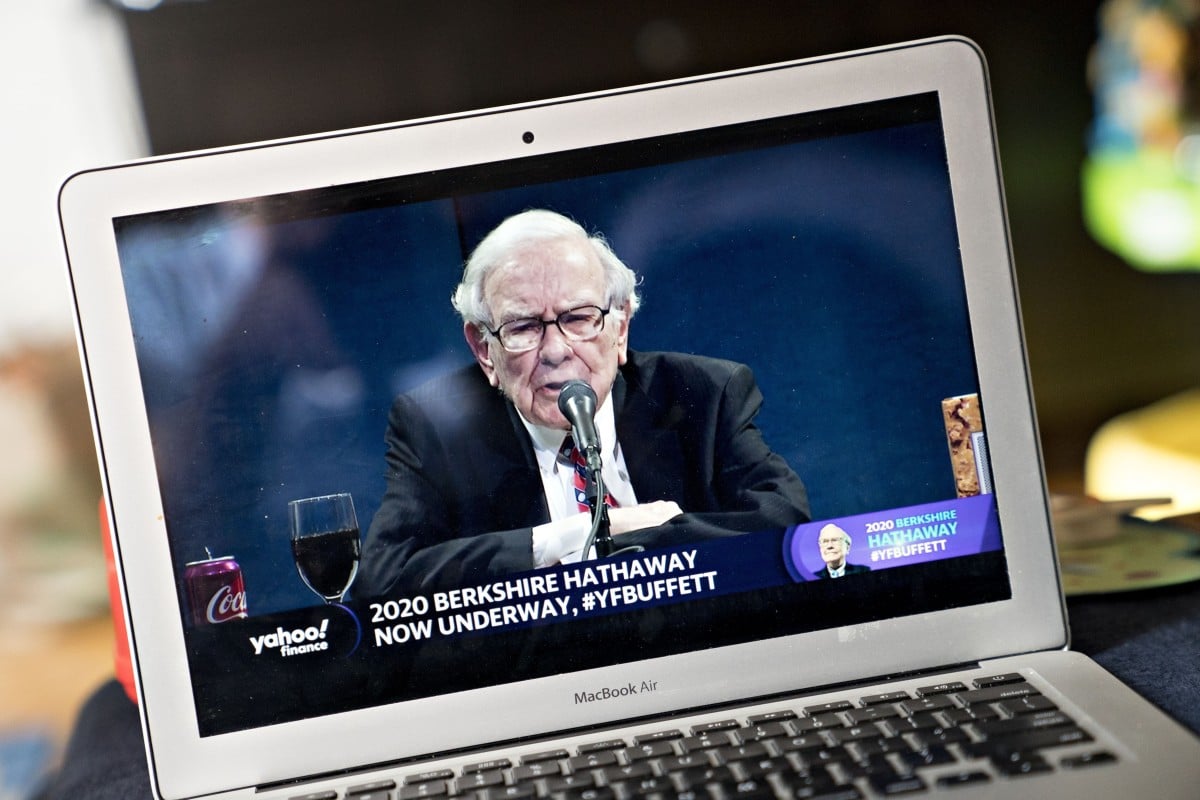
Warren Buffett speaks during the virtual Berkshire Hathaway annual shareholders meeting. Photo: Bloomberg
Billionaire investor Warren Buffett said Saturday he’s confident the US economy will bounce back from its pummelling by the coronavirus pandemic because “American magic has always prevailed”.
The 89-year-old made the sanguine prediction about the world’s largest economy as his holding company Berkshire Hathaway reported first-quarter net losses of nearly US$50 billion.
Buffett also announced Saturday that his company had sold all its stakes in four major US airlines last month, as the pandemic clobbered the travel industry.
“It turns out I was wrong,” he said of his acquisitions of 10 per cent stakes in American Airlines, Delta Air Lines, Southwest Airlines and United Airlines.
Berkshire Hathaway had paid US$7 billion to US$8 billion, and “we did not take out anything like that,” he said.
Between the purchases that took place over months, and the sale, “the airlines business I think changed in a very major way” and could no longer meet Berkshire criteria for profitability, he said.
Buffett’s announcement may further hurt airlines already pushed to the brink by coronavirus lockdown measures, now looking to the US government for US$25 billion in relief funds.
Berkshire Hathaway, based in Omaha, Nebraska, called its first-quarter setback “temporary” but said it could not reliably predict when its many businesses would return to normal or when consumers would resume their former buying habits.
Warren Buffett (left) and vice-chairman Charlie Munger at the annual Berkshire shareholder shopping day in Omaha, Nebraska in 2019. Photo: Reuters
“We’ve faced great problems in the past, haven’t faced this exact problem – in fact we haven’t really faced anything that quite resembles this problem,” Buffett said in a lengthy speech on the country’s economic history.
“But we faced tougher problems, and the American miracles, American magic has always prevailed and it will do so again.”
“We are now a better country, as well as an incredibly more wealthy country, than we were in 1789 … We got a long ways to go but we moved in the right direction,” he said, referencing the abolition of slavery and women’s suffrage.
Warren Buffett has traded his old flip phone for Apple’s iPhone
25 Feb 2020
“Never bet against America.”
Buffett is considered one of the savviest investors anywhere. His fortune of US$72 billion is the fourth-largest in the world, according to Forbes, and in normal years, the company’s annual gathering in Omaha is a high-point of the calendar for investors, a “Woodstock for capitalists”.
But the devastating economic impact of the pandemic has hit hard at Berkshire Hathaway’s wide range of investments, and the need for social distancing forced it to hold the annual meeting online.
Buffett addressed his shareholders in a live-stream flanked only by Gregory Abel, who is in charge of Berkshire’s non-insurance operations.
His business partner for six decades, 96-year-old Charlie Munger, did not appear.
China’s first-quarter GDP shrinks for the first time since 1976 as coronavirus cripples economy
Buffett, in a statement, played down his company’s bleak-looking net figure. He said a better measure of the company’s performance was its operating earnings, which exclude investments and are less subject to sharp fluctuations.
By that measure, Berkshire Hathaway saw growth to US$5.9 billion from US$5.55 billion a year earlier.
The brutal drop in the net – to a loss of US$49.75 billion from a profit last year of US$21.7 billion – resulted primarily from the virus-related decline in value of its broad investment portfolio, which ranges from energy to transport to insurance and technology.
Chinese cryptocurrency billionaire finally sits down to eat with Warren Buffett
7 Feb 2020
The annual meeting often has an almost carnival atmosphere, as thousands of fans and investors flock to Nebraska to hear from the celebrated “Oracle of Omaha”. Buffett, famous for his relatively modest lifestyle, turns 90 on August 30.
In documents filed Saturday, Berkshire noted that until mid-March many of its companies were posting “comparative revenue and earnings increases” over the same 2019 period.
Many of its companies – including in rail transport, energy production and some manufacturing and service businesses – are deemed essential and are able to continue working amid the far-reaching confinement orders.
But their turnover slowed considerably in April, the company statement said.
Moves taken by those companies such as employee furloughs, salary cuts and reductions, and capital spending reductions are “necessary actions” and “temporary,” it said.
Faced with a backlash from the West over its handling of the early stages of the pandemic, Beijing has been quietly gaining ground in Asia
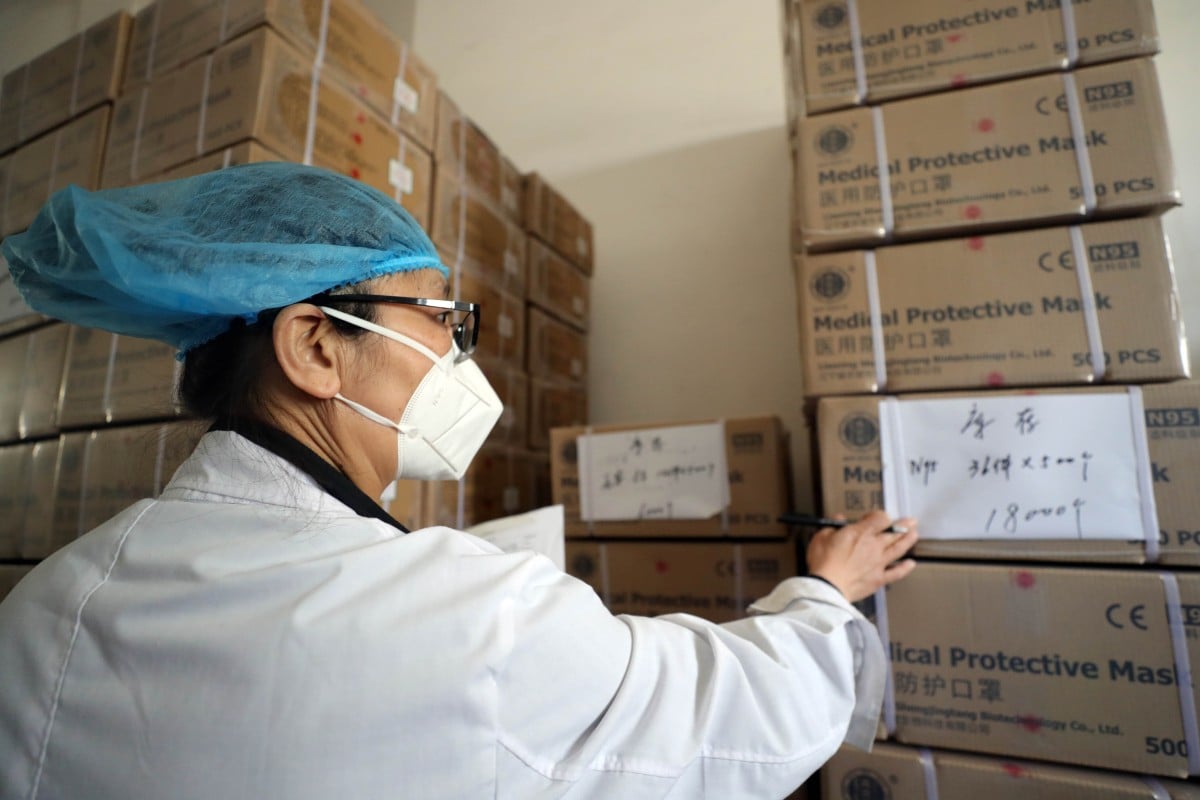
Teams of experts and donations of medical supplies have been largely welcomed by China’s neighbours
Despite facing some criticism from the West, China’s Asian neighbours have welcomed its medical expertise and vital supplies. Photo: Xinhua
While China’s campaign to mend its international image in the wake of its handling of the coronavirus health crisis has been met with scepticism and even a backlash from the US and its Western allies, Beijing has been quietly gaining ground in Asia.
Teams of experts have been sent to Cambodia, the Philippines, Myanmar, Pakistan and soon to Malaysia, to share their knowledge from the pandemic’s ground zero in central China.
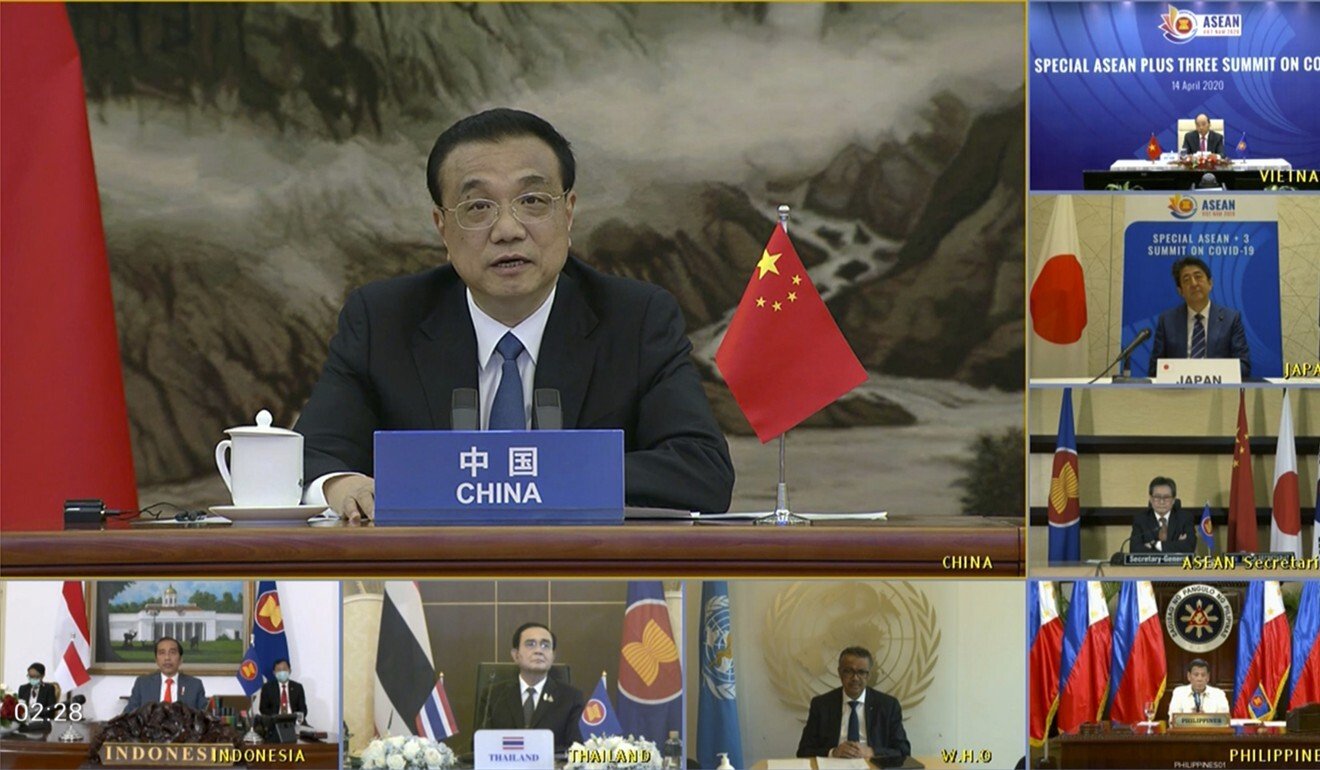
China has also held a series of online “special meetings” with its Asian neighbours, most recently on Tuesday when Premier Li Keqiang discussed his country’s experiences in combating the disease and rebooting a stalled economy with the leaders of the Association of Southeast Asian Nations (Asean), Japan and South Korea.
Chinese Prime Minister Li Keqiang speaks to Asean Plus Three leaders during a virtual summit on Tuesday. Photo: AP
Many Western politicians have publicly questioned Beijing’s role and its subsequent handling of the crisis but Asian leaders – including Philippine President Rodrigo Duterte and Japanese Prime Minister Shinzo Abe – have been reluctant to blame the Chinese government, while also facing criticism at home for not closing their borders with China soon enough to prevent the spread of the virus.
An official from one Asian country said attention had shifted from the early stages of the outbreak – when disgruntled voices among the public were at their loudest – as people watched the virus continue its deadly spread through their homes and across the world.
“Now everybody just wants to get past the quarantine,” he said. “China has been very helpful to us. It’s also closer to us so it’s easier to get shipments from them. The [medical] supplies keep coming, which is what we need right now.”
The official said also that while the teams of experts sent by Beijing were mainly there to observe and offer advice, the gesture was still appreciated.
Another Asian official said the tardy response by Western governments in handling the outbreak had given China an advantage, despite its initial lack of transparency over the outbreak.
“The West is not doing a better job on this,” he said, adding that his government had taken cues from Beijing on the use of propaganda in shaping public opinion and boosting patriotic sentiment in a time of crisis.
“Because it happened in China first, it has given us time to observe what works in China and adopt [these measures] for our country,” the official said.
Experts in the region said that Beijing’s intensifying campaign of “mask diplomacy” to reverse the damage to its reputation had met with less resistance in Asia.
Why China’s ‘mask diplomacy’ is raising concern in the West
29 Mar 2020
“Over the past two months or so, China, after getting the Covid-19 outbreak under control, has been using a very concerted effort to reshape the narrative, to pre-empt the narrative that China is liable for this global pandemic, that China has to compensate other countries,” said Richard Heydarian, a Manila-based academic and former policy adviser to the Philippine government.
“It doesn’t help that the US is in lockdown with its domestic crisis and that we have someone like President Trump who is more interested in playing the blame game rather than acting like a global leader,” he said.
Shahriman Lockman, a senior analyst with the foreign policy and security studies programme at Malaysia’s Institute of Strategic and International Studies, said that as the US had withdrawn into its own affairs as it struggled to contain the pandemic, China had found Southeast Asia a fertile ground for cultivating an image of itself as a provider.
China’s first-quarter GDP shrinks for the first time since 1976 as coronavirus cripples economy
Beijing’s highly publicised delegations tasking medical equipment and supplies had burnished that reputation, he said, adding that the Chinese government had also “quite successfully shaped general Southeast Asian perceptions of its handling of the pandemic, despite growing evidence that it could have acted more swiftly at the early stages of the outbreak in Wuhan”.
“Its capacity and will to build hospitals from scratch and put hundreds of millions of people on lockdown are being compared to the more indecisive and chaotic responses seen in the West, especially in Britain and the United States,” he said.
Coronavirus droplets may travel further than personal distancing guidelines
16 Apr 2020
Lockman said Southeast Asian countries had also been careful to avoid getting caught in the middle of the deteriorating relationship between Beijing and Washington as the two powers pointed fingers at each other over the origins of the new coronavirus.
“The squabble between China and the United States about the pandemic is precisely what Asean governments would go to great lengths to avoid because it is seen as an expression of Sino-US rivalry,” he said.
“Furthermore, the immense Chinese market is seen as providing an irreplaceable route towards Southeast Asia’s post-pandemic economic recovery.”
Aaron Connelly, a research fellow in Southeast Asian political change and foreign policy with the International Institute for Strategic Studies in Singapore, said Asian countries’ dependence on China had made them slow to blame China for the pandemic.
“Anecdotally, it seems to me that most Southeast Asian political and business elites have given Beijing a pass on the initial cover-up of Covid-19, and high marks for the domestic lockdown that followed,” he said.
“This may be motivated reasoning, because these elites are so dependent on Chinese trade and investment, and see little benefit in criticising China.”
China and Vietnam ‘likely to clash again’ as they build maritime militias
12 Apr 2020
The cooperation with its neighbours as they grapple with the coronavirus had not slowed China’s military and research activities in the disputed areas of the South China Sea – a point of contention that would continue to cloud relations in the region, experts said.
Earlier this month an encounter in the South China Sea with a Chinese coastguard vessel led to the sinking of a fishing boat from Vietnam, which this year assumed chairmanship of Asean.
And in a move that could spark fresh regional concerns, shipping data on Thursday showed a controversial Chinese government survey ship, the Haiyang Dizhi 8, had moved closer to Malaysia’s exclusive economic zone.
The survey ship was embroiled in a months-long stand-off last year with Vietnamese vessels within Hanoi’s exclusive economic zone and was spotted again on Tuesday 158km (98 miles) off the Vietnamese coast.
BEIJING (Reuters) – China will promote the sales of export products in domestic markets, as foreign trade faces unprecedented challenges due to the coronavirus pandemic, an assistant commerce minister said on Friday.
As the coronavirus spreads to almost all of China’s trading partners, the world’s second-largest economy is set to reach a grim milestone for full year growth, with the pace of expansion likely to be the slowest since the Cultural Revolution ended in 1976. And, the export sector is facing millions of job losses and factory shutdowns.
“Due to the rapid spread of the epidemic in the world, foreign demand has slumped and the biggest difficulty facing foreign trade companies is the plunge in orders,” said Ren Hongbin, the assistant minister at the Ministry of Commerce.
He said firms across the board have had their orders cancelled or delayed, and new orders are “very hard to sign”.
“The uncertainty about the pandemic has become the biggest uncertainty for foreign trade development.”
Forecasters expect China’s 2020 growth could be nearer the 2.0% mark – the slowest in over 40 years – due to the sweeping impact of the pandemic both at home and overseas. The economy grew 6.1% last year.
China’s overseas shipments fell 17.2% in January-February from the same period a year earlier, marking the steepest fall since February 2019. Imports sank 4% from a year earlier.
Among the government measures to support the sector, China is accelerating efforts to build online trade fairs and guiding exporters to work with e-commerce retailers for sales in domestic markets and coordinating with its trading partners to stabilise supply chains, said Ren.
The Canton Fair, China’s oldest and biggest trade fair due to take place online, will feature live-streaming services for participants, Li Xingqian, another commerce ministry official, told the same briefing. The fair was originally scheduled to begin on April 15, but was postponed due to the coronavirus outbreak.
China is willing to boost trade relations with other countries, including the United States, under the new circumstances, said Ren, adding that Beijing hopes to work together with Washington to promote bilateral trade.
Both countries have been engaged in a near two-year long trade war with tit-for-tat tariffs on each other’s goods, before negotiators called a truce with an interim trade deal in January.
In response to the 2008 global financial crisis, China pumped a 4 trillion yuan (US$575 billion) into its economy but it led to a mountain of local government debt
Various early indicators suggest China’s economy will slow in the first quarter of 2020, with some suggestions it will suffer a first contraction since 1976
President Xi Jinping said China must accelerate construction of “new infrastructures such as 5G networks and data centres” on top of speeding up “key projects and major infrastructure construction” in response to the economic impact caused by the coronavirus outbreak. Photo: Xinhua
China should not try to bolster its coronavirus-hit economy by again resorting to a massive debt-fuelled fiscal and monetary stimulus programme, according to a group of government advisers.
Various early indicators suggest China’s economy will slow in the first quarter of 2020, with some even suggesting it will suffer a first contraction since the end of the Cultural Revolution in 1976.
This raises the question if China will miss its key 2020 growth target, with voices on both sides of the debate discussing what stimulus policies are needed to offset the deep impact of the coronavirus.
China is already leaning towards some additional stimulus, with Premier Li Keqiang ordering the central bank pump additional money into the banking system, while President Xi Jinping has announced the need for more spending on “new infrastructure”.
Are there other ways out for China except stimulus policies?Liu Shijin
“Are there other ways out for China except stimulus policies?” rhetorically asked Liu Shijin, who previously worked closely with Vice-Premier Liu He, the top economic aide to Xi, at the Development Research Centre, the think tank attached to the State Council.
“If it really works, why can’t Japan and the United States reach a 5 per cent growth rate?”
It is believed China will need to achieve an average 5.6 per cent growth in 2020 to achieve its goal of doubling the size of its economy from 2010, which is a key goal for
China’s economy grew by 6.1 per cent in 2019, and while it was the slowest in 29 years, the US economy only grew 2.3 per cent, with Japan’s estimated to grow by 0.9 per cent.
What is gross domestic product (GDP)?
Liu Shijin, who is now a deputy head of the China Development Research Foundation and a policy adviser to the People’s Bank of China, argued that a growth rate averaging 5 per cent over the next decade is sufficient for China to meet its development goals.
Growth in 2020, though, may well be below 5 per cent given that the impact of the coronavirus is “unprecedented” and larger than both severe acute respiratory syndrome (Sars) in 2003 and the 2008 global financial crisis.
Xi said earlier this month that China must accelerate construction of “new infrastructures such as 5G networks and data centres” on top of speeding up “key projects and major infrastructure construction already included in state plans” like additional high-speed railway lines in response to the economic impact caused by the coronavirus outbreak.
But as this will mainly rely on corporate and private investment, Liu Shijin feels it will be too small to engineer a major rebound in the growth rate.
When encountering challenges, we should first push forward new reform measures to unleash growth potential. Now is the right timeLiu Shijin
“It’s a different thing compared to real [government-led] economic stabilisation,” Liu Shijin told a web seminar hosted by Peking University’s National School of Development on Wednesday.
“When encountering challenges, we should first push forward new reform measures to unleash growth potential. Now is the right time.”
Instead, to support longer-term growth, China should put its efforts into the development of its “city clusters”, which could lead to higher spending on housing construction, urban infrastructure and manufacturing, added Liu Shijin, which would increase the growth rate by up to an additional percentage point over the next decade.
China has so far refrained from the massive stimulus programme it adopted in 2008 in response to the global financial crisis, which included a 4 trillion yuan (US$575 billion) plan that pumped cheap money into government-backed projects but also created a mountain of local government debt.
Trump bans travel from Europe to the US as coronavirus pandemic hits actor Tom Hanks and the NBA
Zhang Bin, a senior researcher at the Chinese Academy of Social Sciences, said infrastructure construction will remain an important part of any plan to support growth.
“If the funding [for the 4 trillion yuan stimulus] had come solely from treasury bonds or local government bonds [rather than risky lending], there wouldn’t be so much shadow banking, unmanageable credit expansion, high leverage, implicit liabilities or financial risks,” he said.
“If the balance sheets of corporations, households and local governments can’t be repaired, it might lead to insufficient demand and a decline into a vicious [downward] cycle.”
Zhang, like Liu Shijin, is a key member of the China Finance 40 Forum, a group of state economists who advocate more structural reforms to support the Chinese economy. In particular, Zhang has set sights on reforms that would boost consumption, which accounted for 58 per cent of Chinese growth last year.
“The biggest weak link of the Chinese economy is that 200 to 300 million migrant workers can’t [legally] settle in big cities,” he said. “Only if they are able to settle in the city that China can be called a real well-off society. It will also boost the economy, lift demand for manufactured goods and unleashed consumption potential.”
Currently, most large Chinese cities only provide social services including health care and schooling to residents who have a legal permit, or hukou. Most migrant workers who come to the big cities for jobs are blocked from obtaining a hukou, meaning they have to travel back to their rural hometowns to have access to basic social services, so often do not settle in their adopted city.
In response to this idea, Xu Yuan, a professor at Peking University, called for the government to build 10 million affordable housing units annually to accommodate new urban citizens, which would address short-term economic pain and serve the nation’s long-term development.
China will release its annual growth target as well as other key goals, including the fiscal deficit ratio and local bond quota, at the National People’s Congress, although the annual parliamentary convention, previously scheduled for March 5, has been postponed, with a new date yet to be announced.
Plunges in official and private sector purchasing managers’ indices amid the coronavirus outbreak prompted sharp revisions of economic forecasts
Analysts expect China to enact additional fiscal and monetary stimulus but stop short of massive support enacted after the global financial crisis in 2008
Due to the outbreak of the coronavirus, the once unthinkable scenario in which China’s economy posts a zero growth rate or even an absolute contraction compared to the previous quarter is now seen as a real possibility. Photo: AP
The odds are rising that China will report a sharp deceleration in growth – or even a contraction in the first quarter as a result of the impact of the coronavirus epidemic.
The outbreak has paralysed the country’s manufacturing and service sectors, putting Beijing in the difficult position of either forgoing its economic growth goal for 2020 or returning to its old playbook of massive debt-fuelled economic stimulus to support growth.
The larger-than-expected deterioration in the official and private sector purchasing managers’ indices for both the manufacturing and services sectors to all-time lows in February – the first available economic indicators showing the extent of the economic damage done by the epidemic – has prompted economists to slash their Chinese growth forecasts.
Several are even expecting the once unthinkable scenario in which China’s economy posts a zero growth rate or even an absolute contraction compared to the previous quarter, even though the weakness is likely to be only short-lived.
A contraction in first quarter growth would be the first since the end of the Cultural Revolution in 1976.
A report published by the East Asian Institute at the National University Singapore noted that China could report a contraction of 6.3 per cent in the first quarter from the first quarter of 2019, while the growth rate for 2020 is set to fall well short of the 5.6 per cent needed by Beijing to meet its economic goal.
If China still wants to achieve an average 5.6 per cent growth for 2020, it would have to engineer a growth rate of as high as 12.7 per cent in the second half of the year, according to the report by Bert Hofman, Sarah Tong and Li Yao.
“The question is whether this is feasible and whether the consequences in terms of increased debt and potentially less productive investment are worth the price,” according to the report.
What is gross domestic product (GDP)?
China’s headline year-over-year gross domestic product (GDP) growth rate has hovering in a narrow range between 6 per cent and 7 per cent for 18 consecutive quarters until the end of 2019, but a sharp dip in the otherwise steady growth trajectory in the world’s second largest economy would send fresh warning signs about the risks of relying excessively on China as a production base and consumption market, particularly for large multinationals from Hyundai to Apple.
An official recognition of an economic contraction, even a brief one, would break a long tradition of China reporting consistent growth to prove the Communist Party’s ability to manage the economy and to rally the whole country to achieve one historical milestone after another.
insisted last week that China would realise the vision of building up a “comprehensively well-off” society by 2020, an inheritance from China’s former paramount leader Deng Xiaoping and a major gauge of progress to realise Xi’s grand “Chinese dream” by the middle of the century.
One key but loosely defined parameter for achieving a “comprehensively well-off” society is that the size of the economy at the end of this year will be double that of 2010.
To achieve that, economists calculate that China must achieve a 5.6 per cent growth this year, although Beijing has been vague about the specific target, although this now seems out of reach barring massive stimulus or a redefinition of the goal.
Louis Kuijs, head of Asia economics at Oxford Economics, said his group has cut its forecast for the year-on-year growth rate to 2.3 per cent for the first quarter and 4.8 per cent for 2020 overall, adding that it would be next to impossible for China to make up the lost ground during the reminder of the year given the impact of the coronavirus
on the rest of the world, particularly South Korea, Japan and Italy, who are all major trading partners.
It will be extremely difficult, to say the least, to meet the annual growth targets for 2020 set previously. It would require massive, unreasonable amounts of stimulus, if it is at all possible, given the headwinds Louis Kuijs
“It will be extremely difficult, to say the least, to meet the annual growth targets for 2020 set previously. It would require massive, unreasonable amounts of stimulus, if it is at all possible, given the headwinds,” Kuijs said.
Instead, it would “make much more sense” for the Chinese leadership to play down the need to literally meet the previously set economic target,” he added.
Beijing’s social and economic development targets for this year have not yet been made public, even though Xi has pledged that the government would still achieve them despite the challenge posed by the virus outbreak.
The full-year targets covering growth, employment and inflation are usually released at the National People’s Congress, the ceremonial gathering of China’s legislature in early March, but this key annual event has been postponed due to the threat of the coronavirus, which has infected over 80,000 people and killed more than 2,900 in the country as of Tuesday.
China’s National Bureau of Statistics is due to publish first quarter GDP growth data in mid-April, with combined industrial production, retail sales and fixed-asset investment data for January and February due next week.
They will offer a clearer picture of how much the coronavirus epidemic has damaged China’s growth in the first two months of this quarter, although the damage it has caused in China and the rest of the world is hard to measure because the epidemic is still evolving.
Production among manufacturing companies across China, except in the virus epicentre of Wuhan, Hubei province, have been gradually returned to normal, with firms that have close ties to local governments and access to financial resources resuming production faster than the much larger number of small businesses.
Chinese diaspora fights coronavirus discrimination in the US
The latest data from China’s industry ministry showed that only 32.8 per cent of
had restarted production as of the middle of last week, an increase of just 3.2 percentage points from three days earlier. But even among the larger enterprises the government is trying to help, many are not running at full capacity due to disrupted logistics that have impeded the delivery of raw materials to factories and finished products to customers.
A shortage of workers due to travel barriers erected to stem the spread of the virus, or local regulations that prevent factories from resuming full operations until they have implemented sufficient health safeguards, are also hampering efforts.
Foxconn, which assembles most of Apple’s iPhones in China, said normal production is not expected to resume until the end of March.
China, though, has limited its economic aide policies to “targeted” fiscal and monetary moves, avoiding the massive stimulus it undertook in 2008 in response to the global financial crisis that led to the negative side-effects of high debt and unproductive investments.
[China] will be cautious about the scale of any intervention. The size of the stimulus will likely depend on how quickly economic activity recovers on its own Andy Rothman
Andy Rothman, a San Francisco-based strategist for investment fund Matthews Asia and a long-time watcher of the Chinese economy, said China will report a sharp fall in economic activity in the first quarter and that it “is prepared to implement a stimulus”.
“But [China] will be cautious about the scale of any intervention. The size of the stimulus
will likely depend on how quickly economic activity recovers on its own,” Rothman said.
China’s ruling Communist Party has never reported a contraction in economic growth since the country started the reform and opening up movement in 1978.
Even in 1990, when China was hit by Western sanctions following the crackdown on the 1989 pro-democracy movement, the country still reported an annual growth of 3.8 per cent.
The larger-than-expected fiscal and monetary policy stimulus will help make meeting the targets for 2020 less challengingLiu Li-Gang
In the history of quarterly GDP growth rates – China started to report such data in 1994 going back to 1992 – the lowest growth rate on record of 6.0 per cent was in the third and fourth quarters of 2019.
The most recent year that China admitted to an economic contraction was 1976, the final year of the Culture Revolution and the year when chairman Mao Zedong died.
Liu Li-Gang, the chief China economist for Citigroup Global Markets Asia in Hong Kong, said Beijing has the policy reserves to keep economic growth on track, including increasing the fiscal deficit and loosening monetary policy.
“The lower GDP growth [in the first quarter] means that larger fiscal and monetary policy easing will be needed,” Liu said. “The larger-than-expected fiscal and monetary policy stimulus will help make meeting the targets for 2020 less challenging.”









 CHINDIA ALERT: You'll be living in their world, very soon