Archive for ‘Alibaba’

30/08/2019

Is China set to beat Facebook’s Libra by launching its digital currency this autumn?

  • ‘Forbes’ magazine reported that China’s central bank will launch its own sovereign digital currency to coincide with the Singles’ Day online shopping festival
  • The People’s Bank of China is seeking to address financial risks and counter the current dominance of the US dollar
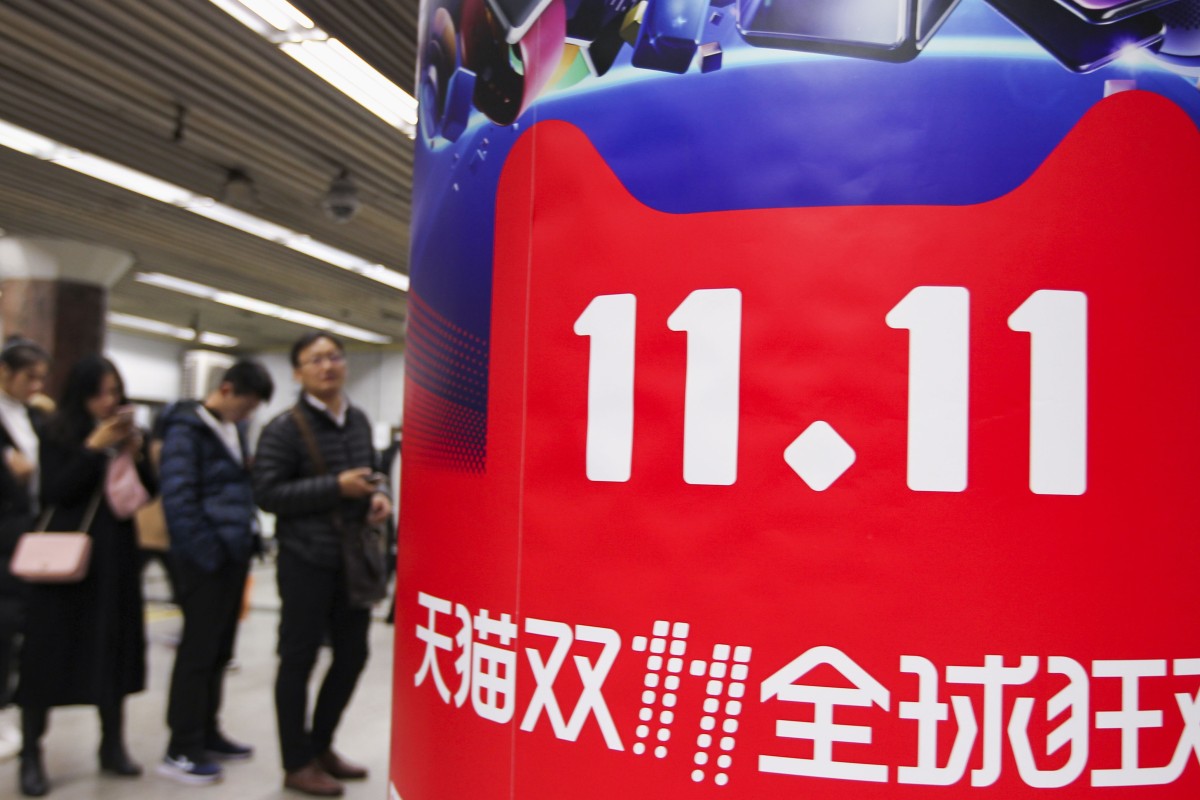
The Singles' Day is a holiday celebrated in China on November 11 and has become the largest online shopping day in the world. Photo: Simon Song
The Singles’ Day is a holiday celebrated in China on November 11 and has become the largest online shopping day in the world. Photo: Simon Song

China’s desire to launch the world’s first government-backed digital currency could see the possible rival to Facebook’s Libra be launched in time for November’s Singles’ Day online shopping festival despite a Chinese media report playing down the timing as “inaccurate speculation”.

Several central bank officials have publicly spoken out over the past several weeks about the need for China to launch its own digital currency since Facebook unveiled its plans for Libra, and the People’s Bank of China (PBOC) appear to be making rapid progress ahead of an expected launch.

Forbes magazine reported this week, citing a source who previously worked for the Chinese government, that China’s central bank could launch the digital currency as soon as November 11 as its bids to address financial risks and to counter the current dominance of the US dollar.

The PBOC did not respond to a faxed request for comment on the Forbes story, although Sina.com said that the report was “inaccurate speculation” citing an unnamed source close to the central bank.

China’s central bank is expected to distribute its digital currency through the big four state-owned banks – the Industrial and Commercial Bank of China, China Construction Bank, the Agricultural Bank of China, and the Bank of China – and mobile payments systems Alipay and WeChat Pay, as well as UnionPay, the state-supported credit card provider, according to the Forbes report. Alibaba is the owner of the South China Morning Post.
Ma Changchun, deputy chief of the Payment and Settlement Division of the PBOC, said at the start of August that a digital currency prototype existed and that the central banks’ Digital Money Research Group had already fully adopted blockchain architecture to ensure its use in retail transactions.

“The People’s Bank digital currency can now be said to be ready,” said Ma on August 11.

The People’s Bank digital currency can now be said to be ready Ma Changchun
Former central bank governor Zhou Xiaochuan said last month that, in addition to central banks, “commercial entities” should be allowed to issue banknotes backed by their own private currency assets, although he did not elaborate on what kind of “commercial entities” might be appropriate to issue a digital currency in China.

China is also ready to make Shenzhen a pilot zone for digital currency as part of plans for the city to become a socialist model city, according to a statement summarising a meeting between the Shenzhen party secretary Wang Weizhong and central bank governor Yi Gang released on Thursday.

The PBOC implemented a blanket crackdown in China on trading of cryptocurrency, including bitcoin, which are not backed by any government, viewing them as risks to China’s financial stability and security. At the same time, in 2014 the central bank created its own academy to study digital currencies and the related blockchain technology.

Neil Woodfine, director of marketing at blockchain start-up Blockstream, said a digital currency created by the PBOC would be “just like cash” and “would be fully controlled by the central bank.”

“If it’s digital instead of physical, they can close accounts and monitor all activities [in the entire financial system]. Commercial bank deposits are difficult for them to monitor, control or pull information out of for verification because the numbers are in each bank’s data centre,” Woodfine said.

Wang Xin, director of the central bank’s research bureau, said last month that

Facebook’s plans 

to create its own digital currency have pushed Beijing to speed up its own digital currency plan as Libra could potentially pose a challenge to Chinese cross-border payments, monetary policy and even financial sovereignty.

Leonhard Weese, the president of the Bitcoin Association of Hong Kong, said that a government-backed digital currency may enhance the PBOC’s control of China’s monetary system, cutting reliance on commercial banks to transmit changes in monetary policy.
“It would be similar to just killing the commercial banks,” Weese said.
Facebook’s Libra,

which would be a non-sovereign digital currency controlled by a Swiss-based company, has come under intense scrutiny by regulators and central banks worldwide. Last month, the Group of Seven industrialised nations, known as the G7, called for urgent regulatory measures and other types of action to address serious concerns over Libra.
Central banks, however, have expressed interest in launching their own digital currencies to counter the US dollar and to gain more control of their own monetary systems.
Mark Carney, governor of the Bank of England, argued last week that the US dollar, the current dominant reserve currency, could be replaced by a global digital alternative to tackle ultra-low interest rates.
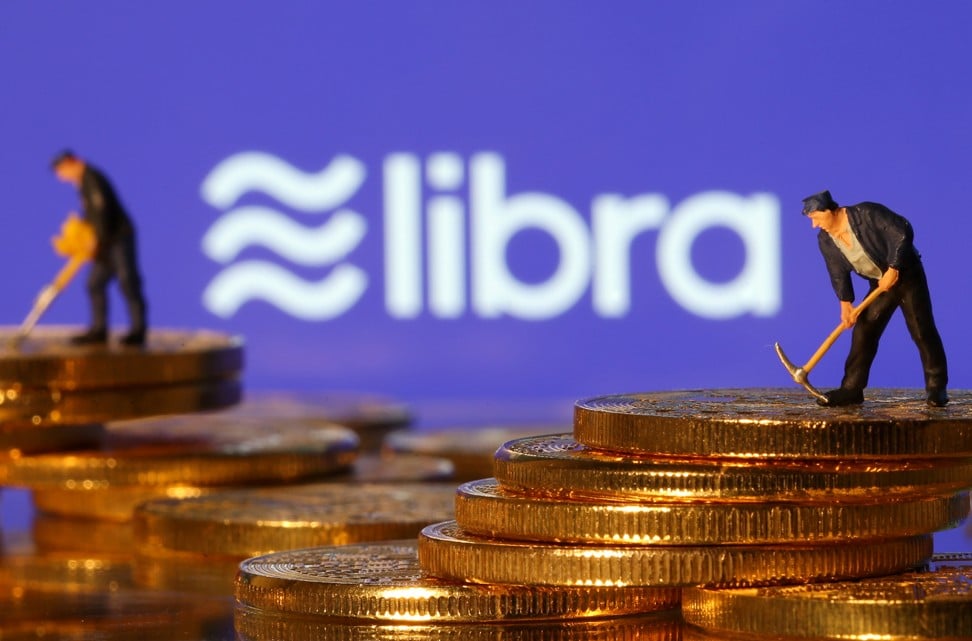
Facebook’s Libra, which is expected to be launched next year, will be pegged to a basket of convertible currencies – so it could serve as a stable online currency – while its payments will be endorsed by Visa and Mastercard. Photo: Reuters

A digital currency “could dampen the domineering influence of the US dollar on global trade”, Carney said last week at the US Federal Reserve’s annual conference, adding that a digital currency has the edge to counter shocks emanating from the US through trade and exchange rates.

Daniel Wang, chief executive and co-founder of blockchain start-up Loopring, said that a Chinese government-backed digital currency may provide a new way for the yuan to compete globally.

“If the central bank wants to increase the global competitiveness of the yuan through its digital currency, only an open and standard-based competitor carries any hope,” said Wang.

A digital yuan would “remain a sovereign currency under a centralised sovereign,” continuing to require the trust from users in the Chinese central bank and government institutions behind it, Wang added.

Alfred Schipke, senior resident representative for China at the International Monetary Fund (IMF), said that the bank is “open” to digital currencies, including the one being developed by China’s central bank.
The IMF in principle is looking at these things favourably. It’s a two-way process where we learn from China, which is often at the forefront of development. Alfred Schipke

“We don’t have a specific view on a particular currency, we haven’t looked at the details of the latest proposals from China,” Schipke said on Thursday. “The IMF in principle is looking at these things favourably. It’s a two-way process where we learn from China, which is often at the forefront of development.”
Blockstream’s Woodfine said that Beijing’s move also reflects a growing concerns among central banks that a financial disaster is on the horizon.
The 30-year US Treasury bond yield fell to an all-time low 1.976 per cent on Thursday, while yields around the world also plunged to multi-year or record low, triggering rising fears over a global recession.
Central banks around have also been driving down interest rates, with the PBOC recently unveiling a key interest rate reform that effectively cuts borrowing costs for companies to boost its slowing economy.
“We’ll see a move by governments and central banks to take back control over the financial system and use that power to direct their economies, continuing to pump money into the system to keep it afloat,” Woodfine added.
“A digital currency would be the perfect channel for helicopter money,” he said in reference to the idea that a central bank could stimulate the economy by giving out large quantities of money to the public, as if dumped from the sky. “They can send out free money to consumers.”
Source: SCMP
30/08/2019

Costco forced to shut first China store early due to crowds

US retailer Costco was forced to close early on its opening day in China, after the store was swamped with shoppers.

Buyers battled long queues and traffic chaos, before the Shanghai store was shut hours early due to “overcrowding”.

Costco’s push into China comes as other foreign retailers have struggled to compete with local rivals.

It also comes at a time of rising tensions between the US and China over trade.

Costco is a discount warehouse store that sells a range of goods, from fresh foods to household electronics.

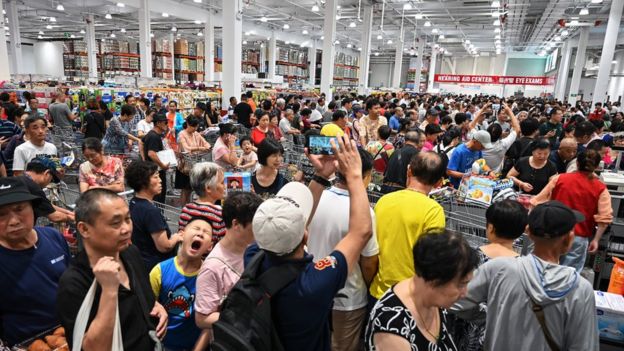
Some customers spent two hours lining up to pay for their purchases, while some had to wait three hours for parking, state news agency Xinhua reported.

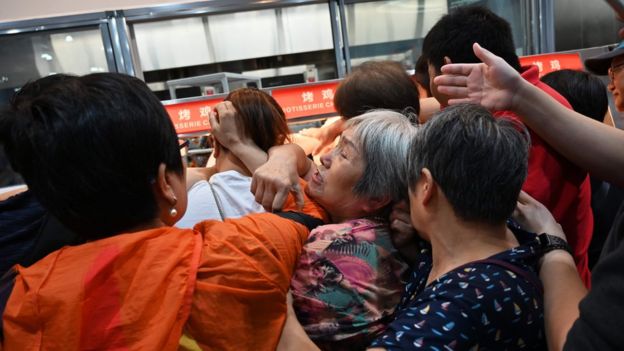
People jostle for cooked chickensImage copyright AFP
Image caption Images from the store show customers caught up in heavy crowds

One video showed people pushing through heavy crowds to get their hands on roast chickens.

“Due to overcrowding in the market, and in order to provide you with a better shopping experience, Costco will temporarily close on the afternoon of August 27. Please avoid coming,” the retailer in a notice on its official app, according to AFP.

People visit the first Costco outlet in China, on the stores opening day in Shanghai on August 27, 2019Image copyright GETTY IMAGES
Image caption Some customers reportedly spent two hours lining up to pay for their goods

Costco has had an online presence in China since 2014, through a partnership with e-commerce giant Alibaba.

The firm’s first store in the country comes as other international retailers battle tough competition in China.

Earlier this year, Amazon said it was downsizing its operations in China and France’s Carrefour agreed to sell 80% of its China business to local retailer Suning.com after a series of losses.

Tesco has struggled to crack the Chinese market.

Costco’s China move also comes at a difficult time for US-China relations.

The world’s two largest economies have been fighting a trade war for the past year, and tensions have escalated with the threat of more tariffs from both sides.

Source: The BBC

04/07/2019

China’s top talent now wants to work for rising domestic tech stars, not big brand multinationals

  • China’s talent is turning away from multinationals and towards domestic tech champions in the search for a more fulfilling career
  • Change in sentiment comes amid raging US-China tech war and perceptions of ‘bamboo ceiling’ in the West
An increasing number of Chinese jobseekers are looking towards domestic tech firms. Image: SCMP
Molly Liu left her hometown Beijing to pursue a master’s degree in the United States in the 1990s.
After graduation, she fought hard to win an entry-level position at a US-based consultancy and after a period was later sent back to China to help the company’s expansion.
In the land of opportunity, the ambitious US firm showered her with avenues to pursue her career and she ended up working in Hong Kong as well as being one of the first people on the ground for the consultancy in Shanghai, Beijing, Taipei and Singapore.
Times have changed, though. Recently, her only son, Ben Zhang, turned down a hard-to-get job offer from a Boeing subsidiary in the US after gaining a master’s degree in computer science from Carnegie Mellon University in Pittsburgh, Pennsylvania.
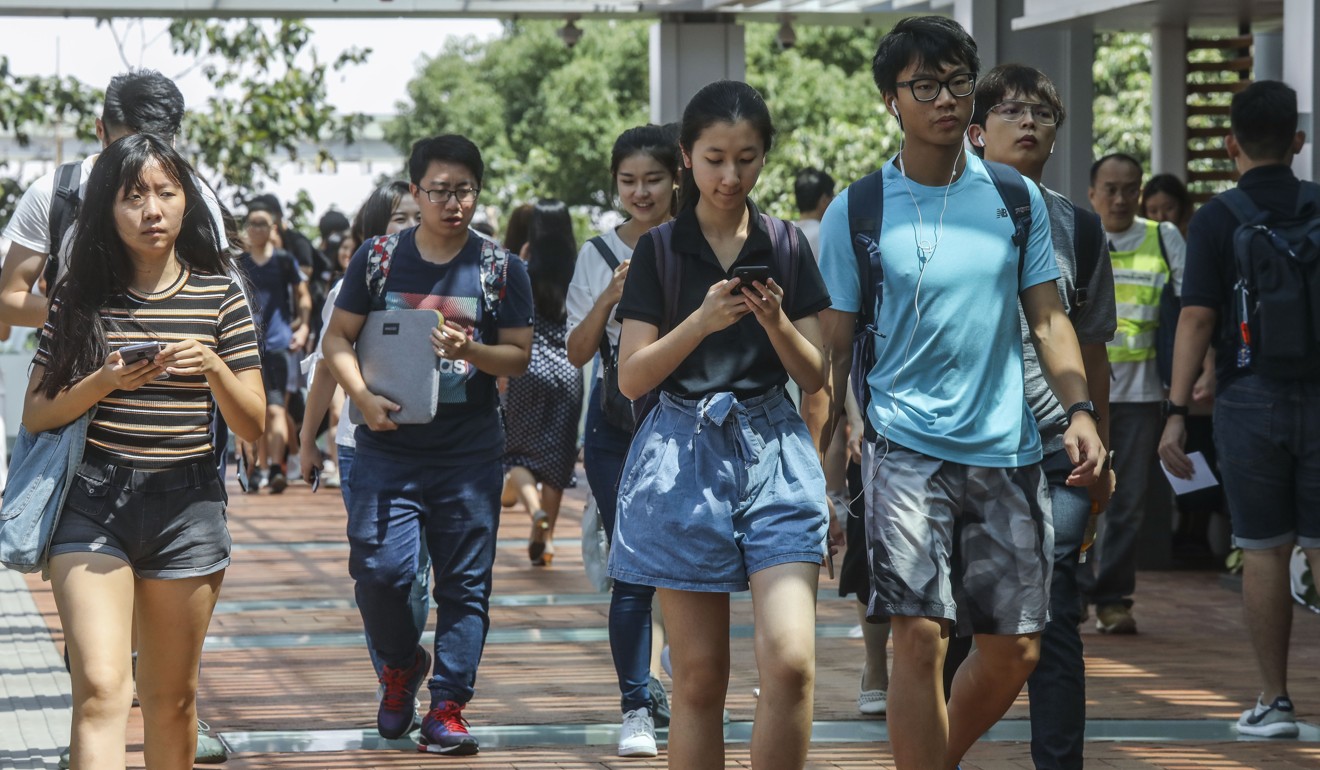
Chinese students educated in the US are now looking more at jobs in China. Photo: SCMP

He decided to return to Beijing in 2018 and now works as a product manager at Chinese smartphone maker Xiaomi. He is convinced that the start-up turned tech major can offer him the same sort of opportunities today that the US tech consultancy offered his mother in the 1990s.

This family story about the career choices of two different generations of US-educated Chinese students reflects a wider trend. Once upon a time, US corporations could cherry-pick top Chinese talent from American universities with the promise of large salaries, generous benefits and the chance to work at market-leading organisations.

Today, China’s cutting-edge technology companies – often referred to as China Tech Corporation (CTC) – are the most sought-after employers among many Chinese students, who want more than just a cushy life.

This marks another blow for multinational corporations (MNCs) already struggling to do business in China amid a myriad of restrictions and growing hostility towards them as the US-China trade and tech war gathers pace.

“What I look for in a job is not money. My parents are not counting on me to support them,” says 28-year-old Zhang, whose team in Xiaomi is working on a wide array of connected devices, from televisions to lamps to smart locks. “What I care about most is personal improvement and access to the best resources a company can offer.”

“In Boeing, I could probably work on a new product once every two to three years. But at Xiaomi, every three months, we can roll out a new product,” he added. “You can bring so many things into people’s everyday lives in China, like using your voice to control a TV or an air conditioner – things you can only imagine in the US.”

Zhang is not alone and many Chinese today perceive a “bamboo ceiling” in the US, where they are more often seen as engineers rather than executives.

One Chinese executive who now oversees the technology unit of a listed finance and insurance firm in China said that he used to lead a team of 20 engineers at one of the world’s most valuable tech companies in Silicon Valley.

“My job was to keep optimising the performance of a product [in Silicon Valley],” he said.

“But within three years in China, I was promoted to the chief scientist of our entire company, leading a team of 1,000,” said the man, who asked to remain anonymous as some of his family still reside in the US.

How Trump’s assault on Huawei is forcing the world to contemplate a digital iron curtain

According to an April survey by professional networking site LinkedIn, an increasing number of Chinese jobseekers share Zhang’s outlook. LinkedIn compiled a list of the top 25 most desired employers in China, and about 60 per cent were local Chinese companies, with 13 of them internet firms.

CTC bagged four of the top five spots, with e-commerce giant Alibaba, search giant operator Baidu and Bytedance – which operates short video hit TikTok – taking the lead.

Tesla ranked sixth behind its Chinese challenger Nio. Amazon, the only other foreign company in the top ten, ranked eighth.

Alibaba is the owner of the South China Morning Post.

Li Qiang, executive vice-president of Zhaopin, one of China’s largest online recruiters, described the rising status of CTC among jobseekers as “the dawning of a new era”.

“Nowadays, there is nothing a multinational can offer that a domestic firm cannot, be it a compensation package or the chance to be part of international expansion,” said Beijing-based Li.

“Jobseekers are not particularly looking for domestic firms or multinational firms. They are after good firms and most of the good firms in China these days happen to be domestic tech firms,” said Li.

Li’s comments reflect the wider opportunities within the domestic economy for Chinese jobseekers today, after the rise of many successful private-sector companies and a thriving start-up scene over the past 10 years, meaning it’s not just a one-way street to a state-owned enterprise (SOE) any longer.

A survey by Zhaopin in late 2018 found that 28 per cent of Chinese university students said MNCs were their employer of choice, down from 33.6 per cent in 2017.

Even on pay and benefits, CTC is catching up with multinationals. Zhang said Xiaomi matched the offer from the Boeing unit in the US and many leading tech firms offer benefits such as gym memberships and childcare facilities.

And the rags-to-riches stories of many leading China tech entrepreneurs, some of whom have become billionaires, continue to grab media attention and inspire the younger generation.

To be sure, Chinese students would still rather work for an MNC than an SOE – but the rise of CTC can be seen in company rankings and in the total number of CTC companies in the top employer list, according to Zhaopin.

For a growing number of Chinese students, the doors to America are closing

William Wu, China country manager of global employer brand consultancy Universum, said that the one element Chinese jobseekers pay most attention to these days is whether or not a job can be “a good reference point for a future career”. And a growing number of private Chinese companies now have global brand recognition.

A recent survey by Universum shows that Apple and Siemens were the only two Western names in the top 10 ideal employers for Chinese students in the engineering sector this year, while there were four foreign firms in the top 10 list in 2017.

Huawei Technologies, the Chinese telecoms giant that has been put on a US trade blacklist after the Trump administration said it was a national security risk, ranked top in the Universum list. Xiaomi, the smartphone maker Ben Zhang works for, ranked second while Apple, one of the most valuable tech firms in the US, ranked seventh.

It seems that China’s rising clout in the world is now an attractive factor for jobseekers.

“Every engineer would like to see the technology they’ve worked on have the potential to change the world one day,” said Li Yan, head of multimedia understanding at Chinese short video major Kuaishou. “In the old times Chinese companies were at the bottom of the global value chain, now they are climbing up, providing more opportunities for talent to create world-changing products.”

At Beijing-based Kuaishou, Li’s 100-strong artificial intelligence algorithm team – many of whom joined from Microsoft Asia Research – is working to make machines understand content better than humans by studying the millions of user-generated videos on the company’s platform every day.

CTC companies do have a strong home advantage, with big Western firms having to navigate a myriad of restrictions.

For example, the “Great Firewall” lets Chinese authorities control the content and information reaching the country’s 800 million-plus internet population. Western firms also face other forms of red tape, such as having to form joint ventures with local partners.

Amazon earlier this year announced the close of its China marketplace, giving up the brutal fight with Chinese online shopping giants such as Alibaba to capture domestic e-commerce market share. Oracle China reportedly laid off 900 people in March as it winds down its research and development center in the country.

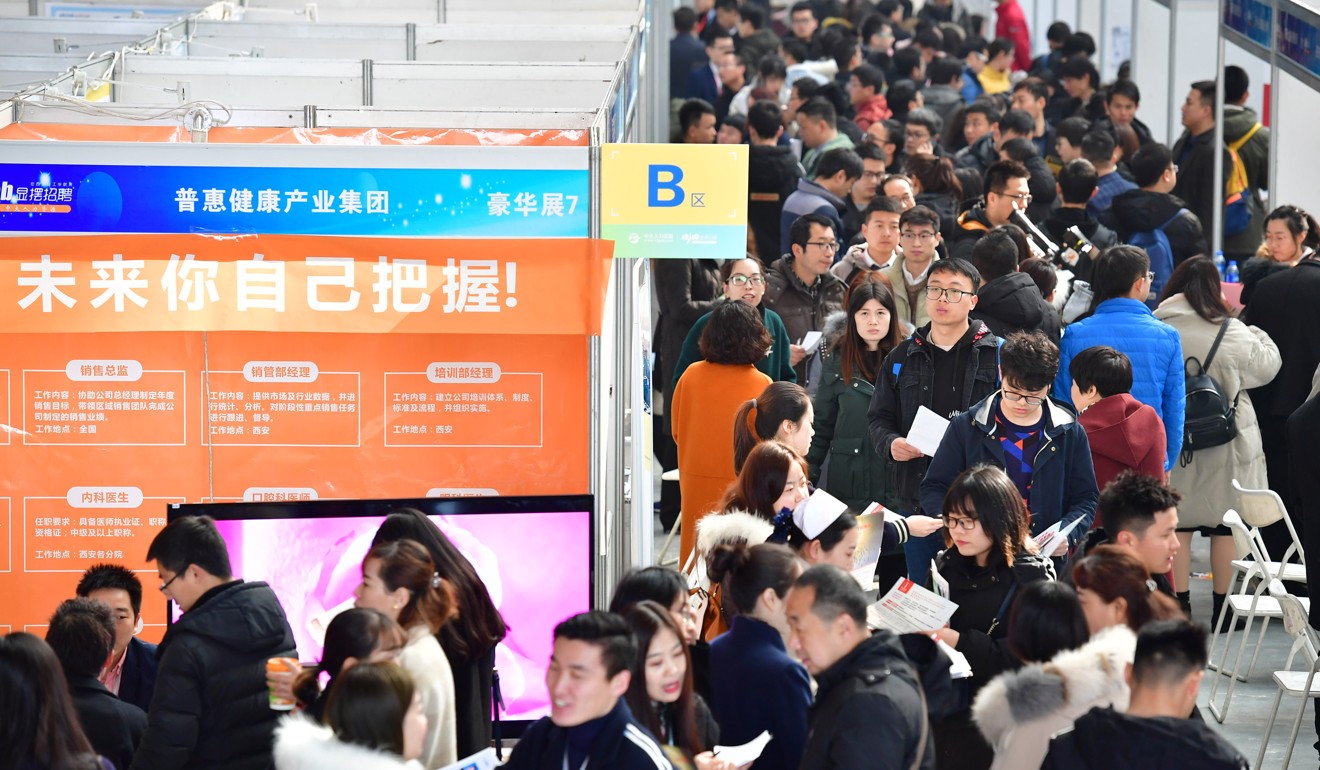
Job applicants visit a provincial job fair at Qujiang International Conference and Exhibition Center in Xian, northwest China's Shaanxi Province in February. Photo: Xinhua
Job applicants visit a provincial job fair at Qujiang International Conference and Exhibition Center in Xian, northwest China’s Shaanxi Province in February. Photo: Xinhua

Oracle has never confirmed the number of lay-offs but said the job cuts formed part of an overall global strategy transformation.

However, there has been little sympathy for those losing their jobs in China, judging by social media posts.

Some people posted that those working for big US tech firms are not “wolf” enough compared with counterparts who work for local tech firms, referring to the long work-hours culture of the domestic tech scene.

A viral story titled “Why there should be no pity for the sacked Oracle China employees” said the company was Beijing’s biggest nursery because of the flexible “work from home” culture and generous compensation package offered to employees.

Oracle said to begin mass lay-offs in China as part of global move to cloud services

“They had every chance to join rising domestic internet firms. But they settled for high salary and low work pressure, which eventually made them frogs in boiling water. Why pity them?” said the article, adding that the earlier people give up on the “glory” of working for MNCs, the quicker they will benefit.

Not all Chinese workers would agree, and there has been a recent backlash against the “996” culture within China’s tech sector, where people routinely work from 9am to 9pm, six days a week.

With geopolitical uncertainty growing day by day, though, many Chinese are asking why leave the family behind for an uncertain fate overseas?

A survey done by consultancy BCG and The Network in 2018 showed that only one in three China residents was willing to move abroad for work, down from 61 per cent in 2014. The country is also the 20th most popular destination worldwide to relocate for a job, compared with 29th in the 2014.

“One of my graduate classmates in the US just gave up a six-digit package at Oracle and joined drone maker DJI in Shenzhen,” said Ben Zhang. “I asked what prompted his return to China. He sent me the viral article and asked, ‘who wants a life that one can see the end of from the very beginning?’”

Source: SCMP

24/05/2019

A pollution crackdown compounds slowdown woes in China’s heartland

ANYANG/SANGPO, China (Reuters) – For years, China’s industrial heartland has been cloaked in smog, its waterways choked with pollution pumped from enormous clusters of factories churning out the mountains of cement and steel needed to build the Chinese economy.

Aiming to tackle what has become a huge public health problem, the authorities have cracked down on polluting industries, targeting provinces like Henan, which has a population of 100 million people and hundreds of factory towns.
According to interviews with factory and business owners, and consumers and workers across Henan, that crackdown – conducted with often heavy-handed local enforcement – is crippling the economies of towns and cities that depend on polluting industries.
Manufacturers across Henan have been particularly hard hit by the new environmental regulations, compounding the pressures the province faces from China’s slowing economy and a grinding trade war with the United States.
It also highlights the trade-off China faces between providing a healthier environment for its citizens and maintaining economic growth in a province whose climb from poverty has lagged that of coastal regions.
China does not provide statistics on the costs of the environmental crackdown, but it has said that short-term pain will lead to long-term growth through an economic “upgrade”.
The information office of the State Council, China’s cabinet, did not respond to a faxed request for comment on the economic effects of the new restrictions.
It’s difficult to get a full picture of Henan’s economy from unreliable official figures, as it is for the whole country. Henan’s official growth rate was 7.6% in 2018, higher than the national rate and down 0.2 of a percentage point from 2017.

But the interviews conducted by Reuters across Henan suggest consumers are spending less, cities are struggling to retool their economies and the pollution crackdown is hurting businesses and employment.

STEEL TOWN PAIN

The steel-producing centre of Anyang, which has long had some of the worst air in China, is one place that has been hit hard by the anti-pollution campaign.

The city of more than 5 million people, dominated by the infrastructure and insignia of the state-owned Anyang Iron and Steel Group, has forced local industry to upgrade equipment and curb pollution, and shut down companies that were unwilling or unable to comply.

Li Huifeng, president of Baoshun High-Tech Corporation, a coking coal company founded by his parents in 1983, said the cost of compliance had been painful.

Baoshun’s huge plant, built in the hills in the west of Anyang, was forced to implement production cuts last winter even though it had installed low-emissions equipment that exceeded required standards.

“Last year, business was really good but this year it is full of uncertainties,” said Li. He added that new efficiency guidelines were likely to result in the closure of many producers of coking coal, which is used in steel production.

Li Xianzhong, the owner of the Xinyuan Steel Mill in Anyang’s western outskirts, said he was facing curbs on production as well as spiralling costs because of the new environmental regulations.

According to industry estimates, environmental costs per tonne of steel produced have risen to around 150 yuan per tonne, up from less than 50 yuan per tonne when the war on pollution was launched in 2014.

“All this equipment needs a lot of capital, and after you’ve invested, the operation costs are also higher,” said Li. “If you don’t meet the standards, you aren’t allowed to operate.”

Near the sprawling Anyang steel plant in the city centre, residents and workers complained that the new environmental inspection rules had made it harder to make a living.

Many small workshops, which often use small metalworking furnaces, have also been targeted.

“Before we would just give them a pack of cigarettes or treat them to a meal and you’d then be fine for a year, but now it’s no use,” said a bicycle repairman, identifying himself by his surname Zhang, whose workshop near the plant was shut by inspectors.

Over the past years, Anyang has tried encouraging new and cleaner forms of economic growth. It has shut hundreds of small polluters in sectors like ceramics and cement, and tried to attract industries like solar panels and electric vehicles by offering incentives and building sprawling new industrial parks.

However, it has struggled to compete with numerous Chinese cities making similar bets, especially as China’s economy slows.

And the results of the anti-pollution efforts have been mixed.

Steel still accounts for more than half of Anyang’s economy – unchanged from a decade ago – and the environment is still bad. The taste of brimstone hangs in the air, and the fairy lights festooned on hundreds of cranes on the city’s skyline could only be dimly seen during a recent visit.
Part of the problem, according to Liu Bingjiang, who heads the Ministry of Ecology and Environment’s air pollution office, is that smog is also blowing in from neighbouring industrial regions, undermining local cleanup efforts.
“All these measures, all these plans are in place, but it still can’t solve the smog,” said Li, the steel mill owner.

SHUTTING DOWN THE BOOTMAKERS

The anti-pollution campaign is also hitting much smaller industrial centres.

Sangpo, a dusty two-street village in northeast Henan, used to live off scores of sheepskin processing factories cranking out winter boots modelled on UGG, the American brand with Australian roots.

While the industry was the main employer in the village, that came with a heavy environmental cost: treating the raw sheepskin consumed copious amounts of water and contaminated the local water supply.

Last July, the government moved to close most of the factories, sending dozens of police cars into Sangpo with sirens wailing to enforce the shutdown.

Government inspectors were installed to keep watch at each factory to ensure compliance with the order. Three factory owners were arrested for violating environmental regulations.

During a visit to Sangpo by Reuters, most factories were idle during what should have been peak production season. Hundreds of workers had left town in search of work elsewhere, leaving behind shuttered shopfronts and deserted roads.

“The village is at a tipping point,” said a former factory owner who only wanted to be identified by his surname, Ding. Most businesses were mostly “more dead than alive,” he added.

Before the factories were shut, the village of 6,500 people, mainly from the Hui Muslim minority, had been punching well above its weight.

It achieved national recognition as a thriving model of e-commerce, winning glowing write-ups in national newspapers after it was named in 2015 by the tech giant Alibaba as central China’s very first “Taobao village” – a designation for top rural sellers on the company’s internet retailing platform.

But that all changed last year as China’s pollution crackdown intensified. The top county-level official, factory owners said, held a town hall meeting and threatened to shut everyone down permanently. A deal was made for 19 of the 135 factories to remain.

Those wanting to stay open agreed to upgrade their businesses and invest in equipment to ensure they met water treatment standards. Factories that opted out were shut, their boilers and processing equipment destroyed.

The government of Mengzhou, which oversees Sangpo, declined to comment when reached by phone. But Mengzhou’s mayor said last year that the crackdown was necessary and in accordance with the popular will, according to a statement on the Mengzhou government website.

Sangpo village’s party chief declined to comment when reached via the Chinese messaging app WeChat. Calls to his cellphone went unanswered.

The county government’s plan is to corral remaining factories into a new industrial zone by the end of the year. But remaining business owners are worried about the slow pace of construction and fear they will be forced to shut.

Ding, the former factory owner, said business owners didn’t expect the crackdown – which has also discouraged lending from banks – to be so harsh.

“Everyone in the village was moaning and sighing but no one thought it would be this extreme,” Ding said.  “We are at our wits’ end.”

Source: Reuters

19/04/2019

Amazon plans to shut online store in China

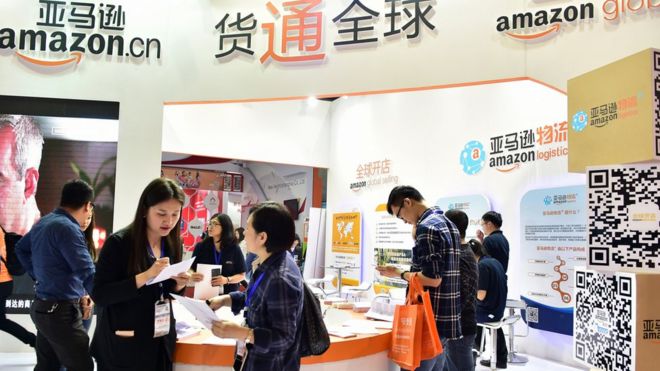
Visitors at an Amazon booth during the 2016 China International Electronic Commerce Expo in Yiwu, east China's Zhejiang province.Image copyright GETTY IMAGES

Amazon plans to shut its online store in China that allows shoppers to buy from local sellers as it downsizes operations in the country.

The firm said it would no longer run the domestic marketplace from July, but Chinese shoppers will still be able to order goods from Amazon’s global store.

It will also continue to operate its cloud business in China.

The retail retreat comes as Amazon faces tough competition from local rivals Alibaba and JD.com.

Reuters first reported Amazon’s plans to close its domestic marketplace in China by mid-July to focus on more lucrative businesses selling overseas goods and cloud services. Amazon’s profitable cloud computing division hosts huge swathes of the corporate world on its data servers.

A spokesperson for the company said in a statement that it was “working closely with our sellers to ensure a smooth transition and to continue to deliver the best customer experience possible”.

Consumers accessing Amazon Chinese web portal, Amazon.cn, after 18 July will see a selection of goods from its global store, Bloomberg reported.

Amazon bought Joyo.com, a Chinese books, music and video retailer, for $75m (£57.4m) in 2004. It rebranded the company as Amazon.cn in 2007.

But it has struggled to compete with dominant players JD.com and Alibaba’s Tmall marketplace in China.

The shift away from the world’s second largest economy comes as the company pours huge investment into India.

Amazon has committed to spending $5.5bn on e-commerce in India, where it competes with local rival Flipkart.

Last year, it launched a Hindi version of its mobile website and smartphone app in an attempt to attract millions of new customers in the country.

Source: The BBC

18/04/2019

Tobacco vendors illegally advertise and sell cigarettes on China’s social media and e-commerce platforms

  • Health watchdog warns that tobacco products are widely available on both social media and online retailers
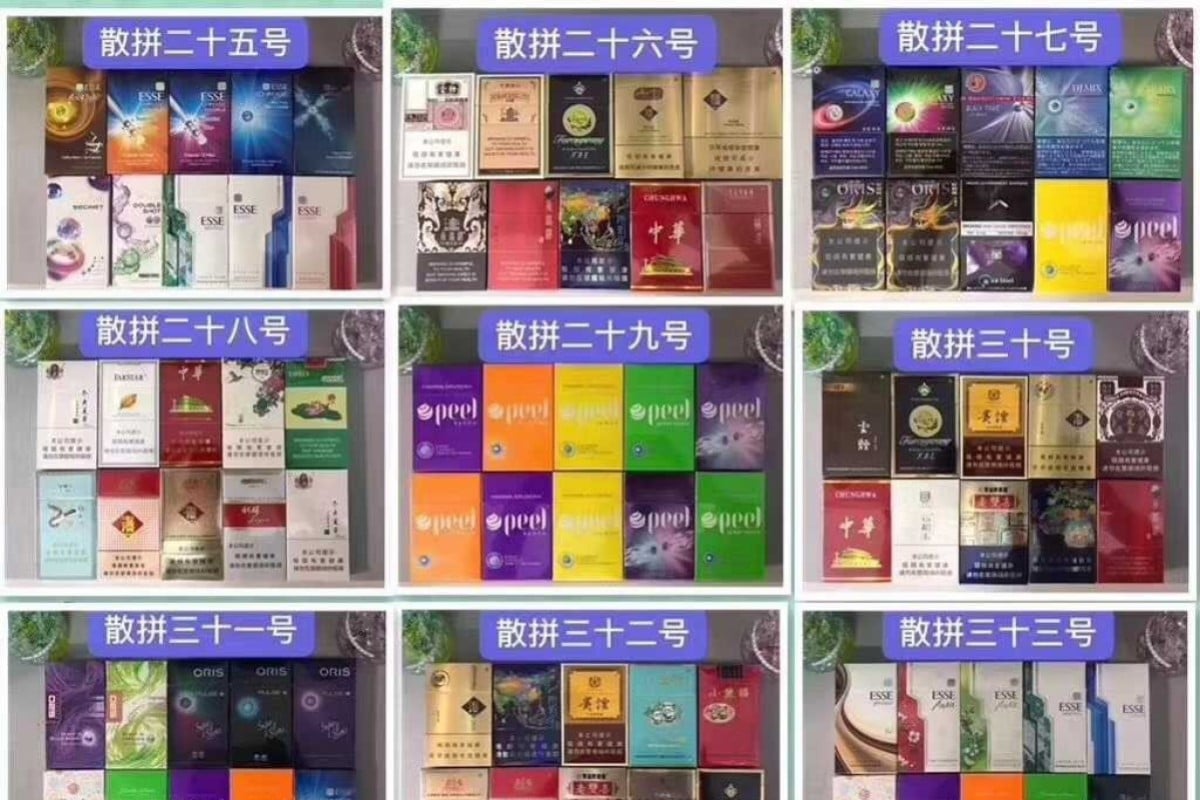
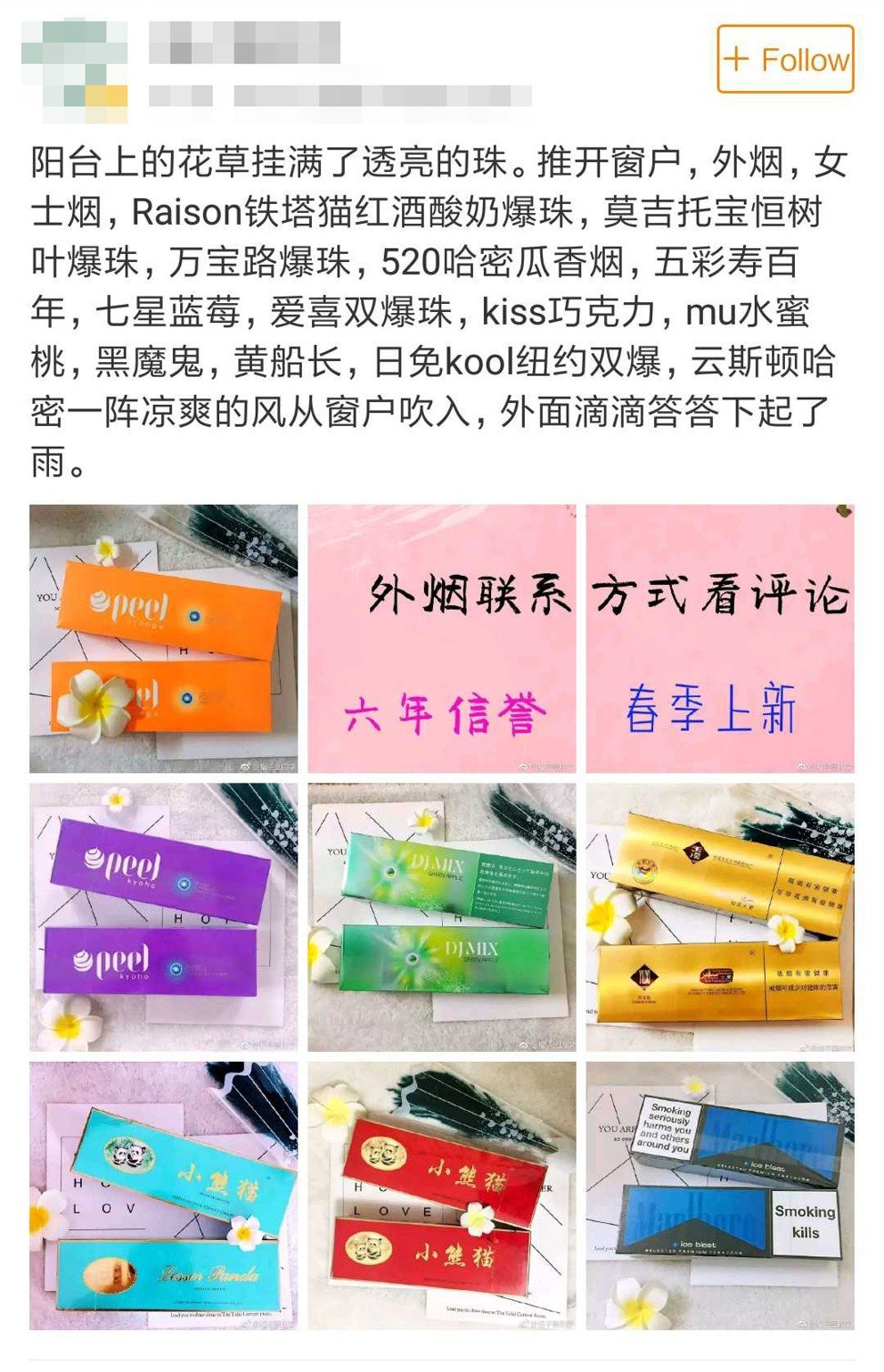
A tobacco seller’s advert posted on WeChat. Photo: Handout
Illegal tobacco trading is rife online in China both via social media and e-commerce platforms, a health watchdog has warned.
The Beijing Centre for Disease Prevention and Control released a report on Monday that said almost 52,000 advertisements and listings for tobacco products had been found on 14 social media and e-commerce platforms in the first half of last year.
“Compared with traditional advertising, tobacco promotion on the internet uses methods such as sponsored content, which is more discreet,” the report said.
China’s internet advertising regulations prohibit the online promotion of tobacco products.
Selling cigarettes online is illegal as the State Tobacco Monopoly Administration bans the sale of tobacco across provinces and strictly controls the production, sale and import of the product.
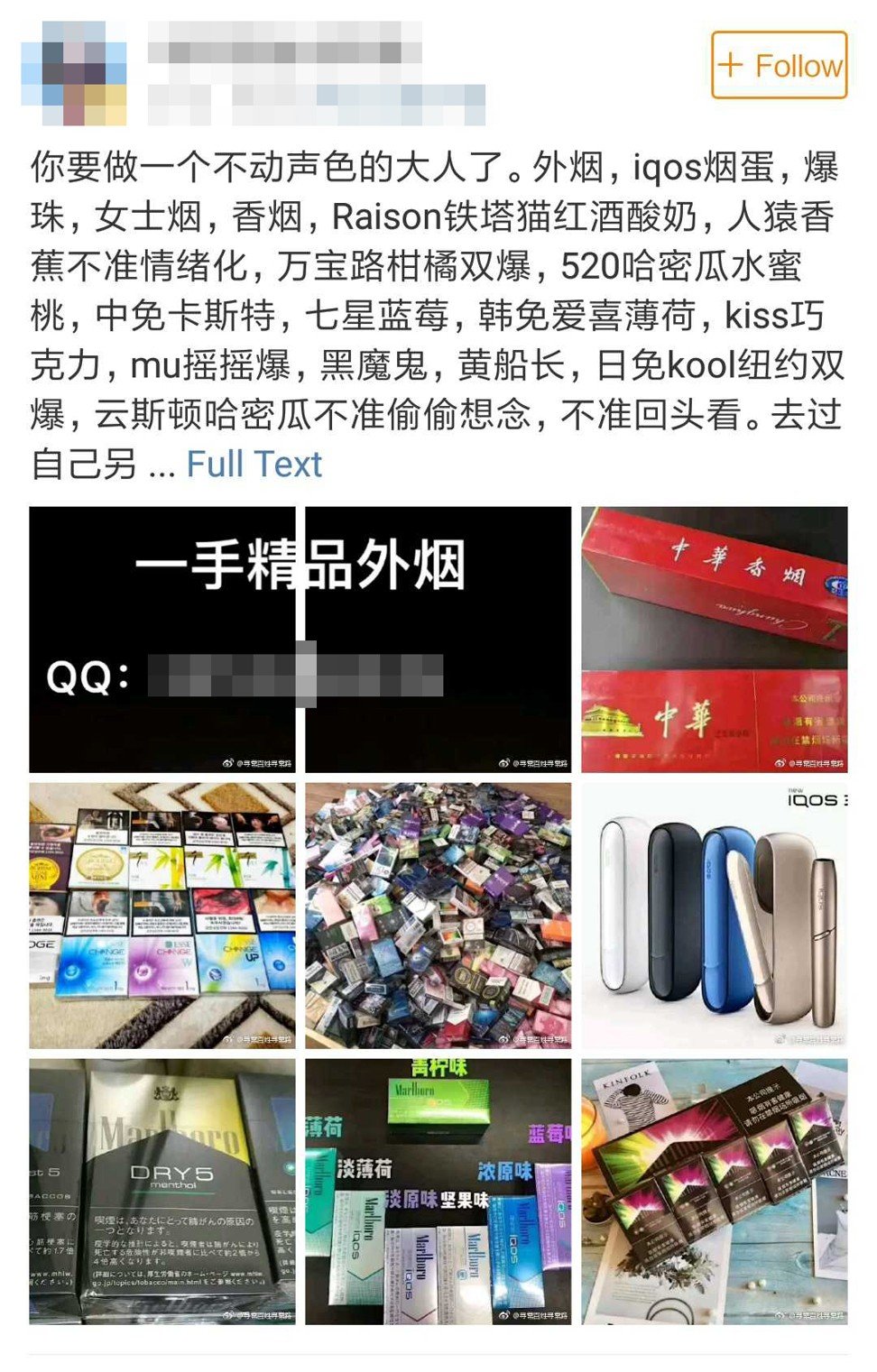
Screenshot from Weibo of an advertisement for imported cigarettes. Photo: Handout

The social network Weibo, China’s equivalent of Twitter, was highlighted as the platform where most of the banned promotion and selling were found, with nearly 43,000 adverts and listings, or 82 per cent of the total.

The South China Morning Post found that tobacco advertising and direct selling proliferates on Weibo, where searching for terms such as “cigarettes” and “women’s cigarettes” yielded almost 1,300 results, many of them offering WeChat and QQ contact information.

Five vendors found through Weibo offered various imported cigarettes such as Marlboro and South Korean brand Esse.

One seller claimed his wares were smuggled into China from places like the US. Another offered refunds for products that were confiscated, but only if they were bought for delivery within the same province.

A 10-packet carton of Kent cigarettes, an American brand, was selling for around 30 per cent less than the retail price in Beijing.

An extraordinary man’: China’s tobacco and orange king, entrepreneur Chu Shijian, dies aged 91
“A few days ago, cigarette sellers on Little Red Book began trending. People in different places have stopped. I’m still going, one step at a time,” a vendor calling herself “24 hours online cigarette hawker” wrote on her WeChat timeline on Wednesday.
She was referring to media coverage of Little Red Book the e-commerce platform popular with influencers selling lifestyle products.
Little Red Book, whose investors include Alibaba, the owner of the South China Morning Post, has pledged to remove as many as 95,000 adverts and listings for tobacco products found on the app on Tuesday in response to a report by newspaper Beijing Youth Daily.
Searches for “cigarettes” or “women’s cigarettes” no longer yielded results on Thursday.
“We are working hard to remove related content. We ask users to promptly report cases and work together to maintain order on the platform,” Weibo’s PR director Mao Taotao said.
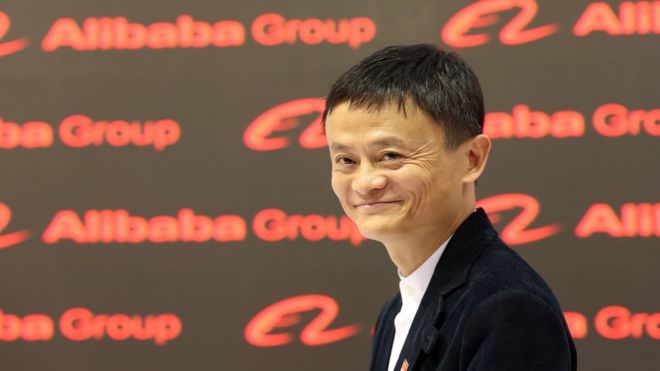
Imported cigarettes on sale on Weibo. Photo: Handout

While advertising and online selling of tobacco are prohibited, e-cigarettes fall in a grey area. China’s tobacco agency has banned the sale of IQOS, a type of battery heated cigarette that delivers nicotine. However, regulations for non-nicotine vaporisers are less clear. These continue to be widely available online.

“In China, even toilet paper has standards. There are none for e-cigarettes,” Li Enze, the industrial law committee secretary for the Chinese Association on Tobacco Control, said.

“I think there needs to be a total ban on the sale of e-cigarettes until standards and regulations are set.”

E-cigarettes and vaporisers come in a variety of flavours and shapes to target women and young people, which poses a serious problem according to Li.

Under-18s can easily purchase vaporisers online and can be induced to smoking the real thing, he said.

Two sets of standards for e-cigarettes have been considered by the Standardisation Administration of China since 2017.

However, both were proposed by organisations associated with the state tobacco monopoly, which Li deemed a conflict of interest.

Source: SCMP

16/04/2019

Jack Ma defends the ‘blessing’ of a 12-hour working day

Jack MaImage copyrightGETTY IMAGES
Image caption Jack Ma is stepping down as Alibaba’s executive chairman

The Chinese billionaire and co-founder of the online shopping giant Alibaba has continued to argue for a 9am to 9pm working day, and a six-day week.

Jack Ma’s backing for the so-called “996 system” is being hotly debated in the Chinese media.

Last week, Mr Ma wrote that without the system, China’s economy was “very likely to lose vitality and impetus”.

His stance was backed by fellow tech entrepreneur Richard Liu, the boss of ecommerce giant JD.com.

On Friday, Mr Ma called the opportunity to work 996 hours a “blessing”.

Mr Liu said years of rapid economic growth in China had boosted the number of “slackers”.

The country has enjoyed economic growth averaging 10% for more than 25 years – from the late 1970s to the mid 2000s – but in subsequent years that has slowed to nearer 6%.

The entrepreneurs’ comments come amid reports this week that JD.com is cutting jobs.

Mr Liu, who started the company that would become JD.com in 1998, recently wrote about his attitude to work, saying he used to set his alarm to wake him up every two hours to make sure he could offer his customers a full, 24-hour, service.

He wrote: “JD in the last four, five years has not made any eliminations, so the number of staff has expanded rapidly, the number of people giving orders has grown and grown, while the those who are working have fallen.

“Instead, the number of slackers has rapidly grown! If this carries on, JD will have no hope! And the company will only be heartlessly kicked out of the market! Slackers are not my brothers!”

Mr Ma co-founded Alibaba, sometimes called China’s eBay, in 1999 and has seen it become one of the world’s biggest internet companies.

The company’s market value is now approximately $490bn (£374bn), and Mr Ma’s personal wealth is estimated at around $40bn.

Last year, he announced that he would step down as executive chairman in the near future.

Source: The BBC

10/04/2019

‘Lucky’ phone number sells for US$50,000 in China but it’s not a record

  • Online auction attracts fierce competition, sending value rocketing in first minutes of bidding
  • ‘Auspicious’ numbers are popular in China because they sound like words which signify good fortune
An “auspicious” mobile phone number has sold for more than US$50,000 at an online auction in China. Photo: Shutterstock
An “auspicious” mobile phone number has fetched more than 350,000 yuan (US$52,000) at an online auction in northern China.
The number, which ended in five fives, sold for more than 30 times the starting price of 11,250 yuan, after fierce bidding saw its value rocket to more than 300,000 yuan in just 12 minutes.
A total of 140 people registered to participate in the 24-hour auction and 107 bids were recorded. The winning bid came from a user called Li Zisheng on Tuesday evening, according to Alibaba’s Sifa court auction platform which hosted the sale.

The South China Morning Post is owned by Alibaba.

Why you shouldn’t clip your nails at night and other superstitions
It is not uncommon for people in China to pay a premium for phone numbers or car licence plates featuring numbers which are considered lucky.
Six, eight and nine are particular favourites, as they sound like the words for strength, wealth and longevity, respectively. The number five is said to represent happiness or wealth.

One of the most expensive mobile numbers on record in China contained a combination of eights and fives and sold at auction for US$680,000 in 2004, according to the Oriental Morning Post.

In 2006, a car licence plate in Zhejiang province, eastern China, containing five eights sold for 1.67 million yuan to a Wenzhou businessman with a BMW, according to online sales platform Tencent Auto.

Not everyone is willing to pay any price for a lucky number plate or phone number, with some internet users on China’s Twitter-like Weibo service questioning why people would pay so much money for such things.

“Are mobile and car plate numbers really this important?” a user from Hunan province, central China, wrote. “This type of number will have a higher chance of getting spam calls.”

Source: SCMP

01/03/2019

China’s envoy says Turkish Uighur criticism could hit economic tie

ANKARA (Reuters) – Turkey risks jeopardising economic ties with China if it keeps criticising Beijing’s treatment of Uighur Muslims, China’s envoy to Ankara warned, just as Chinese firms are looking to invest in Turkish energy and infrastructure mega-projects.

Last month Turkey broke a long silence over the fate of China’s Uighurs, saying more than one million people faced arbitrary arrest, torture and political brainwashing in Chinese internment camps in the country’s northwestern Xinjiang region.

Turkey’s Foreign Minister Mevlut Cavusoglu repeated Ankara’s concern at a United Nations meeting this week, calling on China to respect human rights and freedom of religion.

China has denied accusations of mistreatment and deems criticism at the United Nations to be interference in its sovereignty. Beijing says the camps are re-education and training facilities that have stopped attacks previously blamed on Islamist militants and separatists.

For now, Deng said that many Chinese companies were looking for investment opportunities in Turkey including the third nuclear power plant Ankara wants to build.

Several Chinese firms including tech giant Alibaba, are actively looking at opportunities in Turkey after the lira’s sell-off has made local assets cheaper.

In addition to Alibaba, which last year purchased Turkish online retailer Trendyol, other companies holding talks included China Life Insurance and conglomerate China Merchants Group, Deng said.

GAPING DEFICIT

Deng said Chinese banks wanted to invest in Turkey, following the lead of Industrial and Commercial Bank of China (ICBC) which bought Tekstilbank in 2015.

Chinese investment in Turkey would help narrow Ankara’s gaping current account deficit, which stood at $27.6 billion last year. Turkey’s trade deficit with China alone stood at $17.8 billion last year, according to Trade Ministry data.

In January, Turkey’s Finance Minister Berat Albayrak said it was “impossible” for Turkey to maintain such a trade deficit with China and other Asian countries, saying the government was considering taking measures.

Deng said he did not expect Turkey to take protectionist steps. “Both countries are strictly against such policies, and both economies need an open world economy,” he said.

He also called on Turkey to adopt Chinese payment platforms such as WeChat and AliPay. “People don’t want to pay in cash and the population here is very young so they wouldn’t have trouble adapting to new technologies,” Deng said.

Good diplomatic and political ties, however, would remain crucial for developing economic ties and attracting more Chinese investment, he said, adding that he had raised the issue with Cavusoglu on Tuesday, a day after the foreign minister’s intervention at the United Nations.

“The most important issue between countries are mutual respect,” he said. “Would you stay friends if your friend criticized you publicly every day?

Source: Reuters

Law of Unintended Consequences

continuously updated blog about China & India

ChiaHou's Book Reviews

continuously updated blog about China & India

What's wrong with the world; and its economy

continuously updated blog about China & India