Archive for ‘Archaeologists’

07/05/2020

Xinhua Headlines: Archaeological findings provide key proof of Chinese civilization origin

— Chinese archaeologists announced significant achievements at the Shuanghuaishu site in central China’s Henan Province, providing key proof of the origin of the over 5,000-year-long Chinese civilization.

— With an area of 1.17 million square meters, the Shuanghuaishu site, dating back to around 5,300 years, is located on the south bank of the Yellow River in the township of Heluo, Gongyi City, and was proposed to be named “Heluo kingdom.”

— A large number of relics of the Yangshao Culture dating back 5,000 to 7,000 years have been discovered at the site.

by Xinhua writers Xu Ruiqing, Wang Ding, Gui Juan, Shuang Rui

ZHENGZHOU, May 7 (Xinhua) — Chinese archaeologists announced Thursday significant achievements at the Shuanghuaishu site in central China’s Henan Province, providing key proof of the origin of the over 5,000-year-long Chinese civilization.

With an area of 1.17 million square meters, the Shuanghuaishu site is located on the south bank of the Yellow River in the township of Heluo, Gongyi City.

The ancient city relic dating back to around 5,300 years ago was proposed by Chinese archaeologists to be named “Heluo kingdom” after its location in the center of the Heluo area, where the Yellow River (known as He in ancient China) and the Luohe River meet.

“The Shuanghuaishu site is the highest-standard cluster with the nature of a capital city discovered so far in the Yellow River basin in the middle and late stage of Yangshao Culture, the early stage of the formation of Chinese civilization,” said Li Boqian, a professor at Peking University, at a press conference on major archaeological discoveries at Shuanghuaishu site held Thursday in Zhengzhou, the provincial capital.
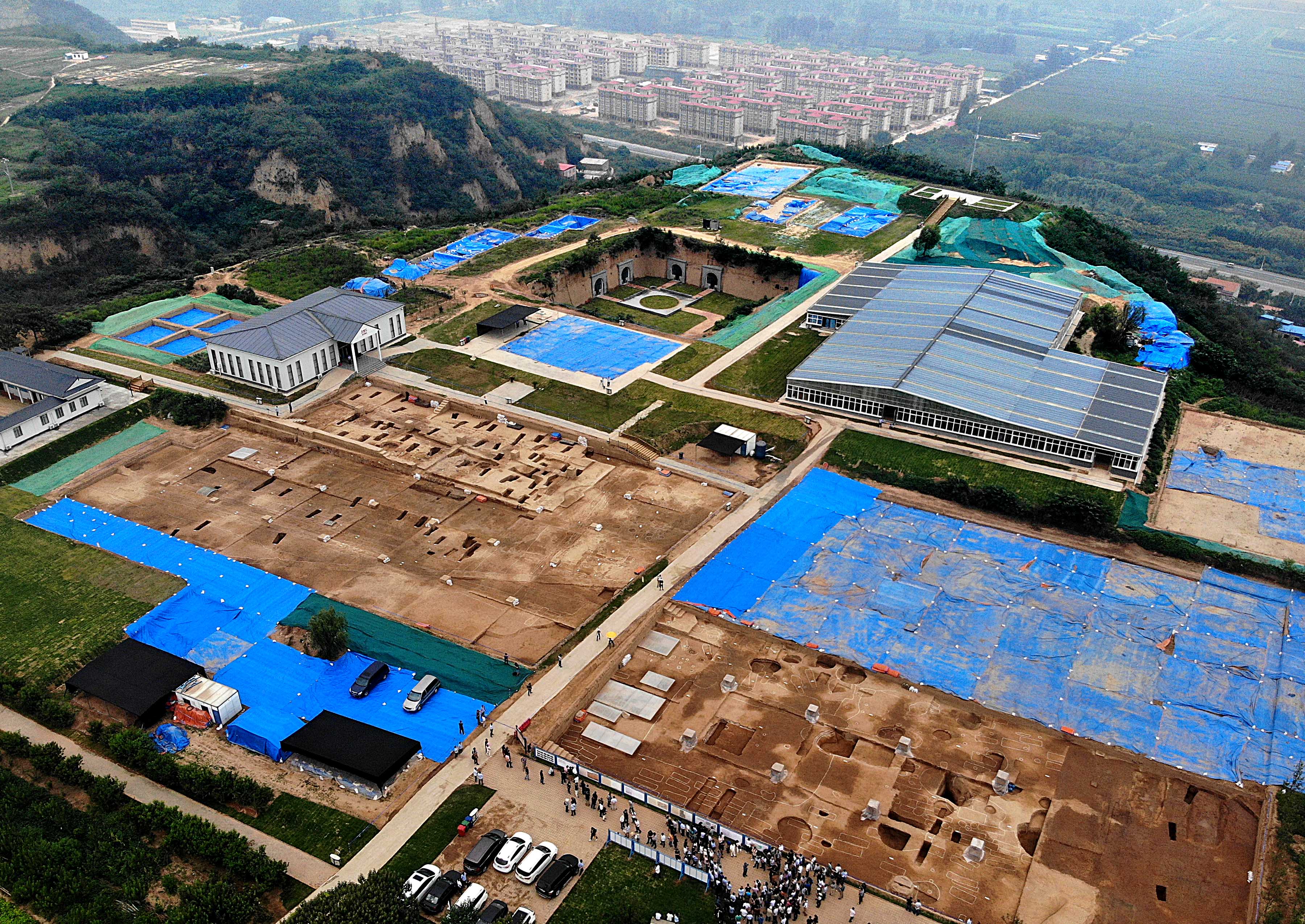
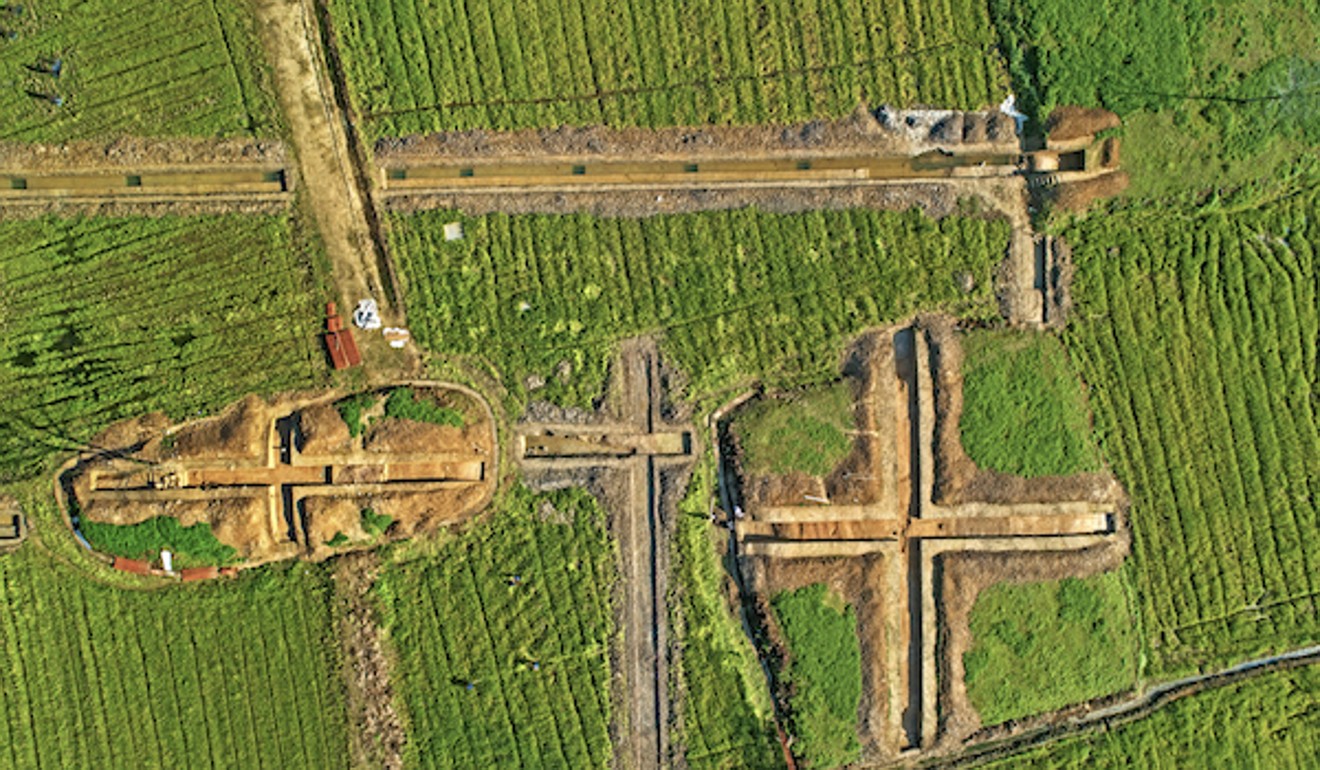
Aerial photo taken on Aug. 27, 2019 shows the Shuanghuaishu site in central China’s Henan Province. (Xinhua/Li An)

A large number of relics of the Yangshao Culture dating back 5,000 to 7,000 years have been discovered at the site, said Gu Wanfa, director of the Zhengzhou Municipal Research Institute of Cultural Relics and Archaeology, at the press conference.

“The important archaeological findings provide key proof of the origin of Chinese civilization, and also prove the representativeness and influence of the Heluo area in the golden stage of the origin of Chinese civilization around 5,300 years ago,” said Wang Wei, a member of the Chinese Academy of Social Sciences.

Since 2013, the Zhengzhou Municipal Research Institute of Cultural Relics and Archaeology and the Institute of Archaeology of the Chinese Academy of Social Sciences have conducted continuous archaeological excavations on the site.

According to archaeologists, the Shuanghuaishu site was about 1,500 meters long from east to west and 780 meters wide from north to south. It was surrounded by three ring trenches with each found to have external access, forming a strict defense system.

Aerial photo taken on Aug. 27, 2019 shows the Shuanghuaishu site in central China’s Henan Province. (Xinhua/Li An)

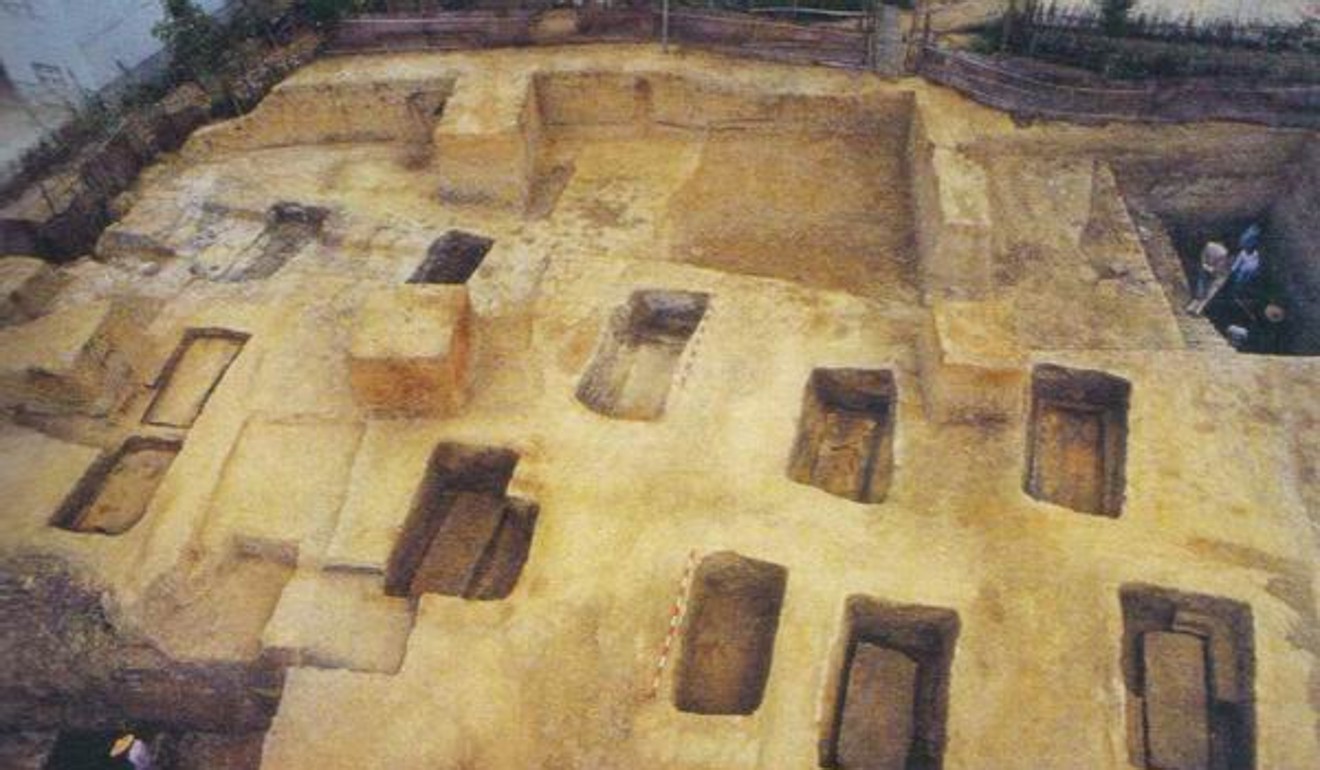
The central residential area with four rows of houses was found in the northern part of the inner ring moat. Meanwhile, three public cemeteries with more than 1,700 tombs, three sacrificial remains, an astronomical relic, a pottery workshop area, a water storage area, a road system, and other facilities were also discovered at the city ruins.

“The Shuanghuaishu site was a well-selected and scientifically planned settlement site,” said Wang.

“Based on the geographical location and scale, it’s also the only large-scale city settlement discovered so far in the Yellow River basin from the middle and late stage of Yangshao Culture,” Wang added.

Archaeologists believe that the Heluo kingdom was the source of many typical characteristics of Chinese civilization.

Silk originated in China and later became one of the country’s major trade items. “The mulberry-growing and silkworm-raising culture was an important component of Chinese civilization,” said Li.

Among the unearthed relics at Shuanghuaishu, a boar tusk carving of a silkworm, 6.4 cm long, nearly 1 cm wide and 0.1 cm thick, was believed to be China’s earliest carving depicting silkworms.

Undated photo shows a boar tusk carving of a silkworm unearthed at the Shuanghuaishu site in central China’s Henan Province. (Xinhua)

Experts say that the carving depicts a spinning silkworm which is quite similar to modern silkworms in appearance. “The spinning shape of the carving suggests that ancient Chinese people were familiar with the habits of silkworms,” said Gu.

Along with silk fabrics unearthed at the surrounding Wanggou site and Qingtai site, archaeologists said they are solid evidence to prove that the ancient Chinese in the Yellow River basin began raising silkworms and silk production around 5,300 years ago.

“Except Shuanghuaishu and its surrounding settlement sites, there were no definite discoveries from around 5,300 years ago related to the silk textile industry in other parts of the country,” said Li. “In that sense, they are the earliest representatives in the development history of Chinese mulberry cultivation and silkworm-rearing culture.”

Meanwhile, at the astronomical relic at Shuanghuaishu, nine pottery pots were arranged in the pattern of the nine stars of the Big Dipper, which shows that the ancestors of Heluo had relatively mature astronomical knowledge.

Photo taken on April 28, 2020 shows one of nine pottery pots arranged in the pattern of the nine stars of the Big Dipper, at an astronomical relic at the Shuanghuaishu site in central China’s Henan Province. (Xinhua/Li An)

“The relic also indicates the worship of the celestial body may have formed a grand sacrificial ceremony for observing the solar terms and praying for a good harvest,” said Gu.

Experts also believe the astronomical relic and the surrounding sacrificial remains constitute a whole, which is consistent with the records of winter solstice sacrifices in ancient Chinese documents. “It is of great significance to the study of early Chinese astronomy and the origin of Chinese civilization,” added Gu.

Source: Xinhua
05/12/2019

4,000-year-old granaries discovered in central China’s Neolithic ruins

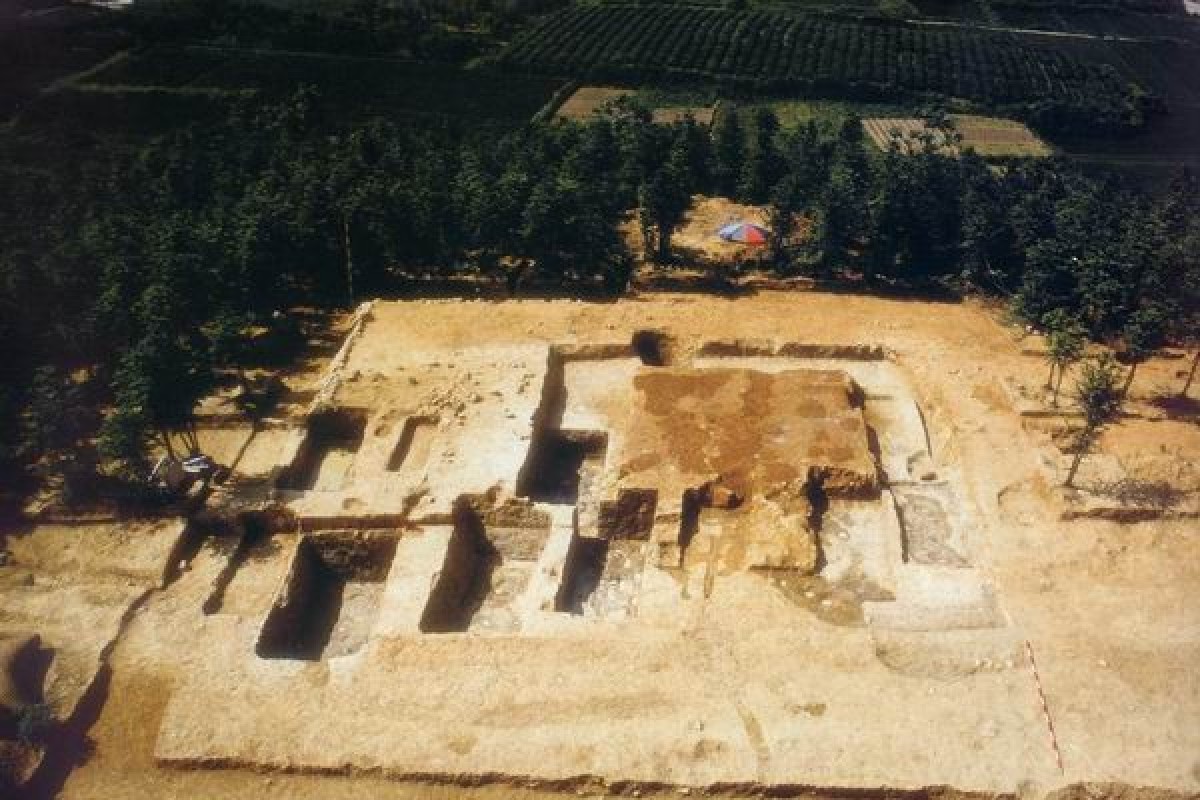
ZHENGZHOU, Dec. 5 (Xinhua) — Archaeologists have unearthed a number of circular foundations at a Neolithic site of Longshan Culture dating back about 4,000 years in Huaiyang, central China’s Henan Province, and believe they are one of China’s earliest granaries.

The Shizhuang Site was discovered when workers built a factory. According to an archaeological survey, the site covers 30,000 square meters with the main living area of 5,000 square meters surrounded with rammed earth walls. The ground bases of the granaries are located inside the ancient settlement.

The Henan Provincial Institute of Cultural Relics and Archaeology began excavation of the site in July.

Cao Yanpeng, an associate researcher at the institute, said the Longshan Culture represents a gradual transition from a primitive society to a civilized era. The cultural sites were discovered in places in the middle and lower reaches of the Yellow River, including the current provinces of Shanxi, Shaanxi, Henan and Shandong.

The main artifacts from the culture are characterized by black pottery.

“Granaries from that period, especially circular ones, were rarely found in previous discoveries,” said Lei Xingshan, secretary of the Party Committee of Peking University’s School of Archaeology and Literature.

The site also contains cultural remains from the Spring and Autumn period (770 B.C.- 476 B.C.), and Han (202 B.C.-220) and Tang (618-907) dynasties.

Source: Xinhua

07/07/2019

Ancient Chinese city ruins become country’s latest Unesco World Heritage Site

  • Five thousand-year-old ruins in Zhejiang province are the earliest known example of Chinese civilisation
  • Country passes Italy to become home to the largest number of World Heritage Sites
The Liangzhu site in Zhejiang dates back to 3,500BC. Photo: Thepaper.cn
A 5,300-year old Chinese city that provides the earliest example of civilisation in the country has been named as the country’s latest Unesco World Heritage Site.
The Liangzhu Archaeological Site in Zhejiang province was designated a “cultural site” at the latest Unesco meeting in Azerbaijan, bringing the total number of Chinese heritage sites to 55 – passing Italy as the country with the largest number in the world.
The ruins, located on the outskirts of the modern city of Hangzhou, sits on the plain of river networks in the basin of the Yangtze River and date back to 3,300BC.
The site covers an area of 14.3 square kilometres, and mainly consists relics of 11 dams, cemetery sites, water conservancy system and walls that gives evidence to an early Chinese urban civilisation, with rice cultivation as the economic foundation.
An aerial view of the site. Photo: Thepaper.cn

The discovery of the site was of “primary importance” as it provides evidence of compelling evidence that Chinese civilisation started 5,000 years ago, 1,000 years earlier than previously thought, Colin Renfrew, a retired professor of archaeology at University of Cambridge, told state news agency Xinhua.

“So when we are talking of the origins of state society in China, we can think of the Liangzhu … instead of the Shang civilisation around 1,500BC.

The site was first discovered in 1936 when a team of archaeologists unearthed some pottery and began searching for further evidence

Liangzhu is China’s 55th Unesco World Heritage Site. Photo: Thepaper.cn

A breakthrough came in 1986 when a burial site with around 1,200 artefacts made from jade, pottery and ivory was uncovered.

The walls of the city were discovered in 2007 and the surrounding water conservancy system was unearthed in 2015.

Archaeologists estimate that it would have taken 4,000 people working for a decade to build the system, according to Xinhua.

The decision to add the site to the Unesco list is the culmination of more than two decades’ work, with preliminary work starting in 1994.

The site is now open to tourists, but a maximum number allowed to visit the site is limited to 3,000 a day and bookings must be made online.

Source: SCMP

22/05/2019

Beyond the Yellow River: DNA tells new story of the origins of Han Chinese

  • Researchers say history of China’s biggest ethnic group is more complex than many believe
  • DNA study involving 20,000 unrelated people points to three river origins
The study of Han DNA by the team from the Kunming institute challenges a long-held view of the early origins of Chinese civilisation. Photo: Xinhua
The origins of China’s biggest ethnic group can be traced back to three river valleys, deposing the Yellow River as the sole cradle of Chinese civilisation, according to a new study.
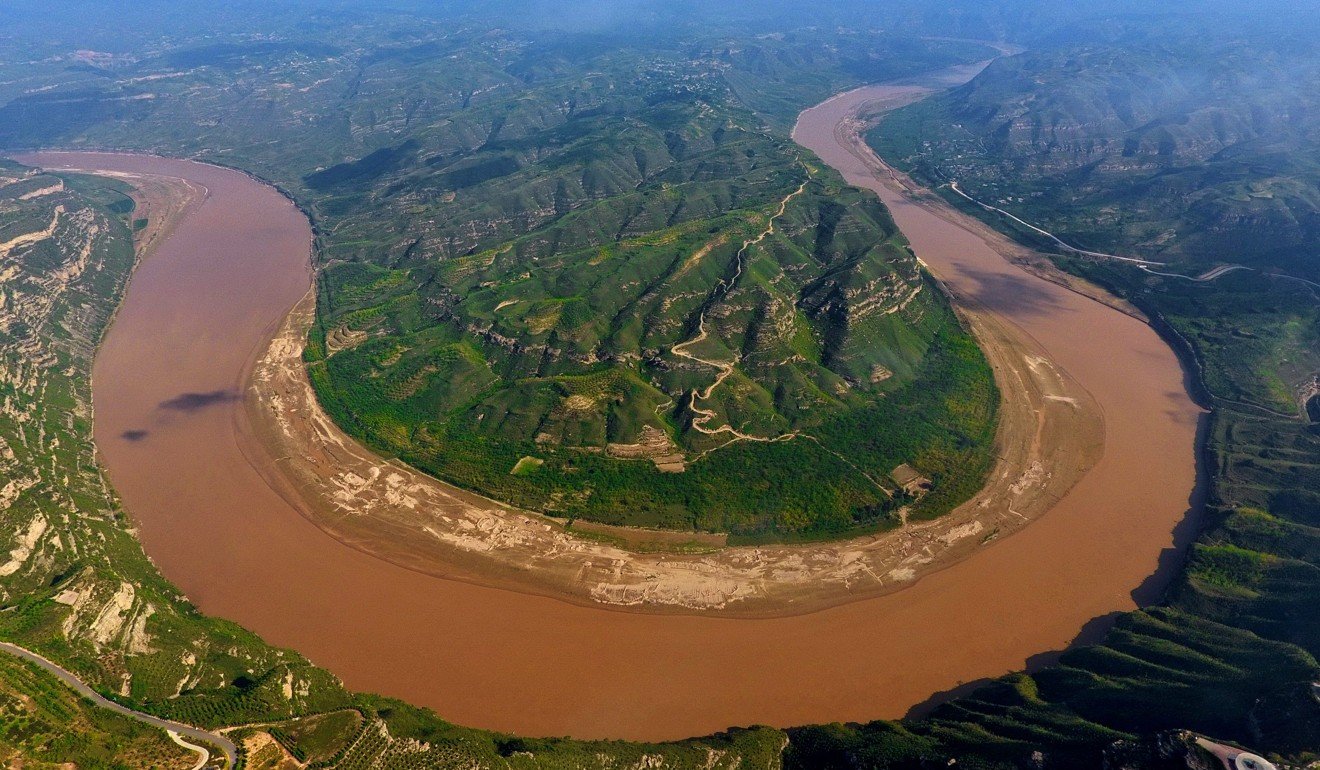
The Yellow has long been hailed as the mother river of Han Chinese, who make up nearly 92 per cent of the country’s population today.
But research published in the online journal Molecular Biology and Evolution on Wednesday said the Yangtze and Pearl rivers – as well as the Yellow – gave rise to genetically separate groups about 10,000 years ago. Those ancestors then mingled to become the largest ethnic group in the world today, it said.
“The history of Han Chinese is more sophisticated than thought,” said Professor Kong Qingdong, a researcher with the Kunming Institute of Zoology at the Chinese Academy of Sciences and lead scientist in the study. “Many details need investigation.”
A DNA study suggests the Yellow River (above) may have to share its place as a cradle for Han Chinese with the Yangtze and the Pearl. Photo: Xinhua

After analysing DNA samples from more than 20,000 unrelated Han Chinese, examining their dialects and family geography and comparing those to archaeological DNA records, scientists concluded that the Yangtze and Pearl had equal claim with the Yellow to Han origins.

Progenitors from the three river valleys evolved independently, the Kunming team said, and distinctions found in the mitochondrial DNA (the mother’s line) of study volunteers added weight to their assertion.

Who are you? DNA tests help Chinese retrace ancient steps

About 0.07 per cent of the DNA examined in the Han Chinese study differed according to river valley origin. By comparison, the difference was much lower – 0.02 per cent – when the study volunteer data was assessed by dialect, the researchers said.

Earlier studies of genetic markers and microsatellite data that mapped the prevalence of DNA revealed that Han Chinese can be generally divided into two groups: North and South. The latest study found that the genetic variation between North and South Han Chinese is 0.03 per cent, considerably less significant than the distinction by rivers.

Dr Li Yuchun, lead author of the paper, said the findings helped trace the history of Han to the dawn of civilisation, the emergence of agriculture and the sustainable growth of population.

The earliest migrants from Africa to China arrived in what is now the southwest between 60,000 and 100,000 years ago, studies said. The genes of this group of hunter-gatherers were largely unchanged for tens of thousands years.

About 10,000 years ago, agricultural practices began to emerge in the valleys of the three rivers. Archaeologists found evidence of millet cultivation around the Yellow River, rice in the Yangtze, and roots and tubers in the Pearl.

The busy Yangtze River flows through Chongqing in southwest China. Photo: Xinhua

“Increasing food led to a population boom in these areas. We can see it in the separate path of gene evolution,” Li said.

The research also found that women were able to preserve their genetic story better than men as they stayed at home to tend the fields, while men went to explore, trade or wage war.

“Females are resilient to invasion,” she said.

The cultural significance of knowing one’s ancestry

The research team planned to examine the Y-chromosome, which passed from father to son, to study the expansion of the Han civilisation, Li said.

“It will be interesting to hear the story from a male perspective,” she said.

As the Han empires expanded, many ancient ethnic groups such as Huns, Siberians, Khitan in northern China and the Thai-Khadai speaking peoples in the south, passed from the record.

Some researchers think these minorities become extinct, but others believe they were absorbed into the Han Chinese population.

Source: SCMP

Law of Unintended Consequences

continuously updated blog about China & India

ChiaHou's Book Reviews

continuously updated blog about China & India

What's wrong with the world; and its economy

continuously updated blog about China & India