Chindia Alert: You’ll be Living in their World Very Soon
aims to alert you to the threats and opportunities that China and India present. China and India require serious attention; case of ‘hidden dragon and crouching tiger’.
Without this attention, governments, businesses and, indeed, individuals may find themselves at a great disadvantage sooner rather than later.
The POSTs (front webpages) are mainly 'cuttings' from reliable sources, updated continuously.
The PAGEs (see Tabs, above) attempt to make the information more meaningful by putting some structure to the information we have researched and assembled since 2006.
Team from Dalian Institute of Chemical Physics says its goal is to ‘develop an all-season battery that is low cost but high safety for consumer products’
Researchers make breakthrough by using hard carbon and lithium vanadium phosphate
Chinese researchers say they have made a breakthrough in the development of small lithium batteries that can withstand low temperatures. Photo: Xinhua
Chinese researchers say they have found a way to produce a tiny, lightweight lithium battery for use in mobile phones and electric cars that can hold up to 80 per cent of its charge in temperatures as low as minus 40 degrees Celsius.
The breakthrough came by using a combination of a new material called hard carbon along with lithium vanadium phosphate, the team from the Dalian Institute of Chemical Physics said in a paper published in this month’s edition of the scientific journal Nano Energy.
“Our goal is to develop an all-season battery that is low-cost but high-safety for consumer products,” said Song Zihan, its lead author.
It was an unprecedented approach, but “we proved it works”, he said.
The idea of a battery that can withstand extreme cold is not new. Photo: Shutterstock
The idea of a battery that can withstand extreme cold is not new, and they are already in use in space and in the Arctic and Antarctic.
But they tend to be very bulky because of the heating system and large amount of insulation they need to function properly at sub-zero temperatures.
Such measures are neither physically nor economically viable for applications like smartphones, cameras, laptops or electric cars. The trick, Song said, was replacing the soft graphite in normal lithium batteries with hard carbon.
Graphite is a good conductor and often used for the anode at the bottom of a battery, where electrons are generated. But the performance of graphite drops as the mercury slides.
How military tech sparked a robot revolution in firework factories
Song said that hard carbon was a new material that had attracted a lot of research interest in recent years, and compared with graphite, it had a much higher tolerance for the cold.
That was because of its highly irregular and “almost messy” structure, comprising layers of carbon atoms that are interconnected with each other, he said.
However, hard carbon also caused a rapid depletion of the lithium ions that served as an agent carrying the electric flow in battery, he said.
The researchers want to make battery suitable for use in consumer products. Photo: EPA-EFE
In the past, researchers have tried adding lithium powders or flakes to improve battery life, but the approach has proven costly and dangerous, mostly because pure lithium is highly reactive.
So Song and his colleagues used a composite material called lithium vanadium phosphate as the positive cathode on top of the battery.
The composite was capable of providing enough extra lithium ions for the hard carbon’s need without increasing the risk of fire or explosion, and it was cheap, he said.
“The pairing of hard carbon and lithium vanadium phosphate worked a charm,” Song said.
But the technology is still a long way from being commercially viable.
The battery Song’s team made is far too small for any real-life applications, and enlarging it would require some “innovative engineering solutions”, he said.
Another scientist involved in the project said the team was working with battery manufacturers to see if the technology could be commercialised.
Kremlin says project highlights the growing closeness between the two countries
Military observers argue cooperation between the two sides helps provide counterbalance to American military might
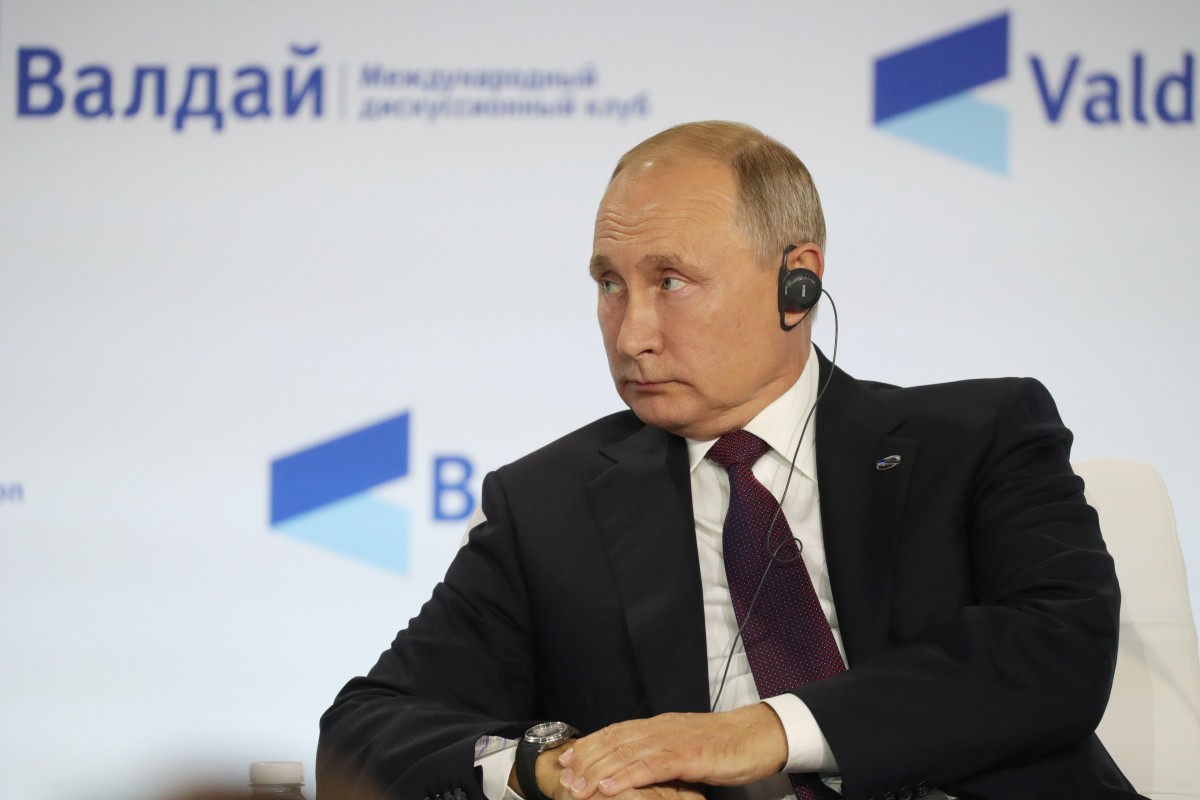
Vladimir Putin disclosed the project at a forum in Sochi. Photo: Sputnik/AFP
Russia is helping China to build an early warning system to counter missile attacks, Vladimir Putin said on Thursday.
Speaking at an international affairs conference in the resort town of Sochi, he said Moscow was helping China increase its missile defence capability, Russian state-owned news agency Sputnik reported.
“This is a very serious endeavour that will fundamentally and radically increase the defence capability of the People’s Republic of China because only the United States and Russia have such a system at present,” the Russian leader said.
Kremlin spokesman Dmitry Peskov declined to say when the system would be operational, but told reporters on a conference call that the move highlighted Russia’s close ties with China.
“Russia has special relations with China of advanced partnership … including the most sensitive [areas] linked to military-technical cooperation and security and defence capabilities,” Peskov said.
Macau-based military observer Antony Wong Dong said Putin’s remarks indicated that military cooperation between Beijing and Moscow may have evolved from the previous “model alliance” to a “real alliance” with the US as their common target.
“Such changes will likely further fuel the strategic arms race, which is already evident from the missile tests [that we have witnessed] and the recent military parade,” said Wong in a reference to the grand parade held in Beijing on Tuesday when China celebrated the 70th anniversary of the founding of the People’s Republic.
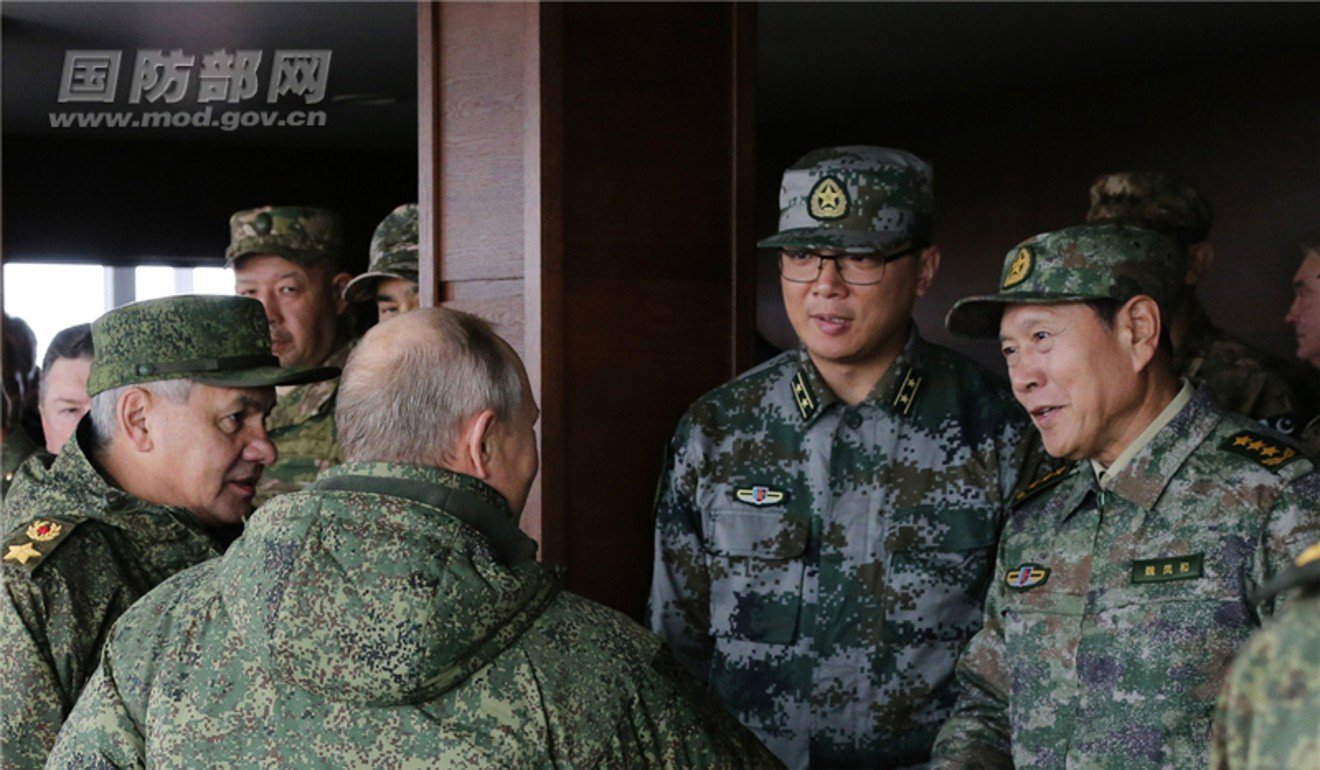
Russian President Vladimir Putin welcomes China’s defence minister Wei Fenghe (right) to a base in Orenburg at the start of a joint exercise. Photo: Handout
Hong Kong-based military analyst Song Zhongping said the system would help Beijing and Moscow set up a joint early ballistic missile network to counter “American global hegemony”.
“If the US wants to attack China [with its ICBMs], their missiles are likely to be launched from the Arctic, and that will be covered by Russia’s early warning system, and that means Moscow will have the capability to alert Beijing,” said Song who added that the Chinese military could provide reciprocal help to Russia.
Beijing-based military expert Zhou Chenming said Putin’s remarks served as a veiled warning to US President Donald Trump who has taken the unilateral step of withdrawing from the Intermediate Range Nuclear Forces Treaty, a cold war-era pact signed between the US and Russia in 1987.
“Joint cooperation will help both Russia and China to save costs because early warning ballistic missile systems are very expensive,” Zhou said,
However, he said Moscow was unlikely to share its most advanced technologies with China.
“For example, Russia’s missile defence system just covers Moscow and St Petersburg, so China’s network will properly just cover Beijing, Tianjin, Hebei province, the Yangtze River Delta area, the Greater Bay Area in South China, as well as a number of key cities in the centre.”
Putin also told the forum that the two countries would continue to work together on space exploration.
Last month, the Ministry of Defence of the Russian Federation announced that Moscow and Beijing have developed a plan for cooperation between military departments for next year and 2021.
Last month 1,600 members of the Chinese military arrived at a Russian training base in the Orenburg oblast for a large-scale joint training exercise.
US president likely had Beijing ‘on his mind’ when he made his audacious offer, diplomat says
Proposal ‘could be interpreted as a very clear signal’ to China and Denmark that the US sees Greenland as part of an exclusive strategic zone, academic says
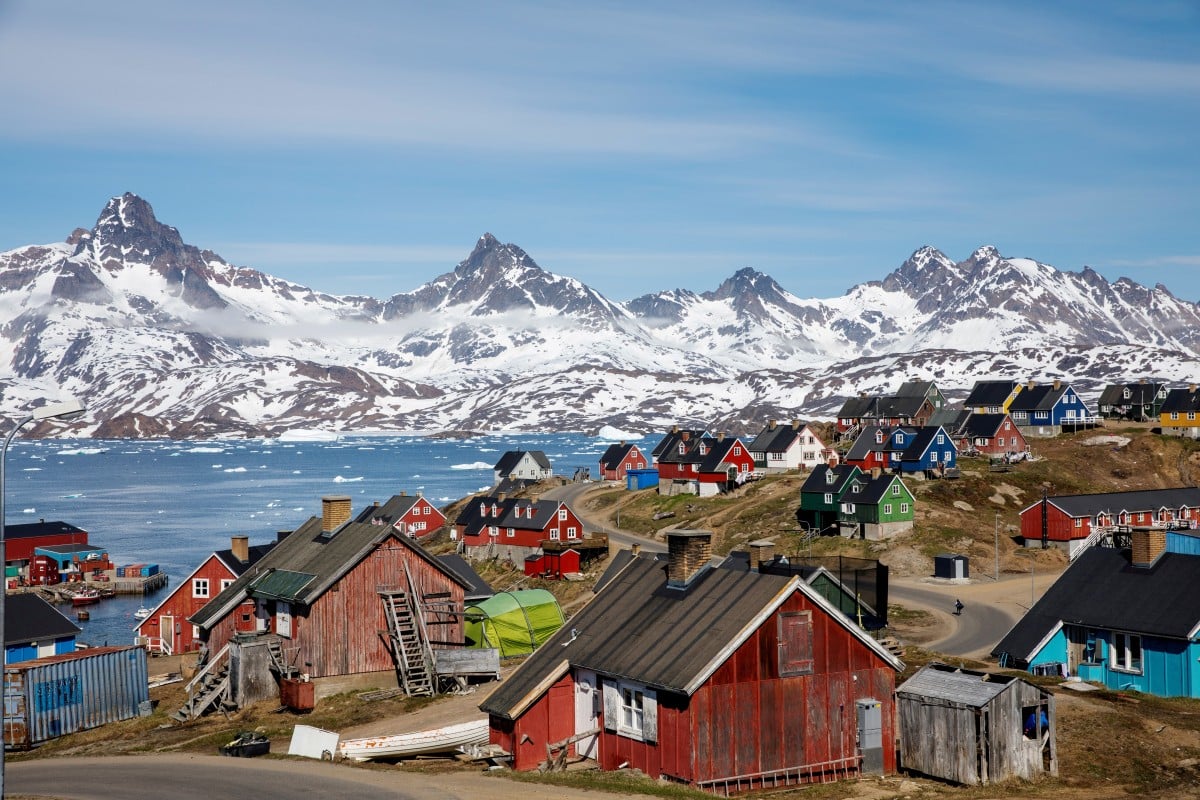
China has been building closer ties with Greenland in recent years. Photo: Reuters
US President Donald Trump’s eyebrow-raising idea to buy Greenland from Denmark last month epitomised what analysts say is Washington’s fear of the growing interplay of Chinese money, Russian aggression and Arctic political division.
Of all the countries involved in the region, Denmark is feeling the most heat, and not just because Trump recently cancelled a trip and called its Prime Minister Mette Frederikse “nasty” for describing his plan to buy the world’s largest island “absurd”.
Over the past few years, both of Denmark’s self-ruled governments – Greenland and the Faroe Islands – have increasingly turned to China for commercial deals, adding weight to Beijing’s growing strategic influence in the vast area that forms the common backyard of Europe, North America and Russia.
Russia seeks Chinese support in developing Arctic shipping routes
Greenland is of particular concern to the White House and the Pentagon as it is home to the US Thule Air Force Base, located far above the polar circle and which served as the first line of defence during the cold war.
Nowadays, the island is also strategically important for the US ballistic missile early warning system, as the shortest route from Europe to North America goes via the ice-cloaked, resource-rich territory.
“Though it’s difficult to tell the motivations of President Trump, he likely had China on his mind with his Greenland offer,” said a Beijing-based diplomat, who asked not to be named.
The US was likely to step up its presence in Greenland in the future, the person said.
In May, US Secretary of State Mike Pompeo accused China and Russia of introducing a strategic power struggle into the Arctic region and described Beijing’s behaviour there as aggressive.
When Greenland signalled an interest in engaging a Chinese state-owned company to build two airports in 2017 – the island’s prime minister flew to Beijing to appeal for financial backing – Copenhagen stepped in amid US pressure, reluctantly agreeing to finance the projects from the public coffers.
Denmark’s reluctance stems from a long-standing mistrust between Copenhagen and Greenland, as the island’s quest for economic development is viewed by the Danes as an attempt to shore up capital to push for a future independence movement.
“There is no doubt that the US foreign and security policy community is becoming far more interested in Greenland as a strategic asset,” said Andreas Bøje Forsby, a researcher at the University of Copenhagen’s Nordic Institute of Asian Studies.
“Proposing to buy Greenland could be interpreted as a very clear signal to both China and Denmark that Greenland is part of an exclusive American strategic zone,” he said.
Danish Prime Minister Mette Frederikse described Donald Trump’s plan to buy Greenland as “absurd”. Photo: Reuters
The government of the Faroe Islands – an archipelago located between Scotland, Norway and Iceland – has a similar readiness to engage with China but for a different purpose.
Unlike Greenland, there are no immediate political movements calling for independence from Denmark, making its overall relationship with Copenhagen more amiable.
This month, the Faroese government will open a liaison office in Beijing, located within the Danish embassy.
“Our top priority is to have a free-trade agreement with China,” Sigmundur Isfeld, the first head of the Faroe Islands’ representation to Beijing, said.
US defence report flags China’s expanding military reach in the Arctic
With Norway – a key competitor of the Faroes in the fishing and export industries – eyeing a similar arrangement with China, the time was ripe to clinch a deal, he said.
“It is a challenge for us … we need to get in the game.”
Although part of Denmark, the Faroe Islands are not part of the European Union and therefore have to form separate trade agreements with other countries.
“For example, there is an EU-Japan economic partnership agreement. It covers all EU nations, but it does not cover the Faroe Islands,” Isfeld said.
Trade between Greenland and China totalled US$126 million in 2108. Photo: AFP
China, for its part, has sought to exert its economic and cultural influence on the Faroes, which has a population of about 52,000 people.
, the embattled Chinese telecoms giant, has been working with the islands’ main telecoms provider for four years and is said to be finalising a plan for 5G upgrades across the archipelago.
Beijing also helped fund a project for a Chinese-Faroese dictionary.
With a population of about 56,000 people, Greenland is one of China’s smallest trading partners. In the first seven months of 2019, trade between the two was US$126 million, with Chinese imports of fish accounting for the bulk of the total.
The Greenland government’s annual political and economic report for 2019 said that strong demand for metals from China had contributed to mineral and mining projects in the country, though China’s transition to a less mineral-intensive economy could spell trouble for the future of the sector.
The island’s gross domestic product is expected to grow by 3 per cent this year, according to the report, with seafood – principally cod, halibut and prawns – set to continue to be its chief export.
The end of the Arctic as we know it
China’s attempts in recent years to expand its involvement in Greenland have run into roadblocks.
In 2016, a Chinese mining company expressed interest in taking over an abandoned marine station in Grønnedal, an offer that the Danish government turned down the following year. A Chinese state-owned construction company had also offered to build airports in Greenland, but withdrew its offer this year.
Also this year, China expanded its involvement in exporting from Kvanefjeld, one of the world’s largest deposits of rare earths and uranium, by creating a joint venture to process and export the resources.
Beijing has made clear its strategic ambitions in the region. Early last year, it unveiled its Polar Silk Road strategy, plotting the course for its future development goals in the region – including scientific, commercial, environmental preservation and resource extraction efforts.
It also aligned its Arctic interests with its Belt and Road Initiative. Chinese companies are encouraged to invest in building infrastructure along the routes and conduct commercial trial voyages to gauge feasibility.
Putin boasts of nuclear icebreaker fleet as he outlines Arctic expansion plans
Anders Rasmussen, a former Danish prime minister and erstwhile Nato secretary general, said in an article published in Atlantic magazine last month that with melting ice caps opening the Arctic Sea to shipping, Arctic sea lanes “will likely become another flashpoint of renewed competition among the great powers as climate change alters our world”.
It was a situation he said he found “regrettable, but inevitable”.
“Both China and Russia are interested in getting a foothold in Greenland, to expand their influence in the Arctic region,” Rasmussen said. “Instead of being a source of contention,
Greenland should serve to highlight how many interests the United States and Denmark have in common.”
New facility is designed to help scientists study particles that help deflect cosmic rays in the high atmosphere
Despite scepticism among some scientists, those familiar with the project insist radar will have a range about 10 times greater than existing ones
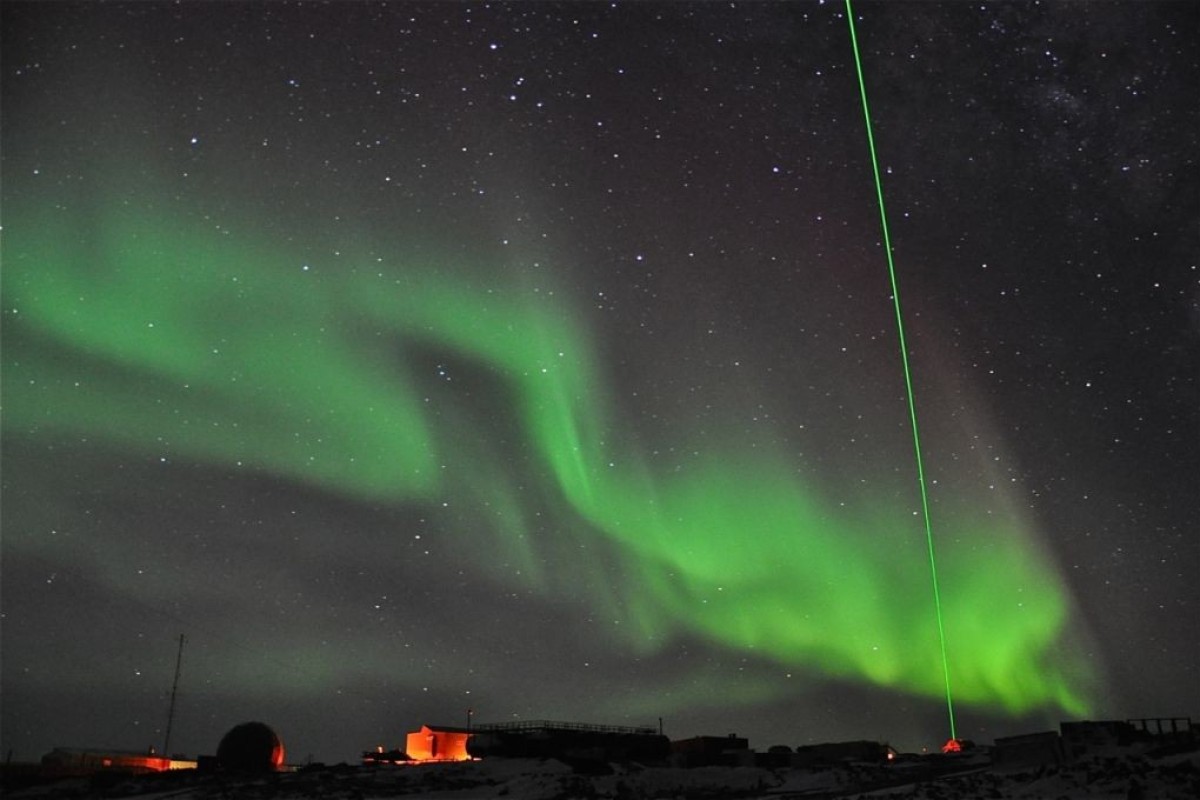
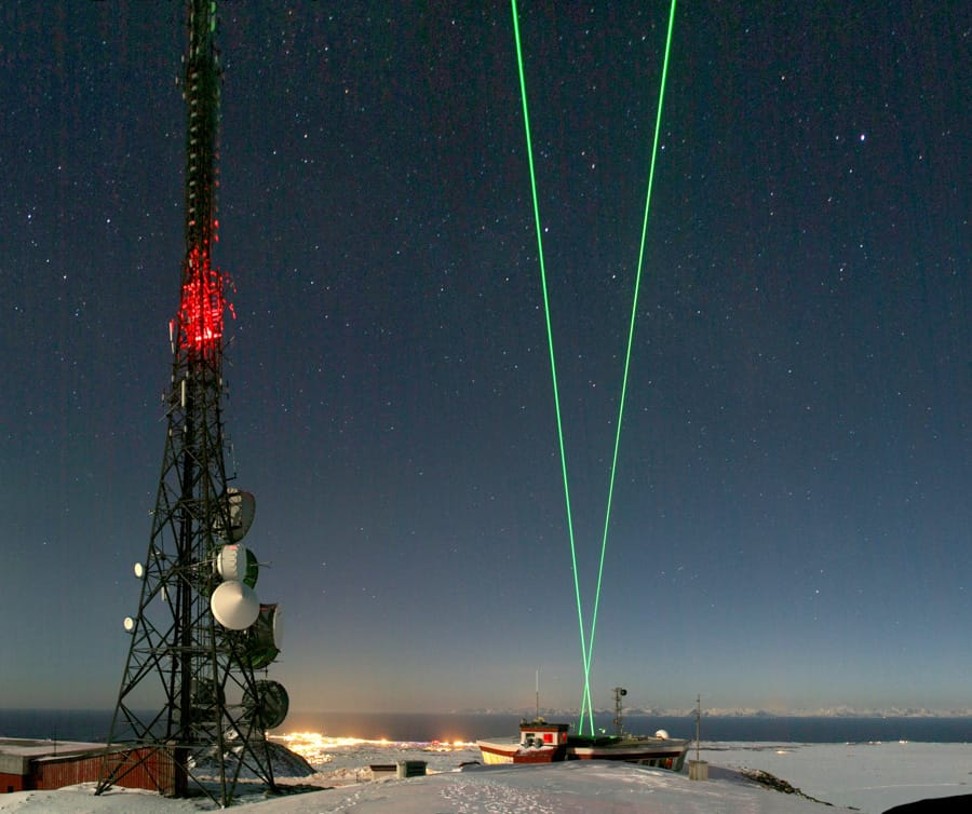
When completed the new laser radar will be used to study the high atmosphere. Photo: Handout
China has started building the world’s most powerful laser radar designed to study the physics of the Earth’s high atmosphere, according to state media reports and scientists informed of the project.
It is described as having a detection range of 1,000km (600 miles) – 10 times that of existing lasers – and will be used to study atmospheric particles that form the planet’s first line of defence against hostile elements from outer space such as cosmic rays and solar winds.
The facility, to be built on a site that remains classified, is expected to be up and running within four years and will form part of an ambitious project to reduce the risk from abnormal solar activities.
The radar will use a high-energy laser beam that can pierce through clouds, bypass the International Space Station and reach the outskirts of the atmosphere, beyond the orbiting height of most Earth observation satellites.
Lasers help tell ghostly story of doomed Nazi submarine U-576 and its entombed crew
There, the air becomes so thin that scientists will be able to count the number of gas atoms found within a radius of several metres.
These high-altitude observations could greatly expand our knowledge of a part of the atmosphere that has been little studied because the distances involved mean no one has been able to make direct observations from the ground.
“The large-calibre laser radar array will achieve the first detection of atmospheric density of up to 1,000km in human history,” said a statement posted on the website of the Chinese Academy of Sciences on Tuesday, a day after the launch of the project.
But the claim has been greeted with some scepticism in the scientific world.
“I think the 1,000km is a misprint!” professor Geraint Vaughan, director of observations at the National Centre for Atmospheric Science in the UK, replied when asked about the project.
Vaughan, who is also a Fellow of the Royal Meteorological Society, said that while he thought the Chinese announcement was “very interesting”, it did not seem possible with existing technology.
At present, the effective range of atmospheric lasers is about 100 kilometres.
Some other senior scientists in China and overseas also expressed doubt about the project, although they requested anonymity due to the sensitivity of the issue.
US warns airmen to beware of laser attacks near China’s military base in Djibouti
“There are other approaches, such as launching a satellite. Building such a huge, expensive machine on the ground does not make sense,” said a Beijing-based laser scientist.
But several researchers told the South China Morning Post that the project did exist, and insisted that 1,000km range was not a mistake.
Hua Dengxin, a professor at Xian University of Technology and a lead scientist in China’s laser radar development programmes, said: “I have heard of the project, yes. But I cannot speak about it.”
Powerful telescopes will pick up the signals reflected back to earth. Photo: Handout
According to publicly available information, the facility will use several large optical telescopes to pick up the faint signals reflected by the high-altitude atoms when the laser is fired at them.
The project is part of the Meridian Space Weather Monitoring Project, an ambitious programme that started in 2008 to build one of the largest, most advanced observation networks on Earth to monitor and forecast solar activities.
By 2025 Meridian stations containing some of the world’s most powerful radar systems will be established across the world – with facilities in Arctic and Antarctic, South China Sea, the Gobi desert, the Middle East, Central Asia and South America.
China in race for counter-drone tech and laser weapons as it tries to catch up with US
The purpose of the Meridian project, according to the Chinese government, is to reduce the risk abnormal solar activities pose to a wide range of Chinese assets including super-high voltage power grids, wireless communication, satellite constellations, space stations or even a future base on the Moon.
Chinese laser scientists have developed some of the world’s most sophisticated systems in recent years, including ranging stations that can track the movement of satellites and space debris, which the Pentagon has claimed have temporarily blinded some American scientists.
Last year researchers based in Xian, the capital of Shaanxi province, announced that they had developed a “laser AK-47” that could set fire to target from a distance of 800 metres.
The use of such a powerful laser raises concerns that passing objects such as planes, satellites or spacecraft – to say nothing of birds – may be at risk from its beams.
But Professor Qiao Yanli, engineer in chief at the Anhui Institute of Optics and Fine Mechanics, part of the Chinese Academy of Sciences, said there was an “extremely low” risk of this happening.
“The sky is enormous. Getting hit by a tiny beam is almost impossible,” he said.
Some much smaller laser radars, such as those installed in auto-driving test vehicles, have reportedly damaged digital cameras by burning a few pixels on sensor.
But spacecraft such as earth observation satellites, according to Qiao, usually have some protection mechanisms, such as a warning system, to avoid permanent damage caused by an accidental laser hit.
‘Laser AK-47’? Chinese developer answers sceptics with videos of gun being tested
Professor Li Yuqiang, a researcher at the Yunnan Observatories in Kunming, whose team has measured the distance between the Earth and the Moon by shooting lasers at a reflector placed on the lunar surface during the US Apollo 15 mission, said detecting atom-sized targets on the fringes of the atmosphere posed many technical challenges.
“The number of photons [particles of light] reflected by the sparse gas particles will be very small. Even if they can be picked up by large telescopes on the ground, the analysis will require some very good algorithms to separate the useful signals from the noise,” Li said.
“How that can be achieved is beyond the scope of my knowledge.”
Brahma Chellaney writes that excessive damming and drastic overuse of water resources are causing the world’s major waterways to run dry
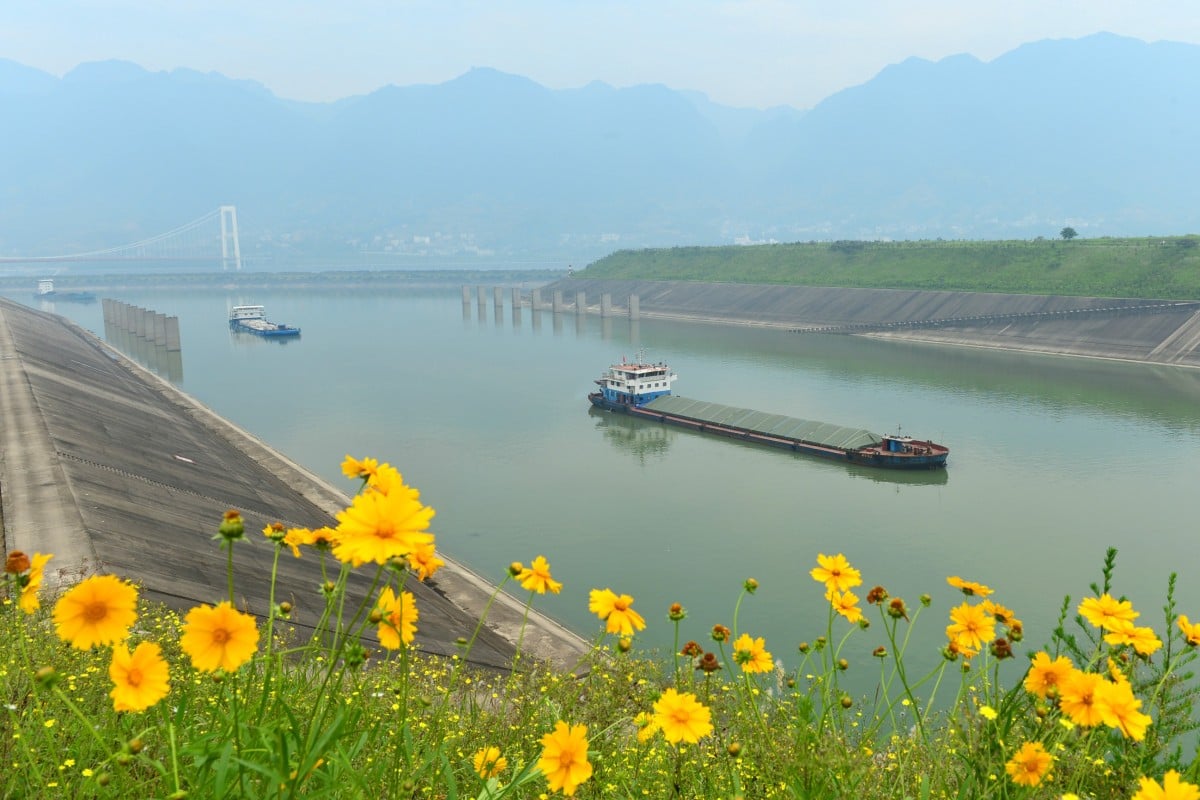
Vessels head for the lock of the Three Gorges Dam in Yichang, in central China’s Hubei province. Sediment build-up in the dam’s reservoir stems from silt flow disruption in the Yangtze River, Brahma Chellaney writes. Photo: Xinhua
Thanks to excessive damming and drastic overuse of water resources, an increasing number of major rivers across the world are drying up before reaching the sea.
Nowhere is this more evident than in China, where the old saying, “Follow the river and it will eventually lead you to a sea,” is no longer wholly true.
While a number of smaller rivers in China have simply disappeared, the Yellow River – the cradle of the Chinese civilisation – now tends to run dry before reaching the sea.
This has prompted Chinese scientists to embark on a controversial rainmaking project to help increase the Yellow’s flow. By sucking moisture from the air, however, the project could potentially affect monsoon rains elsewhere.
For large sections of the world’s population, major river systems serve as lifelines. The rivers not only supply the most essential of all natural resources – water – but also sustain biodiversity, which in turn supports human beings.
Yet an increasing number of rivers, not just in China, are drying up before reaching the sea.
A major new United Nations study published early this month offers grim conclusions: human actions are irremediably altering rivers and other ecosystems and driving increasing numbers of plant and animal species to extinction.
“Nature across the globe has now been significantly altered,” according to the study’s summary of findings.
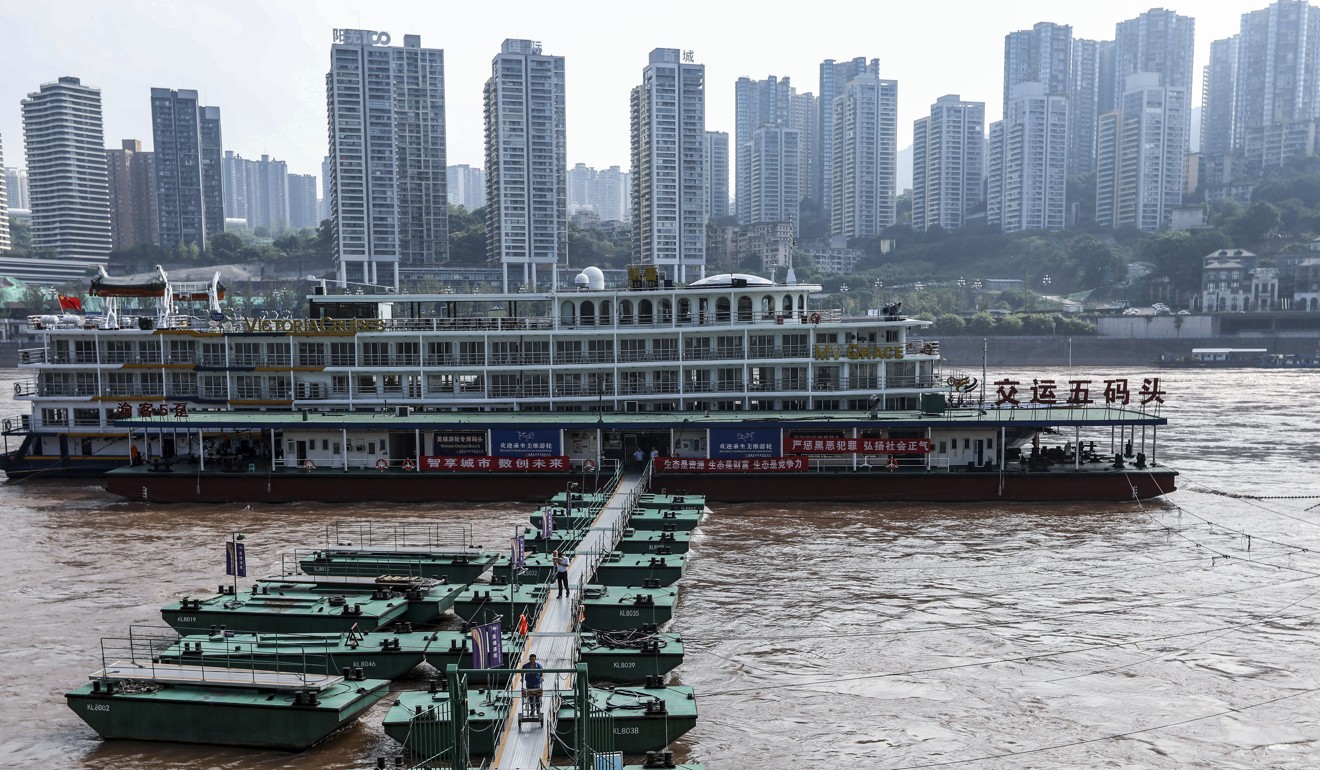
The Yangtze and Jialing rivers come together in the southwestern city of Chongqing. Photo: Simon Song
Water sustains life and livelihoods and enables economic development.
If the world is to avert a thirsty future and contain the risks of greater intrastate and interstate water conflict, it must protect freshwater ecosystems, which harbour the greatest concentration of species.
The Mekong is mighty no more: book charts river’s demise
Yet, according to another study published in Nature this month humans have modified the flows of most long rivers, other than those found in the remote regions of the
Amazon and Congo basins and the Arctic.
Consequently, only a little more than one-third of the world’s 246 long rivers are still free-flowing, meaning they remain free from dams, levees and other man-made water-diversion structures that leave them increasingly fragmented.
Humans have modified the flows of most long rivers, including the Yangtze, home to some of China’s most spectacular natural scenery. Photo: WWF
Such fragmentation is affecting river hydrology, flow of nutrient-rich sediment from the mountains where rivers originate, riparian vegetation, migration of fish and quality of water.
Take the Colorado River, one of the world’s most diverted and dammed rivers. Broken up by more than 100 dams and thousands of kilometres of diversion canals, the Colorado has not reached the sea since 1998.
Sinking sands along the Mekong River leave Vietnamese homeless
The river, which originates in the Rocky Mountains and is the lifeblood for the southwestern United States, used to empty into the Sea of Cortez in Mexico.
But now, owing to the upstream diversion of 9.3 billion cubic metres (328.4 billion cubic feet) of water annually, the Colorado’s flow into its delta has been reduced to a trickle.
Altering the flow characteristics of rivers poses a serious problem for sustainable development, because they affect the ecosystem services on which both humans and wildlife depend. Photo: AP
Other major rivers that run dry before reaching the sea include the Amu Darya and the Syr Darya, the two lifelines of Central Asia; the Euphrates and the Tigris in the Middle East; and the Rio Grande, which marks the border between Texas and Mexico before heading to the Gulf of Mexico.
The overused Murray in Australia and Indus in Pakistan are at risk of meeting the same fate.
Are China’s Mekong dams washing away Cambodian livelihoods?
More fundamentally, altered flow characteristics of rivers are among the most serious problems for sustainable development, because they seriously affect the ecosystem services on which both humans and wildlife depend.
Free-flowing rivers, while supporting a wealth of biodiversity, allow billions of fish – the main source of protein for the poor – to trek through their waters and breed copiously.
Urgent action is needed to save the world’s rivers, including improving agricultural practices, which account for the bulk of freshwater withdrawals
Free-flowing rivers also deliver nutrient-rich silt crucial to agriculture, fisheries and marine life.
Such high-quality sediment helps to naturally re-fertilise overworked soils in the plains, sustain freshwater species and, after rivers empty into seas or oceans, underpin the aquatic food chain supporting marine life.
China’s hyperactive dam building illustrates the high costs of river fragmentation. No country in history has built more dams than China. In fact, China today boasts more large dams than the rest of the world combined.
China’s chain of dams and reservoirs on each of its long rivers impedes the downstream flow of sediment, thereby denying essential nutrients to agricultural land and aquatic species.
A case in point is China’s Three Gorges Dam – the world’s largest – which has a problematic build-up of sediment in its own massive reservoir because it has disrupted silt flows in the Yangtze River.
Likewise, China’s cascade of eight giant dams on the Mekong, just before the river enters Southeast Asia, is affecting the quality and quantity of flows in the delta, in Vietnam.
Yangtze dams may spell end to sturgeon in a decade
Undeterred, China is building or planning another 20 dams on the Mekong.
How the drying up of rivers affects seas and oceans is apparent from the Aral Sea, which has shrunk 74 per cent in area and 90 per cent in volume, with its salinity growing nine-fold.
People beat the heat by cooling off in the Yangtze River in Wuhan, in central China’s Hubei province. Photo: Nora Tam
This change is the result of the Aral Sea’s principal water sources, the Amu Darya and Syr Darya, being so overexploited for irrigation that they are drying up before reaching what was once the world’s fourth-largest inland lake.
Compounding the challenges is the increasing pollution of rivers. Aquatic ecosystems have lost half of their biodiversity since the mid-1970s alone.
Chinese court jails nine for dumping toxic waste in Yangtze
Urgent action is needed to save the world’s rivers. This includes action on several fronts, including improving practices in agriculture, which accounts for the bulk of the world’s freshwater withdrawals.
Without embracing integrated water resource management and other sustainable practices, the world risks a parched future.
President Xi Jinping will meet Russian counterpart Vladimir Putin next month and address economic summit in St Petersburg
Diplomatic flurry will also include regional security forums in Kyrgyzstan and Tajikistan
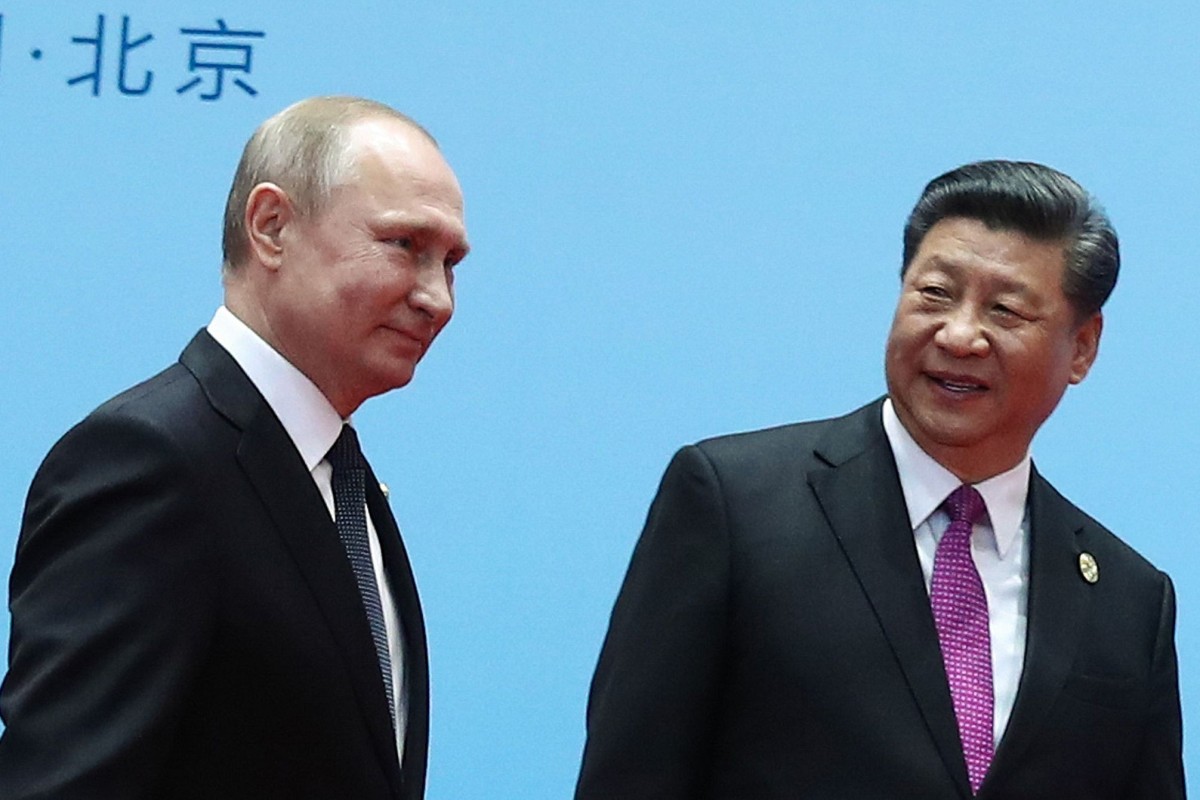
Xi Jinping has met Vladimir Putin more times than any other foreign leader since he took power in 2013. Photo: AFP
Beijing is stepping up efforts to seek support from regional and global players such as Russia and Central Asian nations as its geostrategic rivalry with Washington heats up.
President Xi Jinping is expected to meet his Russian counterpart Vladimir Putin next month, when he will also address the St Petersburg International Economic Summit,
The Chinese president will also visit the Kyrgyzstan capital Bishkek for the Shanghai Cooperation Organisation (SCO) summit in June, as well as another regional security forum in Dushanbe, Tajikistan.
Meanwhile, Vice-PresidentWang Qishan is visiting Pakistan before he heads to the Netherlands and Germany, according to the Chinese foreign ministry.
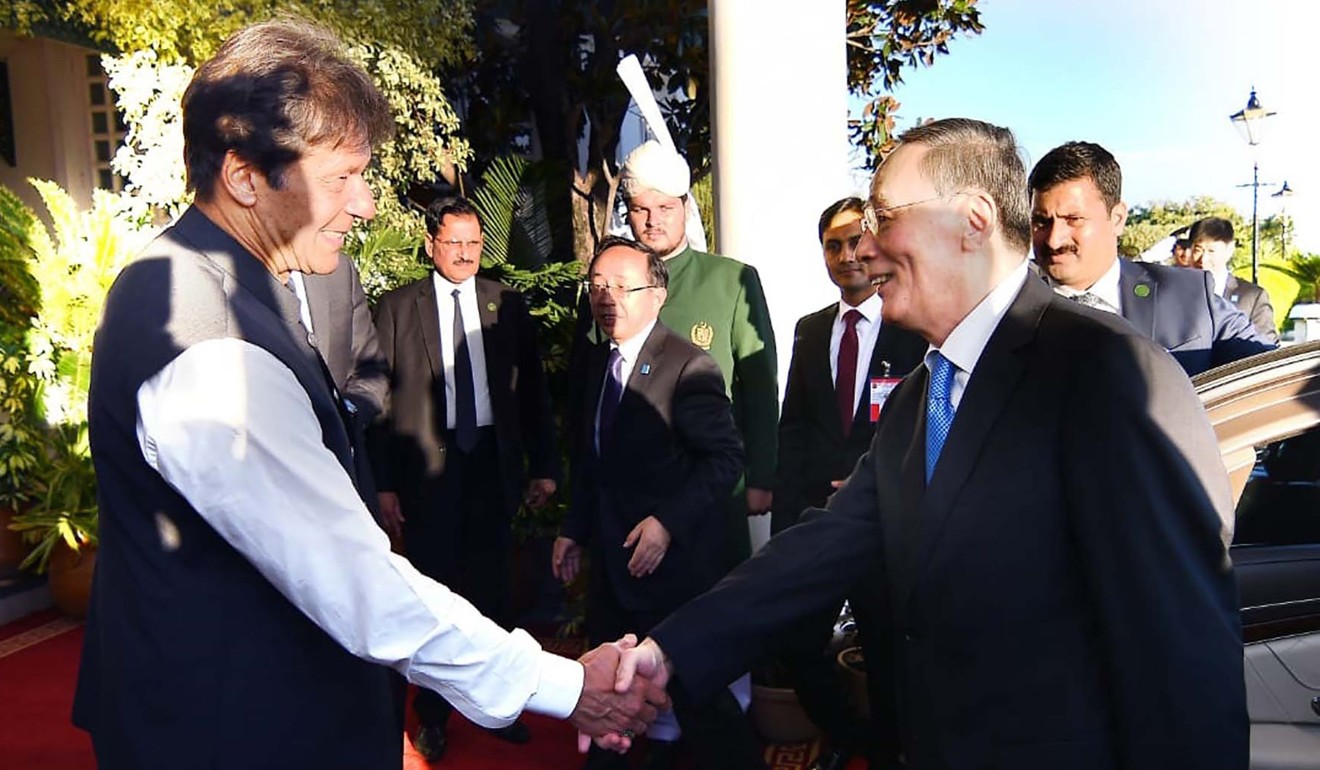
Pakistani Prime Minister Imran Khan meets Chinese Vice-President Wang Qishan in Islamabad on Sunday. Photo: AFP
The latest flurry of diplomatic activity comes as competition between China and the US intensifies on several fronts including trade and technology, the South China Sea and the Arctic, where Beijing’s partnership with Moscow –
It will be Xi’s second time at the St Petersburg forum, and observers expect the Chinese leader will reaffirm Beijing’s commitment to multilateralism and promote the nation as a champion of openness and cooperation.
China-Russia ties unrivalled, Beijing warns before Pompeo meets Putin
It will also be his second meeting with Putin in two months, after talks on the sidelines of the Belt and Road Forum in Beijing in late April, when the Russian president
for the controversial China-led infrastructure and investment initiative.
With China and Russia edging closer, the latest meeting is likely to see efforts to coordinate their strategies on a range of issues – including Venezuela, North Korea, nuclear weapons and arms control, according to observers. Xi has met Putin more times than any other foreign leader since he took power in 2013.
“This time it is very likely that the latest anti-China moves by the US, such as new tariffs and the Huawei ban, will feature prominently in their conversations,” said Artyom Lukin, an associate professor at Far Eastern Federal University in Vladivostok.
Lukin said Russia’s stagnating economy and sanctions imposed by the West limited its role as a substitute for the foreign markets and technologies China could lose access to because of the US crusade. But he said Putin would “provide political and moral support to Xi”.
“That is also significant as Russia has been withstanding intense US-led sanctions pressure for more than five years already,” Lukin said, referring to sanctions imposed after Russia’s annexation of Crimea in 2014.
Xi and Putin are also expected to talk about Venezuela, where US-backed opposition leader Juan Guaido is attempting to oust socialist President Nicolas Maduro, who has the support of China and Russia.
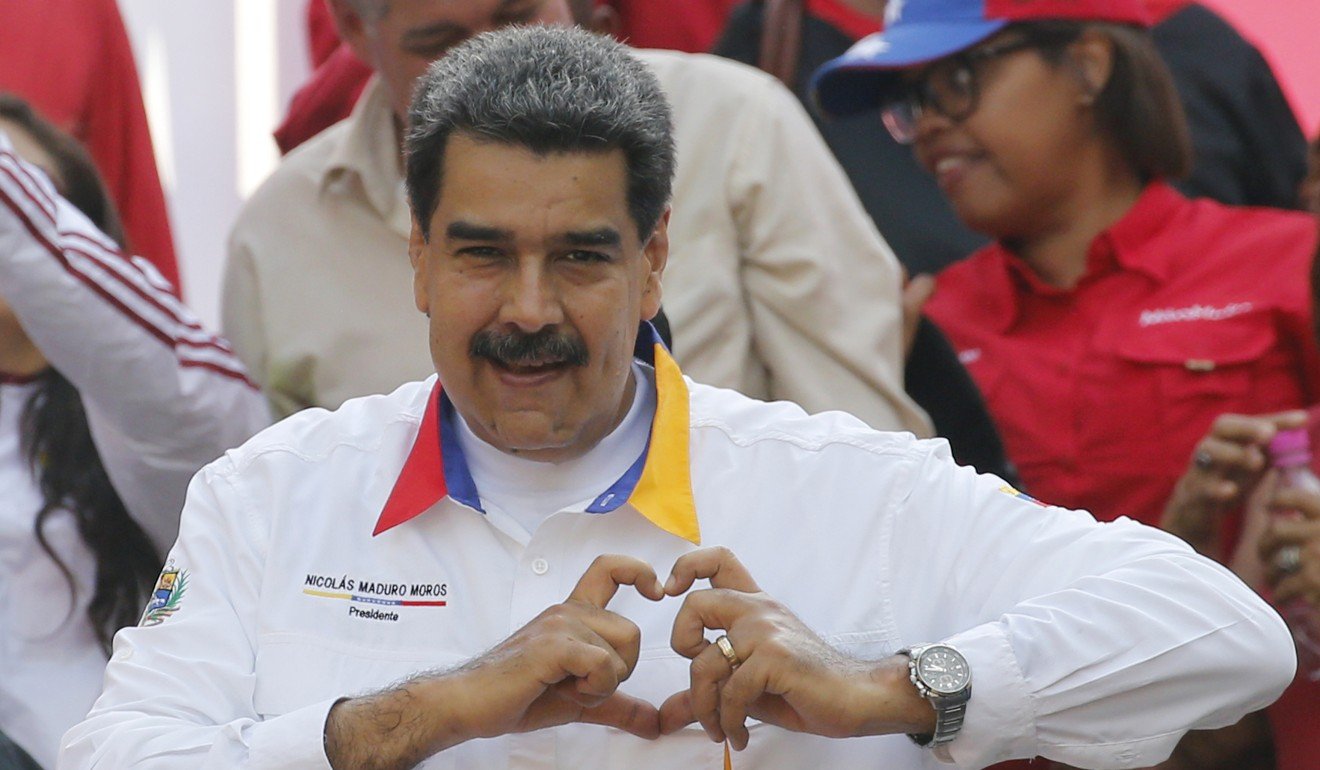
Venezuelan President Nicolas Maduro has the backing of China and Russia. Photo: AP
“Moscow and Beijing are not able to seriously hurt Washington by raising tariffs or denying access to high technology. However, there are plenty of areas where coordinated Sino-Russian policies can damage US interests in the short term or in the long run,” Lukin said. “For example, Moscow and Beijing could intensify their joint support for the Venezuelan government of Nicolas Maduro, frustrating Washington’s efforts to dislodge him.”
China and Russia would also be seeking to boost economic ties. Bilateral trade, dominated by Chinese imports of gas and oil, reached US$108 billion last year – falling far short of the target set in 2011 by Xi’s predecessor, Hu Jintao, of US$200 billion by 2020.
China and Russia to forge stronger Eurasian economic ties
Li Lifan, an associate research professor at the Shanghai Academy of Social Sciences, said bilateral trade was a sticking point. “This is one of the potential hindrances in China-Russia relations and Beijing is hoping to [address this] … in the face of a possible global economic slowdown,” Li said.
Given the escalating trade war with Washington, he said China would seek to diversify its investments and markets to other parts of the world, particularly Russia and Europe.
“China will step up its investment cooperation with Europe and Russia and focus more on multilateral investment,” Li said.
But Beijing was not expected to do anything to worsen tensions with Washington.
“China is currently taking a very cautious approach towards the US, trying to avoid heating up the confrontation and further aggravation of the situation,” said Danil Bochkov, a contributing author with the Russian International Affairs Council. “For China it is important to demonstrate that it has a reliable friend – Russia – but that should not be done in an openly provocative manner.”
Stephen Blank, a senior fellow at the American Foreign Policy Council in Washington, said Beijing and Moscow would also seek to contain US influence “as far as possible” from Central Asia, where China has increased its engagement through infrastructure building under the “Belt and Road Initiative”.
Leaders from the region will gather in Bishkek next month for the SCO summit, a security bloc set up in 2001 that now comprises China, Russia, Kazakhstan, Kyrgyzstan, Tajikistan, Uzbekistan, India and Pakistan. Those members account for about 23 per cent of the world’s land mass, 45 per cent of its population, and 25 per cent of global GDP.
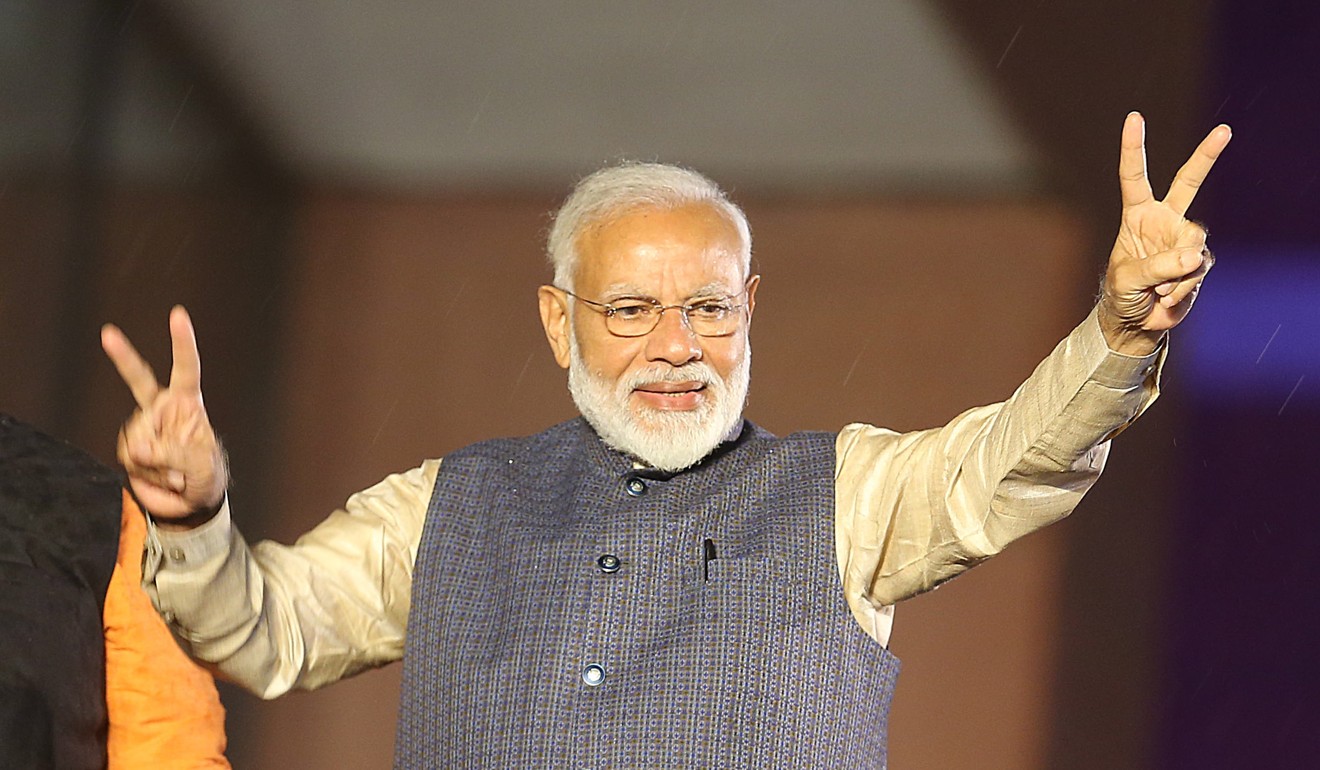
Newly re-elected Indian Prime Minister Narendra Modi could meet the Chinese president for talks in Bishkek next month. Photo: EPA-EFE
There is growing speculation that Xi will meet newly re-elected Indian Prime Minister Narendra Modi on the sidelines of that summit.
Independent analyst and author Namrata Goswami said India would be seeking a commitment to a WTO-led and rules-based multilateral trading system during the SCO talks.
“This is interesting and significant given the current US tendencies under President Donald Trump focused on ‘America first’ and the US-China trade war,” Goswami said.
Counterterrorism will again be a top priority at the SCO summit, amid concerns among member states about the rising number of Islamic State fighters returning from Syria and Iraq. Chinese scholars estimated last year that around 30,000 jihadists who had fought in Syria had gone back to their home countries, including China.
Alexander Bortnikov, chief of the main Russian intelligence agency FSB, said earlier that 5,000 fighters from a group affiliated with Isis had gathered in areas bordering former Soviet states in Central Asia, saying most of them had fought alongside Isis in Syria.
War-torn Afghanistan, which shares a border with four SCO member states – China, Pakistan, Tajikistan and Uzbekistan – is also likely to be high on the agenda at the Bishkek summit.
“With the Trump administration drafting plans to withdraw troops from Afghanistan, the SCO will assess the security situation there and decide whether to provide training for Afghan troops,” Li said.
Eva Seiwert, a doctoral candidate at the Free University of Berlin, expected the security bloc would also discuss Iran after the US withdrew from the 2015 nuclear deal and ordered new sanctions against the country.
Iran, which has observer status with the SCO, was blocked from becoming a full member in 2008 because it was subject to UN sanctions at the time. But its membership application could again be up for discussion.
Iran presses China and Russia to save nuclear deal
“The Trump administration’s unilateral withdrawal from the Iran nuclear deal in 2018 made it easy for China and Russia to present themselves as the proponents of peaceful settlement of conflicts,” Seiwert said. “Discussing the possibility of admitting Iran as a full member state would help the SCO members demonstrate their support of multilateral and peaceful cooperation.
“This would be a strong signal to the US and enhance the SCO’s standing in the international community,” she said.
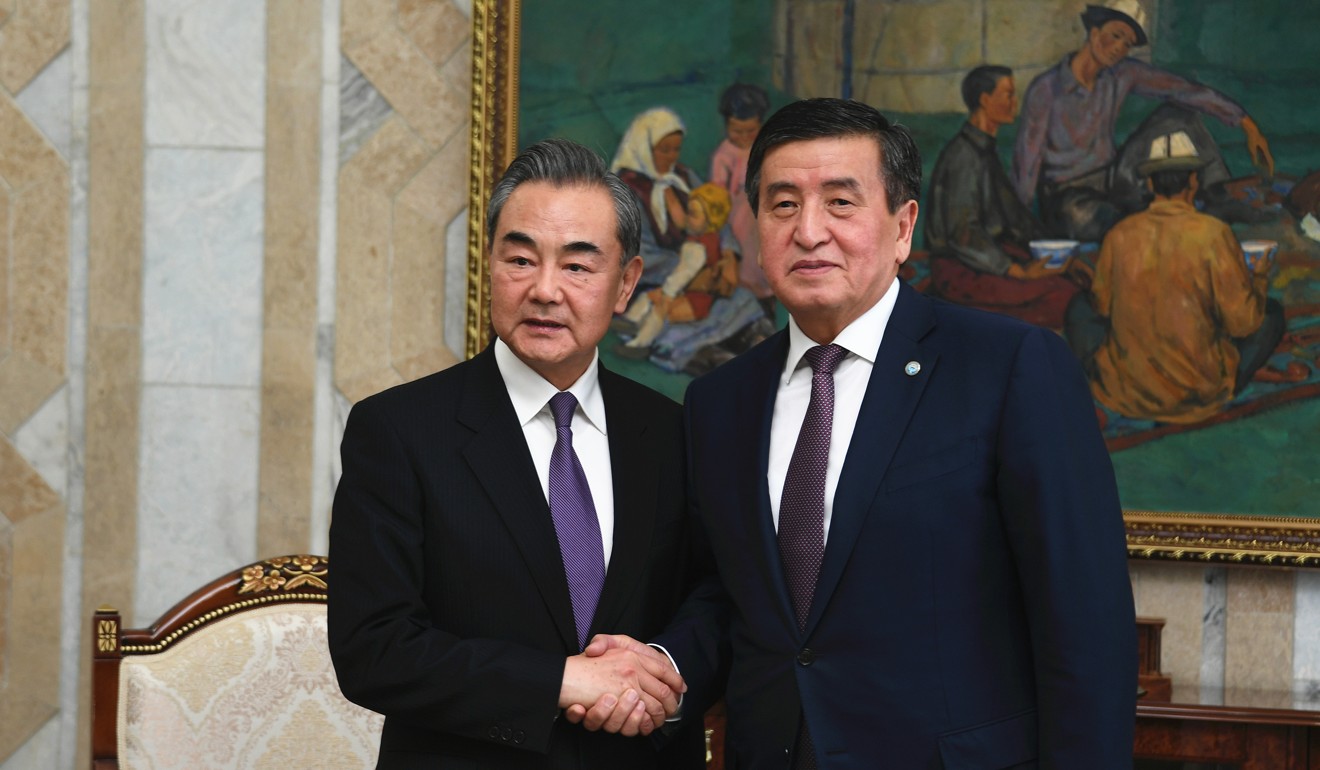
Kyrgyz President Sooronbay Jeenbekov (right) meets Chinese Foreign Minister Wang Yi in Bishkek on Tuesday last week. Photo: Xinhua
As well as security, Xi’s visit to Central Asia is also likely to focus on economic ties. Meeting Kyrgyz President Sooronbay Jeenbekov in Bishkek last week, Chinese Foreign Minister Wang Yi said Beijing would continue to “provide support and help national development and construction in Kyrgyzstan”.
Li said China may increase investment in the Central Asian region, especially in greenfield projects.
“China will continue to buy agriculture products from Central Asia, such as cherries from Uzbekistan, and build hydropower projects to meet local energy demand,” Li said. “Investment in solar and wind energy projects is also expected to increase too.”
Image captionGreenland’s capital, Nuuk, needs investment – but could it come from China?
China is flexing its muscles. As the second richest economy in the world, its businessmen and politicians are involved just about everywhere in Asia, Africa and Latin America.
Now, though, China is taking a big interest in a very different part of the world: the Arctic.
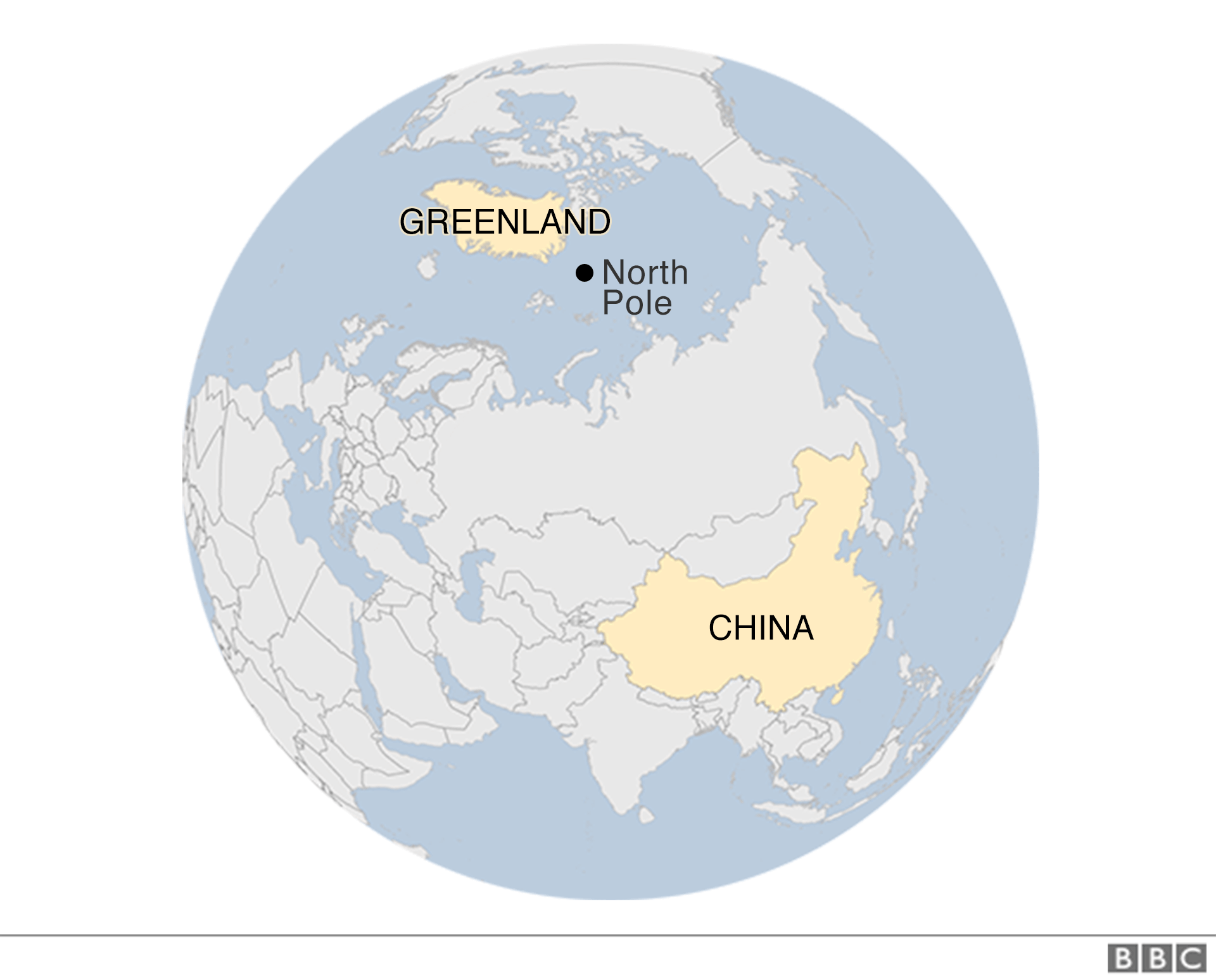
It has started calling itself a “near-Arctic” power, even though Beijing is almost 3,000km (1,800 miles) from the Arctic Circle. It has bought or commissioned several ice-breakers – including nuclear-powered ones – to carve out new routes for its goods through the Arctic ice.
And it is eyeing Greenland as a particularly useful way-station on its polar silk road.
Greenland is self-governing, though still nominally controlled by Denmark.
It is important strategically for the United States, which maintains a vast military base at Thule, in the far north. Both the Danes and the Americans are deeply worried that China should be showing such an interest in Greenland.
Least densely populated place on Earth
You’ve got to go there to get an idea of how enormous Greenland is.
It’s the 12th-largest territory in the world, 10 times bigger than the United Kingdom: two million square kilometres of rock and ice.
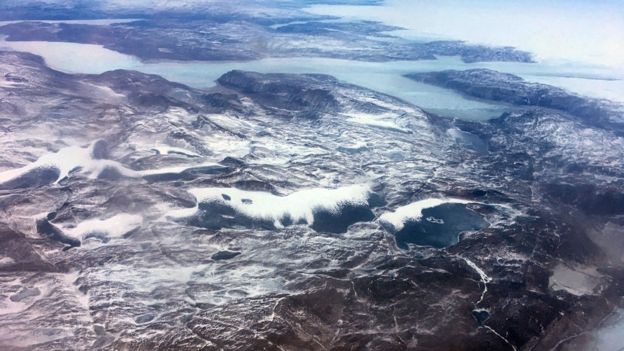
Image captionMost of Greenland is covered in permanent ice – a vast frozen wilderness
Yet its population is minuscule at 56,000 – roughly the size of a town in England.
As a result, Greenland is the least densely populated territory on Earth. About 88% of the people are Inuit; most of the rest are ethnically Danish.
In terms of investment neither the Americans nor the Danes have put all that much money into Greenland over the years, and Nuuk, the capital, feels pretty poor. Denmark does hand over an annual subsidy to help Greenland meet its needs.
Every day, small numbers of people gather in the centre to sell things that will generate a bit of cash: cast-off clothes, children’s schoolbooks, cakes they’ve made, dried fish, reindeer-horn carvings. Some people also sell the bloody carcases of the big King Eider ducks, which Inuits are allowed to hunt but aren’t supposed to sell for profit.
China’s air power
At present you can only fly to Nuuk in small propeller-driven planes. In four years, though, that will change spectacularly.
The Greenlandic government has decided to build three big international airports capable of taking large passenger jets.
Media captionAirport officials say the planned work is a huge project – but an important one
There’ll be pressure from the Danes and Americans to ensure the Chinese bid doesn’t succeed, but that won’t stop China’s involvement in Greenland.
Interestingly, I found that opinion about the Chinese tended to divide along ethnic lines.
Danish people were worried about it, while Inuits thought it was a good idea.
The Greenlandic prime minister and foreign minister refused to speak to us about their government’s attitude to China, but a former prime minister, Kuupik Kleist, told us he thought it would be good for Greenland.
But the foreign affairs spokesman of the main Venstre party in the Danish coalition government, Michael Aastrup Jensen, was forthright about Chinese involvement in Greenland.
“We don’t want a communist dictatorship in our own backyard,” he said.
Much-needed wealth
China’s sales technique in other countries where its companies operate is to offer the kind of infrastructure they badly need: airports, roads, clean water.
The Western powers that once colonised many of them haven’t usually stepped in to help, and most of these governments are only too grateful for Chinese aid.
Media captionThe former prime minister says someone – anyone – has to invest in Greenland
China gets access to each country’s raw materials – minerals, metals, wood, fuel, foodstuffs. Still, this doesn’t usually mean long-term jobs for local people. Large numbers of Chinese are usually brought in to do the work.
Country after country has discovered that Chinese investment helps China’s economy a great deal more than it helps them. And in some places – South Africa is one of them – there are complaints that China’s involvement tends to bring greater corruption.
But in Nuuk it’s hard to get people to focus on arguments like these.
What counts in this vast, empty, impoverished territory is the thought that big money could be on its way. Kuupik Kleist put the argument at its simplest.













 CHINDIA ALERT: You'll be living in their world, very soon