Chindia Alert: You’ll be Living in their World Very Soon
aims to alert you to the threats and opportunities that China and India present. China and India require serious attention; case of ‘hidden dragon and crouching tiger’.
Without this attention, governments, businesses and, indeed, individuals may find themselves at a great disadvantage sooner rather than later.
The POSTs (front webpages) are mainly 'cuttings' from reliable sources, updated continuously.
The PAGEs (see Tabs, above) attempt to make the information more meaningful by putting some structure to the information we have researched and assembled since 2006.
American destroyer’s mission comes a week before Taiwanese president officially starts second term in office
Increased military activity in the region could have unintended consequences but unlikely to lead to direct conflict, observer says
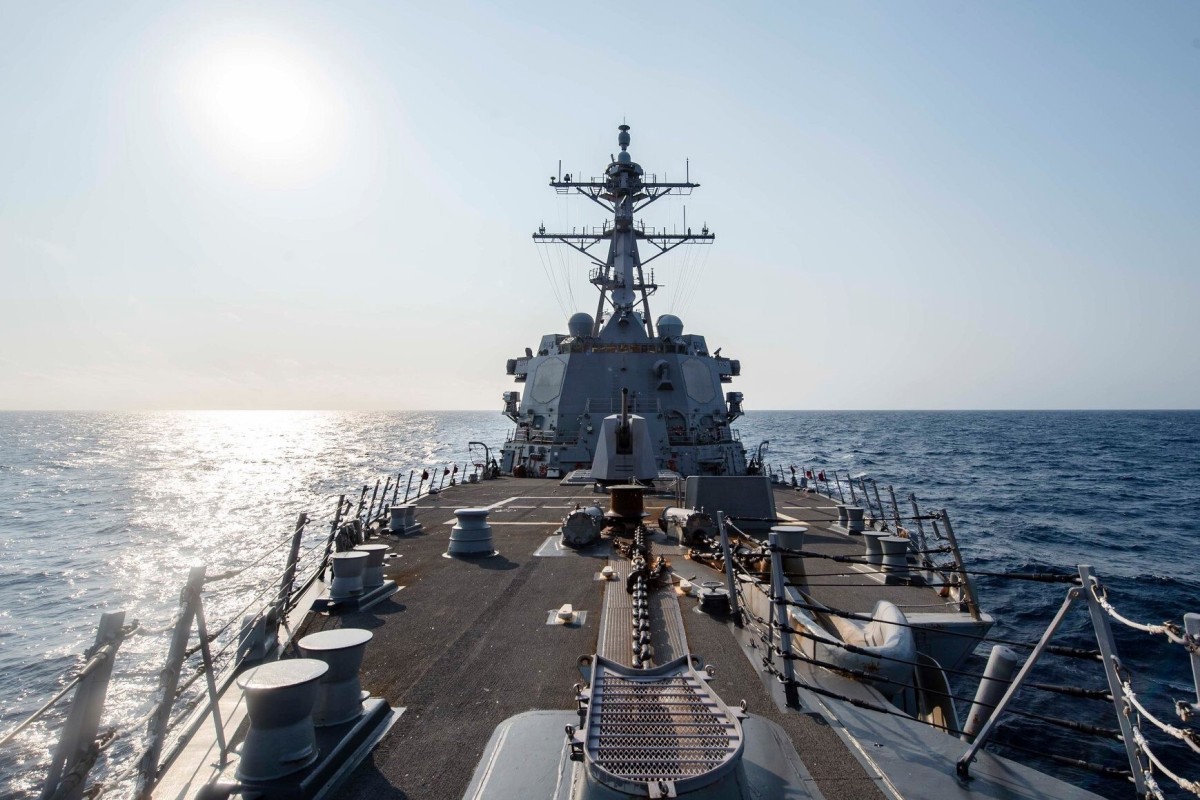
The guided-missile destroyer USS McCampbell made a transit through the Taiwan Strait on Thursday. Photo: US Navy
The United States sent a warship through the Taiwan Strait on Thursday as the Chinese military embarked on more than two months of live-fire naval drills off the mainland’s northern coast.
According to Taiwan’s defence ministry, the Arleigh Burke-class guided-missile destroyer transited the narrow body of water separating Taiwan from mainland China from north to south “in a routine mission”.
“It is continuing its southward voyage and the military is monitoring its movement through the intelligence it has gathered,” the ministry said.
In a statement on its Facebook page, the US Pacific Fleet said the McCampbell transited the Taiwan Strait as part of ongoing operations in the Indo-Pacific.
Analysts said the passage was a response to the People’s Liberation Army’s increasing military activity near Taiwan and in the wider region.
“This will become a new routine as a kind of US security commitment to maintain stability in the Indo-Pacific region,” said Soong Hseik-wen, professor of strategic studies and international relations at National Chung Cheng University in Taiwan.
Beijing urges France to cancel contract to sell arms to Taiwan
13 May 2020
The PLA has staged a series of war games, including fly-bys and warship transits through the strait, in recent months in response to what Beijing sees as growing pro-independence moves by the Tsai government and her party. China has also warned the US against supplying weapons to the island, which Beijing considers to be a wayward province that must return to the mainland fold, by force if necessary.
Mainland China has suspended official exchanges with Taiwan since Tsai was first elected president in 2016 and refused to accept the one-China policy, which Beijing says must be the foundation for any talks.
The PLA has embarked on 11 weeks of naval exercises off the coast of Tangshan in northern China, barring all other vessels from a 25km (15 mile) radius of the drill area, according to the China Maritime Safety Administration.
Taiwanese support closer ties with US over China, few identify as solely Chinese, Pew Research survey finds
13 May 2020
Both Beijing and Washington have ramped up military activities near Taiwan in recent months during the coronavirus pandemic, moves that some observers say run the risk of miscommunication.
Alexander Huang Chieh-cheng, professor of strategic studies and international relations at Tamkang University in Taipei, said no one could exclude the possibility of unintended incidents when both the US and the mainland were stepping up their presence in the region.
“Rational analysts would however argue that the two nuclear powers are not likely to engage in or escalate to direct military conflict,” he said.
Huang said he believed cross-strait relations would worsen during Tsai’s second term in office, which begins on May 20.
“The already damaged relationship between Taiwan and mainland China has worsened since the pandemic mainly due to travel bans and Taiwan’s increased international visibility,” he said.
On Tuesday, Japan’s Kyodo News reported that the PLA was planning a large-scale beach landing exercise near Hainan province in August, simulating a takeover of the Pratas Islands, which are controlled by Taiwan and also known as the Dongsha Islands.
In Taipei, Major General Lin Wen-huang said Taiwan was monitoring the PLA movements and “has contingency plans in place for the South China Sea to strengthen combat readiness and defence preparedness on both the Spratly and Pratas islands”.
Taiwan’s coastguard also announced on Wednesday that its Pratas Islands Garrison was scheduled to conduct an annual live-fire exercise in June to ensure the “effectiveness of various mortar and machine-gun positions”.
Taiwan shows off its military power after presidential election
Shanghai-based military commentator Ni Lexiong said that both the US Navy and PLA were increasing activities during the pandemic because neither side could afford to show weaknesses that the other might take advantage of.
The destroyer’s passage and the PLA’s drills were all part of such efforts, Li said.
But he agreed that both countries were unwilling, unable, and unlikely to have a real conflict.
“They are both bluffing. It’s a fake crisis,” he said. “A pandemic always ends or prevents a war if you look at history.
“I also don’t believe the PLA would want to take over the Dongsha or Taiping islands [in the South China Sea], because these islets alone are not worth a military campaign and all the consequences of that. The only target valuable enough for the PLA is Taiwan.”
Settlements along the route linking Europe and Asia thrived by providing accommodation and services for countless traders
Formally established during the Han dynasty, it was a 19th-century German geographer who coined the term Silk Road
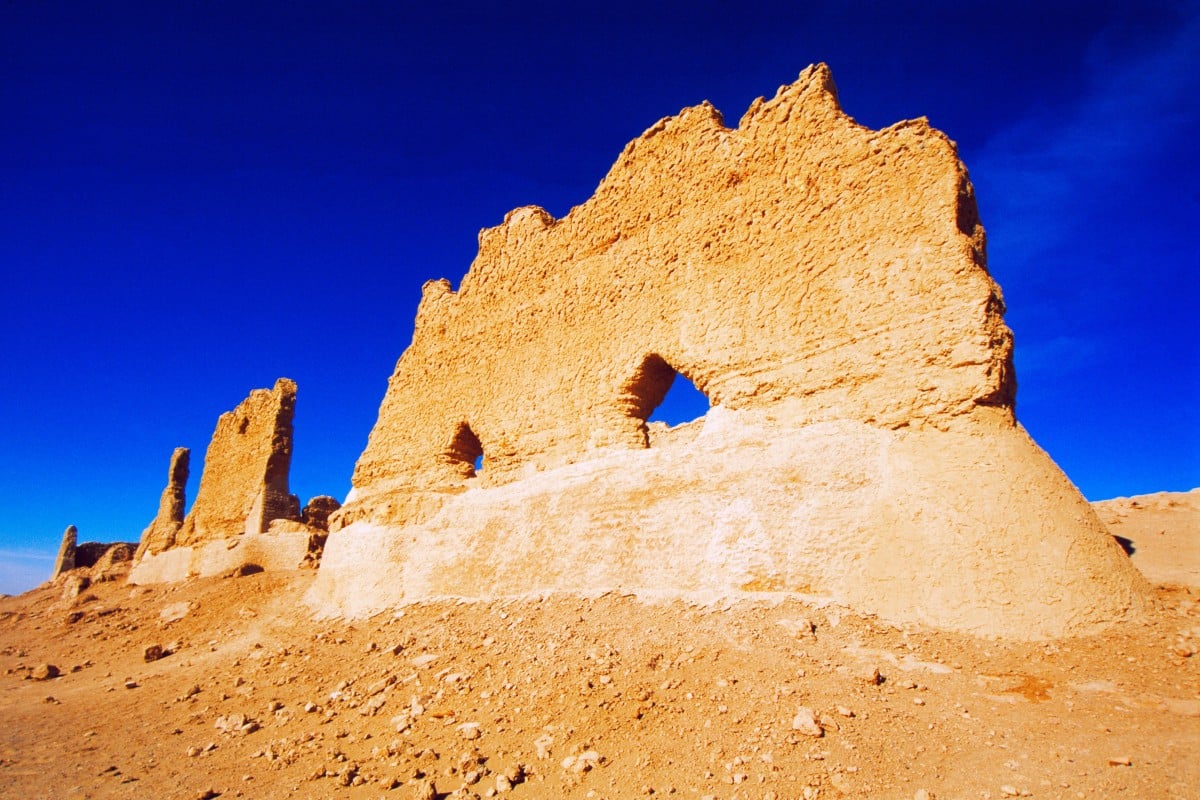
The ruins of a fortified gatehouse and customs post at Yunmenguan Pass, in China’s Gansu province. Photo: Alamy
We have a German geographer, cartographer and explorer to thank for the name of the world’s most famous network of transcontinental trade routes.
Formally established during the Han dynasty, in the first and second centuries BC, it wasn’t until 1877 that Ferdinand von Richthofen coined the term Silk Road (historians increasingly favour the collective term Silk Routes).
The movement of merchandise between China and Europe had been taking place long before the Han arrived on the scene but it was they who employed troops to keep the roads safe from marauding nomads.
Commerce flourished and goods as varied as carpets and camels, glassware and gold, spices and slaves were traded; as were horses, weapons and armour.
Merchants also moved medicines but they were no match for the bubonic plague, which worked its way west along the Silk Road before devastating huge swathes of 14th century Europe.
What follows are some of the countless kingdoms, territories, (modern-day) nations and cities that grew rich on the proceeds of trade, taxes and tolls.
China
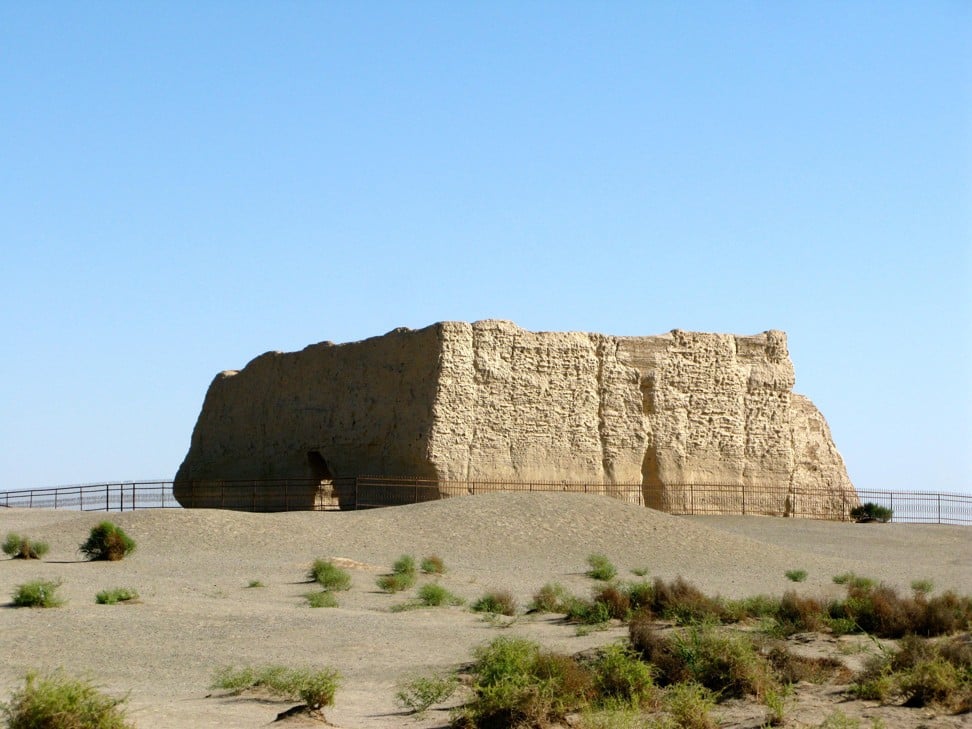
A watchtower made of rammed earth at Dunhuang, a desert outpost at the crossroads of two major Silk Road routes in China’s northwestern Gansu province. Photo: Alamy
Marco Polo worked in the Mongol capital, Khanbaliq (today’s Beijing), and was struck by the level of mercantile activity.
The Venetian gap-year pioneer wrote, “Every day more than a thousand carts loaded with silk enter the city, for a great deal of cloth of gold and silk is woven here.”
Light, easy to transport items such as paper and tea provided Silk Road traders with rich pickings, but it was China’s monopoly on the luxurious shimmering fabric that guaranteed huge profits.
So much so that sneaking silk worms out of the empire was punishable by death.
The desert outpost of Dunhuang found itself at the crossroads of two major Silk Road trade arteries, one leading west through the Pamir Mountains to Central Asia and another south to India.
Built into the Great Wall at nearby Yunmenguan are the ruins of a fortified gatehouse and customs post, which controlled the movement of Silk Road caravans.
Also near Dunhuang, the Mogao Caves contain one of the richest collections of Buddhist art treasures anywhere in the world, a legacy of the route to and from the subcontinent.
Afghanistan
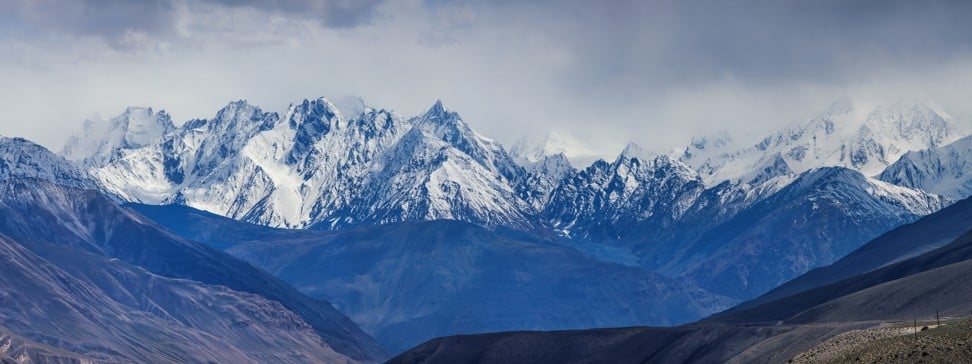
Afghanistan’s mountainous terrain was an inescapable part of the Silk Road, until maritime technologies would become the area’s undoing. Photo: Shutterstock
For merchants and middlemen hauling goods through Central Asia, there was no way of bypassing the mountainous lands we know today as Afghanistan.
Evidence of trade can be traced back to long before the Silk Road – locally mined lapis lazuli stones somehow found their way to ancient Egypt, and into Tutankhamun’s funeral mask, created in 1323BC.
Jagged peaks, rough roads in Tajikistan, roof of the world
Besides mercantile exchange, the caravan routes were responsible for the sharing of ideas and Afghanistan was a major beneficiary. Art, philosophy, language, science, food, architecture and technology were all exchanged, along with commercial goods.
In fact, maritime technology would eventually be the area’s undoing. By the 15th century, it had become cheaper and more convenient to transport cargo by sea – a far from ideal development for a landlocked region.
Iran
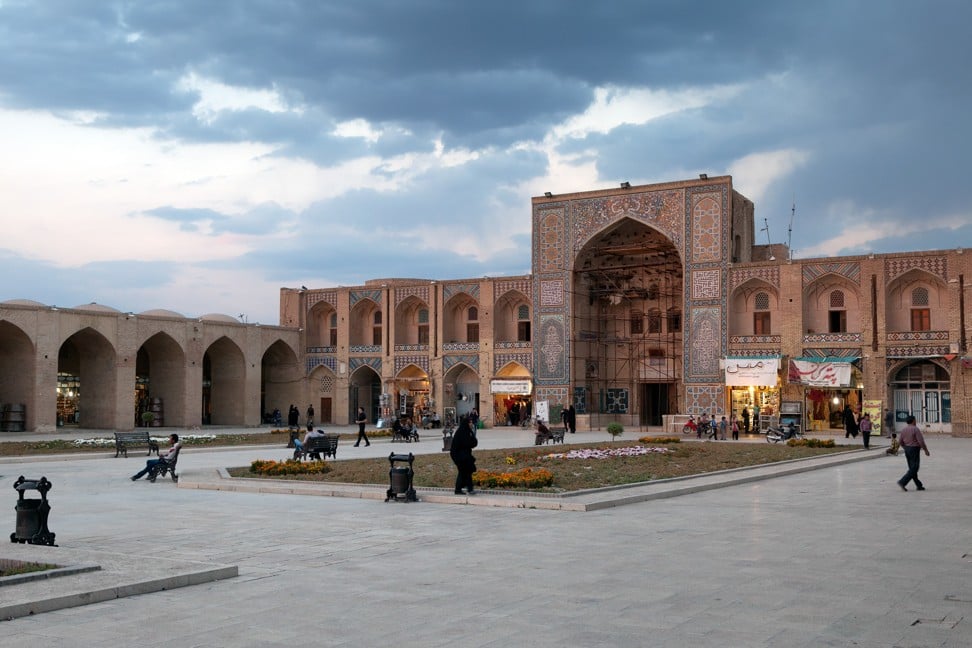
The Ganjali Khan Complex, in Iran. Photo: Shutterstock
Thanks to the Silk Road and the routes that preceded it, the northern Mesopotamian region (present-day Iran) became China’s closest trading partner. Traders rarely journeyed the entire length of the trail, however.
Merchandise was passed along by middlemen who each travelled part of the way and overnighted in caravanserai, fortified inns that provided accommodation, storerooms for goods and space for pack animals.
The good, bad and ugly sides to visiting Chernobyl and Kiev
With so many wheeler-dealers gathering in one place, the hostelries developed into ad hoc marketplaces.
Marco Polo writes of the Persian kingdom of Kerman, where craftsmen made saddles, bridles, spurs and “arms of every kind”.
Today, in the centre of Kerman, the former caravanserai building forms part of the Ganjali Khan Complex, which incorporates a bazaar, bathhouse and mosque.
Uzbekistan
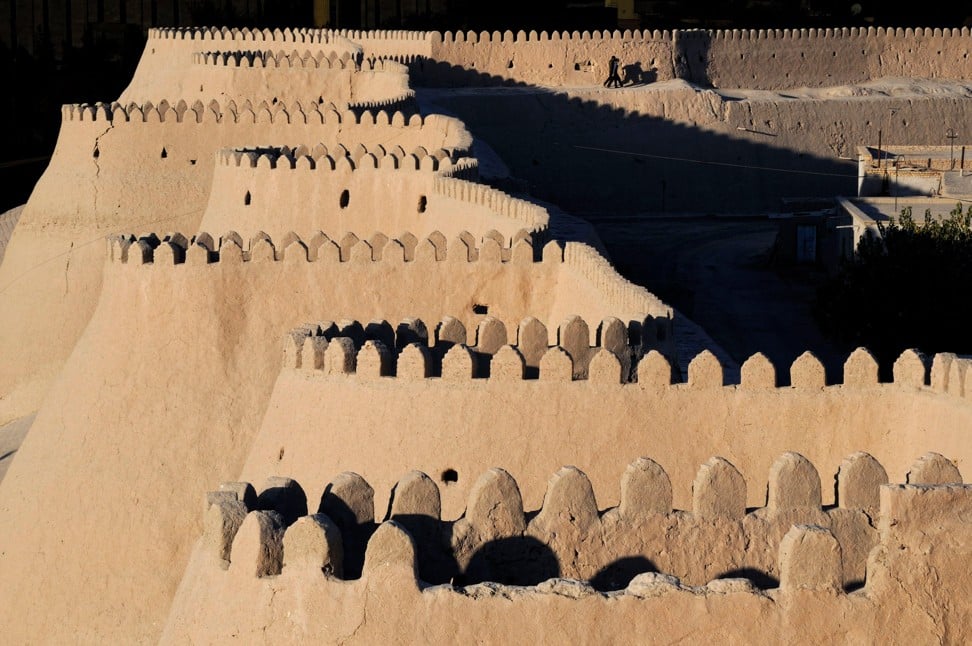
A fort in Khiva, Uzbekistan. Photo: Alamy
The double-landlocked country boasts some of the Silk Road’s most fabled destinations. Forts, such as the one still standing at Khiva, were built to protect traders from bandits; in fact, the city is so well-preserved, it is known as the Museum under the Sky.
The name Samarkand is also deeply entangled with the history of the Silk Road.
The earliest evidence of silk being used outside China can be traced to Bactria, now part of modern Uzbekistan, where four graves from around 1500BC-1200BC contained skeletons wrapped in garments made from the fabric.
Three thousand years later, silk weaving and the production and trade of textiles remain one of Samarkand’s major industries.
Georgia
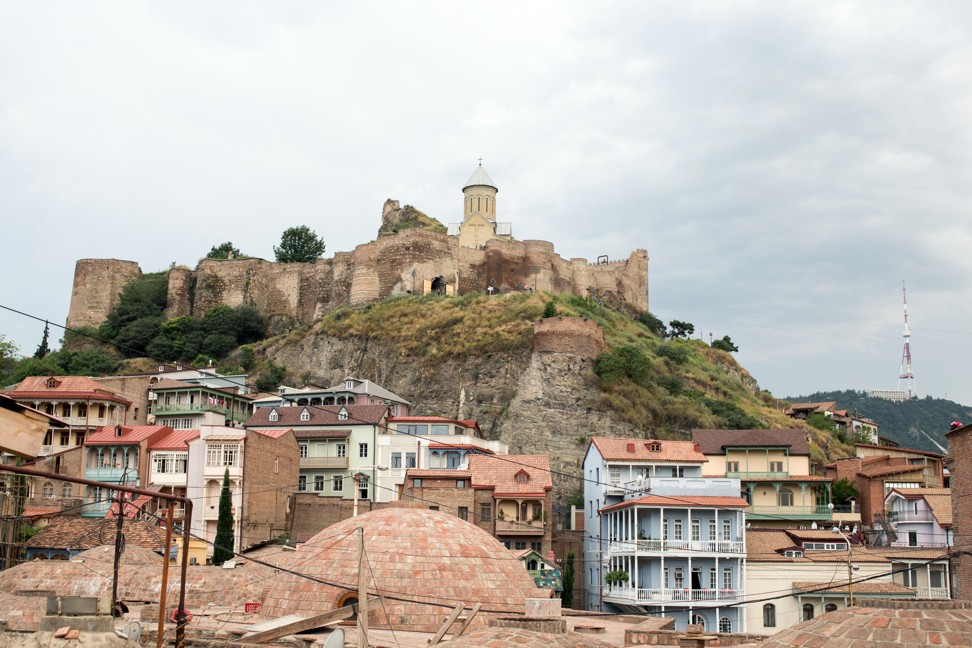
A street in old town of Tbilisi, Georgia. Photo: Alamy
Security issues in Persia led to the opening up of another branch of the legendary trade route and the first caravan loaded with silk made its way across Georgia in AD568.
Marco Polo referred to the weaving of raw silk in “a very large and fine city called Tbilisi”.
Today, the capital has shaken off the Soviet shackles and is on the cusp of going viral.
Travellers lap up the city’s monasteries, walled fortresses and 1,000-year-old churches before heading up the Georgian Military Highway to stay in villages nestling in the soaring Caucasus Mountains.
Public minibuses known as marshrutka labour into the foothills and although the vehicles can get cramped and uncomfortable, they beat travelling by camel.
Jordan
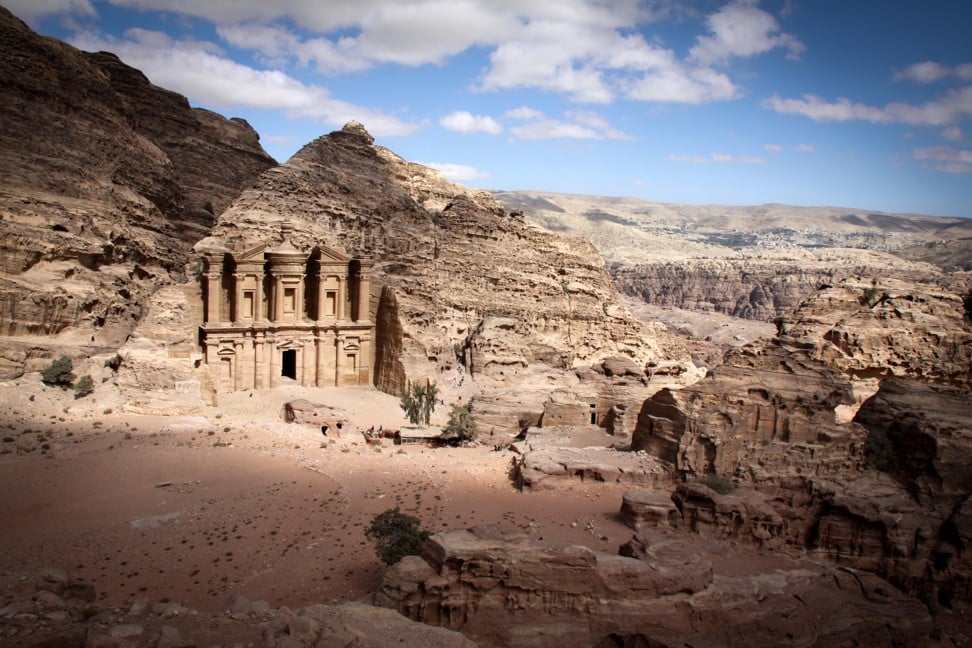
Petra, in Jordan. Photo: Alamy
The location of the Nabataean capital, Petra, wasn’t chosen by chance.
Savvy nomadic herders realised the site would make the perfect pit-stop at the confluence of several caravan trails, including a route to the north through Palmyra (in modern-day Syria), the Arabian peninsula to the south and Mediterranean ports to the west.
Huge payments in the form of taxes and protection money were collected – no wonder the most magnificent of the sandstone city’s hand-carved buildings is called the Treasury.
The Red Rose City is still a gold mine – today’s tourists pay a hefty
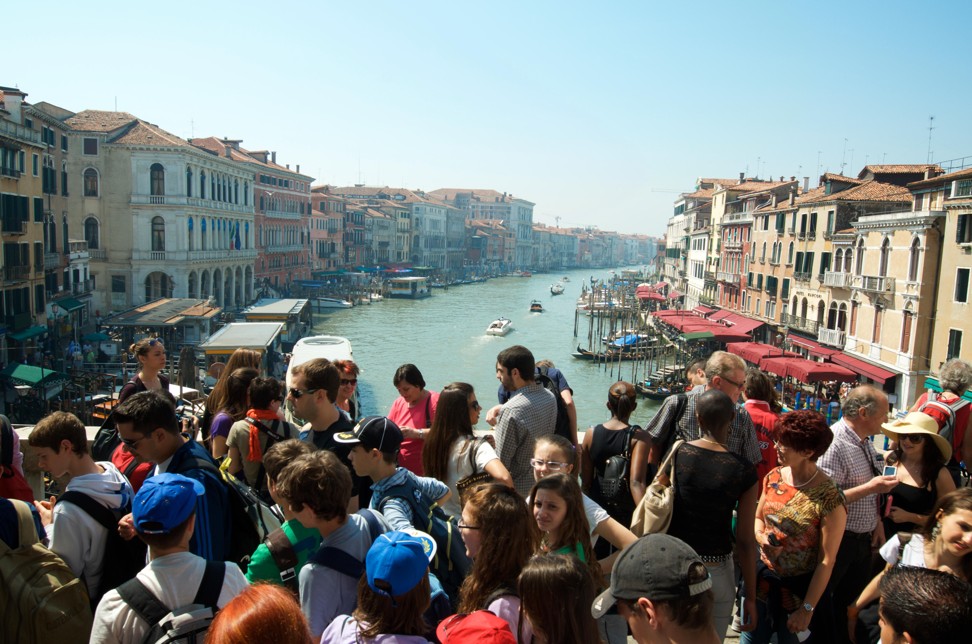
Trade enriched Venice beyond measure, helping shape the Adriatic entrepot into the floating marvel we see today.
Besides the well-documented flow of goods heading west, consignments of cotton, ivory, animal furs, grapevines and other goods passed through the strategically sited port on their way east.
Ironically, for a city built on trade and taxes, the biggest problem Venice faces today is visitors who don’t contribute enough to the local economy.
A lack of spending by millions of day-tripping tourists and cruise passengers who aren’t liable for nightly hotel taxes has prompted authorities to introduce a citywide access fee from January 2020.
Two thousand years ago, tariffs and tolls helped Venice develop and prosper. Now they’re needed to prevent its demise.




 CHINDIA ALERT: You'll be living in their world, very soon