Chindia Alert: You’ll be Living in their World Very Soon
aims to alert you to the threats and opportunities that China and India present. China and India require serious attention; case of ‘hidden dragon and crouching tiger’.
Without this attention, governments, businesses and, indeed, individuals may find themselves at a great disadvantage sooner rather than later.
The POSTs (front webpages) are mainly 'cuttings' from reliable sources, updated continuously.
The PAGEs (see Tabs, above) attempt to make the information more meaningful by putting some structure to the information we have researched and assembled since 2006.
The meeting between Priyanka and Rahul Gandhi comes in the backdrop of reports that the powerful working committee of the party may meet in the next three-four days to discuss the leadership issue.
INDIAUpdated: May 28, 2019 13:42 IST
HT Correspondent
Hindustan Times, New Delhi
Congress president Rahul Gandhi with his sister and AICC General Secretary Priyanka Gandhi. (ANI file photo)
Congress general secretary Priyanka Gandhi Vadra met her brother, Congress president Rahul Gandhi amid reports that he wants to quit after the crushing defeat in the Lok Sabha elections.
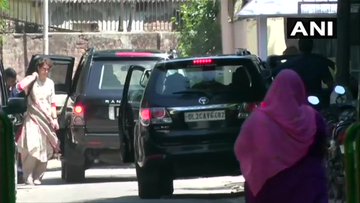
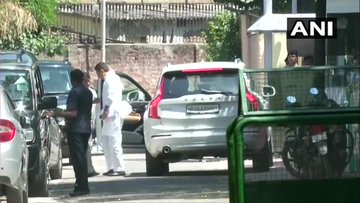
Priyanka Gandhi, Rajasthan chief minister Ashok Gehlot, his deputy Sachin Pilot and Congress spokesperson Randeep Surjewala arrived at Rahul Gandhi’s 12, Tughlaq Lane residence on Tuesday morning. The meeting between Rahul Gandhi and senior Congress leaders comes in the backdrop of reports that the powerful working committee of the party may meet in the next three-four days to discuss the leadership issue
Rajasthan’s ruling duo Ashok Gehlot and Sachin Pilot calling on him amid rumblings of discontent in the state and his insistence on quitting.
The Congress has denied that any such meeting has been scheduled in the near future. “These reports are baseless,” KC Venugopal, general secretary in-charge of organization who is responsible for convening Congress Working Committee meetings.
On Monday, Congress treasurer Ahmed Patel and KC Venugopal met Rahul Gandhi. But Patel insisted that he had gone to meet Rahul Gandhi for routine administrative work. “I had sought time before the CWC to meet the Congress President to discuss routine administrative work. The meeting today was in that context. All other speculation is incorrect and baseless,” Patel tweeted.
Three more state Congress chiefs resigned on Monday taking ‘moral responsibility’ for party’s poor performance in Lok Sabha elections. Other than Sunil Jakhar (Punjab) and Ajoy Kumar (Jharkhand) and Ripun Bora (Assam), HK Patil, who was tasked to oversee the Karnataka Congress campaign in December, also put in his papers.
ANI
✔@ANI
Delhi: Priyanka Gandhi Vadra and Randeep Singh Surjewala arrive at the residence of Congress President Rahul Gandhi. pic.twitter.com/WXmvlPMJv0
These resignations take the number of party unit chiefs who have resigned since the poll results to six — the others being UP party chief Raj Babbar, Odisha’s Niranjan Patnaik and Ashok Chavan of Maharashtra.
The Congress won just 52 seats in the Lok Sabha polls which saw Narendra Modi-led NDA come to power with a massive mandate winning 352 seats.
Some observers have billed this as the most important election in decades and the tone of the campaign has been acrimonious.
Mr Modi’s Hindu nationalist Bharatiya Janata Party (BJP) won a historic landslide in the last elections in 2014. He stakes his claim to lead India on a tough image and remains the governing BJP’s main vote-getter.
But critics say his promises of economic growth and job creation haven’t met expectations and India has become more religiously polarised under his leadership.
The BJP faces challenges from strong regional parties and a resurgent Congress party, led by Rahul Gandhi. Mr Gandhi’s father, grandmother and great-grandfather are all former Indian prime ministers. His sister, Priyanka Gandhi, formally joined politics in January.
Image captionMr Modi has made national security a key election issue
How has voting gone so far?
The Lok Sabha, or lower house of parliament has 543 elected seats and any party or coalition needs a minimum of 272 MPs to form a government.
Hundreds of voters began to queue up outside polling centres early Thursday morning. In the north-eastern state of Assam, lines of voters began forming almost an hour before voting officially began.
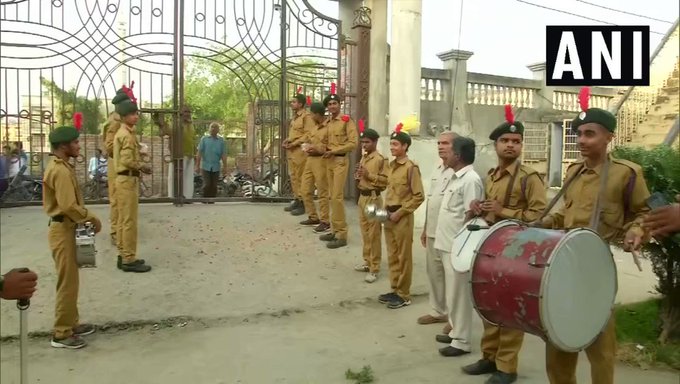
Voters at one polling booth in Baraut – in the northern state of Uttar Pradesh – got a royal welcome with people greeted by drums and a shower of flower petals.
But violence has flared in several places already. One person has died after clashes erupted at a polling station in Anantpur, in southern Andhra Pradesh state. Four others were critically injured in the fight that broke out between workers from two parties, BBC Telugu reports.
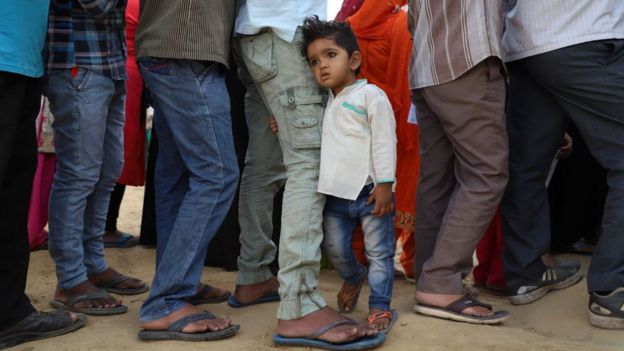
Image copyrightGETTY IMAGESImage caption A little boy clutches his father outside a polling booth in Ghaziabad in Uttar Pradesh state
In central Chhattisgarh state, suspected Maoists detonated an IED device near a polling booth at around 04:00 local time (23:30 BST) – no injuries were reported.
The mineral-rich state has witnessed an armed conflict for more than three decades and attacks by Maoist rebels on security forces are common. On Tuesday a state lawmaker was killed in a suspected rebel attack.
How big is this election?
It is mind-bogglingly vast – about 900 million people above the age of 18 will be eligible to cast their ballots at one million polling stations. At the last election, vote turn-out was around 66%.
More than 100 million people are eligible to vote in the first phase of the election on Thursday.
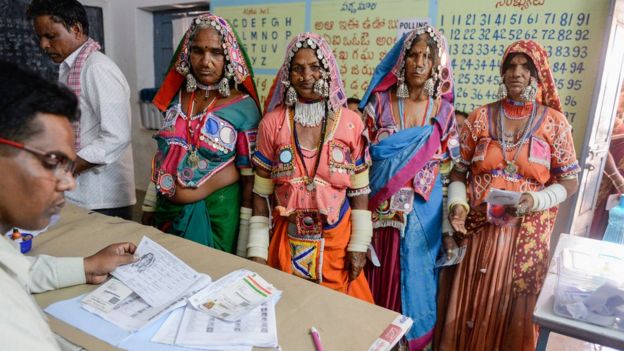
Image copyrightGETTY IMAGESImage caption Indian lambadi tribeswomen at a polling station in southern India
No voter is meant to have to travel more than 2km to reach a polling station. Because of the enormous number of election officials and security personnel involved, voting will take place in seven stages between 11 April and 19 May.
India’s historic first election in 1951-52 took three months to complete. Between 1962 and 1989, elections were completed in four to 10 days. The four-day elections in 1980 were the country’s shortest ever.
No other injuries reported following accident on southern island of Hainan
Military is currently intensifying training for pilots as it looks to strengthen capabilities
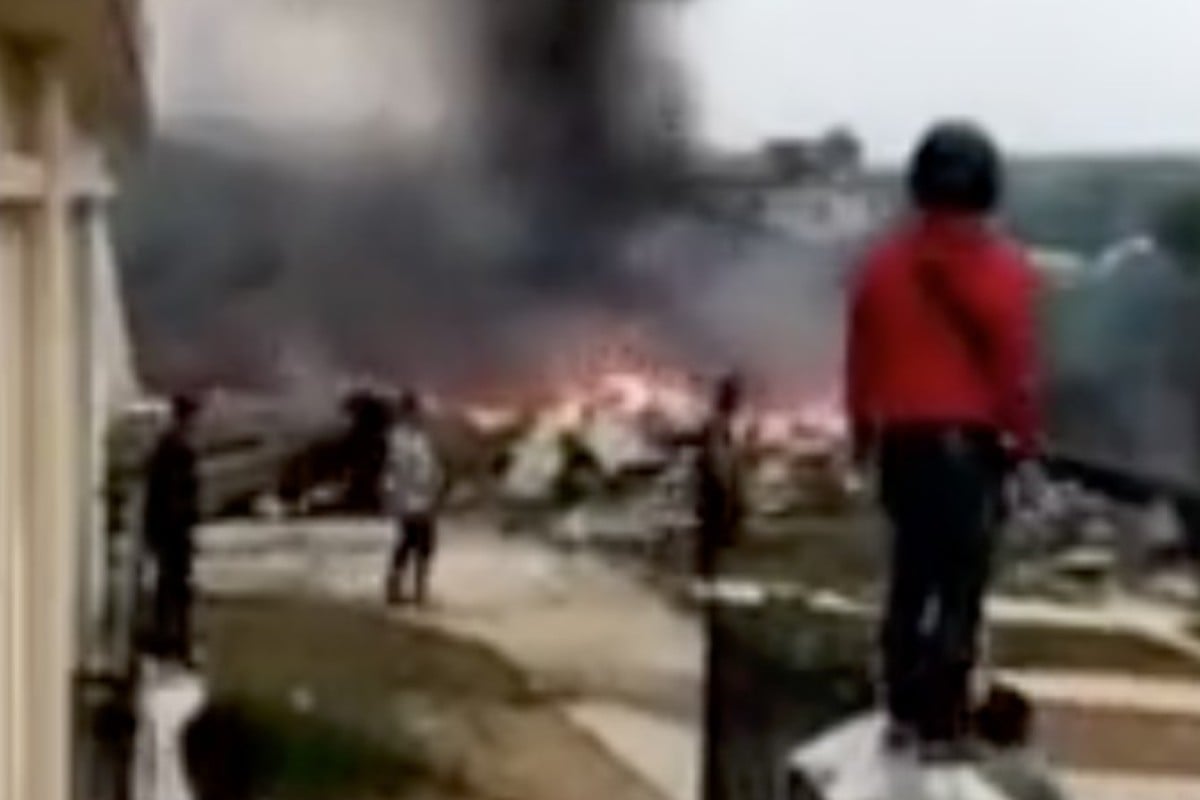
Mobile phone footage believed to be taken from the crash site. Photo: Handout
A Chinese navy plane crashed in Hainan province on Tuesday killing two crew members, the military said.
A short statement said the crash happened during a training exercise over rural Ledong county in the southern island province.
No one else was reported to have been injured after the plane hit the ground and the cause of the incident is being investigated.
Footage that purported to be taken from the crash site started circulating on social media after the accident.
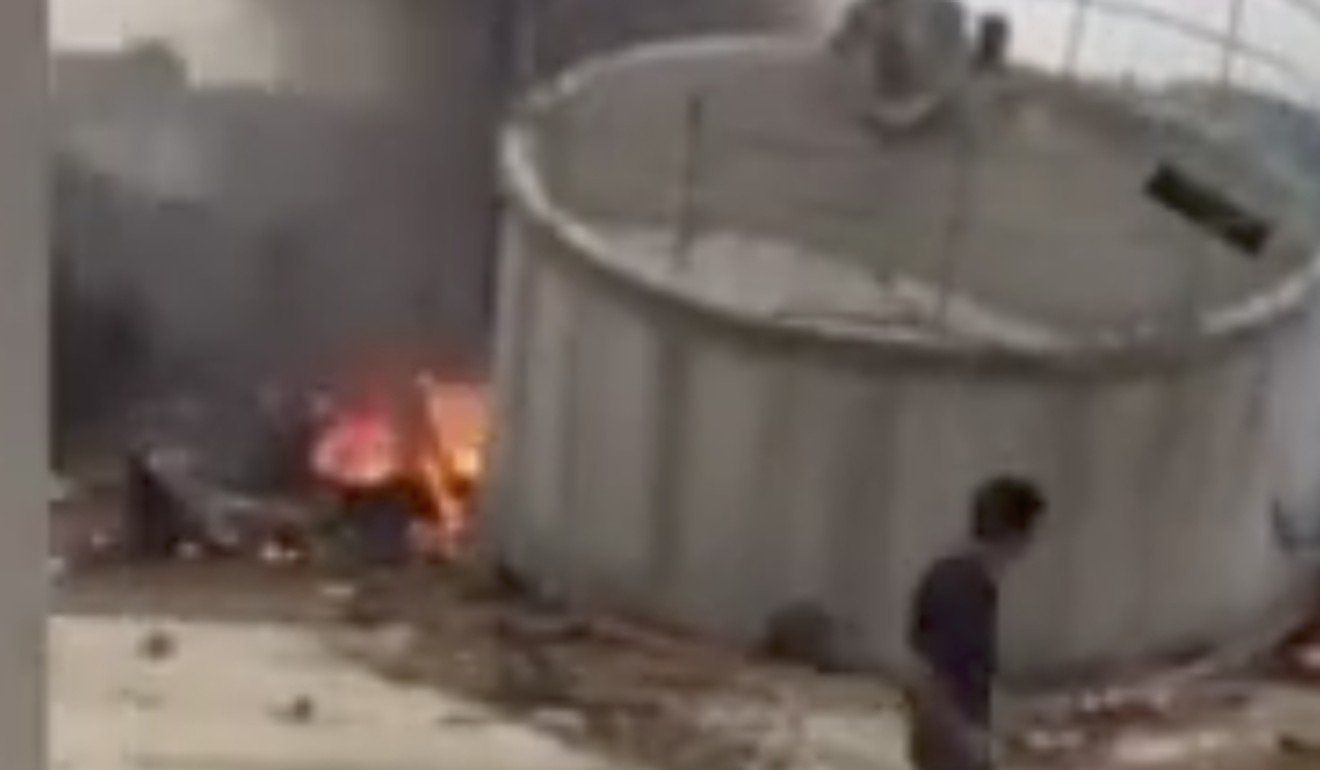
The mobile phone footage, which news portal 163.com said was taken in Hainan, showed smoke rising from piles of wreckage next to a damaged water tower as bystanders gathered at the site.
Footage apparently taken at the crash site. Photo: Handout
The person who uploaded the footage said the plane had hit the water tower before crashing into the ground.
The PLA’s official statement did not specify the type plane that crashed, although unverified witness account online said it was a twin-seat Xian JH-7 “Flying Leopard”.
The JH-7, which entered service with the navy and air force in the 1990s, has been involved in a number of fatal accidents over the years.
The country’s worst military air accident in recent years happened in January 2018. At least 12 crew members died when a PLA Air Force plane, believed to be an electronic reconnaissance aircraft, crashed in Guizhou in the southwest of the country.
Between 2016 and 2017, there were at least four accidents involving the navy’s J-15 “Flying Sharks”, one of them resulting in the death of the pilot.
Military commentators have previously said that China’s drive to improve its combat readiness, which includes the building of new aircraft carriers and warplanes, has resulted in a serious shortage of qualified pilots.
To fill the vacancies the Chinese military has started a major recruitment drive and intensive training programme for pilot pilots.
One unverified report said the plane that crashed was a JH-7 “Flying Leopard”. Photo. Xinhua
Currently China has one aircraft carrier, the Liaoning, in service, which can carry a maximum of 24 J-15s as well as other aircraft.
Meanwhile, the new home-grown carrier Type 001A will soon be commissioned, which is designed to accommodate to carry eight more fighters.
In addition, construction is believed to have started on another carrier that will be able to carry heavier and more advanced warplanes.
According to figures from the end of 2016, there were only 25 pilots qualified to fly the J-15 while 12 others were in training.
Most of the Chinese navy’s pilots have been redeployed from the air force, which is itself in need of more trained pilots.
This year the navy for the first time began a nation-wide programme to scout out potential pilots.
Speaking on the sidelines of the ongoing legislative meeting in Beijing Feng Wei, a PLA pilot from the Western Theatre, said the military was currently intensifying its pilots’ training as increasing amounts of new equipment entered service.
“Personnel quality is the key to everything,” he added.
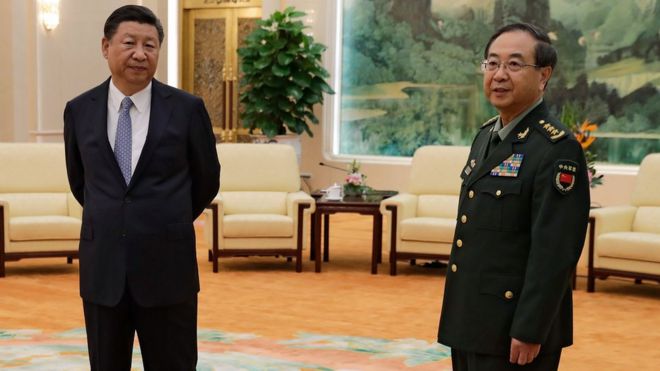
Image copyrightAFPImage captionFang Fenghui with President Xi Jinping in 2017
A former high-ranking Chinese general has been sentenced to life in jail for corruption, state media reports.
Fang Fenghui, ex-chief of joint staff of the People’s Liberation Army, was found guilty of bribery and having huge wealth that he had been unable to account for, according to Xinhua.
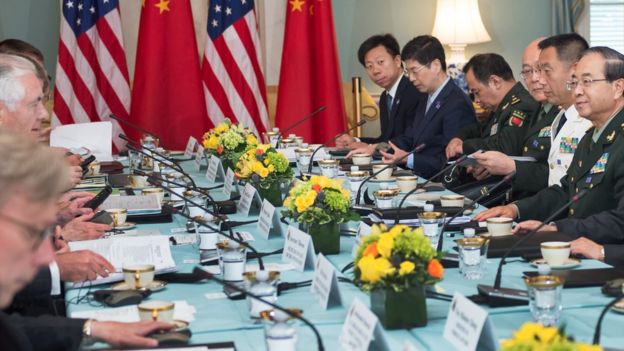
The 67-year-old accompanied President Xi Jinping in his first meeting with US President Donald Trump in 2017.
Many officials have been jailed in what Mr Xi says is an anti-corruption drive.
The efforts have had a particular focus on the country’s military, which is the world’s largest and is undergoing a modernisation campaign.
Fang Fenghui lost his post with no explanation in 2017 and disappeared from public view. The government later confirmed he was under investigation for alleged corruption.
Image copyrightAFPImage captionFang Fenghui in a meeting with US officials, including former Secretary of State Rex Tillerson, in Washington in 2017
He was also a member of the powerful Central Military Commission, China’s supreme military body, and was close to Zhang Yang, who also served on the commission and was found dead in 2017 while being investigated for corruption.
Fang was expelled from the Communist Party last year ahead of his trial at a military court.
All his assets have been confiscated, Xinhua adds, without mentioning how much money was involved.
It is unclear whether he was allowed to retain a lawyer, Reuters news agency reports.
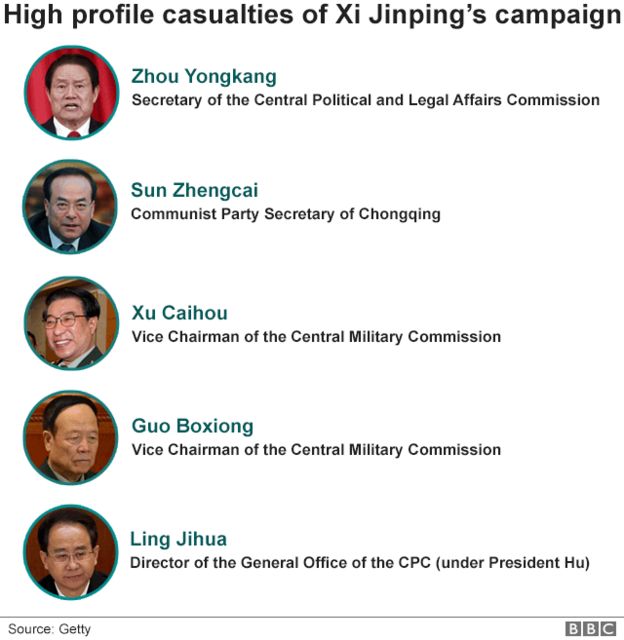
More than one million officials have been punished in the anti-corruption drive started by Mr Xi when he took power in 2012, the government says.
They include Xu Caihou and Guo Boxiong, both former vice chairman of the Central Military Commission. Xu died of cancer in 2015 before he could face trial while Guo was sentenced to life in prison for bribery in 2016.
The anti-corruption campaign has been described by some as a massive internal purge of opponents, on a scale not seen since the days of Mao Zedong, in whose Cultural Revolution many top officials were purged.
GUWAHATI, India (Reuters) – At least 84 people have died from drinking toxic bootleg liquor in the northeastern Indian state of C, and around 200 others have been hospitalised, a state government minister said on Saturday.
The deaths come less than two weeks after more than 100 people died from drinking tainted alcohol in two northern Indian states, Uttarkhand and Uttar Pradesh.
Police have arrested twelve people in connection with making bootleg alcohol in Assam, a practice local politicians say is rampant in the area’s tea estates, where its is drunk by poorly-paid labourers after a tough day’s work in the plantations.
“Every 10 minutes we are getting reports of casualties from different places. So far about 200 people are in hospital with many of them critical,” Assam Health Minister Himanta Biswa Sarma told Reuters via telephone.
“Doctors from nearby districts and other medical colleges have been rushed in to deal with the crisis,” said Sarma, after visiting patients at Jorhat, located some 300 kilometres east of the state’s financial hub, Guwahati.
Deaths from illegally produced alcohol, known locally as hooch or country liquor, are common in India, where many cannot afford branded spirits.
The death tolls from the two recent incidents, however, are believed to be the deadliest since a similar case killed 172 in West Bengal in 2011.
Dilip Rajbnonshi, a doctor at the government hospital in Golaghat, located some 40 kilometres southwest of Jorhat said the deaths were due to “spurious country liquor”.
A number of women are among the casualties. Many of those that drank the liquor were tea plantation workers who had just received their weekly wages, according to another state government official.
“I asked some of the patients why they consume liquor almost everyday and they said after a hard day’s work in the plantations they drink to relieve stress and tiredness,” health minister Sarma said.
Mrinal Saikia, a local lawmaker from the Bharatiya Janata Party – which is in control of the federal and Assam state governments – said alcohol, often laced with cattle feed and battery acid, is being supplied “in gallons” to tea plantation workers.
“This is a big business in areas surrounding tea gardens where people set up illegal distilleries to make country liquor,” he said.
Addressing a rally in Assam’s North Lakhimpur, Amit Shah said that the NRC had been brought in to identify infiltrators and that the BJP would identifiy and deport all such infiltrators.
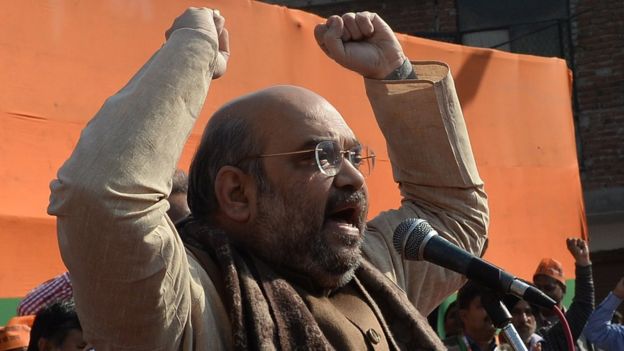
Saying that the NRC had been brought in to identify infiltrators, Amit Shah said, the BJP will rid Assam of all such aliens by deporting them.(HT Photo)
BJP chief Amit Shah on Sunday said that Modi-led government at the Centre will not allow Assam to become another Kashmir and that is why it has brought about the National Register of Citizens (NRC).
Saying that the NRC had been brought in to identify infiltrators, he said, the BJP will rid Assam of all such aliens by deporting them.
“We won’t let Assam become another Kashmir, this is our commitment. We’ll repeat the NRC exercise as many times as required to, but we’ll identify and deport each infiltrator from Assam,” Shah said while addressing a public rally at North Lakhimpur in Assam.
Shah criticised the Congress and its former ally Asom Gana Parishad (AGP), and said both the parties had done nothing to implement the Assam Accord despite ruling most of the period since the pact was signed in 1985.
Referring to the contentious Citizenship (Amendment) Bill, which the Centre couldn’t present in Rajya Sabha, he said misinformation was being spread as if it was only for Assam and other parts of the Northeast.
“It was not for Northeast alone, but for all refugees across the country. The way demography is changing in Assam, without the Citizenship Bill, the people of the state will be in danger,” he added.
He also spoke about the Pulwama attack in which 40 CRPF jawans were killed in a suicide bombing on Thursday.
“This cowardly act was done by Pakistani terrorists. Their (jawans’) sacrifices will not go in vain, because there is no Congress government at the Centre. It is BJP government and the Narendra Modi government will not compromise on any security issue,” he added.
Saying that the government at the Centre was not that of the Congress, Shah said that the current government was that of the BJP and was led by Modi, who he said was determined to uproot terrorism from the country.
Image copyrightAFPImage captionThe sun rises nearly two hours earlier in the east of India than in the far west
India’s single time zone is a legacy of British rule, and is thought of as a symbol of unity. But not everyone thinks the Indian Standard Time (IST) is a good idea.
Here’s why.
India stretches 3,000km (1,864 miles) from east to west, spanning roughly 30 degrees longitude. This corresponds with a two-hour difference in mean solar times – the passage of time based on the position of the sun in the sky.
The US equivalent would be New York and Utah sharing one time zone. Except that in this case, it also affects more than a billion people – hundreds of millions of whom live in poverty.
The sun rises nearly two hours earlier in the east of India than in the far west. Critics of the single time zone have argued that India should move to two different standard times to make the best use of daylight in eastern India, where the sun rises and sets much earlier than the west. People in the east need to start using their lights earlier in the day and hence use more electricity.
The rising and setting of the sun impacts our body clocks or circadian rhythm. As it gets darker in the evening, the body starts to produce the sleep hormone melatonin – which helps people nod off.
This is how it happens. The school day starts at more or less the same time everywhere in India but children go to bed later and have reduced sleep in areas where the sun sets later. An hour’s delay in sunset time reduces children’s sleep by 30 minutes.
Image copyrightAFPImage captionScientists suggest Manipur, a hilly north-eastern state, should have a different time zone
Using data from the India Time Survey and the national Demographic and Health Survey, Mr Jagnani found that school-going children exposed to later sunsets get fewer years of education, and are less likely to complete primary and middle school.
He found evidence that suggested that sunset-induced sleep deprivation is more pronounced among the poor, especially in periods when households face severe financial constraints.
“This might be because sleep environments among poor households are associated with noise, heat, mosquitoes, overcrowding, and overall uncomfortable physical conditions. The poor may lack the financial resources to invest in sleep-inducing goods like window shades, separate rooms, indoor beds and adjust their sleep schedules,” he told me.
“In addition, poverty may have psychological consequences like stress, negative affective states, and an increase in cognitive load that can affect decision-making.”
Mr Jagnani also found that children’s education outcomes vary with the annual average sunset time across eastern and western locations even within a single district. An hour’s delay in annual average sunset time reduces education by 0.8 years, and children living in locations with later sunsets are less likely to complete primary and middle school, the research showed.
Mr Jagnani says that back of the envelope estimates suggested that India would accrue annual human capital gains of over $4.2bn (0.2% of GDP) if the country switched from the existing single time zone to the proposed two time zone policy: UTC+5 hours for western India and UTC+6 hours for eastern India. (UTC is essentially the same as Greenwich Mean Time or GMT but is measured by an atomic clock and is thus more accurate.)
Image copyrightAFPImage captionThe sun can rise nearly two hours earlier in the east of India than in the far west
India has long debated whether it should move to two time zones. (In fact tea gardens in the north-eastern state of Assam have long set their clocks one hour ahead of IST in what functions as an informal time zone of their own.)
During the late 1980s, a team of researchers at a leading energy institute suggested a system of time zones to save electricity. In 2002, a government panel shot down a similar proposal, citing complexities. There was the risk, some experts felt, of railway accidents as there would be a need to reset times at every crossing from one time zone to another.
Researchers at the National Physical Laboratory said the single time zone was “badly affecting lives” as the sun rises and sets much earlier than official working hours allow for.
Early sunrise, they said, was leading to the loss of many daylight hours as offices, schools and colleges opened too “late” to take full advantage of the sunlight. In winters, the problem was said to be worse as the sun set so early that more electricity was consumed “to keep life active”.
Moral of the story: Sleep is linked to productivity, and a messy time zone can play havoc with the lives of people, especially poor children.
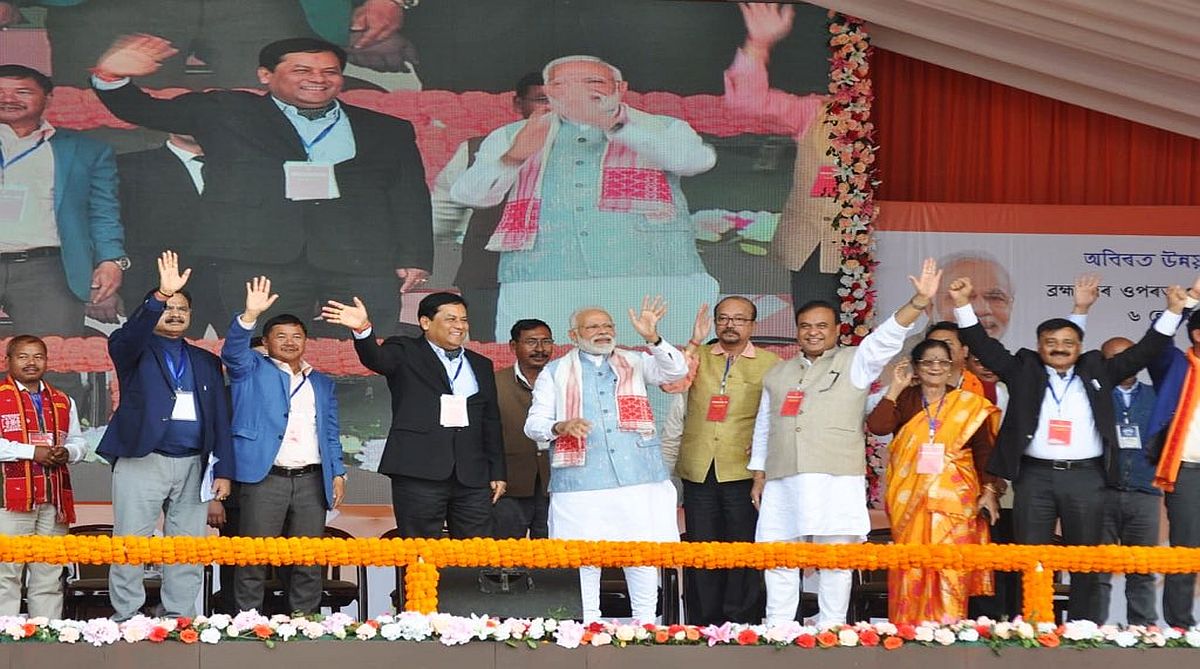
PM Modi said the NDA government was ready to fully protect the culture, resources and the language of the Northeast states.
SNS Web | New Delhi | February 9, 2019 3:04 pm
Rumours being spread over Citizenship Bill, says PM Modi amid protests, inaugurates projects in Assam
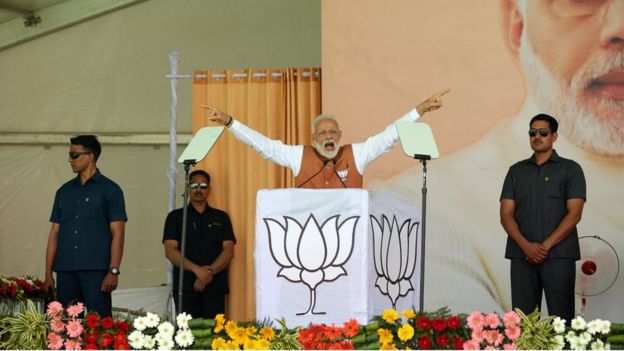
Amid angry protests, Prime Minister Narendra Modi on Saturday said huge misinformation campaign has been carried out over the Citizenship (Amendment) Bill while addressing a rally in Assam’s Amingaon.
He further said the NDA government was ready to fully protect the culture, resources and the language of the Northeast states.
In an indirect attack at the opposition, PM Modi said: “false rumours about the citizenship bill are being spread by people sitting in AC rooms”.
Defending the Bill, he said we must “understand the pain of people forced to flee their homes and leave behind all they own”.
Prime Minister Narendra Modi on Friday fired a fresh salvo at the Opposition accusing the Congress of “ignoring the real heroes of India”.
His remarks came close on the heels of Bhupen Hazarika being conferred the Bharat Ratna posthumously.
“I pay my tributes to Dr Bhupen Hazarika. He raised his voice for the deprived and the poor,” PM Modi said.
Repeating his BC and AD jibe, PM Modi said, “I want to ask Congress, why did they fail to confer Bharat Ratnas to those who really deserved it. Why did they ignore real ratnas of India.”
The prime minister had earlier in the Lok Sabha said, “Our friends in Congress see things in two time periods. BC- Before Congress, when nothing happened. AD- After dynasty- where everything happened.”
Earlier, PM Modi inaugurated the Numaligarh Refinery Ltd’s bio-diesel refinery and the Barauni-Guwahati gas pipeline.
He also laid the foundation stone of a six-lane bridge over river Brahmaputra.
“Today is a new chapter in the history of the Northeast,” PM Modi said after the inauguration.
“Assam is on the path to progress,” says PM Modi. “We have launched projects worth thousands of crores.”
A 729 km gas pipeline from Barauni – Guwahati passing through Bihar, West Bengal, Sikkim and Assam will also be laid by the prime minister.
PM Modi kicked off his two-day visit of the Northeast on Friday evening.
Modi was shown black flags in at least two places on Saturday for the second consecutive day in Assam over the contentious Citizenship Bill.
Modi, who was on his way to the airport from the Raj Bhawan in Guwahati, was shown black flags by protesters belonging to the Asom Jatiyatabadi Yuva Chhatra Parishad (AJYCP) at Machkhowa area.
Minutes later, a group of students showed black flags to the prime minister when his huge convoy was passing through the Gauhati University at Jalukbari area.
On Friday evening, Modi was shown black flags in at least four different locations as soon as he landed in Guwahati and was travelling from the airport to the Raj Bhawan to spend the night.
While hundreds of Gauhati University students waved black flags at Modi in Jalukbari area, activists of the Krishak Mukti Sangram Samiti (KMSS) and AJYCP did the same at Adabari and Fancy Bazar areas.
Members of the All Assam Students Union (AASU) were also seen waving black flags at the prime minister and shouting slogans as his convoy crossed the AASU headquarters on the Mahatma Gandhi Road at Uzan Bazar.
Slogans like ‘Modi go back’, ‘Scrap Citizenship Amendment Bill’, ‘Joi Aai Asom (Glory to Mother Assam)’ was heard.
This is Modi’s third visit to Assam since December 25, 2018, when he inaugurated the Bogibeel bridge. In his second visit on January 4 this year, the prime minister had told a rally in Silchar that the Citizenship Bill would be passed by Parliament soon, triggering widespread protests in the state.
The Citizenship (Amendment) Bill seeks to provide Indian citizenship to Hindus, Jains, Christians, Sikhs, Buddhists and Parsis from Bangladesh, Pakistan and Afghanistan after six years of residence in India even if they do not possess any document.
The bill was passed by the Lok Sabha during the Winter Session on January 8 and has been awaiting Rajya Sabha nod.
Later in the day, PM Modi is scheduled to fly to Tripura to address a public rally.
The Supreme Court’s observation came on the home ministry’s plea for withdrawal of 167 companies of combined armed forces for two weeks from Assam as they will be deployed for elections.
New Delhi, HT Correspondent
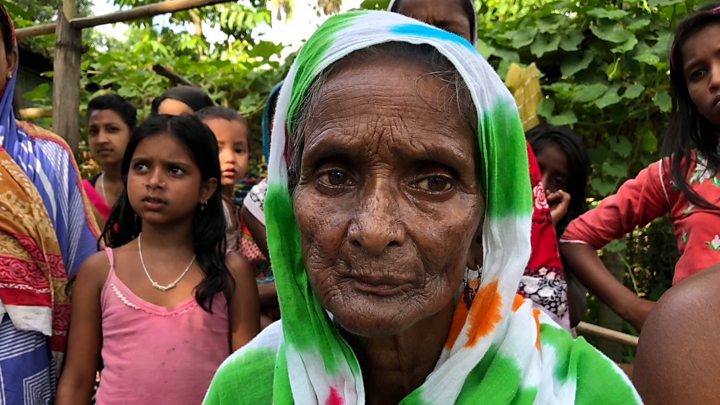
Villagers gather to check their documents at a NRC help centre for people whose names were not featured in the final draft in Kamrup district of Assam.(AFP)
The Supreme Court on Tuesday pulled up the Centre over the National Register of Citizens (NRC) in Assam saying that the Union home ministry comes up with different stories to destroy the process.
The top court’s observation came on the home ministry’s plea for withdrawal of 167 companies of combined armed forces for two weeks from Assam as they will be deployed for elections. Rejecting the plea, a bench headed by Chief Justice Ranjan Gogoi said the Centre is not cooperating and it seems the entire effort of the home ministry is to destroy the NRC process.
The government sought the suspension of the NRC exercise to which the court said “it is too much to ask for both.” The Supreme Court bench said elections and NRC can go on simultaneously. The court told the government that if it wanted the citizen register process to go on there were “1001 ways to do so”.
The SC asked the Election Commission to consider exempting certain state officers from election duty to ensure that the NRC process is not hampered
Over 4 million of the 32.9 million in Assam were left out of the NRC draft, released on July 30 last year. The Centre and the Assam government insisted that register is still a draft and that there is adequate recourse available to those not included.
The Supreme Court had extended the last date to file claims and objections on inclusion of names in the draft NRC from December 15 to December 31, 2018.
The Supreme Court had initially given the Assam government a deadline of December 15 to register the remaining people. The court had also allowed those left out of the draft NRC to use five more documents to prove their citizenship and be included in the final NRC. This, the state government, had claimed was putting additional burden on authorities to make the process of inclusion fool-proof.
The NRC, which was first prepared for Assam in 1951, is being updated at the insistence of the Supreme Court, although it has been a longstanding demand of most political organisations in the state. The register is aimed at distinguishing the state’s citizens from illegal immigrants, mostly from Bangladesh. The first draft of the updated NRC, released on December 3, 2017 listed 19 million people.
The bill attempts to grant citizenship to immigrants who are not Muslim.
Students, activists, politicians and celebrities have all joined the protests against India’s ruling party.
What does the bill say?
The Citizenship (Amendment) bill seeks to provide citizenship to non-Muslim migrants from Pakistan, Bangladesh and Afghanistan.
Supporters of the bill defend it by saying that Muslims have been excluded as the bill offers Indian nationality only to religious minorities fleeing persecution in neighbouring countries.
It comes months after the publication of the National Register of Citizens (NRC) – a list of people who can prove they came to the state by 24 March 1971, a day before neighbouring Bangladesh became an independent country. Around 3.62 million of those left off the register have submitted claims for inclusion again.
Media captionLiving in limbo: Assam’s four million unwanted
India said the process was needed to identify illegal Bangladeshi migrants.
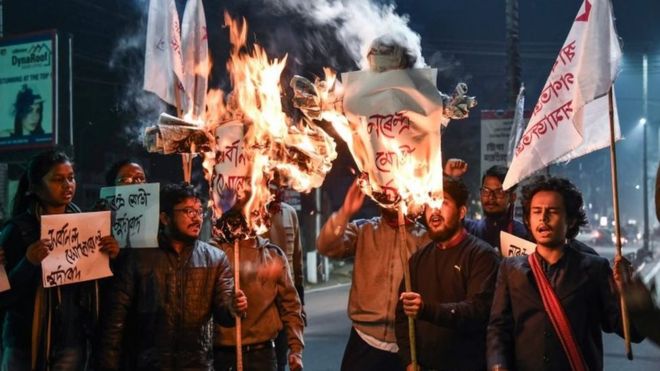
Thousands of students have joined writers, artists and activists in regular protests against the bill, fearing that tens of thousands of Bengali Hindu migrants who were not included in the NRC may still get citizenship to stay on in the state.
How bad are the protests?
Offices of the Bharatiya Janata Party (BJP), which runs both the federal government and Assam’s state government, have been burnt down by angry mobs in many places.
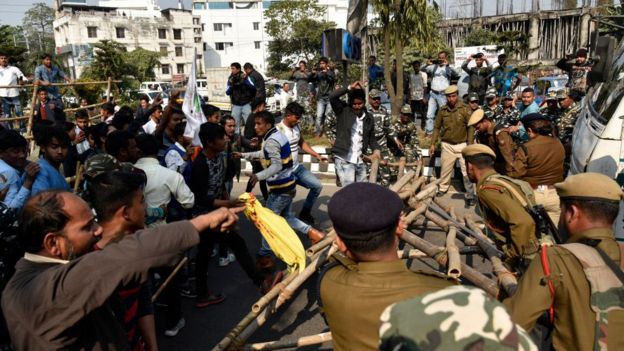
Protesters have also frequently surrounded the state secretariat in the capital, Guwahati, demanding the shelving of the amendment.
Some supporters of Assamese peasant leader Akhil Gogoi even staged a nude protest in the national capital, Delhi, earlier this month.
“The movement against the bill has gained momentum across the north-east and if it is not withdrawn, the situation in the region may turn volatile,” Sammujal Bhattacharyya of the All Assam Students Union (Aasu), which is leading the protests against the bill in Assam, told the BBC.
He said it was an attempt to provide citizenship “by backdoor” to illegal non-Muslim migrants who were excluded from the NRC.
Image copyrightGETTY IMAGESImage captionAssam has seen vocal protests against the bill
In the early 1980s, Aasu was behind the anti-migrant protests in Assam that paralysed the state and degenerated into rioting that led to more than 3,000 deaths.
The agitation ended in 1985 after March 1971 was agreed as the cut-off date to determine citizenship.
Why is the BJP determined to get the bill through?
Despite the protests, BJP president Amit Shah has insisted that the government is determined to pass the bill.
“Hindus from these countries have nothing to fear, they will all get Indian citizenship,” Mr Shah told a rally in West Bengal state this week. Analysts say it’s an obvious attempt to win over Bengali Hindus to the BJP’s cause.
The Bengali Hindus are in a majority in the states of West Bengal and Tripura, with substantial numbers in Assam. The three states together will account for 58 seats in upcoming general elections.
Image copyrightGETTY IMAGESImage caption BJP president Amit Shah has said the government is committed to pass the bill
But while the BJP may seek to win many of these seats to offset possible losses in north India, it risks losing the support of the ethnic Assamese, who voted for the party in the 2016 state elections.
Assam Chief Minister Sarbananda Sonowal, himself a former Aasu leader, is on the defensive, requesting students not to join the agitation which, he says, is fuelled by “misinformation”.
“Nobody will automatically get citizenship if the amendment is passed into law. The government will closely examine all applications and reject those that are not tenable,” he said this week.
What are the other reactions to the bill?
India’s main opposition Congress party opposes the bill on the grounds that determining citizenship on the basis of religion goes against the spirit of the constitution.
Regional parties who have joined hands with the BJP to form governments in Assam and the neighbouring states of Meghalaya, Nagaland and Mizoram have threatened to renege on their alliances because they all oppose the bill.
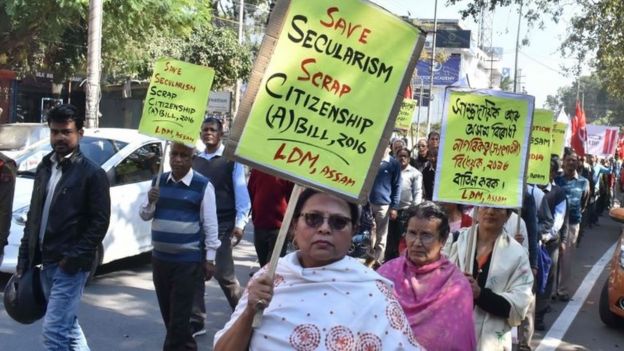
Image copyrightAFPImage caption Demands to scrap the bill have been growing louder
“Anyone who came to Assam after March 1971 is a foreigner, an illegal migrant. We don’t care if he or she is Hindu or Muslim. Religion is not the issue here, it is a question of protecting indigenous people from being swamped by foreigners in their own land,” university student Mitali Baruah told the BBC as she marched to a protest rally.
That has been the dominant sentiment with most of the indigenous communities – a migrant is unwelcome, regardless of religion.
“The BJP has failed to understand the pulse of the region, because they see everything through the prism of religion,” said analyst Samir Purkayastha.







 CHINDIA ALERT: You'll be living in their world, very soon