Archive for ‘attacked’

04/04/2020

Coronavirus: India doctors ‘spat at and attacked’

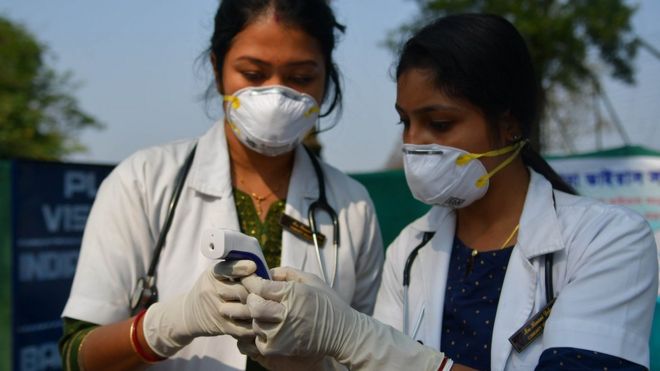
File photo showing two Indian doctors checking a thermometerImage copyright MAJORITY WORLD
Image caption Indian doctors have been working extra hours to halt the spread of the coronavirus

Several healthcare workers in India have been attacked as they battle to stop the spread of the coronavirus.

Reports say doctors have been spat at and chased away from homes, and that in one case patients directed abusive and vulgar language towards female nurses.

Some physicians and their families have also been ostracised by their neighbours because of their exposure to patients infected with Covid-19.

India has reported more than 2,300 cases and at least 50 people have died.

One video, which has gone viral, showed a mob throwing stones at two female doctors wearing personal protective equipment in the central city of Indore.

The doctors had gone to a densely-populated area to check on a woman suspected of having Covid-19 when they came under attack.

Presentational white spaceDespite being injured, one of the doctors seen in the video, Zakiya Sayed, said the incident “won’t deter me from doing my duty”.

“We were on our usual round to screen suspected cases,” she told the BBC. “We never thought that we would be attacked.”

“I had never seen scenes like that. It was frightening. We somehow fled from the mob. I am injured but not scared at all.”

Dr Sayed added: “We had no reason to suspect that people would be agitated against medical teams.”

“We are working to keep people safe. We had information about a person coming in contact with a Covid-19 patient. We were talking to the person when residents got agitated and attacked us.”
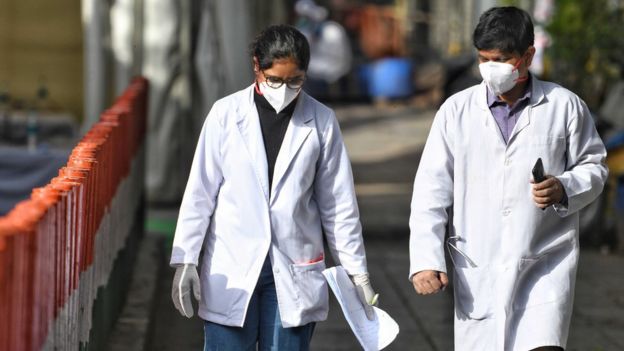
File photo showing two Indian doctorsImage copyright HINDUSTAN TIMES
Image caption Doctors have been abused and attacked in different parts of India

Seven people have been arrested in connection with the incident.

Dr Anand Rai, who is also a part of the Covid-19 taskforce in Indore, told the BBC: “Nothing can justify the attack against medical team. But it happened in a Muslim-dominated area where there is general distrust against the government.”

He said the area had recently witnessed protests against a controversial new citizenship law.

“So that anger spilled over and took the form of this attack. But whatever maybe the reason, nothing can justify violence, especially against doctors during a national health emergency,” he added.

Banner image reading 'more about coronavirus'
Banner

Meanwhile, a hospital in the northern city of Ghaziabad also witnessed unruly scenes on Thursday.

The hospital put at least 21 people in quarantine after they attended a religious event that has been linked to hundreds of positive cases across the country.

Thousands who attended the gathering in Delhi, organised by Islamic preaching group Tablighi Jamaat, have been put in quarantine, and authorities are still tracing others. It is believed that the infections were caused by preachers who attended the event from Indonesia.

At the Ghaziabad hospital, some of the quarantined attendees allegedly used abusive and vulgar language against members of staff.
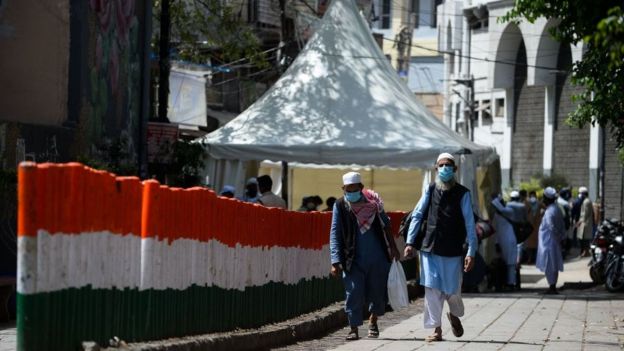
Men wearing protective facemasks walk to board a special service bus taking them to a quarantine facility amid concerns about the spread of the COVID-19 coronavirus in Nizamuddin area of New Delhi on March 31, 2020.Image copyright GETTY IMAGES
Image caption Almost 400 cases of Covid-19 have been traced to a Tablighi Jamaat event in Delhi

“Some were walking naked in the hospital ward and harassing women doctors and nurses,” a doctor who works at the hospital told the BBC. “They kept asking for cigarettes and tobacco.”

A senior police officer in the city told the BBC that cases had been registered against some people after doctors filed a complaint.

“Registering cases was the last resort. Police are still trying to make them understand the severity of the situation,” he said.
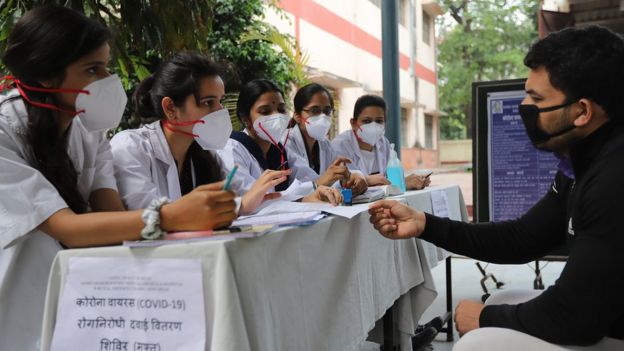
A man speaks to healthcare workers in IndiaImage copyright SOPA IMAGES
Image caption Doctors and nurses have asked people to follow their advice and not panic

Similar incidents have been reported in neighbouring Delhi.

Some attendees of the Tablighi Jamaat event who are being held in a quarantine facility run by the railways are said to have spat at doctors and misbehaved.

Deepak Kumar, spokesman for Northern Railways, said the situation there was now under control.

“The attendees have been counselled and they are now co-operating with the staff,” he said.

Delhi’s state government has reportedly written to the police, requesting more security for medical staff.

Reports of attacks on doctors and nurses have also come from the southern city of Hyderabad and the western city of Surat.

A doctor who was treating coronavirus patients is Hyderabad’s Gandhi Hospital was attacked on Wednesday.

Police have promised the doctor that “strict action will be taken against the culprits”.
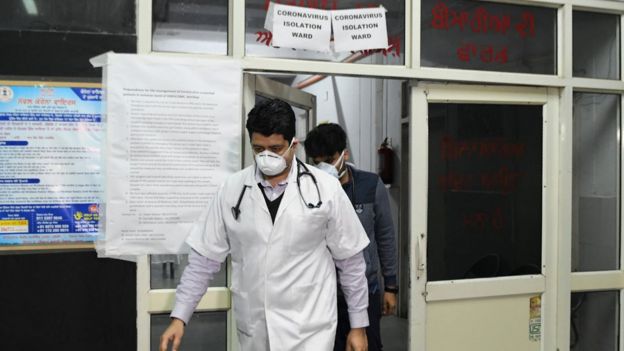
File photo showing Indian doctorImage copyright NARINDER NANU
Image caption Prime Minister Narendra Modi has said that doctors are “front-line soldiers”

But it is not just a work where medical workers are facing discrimination. It has followed them home.

One doctor, who did not wish to be identified, said she felt “extremely disheartened when I learnt that even my neighbours think that me and my family shouldn’t be allowed to live in the building”.

“We want our families to be safe. But we are being discriminated for doing our job.”

“A number of doctors have tested positive across India and that shows how tough our job is at the moment. And that is why we need everybody’s support to win this war against coronavirus.”

She added: “We are following all safety protocols. We are not meeting even our families and that is stressful.”

“But seeing this open discrimination just breaks my heart. But we will go on because there is really no other option.”

Source: The BBC

25/02/2020

Donald Trump in India: Seven killed in Delhi violence during visit

Seven people have been killed in Delhi in protests against India’s controversial new citizenship law, as US President Donald Trump made his first official visit to the country.

Violence has erupted again in parts of north-east Delhi, which saw deadly clashes between supporters and opponents of the law on Monday night.

Two journalists have been attacked and BBC reporters in the area say mobs are throwing stones and shouting slogans.

There are fears of further clashes.

Mobs in parts of north-east Delhi are throwing stones at each other, and the situation remains tense, according to BBC correspondents.

A policeman and six civilians have died in Delhi’s deadliest violence since the Citizenship Amendment Act (CAA) – which critics say is anti-Muslim – was passed last year.

Around 150 people, including 48 policemen, are reportedly injured.

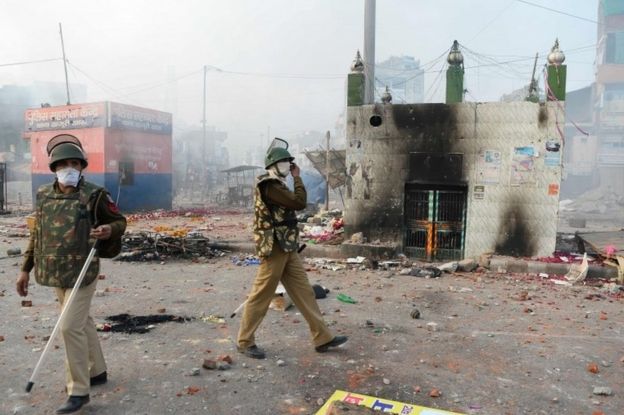
Policemen stand on a vandalised road following clashes between supporters and opponents of a new citizenship law, at Bhajanpura area of New Delhi on February 24, 2020, ahead of US President arrival in New Delhi.Image copyright AFP

“There are around 200 people, some are holding the Indian flag in their hands, others are holding saffron flags, generally associated with right-wing Hindu groups. They are chanting Jai Shri Ram [hail Lord Ram],” BBC Hindi reporter Faisal Mohammed said.

The crowd was also shouting “shoot the traitors”, our reporter added.

Correspondents say the timing of the unrest is an embarrassment to Prime Minister Narendra Modi as he hosts the US president and the violence has taken the spotlight away from Mr Trump’s visit.

Where is the violence?

It broke out in three Muslim-majority areas in north-east Delhi on Sunday and has continued since.

The violence in the area has seen protesters firmly split along religious lines, BBC reporters at the scene say.

Both sides have blamed each other for starting the clashes.

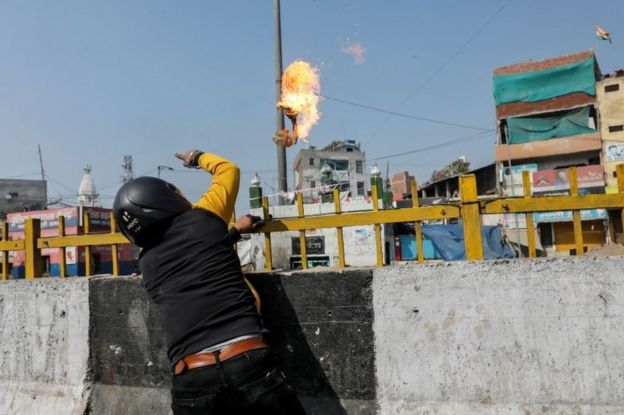
A man supporting a new citizenship law throws a petrol bomb at a Muslim shrine during a clash with those opposing the law in New Delhi India, February 24, 2020Image copyright REUTERS
Image caption The violence in the Muslim-majority areas in north-east Delhi began on Sunday

The violence has been linked to a BJP leader, Kapil Mishra, who had threatened a group of protesters staging a sit-in against the CAA over the weekend, telling them that they would be forcibly evicted once Donald Trump had left India.

The clashes spilled into Monday and police fired tear gas shells and led baton charges to disperse the stone-throwing crowds. TV footage showed flames and smoke billowing from buildings.

Eyewitnesses said they saw charred vehicles and streets full of stones in areas like Jaffrabad and Chand Bagh on Tuesday morning. Police were allowing people to enter only after checking their identity cards. Some Metro stations have also been shut.

Who are the dead and injured?

Six civilians and one policeman have been killed in the violence so far.

“One of the seriously injured is a senior police officer. He has now been moved to another hospital for specialised treatment,” an official said.

Two journalists belonging to the NDTV news channel were badly beaten while they were out reporting on Tuesday morning.

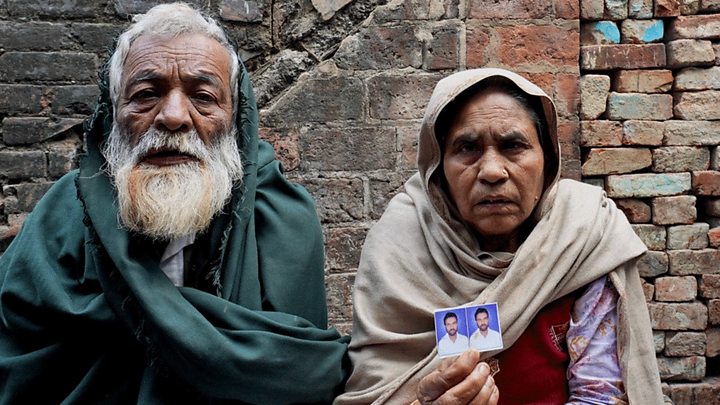
Shahid Alvi, an auto rickshaw driver, died because of a bullet injury he suffered during the protest. His brother Rashid told BBC Hindi that Shahid was married just a month ago.

“He was shot in the stomach and died while we were taking him to the hospital,” he said.

Another victim has been identified as Rahul Solanki.

His brother, Rohit Solanki, told BBC Hindi that he died after being shot as he tried to escape from a mob.

“He had gone out to buy groceries when he was suddenly surrounded. He was shot at point blank range. We tried taking him to four hospitals but we were turned away,” he said.

What are officials doing?

Delhi’s freshly re-elected Chief Minister Arvind Kejriwal, called on the federal government to restore law and order.

“There are not enough police on the streets [in the affected areas]. Local police are saying they are not getting orders from above to control the situation, and they are not able to take action,” he told reporters.

The capital’s police force reports directly to Mr Modi’s ruling Bharatiya Janata Party (BJP)-led government.

Home Minister Amit Shah, who is in-charge of Delhi’s police forces, is holding a meeting with Mr Kejriwal to discuss the situation.

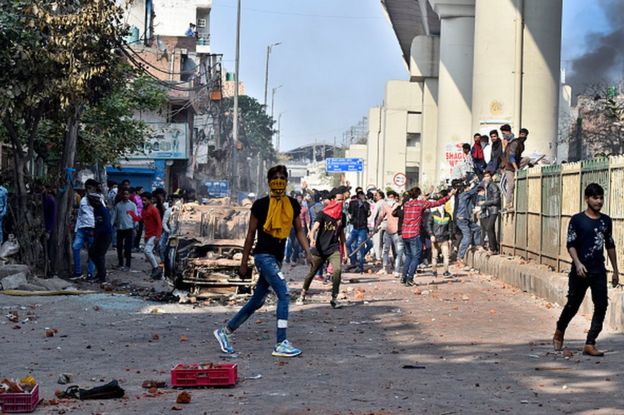
Protesters seen during clashes between a group of anti-CAA protestors and supporters of the new citizenship act, near Maujpur and Jaffrabad metro station on February 24, 2020 in New DelhiImage copyright GETTY IMAGES
Image caption The police and protesters fought pitched battles on the streets of Delhi

What is the citizenship act about?

The Citizenship Amendment Act (CAA) grants amnesty to non-Muslim immigrants from three nearby Muslim-majority countries.

The new law has raised fears that India’s secular status is at risk.

Critics say it discriminates against Muslims. But the government says the protests are unnecessary as it only seeks to give amnesty to persecuted minorities.

Protests so far have been largely led by Muslim women and men, but a lot of Hindus have also joined them.

Media caption ‘Our son was shot dead by police’

Source: The BBC

14/12/2019

Clashes erupt in Delhi over citizenship law; Japan PM cancels visit

NEW DELHI (Reuters) – Violent clashes erupted in Delhi between police and hundreds of university students on Friday over the enactment of a new citizenship law that critics say undermines India’s secular foundations.

The unrest has already led Japanese Prime Minister Shinzo Abe to cancel a planned visit to India from Sunday.

The new law offers a way to Indian citizenship for six minority religious groups from neighbouring Bangladesh, Pakistan and Afghanistan including Hindus and Christians, but not Muslims.

Police fired tear gas and used baton charges to disperse scores of students demonstrating at Jamia Millia Islamia university in the heart of Delhi over the law.

Protesters attacked cars in the capital, and several people were injured and taken to hospital.

Zakir Riyaz, a PhD student in social work, said the new law made a mockery of India’s religious openness.

“It goes against the whole idea of a secular India,” he said, speaking by phone from the Holy Family Hospital in New Delhi where 15 of his fellow students were admitted after being injured in a police baton charge.

Police barricades were knocked down and streets were strewn with shoes and broken bricks. An official at the university dispensary said that more than 100 students had been brought in with injuries but all had been discharged.

Parvez Hashmi, a local politician who went to the protest site to speak to police, said about 50 students had been detained.

Students said it was meant to be a peaceful protest, with them trying to go from Jamia University to Parliament Street to show their opposition to the legislation. But police pushed them back, leading to clashes.

Critics of Prime Minister Narendra Modi’s government say it is promoting a Hindu-first agenda for India and that the citizenship law excluding Muslims showed a deep-seated bias against India’s 170 million Muslims.

Imran Chowdhury, a researcher, said “either give citizenship to refugees of all religions or none at all. The constitution is being tampered with in the name of religion.”

Modi’s ruling Bharatiya Janata Party denies any religious bias but says it is opposed to the appeasement of one community. It says the new law is meant to help minority groups facing persecution in the three nearby Muslim countries.

ABE CANCELS

The United Nations human rights office voiced concern that the new law is “fundamentally discriminatory in nature”, and called for it to be reviewed.

Two people were killed in India’s Assam state on Thursday when police opened fire on mobs torching buildings and attacking railway stations in protest at the new citizenship rules signed into law on Thursday.

Japan’s Prime Minister Shinzo Abe cancelled a trip to Assam for a summit with his Indian counterpart Narendra Modi that had been due to begin on Sunday.

Japan has stepped up infrastructure development work in Assam in recent years, which the two sides were expected to highlight during the summit. Abe had also planned to visit a memorial in the nearby state of Manipur where Japanese soldiers were killed in World War Two.

“With reference to the proposed visit of Japanese PM Abe Shinzo to India, both sides have decided to defer the visit to a mutually convenient date in the near future,” Indian foreign ministry spokesman Raveesh Kumar said in a tweet.

Japan’s Chief Cabinet Secretary Yoshihide Suga said both countries would decide on the appropriate timing for the visit although nothing has been decided yet.

A movement against immigrants from Bangladesh has raged in Assam for decades. Protesters there say granting Indian nationality to more people will further strain the state’s resources and lead to the marginalisation of indigenous communities.

Source: Reuters

27/09/2019

Shuping Wang: Whistleblower who exposed HIV scandal in China dies

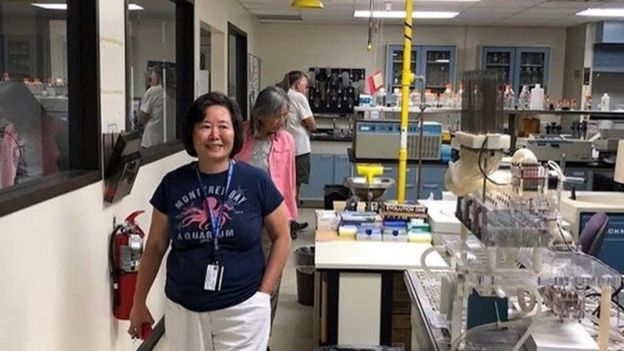
Photo of Shuping WangImage copyright HAMPSTEAD THEATRE
Image caption “Speaking out cost me my job, my marriage and my happiness at the time,” Dr Wang said

A whistleblower who exposed HIV and hepatitis epidemics in central China in the 1990s, potentially saving tens of thousands of lives, has died aged 59.

Dr Shuping Wang lost her job, was attacked, and had her clinic vandalised after she spoke out.

She died in Utah in the US, where she moved after the scandal.

A play inspired by her life is currently running in London, with the playwright calling her a “public health hero”.

Dr Wang never returned to China after leaving, saying it did not feel safe.

Why did Dr Wang speak out?

In 1991 in the Chinese province of Henan, Dr Wang was assigned to work at a plasma collection station. At the time, many locals sold their blood to local government-run blood banks.

It wasn’t long before she realised the station posed a huge public health risk.

Poor collection practices, including cross-contamination in blood-drawing, meant many donors were being infected with hepatitis C from other donors.

She warned senior colleagues at the station to change practices, but was ignored and according to her own account, was told that such a move would “increase costs”.

Undeterred, she reported the issue to the Ministry of Health. As a result, the ministry later announced that all donors would need to undergo hepatitis C screening – reducing the risk of the disease being spread.

But because of her whistleblowing, Dr Wang said, she was forced out of a job.

Her seniors said her actions had “impeded the business”. She was transferred, and assigned to work in a health bureau. But in 1995, she uncovered another scandal.

Dr Wang at workImage copyright HAMPSTEAD THEATRE

Dr Wang discovered a donor who had tested HIV positive – but had still sold blood in four different areas.

She immediately alerted her seniors to test for HIV in all the blood stations in Henan province. Again, she was told this would be too costly.

She decided to take things into her own hands, buying test kits and randomly collecting over 400 samples from donors.

She found the HIV positive rate to be 13%.

She took her results to officials in the capital, Beijing. But back home, she was targeted. A man she described as a “retired leader of the health bureau” came to her testing centre and smashed her equipment.

When she tried to block him, he hit her with his baton.

‘I’m not a man. I’m a woman’

In 1996, all the blood and plasma collection sites across the country were shut down for “rectification”. When they re-opened, HIV testing was added.

“I felt very gratified, because my work helped to protect the poor,” she said. But others were not happy.

At a health conference later that year, a high-ranking official complained about that “man in a district clinical testing centre [who] dared to report the HIV epidemic directly to the central government”.

“He said, [who is] the guy – how dare he [write] a report about this?” Dr Wang told the BBC’s Woman’s Hour in an interview earlier this month.

“I stood up and said I’m not a man. I’m a woman and I reported this.”

Later that year, she was told by health officials that she ought to stop work. “I lost my job, they asked me to stay home and work for my husband,” Dr Wang said.

Her husband, who worked at the Ministry of Health, was ostracised by his colleagues. Their marriage eventually broke down.

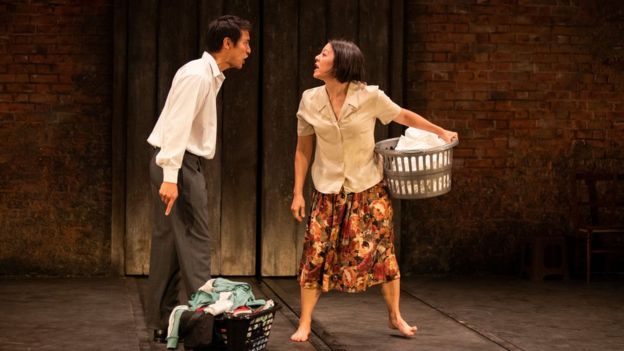
A scene from The King of Hell's PalaceImage copyright HAMPSTEAD THEATRE
Image caption A scene from The King of Hell’s Palace

In 2001, Dr Wang moved to the US for work, where she took the English name “Sunshine”.

In the same year, the Chinese government admitted that it faced a serious AIDS crisis in central China. More than half a million people were believed to have become infected after selling their blood to local blood banks.

Henan, the province that Dr Wang had worked in, was one of the worst hit.

The government later announced that a special clinic had been set up to care for those suffering from Aids-related illnesses.

Several years later, Dr Wang re-married and moved with her husband Gary Christensen to Salt Lake City, where she began working at the University of Utah as a medical researcher.

But her past followed her. In 2019, she said, Chinese state security officers made threatening visits to relatives and former colleagues in Henan, in an attempt to cancel the production of a play inspired by her life.

She refused, and the play titled “The King of Hell’s Palace” premiered at London’s Hampstead Theatre in September.

Dr Wang died on 21 September while hiking in Salt Lake City with friends and her husband. It’s thought she may have had a heart attack.

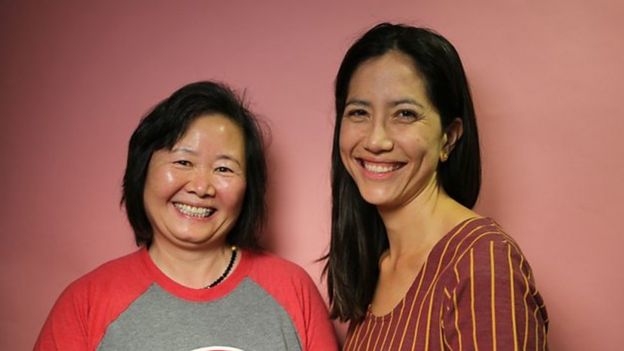
Dr Wang with playwright Frances Ya-Chu
Image caption Dr Wang with playwright Frances Ya-Chu

“Speaking out cost me my job, my marriage and my happiness at the time, but it also helped save the lives of thousands and thousands of people,” she had told the Hampstead Theatre website in an interview just one month before her death.

“She was a most determined, relentless optimistic and most loving woman,” wrote her friend David Cowhig after news of her death.

“She chose the English name Sunshine for a reason. Perhaps her exuberance and love for the outrageous – made possible [the] perseverance she had.”

Source: The BBC

Law of Unintended Consequences

continuously updated blog about China & India

ChiaHou's Book Reviews

continuously updated blog about China & India

What's wrong with the world; and its economy

continuously updated blog about China & India