25/04/2019
WASHINGTON (Reuters) – A French warship passed through the strategic Taiwan Strait this month, U.S. officials told Reuters, a rare voyage by a vessel of a European country that is likely to be welcomed by Washington but increase tension with Beijing.
The passage, which was confirmed by China, is a sign that U.S. allies are increasingly asserting freedom of navigation in international waterways near China. It could open the door for other allies, such as Japan and Australia, to consider similar operations.
The French operation comes amid increasing tensions between the United States and China. Taiwan is one of a growing number of flashpoints in the U.S.-China relationship, which also include a trade war, U.S. sanctions and China’s increasingly muscular military posture in the South China Sea, where the United States also conducts freedom of navigation patrols.
Two officials, speaking on condition of anonymity, said a French military vessel carried out the transit in the narrow waterway between China and Taiwan on April 6.
One of the officials identified the warship as the French frigate Vendemiaire and said it was shadowed by the Chinese military. The official was not aware of any previous French military passage through the Taiwan Strait.
The officials said that as a result of the passage, China notified France it was no longer invited to a naval parade to mark the 70 years since the founding of China’s Navy. Warships from India, Australia and several other nations participated.
China said on Thursday it had lodged “stern representations” with France for what it called an “illegal” passage.
“China’s military sent navy ships in accordance with the law and the rules to identify the French ship and warn it to leave,” defence ministry spokesman Ren Guoqiang told a regularly scheduled media briefing, while declining to say if the sailing had led to the withdrawal of France’s invitation to the parade of ships this week.
“China’s military will stay alert to firmly safeguard China’s sovereignty and security,” he said.
Colonel Patrik Steiger, the spokesman for France’s military chief of staff, declined to comment on an operational mission.
The U.S. officials did not speculate on the purpose of the passage or whether it was designed to assert freedom of navigation.
MOUNTING TENSIONS
The French strait passage comes against the backdrop of increasingly regular passages by U.S. warships through the strategic waterway. Last month, the United States sent Navy and Coast Guard ships through the Taiwan Strait.
The passages upset China, which claims self-ruled Taiwan as part of its territory. Beijing has been ramping up pressure to assert its sovereignty over the island.
Chen Chung-chi, spokesman for Taiwan’s defence ministry, told Reuters by phone the strait is part of busy international waters and it is “a necessity” for vessels from all countries to transit through it. He said Taiwan’s defence ministry will continue to monitor movement of foreign vessels in the region.
“This is an important development both because of the transit itself but also because it reflects a more geopolitical approach by France towards China and the broader Asia-Pacific,” said Abraham Denmark, a former U.S. deputy assistant secretary of defence for East Asia.
The transit is a sign that countries like France are not only looking at China through the lens of trade but from a military standpoint as well, Denmark said.
Last month, France and China signed deals worth billions of euros during a visit to Paris by Chinese President Xi Jinping. French President Emmanuel Macron wants to forge a united European front to confront Chinese advances in trade and technology.
Source: Reuters
Posted in Abraham Denmark, Australia, Beijing, Chen Chung-chi, China alert, Chinese advances in trade and technology, Chinese President Xi Jinping, Coast guard, Colonel Patrik Steiger, defence ministry spokesman, European country, founding of China’s Navy, France, freedom of navigation, French frigate, French President Emmanuel Macron, French warship, geopolitical approach, India alert, international waterways, military chief of staff, navy, participated, Ren Guoqiang, Reuters, ships, Taiwan Strait, Taiwan’s defence ministry, tensions, U.S. deputy assistant secretary of defence for East Asia, Uncategorized, united European front, United States, Vendemiaire, warships, Washington |
Leave a Comment »
23/04/2019
- When recycling businesses gravitated to Malaysia, a black economy went with them
- Some countries treat China’s ban as an opportunity and have been quick to adapt
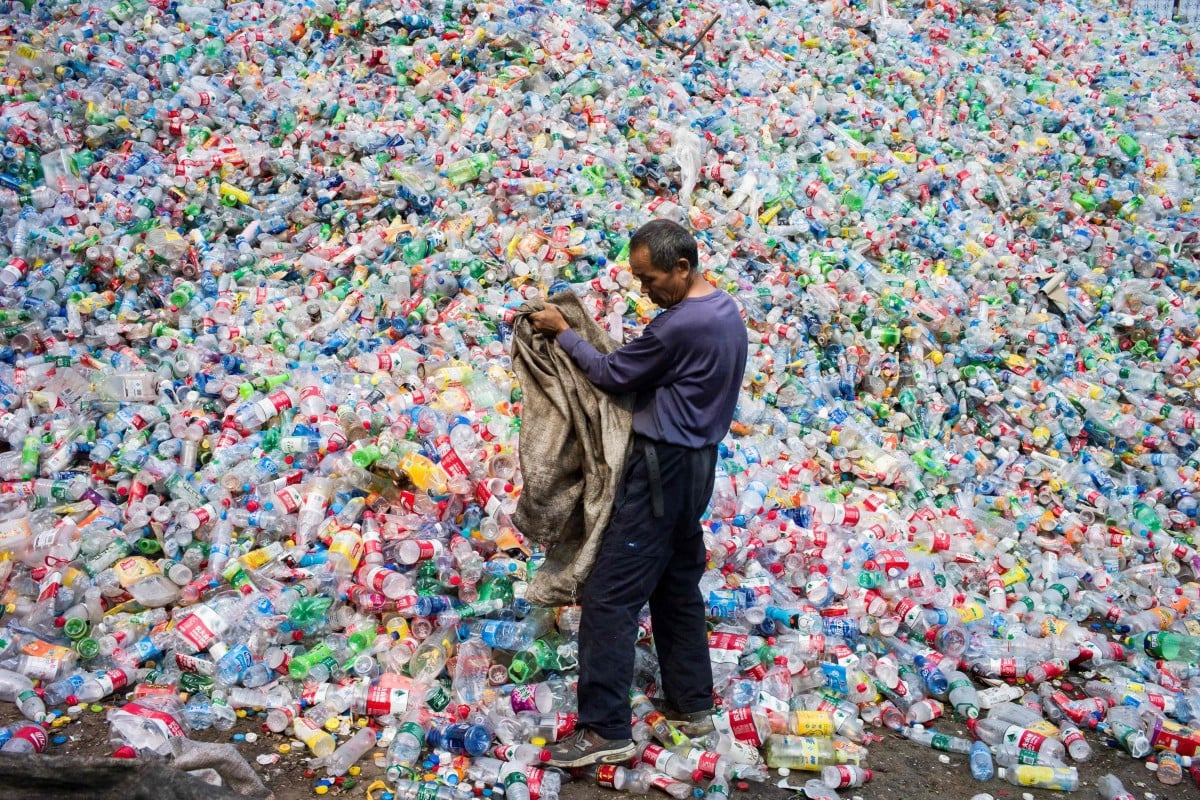
For years, China was the world’s leading destination for recyclable rubbish, but a ban on some imports has left nations scrambling to find dumping grounds for growing piles of waste. Photo: AFP
From grubby packaging that engulfs small Southeast Asian communities to waste that piles up in plants from the US to Australia, China’s ban on accepting the world’s used plastic has thrown recycling efforts into turmoil.
For many years, China took the bulk of scrap plastic from around the world, processing much of it into a higher quality material that could be used by manufacturers.
But, at the start of 2018, it closed its doors to almost all foreign plastic waste, as well as many other recyclables, in an effort to protect its environment and air quality, leaving developed nations struggling to find places to send their waste.
“It was like an earthquake,” Arnaud Brunet, director general of Brussels-based industry group The Bureau of International Recycling, said.
“China was the biggest market for recyclables. It created a major shock in the global market.”
Instead, plastic was redirected in huge quantities to Southeast Asia, where Chinese recyclers have shifted.
With a large Chinese-speaking minority, Malaysia was a top choice for Chinese recyclers looking to relocate, and official data showed plastic imports tripled from 2016 levels to 870,000 tonnes last year.
China to collect applications for scrap metal import licences from next month, trade group says
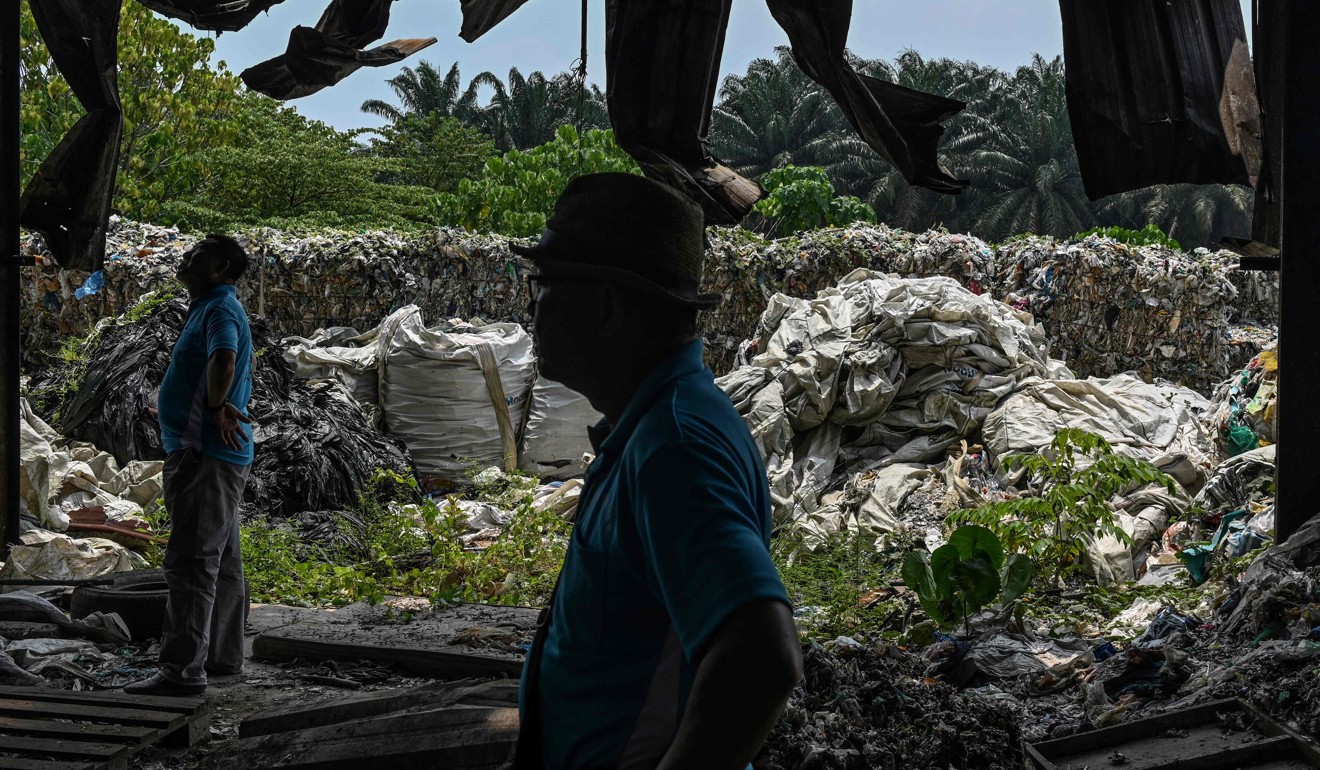
In the small town of Jenjarom, close to Kuala Lumpur, plastic processing plants appeared in large numbers, pumping out noxious fumes around the clock.
Huge mounds of plastic waste, dumped in the open, piled up as recyclers struggled to cope with the influx of packaging from everyday goods, such as foods and laundry detergents, from as far afield as Germany, the US, and Brazil.
Residents soon noticed the acrid stench over the town – the kind of odour that is usual in processing plastic, but environmental campaigners believed some of the fumes also came from the incineration of plastic waste that was too low quality to recycle.
“People were attacked by toxic fumes, waking them up at night. Many were coughing a lot,” resident Pua Lay Peng said.
“I could not sleep, I could not rest, I always felt fatigued,” the 47-year-old added.
Representatives of an environmentalist NGO inspect an abandoned plastic waste factory in Jenjarom, outside Kuala Lumpur in Malaysia. Photo: AFP
Pua and other community members began investigating and, by mid-2018, had located about 40 processing plants, many of which appeared to be operating without proper permits.
Initial complaints to authorities went nowhere but they kept up pressure, and eventually the government took action. Authorities started closing down illegal factories in Jenjarom, and announced a nationwide temporary freeze on plastic import permits.
Thirty-three factories were closed down, although activists believed many had quietly moved elsewhere in the country. Residents said air quality had improved but some plastic dumps remained.
Chinese recycling expert breeds thousands of flies to turn kitchen waste into cash
In Australia, Europe and the US, many of those collecting plastic and other recyclables were left scrambling to find new places to send it.
They faced higher costs to have it processed by recyclers at home and in some cases resorted to sending it to landfill sites as the scrap piled up so quickly.
“Twelve months on, we are still feeling the effects but we have not moved to the solutions yet,” said Garth Lamb, president of industry body Waste Management and Resource Recovery Association of Australia.
Some have been quicker to adapt to the new environment, such as some local authority-run centres that collect recyclables in Adelaide, South Australia.
The centres used to send nearly everything – ranging from plastic to paper and glass – to China but now 80 per cent is processed by local companies, with most of the rest shipped to India.
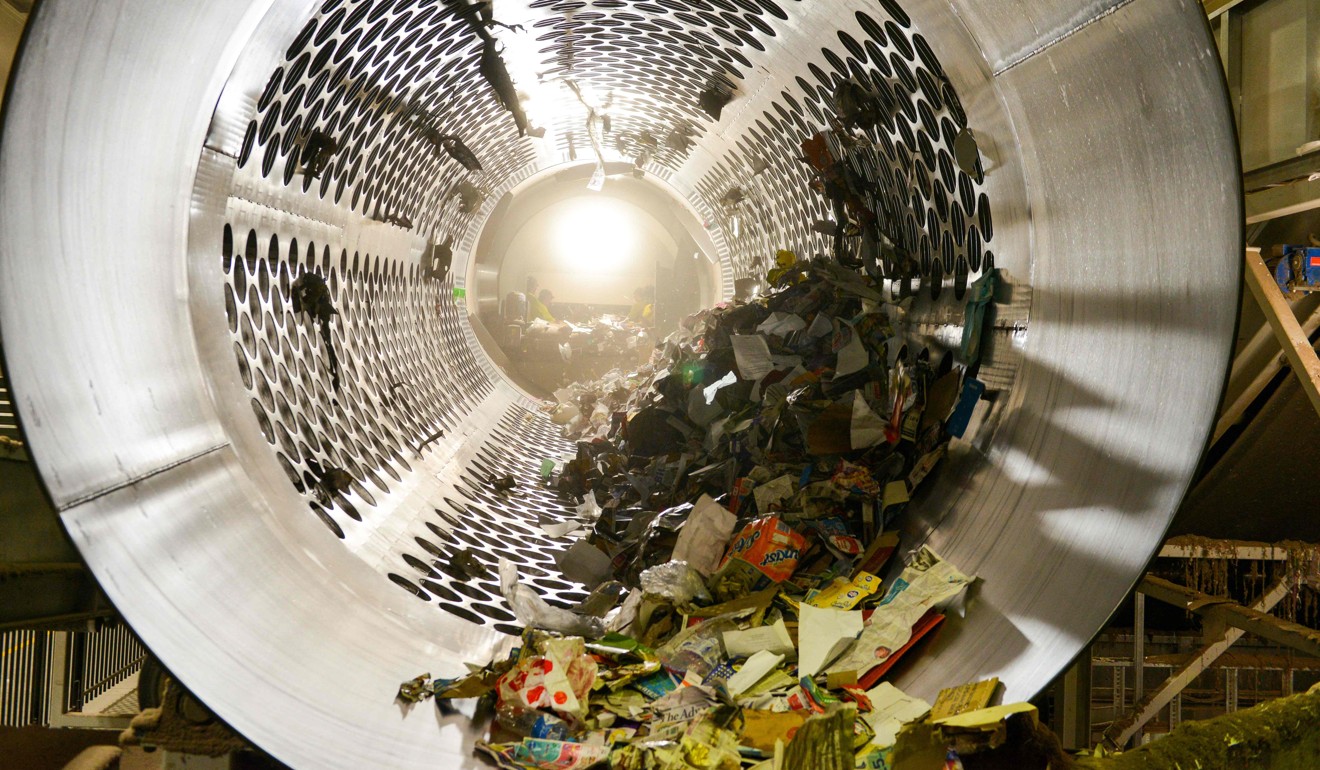
Rubbish is sifted and sorted at Northern Adelaide Waste Management Authority’s recycling site at Edinburgh, a northern suburb of the city of Adelaide. Photo: AFP
“We moved quickly and looked to domestic markets,” Adam Faulkner, chief executive of the Northern Adelaide Waste Management Authority, said.
“We’ve found that by supporting local manufacturers, we’ve been able to get back to pre-China ban prices.”
In mainland China, imports of plastic waste dropped from 600,000 tonnes per month in 2016 to about 30,000 a month in 2018, according to data cited in a recent report from Greenpeace and environmental NGO Global Alliance for Incinerator Alternatives.
Once bustling centres of recycling were abandoned as firms shifted to Southeast Asia.
How China’s plastic waste ban has left Japan to deal with mountains of trash
On a visit to the southern town of Xingtan last year, Chen Liwen, founder of environmental NGO China Zero Waste Alliance, found the recycling industry had disappeared.
“The plastic recyclers were gone – there were ‘for rent’ signs plastered on factory doors and even recruitment signs calling for experienced recyclers to move to Vietnam,” she said.
Southeast Asian nations affected early by the China ban – as well as Malaysia, Thailand and Vietnam were hit hard – have taken steps to limit plastic imports, but the waste has simply been redirected to other countries without restrictions, such as Indonesia and Turkey, the Greenpeace report said.
With only an estimated nine per cent of plastics ever produced recycled, campaigners said the only long-term solution to the plastic waste crisis was for companies to make less and consumers to use less.
Greenpeace campaigner Kate Lin said: “The only solution to plastic pollution is producing less plastic.”
Source: SCMP
Posted in Adam Faulkner, Adelaide, Arnaud Brunet, Australia, biggest market for recyclables, Brazil, Brussels-based industry group, Bureau of International Recycling, Chen Liwen, Chief Executive, China alert, China Zero Waste Alliance, China’s ban on plastic waste imports, director-general, earthquake, environmental ngo, Europe, founder, Garth Lamb, Germany, Global Alliance for Incinerator Alternatives, Greenpeace, Greenpeace campaigner, Japan, Jenjarom, Kate Lin, Kuala Lumpur, Malaysia, Mainland China, Malaysia, Northern Adelaide Waste Management Authority, president of industry body, Pua Lay Peng, recycling efforts, South Australia, Southeast Asian, Thailand, turmoil, Uncategorized, US, Vietnam, Waste Management and Resource Recovery Association of Australia, Xingtan |
Leave a Comment »
21/04/2019
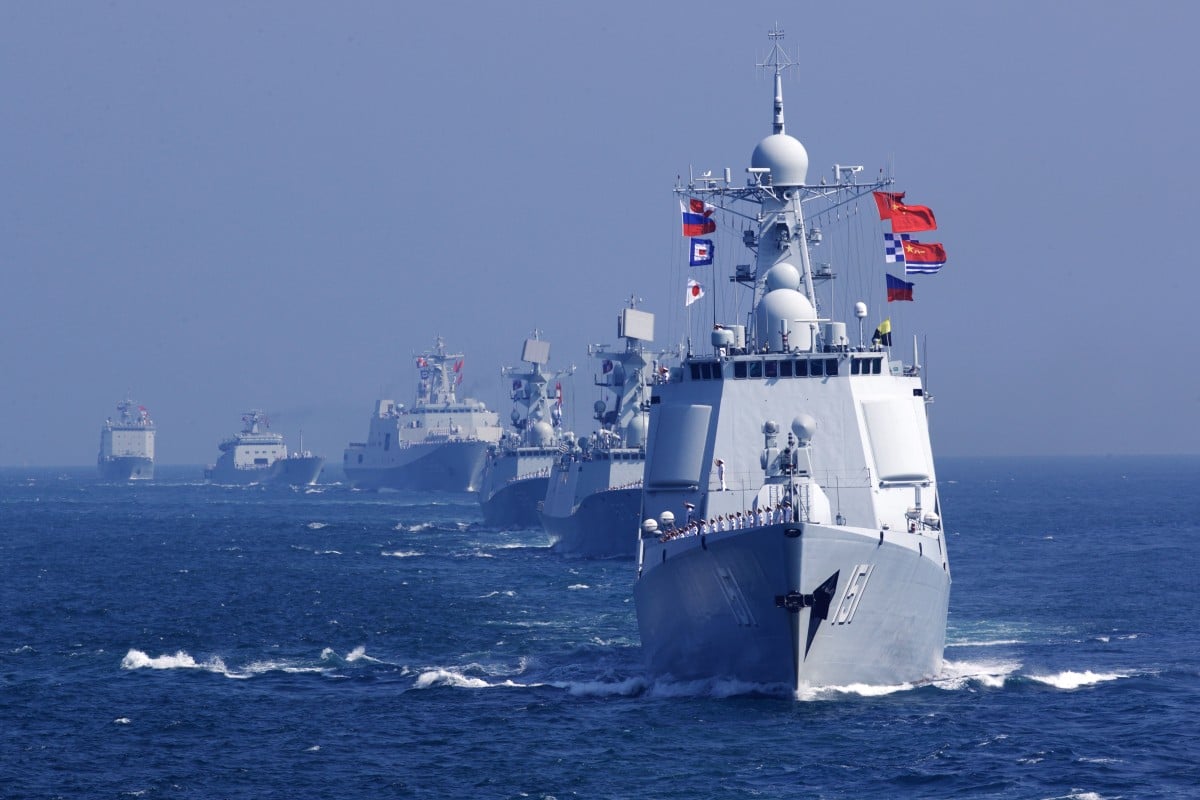
QINGDAO, China (Reuters) – Warships from India, Australia and several other nations arrived in the eastern Chinese port city of Qingdao on Sunday to attend a naval parade, part of a goodwill visit as China extends the hand of friendship despite regional tensions and suspicions.
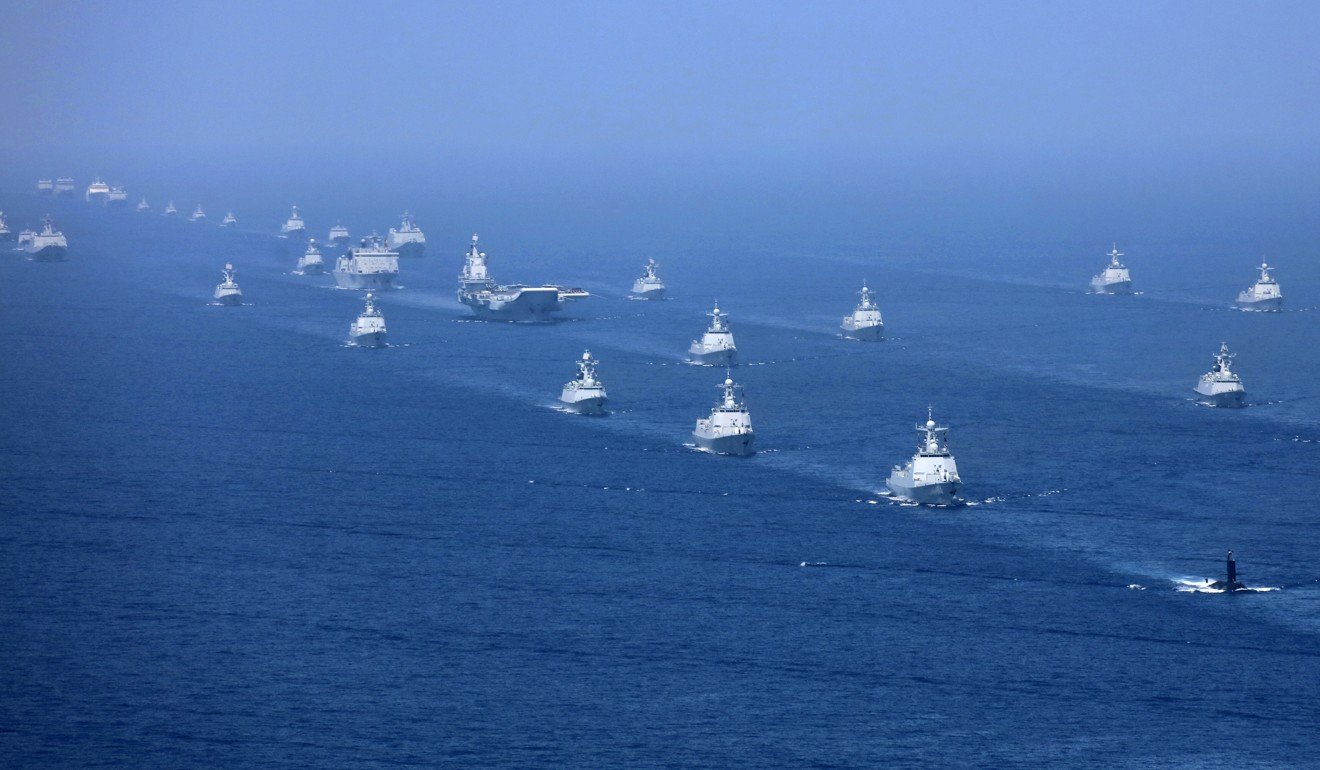
China on Tuesday will mark 70 years since the founding of the People’s Liberation Army Navy, where it will show off new warships including nuclear submarines and destroyers at a major review in the waters off Qingdao.
China says warships from about a dozen nations are also taking part – one diplomatic source with direct knowledge said it was 13 countries in total – and the PLA is putting its best foot forward to welcome them.
India, which has been at odds with China over their disputed land border and Beijing’s support for India’s regional rival Pakistan, has sent stealth guided-missile destroyer the “INS Kolkata” to take part, along with a supply ship.
“We bring to you one of the best ships that we have made. It is the pride of the nation and the navy, and we are very happy to be here,” Captain Aditya Hara told reporters on the dockside after disembarking from the ship in Qingdao.
A source familiar with the situation told Reuters the “Kolkata” had sailed through the Taiwan Strait to get to Qingdao, a sensitive waterway that separates China from self-ruled Taiwan, claimed by Beijing as sacred Chinese territory.
“We headed on a direct route and we are very happy that we were facilitated by the PLA Navy and they ensured that we had a safe passage to Qingdao,” Hara said, when asked if they had sailed via the Taiwan Strait.
Australia, a close U.S. ally, has sent the “HMAS Melbourne” guided-missile frigate to Qingdao, though officials declined to make the captain available for interview.
China and Australia have sparred over Australian suspicions of Chinese interference in the country’s politics and Australia’s banning of China’s Huawei Technologies Co Ltd from supplying equipment for its planned 5G broadband network.
Japan has also sent a destroyer to Qingdao, in the first visit of a Japanese navy ship to China since 2011, according to Japanese media.
Ties between China and Japan, the world’s second and third-largest economies, have been plagued by a long-running territorial dispute over a cluster of East China Sea islets and suspicion in China about Japanese Prime Minister Shinzo Abe’s efforts to amend Japan’s pacifist constitution.
But they have sought to improve relations more recently, with Abe visiting Beijing in October, when both countries pledged to forge closer ties and signed a broad range of agreements including a $30 billion currency swap pact.
The other countries taking part include China’s close friend Russia, and three countries which have sparred with China over competing claims in the disputed South China Sea: Vietnam, Malaysia and the Philippines.
Pakistan, a very close Chinese ally, is not on the list of countries officials have provided which are sending ships to the parade.
Source: Reuters
Posted in Australia, Beijing, Captain Aditya Hara, destroyers, East China Sea islets, guided-missile frigate, HMAS Melbourne, Huawei Technologies Co Ltd, India alert, INS Kolkata, Japan’s pacifist constitution, Japanese navy ship, Japanese Prime Minister Shinzo Abe, Malaysia, naval parade, nuclear submarines, Pakistan, People's Liberation Army Navy, pla navy, Qingdao, Russia, South China Sea, stealth guided-missile destroyer, Taiwan Strait, the Philippines, Uncategorized, Vietnam, warships |
Leave a Comment »
11/04/2019
BEIJING, April 10 (Xinhua) — China on Wednesday urged relevant countries to offer a fair, just and non-discriminatory business environment for enterprises of various countries, including Chinese ones.
Foreign Ministry spokesperson Lu Kang made the remarks at a routine press briefing when asked whether Australia applies double standards on the cybersecurity issue.
Recently, a number of Australian media reported that relevant Australian law mandated communication enterprises install “backdoors” for the Australian government. Google, Apple, Amazon and other technology companies have expressed serious concern about the act, saying it threatens cybersecurity in Australia and the world.
While the Australian side previously claimed that the country does not want any company in its communications networks that have an obligation to any other government. For this reason, Australia banned Huawei from the 5G telecommunications network.
Noting China has been closely following the relevant developments, Lu said the communication market and international cooperation will be seriously affected when it forces enterprises to install “backdoors” by legislation, which builds its own security and interests on the basis of violating other countries’ security and the privacy of their citizens.
“As you can see, the business communities have expressed serious concern about this,” Lu said.
A puzzling thing is that on the one hand, relevant countries use cybersecurity and sensationalize the so-called “security threat” of other countries or enterprises with trumped-up charges. On the other hand, they are doing things that endanger cybersecurity, Lu said.
“I am just as interested as you are in what the Australian government would say,” said the spokesperson.
Emphasizing that China has always attached great importance to and firmly maintained cybersecurity, Lu said that the Chinese side is willing to continue to actively participate in international cooperation in cybersecurity and work with all parties to build a peaceful, secure, open, cooperative and orderly cyberspace.
Source: Xinhua
Posted in 5G telecommunications network, Amazon, Apple, Australia, China alert, cybersecurity, double standard, enterprises, fair business environment, Foreign Ministry spokesperson, Google, Huawei, Lu Kang, relevant countries, technology companies, Uncategorized |
Leave a Comment »
13/03/2019
The move comes three days after 157 people were killed after an Ethiopian Airlines Boeing 737 MAX 8 crashed 6 minutes after take-off from Ethiopian capital Addis Ababa on Sunday.
SNS Web | New Delhi | March 13, 2019 9:37 am
The Directorate General of Civil Aviation (DGCA) on Wednesday informed that all Boeing 737 Max aircraft will be grounded before 4 pm today. This is to cater to situations where aircraft are to fly back to India or go to maintenance facility for parking.
Boeing 737 Max operations will stop from/to all Indian airports. Additionally no Boeing 737 Max aircraft will be allowed to enter or transit the Indian airspace effective 1600 hrs Indian time or 1030 UTC, the DGCA ordered.
The timeline is to cater to situations where aircraft can be positioned at maintenance facilities and international flights can reach their destinations.
Earlier on Tuesday, India grounded Boeing 737 Max 8 aircraft used by the country’s airline companies in light of the Ethiopian Airlines crash that killed 157 people.
SpiceJet has around 12 ‘737 Max 8’ planes in its fleet, while Jet Airways has five.
“DGCA has taken the decision to ground the Boeing 737-Max planes immediately. These planes will be grounded till appropriate modifications and safety measures are undertaken to ensure their safe operations,” the Ministry of Civil Aviation said in a tweet.
“As always, passenger safety remains our top priority. We continue to consult closely with regulators around the world, airlines, and aircraft manufacturers to ensure passenger safety,” it added.
Following the DGCA decision, SpiceJet suspended Boeing 737 Max operations. “Safety and security of our passengers, crew and operations are of utmost importance to us,” the airline informed.
The move comes three days after 157 people were killed after an Ethiopian Airlines Boeing 737 Max 8 crashed 6 minutes after take-off from Ethiopian capital Addis Ababa on Sunday.
Meanwhile, the Civil Aviation Secretary has called an emergency meeting of all airlines at 4 pm today in Delhi.
Earlier, the DGCA had issued additional safety instructions to the two Indian carriers that operate the Boeing 737 Max aircraft. Pilots of SpiceJet and Jet Airways should have at least 1,000 hours of flying experience to command these planes, the regulator ordered.
A total of 149 passengers and 8 crew members from 35 countries were on board the Ethiopian Airlines flight ET 302 when it ploughed into a field in Bishoftu (formerly Debre Zeit), a town located 48 kilometres south east of Addis Ababa.
Four Indians, including a UNDP consultant attached to India’s Environment Ministry, lost their lives in the crash.
This was second such crash involving the 737 Max 8 aircraft in less than five months.
In October last year, an aircraft operated by Lion Air crashed killing over 180 people in Indonesia.
Following Sunday’s accident, Ethiopian Airlines grounded its entire Boeing 737 Max 8 fleet until further notice.
European Union and many countries across the world have already banned the use of 737 Max 8 aircraft in their respective airspace.
On Monday, China, too, grounded all of its Boeing 737 Max 8 jets. Australia too followed the suit on Tuesday.
Source: The Statesman
Posted in Addis Ababa, airline companies, Australia, Boeing 737, China alert, Civil Aviation Secretary, crashed, Directorate General of Civil Aviation (DGCA, Ethiopian Airlines, Ethiopian capital, European Union, India alert, India’s Environment Ministry, Indian airports, Indian airspace, Jet Airways, Lion Air, maintenance facilities, Ministry of Civil Aviation, SpiceJet, tweet, Uncategorized, UNDP consultant |
Leave a Comment »
10/03/2019
The “ChinaSat 6C” satellite is launched by a Long March-3B carrier rocket from the Xichang Satellite Launch Center in southwest China’s Sichuan Province, March 10, 2019. It will provide high-quality radio and TV transmission services. (Xinhua/Guo Wenbin)
XICHANG, March 10 (Xinhua) — China Sunday sent a new communication satellite into orbit from the Xichang Satellite Launch Center in southwest China’s Sichuan Province.
The “ChinaSat 6C” satellite was launched at 0:28 a.m. Beijing Time by a Long March-3B carrier rocket. It will provide high-quality radio and TV transmission services.
The satellite has been sent to the geostationary orbit, and can cover China, Australia, New Zealand and the South Pacific island countries.
The satellite was developed by the China Academy of Space Technology, and will be operated by the China Satellite Communications Co., Ltd.
The launch marks the 300th mission of the Long March carrier rocket series developed by the China Aerospace Science and Technology Corporation.
Source: Xinhua
Posted in Australia, Beijing, China Academy of Space Technology, China Aerospace Science and Technology Corporation, China alert, China Satellite Communications Co., Ltd, ChinaSat 6C, communication satellite, launches, Long March carrier rocket, Long March-3B carrier rocket, New Zealand, sichuan province, South Pacific island countries, Uncategorized, Xichang Satellite Launch Center |
Leave a Comment »
10/03/2019
- Foreign lifestyle experiences are becoming more popular as citizens seek to escape pollution, food and medicine safety worries and authoritarian government controls
- Citizens encountering more barriers to their dreams of travelling abroad, with severe limits on moving money overseas and restrictions on visiting foreign countries
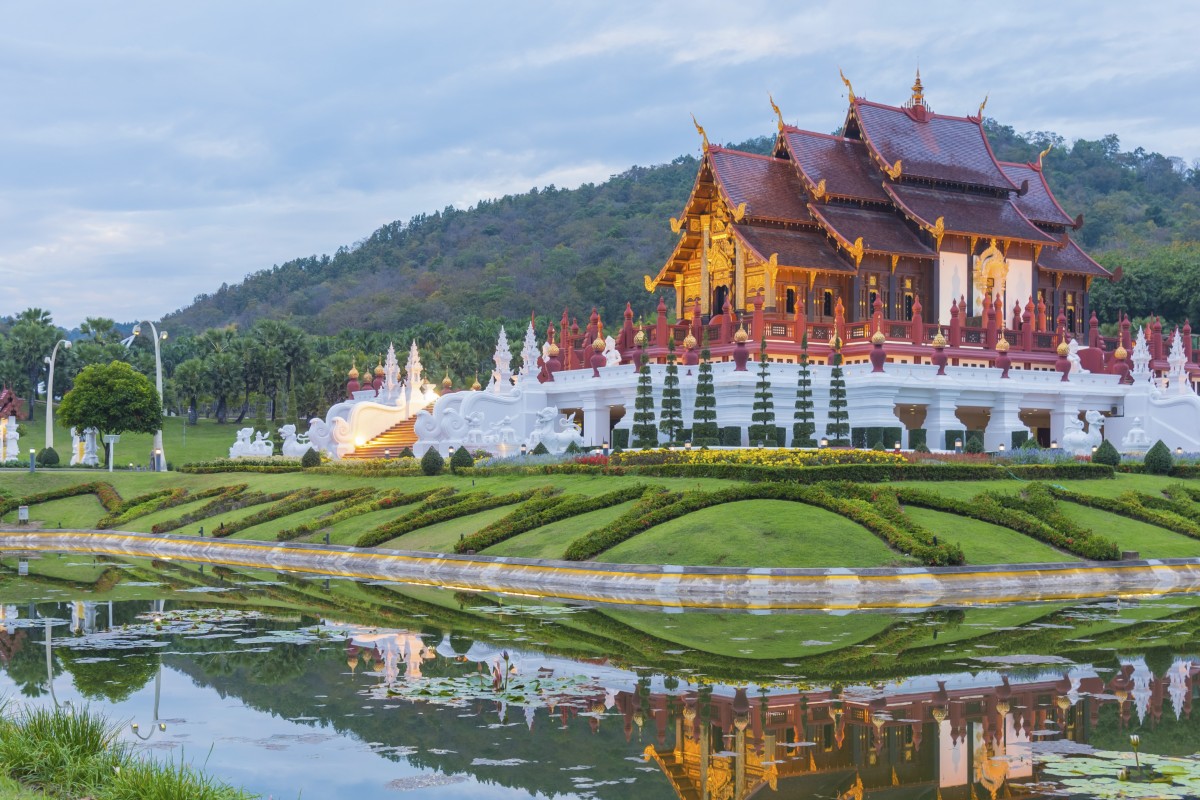
Thailand, including the likes of Chiang Mai, the United States, Australia, Canada, New Zealand are popular destinations for Chinese families. Photo: Shutteratock
Xu Zhangle and her husband and their two children are a typical middle-class couple from Shenzhen, and along with 60 other Chinese families, they are going on an extended holiday to Thailand in July, where they hope to enjoy an immigrant-like life experience.
The family have paid a travel agent around 50,000 yuan (US$7,473) for the stay in Chiang Mai in the mountainous north of the country, including transport, a three-week summer camp for their daughters at a local international school, rent for a serviced apartment and daily expenses.
Zhangle loves Chiang Mai’s relaxed lifestyle and easy atmosphere and wants to live as a local for a month or even longer, instead of having to rush through a short-term holiday.
“It would not be just [tourist] travelling but rather a life away from the mainland.” she said.
Recently, upper middle-class citizens have increased their efforts to safeguard their wealth and achieve more freedom by spending more time abroad.
They have invested considerable amounts of money in overseas properties and applied for long-stay visas, although many of their attempts have ended in failure.
Chinese citizens are encountering more barriers to their dreams of travelling abroad, with severe limits on moving money overseas and restrictions on visiting foreign countries.
Still, growing anxieties about air pollution, food and medicine safety and an increasingly authoritarian political climate are pushing middle class families to look for new ways to circumvent the obstacles so they can live outside China.
Among the options, there is growing demand for sojourns abroad of a month or more, to enjoy a foreign lifestyle for a brief period to make up for the fact that their emigration dreams may have stalled.
“I think this is becoming a trend. Chinese middle-class families are facing increasing difficulties to emigrate and own homes overseas. On the other hand, they still yearn for more freedom, for a better quality of life than what is found in first-tier cities in China.
They are eager to seek alternatives to give themselves and their children a global lifestyle,” said Cai Mingdong, founder of Zhejiang Newway, an online tour and education operator in Ningbo, south of Shanghai.
“First, the availability of multiple-entry tourist visas and the sharp drop in air ticket prices have made it convenient and practical to stay abroad for from a few weeks to up to three months each year.”
Blacklist labels millions of Chinese citizens and businesses untrustworthy
Now, many well-to-do Chinese middle class families can get a tourist visa for five or even 10 years that allows them to stay in a number of countries — including the United States, Australia, Canada, New Zealand and other Asian countries — for up to six months at a time.
“In 2011, a round-trip air ticket from Shanghai to New Zealand cost 14,000 yuan (US$2,000), but now is about 4,000 (US$598),” added Cai.
This opens up the possibility for many middle-class families who are not eligible to emigrate, to live abroad for short periods of time.
Many wealthy Chinese middle class families can get a tourist visa for five or even 10 years that allows them to stay in several countries including the United States, Australia, Canada, New Zealand and other Asian countries, for up to six months at a time. Photo: AP
Chinese tourists made more than 140 million trips outside the country in 2018, a 13.5 per cent increase from the previous year, spending an estimated US$120 billion, according to the China Tourism Academy, an official research institute under the Ministry of Culture and Tourism.
“In [the Thai cities of] Bangkok and Chiang Mai, there are more and more Chinese who stay there to experience the local lifestyle, which is different from theirs in China. The life there is very different from that in China,” said Owen Zhu, who now lives in the Bangkok condo he bought last year.
“The freedom, culture and community are diversified. The quality of air, food and services are much higher than in first-tier cities in China, but the prices are more affordable.
“In Bangkok, in many international apartment complexes where foreigners live, the monthly rent for a one-bedroom [apartment] is about 2,000 (US$298) to 3,000 yuan.”
China’s richest regions are also home to the most blacklisted firms
A one-bedroom apartment in Shenzhen in southern China is twice as expensive, with rents continuing to rise rapidly.
There are global goods, and it is easy to socialise with different people from around the world,” Zhu added
“Many Chinese people around me, really, come to Thailand to live for a while and go back to China, but then come back again after a few months.”
Both Cai and Zhu said they discovered the new phenomenon among China’s middle class and decided it was a business opportunity.
Growing anxieties about air pollution, food and medicine safety and an increasingly authoritarian political climate are pushing middle class families to look for new ways to circumvent the obstacles so they can live outside China. Photo: AP
Zhu is in the process of registering a company in Bangkok and plans to build an online platform to service the needs of Chinese citizens living abroad who do not own property or have immigration status, especially members of the LGBT community.
Cai said dozens of Chinese families in the Yangtze River Delta had paid him to send their children to schools in New Zealand or Europe for around three or four weeks in the middle of the school year, while the parents rent villas in the area, with New Zealand and Toronto in Canada among the most popular destinations.
Last year, Zheng Feng, a single mother and freelance writer from Beijing, rented a small villa in Australia for a month for them, a friend and their children to escape Beijing’s pollution and experience life overseas.
“To be honest, I don’t have enough money to invest in a property or a green card in Australia. But it’s very affordable for me and my son to pay about 30,000 yuan (US$4,484) to live abroad for one or two months.” Zheng said.
China says 2018 growth was worth more than Australia’s whole GDP
Zheng will join the Xu family in Chiang Mai later this year and she is also planning a similar trip to England next year.
Zheng’s friend, Alice Yu, invested in an American EB-5 investor visa a few years ago, and plans to make one or two month-long trips abroad each year until her family is finally able to move to the United States.
Demand for the EB-5 investor visa in China seems to be waning given heightened uncertainty about the future of the programme and US immigration law in general under US President Donald Trump.
Approval for the visa can now take up to 10 years, resulting in a huge backlog that has further dampened interest and led to a significant dip in investment inflows into the US from foreign individuals.
A one-bedroom apartment in Bangkok can cost around bout 2,000 (US$298) to 3,000 yuan a month. Photo: AFP
“Maybe it will soon become standard for a real Chinese middle-class family to have the time and money to enjoy a long stay at a countryside villa overseas,” said Yu.
“Regardless of whether we can get a long-term visa for the United States, I want my children grow up in a global lifestyle and with more freedom than just growing up on the mainland. So do all wealthy and middle class Chinese families, I think.”
Karen Gao’s son started studying at an international school in Chiang Mai in June, at the cost of about 70,000 yuan (US$10,462) a year, after she quit her job as a public relations manager in Shenzhen and moved to Thailand on a tourist visa.
For better or worse? China’s complicated employment explained
“A few months each year for good air, good food and no censorship and internet control, but cheaper living costs compared to Beijing, it sounds like a really good deal to go,” said Gao, who has now been offered a guardian visa to accompany her son, who has already been given a student visa.
“In Shenzhen, I wasn’t able to get him into school because I had no [local] residence permit.
“It would be the best choice for us because we feel so uncertain and worried about investing and living in the mainland.”
Last year, Gao, like thousands of other private investors mostly middle class people living in first-tier cities, suffered significant losses when their investments in hotels and inns in Dali, Yunnan province, were demolished amid the local government’s campaign to curb pollution and improve the environment around Lake Erhai.
“We were robbed by the officials without proper compensation,” Gao said.
Source: SCMP
Posted in air pollution, air ticket prices, Alice Yu, Asian countries, Australia, authoritarian government, authoritarian political climate, Bangkok, barriers, Beijing, Blacklist labels, Cai Mingdong, canada, cheaper living costs, Chiang Mai, China alert, China Tourism Academy, chinese families, circumvent the obstacles, Citizens, compensation, condo, countryside villa overseas, daily expenses, Dali, daughters, destinations, easy atmosphere, emigrate overseas, experience life overseas, food and medicine safety, Foreign lifestyle experiences, founder, GDP, good air, good food, hotels and inns, husbands, immigrant-like life experience., international school, Karen Gao, LGBT community, local international school, long holidays abroad, long-stay visas, mainland, middle class familie, middle-class couple, Ministry of Culture and Tourism, mountainous north, moving money overseas, multiple-entry tourist visas, New Zealand, Ningbo, no censorship and internet control, official research institute, online tour and education operator, overseas properties, Owen Zhu, Pollution, relaxed lifestyle, residence permit, restrictions, serviced apartment, Shanghai, Shenzhen, short-term holiday, single mother and freelance writer, student visa, Thailand, Transport, travelling abroad, Uncategorized, United States, US immigration law, US President Donald Trump, wealthy families, Xu family, Xu Zhangle, yuan, Yunnan Province, Zhejiang Newway, Zheng Feng |
Leave a Comment »
08/03/2019
Visitors are seen at a tulip fair at Baiwankui garden in Nansha free trade zone in south China’s Guangdong Province, Feb. 9, 2019. (Xinhua/Liu Dawei)
BEIJING, March 7 (Xinhua) — China expects to see wider opening-up as it pledges to do more to attract foreign investment and promote global cooperation at the ongoing annual “two sessions.”
“We will promote all-round opening-up and foster new strengths in international economic cooperation and competition,” Chinese Premier Li Keqiang said when delivering the government work report to the annual legislative session Tuesday.
At the session, further relax of controls over market access has been announced, a draft foreign investment law will be deliberated, and the Belt and Road cooperation has been promoted.
UNVEILING OPPORTUNITIES
The government will further shorten the negative list which outlines fields off-limits to foreign investors, Ning Jizhe, deputy director of the National Development and Reform Commission, told a press conference on the sidelines of the annual legislative session Wednesday.
China will roll out more opening measures to the agriculture, mining, manufacturing and service sectors, and allow wholly foreign-funded enterprises to operate in more sectors, Ning said.
John Huang with the British information service provider Experian believes that international investors will welcome China’s further opening-up.
“Some core industries, once considered to be ‘the most difficult areas to open up,’ such as automobile manufacturing and financial services, are now welcoming foreign investment,” said Huang, managing director for decision analytics of Experian Greater China.
“The Chinese government’s consistent commitment to opening-up has given foreign enterprises confidence about the business environment here,” said SangBoem Han, CEO of LG Display from the Republic of Korea.
In July 2018, LG Display opened an OLED panel factory in south China’s Guangdong Province with a total investment of 46 billion yuan (6.9 billion U.S. dollars).
China saw a record foreign direct investment of 135 billion U.S. dollars in 2018 despite a global economic downturn and rising protectionism.
“In the early days, foreign firms received preferential policies regarding land, electricity and taxes in China,” Han said, “but more recently, the government has increased its protection of intellectual property and improved efficiency.”
FOREIGN INVESTMENT LAW
On Tuesday, Premier Li emphasized opening up based on rules and related institutions.
This will help China better conform with the international rules, said Zhang Jin, a national political advisor and businessman from Guangdong.
“This is also in line with China’s further integration with globalization and engagement in international competition,” Zhang said.
A highlight at this year’s “two sessions” is the draft foreign investment law, which is to be submitted to this year’s session of the 13th National People’s Congress (NPC) for review.
Once adopted, the unified law will replace three existing laws on Chinese-foreign equity joint ventures, non-equity joint ventures (or contractual joint ventures) and wholly foreign-owned enterprises.
The foreign investment law would be highly significant to protect legitimate rights and interests of foreign investors and ensure fair competition, said Loh Jen Yuh, president of China & Investment Management of CapitaLand Group, one of Asia’s largest real estate companies.
“The law shows China’s openness and the rule of law,” said Han, who hoped that the enact of the law would further improve China’s business environment.
PROMOTING GLOBAL COOPERATION
Along with the efforts to attract foreign businesses, China is also stepping up the implementation of the Belt and Road Initiative (BRI) to benefit more participants.
To date, a total of 152 countries and international organizations have signed cooperation documents with China on the BRI.
“Many countries along the Belt and Road have shown their intention to cooperate with Chinese manufacturers,” said Wu Gang, a national political advisor and chairman of wind power firm Xinjiang Goldwind Science & Technology.
“We are more confident in going global under the government’s favorable policies related to the BRI,” said Wu, whose business has gained great market shares in Pakistan and Australia.
According to the government work report, China will continue to “promote the joint pursuit” of the BRI, aiming at “shared growth through discussion and collaboration.”
China has signed free trade agreements with over 20 countries and regions. According to Zhao Ji, a national political advisor and president of China’s Northeastern University, the country’s efforts to strengthen the opening-up are especially important against the weak global economic growth.
“The development of China, which has been closely connected with the world, will continue to play a key role in promoting globalization,” Zhao said.
Source: Xinhua
Posted in annual legislative session, Australia, automobile manufacturing, Belt and Road Initiative, Belt and Road Initiative (BRI), British information service provider, China & Investment Management of CapitaLand Group, China alert, Chinese-foreign equity joint ventures, deputy director of the National Development and Reform Commission, Experian, Experian Greater China, Financial Services, foreign investment law, globalization, guangdong province, John Huang, LG Display, Loh Jen Yuh, managing director for decision analytics, market access, National People's Congress (NPC), national political advisor, Ning Jizhe, non-equity joint ventures (or contractual joint ventures), Northeastern University, OLED panel factory, Pakistan, Premier Li, Premier Li Keqiang, real estate companies, Republic of Korea, SangBoem Han, Uncategorized, wholly foreign-owned enterprises, Zhang Jin, Zhao Ji |
Leave a Comment »
08/03/2019
NEW DELHI (Reuters) – Indian cricketers wore army camouflage-style caps in a match with Australia on Friday in solidarity with Indian paramilitary police killed in a militant attack by a Pakistan-based group and in an unusually strong display of patriotic fervour in sport.
The suicide bombing last month killed 40 in Indian-controlled Kashmir, a region also claimed by Pakistan. The attack prompted India to launch an air strike inside Pakistan, which responded with an aerial attack the next day.
The Board of Control for Cricket in India (BCCI) has in recent days tried unsuccessfully to isolate Pakistan in the cricketing world. The International Cricket Council rejected India’s calls to boycott games against Pakistan, whose prime minister is former cricketing hero Imran Khan.
But there are still calls within India for the national team to pull out of a World Cup match against Pakistan in June in England.
The idea to sport the olive-and-black caps bearing the BCCI’s logo came from former Indian cricket captain and current player Mahendra Singh Dhoni, one of the game’s biggest stars and an honorary lieutenant colonel with the Indian army.
“It’s a special cap,” Indian captain Virat Kohli said before the third in a five-match one-day series with Australia. “This is to pay respect to the martyrs … and their families.”
He said all the players would donate their fees from the match to a national defence fund to help out the families of defence personnel who die on duty. Kohli also urged all Indians to contribute to the fund.
The BCCI posted a clip on Twitter of commentators for the match also wearing the caps, signing off the tweet with “#JaiHind”, or “Hail India”.
The board has scrapped the opening ceremony for the Indian Premier League Twenty20 tournament, which begins on March 23, and will donate the money saved to the families of those who died in the bomb attack.
Cricket historian Boria Majumdar said he could not remember seeing any Indian cricket team in the past making such a gesture, which he called a “peaceful political stand”.
“(Indian cricket) teams have expressed solidarity in the past but not this kind of public display of that solidarity,” Majumdar told Reuters.
“Sport has always been meshed with politics and people have often used it to make very strong points. This is yet another one. This is a peaceful way of expressing solidarity in a manner which I don’t see problematic at all.”
But Pakistani lawyer Abdullah Nizamani said on Twitter the BCCI and international cricket board should keep “sports away from petty politics”. Some Pakistanis even asked on social media if Indian cricketers would turn up for the World Cup match with Pakistan in military fatigues.
Nuclear-armed neighbours India and Pakistan have fought two of their three wars since independence over Kashmir, which both sides claim in full but rule in part.
Source: Reuters
Posted in Abdullah Nizamani, army, Australia, Board of Control for Cricket in India (BCCI), Boria Majumdar, boycott, British Prime Minister, camouflage caps, Country, Cricket historian, cricketers, England, Hail India, honorary lieutenant colonel, Imran Khan, independence, India alert, indian army, Indian captain, International Cricket Council, JaiHind, June, Kashmir, Mahendra Singh Dhoni, military fatigues, nuclear-armed neighbours, Pakistan, Pakistani lawyer, paramilitary police, patriotism, Reuters, Twitter, Uncategorized, Virat Kohli, World Cup |
Leave a Comment »
01/03/2019
- Next month’s nautical spectacle will allow country to show off its most advanced warships to an international audience
- More than a dozen foreign navies are expected to join in, including the United States
Chinese warships pictured at the end of joint exercise with the Russian navy in 2016. Photo: Xinhua
China will hold a naval parade next month to mark the 70th anniversary of the founding of the People’s Liberation Army Navy and will invite more than a dozen of foreign navies to participate.
The parade will take place on April 23 in the Yellow Sea off the coast of Qingdao in Shandong province, Ren Zhiqiang, a spokesman for the Ministry of National Defence, said on Thursday.
Ren did not provide further details of the parade but military analysts said the exercise would give the navy the opportunity to display its rapidly growing strength and show how that has increased in the past 12 months.
‘No-go zone’ in Yellow Sea for Chinese aircraft carrier sea trials
In April last year a naval review in the South China Sea featured a total of 48 vessels and 76 planes, including China’s first aircraft carrier, the Liaoning, its Type 094A and 095 nuclear submarines, 052D guided missile destroyers and J-15 fighter jets.
The experts expect that next month’s event will provide a showcase for several new and more powerful vessels including its home-grown aircraft carrier Type 001A, the Type 055 – Asia’s most powerful destroyer – and several nuclear submarines.
“The fact that China is holding the naval parade just one year after the South China Sea review shows the great importance [the leadership] attaches to the development of China’s maritime interests, the navy and its expansion,” navy expert Li Jie said.
Chinese President Xi Jinping joined the crew on the deck of the cruiser Changsha following last year’s naval review. Photo: Xinhua
Share:
China also held a major naval parade in 2009 to mark the navy’s 60th anniversary.
It was smaller in scale than the upcoming extravaganza with 25 PLA vessels and 31 fighter jets taking part.
Fourteen foreign navies sent ships to the 2009 parade, including the USS Fitzgerald from America and the guided-missile cruiser Varyag from Russia. France, Australia, South Korea, India and Pakistan also joined in the event.
More foreign countries are expected to join the party this year as the PLA has become more active internationally and China has sold more warships to foreign navies.
China’s new veterans’ law to be reviewed at National People’s Congress next week
“The parade is more like a birthday party for the PLA Navy and the participation of foreign navies is a matter of diplomatic courtesy with few military implications,” said Yue Gang, a former PLA colonel.
Yue said the US and its allies would attend despite the rising tensions between the two sides.
Since 2015 the US and Chinese navies have engaged in a series of confrontations in the South China Sea as China strengthens its military presence in the region and the US has sought to challenge Beijing’s claims to the waters by conducting what it describes as “freedom of navigation” operations.
“I don’t expect they will send any of the warships that have taken part in such operations [to the parade],” Yue said.
China has greatly expanded its naval capabilities in recent years. Photo: AP
Share:
It has been reported that the Japanese Maritime Self-Defence Force has expressed an interest in joining the parade and the Philippines – which has a rival claim to the South China Sea – is planning to send a vessel to the event for the first time.
Li said militaries such as the US and Japan would not want to miss the chance to observe the PLA Navy closely.
“In addition, greater transparency [through the parade] will also help reassure smaller regional partners such as the Philippines that China is a friendly power despite its growing military strength,” he said.
China held its first naval parade in 1957 and April’s display will be the sixth such event.
Sailors also took part in the parade through Tiananmen Square to mark the foundation of the People’s Republic on October 1 1949.
Source: SCMP
Posted in Australia, birthday parade, China alert, Chinese President Xi Jinping, France, guided-missile cruiser Varyag, India alert, Japan, Japanese Maritime Self-Defence Force, Liaoning, Ministry of National Defence, nautical spectacle, naval parade, navy, nuclear submarines, October 1 1949, Pakistan, People's Liberation Army Navy, People’s Republic, PLA colonel, Qingdao, Ren Zhiqiang, Russia, sea power, shandong province, South China Sea, South Korea, Tiananmen Square, Uncategorized, United States, US, USS Fitzgerald, warships, Yellow Sea, Yue Gang |
Leave a Comment »






 CHINDIA ALERT: You'll be living in their world, very soon