Chindia Alert: You’ll be Living in their World Very Soon
aims to alert you to the threats and opportunities that China and India present. China and India require serious attention; case of ‘hidden dragon and crouching tiger’.
Without this attention, governments, businesses and, indeed, individuals may find themselves at a great disadvantage sooner rather than later.
The POSTs (front webpages) are mainly 'cuttings' from reliable sources, updated continuously.
The PAGEs (see Tabs, above) attempt to make the information more meaningful by putting some structure to the information we have researched and assembled since 2006.
PM Modi said that he told him ‘let us fight against poverty and illiteracy’ and Khan gave his word saying he is a Pathan’s son, ‘but went back on it’.
SNS Web | New Delhi | February 25, 2019 10:53 am
Pakistan Prime Minister Imran Khan on Sunday asked his Indian counterpart Narendra Modi to “give peace a chance” and assured him that he “stands by” his words and will “immediately act” if New Delhi provides Islamabad with “actionable intelligence” on the Pulwama attack.
Khan’s remarks came a day after PM Modi in a rally in Rajasthan, recalled his conversation with the Pakistan PM during a congratulatory call after he became the country’s premier.
PM Modi had told him “let us fight against poverty and illiteracy” and Khan gave his word saying he is a Pathan’s son “but went back on it”.
“There is consensus in the entire world against terrorism. We are moving ahead with strength to punish the perpetrators of terrorism…The scores will be settled this time, settled for good…This is a changed India, this pain will not be tolerated…We know how to crush terrorism,” PM Modi further said.
A statement released by the Pakistan Prime Minister’s Office said, “PM Imran Khan stand by his words that if India gives us actionable intelligence, we will immediately act.”
PM Modi should “give peace a chance”, Khan said in the statement.
In his first statement issued since the February 14 attack, Pakistani Prime Minister Imran Khan had on Tuesday accused India of blaming his country “without evidence” and warned of retaliation against any military action by India.
However, he assured India that he would act against the perpetrators of the deadly Pulwama terror attack, carried out by Pakistan-based Jaish-e-Mohammad (JeM) terror group and said that the issue between the two countries can be solved through dialogue.
India had called Khan’s offer to investigate the attack if provided proof as a “lame excuse”.
The already sour relations between India and Pakistan have worsened over the past few weeks as New Delhi accused Islamabad of the Pulwama attack.
India has accused Islamabad’s spy agency ISI of being involved in the attack and has maintained that the terror group JeM is a “child of the Pakistan Army”.
Following the attack, India immediately withdrew the ‘Most Favoured Nation’ status granted to Pakistan and initiated steps to isolate the neighbouring country from the international community.
Earlier, India had also announced its decision to stop the flow of its share of water from the Beas, Ravi and Sutlej to Pakistan.
Prime Minister Narendra Modi had in many of his public speeches after the attack, said that the security forces have been given full freedom to decide the future course of action regarding the terrorist attack in Pulwama.
India’s neighbours, including Sri Lanka, Maldives, Nepal, Bangladesh, Afghanistan and Bhutan—and other countries like Saudi Arabia, UAE, Iran, Russia, Germany, Canada, UK, Australia and Canada came out in strong support of New Delhi following the terror attack.
Over 44 CRPF personnel were killed and many injured on February 14 in one of the deadliest terror strikes in Jammu-Kashmir when a Jaish-e-Mohammad (JeM) suicide bomber blew up an explosive-laden vehicle near their bus in Pulwama district.
The bus was part of a convoy of 78 vehicles carrying around 2500 CRPF personnel from Jammu to Srinagar.
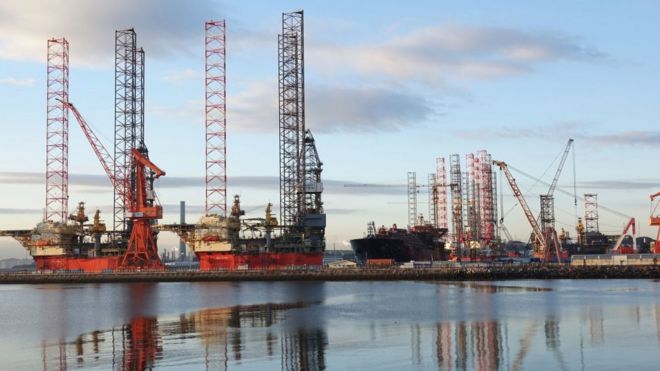
Image copyrightGETTY IMAGESImage captionOne of China’s biggest ports is reported to have halted Australian coal imports
The Australian government says it is seeking an “urgent” clarification from Beijing over reports that a major Chinese port has halted imports of Australian coal.
Australia is a top supplier of coal to China, its biggest export market.
Beijing has not confirmed the reported halt in the port of Dalian, but called changes in such arrangements “normal”.
Canberra sought to play down speculation on Friday that the matter may be linked to bilateral tensions.
Australian officials said there was “confusion” over the situation, and they were consulting their Chinese counterparts.
“I wouldn’t jump to conclusions. The Australia-China trading relationship is exceptionally strong,” Treasurer Josh Frydenberg told the Australian Broadcasting Corporation.
Fears about the issue have prompted a fall in the Australian dollar.
What has happened?
On Thursday, Reuters reported that China’s Dalian port region would not allow Australian coal to pass through customs.
The news agency quoted officials as saying that only Australian coal had been affected, with no limits placed on Indonesian and Russian shipments.
It said other Chinese ports had delayed Australian coal shipments in recent months.
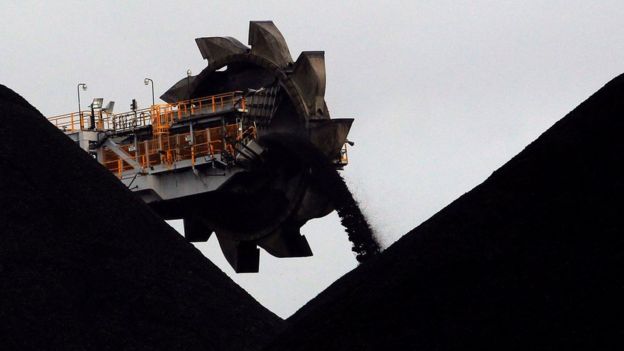
Image copyrightREUTERSImage captionCoal is Australia’s biggest export commodity
Australian trade officials said they had been notified of recent industry concerns about market access.
When asked about the reported halt, Chinese Foreign Ministry spokesman Geng Shuang offered general comments that authorities sought “to safeguard the rights and interests of Chinese importers and protect the environment”.
“The banning of those coal shipments is a form of coercion against Australia. It’s punishment against states that resist China’s pressure,” said Dr Malcolm Davis, from the Australian Strategic Policy Institute.
Other recent tensions have emerged over allegations – denied by Beijing – of Chinese interference in Australian politics and society.
However others, including the head of the Reserve Bank of Australia, have suggested that China’s concerns about its own coal industry may be behind any such halts.
Blocking “a couple of months of coal exports” would not hurt the Australian economy, said Philip Lowe.
“If it were to be the sign of a deterioration in the underlying political relationship between Australia and China then that would be more concerning,” he said.
Mr Frydenberg said: “We can see these occasional interruptions to the smooth flow but that doesn’t necessarily translate to some of the consequences that aspects of the media might seek to leap to.”
Image copyrightGETTY IMAGESImage captionOne of China’s biggest ports is reported to have halted Australian coal imports
The Australian government says it is seeking an “urgent” clarification from Beijing over reports that a major Chinese port has halted imports of Australian coal.
Australia is a top supplier of coal to China, its biggest export market.
Beijing has not confirmed the reported halt in the port of Dalian, but called changes in such arrangements “normal”.
Canberra sought to play down speculation on Friday that the matter may be linked to bilateral tensions.
Australian officials said there was “confusion” over the situation, and they were consulting their Chinese counterparts.
“I wouldn’t jump to conclusions. The Australia-China trading relationship is exceptionally strong,” Treasurer Josh Frydenberg told the Australian Broadcasting Corporation.
Fears about the issue have prompted a fall in the Australian dollar.
What has happened?
On Thursday, Reuters reported that China’s Dalian port region would not allow Australian coal to pass through customs.
The news agency quoted officials as saying that only Australian coal had been affected, with no limits placed on Indonesian and Russian shipments.
It said other Chinese ports had delayed Australian coal shipments in recent months.
Image copyrightREUTERSImage captionCoal is Australia’s biggest export commodity
Australian trade officials said they had been notified of recent industry concerns about market access.
When asked about the reported halt, Chinese Foreign Ministry spokesman Geng Shuang offered general comments that authorities sought “to safeguard the rights and interests of Chinese importers and protect the environment”.
“The banning of those coal shipments is a form of coercion against Australia. It’s punishment against states that resist China’s pressure,” said Dr Malcolm Davis, from the Australian Strategic Policy Institute.
Other recent tensions have emerged over allegations – denied by Beijing – of Chinese interference in Australian politics and society.
However others, including the head of the Reserve Bank of Australia, have suggested that China’s concerns about its own coal industry may be behind any such halts.
Blocking “a couple of months of coal exports” would not hurt the Australian economy, said Philip Lowe.
“If it were to be the sign of a deterioration in the underlying political relationship between Australia and China then that would be more concerning,” he said.
Mr Frydenberg said: “We can see these occasional interruptions to the smooth flow but that doesn’t necessarily translate to some of the consequences that aspects of the media might seek to leap to.”
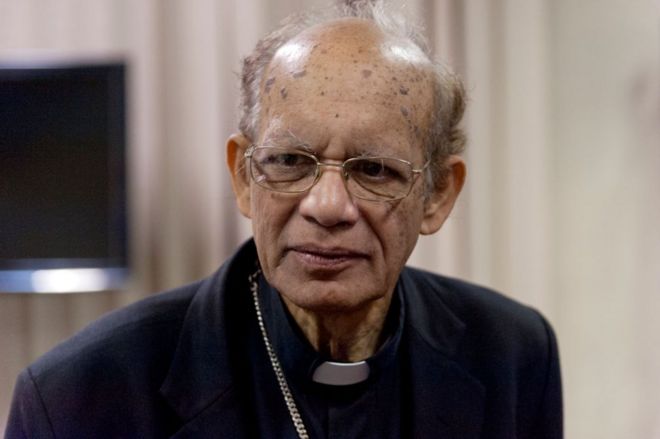
Image copyrightGETTY IMAGESImage captionCardinal Oswald Gracias told the BBC it pained him to hear accusations that he had neglected victims of alleged abuse
One of the Catholic Church’s most senior cardinals has admitted that he could have better handled sexual abuse allegations that were brought to him.
Oswald Gracias, the Archbishop of Mumbai is one of four men organising a major Vatican conference on child abuse this week.
We found two separate cases where the cardinal, who is tipped by some to possibly become the next Pope, is claimed to have failed to respond quickly or offer support to the victims.
Victims and those who supported them allege that Cardinal Gracias did not take allegations of abuse seriously when they were reported to him.
India’s Catholics say there is a culture of fear and silence in the Catholic Church about sexual abuse by priests. Those who have dared to speak out say it has been an ordeal.
A woman’s life changed when her son returned from Mass at the church and told her that the parish priest had raped him.
“I could not understand what should I do?” she said. She did not know this yet, but this event would put her on a collision course with the Catholic Church in India.
Media captionWhy is India’s Catholic church silent about sexual abuse?
The man she reached out to for help was and remains one of the most senior representatives of the Church.
It was nearly 72 hours after the alleged rape that the family briefly met Cardinal Gracias, then president of the Catholic Bishop’s Conference of India and Federation of Asian Bishops’ Conferences.
The issue of sexual abuse within the Church is being called the Vatican’s biggest crisis in modern times, and the integrity of the Catholic Church is said to ride on the outcome of this conference.
Image copyrightGETTY IMAGESImage captionPope Francis with Cardinal Oswald Gracias (fourth from left)
Over the past year, the Catholic Church has been reeling under multiple allegations of sexual abuse around the world.
But while abuse claims have made headlines in North and South America, Europe and Australia, very little is known about the problems in Asian countries. In countries such as India there is a social stigma about reporting abuse.
Among Christians, who are a minority of nearly 28 million people, a culture of fear and silence makes it impossible to gauge the true scale of the problem.
Cardinal Blase Cupich of Chicago – a colleague of Cardinal Gracias on the four-member organising committee – has promised that decisive action in Rome and in dioceses worldwide will follow after the meeting so as to safeguard children and bring justice to the victims.
Cardinal Gracias will open the second day of the summit with a conversation about accountability in the Church.
Media captionBrigitte, a survivor of child sex abuse by a chaplain, explains why she is ready to speak now
This vital role given to him during this crucial conference has made some in India unhappy.
They say his track record in protecting children and women from abusers is questionable. Those we have spoken to who have taken cases to him say they received little support from him.
The mother of the abused boy said: “I told the cardinal about what the priest had done to my child, that my child was in a lot of pain. So he prayed for us and told us he had to go to Rome…my heart was hurt in that moment.
“As a mother, I had gone to him with great expectations that he would think about my son, give me justice, but he said he had no time, he only cared about going to Rome.”
The family say they requested medical help but were offered none.
The cardinal told us it pained him to hear this, and that he was not aware that the boy needed medical help – and if he had been asked, he would have immediately offered it.
The cardinal admits he left for Rome that night without alerting the authorities.
By failing to call the police, Cardinal Gracias may have violated India’s Protection of Children from Sexual Offences Act, 2012 (POCSO).
The provisions of this law state that if the head of any company or institution fails to report the commission of an offence in respect of a subordinate under his control, they shall be punished with imprisonment for a term which may extend to one year, and with a fine.
The cardinal told us he had telephoned his bishop the next day, who told him the family had subsequently informed the police themselves.
Asked if he regretted not calling the police personally at the time, he said: “You know I’m being honest, I’m not 100% sure… but I must reflect on that. I admit whether immediately, the police should have got involved, sure.”
He says he was under a duty to evaluate the credibility of accusations by speaking to the accused man.
Emerging from that meeting, the family decided to go to a doctor.
“He took one look at my boy and said that something has happened to him. This is a police case. Either you report it or I will… so we went to the police that night,” the mother said.
A police medical examination found that the child had been sexually assaulted.
Image copyrightGETTY IMAGESImage captionIndia is home to about 19 million Catholics
A current priest who spoke to us on the condition of anonymity said this was not the first time allegations about this priest had been brought to the cardinal’s attention.
“I met him some years before this [alleged] incident,” the priest told us.
“There were strong rumours about [the accused priest] in the diocese, and like these are about abuse that is taking place. And yet he seems to be moving from one place to another, one parish to another. The cardinal told me directly that he is not aware directly of all these things.”
The cardinal says he cannot recall the conversation. He says he did not recollect any “cloud of suspicion” over the man.
‘A lonely battle’
As part of our investigation, we wanted to see if there were other allegations of the cardinal being slow to act.
We found an instance dating back almost a decade, brought to his attention just a couple of years after becoming archbishop of Mumbai.
Image captionCatholic activist Virginia Saldanha says three legal notices were sent to the cardinal, threatening court action unless took action about the claims of abuse
In March 2009, a woman approached him with accusations of sexual abuse by another priest who conducted retreats.
She says that he took no action against the priest so she reached out to a group of female Catholic activists, who say they forced the cardinal to act.
Under pressure, he finally set up an enquiry committee in December 2011. Six months after the enquiry, there was still no action and the accused priest continued working in his parish.
“We had to send the cardinal three legal notices to act, threaten to take the matter to the courts if he did not act,” said Virginia Saldanha, a devout Catholic who has worked on the women’s desk of multiple Church-affiliated positions for over two decades.
When the cardinal replied, he said: “The priest is not listening to me.”
Image captionThe family says they have been ostracised from the church and isolated within their communities since reporting the sexual assault
During the time, Saldanha said she had to leave the church because “I could not bear to see that man giving Mass in the church. I did not feel like going there.”
The priest was eventually removed from his parish, but the reasons for his departure were never made public.
The punishment, decided by the cardinal personally in October 2011, was a “guided retreat and therapeutic counselling”.
When we pressed him about the speed of process and punishment, the cardinal said it was a “complicated case”.
After a stay in the seminary, the accused priest was briefly given a parish again and still conducts retreats.
Meanwhile, the family of the allegedly raped minor feel abandoned by the institution that they had built their lives around.
“It has been a lonely battle,” the mother concedes. They say they have been ostracised from the church and isolated within their communities.
“After complaining to the police, when we would go into church, people would refuse to talk to us, to sit next to us during Mass. If I went to sit next to someone… they would get up and leave,” she said.
The hostility she encountered eventually “made us leave the church. But it got so difficult for us that we eventually had to change our home as well. We left it all behind”.
Church members say that it is this hostility that makes it harder for victims and their families to speak up.
Caught between an apparently unsupportive clergy and hostile social network, many find their voices faltering.
The founder of Huawei has said there is “no way the US can crush” the company, in an exclusive interview with the BBC.
Ren Zhengfei described the arrest of his daughter Meng Wanzhou, the company’s chief financial officer, as politically motivated.
The US is pursuing criminal charges against Huawei and Ms Meng, including money laundering, bank fraud and stealing trade secrets.
Huawei denies any wrongdoing.
Mr Ren spoke to the BBC’s Karishma Vaswani in his first international broadcast interview since Ms Meng was arrested – and dismissed the pressure from the US.
“There’s no way the US can crush us,” he said. “The world cannot leave us because we are more advanced. Even if they persuade more countries not to use us temporarily, we can always scale things down a bit.”
However, he acknowledged that the potential loss of custom could have a significant impact.
Last week, US Secretary of State Mike Pompeo warned the country’s allies against using Huawei technology, saying it would make it more difficult for Washington to “partner alongside them”.
Australia, New Zealand, and the US have already banned or blocked Huawei from supplying equipment for their future 5G mobile broadband networks, while Canada is reviewing whether the company’s products present a serious security threat.
Mr Ren warned that “the world cannot leave us because we are more advanced”.
“If the lights go out in the West, the East will still shine. And if the North goes dark, there is still the South. America doesn’t represent the world. America only represents a portion of the world.”
Many of the UK’s mobile companies, including Vodafone, EE and Three, are working with Huawei to develop their 5G networks.
They are awaiting a government review, due in March or April, that will decide whether they can use Huawei technology.
Commenting on the possibility of a UK ban, Mr Ren said Huawei “won’t withdraw our investment because of this. We will continue to invest in the UK.
“We still trust in the UK, and we hope that the UK will trust us even more.
“We will invest even more in the UK. Because if the US doesn’t trust us, then we will shift our investment from the US to the UK on an even bigger scale.”
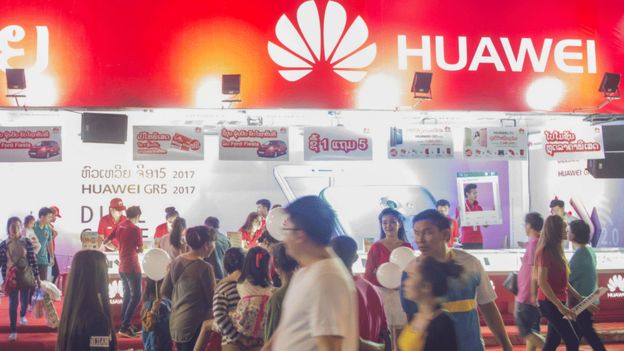
Image copyrightGETTY IMAGESImage captionHuawei has denied that it poses any risk to the UK or any other country
What does Mr Ren think about his daughter’s arrest?
Mr Ren’s daughter Meng Wanzhou, Huawei’s chief financial officer, was arrested on 1 December in Vancouver at the request of the US, and is expected to be the subject of a formal extradition request.
The first covers claims Huawei hid business links to Iran – which is subject to US trade sanctions. The second includes the charge of attempted theft of trade secrets.
Mr Ren was clear in his opposition to the US accusations.
“Firstly, I object to what the US has done. This kind of politically motivated act is not acceptable.
“The US likes to sanction others, whenever there’s an issue, they’ll use such combative methods.
“We object to this. But now that we’ve gone down this path, we’ll let the courts settle it.”
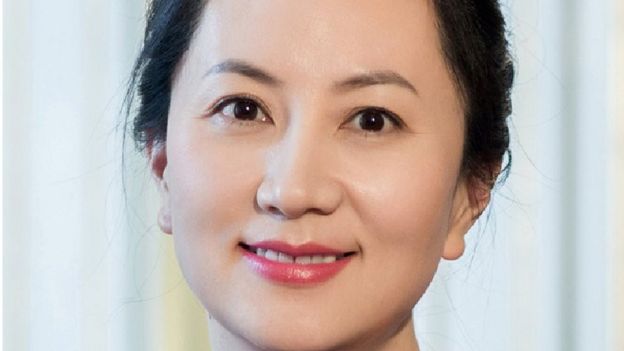
Image copyrightREUTERSImage captionMeng Wanzhou was arrested in Vancouver last December
What did Mr Ren say about Chinese government spying?
Huawei, which is China’s largest private company, has been under scrutiny for its links to the Chinese government – with the US and others expressing concern its technology could be used by China’s security services to spy.
Under Chinese law, firms are compelled to “support, co-operate with and collaborate in national intelligence work”.
But Mr Ren said that allowing spying was a risk he wouldn’t take.
“The Chinese government has already clearly said that it won’t install any backdoors. And we won’t install backdoors either.
“We’re not going to risk the disgust of our country and of our customers all over the world, because of something like this.
“Our company will never undertake any spying activities. If we have any such actions, then I’ll shut the company down.”
Is Huawei part of the Chinese state?
Analysis – Karishma Vaswani, BBC Asia business correspondent – Shenzhen
For a man known as reclusive and secretive, Ren Zhengfei seemed confident in the conviction that the business he’s built for the last 30 years can withstand the scrutiny from Western governments.
Mr Ren is right: the US makes up only a fraction of his overall business.
But where I saw his mood change was when I asked him about his links to the Chinese military and the government.
He refused to be drawn into a conversation, saying only that these were not facts, simply allegations.
Still, some signs of close links between Mr Ren and the government were revealed during the course of our interview.
He also confirmed that there is a Communist Party committee in Huawei, but he said this is what all companies – foreign or domestic – operating in China must have in order to abide by the law.
(Reuters) – British security officials do not support a full ban of Huawei from national telecoms networks despite U.S. allegations the Chinese firm and its products could be used by Beijing for spying, people with knowledge of the matter said.
Huawei, the world’s biggest producer of telecoms equipment, faces intense scrutiny in the West over its relationship with the Chinese government and allegations of enabling state espionage, with the United States calling for its allies not to use its technology.
Although no evidence has been produced publicly and Huawei has denied the claims, the allegations have led several Western countries to restrict its access to their markets.
“We don’t favour a complete ban. It’s not that simple,” one of the sources told Reuters on Monday after a Financial Times report on Sunday said that Britain had decided it could mitigate the risks of using Huawei equipment in 5G networks.
The FT cited two sources familiar with what it said was a conclusion by the government’s National Cyber Security Council (NCSC), which last year said technical and supply-chain issues with Huawei’s equipment had exposed national telecom networks to new security risks. Huawei had no immediate comment.
Any decision to allow Huawei to participate in building next-generation 5G networks would be closely watched by other nations, because of Britain’s membership of the Five Eyes intelligence-sharing group with the United States.
Britain is an important market for Huawei and last month Vodafone, the world’s second-largest mobile operator, said it was “pausing” the deployment of its equipment in core networks until Western governments give the Chinese firm full security clearance.
Other operators in Europe, including Britain’s BT and France’s Orange have already removed Huawei’s equipment or taken steps to limit its future use.
Two sources said the NCSC did not think it was necessary to completely bar Huawei from British networks, believing it could continue to manage any risks by testing the products at a special laboratory overseen by intelligence officials.
Both sources, who spoke on condition of anonymity because of the sensitivity of the matter, said the position was consistent with public statements made by the NCSC and British officials.
“As was made clear in July’s HCSEC oversight board, the NCSC has concerns around Huawei’s engineering and security capabilities. We have set out the improvements we expect the company to make, an NCSC spokeswoman said on Monday.
CONFIDENCE MEASURES
People with knowledge of the matter said the next NCSC report on Huawei’s position in Britain will criticise its slow response to issues raised in last year’s report and detail tense relations with British officials.
The report, which is expected to be released in coming weeks, does not itself set government policy.
The results of a government review of British telecoms infrastructure is expected later in the year and will include recommendations on managing security risks, including in future 5G networks.
Fellow Five Eyes member Australia has banned Huawei from supplying 5G equipment, while New Zealand said on Monday it would make its own independent assessment of the risk of using Huawei equipment in 5G networks.
Huawei has set up security labs in Britain and Germany aimed at building confidence that its equipment does not contain “back doors” for Chinese intelligence services.
It has also offered to build a cyber-security centre in Poland, where authorities have arrested a Chinese Huawei employee along with an ex-Polish security official.
SEOUL (Reuters) – Samsung Electronics is pouring resources into its telecom network equipment business, aiming to capitalize on the security fears hobbling China’s Huawei, according to company officials and other industry executives.
Those efforts include moving high-performing managers and numerous employees to the network division from its handset unit, two Samsung sources said.
Potential customers are taking notice of Samsung’s efforts to reinvent itself as a top-tier supplier for 5G wireless networks and bridge a big gap with market leader Huawei and industry heavyweights Ericsson and Nokia.
French carrier Orange’s chief technology officer, Mari-Noëlle Jégo-Laveissière, visited Japan last year and was impressed with the pace of 5G preparations using alternative equipment makers including Samsung, a company representative told Reuters.
Orange, which operates in 27 markets and counts Huawei as its top equipment supplier, will run its first French 5G tests with Samsung this year.
“Samsung is doing a big push in Europe at the moment,” one industry source said, declining to be identified.
Underscoring the growing importance of the business, South Korean Prime Minister Lee Nak-yeon visited Samsung’s network division in January. In a closed-door meeting during that visit, Samsung heir Jay Y. Lee asked for government help with recruiting high-level engineers.
Huawei is battling allegations by the United States and some other Western countries that its equipment could enable Chinese spying and should not be used in 5G networks, which will offer higher speeds and a host of new services.
Australia and New Zealand have joined the United States in effectively barring Huawei from 5G, and many other countries, especially in Europe, are considering a ban. Huawei denies that its gear presents any security risk.
Its woes have presented Samsung with a rare opportunity. Telecom firms would ordinarily stick with their 4G providers for 5G upgrades as they can use existing gear to minimize costs, but many firms may now be under political pressure to switch.
“We’re bolstering our network business to seize market opportunities arising at a time when Huawei is the subject of warnings about security,” said one of the Samsung sources.
The sources, who did not disclose specific figures for the employee moves, declined to be identified as they were not authorized to speak on the matter.
Keen to seek new growth, particularly as sales of its mainstay chips and smartphones have begun to drop, Samsung plans to invest $22 billion in 5G mobile technology and other fields over three years. It declined to break down how much will go to 5G and the other areas – artificial intelligence, biopharma and automotive electronic parts.
“Samsung is focused on building trust with our partners and leading the global 5G markets, regardless of other companies,” it said in an emailed statement to Reuters.
Asked about Samsung’s big push into network equipment, Huawei said in a statement that it welcomed competition in the market.
INDIA OPPORTUNITY
In India, Samsung is now in talks with Reliance Jio to upgrade its network to 5G, looking to build on what has perhaps been its biggest network success – becoming the key supplier for the upstart carrier.
“We don’t think 5G is far away in India,” a Samsung official with direct knowledge of the matter told Reuters. He declined to be named due to the sensitivity of the matter.
Samsung’s clients include U.S. firms AT&T Inc, Verizon Communications Inc and Sprint Corp and it has 5G network contracts with all three, though it was not clear how extensive those contracts are. It also sells to South Korean carriers and has partnered with Japanese mobile carriers to test its 5G equipment.
In many cases, Samsung supplies only small pieces of networks. According to market tracker Dell’Oro Group, the South Korean firm holds just 3 percent of the global telecom infrastructure market compared with 28 percent for Huawei.
Its network business made 870 billion won ($775 million) in operating profit last year, according to Eugene Investment & Securities. Filings show Nokia’s network business made about 1.2 billion euros ($1.4 billion) while Ericsson’s network operations made 19.4 billion Swedish crowns ($2.1 billion). Figures for Huawei were not available.
FINDING THE PEOPLE
One major hurdle for Samsung will be attracting talent amid a dearth of software engineers in South Korea.
“We need more software engineers and want to work with the government to find that talent,” Lee was quoted as saying by government officials at his meeting with the prime minister.
Samsung’s network business unit employs roughly 5,000 people, according to a government official in the southern city of Gumi where Samsung operates its manufacturing plants.
Kim Young-woo, an analyst at SK Securities, expects Samsung to hire 1,000-1,500 people for 5G network equipment this year. Samsung declined to comment on network employee levels and hiring plans.
But Samsung’s bet remains risky as the long-term nature of telecom network investment means change comes slowly.
Sweden’s Ericsson and Finland’s Nokia, which acquired the remnants of once-powerful network equipment companies Alcatel-Lucent and Nortel, have as yet seen little sales growth from Huawei’s problems, company executives said.
Both are in cost-cutting mode, even in the face of the 5G opportunity and the problems confronting their biggest rival.
Indeed, some network operators in Europe are warning that a Huawei ban – now under consideration in France, the UK, Germany and other countries – could push back deployment of 5G by as much as three years.
Others warn Samsung may struggle to develop a global sales and support organization.
“The way telcos purchase products and services from their suppliers demand a lot of time and resources, which is why Ericsson and Nokia have around 100,000 employees and Huawei almost twice as many,” said Bengt Nordstrom, CEO of telecom consultancy Northstream.
But Samsung is taking the long view. In December, it agreed to extend its Olympic partnership with the International Olympic Committee through to 2028 and expand its sponsorship to 5G technology.
The company did not want to leave its sponsorship spot open to Chinese rivals, a separate source with knowledge of the matter said.
“If Samsung dropped the top mobile sponsorship for the Olympic games beyond 2020, then who would have taken that spot? It would only have been China, Huawei.”
BEIJING (Reuters) – Two lawyers hired by the wife of an Australian detained in Beijing for suspected espionage said they have been denied access to him by Chinese authorities on the grounds that the detainee did not agree to their appointment.
Yang Hengjun, a 53-year-old Chinese-born writer, was detained in the southern city of Guangzhou while waiting for a transfer to Shanghai last month, after flying in from New York.
He was taken to Beijing, where China has said the city’s State Security Bureau is holding him under “coercive measures”, a euphemism for detention, as he is investigated on suspicion of “endangering state security”.
One of the lawyers, Mo Shaoping, said the state security bureau informed him on Friday that Yang “did not accept lawyers appointed by his family”, but that the bureau rejected his request to verify this with Yang in person.
“The thing we’re most concerned about is whether this is the real wish of Yang Hengjun,” the other lawyer, Shang Baojun, told Reuters, adding that they hoped to glean more information when Australian consular officials are allowed to meet with him next.
China’s Ministry of State Security has no publicly available contact details. The Foreign Ministry did not immediately respond to a faxed request for comment on Saturday, but has previously said that Yang’s rights and interests were being protected in accordance with the law.
Mo previously told Reuters that his client was suspected of “espionage”, and was being held under “residential surveillance at a designated location”.
The special detention measure allows authorities to interrogate suspects for six months without necessarily granting access to legal representation. Rights groups say that the lack of oversight raises concern about abuse by interrogators.
EIJING/SYDNEY (Reuters) – A Chinese-born Australian writer detained by authorities in Beijing for suspected espionage has long been a divisive figure among overseas Chinese dissidents and activists.
To his supporters, Yang Hengjun is a dedicated democracy activist who believed that China’s autocratic system would, with time, necessarily liberalize. His detractors say he had long since abandoned criticising the ruling Chinese Communist Party in favour of protecting his personal and business interests.
Yang, 53, whose legal name is Yang Jun, was detained in southern China’s Guangzhou while waiting for a transfer to Shanghai earlier this month, after flying in from New York.
He was taken to Beijing, where China has said the city’s State Security Bureau is holding him under “coercive measures”, a euphemism for detention, as he is investigated on suspicion of “endangering state security”.
Yang’s lawyer, Mo Shaoping, told Reuters his client was suspected of “espionage”, and was being held under “residential surveillance at a designated location”, a special detention measure that allows authorities to interrogate suspects without necessarily granting access to legal representation.
Although his recent writing has mostly avoid Chinese politics, Yang first became prominent in the early 2000s when he earned the nickname of “democracy peddler”.
Before censorship of China’s microblogs intensified, Yang’s essays on topics ranging from Chinese nationalism to the fate of ethnic minorities in Tibet, made him a popular commentator. He also wrote a trilogy of spy novels set in China.
More recently, Yang had largely steered clear of issues deemed sensitive by the Communist Party, only occasionally writing about U.S. politics, and instead had thrown his energy into a “daigou” business, procuring overseas products for Chinese buyers.
His store on China’s popular mobile platform WeChat sold U.S.-made luxury bags, vitamins, baby formula and watches.
An employee of the store, who declined to be named, said that Yang started the store at the request of his readers, who wanted to buy real and fairly priced goods. Asked what would happen to the store now, he said he was waiting for instructions.
“KEEPS TO HIMSELF”
For the last two years, Yang, who friends describe as an affable, jocular but academic figure, had been living in New York as a visiting scholar at Columbia University.
“He was quite aloof from politics and tended to keep his personal news to himself,” Yang’s former landlord, New York-based businessman Yi Gai, told Reuters.
“About 75 percent of his energy and time was spent on his daigou work,” added Yi, who is also a friend of Yang’s.
Another friend, who hadn’t spoken to Yang in several months, said the Australian writer believed his views were not a challenge to China’s rulers.
“He played within the system. He had never called for the bottom to rise up. He wants reform only,” said the friend, who declined to be named for fear for his safety.
Feng Chongyi, an academic at the University of Technology in Sydney, who was himself detained during a 2017 visit to China, said he believed Yang’s detention was related to his international connections.
Tensions have risen in recent weeks between China and some Western countries after two Canadians, a diplomat on unpaid leave and a consultant, were arrested in China on suspicion of endangering state security.
Those arrests were widely seen in the West as retaliation by China for Canada’s arrest of Meng Wanzhou, a senior Huawei Technologies executive, on Dec. 1 at the request of the United States for allegedly violating U.S. sanctions on Iran.
Australian officials have called on China to handle the matter “transparently and fairly”, but have downplayed the connection between Yang’s case and those of the Canadians.
“He is well-connected in China and internationally. He knows high-profile people in the Communist Party and he believed that meant he could travel to China with relative impunity,” Feng said.
POOR BACKGROUND
Yang came from a poor background in China, but studied political economy at Shanghai’s prestigious Fudan University, according to his own accounts of his time there.
Yang had often told friends that, before his writing career, he worked for China’s Foreign Ministry. But ministry spokeswoman Hua Chunying told Reuters that Yang had never been employed there.
He would also tell friends that he knew Wang Huning, the Chinese Communist Party’s chief of ideology, while at Fudan, according to two sources.
Friends say he became an Australian citizen in the early 2000s.
Xia Yeliang, a former professor at Peking University who now lives in Virginia, said Yang was a controversial figure among China’s overseas dissident community.
Yang was believed in recent years to have married a well-known nationalist blogger, Yuan Ruijuan, souring his reputation among overseas democracy activists, Xia told Reuters by phone.
At times Yang had said his spy novels, which were serialised on his website, were based on his abundant personal experience within the Chinese system, Xia added.
The novels pit China’s spy agency against the CIA and FBI and include double-agents, clones, and a main character who, like Yang, wrote fictional spy novels and attended Fudan University.
Yi, the landlord and friend, said Yang “was not willing to keep in close contact with radical dissidents, and definitely wouldn’t cooperate with them, so it’s natural that radical dissidents would be suspicious and speculate about him”.
Before Yang left for China this month, Yi and some friends met him and the topic of his security came up, but everyone thought he would be fine.
BEIJING, Jan. 24 (Xinhua) — Xu Qiliang, vice chairman of the Central Military Commission, said on Thursday that China and Australia should further strengthen their strategic communication and exchanges between the two militaries at all levels.
Xu made the remarks when meeting with visiting Australian Minister for Defense Christopher Pyne.
The mutually beneficial cooperation between China and Australia has promoted their respective development and benefited the two peoples, said Xu.
Xu noted that the two sides should respect each other, rationally view each other’s strategic intentions and strive to draw on each other’s strengths for mutual benefit and win-win results, so as to broaden the path of mutual cooperation.
Pyne said Australia attaches great importance to developing its relations with China and would like to strengthen pragmatic exchanges and cooperation with China in various fields to bring more benefits to the two peoples.
China’s State Councilor and Defense Minister Wei Fenghe also met Pyne on the day and told him that China and Australia are important countries in the Asia-Pacific region. To develop a healthy, stable and sustainable Sino-Australian relationship is in the fundamental interests of the two peoples and conducive to peace, stability and prosperity in the region.
Pyne said Australia appreciates China’s important role in international and regional affairs and is ready to work with China to develop stronger, friendly and dynamic relations between the two countries and militaries.









 CHINDIA ALERT: You'll be living in their world, very soon