Chindia Alert: You’ll be Living in their World Very Soon
aims to alert you to the threats and opportunities that China and India present. China and India require serious attention; case of ‘hidden dragon and crouching tiger’.
Without this attention, governments, businesses and, indeed, individuals may find themselves at a great disadvantage sooner rather than later.
The POSTs (front webpages) are mainly 'cuttings' from reliable sources, updated continuously.
The PAGEs (see Tabs, above) attempt to make the information more meaningful by putting some structure to the information we have researched and assembled since 2006.
Embassy in France removes ‘false image’ on Twitter in latest online controversy amid accusations of spreading disinformation
After months of aggressive anti-US posts by Chinese diplomats Beijing is cracking down on ‘smear campaigns’ at home
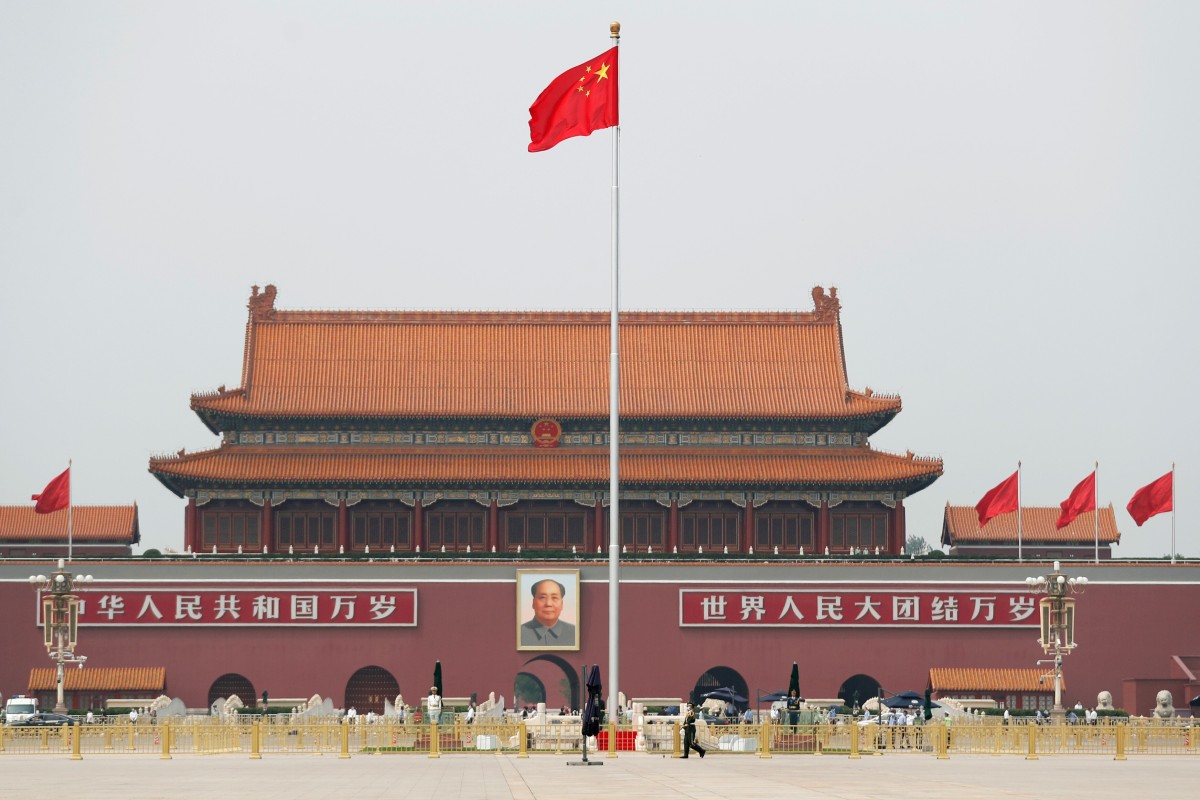
Beijing’s ‘Wolf Warrior’ diplomacy has coincided with a rise of nationalist content on Chinese social media. Photo: Reuters
Beijing is battling allegations that it is running a disinformation campaign on social media, as robust posts by its diplomats in Western countries promoting nationalist sentiment have escalated into a spat between China and other countries, especially the United States.
In the latest in a series of online controversies, the Chinese embassy in France claimed its official Twitter account had been hacked after it featured a cartoon depicting the US as Death, knocking on a door marked Hong Kong after leaving a trail of blood outside doors marked Iraq, Libya, Syria, Ukraine and Venezuela. The inclusion in the image of a Star of David on the scythe also prompted accusations of anti-Semitism.
Top China diplomats call for ‘Wolf Warrior’ army in foreign relations
25 May 2020
“Someone posted a false image on our official Twitter account by posting a cartoon entitled ‘Who is Next?’. The embassy would like to condemn it and always abides by the principles of truthfulness, objectivity and rationality of information,” it said on Monday.
The rise of China’s aggressive “Wolf Warrior” diplomacy has been regarded by analysts as primarily aimed at building support for the government at home but the latest incident is seen as an attempt by Beijing to take back control of the nationalist narrative it has unleashed.
Florian Schneider, director of the Leiden Asia Centre in the Netherlands, said the removal of the embassy’s tweet reflected a constant concern in Beijing about the range of people – including ordinary citizens – who were involved in spreading nationalistic material online.
“The state insists that its nationalism is ‘rational’, meaning it is meant to inspire domestic unity through patriotism but without impacting national interests or endangering social stability,” he said.
“This makes nationalism a mixed blessing for the authorities … if nationalist stories demonise the US or Japan or some other potential enemy, then any Chinese leader dealing diplomatically with those perceived enemies ends up looking weak.
“Trying to guide nationalist sentiment in ways that further the leadership’s interests is a difficult balancing act and I suspect this is partly the reason why the authorities are currently trying to clamp down on unauthorised, nationalist conspiracy theories.”
Too soon: Chinese advisers tell ‘Wolf Warrior’ diplomats to tone it down
The report came after months of social media posts – including by Chinese diplomats – defending China against accusations it had mishandled the coronavirus pandemic and attacking the US and other perceived enemies.
In March, Chinese foreign ministry spokesman Zhao Lijian promoted a conspiracy theory on Twitter suggesting the virus had originated in the US and was brought to China by the US Army. His comments were later downplayed, with China’s ambassador to the US Cui Tiankai saying questions about the origin of the virus should be answered by scientists.
Schneider said this showed that the state-backed nationalistic propaganda online was at risk of backfiring diplomatically.
“The authorities have to constantly worry that they might lose control of the nationalist narrative they unleashed, especially considering how many people produce content on the internet, how fast ideas spread, and how strongly commercial rationales drive misinformation online,” he said.
Last month, a series of widely shared social media articles about people in different countries “yearning to be part of China” resulted in a diplomatic backlash against Beijing. Kazakhstan’s foreign ministry summoned the Chinese ambassador in April to lodge a formal protest against the article.
Following the incident, the Cyberspace Administration of China, the country’s internet regulator which manages the “firewall” and censors material online, announced a two-month long “internet cleansing” to clear privately owned accounts which engage in “smear campaigns”.
The article had at least 100,000 readers, with 753 people donating money to support the account. According to Xigua Data, a firm that monitors traffic on Chinese social media, the account garnered more than 1.7 million page views for 17 articles in April.
According to a statement from WeChat, the account was closed for fabricating facts, stoking xenophobia and misleading the public.
A journalism professor at the University of Hong Kong said this case differed from the Chinese embassy’s tweet, despite both featuring anti-US sentiment.
Masato Kajimoto, who leads research on news literacy and the misinformation ecosystem, said the closure of the WeChat account seemed to be more about Chinese authorities feeling the need to regulate producers of media content whose motivations were often financial rather than political.
“I would think the government doesn’t like some random misinformation going wild and popular, which affects the overall storylines they would like to push, disseminate and control,” he said.
One way for China to respond to the situation was to fact-check social media and to position itself as a protector facts and defender of the integrity of public information, he said.
“In the age of social media, both fake news and fact-checking are being weaponised by people who try to influence or manipulate the narrative in one way or another,” Kajimoto said.
“Not only China but also many other authoritarian states in Asia are now fact-checking social media. Governments in Singapore, Thailand, Indonesia and other countries all do that.
“Such initiatives benefit them because they can decide what is true and what is not.”
NEW YORK/SAN FRANCISCO (Reuters) – Amazon.com Inc (AMZN.O) has bought cameras to take temperatures of workers during the coronavirus pandemic from a firm the United States blacklisted over allegations it helped China detain and monitor the Uighurs and other Muslim minorities, three people familiar with the matter told Reuters.
China’s Zhejiang Dahua Technology Co Ltd (002236.SZ) shipped 1,500 cameras to Amazon this month in a deal valued close to $10 million, one of the people said. At least 500 systems from Dahua – the blacklisted firm – are for Amazon’s use in the United States, another person said.
The Amazon procurement, which has not been previously reported, is legal because the rules control U.S. government contract awards and exports to blacklisted firms, but they do not stop sales to the private sector.
However, the United States “considers that transactions of any nature with listed entities carry a ‘red flag’ and recommends that U.S. companies proceed with caution,” according to the Bureau of Industry and Security’s website. Dahua has disputed the designation.
The deal comes as the U.S. Food and Drug Administration warned of a shortage of temperature-reading devices and said it wouldn’t halt certain pandemic uses of thermal cameras that lack the agency’s regulatory approval. Top U.S.-based maker FLIR Systems Inc (FLIR.O) has faced an up to weeks-long order backlog, forcing it to prioritize products for hospitals and other critical facilities.
Amazon declined to confirm its purchase from Dahua, but said its hardware complied with national, state and local law, and its temperature checks were to “support the health and safety of our employees, who continue to provide a critical service in our communities.”
The company added it was implementing thermal imagers from “multiple” manufacturers, which it declined to name. These vendors include Infrared Cameras Inc, which Reuters previously reported, and FLIR, according to employees at Amazon-owned Whole Foods who saw the deployment. FLIR declined to comment on its customers.
Dahua, one of the biggest surveillance camera manufacturers globally, said it does not discuss customer engagements and it adheres to applicable laws. Dahua is committed “to mitigate the spread of the COVID-19” through technology that detects “abnormal elevated skin temperature — with high accuracy,” it said in a statement.
The U.S. Department of Commerce, which maintains the blacklist, declined comment. The FDA said it would use discretion when enforcing regulations during the public health crisis as long as thermal systems lacking compliance posed no “undue risk” and secondary evaluations confirmed fevers.
Dahua’s thermal cameras have been used in hospitals, airports, train stations, government offices and factories during the pandemic. International Business Machines Corp (IBM.N) placed an order for 100 units, and the automaker Chrysler placed an order for 10, one of the sources said. In addition to selling thermal technology, Dahua makes white-label security cameras resold under dozens of other brands such as Honeywell, according to research and reporting firm IPVM.
Honeywell said some but not all its cameras are manufactured by Dahua, and it holds products to its cybersecurity and compliance standards. IBM and Chrysler’s parent Fiat Chrysler Automobiles NV (FCHA.MI) did not comment.
The Trump Administration added Dahua and seven other tech firms last year to the blacklist for acting against U.S. foreign policy interests, saying they were “implicated” in “China’s campaign of repression, mass arbitrary detention, and high-technology surveillance against Uighurs, Kazakhs, and other members of Muslim minority groups.”
More than one million people have been sent to camps in the Xinjiang region as part of China’s campaign to root out terrorism, the United Nations has estimated.
Dahua has said the U.S. decision lacked “any factual basis.” Beijing has denied mistreatment of minorities in Xinjiang and urged the United States to remove the companies from the list.
A provision of U.S. law, which is scheduled to take effect in August, will also bar the federal government from starting or renewing contracts with a company using “any equipment, system, or service” from firms including Dahua “as a substantial or essential component of any system.”
Amazon’s cloud unit is a major contractor with the U.S. intelligence community, and it has been battling Microsoft Corp (MSFT.O) for an up to $10 billion deal with the Pentagon.
Top industry associations have asked Congress for a year-long delay because they say the law would reduce supplies to the government dramatically, and U.S. Secretary of State Mike Pompeo said last week that policies clarifying the implementation of the law were forthcoming.
FACE DETECTION & PRIVACY
The coronavirus has infected staff from dozens of Amazon warehouses, ignited small protests over allegedly unsafe conditions and prompted unions to demand site closures. Temperature checks help Amazon stay operational, and the cameras – a faster, socially distant alternative to forehead thermometers – can speed up lines to enter its buildings. Amazon said the type of temperature reader it uses varies by building.
To see if someone has a fever, Dahua’s camera compares a person’s radiation to a separate infrared calibration device. It uses face detection technology to track subjects walking by and make sure it is looking for heat in the right place.
An additional recording device keeps snapshots of faces the camera has spotted and their temperatures, according to a demonstration of the technology in San Francisco. Optional facial recognition software can fetch images of the same subject across time to determine, for instance, who a virus patient may have been near in a line for temperature checks.
Amazon said it is not using facial recognition on any of its thermal cameras. Civil liberties groups have warned the software could strip people of privacy and lead to arbitrary apprehensions if relied on by police. U.S. authorities have also worried that equipment makers like Dahua could hide a technical “back door” to Chinese government agents seeking intelligence.
In response to questions about the thermal systems, Amazon said in a statement, “None of this equipment has network connectivity, and no personal identifiable information will be visible, collected, or stored.”
Dahua made the decision to market its technology in the United States before the FDA issued the guidance on thermal cameras in the pandemic. Its supply is attracting many U.S. customers not deterred by the blacklist, according to Evan Steiner, who sells surveillance equipment from a range of manufacturers in California through his firm EnterActive Networks LLC.
“You’re seeing a lot of companies doing everything that they possibly can preemptively to prepare for their workforce coming back,” he said.
Faced with a backlash from the West over its handling of the early stages of the pandemic, Beijing has been quietly gaining ground in Asia
Teams of experts and donations of medical supplies have been largely welcomed by China’s neighbours
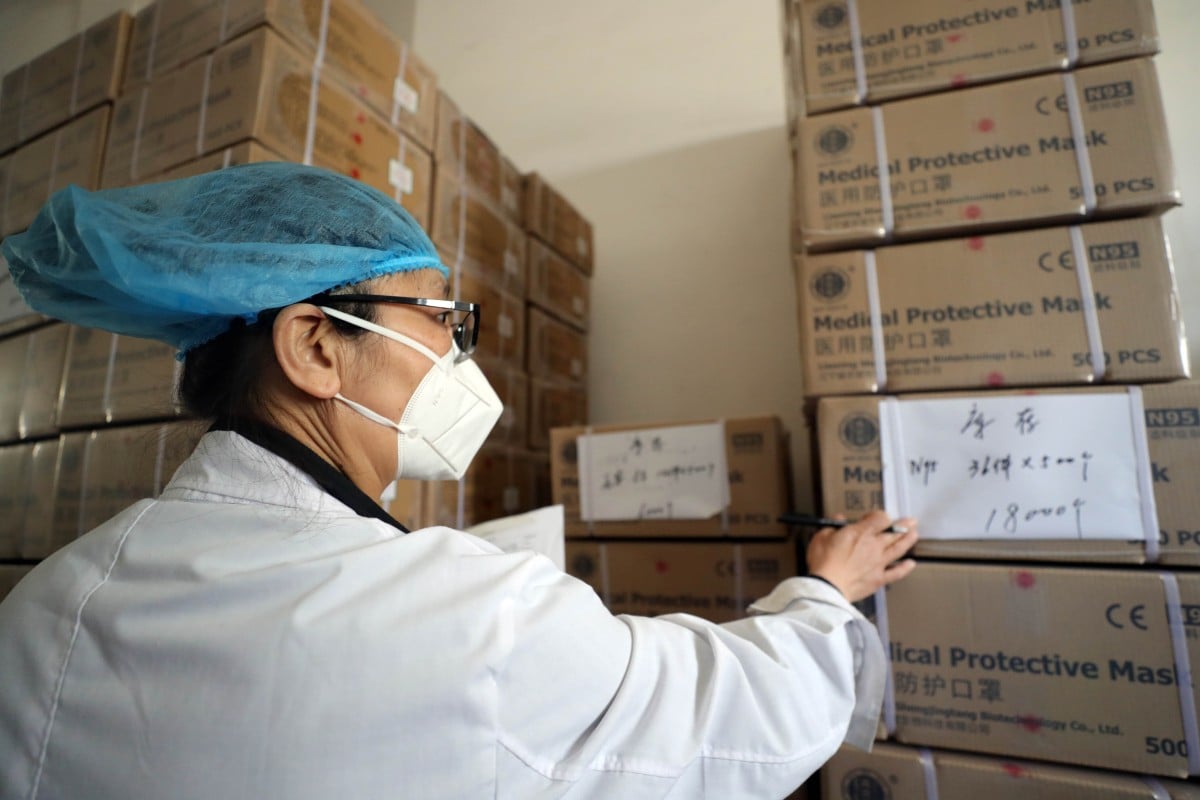
Despite facing some criticism from the West, China’s Asian neighbours have welcomed its medical expertise and vital supplies. Photo: Xinhua
While China’s campaign to mend its international image in the wake of its handling of the coronavirus health crisis has been met with scepticism and even a backlash from the US and its Western allies, Beijing has been quietly gaining ground in Asia.
Teams of experts have been sent to Cambodia, the Philippines, Myanmar, Pakistan and soon to Malaysia, to share their knowledge from the pandemic’s ground zero in central China.
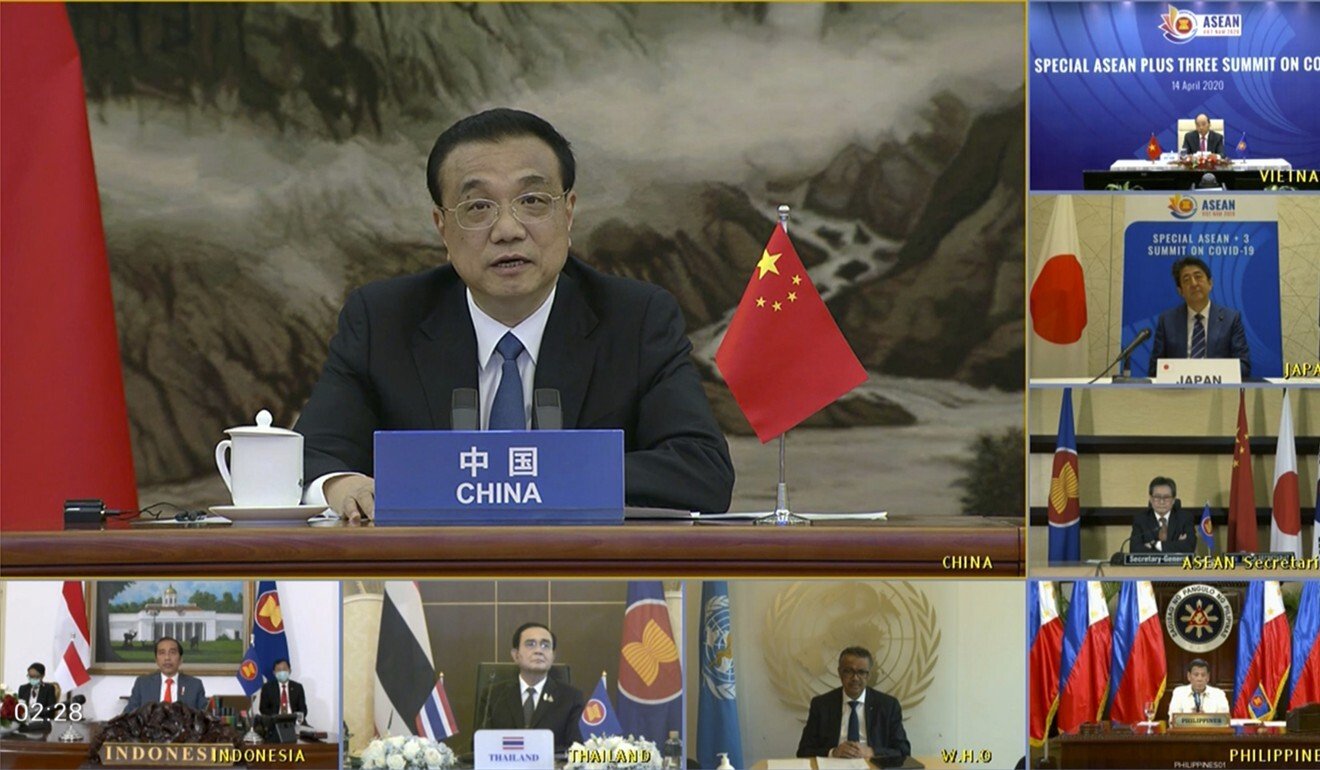
China has also held a series of online “special meetings” with its Asian neighbours, most recently on Tuesday when Premier Li Keqiang discussed his country’s experiences in combating the disease and rebooting a stalled economy with the leaders of the Association of Southeast Asian Nations (Asean), Japan and South Korea.
Chinese Prime Minister Li Keqiang speaks to Asean Plus Three leaders during a virtual summit on Tuesday. Photo: AP
Many Western politicians have publicly questioned Beijing’s role and its subsequent handling of the crisis but Asian leaders – including Philippine President Rodrigo Duterte and Japanese Prime Minister Shinzo Abe – have been reluctant to blame the Chinese government, while also facing criticism at home for not closing their borders with China soon enough to prevent the spread of the virus.
An official from one Asian country said attention had shifted from the early stages of the outbreak – when disgruntled voices among the public were at their loudest – as people watched the virus continue its deadly spread through their homes and across the world.
“Now everybody just wants to get past the quarantine,” he said. “China has been very helpful to us. It’s also closer to us so it’s easier to get shipments from them. The [medical] supplies keep coming, which is what we need right now.”
The official said also that while the teams of experts sent by Beijing were mainly there to observe and offer advice, the gesture was still appreciated.
Another Asian official said the tardy response by Western governments in handling the outbreak had given China an advantage, despite its initial lack of transparency over the outbreak.
“The West is not doing a better job on this,” he said, adding that his government had taken cues from Beijing on the use of propaganda in shaping public opinion and boosting patriotic sentiment in a time of crisis.
“Because it happened in China first, it has given us time to observe what works in China and adopt [these measures] for our country,” the official said.
Experts in the region said that Beijing’s intensifying campaign of “mask diplomacy” to reverse the damage to its reputation had met with less resistance in Asia.
Why China’s ‘mask diplomacy’ is raising concern in the West
29 Mar 2020
“Over the past two months or so, China, after getting the Covid-19 outbreak under control, has been using a very concerted effort to reshape the narrative, to pre-empt the narrative that China is liable for this global pandemic, that China has to compensate other countries,” said Richard Heydarian, a Manila-based academic and former policy adviser to the Philippine government.
“It doesn’t help that the US is in lockdown with its domestic crisis and that we have someone like President Trump who is more interested in playing the blame game rather than acting like a global leader,” he said.
Shahriman Lockman, a senior analyst with the foreign policy and security studies programme at Malaysia’s Institute of Strategic and International Studies, said that as the US had withdrawn into its own affairs as it struggled to contain the pandemic, China had found Southeast Asia a fertile ground for cultivating an image of itself as a provider.
China’s first-quarter GDP shrinks for the first time since 1976 as coronavirus cripples economy
Beijing’s highly publicised delegations tasking medical equipment and supplies had burnished that reputation, he said, adding that the Chinese government had also “quite successfully shaped general Southeast Asian perceptions of its handling of the pandemic, despite growing evidence that it could have acted more swiftly at the early stages of the outbreak in Wuhan”.
“Its capacity and will to build hospitals from scratch and put hundreds of millions of people on lockdown are being compared to the more indecisive and chaotic responses seen in the West, especially in Britain and the United States,” he said.
Coronavirus droplets may travel further than personal distancing guidelines
16 Apr 2020
Lockman said Southeast Asian countries had also been careful to avoid getting caught in the middle of the deteriorating relationship between Beijing and Washington as the two powers pointed fingers at each other over the origins of the new coronavirus.
“The squabble between China and the United States about the pandemic is precisely what Asean governments would go to great lengths to avoid because it is seen as an expression of Sino-US rivalry,” he said.
“Furthermore, the immense Chinese market is seen as providing an irreplaceable route towards Southeast Asia’s post-pandemic economic recovery.”
Aaron Connelly, a research fellow in Southeast Asian political change and foreign policy with the International Institute for Strategic Studies in Singapore, said Asian countries’ dependence on China had made them slow to blame China for the pandemic.
“Anecdotally, it seems to me that most Southeast Asian political and business elites have given Beijing a pass on the initial cover-up of Covid-19, and high marks for the domestic lockdown that followed,” he said.
“This may be motivated reasoning, because these elites are so dependent on Chinese trade and investment, and see little benefit in criticising China.”
China and Vietnam ‘likely to clash again’ as they build maritime militias
12 Apr 2020
The cooperation with its neighbours as they grapple with the coronavirus had not slowed China’s military and research activities in the disputed areas of the South China Sea – a point of contention that would continue to cloud relations in the region, experts said.
Earlier this month an encounter in the South China Sea with a Chinese coastguard vessel led to the sinking of a fishing boat from Vietnam, which this year assumed chairmanship of Asean.
And in a move that could spark fresh regional concerns, shipping data on Thursday showed a controversial Chinese government survey ship, the Haiyang Dizhi 8, had moved closer to Malaysia’s exclusive economic zone.
The survey ship was embroiled in a months-long stand-off last year with Vietnamese vessels within Hanoi’s exclusive economic zone and was spotted again on Tuesday 158km (98 miles) off the Vietnamese coast.
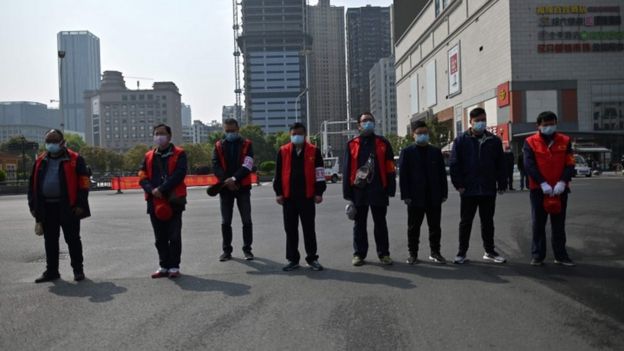
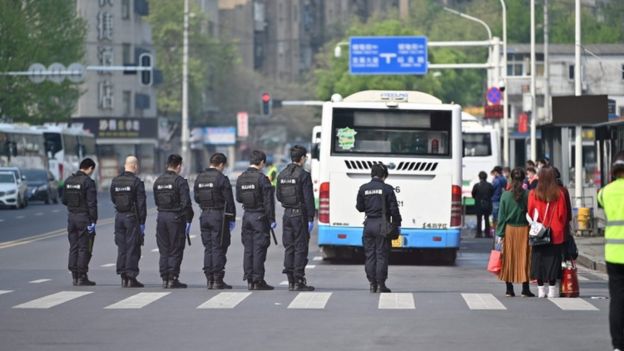
In Wuhan, the epicentre of China’s outbreak, all traffic lights in urban areas were turned red at 10:00, ceasing traffic for three minutes.
China’s government said the event was a chance to pay respects to “martyrs”, a reference to the 14 medical workers who died battling the virus.
Image copyright GETTY IMAGESImage caption China came to a standstill during the three-minute silence at 10:00 local time
They include Li Wenliang, a doctor in Wuhan who died of Covid-19 after being reprimanded by the authorities for attempting to warn others about the disease.
“I feel a lot of sorrow about our colleagues and patients who died,” a Chinese nurse who treated coronavirus patients told AFP news agency. “I hope they can rest well in heaven.”
Wearing white flowers pinned to their chest, Chinese President Xi Jinping and other government officials paid silent tribute in Beijing.
Saturday’s commemorations coincide with the annual Qingming festival, when millions of Chinese families pay respects to their ancestors.
China first informed the World Health Organization (WHO) about cases of pneumonia with unknown causes on 31 December last year.
By 18 January, the confirmed number of cases had risen to around 60 – but experts estimated the real figure was closer to 1,700.
Image copyright GETTY IMAGESImage caption China’s government said the commemoration was held to pay respects to “martyrs”
Just two days later, as millions of people prepared to travel for the lunar new year, the number of cases more than tripled to more than 200 and the virus was detected in Beijing, Shanghai and Shenzhen.
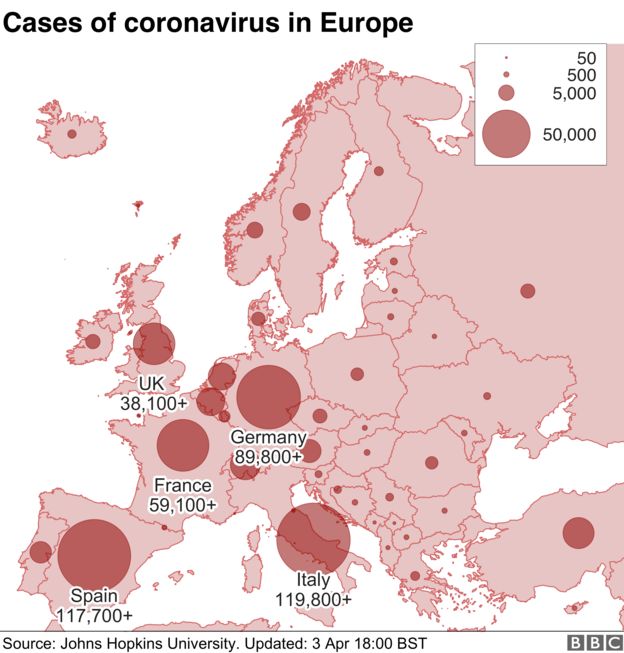
From that point, the virus began to spread rapidly in Asia and then Europe, eventually reaching every corner of the globe.
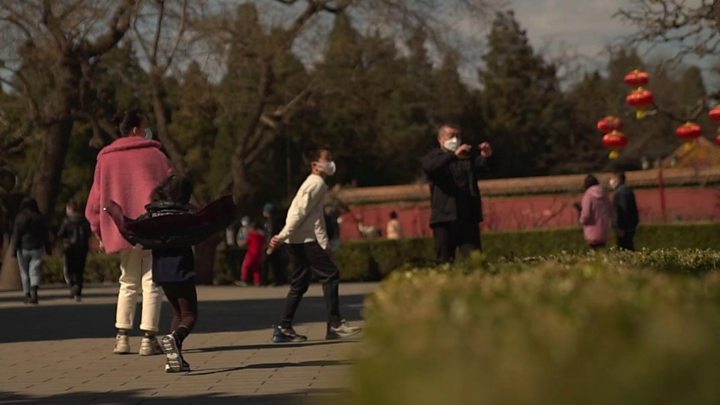
Media caption The BBC met people in Beijing heading out after the lockdown
In the past few weeks, China has started to ease travel and social-distancing restrictions, believing it has brought the health emergency under control.
Last weekend, Wuhan partially re-opened after more than two months of isolation.
On Saturday, China reported 19 new confirmed cases of coronavirus, down from 31 a day earlier. China’s health commission said 18 of those cases involved travellers arriving from abroad.
As it battles to control cases coming from abroad, China temporarily banned all foreign visitors, even if they have visas or residence permits.
What is the latest worldwide?
As the coronavirus crisis in China abates, the rest of the world remains firmly in the grip of the disease.
The deaths increased by 1,480 in 24 hours, the highest daily death toll since the pandemic began, AFP news agency reported, citing Johns Hopkins University’s case tracker.
The head of the International Monetary Fund (IMF) said the pandemic has bought the global economy to a standstill, causing a recession “way worse than the global financial crisis” of 2008
The United Nations appealed to governments around the world not to use the pandemic as an excuse to stifle dissent








 CHINDIA ALERT: You'll be living in their world, very soon