Chindia Alert: You’ll be Living in their World Very Soon
aims to alert you to the threats and opportunities that China and India present. China and India require serious attention; case of ‘hidden dragon and crouching tiger’.
Without this attention, governments, businesses and, indeed, individuals may find themselves at a great disadvantage sooner rather than later.
The POSTs (front webpages) are mainly 'cuttings' from reliable sources, updated continuously.
The PAGEs (see Tabs, above) attempt to make the information more meaningful by putting some structure to the information we have researched and assembled since 2006.
Image copyright AFPImage caption Embankments have been washed away in Bangladesh
Millions of people across Bangladesh and eastern India are taking stock of the devastation left by Cyclone Amphan.
A massive clean-up operation has begun after the storm left 84 dead and flattened homes, uprooted trees and left cities without power.
India’s Prime Minister Narendra Modi has arrived in West Bengal state to conduct an aerial survey.
Authorities in both countries had evacuated millions of people before the storm struck.
Covid-19 and social-distancing measures made mass evacuations more difficult, with shelters unable to be used to full capacity.
Officials also said people were afraid and reluctant to move to shelters for fear of contracting the virus.
The cyclone arrived with winds gusting up to 185km/h (115mph) and waves as high as 15ft.
Image copyright REUTERSImage caption Roads have been blocked by falling trees in BangladeshImage copyright AFPImage caption Many people have been injured in wall collapses in Bengal
It is the first super cyclone to form in the Bay of Bengal since 1999. Though its winds had weakened by the time it struck, it was still classified as a very severe cyclone.
Three districts in India’s West Bengal – South and North 24 Parganas and East Midnapore – were very badly hit.
In Bangladesh, there are reports of tens of thousands of homes damaged or destroyed and many villages submerged by storm surges in low-lying coastal areas like Khulna and Satkhira.
The affected areas include the Sunderbans, mangroves spread over an area of more than 10,000 square kilometres that spans both India and Bangladesh – the swampy islands are home to more than four million of the world’s poorest people.
Image copyright MUKTIImage caption Many homes, built of brick and mud, have been washed away
Those in the Sunderbans say it is too early to estimate casualties in the area, which is now cut-off from the mainland by the storm.
“There are houses which have collapsed and people could be trapped in them but we don’t know yet,” Debabrat Halder, who runs an NGO in one of the villages, told the BBC.
He recalls cyclone Bulbul in November 2019, which was followed by a huge incidence of fever, diarrhoea and flu, and is afraid that that the same may happen again.
And worse, he adds, is that the flooding from contaminated sea water, has likely destroyed the soil.
“Nothing will grow in this soil,” he says, adding that it will likely take years to convert it into fertile land again.
Image copyright MUKTIImage caption The Sunderbans delta is frequently hit by severe stormsImage copyright MUKTIImage caption Crops have all been destroyed by the flooding
Kolkata, the capital of West Bengal, and one of India’s biggest cities has been devastated. Its roads are flooded and the city was without power for more than 14 hours.
The state’s chief minister, Mamata Banerjee, said the devastation in Kolkata was “a bigger disaster than Covid-19”.
But assessment of the damage is being hampered by blocked roads and flooding in all these areas.
Image copyright INDIA MET DEPARTMENTImage caption The storm has worsened over the last 12 hours
Indian officials are on alert after Cyclone Amphan – due to make landfall on the east coast – looks likely to intensify into a “very severe” storm.
The storm is expected to make landfall on Wednesday afternoon and hit West Bengal and Odisha states. Twenty relief teams have been dispatched there.
Prime Minister Narendra Modi is due to chair a high-level meeting to further discuss preparations for the storm.
The cyclone comes amid huge levels of migration from the cities to villages.
Tens of thousands of people are fleeing cities in the wake of a lockdown to curb the spread of coronavirus. Both Odisha and West Bengal are seeing a large number of people return.
There are fears about the impact of the storm on them – many are on foot.
India’s meteorological department has issued a “yellow alert” for the region, advising fishermen not to “venture into the south Bay of Bengal during the next 24 hours, and north Bay of Bengal from 18-20 May”.
A ‘”yellow alert” or “cyclone alert” is issued “of the expected commencement of adverse weather over the coastal areas”.
In a bulletin, the weather department said the storm is likely to move across the north-west Bay of Bengal, and cross West Bengal and Bangladesh coasts from noon local time on 20 May as a “very severe cyclonic storm”.
It also warned of rough seas, with storm surges that could inundate coastal areas.
The head of India’s National Disaster Relief Force (NDRF), SN Pradhan, said they were watching the situation closely and were in touch with state governments.
Last June a powerful cyclone that was expected to make landfall on India’s western coast changed its course, and moved further into the Arabian sea.
Hundreds of thousands of people had already been evacuated as the region braced for Cyclone Vayu, which was classified as “very severe”.
And in May last year India evacuated more than a million people to safety to avoid Cyclone Fani, in which 16 people were killed in Odisha.
In the Bay of Bengal, the cyclone season typically runs from April to December.
BHUBANESHWAR, India/NEW DELHI (Reuters) – India has evacuated more than 200,000 people along its northeast coastline by boat, bus and train ahead of a severe cyclone due to make landfall on Friday, with many villagers piling household possessions on to trucks before fleeing their homes.
Severe cyclonic storm Fani was lying in the Bay of Bengal about 420 km (260 miles) south-southwest of the Hindu temple town of Puri where special trains were put on to evacuate tourists and the beaches were empty.
In total, about 800,000 people are expected to be evacuated from low-lying areas of the eastern state of Odisha to cyclone shelters, schools and other buildings, authorities said.
“We are maximizing efforts at all levels for evacuation,” Odisha’s Special Relief Commissioner Bishnupada Sethi told Reuters.
Fani was generating maximum sustained winds of 170-180 km (105-111 miles) per hour, the state-run India Meteorological Department said. Cyclone tracker Tropical Storm Risk rated Fani a mid-range category 3 storm.
Authorities have also shut down operations at two major ports – Paradip and Visakhapatnamon – and ships have been ordered to move out to avoid damage.
In Paradip, television footage showed residents piling bicycles, sewing machines and gas cylinders on to small trucks and leaving for any of nearly 900 shelters supplied with food, water and medicines.
Odisha state government has deployed hundreds of disaster management personnel, closed schools and colleges and asked doctors and other health officials not to go on leave until May 15.
India’s cyclone season can last from April to December, when severe storms batter coastal cities and cause widespread deaths and damage to crops and property in both India and neighboring Bangladesh.
Technological advancements have helped meteorologists to predict weather patterns well in advance, giving authorities more time to prepare.
In 1999, a super-cyclone battered the coast of Odisha for 30 hours, killing 10,000 people. A mass evacuation of nearly a million people saved thousands of lives in 2013.
The National Disaster Response Force (NDRF) has sent 50 teams across four coastal states, including Odisha. The NDRF has also put 32 teams equipped with boats, tree cutters, medical supplies, telecoms gear and other equipment on standby.
“I think we are fully prepared,” Satya Narayan Pradhan, NDRF director general, told state TV.


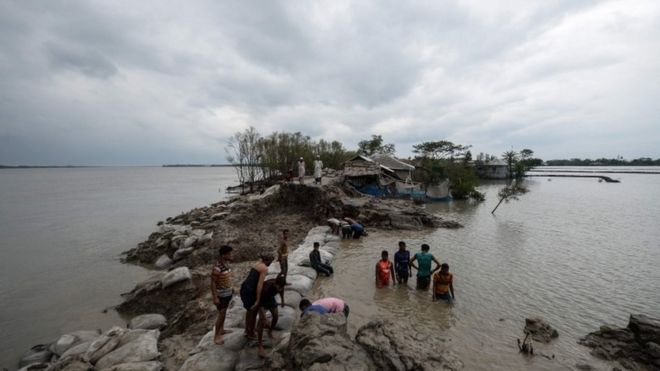 Image copyright AFP
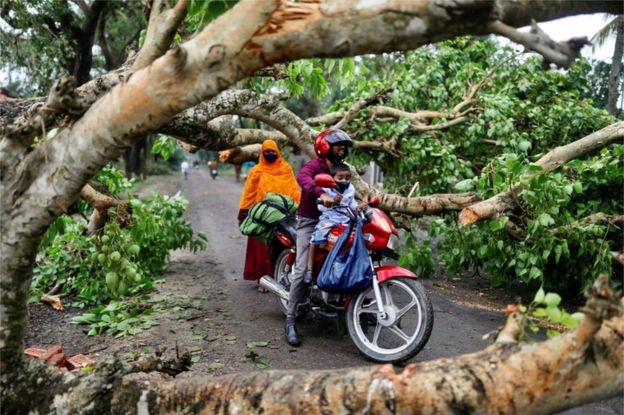 Image copyright REUTERS
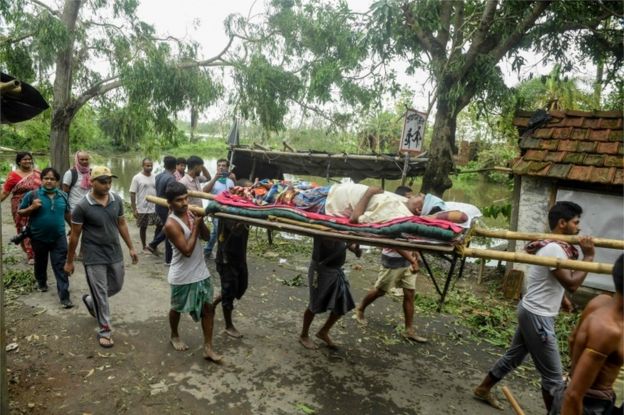 Image copyright AFP
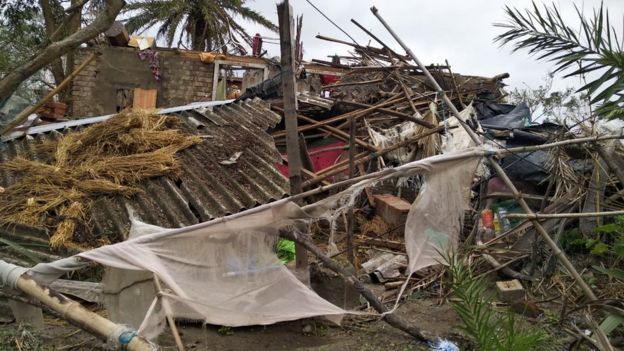 Image copyright MUKTI
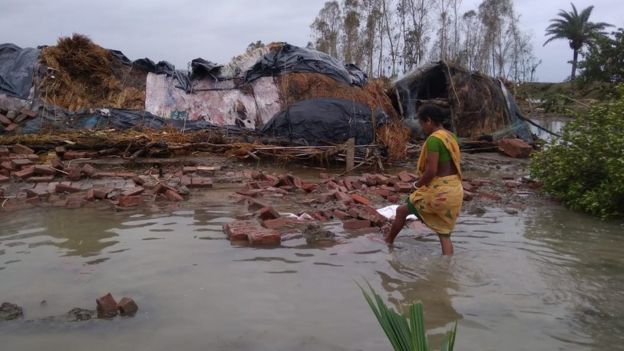 Image copyright MUKTI
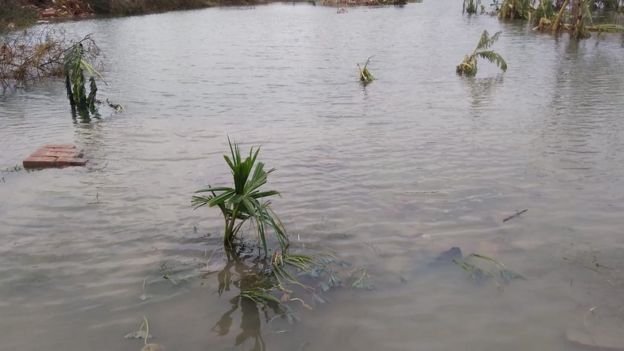 Image copyright MUKTI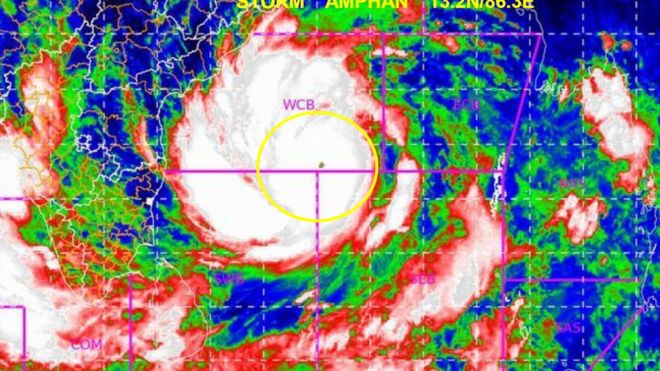

 CHINDIA ALERT: You'll be living in their world, very soon