Chindia Alert: You’ll be Living in their World Very Soon
aims to alert you to the threats and opportunities that China and India present. China and India require serious attention; case of ‘hidden dragon and crouching tiger’.
Without this attention, governments, businesses and, indeed, individuals may find themselves at a great disadvantage sooner rather than later.
The POSTs (front webpages) are mainly 'cuttings' from reliable sources, updated continuously.
The PAGEs (see Tabs, above) attempt to make the information more meaningful by putting some structure to the information we have researched and assembled since 2006.
WASHINGTON (Reuters) – China will be able to place armed forces at a Cambodian naval base under a secret pact between the two nations, the Wall Street Journal said on Sunday, although Cambodian officials denied such a deal had been struck.
The agreement, reached this spring but not made public, gives China exclusive access to part of Cambodia’s Ream Naval Base on the Gulf of Thailand, the Journal said, citing U.S. and allied officials familiar with the matter.
Such an arrangement would boost China’s ability to assert contested territorial claims and economic interests in the South China Sea, challenging U.S. allies in Southeast Asia.
Chinese and Cambodian officials denied such a pact existed, the Journal said.
“This is the worst-ever made up news against Cambodia,” Cambodian Prime Minister Hun Sen told the pro-government news site Fresh News on Monday.
“No such thing could happen because hosting foreign military bases is against the Cambodian constitution.”
Cambodian defence ministry spokesman Chhum Socheat told Reuters the report was “made up and baseless”.
In Beijing, foreign ministry spokesman Geng Shuang said, “As I understand it, the Cambodia side denied this.”
But he declined to respond to repeated questions whether China also denied the report.
“China and Cambodia are traditionally friendly neighbours,” Geng told a news briefing.
“We have cooperated in various areas. Our cooperation is open, transparent, and mutually beneficial and equal. I hope the relevant parties do not overinterpret it.”
Hun Sen’s strongest regional ally, China has poured billions of dollars in development assistance and loans into Cambodia through two-way frameworks and its Belt and Road initiative.
The initiative, unveiled by Chinese President Xi Jinping in 2013, aims to bolster a sprawling network of land and sea links throughout Asia, the Middle East, Europe and Africa.
It has attracted a flood of Chinese commercial ventures in Cambodia, including casinos and special economic zones.
This month the U.S. Defense Department suggested China may be attempting to gain a military foothold in Cambodia, in a letter to Cambodia asking why the nation had turned down an offer to repair a naval base.
In a statement, the State Department urged Cambodia to reject such an arrangement, saying the nation had a “constitutional commitment to its people to pursue an independent foreign policy”.
It added, “We are concerned that any steps by the Cambodian government to invite a foreign military presence in Cambodia would threaten the coherence and centrality of the Association of Southeast Asian Nations in coordinating regional developments, and disturb peace and stability in Southeast Asia.”
Cambodia denied reports last November that China had been lobbying it since 2017 for a naval base that could host frigates, destroyers and other vessels of the People’s Liberation Army Navy.
Islam was forced on ethnic group ‘by religious wars and the ruling class’, Beijing says in latest report defending its actions in far western region
Uygurs’ ancestors were enslaved by the Turks, document says
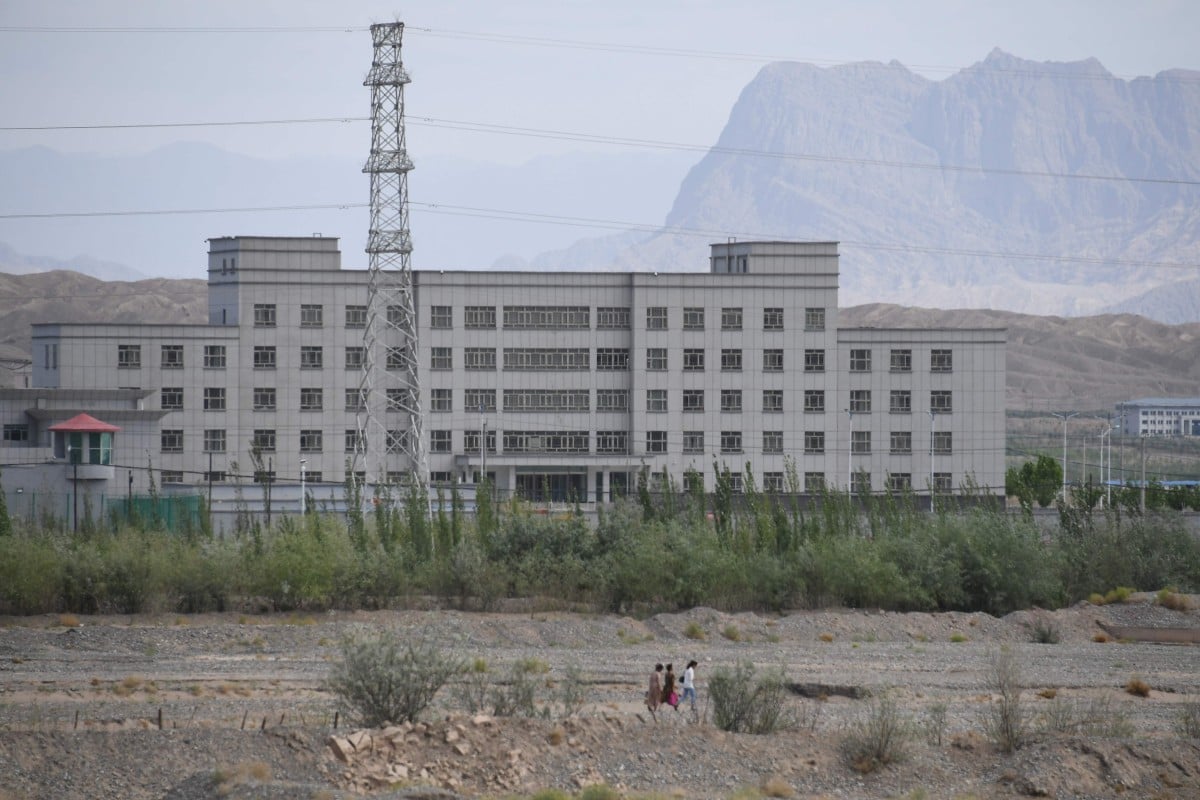
Beijing has issued a white paper seemingly designed to defend its actions in Xinjiang where as least 1 million Uygurs are being held in detention centres. Photo: AFP
Uygurs became Muslims not by choice but by force, and Islam is not their only religion, Beijing said in a white paper published on Sunday, as it continued its propaganda campaign to justify its controversial policies in the far western province of
“The Uygur people adopted Islam not of their own volition … but had it forced upon them by religious wars and the ruling class,” according to the document released by the State Council Information Office.
Islamic beliefs were forced on the Uygurs during the expansion of Arabic states. This is a historical fact, the report said, though that did not undermine the Uygurs’ religious rights now.
The report said also that there are Uygurs who hold to faiths other than Islam, and others who do not practise any religion at all.
The paper also took aim at the Uygurs’s historic links with Turkey.
“Historically, the Uygurs’ ancestors were enslaved by the Turks,” it said, citing a history of conflicts between the two groups dating back to the 8th century.
China promotes Xinjiang as tourist idyll
The white paper was issued amid a campaign by Beijing to justify its policies in the restive region, which is home to more than 10 million Uygurs, most whom are Muslim.
Earlier this month, the ambassadors of 22 countries signed a letter calling on Beijing to halt its mass detention of Uygurs in Xinjiang, the first such joint move on the issue at the UN Human Rights Council.
The signatories included envoys from Britain, France, Germany, Australia, Canada, Japan and Switzerland. The United States, which quit the forum a year ago, did not sign the letter.
China responded by issuing a letter signed by the ambassadors of 37 countries, including several Muslim majority states like Saudi Arabia and Pakistan, backing its policies in the region.
Beijing said the show of support was “a powerful response to the groundless accusations made against China by a small number of Western countries”.
UN experts and activists say at least 1 million Uygurs and other Muslims are currently being held in detention centres in Xinjiang. China describes the facilities as training and education centres that aim to stamp out religious extremism and provide people with useful skills. It has never said how many people are being detained in them.
The United States has repeatedly criticised Beijing over its policies in Xinjiang.
On Wednesday, US President Donald Trump met victims of religious persecution from around the world, including Jewher Ilham, a Uygur woman whose father Ilham Tohti was sentenced to life imprisonment in 2014 after being found guilty of promoting separatism.
“That’s tough stuff,” Trump said after hearing Ilham’s account of her father’s ordeal.
China describes the detention camps in Xinjiang as training and education centres. Photo: AFP
In January, US lawmakers nominated the imprisoned economist, writer and former professor at Minzu University in Beijing, for the 2019 Nobel Peace Prize in a bid to pressure China to stop its crackdown on the minority group.
Sunday’s white paper is the latest in a string of similar documents published recently by Beijing as it seeks to defend the legitimacy of its policies in Xinjiang. In a document issued in March, it said that over the past five years it had arrested nearly 13,000 “terrorists” in the region.
Xinjiang camps defended at UN human rights forum
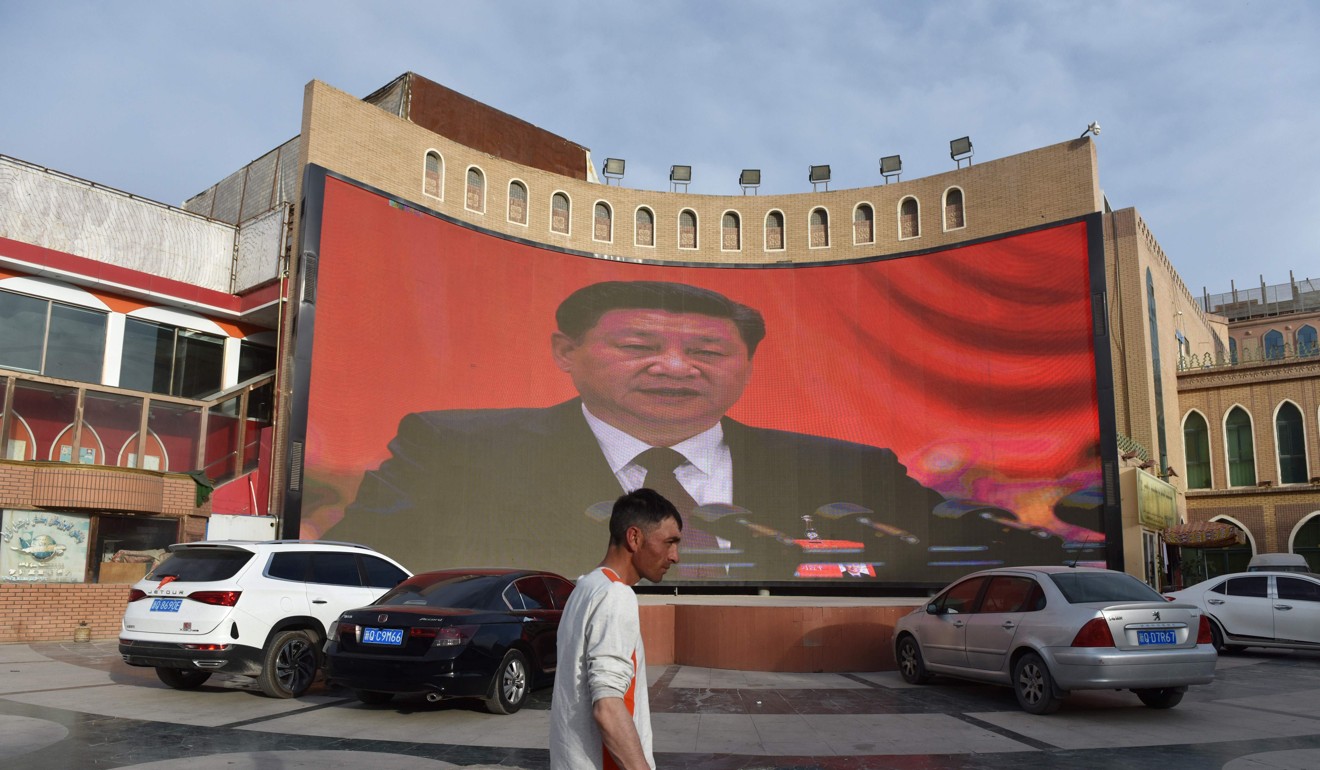
Neither the March report nor Sunday’s white paper mentioned Beijing’s other controversial policies in the region, such as the collection of DNA samples and extensive surveillance on local people.
“Xinjiang has borrowed from international experiences, combined them with local realities, and taken resolute measures against terrorism and extremism,” it said.
The measures have been effective, it said, though did not elaborate.
Over the past year, China has increased its efforts to defend the camps, including organising strictly controlled visits by selected diplomats and journalists to see the people who live in them.
State media has also released videos showing seemingly happy and healthy people inside the camps in a bid to counter accounts of harsh conditions and abuse published by the Western media.
President Xi Jinping has shown himself capable of surprise, whether he is responding to the Hong Kong protests or the US trade war. But his failure to pardon political prisoners and rally China proves there are limits to his flexibility
President Xi Jinping waves as he reviews troops on Tiananmen Square during a Victory Day military parade in September 2015. He has signed two amnesty orders since taking office, one to mark the 70th anniversary of the end of the second world war in 2015, and the other to celebrate the 70th anniversary of the founding of the People’s Republic China this year. Photo: EPA
To mark the 70th anniversary of the founding of the People’s Republic of China, Beijing has granted special pardons to
amnesty since the Communist Party took control of the country, and the second since Xi Jinping took office. The previous amnesty was announced in 2015, on the occasion of the
(although there are no political crimes under the Chinese penal code, in reality those facing political persecution are often convicted of criminal offences). It would have demonstrated the stated aims of the amnesty, which include continuing the fine traditions of Chinese civilisation, such as cautious punishment and benevolence to prisoners. It would also have shown there is still a sliver of space for political openness in the
Out of the nine categories announced, political prisoners could have fallen under the sixth category – those aged 75 and above and with serious physical disabilities. But the Chinese government also stated it would not pardon those who refused to repent or were deemed dangerous to society, provisions that would exclude political prisoners.
Since Xi came to power, Beijing has strengthened its
. Yet, considering China’s current social situation, it should be difficult, but not impossible, for Xi to pardon political prisoners and send a reassuring signal to society.
Beijing had declared seven amnesties before 1975, but none between 1975 and 2015 – not even during the two relatively relaxed decades, the
. The amnesty of 2015 was unexpected because while the 70th anniversary of China’s victory against Japan was major, it was also just a commemorative celebration. To some extent, it illustrated Xi’s ability to surprise – and he has sprung more surprises since.
Recently, contrary to many observers’ expectations, Xi did not push for tough measures against the
had a crisis of confidence and many believed Xi would ramp up the policy of promoting the state sector over the private sector, he made a 180-degree turn towards
text. It is clear from all this that Xi understands the strategy of advance and retreat. If a situation is unfavourable for his or the party’s rule, he will adjust his policy.
And the current political climate in China would seem to warrant an adjustment. Xi’s leftist practices have alienated many and caused resentment in some sections of the party and society; in particular, he has destroyed the party’s relationship with
of alienating intellectuals, and is calling on top-level cadres to rebuild the relationship with scholars to strengthen the legitimacy of the party’s rule.
Internationally, an amnesty is a humanitarian measure that creates an atmosphere of reconciliation and regulates the political climate. Xi, who has abolished a term limit on the presidency, wants to maintain stable,
, it is reasonable to loosen the tightly wound spring that is Chinese society, and restore some flexibility. Special pardons would alleviate social conflict, reunite intellectuals, ease tension with the party’s critics, and avoid worsening the social divide.
Have the extradition protests sealed Hong Kong’s fate with Beijing?
In announcing the latest amnesty, Beijing emphasised the need to exude institutional confidence,
China as a great nation in a new era of prosperity, and to project an image of an advanced culture that is open, democratic and respects the rule of law.
China has a tradition of holding small celebrations every five years and big celebrations every 10 years. To highlight the great achievements and high morals of Xi, the new helmsman steering his people towards socialism, a wider net was cast for the latest special pardons: nine categories of prisoners, compared to four categories in 2015.
However, in setting stricter conditions to exclude some from the amnesty – in particular, political prisoners – Beijing has revealed the hypocrisy of its special pardons, to say nothing of its failure to enhance institutional confidence.
In short, Xi has squandered what could have been a good move to unite the Chinese people. Whatever his reasons might be, this amnesty should make one thing clear to the world: although Xi can be opportunistic and flexible in his ruling strategy, he is intransigent on the fundamental question of
The Indian prime minister refused to back the Chinese leader’s ambitious global infrastructure vision at a summit last week, but the apparent snub is not getting in the way of amicable ties between Asia’s two biggest economies
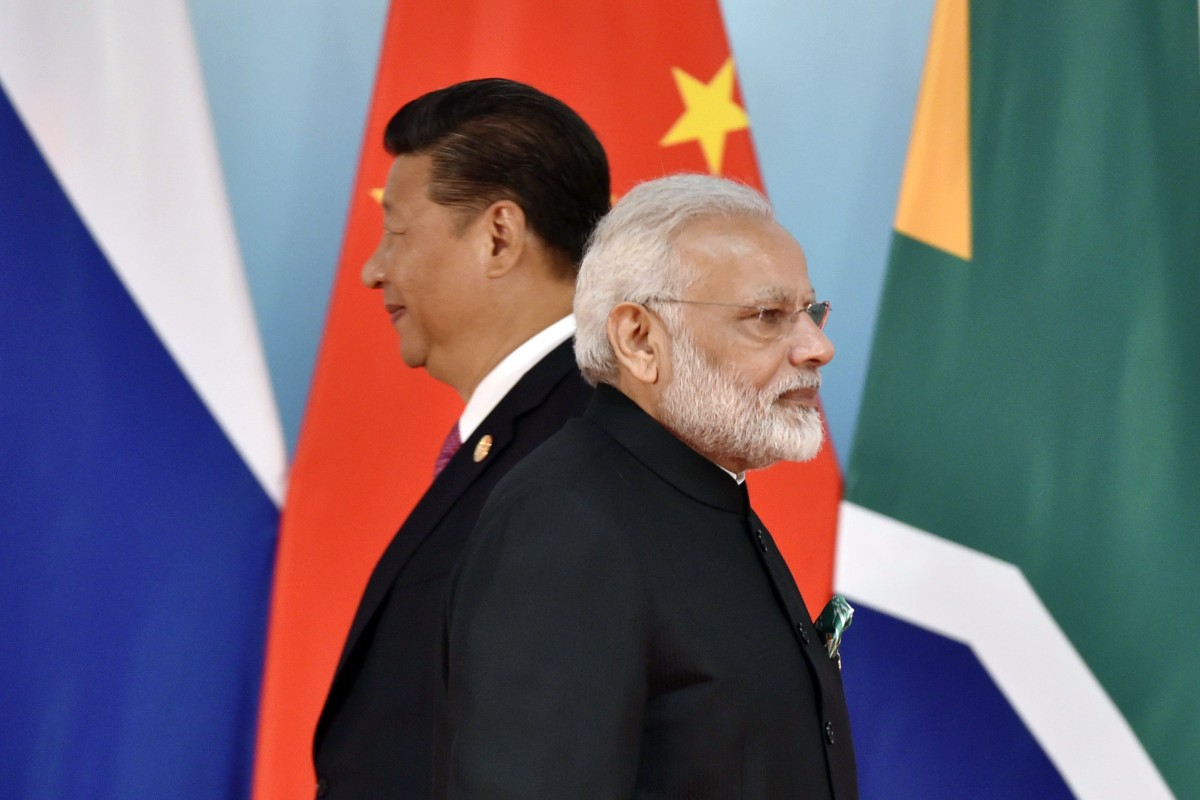
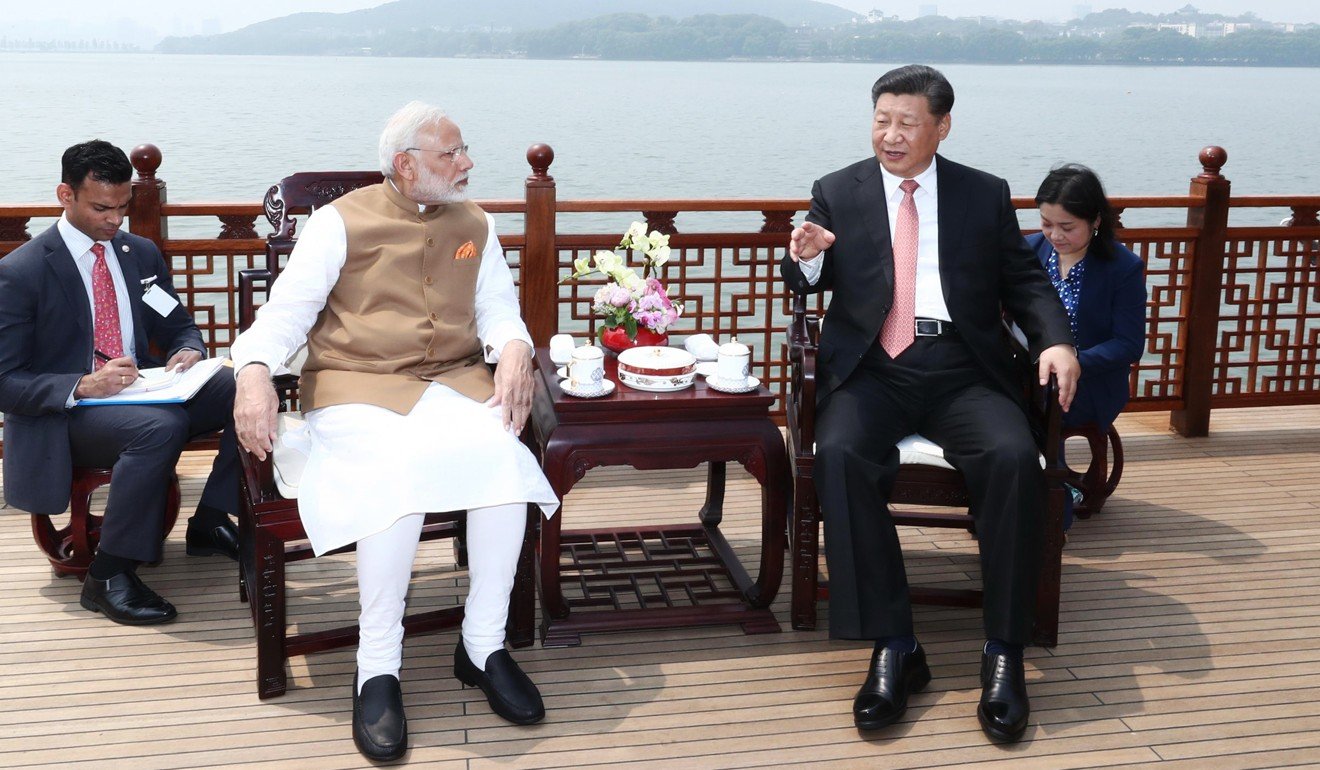
Chinese President Xi Jinping and Indian Prime Minister Narendra Modi at the BRICS Summit at the Xiamen International Conference and Exhibition Center in 2017. Photo: AFP
Their informal summit in Wuhan last year created all the right optics; even their chemistry seemed on point. So, when
met last week on the sidelines of the Shanghai Cooperation Organisation (SCO), the bonhomie seemed like it was there to stay.
But a day later, cracks appeared to emerge. India, holding on to its long-stated position, delivered a public snub to China by refusing to endorse its ambitious, trillion-dollar
in Osaka, there have been increasing signs that both countries may now be trialling a fresh approach to diplomacy – one that neither sidesteps contentious issues nor does it allow differences to derail ties.
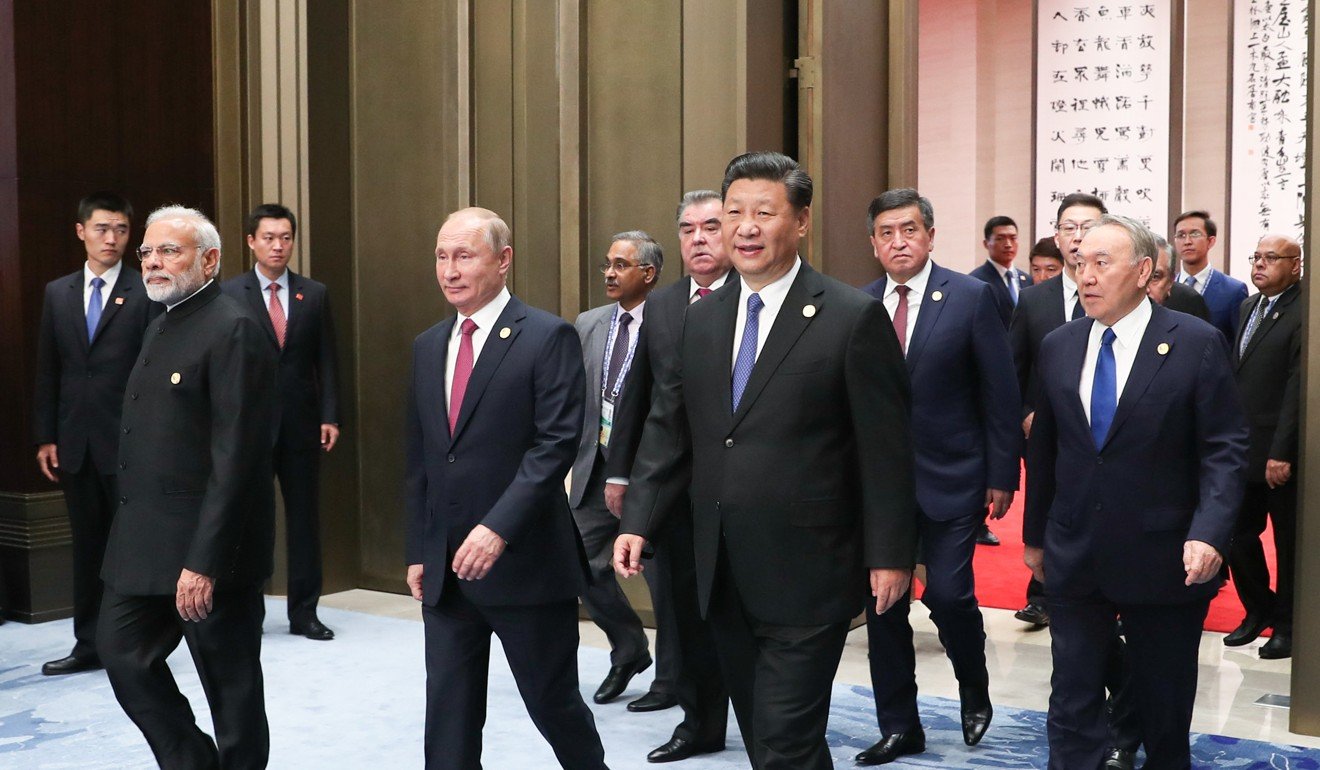
Chinese President Xi Jinping leads other leaders of Shanghai Cooperation Organisation: Russia’s Vladimir Putin and India’s Narendra Modi at the 2018 summit. Photo: Xinhua
Such an approach would delink the thorny issues – like the
was expected to scrap plans to build jointly with China an ocean observatory overlooking the Indian Ocean. The news came a week after Modi had visited the Maldives capital Male in early June.
For Modi 2.0, India’s US-China balancing act just got trickier
The Maldives’ decision to build the observatory was first mulled in December 2017, raising the Indian establishment’s hackles as it would have given China a presence in the region.
Another irritant between India and China has seemed to be the proposed 16-nation
(RCEP). India has been lukewarm on the free-trade bloc, frustrating the Chinese. Indications have been that China is likely to push for a 13-member bloc at the coming RCEP meeting in Thailand on June 20, excluding India.
BRI and border issues have not managed to overshadow the remaining business between the two countries Narayani Basu
Yet, despite all this, there has been no let down in engagement levels between Modi and Xi. Both leaders are expected to meet at the RIC summit on June 29 to 30, and have at least two more meetings planned this year alone – an informal Xi-Modi summit in India
in October and the BRICS summit on November 13 to 14.
For Narayani Basu, a New Delhi-based author and independent foreign policy analyst with a special focus on China, such sustained engagement between the two countries signals a new level of maturity.
“There has been a fairly successful attempt at delinking historical geopolitical and territorial issues from issues which are economic in nature,” Basu said. “As a result, the BRI and border issues have not managed to overshadow the remaining business between the two countries.”
Indian Prime Minister Narendra Modi speaks with Chinese President Xi Jinping in Wuhan. Photo: Xinhua
STRONG LEADERS, STRONGER AGENDAS
The approach might also have to do with where both leaders currently stand.
Modi and his Bharatiya Janata Party (BJP) have freshly emerged from a landslide
. Through the campaign, Modi portrayed a hardline image of himself and his government, especially on issues of national security. Similarly, Xi has emerged as a stronger leader since his reappointment last year – his approach marked by a higher-than-ever emphasis on economic nationalism and connectivity. Modi made a reference to this in his SCO meeting with Xi.
Basu said Sino-India ties were also being guided by the personalities of both leaders – strong, with harder-than-before agendas.
Did Japan and India just launch a counter to belt and road?
“They both came back on agendas based on consolidation of power, protection of sovereignty and nationalism. These are all issues that will not allow either side to blink easily. “So, even as both leaders are looking to move forward, they also do not want to compromise on their core issues – primary among them being territorial sovereignty,” she said.
The message is loud – India’s opposition to the BRI does not mean India will allow adversarial relations to develop between the two Sana Hashmi
In his SCO summit speech, Modi brought up territorial sovereignty as a thinly veiled reference to China’s BRI, saying India only supported connectivity projects that are based on “respect of sovereignty” and “regional integrity”.
Sana Hashmi, an analyst with Perth-based think tank Future Directions International and author of China’s Approach Towards Territorial Disputes: Lessons and Prospects, agreed that India was not letting historical issues get in the way of its relationship with Beijing.
Hashmi noted that India’s main objections to BRI revolved around one component – the China-
Economic Corridor (CPEC), which runs through the disputed region of Kashmir.
“But to make sure this does not affect the relationship, PM Modi and President Xi are meeting numerous times,” Hashmi said. “The message is loud – India’s opposition to the BRI does not mean India will allow adversarial relations to develop between the two.”
A NEED FOR EACH OTHER
Another factor that has likely prompted the new approach between India and China is their need for each other, particularly as both Asian powers navigate bumpy relationships with US under
and is reeling from the tariffs imposed on Chinese imports to America. India, too, has seen a similar but smaller version of this trade battle play out – things have escalated especially since the Trump administration withdrew its preferential trade treatment towards India. Responding to this, India imposed tariffs on 28 US products over the weekend.
Move over, ‘Made in China’. It’s ‘Made in Bangladesh’ era now
In such a context, a stronger relationship between the two Asian giants might be in mutual interest.
Basu said the scope for the relationship to deliver on, especially economically, is vast.
“Despite the chemistry, India and China’s promises to each other on the economic front haven’t materialised on the ground. Major projects as well as investments in each country are stuck.”
Court revokes licence for coal-fired power plant in Kenyan town whose Unesco World Heritage status is at stake
Beijing’s efforts to cut emissions domestically coincide with coal-financing ventures overseas
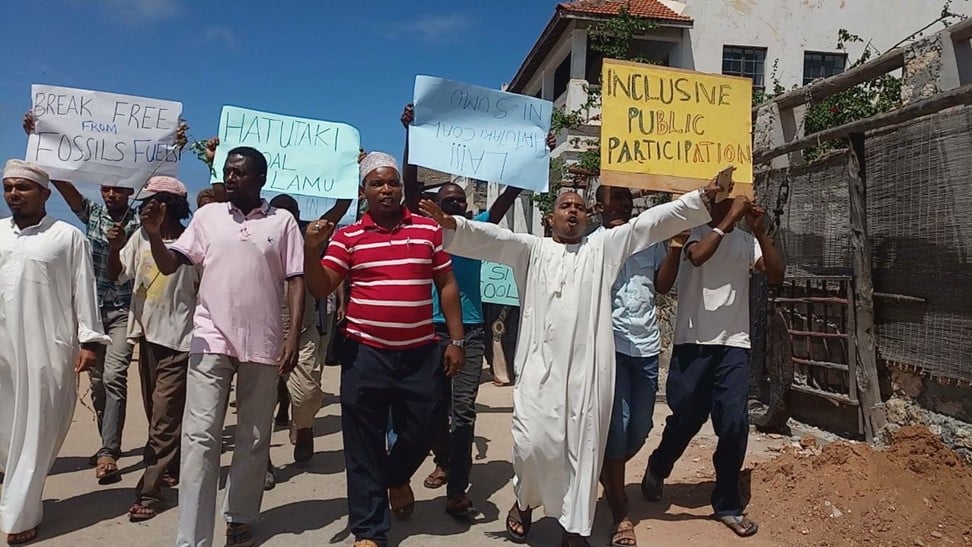
A proposed coal-fired power plant in Kenya involving four Chinese companies has provoked protests. Photo: Handout
This article is part of a series in which the South China Morning Post examines the local impact of Chinese investment and infrastructure projects in Africa.
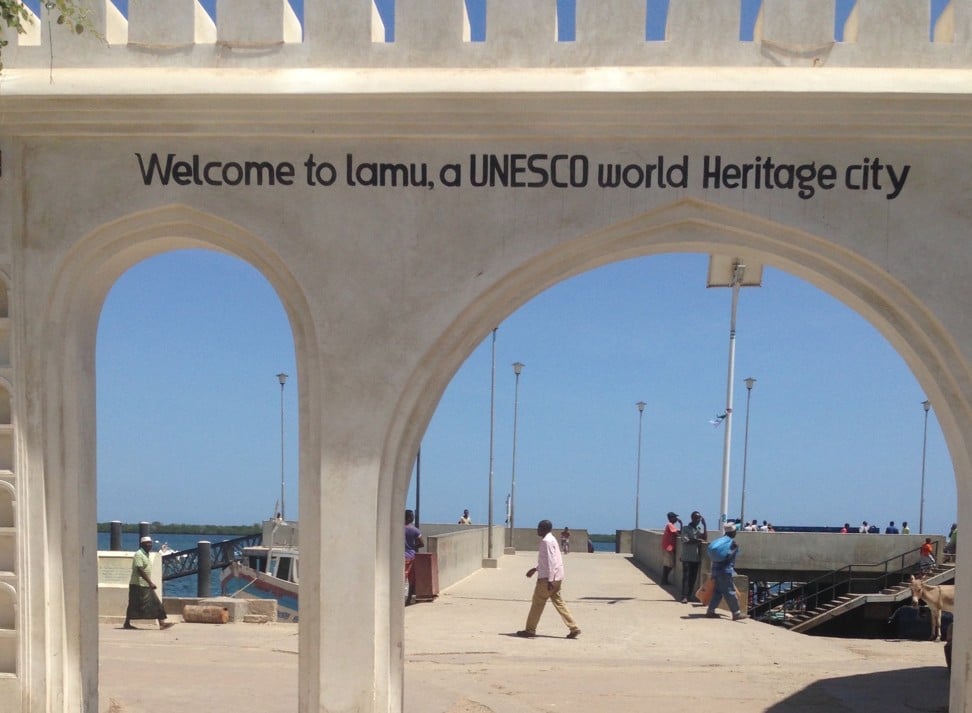
There are a few places in the world that have held onto their traditions. One is the island of Lamu, close to Kenya’s northern coast, which is an epicentre of Swahili culture in East Africa and home to its oldest and best-preserved history.
Nowhere combines the culture’s architecture and heritage like Lamu Old Town, where there are two streets, few cars and dozens of mosques and churches. Donkeys and wooden carts are the main modes of transport.
The town is a Unesco World Heritage Site with multibillion-dollar tourism and fishing industries. But it risks losing its global allure after Unesco’s World Heritage Committee warned that a US$2 billion coal-fired power plant planned in the area threatened its heritage site status.
Four Chinese companies are involved in the project. The United States also supported it, with its envoy to Kenya, Kyle McCarter, saying the country needed cheaper power and American energy firm GE promising to inject US$400 million for a 20 per cent stake in Amu Power, the operating company. The Kenyan government has said the plant would enable the country to have a diversified source of electricity.
Lamu Old Town’s Unesco status helps to support its tourism and fishing industries. Photo: Handout
However, the project’s future is uncertain after a Kenyan court, the National Environment Tribunal, ordered on June 26 that a fresh environmental impact assessment be carried out. The tribunal, which oversees decisions made by the National Environment Management Authority, also revoked the licence issued by the authority to Amu Power.
A lack of public consultation to date, as well as the environmental risks, were cited by the court, whose ruling is binding on the government. Unesco has urged Amu Power to proceed with the impact assessment, which in turn could have an impact on perceptions of Beijing’s signature transcontinental infrastructure strategy, the
Two days after the court’s verdict, Wu Peng, the Chinese ambassador to Kenya, met groups opposed to the building of the coal plant, days after they had been dispersed by police when they tried to protest at the embassy. Wu acknowledged the need to develop a different approach to hear the public’s views.
Anti-coal campaigners have been demanding China back out. Of the plant’s estimated US$2 billion cost, US$1.2 billion is coming from the Industrial Commercial Bank of China.
The three Chinese companies – Sichuan Electric Power Design and Consulting, China Huadian, and Sichuan No 3 Power Construction – teamed up with Kenya’s Centum Investments and Gulf Energy in a venture to form Amu Power. Another Chinese firm, Power Construction (PowerChina), was contracted to build the plant, which is expected to generate 1,050 megawatts of electricity.
The Chinese embassy in Nairobi said it had asked the Chinese investors to wait for Kenya’s decision on whether it should go ahead.
“Our position is that the Kenyan people are the final decision makers in this project and the Chinese government respects that,” embassy spokeswoman Huang Xueqing said.
Despite committing to cutting China’s reliance on coal, Beijing is still funding several coal-powered plants around the world. Both China and Kenya signed the
on climate change in 2016, promising to cut carbon emissions.
China may be providing a market for its coal by outsourcing its fossil fuel use to other countries, according to 350.org, which campaigns to prevent climate change and works to end use of fossil fuels.
Yossi Cadan, a senior campaigner for the organisation, said many people looked to China to be the new world leader in addressing climate change, given its government’s ambitious initiative to reduce emissions domestically. US President Donald Trump, by contrast, made the controversial decision to
Activists and Lamu residents have protested about the coal plant. Photo: Handout
“While China seems determined to meet its Paris climate agreement targets at home, it undermines those efforts to reduce global emissions by simultaneously investing in coal projects across the world,” Cadan said.
According to Cadan, cancellations and delays of coal projects in China left a desperate Chinese coal industry looking elsewhere, assisted by Chinese financial institutions.
He argued that if China was serious about being a global leader in reducing emissions and tackling the climate crisis, it must apply the same restrictions it was
Analysts said that if the Lamu coal project were to be abandoned, other Chinese-funded coal power projects in Africa would come under the spotlight.
China is funding eight coal-powered projects in Africa, including Egypt’s Hamrawein plant, which has an estimated cost of US$4.2 billion and is expected to generate six gigawatts of power.
Omar Elmawi, campaign coordinator at deCOALonize, was among the campaigners who met ambassador Wu two weeks ago.
“Other African countries could take a cue from [the Kenyan situation],” he said. “Already key financial institutions are coming up with policies that are either cutting back on or refusing to fund new coal plant projects. This will add to the pressure on China to abandon coal projects.”
Lauri Myllyvirta, lead analyst at Greenpeace’s air pollution unit, said the Lamu case could spur the Chinese government to adapt its criteria for supporting overseas energy projects. This could include requiring coal-fired power projects overseas to meet more stringent emissions standards.
“Currently, essentially all of the overseas coal-fired power projects with involvement from Chinese banks and firms plan to use much weaker emissions control technology than is allowed in China, leading to much worse air quality impacts and public health impacts – which was the case in Lamu,” Myllyvirta said.
“It’s hard to see how [a weaker emissions standard] fits with the Chinese leadership’s objectives of greening the belt and road, and projecting a positive, technologically advanced image of China overseas.”
Image copyright GETTY IMAGESImage caption (File photo) They were arrested in the city of Xuzhou in Jiangsu province
Four Britons have been arrested in China’s Jiangsu province over drug-related offences.
They are among 16 foreigners – seven teachers and nine students – who were detained last week after testing positive for drug use.
At least some of those being held are from an international language school, Education First.
Police did not specify the type of drugs involved and it is not clear where the other foreigners are from.
There are extremely severe penalties for drug offences in China.
“We are in contact with the Chinese authorities following the arrest of four British people in Jiangsu province, and are providing consular assistance,” said the British embassy in Beijing.
On Tuesday, the Xuzhou Public Security Bureau, located in Jiangsu province, posted a statement on Chinese social media site Weibo saying police had successfully cracked a drug-related case.
It said 19 people had been arrested, including 16 foreigners.
According to police, 18 people had been placed under administrative detention, which carries a maximum detention period of 15 days. One person was placed in criminal detention – a procedure that usually leads to a formal arrest and an indictment.
Police did not name the school involved, but state news agency Xinhua later reported that some of the teachers were from the Switzerland-based Education First (EF) Centre.
The EF centre told Xinhua it had a “zero tolerance” policy towards drugs, adding that it was deeply regretful that some of its teachers were involved.
It said the drug-related incident had taken place during “non-work” hours.
EF first entered China in 1998 and has around 2,000 English teachers now based in the country.
BEIJING (Reuters) – China’s producer prices flatlined in June on lower oil prices and weak global demand, fuelling concerns that a slowdown in manufacturing from a bruising trade war will further drag on growth in the world’s second-biggest economy.
The producer price index (PPI) showed no growth in June from a year earlier, the National Bureau of Statistics (NBS) said on Wednesday. That compared with a 0.6% rise in May and a gain of 0.3% forecast by economists in a Reuters poll.
The June PPI reading was the lowest since August 2016 when the index last fell year-on-year. Factory gate prices slowed from May as well, falling 0.3%.
On the other hand, June consumer price growth in annual terms matched a 15-month high seen in May as supply shortages triggered by the African swine fever outbreak and extreme weather conditions continued to push up pork and fruit prices.
A cooling in producer prices, seen as a gauge of industrial demand that gives momentum to investment and profits in the Chinese economy, may rekindle worries about deflation and prompt the authorities to launch more aggressive stimulus.
“The bigger picture is inflation, apart from food inflation, is actually pretty weak and with the economy continuing to cool, I think the return to factory-gate deflation is very likely,” said Julian Evans-Pritchard, senior China economist at Capital Economics.
Tommy Xie, China economist at OCBC Bank in Singapore, also said he saw the risk of produce prices contracting in annual terms as early as next month.
Upstream sectors were particularly weak, with prices for oil and natural gas extraction down 1.8% from a year earlier, the NBS data showed. Price gains in the coal mining sector also eased.
Although Beijing and Washington reached another truce in their trade war last month, economists expect continuing pressure on the Chinese economy as manufacturers shift more production abroad to avoid U.S. tariffs on China-made goods.
China’s factory activity shrank more than expected in June as tariffs and weaker domestic demand hit new orders for goods.
Beijing is fast-tracking more infrastructure projects but prices for some construction materials remain lacklustre.
Spot prices for steel rebar in June lingered below the levels of a year earlier and may worsen due to seasonal slackening of construction activity amid high temperatures and rainfall in summer.
Premier Li Keqiang pledged earlier this month to implement financing tools including reserve requirement ratio (RRR) cuts to support small and private firms, adding to expectations for further stimulus measures.
At the same time, however, he and other top policymakers have reiterated that China will not resort to large-scale stimulus.
Evans-Pritchard from Capital Economics said the government could adopt more monetary easing and off-budget fiscal support to bolster the economy.
“But I think the days of big drastic stimulus are probably over. The most we can hope for is really it (more government support) helps to dampen the headwinds and prevent the economy from slowing too sharply.”
CPI STILL ELEVATED
The consumer price index (CPI) in June rose 2.7% in annual terms, driven by higher food prices. Fruit prices surged 42.7% from a year earlier while pork prices rose 21.1%.
Analysts polled by Reuters expected consumer prices to rise 2.7%, matching the pace seen in May.
Some economists said consumer inflation may accelerate due to dwindling pig stocks, but others contended price rises will cool.
“CPI may have peaked in June and could come off steadily in the second half,” said Wang Jun, Beijing-based chief economist at Zhongyuan Bank. “There are deflationary risks but the overall pressure is not big, because deflationary risk is only restricted to manufacturing products.”
Core inflation that strips out volatile food and energy prices was at 1.6% in June from a year earlier, the same annual pace as in May.
On a month-on-month basis, CPI fell 0.1% in June after no change in May.
Chinese president also called for the three nations to uphold multilateralism in talks with Vladimir Putin and Narendra Modi in Osaka
In a separate meeting with other BRICS leaders, he said Beijing opposed ‘illegal and unilateral sanctions’ and ‘long-arm jurisdiction’
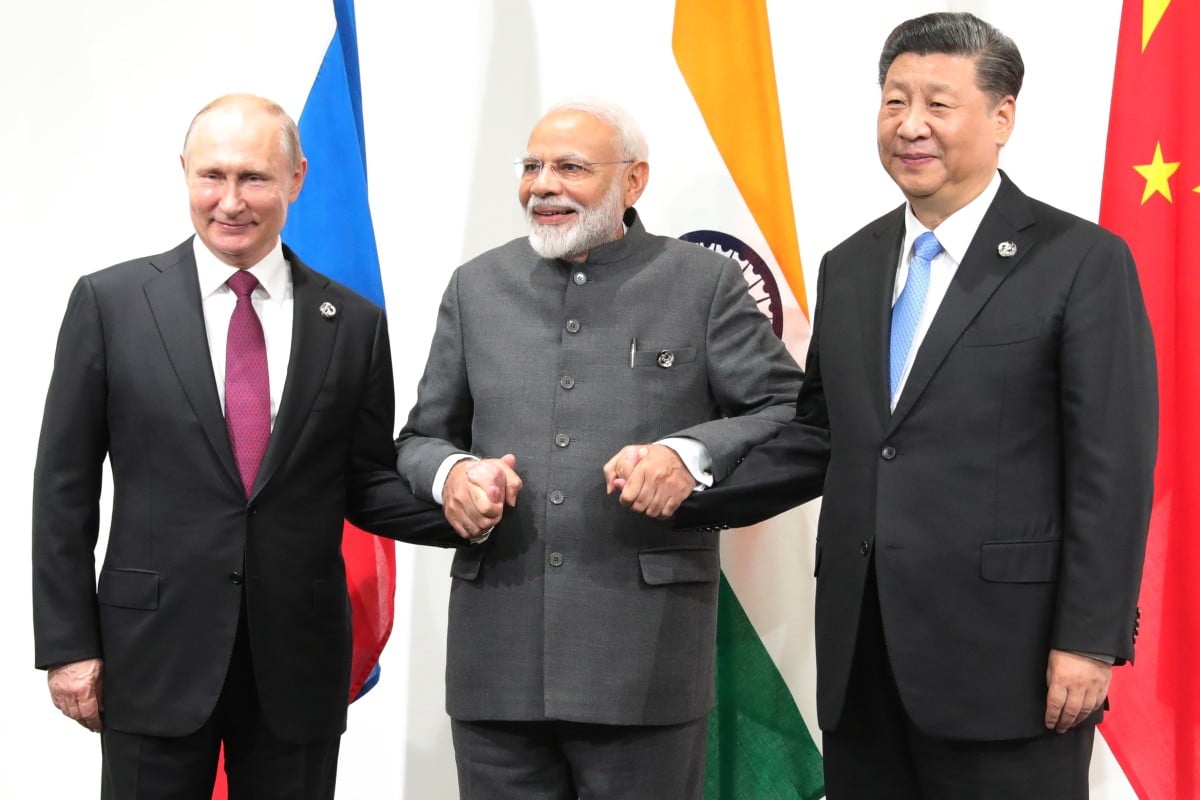
(From left) Russian President Vladimir Putin, Indian Prime Minister Narendra Modi and Chinese leader Xi Jinping meet on the sidelines of the G20 summit in Osaka, Japan, on Friday. Photo: EPA-EFE
Chinese President Xi Jinping on Friday called on the leaders of Russia and India to take “global responsibility” to safeguard the three countries’ interests and uphold multilateralism, as Beijing seeks to rally support amid its protracted trade war with Washington.
Xi made the remarks during a trilateral meeting with Vladimir Putin and Narendra Modi on the sidelines of the annual
with US President Donald Trump, seeking to reach a truce on the year-long trade conflict between the world’s two biggest economies.
“The rise of protectionism and unilateralism has severely affected global stability and economic growth, as well as the existing international order which emerging economies and developing countries have relied on,” Xi was quoted as saying by state broadcaster CCTV.
“China, Russia and India should take on global responsibility to safeguard the fundamental and long-term interests of these three countries and the world,” he said.
Xi also called for the nations to promote “a more multipolar world and the democratisation of international relations” – meaning with less reliance on a US-led world order.
During a meeting with leaders of the other BRICS countries – major emerging economies Brazil, Russia, India, China and South Africa – Xi also said Beijing opposed what it saw as “illegal and unilateral sanctions” and “long-arm jurisdiction”.
The efforts to forge closer ties among China, Russia and India come as all three nations are locked in disputes with the United States.
New Delhi, a key strategic ally in Washington’s Indo-Pacific policy to contain China’s rise, has been upset over tariffs imposed on Indian goods by the Trump administration. Meanwhile, geopolitical rivalry and the Kremlin’s alleged meddling in US elections has strained relations between Moscow and Washington.
Beneath the smiles and handshakes, tensions simmer as world leaders meet for G20
Wu Jianghao, director general of the Chinese foreign ministry’s Asian affairs department, said the trilateral meeting laid out a framework for future cooperation.
“The three countries have spoken with one voice on some major global issues, helping stability and injecting positive energy to the current international situation – which is filled with instability and uncertainties,” Wu said at a briefing on Friday.
Wu said that the leaders did not talk about Huawei Technologies or 5G networks, but that the three countries had maintained good communication on telecoms issues and would continue to cooperate.
Washington has banned US companies from selling American technology to Huawei and put pressure on its allies to block the Chinese tech firm over security concerns.
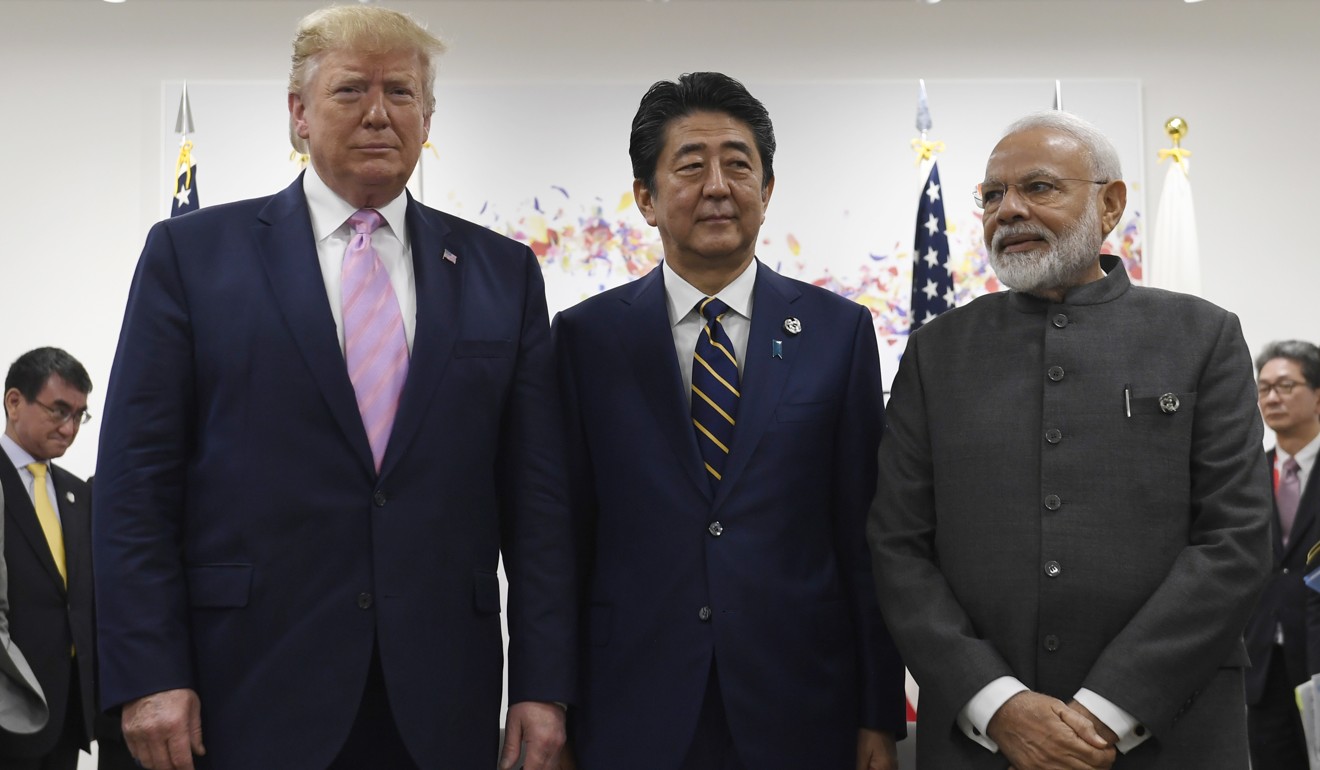
(From left) US President Donald Trump, Japanese Prime Minister Shinzo Abe and Indian Prime Minister Narendra Modi pose for a photo before their meeting. Photo: AP
Meanwhile, the United States is also seeking to build ties with India, with Trump holding trilateral talks with Modi and Japanese Prime Minister Shinzo Abe on Friday.
Indian Foreign Secretary Vijay Gokhale described that trilateral meeting as “very good”, saying it was “short but very productive”.
“The main topic of discussion was the Indo-Pacific, about how the three countries could work together in terms of connectivity, infrastructure and ensuring that peace and stability is maintained, and working together to build upon this new concept so that it would benefit the region as a whole and the three countries,” Gokhale said.
On the Modi-Trump bilateral meeting, he said the two leaders had “a very warm discussion”. They also briefly discussed 5G, with the focus on business cooperation between the two countries to leverage their technology and the potential of the Indian market, according to Gokhale.
He said the discussion of how to develop 5G networks was “in terms of business, not in terms of governments”. “It’s an exciting new area that India and the US can work together [on],” he said.
Settlements along the route linking Europe and Asia thrived by providing accommodation and services for countless traders
Formally established during the Han dynasty, it was a 19th-century German geographer who coined the term Silk Road
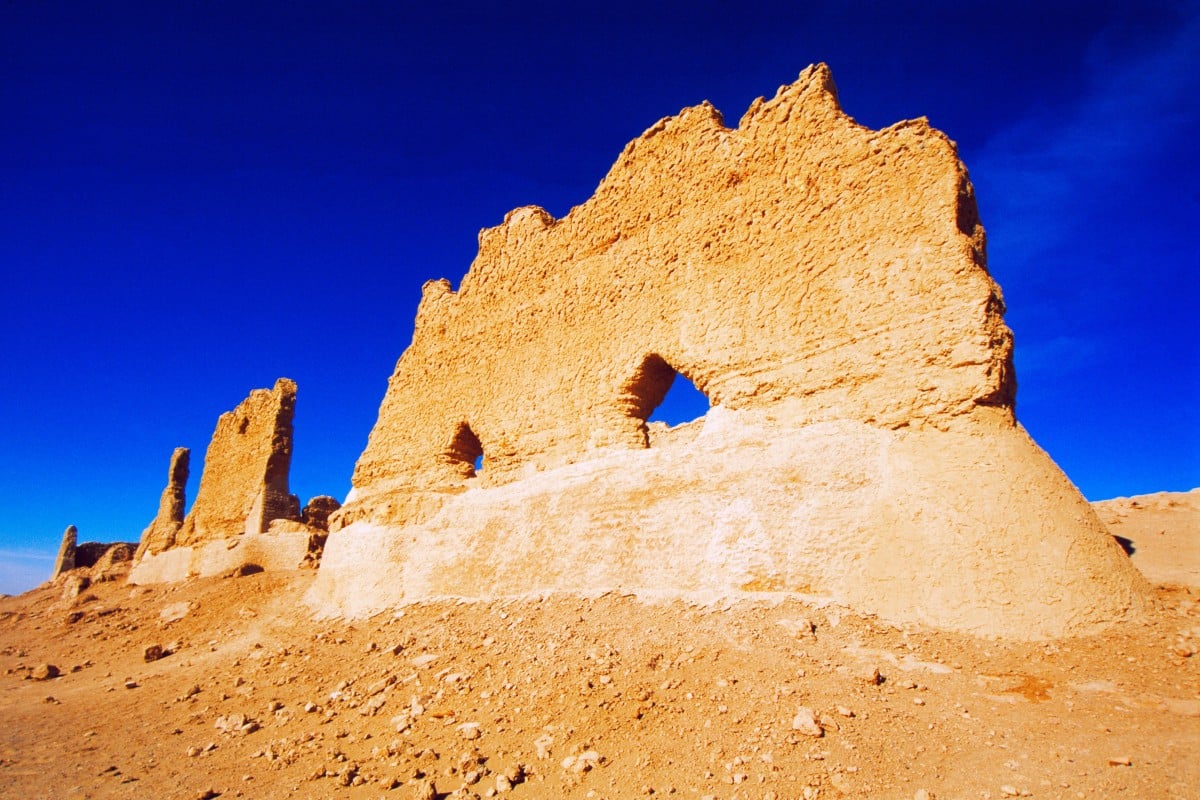
The ruins of a fortified gatehouse and customs post at Yunmenguan Pass, in China’s Gansu province. Photo: Alamy
We have a German geographer, cartographer and explorer to thank for the name of the world’s most famous network of transcontinental trade routes.
Formally established during the Han dynasty, in the first and second centuries BC, it wasn’t until 1877 that Ferdinand von Richthofen coined the term Silk Road (historians increasingly favour the collective term Silk Routes).
The movement of merchandise between China and Europe had been taking place long before the Han arrived on the scene but it was they who employed troops to keep the roads safe from marauding nomads.
Commerce flourished and goods as varied as carpets and camels, glassware and gold, spices and slaves were traded; as were horses, weapons and armour.
Merchants also moved medicines but they were no match for the bubonic plague, which worked its way west along the Silk Road before devastating huge swathes of 14th century Europe.
What follows are some of the countless kingdoms, territories, (modern-day) nations and cities that grew rich on the proceeds of trade, taxes and tolls.
China
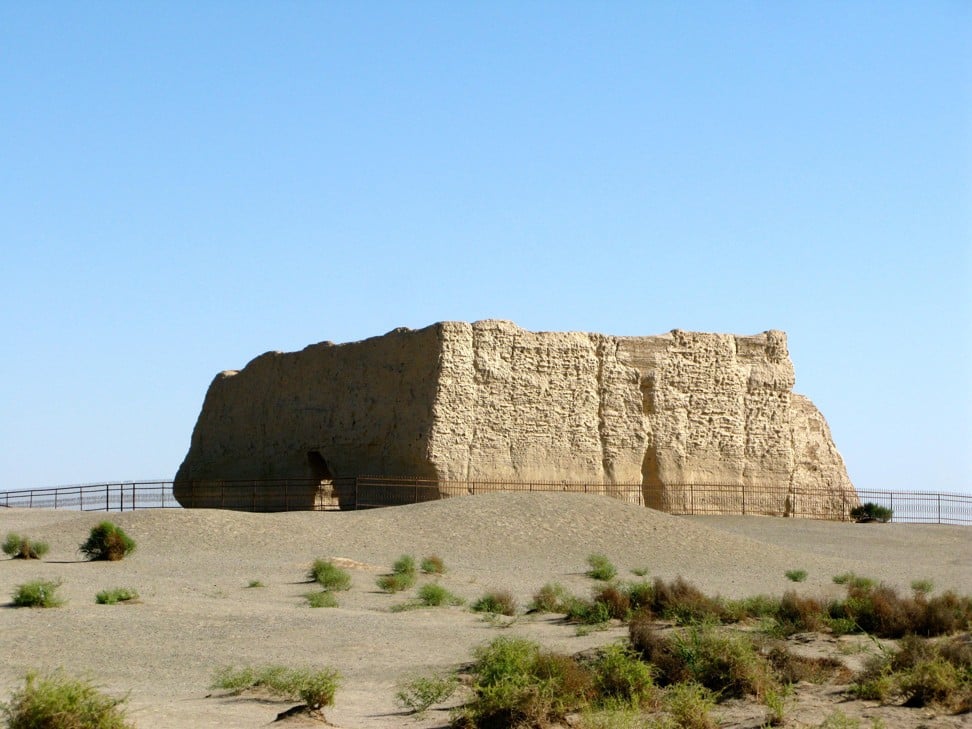
A watchtower made of rammed earth at Dunhuang, a desert outpost at the crossroads of two major Silk Road routes in China’s northwestern Gansu province. Photo: Alamy
Marco Polo worked in the Mongol capital, Khanbaliq (today’s Beijing), and was struck by the level of mercantile activity.
The Venetian gap-year pioneer wrote, “Every day more than a thousand carts loaded with silk enter the city, for a great deal of cloth of gold and silk is woven here.”
Light, easy to transport items such as paper and tea provided Silk Road traders with rich pickings, but it was China’s monopoly on the luxurious shimmering fabric that guaranteed huge profits.
So much so that sneaking silk worms out of the empire was punishable by death.
The desert outpost of Dunhuang found itself at the crossroads of two major Silk Road trade arteries, one leading west through the Pamir Mountains to Central Asia and another south to India.
Built into the Great Wall at nearby Yunmenguan are the ruins of a fortified gatehouse and customs post, which controlled the movement of Silk Road caravans.
Also near Dunhuang, the Mogao Caves contain one of the richest collections of Buddhist art treasures anywhere in the world, a legacy of the route to and from the subcontinent.
Afghanistan
Afghanistan’s mountainous terrain was an inescapable part of the Silk Road, until maritime technologies would become the area’s undoing. Photo: Shutterstock
For merchants and middlemen hauling goods through Central Asia, there was no way of bypassing the mountainous lands we know today as Afghanistan.
Evidence of trade can be traced back to long before the Silk Road – locally mined lapis lazuli stones somehow found their way to ancient Egypt, and into Tutankhamun’s funeral mask, created in 1323BC.
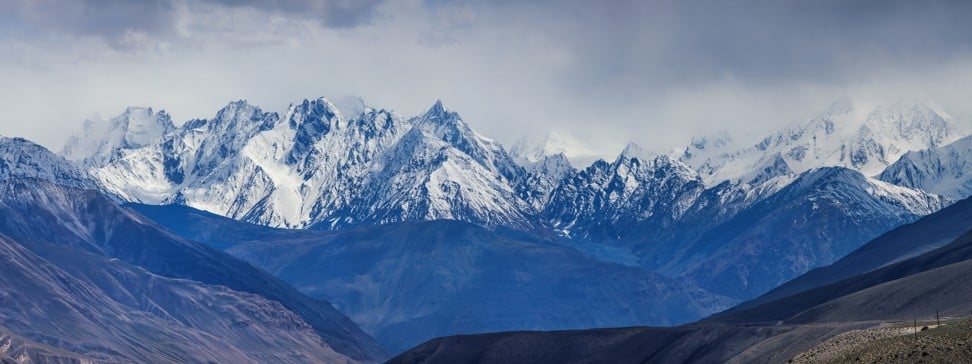
Jagged peaks, rough roads in Tajikistan, roof of the world
Besides mercantile exchange, the caravan routes were responsible for the sharing of ideas and Afghanistan was a major beneficiary. Art, philosophy, language, science, food, architecture and technology were all exchanged, along with commercial goods.
In fact, maritime technology would eventually be the area’s undoing. By the 15th century, it had become cheaper and more convenient to transport cargo by sea – a far from ideal development for a landlocked region.
Iran
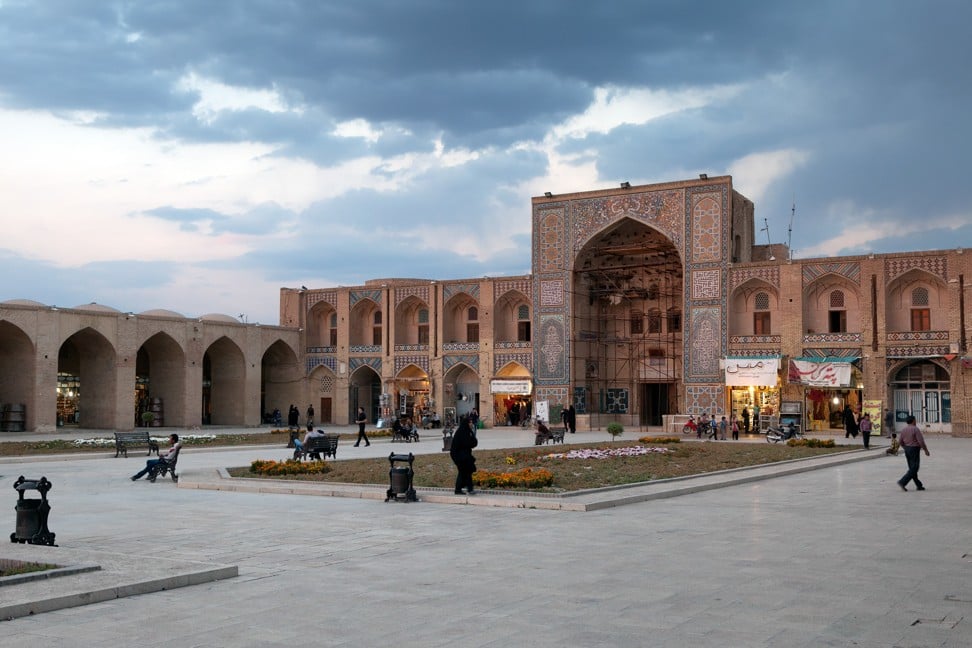
The Ganjali Khan Complex, in Iran. Photo: Shutterstock
Thanks to the Silk Road and the routes that preceded it, the northern Mesopotamian region (present-day Iran) became China’s closest trading partner. Traders rarely journeyed the entire length of the trail, however.
Merchandise was passed along by middlemen who each travelled part of the way and overnighted in caravanserai, fortified inns that provided accommodation, storerooms for goods and space for pack animals.
The good, bad and ugly sides to visiting Chernobyl and Kiev
With so many wheeler-dealers gathering in one place, the hostelries developed into ad hoc marketplaces.
Marco Polo writes of the Persian kingdom of Kerman, where craftsmen made saddles, bridles, spurs and “arms of every kind”.
Today, in the centre of Kerman, the former caravanserai building forms part of the Ganjali Khan Complex, which incorporates a bazaar, bathhouse and mosque.
Uzbekistan
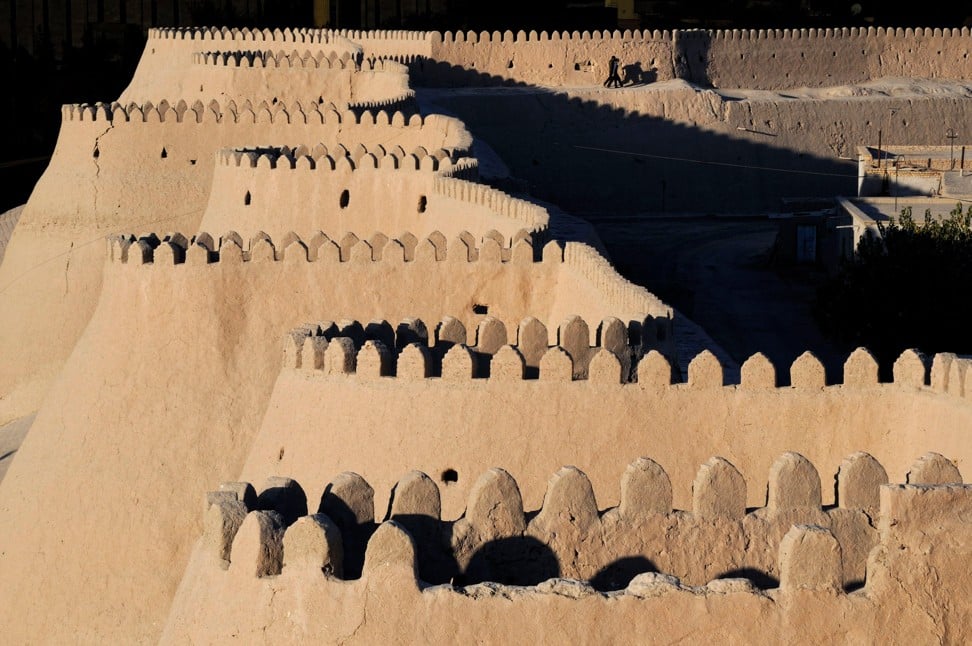
A fort in Khiva, Uzbekistan. Photo: Alamy
The double-landlocked country boasts some of the Silk Road’s most fabled destinations. Forts, such as the one still standing at Khiva, were built to protect traders from bandits; in fact, the city is so well-preserved, it is known as the Museum under the Sky.
The name Samarkand is also deeply entangled with the history of the Silk Road.
The earliest evidence of silk being used outside China can be traced to Bactria, now part of modern Uzbekistan, where four graves from around 1500BC-1200BC contained skeletons wrapped in garments made from the fabric.
Three thousand years later, silk weaving and the production and trade of textiles remain one of Samarkand’s major industries.
Georgia
A street in old town of Tbilisi, Georgia. Photo: Alamy
Security issues in Persia led to the opening up of another branch of the legendary trade route and the first caravan loaded with silk made its way across Georgia in AD568.
Marco Polo referred to the weaving of raw silk in “a very large and fine city called Tbilisi”.
Today, the capital has shaken off the Soviet shackles and is on the cusp of going viral.
Travellers lap up the city’s monasteries, walled fortresses and 1,000-year-old churches before heading up the Georgian Military Highway to stay in villages nestling in the soaring Caucasus Mountains.
Public minibuses known as marshrutka labour into the foothills and although the vehicles can get cramped and uncomfortable, they beat travelling by camel.
Jordan
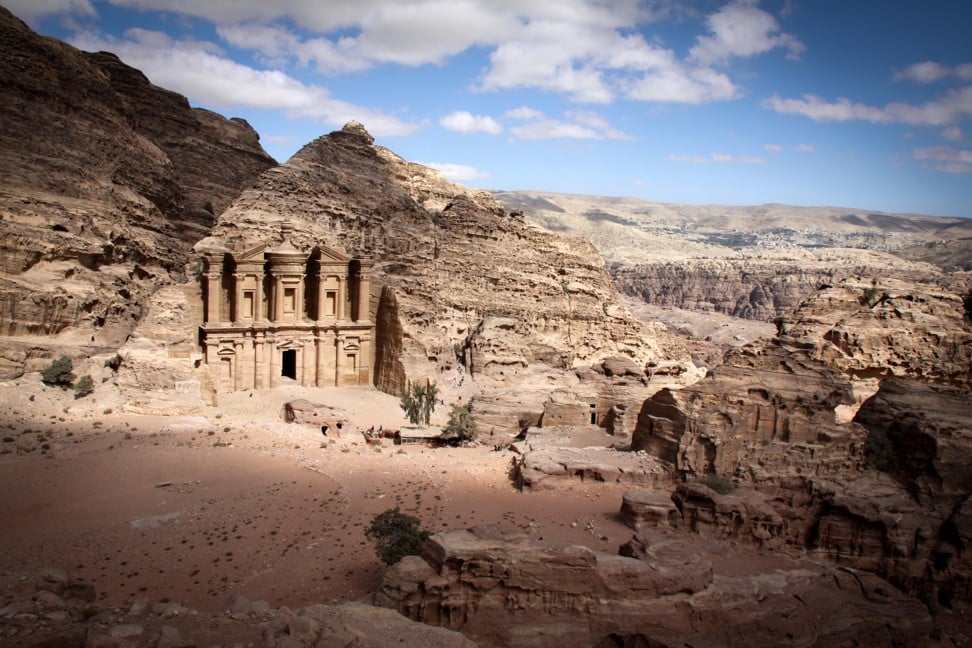
Petra, in Jordan. Photo: Alamy
The location of the Nabataean capital, Petra, wasn’t chosen by chance.
Savvy nomadic herders realised the site would make the perfect pit-stop at the confluence of several caravan trails, including a route to the north through Palmyra (in modern-day Syria), the Arabian peninsula to the south and Mediterranean ports to the west.
Huge payments in the form of taxes and protection money were collected – no wonder the most magnificent of the sandstone city’s hand-carved buildings is called the Treasury.
The Red Rose City is still a gold mine – today’s tourists pay a hefty
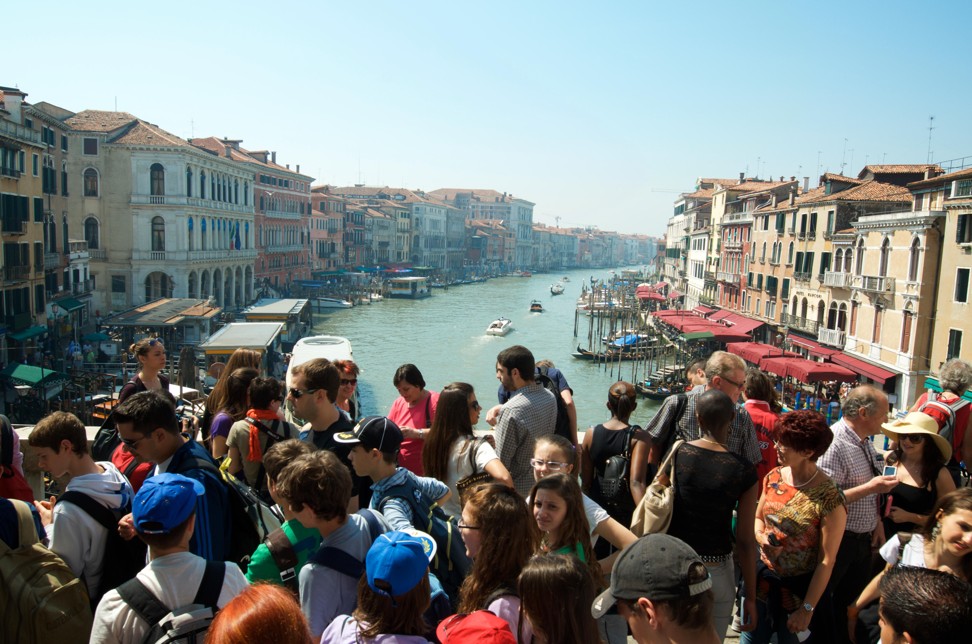
Trade enriched Venice beyond measure, helping shape the Adriatic entrepot into the floating marvel we see today.
Besides the well-documented flow of goods heading west, consignments of cotton, ivory, animal furs, grapevines and other goods passed through the strategically sited port on their way east.
Ironically, for a city built on trade and taxes, the biggest problem Venice faces today is visitors who don’t contribute enough to the local economy.
A lack of spending by millions of day-tripping tourists and cruise passengers who aren’t liable for nightly hotel taxes has prompted authorities to introduce a citywide access fee from January 2020.
Two thousand years ago, tariffs and tolls helped Venice develop and prosper. Now they’re needed to prevent its demise.
BEIJING (Reuters) – China and the rest of the world must co-exist, Vice President Wang Qishan said on Monday, in an indirect jab at the United States, with which Beijing is trying to resolve a bitter trade war.
Top representatives of the world’s two biggest economies are trying to resume talks this week to try and resolve their year-long trade dispute, which has seen the two countries place increasingly harsh tariffs on each other’s imports.
The Trump administration has accused China of engaging in unfair trade practices that discriminate against U.S. firms, forced technology transfers and intellectual property rights theft. Beijing has denied all the charges.
“China’s development can’t shut out the rest of the world. The world’s development can’t shut out China,” Wang told the World Peace Forum at Beijing’s elite Tsinghua University.
He also warned against “protectionism in the name of national security”, but without mentioning the United States, and urged major powers to make greater contributions to world peace.
China has also been angered by U.S. sanctions against tech giant Huawei Technologies Co Ltd over national security concerns, and U.S. visa curbs on its students and academics.
In his speech, Wang, who is extremely close to Chinese President Xi Jinping and rarely speaks in public, reiterated China’s commitment to opening up.
“Large countries must assume their responsibilities and set an example, make more contributions to global peace and stability, and broaden the path of joint development,” he added.
“Development is the key to resolving all issues,” Wang, who became vice president last year, after having led Xi’s fight to root out corruption, told an audience that included Western diplomats based in Beijing and former European Council President Herman Van Rompuy.
“NOT A RATIONAL ACTION”
The United States should not blame China for the problems it is facing, Vice Foreign Minister Le Yucheng told the forum later.
“Viewing China as the enemy is not a rational action,” the foreign ministry quoted him as saying, adding that China would not put up “high walls” or “decouple itself from any country”.
China has been nervous that the United States is seeking to sever, or at least severely curb, economic links, in what has been called a “decoupling”.
Tariff, trade, finance and science and technology wars are “turning back the clock on history,” Le said. “The consequences will be extremely dangerous.”
The two sides have communicated by telephone since last month’s summit of leaders of Group of 20 major nations in Japan, at which U.S. President Donald Trump and Xi agreed to relaunch stalled talks.
Talks broke down in May, after U.S. officials accused China of pulling back from commitments previously made in the text of an agreement negotiators said was nearly finished.
The countries have also been at loggerheads over issues ranging from human rights to the disputed South China Sea and U.S. support of self-ruled Taiwan, which China claims as its own.
No matter how the international situation or China developed, Vice President Wang said, the country would follow the path of peace, and not seek spheres of influence or expansion.
“If there is no peaceful, stable international environment, there will be no development to talk of.”






 CHINDIA ALERT: You'll be living in their world, very soon