Chindia Alert: You’ll be Living in their World Very Soon
aims to alert you to the threats and opportunities that China and India present. China and India require serious attention; case of ‘hidden dragon and crouching tiger’.
Without this attention, governments, businesses and, indeed, individuals may find themselves at a great disadvantage sooner rather than later.
The POSTs (front webpages) are mainly 'cuttings' from reliable sources, updated continuously.
The PAGEs (see Tabs, above) attempt to make the information more meaningful by putting some structure to the information we have researched and assembled since 2006.
Chinese President Xi Jinping, also general secretary of the Communist Party of China (CPC) Central Committee, meets with overseas Chinese representatives who are in Beijing to attend the ninth Conference for Friendship of Overseas Chinese Associations and a plenary session of the board of directors of the China Overseas Friendship Association at the Great Hall of the People in Beijing, capital of China, May 28, 2019. Other Chinese leaders including Wang Yang, a member of the Standing Committee of the Political Bureau of the CPC Central Committee and chairman of the Chinese People’s Political Consultative Conference National Committee, were also present at the meeting. (Xinhua/Li Xueren)
BEIJING, May 28 (Xinhua) — President Xi Jinping on Tuesday met with overseas Chinese representatives who are in Beijing to attend the ninth Conference for Friendship of Overseas Chinese Associations and a plenary session of the board of directors of the China Overseas Friendship Association.
On behalf of the Communist Party of China (CPC) Central Committee and the State Council, Xi, also general secretary of the CPC Central Committee, expressed a warm welcome and sincere congratulations to the representatives and extended greetings to overseas Chinese around the world.
Coordination Council for North American Affairs becomes Taiwan Council for US Affairs, island’s foreign ministry says
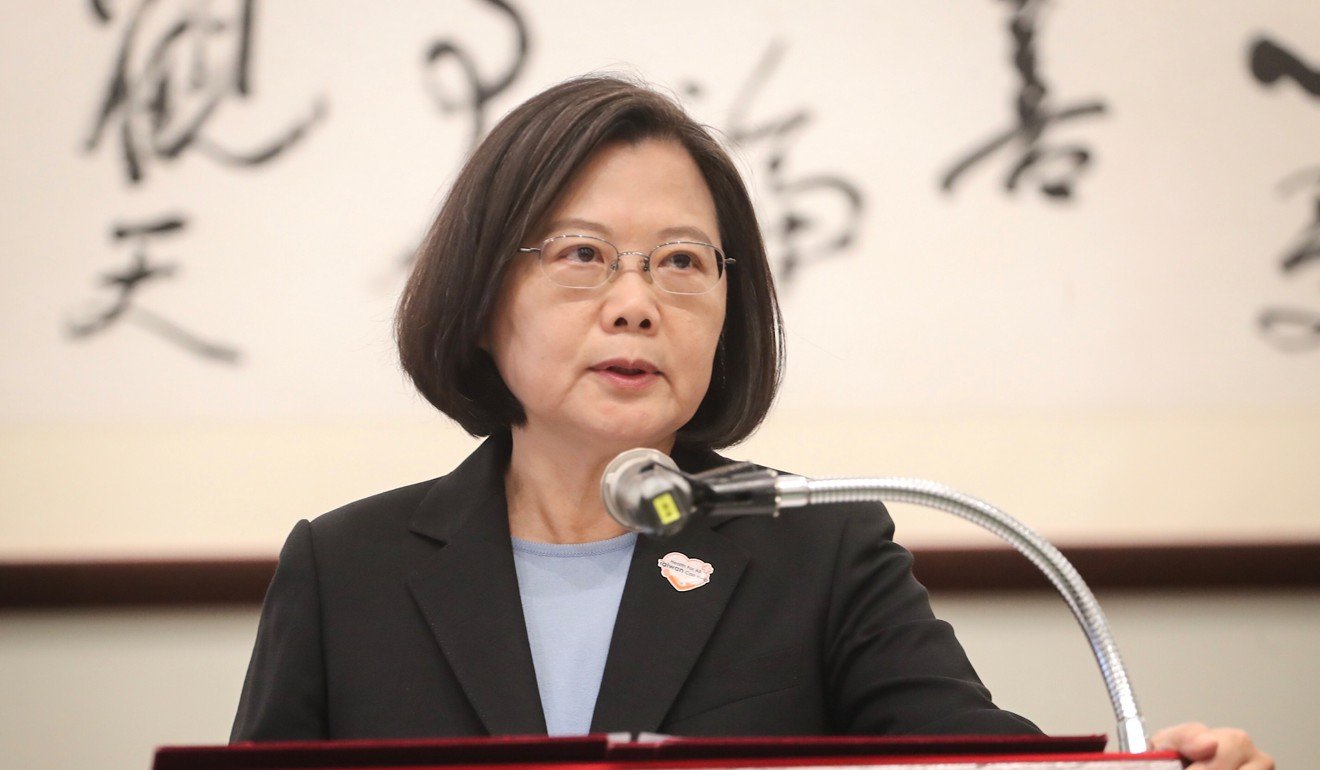
Move signifies ‘firm and close relationship between Taiwan and the US’, President Tsai Ing-wen says
Taiwan has changed the name of its de facto embassy in the United States to better reflect ever-improving ties between the sides. Photo: EPA
Taiwan has changed the name of its de facto embassy in the United States to better reflect relations between the sides, which are at their strongest in decades, Taipei said on Saturday.
Once the necessary formalities have been completed, the agency formerly known as the Coordination Council for North American Affairs will be called the Taiwan Council for US Affairs, the island’s foreign ministry said.
“The new name better reflects the [agency’s] role in coordinating US-Taiwan affairs. It also symbolises the close and amicable relations between Taiwan and the United States,” it said.
Observers said the name change was significant as it appeared to drop the pretence that the council was non-diplomatic or political in nature.
The name change was possible because of the consensus between Taiwan and the US. Photo: CNA
Although Washington severed formal diplomatic ties with Taipei in 1979 in favour of Beijing, the two sides retained unofficial relations that have grown ever-closer in recent years, including an increase in military exchanges and cooperation.
“The new name [was made possible] as a result of the consensus between Taiwan and the US,” the island’s President Tsai Ing-wen said in a Facebook post. “This is the first time the designations ‘Taiwan and the US’ have been used to refer to each other’s affairs office on an equal basis, signifying the firm and close relationship.”
Taiwan begins mass production of missile corvettes, minelayers
Taiwan had been forced to use the old title because of the “special historical background” related to the change in diplomatic allegiance 40 years ago, Tsai said.
Beijing, which considers Taiwan a wayward province awaiting reunification, by force if necessary, has demanded that Washington observe the one-China policy by not officially recognising Taiwan or allowing it to use either “Republic of China” – the island’s official name – or “Taiwan” in the title of its representative offices in the US.
Washington also enacted the Taiwan Relations Act in 1979 to prescribes relations with the island and includes a commitment to supply it with arms to protect itself.
“After continuous efforts and coordination by the two sides, and in 2019, the 40th anniversary of the Taiwan Relations Act, our office handling relations with the US is finally able to change its name,” Tsai said.
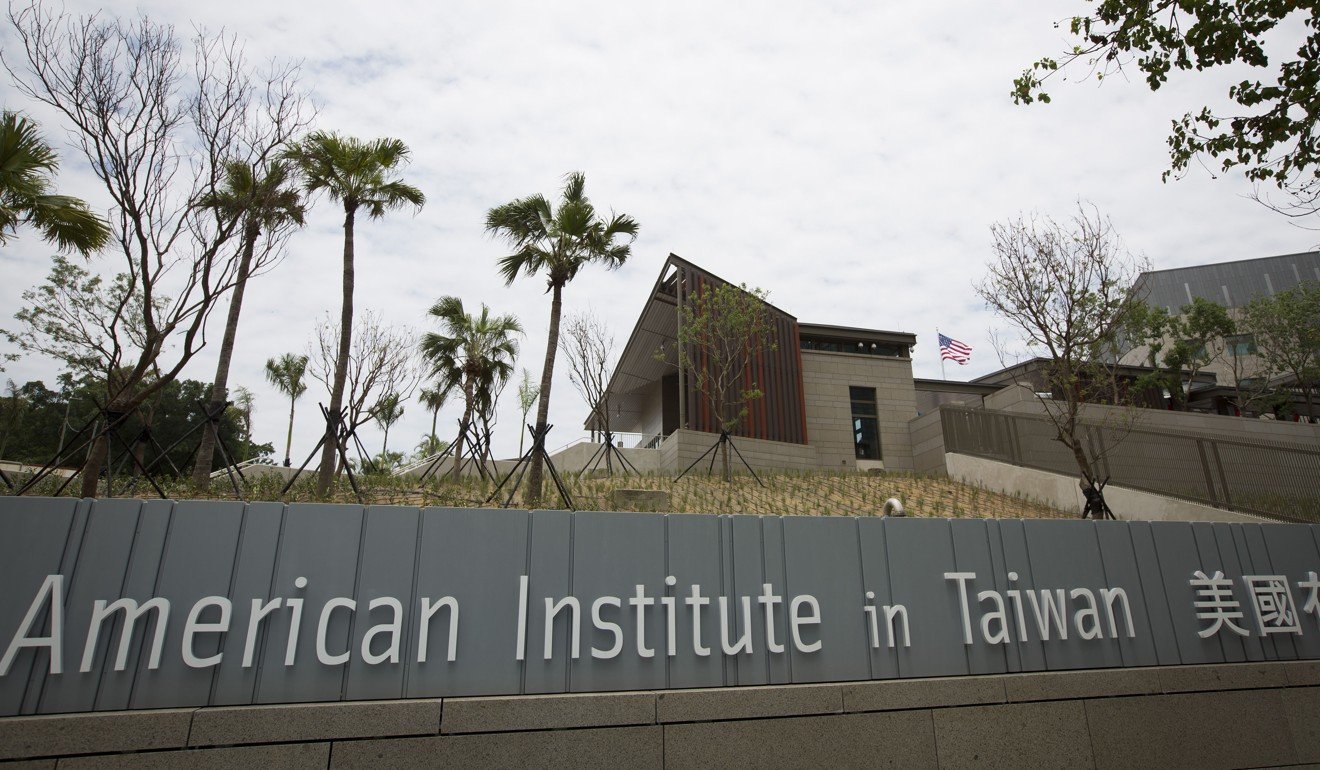
The American Institute in Taiwan relocated to a larger, purpose-built compound last month. Photo: Bloomberg
Presidential spokesman Alex Huang said the name change was due mainly to an improvement in relations between Taiwan and the US as a result of a greater cooperation on the promotion of regional peace and the Indo-Pacific security agenda.
“In the past few years, the US government has given Taiwan strong and firm support in terms of national security and participation in international events, as well as support from Congress and think tanks,” he said, referring to bills signed by US President Donald Trump that allow for exchanges between high-level officials and military personnel, and the approval of new sales of arms and logistical support to the island.
US official urges Pacific island nations to maintain diplomatic ties with Taiwan
Also, last week, Taiwan’s national security chief David Lee met US National Security Adviser John Bolton in Washington for the first talks of their kind since 1979, Taiwan’s Central News Agency reported on Saturday.
Last month, the American Institute in Taiwan – the United States’ unofficial embassy in Taipei – relocated to a significantly larger, purpose-built compound, in yet another sign of improving relations.
US support for Taiwan has increased under Trump’s leadership as he regards Beijing as a hostile competitor, not only on trade, but also in military and global influence terms.
Tensions between Taipei and Beijing have flared since Tsai became president in 2016 and refused to accept the one-China principle. The mainland subsequently halted all official exchanges with the island and embarked on a campaign to squeeze its diplomatic allies around the world.
legalisation of same-sex marriage
would get the impression this was Asia’s first taste of marriage equality. They would be quite wrong.
While Taiwan may be the first jurisdiction in Asia to legalise the modern form of same-sex marriage, such unions have been recognised across the region in various guises for centuries.
It may be true that Asia does not have a great reputation among the
community, but it does have a rich history of acceptance of sexual and gender diversity – one that has largely been forgotten.
When Europeans first encountered Chinese society, they praised many aspects of it, from its efficient government to the sophisticated lifestyles of the upper-class. But they were shocked and repulsed about one aspect of Chinese society: the “abominable vice of sodomy”.
Opinion: Three lessons for Hong Kong from Taiwan’s LGBT journey
One Portuguese Dominican friar, Gaspar da Cruz, even wrote an apocalyptic tract which portrayed China as the new Sodom – beset by earthquakes, floods, and other natural disasters due to their acceptance of that “filthy abomination, which is that they are so given to the accursed sin of unnatural vice”, that is, sodomy.
Southern China, in particular, was known for a widespread acceptance of homosexual relationships. Shen Defu, a Chinese writer during the Ming dynasty, wrote that it was common for men of all social classes in Fujian province to take male lovers. While men generally took on these lovers while maintaining respectable marriages to women, there were some men who took their lover-relationships to a quasi-marriage level. The older man would be considered qixiong (adoptive older brother) and the younger qidi(adoptive younger brother).
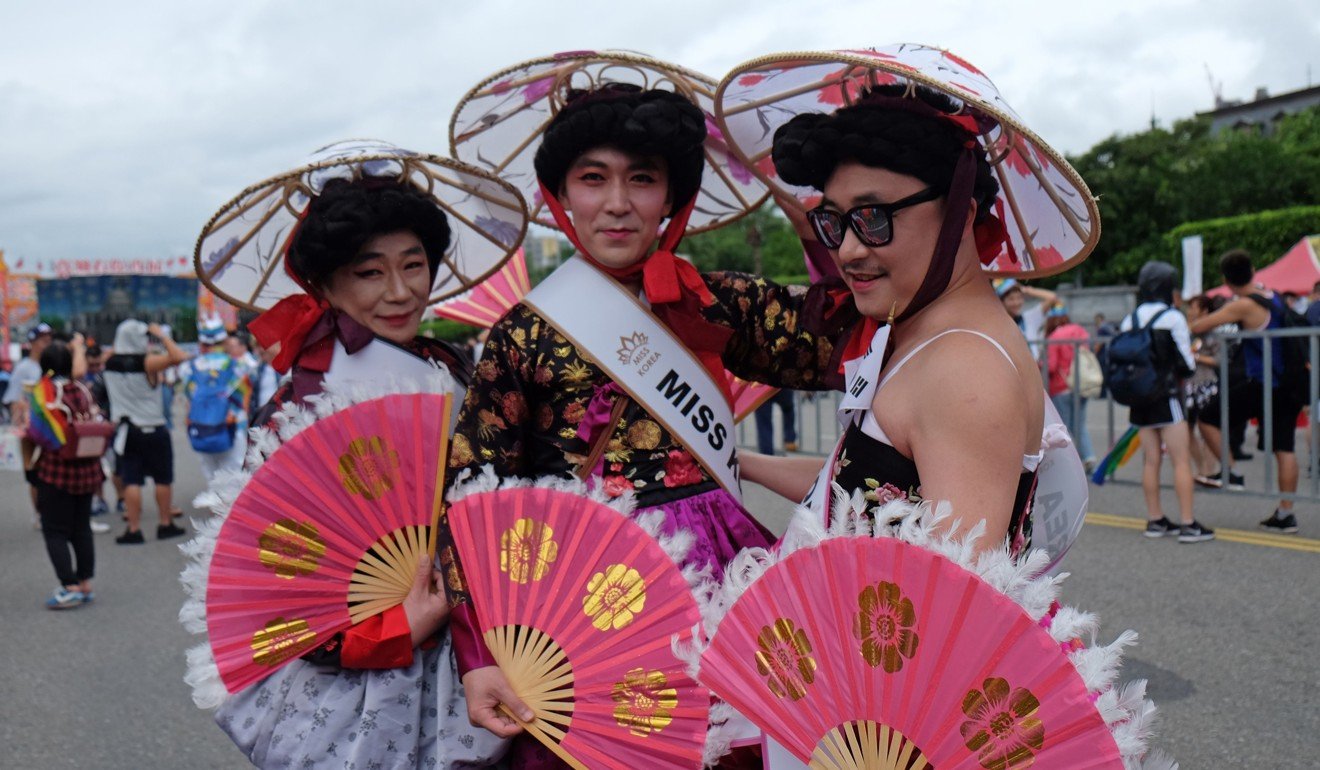
South Korean men take part in Taiwan’s annual LGBT pride parade in Taipei. Photo: AFP
Bret Hinsch, a professor of history in Taiwan, describes the ceremony based on the narration of a Chinese playwright, Li Yu (1610-1680): “Two men sacrifice a carp, a rooster, and a duck. They then exchange their exact times of birth, smear each other’s mothers with the blood of their sacrifices, and then swear eternal loyalty to one another.
The ceremony concludes with feasting on the sacrificial victims …. The younger qidi would move into the qixiong’s household. There he would be treated as a son-in-law by his husband’s parents. Throughout the marriage, many of which lasted for 20 years, the qixiong would be completely responsible for his younger husband’s upkeep.
The marriage would typically dissolve after a number of years so that the younger man could find a bride to marry to procreate and further the family lineage. The elder man was expected to pay the bride a price for the younger man.
These forms of gay “marriage” were prevalent enough in Fujian that there was even a patron deity of homosexuality, the rabbit. Many Han people from Fujian migrated to Taiwan starting in the 17th century; they now make up 80 per cent of the population.
Explained: gay rights, LGBTQ and same-sex marriage in Asia
Most literary accounts of homosexual relationships in China involve men, and there is a lively debate among scholars as to whether women enjoyed the same freedom.
Nevertheless, the most documented of female “quasi-marriages” are the “Golden Orchid Associations” in Guangdong. (Around 15 per cent of Taiwan’s population is Hakka, which historians trace specifically to Han migrants from Guangdong and surrounding areas.) The Golden Orchid Society was a movement based in Guangdong that lasted from the late Qing dynasty until the early 1900s. It provided a “sisterhood” alternative to women who did not want to get married for various reasons.
To announce her intentions, one woman would offer another gifts of peanut candy, dates and other goods. If the recipient accepted the gift, it was a signal she had accepted the proposal. They would swear an oath to one another, where sometimes one woman was designated “husband” and the other “wife”.
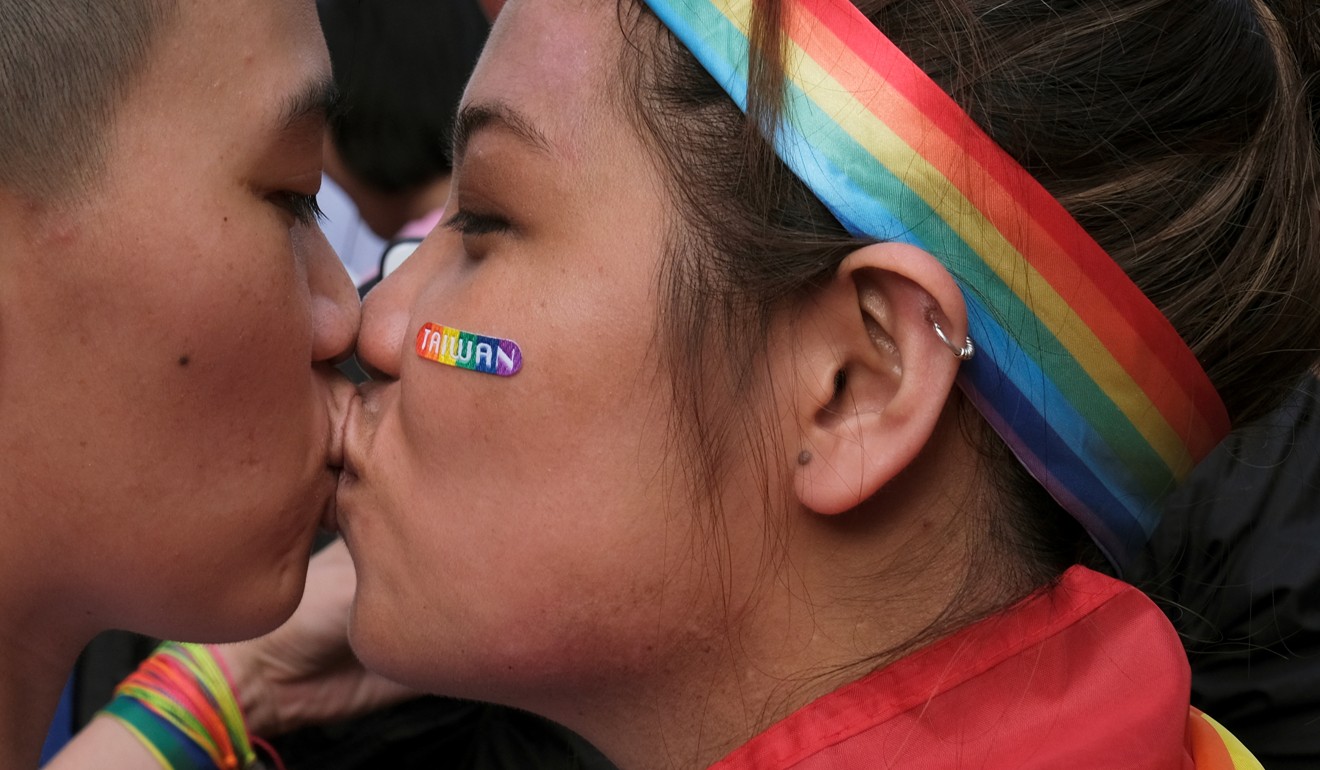
A couple kiss as they celebrate Taiwan’s legalisation of same-sex marriage. Photo: Reuters
Hinsch describes the ceremony in this way: “After an exchange of ritual gifts, the foundation of the Chinese marriage ceremony, a feast attended by female companions served to witness the marriage. These married lesbian couples could even adopt female children, who in turn could inherit family property from the couple’s parents.”
While these “marriages” are not equivalent to the same-sex marriages of today, they nevertheless are historical precedents for what is now happening in Taiwan.
And China is far from being the only country in Asia with a queer history – Southeast Asia’s LGBTQ history is even richer.
Why some members of Singapore’s LGBT community prefer life in the shadows
In the early modern period, marriages between two people of the same assigned sex but who identified as different genders, were fairly normal in many parts of Southeast Asia. We know this primarily from the records Europeans kept when they landed on Asian shores.
For instance, here is a letter by a Portuguese missionary, Antonio de Paiva, to his Catholic bishop in 1544 about his observations of the Bugis people in what is now
: “Your lordship will know that the priests of these kings are generally called bissus. They grow no hair on their beards, dress in a womanly fashion, and grow their hair long and braided; they imitate [women’s] speech because they adopt all of the female gestures and inclinations. They marry and are received, according to the custom of the land, with other common men, and they live indoors, uniting carnally in their secret places with the men whom they have for husbands …”
After this scandalised description, the author concludes with amazement that the Christian god, who had destroyed “three cities of Sodom for the same sin”, had not yet destroyed such “wanton people” who were “encircled by evil”.
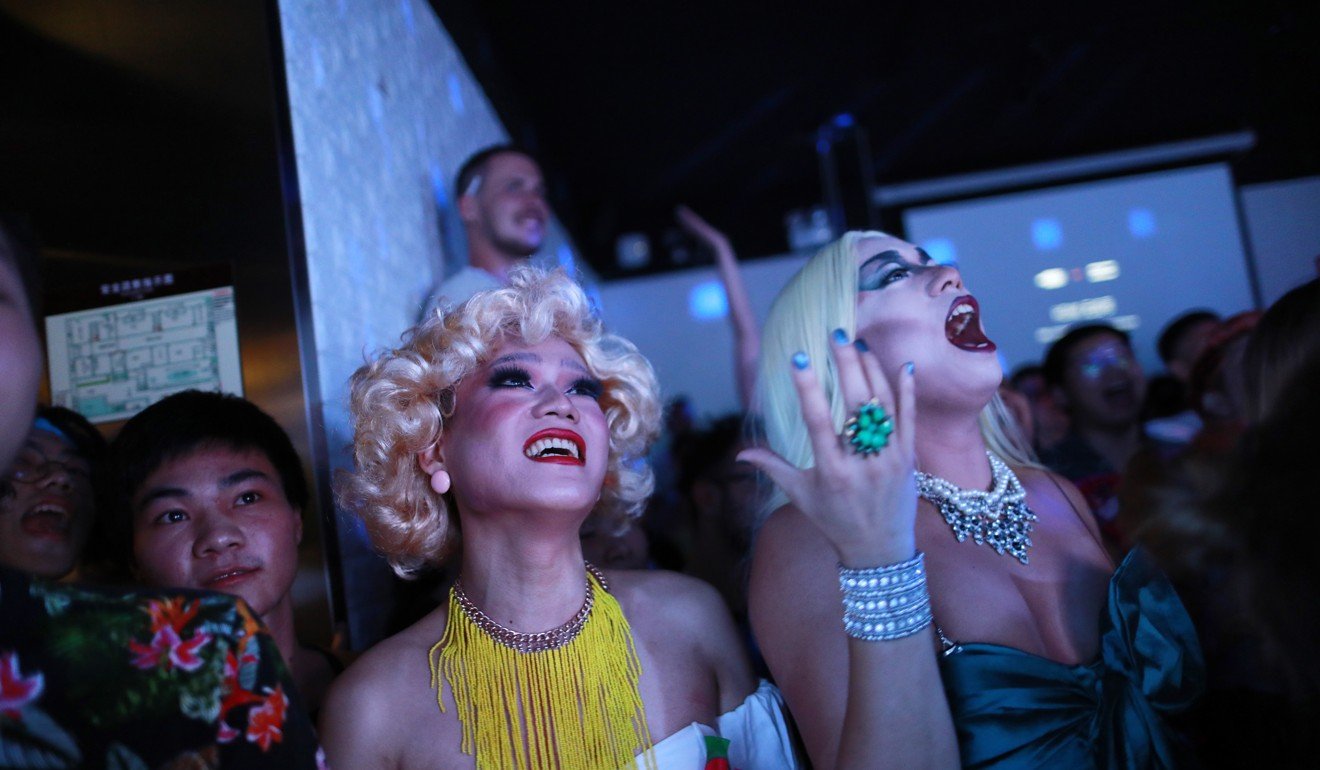
Drag queens at a gay nightclub in Beijing. Despite its reputation, Asia has a long history of accepting diversity. Photo: EPA
Dating as far back as the 13th century, bissu have traditionally served as council to kings and guarded sacred manuscripts. They are considered a fifth gender within the Bugis’ gender-system: oroané (male men), makkunrai (female women), calabai (male women), calalai (female men), and bissu, who were neither male nor female (or both).
Brunei’s LGBT residents face up to new death by stoning law against gay sex
Today, their ranks have thinned – in one area, the population has dwindled to just six people – but the tradition remains, and they still perform important blessings. Contemporary bissu are typically male-bodied individuals who adopt feminine and masculine elements in their appearance. Although in the past bissu were married men, today they are required to be celibate.
In pre-Islamic Bugis culture, bissu were accorded priestly honours and tasked with mediating between the gods and people precisely because of, not in spite of, their gender. According to professor Halilintar Lathier, an Indonesian anthropologist, Bugis culture “perceived the upper world as male and this world as female, and therefore only a meta-gender would be able to become an intermediary”.
This pattern of a “gender-expansive” priest able to marry others of the same sex recurs throughout Southeast Asia.
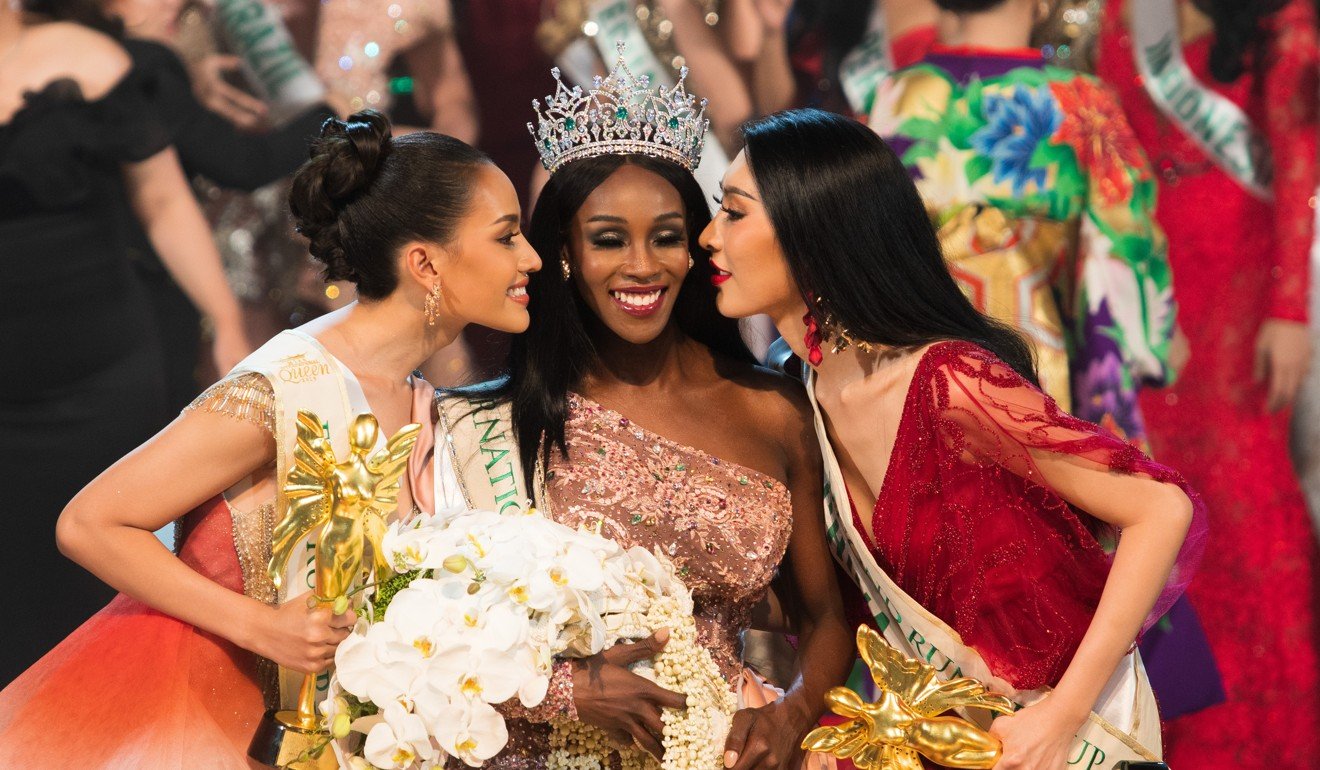
A transgender beauty contest in Pattaya, Thailand. Despite its reputation, Asia has a long history of accepting diversity. Photo: Handout
To the west of South Sulawesi is Borneo, a large island that contains all of Brunei and parts of Indonesia and
. Borneo is home to many indigenous communities, including the Iban. The Iban historically respected manang bali, who were typically male-bodied shamans who adopted feminine dress and demeanour, and who took men as their husbands. Manang bali were mediators and held roles of great ritual importance; they were typically wealthy village chiefs known for their healing arts.
West of Borneo is the Malay Peninsula, where there are records from the Malay Annals and Misa Melayu dating as far back as the 15th century about priests, called sida-sida, who served in the palaces of the Malay sultans. They were responsible for safeguarding women in the palace as well as the food and clothing of royalty, and overseeing ritual protocol. The sida-sida undertook “androgynous behaviour” such as wearing women’s clothing and doing women’s tasks. A Malay anthropologist in the 1950s, Shamsul A.B., recalls seeing male-bodied sida-sida in the royal palace in his childhood, who were believed by the population to either be celibate and asexual, or attracted to men. Michael Peletz, an anthropologist and author of Gender Pluralism in Southeast Asia, notes that based on the evidence, it is “highly likely” that sida-sida involved both male- and female-bodied people who were involved in transgender practices, and who engaged in sexual relationships with people of the same and opposite sex.
How a gay student’s suicide is helping Japan’s LGBT community speak up
, where pre-colonial communities were religiously led by babylan: women healers and shamans who were responsible for mediating between the gods and people. Male-bodied people (asog, bayog), sometimes considered a third sex, could also hold these roles so long as they comported themselves like women. A 16th century Spanish Catholic manuscript records asog in the following manner:
“Ordinarily they dress as women, act like prudes and are so effeminate that one who does not know them would believe they are women … they marry other males and sleep with them as man and wife and have carnal knowledge.”
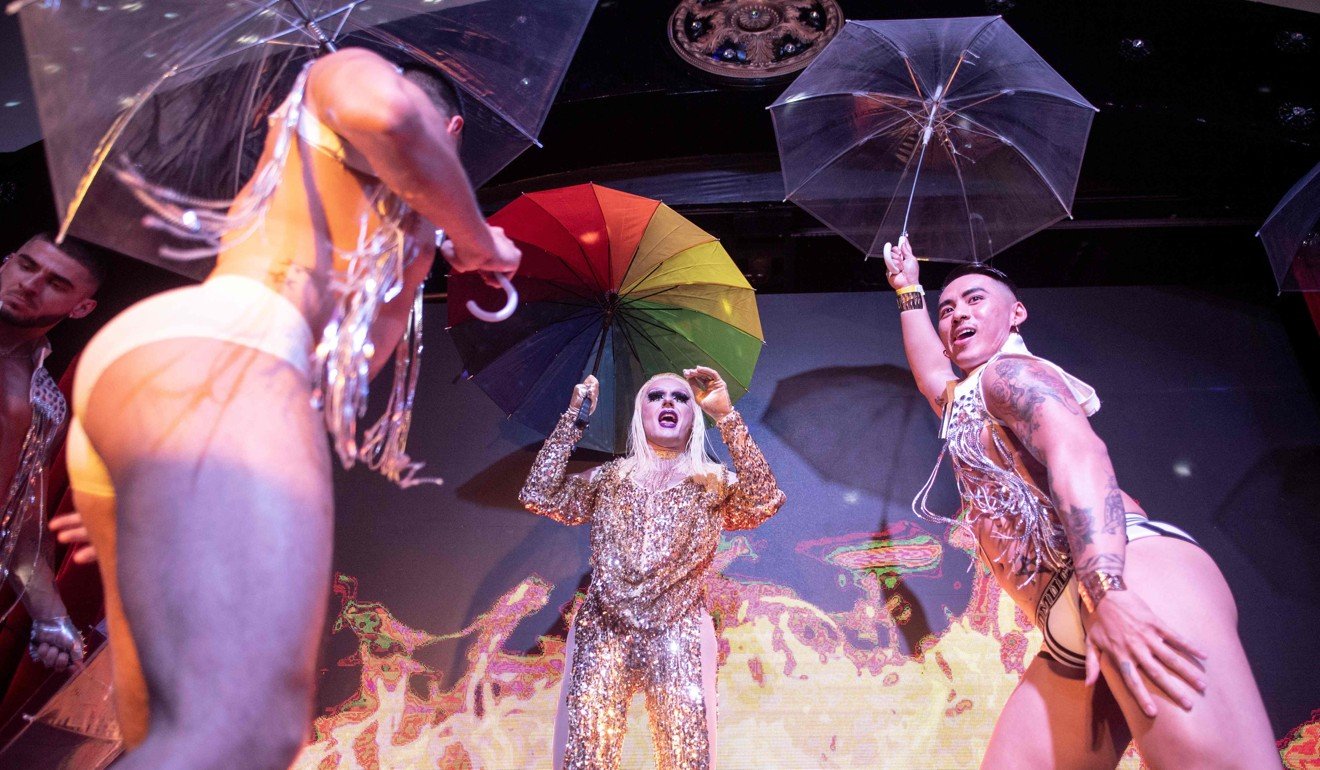
Dancers perform at the Shanghai PRIDE opening party. Despite its reputation, Asia has a long history of accepting diversity. Photo: AFP
The Spanish priests saw these asog as “devil-possessed”, particularly because they habitually practised “sodomy” among one another. Due to the Chinese reputation for homosexuality and various Sinophobic attitudes, some even attributed the prevalence of sodomy to the Chinese, whom they said had “infected the natives” and introduced the curse to the “Indians”, although there is no evidence of this.
COLONIAL CURVEBALL
Although these examples relate to the religious arena, anthropologists believe the respect accorded to these ritual specialists were an indicator of a wider societal acceptance of gender and sexual diversity in Southeast Asia – an acceptance that began to be eroded through the introduction of world religions (particularly Christianity), modernity, and colonialism. For example, in Malaysia, Brunei,
, Myanmar and throughout the commonwealth, the British enforced a penal code that legislated against sodomy. More than half of the countries that currently legally prohibit sodomy do so based on laws created by the British.
On gay sex, India has assumed an ancient position. Read the kama sutra
Similarly, after the Chinese were defeated by Western and Japanese imperialists, many Chinese progressives in the early 20th century sought to modernise China, which meant adopting “modern” Western ideas of dress, relationships, science and sexuality.
Concubinage was outlawed, prostitution was frowned upon, and women’s feet were unbound. It also meant importing European scientific understandings of homosexuality as an inverted or perverted pathology. These “scientific ideas” were debunked in the 1960s in the West, but lived on in China, frozen in time, and have only recently begun to thaw with the rise of LGBTQ activists in Asia.
A recent headline on the news from Taiwan read: “First in Asia: marriage equality comes to Taiwan”, as if the recent bill was an unprecedented “first” for Asia and that marriage equality – which, presumably, the headline writer associates with the West – has finally reached Asian shores.
But when we zoom out historically, it is evident that what happened in Taiwan is not so much a novel “breakthrough” for Asia. It is more a reconnection to its queer Chinese and Asian heritage, as well as a rejection of outdated Western ideas that it once adopted.
There is still much more work to be done to advance LGBT rights in Taiwan and the rest of Asia, but perhaps looking backwards in time can help us move forward.
Tsai meets leaders of 1989 pro-democracy movement to bolster credentials for protecting island’s democracy
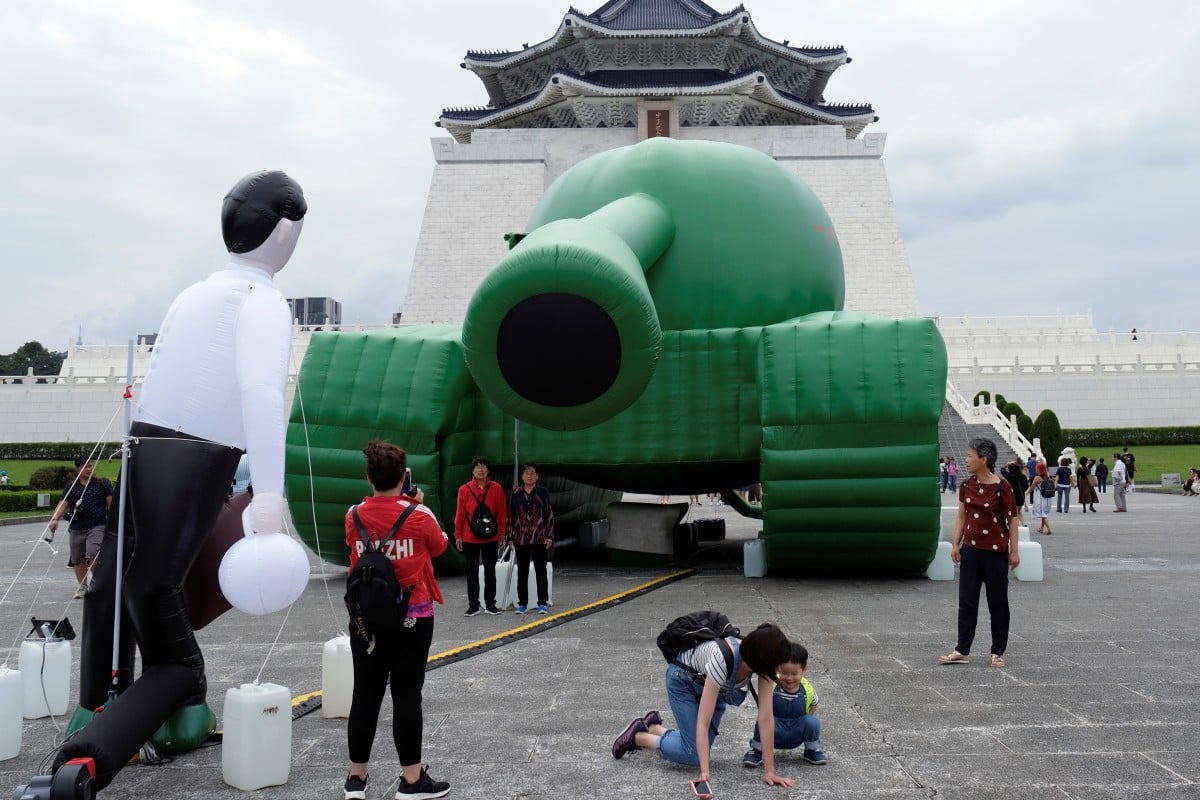
An installation recreating the celebrated Tank Man photograph in Taipei’s liberty square. Photo: Reuters
Taiwanese President Tsai Ing-wen met a group of exiled Tiananmen protesters on Thursday, a move that further burnishes her credentials for standing up to Beijing.
She said the bloody crackdown on the student protesters in 1989 should remind Taiwan that it must firmly reject the “one country, two systems” formula put forward by Beijing for reunification to safeguard its sovereignty, freedom and democracy.
“We don’t want to mislead the other side into making a wrong judgment nor do we want to let down those who support democracy and freedom as a result of an ambiguous answer by a Taiwanese president,” Tsai told her visitors.
“There is no room for ambiguity or dodging when the ‘one country, two systems’ proposal was raised, and we must clearly state that this is not a proposal that we, who have enjoyed freedom, democracy and human rights, could accept.”
The group of mainland émigrés included former Tiananmen student leaders such as Wang Dan, Wang Juntao, Deng Biao, Zhou Fengsuo and Fang Zheng, who were visiting Taiwan for a three-day international forum held to mark the 30th anniversary of the crackdown.
At the start of the year Chinese President Xi Jinping proposed that the two sides should start cross-strait unification talks under the one country, two systems model used to reunite Hong Kong and Macau with the mainland – a model that Tsai flatly rejected saying the two cities had no real autonomy.
In a statement issued by the presidential office, Tsai also noted the different course Taiwan and mainland China had taken over the past 30 years, with the island developing a fully fledged democracy while Beijing has tightened its curbs on freedom of speech.
She also accused Beijing of infiltrating free societies and undermining others’ freedoms using disinformation or hi-tech and commercial weapons.
Taiwanese President Tsai Ing-wen says the 1989 killings highlight the importance of standing up to Beijing. Photo: EPA-EFE
In the meeting, Tsai sharply criticised Chinese Communist leaders for suppressing the pro-democracy student movement in 1989 and failing to restore the activists’ rights.
Teng Biao, one of the visitors, said it was the first time Tsai had set up a meeting with so many pro-democracy activists.
Despite her sharply worded comments, Tsai and her independence-leaning Democratic Progressive Party have generally kept their distance from the Tiananmen exiles, some of whom support cross-strait unification.
Since the DPP’s first election victory in 2000, increasing numbers of people on the island have identified themselves primarily or exclusively as Taiwanese rather than Chinese, and events to mark the 1989 crackdown have dwindled.
On the 20th anniversary of the June 4 killing more than 200,000 people took part in a memorial event in Hong Kong, a sharp contrast to the handful of people who marked the event in Taiwan.
“I guess that might be because we no long cared that much about the [1989] incident over the years. June 4 is just a symbol we use to justify our push for further democracy in Taiwan,” said Chen Wei-ting, a former leader of the Sunflower movement that formed in 2014 to protest against a cross-strait trade deal with the mainland.
Analysts said Tsai hoped the Tiananmen anniversary would remind people of the need to reject the mainland’s overtures to protect Taiwan’s hard-won democracy.
“By reiterating her stand against one country, two systems, Tsai has built up her image as being the leader who is willing to defend Taiwan’s sovereignty despite mounting pressure from Beijing,” said Wang Kung-yi, a professor of political science at Chinese Culture University in Taipei.
Tsai, who is running for a second four-year term in January, has seen her approval rating rebound recently to around 40 per cent from a low of 20 per cent after the DPP’s humiliating defeat in last year’s local government elections.
The mainland-friendly Kuomintang made a string of gains at the DPP’s expense to punish it for unpopular labour and pension reforms and the economy’s poor performance.
President Tsai Ing-wen says Taipei should ‘maintain a high degree of vigilance’
Exercise simulates response to attack from mainland on military bases
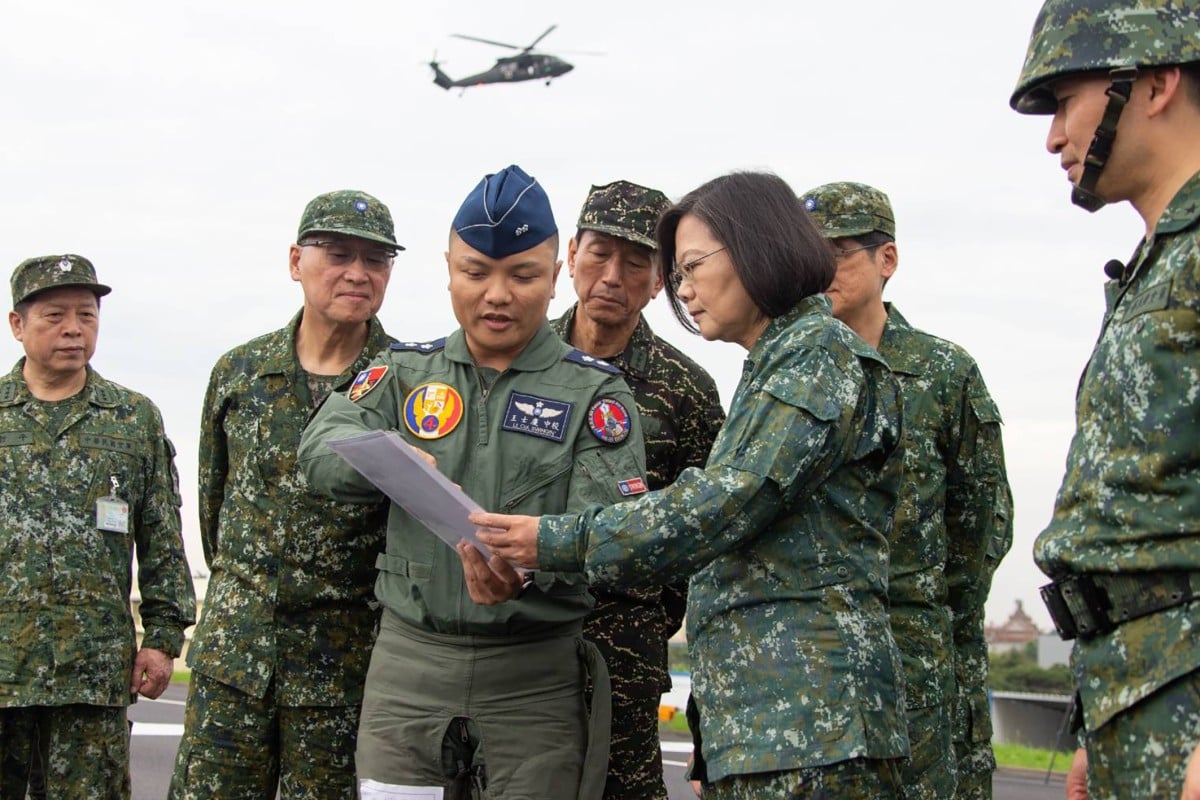
President Tsai Ing-wen and senior Taiwanese military staff during an exercise in southern county Changhua, not far from one of the island’s main airbases at Taichung. Photo: Facebook
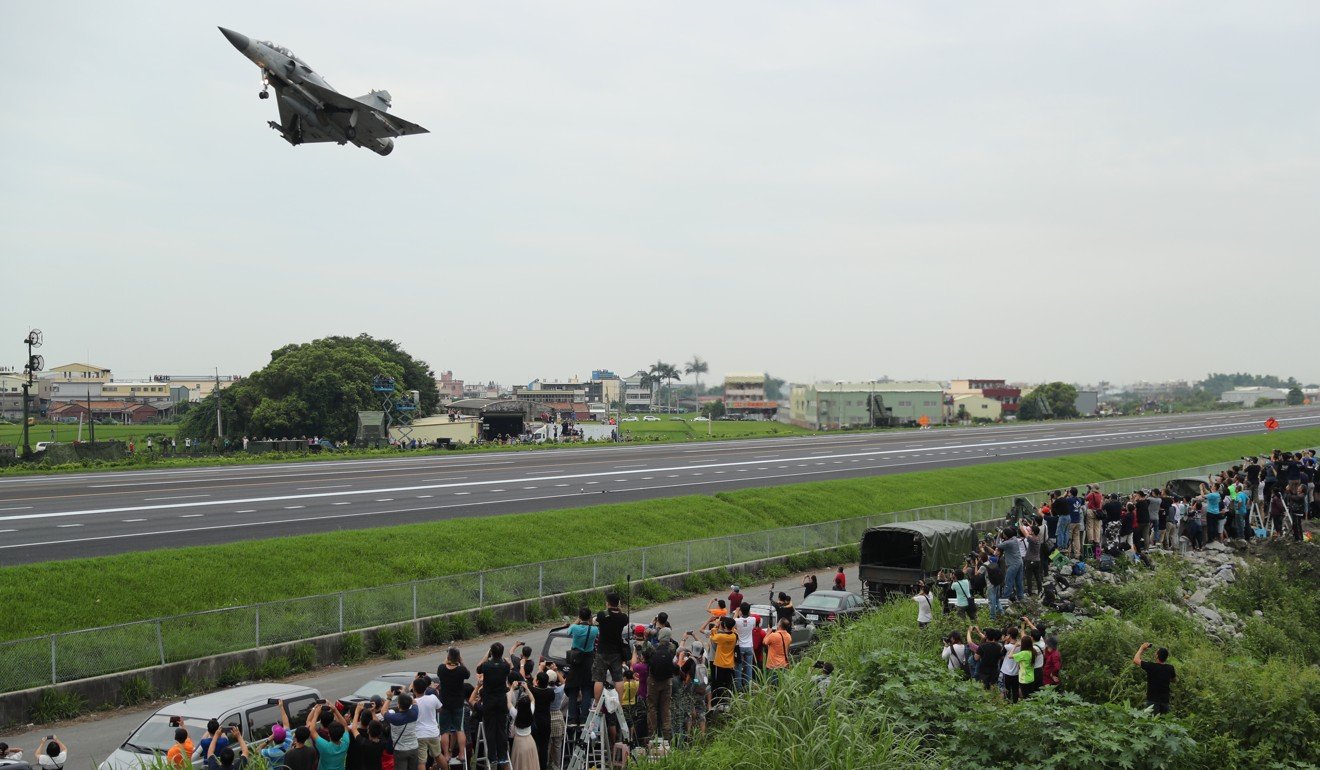
Taiwanese warplanes landed on a highway on Tuesday as part of annual exercises designed to test the island’s military capabilities and resolve to repel an attack from the mainland across the Taiwan Strait.
President Tsai Ing-wen watched the exercise in the southern county of Changhua, not far from one of Taiwan’s main airbases at Taichung.
“Our national security has faced multiple challenges,” Tsai said. “Whether it is the Chinese Communist Party’s [People’s Liberation Army] long-distance training or its fighter jets circling Taiwan, it has posed a certain degree of threat to regional peace and stability.
“We should maintain a high degree of vigilance,” she said.
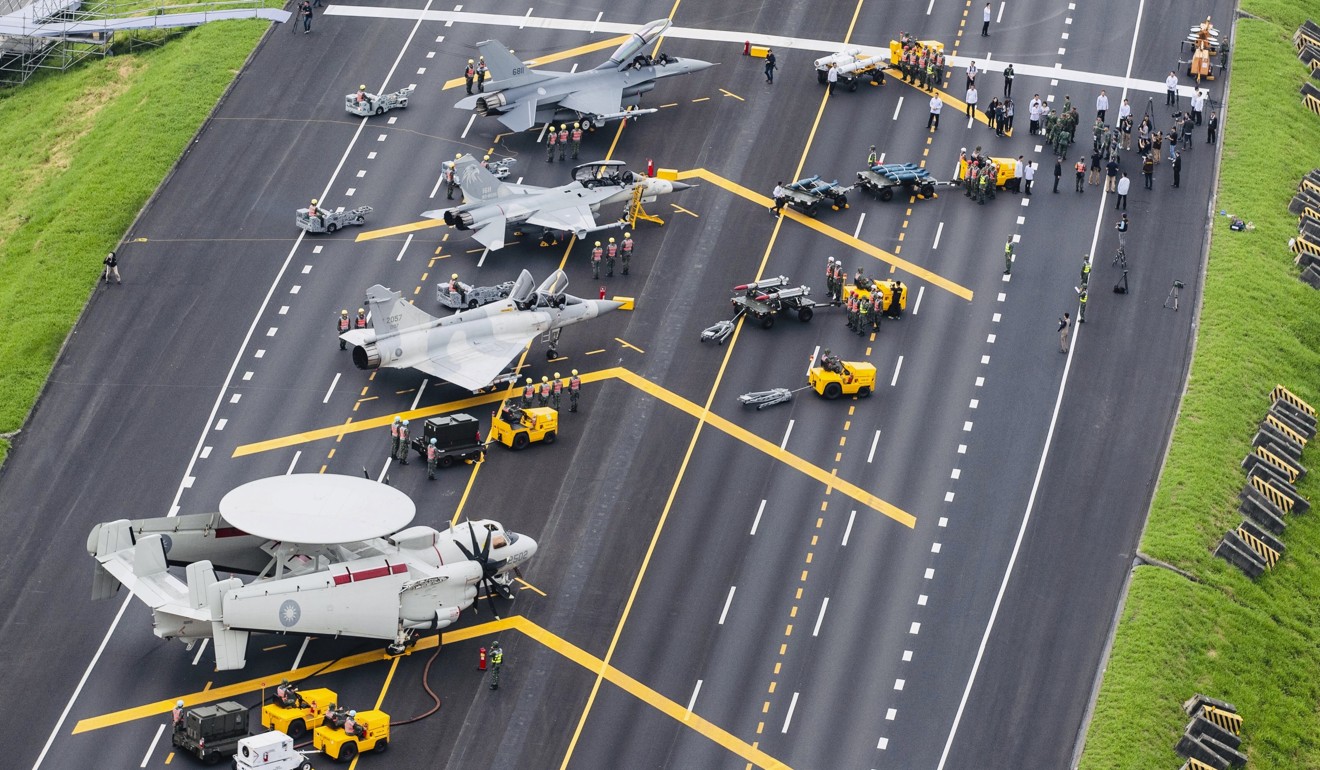
Taiwanese warplanes are parked on a highway during an exercise to simulate a response to a mainland attack on its airfields in Changhua. Photo: AP
Aircraft involved in the exercise included US-made F-16 Fighting Falcons, French Mirage 2000s, Taiwan-made IDF fighter jets and US-built Northrop Grumman E-2 Hawkeye surveillance aircraft.
Ground crews practised refuelling and ammunition replenishment before the aircraft returned to the air. About 1,600 service personnel were mobilised in Tuesday’s exercise.
The event marked the exercise debut of the first F-16 upgraded to the V variant, featuring advanced radar and combat capabilities. Taiwan is spending about US$4.21 billion to upgrade 144 F-16As and Bs to the F-16V version.
Rare meeting between Taiwanese, US security officials angers Beijing
Taiwan buys military hardware mainly from the US and has asked to purchase new F-16V fighters and M1 Abrams tanks.
American arms sales to Taiwan have long been a thorn in the side of US relations with China, routinely drawing protests from Beijing that Washington had reneged on commitments.
Beijing has also been angered by warming relations between Taipei and Washington since Tsai came to power in 2016.
On Monday, Beijing reacted frostily to photos showing a rare meeting between uniformed Taiwanese officers and their US counterparts this month.
A Mirage 2000-5 fighter jet takes off from a highway during an emergency take-off and landing drill in Changhua, Taiwan. Photo: EPA
Last week, Beijing lodged a protest with Washington after two US warships sailed through the Taiwan Strait.
Taiwan expected to be outgunned in terms of troop numbers and firepower in any war with mainland China but it claimed to have had developed sophisticated asymmetric warfare tactics to make any invasion costly for Beijing.
“There are only a few military airbases which would become the prime targets in the event of an attack. The highway drill is necessary as highway strips would be our priority choice if the runways were damaged during a war,” air force Colonel Shu Kuo-mao.
Taiwan changes name of de facto embassy in United States to ‘reflect stronger ties’
Taiwan’s Central News Agency said highway take-off and landing drills last took place in 2014. A military source told CNA that Tuesday’s drill was not much different from those conducted by the military during the Han Kuang exercises, but it was still challenging.
Among the challenges were that the drill could not be rehearsed and it required clear communications between the military, police and the National Freeway Bureau, said the source.
BEIJING, May 25 (Xinhua) — China’s service trade with countries and regions along the Belt and Road (B&R) reached over 120 billion U.S. dollars last year, according to the Ministry of Commerce (MOC).
In 2018, the import-export volume of the service trade between China and Belt and Road countries and regions amounted to 121.7 billion U.S. dollars, accounting for 15.4 percent of China’s service trade, said Wang Bingnan, vice minister of the MOC.
China has been the world’s second-largest country in service trade for five consecutive years, with the total volume reaching 5.24 trillion yuan (759 billion U.S. dollars) in 2018, up 11.5 percent year on year, MOC data showed.
The share of service trade in China’s total foreign trade went up from 11.1 percent in 2012 to 14.7 percent in 2018, according to the MOC.
China has established bilateral cooperation mechanisms on service trade with 14 countries, endowing the country with a more diversified service trade market, said Wang.
The 2019 China International Fair for Trade in Services will open on May 28 in Beijing and last for five days, attracting 130 countries and regions and 21 international organizations.
Among the delegations, 98 come from the Belt and Road Initiative partner countries. A series of themed activities will be held during the fair, including forums on service trade cooperation.
Self-ruled island cannot match Beijing’s spending, but innovation can help it succeed in a one-sided military conflict, observers say
First of Tuo Jiang-class stealth warships expected to be ready by 2021
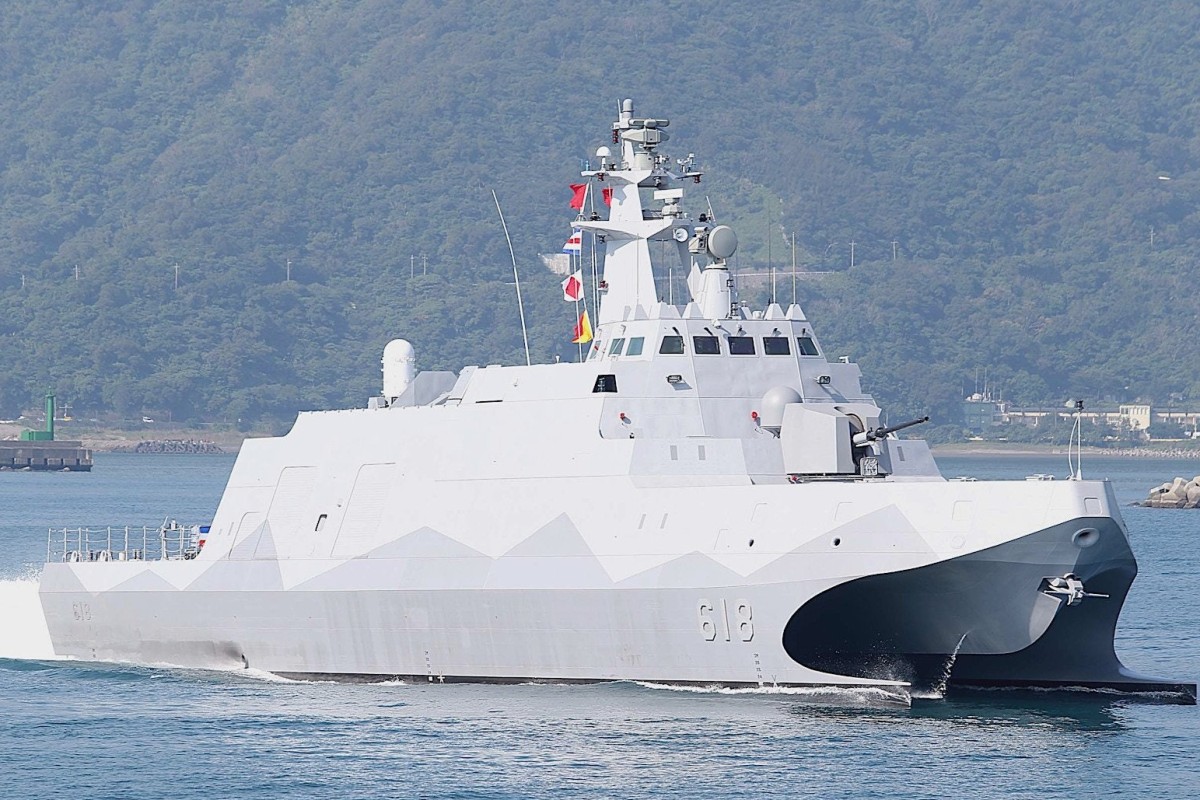
Taiwan began mass production of its Tuo Jiang-class missile corvettes on Friday.
Taiwan has begun mass production of its home-grown Tuo Jiang-class missile corvettes and high-speed minelayers as it seeks to shore up its naval forces amid rising hostility from Beijing.
Dubbed the “aircraft carrier killer”, the small but powerful corvette, which has a displacement of 680 tonnes and a top speed of 45 knots, is a state-of-the-art stealth warship built by Lung Teh Shipbuilding.
A total of three corvettes will be built under the NT$31.6 billion (US$1 billion) Hsun Hai project, the self-ruled island’s navy said.
The warship is equipped with one of the world’s most technologically advanced computer systems and built partly with high-entropy metal alloys for extra strength and durability, it said. Its stealth technology and low radar cross section makes the ship virtually invisible at sea and even more obscure when operating close to the coastline.
Armed with eight subsonic Hsiung Feng II and eight supersonic Hisung Feng III anti-ship missile launchers, the corvettes are intended to take over many of the missions currently undertaken by larger, less manoeuvrable and more expensive frigates and destroyers, the navy said.
In the event of an actual armed conflict with Beijing, the warships would also boost Taiwan’s ability to counter a much larger and better equipped rival, a concept known as asymmetric warfare.
Taiwan simulates repelling invasion as Beijing threat persists
In a ceremony on Friday at Lung Teh’s shipyard in Suao, Yilan county, to mark the start of mass production, Taiwanese President Tsai Ing-wen said the move was made possible after the navy succeeded in overcoming a number of design and technological issues regarding the warship, an earlier version of which she boarded soon after becoming the island’s leader in 2016.
Together with the construction of the high-speed minelayers, also by Lung Teh, and a home-grown submarine at a separate shipyard in Kaohsiung, Tsai said Taiwan was entering a “new era” of naval strength that would give it the ability to thwart any attempts by the People’s Liberation Army to invade its territory.
“This proves we are able to build our own warships and launch a new era of the naval force,” she said.
Construction of the Tuo Jiang-class corvettes was under way, with the first expected to be ready for delivery to the navy in 2021 and the last by 2025, Tsai said.
The first batch of four minelayers would also be ready by 2021, she said.
Taiwan has sought to counter the rising threat from mainland China by developing more of its own military hardware in recent years. Beijing’s military budget for 2019 is 1.2 trillion yuan, or about 16 times as much as Taiwan’s.
Beijing considers Taiwan a wayward province awaiting reunification, by force if necessary, and suspended all official exchanges with it after Tsai, from the independence-leaning Democratic Progressive Party, was elected president and refused to accept the one-China principle.
Experts doubt China’s ability to launch assault on Taiwan
Over the past three years Tsai has prioritised Taiwan’s military expansion, ordering the Chungshan Institute of Science and Technology – the island’s top weapon research and development agency – to speed up production of weapons like the surface-to-air Skybow-III and supersonic anti-ship Hsiung Feng-III missiles.
Taiwan is also expected next year to begin mass production of its CM-34 Clouded Leopard eight-wheeled armoured vehicles and has set a target to manufacture 284 of them by 2023.
Four prototypes of the vehicles, which passed pre-production tests in October, are expected to take part in the island’s annual Han Kuang war games next week.
Chieh Chung, a national security research fellow at the National Policy Foundation in Taipei, said that because of the huge discrepancies in their military budgets Taiwan could not engage in an arms race with the mainland so had to be more innovative.
“Taiwan has to develop an asymmetric defence strategy,” he said. “Take the Tou Jiang corvettes, for example. Because of their high speed, stealth function, small size and powerful weaponry, they can be deployed anywhere near Taiwan’s coast and called into action very quickly to fend off enemy vessels,” he said.
“The same applies to the high-speed minelayers, which can drop mines very quickly and make it very hard for enemy ships to attack the coast,” he said.
WASHINGTON (Reuters) – The U.S. military said it sent two Navy ships through the Taiwan Strait on Wednesday, its latest transit through the sensitive waterway, angering China at a time of tense relations between the world’s two biggest economies.
Taiwan is one of a growing number of flashpoints in the U.S.-China relationship, which also include a bitter trade war, U.S. sanctions and China’s increasingly muscular military posture in the South China Sea, where the United States also conducts freedom-of-navigation patrols.
The voyage will be viewed by self-ruled Taiwan as a sign of support from the Trump administration amid growing friction between Taipei and Beijing, which views the island as a breakaway province.
The transit was carried out by the destroyer Preble and the Navy oil tanker Walter S. Diehl, a U.S. military spokesman told Reuters.
“The ships’ transit through the Taiwan Strait demonstrates the U.S. commitment to a free and open Indo-Pacific,” Commander Clay Doss, a spokesman for the U.S. Navy’s Seventh Fleet, said in a statement.
Doss said all interactions were safe and professional.
Chinese Foreign Ministry spokesman Lu Kang said Beijing had lodged “stern representations” with the United States.
“The Taiwan issue is the most sensitive in China-U.S. relations,” he told a daily news briefing in Beijing.
Taiwan’s Defense Ministry said the two U.S. ships had sailed north through the Taiwan Strait and that they had monitored the mission.
Taiwan President Tsai Ing-wen said there was no cause for alarm.
“Nothing abnormal happened during it, please everyone rest assured,” she wrote on her Facebook page.
U.S. warships have sailed through the Taiwan Strait at least once a month since the start of this year. The United States restarted such missions on a regular basis last July.
The United States has no formal ties with Taiwan but is bound by law to help provide the island with the means to defend itself and is its main source of arms.
The Pentagon says Washington has sold Taipei more than $15 billion in weaponry since 2010.
China has been ramping up pressure to assert its sovereignty over the island, which it considers part of “one China” and sacred Chinese territory, to be brought under Beijing’s control by force if needed.
Beijing said a recent Taiwan Strait passage by a French warship, first reported by Reuters, was illegal.
China has repeatedly sent military aircraft and ships to circle Taiwan on exercises in the past few years and worked to isolate it internationally, whittling down its few remaining diplomatic allies.
The U.S. Defense Intelligence Agency released a report earlier this year describing Taiwan as the “primary driver” for China’s military modernization, which it said had made major advances in recent years.
On Sunday, the Preble sailed near the disputed Scarborough Shoal claimed by China in the South China Sea, angering Beijing.
The state-run China Daily said in an editorial on Wednesday that China had shown “utmost restraint”.
“With tensions between the two countries already rife, there is no guarantee that the presence of U.S. warships on China’s doorstep will not spark direct confrontation between the two militaries,” it said.
BEIJING, May 17 (Xinhua) — Chinese Premier Li Keqiang has urged intensified efforts and more effective measures to advance the country’s medical reforms.
Li, a member of the Standing Committee of the Political Bureau of the Communist Party of China Central Committee, made the remarks in a written instruction to a video and telephone conference on medical reforms held in Beijing Friday.
Hailing the achievements made in major tasks of medical reforms last year, including centralized medicine procurement and lower prices of anticancer drugs, Li extended sincere greetings to participants in medical reforms and medical workers.
Li called for the in-depth implementation of the Healthy China initiative, and more health promotion activities with extensive coverage.
Li urged strengthened screening tests of major diseases and improved prevention of commonly-seen chronic diseases.
He also stressed the role of basic medical insurance and called for increased reimbursement rate of serious disease insurance.





 CHINDIA ALERT: You'll be living in their world, very soon