Archive for ‘Belt and Road Initiative (BRI)’

26/04/2019

Chinese top legislator meets Malaysian prime minister

(BRF)CHINA-BEIJING-LI ZHANSHU-MALAYSIAN PM-MEETING (CN)

Li Zhanshu (R), chairman of the Standing Committee of the National People’s Congress, meets with Malaysian Prime Minister Mahathir Mohamad, who is here to attend the Second Belt and Road Forum for International Cooperation, in Beijing, capital of China, April 25, 2019. (Xinhua/Zhang Ling)

BEIJING, April 25 (Xinhua) — Li Zhanshu, chairman of the Standing Committee of the National People’s Congress, on Thursday met with Malaysian Prime Minister Mahathir Mohamad, who is here to attend the Second Belt and Road Forum for International Cooperation.

Li said China is willing to work with Malaysia to implement the consensus reached by the leaders of the two countries and outcomes to be achieved at the Second Belt and Road Forum for International Cooperation.

He asked for enhanced cooperation between the two countries in agriculture, fishery, e-commerce, technological innovation and people-to-people exchanges, as well as parliamentary exchange and mutual learning in state governance, legislation and supervision.

Mahathir said Malaysia welcomes the Belt and Road Initiative and is willing to learn from China’s development experience and strengthen bilateral cooperation in all areas.

Source: Xinhua

26/04/2019

Premier Li meets Philippine president

(BRF)CHINA-BEIJING-LI KEQIANG-PHILIPPINE PRESIDENT-MEETING (CN)

Chinese Premier Li Keqiang (R) meets with Philippine President Rodrigo Duterte, who is here to attend the Second Belt and Road Forum for International Cooperation, in Beijing, capital of China, April 25, 2019. (Xinhua/Li Tao)

BEIJING, April 25 (Xinhua) — Chinese Premier Li Keqiang on Thursday met with Philippine President Rodrigo Duterte, who is here to attend the Second Belt and Road Forum for International Cooperation.

China and the Philippines are neighbors facing each other across the sea, and their development and stability is closely related, Li said, adding that bilateral relations had achieved positive turnaround and consolidation, and had been progressing on the right track, after the joint efforts of the two sides over the past three years.

China is willing to see new achievements in the economic and social development of the Philippines, and align the Belt and Road Initiative (BRI) with the “Build, Build, Build” program of the Philippines, he said.

Peace and stability in the South China Sea is in line with the common interests of China, the Philippines and other countries in the region, Li added.

China supports the Philippines in fulfilling its responsibilities as the country coordinator for China-ASEAN relations, and expects negotiations on the Code of Conduct (COC) in the South China Sea to be completed soon, Li said.

Li also expressed confidence that countries around the South China Sea will be able to jointly safeguard peace and stability in the region with wisdom, adding that it is necessary to properly manage existing issues through dialogue and consultation, so as to realize common development.

Noting the contribution of the BRI to global prosperity and connectivity, Duterte said the Philippines is ready to deepen the cooperation with China under the BRI framework.

The Philippines will further improve its business environment, and welcomes more investments from Chinese companies, said the president.

Duterte said the Philippines will firmly make the South China Sea a sea of peace, friendship and cooperation, and is looking forward to working with other parties to conclude the negotiations on the COC as soon as possible.

Source: Xinhua

26/04/2019

Xi meets Indonesian vice president

(BRF)CHINA-BEIJING-XI JINPING-INDONESIAN VICE PRESIDENT-MEETING (CN)

Chinese President Xi Jinping (R) meets with Indonesian Vice President Jusuf Kalla, who is here to attend the Second Belt and Road Forum for International Cooperation, in Beijing, capital of China, April 25, 2019. (Xinhua/Wang Ye)

BEIJING, April 25 (Xinhua) — Chinese President Xi Jinping on Thursday met with Indonesian Vice President Jusuf Kalla, who is here to attend the Second Belt and Road Forum for International Cooperation.

Xi received a letter from Indonesian President Joko Widodo handed over by Kalla, and asked Kalla to convey his sincere greetings to the Indonesian president.

“I proposed the 21st Century Maritime Silk Road during my visit to Indonesia,” Xi said, adding that the two countries have made new progress in bilateral relations and achieved remarkable results in cooperation in various fields over the past few years by taking the Belt and Road Initiative as an opportunity.

Aligning the joint building of the Belt and Road and Indonesia’s Global Maritime Axis is the overall framework of the bilateral cooperation in the new era, Xi said.

Both sides should identify key areas and directions for cooperation as soon as possible, and implement key projects such as the Jakarta-Bandung High-Speed Railway, he said.

“I have proposed to build a new model of international relations featuring mutual respect, fairness, justice and win-win cooperation, with an aim to give a Chinese solution to the problems in today’s world,” Xi said.

That is in line with the “Ten Principles of Bandung Conference” jointly advocated by China and Indonesia 64 years ago, Xi said.

The two sides should communicate and coordinate closely, jointly safeguard the legitimate rights and interests of developing countries, and build a community with a shared future for humanity, Xi said.

Kalla said that Indonesia is an important partner in international cooperation under the Belt and Road Initiative, and is willing to strengthen exchanges and cooperation with China in trade, investment, education and other fields.

Indonesia is willing to work with China to firmly uphold multilateralism, and jointly promote global and regional peace, stability and prosperity, Kalla said.

Source: Xinhua

25/04/2019

English, French editions of Xi’s discourses on BRI published

(BRF)CHINA-BEIJING-XI JINPING'S DISCOURSES ON BRI-ENGLISH AND FRENCH EDITIONS (CN)

Guests unveil the English and French editions of a compilation of President Xi Jinping’s discourses on the Belt and Road Initiative during a launch ceremony in Beijing, capital of China, April 24, 2019. (Xinhua/Zhang Yuwei)

BEIJING, April 24 (Xinhua) — The English and French editions of a compilation of President Xi Jinping’s discourses on the Belt and Road Initiative were published Wednesday.

The book contains 42 articles from September 2013 to July 2018 by Xi, also general secretary of the Communist Party of China Central Committee.

The new editions were translated and published by the China Foreign Languages Publishing Administration and the Foreign Languages Press.

Source: Xinhua

25/04/2019

Belt and Road: China showcases initiative to world leaders

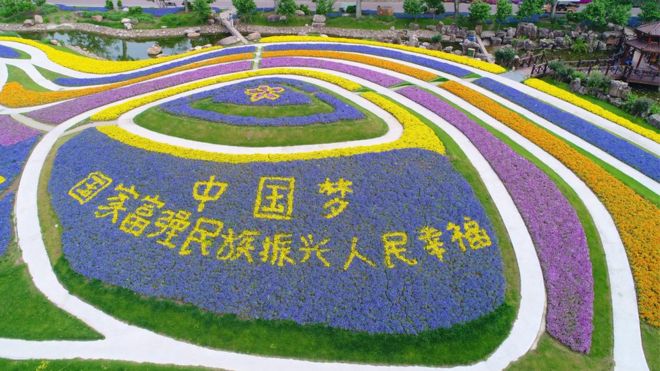
Aerial view of flower beds reading 'Chinese Dream' at Zhouji Green Expo Garden to welcome the 2nd Belt and Road Forum for International Cooperation on April 24, 2019 in Nantong, Jiangsu Province of China.Image copyright GETTY IMAGES
Image caption Flower beds reading ‘Chinese Dream’ welcome delegates to the Belt and Road forum in Beijing

World leaders are gathering in Beijing from Thursday for a summit on China’s Belt and Road initiative amid growing criticism of the project.

The sweeping infrastructure project aims to expand global trade links.

The initiative has funded trains, roads, and ports in many countries, but has left some saddled with debt.

Some see it as a bold bid for geopolitical influence, with the US particularly critical of China’s so-called “debt diplomacy”.

Chinese officials have tried to address concerns surrounding President Xi Jinping’s project, which is expected to involve more than $1 trillion (£774.9bn) in investments.

At the first day of the forum in Beijing, Chinese Finance Minister Liu Kun said China aims to make the Belt and Road initiative sustainable and to prevent debt risks.

Last year, Foreign Minister Wang Yi said in a speech Belt and Road was not a “geostrategic concept” but was part of efforts to build “a community with a shared future for mankind together with countries around the globe.”

Leaders from 37 countries and dozens of officials are due to attend the three-day summit, including Russian President Vladimir Putin and Italian Prime Minister Giuseppe Conte.

Italy recently became the first developed economy to sign up to China’s Belt and Road programme, raising concerns among its allies.

Western governments, and particularly the US, are increasingly wary of China’s growing influence.

The US, which has fought a trade war with China over the past year, has been particularly critical of the project.

Vice President Mike Pence said in a speech last year China was using “debt diplomacy” to expand its influence around the world.

Debt trap?

Other countries that are set to benefit from the project also seem to be growing more cautious.

Sri Lanka, Malaysia and Pakistan have all expressed concerns about the programme. Recipient countries worry about debt accumulation and increased Chinese influence.

Sri Lanka has been particularly affected – it had to hand over control over of a port to China in 2017 to help repay foreign loans.

Tom Rafferty, China economist at The Economist Intelligence Unit, said China is using this week’s summit to “reposition and, it hopes, revive the initiative after it lost its way in 2018 amid project delays and a slowdown in associated lending.”

Mr Rafferty said the Chinese government “wants to convince the international community that the Belt and Road Initiative is inclusive and policy concessions in areas such as debt sustainability” are likely.

Source: The BBC

21/04/2019

BRI to address global infrastructure imbalance: AECOM

BEIJING, April 20 (Xinhua) — The Belt and Road Initiative (BRI) will be an efficient way to address the imbalance in global infrastructure development, according to U.S. engineering firm AECOM.

Under the BRI, financing platforms including the Asian Infrastructure Investment Bank and the Silk Road Fund have emerged, which will help narrow the development gap, said Ian Chung, chief executive of AECOM for Greater China.

“The BRI is an opportunity for all. It is open, inclusive, and will bring economic development to the next level,” Chung told Xinhua.

According to Chung, countries and regions of different development phases can all benefit from the BRI, especially in infrastructure.

For developing economies, such as some in Africa, the BRI will significantly improve local infrastructure connectivity and boost economic growth, Chung said.

For fast-growing economies such as some in Southeast Asia, Chinese firms could share their experience in high efficiency and green construction via the BRI to meet the rising demand for sustainable infrastructure, he said.

As for many other developed countries, the demand for infrastructure still abounds, as many existing facilities are becoming aged, he added.

The BRI has opened plenty of opportunities for AECOM, as the company has been partnering with Chinese firms on many overseas projects, offering consulting services on design, local regulations, environmental and safety standards.

“Chinese firms excel in construction and financing, while we share a competitive edge in project design, knowledge of local regulations, procedures as well as culture. It’s a win-win for all of us,” Chung said.

Seeing business opportunities from the BRI, the company set up a new department in its Beijing office three years ago to work with Chinese firms on BRI projects.

The firm just opened its new offices in Chengdu and Changsha, following the set-up of its China headquarters in Shanghai last year, another sign that shows the company’s confidence in China’s development, Chung said.

“I am very optimistic that we will have more value-added cooperation with Chinese firms under the BRI,” Chung said.

Source: Xinhua

21/04/2019

How much of Europe does China own?

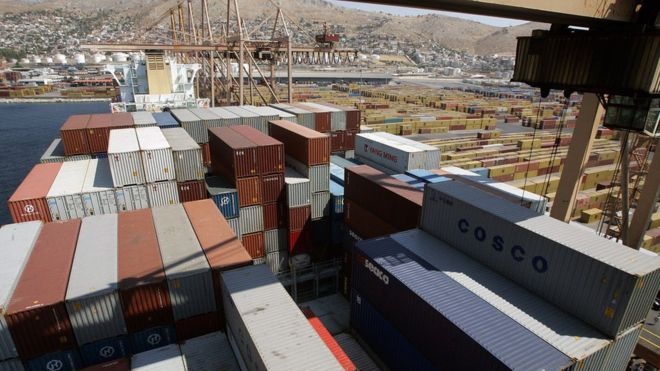
Shipping containers at PiraeusImage copyrightAFP
Image caption China now has a majority stake in the Greek port of Piraeus

The European Union has introduced a new mechanism for screening foreign investment.

It’s widely believed to have been prompted by concerns over China’s economic ambitions in Europe.

It will allow the European Commission – the EU’s executive arm – to give an opinion when an investment “threatens the security or public order” of more than one member state or undermines an EU-wide project such as the Galileo satellite project.

In March, the European Commission called China a “systemic rival” and a “strategic competitor”.

The Chinese Ambassador to the EU urged the bloc to remain “open and welcome” to Chinese investment, and not to “discriminate”.

How much foreign investment is in the EU?

China’s ownership of EU businesses is relatively small, but has grown quickly over the past decade.

A third of the bloc’s total assets are now in the hands of foreign-owned, non-EU companies, according to a report from the European Commission in March.

Of these, 9.5% of companies had their ownership based in China, Hong Kong or Macau – up from 2.5% in 2007.

That compares with 29% controlled by US and Canadian interests by the end of 2016 – down from nearly 42% in 2007.

So, it’s a significant increase, but the total amount is not huge, comparatively speaking.

China in the EU

Foreign direct investment into the 28 member stAlthough the levels of Chinese foreign direct investment in the EU have been increasing rapidly, it peaked at €37.2bn in 2016 amidst a slowdown in Chinese investment globally, according to the Rhodium Group and the Mercator Institute for China Studies.

In European countries outside the EU, investment also dropped in 2018.

What and where is China investing?

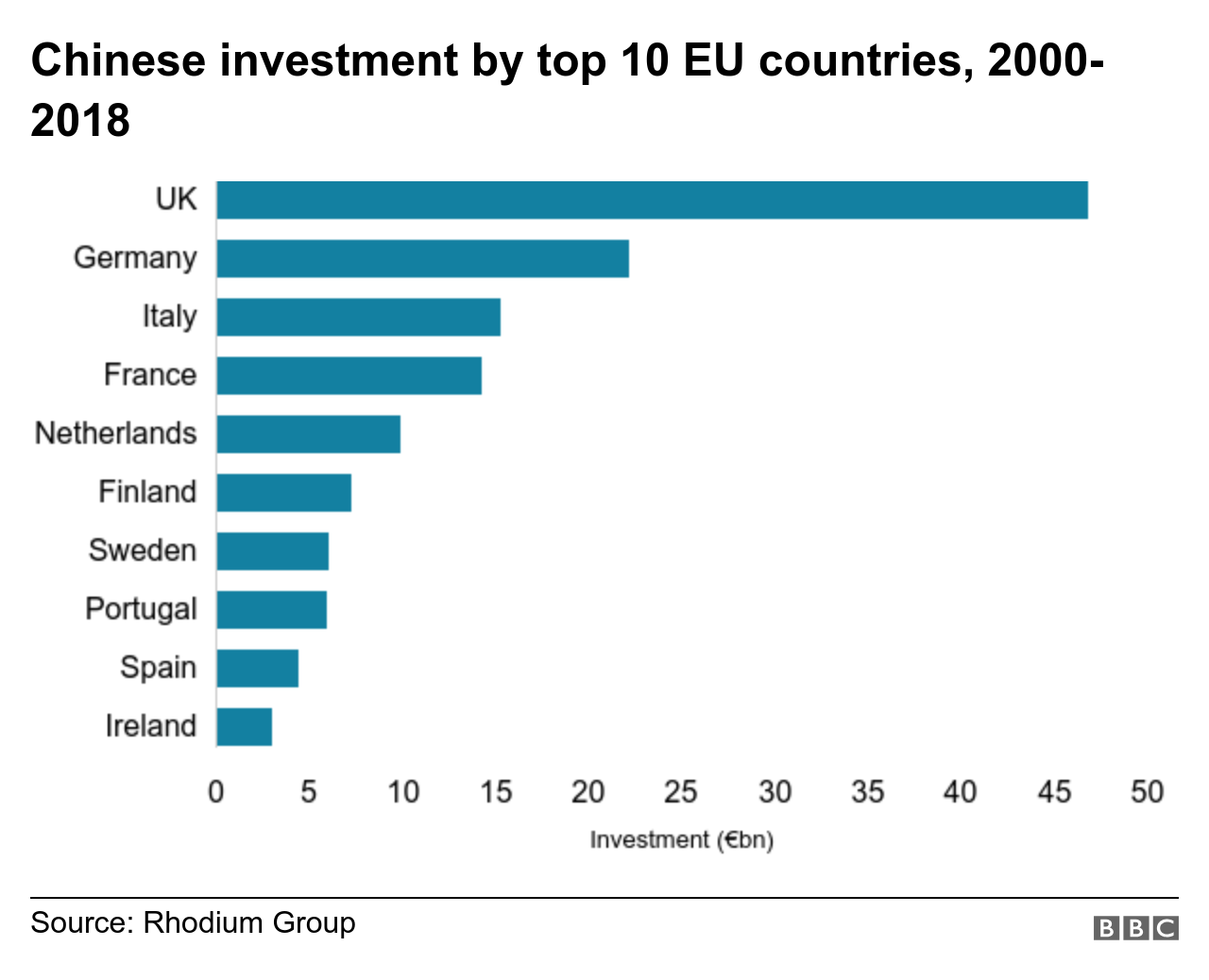
A large proportion of Chinese direct investment, both state and private, is concentrated in the major economies, such as the UK, France and Germany combined, according to the Rhodium Group and Mercator Institute.

Chinese investment by top EU countries

Analysis by Bloomberg last year said that China now owned, or had a stake in, four airports, six maritime ports and 13 professional soccer teams in Europe.

It estimated there had been 45% more investment activity in 30 European countries from China than from the US, since 2008.

And it said this was underestimating the true extent of Chinese activity.

What about infrastructure?

In March, Italy was the first major European economy to sign up to China’s new Silk Road programme – known as the Belt and Road Initiative (BRI).

It involves huge infrastructure building to increase trade between China and markets in Asia and Europe.

Officially more than 20 countries in Europe (including Russia) are part of the initiative.

For example, China is financing the expansion of the port of Piraeus in Greece and is building roads and railways in Serbia, Montenegro, Bosnia-Herzegovina and North Macedonia.

This could prove attractive to poorer Balkan and southern European countries, especially as demands for transparency and good governance can make EU funding appear less attractive.

However, analysts point out that Chinese loans come with conditions – such as the involvement of Chinese companies – and also risk burdening these countries with large amounts of debt.

Will Chinese investment grow?

Globally, China’s outward direct investment has slowed over the last year or two, after more than a decade of expansion.

“This is mainly the result of stricter controls on capital outflows from China, but also of a changing political environment globally concerning Chinese investment,” says Agatha Kratz of the Rhodium Group.

China’s global investment slows

The Trump administration is taking a tougher line towards China’s economic activities.

Governments elsewhere are more cautious – particularly when it comes to investment in sensitive areas of the economy, such as telecommunications and defence.

But there’s little doubt China is now a significant player in Europe, whether through direct investments or via the new Silk Road project.

Source: The BBC

20/04/2019

Xi to address Belt and Road forum next week: FM

CHINA-BEIJING-BRF-PRESS BRIEFING (CN)

Chinese State Councilor and Foreign Minister Wang Yi (C) speaks during a press briefing for the second Belt and Road Forum for International Cooperation (BRF) in Beijing, capital of China, April 19, 2019. The second Belt and Road Forum for International Cooperation will be held from April 25 to 27 in Beijing, Wang Yi announced Friday. (Xinhua/Zhai Jianlan)

BEIJING, April 19 (Xinhua) — Chinese President Xi Jinping will deliver a keynote speech at the second Belt and Road Forum for International Cooperation (BRF) to be held from April 25 to 27 in Beijing, State Councilor and Foreign Minister Wang Yi announced Friday.

Leaders including heads of state and government from 37 countries will attend the forum’s roundtable summit, Wang told a press briefing.

Wang said 12 thematic forums and a CEO conference would be held on April 25, the opening ceremony and a high-level meeting on April 26, and the leaders’ roundtable on April 27.

Xi will attend the opening ceremony and deliver a keynote speech. He will also chair the leaders’ roundtable and brief media from home and abroad about the outcomes after the roundtable, Wang said, adding that Xi and his wife Peng Liyuan will also hold a welcoming banquet for the leaders and representatives.

According to Wang, the 37 countries are Austria, Azerbaijan, Belarus, Brunei, Cambodia, Chile, Cyprus, Czech Republic, Djibouti, Egypt, Ethiopia, Greece, Hungary, Indonesia, Italy, Kazakhstan, Kenya, Kyrgyzstan, Laos, Malaysia, Mongolia, Mozambique, Myanmar, Nepal, Pakistan, Papua New Guinea, the Philippines, Portugal, Russia, Serbia, Singapore, Switzerland, Tajikistan, Thailand, the United Arab Emirates, Uzbekistan and Vietnam.

The secretary-general of the United Nations and the managing director of the International Monetary Fund will attend the forum, Wang said, adding that senior representatives of France, Germany, Britain, Spain, Japan, the Republic of Korea and the European Union will also participate.

Noting that the BRF is the top-level platform for international cooperation under the framework of the Belt and Road Initiative, Wang said the conference next week would be of landmark significance.

The theme of the second BRF is “Belt and Road Cooperation, Shaping a Brighter Shared Future.” Wang said the main purpose is to promote the high-quality development of Belt and Road cooperation, which is the common aspiration of countries participating in the initiative.

Speaking highly of the fruitful results yielded since the initiative was launched in 2013, Wang said the second BRF was greatly welcomed worldwide with some 5,000 participants from more than 150 countries and 90 international organizations having confirmed their attendance, covering areas from five continents and different walks of life such as government, civil society, business and academia.

According to Wang, this year’s forum will have 12 thematic forums, twice of that during the first forum in 2017, and the CEO conference will be held for the first time. A joint communique will be released after the leaders’ roundtable and other consensus reached during the forum will be issued in a report.

The Belt and Road Initiative, proposed by Xi in 2013, aims at enhancing all-around connectivity through infrastructure construction, exploring new driving force for the world economic growth, and building a new platform for world economic cooperation, according to Wang.

Stressing that Xi and leaders from other countries blueprinted the initiative in 2017, Wang said the progress in the past two years shows that the initiative conforms to the trend of the times featuring peace, development, cooperation and win-win and accords with the common aspiration of openness and joint development of all countries.

“As the host country, we will maintain close communication and coordination with all parties to prepare for the forum with openness, inclusiveness and transparency, upholding the principle of consultation and cooperation for shared benefits,” Wang said.

He said the forum would voice the firm support for multilateralism and an open world economy, enrich the principles of cooperation of the Belt and Road Initiative, build a network of partnership, and establish more mechanisms for high-quality development.

Bilateral, trilateral and multilateral cooperation has been reinforcing each other under the initiative, laying a solid foundation for a closer and more wide-ranging partnership, he said.

Wang said China will showcase the outcomes and introduce the measures of its reform and opening-up to the world, adding that this will allow China to share the dividends of its economic growth, promote the Belt and Road Initiative, and bring more opportunities to the development of all countries as well as the building of the Belt and Road.

“I believe that the forum will inject stronger impetus into the world economy, open even broader horizon for the development of the countries, and contribute to the building of a community with a shared future for humanity, ” said Wang.

Source: Xinhua

20/04/2019

Indian foreign secretary heads to China for talks amid tense relations

  • Vijay Keshav Gokhale is expected to meet Chinese deputy foreign minister Kong Xuanyou and Foreign Minister Wang Yi during two-day visit
  • Beijing’s refusal to sanction a Pakistani militant leader and its belt and road push in the disputed Kashmir region have strained ties
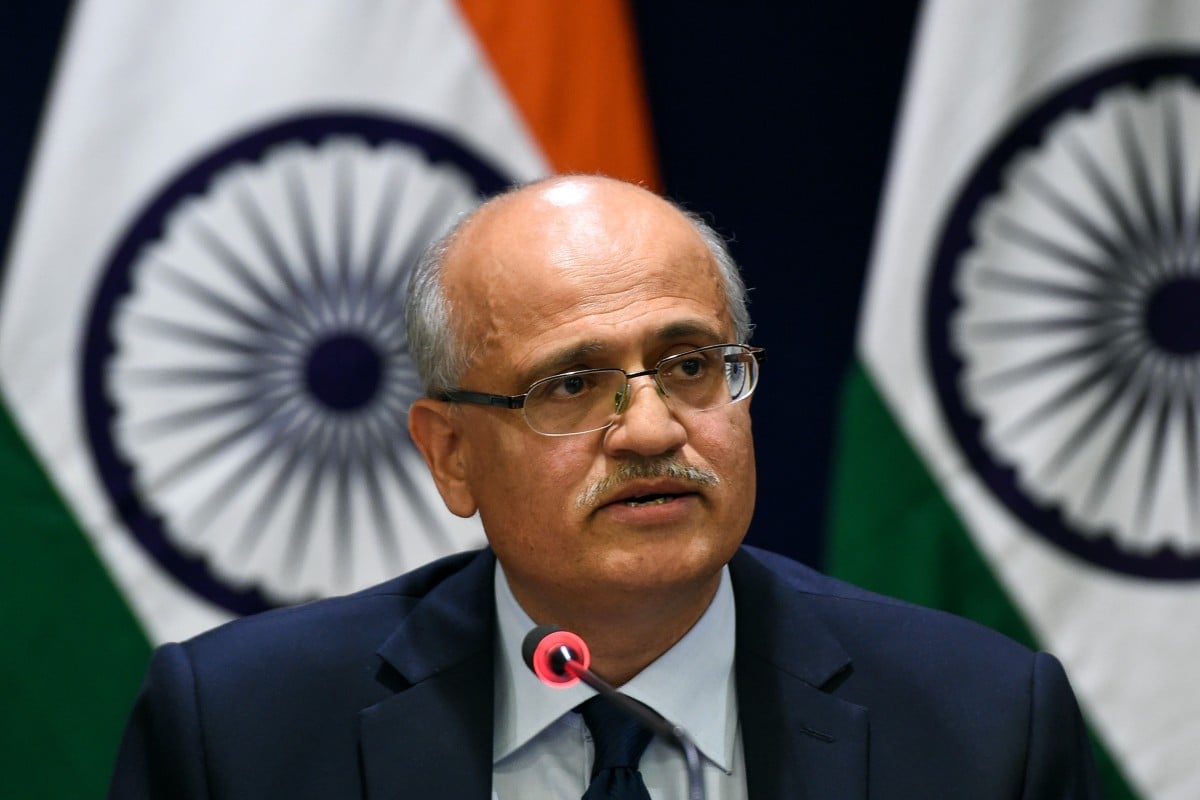
Indian Foreign Secretary Vijay Keshav Gokhale will visit China as part of “regular exchanges” between the two countries. Photo: AFP
Indian Foreign Secretary Vijay Keshav Gokhale will travel to Beijing on Sunday amid tensions between India and China over Beijing’s refusal to sanction a Pakistani militant leader and its infrastructure push in the disputed Kashmir region.
Gokhale’s two-day visit is part of “regular exchanges” between the two nations, the Indian embassy in Beijing said on Saturday.
During his stay, Gokhale is expected to meet Chinese deputy foreign minister Kong Xuanyou and Foreign Minister Wang Yi.

He will return to India on Monday, three days before the second Belt and Road Forum begins in the Chinese capital. Forty foreign leaders will attend the summit on Beijing’s global trade and infrastructure scheme, the “Belt and Road Initiative”, but India is not taking part.

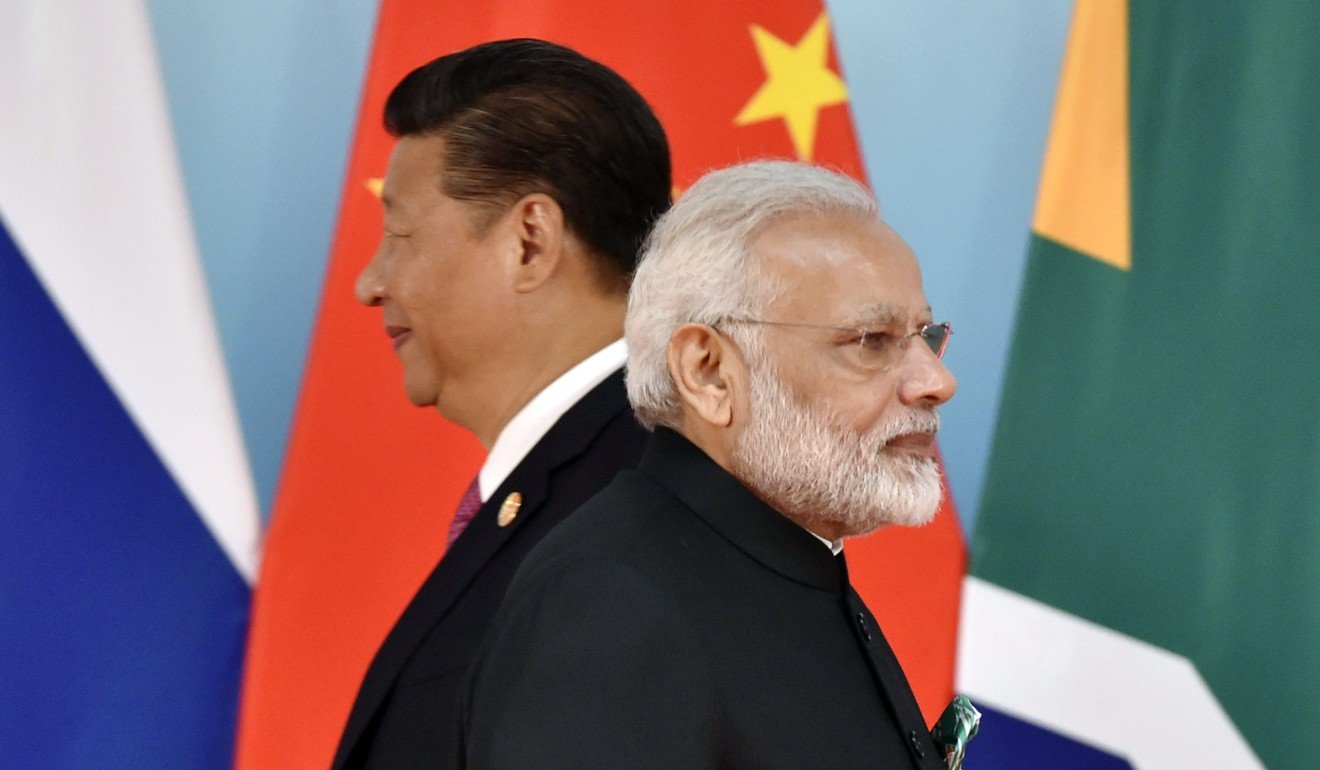
Wang on Friday called on India, and other countries sceptical of the initiative, to join up, dismissing claims that it is a geopolitical tool. He also said China was ready to hold a leaders’ summit with India like the informal meeting held between Chinese President Xi Jinping and Indian Prime Minister Narendra Modi in Wuhan, Hubei province last year.

A summit between Xi Jinping (left) and Narendra Modi in Wuhan last year was seen as a breakthrough in China-India relations after the Doklam border dispute. Photo: AFP

Gokhale visited Beijing in February last year, and the Wuhan summit happened two months later. That meeting was seen as a breakthrough in the

China-India relationship

after a 73-day military stand-off over the Doklam plateau.

But the progress was overshadowed in February after a terror strike on Indian security forces in the Jammu and Kashmir province, which killed 40 Indian soldiers. The Pakistan-based Jaish-e-Mohammed group claimed responsibility for the attack. India has long wanted to designate its leader, Masood Azhar, as a terrorist under international law, but China has opposed the move.

During a visit to Pakistan in March, Kong said Beijing and Islamabad were all-weather strategic partners and would support each other on issues to do with their core interests.

What ‘Wuhan spirit’? Kashmir suicide attack reopens Modi’s China wound

Wang Dehua, head of the Institute for South and Central Asia Studies at the Shanghai Municipal Centre for International Studies, said China and India were looking to prevent their bilateral relations from deteriorating further.

“Both nations will elaborate on their stance on this matter, and China will probably deliver a message that the China-India relationship should not be affected by the dispute over Masood Azhar,” he said. “The positive sentiment out of Wuhan has been affected, and the two sides are seeking ways to continue the spirit of that informal summit.”

Du Youkang, director of Fudan University’s Pakistan Study Centre in Shanghai, said preparations for another informal summit of the nations’ leaders would only begin after India’s general election was over. Polling is being held in seven phases ending on May 19.

Gokhale’s trip would mainly be a chance to see how the two nations can push forward bilateral ties amid their disputes, Du said.

In addition to Azhar, India is also dismayed that some of China’s belt and road projects pass through the Pakistan-administered section of the disputed Kashmir region.

But Wang told reporters on Friday that the initiative did not target any third country, and that relations between China and India had improved after the Wuhan summit.

Source: SCMP

19/04/2019

China asks Britain for help to boost image of Belt and Road Initiative

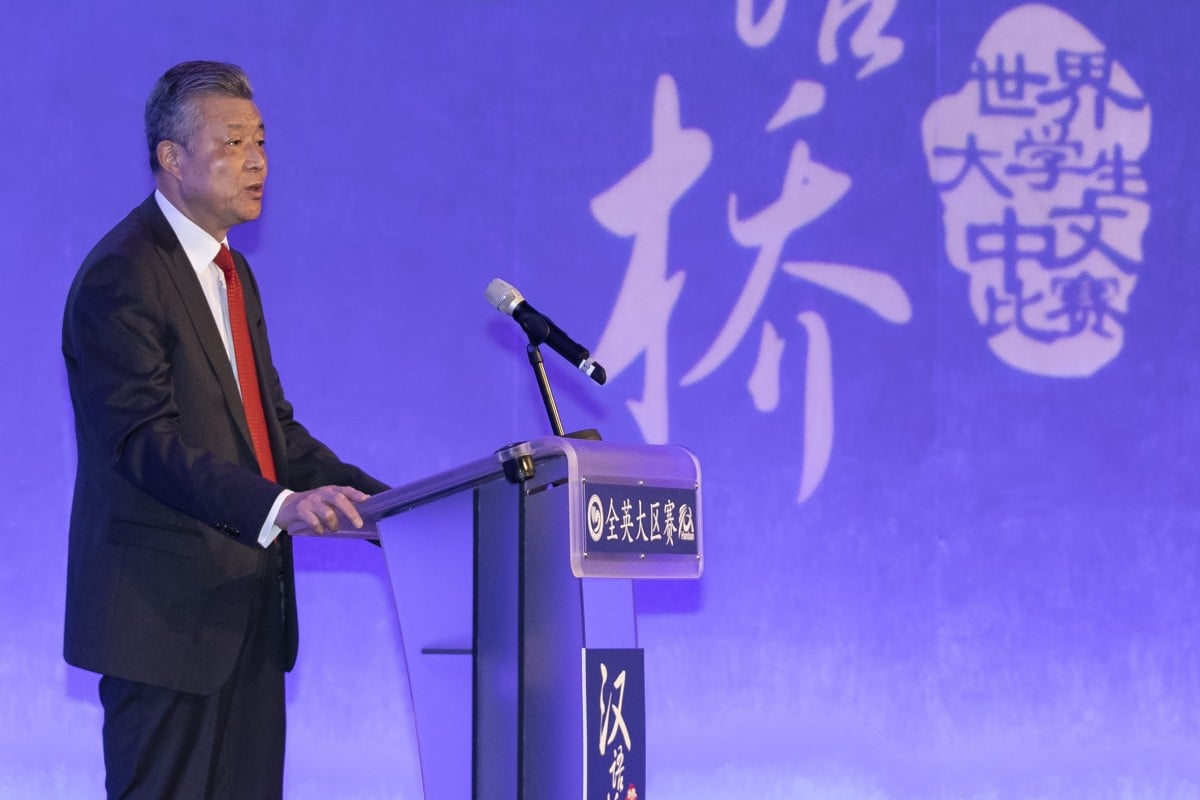
  • China’s Ambassador to the UK Liu Xiaoming cites ‘rule-making’ as an area for bilateral cooperation with the UK
Chinese Ambassador to the UK Liu Xiaoming gives a keynote speech during the ‘Chinese Bridge’ Chinese Proficiency Competition for Foreign College Students UK Regional Final in London. Photo: Xinhua
China has asked Britain for help to offset claims its “Belt and Road Initiative” investments are opaque and justify its overseas spending to critics.
It made the move days before UK Chancellor Phillip Hammond was expected to head to the belt and road forum in Beijing.

In an article in London’s Evening Standard on Wednesday, China’s Ambassador to the UK Liu Xiaoming cited “rule-making” as an area for bilateral cooperation.

“Britain has played a leading role in the establishment and management of the Asian Infrastructure Investment Bank,” Liu said. “In [belt and road] development, Britain could have a big role to play in ensuring that the projects are of higher quality, at a higher standard, with higher return.”
Four years ago the UK defied the US and joined the AIIB.
Liu’s comments followed news the UK’s Department for International Development (DFID) was asked to join a new initiative aimed at improving China’s international accounting and transparency standards.
China is thought to see DFID as a model for its new aid outfit, China International Development Cooperation Agency (CIDCA), which was established last year to oversee Beijing’s foreign aid.
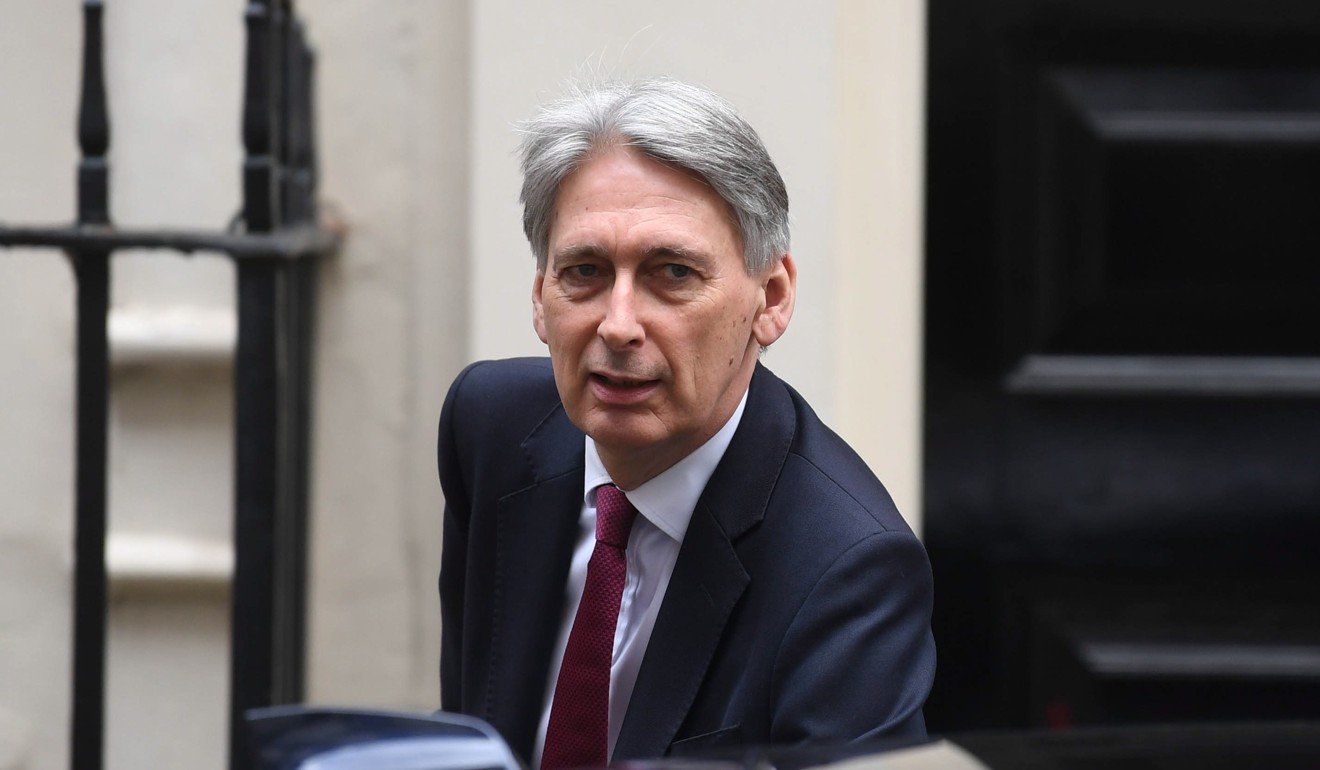
Britain's Chancellor of the Exchequer Phillip Hammond. Photo: EPA-EFE
Britain’s Chancellor of the Exchequer Phillip Hammond. Photo: EPA-EFE

The DFID was the third most transparent donor in the world after the Asian Development Bank and UNDP, according to the aid data-crunching website Publish What You Find. China was the least.

Critics say part of the problem is Beijing prefers to deliver loans and other investments through local elites. There are also often several government departments involved, each directed by their own rules and priorities, making financial reporting more complex.

“I think the Chinese are instead playing by a different set of rules, not all of them in conflict with the West’s … but most definitely not fully aligned with what the West wants or expects”, said Eric Olander, managing editor of Shanghai-based The China Africa Project. “Therefore, I would not expect to see the kind of meaningful change in its accounting and financial standards in the near term.”

‘Cooperate or stop criticising’, China’s foreign minister Wang Yi says as belt and road summit nears

The MOU proposed by China is more a statement of intent than a plan of action but the UK welcomed it as a positive sign

“China’s proposal to set up a ‘Multilateral Cooperation Centre for Development Finance’ has real potential to ensure its huge investments in developing countries meet the key international standards that matter to all of us – on debt, transparency, environment and social safeguards,” UK International Development Secretary Penny Mordaunt said at the World Bank Spring Meeting recently.

A source at DFID told the SCMP that the UK has not signed the MOU yet but said while other countries are aware of the proposal, it is the only country so far to be formally invited to participate by China.

France and Germany were two possible future signatories, and MCCDF has been discussed in EU member state meetings in Beijing.

“[China] is clearly frustrated that it feels misunderstood by the international community,” said Olander.

“I have attended one seminar after another where African stakeholders ask the Chinese for more transparency and the Chinese respond with a sympathetic smile that says ‘I’d love to but I’m not sure how we can do that given our political culture and the current political realities’.”

With the Chinese economy slowing at home and the losses abroad in places like Venezuela starting to mount, there are indications that the Chinese policy banks are becoming far more risk-averse in places like Africa and the Americas.

Even so according to figures released on Thursday, the Export Import Bank of China provided more than a trillion yuan (US$149 billion) to more than 1,800 Belt and Road projects since 2013. China Development Bank (CDB) said in March it had provided US$190 billion in the same period.

“The UK is very concerned by rising debt levels, particularly in emerging market economies and in low-income countries,” Mordaut told the World Bank.

“Unsustainable debt levels are a real risk that can undermine or reverse development gains.”

The IMF said recently 24 out of 60 of the poorest countries are either in debt distress or at a high risk of falling into it.

China is also looking to the UK to help manage the BRI projects and organise part of the financing, something the City of London and the government are keen to do, Liu said.

Describing it as “third-party involvement in BRI development” he said: “The UK, with its unique strengths in professional services, project-management and financing, could tap into this potential.”

China is keen for the UK to sign a BRI MOU like Italy, and soon Switzerland, but so far it has resisted. A report released earlier this month by the parliament’s Foreign Affairs Committee called for a rebranding of the “golden era” started by the former chancellor George Osborne, now the editor of the London Evening Standard.

Britain is keen to cement closer ties with Beijing as the world’s fifth largest economy looks to reinvent itself as a global trading nation if and when it leaves the European Union.

Source: SCMP

Law of Unintended Consequences

continuously updated blog about China & India

ChiaHou's Book Reviews

continuously updated blog about China & India

What's wrong with the world; and its economy

continuously updated blog about China & India