Archive for ‘Bharatiya Janata Party (BJP)’

06/03/2020

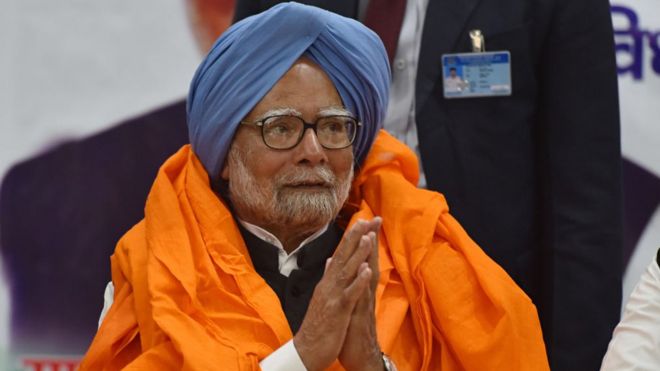
Manmohan Singh: Former PM says India situation ‘grim and morose’

Manmohan SinghImage copyright GETTY IMAGES
Image caption Manmohan Singh was India’s PM from 2004 to 2014

Former Indian prime minister Manmohan Singh has warned of “social disharmony, economic slowdown and a global health epidemic” facing the country.

“The current situation is very grim and morose,” he wrote in a sharply critical op-ed in The Hindu newspaper.

The article comes in the wake of the most violent riots to take place in capital, Delhi, in decades.

Mr Singh also referred to slowing growth and the possibility of a coronavirus outbreak.

More than 50 Indians have died in recent religious riots sparked by clashes over a controversial citizenship law in Delhi.

“The India that we know and cherish is slipping away fast. Wilfully stoked communal tensions, gross economic mismanagement and an external health shock are threatening to derail India’s progress and standing,” Mr Singh wrote.

He said he worried deeply that “this potent combination of risks may not only rupture the soul of India but also diminish our global standing as an economic and democratic power in the world”.

Mr Singh, who belongs to the main opposition Congress party, was the prime minister from 2004 to 2014.

Mr Singh said it was “well accepted” that a lack of new investment from the private sector only highlighted a “floundering” economy.

“Social harmony, the bedrock of economic development, is now under peril. No amount of tweaking of tax rates, showering of corporate incentives or goading will propel Indian or foreign businesses to invest, when the risk of eruption of sudden violence in one’s neighbourhood looms large.”

India’s growth slumped to 4.7% last month – the slowest pace in years as drop in manufacturing affected overall economic health.

The former prime minister said a lack of investment meant fewer jobs and lower incomes, leading to diminished demand in the economy.

“A lack of demand will only further suppress private investments. This is the vicious cycle that our economy is stuck in.”

Media caption GDP: Why India’s growth rate is shrinking rapidly

Mr Singh also addressed the threat of coronavirus in India, saying the country needs a “full-scale operation” to deal with the health crisis. He warned that an outbreak would have a significant impact on Indian business.

“India’s economic growth was already tepid and this external health shock is bound to make things much worse.”

Mr Singh concluded his article with some advice to the ruling Hindu nationalist Bharatiya Janata Party (BJP) government, saying they must “reassure” the country.

He said the government should embark on a “three-point plan”: containing the coronavirus threat, withdrawing or amending the citizenship law and a fiscal stimulus to boost demand and revive the economy.

Source: The BBC

03/03/2020

Indian police detain hundreds after Hindu-Muslim clashes in New Delhi

NEW DELHI (Reuters) – Indian police said on Friday they had detained hundreds of people and were keeping a heavy presence in northeast New Delhi, days after the worst bout of sectarian violence in the capital in decades.

At least 38 people were killed in Hindu-Muslim violence this week, police said, amid mounting international criticism that authorities failed to protect minority Muslims.

Media said the toll was likely to rise.

Delhi police spokesman M.S. Randhawa said police were collecting evidence, reviewing video footage of the violence and had already detained more than 600 people.

“The detentions were important to bring the situation under control,” Randhawa told reporters, adding that there had been no new reports of violence.

The clashes began over a citizenship law that Prime Minister Narendra Modi’s Hindu nationalist government introduced in December providing a path to Indian citizenship for six religious groups from neighbouring countries – but not Muslims.

Critics say the law is discriminatory and comes on top of other measures such as withdrawal of autonomy for Muslim-majority Jammu and Kashmir that has deepened disquiet about the future of India’s 200 million Muslims.

Critics of the government however blamed this week’s violence on members of Modi’s Bharatiya Janata Party (BJP), which was trounced in local Delhi elections at the beginning of the month. The BJP has denied the allegations.

The violence morphed into street battles between Hindu and Muslim groups with the police largely ineffective in ending the violence.

The Organisation of Islamic Countries (OIC) has condemned the violence against Muslims and vandalism of mosques and Muslim-owned properties.

U.S. Democratic presidential hopeful Bernie Sanders accused President Donald Trump of failing on the issue of human rights after he refused to be drawn into criticising New Delhi for its handling of the violence.

Trump was on a state visit to India when the violence broke out.

Source: Reuters

25/02/2020

Donald Trump in India: Seven killed in Delhi violence during visit

Seven people have been killed in Delhi in protests against India’s controversial new citizenship law, as US President Donald Trump made his first official visit to the country.

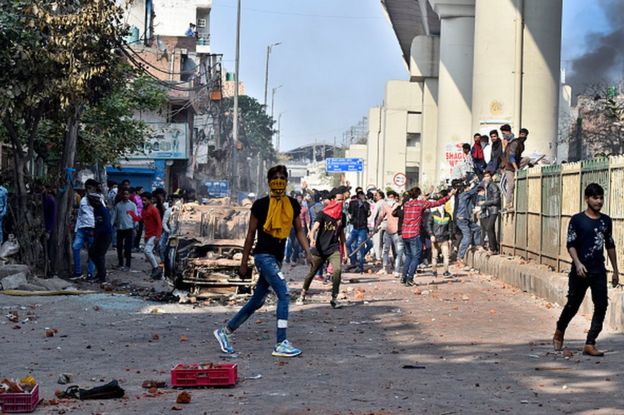
Violence has erupted again in parts of north-east Delhi, which saw deadly clashes between supporters and opponents of the law on Monday night.

Two journalists have been attacked and BBC reporters in the area say mobs are throwing stones and shouting slogans.

There are fears of further clashes.

Mobs in parts of north-east Delhi are throwing stones at each other, and the situation remains tense, according to BBC correspondents.

A policeman and six civilians have died in Delhi’s deadliest violence since the Citizenship Amendment Act (CAA) – which critics say is anti-Muslim – was passed last year.

Around 150 people, including 48 policemen, are reportedly injured.

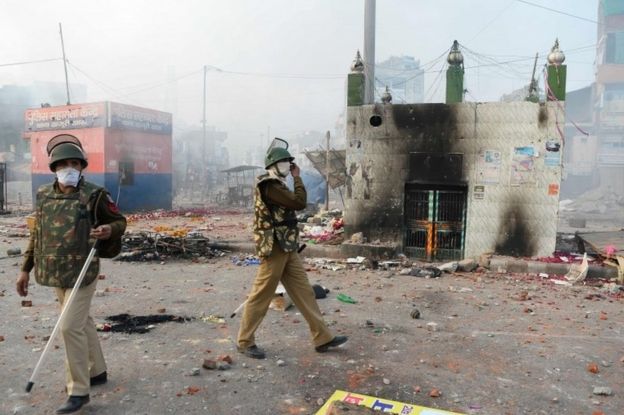
Policemen stand on a vandalised road following clashes between supporters and opponents of a new citizenship law, at Bhajanpura area of New Delhi on February 24, 2020, ahead of US President arrival in New Delhi.Image copyright AFP

“There are around 200 people, some are holding the Indian flag in their hands, others are holding saffron flags, generally associated with right-wing Hindu groups. They are chanting Jai Shri Ram [hail Lord Ram],” BBC Hindi reporter Faisal Mohammed said.

The crowd was also shouting “shoot the traitors”, our reporter added.

Correspondents say the timing of the unrest is an embarrassment to Prime Minister Narendra Modi as he hosts the US president and the violence has taken the spotlight away from Mr Trump’s visit.

Where is the violence?

It broke out in three Muslim-majority areas in north-east Delhi on Sunday and has continued since.

The violence in the area has seen protesters firmly split along religious lines, BBC reporters at the scene say.

Both sides have blamed each other for starting the clashes.

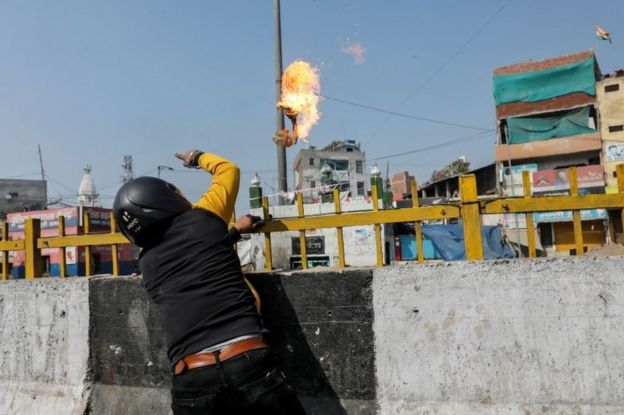
A man supporting a new citizenship law throws a petrol bomb at a Muslim shrine during a clash with those opposing the law in New Delhi India, February 24, 2020Image copyright REUTERS
Image caption The violence in the Muslim-majority areas in north-east Delhi began on Sunday

The violence has been linked to a BJP leader, Kapil Mishra, who had threatened a group of protesters staging a sit-in against the CAA over the weekend, telling them that they would be forcibly evicted once Donald Trump had left India.

The clashes spilled into Monday and police fired tear gas shells and led baton charges to disperse the stone-throwing crowds. TV footage showed flames and smoke billowing from buildings.

Eyewitnesses said they saw charred vehicles and streets full of stones in areas like Jaffrabad and Chand Bagh on Tuesday morning. Police were allowing people to enter only after checking their identity cards. Some Metro stations have also been shut.

Who are the dead and injured?

Six civilians and one policeman have been killed in the violence so far.

“One of the seriously injured is a senior police officer. He has now been moved to another hospital for specialised treatment,” an official said.

Two journalists belonging to the NDTV news channel were badly beaten while they were out reporting on Tuesday morning.

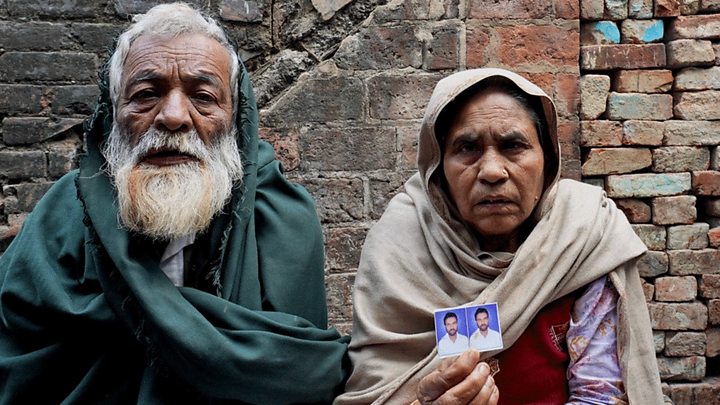
Shahid Alvi, an auto rickshaw driver, died because of a bullet injury he suffered during the protest. His brother Rashid told BBC Hindi that Shahid was married just a month ago.

“He was shot in the stomach and died while we were taking him to the hospital,” he said.

Another victim has been identified as Rahul Solanki.

His brother, Rohit Solanki, told BBC Hindi that he died after being shot as he tried to escape from a mob.

“He had gone out to buy groceries when he was suddenly surrounded. He was shot at point blank range. We tried taking him to four hospitals but we were turned away,” he said.

What are officials doing?

Delhi’s freshly re-elected Chief Minister Arvind Kejriwal, called on the federal government to restore law and order.

“There are not enough police on the streets [in the affected areas]. Local police are saying they are not getting orders from above to control the situation, and they are not able to take action,” he told reporters.

The capital’s police force reports directly to Mr Modi’s ruling Bharatiya Janata Party (BJP)-led government.

Home Minister Amit Shah, who is in-charge of Delhi’s police forces, is holding a meeting with Mr Kejriwal to discuss the situation.

Protesters seen during clashes between a group of anti-CAA protestors and supporters of the new citizenship act, near Maujpur and Jaffrabad metro station on February 24, 2020 in New DelhiImage copyright GETTY IMAGES
Image caption The police and protesters fought pitched battles on the streets of Delhi

What is the citizenship act about?

The Citizenship Amendment Act (CAA) grants amnesty to non-Muslim immigrants from three nearby Muslim-majority countries.

The new law has raised fears that India’s secular status is at risk.

Critics say it discriminates against Muslims. But the government says the protests are unnecessary as it only seeks to give amnesty to persecuted minorities.

Protests so far have been largely led by Muslim women and men, but a lot of Hindus have also joined them.

Media caption ‘Our son was shot dead by police’

Source: The BBC

11/02/2020

The school play that sent a mother to prison

Shaheen School in Bidar
Image caption A play staged at Shaheen School has led to the arrest of a parent and a teacher

An Indian school play involving nine to 12-year-olds became the subject of national attention after it landed a young mother and a teacher in jail. BBC Telugu’s Deepthi Bathini reports.

“I’m not sure how I ended up here,” says 26-year-old Nazbunnisa, a single mother who did not give her last name and who works as a domestic help.

She was arrested on 30 January, along with Farida Begum, a teacher at her daughter’s school. The charge against them: sedition, which the women, both Muslim, deny.

They spoke to the BBC in a prison official’s office at Bidar district jail in the southern state of Karnataka. Both were on the verge of tears – they said they are trying to be “strong”, but their lives have suddenly turned “upside down”.

Their bail hearing is scheduled for Tuesday. Their lawyer says the charge of sedition is being misused.

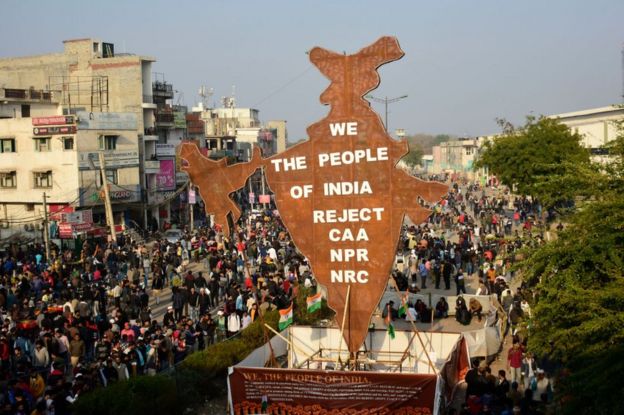
Indian people protest against the controversial Citizenship Amendment Act (CAA), the National Register of Citizens (NRC) and the National Population Register (NRP) in Shaheen bagh area of New Delhi, India on 02 February 2020.Image copyright GETTY IMAGES
Image caption The citizenship law has sparked huge protests

It stems from a colonial-era law that was used to quash dissent, but is still deployed liberally despite the Supreme Court’s attempt to limit it by making incitement to violence a necessary condition.

The two women are accused of spreading “false information” and of “spreading fear among [the] Muslim community” and of using children to insult India’s Prime Minister, Narendra Modi.

Their ordeal began with a play put on by the students and staff at Shaheen School in Bidar, where Ms Nazbunnisa’s daughter studies and Farida Begum, 52, teaches.

The play was about a controversial new citizenship law, which has polarised India since it was passed in December by the governing Hindu nationalist Bharatiya Janata Party (BJP).

The Citizenship Amendment Act (CAA), offers amnesty to non-Muslim immigrants from Pakistan, Bangladesh and Afghanistan. It sparked fear among India’s 200 million-plus Muslims as it came in the wake of the government’s plans to introduce a National Register of Citizens (or NRC) based on those who can prove their ancestors were Indian citizens.

Authorities are yet to clarify what documents would be needed to prove citizenship, but taken together, the measures have spurred massive protests – critics say the government is marginalising Muslims while offering a path to citizenship for people of other religious communities who fail to make it on to the NRC.

The governing BJP denies these charges, and insists India’s Muslims have nothing to worry about.

So, given the contentious subject, after one of the parents streamed the school play live on Facebook, the recording quickly went viral. Local resident Neelesh Rakshal was among those who watched it.

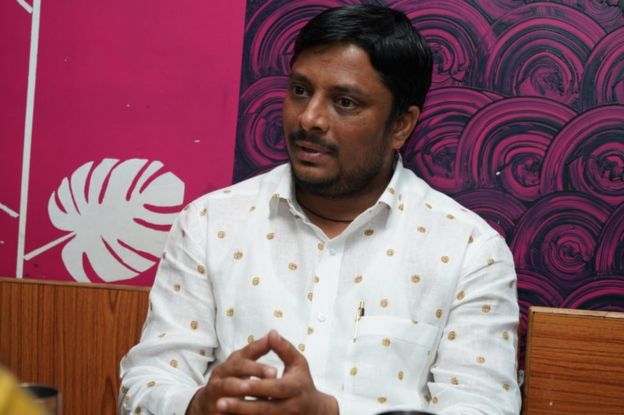
Mr Rakshal, who describes himself as a social activist, says he became furious over a scene where a man approaches an elderly woman and tells her that Narendra Modi wants Muslims to produce documents proving their Indian citizenship and that of their ancestors, and if they fail to do so, they will be asked to leave the country.

Neelesh Rakshal
Image caption Mr Rakshal says the play “spreads hatred”

The woman responds that she has been in India for generations and would have to dig up the graves of her ancestors to look for documents. She then says a “boy who was selling tea”, a reference to Mr Modi who has said he used to sell tea as a teenager, is now demanding that she show him her documents.

“I will ask him for his documents and if he doesn’t show them to me, I will hit him with slippers,” she adds.

Mr Rakshal says he immediately registered a police complaint against the school for “using children in a school play to abuse the prime minister and also for spreading hatred”.

The complaint named the school management and the parent who streamed the play. While several members of the school management and the president of the school have also been charged with sedition, police told the court they are still looking for them.

“We do not know for what reason sedition charges have been invoked against the school. It is beyond the imagination of any reasonable person. We will fight it in court,” the school’s CEO, Thouseef Madikeri, says.

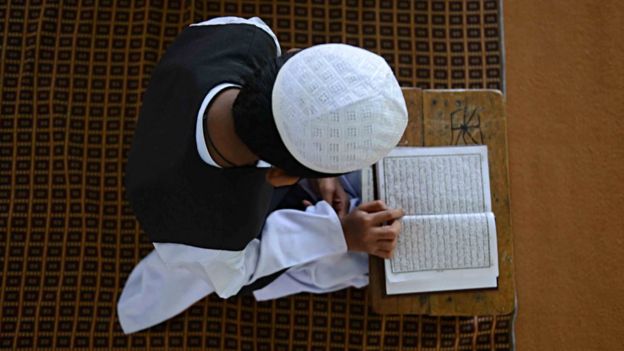
A Muslim child in IndiaImage copyright GETTY IMAGES
Image caption School officials allege that they are being targeted because most of the students are Muslim

Police also questioned students – videos and screen grabs of CCTV footage showing them speaking to students were shared widely on social media, prompting criticism.

Mr Madikeri alleges that on one occasion, police in uniform questioned students, with no child welfare officials present – an accusation denied by police superintendent DL Nagesh.

“The students were questioned five times. It’s mental harassment to students and this may have an impact on them in [the] long run,” Mr Madikeri says.

The Karnataka State Commission for Protection of Child Rights has asked police to explain why they questioned students so many times. Police say it was because not all the students were available at the same time.

Mr Madikeri told the BBC it was the questioning of students that led to the arrest of Farida Begum and Ms Nazbunnisa.

One parent whose child was questioned says she is now scared of going to school.

“My daughter told me police repeatedly asked her to identify the teachers and others who might have taught them the [play’s] dialogues,” he said.

“I do not understand what was wrong in the play. Children have been seeing what has been happening around the country. They picked up the dialogues from social media.”

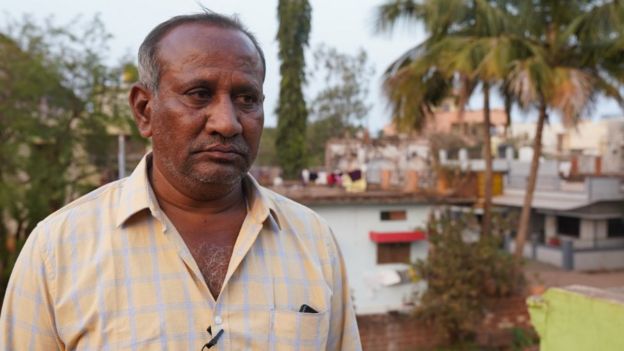
Mirza Baig
Image caption Farida Begum’s husband is worried about what will happen

Ms Nazbunnisa is also perplexed as to why she was arrested.

“My daughter was rehearsing for the play at home,” she says. “But I did not know what it was about, or what this controversy about CAA or NRC is about. I did not even go to see her play.”

Ms Nazbunnisa has met her daughter only once since she was jailed: “It was just for a few minutes, and even then only through a window. I held back my tears. I did not want to scare her further.”

The girl is staying with a friends of the family – they told the BBC she is having nightmares and often wakes up crying for her mother.

“She has been pleading that her mother not be punished for her mistake. She is sorry for what has happened,” one of them says.

Farida Begum, who suffers from high blood pressure, says she is “scared of what the future holds”. Her husband, Mirza Baig, says he fears that his wife being in jail will affect his daughter’s marriage prospects.

“Whatever is happening is not right,” he says.

Source: The BBC

27/01/2020

India renews push to sell Air India, puts entire stake on the bloc

NEW DELHI (Reuters) – India said on Monday it plans to sell its entire interest in Air India Ltd, making a renewed push to sell the flag carrier after it drew no bids in an effort to auction a majority stake almost two years ago.

A document released on Monday showed March 17 as the deadline for submission of initial expressions of interest, and that any bidder must assume liabilities, including debt of 232.87 billion rupees ($3.28 billion).

Substantial ownership and effective control of the airline must remain with an Indian entity, the government added.

The potential sale of an airline kept aloft by a $4.2 billion 10-year bailout in 2012 comes as the government divests money-losing assets to manage the fiscal deficit.

The latest offer should garner significant response partly because it involves a clean exit by the government, said CAPA aviation consultancy India head Kapil Kaul.

“As the entire debt excluding aircraft debt is taken out of the deal, it signals a very determined effort to exit Air India, to allow taxpayers’ funds be utilized for the government’s social agenda,” said Kaul.

Indian business house Hinduja Group and US-based fund Interups have expressed interest in buying the airline, the Business Standard daily said.

It quoted Laxmi Prasad, the chairman and chief business architect of Interups, as saying the fund had initiated talks with the government and would like to make a case for certain aspects of the airline’s business to be included in the deal.

The government in 2018 here tried to sell 76% of Air India and offload about $5.1 billion of its debt, with terms including the retention of all employees.

InterGlobe Aviation Ltd’s (INGL.NS) IndiGo and Jet Airways Ltd (JET.NS) – which has since collapsed – initially showed interest, but opted out after the terms were disclosed.

Steel-to-autos conglomerate Tata Group, widely viewed as a potential suitor for Air India, also decided not to bid after deeming the terms too onerous, sources told Reuters at the time.

On Monday, civil aviation minister Hardeep Singh Puri said the government was open to suggestions and altering some provisions if the changes helped to find a buyer.

“We have gone into this exercise, months of planning and preparation have gone into it and this is not the final, final. The bidders are going to get 45 days, they are going to come back to us. It is an interactive process,” Puri told reporters.

“We are open to revising, refining and tweaking our views.”

A successful bidder would win control of Air India’s 4,400 domestic and 1,800 international landing and parking slots at domestic airports, as well as 900 slots at airports overseas.

It would also get 100% of low-cost arm Air India Express and 50% of AISATS, which provides cargo and ground handling services at major Indian airports, the bid document showed.

The buyer would also have to provide 3% of the value of the airline’s equity as stock options for permanent employees.

Air India has about 9,400 permanent employees and 3,600 fixed-term contract staff – including 1,850 pilots and 4,600 cabin crew – with benefits such as discounted air tickets and pensions.

Its employees protested against the 2018 sale attempt, and it was not immediately clear if they would also resist the latest effort. The government said it would provide details on safeguarding employee interests in its final bid document.

A spokesman for the employee union did not have immediate comment.

The government’s divestment plan could also face opposition from within, with Subramanian Swamy, an MP from the ruling Bharatiya Janata Party (BJP), threatening legal action against the sale.

“This deal is wholly anti-national and I will (be) forced to go to court. We cannot sell our family silver,” Swamy said on Twitter.

Source: Reuters

12/12/2019

Citizenship Amendment Bill: India calls in army to Assam and Tripura states

The army has been called into north-eastern India, after thousands of people defied curfews to protest against a new citizenship bill.

The Citizenship Amendment Bill (CAB) offers amnesty to non-Muslim illegal immigrants from three countries.

Critics say the bill discriminates against Muslims – but in the north-east, protesters claim they will be “overrun” by Hindus from Bangladesh.

Indian Prime Minister Narendra Modi has appealed for calm.

Officials said 20-30 people were injured in the demonstrations, and air and railway services have been severely impacted.

The bill – which applies to people from Afghanistan, Bangladesh and Pakistan – was passed in the upper house of parliament on Wednesday night.

It is yet to be ratified by the president, but that is merely a formality.

The ruling Hindu nationalist Bharatiya Janata Party says the CAB will give sanctuary to people fleeing religious persecution.

Illegal migration from Bangladesh has long been a concern in the north-east.

NYC National President Srinivas B.V with party supporters during a torch procession against the Citizenship Amendment Bill at Rajpath near India Gate, on December 11, 2019 in New Delhi, India. Normal life came to a halt on Tuesday in several states amid protests over the Citizenship (Amendment) Bill.Image copyright GETTY IMAGES

How bad are the protests?

Violent protests intensified on Thursday, and have been particularly bad in the states of Assam and Tripura, which border Bangladesh.

The army has deployed thousands of personnel, as protesters defy curfew orders and spill into the streets.

The protesters blocked roads and set vehicles on fire. There are reports that at least two railway stations have been burned down.

Railway services are suspended and some airlines have started offering rescheduling or cancellation fee waivers.

The AFP news agency reported that police fired blanks into the air in a bid to disperse crowds. They have also used tear gas shells.

Prime Minister Narendra Modi sought to reassure people in Assam, telling them they had “nothing to worry” about.


Read more about the Citizenship Amendment Bill:


“The central government and I are totally committed to constitutionally safeguard the political, linguistic, cultural and land rights of the Assamese people,” he tweeted.

However, with internet and mobile services shut down, it is unlikely residents would have been able to read the message.

The chief minister of Assam was stranded at the airport for several hours on Wednesday because roads were blocked by protests.

What do protesters want?

They want the bill to be repealed, as they say their ethnic and cultural identity is under threat from illegal migration.

Essentially, they do not want any migrants – regardless of religion – to be allowed into the state.

What is further fuelling passions in Assam, is the fact that two million residents – deemed to be illegal immigrants- were left off a citizens’ register last August.

map

The National Register of Citizens (NRC) is a list of people who can prove they came to the state by 24 March 1971, a day before neighbouring Bangladesh became an independent country.

In the run-up to its publication, the BJP had supported the NRC, but changed tack days before the final list was published, saying it was error-ridden.

The reason for that was a lot of Bengali Hindus – a strong voter base for the BJP – were left off the list, and would possibly become illegal immigrants.

The CAB is seen as being linked to the register, although it is not the same thing.

It will help protect non-Muslims who are excluded from the register and face the threat of deportation or internment.

Has the bill been challenged?

The Indian Union Muslim League, a political party, has petitioned the country’s top court to declare the bill illegal.

In their petition to the Supreme Court, the Indian Union Muslim League argued that the bill violated articles of equality, fundamental rights and the right to life.

Source: The BBC

06/12/2019

Indian police kill four men suspected of rape, murder, drawing applause and concern

HYDERABAD, India (Reuters) – Indian police shot dead four men on Friday who were suspected of raping and killing a 27-year-old veterinarian near Hyderabad city, an action applauded by her family and many citizens outraged over sexual violence against women.

However, some rights groups and politicians criticised the killings, saying they were concerned the judicial process had been sidestepped.

The men had been in police custody and were shot dead near the scene of last week’s crime after they snatched weapons from two of the 10 policemen accompanying them, said police commissioner V.C. Sajjanar.

Thousands of Indians have protested in several cities over the past week following the veterinarian’s death, the latest in a series of horrific cases of sexual assault in the country.

The woman had left home for an appointment on her motor-scooter and later called her sister to say she had a flat tyre. She said a lorry driver had offered to help and that she was waiting near a toll plaza.

Police said she was abducted, raped and asphyxiated and her body was then set alight on the outskirts of Hyderabad. Four men were arrested.

Sajjanar, the police officer, said the men – two truck drivers and two truck cleaners, aged between 20 and 26 years – had been taken to the spot to help recover the victim’s mobile phone and other personal belongings on Friday morning.

“As the party approached this area today (during the) early hours, all the four accused got together. They started attacking the police party with stones, sticks and other materials,” he told reporters near the site of the shootings.

The men, who were not handcuffed, then snatched weapons away from the police and started firing at them, but were killed after the police retaliated. He did not say how the accused were able to overpower their escorts.

“Law has done its duty, that’s all I can say,” Sajjanar said.

The National Human Rights Commission, a government-funded watchdog, said it had ordered an investigation. “Death of four persons in alleged encounter with the police personnel when they were in their custody, is a matter of concern for the Commission,” it said in a statement.

Indian police have frequently been accused of extra-judicial killings, called “encounters”, especially in gangland wars in Mumbai and insurrections in the state of Punjab and in disputed Kashmir. Police officers involved in such killings were called “encounter specialists” and were the subject of several movies.

Graphic – Police Custody Deaths in India: here

People shout slogans as they celebrate after police shot dead four men suspected of raping and killing a 27-year-old veterinarian in Telangana, in a residential area in Ahmedabad, India, December 6, 2019. REUTERS/Amit Dave
Reuters Graphic

‘LONG LIVE POLICE’

The victim’s family welcomed the news the alleged perpetrators had been killed.

“I express my gratitude towards the police & govt for this. My daughter’s soul must be at peace now,” Reuters partner ANI quoted her father as saying.

A Reuters reporter saw the four men’s bodies lying in an open field, all of them face up and barefoot, with their clothes stained with blood, surrounded by policemen.

A large crowd gathered at the site and threw flower petals at police vans in support of the action. Some shouted “Long live police”, while others hoisted police officials onto their shoulders and burst firecrackers.

There was no immediate word from Prime Minister Narendra Modi’s government on the incident, but Maneka Gandhi, a lawmaker from his ruling Bharatiya Janata Party, said the police appeared to have over-reached.

“You can’t take the law in your own hands. The courts would’ve ordered them (the accused) to be hanged anyway. If you’re going to shoot them with guns before due process is followed, then what’s the point of having courts, police and law?” she said.

Tough laws were enacted after the 2012 gang rape and murder of a woman in a bus in New Delhi that led to an outpouring of anger across the country, but crimes against women have continued unabated.

Graphic – Rape cases in India: here

Slideshow (9 Images)
Reuters Graphic

SLOW JUSTICE

Fast track courts have been set up but cases have moved slowly, for lack of witnesses and the inability of many families to go through the long legal process. Some victims and their families have ended up being attacked for pursuing cases against powerful men, often local politicians.

Many Indians applauded the killings.

“Great work #hyderabadpolice ..we salute u,” badminton star Saina Nehwal wrote on Twitter.

In Uttar Pradesh state, where a rape victim was set ablaze on Thursday while she was on her way to court, opposition politician Mayawati said the police there should take “inspiration” from what happened in Hyderabad.

“Culprits should be punished, and if they are not punished then whatever happened in Hyderabad should happen,” the victim’s brother said in hospital.

She was on life support, hospital authorities said, news that could further inflame passions in a country where public anger over crimes against women has grown in recent weeks.

Indian police registered more than 32,500 cases of rape in 2017, according to the most recent government data. But courts completed only about 18,300 cases related to rape that year, leaving more than 127,800 cases pending at the end of 2017.

But some people said the lack of progress in the courts did not mean the police had a free hand to dispense justice.

“We now have to trust that a police force that managed to let unarmed suspects escape their custody, and needed to shoot them dead because they could not catch them alive, is somehow competent enough to have identified and arrested the real culprits?,” Meenakshi Ganguly, South Asia Director at Human Rights Watch, told Reuters from London.

Source: reuters

11/11/2019

With Indian court ruling, Modi’s Hindu agenda barrels forward

AYODHYA/MUMBAI (Reuters) – Just six months after sweeping to re-election, Indian Prime Minister Narendra Modi has delivered on two major promises of his party’s Hindu agenda, electrifying his base but sowing unease among liberals and the nation’s large Muslim minority

The latest boost for Modi came on Saturday, when the Supreme Court handed Hindu groups control of a contested site where a 16th-century mosque was razed over two decades ago, paving the way for the construction of a temple there that has long been an election promise of the ruling Bharatiya Janata Party (BJP).

That followed New Delhi’s move in August to strip Muslim-majority Jammu and Kashmir of its special status as a state in what Modi’s government said was a bid to integrate the restive region with the rest of predominantly-Hindu India.

Now, the BJP may move towards delivering on its third traditional plank: Creating a uniform civil code that does away with the independence of religious communities on certain issues.

“After just a few months of Modi 2.0, they’ve accomplished two out of three (main cultural objectives). It’s quite possible that they will accomplish all three by next year,” said Milan Vaishnav, a senior fellow at the Carnegie Endowment for International Peace in Washington D.C.

“It’s striking that the government has moved with a clarity of purpose on its social agenda that’s completely absent when it comes to economic matters,” added Vaishnav in reference to the slowing of the country’s once red-hot economic growth.

Many Muslims have watched with a mix of fear and resignation as the BJP has morphed into the officially secular country’s near-undisputed political force.

The controversial site in the northern state of Uttar Pradesh has been one of the most explosive issues in the nation of 1.3 billion, where Muslims constitute about 14% of the population.

In its verdict on Saturday, the Supreme Court called the mosque’s demolition illegal but handed the plot of land to Hindus, who believe the site is the birthplace of Lord Ram, a much venerated god-king. The court directed that another plot in Ayodhya be provided to a Muslim group that contested the case.
In over a dozen interviews, Muslim community leaders, businessmen, and students said they respected the verdict but it exacerbated their sense of alienation.
“Why did the court then give a ruling which is completely one-sided? Was the court under pressure? We don’t know. We can’t trust anyone now. No door is open for us,” said local Muslim community leader Azam Quadri during evening prayers in Ayodhya.

“BEST TO BE NUMB”

While Modi himself has said the court verdict should not be seen as a “win or loss” for anyone, many Muslims Reuters spoke to expressed resignation after the ruling.

Some were bitter that a probe into the demolition has inconclusively dragged on for three decades and that many of the politicians accused of conspiring to take down the mosque are prominent BJP members. Those people have said the demolition was spontaneous and not planned.

“I feel humiliated by the Supreme Court verdict,” said one affluent Mumbai-based Muslim businessman, who declined to give his name. “Others don’t care. They have become numb. It’s best to be numb in Modi’s India.”

Some people believe that Hindu nationalists, galvanized by the Ayodhya triumph, could turn their attention to two other Uttar Pradesh mosques they believe Mughal conquerors built over the remains of Hindu temples centuries ago.

“This (verdict) seems to generate incentives for Hindus to take down mosques and resettle,” said Neelanjan Sircar, an assistant professor at Ashoka University near New Delhi.

Another likely move is the uniform civil code.

New Delhi has already taken steps toward creating such a code, with the BJP-led parliament in July outlawing the centuries-old right of a Muslim man to instantly divorce his wife. While many activists thought the Muslim custom was wrong, some Muslim groups said Modi was targeting them while turning a blind eye to discrimination in Hindu society.

For a factbox on the BJP’s plans, please see:

Despite the focus on social issues, political analysts predict the government and the BJP will have to shift attention quickly to a sagging economy and surging unemployment or risk losing popular support.

India, long touted as the world’s fastest-growing large economy, has seen economic expansion wither to six-year lows.

Two college students – one Hindu, one Muslim – in Uttar Pradesh’s capital Lucknow separately said after the court verdict that they hoped the government would now focus on economic issues.

“This case has gone on for so long… Now that it’s done with altogether, maybe more economic issues can come forward”, said Rajat Mishra, a business student.

“Attention can now move beyond topics of religion,” said medical student Irfan, 22, who declined to give his surname.

Source: Reuters

19/10/2019

After parliamentary win, India’s BJP set to sweep state elections-poll

NEW DELHI/MUMBAI (Reuters) – India’s ruling Bharatiya Janata Party (BJP) is set to sweep two state polls next week, the first since Prime Minister Narendra Modi’s landslide win in a parliamentary election in May, a leading pollster said.

The BJP is set to comfortably win elections in the western state of Maharashtra and the northern state of Haryana, leaving the main opposition Congress party trailing, according to a survey by polling agency CVoter released on Friday.

CVoter estimates that a BJP-led alliance in Maharashtra will pick up 194 of the 288 seats on offer. In Haryana, the party is predicted to win 83 of the state’s 90 seats, leaving just three for Congress.

Voting in the elections will be held on Monday with the results expected to be announced on Thursday.

Several Congress party officials conceded they had all but given up hope of posing a serious challenge to Modi and the BJP.

In particular, the resignation of Congress chief Rahul Gandhi in July, after weeks of drama following the loss to the BJP in the general election, has sown internal confusion, triggering infighting and exits, two party officials in New Delhi said.

“It’s going to be a rout, and it will deflate morale even further,” one of the officials said, referring to the state elections. “It’s like a slow-moving disaster.”

They requested anonymity because they are not authorised to speak to the media.

Pranav Jha, the secretary in charge of Congress’s communication department, said the party was undergoing a period of “cleansing and churning” and remained committed to taking on the BJP.

“The people of India…can see through the diversionary drama of the ruling party, and realise that jobs, economy and issues of farmers can only be put on track by the Congress party,” Jha told Reuters.

Modi, analysts say, has moved decisively, including withdrawing special rights for Muslim-majority Jammu and Kashmir state, and consolidating the BJP’s hold over India’s Hindu-majority electorate.

INFIGHTING, INDIFFERENCE

In Maharashtra, one of India’s most industrialised states which includes Mumbai, two Congress officials said the top leadership’s relative indifference and infighting had hurt their already weak campaign.

Congress’s state wing had asked for Gandhi, his mother and current party chief Sonia Gandhi, and his charismatic sister Priyanka Gandhi Vadra to join the campaign, one of the two officials said.

But only Rahul Gandhi came and spoke at a handful of rallies.

“Senior leaders from BJP have covered every district. They have been visiting Maharashtra for the last two months to build momentum,” said one Congress official, who is contesting the upcoming poll.

“There wasn’t any concrete effort from Congress leaders in New Delhi to give energy to our cadre,” he said.

The list of recent resignations from the party include Ashok Tanwar, Congress’s former chief in Haryana who quit earlier this month and is now campaigning against his old party.

“The state of affairs in the Congress party is so dire that the decision makers can’t win an election themselves, while the soldiers on ground who stay in touch with the masses are neglected,” Tanwar wrote in his resignation letter.

The situation has even riled Congress allies. Two leaders from the Nationalist Congress Party, which is in alliance with the Congress in Maharashtra, said their partner was slack.

“It looks like Congress is not very serious about the state elections,” one of the leaders said. “Congress is not in the picture. Congress leaders are not attacking the ruling party the way we expected.”

In New Delhi, Congress officials said there was a sense of inertia at the party headquarters, without any understanding of who will become president after Sonia Gandhi, who is only holding charge temporarily.

“Without a clear leadership, nothing is going to change,” one of the officials said, “If it continues like this, the party will fade away.”

Source:Reuters

05/10/2019

India’s onion crisis: Why rising prices make politicians cry

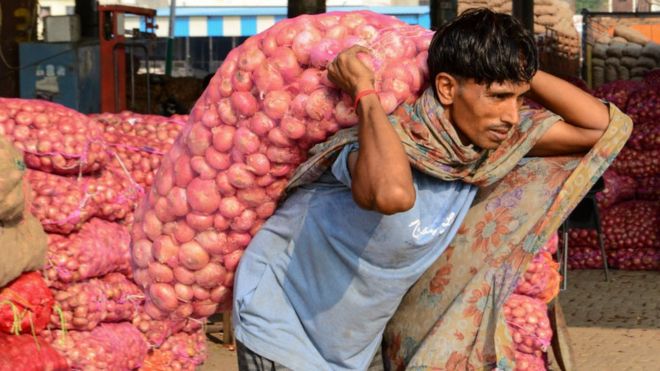
A labourer carries a sack of onions at a wholesale vegetable market on the outskirts of Amritsar on September 19, 2019.Image copyright GETTY IMAGES
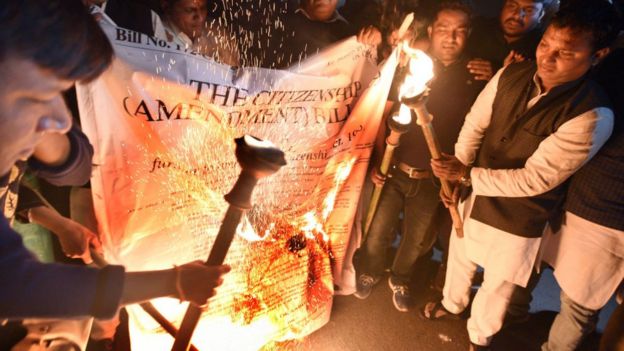
Image caption The onion is India’s most “political” vegetable

Onion prices have yet again dominated the headlines in India over the past week. BBC Marathi’s Janhavee Moole explains what makes this sweet and pungent vegetable so political.

The onion – ubiquitous in Indian cooking – is widely seen as the poor man’s vegetable.

But it also has the power to tempt thieves, destroy livelihoods and – with its fluctuating price a measure of inflation – end the careers of some of India’s most powerful politicians.

With that in mind, it’s perhaps unsurprising those politicians might be feeling a little concerned this week.

So, what exactly is happening with India’s onions?

In short: its price has skyrocketed.

Onion prices had been on the rise in India since August, when 25 rupees ($0.35; £0.29) would have got you a kilo. At the start of October, that price was 80 rupees ($1.13; £0.91).

Fearing a backlash, the Bharatiya Janata Party (BJP)-led government banned onion exports, hoping it would bring down the domestic price. And it did.

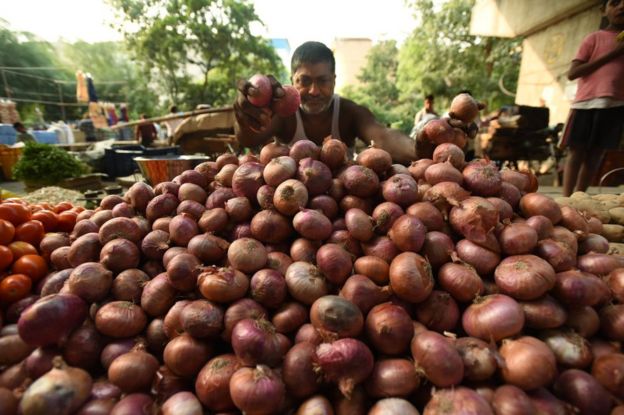
Vegetable vendors sell onions by the road, at Sector 25 on September 24, 2019 in Noida, India.Image copyright GETTY IMAGES
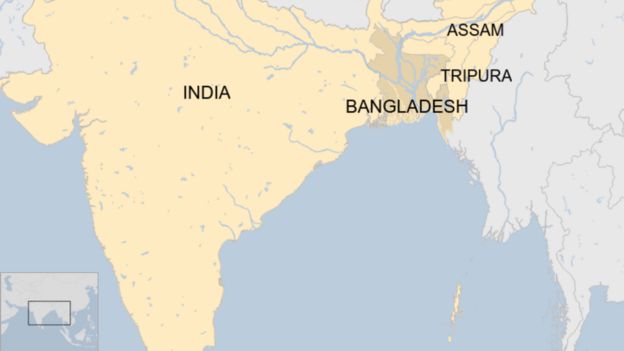
Image caption Onion prices peaked by the end of September

A kilo was selling for less than 30 rupees on Thursday at Lasalgaon, Asia’s largest onion wholesale market, located in the western state of Maharashtra.

However, not everyone is happy.

While high prices had angered consumers in a sluggish Indian economy, the fall in prices sparked protests by exporters and farmers in Maharashtra, where state elections are due in weeks.

And it is not just at home where hackles have been raised: the export ban has also strained trade relations between India and its neighbour, Bangladesh, which is among the top importers of the vegetable.

But why does the onion matter so much?

The onion is a staple vegetable for the poor, indispensable to many Indian cuisines and recipes, from spicy curries to tangy relishes.

“In Maharashtra, if there are no vegetables or you can’t afford to buy vegetables, people eat ‘kanda bhakari’ [onion with bread],” explains food historian Dr Mohseena Mukadam.

True, onions are not widely used in certain parts of the country, such as the south and the east – and some religious communities don’t eat them at all.

But they are especially popular in the more populous northern states which – notably – send a higher number of MPs to India’s parliament.

“Consumers in northern India wield more power over the federal government. So although consumers in other parts of India don’t complain as much about higher prices, if those in northern India do, the government feels the pressure,” says Milind Murugkar, a policy researcher.

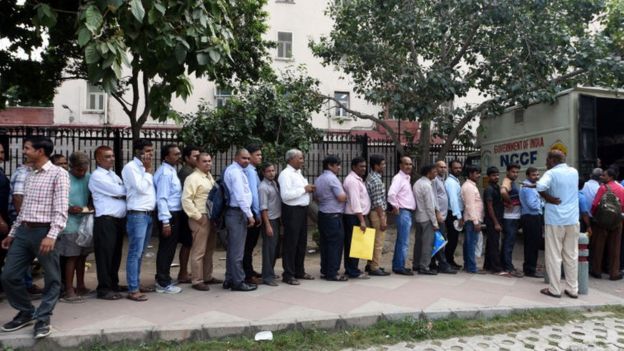
People stand in a queue to buy onions sold at Rs. 22 per kg by the Government of India, outside Krishi Bhawan on September 24, 2019 in New Delhi, India.Image copyright GETTY IMAGES
Image caption Onions are so ubiquitous that the government has been selling them at subsided rates

A drop in prices also affects the income of onion farmers, mainly in Maharashtra, Karnataka in the south and Gujarat in the west.

“Farmers see the onion as a cash crop that grows in the short term, and grows well in dry areas with less water,” says Dipti Raut, a journalist, who has been on the “onion beat” for years.

“It’s like an ATM machine that guarantees income to farmers and sometimes, their household budget depends on the onion produce,” she said.

Onions have even attracted robbers: when prices skyrocketed in 2013, thieves tried to steal a truck loaded with onions, but were caught by the police.

Why do politicians care about the onion?

Put simply, because the price moving too far one way or another is likely to anger a large block of voters, be they everyday households, or the country’s farmers.

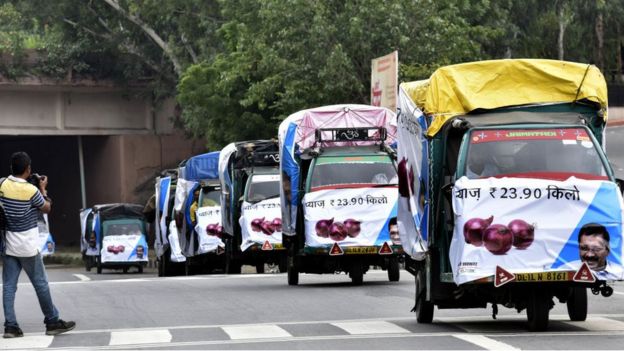
Control rate onion vans seen after flagged off by Chief Minister of Delhi Arvind Kejriwal, at Delhi secretariat, on September 28, 2019 in New Delhi, India.Image copyright GETTY IMAGES
Image caption The Delhi government transported 70 vans full of subsidised onions

Onions are so crucial they have even featured in election campaigns. The Delhi state government bought and sold them at subsidised rates in September when prices were at their peak: chief minister Arvind Kejriwal, it should be noted, is up for re-election next year.

Meanwhile, Indira Gandhi swept to power in 1980 on slogans that used soaring onion prices as a metaphor for the economic failures of the previous government.

But why did onion prices rise this year?

A drop in supply, due to heavy rains and flooding destroying the crop in large parts of India, and damaging some 35% of the onions stocks in storage, according to Nanasaheb Patil, director of the National Agricultural Co-operative Marketing Federation.

He said the flooding had also delayed the next round of produce, which was due in September.

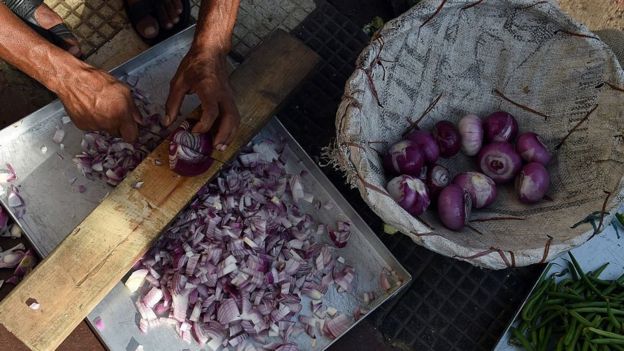
An Indian restaurant worker cuts onions for curries in New Delhi on September 11, 2015.Image copyright GETTY IMAGES
“This has become a fairly regular phenomenon in recent decades,” Mr Murugkar said. “Onion prices swing heavily with a small drop or increase in production.”

In fact, the shortage – and subsequent rise in prices – happens almost every year around this time, according to Ms Raut.

“It’s a vicious cycle and the trader lobby and middlemen benefit from even the slightest price fluctuations,” she added.

What’s the solution?

Ms Raut says more grass-root planning and better storage facilities and food processing services will ease the problem – and making a variety of cash crops and vegetables available across the country would also ease the pressure on onions.

“The government is quick to act when onion prices rise. Why don’t they act as swiftly when prices fall?” asked Vikas Darekar, an onion farmer in Maharashtra. He said the government should buy onions from farmers at a “fair price”.

Mr Murugkar, however, feels that the government should never interfere in “onion matters”.

“If you are interested in raising purchasing power of the people, they should not curtail exports. Do we have such a ban on software exports? It’s really absurd. A government which has won such a huge majority should be able to withstand the pressures from a few consumers.”

Source: The BBC

Law of Unintended Consequences

continuously updated blog about China & India

ChiaHou's Book Reviews

continuously updated blog about China & India

What's wrong with the world; and its economy

continuously updated blog about China & India