Chindia Alert: You’ll be Living in their World Very Soon
aims to alert you to the threats and opportunities that China and India present. China and India require serious attention; case of ‘hidden dragon and crouching tiger’.
Without this attention, governments, businesses and, indeed, individuals may find themselves at a great disadvantage sooner rather than later.
The POSTs (front webpages) are mainly 'cuttings' from reliable sources, updated continuously.
The PAGEs (see Tabs, above) attempt to make the information more meaningful by putting some structure to the information we have researched and assembled since 2006.
US President Donald Trump and Indian Prime Minister Narendra Modi exchanged warm words of friendship in Texas at a rare mass rally for a foreign leader.
Around 50,000 people gathered for what Mr Trump called a “profoundly historic event” on Sunday in Houston.
The “Howdy, Modi!” event was billed as one of the largest ever receptions of a foreign leader in the US.
Mr Modi, however, may face a frostier reception at the UN General Assembly.
He is likely to face criticism over tensions in Indian-administered Kashmir, which he stripped of its special status last month, promising to restore the region to its “past glory”.
The region has been in lockdown for more than a month with thousands of activists, politicians and business leaders detained.
Trade talks and the UN General Assembly are on the Indian prime minister’s agenda during his week-long visit to the United States.
Pakistani Prime Minister Imran Khan, who has been the most vocal international leader to oppose India’s Kashmir move, is also in the US for the UN conference. Like Mr Modi, he will have a one-on-one meeting with Mr Trump on the sidelines of the summit.
A 90-minute show, featuring 400 performers, warmed up the crowd before Mr Modi and Mr Trump shared the stage.
“I’m so thrilled to be here in Texas with one of America’s greatest, most devoted and most loyal friends, Prime Minister Modi of India,” Mr Trump told the crowd.
Image copyright GETTY IMAGESImage caption Narendra Modi and Donald Trump leave the stage holding hands at Houston’s NRG Stadium
In his speech, Mr Modi said India has a “true friend” in the White House, describing Mr Trump as “warm, friendly, accessible, energetic and full of wit”.
“From CEO to commander-in-chief, from boardrooms to the Oval Office, from studios to the global stage… he has left a lasting impact everywhere,” Mr Modi said.
Personal-touch diplomacy played to perfection
Brajesh Upadhyay, BBC News, Houston
This was exactly the kind of crowd size and energy President Trump loves at his rallies.
Only here the chants were for Indian Prime Minister Narendra Modi and Mr Trump was the superstar invited to the party. But the crowd did not disappoint him either and greeted him with chants of “USA!”, most heard at Trump rallies.
The personal-touch diplomacy with Mr Modi’s trademark bear hugs was played to perfection.
This rally has been called a win-win for both the leaders. For President Trump, it was a chance to court Indian-Americans for the 2020 presidential election race where Texas could emerge as a battleground state. For Mr Modi, a PR triumph and picture with the president of the United States may help him shrug off the criticism over his recent strong-arm policies at home.
Houston’s NRG Stadium, where the event was hosted, was the first stop for Mr Modi, whose Hindu nationalist Bharatiya Janata Party (BJP) won a landslide victory in this year’s Indian elections.
Greeted by a standing ovation, Mr Trump used his speech to heap praise on Mr Modi, who he said was doing a “truly exceptional job for India” and its people.
Mr Trump also paid tribute to the Indian-American community, telling them “we are truly proud to have you as Americans”.
The US has a population of about 4 million Indians who are seen as an increasingly important vote bank in the country.
Apart from Mr Trump, organisers also invited Democrats to the event – House Majority Leader Steny Hoyer was among those who spoke.
The 2010 US census shows that Texas is home to the fourth-largest Indian-American population in the country after California, New York and New Jersey.
Analysis of voting patterns shows the community tends overwhelmingly to support the Democrat party.
Image copyright GETTY IMAGESImage caption The event, dubbed “Howdy, Modi!”, was attended by an estimated 50,000 people
No stranger to nationalist rhetoric himself, Mr Trump compared security at the US-Mexico border to the tensions between India and Pakistan in the tinderbox Kashmir region.
“Both India and US also understand that to keep our communities safe, we must protect our borders,” Trump said.
Image copyright GETTY IMAGESImage caption Donald Trump described Narendra Modi as one of America’s most “loyal friends”
In India, the rally was closely watched, with most mainstream media outlets running live news updates of what was transpiring on stage.
The event had been making headlines for days before as well.
On Twitter, many people shared instant analysis and opinions of what was taking place on the stage with the sentiment being overwhelmingly positive. Many praised Mr Modi for what they saw as his statesmanship and diplomatic acumen with a lot of praise coming in for the US president as well.
SRINAGAR/NEW DELHI (Reuters) – Authorities in Indian Kashmir have arrested nearly 4,000 people since the scrapping of its special status last month, government data shows, the most clear evidence yet of the scale of one of the disputed region’s biggest crackdowns.
Muslim-majority Kashmir, claimed by both India and Pakistan, has been in turmoil since India stripped its portion of the region of its autonomy and statehood on Aug. 5, leading to clashes between security forces and residents and inflaming tension with Pakistan.
India said the removal of the status that its part of Kashmir has held since independence from Britain in 1947 would help integrate it into the Indian economy, to the benefit of all.
In an attempt to stifle the protests that the reform sparked in Kashmir, India cut internet and mobile services and imposed curfew-like restrictions in many areas.
It has also arrested more than 3,800 people, according to a government report dated Sept. 6 and seen by Reuters, though about 2,600 have since been released.
A spokeswoman for India’s interior ministry did not respond to a request for comment. Neither did Jammu and Kashmir police.
It was not clear on what basis most of the people were being held but an Indian official said some were held under the Public Safety Act, a law in Jammu and Kashmir state that allows for detention for up to two years without charge.
The data for the first time shows the extent of the detentions, as well as indicating who was picked up and where.
More than 200 politicians, including two former chief ministers of the state were arrested, along with more than 100 leaders and activists from an umbrella organisation of pro-separatist political groups.
The bulk of those arrested – more than 3,000 – were listed as “stone pelters and other miscreants”. On Sunday, 85 detainees were shifted to a prison in Agra in northern India, a police source said.
Rights group Amnesty International said the crackdown was “distinct and unprecedented” in the recent history of the region and the detentions had contributed to “widespread fear and alienation”.
“The communication blackout, security clampdown and detention of the political leaders in the region has made it worse,” said Aakar Patel, head of Amnesty International India.
‘RIGHT TO LIFE’
India says the detentions are necessary to maintain order and prevent violence, and points to the relatively limited number of casualties compared with previous bouts of unrest.
The government says only one person is confirmed to have died compared with dozens in 2016, when the killing of a militant leader sparked widespread violence.
“The right to life is the most important human right,” India’s national security adviser Ajit Doval told reporters recently.
The report contains data from the 13 police districts that make up the Kashmir Valley, the most populous part of the Himalayan region where the main city of Srinagar is located.
The largest number of arrests have been in Srinagar, the data shows, at nearly 1,000. Earlier unrest often centred in rural areas.
Of the detained political leaders, more than 80 were from the People’s Democratic Party, formerly in coalition in Jammu and Kashmir state with the ruling Bharatiya Janata Party.
About 70 are from the National Conference, which has for years dominated politics in Indian Kashmir, and more than a dozen from India’s main opposition Congress party.
Police also arrested more than 150 people accused of association with militant groups fighting Indian rule.
An Indian official said it was likely that more than 1,200 people were still held, including all the high-profile politicians and separatists mentioned in the report, while dozens more are being arrested every day.
In the 24 hours before the report was compiled, more than two dozen people were arrested, mainly on suspicion of throwing stones at troops, the data showed.
The data did not include those under informal house arrest, nor people detained in a round-up of separatists that began in February after a bomb attack by a Pakistan-based militant group on Indian troops.
Days before India’s move to strip Kashmir of special status, one prominent separatist leader told Reuters that more than 250 people with links to the movement were already in detention.
Image copyright GETTY IMAGESImage caption Four million people were stripped of their citizenship in the draft list last July
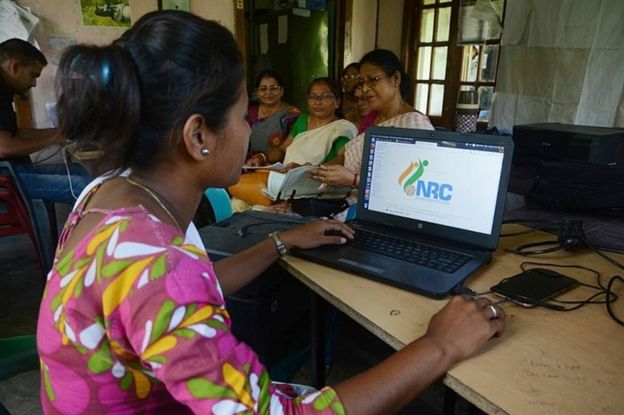
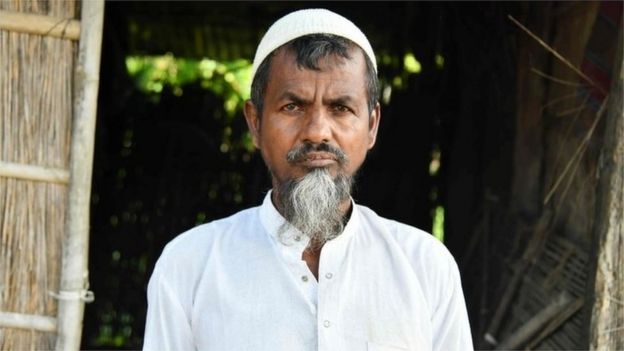
India has published the final version of a list which effectively strips about 1.9 million people in the north-eastern state of Assam of their citizenship.
The National Register of Citizens (NRC) is a list of people who can prove they came to the state by 24 March 1971, the day before neighbouring Bangladesh declared independence from Pakistan.
People left off the list will have 120 days to appeal against their exclusion.
It is unclear what happens next.
India says the process is needed to identify illegal Bangladeshi migrants.
It has already detained thousands of people suspected of being foreigners in temporary camps which are housed in the state’s prisons, but deportation is currently not an option for the country.
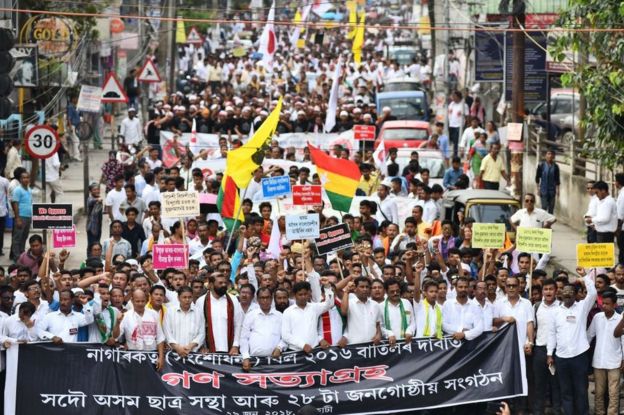
The process has also sparked criticism of “witch hunts” against Assam’s ethnic minorities.
A draft version of the list published last year had four million people excluded.
What is the registry of citizens?
The NRC was created in 1951 to determine who was born in Assam and is therefore Indian, and who might be a migrant from neighbouring Bangladesh.
The register has been updated for the first time.
Image copyright EPAImage caption The NRC was created in 1951 to determine who was born in the state and is Indian
Families in the state have been required to provide documentation to show their lineage, with those who cannot prove their citizenship deemed illegal foreigners.
Prime Minister Narendra Modi’s Hindu nationalist Bharatiya Janata Party (BJP) has long railed against illegal immigration in India but has made the NRC a priority in recent years.
An anxious wait
By Rajini Vaidyanathan, BBC News, Assam
A small community centre in the village of Katajhar is being guarded by two members of the Indian army. Outside, a line of people wait. Some are clutching plastic bags containing documents.
As they enter one of two rooms, an official runs his eyes down a print-out to see if their names or photos are on it. This list – the National Register of Citizens – is one with huge consequences. And so there’s fear and trepidation as people here find out whether they’ve been included.
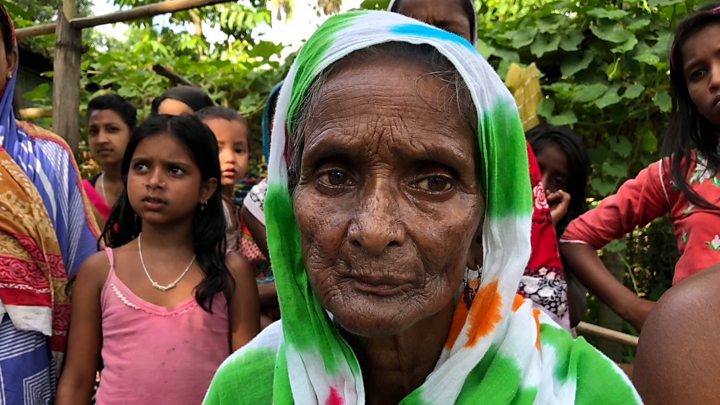
Many here who haven’t made it tell me it’s a mistake as they show me paperwork they say proves they belong in this country.
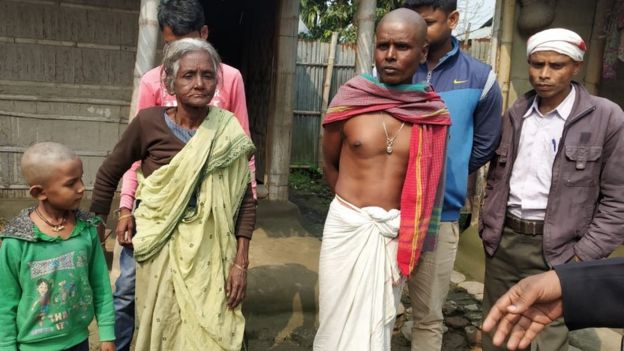
None of Asia Khatun’s family of nine made the list. They now have the chance to appeal but there’s real fear about what might come next. “I’d rather die than go to a detention centre,” she tells me. People here are angry but they’re also scared.
Why is the registry happening in Assam?
Assam is one India’s most multi-ethnic states. Questions of identity and citizenship have long vexed a vast number of people living there.
Among its residents are Bengali and Assamese-speaking Hindus, as well as a medley of tribespeople.
A third of the state’s 32 million residents are Muslims, the second-highest number after Indian-administered Kashmir. Many of them are descendants of immigrants who settled there under British rule.
But illegal migration from neighbouring Bangladesh, which shares a 4,000-km long border with India, has been a concern there for decades now. The government said in 2016 that an estimated 20 million illegal immigrants were living in India.
So have 1.9 million people effectively become stateless?
Not quite. Residents excluded from the list can appeal to the specially formed courts called Foreigners Tribunals, as well as the high court and Supreme Court.
However, a potentially long and exhaustive appeals process will mean that India’s already overburdened courts will be further clogged, and poor people left off the list will struggle to raise money to fight their cases.
Image copyright AFPImage caption Saheb Ali, 55, from Goalpara district, has not been included in the list
If people lose their appeals in higher courts, they could be detained indefinitely.
Some 1,000 people declared as foreigners earlier are already lodged in six detention centres located in prisons. Mr Modi’s government is also building an exclusive detention centre, which can hold 3,000 detainees.
“People whose names are not on the final list are really anxious about what lies ahead. One of the reasons is that the Foreigners Tribunal does not have a good reputation, and many people are worried that they will have to go through this process,” Sangeeta Barooah Pisharoty, author of Assam: The Accord, The Discord, told the BBC.
Why have been the courts so controversial?
The special courts were first set up in 1964, and since then they have declared more than 100,000 people foreigners. They regularly identify “doubtful voters” or “illegal infiltrators” as foreigners to be deported.
But the workings of the specially formed Foreigners Tribunals, which have been hearing the contested cases, have been mired in controversy.
There are more than 200 such courts in Assam today, and their numbers are expected to go up to 1,000 by October. The majority of these tribunals were set up after the BJP came to power in 2014.
The courts have been accused of bias and their workings have often been opaque and riddled with inconsistencies.
Media caption Living in limbo: Assam’s four million unwanted
For one thing, the burden of proof is on the accused or the alleged foreigner.
For another, many families are unable to produce documents due to poor record-keeping, illiteracy or because they lack the money to file a legal claim.
People have been declared foreigners by the courts because of differences in spellings of names or ages in voter rolls, and problems in getting identity documents certified by authorities. Amnesty International has described the work by the special courts as “shoddy and lackadaisical”.
Journalist Rohini Mohan analysed more than 500 judgements by these courtsin one district and found 82% of the people on trial had been declared foreigners. She also found more Muslims had been declared foreigners, and 78% of the orders were delivered without the accused being ever heard – the police said they were “absconding”, but Mohan found many of them living in their villages and unaware they had been declared foreigners.
“The Foreigners Tribunal,” she says, “must be made more transparent and accountable.”
Both the citizen’s register and the tribunals have also sparked fears of a witch hunt against Assam’s ethnic minorities.
Have the minorities been targeted?
Many say the list has nothing to do with religion, but activists see it as targeting the state’s Bengali community, a large portion of whom are Muslims.
They also point to the plight of Rohingya Muslims in neighbouring Bangladesh.
Image copyright GETTY IMAGESImage caption The move to make millions of people stateless will probably spark protests
However significant numbers of Bengali-speaking Hindus have also been left off the citizenship list, underscoring the communal and ethnic tensions in the state
“One of the communities worst affected by the list are the Bengali Hindus. There are as many of them in detention camps as Muslims. This is also the reason just days before NRC is to be published the BJP has changed tack, from taking credit for it to calling it error-ridden. That is because the Bengali Hindus are a strong voter base of the BJP,” says Barooah Pisharoty.
And in an echo of US President Donald Trump’s policy to separate undocumented parents and children, families have been similarly broken up in Assam.
Detainees have complained of poor living conditions and overcrowding in the detention centres.
Image copyright CITIZENS FOR JUSTICE AND PEACEImage caption A father and son killed themselves 30 years apart because of citizenship doubts (photo shows funeral)
One detainee told a rights group after his release he had been taken to a room which had a capacity for 40 people, but was filled with around 120 people. People who have been declared foreigners as well as many inmates have been suffering from depression. Children have also been detained with their parents.
Human rights activist Harsh Mander, who visited two detention centres, has spoken about a situation of “grave and extensive human distress and suffering”.
What happens to people who are declared foreigners?
The BJP which rules the state, has insisted in the past that illegal Muslim immigrants will be deported. But neighbouring Bangladesh will definitely not accede to such a request.
Many believe that India will end up creating the newest cohort of stateless people, raising the spectre of a homegrown crisis that will echo that of the Rohingya people who fled Myanmar for Bangladesh.
It is not clear whether the people stripped of their Indian citizenship will be able to access welfare or own property.
One possibility is that once they are released, they will be given work permits with some basic rights, but will not be allowed to vote.
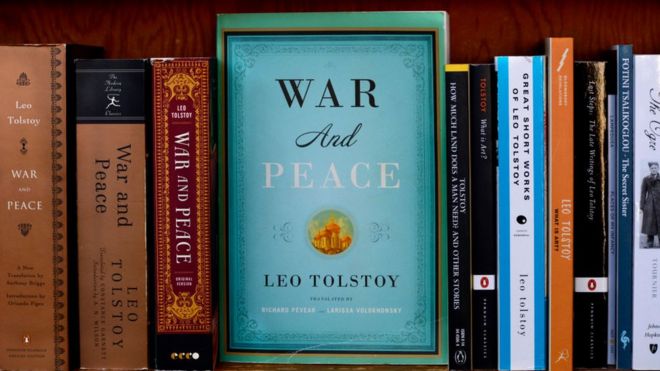
Leo Tolstoy’s War and Peace is in the news in India after a judge asked an activist to explain why he had a book “about war in another country”.
Vernon Gonsalves had appeared in the high court in Mumbai city on Wednesday for a hearing on his bail plea.
The judge’s question sparked a flurry of tweets, with users both outraged and bemused by it.
Five activists, including Mr Gonsalves, were arrested in August 2018 in connection with caste-based violence.
Police raided and searched their homes at the time and submitted a list of books, documents and other belongings to the court. The public prosecutor told the court that police had found “incriminating evidence” in Mr Gonsalves’ home, including “books and CDs with objectionable titles”.
“Why were you having these books and CDs at your home? You will have to explain this to the court,” the judge told Mr Gonsalves.
Police said that all five activists incited Dalits (formerly untouchables) at a large public rally on 31 December 2017, leading to violent clashes that left one person dead. They accused them of “radicalising youth” and taking part in “unlawful activities” which led to violence and showed “intolerance to the present political system”.
The arrests had been criticised by many at the time who saw them as an attack on free speech, and even a “witch hunt” against those who challenged the governing Bharatiya Janata Party (BJP).
So the judge’s question quickly made news and War and Peace was soon trending on Twitter.
The tweets ranged from jokes to shock over the state of India’s judiciary.
Others wondered how they would fare in a courtroom given what’s on their bookshelf, and some have issued a call out asking people to share books from their own “subversive” collection.
BHUBANESWAR (Reuters) – Members of Indian Prime Minister Narendra Modi’s Bharatiya Janata Party (BJP) have mounted protests that have paralysed production at one of India’s biggest coalfields following a deadly accident last week.
The BJP workers have been staging sit-down protests and waving flags at state-run Coal India Ltd’s mines in the eastern state of Odisha, demanding a safety audit of all mines in the region.
Rescue officials said they have recovered the bodies of three workers who were trapped inside the mine in Odisha’s Angul district after a landslide on Tuesday, and are trying to recover another body from inside the mine.
Kalandi Samal, a local BJP leader who is leading the protests, said the demonstrations will continue until authorities ensure safety measures to prevent such tragedies and ensure adequate compensation to the victims.
“We demand specific guidelines on safety audits of mines,” Samal said.
Production at Odisha state’s Talcher coalfields, which account for at least an eighth of Coal India’s annual production, has not resumed after the accident, said Dikken Mehra, a spokesman for Mahanadi Coalfields Ltd, a unit of Coal India.
State-run Coal India has a near monopoly on the coal industry in India, producing more than four-fifths of the country’s coal output.
“The forced stoppage of all the mines at Talcher has resulted in a cumulative loss of 842,000 tonnes of coal production,” Mehra told Reuters, adding that the company has suffered a loss of about 856.8 million rupees (£10 million).
Srinivas Khuntia, a senior leader at BJP-affiliated trade union Bharatiya Mazdoor Sangh, called the protests “unjustified, especially when its own government is in power”.
“There is no justification why you would stop all the mining operations,” Khuntia told Reuters.
Though deaths at coal mines in India have come down over time, it remains one of the most dangerous countries to be a coal miner, with one worker dying every seven days on average in state-run mines in 2018.
In addition, thousands of workers, including children, have been killed in illegal rat-hole mines that are notorious for their poor safety record, with many accidents going unreported.
“We are in talks with all the stakeholders to resolve the issues as soon as possible,” Mehra said, without divulging details on the timeframe for resumption of production.
Coal India is trying to divert supplies from elsewhere to ensure coal availability at utilities and companies that normally rely on the Odisha coalfields.
Those entities include state-owned NTPC Ltd, India’s biggest electricity generator, as well as the state-owned National Aluminium Company Ltd (NALCO).
“Production will be affected if the mines remain shut for more days,” said Tapan Kumar Chand, chairman of NALCO.
Image copyright BBC HINDIImage caption A video showing Tabrez Ansari pleading for his life was widely circulated on social media
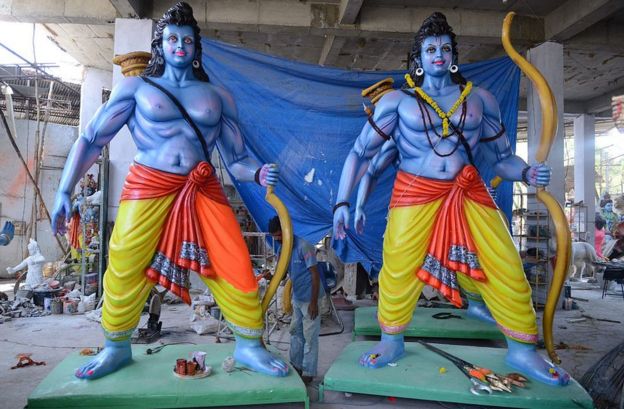
In many parts of India, Hindus often invoke the popular god Ram’s name as a greeting. But in recent years, Hindu lynch mobs have turned Ram’s name into a murder cry, writes the BBC’s Geeta Pandey in Delhi.
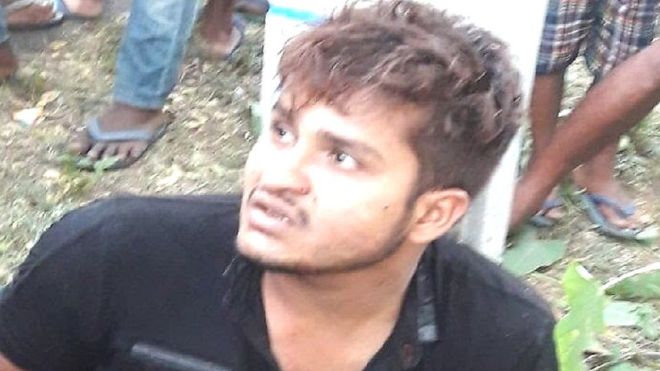
Last month, a video that went viral on social media showed a terrified Muslim man tied to a pole being assaulted by a lynch mob made up of Hindu men in the eastern state of Jharkhand.
In the video, 24-year old Tabrez Ansari is seen pleading for his life, blood and tears streaming down his face.
His attackers force him to repeatedly chant “Jai Shri Ram”, which translates from Hindi to “hail Lord Ram” or “victory to Lord Ram”.
Mr Ansari does as told, and when the mob is finished with him, he is handed over to the police.
The police lock him up and his family is not allowed to see him. He dies four days later from injuries sustained during the attack.
Mr Ansari is not the only one to have been singled out in this manner. June was a particularly bloody month for Indian Muslims, who were targeted in several such attacks.
In Barpeta district in the north-eastern state of Assam, a group of young Muslim men were assaulted and then made to chant slogans like “Jai Shri Ram”, “Bharat Mata ki Jai” (long live Mother India) and “Pakistan murdabad” (death to Pakistan).
In the commercial capital Mumbai, a 25-year-old Muslim taxi driver was abused, beaten up and told to chant “Jai Shri Ram” by a group of men. Faizal Usman Khan said he was attacked when his taxi broke down and he was trying to fix it. His attackers fled after a passenger called the police.
And in the eastern city of Kolkata, Hafeez Mohd Sahrukh Haldar, a 26-year-old Muslim teacher at a madrassa (religious seminary), was heckled while travelling on a train by a group of men chanting “Jai Shri Ram”.
He told reporters that they made fun of his clothes and beard, and then insisted that he also chant the slogans. When he refused, they pushed him out of the moving train. Mr Haldar was injured, but lived to tell the tale.
The slogan-shouting and heckling is no longer restricted to the mob and the streets. Worryingly, it has also entered parliament.
When the newly-elected lower house convened for the first time on 17 June, Muslim and opposition MPs were heckled by members of Prime Minister Narendra Modi’s Bharatiya Janata Party (BJP) when they stood up to take the oath.
The attacks on the minorities have been condemned by opposition politicians. Rahul Gandhi, before he resigned as leader of the main opposition Congress party, described the mob lynching of Tabrez Ansari as a “blot on humanity”.
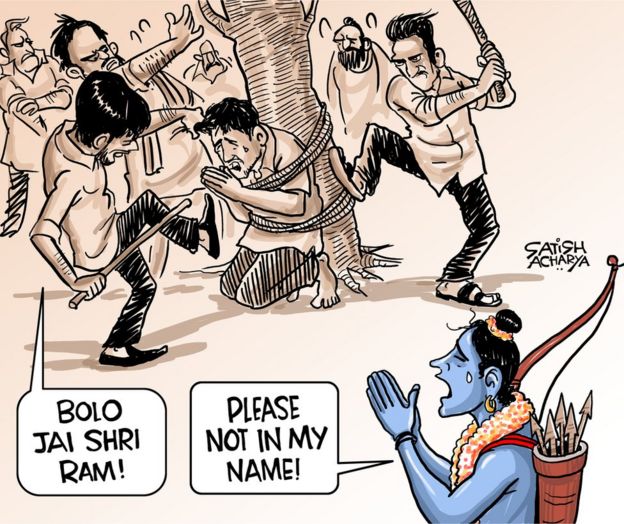
Many critics, including cartoonist Satish Acharya, have also expressed alarm over the rising number of such incidents.
Image copyright COURTESY: SATISH ACHARYAImage caption Cartoonist Satish Acharya says using Ram’s name to unleash violence risks widening India’s religious divide
In villages across north India, devout Hindus have traditionally used “Ram Ram”, “Jai Siya Ram” (goddess Siya or Sita is Ram’s consort) or “Jai Ram Ji Ki” as a greeting.
And many feel a sense of unease that these attacks and killings are being carried out in the name of a god revered by millions for his sense of justice and benevolence.
But “Jai Shri Ram” has now been turned into a cry of attack, meant to intimidate and threaten those who worship differently.
The party’s then president LK Advani launched a march supporting the construction of the temple and in December 1992 mobs chanting “Jai Shri Ram” marched upon the northern town and tore down the 16th Century Babri mosque.
The BJP believes the mosque was built after the destruction of a temple to Ram that once stood there.
The campaign galvanised Hindu voters in favour of the BJP and helped turn Ram from personal to political. Since then, the party has consistently invoked the deity during elections and the 2019 polls were no exception.
Critics say those who heckle minorities, inside parliament and outside it, see the BJP’s sweeping victory in the April/May elections as sanctioning their behaviour. The party won more than 300 seats in the 543-member lower house, propelling Mr Modi to a second term.
Mr Modi’s first term in power was marked by violence against minorities. There were numerous incidents of Muslims being attacked by so-called “cow vigilantes” over rumours that they had eaten beef, or that they were trying to smuggle cows – an animal many Hindus consider holy – for slaughter.
The prime minister did not condone such attacks, but was criticised for not condemning them either.
Image copyright GETTY IMAGESImage caption Millions of Hindus revere the god Ram for his sense of justice and benevolence
But right after the BJP’s stunning victory in May, Mr Modi expanded his earlier slogan of “sabka saath, sabka vikas” (development for all) to include “sabka vishwas” (to win the trust of everyone), giving rise to hopes that this term would be different.
A few days after Tabrez Ansari’s death, he told parliament that he was “pained” by the incident and that “the guilty must be severely punished”.
But many Indians doubt that any serious action will be taken against those who carry out such attacks.
Several dozen people have been killed and hundreds injured since 2014 in mob attacks, but there have been convictions in only a handful of cases.
In others, the accused remain free, often due to a lack of evidence, and some have been seen being feted by Mr Modi’s party’s colleagues.
BJP leaders often downplay such incidents, calling them “minor” and accusing the press of “maligning the image of the government”.
One BJP MP recently told a news website that the popularity of the slogan “Jai Shri Ram” was a sort of protest by Hindus “against a certain bias and tilt of the polity towards minorities”.
“They are also asserting that we are Hindus and we count as Hindus,” he said.
But critics say that there are other – better – ways of doing that.
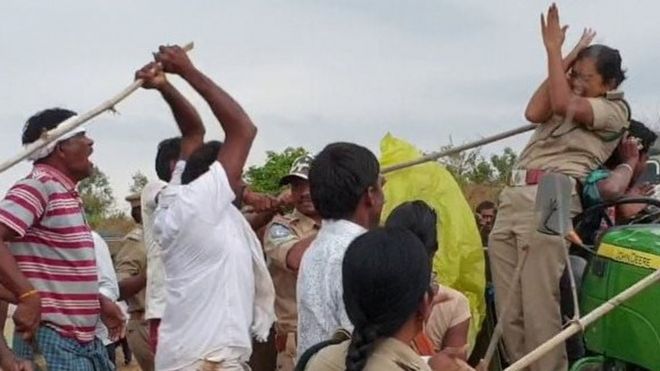
Sixteen men have been arrested after a female forest official was brutally beaten with sticks by a mob as police officers watched in the southern Indian state of Telangana.
The mob, led by a member of the state’s ruling party, was protesting against a tree plantation drive on Sunday.
A video of the incident has gone viral, and the party’s president has condemned the attack on Twitter.
The forest officer is being treated in hospital for severe injuries.
A video of the incident shows the mob attacking the officer with bamboo sticks, as she stands on a tractor and tries to placate them.
She is repeatedly hit with the sticks until forest officials and local police step in to disperse the mob and contain the attack.
The footage has gone viral in India and led to outrage across the country.
This prompted a high-ranking official of the Telangana Rashtra Samithi (TRS) party, Kalvakuntla Taraka Rama Rao, to condemn the incident on Twitter.
I strongly condemn the atrocious behaviour of Koneru Krishna who attacked a forest officer who was doing her job. He has been arrested & a case booked already; no one is above law of the land
The leader of the mob has been identified as Koneru Krishna Rao, a local official who is the brother of a TRS lawmaker. The party confirmed that he has also been arrested.
In his defence, Mr Rao told local media that he was trying to “ensure justice for tribal farmers as forest officials were destroying their crops”.
“The forest department is terrorising tribal farmers and confiscating their land forcefully”, he alleged, adding that the attack was “accidental”.
Media caption ‘This ambitious water project killed my husband’
Two police officers, who were at the scene at the time of the attack, have been suspended for failing to protect the officer, BBC Telugu confirmed.
The incident occurred in the town of Kagaznagar, where the state’s forest department has been authorised to carry out a plantation drive as part of the Kaleshwaram project – a large irrigation scheme, which was inaugurated last week.
Opposition parties in the state, the Bharatiya Janata Party (BJP) and the Congress party, have strongly condemned the attack.
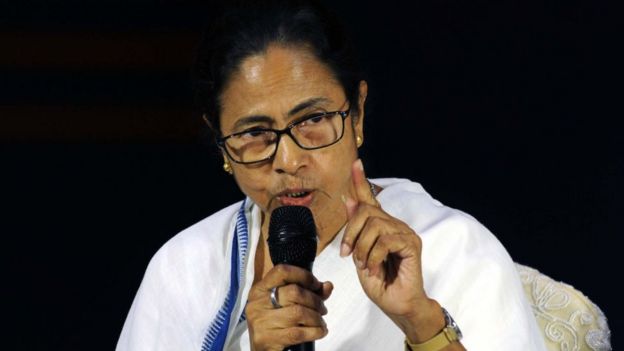
But there is some indication that her popularity has been waning in recent months, which correspondents say has left her rattled.
It could be that this latest statement is an attempt to regain some of the ground she lost to Prime Minister Narendra Modi’s ruling Bharatiya Janata Party (BJP) in the recently concluded general election.
Her party won only 22 of West Bengal’s 42 seats – a big drop from the 32 she won in 2014 – in an election marred by violence which saw a number of political activists in the state killed.
Image copyright GETTY IMAGESImage caption Tamils argue that imposing Hindi will jeopardise their language
The Indian government has revised a controversial draft bill to make Hindi a mandatory third language to be taught in schools across the country.
The draft bill had met particularly strong opposition in the southern state of Tamil Nadu, which has always resisted the “imposition” of Hindi.
In 1965, it saw violent protests against a proposal that Hindi would be India’s only official language.
Tamil is one of the oldest languages and evokes a lot of pride in the state.
However the government decision has not calmed tensions in Tamil Nadu.
The two main political parties in the state, the DMK and AIADMK, have both said that simply revising the draft to say Hindi would not be mandatory is not enough.
The state teaches only two languages – Tamil and English – in the government school curriculum, and the parties do not want a third language introduced at all.
A DMK spokesman told the NDTV news channel that the third language clause would be used as a “back door” to introduce Hindi anyway.
Their rivals, the AIADMK, which allied with the Bharatiya Janata Party (BJP) in the general elections but lost badly in the state, had a similar view.
“Our party has always been clear in our stand. We have always followed a two-language policy. Though mandatory Hindi has been revised in the draft now, we still cannot support this three-language system. Our government will talk to the union government for our rights,” former state education minister and AIADMK spokesman Vaigaichelvan told BBC Tamil.
On Monday, #HindiIsNotTheNationalLanguage began trending on Twitter in India, which saw many from Tamil Nadu facing off against people from other parts of the country and asserting their right not to have the language “imposed” on them.
The BJP government’s real face is beginning to emerge…Hindi is being imposed on South Indians. Tamil Nadu has rebelled against BJP-Govt. Let’s join them to fight the imposition of Hindi! #HindiIsNotTheNationalLanguage
Picture speaks a thousand words! In a diverse country like India, learning a new language should be a choice and not compulsion/imposition.
Declaring any Indian language as a national language will be a joke. #HindiImposition#HindiIsNotTheNationalLanguage
“There is no opposition to actually learning Hindi. In fact with the recent IT boom in the south, so many people from the north have migrated here that its use has become more widespread here. It is true that if you know Hindi you will find it easier to get work in other parts of India, so there are also many people here who willingly learn it. But that should be their choice. What people are opposing is the imposition of it,” senior journalist and political analyst KN Arun told the BBC.
Mr Arun also warned that there was a chance that the issue could lead to further protests in the state, saying that a few hardline Tamil groups had been using the issue to whip up anger among the people.
It is also a particularly emotive issue. Politics in the state is still centred around the ideas and principles of the Dravidian movement, which among other things reveres the Tamil language and links it closely to regional identity.
“Tamil is very rich in literature and different to other languages like Hindi which branched out of Sanskrit. There is fear that the Indian government is trying to slowly introduce Hindi, which will threaten the status of Tamil,” author and journalist Vaasanthi told the BBC.
ISLAMABAD (Reuters) – Pakistani Prime Minister Imran Khan on Sunday spoke to Narendra Modi and congratulated the Indian leader on the runaway election victory of his Hindu-nationalist Bharatiya Janata Party (BJP), both countries said on Sunday.
“Prime Minister Imran Khan spoke to Prime Minister Narendra Modi today and congratulated him on his party’s electoral victory in the Lok Sabha elections in India,” Pakistan’s foreign ministry said in a statement.
“The Prime Minister expressed his desire for both countries to work together for the betterment of their peoples.”
Tensions between India and Pakistan, both nuclear-armed countries, flared in February with cross-border air strikes and a brief battle between fighter jets above Kashmir.
India’s Ministry of External Affairs confirmed Khan had called Modi on Sunday, adding the two leaders had discussed fighting poverty together.
He (Modi) stressed that creating trust and an environment free of violence and terrorism were essential for fostering cooperation for peace, progress and prosperity in our region,” the ministry added in a statement.


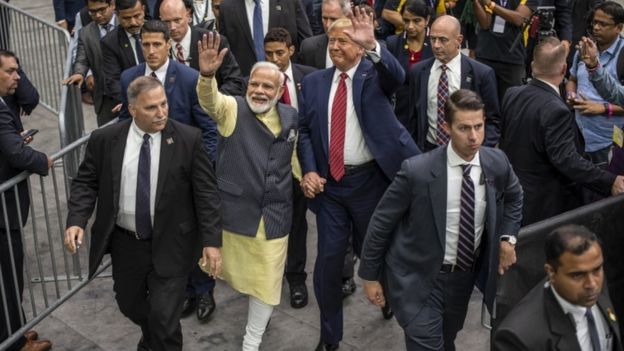 Image copyright GETTY IMAGES
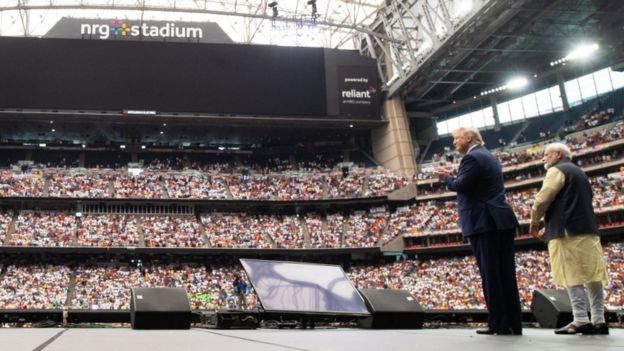 Image copyright GETTY IMAGES
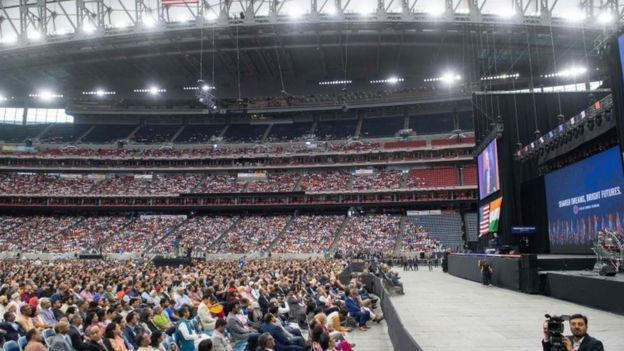 Image copyright GETTY IMAGES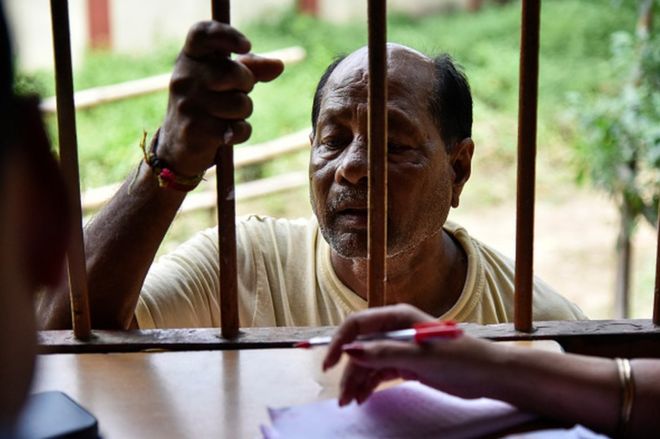






 CHINDIA ALERT: You'll be living in their world, very soon