Chindia Alert: You’ll be Living in their World Very Soon
aims to alert you to the threats and opportunities that China and India present. China and India require serious attention; case of ‘hidden dragon and crouching tiger’.
Without this attention, governments, businesses and, indeed, individuals may find themselves at a great disadvantage sooner rather than later.
The POSTs (front webpages) are mainly 'cuttings' from reliable sources, updated continuously.
The PAGEs (see Tabs, above) attempt to make the information more meaningful by putting some structure to the information we have researched and assembled since 2006.
Police investigation reveals animal had escaped from a nearby restaurant
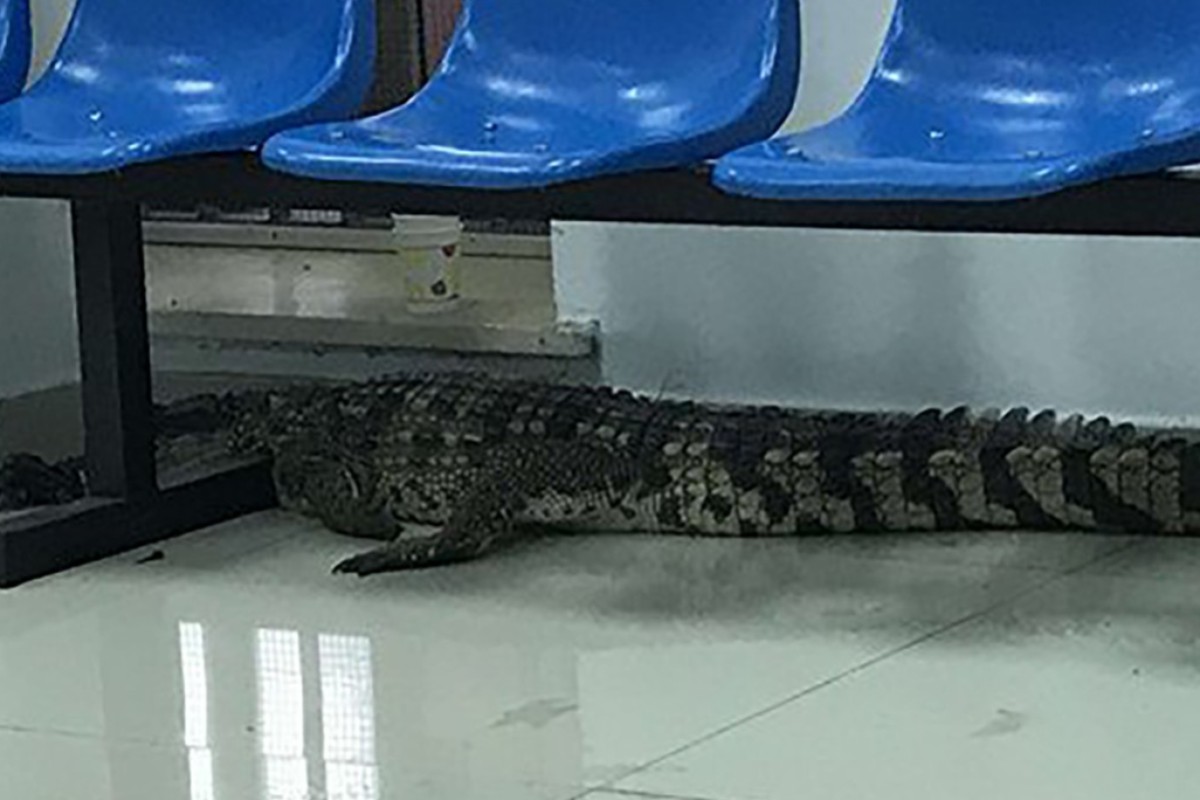
The escaped crocodile was captured by police officers and taken to the local station. Photo: Handout
A security guard at a beauty spot in eastern China was shocked to discover a 2-metre (6ft 6in) crocodile while on his rounds in the early hours of Monday morning.
The animal was lying motionless on a road at Xinlonghu Park in Changzhou, Jiangsu province, with its jaws tied by a strip of cloth, when it was spotted by the security guard, who immediately called the police, according to the Modern Express newspaper.
It took a number of officers to capture the crocodile and take it to the local police station, where an investigation revealed the animal had escaped from a nearby restaurant. The animal was returned and the restaurant owner was “criticised” by police, who urged that a close eye be kept on the animal, the report said.
“They bought it from a farm somewhere as a food material to attract customers. It has been killed for crocodile meat dishes,” an officer told the South China Morning Post on Wednesday.
Crocodiles were once vegetarians – but it was just a phase
Police said it was fortunate that the crocodile had been caught before it had entered the park’s lake or caused any danger to people.
It is unclear what species the crocodile belonged to but China permits the commercial breeding and use of the critically endangered Siamese crocodile, as well as saltwater and Nile crocodiles, which are listed as least concern species.
A staff member of the restaurant, called No. 1 Lakeside, told the Post stewed crocodile meat was on the menu for 168 yuan (US$23.60) a serving, while stewed crocodile claw was also available at 258 yuan.
Crocodile appears in ancient Chinese medicine books as a treatment for respiratory illnesses and the meat has long been regarded as a delicacy, especially in southern China, such as Guangdong province. Crocodile skin also remains a popular material for luxury handbags and other leather goods.
In June, another crocodile, measuring about 1.5 metres, was found in a road puddle during a heavy rain in Wuhan, in the central province of Hubei, where many restaurants have crocodile meat on their menus, the Chutian Metropolis Daily reported.
In that incident it took three officers to capture the animal which was sent to a wildlife centre where a physical check-up showed it had been bred in captivity, most likely for food.
Cheng Qiang was just 12 when a magnitude 8 tremor destroyed his village, but he never forgot the heroism of the soldiers sent to help and swore one day to join their ranks
Now a squad leader, on October 1 he will also be part of the National Day celebrations in Tiananmen Square
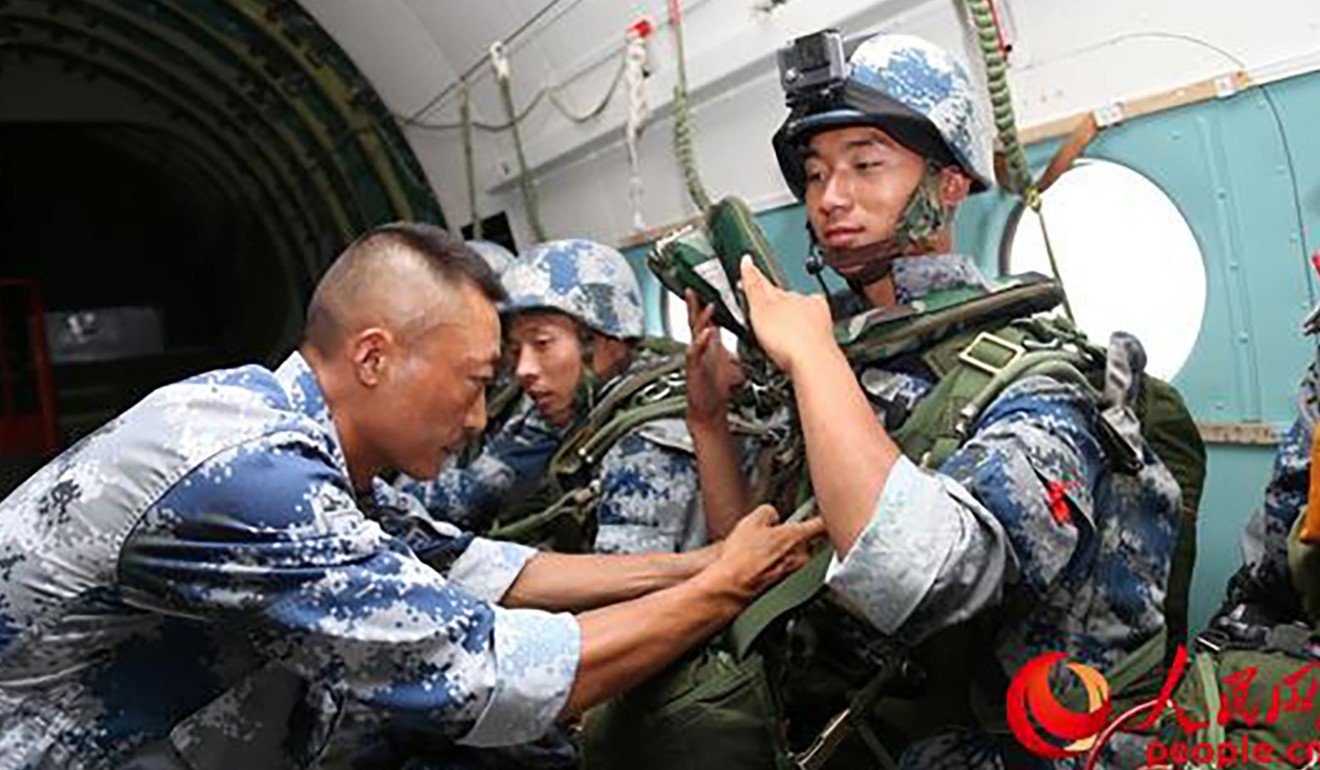
Cheng Qiang was just 12 when his home in Sichuan was hit by a massive earthquake and airborne troops were sent to help. Photo: People.cn
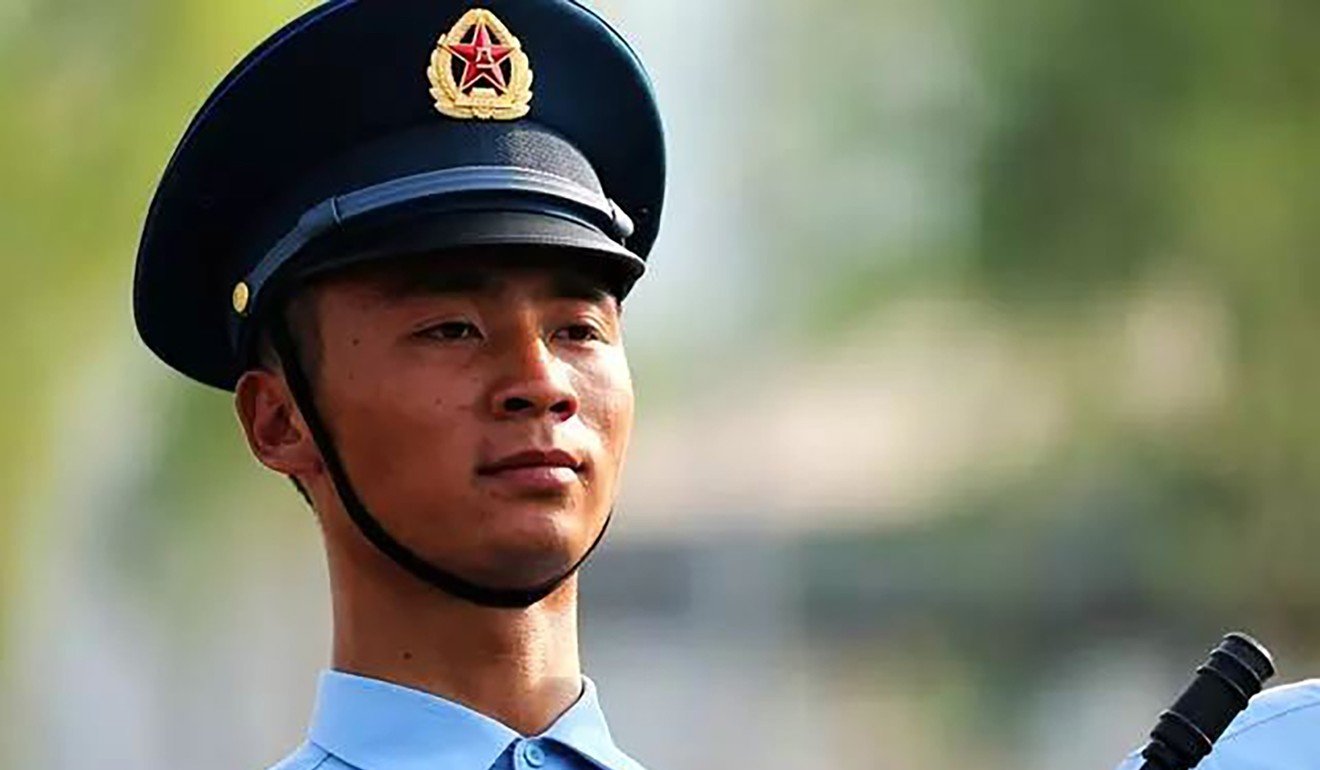
A young man who survived the devastating Sichuan earthquake and vowed to one day join the ranks of the soldiers who spent months rescuing people from the rubble will on Tuesday lead his very own squad of airborne troops in Tiananmen Square as part of the celebrations for the country’s 70th anniversary.
Now 23, Cheng Qiang was just 12 when on May 12, 2008 he and a group of friends played truant from school to go swimming in a local river, Xinhua reported on Thursday.
When the boys had finished their fun they returned to their village in the township of Luoshui to find their school and many other buildings had been razed to the ground. The death toll from the magnitude 8 quake would eventually rise to 87,000, with 370,000 people injured.
Cheng says he is ready to “continue the glory of the airborne troops” at Tuesday’s parade. Photo: Thepaper.cn
In the days and weeks that followed the devastation, tens of thousands of people from around China and the world descended on towns and villages across Sichuan to help with the rescue effort.
But the ones who impressed Cheng the most were the soldiers from the People’s Liberation Army (PLA) with the word “Airborne” printed on the helmets.
“Sometimes they had to remove the debris with their bare hands which were already covered in blood,” he said.
“But they just carried on and eventually pulled dozens of people out of the rubble. I knew then that I wanted to be one of them.”
Cheng said that after the quake having the troops in his village made him feel safe. Photo: People.cn
Having the troops in his village made Cheng feel safe, he said, and he spent his days following them around and doing what he could to help.
Three months later, when the soldiers had completed their work and were preparing to pull out, Cheng said he was determined to show his new heroes just how grateful he was to them.
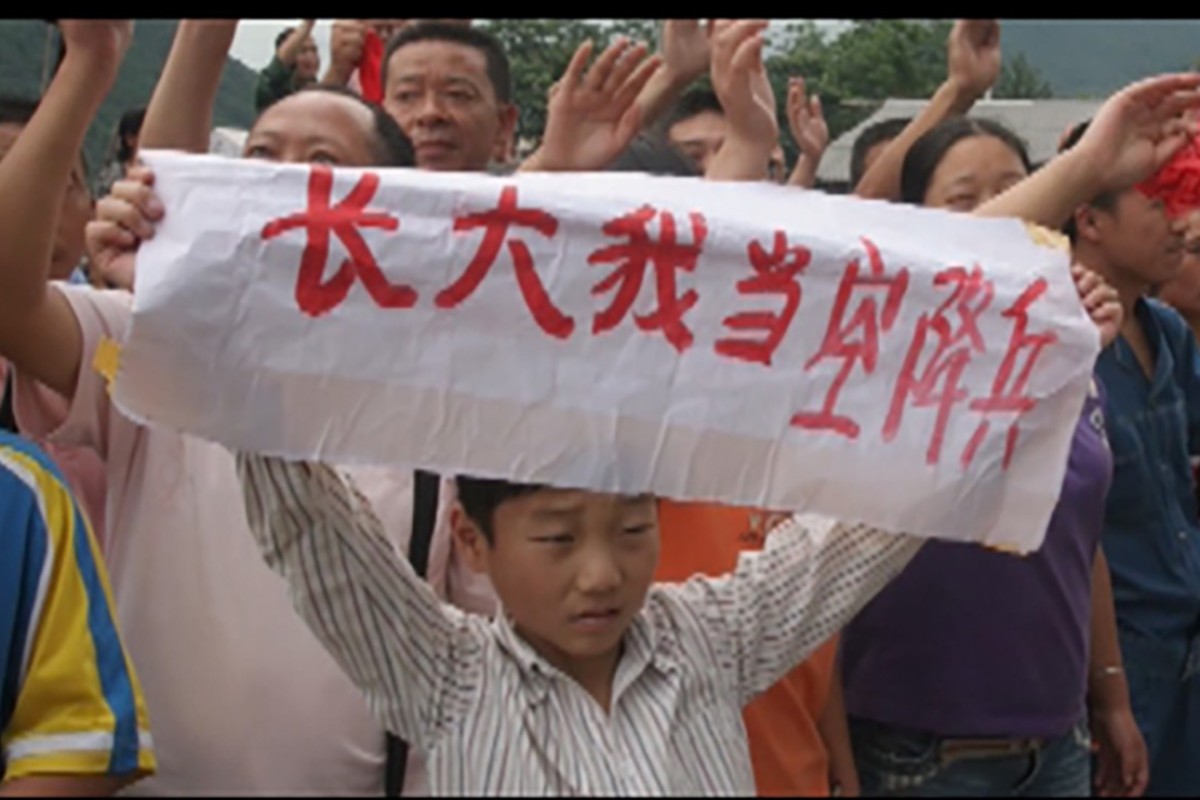
As the villagers gathered at the roadside to bid farewell to the men who had become their saviours, the young boy held up a handwritten sign. It said simply: “I want to be an airborne soldier when I grow up.”
The moment was captured on camera by a press photographer, and the image soon became a symbol of the gratitude felt by the people who had seen their lives and communities shattered but knew they had not been forsaken.
Cheng said he felt dizzy when he first jumped out of a plane. Photo: People.cn
Five years after the troops rolled out, Cheng was preparing to go to college when he heard the PLA was recruiting and that there were places available with the airborne division.
The teenager did not need a second invitation, and after securing a place on a training course and successfully completing it he joined the ranks of his heroes in 2013.
Not that everything was plain sailing, however.
“When I first jumped out of a plane I felt very dizzy and didn’t really know what was going on,” he said.
Thankfully Cheng managed to overcome his vertigo and went on to become a squad leader.
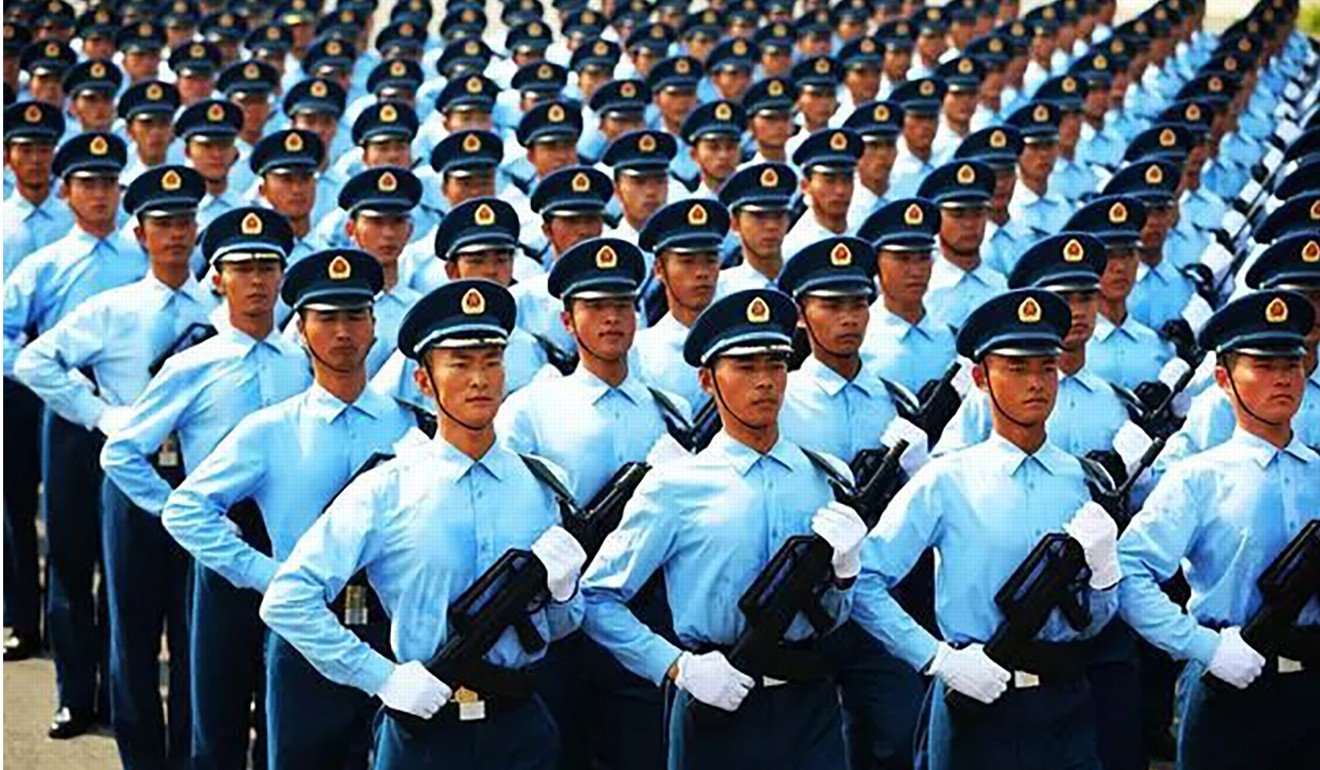
Tens of thousands of troops will take part in China’s National Day parade on October 1. Photo: Thepaper.cn
When the preparations were being made for next week’s anniversary celebrations in Beijing, Cheng said he and his squad were chosen to take part.
He said that during the rehearsals for the grand parade, he was repeatedly reprimanded by his trainer for not keeping his knees close enough together, for lifting his feet too high and for letting his gun slip off shoulder.
But he was determined to get it right, and after weeks of hard work and 11 years on from the tragedy that devastated his world, he said he was now ready to put his best foot forward.
“The nightmare of earthquake has long gone,” he said. “I am here to continue the glory of the airborne troops. I am ready for inspection.”
Police investigation reveals animal had escaped from a nearby restaurant
The escaped crocodile was captured by police officers and taken to the local station. Photo: Handout
A security guard at a beauty spot in eastern China was shocked to discover a 2-metre (6ft 6in) crocodile while on his rounds in the early hours of Monday morning.
The animal was lying motionless on a road at Xinlonghu Park in Changzhou, Jiangsu province, with its jaws tied by a strip of cloth, when it was spotted by the security guard, who immediately called the police, according to the Modern Express newspaper.
It took a number of officers to capture the crocodile and take it to the local police station, where an investigation revealed the animal had escaped from a nearby restaurant. The animal was returned and the restaurant owner was “criticised” by police, who urged that a close eye be kept on the animal, the report said.
“They bought it from a farm somewhere as a food material to attract customers. It has been killed for crocodile meat dishes,” an officer told the South China Morning Post on Wednesday.
Crocodiles were once vegetarians – but it was just a phase
Police said it was fortunate that the crocodile had been caught before it had entered the park’s lake or caused any danger to people.
It is unclear what species the crocodile belonged to but China permits the commercial breeding and use of the critically endangered Siamese crocodile, as well as saltwater and Nile crocodiles, which are listed as least concern species.
A staff member of the restaurant, called No. 1 Lakeside, told the Post stewed crocodile meat was on the menu for 168 yuan (US$23.60) a serving, while stewed crocodile claw was also available at 258 yuan.
Crocodile appears in ancient Chinese medicine books as a treatment for respiratory illnesses and the meat has long been regarded as a delicacy, especially in southern China, such as Guangdong province. Crocodile skin also remains a popular material for luxury handbags and other leather goods.
In June, another crocodile, measuring about 1.5 metres, was found in a road puddle during a heavy rain in Wuhan, in the central province of Hubei, where many restaurants have crocodile meat on their menus, the Chutian Metropolis Daily reported.
In that incident it took three officers to capture the animal which was sent to a wildlife centre where a physical check-up showed it had been bred in captivity, most likely for food.
Two people from the circus have been detained after the animal managed to get out of its cage and run towards nearby cornfields on Friday evening
It was found the next morning and police used a tranquilliser to subdue the tiger but it died on the way to the zoo, which believes it had been hit by a car
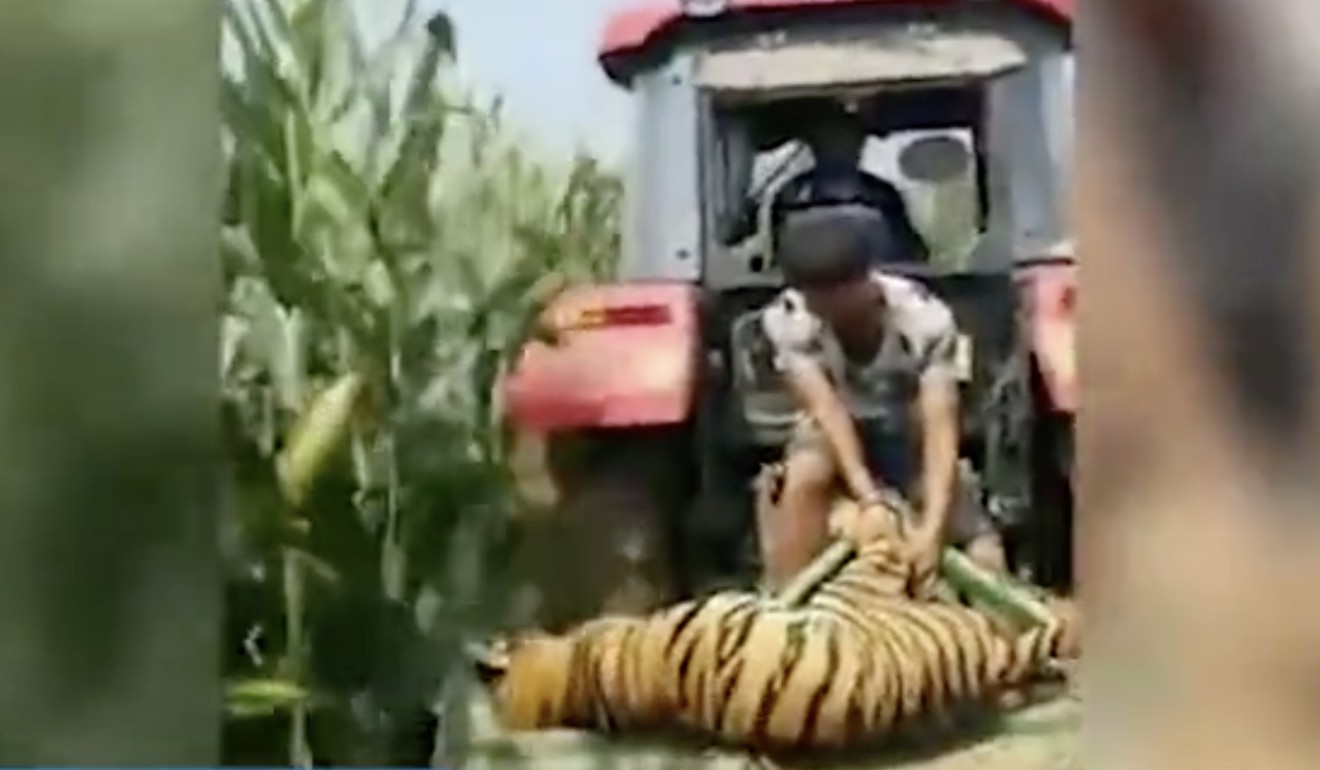
Video footage shows circus handlers using sticks to try to coax the tiger back inside the cage after it escaped on Friday night. Photo: Thepaper.cn
A circus tiger that escaped from its cage during a show in central China was captured by police after an overnight search, but died while it was being transported to a nearby zoo, according to media reports.
Two people from the circus where the tiger was raised in the county of Yuanyang, Henan province, have been detained, Beijing Youth Daily reported, without elaborating. It said the tiger escaped during the circus’ first public show, which had not been registered with the local authorities.
The tiger was part of a performance for a local school on Friday evening when it managed to get out of its cage and run towards nearby cornfields.
A video posted by news site Thepaper.cn shows the moment it escaped from the cage, with its handlers using sticks to try to coax the animal back inside. The scene is chaotic, as people scream and run from the venue.
A tranquilliser dart was used to subdue the tiger on Saturday morning and it was transported to a zoo in Xinxiang. Photo: Thepaper.cn
The police were called in, and officers used drones, police dogs and thermal imaging equipment to hunt for the tiger, according to the local government.
The authorities also put out an emergency advisory telling residents to stay indoors and contact police if they had any information on the tiger’s whereabouts.
It was spotted the following morning, and a tranquilliser dart was used to subdue the animal at about 10.30am on Saturday. The tiger was then transported to a zoo in the city of Xinxiang.
According to one of its zookeepers, the animal had already died by the time it was delivered to the zoo, China Youth Daily reported on Sunday.
The \jsq, surnamed Feng, said the tiger was hit by a car after it escaped and may have sustained internal injuries. The zoo is conducting an autopsy.
Chinese circus tiger attacks two children after breaking out of cage in middle of performance
Thousands of social media users expressed their sympathy for the tiger’s plight, saying it must have suffered greatly, with many people calling for animal circuses to be banned in China.
“Tigers don’t belong in cages, they belong in the wilderness,” one person wrote on microblog site Weibo.
Chinese circus defends using rare animals in its acts despite poor crowds at shows and criticism of its methods.
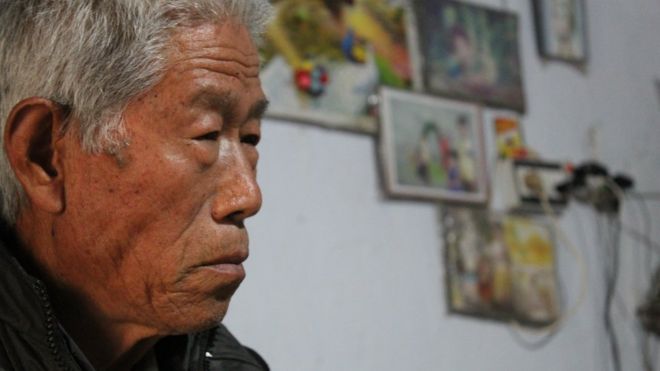
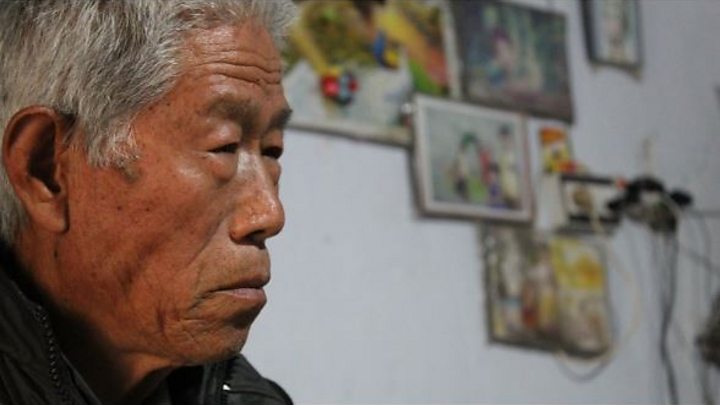
Image caption Wang Qi has been waiting for months to see his family in India
In 1963, a former Chinese army surveyor crossed into India and was captured weeks after a war between the two countries. Wang Qi was then left in a central Indian town for more than five decades before he was allowed to travel back home to China in 2017.
The BBC reported his story at the time and videos of the emotional family reunion in China were watched by millions.
But now, more than 30 months later, his story has taken an unexpected turn – Mr Wang is stuck in China and unable to return to India.
He has been waiting for more than four months for officials to renew his Indian visa so that he can travel back to India where his children and grandchildren live.
“Why are they doing this? I’ve been fighting for such a long time. How much longer can I fight?” Mr Wang told me over the phone from his home city of Xianyang.
The BBC has emailed the Indian embassy in Beijing and is yet to receive a response.
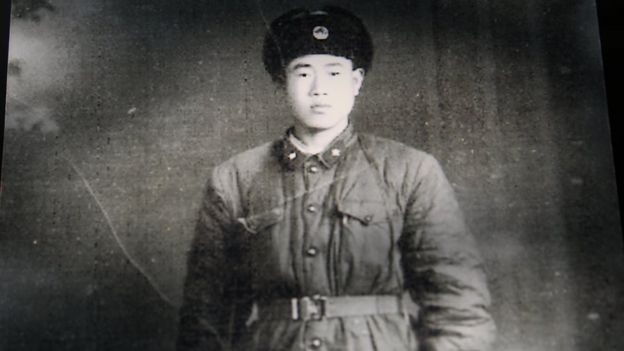
Born to a farmer family in Shaanxi with four brothers and two sisters, he studied surveying and joined China’s People’s Liberation Army in 1960.
Mr Wang says he was “tasked with building roads for the Chinese army” and was captured when he “strayed erroneously” into Indian territory in January 1963.
Image caption He joined China’s People’s Liberation Army in 1960
“I had gone out of my camp for a stroll but lost my way. I was tired and hungry. I saw a Red Cross vehicle and asked them to help me. They handed me over to the Indian army,” he said.
After he was captured, he spent the next seven years in multiple prisons before he was released by a court order in 1969.
Police took him to Tirodi, a far-flung village in the central state of Madhya Pradesh, where he ended up living for most of his life.
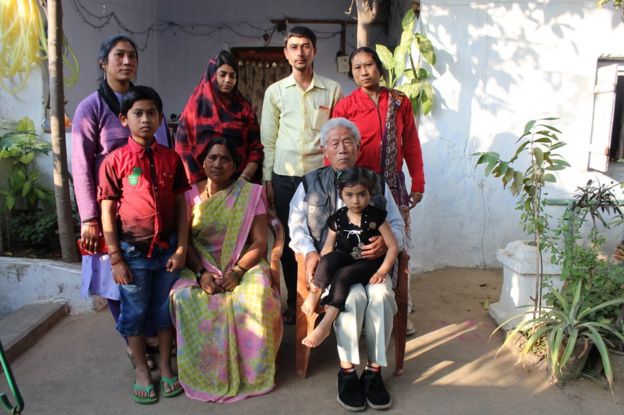
Instead he worked at a flour mill, eventually marrying a local woman and raising a family with her. Neighbours said they lived in “utter poverty”.
It was never clear whether Mr Wang was actually a prisoner of war. But he was denied official Indian documents or citizenship, and he was also denied permission to return to China. Officials told the BBC in 2017 that there were “deficiencies” and a “lack of interest” in the case over the years.
A Chinese passport holder, Mr Wang was reunited with his family in China in 2017. After the BBC reported his story, he received a one-year multiple entry Indian visa.
Media caption Wang Qi did not see his family in China for decades
He kept coming back to India to meet his wife, children and grandchildren who continued to live here.
When Mr Wang first arrived in China, he received a rapturous welcome. Crowds met him with banners reading, “Welcome home, soldier, it’s been a rough journey”.
But according to Mr Wang’s son, Vishnu, his father’s request to local officials to clear his salary for the period of his stay in India, remains unanswered.
Vishnu also adds that it’s unclear if his father still has any claim to ancestral property in China after being away for so many years.
“He was ecstatic to have met his family after decades. He didn’t want anything else.”
In 2017, Mr Wang rushed back to India to take care of his wife, who was hospitalised due to “liver complications”.
“Getting funds for the expensive treatment was very difficult. We tried everywhere, begged for money but didn’t receive any response,” Vishnu says.
She died within a fortnight.
Image caption Mr Wang married an Indian woman and raised a family with her
“My father’s visa was renewed in 2018. He applied again in April 2019 but he is still waiting,” Vishnu adds.
Xianyang and Beijing, where the Indian embassy is located, are more than 1,000 kilometres (621 miles) apart – and travelling between the two cities isn’t easy for Mr Wang, who is nearly 80 years old, Vishnu says.
“My father is fed up. He doesn’t understand why this is taking so long.”
In a major peace gesture, Pakistan Prime Minister Imran Khan said that the Indian Air Force (IAF) fighter pilot, Wg Cdr Abhinandan Varthaman, who was captured by Pakistani Army on Wednesday, will be released on Friday.
SNS Web | New Delhi | February 28, 2019 4:58 pm
A handout photograph released by Pakistan’s Inter Services Public Relations on February 27, 2019, shows captured Indian pilot Wg Cdr Abhinandan in the custody of Pakistani forces in an undisclosed location. (Photo: AFP)
In a major peace gesture, Pakistan Prime Minister Imran Khan said that the Indian Air Force (IAF) fighter pilot, Wg Cdr Abhinandan Varthaman, who was captured by Pakistani Army on Wednesday, will be released on Friday.
“In our desire for peace, I announce that tomorrow, and as a first step to open negotiations, Pakistan will be releasing the Indian Air Force officer in our custody,” Pak PM Imran Khan said in the country’s parliament.
The Pak PM’s decision came just minutes ahead of a scheduled joint press conference by the three services of the Indian armed forces. The press conference now stands postponed at the time of writing.
The decision came after India said that it will not agree on any deal with Pakistan and demanded his unconditional and immediate release. The press conference now stands postponed at the time of writing.
Speaking about the IAF fighter pilot captured by Pakistan, the Ministry of Defence officials said that he was ill-treated by the Pakistan Army in violation of the Geneva Convention.
“The IAF pilot has to be repatriated unconditionally and immediately. There is no question of any deal,” a source was quoted as saying by PTI.
Government sources said that India has not asked for consular access but the immediate release of the IAF pilot.
Dismissing chances of any talks, the government sources stressed on “immediate, credible and verifiable action against terror is required before any conversation”.
“Imran Khan should now walk the talk on dealing with terrorism,” they added.
The announcement of Wg Cdr Abhinandan’s release came on the day when Pakistan Foreign Minister Shah Mahmood Qureshi told a Pakistani news channel that Imran Khan is ready for talks with Prime Minister Narendra Modi over phone and offer peace.
In an interview to Geo News, Qureshi said that Pakistan is willing to consider returning the Indian pilot if it helps in de-escalation of the current situation between the two nations.
“If there is de-escalation with the return of this [Indian] pilot, Pakistan is willing to consider this. We are ready for all positive engagement,” he said.
India had on Wednesday summoned the Pakistani envoy and handed over a demarche demanding the “immediate and safe return” of the pilot. It also strongly objected to Pakistan’s “vulgar display” of the pilot and said Pakistan “would be well advised to ensure that no harm comes to him”.
The IAF pilot was captured on Wednesday after an aerial combat between Indian and Pakistani fighter planes.
The Ministry of External Affairs (MEA) had on Wednesday evening said that the IAF lost a MiG 21 Bison aircraft in an engagement with Pakistani Air Force who had violated Indian airspace on Wednesday. The government had confirmed that a pilot was missing in action.
Pakistani Air Force jets violated Indian airspace in Jammu and Kashmir’s Rajouri sector on Wednesday morning and attempted to target Indian military installations, but missed their targets. They were immediately pushed back by Indian jets on air patrol, who also shot down a Pakistani F-16 whose wreckage fell on the other side of the LoC.
Following the incident, top Indian security and intelligence officials met Prime Minister Narendra Modi to discuss the security situation.
NSA Ajit Doval, senior officials of the Indian Navy, Army and the Air Force and other security officials, besides Home Minister Rajnath Singh and Defence Minister Nirmala Sitharaman, were present in the meeting.
The Prime Minister is scheduled to chair the Cabinet Committee on Security (CCS) meeting at his residence later today to take stock of the situation. A Union Cabinet meeting is also slated for 6.30 pm at the Prime Minister’s residence.





 CHINDIA ALERT: You'll be living in their world, very soon