Archive for ‘cars’

13/12/2019

Drivers and passengers have lucky escape after hole swallows cars in southeast China

  • Sinkhole suddenly opened up near subway station in city of Xiamen but no one is killed or injured
  • Taxi driver whose vehicle was swallowed up says he and his passenger were able to pull themselves free unaided
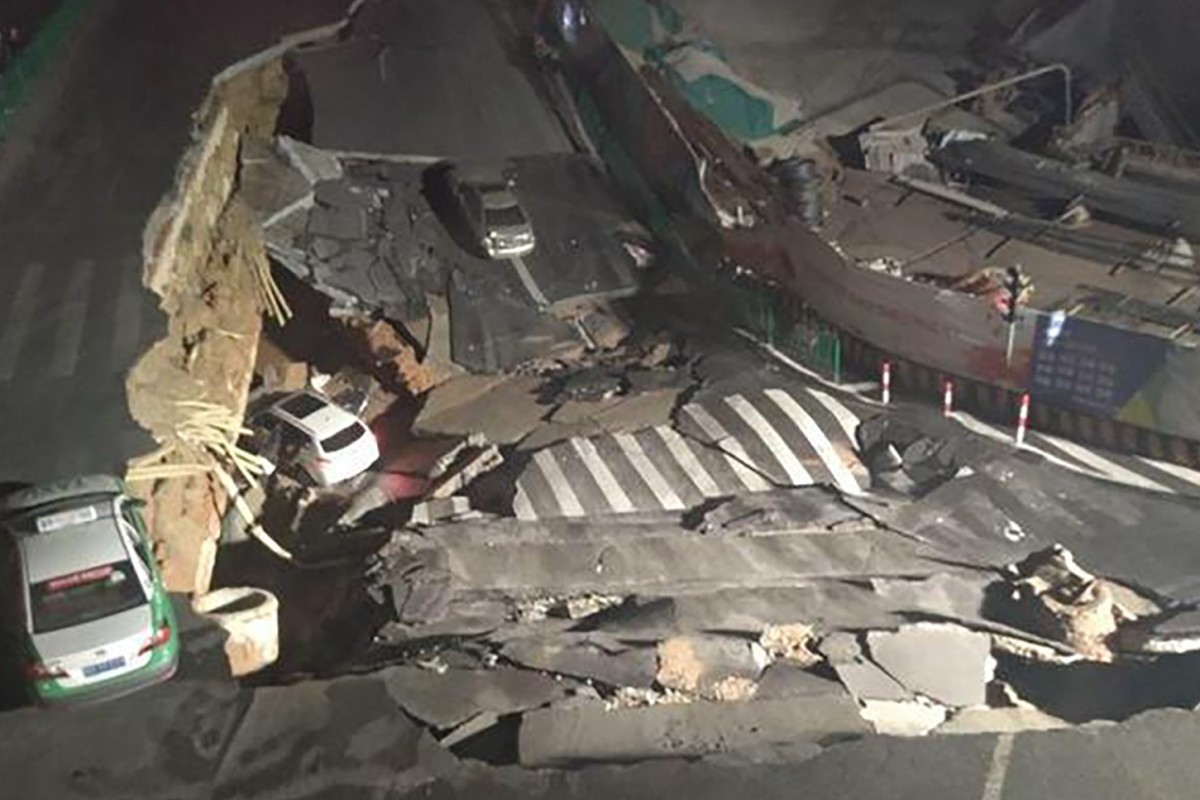
The hole opened up at a site in Xiamen. Photo: Weibo

Two cars have been swallowed by a hole that opened up in the ground near a subway station in southeast China.

It is the latest of a string of ground collapses involving subway projects in mainland cities this year.

The 500 square metre hole opened up just before 10pm on Thursday near Lucuo station in Xiamen, a city in Fujian province.

The city’s subway operator said no one had died or been injured in the accident and the people in the two cars had been able to get out on their own.

The accident also caused water pipes to burst, flooding the station.
No injuries were reported after the incident. Photo: Weibo
The road and station were temporarily closed after the accident, but normal services resumed on Friday morning.

One of the cars swallowed was a taxi, and the driver told Beijing News he had been driving along the road when he suddenly found the vehicle falling into the hole.

The man, surnamed Chang, dragged his passenger free and they were able to climb out of the pit unaided. He said the car had not been seriously damaged.

Three people are still missing after a similar accident in the southern city of Guangzhou earlier this month that swallowed a truck and electric bike.

Five workers were also killed in the eastern port city of Qingdao in May in an accident at a subway construction site.

Source: SCMP

25/09/2019

China Focus: China completes world’s longest cross-sea road-rail bridge

CHINA-FUJIAN-CROSS-SEA ROAD-RAIL BRIDGE-COMPLETION (CN)

Aerial photo taken on Sept. 21, 2019 shows a steel girder being lifted by a crane at the construction site of the Pingtan Strait Road-rail Bridge in southeast China’s Fujian Province. China on Wednesday completed the main structure of the world’s longest cross-sea road-rail bridge in Fujian. The last steel girder, weighing 473 tonnes, was bolted on the Pingtan Strait Road-rail Bridge, another mega project in China, on Wednesday morning. With a staggering span of 16.34 km, the bridge connects Pingtan Island and four nearby islets to the mainland of Fujian Province. (Xinhua/Lin Shanchuan)

FUZHOU, Sept. 25 (Xinhua) — China on Wednesday completed the main structure of the world’s longest cross-sea road-rail bridge in its southeastern province of Fujian.

The last steel truss girder, weighing 473 tonnes, was bolted on the Pingtan Strait Road-rail Bridge, another mega project in China, on Wednesday morning.

Hundreds of bridge builders clad in orange overalls, as well as government officials, hailed the completion on the bridge deck, with several rounds of fireworks being set off to celebrate the moment.

With a staggering span of 16.34 km, the bridge connects Pingtan Island and four nearby islets to the mainland of Fujian Province.

The bridge, which is expected to open to traffic next year, can help shorten travel time from two hours to half an hour between Fuzhou, capital city of Fujian Province and Pingtan, a pilot zone set up to facilitate trade and cultural exchanges across the Taiwan Strait.

“Of all the bridges being built across the world, this is no doubt the most challenging,” said Wang Donghui, chief engineer of the project, adding that it is China’s first and the world’s longest cross-sea road-rail bridge.

The project has attracted worldwide attention from the start of construction in 2013 as it spans an area off the coast of southeast China long seen as a “no-go zone” for bridge-building.

The region has strong gales and high waves for most of the year and is known as one of the world’s three most perilous seas along with Bermuda and the Cape of Good Hope.

Workers had to battle the notoriously strong winds, choppy waters and rugged seabed in the region to drill 1,895 piles into the ocean.

MORE THAN MEGA PROJECT

The road-rail bridge has a six-lane highway on the top and a high-speed railway at the bottom, which is designed to support bullet trains traveling as fast as 200 km per hour. It is a part of the 88-km Fuzhou-Pingtan railway.

In the past, Pingtan was a backwater island of humble fisheries. It did not even have a bridge connecting it to the mainland until 2010 when the Strait Bridge began operating for cars only.

In 2010, China established the Pingtan Comprehensive Pilot Zone to facilitate cross-Strait exchange and cooperation, ramping up its efforts to improve the island’s infrastructure.

Today, skyscrapers are popping up all along the shoreline, with the glow of construction work filling the night sky. Meanwhile, thousands of Taiwan residents swarm into the booming island to live and start businesses.

The island has accommodated more than 1,000 shops and companies set up by Taiwan residents, according to government statistics.

Chen Chien-hsiang, a 29-year-old man who moved from Taiwan to Pingtan two years ago, believes that the new bridge will help attract more businesses to the island and further boost its economic development.

“The new bridge means more than a mere mega project,” Chen said. “It also promises a brighter future for people from Taiwan who chose to live and work here.”

INFRASTRUCTURE MANIAC

Huang Zhiwei, 22, found himself making history by lifting the last piece of the bridge girder from a ship about 80 meters below the bridge deck, an undertaking that he had never expected when he joined the project a year ago as an intern.

His parents, unhappy about their son’s career choice, felt relieved after several video chats during which their son showed them his working and living conditions at the construction site.

“With so many advanced technologies and safety measures, I am convinced that we will accomplish the mission, and I am very proud of my contribution,” said the young operator.

More than 1.24 million tonnes of steel have been used for the bridge, enough to build 190 Eiffel Towers, and 2.97 million cubic meters of cement, nine times the amount of cement used to build the Burj Khalifa towers in Dubai, the world’s tallest skyscraper.

“We could not possibly have realized the construction 15 years ago for lack of advanced construction technologies and equipment such as the drilling machine and ship cranes we have developed today,” said Xiao Shibo, an engineer of the China Railway Major Bridge Engineering Group Co., Ltd. The bridge has made history in many aspects, Xiao added.

China is dubbed as an “infrastructure maniac” for countless dazzling megaprojects, with the Chinese builders breaking their own world records.

China is home to the world’s highest bridge, longest cross-sea bridge and 90 out of the 100 highest bridges built this century.

From 2015 to 2020, China’s transportation investment is expected to exceed 15 trillion yuan (2.1 trillion U.S. dollars), with a substantial portion reserved for bridge construction.

Source: Xinhua

18/09/2019

Explainer: Why Asia’s biggest economies are backing hydrogen fuel cell cars

TOKYO (Reuters) – China, Japan and South Korea have set ambitious targets to put millions of hydrogen-powered vehicles on their roads by the end of the next decade at a cost of billions of dollars.

But to date, hydrogen fuel cell vehicles (FCVs) have been upstaged by electric vehicles, which are increasingly becoming a mainstream option due to the success of Tesla Inc’s (TSLA.O) luxury cars as well as sales and production quotas set by China.

Critics argue FCVs may never amount to more than a niche technology. But proponents counter hydrogen is the cleanest energy source for autos available and that with time and more refueling infrastructure, it will gain acceptance.

AMBITIOUS TARGETS

China, far and away the world’s biggest auto market with some 28 million vehicles sold annually, is aiming for more than 1 million FCVs in service by 2030. That compares with just 1,500 or so now, most of which are buses.

Japan, a market of more than 5 million vehicles annually, wants to have 800,000 FCVs sold by that time from around 3,400 currently.

South Korea, which has a car market just one third the size of Japan, has set a target of 850,000 vehicles on the road by 2030. But as of end-2018, fewer than 900 have been sold.

WHY HYDROGEN?

Hydrogen’s proponents point to how clean it is as an energy source as water and heat are the only byproducts and how it can be made from a number of sources, including methane, coal, water, even garbage. Resource-poor Japan sees hydrogen as a way to greater energy security.

They also argue that driving ranges and refueling times for FCVs are comparable to gasoline cars, whereas EVs require hours to recharge and provide only a few hundred kilometers of range.

Many backers in China and Japan see FCVs as complementing EVs rather than replacing them. In general, hydrogen is seen as the more efficient choice for heavier vehicles that drive longer distances, hence the current emphasis on city buses.

THE MAIN PLAYERS

Only a handful of automakers have made fuel cell passenger cars commercially available.

Toyota Motor Corp (7203.T) launched the Mirai sedan at the end of 2014, but has sold fewer than 10,000 globally. Hyundai Motor Co (005380.KS) has offered the Nexo crossover since March last year and has sold just under 2,900 worldwide. It had sales of around 900 for its previous FCV model, the Tucson.

Honda Motor Co Ltd’s (7267.T) Clarity Fuel Cell is available for lease, while Daimler AG’s GLC F-CELL has been delivered to a handful of corporate and public sector clients.
Buses are seeing more demand. Both Toyota and Hyundai have offerings and have begun selling fuel cell components to bus makers, particularly in China.
Several Chinese manufacturers have developed their own buses, notably state-owned SAIC Motor (600104.SS), the nation’s biggest automaker, and Geely Auto Group, which also owns the Volvo Cars and Lotus brands.

WHY HAVEN’T FUEL CELL CARS CAUGHT ON YET?

A lack of refueling stations, which are costly to build, is usually cited as the biggest obstacle to widespread adoption of FCVs. At the same time, the main reason cited for the lack of refueling infrastructure is that there are not enough FCVs to make them profitable.

Consumer worries about the risk of explosions are also a big hurdle and residents in Japan and South Korea have protested against the construction of hydrogen stations. This year, a hydrogen tank explosion in South Korea killed two people, which was followed by a blast at a Norway hydrogen station.

Then there’s the cost. Heavy subsidies are needed to bring prices down to levels of gasoline-powered cars. Toyota’s Mirai costs consumers just over 5 million yen ($46,200) after subsidies of 2.25 million yen. That’s still about 50% more than a Camry.

Automakers contend that once sales volumes increase, economies of scale will make subsidies unnecessary.

HOW FUEL CELLS WORK

(GRAPHIC: How fuel cell vehicles work: here)

Reuters Graphic
Source: Reuters
12/09/2019

Why is India’s car industry in breakdown mode?

India’s second-biggest manufacturer of commercial vehicles, Ashok Leyland, is suspending production at several units from five to 18 days in September, triggering fears that the slump in the automotive sector shows no sign of letting up. The BBC’s Nitin Srivastava reports.

Ram Mardi is worried he may lose his job. He works for a company that makes spare parts for cars and heavy vehicles in Jamshedpur, an industrial city in eastern India. But he has worked only 14 days in August.

“We had a comfortable life until recently. Now, it’s hard to arrange food or pay for the children’s education,” Mr Mardi says.

The factory he works at temporarily suspended production for half of the month to reduce inventory in the face of shrinking demand.

Industry heavyweights such as Maruti, Tata Motors and Mahindra & Mahindra have all announced production cuts over the past several months.

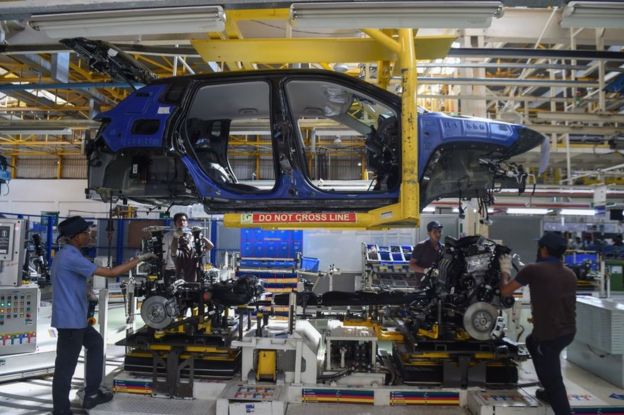
Workers assemble a car at a FCA India Automobiles manufacturing facility in Ranjangaon, some 200km east of Mumbai.Image copyright GETTY IMAGES
Image caption India’s automotive industry employs some 35 million people

India’s economy is facing a slowdown. It grew at 5% in the quarter ending June 2019 – its lowest in five years. This – along with a drop in private investment and a banking crisis that has made it hard to access credit – has weakened consumer demand.

The Indian government is also pushing for a transition to electric vehicles over the next decade, which some experts believe, has contributed to falling vehicle sales.

As the automotive industry declined for the 10th month in a row in August, car sales dropped by 41% – the steepest fall in two decades.

The industry is one of India’s biggest, considering it employs some 35 million people, directly or indirectly, and contributes more than 7% to the country’s GDP.

By some estimates, more than 100,000 workers, many of them contractual, have lost their jobs so far. Now fears are rising that if demand continues to fall, forcing lower production, more jobs could disappear.

Small and medium businesses – thousands of ancillary units that supply to the big manufacturers – have been hit the hardest. And daily wage labourers such as Mr Mardi are the most vulnerable.

And employers are also concerned. “I have never had so much trouble keeping my factory up and running”, says Sameer Singh, who heads a family-owned business in Jamshedpur that makes spare parts for vehicles.

“My employees are jobless for a few weeks and I feel for them. If this continues they may move out, perhaps find another job. But I can’t even look out for a job. My life starts and ends here”.

Mr Singh says it’s also been hard for business owners, companies and consumers to borrow money because banks have tightened credit lines after a spike in bad loans in recent years dented their balance sheets.

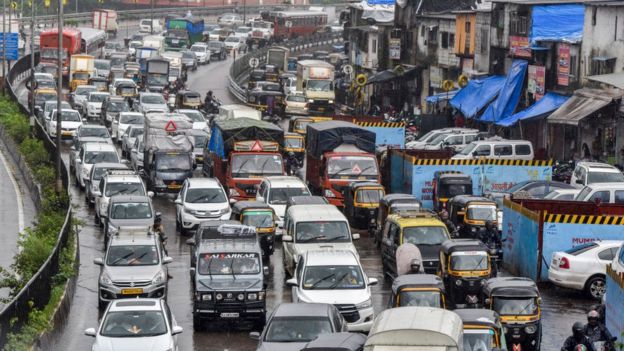
Vehicles on a road in MumbaiImage copyright GETTY IMAGES
Image caption Car sales in India have dropped to their lowest in 20 years

“The fall [in production] is so large and so dramatic that it has affected every single product – two-wheelers, car, commercial vehicles,” says Sanjay Sabherwal, member of the Automotive Component Manufacturers Association of India, an industry body.

Auto executives have been demanding tax cuts and easier access to financing for manufacturers, sellers and consumers. The government recently announced a slew of measures – this includes a delay in increasing the registration fees for new vehicles and asking banks to lower interest rates on loans for cars and two-wheelers.

But, will that be enough? That is hard to say with experts calling this the worst downturn to ever hit India’s automotive industry.

Source: The BBC

18/08/2019

Japan seeks to counter China in Africa with alternative ‘high-quality’ development

  • Beijing will be watching as leaders of African nations and international organisations gather for development summit in Yokohama later this month
  • Tokyo is expected to use the conference to articulate how its approach to aid and infrastructure is different from Chinese projects
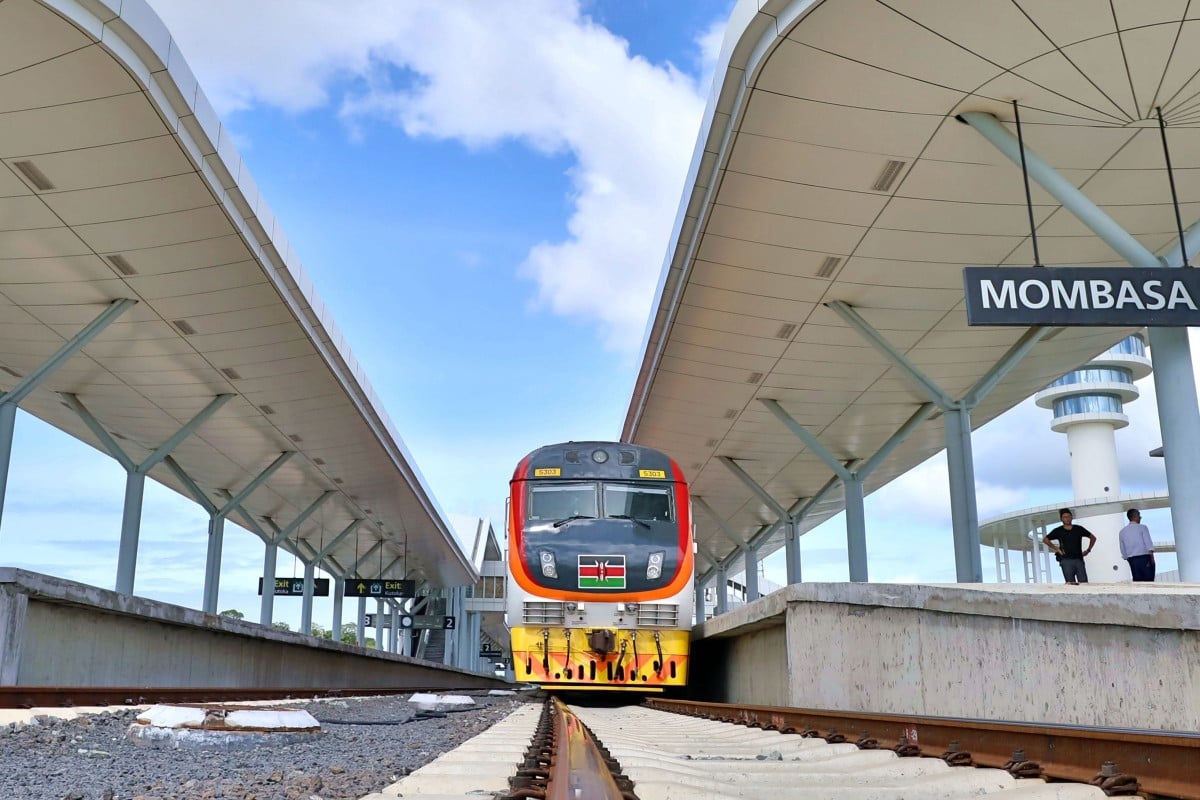
The Mombasa-Nairobi Standard Guage Railway, funded by China, opened in 2017. Japan has criticised Chinese lending practices in Africa. Photo: Xinhua
The Mombasa-Nairobi Standard Gauge Railway, funded by China, opened in 2017. Japan has criticised Chinese lending practices in Africa. Photo: Xinhua
The long rivalry between China and Japan is again playing out in Africa, with Tokyo planning to pour more aid into the continent and invest in infrastructure projects there.
Beijing – which has for decades funnelled money into the continent – will be watching as the leaders of 54 African countries and international organisations descend on Yokohama later this month for the seventh Tokyo International Conference on African Development (TICAD).

Japan reportedly plans to pledge more than 300 billion yen (US$2.83 billion) in aid to Africa during the conference. While that might not be enough to alarm China – which in recent years has been on a spending spree in the continent – it will be paying close attention.

Japan has in the past used the meetings to criticise Chinese lending practices in Africa, saying it was worried about the “unrealistic” level of debt incurred by African countries – concerns that China has dismissed.
This year, analysts expect Tokyo will use the conference to articulate how its approach to African development is substantively different from that of the Chinese.

“So, look for the words ‘quality’, ‘transparency’ and ‘sustainability’ to be used a lot throughout the event,” said Eric Olander, managing editor of the non-partisan China Africa Project.

Japanese Foreign Minister Taro Kono gives a speech at the TICAD in Tokyo in October. Japan will reportedly pledge US$2.83 billion in aid to Africa this year. Photo: The Yomiuri Shimbun

Olander said Japan often sought to position its aid and development programmes as an alternative to China’s by emphasising more transparency in loan deals, higher-quality infrastructure projects and avoiding saddling countries with too much debt.

“In some ways, the Japanese position is very similar to that of the US where they express many of the same criticisms of China’s engagement strategy in Africa,” Olander said.

But the rivalry between China and Japan had little to do with Africa, according to Seifudein Adem, a professor at Doshisha University in Kyoto, Japan.

“It is a spillover effect of their contest for supremacy in East Asia,” said Adem, who is from Ethiopia.

“Japan’s trade with Africa, compared to China’s trade with Africa, is not only relatively small but it is even shrinking. It is a result of the acceleration of China’s engagement with Africa.”

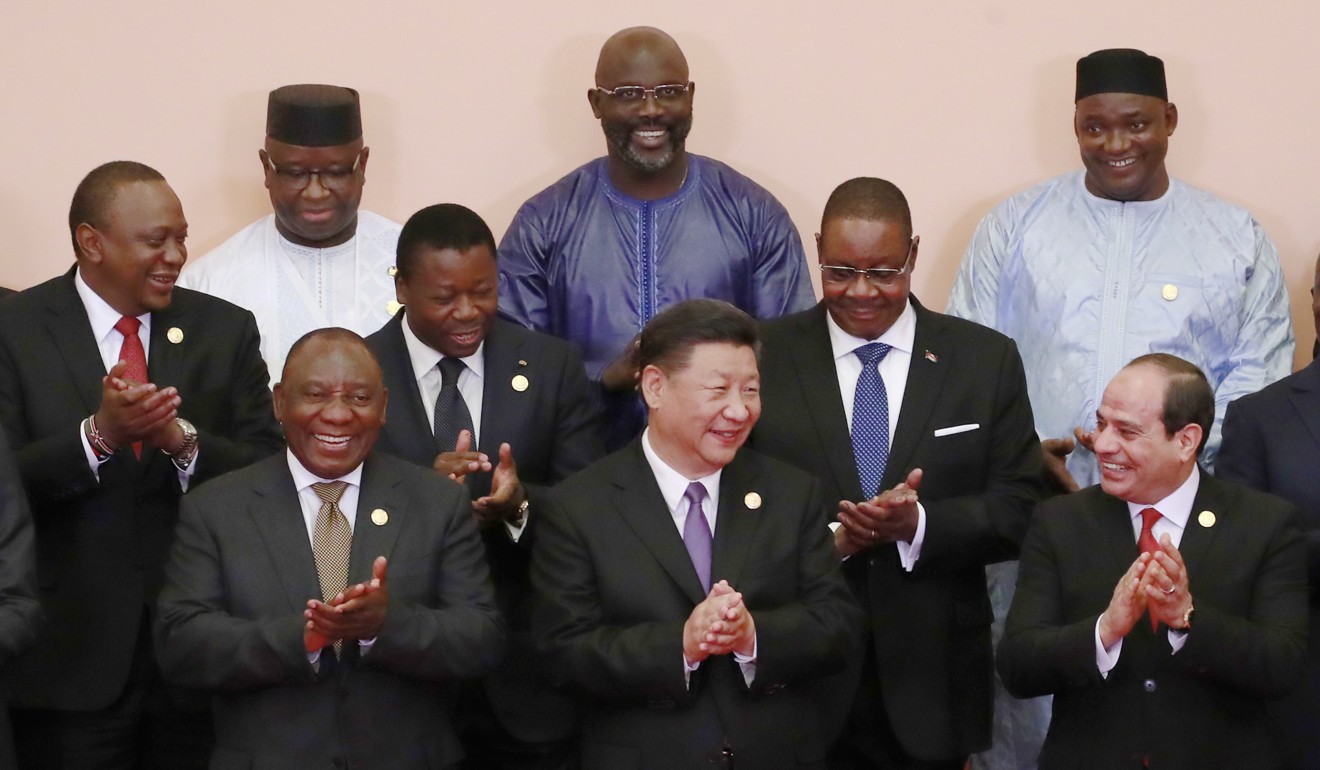
Chinese President Xi Jinping attends a group photo session with African leaders during the Forum on China-Africa Cooperation in Beijing last year. Photo: AP

Japan launched the TICAD in 1993, to revive interest in the continent and find raw materials for its industries and markets for products. About a decade later, China began holding a rival event, the Forum on China-Africa Cooperation.

It is at heart an ideological rivalry unfolding on the continent, according to Martin Rupiya, head of innovation and training at the African Centre for the Constructive Resolution of Disputes in Durban, South Africa.

“China cast Japan as its former colonial interloper – and not necessarily master – until about 1949. Thereafter, China’s Mao [Zedong] developed close relations, mostly liberation linkages with several African nationalist movements,” Rupiya said.

Beijing had continued to invoke those traditional and historical ties, which Japan did not have, he said.

“Furthermore, Japan does not command the type of resources – call it largesse – that China has and occasionally makes available to Africa,” Rupiya said.

Although both Asian giants have made inroads in Africa, the scale is vastly different.

While Japan turned inward as it sought to rebuild its struggling economy amid a slowdown, China was ramping up trade with African countries at a time of rapid growth on the continent.

That saw trade between China and Africa growing twentyfold in the last two decades. The value of their trade reached US$204.2 billion last year, up 20 per cent from 2017, according to Chinese customs data. Exports from Africa to China stood at US$99 billion last year, the highest level since the 1990s. Meanwhile, through its Belt and Road Initiative that aims to revive the Silk Road to connect Asia with Europe and Africa, China is funding and building Kenya’s Standard Gauge Railway and the Addis Ababa-Djibouti Railway. Beijing is also building major infrastructure projects in Zambia, Angola and Nigeria.

Japan’s trade with Africa is just a small fraction of Africa’s trade with China. In 2017, Japan’s exports to the continent totalled US$7.8 billion, while imports were US$8.7 billion, according to trade data compiled by the Massachusetts Institute of Technology.

How speaking with one voice could help Africa get a better deal from China

But Japan now appears eager to get back in the game and expand its presence in Africa, and analysts say this year’s TICAD will be critical – both in terms of the amount of money Tokyo commits to African development and how it positions itself as an alternative to the Chinese model.

Ryo Hinata-Yamaguchi, a visiting professor at Pusan National University in South Korea, said the continent was “economically vital to Japan, both in trade and investments”.

“Moreover, Japan has established some strong links with African states through foreign aid,” Hinata-Yamaguchi said.

“Japan’s move is driven by both economic and political interests. Economically, Japan needs to secure and maintain its presence in, and linkages with, the African states while opening new markets and opportunities,” he said.

To counter China’s belt and road strategy, Japan has launched the Asia-Africa Growth Corridor project, an economic cooperation deal, with India and African countries.

Tokyo meanwhile pledged about US$30 billion in public-private development assistance to Africa over three years at the 2016 TICAD, in Nairobi. But China offered to double that amount last year, during its Forum on China-Africa Cooperation in Beijing.

Still, Japan continues to push forward infrastructure projects on the continent. It is building the Mombasa Port on the Kenyan coast, while Ngong Road, a major artery in Nairobi, is being converted into a dual carriageway with a grant from Tokyo.

Japan is also funding the construction of the Kampala Metropolitan transmission line, which draws power from Karuma dam in Uganda. In Tanzania, it provided funding for the Tanzania-Zambia Railway Authority (Tazara) flyover. And through the Japan International Cooperation Agency, Tokyo also helps African countries improve their rice yields using Japanese technology.

There are nearly 1,000 Japanese companies – including carmakers like Nissan and Toyota – operating in Africa, but that is just one-tenth the number of Chinese businesses on the continent.

Are Chinese loans putting Africa on the debt-trap express?

Olander said Japan’s construction companies were among the best in the world, albeit not necessarily the cheapest, and that Tokyo was pushing its message about “high-quality” construction.

XN Iraki, an associate professor at the University of Nairobi School of Business, said Japan wanted to change its approach to Africa on trade, which had long been dominated by cars and electronics.

“[It has] no big deals like China’s Standard Gauge Railway. But after China’s entry with a bang – including teaching Mandarin through Confucius Institutes – Japan has realised its market was under threat and hence the importance of the TICAD, which should remind us that Japan is also there.”

Source: SCMP

30/07/2019

Punjab: India state launches ‘gun for plants’ scheme


A man poses with plant saplings before applying for a gun licenseImage copyright COURTESY: CHANDER GAIND
Image caption Applicants for gun licenses must plant at least 10 saplings and submit ‘selfies’ as proof

Guns and plant saplings are an odd combination – but in India’s northern Punjab state, the two are now linked.

For a month now, applicants in the state’s Ferozepur district have had to plant at least 10 saplings before applying for gun licences.

“Punjabis are mad about cars, weapons and mobiles. Let them be mad about plantations too,” District Commissioner Chander Gaind told the BBC.

Mr Gaind said applicants would have to submit selfies with the saplings.

“With roads being widened at a [fast] rate, trees are being cut in very large numbers, so this was the need of the hour,” he added.

With 360,000 licensed gun holders, Punjab has the third largest number of licenses in India, government data shows.

But a selfie with a sapling does not guarantee one of the much sought after licences. It merely means the application will be “considered” for processing.

The order was issued on 5 June to coincide with world environment day, but has only now picked up traction in local media as more people have started complying.

Mr Gaind says they have received at least 100 applications – along with selfies – since the order was passed.

But simply planting saplings and taking selfies with them is not enough – applicants also have to submit follow-up selfies a month later, proving that they are nurturing the plants.


Source: The BBC
17/05/2019

India’s next government will have a growth problem

A high-rise residential tower is seen next to shanties in Dharavi, one of Asia"s largest slums, in Mumbai March 18, 2015. In Mumbai, the windows of new high-rise apartment blocks, old low-rise residential buildings and shantytown shacks portray the disparity in living conditions and incomes in the Indian city.Image copyright REUTERS
Image caption Economists say India’s growth is powered by the ‘top 100 million’ people

As India lumbers towards the final phase of an exhausting general election and Prime Minister Narendra Modi’s BJP seeks a second term in power, there’s some worrying news. The world’s fastest growing major economy appears to be headed for a slowdown.

The signs are everywhere. Economic growth slowed to 6.6% in the three months to December, the slowest in six quarters. Sales of cars and SUVs have slumped to a seven-year-low. Tractors and two-wheelers sales are down. Net profits for 334 companies (excluding banks and financials) are down 18% year-on-year, according to the Financial Express newspaper.

That’s not all. In March, passenger growth in the world’s fastest growing aviation market expanded at the slowest pace in nearly six years. Demand for bank credit has spluttered. Hindustan Unilever, India’s leading maker of fast moving consumer goods, has reported March quarter revenue growth of just 7%, its weakest in 18 months.

GurgaonImage copyright GETTY IMAGES
Image caption Sales of cars and SUVs have slumped to a seven-year-low.

One newspaper wondered whether India was “losing the consumption plot”. Taken together, all this points to a fall in both urban and rural incomes, leading to demand contraction. A crop glut has seen farm incomes drop. And credit stagnation, partly triggered by the collapse of a major non-banking financial institution, or a shadow bank, has led to a fall in lending and worsened matters.

Kaushik Basu, former chief economist of the World Bank and professor of economics at Cornell University, believes the slowdown is “much more serious” than he initially believed. “The evidence is now mounting to the point where it can no longer be ignored,” he told me.

One reason, he believes, is the controversial currency ban in 2016 – also called demonetisation – which adversely hit farmers. More than 80% of the currency circulating in India’s sprawling cash-driven economy was taken out of circulation in what, in the words of one of Prime Minister Modi’s own advisers, was a “massive, draconian, monetary shock”.

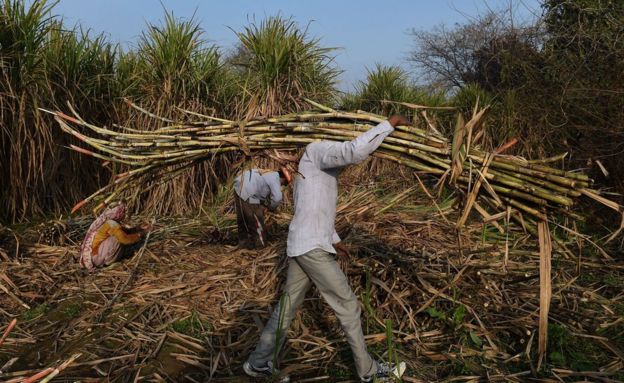
An Indian farmer carries sugarcane to load on a tractor to sell it at a nearby sugar mill in Modinagar in Ghaziabad, some 45km east of New Delhi, on January 31, 2018Image copyright AFP

“This was evident to all by early 2017. What many observers did not realise then – I did not – is that the shock made the farmers take on debts which ended up causing sustained hardship to them that is continuing and slowing down the agriculture sector.”

Source: The BBC

10/05/2019

Chinese truck driver collapses steel bridge and dumps 100-tonne load of concrete pipes into river

  • Driver who used map app to find construction site sent to crossing for light traffic
  • Villagers say bridge was used by pedestrians and cars only
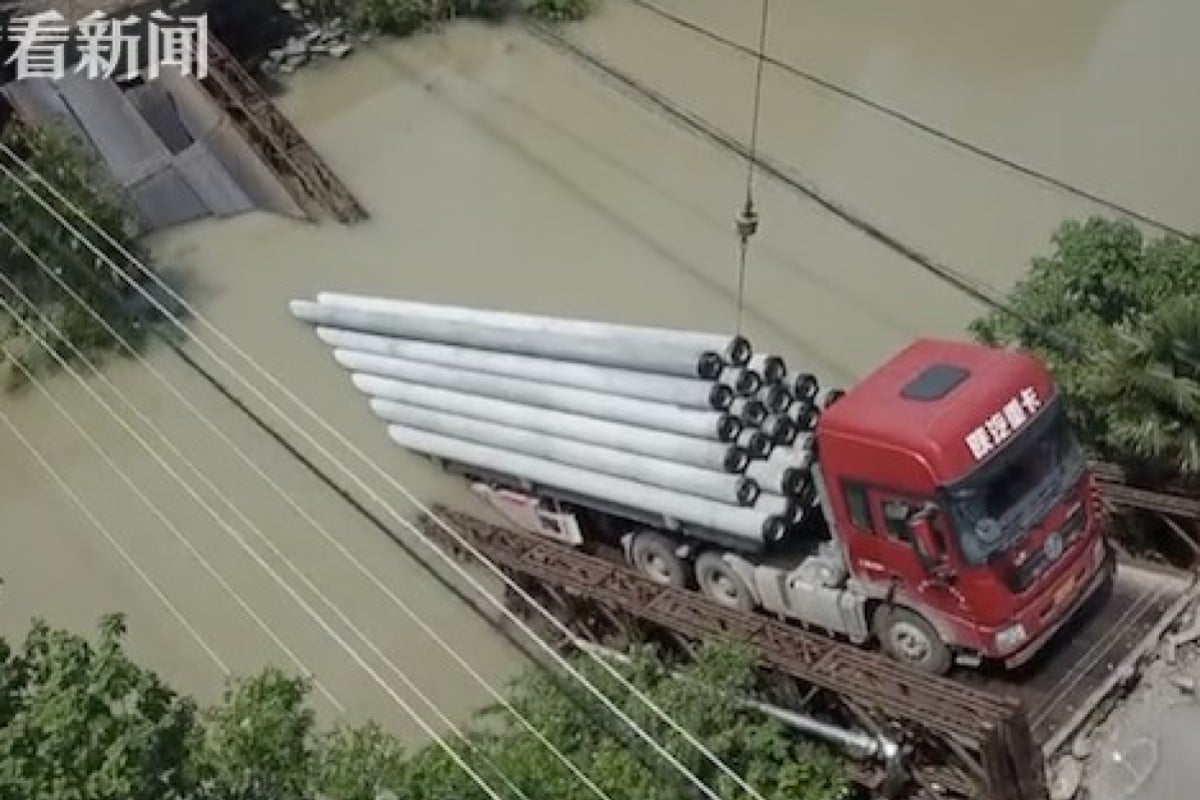
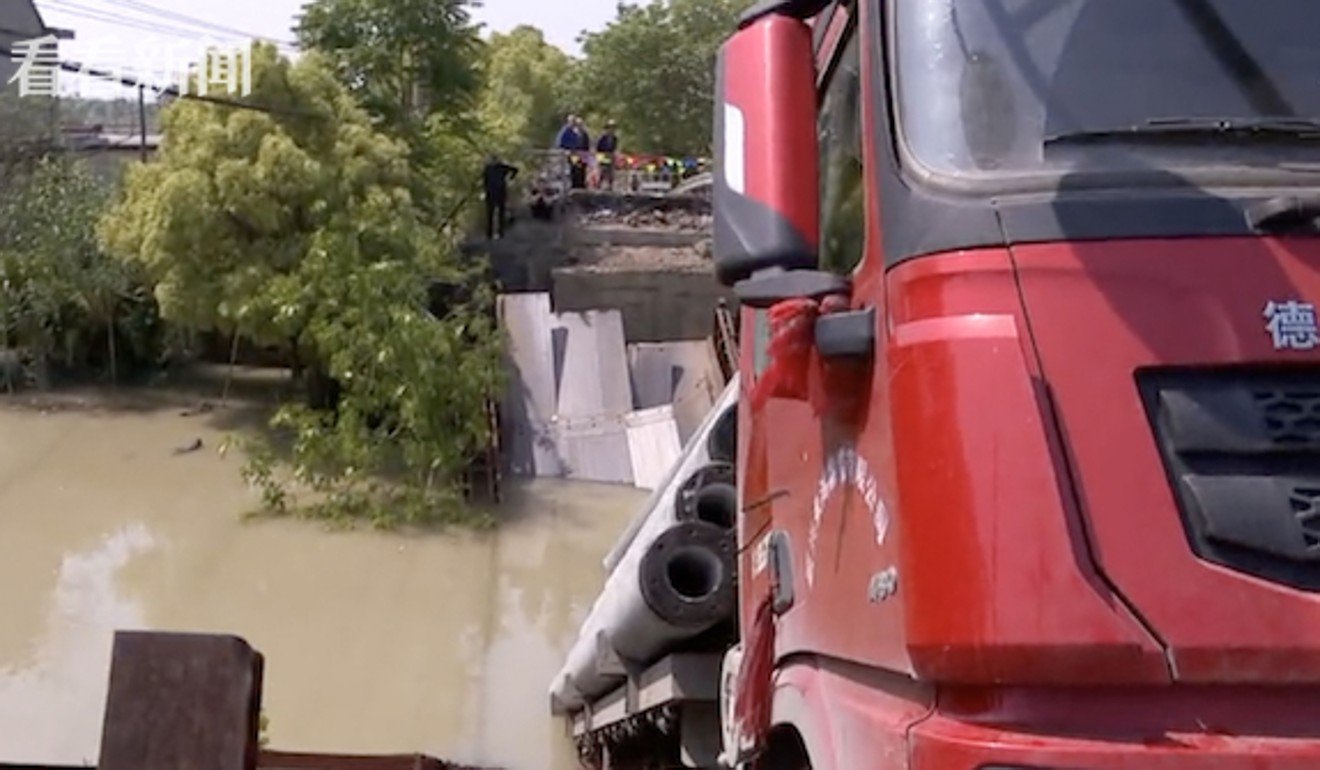
Recovery crews attempt to pull the truck and its load from the river in eastern Zhejiang province. Photo: Weibo
A trucker in eastern Zhejiang province collapsed a steel bridge by crossing it with a load weighing 50 times the bridge’s capacity.
The driver, surnamed Zhang, said he missed the two-tonne load warning sign when he tried to take dozens of concrete pipes to a construction site on Thursday morning, Kankannews.com reported.
He was not familiar with the area and used the bridge suggested by his digital map.
When the laden truck, weighing about 100 tonnes, was halfway across, the structure gave way, pitching the vehicle and its cargo into the water below. The driver managed to escape.
The truck’s load was 50 times the bridge’s breaking capacity. Photo: Weibo
Truck driver left hanging after crane smashes into bridge
Residents of a nearby village said a concrete bridge on the site fell into disrepair and was dismantled. It was replaced with a temporary steel structure a couple of years ago.

The new span was intended only for foot traffic and light vehicles, they said.

The pipes were recovered on Thursday evening.

Source: SCMP

17/01/2019

Why are the Chinese buying fewer cars?

President Trump's Cadillac limousineImage copyrightGETTY IMAGES
Image captionThe fact that President Trump’s limousine is a Cadillac is said to have helped the US carmaker’s sales in China

If you’re selling Cadillacs in China, it helps that the US president is driven around in one.

Cao Chenyi, the boss of a Cadillac dealership near Shanghai, told me that customers know that Donald Trump’s presidential limousine is made by the US carmaker. He says they like the prestige.

But Mr Cao’s had a bad year. Demand dropped 30% in 2018. He’s had to shut five of the 11 dealerships his family business owned. Almost half, gone.

“The sales on every new vehicle is causing us to lose money. Basically the more we sell the more we lose,” he says.

Loss leaders are painful. Mr Cao has been forced to shift excess stock, and quickly. The red Cadillac he drove me around in is currently on sale at half price.

Cao Chenyi's Cadillac dealership near Shanghai
Image captionCao Chenyi’s family have had to close five of their dealerships – these customers did not make a purchase

Nationally, 2018 was a very hard year for the car industry in China, the world’s biggest car market.

Just over 22 million new cars were sold last year. But that’s a near 6% drop on 2017. The first fall in two decades.

Inside Mr Cao’s Cadillac showroom various models are side by side. An SUV at the back has a canoe on its roof rack.

I watched a group of three youngish men come in and sit down for the sales treatment. They didn’t buy.

They didn’t even have a good look inside the cars. Mr Cao thinks the main reason is a tax cut that has gone away.

“In 2018 the government cancelled the tax subsidy on car purchases, which was a shock to us,” he says.

This benefit has been gradually wound down. Others think a credit squeeze has caused the demand for cars to drop.

Cao Chenyi
Image captionCao Chenyi thinks that the end of a tax credit is the main reason behind falling car sales

After a decade of near doubling its debt – to almost 300% of China’s GDP – 2018 was the year that the government tried to deal with the aftermath of a credit crisis. That crisis was centred on peer-to-peer lending, known as P2P.

P2P lenders offer loans to individuals from a pool of funds supplied by other individuals and other businesses, thereby cutting out banks.

Cars and houses

Economist Andy Xie says the previously increasing national debt kept demand high, particularly in the property and car sectors.

“Now the property market has tipped over, and it’s affecting a lot of things,” he says.

So why is property so important?

“Auto sales are highly correlated to property sales,” Mr Xie says.

“When people buy property it seems they buy a car at the same time. So when the property market is not doing well the auto demand is down.”

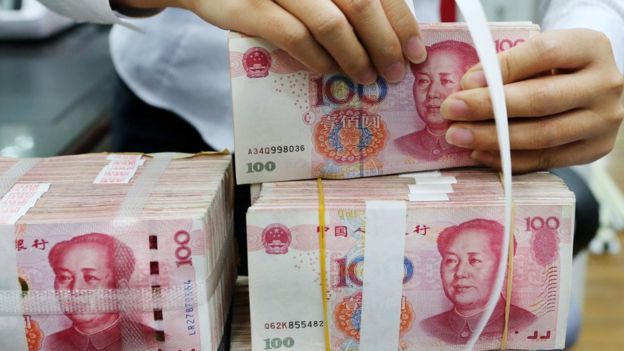
A woman holding bundles of yuan notesImage copyrightGETTY IMAGES
Image captionThe Chinese government is moving to reduce the country’s debt level

The collapse of many of the P2P lending platforms is thought to have had a significant impact on both house and car sales, because borrowed money was being used as down payments for both.

Mr Xie says the credit system “used to be lubricated by these guys” and suddenly that has stopped.

“They lent to people who could not pay back. [Borrowers] shifted their debt from one platform to another.”

He tells me he’s heard statistics suggesting one in four such borrowers “have no ability to pay back”.

Slowing economy

China’s car industry is also a key driver of industrial output and a barometer of consumer demand.

But growth in China’s economy is slowing, and the trade war with the US is starting to bite. Retail sales have slowed to a pace not seen for more than a decade.

A couple of hours away from the car dealership is a tiny hair salon, in the heart of Shanghai’s old west side.

Sun Qiang is the owner and haircutter-in-chief. For a few hours I sat and watched him deal with a handful of customers. First up were three women, two of whom had curlers in, and didn’t look happy to be there.

Sun Qiang
Image captionHairdresser Sun Qiang is saving money to pay for education and healthcare

He told me he’d cut my hair for 40 yuan ($6; £4.50). His place is at the bottom end of what you might call the barometer of China’s consumption.

But business isn’t dropping off. He is, though, a barber who also cuts women’s hair.

When it comes to cars he’d like a Chinese brand SUV. But it’s not likely any time soon. He doesn’t live that far from work and the buses are good. Plus he doesn’t want to borrow.

“I think some car dealers, they want to boost their sales, so they need such consumers who love to pay by loans,” he explains.

“But as a traditional Chinese person, I think we should only buy stuff that we can afford.”

Source: The BBC

Law of Unintended Consequences

continuously updated blog about China & India

ChiaHou's Book Reviews

continuously updated blog about China & India

What's wrong with the world; and its economy

continuously updated blog about China & India