Chindia Alert: You’ll be Living in their World Very Soon
aims to alert you to the threats and opportunities that China and India present. China and India require serious attention; case of ‘hidden dragon and crouching tiger’.
Without this attention, governments, businesses and, indeed, individuals may find themselves at a great disadvantage sooner rather than later.
The POSTs (front webpages) are mainly 'cuttings' from reliable sources, updated continuously.
The PAGEs (see Tabs, above) attempt to make the information more meaningful by putting some structure to the information we have researched and assembled since 2006.
Associate professor caused ‘vicious social impact’ in comments to student in social media chat room
Ethics committee suspends him from teaching for two years
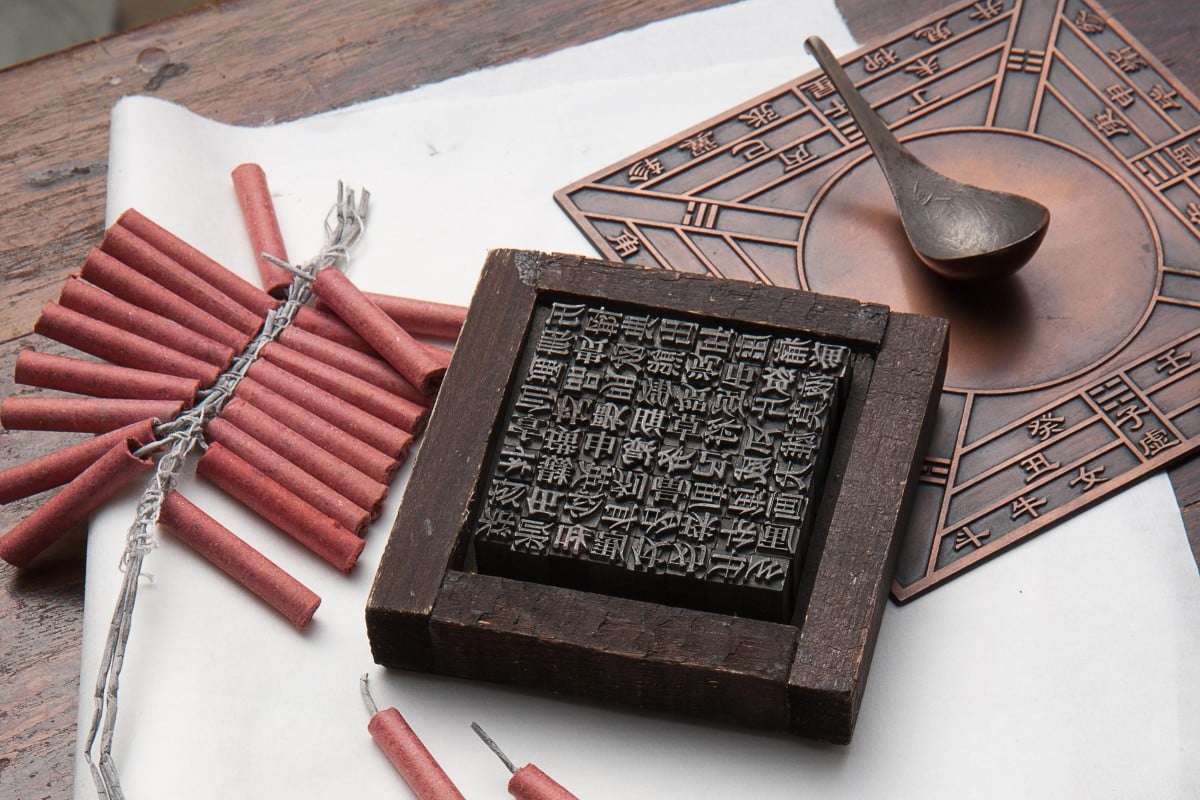
The four great inventions of ancient China: Paper, gunpowder, the compass and printing. Photo: Alamy
An associate professor has been suspended by his university in southwestern China for causing “vicious social impact” by belittling the four great ancient Chinese inventions of papermaking, printing, gunpowder and the compass.
Zheng Wenfeng was suspended from teaching for 24 months by the University of Electronic Science and Technology of China in Chengdu, Sichuan province, for his comments in June to a student in an online group discussion on Chinese social media platform WeChat.
Zheng told the student, who wanted to choose the four great inventions as a thesis topic on innovation, that “ancient China did not have any substantial innovations” and that the four great inventions were “not advanced in the world and did not generate any productivity or cooperation in reality”.
The four inventions are extolled in China as important contributions to the development of world civilisation.
The student’s boyfriend put a screenshot of the conversation on Zhihu.com, a Quora-style knowledge-sharing website, where it generated wide attention.
First day at university in China now means a face scan to enrol
In July, the university issued a statement saying that Zheng had expressed mistaken opinions in the online chat room which had “caused vicious social impact”. The university went on to say that its teachers’ ethics committee had determined Zheng had violated ethics regulations and he would be suspended from teaching, recruitment of master’s degree candidates, and promotion for the next 24 months.
Academics began speaking out in support of Zheng last week, with some university teachers alleging on social media that Zheng had been ambushed by his students. Others felt his punishment went too far.
Huang Shaoqin, an associate professor of the Antai School of Economics and Management at Shanghai Jiao Tong University, called for a boycott of Zheng’s university in response to his treatment and demanded a public apology from the students involved.
“Until you rectify your wrongdoings, I cannot have any academic communication with you,” Huang said. “I call on teachers at Chinese universities to boycott this university.”
College entrance exam boot camp accused of fake advertising
In an editorial on Saturday, GMW.cn – a news website targeting China’s intelligentsia – defended academic debate, saying people could provide their own evidence on the significance of the four great innovations, and this was how academic issues should be argued.
“Students ignored the basic rules of academic discussions and they exaggerated the teacher’s errors. They released the private chat record to the public, no doubt with an intention of making a fuss,” the editorial said. “Their meticulous thought is really horrible.”
Chinese state broadcaster CCTV addressed the issue in an editorial on Friday, saying schools should distinguish correctly between politics and academic issues, and should not magnify the seriousness of the teacher’s opinions.
“This kind of case involves how freely university teachers can talk and the boundary between academic freedom and political red lines,” it said. “The university should give a clear explanation about its punishment so that the public and the teacher involved will be convinced.”
The Ministry of Education promoted 10 principles for university teachers at the end of last year, with “sticking to correct political direction” at the top of the list.
Zheng said he accepted the university’s punishment and did not need to make any clarification or self-justification, according to online news portal Sohu.com last week.
“I will focus on scientific research. This incident is over, is my attitude,” he was quoted as saying.
Researchers at academy of science believe electromagnetic wave model is key that will herald new era in radar detection and avoidance for military ships and aircraft
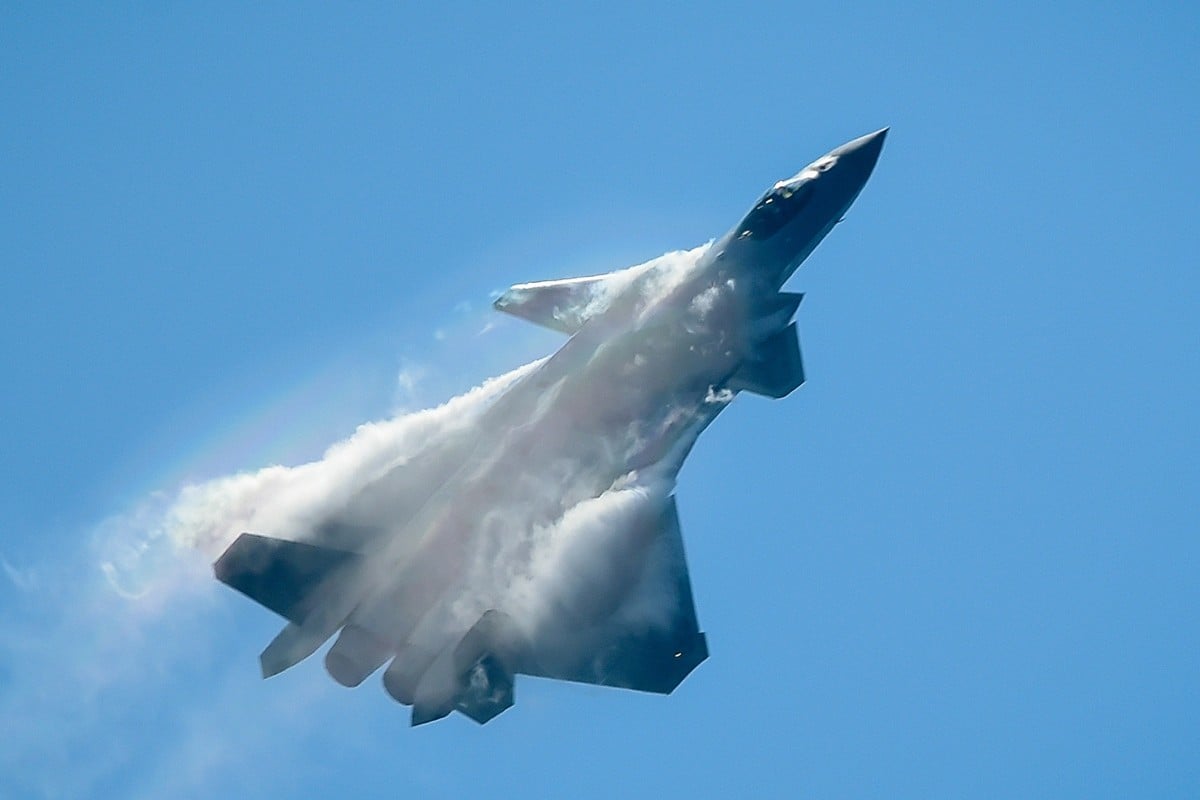
China’s J-20 stealth fighter. Photo: AFP
Chinese scientists have achieved a series of breakthroughs in stealth materials technology that they claim can make fighter jets and other weaponry lighter, cheaper to build and less vulnerable to radar detection.
Professor Luo Xiangang and colleagues at the Institute of Optics and Electronics, Chinese Academy of Sciences in Chengdu, Sichuan province, said they had created the world’s first mathematical model to precisely describe the behaviour of electromagnetic waves when they strike a piece of metal engraved with microscopic patterns, according to a statement posted on the academy’s website on Monday.
With their new model and breakthroughs in materials fabrication, they developed a membrane, known as a meta surface, which can absorb radar waves in the widest spectrum yet reported.
At present, stealth aircraft mainly rely on special geometry – their body shape – to deflect radar signals, but those designs can affect aerodynamic performance. They also use radar absorbing paint, which has a high density but only works against a limited frequency spectrum.
In one test, the new technology cut the strength of a reflected radar signal – measured in decibels – by between 10 and nearly 30dB in a frequency range from 0.3 to 40 gigahertz.
A stealth technologist from Fudan University in Shanghai, who was not involved in the work, said a fighter jet or warship using the new technology could feasibly fool all military radar systems in operation today.
“This detection range is incredible,” the researcher said. “I have never heard of anyone even coming close to this performance. At present, absorbing technology with an effective range of between 4 and 18 GHz is considered very, very good.”
China’s new radar system could spot stealth aircraft from at long range
The lower the signal frequency, the longer a radar’s detection range. But detailed information about a moving target can only be obtained with higher frequency radio waves. Militaries typically use a combination of radars working at different frequencies to establish lines of defence.
The Medium Extended Air Defence System, Nato’s early warning radar, operates at a frequency range of 0.3 to 1 GHz. The American Terminal High Altitude Area Defence system, the missile defence radar that caught Beijing’s attention when it was deployed in South Korea in 2017, operates at frequencies around 10 GHz.
Some airports use extremely short-range, high-frequency radars running at 20 GHz or above to monitor vehicle and plane movements on the ground, but even they might not be able to see a jet with the new stealth technology until it is overhead.
“Materials with meta surface technology are already found on military hardware in China, although what they are and where they are used remains largely classified,” the Fudan researcher said.
Professor Luo Xiangang. Photo: Baidu
Luo and his colleagues could not be reached for comment. But according to the academy’s statement and a paper the team published in the journal Advanced Science earlier this year, the stealth breakthroughs were based upon a discovery they made several years ago.
They found that the propagation pattern of radio waves – how they travelled – in extremely narrow metallic spaces was similar to a catenary curve, a shape similar to that assumed by chains suspended by two fixed points under their own weight.
China tests stealth ‘invisibility cloaks’ on regular fighter jets
Inspired by catenary electromagnetics, the team developed a mathematical model and designed meta surfaces suitable for nearly all kinds of wave manipulation.
These included energy-absorbing materials for stealth vehicles and antennas that can be used on satellites or military aircraft.
Zhu Shining, a professor of physics specialising in meta materials at Nanjing University, said the catenary model was a “novel idea”.
“The Institute of Optics and Electronics in Chengdu has conducted long-term research in this area which paved a solid foundation for their discoveries. They have done a good job,” Zhu said.
“Scientists are exploring new features of metal materials, some of them are already in real-life applications.”
Tower falls on car outside the Chengdu worksite, killing motorist
A motorist was killed when a construction crane collapsed in Chengdu on Wednesday. Photo: Weibo
Authorities in southwest China are investigating a crane collapse at a construction site that killed one person and injured another.
The crane collapsed in Chengdu, Sichuan province, at around 7pm on Wednesday, falling onto a car parked near the site and killing the driver, the city’s urban renewal authority said in an online statement. A pedestrian also suffered minor injuries, it said.
Police were investigating the cause of the incident.
A crane accident at a construction site in Southwest China killed one person and injured another on Wednesday. Photo: Weibo
Photos and footage posted online showed emergency workers and others trying to move the crane off of a white car.
Shanghai-based news outlet ThePaper.cn quoted a witness as saying that the crane fell through the construction site wall and a number of trees.
By 10pm, the car had been towed away and the road reopened for use, according to reports.
In January, four people were killed and one was injured when a crane collapsed in Changsha, Hunan province, state news agency Xinhua reported.
Relations between the Asian giants had been strained after a 73-day military stand-off at their disputed border last year
The Chinese People’s Liberation Army in Beijing. Photo: EPA
China and India aim to hold joint army drills in China before the end of this year, China’s Defence Ministry said on Thursday, as the two countries continue a rapid rapprochement.
Relations between the Asian giants were strained last year over a 73-day military face-off in a remote, high-altitude stretch of their disputed Himalayan border.
Chinese ‘tourists’ face 7 years in Indian jail over shahtoosh shawls made from endangered antelope
But the neighbours have over recent months been working on mending ties and Chinese Defence Minister Wei Fenghe met Indian Prime Minister Narendra Modi in New Delhi in August.
Speaking at a regular monthly news briefing, Chinese Defence Ministry spokesman Wu Qian said that the joint exercise was planned for before the end of this year.
China and India are aiming to hold joint army drills this year as part of an ongoing rapprochement. Photo: EPA
The two countries would meet in the southwestern Chinese city of Chengdu next month to discuss the arrangements, he added, without giving other details.
India and China fought a war in 1962 and the unresolved dispute over stretches of their 3,500km (2,200 miles) border has clouded relations ever since.
But the two big Asian economies share similar positions on a host of issues including concern about US tariffs and Chinese President Xi Jinping and Modi agreed in April to improve relations.
Subway passenger’s LED badge reading ‘no need to give me a seat’ makes him talk of the town
The man’s badge reading “no need to give up your seat” captured attention. Photo: Weibo
A 76-year-old man from northwest China has taken to wearing an LED badge on his chest that says “no need to give up your seat [for me]” on the subway.
The photos of the man riding the subway in Dalian in Liaoning province started circulating on Weibo last week, Dalian Radio Television Network reported on Thursday.
The man, identified as retiree Liu Zengsheng, put his actions down to his sympathy for the younger generation.
“Nowadays, young people don’t have it easy. It is obviously more comfortable to have a seat, but standing is not a problem for me,” Liu was quoted as saying.
Liu said he started wearing the LED badge, which he bought online last year, to avoid the “awkwardness” of having to repeatedly decline young people’s offers to give up their seats for him.
Chinese pranksters’ subway landmine stunt blows up in their faces
He added that he knew other elderly people who wore similar badges on public transport and said that young people were “too kind”.
There have also been squabbles over younger people not giving up their seats to the elderly. In July last year, the video of an older man in Chengdu sitting on a young boy to force him off a bus seat went viral in China.
“When a good person turns old, they remain good,” read one top-rated comment on Weibo.
Unveiled in Shandong, prototype will be a first step towards ground-breaking high-speed travel that will rival passenger jets, project engineer says
One possible future for rapid transport in China is unveiled in the form of a magnetic levitation train at Qingdao in Shandong province. Photo: Weibo
An experimental magnetic levitation train capable of travelling at 600km/h went on show at Qingdao in eastern Shandong province on Thursday, state media said.
Powerful electromagnets hold the Qingdao prototype at a thumb’s width from the rail, giving a quiet, smooth ride at speeds close to those involved in air travel, developers said.
While China operates the world’s fastest conventional train service, which can reach a speed of 350km/h, the Shanghai Maglev has been in commercial operation since the end of 2002 and can reach a top speed of 430km/h. It operates on one 30-kilometre (19-mile) line between two stations.
Ding Sansan, deputy chief engineer with developer the CRRC Sifang Corporation, said China achieved breakthroughs in maglev technology during the “three-year-battle” to build the new train that involved cooperation between more than 30 enterprises, universities and government research institutes.
The construction of a train body with ultra-lightweight, high-strength materials was a challenge, Ding said. Complex physical problems created by high speeds also needed to be solved in new ways if the Qingdao prototype was to reach peak performance.
China was a leader in technologies that included suspension, guidance, control and high-powered traction, Ding told Qingdao Daily.
“The test vehicle has been powered up and is in good order,” Ding was quoted by the newspaper as saying.
Chinese maglev train capable of travelling at 600km/h on track for 2020 test run as design completed
The prototype promised to eliminate the advantages jet passenger planes had over ground vehicles over a distance of 1,500km, he said.
Taking Beijing-to-Shanghai by plane as an example, Ding suggested: “It takes about four-and-a-half hours by plane including preparation time for the journey; about five-and-a-half hours by high-speed rail, and [would] only [take] about three-and-a-half hours by maglev.”
While earlier reports suggested the prototype was expected to begin full-scale testing by 2020, it was unclear what Thursday’s unveiling meant for this timetable.
China’s latest prototype high-speed maglev train factors the comfort of paying customers into its test operations. Photo: Weibo
More maglevs would join the development project in the coming months, the team leader was quoted as saying, while mass production of the technology was likely by 2021.
In contrast to the optimism of the team at Qingdao, Chen Peihong, professor of economics at Beijing Jiaotong University and a transport analyst, was more circumspect about the future of maglev trains.
“The market has to be bigger. Technology alone cannot make [the concept] a success,” she said.
Plane or train: as high-speed rail link connects Hong Kong to 44 mainland Chinese cities, what are cheapest and fastest ways to get where you are going?
Public transport relied heavily on economies of scale, Chen said. Chinese cities including Jinan, Hangzhou and Chongqing were considering maglev lines, but even the longest – from Jinan to Taian – would not exceed 50 kilometres.
Chen said that electromagnetic fields from maglevs were greater than those from the lines that powered high-speed trains, while environmental worries might keep maglevs out of densely-populated areas.
There was a debate in China in the early 2000s about the benefits of a developing a maglev compared to high-speed rail, researchers on that project said. Rail was preferred by the government because it was an established technology and one that was cheaper to realise.
By the end of last year, China’s high-speed rail network extended to most of the country at a distance in excess of 29,000 kilometres, according to government figures, twice as long as the rest of the world’s high-speed rail lines combined. Spain’s high-speed AVE network was the second-longest at 3,100km.
Elsewhere, researchers in Chengdu, Sichuan province, said a vehicle inside a vacuum tube powered by a superconductor coil from a maglev train – a hyperlink – was in development. They expected the vehicle to reach speeds in excess of 1,000km/h as air was pumped from the tube and resistance to the speeding object gradually eliminated.
It was close to midnight and Vlada, a Serbian engineer, was speeding towards his apartment in Belgrade. He had taken his 20-year-old son out that evening but bombs had started to fall across the Yugoslav capital. The power grid was down and he wanted to get home.
Nato, the world’s most powerful military alliance, had been pummelling Yugoslavia from the skies since late March to try to bring a halt to atrocities committed by President Slobodan Milosevic’s forces against ethnic Albanians in the province of Kosovo. It was now 7 May 1999 and the US-dominated air campaign was only growing more intense.
Vlada’s family had spent many nights in recent weeks huddled with others in the basement of their apartment building as air raid sirens blared outside, praying that an errant missile wouldn’t strike their homes.
They were lucky, some thought, to live just next to the Chinese embassy – an important diplomatic mission. Being there would surely protect them.
But as Vlada and his son approached the glass doors of their building in the dark, US B-2 stealth warplanes were in the skies above Belgrade. They were locked-on to the precise co-ordinates of a target selected and cleared by the CIA. All Vlada heard at first was the whoosh of an incoming missile. There was no time to move. The doors shattered, spraying glass at them.
“The force of the first bomb lifted us off the ground and we fell… Then one after the other [more bombs landed] – bam, bam, bam. All the shutters on the block were ripped off by the blast, it broke all the windows.”
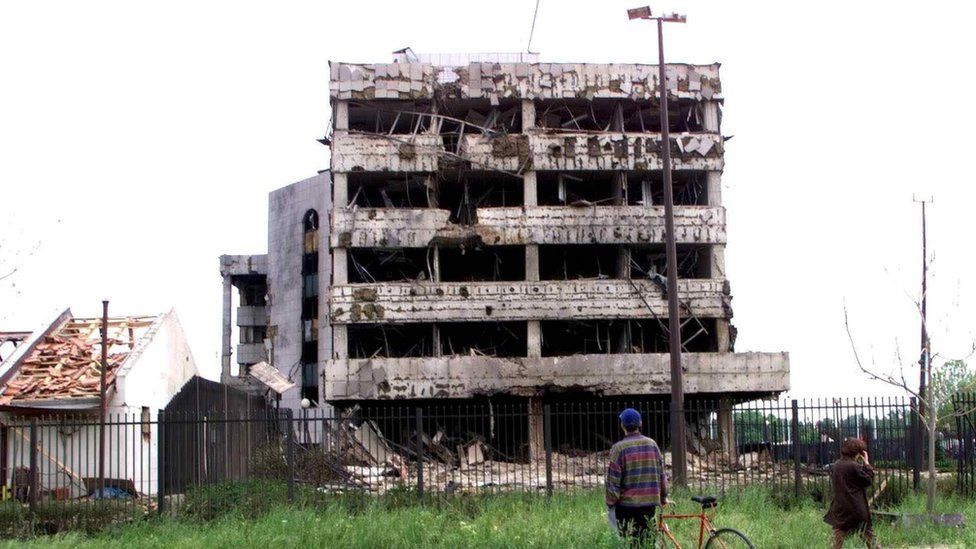
They were terrified but uninjured. All five bombs had hit the embassy, 100 metres away.
The US and Nato were already facing scrutiny over mounting civilian casualties in a bombing campaign conducted without UN authorisation and fiercely opposed by China and Russia. They had now attacked a symbol of Chinese sovereignty in the heart of the Balkans.
Image copyright SASA STANKOVIC/EPA/REX/SHUTTERSTOCKImage caption Embassy workers escaped through windows after the strikesAcross town, Shen Hong, a well-connected Chinese businessman, was getting word that the embassy had been hit. He refused to believe it. Just a few days earlier, his father had phoned from Shanghai and joked that his son should park his new Mercedes at the diplomatic compound to keep it safe.
“I called a policeman who I knew and he said, ‘Yes, Shen, it’s really hit’. He said come right away, so then I knew it was real, it was true.”
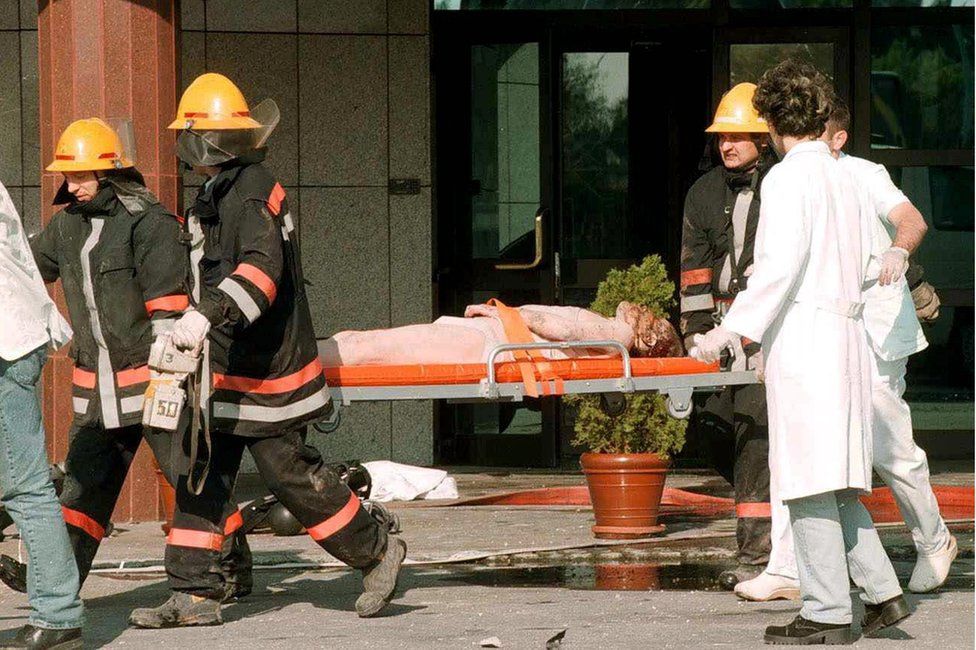
He arrived to a scene of chaos. The embassy was burning; workers covered in blood and dust were climbing out of windows to escape. Politicians close to Milosevic – who had been charged two weeks earlier with crimes against humanity by an international tribunal – were already arriving to denounce the bombing as the latest example of Nato barbarity.
“We could not go inside. There was a lot of smoke, there wasn’t any electricity and we couldn’t see anything. It was horrible,” said Shen.
Image copyright LAZARA MARINKOVICImage caption Shen Hong lost close friends in the bombingHe spotted the cultural attaché, a man he knew, who had knotted together curtains to get out of a first-floor window. “We didn’t see that he was injured and he didn’t notice it either. It was only when I shook his hand that I realised my hands were covered in blood. I told him ‘you’re injured, you’re injured!’ – but when he saw this he passed out.”
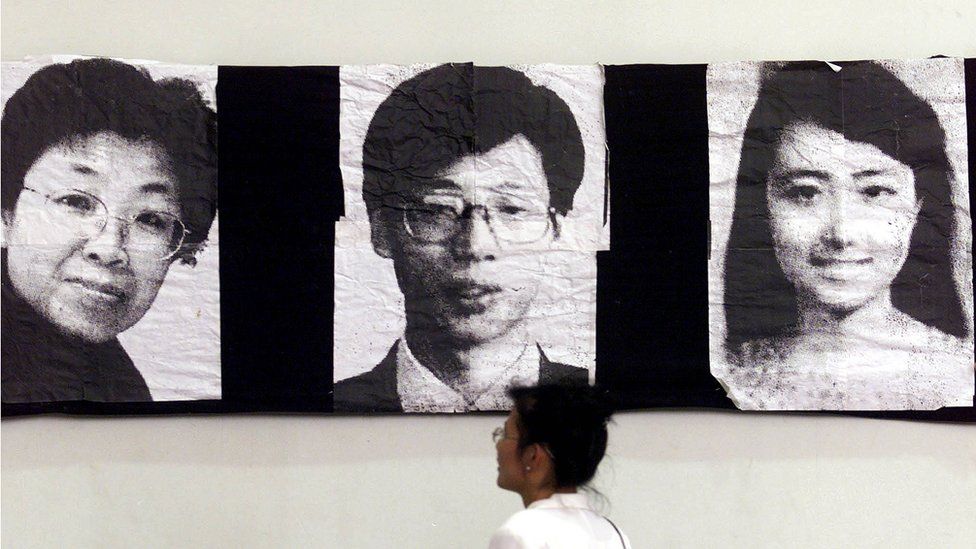
The next day Shen would learn that two close friends – newlywed journalists Xu Xinghu, 31, and Zhu Ying, 27 – had been killed by a bomb that hit the sleeping quarters of the embassy. Their bodies were found under a collapsed wall.
The pair had worked for the Guangming (Enlightenment) Daily – a communist party newspaper. Xu, a language graduate who spoke fluent Serbian, had chronicled life in Belgrade during the bombings in a series of special reports called “Living Under Gunfire”.
Image copyright DRASKO GAGOVIC/EPA
Zhu Ying worked as an art editor in the paper’s advertising department. Her mother collapsed with grief and was sent to hospital when she learned of her daughter’s death so Zhu’s father travelled alone to Belgrade to see the body.
A third journalist, 48-year-old Shao Yunhuan, of the Xinhua news agency, also died. Her husband, Cao Rongfei, was blinded. The embassy’s military attaché, who is believed to have run an intelligence cell from the building, was sent back to China in a coma. In total, three people were killed and at least 20 injured.
For Shen, this was an act of war. The next day he led a protest through the streets of Belgrade carrying a sign reading “NATO: Nazi American Terrorist Organisation”
It was a sign of what was to come.
Image copyright REUTERSImage caption Three journalists were killed in the embassy
Within hours of the bombing, two competing narratives began to emerge. They would harden over the coming months and form the basis of how the incident – which continues to linger over the US-China relationship – remains debated today.
The bombing fuelled speculation, and there was no shortage of unanswered questions and missing pieces that were put together by some to imply a grand conspiracy. Intrigue continued to hang over the incident and, months afterwards, two respected European newspapers suggested the strikes were by design.
But, as former Nato officials point out, in 20 years no clear evidence has come to light proving what almost all of China believes and America strenuously denies: that it was deliberate.
In those first hours after the bombs fell, the US and Nato wasted no time to announce that it was an accident. China’s representative at the UN, meanwhile, denounced a “crime of war” and a “barbarian act”.
In Brussels, Jamie Shea – the British Nato spokesman who became the public face of the war – was woken up in the middle of the night and told he would have to face the world’s press in the morning. The information available in those early hours was thin but he would give one of the first explanations of what had happened, along with an apology. The warplanes, he said from the briefing podium, had “struck the wrong building”.
“It’s like a train accident or a car crash – you know what has happened but what you don’t know is why it has happened,” he says 20 years later. “That took a lot longer to establish… But it was clear right from the get-go, that targeting a foreign embassy was not part of the Nato plan.”
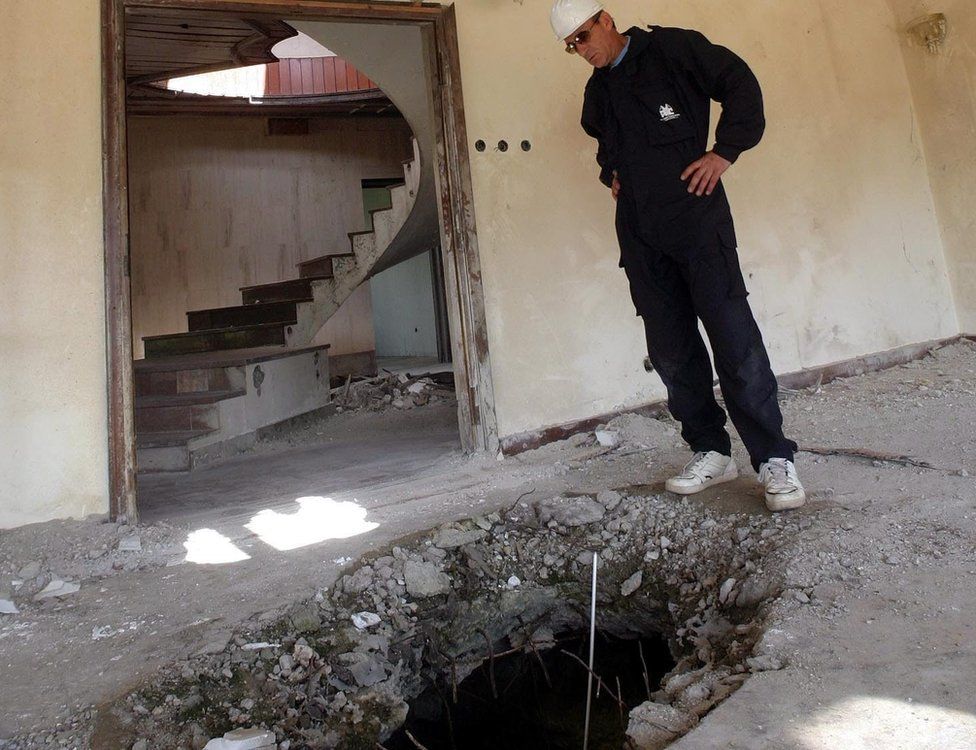
Image copyright BORIS SUBASIC/EPAImage caption The father of Zhu Ying weeps over her coffin in BelgradeIt would take more than a month for the US to give Beijing a full explanation: that a series of basic errors had led to five GPS-guided bombs striking China’s embassy – including one that hurtled through the roof of the ambassador’s residence next to the main building but didn’t explode, likely sparing his life.
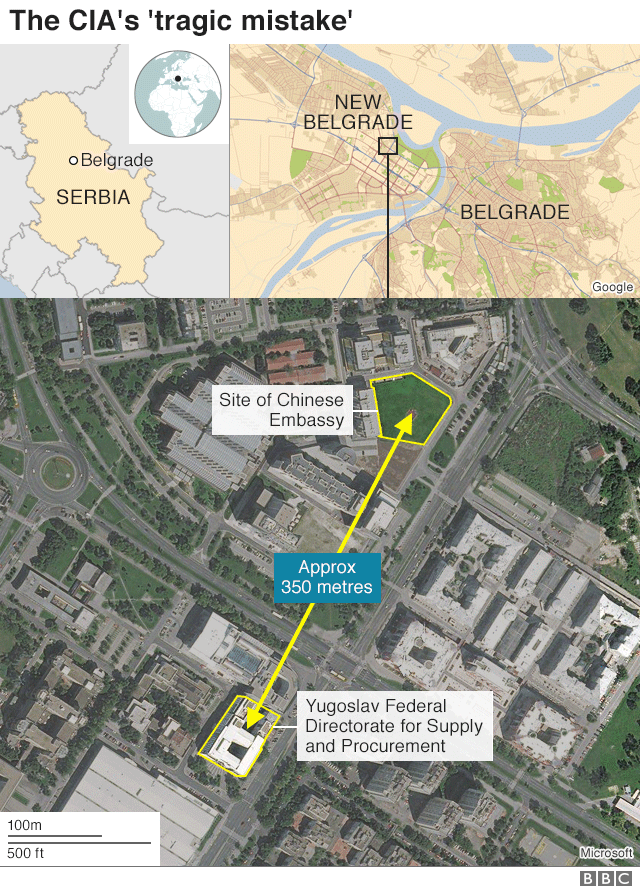
The real target, officials said, was the headquarters of the Yugoslav Federal Directorate for Supply and Procurement (FDSP) – a state agency that imported and exported defence equipment. The grey office building is still there today – hundreds of metres down the road from the embassy site.
Nato had initially hoped the bombing campaign would only last a few days until Milosevic gave up, pulled his forces out of Kosovo and allowed peacekeepers in. But by the time the embassy was hit it had stretched to more than six weeks. In the rush to find hundreds of new targets to sustain the aerial assault, the CIA, which was not normally involved in target-picking, had decided the FDSP should be struck.
But America’s premier intelligence agency said it had used a bad map.
“In simple terms, one of our planes attacked the wrong target because the bombing instructions were based on an outdated map,” US defence secretary William Cohen said two days after the bombing. He was referring to a US government map that apparently did not show the correct location of the Chinese embassy nor the FDSP.
All US intelligence officers had was an address for the FDSP – 2 Bulevar Umetnosti – and a basic military navigation technique was used to approximate its co-ordinates. The technique used was so imprecise, CIA chief George Tenet later said, that it should never have been used to pick out a target for aerial bombing.
To compound the initial error, Tenet said, intelligence and military databases used to cross-check targets did not have the embassy’s new location listed, despite the fact that many US diplomats had actually been inside the building.
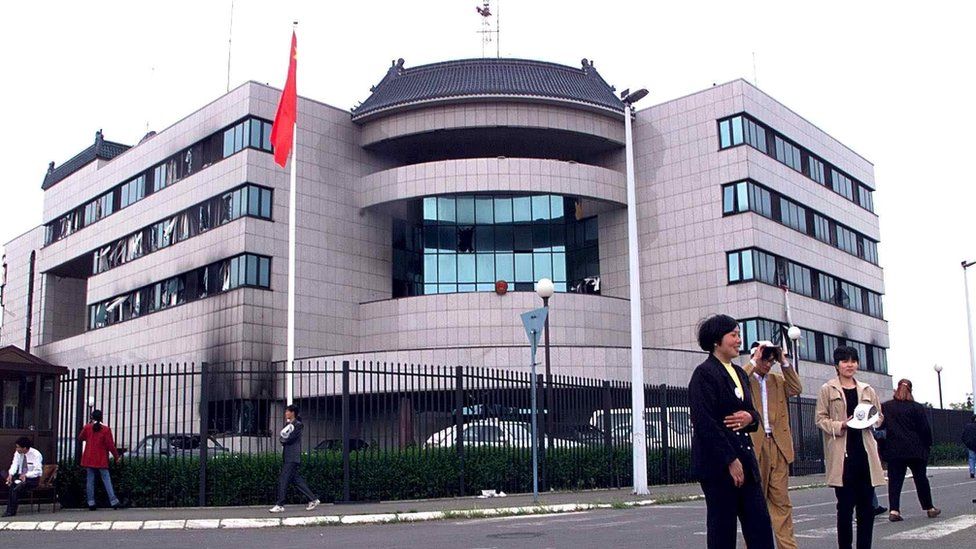
Had anyone on the ground visited the site to be bombed they would have found a gated compound, a five-storey building with a green-tiled oriental sloped roof, a bronze plaque announcing the embassy’s presence and a large, bright red Chinese flag fluttering more than 10 metres in the air.
Image copyright SASA STANKOVIC/EPA/REX/SHUTTERSTOCKImage caption The front of the embassy was largely undamagedThe crux of the CIA’s explanation was hard for many to believe: the world’s most advanced military had bombed a fellow UN Security Council member and one of the most vocal opponents of the Nato air campaign because of a mapping error. China was having none of it. The story, it said, was “not convincing”.
“The Chinese government and people cannot accept the conclusion that the bombing was a mistake,” the foreign minister told a US envoy sent to Beijing in June 1999 to explain what had happened.
But why would the US intentionally attack China?
It wasn’t long after the Sun rose on the morning of Saturday, 8 May 1999, that David Rank, a US diplomat, got out of bed in Beijing.
He turned on the television and switched to CNN. The American news network was carrying live pictures of the smouldering Chinese embassy in pitch-dark Belgrade.
By that afternoon, thousands of irate Chinese protesters would be gathered outside. But Rank, at that stage, was fairly calm. He rang his boss, the head of the political section: “I said, you know, Jim, this is the damndest thing.”
The diplomat rushed from his residence to the embassy down the road, where US officials were trying to figure out what had happened. Something had clearly gone wrong but this must have been, had to have been, a tragic mistake.
“It was so patently obvious that it was a sort of fog of war accident… At that point I didn’t think that down the road this was going to be a major problem. Obviously, it was a major problem, but not the sort of convulsive incident that it turned out to be,” said Rank.
But in the next hours, the shape of how the Chinese government and people would respond started to become clear.
Image copyright PETER ROGERS/GETTY IMAGESRank began receiving calls from liberal Chinese friends who were outraged at the bombing. American journalists got similar calls from Chinese contacts with pro-US views, expressing shock and a sense of betrayal.
Chinese state media was already laying out a clear narrative – the US had breached international law by bombing a Chinese diplomatic outpost. “The language that I heard from lots and lots of Chinese, it was identical. It was the same almost word-for-word lines of real anger,” said Rank.
By that afternoon thousands of students were streaming onto the streets of Beijing. They gathered outside the embassy and things quickly turned violent.
“They were pulling up the paving stones. Beijing sidewalks aren’t paved, they have big tiles and they were pulling those up and smashing them and throwing them over the walls.”
Image copyright PETER ROGERS/GETTY IMAGESMany of those bits of concrete were crashing through the windows of a building where more than a dozen embassy staff, including US Ambassador James Sasser, had hunkered down. Embassy cars were being defaced and attacked.
The message was clear: the bombing was intentional and, as one slogan went, “the blood of Chinese must be repaid”. The protests would continue the next day, with even more people – some reports said 100,000 – storming the diplomatic district, and pelting stones, paint, eggs and concrete at the British and American embassies.
“We feel like we’re hostages,” Bill Palmer, an embassy spokesman trapped in one of the buildings, said at the time.
Demonstrations of this scale had not been seen in tightly-controlled China in the decade since students led a pro-democracy uprising in Beijing’s Tiananmen Square in 1989. This time the anger was directed away from the Communist Party but, with the 10th anniversary of the crackdown on students in Tiananmen approaching, the government had to strike a balance between giving vent to public anger and remaining in control.
In a rare TV address Vice-President Hu Jintao endorsed the protests but also warned they had to remain “in accordance with the law”.
Image copyright REUTERSImage caption US Ambassador James Sasser was trapped in the embassy for four days as protests ragedThe uproar was not isolated to Beijing. Crowds also took to the streets of Shanghai and other cities that weekend. In central Chengdu, the US consul’s residence was set alight.
Weiping Qin, a then 19-year-old student leader at the maritime college in southern Guangzhou city, said demonstrators were not informed that Nato had already apologised for what it said was an accident. “The government was hiding this important message. They didn’t tell us – so young people, everybody, felt angry. We just wanted to go in the streets and protest against the United States.”
He said that initially students at his college were told they had to stay in their dormitories. But 24 hours after the bombing, the university leadership told him that they needed 30,000 students in the streets around the US consulate – 500 of whom would come from the maritime college.
The fired-up students drew lots to choose who could attend. They were loaded onto buses and given statements to read that echoed the stilted official language being broadcast by state media. “They gave us long sentences. But in the street, to speak out in long sentences is very hard.” He decided to yell slogans about the evils of Nato and the US instead.
Image copyright WEIPING QINImage caption Weiping Qin (right) was a student leader at Guangzhou Maritime College in 1999“We were just young people and we just felt angry. Our emotions came out like a wave,” said Qin, who now lives in the US and criticises the Chinese government in YouTube videos.
David Rank agreed that the anger was genuine. “I think it would really sell the Chinese people short to say this was manufactured by the system,” he said. “There was real outrage.”
Since the early 1990s, China had embarked on a concerted campaign to instil nationalism and “patriotic education” in its people. The narrative pushed in school textbooks, university classrooms and the media was that China – home to a great and benevolent civilisation – had been subjugated and humiliated at the hands of Western powers. The Belgrade embassy bombing fit the story.
“The anger that ordinary Chinese felt I think can only be understood in that historical context, being socialised to resent the West,” said Peter Gries, a professor of Chinese politics at Manchester University and an expert on Chinese nationalism.
For Liu Mingfu – a retired People’s Liberation Army colonel known for his hardline views of the US – the embassy bombing was part of a series of events that proved the US was engaged in a “new Cold War against China”.
“It was totally intentional. It was a purposeful, planned bombing, rather than an accident,” he said.
China would receive $28m in compensation from the US for the bombing, but had to give back close to $3m for the damage to US diplomatic property in Beijing and elsewhere. The US paid another $4.5m to the families of the dead and injured.
On the day of the bombing, Dusan Janjic, an academic and advocate for ethnic reconciliation in Yugoslavia, was having lunch at an upscale restaurant in central Belgrade with a man he considered a good friend.
Ren Baokai was the military attaché at the Chinese embassy and Janjic said he was surprisingly open with him about the fact that China was spying on Nato and US operations and tracking warplanes from its Belgrade outpost. The attaché invited him to dinner at the embassy that night because he knew he liked Chinese food.
“And I started making jokes. ‘Come on, you’re going to be bombed! I’m not coming!’,” Janjic recalled. He was being facetious: he did not actually think the embassy would be hit.
But Janjic couldn’t make it to dinner and that evening, when the missiles flew into the building, Ren was thrown to the ceiling by the blast and then fell through a crater left by a bomb. He was found in the basement in a coma only the next morning.
Citing Nato sources, they reported that the embassy was being used as a rebroadcast station for Yugoslav army communications and was as a result removed from a prohibited target list. US Secretary of State Madeleine Albright decried the story as “balderdash”, while British Foreign Secretary Robin Cook said there was “not a single shred of evidence” to support it.
But two decades later, Jens Holsoe, Politiken’s correspondent in the Balkans from 1995 to 2004, and John Sweeney, formerly of the Observer and now with the BBC, said they stood by their reporting that the bombing was intentional.
Holsoe said what made him investigate in the first place was CIA Chief George Tenet publicly saying that satellite images gave no indication the target was an embassy – “no flags, no seals, no clear markings” – when in fact all three were present.
One of his sources – a very senior Danish military figure – almost went on the record to confirm publicly that the bombing was intentional, he said. “Then he suddenly backed out and said if he uttered another word to me about this story that not only did he risk being fired but also prosecuted.”
Holsoe said it was clear at the time that there was military co-operation between Serb forces and the Chinese – and that he personally saw military vehicles entering and exiting the Chinese embassy. American officials told the New York Times that after the bombing they learned the embassy was China’s most significant intelligence collection platform in Europe.
“This was, and always will be, a murky story,” said Sweeney.
Ren Baokai survived and was later given the rank of general. He declined an interview with the BBC, saying he was now retired.
The Chinese ambassador who narrowly survived the strike, Pan Zhanlin, denied in a book that the embassy had been used for re-broadcasting and that China, in exchange, had been given parts of the US F-117 stealth fighter jet that Serbian forces had shot down in the early stages of the Nato campaign.
Getty Images
I think it’s complete nonsense – it was a bad map-reading error and a bad mistake.
It’s widely assumed that China did get hold of pieces of the plane to study its technology. It’s also been speculated that China was using the Nato air campaign to test technology to track stealth bombers that are normally undetectable.
But even if all these stories are true – the question remains: would the US really take the risk of bombing a Chinese embassy on purpose?
Even among ex-Yugoslav insiders there is no consensus. One former military intelligence officer told the BBC he believed the bombing was intentional and that the CIA’s explanation was ludicrous; while another, a retired colonel, said he believed America’s story.
“When something bad happens everybody thinks there has to be a secret reason – not a cock-up but a conspiracy,” said the former Nato spokesman Jamie Shea. “I think it’s complete nonsense – it was a bad map-reading error and a bad mistake.”
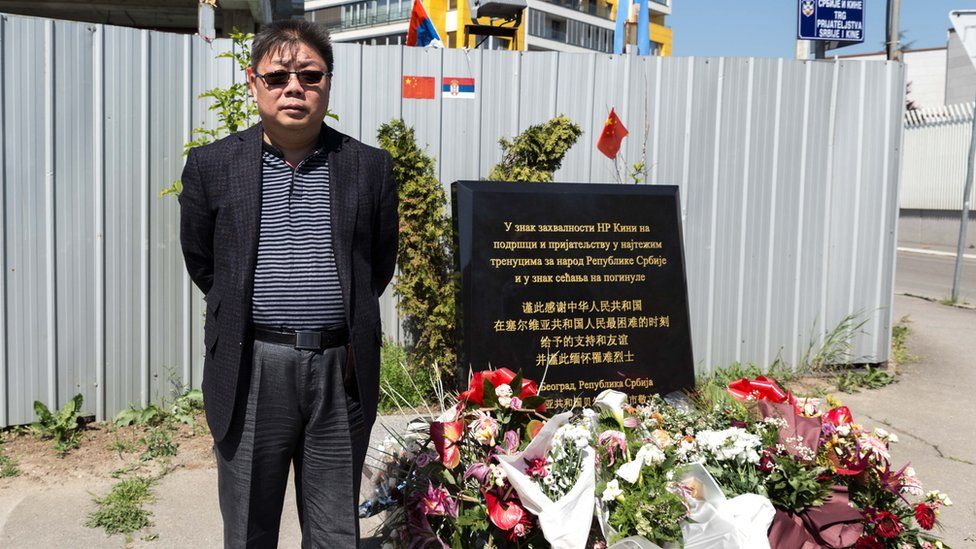
On a sunny day in late April, more than a dozen fresh bouquets were stacked up neatly against the memorial stone, but Shen Hong still felt compelled to re-arrange them. He comes to the site of the embassy bombing regularly, to remember his friends that died. But these days, it’s rare that he is alone.
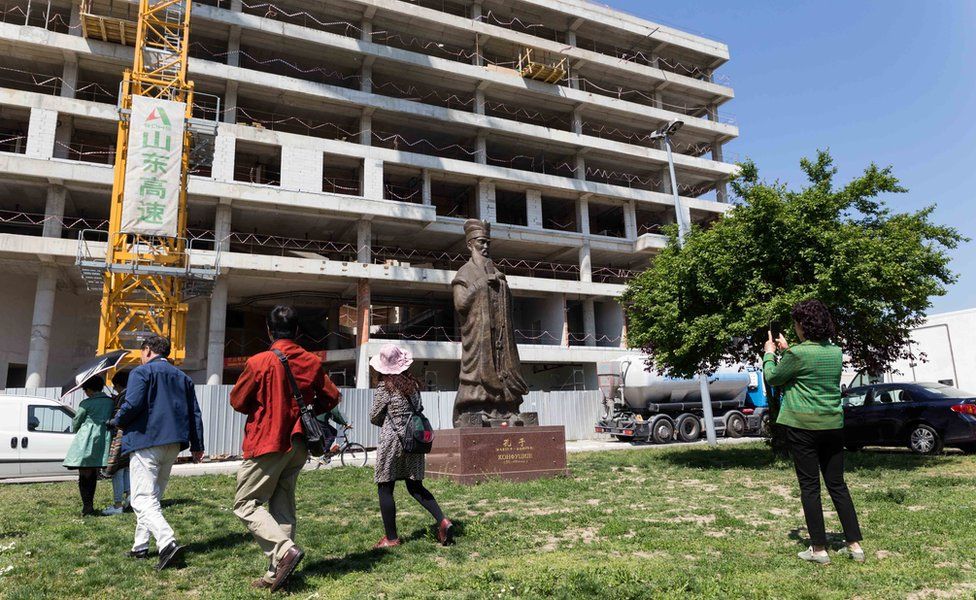
Busloads of Chinese tourists arrive every day to gaze at the memorial and the statue of the Chinese sage and philosopher Confucius that now stands nearby.
A young Chinese couple, Zhang and He, were in Belgrade for their honeymoon and decided to visit the memorial. They are around the same age that Xu Xinghu and Zhu Ying were when they were killed in 1999. “Three of our countrymen died here. We knew about this since we were kids and we came to see it,” said He.
Yang, a guide who was leading some 30 middle-aged Chinese tourists on a two-week bus tour through the Balkans, said the embassy site was a mandatory stop. “Our embassy was destroyed by Americans. Every Chinese knows this.”
Image copyright LAZARA MARINKOVICImage caption The embassy site is being turned into one of the largest Chinese cultural centres in EuropeIn 1999, China was not the economic, technological and military giant it is now. It was focused on getting wealthy and had a much less visible foreign policy. But 20 years later the country knows it sits at the top table with America and its ambitions around the world reflect that.
The Belgrade embassy site is being turned into a Chinese cultural centre that will be one of the biggest in Europe. The symbolism is hard to miss: a site of national humiliation and tragedy at the hands of the West re-born as a shiny edifice to China’s glorious history.
It’s a sign that Beijing has no plans to forget a bombing that allows it to paint the US as an imperialist superpower looking to hurt China. Diplomats who have served in Beijing say the incident is still brought up regularly in conversations.
Image copyright LAZARA MARINKOVICBut even those who called for immediate retaliation in 1999 now realise it was fortunate that China’s reaction did not spiral out of control: no Americans were killed during the protests and the compensation agreement allowed Beijing to draw a line – if a thin one – under the incident.
“We were the fastest developing country, every year our economy grew by double-digits. And if we would have stopped that because of war back then, we would have lost a lot,” said Shen, as another group of tourists arrived at the memorial.
“By nature, I’m a radical. I am always more for war than for a conversation. But when I look back, they did a good thing. Because now we can sit equally with the Americans.”
Property management workers pull to safely elderly woman with Alzheimer’s disease climbing down side of building
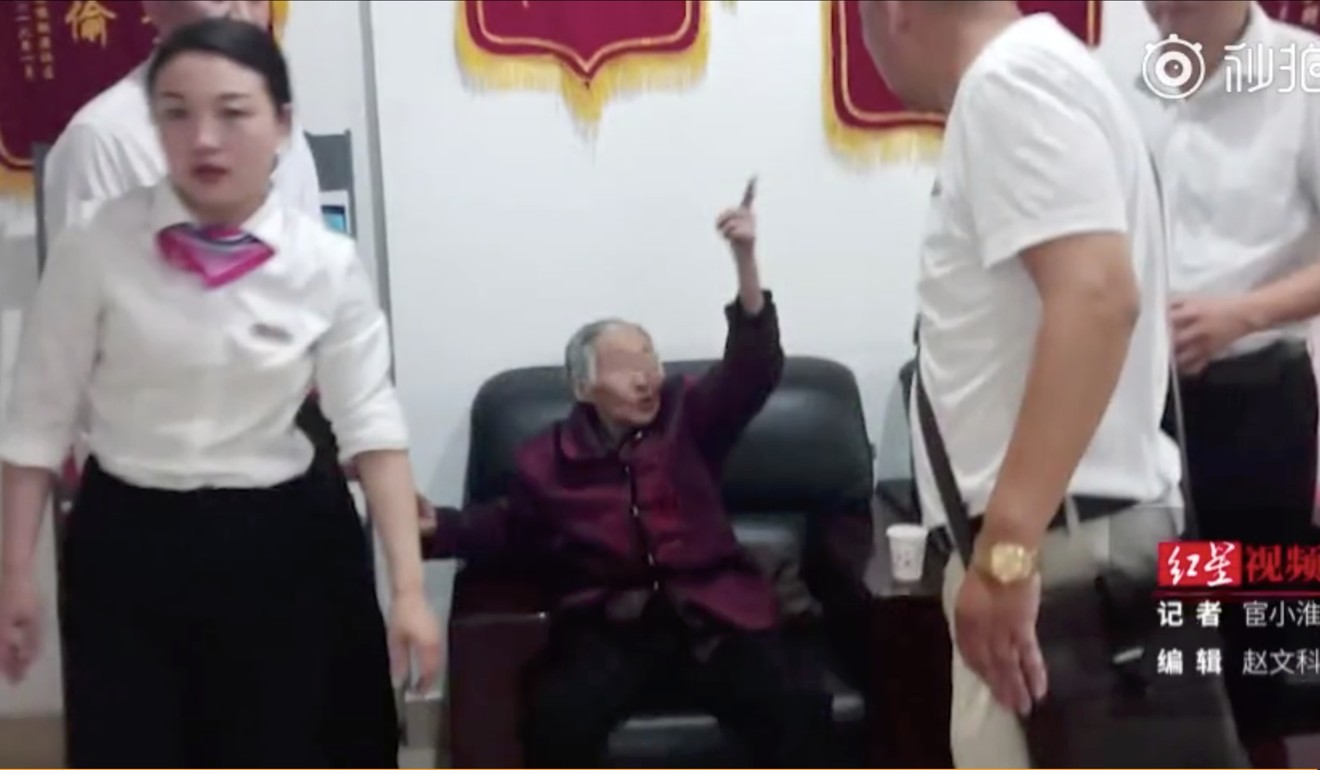
The elderly woman with Alzheimer’s climbs down the outside of her residential building in Chengdu, Sichuan province, on Thursday. Photo: Weibo
An 84-year-old woman with Alzheimer’s disease in southwestern China stunned her neighbours by climbing out of a lavatory window in a high-rise building and down from her 14th-floor flat.
The octogenarian was rescued by property management workers, who were waiting near the window of a flat on the fifth floor to intercept her, news website Thepaper.cn reported.
The woman squeezed through the window of her home’s toilet in a residential block in Chengdu, Sichuan province, on Thursday after she was locked in by relatives, a property management employee said.
“She couldn’t open the door from inside. But she wanted to go out as it was so humid and hot today,” the unnamed worker said.
As she climbed down the outside of the building, her neighbours unfolded a bedsheet on the ground, hoping to catch her if she fell.
The elderly woman survived the incident unscathed. Photo: Weibo
Property management workers gave the woman water and food after rescuing her. She was later picked up by her relatives and was reported to have no injuries from her adventure, the report said.
There were 6 million Alzheimer’s disease patients in China in 2015, with around 300,000 new cases reported each year, news portal Sohu.com reported.
Chinese taxi driver takes his wife with Alzheimer’s to work every day
A 2016 white paper released by the Zhongmin Social Assistance Institute, a Beijing-based research NGO, said half a million old people got lost in China each year, with a quarter of them diagnosed with Alzheimer’s.
“China is seriously hit by Alzheimer’s disease based on the country’s rapidly ageing population,” Dr Wang Luning, chairman of the Chinese Alzheimer’s Disease Association, told Legal Daily.
“But many people, even some doctors, have little knowledge about this disease, leading to low rates of people seeking diagnosis, the rate of them being diagnosed and being treated all being low.”
Embassy officials have contacted families of two Chinese nationals who were killed in the blasts on Easter Sunday, and visited five who were injured
Four of the missing were travelling to the Indian Ocean on a study trip
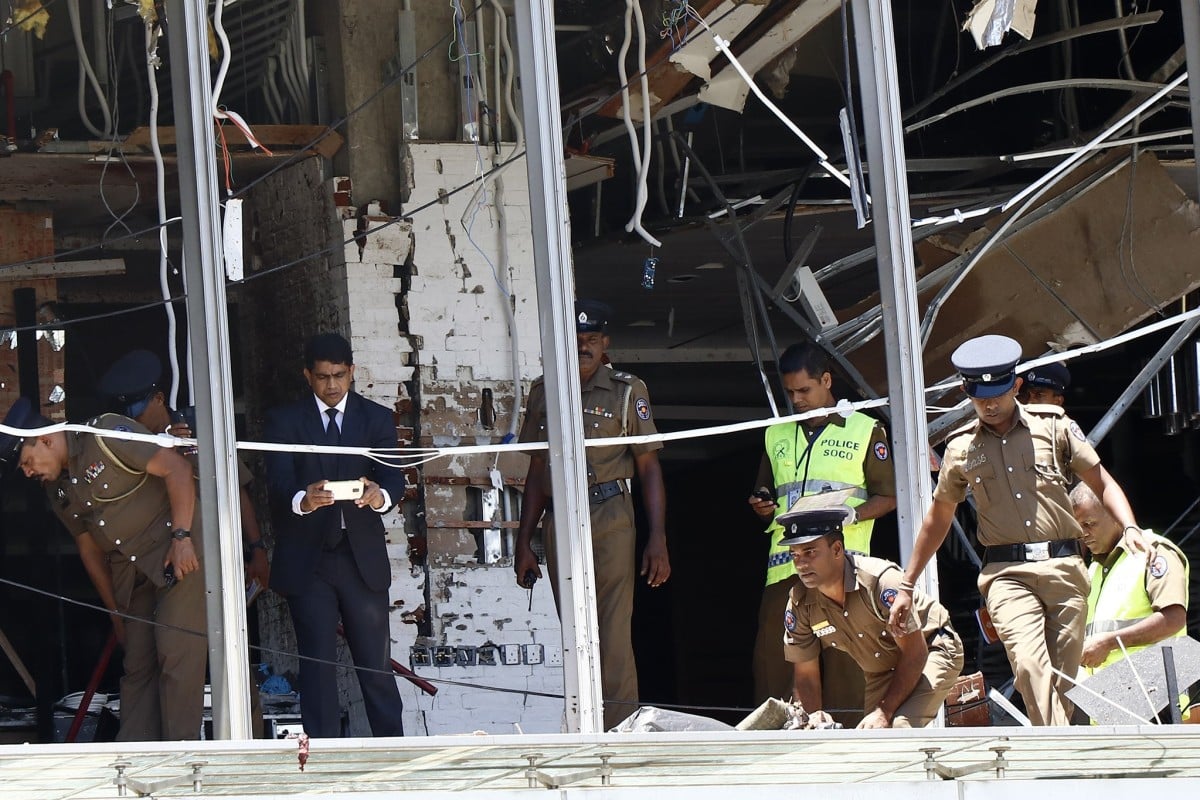
Police and investigators work at the Shangri-La Hotel blast scene in Colombo on Sunday, where the two Chinese were killed. Photo: Xinhua
Five Chinese nationals remain missing following a series of suicide bombings in hotels and churches in Sri Lanka on Easter Sunday that claimed the lives of
At least 290 people were killed and more than 500 others injured in the blasts, according to a Sri Lankan government official on Monday, who said a local militant group was behind the attacks.
The Chinese embassy in Colombo had contacted the families of the two deceased Chinese and was awaiting police confirmation on the fate of the five still missing, state-run People’s Daily reported.
Two Chinese nationals sustained serious injuries in the blasts and three others minor ones. Embassy officials had visited them several times in hospital, the report said.
“The embassy will closely monitor the situation, urge Sri Lankan police to confirm the whereabouts of the missing persons and assist Chinese citizens and families to properly handle the aftermath,” the embassy was quoted as saying.
The two Chinese who died, cousins surnamed Tan, were caught in a blast at the Shangri-La Hotel in Colombo, Red Star News quoted a Chinese businesswoman in the Sri Lankan capital as saying.
“Their families identified them at the scene,” she said.
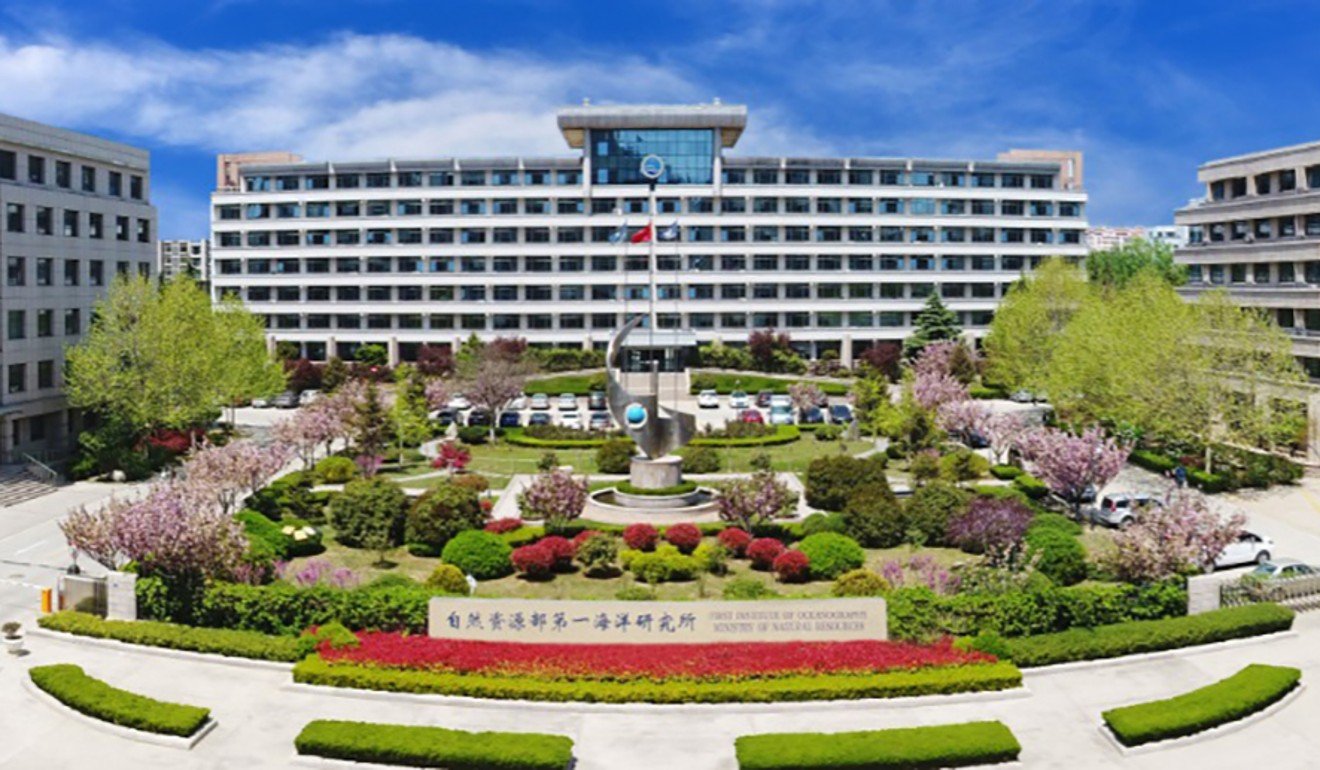
Four of the missing Chinese are students from the First Institute of Oceanography at the Ministry of Natural Resources. Photo: FIO
Four of the missing Chinese – Li Dawei, Li Jian, Pan Wenliang and Wang Liwei – are students from the Ministry of Natural Resources’ First Institute of Oceanography who were going to take part in a study in the Indian Ocean, an institute staff member told Red Star News.
Four of the five injured are students from the Chinese Academy of Sciences’ South China Sea Institute of Oceanology, who were en route to a study trip in the eastern Indian Ocean.
“It is an annual scientific expedition programme and they were on the way to replace the 10 others who had completed their rotation,” a staff member told The Beijing News. “Some sustained bruising on their legs and one could hardly hear after the blast.”
Tourists who returned to Shanghai and Chengdu, Sichuan province, told the newspaper that their trip had to be cut short as shops were closed and a curfew imposed amid tight security.
“All the private cars, coaches, vans and buses had to open their doors for inspection. There were checkpoints every 10 metres,” said one tour guide from Chengdu.
A traveller from the same city said airport security had also been stepped up. “There was a bombing 20 minutes after we left a restaurant and another one outside the airport when we were waiting there. We had to pass through three or four very strict security checks at the airport,” she said.
Back in Shanghai, another woman said: “We were not scared there but we are very glad to be back home.”
BEIJING, April 20 (Xinhua) — The Belt and Road Initiative (BRI) will be an efficient way to address the imbalance in global infrastructure development, according to U.S. engineering firm AECOM.
Under the BRI, financing platforms including the Asian Infrastructure Investment Bank and the Silk Road Fund have emerged, which will help narrow the development gap, said Ian Chung, chief executive of AECOM for Greater China.
“The BRI is an opportunity for all. It is open, inclusive, and will bring economic development to the next level,” Chung told Xinhua.
According to Chung, countries and regions of different development phases can all benefit from the BRI, especially in infrastructure.
For developing economies, such as some in Africa, the BRI will significantly improve local infrastructure connectivity and boost economic growth, Chung said.
For fast-growing economies such as some in Southeast Asia, Chinese firms could share their experience in high efficiency and green construction via the BRI to meet the rising demand for sustainable infrastructure, he said.
As for many other developed countries, the demand for infrastructure still abounds, as many existing facilities are becoming aged, he added.
The BRI has opened plenty of opportunities for AECOM, as the company has been partnering with Chinese firms on many overseas projects, offering consulting services on design, local regulations, environmental and safety standards.
“Chinese firms excel in construction and financing, while we share a competitive edge in project design, knowledge of local regulations, procedures as well as culture. It’s a win-win for all of us,” Chung said.
Seeing business opportunities from the BRI, the company set up a new department in its Beijing office three years ago to work with Chinese firms on BRI projects.
The firm just opened its new offices in Chengdu and Changsha, following the set-up of its China headquarters in Shanghai last year, another sign that shows the company’s confidence in China’s development, Chung said.
“I am very optimistic that we will have more value-added cooperation with Chinese firms under the BRI,” Chung said.




















 CHINDIA ALERT: You'll be living in their world, very soon