Archive for ‘children’

09/12/2019

Feature: Dream of migrant workers’ children fly high in model planes

XI’AN, Dec. 8 (Xinhua) — In the winter drizzle, a white control line model plane climbs, dives and turns. The flyer, Huang Jinquan, 11, has just won his first national title in August with a dazzling aerobatic performance.

Not keen to talk, the introverted champion prefers to show his passion with the two lines in his hands.

Jinquan is a student of Redian Primary School in the eastern suburbs of Xi’an, northwest China. More than 70 percent of the students at this school come from rural areas and have been taken to cities by their parents, who are migrant workers striving for a better life. Many, like Huang, lack a companion as their parents are usually busy with work, and model planes are too expensive for them.

Headmaster Han Baoan had a chance to receive flying training in 1983 when he first came to work in Redian. Since then he has been trying his best to help his students fly.

“We may not have enough money, but nothing can deprive us of passion for the sport,” he says.

The school managed to establish a model airplane club in 2012. The sport became more popular among Redian students when it was included in the program of the 2017 Chinese National Games. Now the club has 20 members and has won the national championships in two years in a row.

“Model planes are expensive. Many beginners in the more developed coastal provinces can afford serious competition models. They can buy new ones when they crash the models,” says Han. “We don’t have enough funding. Neither can we charge our students in the club. All we can do is to train harder than other teams.”

“But still, I’d like to help these children fly further and higher in their life,” Han says.

Han and other teachers bought components and made model planes themselves. They teach students take-off and landing and later flying stunts.

“A good flyer needs to practice for thousands of hours. For example, Huang has to finish more than 10 training sessions every week in order to better master the skills,” says Han.

The club renewed an air-raid shelter under the classroom building to store and fix models.

“We can fix up some small problems of the model airplanes such as a broken propeller or a broken landing gear,” says Jin Yuwei, who partnered Huang to snatch the first place of the Chinese Teenagers’ Model Airplane Competition.

The title was hard-earned. In the 2017 national competition, her plane accidentally crashed into Huang’s. The then eight-year-old girl burst into tears. After the failure, she trained even harder and now she can operate the plane better.

“I love the sport and my parents are all supportive. Since I began playing model planes I seldom play computer games or get up late at the weekend. The sport helps me to develop good habits,” Jin says.

Flying model airplanes also means more opportunities for these students. To promote the sport, the city government has launched a project in which schools like Redian can share local top schools’ funding and other resources on extra-curricular activities.

Jinquan’s sister Jinxia, who snatched the club’s first national title in 2018, was also recommended to study in one of the top middle schools in Xi’an.

Jinquan says he just wants to keep playing model airplanes, without elaborating on his future plan.

Source: Xinhua

08/11/2019

Jackie Chan cancels Vietnam charity visit after South China Sea backlash

  • Chan is accused of supporting Beijing’s so-called nine-dash line, which is its historical justification for its territorial claims in the resource-rich sea
  • Vietnam, Malaysia, the Philippines, Taiwan and Brunei all have competing claims in the waterway that overlap with China’s
Film star Jackie Chan. Photo: Reuters
Martial arts film star Jackie Chan’s planned visit to Vietnam for a charity has been cancelled following an online backlash related to Beijing’s expansive claims in the disputed South China Sea.
The Hong Kong-born actor was set to visit Hanoi on November 10 to support Operation Smile, a charity that gives free surgery to children with facial disfigurements.
Jackie Chan says he wants to make films in Saudi Arabia
But the plans were scrapped after thousands of angry Facebook users flooded the charity’s official page when his visit was announced last week.
Some of their comments claimed Chan had spoken in support of China’s so-called nine-dash line – its historical justification for its territorial claims in the resource-rich sea.
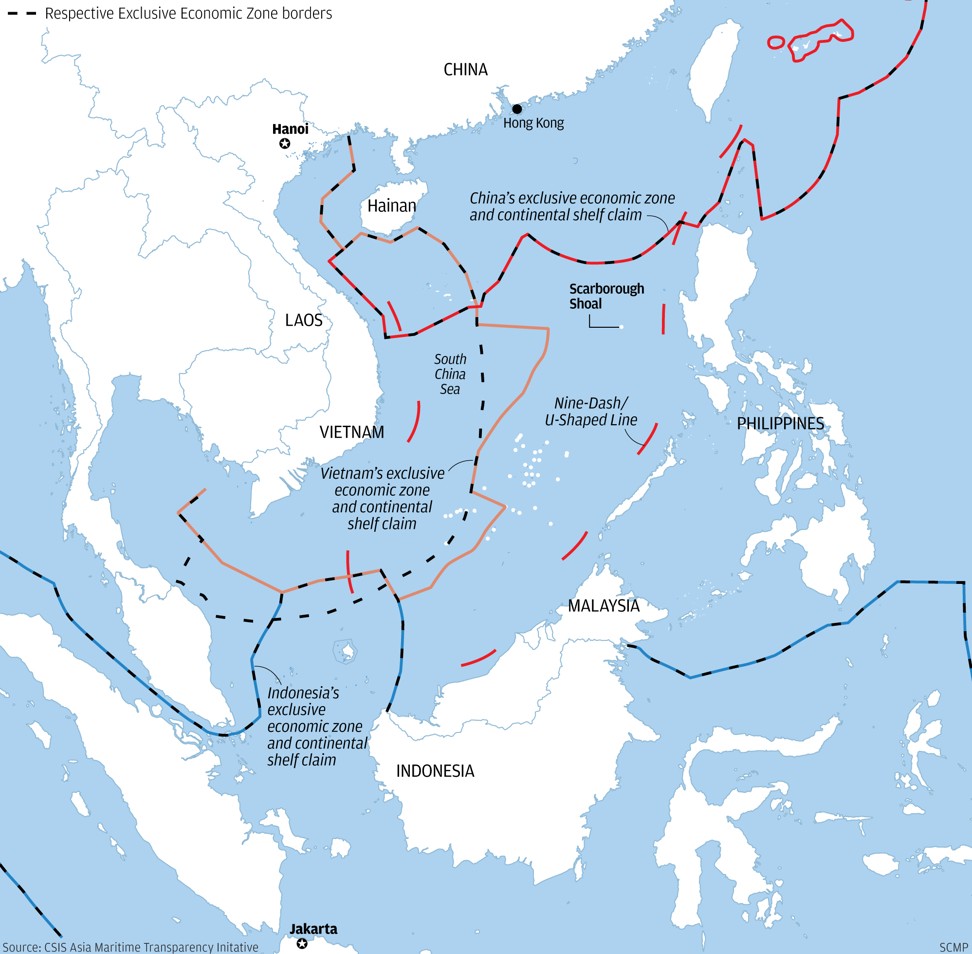
A map showing claimant countries’ exclusive economic zones in the South China Sea.

However, Chan has not explicitly expressed public support for the controversial maritime assertion.

Vietnam, Malaysia, the Philippines, Taiwan and Brunei all have competing claims in the waterway that overlap with China’s – long a source of tension in the region.

Issuing a mea culpa on Friday for failing “to predict the reaction” of the Vietnamese public, the charity asserted that their work is “non-political”.

“We are very sorry … Operation Smile will not organise any activities with [Chan’s] involvement” in Vietnam, they said.

A Chinese coastguard ship sails by a Vietnamese vessel off the coast of Vietnam in 2014. Photo: Reuters

Vietnam is one of Beijing’s most vocal critics over the flashpoint South China Sea issue.

The foreign ministry on Thursday repeated its usual proclamation on the sea, citing the country’s “full legal basis and true evidence to affirm Vietnam’s sovereignty”, deputy spokesperson Ngo Toan Thang said.

Chan has in the past been accused of siding with China over Hong Kong’s democracy protests after calling the unrest in his hometown “sad and depressing”.

The comment sparked ire in Hong Kong but was warmly received by many in China where he has a massive fan base.

Abominable has been criticised for a scene showing the nine-dash line. Photo: DreamWorks
Earlier this month Hanoi pulled the DreamWorks film Abominable from theatres over a scene featuring a map showing the nine-dash line.
Beijing claims most the South China Sea through the vague delineation, which is based on maps from the 1940s as the then-Republic of China snapped up islands from Japanese control.
Abominable is not being shown in Malaysia either

after its distributor refused to cut the offending scene, while the Philippines also filed complaints.

The US this week accused Beijing of intimidating smaller countries in the South China Sea, a key global fishing route.
China has built military installations and man-made islands in the area, and for several weeks earlier this year sent a survey ship to waters claimed by Vietnam.
Source: SCMP
30/09/2019

Fugitive on run for 17 years found living in cave by a drone

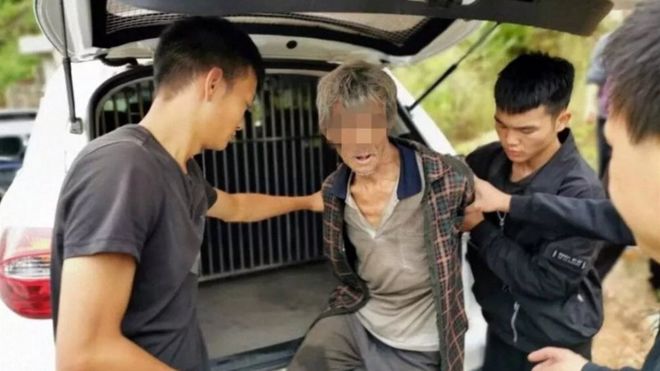
Fugitive arrested by policeImage copyright YONGSHAN POLICE
Image caption After 17 years, the fugitive was tracked down by a drone

Chinese police have arrested a fugitive who’d been on the run for 17 years, after they used drones to spot his cave hideout.

The 63-year old, named Song Jiang by the police, had been jailed for trafficking women and children but escaped from a prison camp in 2002.

He had been living in a tiny cave cut off from human interaction for years.

Yongshan police received clues about Song’s whereabouts in early September, they said on their WeChat account.

Those clues led them to the mountains behind his hometown in Yunnan province in south-west China.

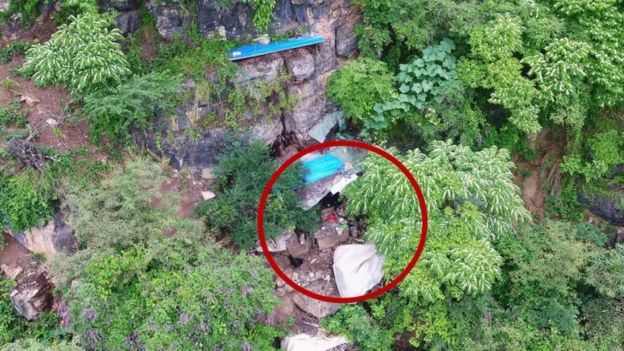
Aerial shot of the cave entranceImage copyright YONGSHAN POLICE
Image caption Drones spotted the cave on a steep hillside

After regular searches failed to find anything, authorities sent additional drones to help the officers.

The drones eventually spotted a blue-coloured steel tile on a steep cliff as well as traces of household rubbish nearby.

Police then moved in on foot and found Song in a small cave where he’d been hiding for years.

According to the police, the man had been living in seclusion for so long that it was difficult for him to communicate with the officers.

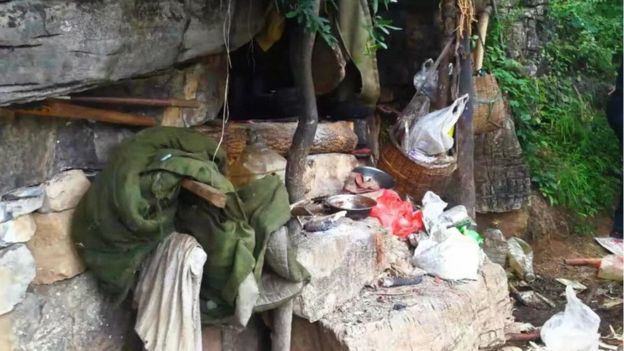
State media said Song had used plastic bottles to get drinking water from a river, and branches of trees to make fire.

He has been sent back to jail.

Outside of the caveImage copyright YONGSHAN POLICE
Image caption The inside of the cave was about 2 sq metres (6.6 sq feet)

Source: The BBC

26/09/2019

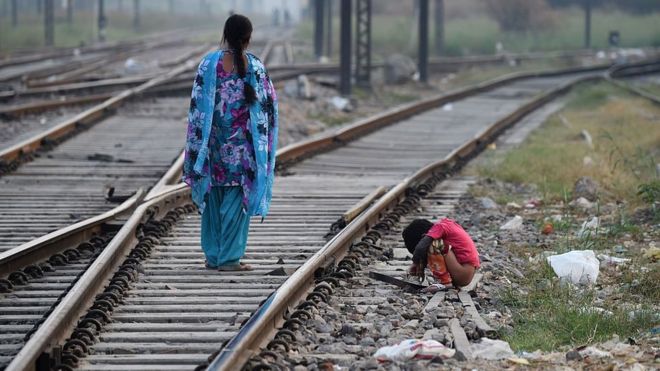
India: Two held for killing children for ‘defecating in the open’

Representational image an Indian child defecating in the openImage copyright GETTY IMAGES
Image caption Millions of poor Indians still defecate in the open

Two men in the central Indian state of Madhya Pradesh have been arrested for allegedly killing two Dalit (formerly untouchables) children who were defecating in the open, police say.

Roshni, 12, and Avinash, 10, were attacked on Wednesday while defecating near a village road, they said.

The children’s family told BBC Hindi that they have no toilet at home.

Millions of poor Indians defecate in the open, which especially puts women and children at risk.

Dalits are at the bottom of the Hindu caste system and despite laws to protect them, they still face widespread discrimination in India.

“The two children were beaten to death with sticks,” police superintendent Rajesh Chandel told BBC Hindi’s Shuraih Niazi. “We have registered a murder case against both the accused. They are being questioned.”

Within hours of the attack early on Wednesday morning, police arrested two upper-caste men – Rameshwar Yadav and Hakim Yadav.

Roshni and Avinash were cousins, but Roshni had been brought up by Avinash’s parents and lived with them.

Avinash’s father, Manoj, says that as a daily wage labourer, he cannot afford to build a toilet at his house. He also says he has been unable to access a government subsidy as part of a flagship scheme to build toilets for the poor.

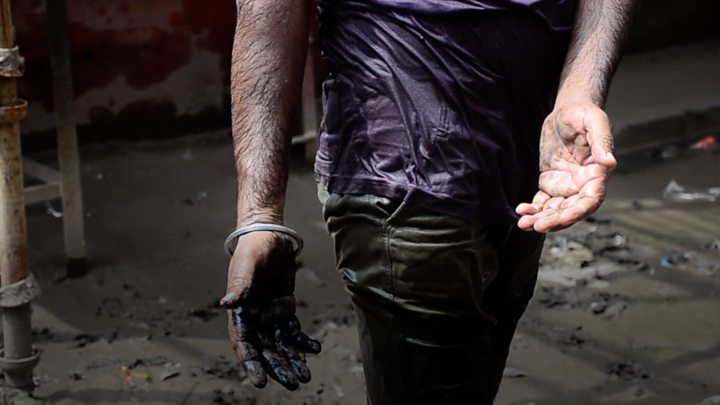
Media caption The Dalits unblocking India’s sewers by hand

The Swachh Bharat Mission or Clean India programme seeks to end open defecation by increasing toilet infrastructure and improving sanitation across the country. When Prime Minister Narendra Modi launched the program in 2014, he vowed to make India “open defecation free” by 2 October 2019.

Manoj’s village – Bhavkhedi – has been declared “open defecation free”, a tag given by the government to villages and cities have successfully ended open defecation.

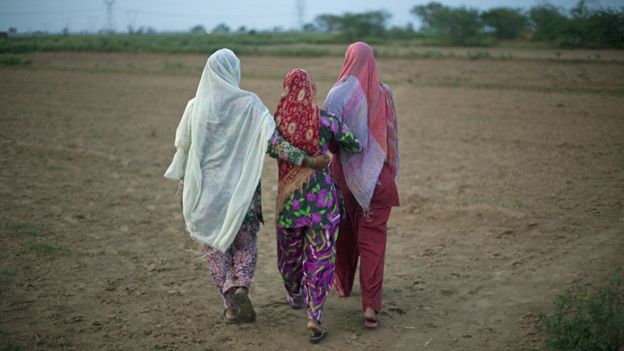
Women walking away from camera in Indian field
Image caption Women who go out at night to defecate are often at risk

Research has shown that while the construction of toilets has increased rapidly, lack of water, poor maintenance and slow change in behaviour have stood in the way of ending open defecation.

But many have praised Mr Modi for highlighting the issue and launching a major scheme to address it – the Bill & Melinda Gates Foundation honoured him this week, describing the Swachh Bharat Mission as “a model for other countries around the world that urgently need to improve access to sanitation for the world’s poorest.”

Source: The BBC

28/08/2019

Chinese man prevented from visiting Indian family

Wang Qi
Image caption Wang Qi has been waiting for months to see his family in India

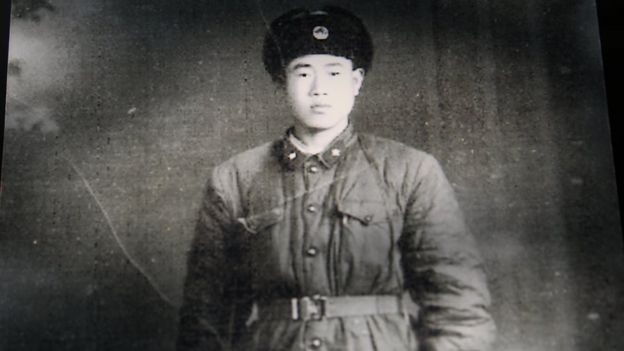
In 1963, a former Chinese army surveyor crossed into India and was captured weeks after a war between the two countries. Wang Qi was then left in a central Indian town for more than five decades before he was allowed to travel back home to China in 2017.

The BBC reported his story at the time and videos of the emotional family reunion in China were watched by millions.

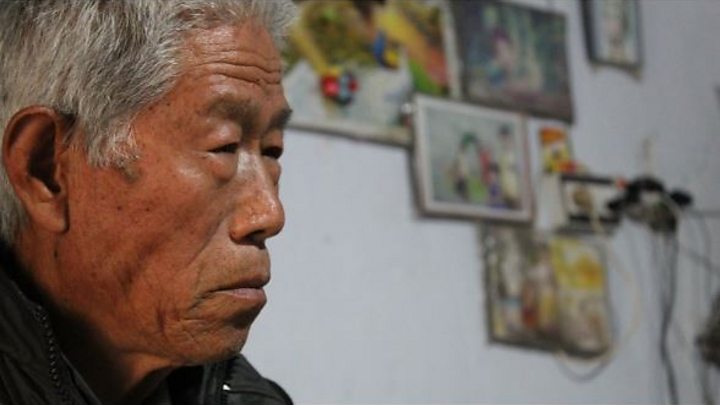
But now, more than 30 months later, his story has taken an unexpected turn – Mr Wang is stuck in China and unable to return to India.

He has been waiting for more than four months for officials to renew his Indian visa so that he can travel back to India where his children and grandchildren live.

“Why are they doing this? I’ve been fighting for such a long time. How much longer can I fight?” Mr Wang told me over the phone from his home city of Xianyang.

The BBC has emailed the Indian embassy in Beijing and is yet to receive a response.

Born to a farmer family in Shaanxi with four brothers and two sisters, he studied surveying and joined China’s People’s Liberation Army in 1960.

Mr Wang says he was “tasked with building roads for the Chinese army” and was captured when he “strayed erroneously” into Indian territory in January 1963.

Wang Qi in Chinese army uniform
Image caption He joined China’s People’s Liberation Army in 1960

“I had gone out of my camp for a stroll but lost my way. I was tired and hungry. I saw a Red Cross vehicle and asked them to help me. They handed me over to the Indian army,” he said.

After he was captured, he spent the next seven years in multiple prisons before he was released by a court order in 1969.

Police took him to Tirodi, a far-flung village in the central state of Madhya Pradesh, where he ended up living for most of his life.

Instead he worked at a flour mill, eventually marrying a local woman and raising a family with her. Neighbours said they lived in “utter poverty”.

It was never clear whether Mr Wang was actually a prisoner of war. But he was denied official Indian documents or citizenship, and he was also denied permission to return to China. Officials told the BBC in 2017 that there were “deficiencies” and a “lack of interest” in the case over the years.

A Chinese passport holder, Mr Wang was reunited with his family in China in 2017. After the BBC reported his story, he received a one-year multiple entry Indian visa.

Media caption Wang Qi did not see his family in China for decades

He kept coming back to India to meet his wife, children and grandchildren who continued to live here.

When Mr Wang first arrived in China, he received a rapturous welcome. Crowds met him with banners reading, “Welcome home, soldier, it’s been a rough journey”.

But according to Mr Wang’s son, Vishnu, his father’s request to local officials to clear his salary for the period of his stay in India, remains unanswered.

Vishnu also adds that it’s unclear if his father still has any claim to ancestral property in China after being away for so many years.

“He was ecstatic to have met his family after decades. He didn’t want anything else.”

In 2017, Mr Wang rushed back to India to take care of his wife, who was hospitalised due to “liver complications”.

“Getting funds for the expensive treatment was very difficult. We tried everywhere, begged for money but didn’t receive any response,” Vishnu says.

She died within a fortnight.

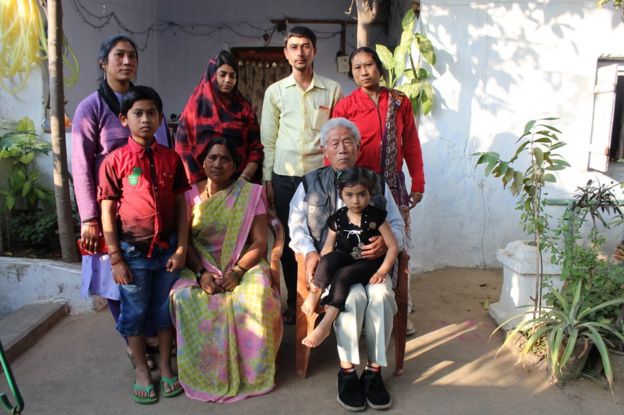
Mr Wang with his family
Image caption Mr Wang married an Indian woman and raised a family with her

“My father’s visa was renewed in 2018. He applied again in April 2019 but he is still waiting,” Vishnu adds.

Xianyang and Beijing, where the Indian embassy is located, are more than 1,000 kilometres (621 miles) apart – and travelling between the two cities isn’t easy for Mr Wang, who is nearly 80 years old, Vishnu says.

“My father is fed up. He doesn’t understand why this is taking so long.”

Source: The BBC

08/07/2019

People across China cool themselves down in various ways during Xiaoshu

#CHINA-HOT WEATHER-COOL (CN)

Children play in a water park in Bozhou, east China’s Anhui Province, July 7, 2019. People across China cool themselves down in various ways during the Xiaoshu, or Lesser Heat, the 11th of the 24 solar terms which means the beginning of hot summer. (Photo by Liu Qinli/Xinhua)

Source: Xinhua
10/02/2019

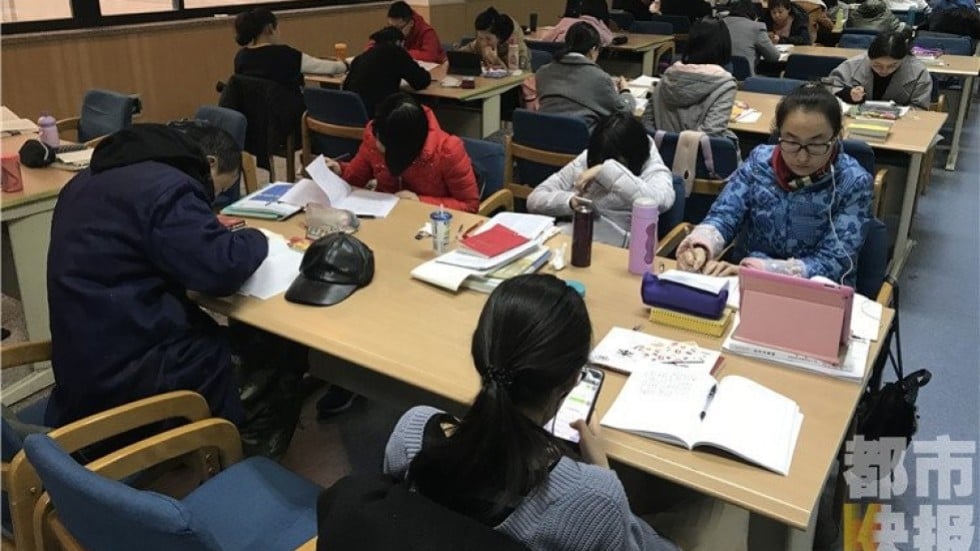
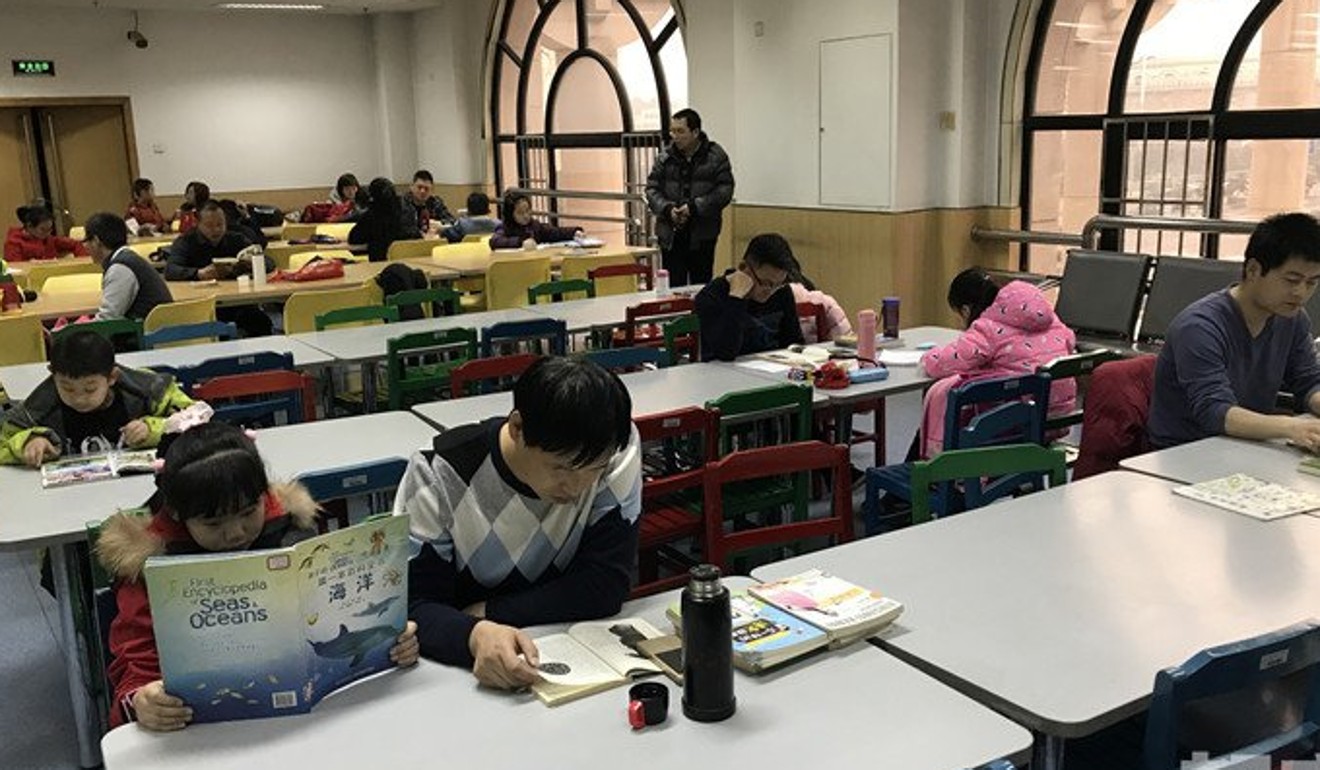
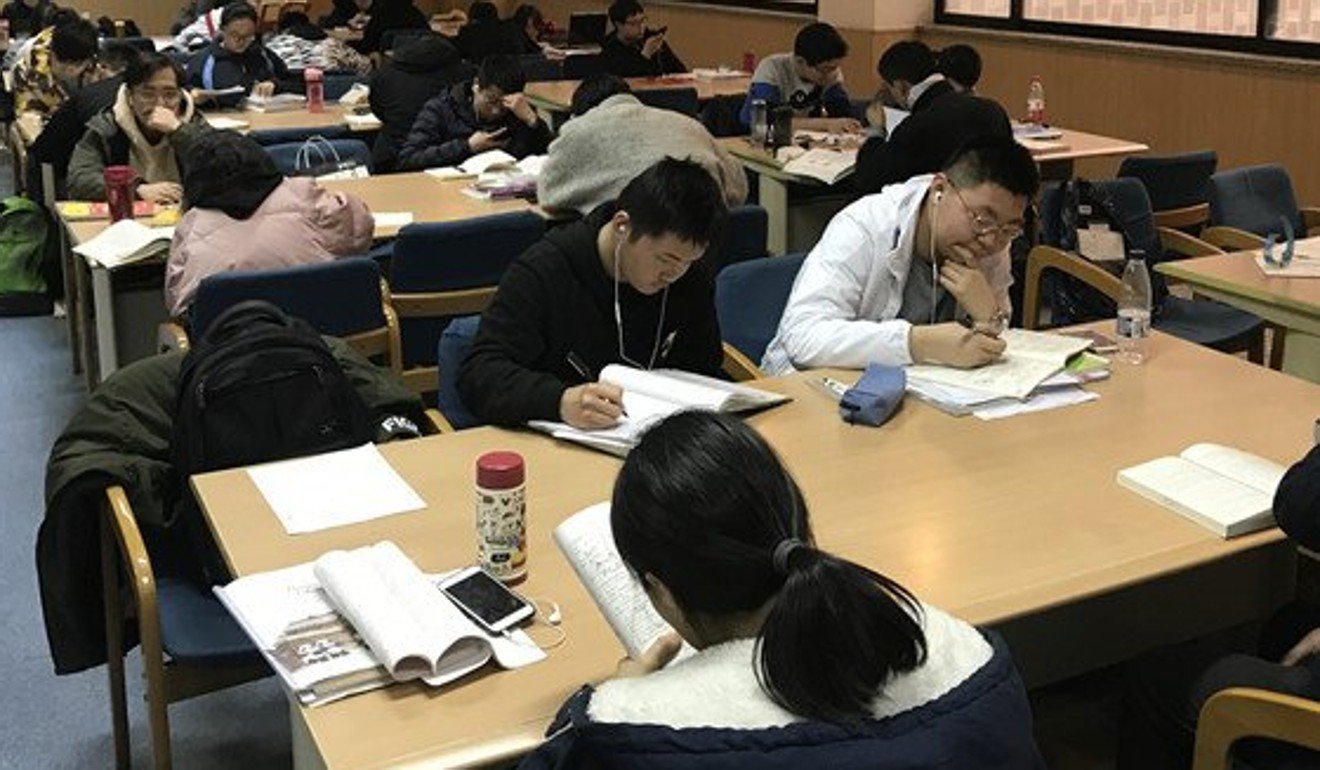
Chinese children miss out on winter holiday as parents send them back to class

  • Manager of private tuition centre in eastern city of Hangzhou says demand from parents has been ‘overwhelming’
PUBLISHED : Sunday, 10 February, 2019, 6:12pm
UPDATED : Sunday, 10 February, 2019, 6:12pm
1SHARE

Related Articles

While most schoolchildren in the east China city of Hangzhou spent last week’s Lunar New Year holiday visiting relatives and opening cash-filled red envelopes, others found themselves taking extra lessons at a privately run tuition centre.

The manager of the company, surnamed Wong, said business had been brisk over the holiday period.

“Usually students have a week’s break for Lunar New Year, but not those who are sitting the gaokao,” he said, using the informal name for the National Higher Education Entrance Examination.

Demand for extra tuition from parents whose children were preparing for the test had been “overwhelming”, he said.

The cost of lessons during the holiday period was 250 yuan (US$37) per hour, Wong said, adding that most students had four lessons a day.

Chinese schoolchildren get a month’s holiday in the winter, which incorporates the national Lunar New Year break.

Wong’s centre does not just cater for older children. According to a report by local newspaper Metro Express, a woman surnamed Lu paid for her son, who goes to primary school, to have extra lessons in mathematics and science.

“Many children spend their whole winter holiday studying,” she said, but added that she had allowed her son to have last week off.

Another woman was quoted in the report as saying she had signed her child, who also goes to primary school, up for nine classes.

There are no laws against the operation of private tuition centres in China but they are governed by certain regulations. For instance, they cannot recruit people whose primary job is as a teacher and they are not allowed to teach classes beyond what the children have already learned in school.

China’s education ministry last year launched a review of more than 400,000 tuition centres and found problems of one sort or another at 65 per cent of them.

In the wake of that assessment, authorities in the cities of Beijing, Tianjin and Shanghai, and the provinces of Shanxi, Liaoning and Zhejiang said they had rectified the problem. Hangzhou is the capital of Zhejiang.

According to a report by Xinhua, a secondary school student from Shanghai, nicknamed Xiao Ma, said she had to get up at 6.30am every day during the winter holiday to get to her extra lessons by 8.30am.

“I don’t ask for a lot,” she said. “I just wish there were a few days when I could get a bit more sleep and have time to see my friends.”

Source: SCMP

04/02/2019

Desperate Mongolians send children into countryside to escape choking winter smog

ULAANBAATAR (Reuters) – Mongolia has extended school winter holidays in the world’s coldest capital and many families have sent children to live with relatives in the vast, windswept grasslands to escape choking smog and respiratory diseases such as pneumonia.

The temperature is expected to drop to minus 32 degrees Celsius (minus 26F) in Ulaanbaatar on Monday night, as residents burn coal and trash to try to keep warm and concentrations of smog particles known as PM2.5 routinely exceed 500 mg per cubic meter, 50 times the level considered safe by the WHO.

Mongolia, a former Soviet satellite landlocked between Russia and China, has invested public money and foreign aid to tackle pollution, but improvement has been slow, with residents saying inaction has been compounded by a corruption scandal that has paralyzed parliament.

In a crowded township more than 40 miles from Ulaanbaatar, Jantsandulam Bold’s five grandchildren are breathing more easily after fleeing the capital.

“Fresh air and sun are most important for kids to grow healthy and robust,” says Jantsandulam, 57, making milk tea for her grandchildren in her home, a thickly padded felt hut known as a “ger”, or in Russian, a “yurt”.

“This little one had flu when he came here but the fresh air has treated him well,” she said, pointing at her five-year-old grandson.

The children are nearing the end of a two-month break, with schools due to reopen next Monday.

About 60 percent of Mongolia is covered by grassland, where the mining of copper, gold, coal and other minerals provides employment, while the Gobi desert envelops the South. But almost half the population live in Ulaanbataar.

Reuters calculations based on U.S. Embassy data show annual average PM2.5 concentrations hit 100 micrograms in Ulaanbaatar in 2018. They soared to 270 in December. PM2.5 in China’s most polluted city of Shijiazhuang stood at an average 70 micrograms last year, down 15.7 percent from 2017. The World Health Organisation recommends a concentration of no more than 10 micrograms.

The WHO said 80 percent of Ulaanbaatar’s smog was caused by coal burning in “ger” districts, where thousands of rural migrants, used to a nomadic lifestyle, have pitched huts. It estimates air pollution causes more than 4,000 premature deaths a year.

A joint study by the U.N. International Children’s Emergency Fund (UNICEF) and Mongolia’s National Centre for Public Health said children living in one smog-prone district of Ulaanbaatar had 40 percent less lung function than those living in the countryside.

“Air pollution aggravates respiratory diseases and children under five are most vulnerable as their organs are still not mature,” said Bolormaa Bumbaa, a doctor at Bayangol District’s Children’s hospital in Ulaanbaatar.

Families have already set up a pressure group known as Moms and Dads Against Smog, but after the protests they organized in Ulaanbaatar were ignored, the group decided to focus on encouraging residents to take action to protect themselves, said Mandakhjargal Tumur, a group coordinator.

“I don’t believe the government will do enough to reduce pollution in coming years,” she said. “That’s why we are now focusing on raising awareness.”

At the Bayangol hospital, Ulzii-Orshikh Otgon, 34, was forced to bring her 10-month-old daughter Achmaa in with pneumonia for the second time in a month.

“I believe it’s because of the pollution,” she said, adding that home air purifiers did little to help.

“Just by opening the door, our home fills with smog,” she said while breastfeeding Achmaa in the waiting room.

Doctors advised her to take her children out of Ulaanbaatar but she has no relatives in the countryside and rent is expensive.

“Decision makers have said for years they are fighting pollution,” she said. “They just wasted billions of tugriks on useless stoves and processed coal, which don’t change anything.”

Source: Reuters

09/01/2019

Beijing school attacker injures 20 children

File photo of a schoolImage copyrightISTOCK
Image captionThe attack took place in a school in Beijing (not pictured)

Twenty primary school students in Beijing have been injured in an attack at their school by a hammer-wielding man, say officials in China.

The attack took place at around 11:00 local time (03:00 GMT) said Beijing’s Xicheng district in a statement on social media site Weibo.

Three children were reported to be seriously injured but stable.

The alleged attacker has been arrested. It is not clear what motive the suspect might have had.

Some reports say he was a former maintenance worker at the school.

The attack took place at the Beijing No.1 Affiliated Elementary School of Xuanwu Normal School, according to state-media outlet the Global Times.

The Xicheng district said it would work together with other government authorities to carry out a full investigation.

The attack comes after a Chinese man was executed on Friday for injuring 12 children in a knife attack at a nursery in China.

Violent crime is rare in China but there have been several attacks on school children in recent years.

12/12/2018

In Vietnam, anguished mothers search in vain for the children they have lost to China’s booming ‘buy-a-bride’ trade

  • In the borderlands, most people have a story of bride trafficking – from kidnapped cousins and disappeared wives to vanished daughters

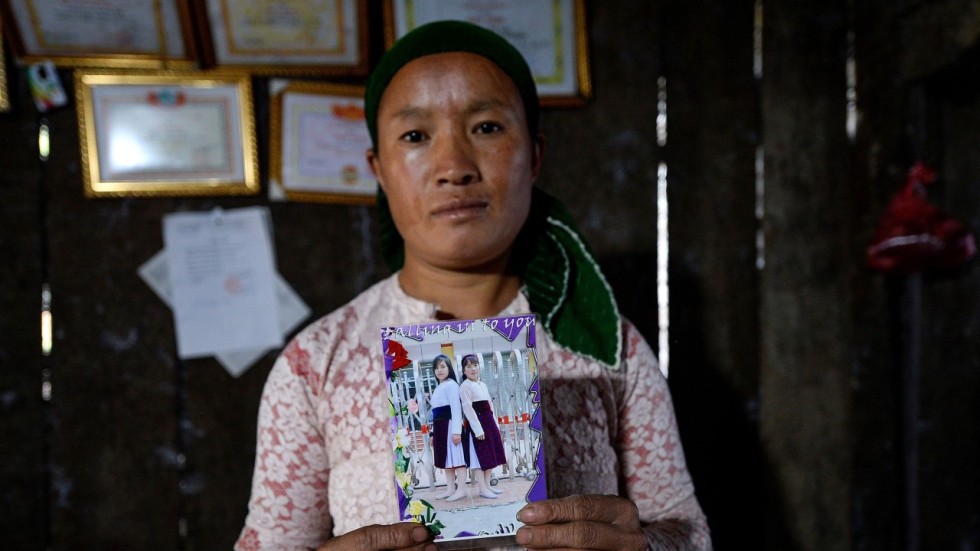
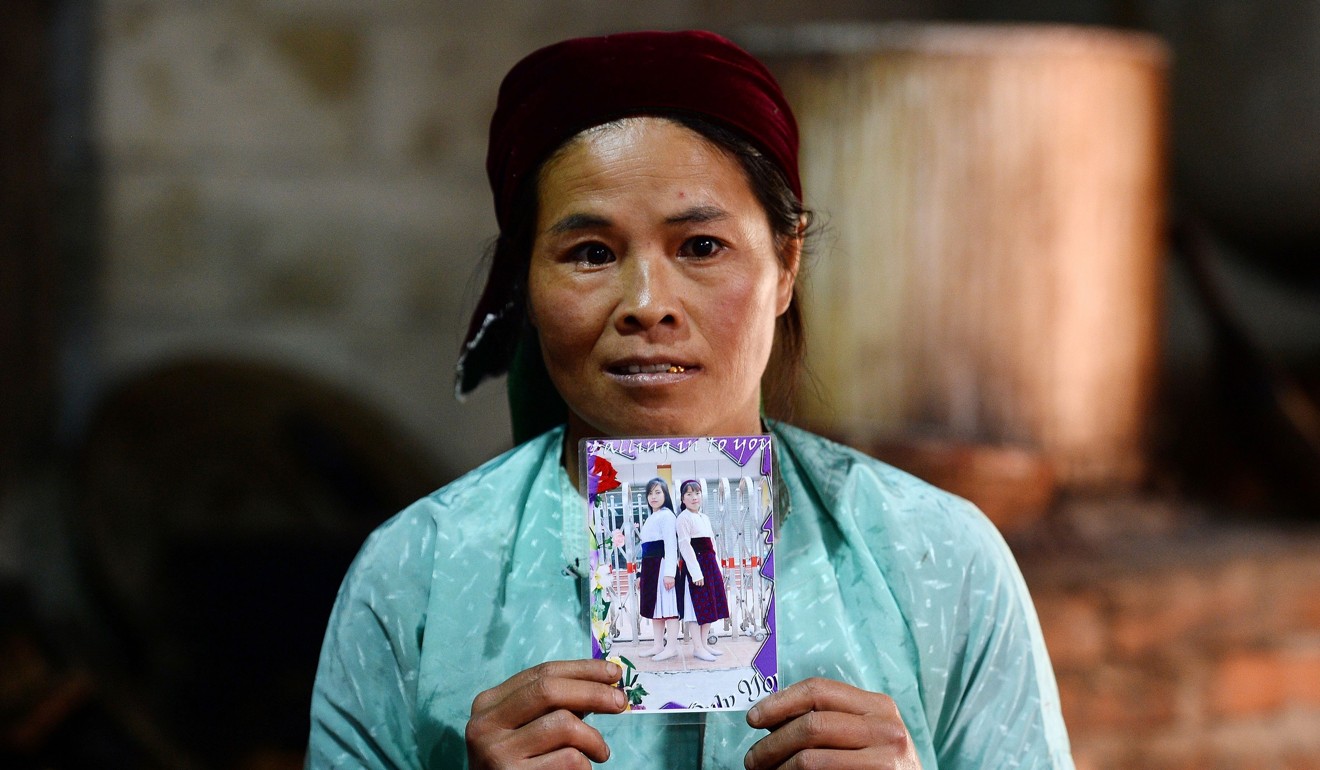
Vu Thi Dinh spent weeks scouring the rugged Vietnamese borderland near China after her teenage daughter vanished with her best friend, clutching a photo of the round-faced girls that she now fears have been sold as child brides.

The anguished mother showed everyone she met the snap of the 16-year-old friends Dua and Di in white and red velvet dresses, the words “Falling Into You” printed above their picture.

They went missing in February during an outing in Meo Vac, a poor mountainous border zone that is a stone’s throw from China. Their mothers fear they were sold in China on one of the world’s most well-trodden bride trafficking circuits.

“I wish she would just call home to say she is safe, to say ‘please don’t worry about me, I’m gone but I’m safe,’” said Dinh, bursting into tears.

I wish she would just call home to say she is safe
VU THI DINH

She is among countless mothers whose daughters have disappeared into China where a massive gender imbalance has fuelled an unregulated buy-a-bride trade. Most people in this part of Vietnam have a story about bride traffi

High-school students talk of kidnapped cousins. Husbands recall wives who disappeared in the night. And mothers, like Dinh, fear they may never see their daughters again.

“I warned her not to get on the backs of motorbikes or meet strange men at the market,” she says from her mud-floored home where she expectantly keeps a wardrobe full of her daughter’s clothes.

She has not heard from Dua since she went missing, unable to reach her on the mobile phone she bought just a few weeks before she disappeared.

The victims come from poor communities and are often tricked by boyfriends and sold, kidnapped against their will or moved across the border by choice for marriage or the promise of work.

Like many of the missing, Dua and Di are from the Hmong ethnic minority, one of the country’s poorest and most marginalised groups.

Traffickers target girls at the busy weekend market, where they roam around in packs dressed in their Sunday best, chatting to young men, eyeing the latest Made-in-China smartphones or shopping for lipstick and sparkly hair clips. Or they find them on Facebook, spending months courting their victims before luring them into China.

It is a sinister departure from the traditional Hmong custom of zij poj niam, or marriage by capture, where a boyfriend kidnaps his young bride-to-be from her family home – sometimes with her consent, sometimes not.

Others are enticed by the promise of a future brighter than that which awaits most girls who stay in Ha Giang: drop out of school, marry early and work the fields.

“They go across the border to earn a living but may fall into the trap of the trafficking,” said Le Quynh Lan from the NGO Plan International in Vietnam.

Vietnam registered some 3,000 human trafficking cases between 2012 and 2017. But the actual number is “for sure higher”, said Lan, as the border is largely unregulated.

Ly Thi My never dreamed her daughter would be kidnapped, since the shy Di rarely went to the market or showed much interest in boys.

Just two weeks after that photo shoot with Dua, the giggling girls went for a walk in the rocky fields near their homes. They never came back.

“We think she was tricked and trafficked as a bride, we don’t know where she is now,” said My.

Her worst fear is the teenagers are now child brides or have been forced to work in brothels in China where there are 33 million more men than women because of a long-entrenched preference for male heirs.

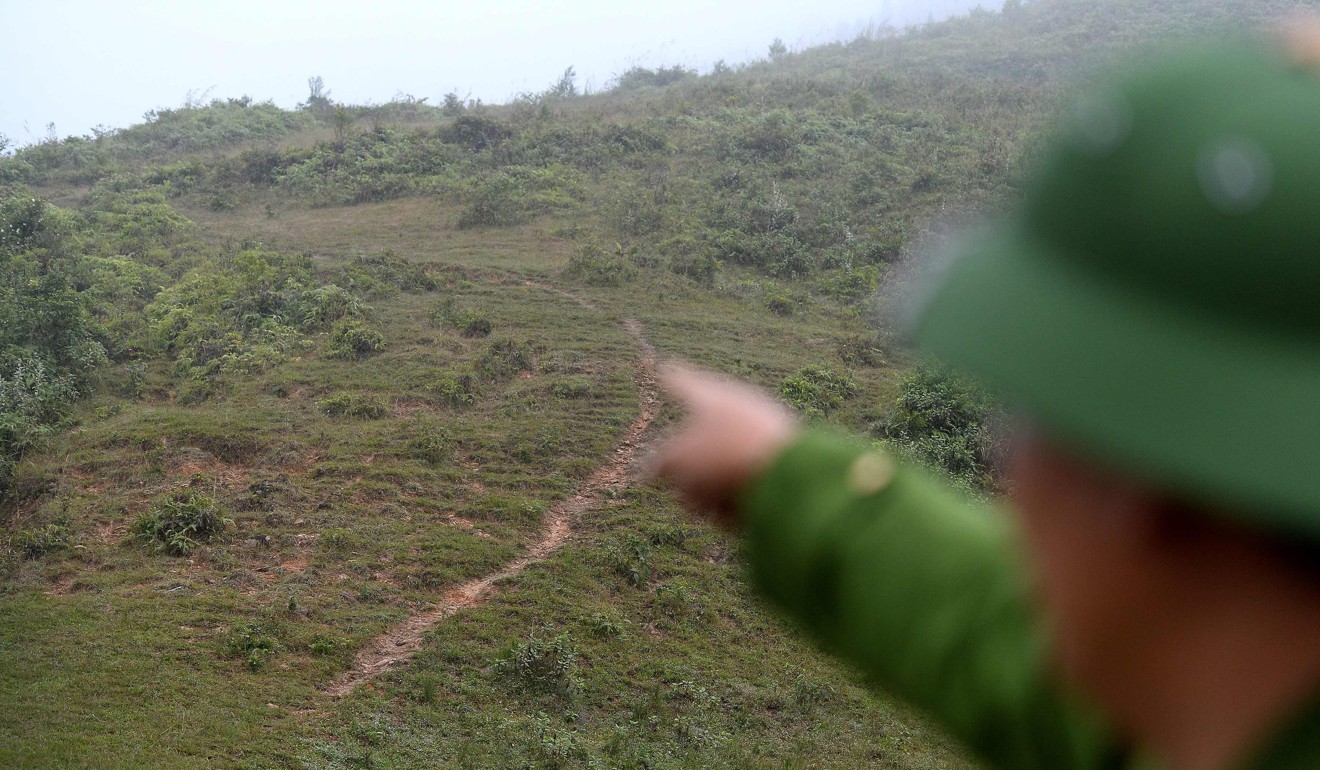
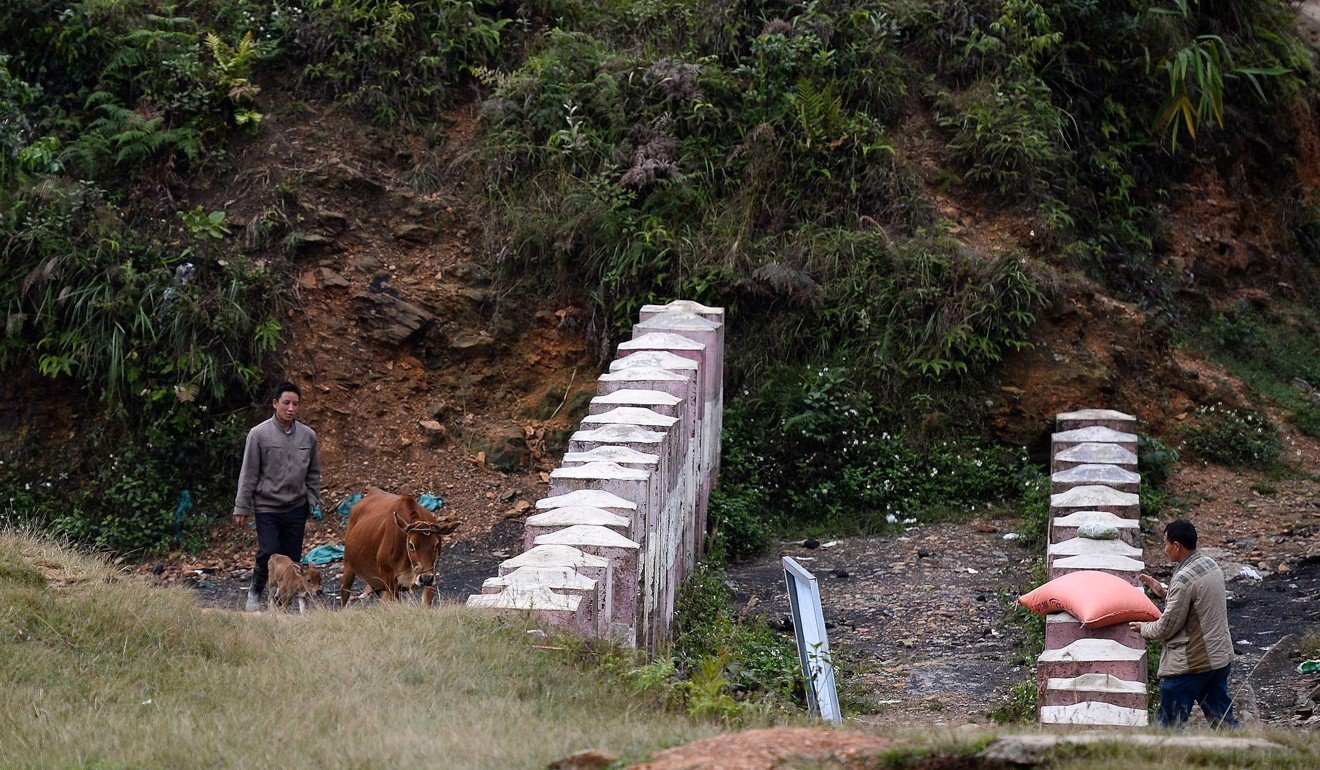
The trip across the 1,300-kilometre border is an easy one, said Trieu Phi Cuong, an officer with Meo Vac’s criminal investigations unit.

“This terrain is so rugged, it’s very hard to monitor,” he said at a border crossing marked by waist-high posts near where a Vietnamese man was selling a cage of pigeons to a customer on the China side.

Many victims don’t even know they’ve crossed into China – or that they’ve been trafficked.

Lau Thi My was 35 and fed up with her husband, an abusive drunk, when she grabbed her son and headed to the border.

She went with a neighbour who promised her good work in China, but she fell prey to traffickers.

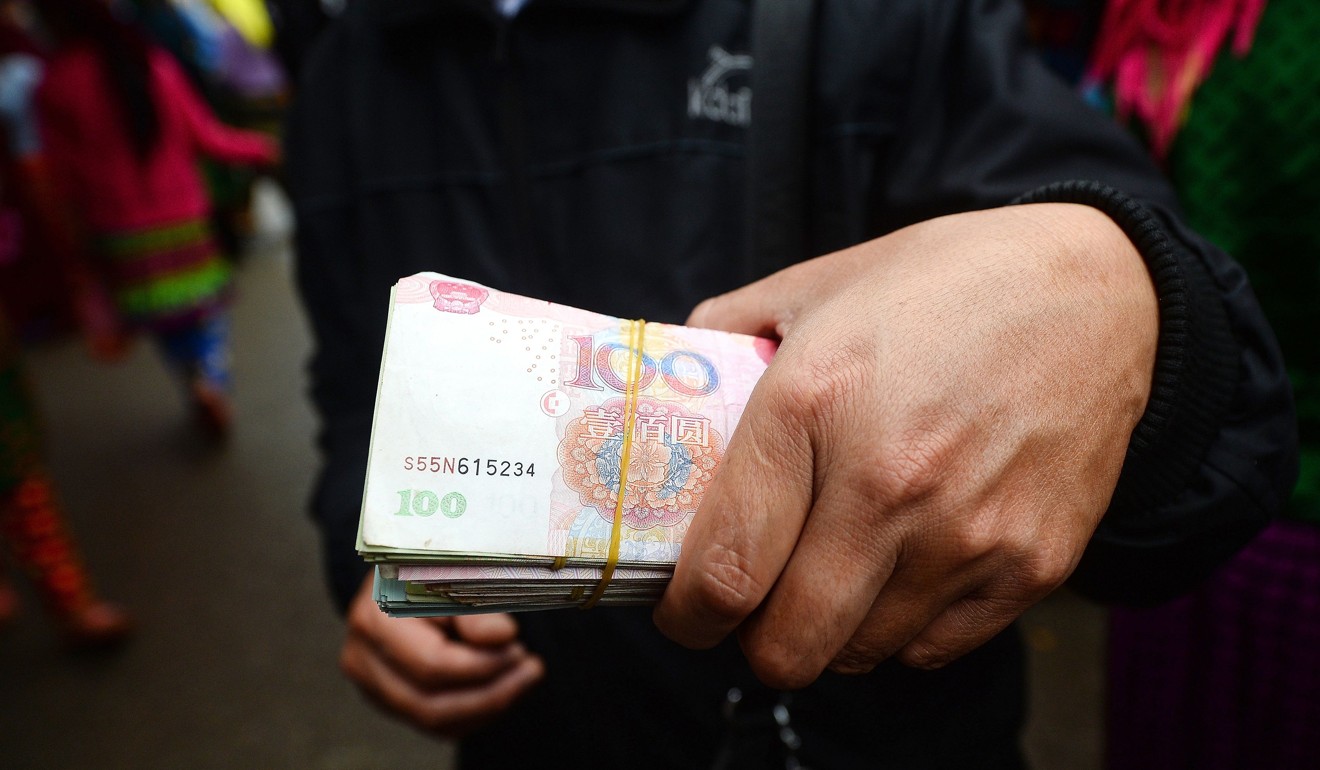
My was separated from her son and sold three times to different brokers before a Chinese man bought her as a wife for about US$2,800.

“He locked me up several times, I hated him,” said My, who fled after 10 years by scrabbling together enough money for the journey home.

She is now back with her Vietnamese husband – still a drinker – in the same home she escaped a decade ago, a smoke-filled lean-to where her dirt-streaked grandchildren run about. But she is desperate for word from her son.

“I came back totally broken … and my son is still in China, I miss him a lot,” she said.

Law of Unintended Consequences

continuously updated blog about China & India

ChiaHou's Book Reviews

continuously updated blog about China & India

What's wrong with the world; and its economy

continuously updated blog about China & India