19/03/2020
- In Madrid, local health authorities describe ‘one case every 16 minutes’
- New cases in Europe include new Prince Albert of Monaco and Michel Barnier, the European Union’s chief Brexit negotiator
Italian military trucks and soldiers are seen by Bergamo’s cemetery after the army was deployed to move coffins from the cemetery to neighbouring provinces. Photo: Sergio Agazzi/Fotogramma via Reuters
Italians on Thursday mourned a record number of deaths from the Covid-19 pandemic and expected the toll to surpass that of China, where the crisis began. On the mainland, there was a sense of relief as there were no new domestic cases reported for the first time since the outbreak began.
As opposite turning points were marked in China and Europe, the worldwide total of infections exceeded 220,000. The new cases include Monaco’s reigning monarch, Prince Albert, and Michel Barnier, the European Union’s chief Brexit negotiator.
More than 9,000 people have died around the world, at least 2,978 of them in Italy, including five doctors. The death rate in Madrid is described by local health authorities as “one case every 16 minutes”.
Concerns are also growing that the surge in cases in Europe and North America could result in a second wave in Asia, amid reports of mass movements of travellers fleeing the current epicentres.
Australia and New Zealand became the latest countries to ban non-citizens from entry.
In China, the National Health Commission said on Thursday that all 34 new infections reported the previous day had been imported cases.
It is also the first time Hubei province, where the crisis began, recorded no new cases either domestically or from abroad.
The number of new deaths in mainland China was down to single digits, with eight reported, bringing the total fatalities to 3,245.
Coronavirus: Italy’s hospitals overflow with the dead as toll tops 1,000
Italy experienced its worst death toll on Wednesday with 475 reported, the highest one-day official toll of any nation.
Italy has the world’s second-highest number of diagnosed cases, after China.
Dramatic footage has been circulating on social media, showing military vehicles taking corpses out of the Italian city of Bergamo because cremation facilities were overloaded.
Prime Minister Giuseppe Conte extended a nationwide lockdown that is weighing on the economy, saying: “We managed to avoid the collapse of the system and the measures are working.”
Prince Albert of Monaco (pictured in 2019) has tested positive for the coronavirus, it was announced on Thursday. Photo: Xinhua
The government is considering tightening restrictions amid concern that many Italians are not respecting rules that confine them to their homes except for work, health or emergency reasons.
In Spain, the second hardest hit country in Europe, the virus’ spread continues with a rate of 25 per cent new cases per day.
Spanish King Felipe VI, in a rare televised address, told his citizens: “This virus will not defeat us. On the contrary. It will make us stronger as a society.”
Source: SCMP
Posted in Asia, Australia, Bergamo's cemetery, China’s, coronavirus, COVID-19, deaths, Europe, Grim toll, hubei province, Italian military trucks, Italy, Madrid, Mainland China, National Health Commission, New Zealand, North America, number, pandemic, Prince Albert of Monaco, soldiers, Spain, Spanish King Felipe VI, Total, Uncategorized |
Leave a Comment »
18/03/2020
- ‘What we are seeing here is reciprocity,’ the German leader says, referencing the EU’s aiding stricken China earlier this year
- But critics dismissed China’s show of largesse as propaganda designed to deflect US claims that the contagion originated in China
The colours of the Italian flag are projected onto the Palazzo Senatorio building on Capitoline Hill in Rome on Tuesday as a “sign of hope in this difficult and delicate moment”, Rome’s mayor stated. Photo: AFP
German Chancellor Angela Merkel has downplayed concerns over China’s provision of medical supplies to European countries hit hardest by the Covid-19 pandemic, calling the move a gesture of reciprocity.
The European Union continued to face criticism over its slow reaction to calls for medical supplies from Italy and Spain, amid the encouraging news that new cases in Italy were seeing their slowest rate of increase since the contagion came to light in late February.
“The European Union sent medical equipment to China [when] China asked for help at that time,” Merkel said at a Tuesday press conference, referring to the outbreak’s start earlier this year. “What we are seeing here is reciprocity.”
“As we are having a crisis at this time, we cannot expect everything to be provided in the framework of the EU. We are very pleased about [China’s provision],” Merkel said.
Chinese President Xi Jinping has guaranteed that China will provide Italy and Spain – the two most severely hit European countries – with medical equipment such as face masks, ventilators and protective equipment for medical professionals.
Critics, however, called China’s action part of a propaganda campaign designed to deflect US claims that the coronavirus originated in China.
Spanish Prime Minister Pedro Sanchez reached out to Xi for help obtaining medical supplies in a phone call on Tuesday.
Speaking to reporters, Sanchez confirmed that the matter had come up during the call, just days after the Spanish government had ordered an unprecedented national lockdown to halt the virus’ spread.
Chinese state media reported that Xi had told Sanchez that “China is willing to respond to the urgent needs of Spain and spare no effort to provide support and assistance, and share experience in prevention, control and treatment.”
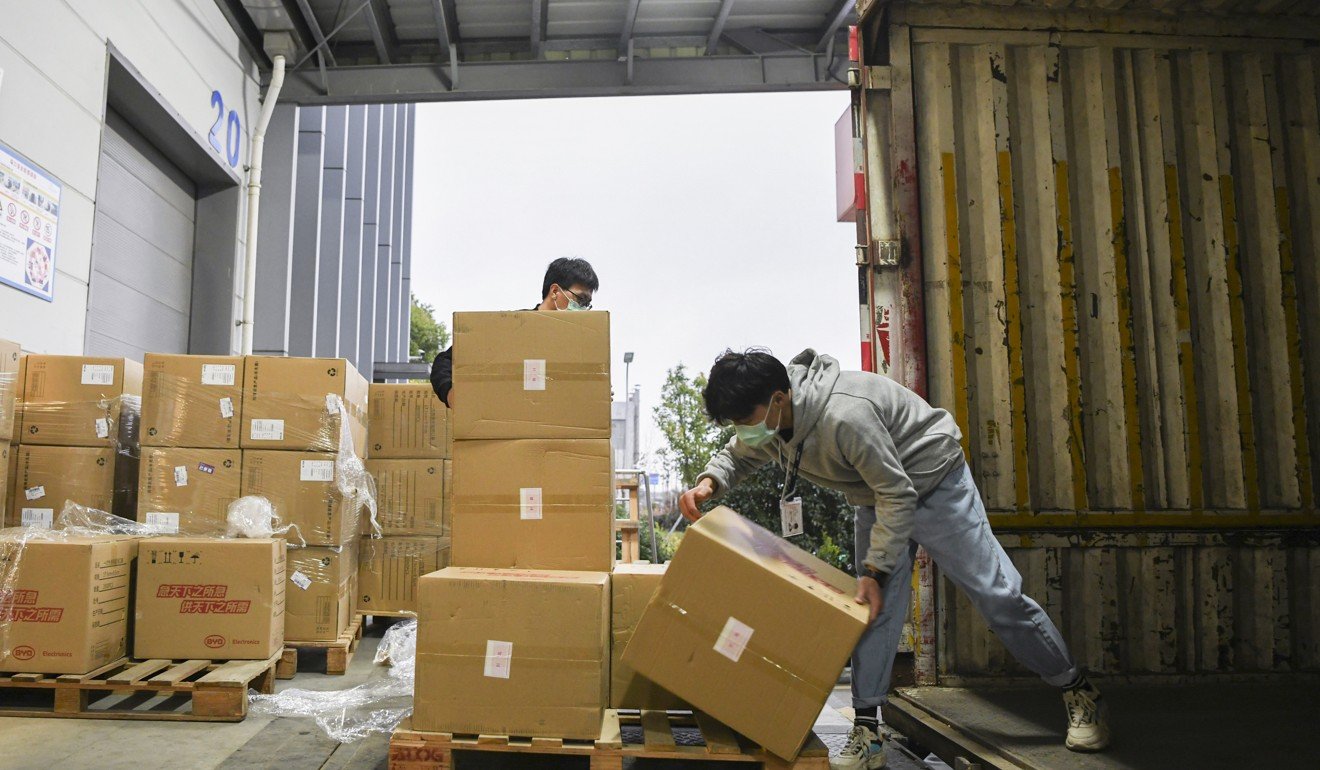
Workers loading boxes of surgical masks donated by China’s BYD, bound for the United States. Photo: Jack Ma Foundation
On Tuesday, a plane from Shanghai landed in the northern Spanish city of Zaragoza, carrying 500,000 masks donated by e-commerce giant Alibaba, AFP reported. (Alibaba owns the South China Morning Post.)
According to a statement, the delivery was part of a donation of 2 million masks and coronavirus test kits to certain countries from Alibaba’s Chinese billionaire founder Jack Ma.
Europe to shut border for month as France braces for 15-day coronavirus lockdown
Xi’s call with Sanchez came a day after one with Italian Prime Minister Giuseppe Conte, in which the Chinese leader similarly pledged to provide Italy with medical support, including teams with expertise in treating Covid-19.
On Tuesday, Italy reported 345 new coronavirus deaths in 24 hours, taking its overall death toll to 2,503.
Spain registered 183 deaths, 53 per cent more than in the previous 24 hours, driving the total number of deaths to 524. More than 2,000 newly infected cases were reported, pushing the total to 11,681.
Elsewhere on Tuesday, France entered a national shutdown, while Belgium, where the EU is headquartered, announced a similar halt to public activities starting on Wednesday.
European Commission President Ursula von der Leyen said all 27 member states have agreed to ban non-EU citizens from visiting the region for the next 30 days. The method of enforcement will be determined by the individual countries, she said.
Source: SCMP
Posted in Alibaba, Angela Merkel, Belgium, Capitoline Hill, China, China’s, Chinese President Xi Jinping, contagion, coronavirus, countries, European, European Commission President, European Union, France, German, German Chancellor, Germany's, Giuseppe Conte, guaranteed, hard-hit, Italian flag, Italy, Jack Ma, largesse, leader, masks, medical supplies, originated, outbreaks, Palazzo Senatorio, Pedro Sanchez, plane, plays down, propaganda, providing, reciprocity, Rome, Shanghai, Spain, Spanish city, Spanish Prime Minister, Uncategorized, Ursula von der Leyen, Zaragoza |
Leave a Comment »
13/03/2020
- Government records suggest first person infected with new disease may have been a Hubei resident aged 55, but ‘patient zero’ has yet to be confirmed
- Documents seen by the Post could help scientists track the spread of the disease and perhaps determine its source
The first known case of Covid-19 in China dates back to November, but the hunt for “patient zero” goes on. Photo: EPA-EFE
The first case of someone in China suffering from
Covid-19, the disease caused by the novel
coronavirus, can be traced back to November 17, according to government data seen by the
South China Morning Post.
Chinese authorities have so far identified at least 266 people who were infected last year, all of whom came under medical surveillance at some point.
Some of the cases were likely backdated after health authorities had tested specimens taken from suspected patients.
Interviews with whistle-blowers from the medical community suggest Chinese doctors only realised they were dealing with a new disease in late December.
Scientists have been trying to map the pattern of the early transmission of Covid-19 since an epidemic was reported in the central China city of Wuhan in January, two months before the outbreak became a global health crisis.
Understanding how the disease spread and determining how undetected and undocumented cases contributed to its transmission will greatly improve their understanding of the size of that threat.
According to the government data seen by the Post, a 55 year-old from Hubei province could have been the first person to have contracted Covid-19 on November 17.
From that date onwards, one to five new cases were reported each day. By December 15, the total number of infections stood at 27 – the first double-digit daily rise was reported on December 17 – and by December 20, the total number of confirmed cases had reached 60.
On December 27, Zhang Jixian, a doctor from Hubei Provincial Hospital of Integrated Chinese and Western Medicine, told China’s health authorities that the disease was caused by a new coronavirus. By that date, more than 180 people had been infected, though doctors might not have been aware of all of them at the time.
With pandemic declared, the race is on to develop a coronavirus vaccine
By the final day of 2019, the number of confirmed cases had risen to 266, On the first day of 2020 it stood at 381.
While the government records have not been released to the public, they provide valuable clues about how the disease spread in its early days and the speed of its transmission, as well as how many confirmed cases Beijing has recorded.
Scientists are now keen to identify the so-called patient zero, which could help them to trace the source of the coronavirus, which is generally thought to have jumped to humans from a wild animal, possibly a bat.
Of the first nine cases to be reported in November – four men and five women – none has been confirmed as being “patient zero”. They were all aged between 39 and 79, but it is unknown how many were residents of Wuhan, the capital of Hubei and the epicentre of the outbreak.
It is possible that there were reported cases dating back even earlier than those seen by the Post.
According to the
World Health Organisation’s website, the first confirmed Covid-19 case in China was on December 8, but the global body does not track the disease itself but relies on nations to provide such information.
A report published in medical journal The Lancet by Chinese doctors from Jinyintan Hospital in Wuhan, which treated some of the earliest patients, put the date of the first known infection at December 1.
Dr Ai Fen, the first known whistle-blower, told People magazine in an interview that was later censored, that tests showed that a patient at Wuhan Central Hospital was diagnosed on December 16 as having contracted an unknown coronavirus.
With pandemic declared, the race is on to develop a coronavirus vaccine
Accounts by other doctors seem to suggest the medical community in Wuhan became aware of the disease in late December.
Previous reports said that although doctors in the city collected samples from suspected cases in late December, they could not confirm their findings because they were bogged down by bureaucracy, such as having to get approval from the Chinese Centre for Disease Control and Prevention, which could take days. They were also ordered not to disclose any information about the new disease to the public.
As late as January 11, Wuhan’s health authorities were still claiming there were just 41 confirmed cases.
Source: SCMP
Posted in back, Beijing, China’s, Chinese Centre for Disease Control and Prevention, confirmed, coronavirus, coronavirus vaccine, Covid-19 case, first, Hubei, Hubei Provincial Hospital of Integrated Chinese and Western Medicine, Jinyintan Hospital, novel coronavirus, November 17, pandemic, patient zero, resident, south china morning post, traced, Uncategorized, website, World Health Organisation’s, Wuhan, Wuhan Central Hospital, Wuhan’s health authorities |
Leave a Comment »
12/03/2020
- China is now making more than 100 million masks a day, up from 20 million before the coronavirus outbreak, and may start to export more to other countries
- Mask shortages elsewhere once more raise the debate about an over-reliance on China, with critics pointing to a lack of US industrial policy
China was producing 116 million masks per day of February 29, including a mix of disposable and high-end masks like the American-designed N95 model worn by President Xi Jinping on his trip on Tuesday to Wuhan. Photo: Xinhua
The Liu family factory has been making diapers and baby products in the Chinese city of Quanzhou for over 10 years, but in February, for the first time, it started making face masks, as demand soared spectacularly due to the coronavirus outbreak.
The business – which employs 100 people in the Southeastern Fujian province – has added two production lines to make up to 200,000
masks a day.
And while the decision was primarily commercial, “encouragement” from the Chinese government – in the form of subsidies, lower taxes, interest-free loans, fast-track approvals for expansion and help alleviating labour shortages – made the decision an obvious one, said Mr Liu who preferred only to give his family name.
“The government is advocating an expansion in production,” Liu said. “With faster approvals, producers need to prioritise the government’s needs over exports.”
WHO declares coronavirus crisis a pandemic
The factory is one of thousands of refitted pop-ups around China making masks and other protective equipment for the first time, part of a massive industrial drive to respond to the spread of the coronavirus.
Before the outbreak, China already made about half the world’s supply of masks, at a rate of 20 million units a day. That rose to 116 million as of February 29, according to China’s state planning agency, a mix of disposable and high-end masks like the American-designed N95 model worn by President Xi Jinping on his trip on Tuesday to Wuhan, the epicentre of the outbreak.
This exponential jump is the result of a wartime-like shift in industrial policy, with Beijing directing its powerful state-owned enterprises to lead the nationwide mask-making effort, and the country’s sprawling manufacturing engine following their lead.
For me, this is the big advantage of China, the speed Thomas Schmitz
“For me, this is the big advantage of China, the speed,” said Thomas Schmitz, president of the China branch of Austrian engineering giant Andritz, which has seen a big uptick in demand for its wet wipe-making machines in recent weeks, also due to the virus. “When you need to run, people know how to run, and this is something which has been lost in other countries since their industrial heydays.”
Chinese oil and gas major Sinopec upped production of mask raw materials such as polypropylene and polyvinyl chloride in January. This week, it set up two production lines in Beijing to produce melt-blown non-woven fabric, intended to make four tonnes of the fabric each day, which can then be used to produce 1.2 million N95 respirators or six million surgical masks a day.
The maker of China’s new J-20 stealth fighter jet, Chengdu Aircraft Industry Group, repurposed part of its factory to design a mask production line, according to local media reports. The Sichuan Daily said 258 of the company’s engineers spent three days fast-tracking development of an assembly line with more than 1,200 components.
Coronavirus: From mysterious origins to a global threat
More than 2,500 companies in China have reportedly started making masks, among them 700 technology companies including iPhone assembler Foxconn and smartphone makers Xiaomi and Oppo, in an extraordinary mobilisation of resources.
The result resembles “the war effort” in the middle of the last century in the United States and western Europe, but arguably no other nation could undergo such a transformation so quickly today.
It is a reminder of what can happen in a centrally-planned economy with a strong manufacturing base, but also brings into sharp focus some of the geopolitical issues which have characterised China’s at-times difficult relationship with the rest of the world, particularly the European Union and US, over the past couple of years.
China’s dominance in manufacturing has become all the more evident as the rest of the world scrambles to shore up their own dwindling medical supplies, leading many to wonder why the world is so dependent on it for vital supplies.
The lesson for Washington is not that we need to emulate the Chinese economic model, but rather that we need to better steward the industrial base in key sectors Rush Doshi
The Italian government, which is dealing with the highest number of coronavirus cases and deaths after China, is to take shipment of 1,000 ventilators, 2 million masks, 100,000 respirators, 200,000 protective suits and 50,000 testing kits from China.
Italian foreign minister Luigi Di Maio said after a phone call with Chinese counterpart Wang Yi, they had agreed the
export deal in the same week that European neighbours France and Germany banned masks from being exported because of low domestic supplies.
The Italy export deal showed that “China is emerging as a global public goods provider as the US proves unable and unwilling to lead,” said Rush Doshi, the director of the China Strategy Initiative at the Washington-based Brookings Institute think tank.
“China’s ability to produce what is needed to fight coronavirus is not simply a product of its economic model – it’s also a product of its industrial capacity,” Doshi said. “The US once had this capacity too, but it has lost important parts of it. The lesson for Washington is not that we need to emulate the Chinese economic model, but rather that we need to better steward the industrial base in key sectors.”
The frustration is felt acutely by Michael Einhorn, president of medical equipment distributor Dealmed-Park Surgical in New York, who has been trying to source stock from China for weeks, “but cannot get straight answers” from vendors.
Unaware that Wuhan was still under heavy
economic lockdown, Einhorn said he placed an order with a private seller in China’s virus-stricken city last week, but that the goods had not been shipped.
“Everyone is running out here, people are panicking in hospitals and we want to be able to help our most important customers,” Einhorn said. “We are dealing with hospitals that do not have products, how in the United States of America in 2020 did this happen?”
With the number of confirmed coronavirus cases in China falling daily, it is not inconceivable that the sort of export deal struck with Italian leaders becomes commonplace, although for now, it deal can be chalked up as a significant public relations coup for Beijing.
The World Medical Association is unable to specify how many masks are required to supply frontline medical staff in virus-hit areas, but said that “this crisis should be a wake up call for politicians and societies to make the necessary investment in emergency preparedness and to look into the vulnerability of our supply chains”.
Australian-listed manufacturer Eagle Health announced on Friday that it had installed production lines at its Xiamen factory in southern China to make 300 million masks a year and said it had already received orders from China and would be securing further larger orders internationally.
The group, which normally makes products including amino acids, protein supplements and lozenges in China, said it would prioritise meeting the large domestic demand, but was aware of an impending global shortage.
Eagle Health has already commenced production of its first order of 3.2 million medical masks for the Yiling Hospital Management Group in China, a process which will take 10 days. It has other smaller orders from Chinese government agencies and expects to receive more orders outside China.
The decision to make more masks came from increased demand. These are opportunities. The global demand for high quality masks will be significant Xu Gang
“The decision to make more masks came from increased demand. These are opportunities,” said chief executive Xu Gang. “The global demand for high quality masks will be significant. Imagine when the schools open. The situation will take some time to peak.”
Last week, the Australian Dental Association said supplies of masks at many practices were expected to run out within four weeks. The Australian government has since arranged a supply of 54 million masks for both the dental and medical industries.
At the same time, the US only has 1 per cent of the 3.5 billion masks it would need to counter a serious outbreak, Bloomberg reported.
While China has no quota on the volume of masks that had to be hived off for local consumption, the government has said domestic demand needs to be prioritised.
Businesses are free to export but overseas demand has yet to explode like it has in China, said Fujian factory owner Liu.
Wendy Min, sales director of Pluscare, a manufacturer based near the virus’ epicentre in Hubei province, said her company is making 200,000 masks per day, much of which are sold to the government, with exports still restricted by partial lockdown of workers and cargo transport.
“We previously exported to Europe, South America and other parts of Asia,” Min said. “But at the moment we can’t export. We are trying to discuss this with the government, but we cannot wait any more – we have to export soon.”
Min said that while she was receiving countless cold calls up until last week from people in China looking for masks, these have stopped, perhaps unsurprising given the abundance in supplies becoming available.
An influx of Chinese-made masks, though, is likely to be welcomed in other virus-stricken parts of the world.
Self-quarantine of all international travellers to Beijing as China fights import of coronavirus
Miguel Luiz Gricheno, CEO of Brazilian mask manufacturer Destra, said that his company is making 30,000 masks a day, but cannot meet local demand due to a lack of supplies, including the non-woven fabric from which masks are made.
“In disposable masks, most Brazilian companies are paralysed due to the lack of raw materials,” Gricheno said. “With the arrival of the coronavirus in Brazil, the demand has increased a lot but the main raw material comes from abroad.”
However, a short-term supply fix will not answer underlying questions about how so many countries found themselves in such dire straits, meaning the geopolitical fallout of the coronavirus will be extensive.
Decades of weak industrial policy helped elect US President Donald Trump, who said he would bring manufacturing jobs back to America at China’s expense. While he has waged a bruising two-year trade war with China in response, the current situation shows just how difficult it will be to change the global manufacturing processes, which are so heavily controlled by China.
One of the great flaws of globalisation is that everyone wanted things cheaper, but did you compromise your health care infrastructure in the process? Stephen Roach
“In the guise of trying to improve efficiency and create value for price-sensitive consumers, we’ve created a global production network that is very difficult to unwind,” said Stephen Roach, a professor of economics at Yale University and a veteran China watcher. “One of the great flaws of globalisation is that everyone wanted things cheaper, but did you compromise your health care infrastructure in the process.
Reuters reported that Trump is considering invoking the emergency provisions of the Defence Production Act, which would allow the government to instruct companies to alter production to help address the domestic shortage of medical supplies like masks. If a company is producing 20 per cent N95 masks and 80 per cent standard masks, the White House could order them to rejig the ratio, an unnamed official said.
The New York Times reported on Wednesday that the White House is preparing an executive order that would allow the government to buy medical supplies from overseas in the hope that it will incentivise companies to make them within the US.
But these changes still do not give Trump the sort of sweeping powers enjoyed by Chinese counterpart Xi.
“When you have a pluralistic, democratic situation that Trump is overseeing, it becomes more unwieldy” to take the steps necessary to address a crisis situation, said Harry Broadman, chair of the emerging markets practise at the Berkeley Research Group and a senior US government official in the 1980s and 1990s.
“That is why I think Trump looks at Xi with envy, because he doesn’t have to deal with a disparity of views or democratic interests,” Broadman said. “I think Trump is at heart a bilateral guy, as you saw with the phase one [US-China] trade deal and the state-to-state purchases. That is why he likes dealing with [Russian President Vladimir] Putin and Xi, because each of them can move mountains. I think Trump is very envious of that ability.”
Source: SCMP
Posted in 100 million masks, American-designed N95 model, Andritz, Asia, Australian Dental Association, Australian government, Austrian engineering giant, Beijing, Bloomberg, Brazil, Brazilian companies, Brookings Institute, can move mountains, Chengdu Aircraft Industry Group, China Strategy Initiative, China’s, coronavirus, coronavirus cases, coronavirus outbreak, countries, cranks, Dealmed-Park Surgical, deaths, Defence Production Act, Destra, Eagle Health, Europe, European neighbours, European Union, exponential jump, export, Fears, Foxconn, France, Fujian, gear, Germany, industrial policy, international travellers, iPhone assembler, Italian foreign minister, Italian government, J-20 stealth fighter jets, Juggernaut, mask-making, mobilisation, New York, Oppo, over reliance, paralysed, Pluscare, President Xi Jinping, protective suits, Putin, Quanzhou, raw materials, resources, respirators, Reuters, russian president vladimir putin, self-quarantine, Sichuan Daily, Sinopec, smartphone makers, South America, sparking, testing kits, The New York Times, Trump, Uncategorized, United States of America, US, US industrial policy, US President Donald Trump, ventilators, Wang Yi, wartime-like shift, Washington, White House, World Medical Association, world’s workshop, Wuhan, Xi, Xiamen, Xiaomi, Yiling Hospital Management Group |
Leave a Comment »
11/03/2020
- China imported 72 per cent of its oil in 2019, with Saudi Arabia and Russia, who are now locked in a price war, its largest suppliers
- Oil prices again fell on Wednesday, with Brent crude down to US$36 a barrel as Saudi Arabia moved to boost output capacity in an escalation of its price war with Russia
China imported 506 million tonnes (3.7 billion barrels) of oil in 2019, an increase of 9.5 per cent from 2018, marking the 17th consecutive year of increased imports. Photo: AP
China’s coronavirus-hit industrial enterprises could receive a welcome boost from plunging oil prices, with the world’s largest importer and consumer set for significant cost savings, analysts said.
A total of 72 per cent of the oil consumed in China was imported in 2019, an average of 10 million barrels per day, meaning any sharp drop in costs as a result of the price war between Saudi Arabia and Russia will help firms reduce costs as they struggle to resume production.
“China benefits a lot from the price war as it is the world’s biggest crude importer,” said Bai Jun, an economic committee member at the China Petroleum Society, an association of Chinese energy researchers.
China imported 506 million tonnes (3.7 billion barrels) of oil in 2019, an increase of 9.5 per cent from 2018, marking the 17th consecutive year of increased imports.
Lower oil prices should raise output by 0.3 per cent above what it would have been with higher oil prices. This will provide some relief, but is a small offset to the many other drags facing the economy Julian Evans-Pritchard
Saudi Arabia and Russia topped a list, also including Angola, Iraq and Oman, that accounted for about 55 per cent of China’s total crude imports in 2018, according to China’s customs data.
Profits for China’s industrial firms could increase by 2 per cent this year as a result of lower oil prices, according to Julian Evans-Pritchard, senior China economist at Capital Economics.
“Lower oil prices should raise output by 0.3 per cent above what it would have been with higher oil prices. This will provide some relief, but is a small offset to the many other drags facing the economy, including the slump in global demand that has contributed to the fall in oil prices,” he said.
“For example, a 2 percentage point decline in export growth would fully wipe out the gains we foresee from lower oil prices. We expect a slowdown in
of at least three times that magnitude.”
Global stock markets plummet amid coronavirus panic and falling oil prices
On the other hand, a crash in international oil prices could potentially lead to an increasingly monopolised supply structure as small suppliers could be priced out in the market. This would fly in the face of Beijing’s long-term strategy of securing multiple sources of supply, Wang Yongzhong, who leads the global energy research at the Chinese Academy of Social Sciences, a government think tank, said.
Beijing “is concerned more about the energy security, or how to find multiple sources of stable supply [than a gain from lowers prices],” according to Wang.
The price of Brent crude, the international benchmark, fell back to US$36 a barrel on Wednesday, reversing gains made earlier in the day, after plunging more than 30 per cent on Friday after Saudi Arabia moved to boost output capacity in the opening of a price war with Russia. In 2019, according to customs data, China’s average import price per barrel was around US$65.
China is also a big oil producer with 190 million tonnes (1.4 billion barrels) of output last year and the average cost is higher than US$40 per barrel – a fall in oil prices can push them into lossesBai Jun
But the drop is oil prices is not an unmitigated positive for the Chinese economy, as it will adversely impact domestic oil producers and overseas oilfield investments.
“China is also a big oil producer with 190 million tonnes (1.4 billion barrels) of output last year and the average cost is higher than US$40 per barrel – a fall in oil prices can push them into losses,” added Bai from the China Petroleum Society.
Dong Xiucheng, a professor at the University of International Business and Economics in Beijing, agreed that a lower oil price could help Chinese consumers and facilitate
but that it would also create a “cold winter” for China’s oil producers, especially state-owned enterprises who still have to maintain production levels.
“The coming days for them will be very hard,” Dong said. “State-owned players need to consider production targets and social stability. Workers can’t lose their jobs.”
As oil prices are falling, these projects could translate into big burden for Chinese investors as there’s now a big question mark over whether these projects can make any money Zhu Kunfeng
China National Offshore Oil (CNOOC), one of China’s three state-owned oil companies, has seen its share price in Hong Kong plummet over 20 per cent this week, closing down almost 6 per cent on Wednesday alone.
Zhu Kunfeng, a Beijing-based expert with consultancy firm IHS Markit, said the plunge in international crude prices could dampen China’s domestic output and force it to rely more on overseas supplies.
The collapse in oil prices could also question the financial viability of many Chinese-invested oil projects overseas.
“Chinese companies had been aggressive in buying overseas oil assets in the early 2010s … in the name of improving China’s energy security”, Zhu said.
“As oil prices are falling, these projects could translate into big burden for Chinese investors as there’s now a big question mark over whether these projects can make any money.”
Source: SCMP
Posted in Capital Economics, China National Offshore Oil (CNOOC), China Petroleum Society, China’s, Chinese Academy of Social Sciences, coronavirus-hit, economy, Hong Kong, Oil price war, Russia, Saudi Arabia, Uncategorized, welcome relief |
Leave a Comment »
02/03/2020
- The enterprise collaboration industry in China is forecast to achieve a compound annual growth rate of 12.4 per cent over five years to reach US$7 billion by 2024
Tencent has been accused of using its market dominance with WeChat to stifle competition. Photo: Reuters
Tencent’s super app WeChat, with a user base of 1.2 billion people, has blocked links from a ByteDance remote work tool as Chinese tech giants fight for dominance in the burgeoning enterprise collaboration market.
The latest move adds another ByteDance app to WeChat’s blacklist, which already includes Douyin, the Chinese version of TikTok, and its sister platform Xigua Video, amid ongoing accusations that Tencent uses its market dominance to stifle competition.
Feishu, the Chinese version of ByteDance’s productivity tool Lark, said Saturday that users could not open any of its links on WeChat, nor could they share name cards to invite colleagues.
Feishu said WeChat did not provide advance notice of the ban, adding that the move has “significantly affected work efficiency and user experience” at a time when many companies in China have moved their office operations online to limit the spread of coronavirus infections.
Instead, Lark users need to copy the link and open it in a browser instead of opening it directly via WeChat.
Tencent launches new social apps as flagships WeChat and QQ show their age
A WeChat representative declined to comment other than to cite the company’s regulations on external links. The rules, introduced in October 2019, said the platform will punish websites or apps that send links to “mislead or entice users to download or redirect to an external app”. Punishment includes blocking their domain name from opening in WeChat.
Xie Xin, a ByteDance vice president overseeing Feishu, said the app does not support sign-ups using a WeChat account nor does it enable the sharing of documents or messages on the Tencent app.
In addition to blocking the ByteDance app, WeChat also suspended two tech-focused media websites, 36Kr and ITHome, from publishing posts on the platform after they reported the Lark case over the weekend. The relevant articles have also been removed from WeChat.
The WeChat representative said it did not force media to delete their articles. Rather, the media in question have violated WeChat’s rules on multiple occasions.
The enterprise collaboration industry in China, which has received a huge boost from the health crisis, is forecast to achieve a compound annual growth rate of 12.4 per cent over five years to reach nearly 49 billion yuan (US$7 billion) by 2024, according to the Qianzhan Industry Research Institute.
Feishu is a small but fast-emerging player in the sector, jumping 40 places from late January to become the 15th most downloaded business iOS app on Monday. However, it still lags far behind Alibaba’s DingTalk and Tencent’s WeChat Work and Tencent Meeting, which ranked as the top three among business iOS apps in China as of Monday, according to App Annie.
Alibaba is the parent company of the South China Morning Post.Tencent has also blocked apps from other Chinese tech giants. Links from Taobao, Alibaba’s online marketplace, and Haokan, a short video app from Baidu, cannot be accessed on WeChat. In contrast, Tencent allows the sharing of links from JD.com and PDD pages, online marketplaces in which it owns a financial stake.
“Having more than 1 billion users, [WeChat] has a monopolistic position in the market,” said Wang Sixin, a professor at the Communication University of China who specialises in media policy and rules. “Under these circumstances, Tencent has to have legitimate reasons to block other apps, otherwise it’s taking advantage of its dominance to force out smaller rivals.”
In April 2019, a Chinese lawyer sued Tencent under the country’s anti-monopoly law, charging that the company’s actions infringed on his rights as a user. In December, the intellectual property court in Beijing heard the case, with Tencent representatives arguing that WeChat did not prevent users from sharing links and using the app on other platforms, Southern Metropolis Daily reported. The court has not yet reached a verdict.
Besides enterprise collaboration, Tencent and ByteDance are coming up against each other in other markets. Last week Tencent began testing a
short video function for WeChat, a sector dominated by TikTok and Douyin, while ByteDance plans to
this year to challenge Tencent’s dominance in gaming
Source: SCMP
Posted in Alibaba's, amid, APP, Baidu, blocks, China’s, Communication University of China, coronavirus, Douyin, Feishu, Haokan, heats up, Lark, lockdown, QQ, south china morning post, Southern Metropolis Daily, Taobao, telecommuting war, TENCENT, Tencent’s, TikTok, Uncategorized, WeChat, work-from-home, Xigua Video |
Leave a Comment »
01/03/2020
- Materials can bought cheaply online and combined to filter out germs, while people exchange tips in online chat groups
- Urgent demand has forced individuals and hospitals alike to get to work to meet the shortfall
A worker in northern China makes a face mask as companies strive to match demand – but some people are buying similar materials to assemble at home. Photo: Xinhua
Living in the scenic Puer city in southwestern China’s Yunnan province, 30-year-old Zhang Jianing had thought the
coronavirus outbreak in Hubei was far away and irrelevant, until cases were confirmed in her province and then her city at the end of January.
Heeding the warnings to protect herself, Zhang rushed out to buy masks, only to find them all snapped up. When she plucked up the courage to go out to buy groceries, she realised she needed to have a mask on to be allowed to enter shops.
After doing some research online, Zhang made a mask herself: two layers of cotton on the outside, with a sheet of plastic food wrap inside.
“The mask fit my face well and protected me from droplets,” Zhang said. “There was just one thing: it was too difficult to breathe through.”
Experts devise do-it-yourself face masks to help people battle coronavirus
When a nation of 1.4 billion people was suddenly alerted and in many cases ordered to wear masks not only in public indoor places but also in the open air, the huge demand quickly exhausted supply.
Mask production capacity in China was 22 million a day – insufficient for the country’s population. There were hopes that the supply of masks would pick up after a Lunar New Year holiday that was extended to help prevent further spread of infection, but things did not look promising after factories reopened. By Monday, despite mask manufacturers making 10 per cent more than in early February, masks remained a rare commodity.
Making DIY masks became the top trending topic on Chinese online shopping site Taobao for several days. Materials became much sought-after, from nose bars to the non-woven fabric used in disposable surgical masks to filter out viral droplets. An online shop based in Fujian, southeast China, said it had sold more than 5,500 packages of DIY mask materials that can make 50 to 200 surgical masks apiece.
Surgical masks ‘protect more from germs on fingers than viruses in the air’
Zhang spent 200 yuan (US$29) on materials online, from which she made 60 surgical masks when they arrived last week. She is a qipao designer and has a sewing machine at home. The outer layer was a blue waterproof non-woven fabric, over a layer of melt-blown fabric that can filter out most germs and droplets. The inner layer was made with a face flannel.
Hongkongers make reusable fabric masks as Covid-19 epidemic leads to shortages and sky-high prices
“I sent some to my parents and relatives,” Zhang said. “I am not sure how protective they are, but the good thing is our city hasn’t had any new cases for a long time.”
DIY mask production is being taken very seriously, spawning online chat groups to discuss reliability of materials and disinfection methods as people try to make theirs as safe and professional as possible.
Alex Zhang, an office worker in Shanghai, donated her N95 masks to Wuhan, the epicentre of the coronavirus outbreak, when hospitals in the city appealed to the public for protective gear amid an acute shortage – but soon found herself short of masks herself.
Shanghai companies begin production of first reusable face masks
The Shanghai government allowed households to buy a certain number of surgical masks, but it was not enough for her family. Taking apart an N95 mask to see what it was made of, she felt assembling the layers of fabric required no special technique, and decided to do it herself.
Zhang spent 45 yuan on two square metres of melt-blown fabric to stop viruses, and sandwiched it with two layers of nonwoven fabric and an air pad. She sewed the layers together and put them in an electric oven at 70 degrees Celsius (158 Fahrenheit) for a minute, for disinfection. The finished mask is attached using a plastic band.
“Each mask cost about 3 yuan [43 US cents] and was almost like an N95 filter,” Zhang said. “I didn’t find it difficult. I am quite satisfied with my masks and feel very safe to wear them in crowded places.”
How to properly remove and discard face masks to reduce the risk of infection
She later bought nursing pads, which are already disinfected, to replace the layer closest to the face.
DIY masks have also been used where large amounts of protective gear are needed. Garment manufacturer Shenzhou International, in the coastal Zhejiang province, assigned 100 staff to make masks with melt-blown non-woven fabric to meet the needs of its factory workforce of nearly 15,000, who needed two masks each per day, according to a report by Ningbo Daily.
Hospitals short of masks have mobilised nurses to make their own using a non-woven fabric used to wrap disinfected medical products. At least three hospitals, in Xian in central China and in Jinhua, Zhejiang, have tried making masks for medical staff not serving on the front line, according to media reports.
DIY handmade face masks in Hong Kong
The World Health Organisation has said that wearing masks alone is not sufficient protection against the coronavirus, and should be combined with precautions including hand-washing with soap or an alcohol-based hand rub.
However, facing a shortage that will not end any time soon, health authorities have changed from saying people should discard masks every four hours to advising recycling them when possible.
A guideline issued by the National Health Commission said healthy people could wear masks repeatedly and for a longer time.
Chinese driver wears 12 face masks amid coronavirus outbreak
“Masks for repeat use can be hung in clean, dry and airy places or put in a clean paper bag,” its guidelines said. “The masks must be placed separately to avoid contact with other masks.”
Making masks with layers of cotton bandage is acceptable, because they can stay dry when breathed on, but plastic wrap is not recommended, because it blocks the ability to breathe entirely, according to Cai Haodong, an infectious diseases specialist at Beijing’s Ditan Hospital.
Coronavirus: Thais urged to make their own masks, sanitisers due to shortage
Cai said her hospital did not have surgical masks, nor N95s, during the severe acute respiratory syndrome (Sars) outbreak in 2003, and hospital staff made masks for use by front-line medics, disinfecting them with boiling water and drying them in the sun.
“The key is to keep the mask dry,” Cai said. “Self-made masks offer some degree of protection and it is better to wear them than nothing.”
Source: SCMP
Posted in alcohol-based hand rub, Beijing’s Ditan Hospital, China’s, coronavirus, coronavirus outbreak, COVID-19 epidemic, epicentre, face mask, Fujian, hand-washing, hubei province, inspired, Jinhua, Lunar New Year holiday, materials, National Health Commission, Ningbo Daily, People, qipao designer, sewing machine, Shanghai, shortage, soap, Thais, to learn, to make, Uncategorized, World Health Organisation, Wuhan, Xi'an, Yunnan Province, Zhejiang, zhejiang province |
Leave a Comment »
24/02/2020
- An insect-killing fungus has been turned into a mass-produced biopesticide that will face its biggest challenge in East Africa
- Current swarm has put 13m people at risk of famine and this will be the first large-scale test of its effectiveness
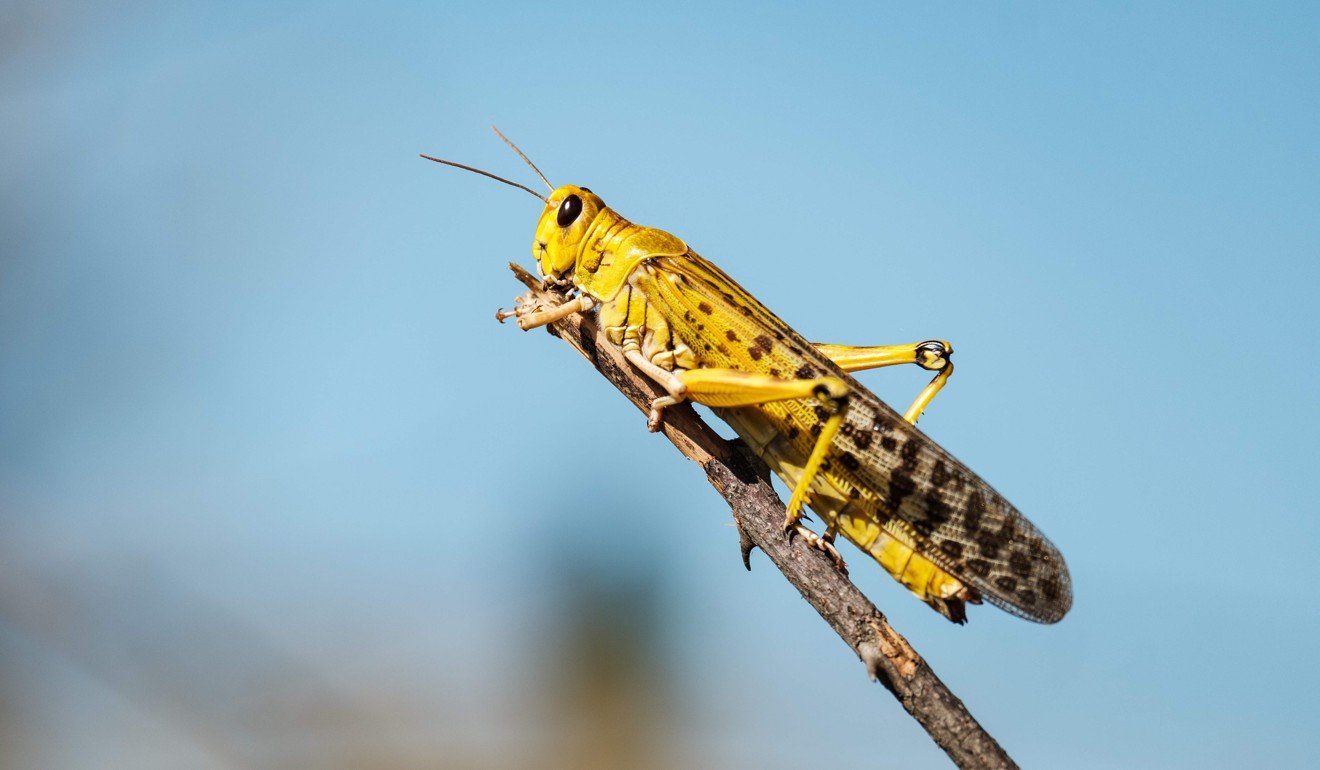
Young locusts in Somalia, where the fungus will be used to try to kill them. Photo: AP
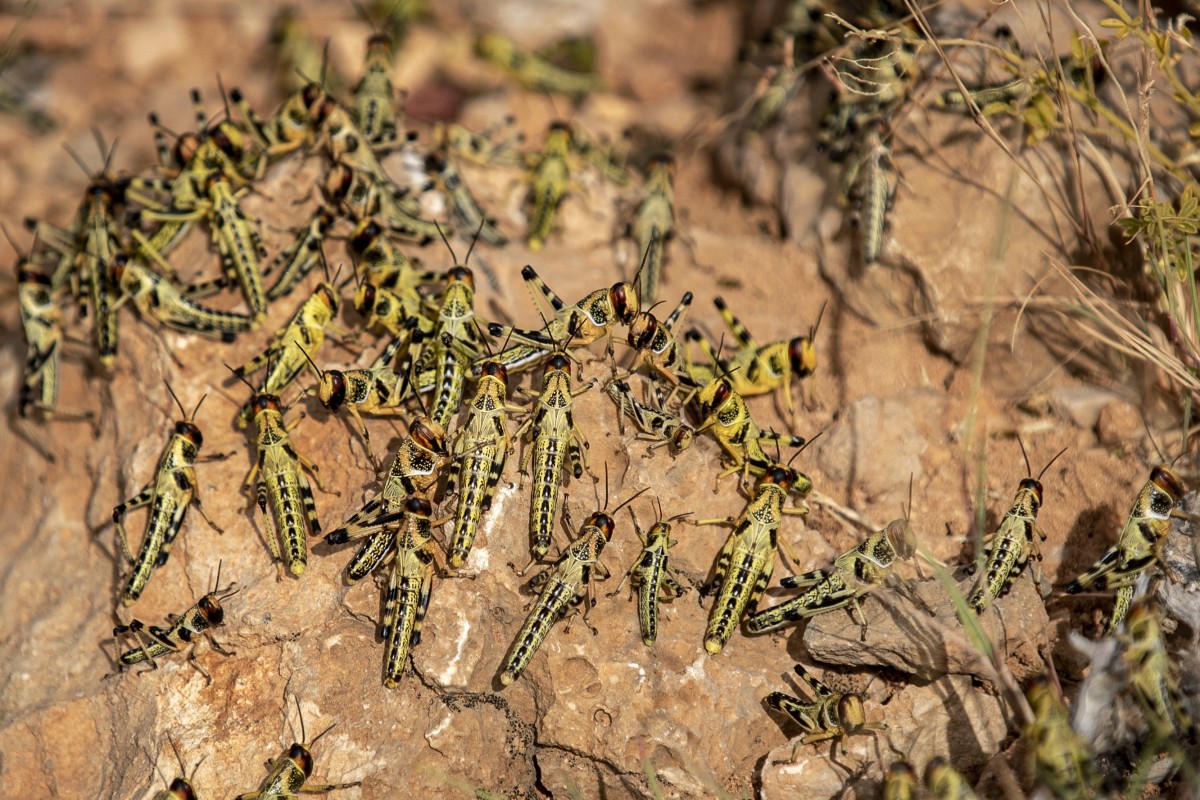
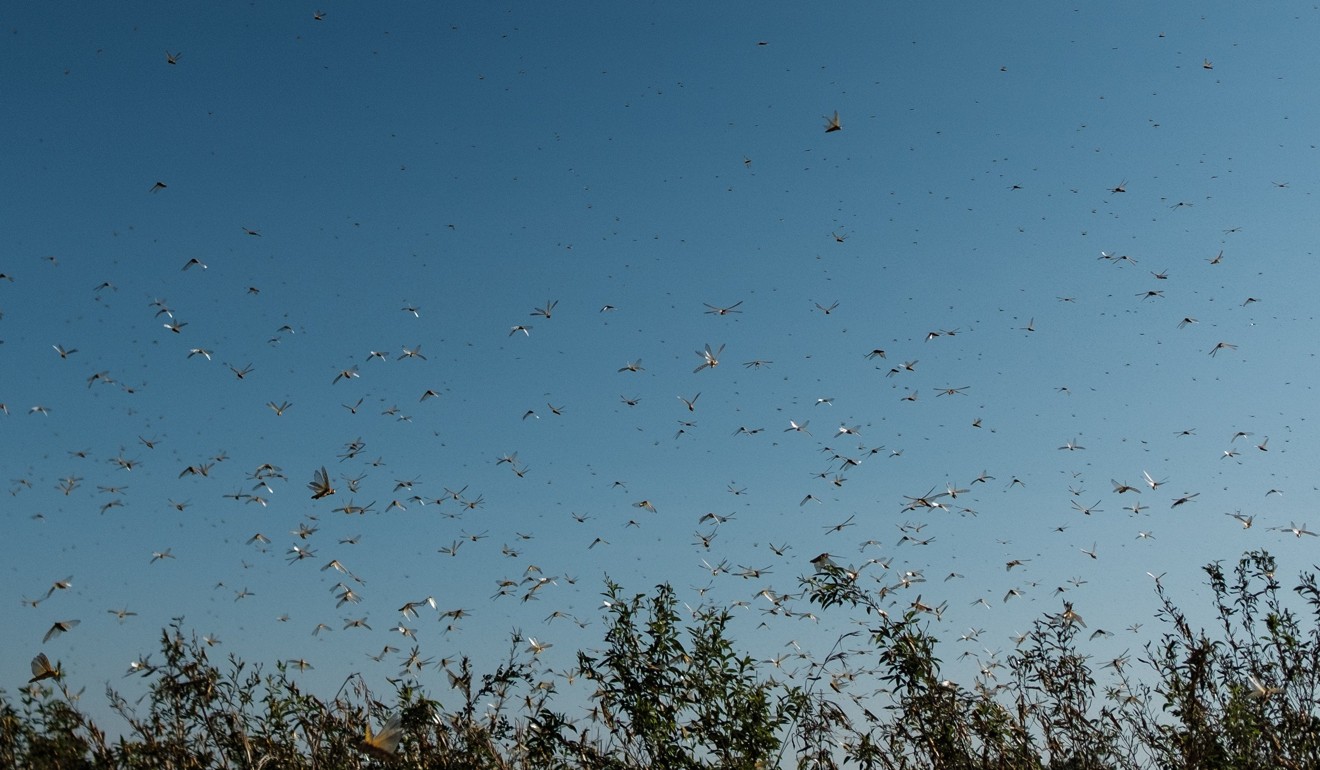
Chinese factories are producing thousands of tonnes of a “green zombie fungus” to help fight the swarms of locusts in East Africa.
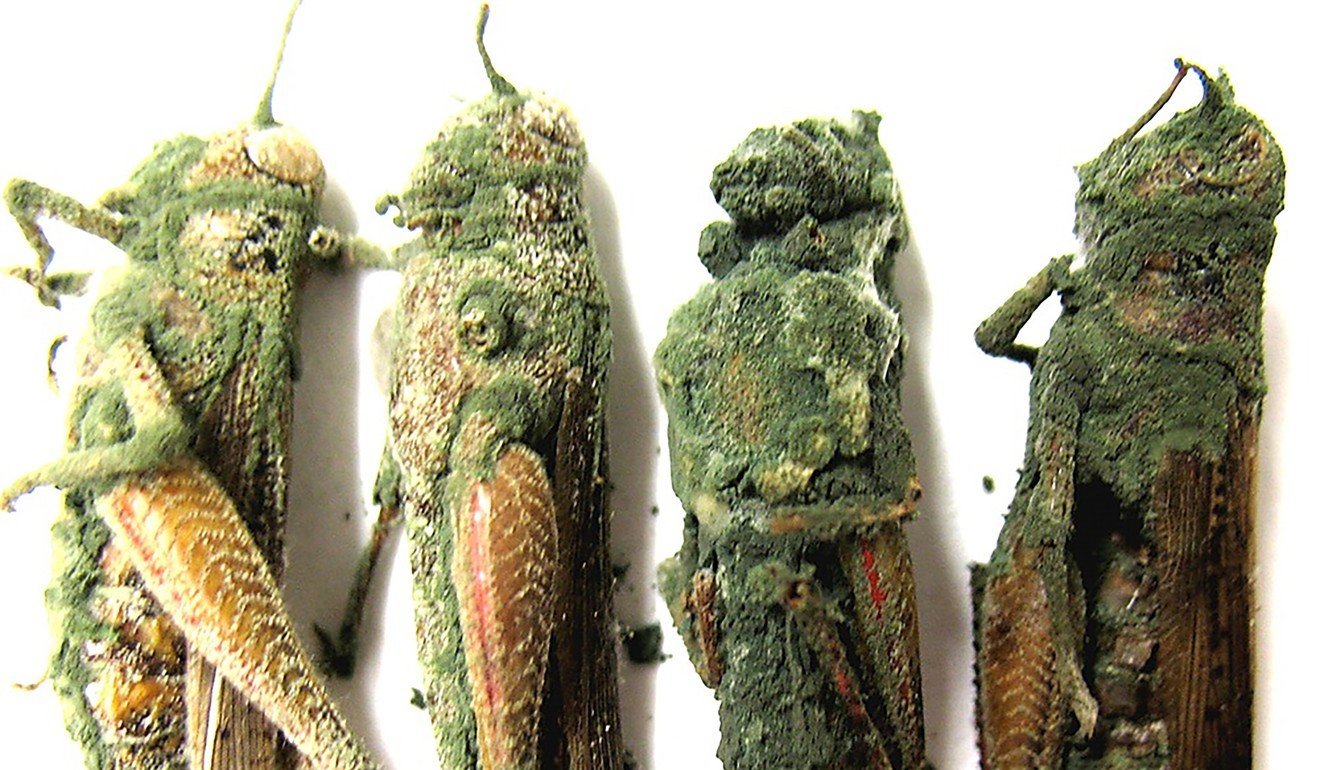
Metarhizium is a genus of fungi with nearly 50 species – some genetically modified – that is used as a biological insecticide because its roots drill through the insects’ hard exoskeleton and gradually poisons them.
In China it was named lu jiang jun, which means green zombie fungus, because it gradually turns its victims in a green mossy lump.
There are now dozens of factories across the country dedicated to producing its spores and despite the curbs introduced to stop the spread of Covid-19, many of them have resumed operations and are shipping thousands of tonnes to Africa.
Plague fears as massive East Africa locust outbreak spreads
These factories are set up in a similar way to breweries, growing the spores on rice which is kept in carefully controlled conditions to ensure the correct temperature and humidity.
Each plant can produce thousands of tonnes of fungi powder per year, each gram of which contains tens of billions of spores.
“I am sending off a truckload right now. Our stock is running out,” said the marketing manager of a production plant in Jiangxi province. “Some customers need it urgently. They need it to kill the locusts.”
The need is particularly pressing in East Africa at the moment, where abnormally high levels of rainfall during the dry season allowed hundreds of billions of locusts to hatch in recent months.
So far the swarms have devastated crops in countries such as Ethiopia, Kenya, Somalia and Uganda and are moving on to neighbouring countries.
Up to 13 million people face the risk of famine in East Africa. Photo: AFP
The UN’s Food and Agriculture Organisation (FAO) has warned the situation could be the “worst in decades” and the resulting famine may affect 13 million people and cause international food prices to soar.
Last week, Science magazine reported that the Somalian government, working with the FAO, was preparing to a metarhizium species that only kills locusts and grasshoppers in what it described as the largest ever use of biopesticides against the insects.
Scientists do not believe that the fungus will be enough to solve the problem – monitoring the outbreak and targeting their breeding grounds will be more important in the long-run – but if it proves effective it could be an important weapon to target future outbreaks.
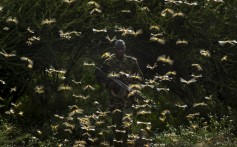
It will take time to gauge the effectiveness, partly because each fungus will take several days to take effect and partly because of the sheer scale of the challenge; a single swarm in Kenya was estimated to contain between 100 billion and 200 billion locusts.
By fair means or fowl: how Chinese herdsmen are planning to stop a locust invasion
The locusts have also swept eastward into the Middle East, travelling up to 150km (90 miles) a day, and are moving closer to China now that they have now reached some of its neighbours, including India and Pakistan.
At present China’s agriculture ministry believes some locusts may follow the monsoon into the country but “the chances of them causing damage is very small”.
Most scientists agree the swarms will not have lasting effect on food production but say developing countries can tap into China’s cutting-edge anti-locust technology.
Radar stations have been set up all the way along China’s western and southern borders to detect possible clouds of locusts, while unmanned devices lure the insects into traps to collect data about their species population and size.
A locust being eaten inside out by the metarhizium fungi. Photo: Chinese Academy of Sciences and the University of Maryland
The data is streamed to the ministry’s programme command, which is responsible for the planning and coordination of the national efforts to prevent an outbreak.
The scientists also said that planes loaded with biological and chemical sprays were standing by.
Today, most locust outbreaks happen in developing countries that do not have advanced monitoring networks and some of them are unable to produce pesticides on a mass scale, according to Li Hu, an associate professor with the China Agricultural University in Beijing.
The Chinese locust treatment technologies were highly advanced, and usually cheaper than competing solutions from the West, he said.
Chinese researchers are now working with colleagues in other countries to help them solve the problem.
One disadvantage of the Chinese research is that it is mostly focused on local species, or the East Asia migratory locust. The desert locusts currently swarming East Africa have different genes and behaviour, and Li warned that some methods that work in China might not work elsewhere.
A giant indoor farm in China is breeding 6 billion cockroaches a year. Here’s why
There were some sightings of the species reported in Yunnan and Tibet in the past, but they did not build up to large colonies, Professor Kang Le, lead scientist of the locust research programme with the Institute of Zoology at the Chinese Academy of Sciences in Beijing, told China Science Daily last week.
The vast west China region of Xinjiang, which shares a border with eight countries, is currently too cold for a locust migration, but once temperatures start to rise in the spring it could see locusts swarming across the border with Afghanistan.
Shi Wangpeng, a senior government locust expert, told China Business Network on Sunday that China should be on high alert because many Afghan farms had already been affected.
“These areas share a long border with us, there are almost no barriers,” he was quoted as saying by the Shanghai-based magazine.
China has a long and bitter history of locust swarms, with more than 840 being recorded in the official records over the past 2,700 years.
One famine, in the year 628 was so devastating that even the Tang dynasty emperor Taizong was reported to have run short of food and resorted to eating the insects to survive.
China has a long and bitter history of locust swarms. Photo: AFP
This, in turn, means that China’s rulers have long been looking for innovative ways to solve the problem
In the past farmers tried remedies such as building huge fires, burying the insects in ditches or trying to kill them with sticks.
In one campaign organised by prime minister Yao Chong in 715, the farms collected 9 million sacks of dead locusts and managed to save a significant proportion of their crops, according to historic text.
In more recent times more sophisticated technologies have been deployed to tackle the menace.
Some researchers have spent decades chasing locust colonies and studying their individual and collective behaviour everywhere from coastal areas to inland deserts, and in 2014 Chinese scientists released the world’s most comprehensive genetic map of locusts.
Researchers have also developed chemical agents that can disorient swarms of locusts and disperse them.
Chinese scientists first became interested in the green zombie’s potential in the 1980s after discovering that South Pacific islanders had been using them to kill insects on coconut trees.
Research by US scientists confirmed its effectiveness in the 1990s and the Chinese started importing the fungus from the United States and Britain.
Their experiments led to the development of newer and deadlier strains and mass production started in the past decade.
Other fungi or bacteria can be used to fight locusts, and some laboratories are working with agricultural technology companies to modify their genes to turn them into more deadly or precise killers.
One genetically engineered species of microsporidia, another type of insect-killing fungus, for instance, can generate three times as many as the spores to those produced by nature species, according to a document from the China Association of Agricultural Science Societies last year.
While it remains to be seen whether the current swarms will reach China, these treatments have been effective in the past and there has not been a locust outbreak in China for a decade.
Source: SCMP
Posted in Afghan farms, Afghanistan, Agriculture ministry, Beijing, Britain, China Agricultural University, China Association of Agricultural Science Societies, China Business Network, China Science Daily, China’s, Chinese Academy of Sciences, cockroaches, coconut trees, desert locusts, different genes and behaviour, East Africa’s, East Asia migratory locust, Ethiopia, famine, fighting, Food and Agriculture Organisation (FAO), green zombie fungus, hold ke, hold key, India, insect-killing fungus, Institute of Zoology, Jiangxi Province, Kenya, locust treatment technologies, locusts, mass-produced biopesticide, microsporidia, Middle East, monsoon, Pakistan, Plague fears, Radar stations, Science, Somalia, South Pacific islanders, swarms, Taizong, Tang dynasty emperor, Tibet, Uganda, Uncategorized, United States, Xinjiang, Yunnan |
Leave a Comment »
12/02/2020
BEIJING/SINGAPORE (Reuters) – China reported on Wednesday its smallest number of coronavirus cases since January, lending weight to a prediction by its top medical adviser for the outbreak to end by April, but a global infectious diseases expert warned of the spread elsewhere.
Financial markets took heart from the outlook of the Chinese official, epidemiologist Zhong Nanshan, who said on Tuesday the number of new cases was falling in some provinces, and forecast the epidemic would peak this month, even as the death toll in China rose to more than 1,100 people.
World stocks, which had seen rounds of sell-offs over the virus, surged to record highs on hopes of a peak in cases. The Dow industrials, S&P 500 and Nasdaq all hit new highs, and Asian shares nudged higher on Wednesday.
But the World Health Organization (WHO) has warned that the epidemic poses a global threat akin to terrorism and one expert coordinating its response said while the outbreak may be peaking at its epicentre in China, it was likely to spread elsewhere in the world, where it had just begun.
“It has spread to other places where it’s the beginning of the outbreak,” the official, Dale Fisher, head of the Global Outbreak Alert and Response Network coordinated by the WHO, said in an interview in Singapore.
“In Singapore, we are at the beginning of the outbreak.”
Singapore has reported 47 cases and worry about the spread is growing. Its biggest bank, DBS (DBSM.SI), evacuated 300 staff from its head office on Wednesday after a confirmed coronavirus case in the building.
Hundreds of cases have been reported in dozens of other countries and territories around the world, but only two people have died outside mainland China – one in Hong Kong and another in the Philippines.
WHO chief Tedros Adhanom Ghebreyesus said on Tuesday the world had to “wake up and consider this enemy virus as public enemy number one” and the first vaccine was 18 months away.
In China, total infections have hit 44,653, health officials said, including 2,015 new confirmed cases on Tuesday. That was the lowest daily rise in new cases since Jan. 30.
The number of deaths on the mainland rose by 97 to 1,113 by the end of Tuesday.
But doubts have been aired on social media about how reliable the figures are, after the government last week amended guidelines on the classification of cases.
‘STAY HOPEFUL’
The biggest cluster of cases outside China is aboard the Diamond Princess cruise ship quarantined off Japan’s port of Yokohama, with about 3,700 people on board. Japanese officials on Wednesday said 39 more people had tested positive for the virus, taking the total to 175.
One of the new cases was a quarantine officer.
Thailand said it was barring passengers from another cruise ship, MS Westerdam, from disembarking, the latest country to turn it away amid fears of the coronavirus, despite no confirmed infections on board.
“We try to stay hopeful,” American passenger Angela Jones told Reuters in a video recording. “But each day, that becomes a little bit more difficult, when country after country rejects us.”
Echoing the comparison with the fight against terrorism, China’s state news agency Xinhua said late on Tuesday the epidemic was a “battle that has no gunpowder smoke but must be won”.
The epidemic was a big test of China’s governance and capabilities and some officials were still “dropping the ball” in places where it was most severe, it said, adding: “This is a wake-up call.”
The government of Hubei, the central province at the outbreak’s epicentre, dismissed the provincial health commission’s Communist Party boss, state media said on Tuesday, amid mounting public anger over the crisis.
China’s censors had allowed criticism of local officials but have begun cracking down on reporting of the outbreak, issuing reprimands to tech firms that gave free rein to online speech, Chinese journalists said.
The pathogen has been named COVID-19 – CO for corona, VI for virus, D for disease and 19 for the year it emerged. It is suspected to have come from a market that illegally traded wildlife in Hubei’s capital of Wuhan in December.
The city of 11 million people remains under virtual lockdown as part of China’s unprecedented measures to seal infected regions and limit transmission routes.
Travel restrictions that have paralysed the world’s second-biggest economy have left Wuhan and other Chinese cities resembling ghost towns.
Even if the epidemic ends soon, it has taken a toll of China’s economy, with companies laying off workers and needing loans running into billions of dollars to stay afloat. Supply chains for makers of items from cars to smartphones have broken down.
ANZ Bank said China’s first-quarter growth would probably slow to 3.2% to 4.0%, down from a projection of 5.0%.
The likely slowdown in China could shave 0.1 to 0.2 percentage points off both euro zone and British growth this year, credit rating agency S&P Global estimated.
Source: Reuters
Posted in &P 500, American, ANZ Bank, April, “dropping the ball”, barring, Beijing, British growth, broken down, capabilities, cars, cases, central province, China, China’s, China’s economy, Chinese, CO for corona, VI for virus, D for disease and 19, Communist Party boss, companies, comparison, coronavirus, coronavirus cases, COVID-19, Credit rating agency, Cruise Ship, December, Diamond Princess, disagree, disembarking, dismissed, Dow industrials, Echoing, elsewhere, end, epidemic, epidemiologist, estimated, Euro Zone, expert, experts, fall, fight, ghost towns, global, Global Outbreak Alert and Response Network, Governance, Government, gunpowder smoke, Hong Kong, hubei province, illegally traded wildlife, infected regions, infectious diseases, items, January, Japanese, laying off, lending, limit, Mainland China, Makers, market, MS Westerdam, NASDAQ, near, needing loans, number, Official, officials, outbreak, outbreak’s epicentre, paralysed, passenger, passengers, pathogen, peak, Philippines, Port, prediction, provinces, provincial health commission’s, quarantine officer, quarantined, reported, Reuters, S&P 500, S&P Global, seal, Singapore, smallest, smartphones, spread, state news agency, supply chains, surged, terrorism, Thailand, toll, top medical adviser, transmission routes, travel restrictions, Uncategorized, video recording, virtual lockdown, wake-up call, Wednesday, weight, whether, won, workers, World Health Organization (WHO), World stocks, world’s second-biggest economy, Wuhan, Xinhua, Yokohama |
Leave a Comment »
07/02/2020
- Some companies polled by Shanghai’s American Chamber of Commerce said they were speeding up plans to move operations out of mainland
- Transport bans and strict public health measures have disrupted economic activity
China’s economic growth may drop to 5 per cent or lower because of the outbreak, according to a government economist. Photo: Bloomberg
The majority of US firms with operations in China expect
a virus outbreak
to cut revenue this year, and some are accelerating plans to shift their supply chains out of the country, according to a poll by Shanghai’s American Chamber of Commerce.
Nearly a quarter of the firms forecast revenue would fall by at least 16 per cent this year due to the outbreak, while over a fifth said it would decline by 11-15 per cent. Only 13 per cent of respondents said revenue would see very little or no impact from the virus.
The survey covered 127 companies, including 20 with China-sourced revenues of over US$500 million and 27 with China revenues of US$100 million to US$500 million.
Sixteen per cent of respondents expected China’s gross domestic product to fall by more than 2 per cent due to the outbreak.
China tries to get back to work amid coronavirus outbreak
The death toll from the virus in China has topped 600, with more than 31,000 people infected. Widespread transport bans and strict public health measures have disrupted economic activity in much of the country, and factory closures are starting to ripple through global supply chains.
China faces dilemma as it tries to get back to work amid coronavirus outbreak fears
A government economist said last week that China’s economic growth may drop to 5 per cent or even lower due to the outbreak, possibly pushing policymakers into introducing more stimulus measures.
Sources said Chinese policymakers were preparing measures, including more fiscal spending and interest rate cuts, amid expectations the outbreak would have a devastating impact on first-quarter growth.
In response to the virus, some survey respondents said they were shifting operations out of China and moving more production to other areas, including India.
“Not innovative, but our suppliers are moving operations to Taiwan. This has been considered before, options and planning were being made, but they are pulling the trigger now,” according to one respondent in the survey.
“Our company will directly source from Taiwan and eliminate the mainland China supply chain for more and more products.”
Source: SCMP
Posted in China, China’s, coronavirus outbreak, disrupted, Economic growth, expect, Gross domestic product, hit, mainland, move, operations, plans, products, public health measures, Revenue, Shanghai's, speeding up, Supply chain, Taiwan, Transport bans, Uncategorized, US firms |
Leave a Comment »










 CHINDIA ALERT: You'll be living in their world, very soon