Archive for ‘China alert’

27/06/2019

Another trade war is brewing as Asia fights back over the world’s plastic waste

  • The planet is only just waking up to the problems that plastics cause, a reader writes – but what is to be done?
Collecting plastic material from dirty water in Dhaka, Bangladesh, in April. Photo: Reuters
Tired of being the world’s dumping ground for recycled waste materials from other countries, Asian nations are 
striking back

with punitive environmental trade regulations that should leave the waste exporting nations in delirium. Last week, the Malaysian Environment Minister, Yeo Bee Yin,

stated clearly

that countries should manage their own waste, and that Malaysia will take care of its own.

Modern economic theory maintains that the trade of global “goods” and services should be optimised by countries embracing their competitive advantages – letting others excel where their own advantages exist.
What it did not account for is the trade in “bads” between nations, whereby a country’s externalities (in this case waste) are sent to another’s shores to take advantage of the other country’s “competitive advantages” – low labour costs and lax environmental enforcement.
As a result of the planet’s awakening to the vast challenges of what do to with plastic in its second life, we now have two large-scale trade wars to contend with. One is between the two largest economies, the 
US and China

. The other is much broader in scope, undercutting the previously perceived values of globalisation, using environmental trade barriers as a proxy for national benefit.

This trend should be expected to continue, as 
plastic pollution

is not the only ill which countries share with one another, but it is one that has generated the most sharing of ideas and momentum across virtually every country on the planet.

To put the scale into context, one can conservatively estimate that at least 10 per cent of the plastic waste sent to Asia for recycling was of quality too poor to make value from.

If all of this “poor quality” material from the European Union alone was returned to its rightful exporting countries for the past 10 years of their exports, they would receive over 95,000 40-feet containers, each containing 35 metric tons of material. This would create a line of containers over 1,150km (715 miles) long.

A global reckoning on waste is under way, thanks to China
It may not be likely that all 95,000 containers will be returned to their ports of origin, but it is clear that the ability to keep moving this volume of material offshore will quickly evaporate, creating all types of disruptions and needing innovative interventions to solve the complex plastic waste challenge.
Join us, and industry leaders and influencers, at our action-based plastic circular economy forum –

Plasticity Amsterdam

– on June 20 for a big discussion on how some of the solutions needed to address these new plastic defences can be for everyone involved.

Source: SCMP
27/06/2019

UN’s environment chief urges China to keep belt and road projects green and clean

  • Joyce Msuya of the UN Environment Programme is full of praise for Beijing’s success in tackling air pollution but says there is work still to be done
  • Commitment to environmental protection seen at home must be extended to infrastructure projects developed overseas, she says
Joyce Msuya, acting head of the UN Environment Programme, says bad infrastructure can have a negative environmental impact. Photo: Simon Song
The United Nations’ environment chief has appealed to China to apply the same environmental standards to infrastructure projects it develops overseas under its Belt and Road Initiative as it does to those built on its own soil.
“We know from history, bad infrastructure can lead to negative environmental impact,” said Joyce Msuya, acting executive director of the UN Environment Programme. “Given China’s record on and interest in environmental protection, we hope and expect they will apply the same spirit as they invest in developing countries.”
While acknowledging the value of infrastructure building in developing nations, Msuya said it was equally important to consider the environmental implications of 
belt and road

schemes.

“We are interested in working with member countries that have been beneficiaries [of Chinese investment] to see what concerns, if any, what risks, if any, they see,” she said in an interview on the sidelines of an event in Hangzhou, capital of east China’s Zhejiang province, to mark World Environment Day, which fell on Wednesday.
Scores of countries are involved in Beijing’s multibillion-dollar belt and road plan in one way or another, but as it has expanded so too have the concerns over its environmental impact.
In late 2017, the WWF issued a report claiming that the development of two motorway projects in Myanmar would have a negative environmental impact on about half of its population.
China ‘facing uphill struggle’ in fight against pollution

On China’s efforts to tackle pollution at home, Msuya said that although the move towards a greener economy might require communities to make sacrifices in the short term, these would be outweighed by the long-term benefits.

China has been fighting a “war on pollution” since 2013 but as 

economic pressures

have grown so too have concerns that industry unfriendly environmental efforts might be relegated to the back burner. The nation’s gross domestic product grew by just 6.6 per cent in 2018, its slowest rate since 1990, and for the past year it has been embroiled in a stinging trade war with the United States.

China has been fighting a “war on pollution” since 2013. Photo: Simon Song

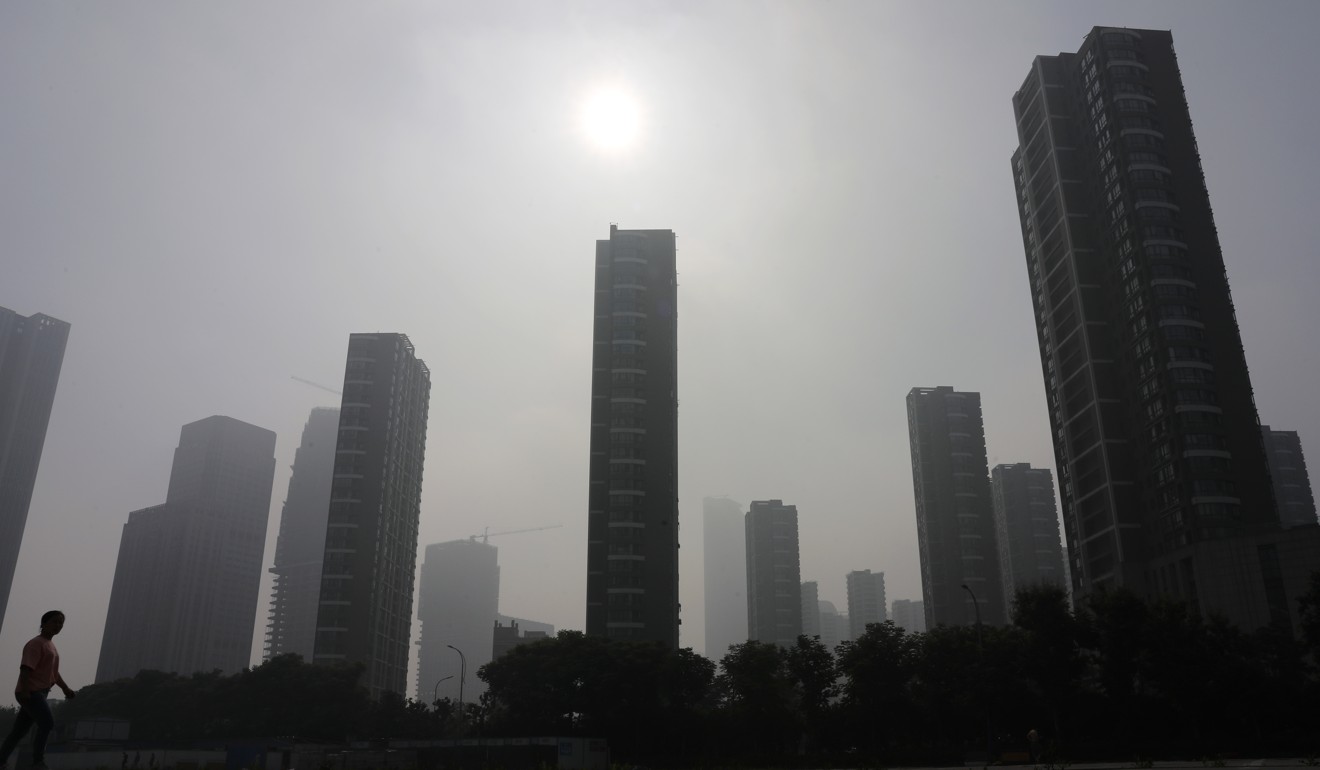
Msuya said that while Beijing had done a good job in improving air quality, it still had some way to go on issues like water, soil and noise pollution.

“China is quite diverse, with many provinces … so the scale of the challenge of dealing with pollution is more complex,” she said. “[But] by building on its experience of cleaning the air, I have full confidence in the Chinese government.”

Pollution in northern China up 16 per cent in January as industrial activity spikes

According to a report issued by Beijing on Wednesday, average levels of PM2.5 – the tiny airborne particles that are particularly harmful to health – in more than 70 cities across

China fell by an average of 42 per cent in the five years through 2018.

Smog levels in the Chinese capital fell 43 per cent in the period, but the average reading in the city last year was still more than five times the World Health Organisation’s recommended safe level.

Air quality was the main theme of the Hangzhou event.

Msuya has first-hand experience of Beijing’s air quality having worked in the city as the World Bank Group’s regional coordinator for East Asia and the Pacific between 2011 and 2014.

“When I moved to Beijing in 2011, I honestly didn’t know how bad the air pollution was.

My son was six at the time and I always made sure he wore a mask when he went out to play,” she said.

“Fast forward to now, and China has shown us that the problem of air pollution can be tackled if everyone participates.”

Source: SCMP

27/06/2019

China to fire up small test nuclear reactor to heat smog-prone north

  • Compact plants proposed to ease pollution but backers must win over wary public
China is exploring the idea of using small nuclear power plants to phase out coal- and gas-fired heating generators in smog-afflicted northern China. Photo: Reuters
China plans to build a pilot small-scale nuclear reactor that could replace coal or gas to heat towns and cities in its colder northern regions, an official with the state-owned developer in charge of the project said on Monday.
The small heating reactor was planned for the city of Jiamusi in northeastern Heilongjiang province, one of two proposed units with a combined capacity of 400 megawatts, Wang Xujia, a senior engineer with the State Power Investment Corp, said on the sidelines of an industry conference.
“The project is still under central government review for approval,” Wang said, adding that the developer aimed to put the project into operation by 2024.
China has been exploring the use of small nuclear reactors – less than a fifth of the size of a standard reactor – as alternative heating systems in smog-prone northern regions.
The state provides heating throughout northern China from November to March, using predominantly coal- or gas-fired boilers.
State-owned China National Nuclear Corp (CNNC) has already conducted trial runs for a “district heating reactor” (DHR) design, which it says can supply heat to 200,000 urban households.
China-built nuclear reactors may enjoy home advantage as delays and costs stymie foreign competitors
The DHR model consists of a reactor core immersed in a water-filled tank. It is estimated to require investment of 1.5 billion yuan (US$217 million) and take three years to build, making it cheaper and quicker to construct than conventional reactors.

However, while the various designs will use only a fraction of the radioactive material of a conventional nuclear plant, officials acknowledge the biggest challenge is convincing the public the reactors are safe and reliable.

“The planned project in Jiamusi will be located in a remote area of the city which undermines its economic efficiency, but since it is just a demonstration project we just want to complete one first and show it to the public,” Wang said.

China aims to raise total nuclear capacity to 58 gigawatts by the end of next year, but it has not launched any new conventional reactors in more than three years.

China expected to miss target for 2020 nuclear capacity
After Japan’s Fukushima accident in 2011, China conducted a root-and-branch safety review and decided it would only use the most advanced “third generation” technology for any new projects.
However, those technologies – including Westinghouse’s AP1000 and the Areva-developed EPR – have proved to be expensive, complex and prone to long construction delays.
In a bid to broaden its options, the country is developing smaller units and plans to launch its first “small modular reactor” on the island province of Hainan at the end of this year.
China also planned to launch floating nuclear reactors with the aim of developing a fleet of ship-mounted nuclear generators that could be deployed on islands in Southeast Asia, Song Danrong, a reactor designer at CNNC, told Monday’s conference.
Source: SCMP
26/06/2019

China, Africa eye a community of shared future via cooperation

CHINA-BEIJING-YANG JIECHI-SOUTH AFRICAN FM-MEETING (CN)

Yang Jiechi, a member of the Political Bureau of the Central Committee of the Communist Party of China (CPC) and director of the Office of the Foreign Affairs Commission of the CPC Central Committee, meets with South African Foreign Minister Naledi Pandor in Beijing, capital of China, June 25, 2019. (Xinhua/Zhang Ling)

BEIJING, June 25 (Xinhua) — China on Tuesday vowed to work with African countries to enhance cooperation based on equality and openness to build a community of shared future.

That came as Chinese State Councilor and Foreign Minister Wang Yi addressed the opening ceremony of the Coordinators’ Meeting on the Implementation of the Follow-up Actions of the Beijing Summit of the Forum on the China-Africa Cooperation (FOCAC).

After reading Chinese President Xi Jinping’s congratulatory letter to the meeting, Wang said the letter fully expressed Xi’s profound friendship toward African countries and their people, and demonstrated the Chinese government’s strong willingness to engage in friendly cooperation.

In delivering on the blueprint for China-Africa cooperation in the new era, China stands ready to work with the African side in implementing promises with concrete and effective actions, and achieving full implementation of consensus and outcomes concluded at the FOCAC Beijing Summit, Wang said.

Wang also called for sticking to the fundamental purpose of building a community of shared future and the development path of jointly constructing the Belt and Road, upholding multilateralism, and safeguarding the common interests of developing countries and emerging markets.

“Any disturbance will not affect our resolve to enhance cooperation, and any difficulty will not hinder our joint advancement in achieving rejuvenation,” he said.

After the opening ceremony, Yang Jiechi, a member of the Political Bureau of the Central Committee of the Communist Party of China (CPC) and director of the Office of the Foreign Affairs Commission of the CPC Central Committee, met with four foreign ministers from African countries, including Nabeela Tunis from Sierra Leone, Simeon Oyono Esono Angue from Equatorial Guinea, Naledi Pandor from South Africa, and Amadou Ba from Senegal.

Also on Tuesday, Wang Yi met with foreign ministers from Zimbabwe, Lesotho, Cote d’Ivoire, Equatorial Guinea, Ghana, Uganda and Libya, and an official on economics from Eritrea.

Source: Xinhua

26/06/2019

China, Uganda lift ties to comprehensive cooperative partnership

BEIJING, June 25 (Xinhua) — Chinese President Xi Jinping and visiting Ugandan President Yoweri Museveni agreed to lift their countries’ relationship to a comprehensive cooperative partnership on Tuesday.

At present, China-Uganda ties are at their best in history, as the political mutual trust has been continuously enhanced, pragmatic cooperation has yielded fruitful results, and the two sides maintain close collaboration in international and regional affairs, Xi said.

He said China was willing to work with Uganda to promote the ties in the process of the joint building of the Belt and Road and the implementation of the outcomes of the Forum on China-Africa Cooperation (FOCAC) Beijing Summit.

Xi said China and Uganda should continue to understand and support each other on issues related to each other’s core interests and major concerns.

He said China is willing to strengthen exchanges with Uganda on the experience of governance, and deepen cooperation in areas such as infrastructure construction, trade, energy, agriculture, epidemic prevention and control, human resources, industrial parks and tourism.

“Chinese enterprises are encouraged to invest in Uganda in accordance with market-oriented principles,” Xi said.

The Chinese side appreciates the positive role played by Uganda in maintaining regional peace and stability and supports Uganda’s efforts to safeguard its own security, he said.

The Chinese president called on the two sides to jointly and clearly oppose protectionism and unilateralism, safeguard the international system and international order with the United Nations as the core, and commit themselves to building a new type of international relations and fostering a community with a shared future for mankind.

Uganda will take the establishment of the comprehensive cooperative partnership as an opportunity to deepen cooperation with China, Museveni said, expressing the willingness to learn from the Communist Party of China’s experience in state governance.

Museveni added that unilateralism was very dangerous, and that Uganda and China should strengthen communication and coordination in multilateral affairs such as those within the framework of the United Nations.

Source: Xinhua

25/06/2019

China launches new BeiDou satellite

BEIJING, June 25 (Xinhua) — China sent a new satellite of the BeiDou Navigation Satellite System (BDS) into space from the Xichang Satellite Launch Center in Sichuan Province at 2:09 a.m. Tuesday.

Launched on a Long March-3B carrier rocket, the satellite was sent to the inclined geosynchronous earth orbit. It is the 46th satellite of the BDS satellite family and the 21st satellite of the BDS-3 system.

The design of the BDS constellation is unique, including medium earth orbit (MEO), geostationary earth orbit (GEO) and inclined geosynchronous earth orbit (IGEO) satellites.

So far, there are already 18 MEO BDS-3 satellites, one GEO BDS-3 satellite, and two IGEO BDS-3 satellites sent into space.

After in-orbit tests, the new satellite will work with those BDS satellites already in orbits to improve the coverage and positioning accuracy of the system.

The new satellite and the carrier rocket were developed by the China Academy of Space Technology and the China Academy of Launch Vehicle Technology under the China Aerospace Science and Technology Corporation.

The launch was the 307th mission for the Long March series of carrier rockets.

Source: Xinhua

25/06/2019

China, African countries vow to enhance cooperation

CHINA-BEIJING-WANG YI-SOUTH AFRICA-FM-MEETING (CN)

Chinese State Councilor and Foreign Minister Wang Yi (R) meets with South African Foreign Minister Naledi Pandor in Beijing, capital of China, June 24, 2019. Naledi Pandor was here to attend the Coordinators’ Meeting on the Implementation of the Follow-up Actions of the Beijing Summit of the Forum on the China-Africa Cooperation (FOCAC). (Xinhua/Zhai Jianlan)

BEIJING, June 24 (Xinhua) — Chinese State Councilor and Foreign Minister Wang Yi held respective meetings with foreign ministers from nine African countries on Monday, and they pledged efforts to strengthen cooperation and uphold multilateralism.

The foreign ministers are Naledi Pandor from South Africa, Palamagamba Kabudi from Tanzania, Ezechiel Nibigira from Burundi, Aurelien Agbenonci from Benin, Nhial Deng Nhial from South Sudan, Mamadou Tangara from Gambia, Joseph Malanji from Zambia, Luis Filipe Tavares from Cape Verde, and Gbehzohngar Findley from Liberia.

The African foreign ministers are in Beijing to attend the Coordinators’ Meeting on the Implementation of the Follow-up Actions of the Beijing Summit of the Forum on the China-Africa Cooperation (FOCAC), with the aim of better implementing the outcomes of Beijing Summit in 2018.

While holding talks with Pandor, Wang hailed the solid mutual trust and deep-rooted traditional friendship between China and South Africa.

Wang said China and South Africa, both as major representatives of emerging markets and developing countries, should jointly safeguard the missions and principles of the United Nations Charter, champion multilateralism, uphold basic norms governing international relations, and oppose any form of unilateralism and bullying, to promote world peace, development and prosperity.

Pandor said South Africa and the whole African continent, as China’s partners for jointly resisting unilateralism and bullying practice, would stand together with China in safeguarding multilateralism and an open, inclusive global trade system.

In the meeting with Kabudi, Wang expressed China’s readiness to work with Tanzania to keep high-level exchanges, and avail the opportunity of jointly building the Belt and Road and the Coordinators’ Meeting to ensure better outcomes in bilateral cooperation.

Calling the Beijing Summit of the FOCAC a milestone, Kabudi said Tanzania is willing to facilitate cooperation in infrastructure construction, industrial capacity, and in cultural, educational sectors and other areas.

In respective meetings with Nibigira, Agbenonci, Nhial and Tangara, Wang said the current international situation is complex but China’s determination to strengthen its solidarity and friendship with African countries remains unchanged.

Nibigira said Burundi agreed with the Belt and Road Initiative and would continue to support China on issues concerning China’s core interests and major concerns.

Agbenonci said multilateralism was now the only correct choice. Only through multilateralism can the voice of small and medium-sized countries, especially African nations, be heard, he said.

Nhial said South Sudan thanked China for its help in various fields, especially its support and contributions to the peace process in South Sudan.

Tangara said since the resumption of diplomatic relations between China and Gambia, bilateral cooperation in various fields had developed fast, and Gambia can be trusted as a sincere partner of China.

When holding separate meetings with Malanji, Tavares and Findley, Wang said China would continue to uphold justice and pursue the shared principles of sincerity, results, affinity and good faith.

China’s cooperation with Africa is sincere and selfless, and has no geopolitical purposes, said Wang, adding that China had always followed the principle of non-interference, provided aid as Africa needed, carried out South-South cooperation, and helped achieve common development.

He said China-Africa cooperation was conducive to Africa’s infrastructure construction, economic and social benefits, and self-development.

“Africa offers a grand stage of cooperation between different countries, not an arena of major powers’ game,” said Wang, adding that “African friends will get a right conclusion on who truly attaches importance to, respect, and support Africa.”

Malanji said claims that Zambia-China cooperation had led to Zambia’s debt problem were inconsistent with the facts and China’s loans were used on the infrastructure that Zambia needs most, to promote Zambia’s economic development and bring social welfare.

Tavares said Cape Verde cherished relations with China and upheld the one-China principle. He said Cape Verde stood ready to fully implement consensus reached by leaders of the two countries, enhance strategic dialogue, and deepen cooperation, particularly marine economy cooperation, to push bilateral relations into a new era.

Findley said China is Liberia’s true friend which has helped fight Ebola alongside Liberia and played an important role in post-epidemic reconstruction. He said Liberia is ready to enhance mutually beneficial cooperation with China.

Also on Monday, Yang Jiechi, a member of the Political Bureau of the Central Committee of the Communist Party of China (CPC) and director of the Office of the Foreign Affairs Commission of the CPC Central Committee, met with all delegation heads here to attend the coordinators’ meeting.

The meeting will formally open Tuesday morning.

Source: Xinhua

22/06/2019

The BeiDou-linked satnav chip tracking guns in China

  • Beijing-based hi-tech firm says its technology keeps real-time tabs on firearms and is already in use in the military
A Chinese company has developed a chip to track the location of firearms. Photo: Shutterstock
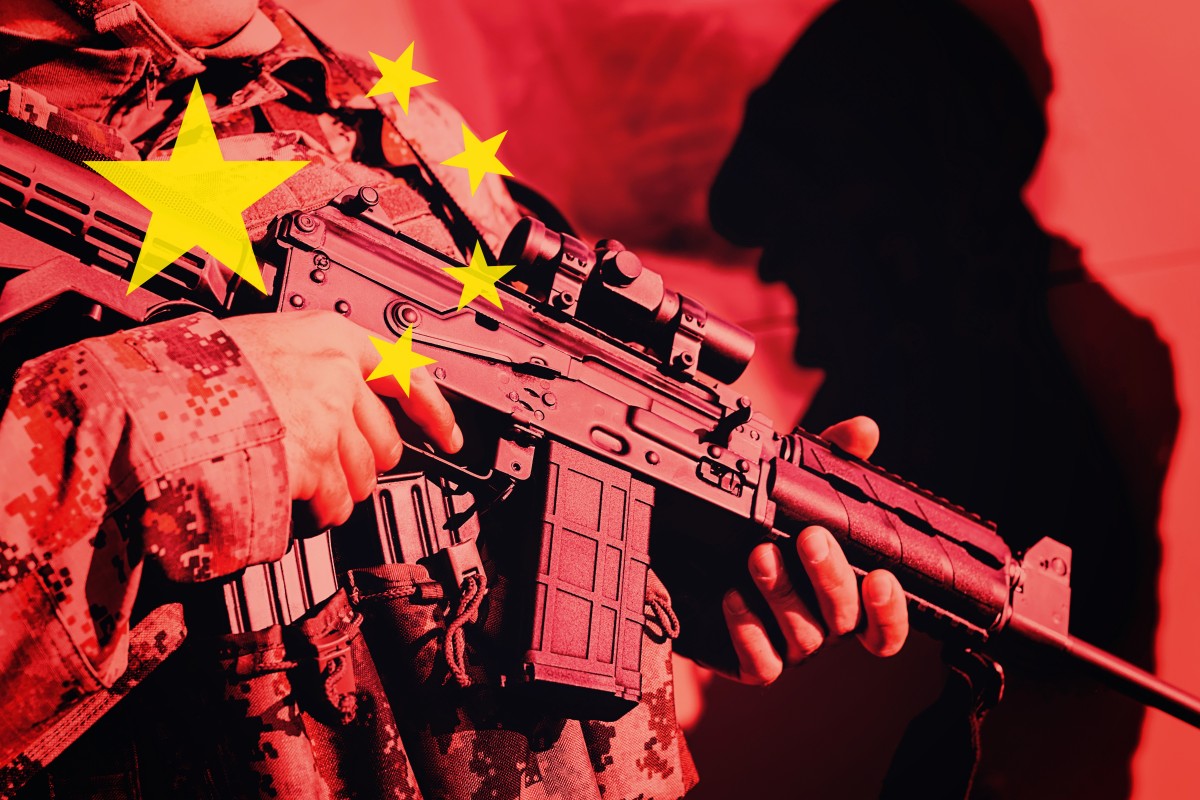
China has developed a satellite positioning chip to pinpoint the location of firearms and trigger an alert when guns are taken out of designated areas, according to a Chinese hi-tech firm.
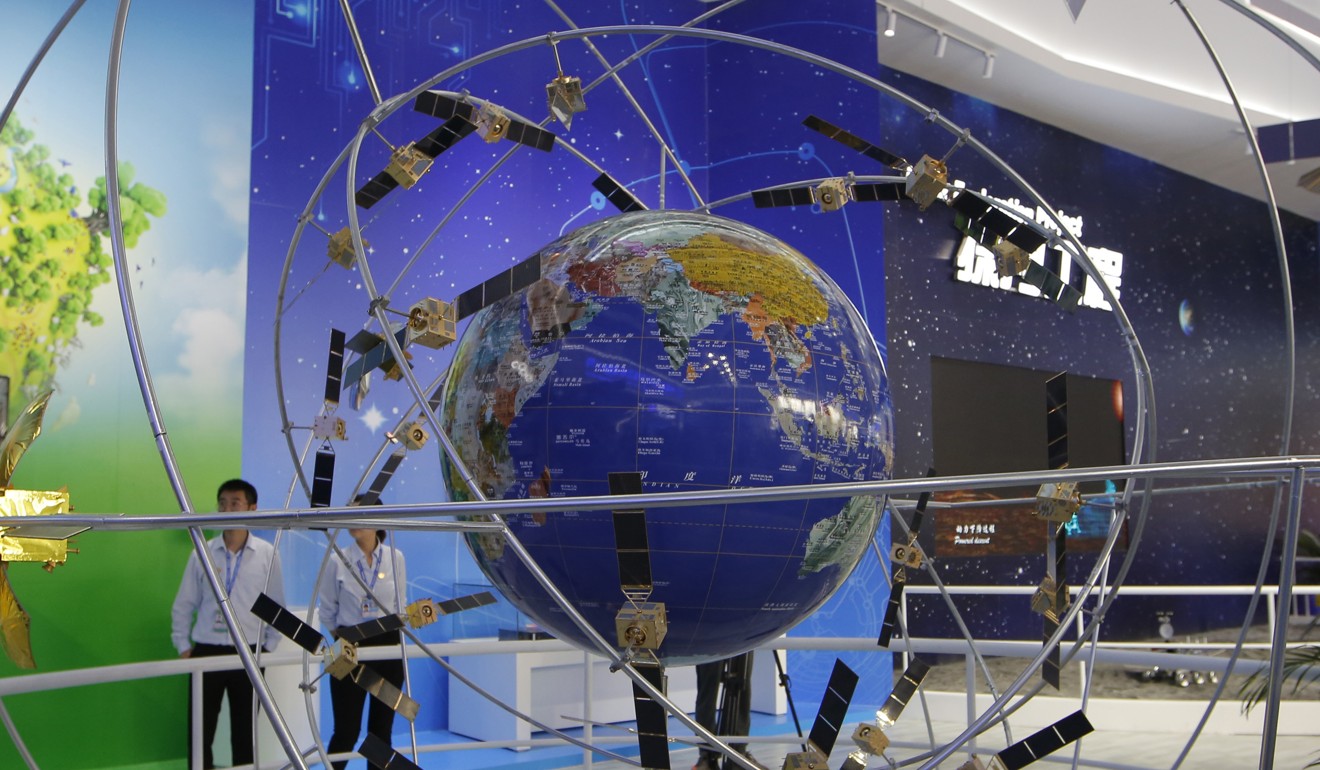
Beijing Bailineng Technology, the developer of the technology, said in Beijing that the chips used China’s BeiDou Navigation Satellite System to send real-time location data back to a control centre.
Authorised handlers of the weapons would also be issued with BeiDou watches to send alerts if they are separated from their firearm, with the aim of stopping the weapons falling into the hands of criminals.
“At the moment the accuracy of positioning is about 3 metres,” Ge Chunsheng, a company spokesman, said at a defence equipment fair which ended on Thursday.
“The chips are built in inside, can’t be seen from the outside and very difficult to remove … without damaging the gun.”
China’s BeiDou satellite navigation system breaks underwater barriers, naval shipbuilder says
Ge said the chips were too big for pistols at the moment and could only be fitted in bigger weapons.
The chips use the BeiDou Navigation Satellite System to relay real-time data to a control centre. Photo: AP

China has strict gun control regulations banning civilians from owning firearms. Only the military, police and some specific personnel such as armed transport crews can legally possess firearms.

Previous gun-tracking systems relied on the US-owned and operated Global Positioning System (GPS). But China hopes the BeiDou system, set to be completed in 2020, will be able to replace GPS in China and compete with it globally.

China adds new satellite to its Beidou network that aims to rival US global positioning system

BeiDou was developed for military use but also has civilian applications. It began to cover parts of China in 2000, and launched a basic global service in December 2018.

The Chinese government has ordered all of its buses, heavy trucks and fishing boats to install BeiDou technology for real-time monitoring and tracking. As of 2017, 22 million vehicles and 50,000 vessels had been equipped with BeiDou terminals.

Source: SCMP

22/06/2019

What China must do to clean up its act on waste water

  • Inadequate infrastructure and industry standards are holding the country back in the battle to save the environment, new study finds
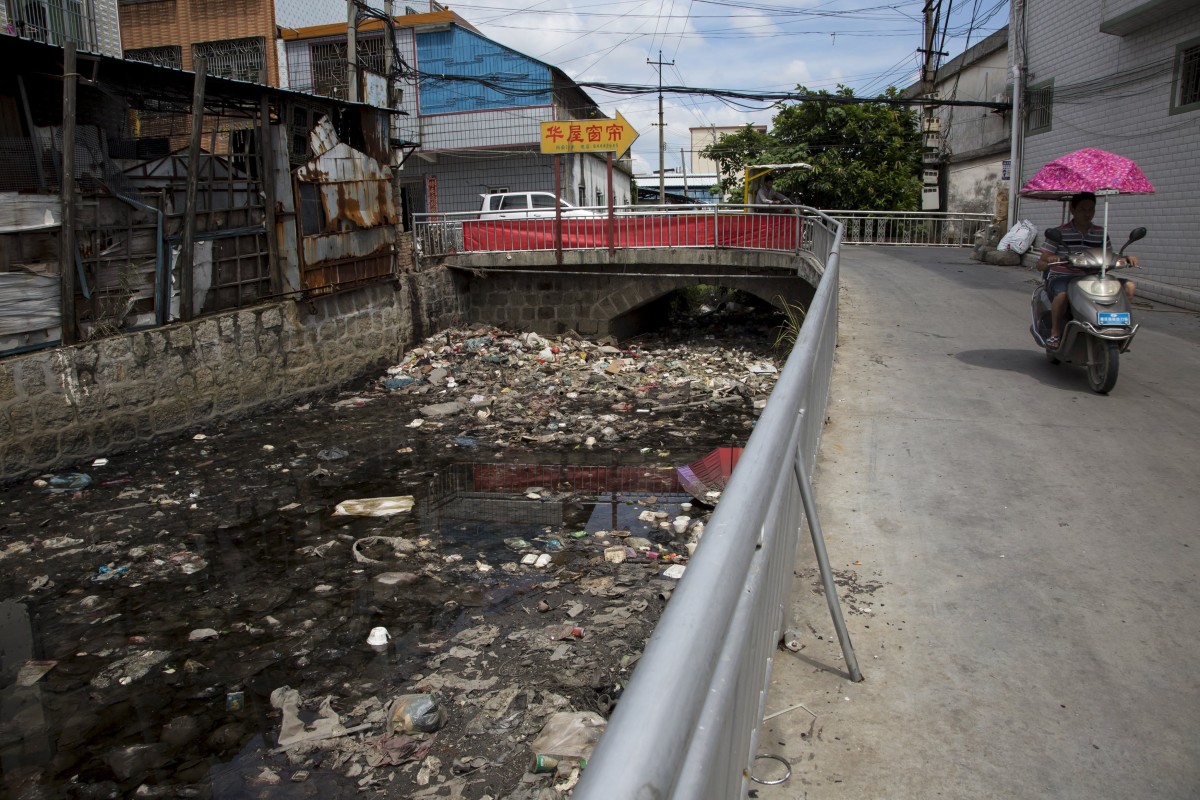
In some extreme cases, incomplete pipework meant factories in industrial parks discharged directly into waterways. Photo: Reuters
A shortage of waste water pipelines, lax local government oversight and a lack of industry standards are holding back efforts to cut industrial water pollution in China, according to a new joint study.
The research by Greenpeace and Nanjing University also found that many of the country’s waste water treatment plants were among its biggest polluters singled out by authorities.
Researchers made the assessment by examining data and reports released by the Ministry of Ecology and Environment last year. According to the reports, 243 – or 56 per cent – of the 436 major polluters fined in 2018 for excessive discharges were waste water treatment plants.
That is despite Beijing claiming to be one of the biggest processors of industrial and household waste water by volume in the world.
Fighting water pollution is part of Beijing’s pledge to fix the country’s depleted environment by 2020, one of the priorities President Xi Jinping identified at the start of his second five-year term in late 2017.
Dong Zhanfeng, deputy director of the Environmental Policy Department at the Chinese Academy for Environmental Planning, said waste water treatment was an important part of the fight against pollution.
“It’s called a ‘critical battle’ because the work is really tough,” Dong said.
China says progress made on water pollution, but battle remains

To try to curb contamination from industry, the central government has urged provincial authorities to concentrate factories in industrial parks, where infrastructure must be built to treat waste water.

The Greenpeace-Nanjing University researchers found that by the end of the third quarter last year, 97 per cent of 2,411 industrial waste water treatment plants needed for industrial parks around the country had been constructed. But not all of the completed plants were in full use because of insufficient pipes connecting factories and the treatment plants.

In extreme examples cited by the report, incomplete pipework meant two treatment plants in Hubei laid dormant for two years, forcing factories in the industrial parks to discharge directly into waterways.

In other cases, factories not linked to industrial waste water treatment plants discharged into the general sewage system, with the effluent ending up at household waste water treatment plants that could only filter part of the industrial waste.

This was the case in the southwest province of Guizhou, where a lack of pipework meant 89 of the 128 industrial parks relied on city sewage systems to treat polluted water.

Deng Tingting, a Beijing-based campaigner with Greenpeace East Asia, said conditions were a mess.

“Brand new waste water treatment plants sit unused while waste pumps into streams and rivers.

The current state of affairs is a mess, and it keeps companies from entering the growing market for waste water treatment. The decision not to shepherd this growing industry is a risky one,” Deng said.

China admits patchy progress tackling soil, water pollution, with some rivers worsening

The Ministry of Ecology and Environment estimated last year that in all China needed 400,000km (248,550 miles) of waste water pipework, costing around 1 trillion yuan (US$145 billion). The ministry did not say how much remained to be built.

Another major problem identified by the study was the lack of treatment standards for industrial waste water plants, with many plants relying on quality standards for household waste water treatment.

In addition, the researchers highlighted the problem of local governments and industrial park administrators shirking their responsibility to enforce standards.

The study called for clear demarcation of regulatory and oversight responsibilities among local environmental watchdogs, industry, industrial parks and water treatment plants.

Source: SCMP

20/06/2019

Taliban delegation holds talks in China as part of peace push

BEIJING (Reuters) – China recently played host to a Taliban delegation as part of efforts to promote peace and reconciliation in Afghanistan, China’s foreign ministry said on Thursday.

Representatives of the Taliban, who have been fighting for years to expel foreign forces and defeat the U.S.-backed government in Kabul, have been holding talks with U.S. diplomats for months.

The focus has been the Taliban demand for the withdrawal of U.S. and other foreign forces, in exchange for guarantees that Afghanistan will not be used as a base for militant attacks.

Taliban negotiators have also met senior Afghan politicians and civil society representatives, including in Moscow recently, as part of so-called intra-Afghan dialogue to discuss their country’s future.

Chinese foreign ministry spokesman Lu Kang told a daily news briefing that Abdul Ghani Baradar, the Taliban representative in Qatar, and some of his colleagues had recently visited China, though he did not say exactly when.

Chinese officials met them to discuss the Afghan peace process and counter-terror issues, Lu told the briefing, without saying who met the delegation.

“China pays great attention to the evolving situation in Afghanistan in recent years. We have always played a positive role in the Afghan peace and reconciliation process,” Lu said.
China supports Afghans resolving their problems themselves through talks, and this visit was an important part of China promoting such peace talks, he said.
“Both sides believe that this exchange was beneficial and agreed to keep in touch about and cooperate on continuing to seek a political resolution for Afghanistan and fighting terrorism.”
China’s far western Chinese region of Xinjiang shares a short border with Afghanistan.
China has long worried about links between militant groups and what it says are Islamist extremists operating in Xinjiang, home to the mostly Muslim Uighur people, who speak a Turkic language.
China, a close ally of Pakistan, has been deepening its economic and political ties with Kabul and is also using its influence to try to bring the two uneasy neighbours closer.
The Chinese government’s top diplomat, State Councillor Wang Yi, visited Kabul last December.
Source: Reuters
Law of Unintended Consequences

continuously updated blog about China & India

ChiaHou's Book Reviews

continuously updated blog about China & India

What's wrong with the world; and its economy

continuously updated blog about China & India