08/06/2019
NEW DELHI, June 8 (Xinhua) — A delegation of the Communist Party of China (CPC) concluded its four-day visit to India on Saturday, and both sides pledged to enhance mutual trust and boost cooperation in various fields.
During the visit, head of the CPC delegation Li Xi, who is a member of the Political Bureau of the CPC Central Committee and the secretary of the CPC Guangdong Provincial Committee, met with Indian External Affairs Minister S. Jaishankar, National General Secretary of the Bharatiya Janata Party Ram Madhav, President of Indian National Congress Rahul Gandhi, and Gujarat Chief Minister Vijay Rupani, and also attended the Guangdong-Gujarat economic and trade exchange activities.
Li said that under the guidance of the leaders of both countries, China-India relations have shown a strong momentum of development, adding that his visit is aimed at implementing the important consensus of the leaders, enhancing mutual trust and expanding pragmatic cooperation.
Li introduced China’s firm position, confidence and determination on China-U.S. trade frictions.
China and India share common interests in promoting world multi-polarization, economic globalization, and maintaining multilateralism, said Li, adding that China is willing to work with India to jointly meet challenges and share development opportunities.
Li briefed the Indian side about the historic achievements and changes that have been making in China since the founding of the People’s Republic of China in 1949 and over 40 years of implementing the reform and opening-up policy, especially after the 18th CPC National Congress in 2012.
The CPC is willing to exchange experiences in governance with the major political parties in India and consolidate the political foundation of China-India relations, said the senior official.
Guangdong Province hopes to deepen exchanges and cooperation with India’s local governments so as to continuously inject momentum into the closer development partnership between China and India, he added.
The Indian side, speaking highly of the significance of Li’s visit, said it would help maintain the good momentum of the bilateral relations.
They expressed their willingness to maintain high-level exchanges with China, strengthen exchanges and cooperation with the government, political parties and localities, and continuously enhance understanding and mutual trust to promote the continuous development of India-China relations and jointly promote world peace, stability and prosperity.
Source: Xinhua
Posted in China alert, China-India relations, Communist Party of China (CPC), cooperation, CPC Guangdong Provincial Committee, CPC National Congress, guangdong province, India alert, Indian External Affairs Minister, mutual trust, People's Republic of China (PRC), Political Bureau of the CPC Central Committee, Uncategorized |
Leave a Comment »
06/06/2019
- Agreements to boost cooperation in spheres such as energy and technology highlight closer partnership in face of tensions with US
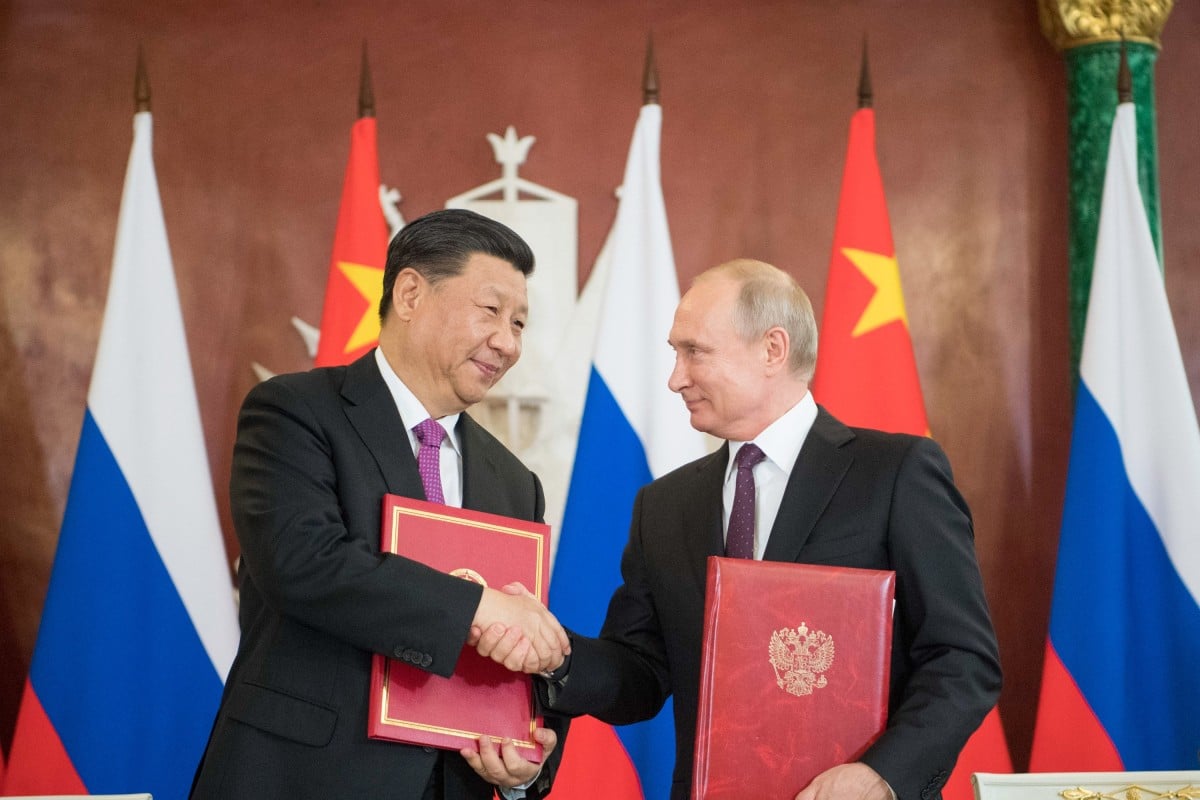
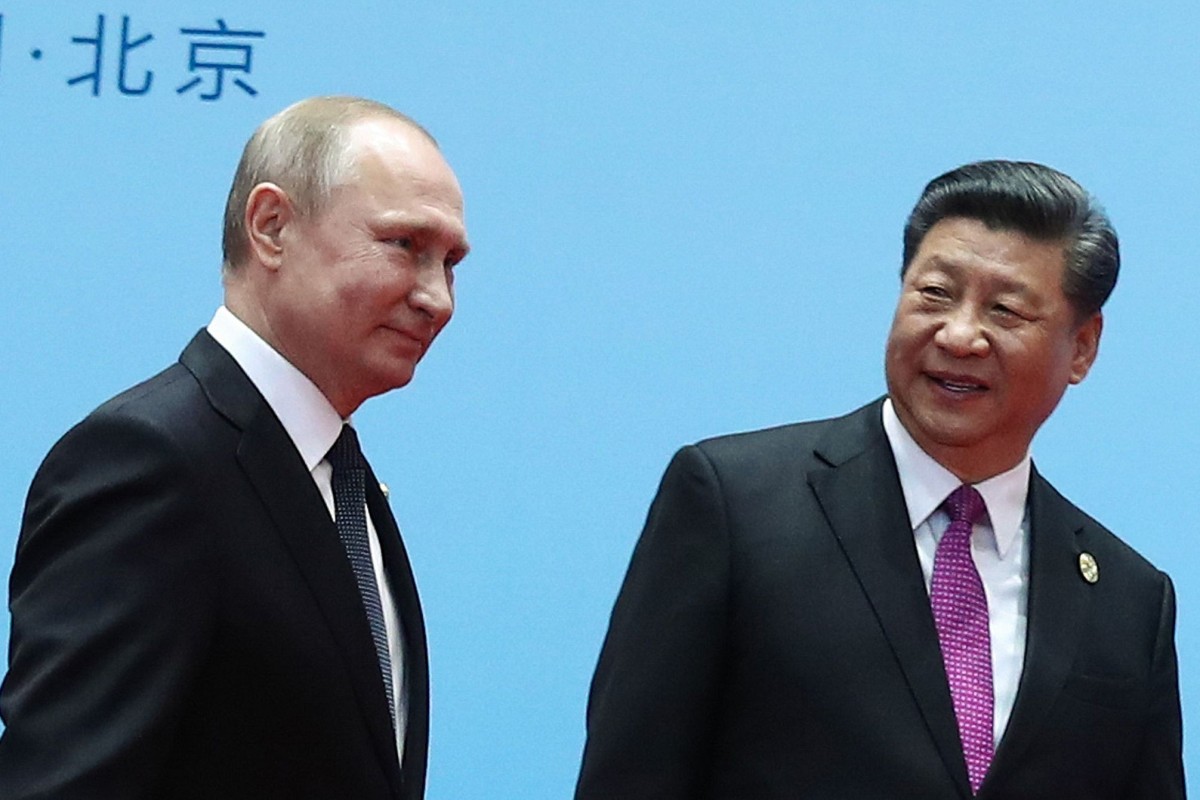
Xi Jinping and Vladimir Putin agreed to deepen their unprecedented partnership. Photo: Xinhua
China and Russia have signed more than US$20 billion of deals to boost economic ties in areas such as technology and energy following Xi Jinping’s summit with his “best friend” Vladimir Putin.
Wednesday’s meeting between the two presidents, who have spoken of their desire to boost practical cooperation in the face of increasing rivalry with the United States, marked the start of Xi’s three-day visit to Russia to commemorate the 70th anniversary of the establishment of diplomatic relations between Moscow and Beijing.
On Thursday the Chinese commerce ministry said that the two sides aimed to increase the volume of trade between the two countries to US$200 billion a year following last year’s 24.5 per cent rise to a record level of US$108 billion.
Gao Feng, a spokesman for the ministry, said the deals covered areas such as nuclear power, natural gas, automobiles, hi-tech development, e-commerce and 5G communications.
The deals were the first concrete results of the warm words exchanged between the leaders, who agreed to deepen their “unprecedented” strategic partnership for “mutual advantage”.
“We discussed the current state of, and prospects for, bilateral cooperation in a businesslike and constructive manner, and reviewed, in substance, important international issues while paying close attention to Russia-China cooperation in areas that are truly important for both countries,” Putin said in a joint press statement with Xi on Wednesday.
Xi – who had previously told Russian media that he “treasured” the relationship with Putin, whom he described as “my best friend” – said the two countries would work to “build mutual support and assistance in issues that concern our key interests in the spirit of innovation, cooperation for the sake of mutual advantage, and promote our relations in the new era for the benefit of our two nations and the peoples of the world”.
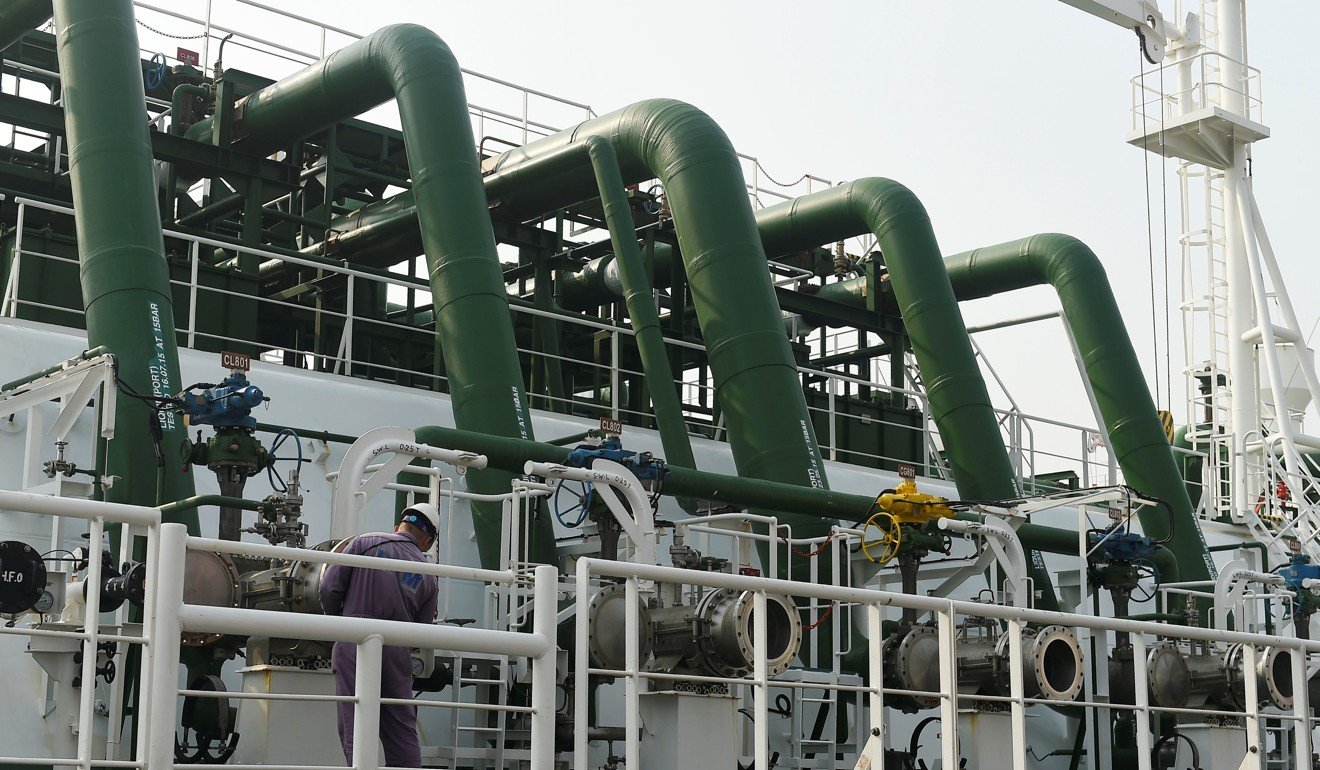
Russia is already China’s biggest oil exporter, and has agreed to further joint ventures. Photo: Reuters
Putin also highlighted the energy cooperation between the two countries, adding that Russia was China’s leading oil exporter and the eastern route of a gas pipeline between Russia and China will enter service in December.
China and Russia seek closer economic ties to counter US pressure
Novatek and Sinopec, Russian and China’s leading natural gas companies, signed a preliminary deal with Russian state-owned bank Gazprombank on Wednesday to set up a joint venture to market gas in China.
The Russian natural gas company is also forming a partnership with China Natural Petroleum Corporation and China National Offshore Oil Corporation to develop an Arctic natural gas facility, with both Chinese companies holding a 10 per cent stake in the project, according to S&P Global Platts, an energy information provider.
A general contract was also signed to build extra units of the Xudabao Nuclear Power Plant, located on the coast of the northeastern Chinese province of Liaoning.
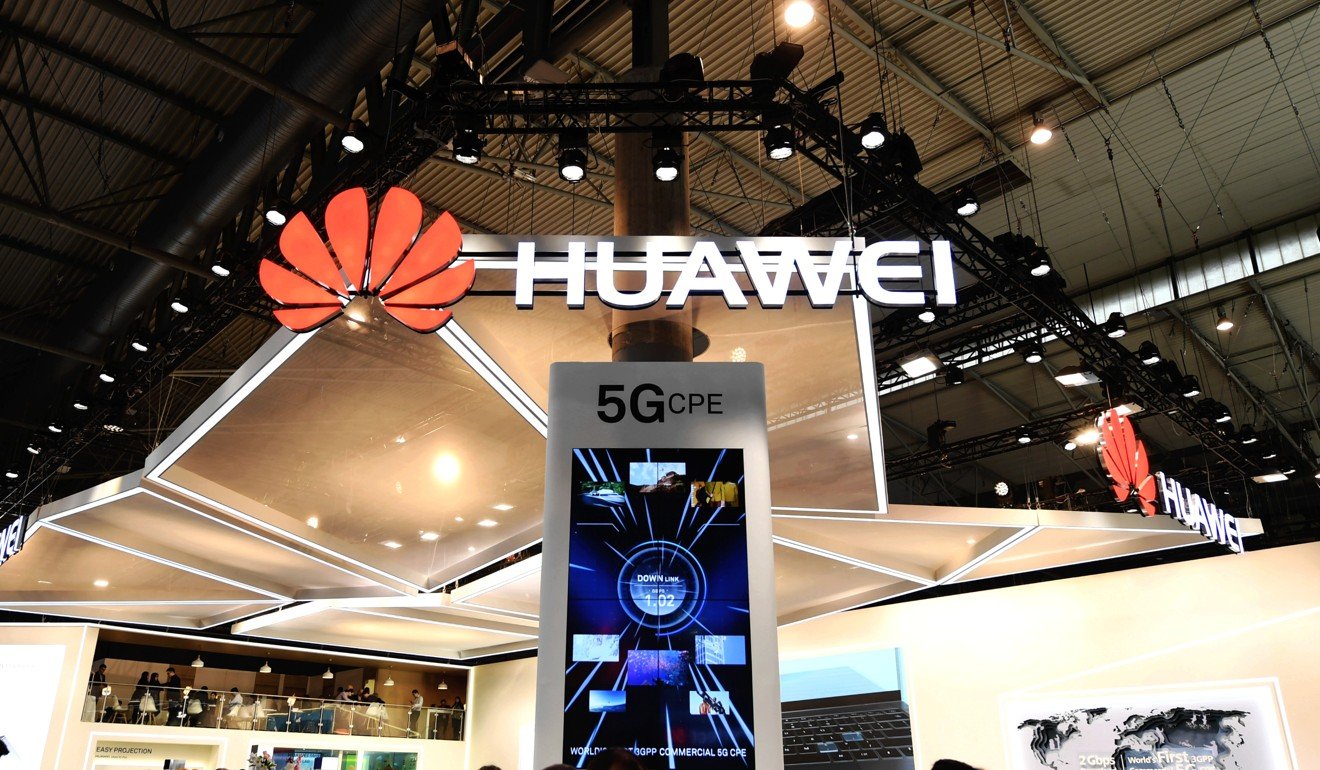
Chinese tech giant Huawei has agreed a deal with Russian telecoms firm MTS. Photo: Xinhua
The Chinese commerce ministry also said that Moscow had agreed to increase its soybean exports after imports from America declined sharply due to the ongoing trade war.
Andrey Denisov, Russia’s ambassador to China, was quoted by Chinese media as saying that the country should “double” its soybean exports to China, which currently make up a tiny proportion of the overall quantities bought by China.
The two sides are also discussing a US$153.3 million investment to create a joint agricultural holding company in Primorsky in Russia’s far east.
Russia’s Putin calls time on UK spy scandal: ‘it’s your agent, not ours’
Meanwhile, Chinese telecoms giant Huawei, which has been targeted by US sanctions after it was accused of spying and undermining national security, signed a deal with Russian telecoms company MTS to develop a 5G network.
China Investment Corporation and RDIF, a Russian sovereign wealth fund, were also reported to have agreed to set up a US$1 billion joint technology research fund, according the US-based analysts Sovereign Wealth Fund Institute.
Shi Yinhong, an international relations professor at Renmin University of China, said the two sides were boosting their strategic and diplomatic collaboration at a time of “extraordinary” tensions between Washington and Beijing.
“Though concrete cooperation in hi-tech areas [between Beijing and Moscow] is necessarily limited, in the purely military field it is assured,” Shi, an adviser to China’s State Council, said.
China’s Huawei signs deal to develop 5G in Russia
Last September, 300,000 soldiers from the two countries took part in
a joint military exercise in eastern Siberia, the largest such drill in Russia in nearly four decades.
While Xi is highlighting his rapport with his “best friend” Putin, the professor added, “the romance has gone out of the personal relationship between Xi and [Donald] Trump”.
Source: SCMP
Posted in bears fruit, China alert, growing friendship, President Xi Jinping, Russia, sign deals, Uncategorized, Vladimir Putin |
Leave a Comment »
05/06/2019
A Long March-11 solid propellant carrier rocket is launched from a mobile launch platform in the Yellow Sea off east China’s Shangdong Province, June 5, 2019. China successfully launched a rocket from a mobile launch platform in the Yellow Sea off Shandong Province on Wednesday, sending two technology experiment satellites and five commercial satellites into space. A Long March-11 solid propellant carrier rocket blasted off at 12:06 p.m. from the mobile platform. It is China’s first space launch from a sea-based platform and the 306th mission of the Long March carrier rocket series. (Xinhua/Zhu Zheng)
QINGDAO, June 5 (Xinhua) — China successfully launched a rocket from a mobile launch platform in the Yellow Sea off Shandong Province on Wednesday, sending two technology experiment satellites and five commercial satellites into space.
A Long March-11 solid propellant carrier rocket blasted off at 12:06 p.m. from the mobile platform. It is China’s first space launch from a sea-based platform and the 306th mission of the Long March carrier rocket series.
The rocket is also named “CZ-11 WEY” under an agreement between the China Academy of Launch Vehicle Technology, China Space Foundation and a Chinese automobile producer.
Launching a carrier rocket from an ocean-based platform has many advantages over a land launch.
The closer to the equator a rocket launch can get, the greater the speed boost it will receive. It reduces the amount of energy required to get into space and means that less fuel is required.
The launch site is flexible and falling rocket remains pose less danger. Using civilian ships to launch rockets at sea would lower launch costs and give it a commercial edge.
The seaborne launch technology will meet the growing launch demand of low inclination satellites and help China provide launch services for countries participating in the Belt and Road Initiative, according to experts.
The two satellites, developed by China Academy of Space Technology, are expected to step up all-weather monitoring of ocean wind fields and improve typhoon monitoring and accuracy of the weather forecast in China.
Among the five commercial satellites, the two satellites, developed by China Electronics Technology Group Corporation, are China’s first small satellite system based on Ka-band.
The Long March-11, developed by China Academy of Launch Vehicle Technology, is the only rocket using solid propellants among China’s new generation carrier rockets. It is mainly used to carry small satellites and can take multiple satellites into orbit at the same time.
Source: Xinhua
Posted in China Academy of Launch Vehicle Technology, China alert, China Electronics Technology Group Corporation, China Space Foundation, Chinese automobile producer, completes, CZ-11 WEY, first, land launch, launch, Long March-11, ocean-based platform, offshore rocket, orbit, satellites, seaborne launch technology, shandong province, solid propellant carrier rocket, Uncategorized, Yellow Sea |
Leave a Comment »
05/06/2019
- Communist Party says those taking part pledged to ‘cultivate the Chinese cultural character of our nation’s religions’
- Confucius has been rehabilitated by party in recent years as a means of rallying patriotism and countering foreign influences
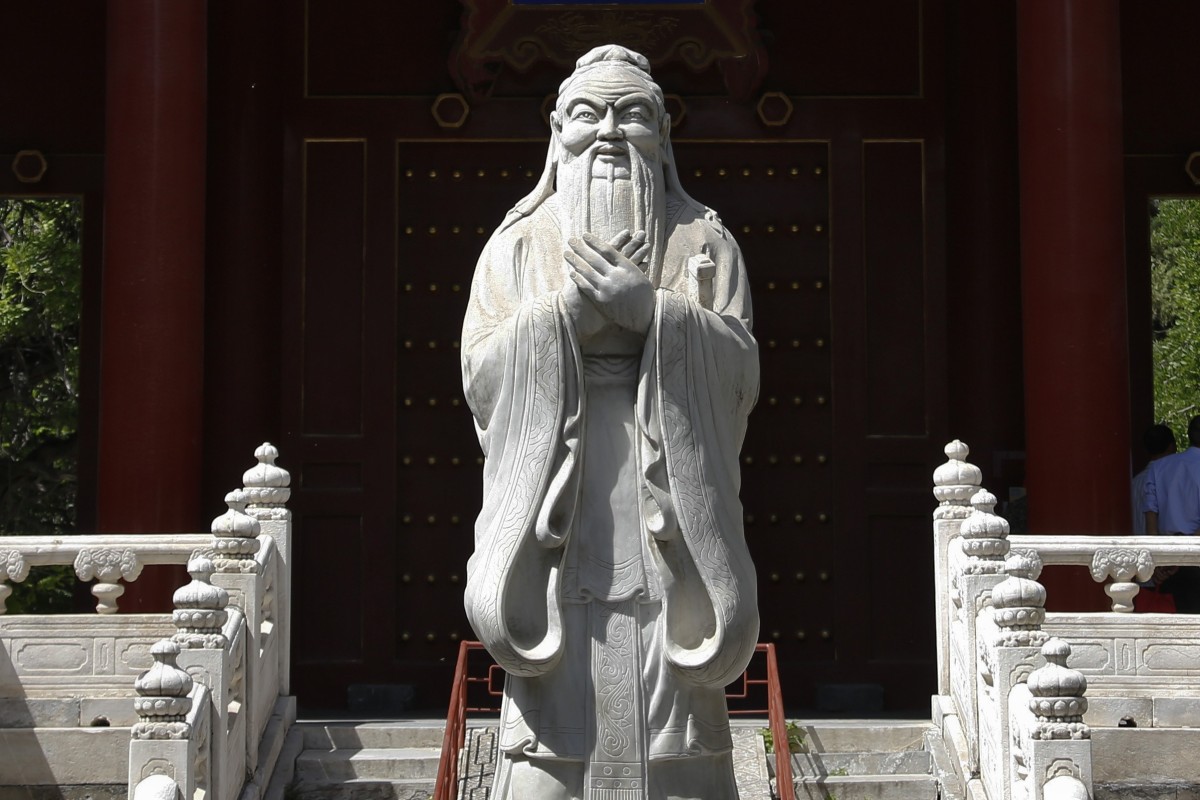
The Communist Party for decades attacked the sage as a symbol of feudalism, but now Confucianism has been elevated. Photo: AP
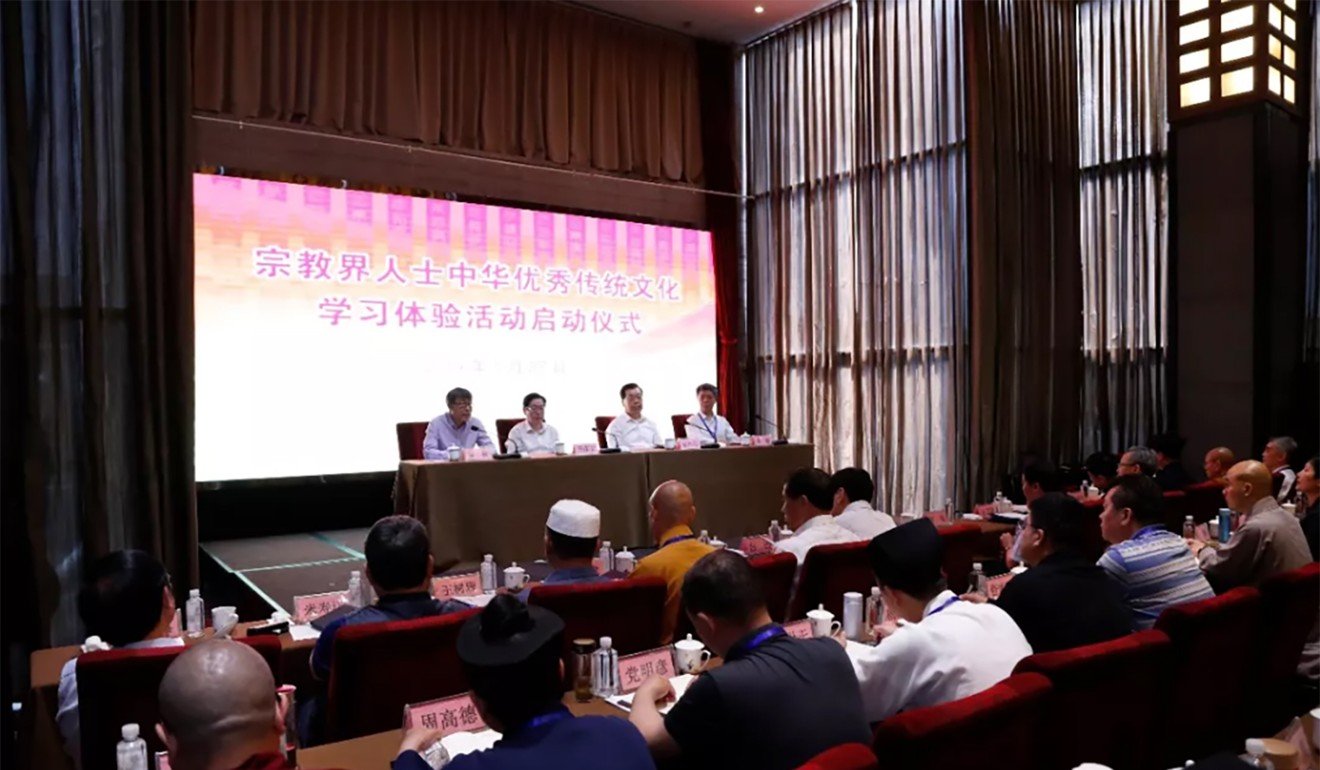
China has begun five-day Confucian culture immersion courses for religious leaders in the sage’s hometown as part of a campaign to extend government control over faith communities through a
.
The ruling Communist Party’s United Work Front Department said in a news release on Monday that the activity was designed to ensure the primacy of traditional Chinese values above all.
“To hold activities here … is a collective tribute to excellent traditional Chinese culture and a conscious identification and integration with Chinese culture,” said the release, posted on the department’s website.
Participants pledged to “cultivate the Chinese cultural character of our nation’s religions so that our nation’s religions are rooted in the fertile soil of excellent traditional Chinese culture, and to ceaselessly and deeply advance the Sinicisation of our nation’s religions”, it said.
The five-day immersion courses are being held in the sage’s hometown of Qufu. Photo: United Front Work Department
President Xi Jinping has launched the harshest crackdown in decades on religious practices, especially those viewed as foreign such as Christianity and Islam, while at the same time elevating home-grown Confucianism.
While for decades the officially atheistic Communist Party attacked Confucius as a symbol of feudalism, he has been thoroughly rehabilitated in recent years as a means of rallying patriotism and countering foreign influences.
Confucianism’s emphasis on strict social organisation, advancement through study and exam taking, adherence to hierarchy and maintenance of social harmony appeals especially to the heavily bureaucratic party, which brooks no challenge to its authority.
Xi has repeatedly called for religious leaders and believers to be guided by “socialist core values”. Party bureaucrats overseeing religion have demanded that key religious tenets and texts such as the Bible and Koran be interpreted “in conformity with the demands of modern Chinese development and excellent traditional Chinese culture”.
That has been accompanied by a campaign of removing crosses and bulldozing many churches, destroying mosques and locking an
in camps where they are forced to renounce Islam and their cultural traditions.
Despite international condemnation, China claims it upholds freedom of religion and is seeking only to ensure regulations are followed while discouraging religious extremism and violence.
Those participating at the launch of the five-day course included the president of the Chinese Taoist Association, vice-president of the Chinese Islamic Association, chairman of the Chinese Catholic Patriotic Association and president of the Chinese Christian Association.
Confucius was believed to have been born in the 6th century BC in the eastern town of Qufu. He is credited with authoring or editing key texts of statesmanship and social order, particularly the Analects that contain his key aphorisms and teachings.
The sage’s legacy is also invoked in the name of the
, quasi-academic bodies set up in colleges and other centres of education around the world.
Several US universities have rejected offers to open Confucius Institutes on their campuses or declined to renew contracts over concerns about Chinese government political influence.
Source: SCMP
Posted in Analects, Bible, bulldozing many churches, China alert, Chinese Catholic Patriotic Association, Chinese Christian Association, Chinese Islamic Association, Chinese Taoist Association, Christianity, Communist Party, Confucian culture courses, Confucianism, Confucius, Confucius Institute, destroying mosques, islam, Koran, President Xi Jinping, Qufu, religious leaders, removing crosses, runs, Sinicisation, symbol of feudalism, the sage, traditional Chinese values, Uncategorized, United Work Front Department |
Leave a Comment »
05/06/2019
BEIJING (Reuters) – With a cryptic message about UFOs and a picture of a missile launcher, China’s military has hinted that it has carried out a test of a new missile, after images of an object streaking towards the sky circulated on Chinese social media.
The People’s Liberation Army typically does not announce new missile tests, but occasionally drops hints about what it is up to, amid a massive modernisation push championed by President Xi Jinping to ramp up combat capabilities.
On Sunday, footage circulated on China’s Weibo microblogging service of an object travelling up into the sky, leaving a white trail behind it, over the Bohai Sea, partly closed at the time for military drills.
That caused some Chinese internet users to wonder if it was a UFO, though most thought it was probably the test of a new underwater launched ballistic missile.
In a short post on its official Weibo account late on Monday, the People’s Liberation Army Rocket Force showed a picture of what looked like a road mobile intercontinental ballistic missile launcher against a night sky.
“Do you believe in this world there are UFOs?” it wrote in the caption, without offering further explanation.
The navy then chimed in on its Weibo account with a picture of a missile being launched from underwater heading off into the blue sky above, with a similar caption: “Do you believe in UFOs?”
Defence publication Janes said on its website that the weekend pictures could have been China’s next generation submarine-launched ballistic missile, the JL-3.
The Ministry of Defence did not respond to a request for comment.
The development of the nuclear-armed JL-3 is being closely watched by the United States and its allies as it is expected to have a longer range than its predecessor and will significantly strengthen China’s nuclear deterrent.
In its latest annual survey of China’s military modernisation, the Pentagon said last month the new missile would likely to be fitted on China’s next generation nuclear missile submarines. Construction is due to start in the early 2020s.
Source: Reuters
Posted in believe, Bohai Sea, China alert, Construction, hints, Ministry of Defence, new missile, nuclear missile submarines, nuclear-armed JL-3, Pentagon, People’s Liberation Army, President Xi Jinping, Rocket Force, test, UFOs, Uncategorized, Weibo |
Leave a Comment »
04/06/2019
- Brahma Chellaney writes that excessive damming and drastic overuse of water resources are causing the world’s major waterways to run dry
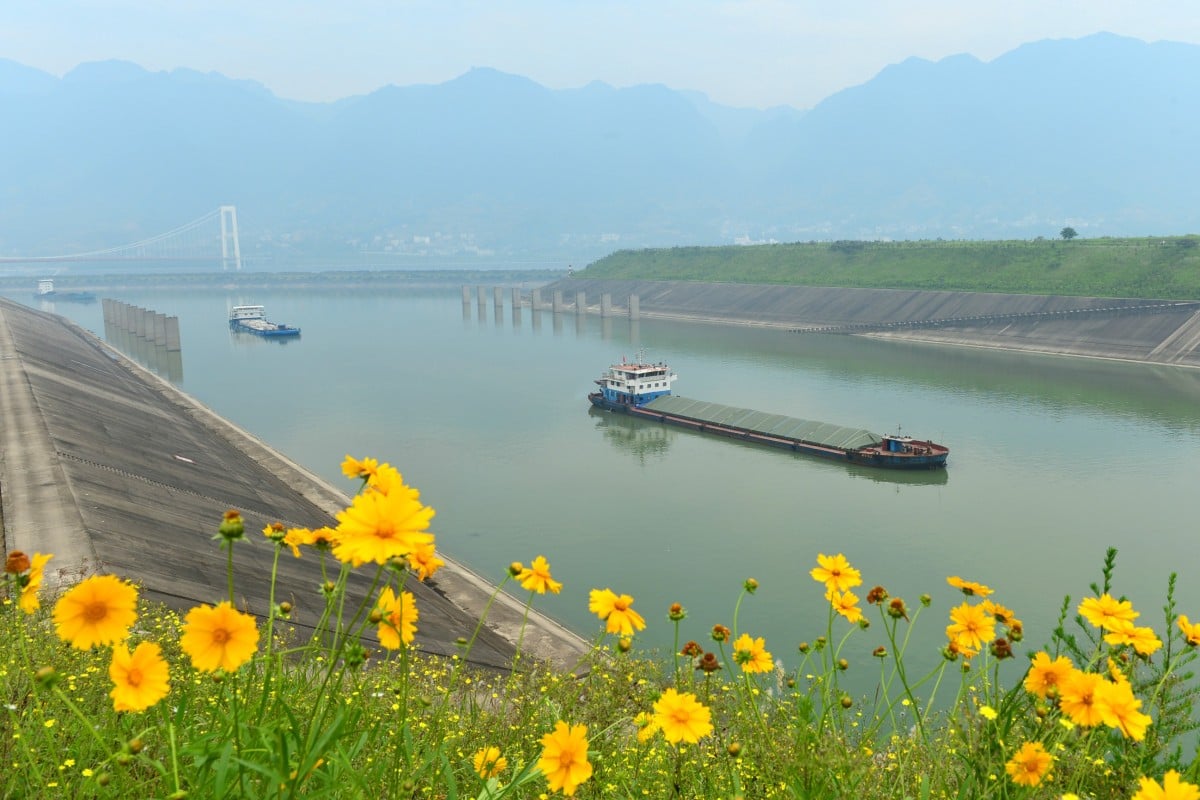
Vessels head for the lock of the Three Gorges Dam in Yichang, in central China’s Hubei province. Sediment build-up in the dam’s reservoir stems from silt flow disruption in the Yangtze River, Brahma Chellaney writes. Photo: Xinhua
Thanks to excessive damming and drastic overuse of water resources, an increasing number of major rivers across the world are drying up before reaching the sea.
Nowhere is this more evident than in China, where the old saying, “Follow the river and it will eventually lead you to a sea,” is no longer wholly true.
While a number of smaller rivers in China have simply disappeared, the Yellow River – the cradle of the Chinese civilisation – now tends to run dry before reaching the sea.
This has prompted Chinese scientists to embark on a controversial rainmaking project to help increase the Yellow’s flow. By sucking moisture from the air, however, the project could potentially affect monsoon rains elsewhere.
For large sections of the world’s population, major river systems serve as lifelines. The rivers not only supply the most essential of all natural resources – water – but also sustain biodiversity, which in turn supports human beings.
Yet an increasing number of rivers, not just in China, are drying up before reaching the sea.
A major new United Nations study published early this month offers grim conclusions: human actions are irremediably altering rivers and other ecosystems and driving increasing numbers of plant and animal species to extinction.
“Nature across the globe has now been significantly altered,” according to the study’s summary of findings.
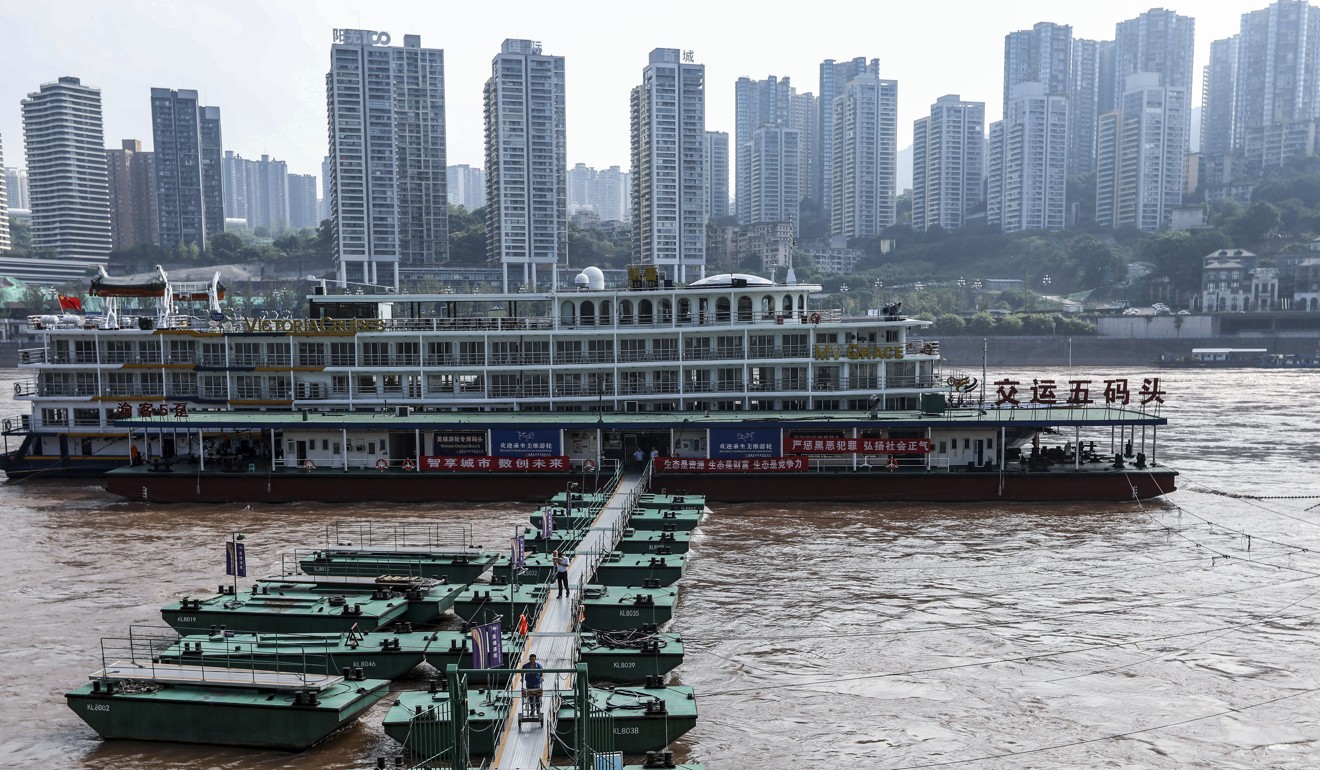
The Yangtze and Jialing rivers come together in the southwestern city of Chongqing. Photo: Simon Song
Water sustains life and livelihoods and enables economic development.
If the world is to avert a thirsty future and contain the risks of greater intrastate and interstate water conflict, it must protect freshwater ecosystems, which harbour the greatest concentration of species.
The Mekong is mighty no more: book charts river’s demise
Yet, according to another study published in Nature this month humans have modified the flows of most long rivers, other than those found in the remote regions of the
Amazon and Congo basins and the Arctic.
Consequently, only a little more than one-third of the world’s 246 long rivers are still free-flowing, meaning they remain free from dams, levees and other man-made water-diversion structures that leave them increasingly fragmented.
Humans have modified the flows of most long rivers, including the Yangtze, home to some of China’s most spectacular natural scenery. Photo: WWF
Such fragmentation is affecting river hydrology, flow of nutrient-rich sediment from the mountains where rivers originate, riparian vegetation, migration of fish and quality of water.
Take the Colorado River, one of the world’s most diverted and dammed rivers. Broken up by more than 100 dams and thousands of kilometres of diversion canals, the Colorado has not reached the sea since 1998.
Sinking sands along the Mekong River leave Vietnamese homeless
The river, which originates in the Rocky Mountains and is the lifeblood for the southwestern United States, used to empty into the Sea of Cortez in Mexico.
But now, owing to the upstream diversion of 9.3 billion cubic metres (328.4 billion cubic feet) of water annually, the Colorado’s flow into its delta has been reduced to a trickle.
Altering the flow characteristics of rivers poses a serious problem for sustainable development, because they affect the ecosystem services on which both humans and wildlife depend. Photo: AP
Other major rivers that run dry before reaching the sea include the Amu Darya and the Syr Darya, the two lifelines of Central Asia; the Euphrates and the Tigris in the Middle East; and the Rio Grande, which marks the border between Texas and Mexico before heading to the Gulf of Mexico.
The overused Murray in Australia and Indus in Pakistan are at risk of meeting the same fate.
Are China’s Mekong dams washing away Cambodian livelihoods?
More fundamentally, altered flow characteristics of rivers are among the most serious problems for sustainable development, because they seriously affect the ecosystem services on which both humans and wildlife depend.
Free-flowing rivers, while supporting a wealth of biodiversity, allow billions of fish – the main source of protein for the poor – to trek through their waters and breed copiously.
Urgent action is needed to save the world’s rivers, including improving agricultural practices, which account for the bulk of freshwater withdrawals
Free-flowing rivers also deliver nutrient-rich silt crucial to agriculture, fisheries and marine life.
Such high-quality sediment helps to naturally re-fertilise overworked soils in the plains, sustain freshwater species and, after rivers empty into seas or oceans, underpin the aquatic food chain supporting marine life.
China’s hyperactive dam building illustrates the high costs of river fragmentation. No country in history has built more dams than China. In fact, China today boasts more large dams than the rest of the world combined.
China’s chain of dams and reservoirs on each of its long rivers impedes the downstream flow of sediment, thereby denying essential nutrients to agricultural land and aquatic species.
A case in point is China’s Three Gorges Dam – the world’s largest – which has a problematic build-up of sediment in its own massive reservoir because it has disrupted silt flows in the Yangtze River.
Likewise, China’s cascade of eight giant dams on the Mekong, just before the river enters Southeast Asia, is affecting the quality and quantity of flows in the delta, in Vietnam.
Yangtze dams may spell end to sturgeon in a decade
Undeterred, China is building or planning another 20 dams on the Mekong.
How the drying up of rivers affects seas and oceans is apparent from the Aral Sea, which has shrunk 74 per cent in area and 90 per cent in volume, with its salinity growing nine-fold.
People beat the heat by cooling off in the Yangtze River in Wuhan, in central China’s Hubei province. Photo: Nora Tam
This change is the result of the Aral Sea’s principal water sources, the Amu Darya and Syr Darya, being so overexploited for irrigation that they are drying up before reaching what was once the world’s fourth-largest inland lake.
Compounding the challenges is the increasing pollution of rivers. Aquatic ecosystems have lost half of their biodiversity since the mid-1970s alone.
Chinese court jails nine for dumping toxic waste in Yangtze
Urgent action is needed to save the world’s rivers. This includes action on several fronts, including improving practices in agriculture, which accounts for the bulk of the world’s freshwater withdrawals.
Without embracing integrated water resource management and other sustainable practices, the world risks a parched future.
Source: SCMP
Posted in Amazon, Amu Darya, Aral Sea, Arctic, Australia, Brahma Chellaney, Cambodian, China alert, Chinese civilisation, Chongqing, Colorado River, Congo, drastic overuse, drying up, ecosystems, especially, Euphrates, excessive damming, extinction, Gulf of Mexico, hubei province, hyperactive dam building, Indus River, Jialing, major waterways, Mekong, Mexico, Middle East, Murray, nature, No time to waste, Pakistan, Rio Grande, Rocky Mountains, run dry, saving, Sea of Cortez, Syr Darya, Texas, Three Gorges Dam, Tigris, Uncategorized, United Nations, United States, Water resources, world’s rivers, Yangtze River, Yellow River, Yichang |
Leave a Comment »
04/06/2019
- 163-million-year-old fossil represents something new in evolutionary history
- Researchers say discovery is extraordinary
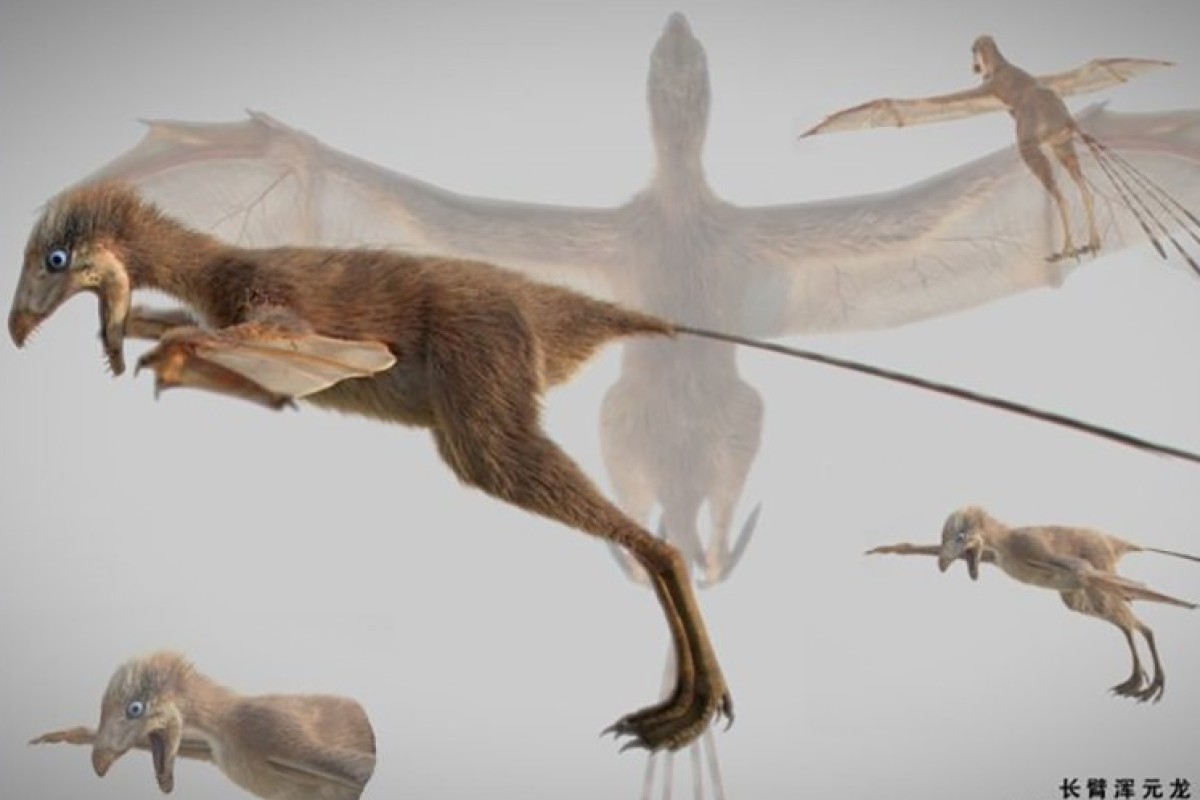
A small, tree-climbing dinosaur discovered in China has overturned evolutionary history with its cape-like membrane. Photo: Handout
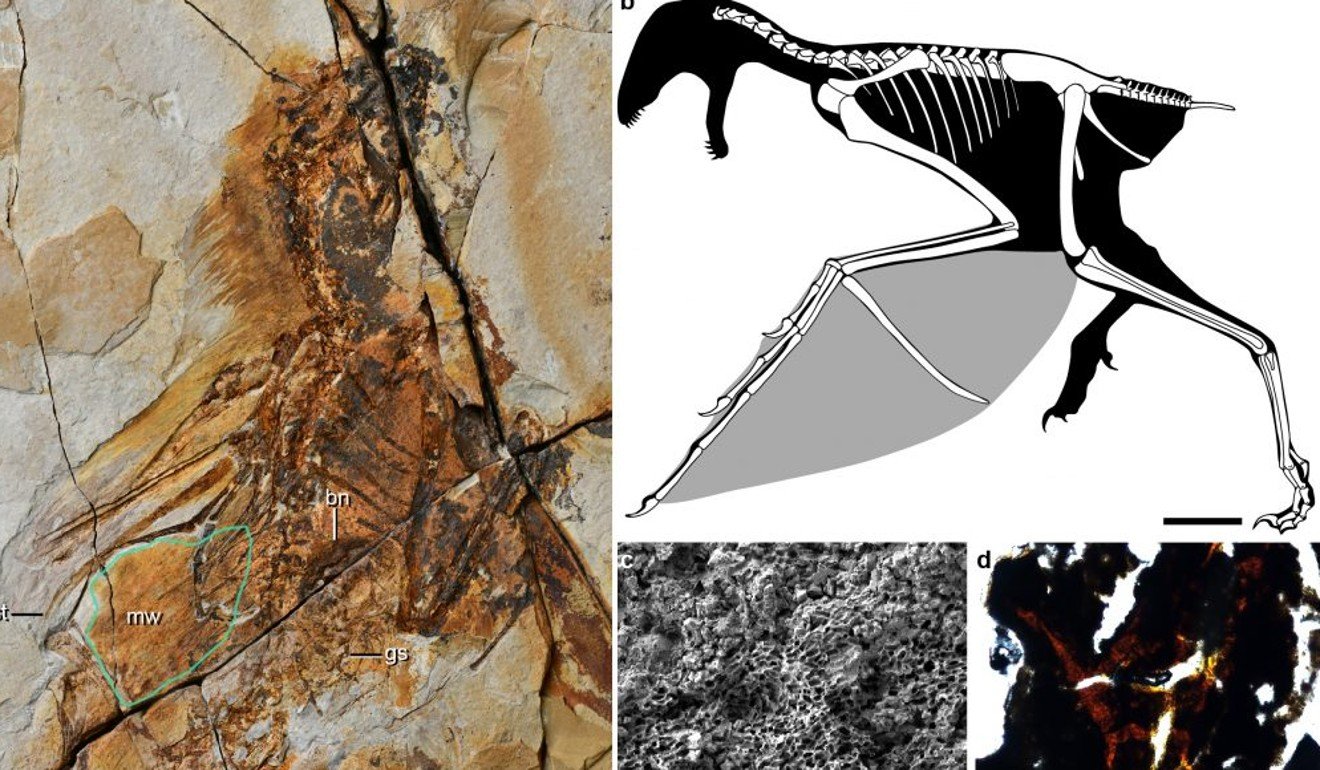
Chinese scientists have discovered a new dinosaur species which appears to have been equipped – like Batman – with a cape that may have given it the ability to glide.
Researchers say the finding is extraordinary, representing something new in evolutionary history.
The little tree-climbing dinosaur – about the size of a magpie – was equipped with a soft, smooth membrane draped over its long, strong forearms that may have looked like the wings of a bat when spread.
The 163-million-year-old fossil has been named Ambopteryx longibrachium and was found at Wubaiding village, Liaoning province, northeast China, in 2017, according to a paper published in the journal Nature on Thursday.
The 163-million-year-old fossil found in eastern China showed long, strong forearms draped in a smooth cape-like membrane. Photo: Handout
Lead author Dr Wang Min, a researcher with the Chinese Academy of Sciences’ Institute of Vertebrate Palaeontology and Palaeoanthropology in Beijing, said quite a number of dinosaurs had birdlike feathers and some eventually evolved into birds.
“But bat-like wings? The idea has not been widely accepted,” he said.
The possibility was first raised a few years ago when a close relative of the newly discovered dinosaur was found, also in China, with a finger bone which had never before been seen in dinosaurs.
Scientists discover ‘nightmare’ crab with cartoon eyes
A small number of researchers suspected the bone could have been used to hold membrane, but the mainstream scientific community remained sceptical.
Why on earth, some critics argued, would a dinosaur need membrane when it already had feathers?
In the 2008 film “The Dark Knight”, Batman uses his cape to glide among the skyscrapers of Hong Kong. Researchers believe the new dinosaur may have used its cape-like membrane in a similar way. Photo: Handout
Ambopteryx longibrachium, nonetheless, had the same peculiar finger bone, only this time scientists were also able to observe a large membrane and a thick layer of hair over its head, neck and shoulders.
The hair and membrane was not an efficient combination for flight aerodynamics. But “in evolution, nothing is impossible”, Wang said.
The tiny T. rex cousin that humans could look down on
The dinosaur lived in thick forest and could have been easy prey to large predators. But its wings might have given it the ability to hop from tree to tree, and they could also have been useful when hunting.
The dinosaur had a slim body about the size of a magpie, with a soft, smooth membrane draped over its forearms like a cape. Photo: Handout
Wang and his colleagues found traces of small bones in the remnant of its stomach. While a tree-climbing dinosaur’s main diet should have been fruit, it could sometimes hunt as well, according to the researchers.
An absence of a large chest bone suggested the dinosaur could not fly at will, like a bird or bat. It remains unclear how long the species survived, but it eventually vanished, probably because of competition from better-equipped winged animals with all-feather or all-membrane wings.
Source: SCMP
Posted in Ambopteryx longibrachium, Batman, Beijing, caped, China alert, Chinese Academy of Sciences, Dinosaurs, found, glide, Institute of Vertebrate Palaeontology and Palaeoanthropology, Liaoning province, magpie, nature, T. rex, Uncategorized, Wubaiding village |
Leave a Comment »
31/05/2019
BEIJING, May 30 (Xinhua) — Chinese and Russian military forces have maintained in-depth exchanges in 2019 to mark the 70th anniversary of the establishment of diplomatic ties between the two countries, the Ministry of National Defense said Thursday.
They have engaged in cooperation in high-level exchanges, real-combat training and military competitions, and had sound interaction and collaboration on international multilateral occasions, the ministry’s spokesperson Wu Qian said at a press conference.
Armies of the two countries have provided positive energy for safeguarding world peace and regional stability, Wu added.
Speaking of the joint naval exercise earlier this month in Qingdao, east China’s Shandong Province, Wu said the drill achieved a new high in making China-Russia joint naval exercises more real combat-oriented, information-based and standardized.
The two navies have also strengthened their capabilities of joint command and addressing maritime security threats, Wu said.
Source: Xinhua
Posted in China alert, China-Russia joint naval exercises, joint command, military exchanges, Ministry of National Defense, Qingdao, Russia, shandong province, Uncategorized |
Leave a Comment »
30/05/2019
- Were buyer’s details leaked online?
- Police and e-commerce giant JD.com launch joint investigation
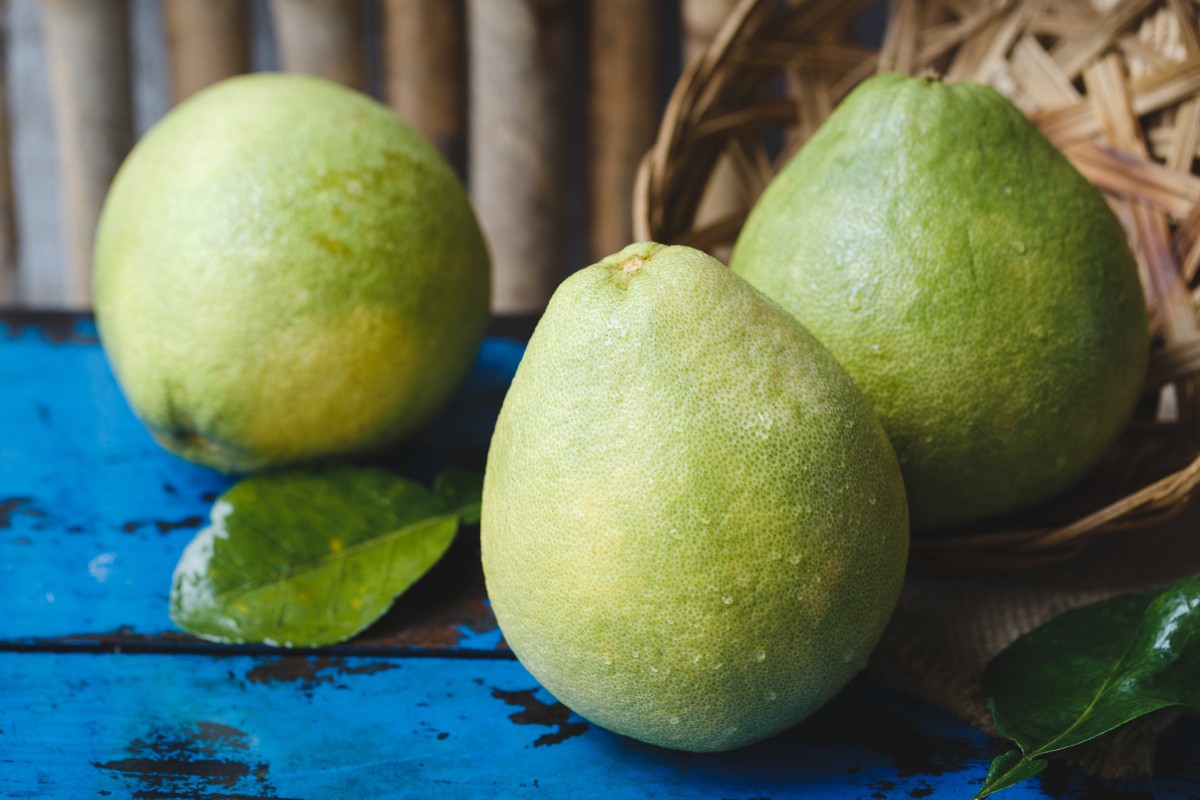
A woman in China was subjected to nuisance and calls texts after leaving a negative review about some fruit which she bought online. Photo: Shutterstock
A woman in southwest China was inundated with nuisance calls and texts after leaving a bad review with an online fruit seller.
Chinese e-commerce platform JD.com has launched a joint investigation with the police to determine whether the woman’s personal details were leaked online, according to online news portal The Paper on Thursday.
The woman, surnamed Pang, from Kunming in Yunnan province, said she started receiving the harassing phone calls and texts soon after writing a negative review for two boxes of pomelos – an Asian citrus – she ordered from a JD.com vendor last week.
Pang wrote the negative review when the number of pomelos delivered to her on Monday was fewer than the description in the online listing. After checking with her that the fruit was not damaged, the seller wrote: “Then you can’t leave a negative comment.
Why are you not responding? What the?”
Twelve minutes after she reported this interaction to JD.com customer services, the nuisance calls began. Pang told The Paper she suspected her personal information had been leaked.
JD.com said on Tuesday that the customer had been fully refunded for the price of the item, and that the mismatch between the description and the delivery was due to an omission by the seller. The e-commerce platform said it would deal with the merchant in accordance with its guidelines.
Pang said the vendor had contacted her on Wednesday to apologise for the poor customer service but had denied any involvement with the nuisance calls and texts. The seller also denied sharing her personal information with third parties.
Pang said she would seek legal advice to protect her consumer rights.
Source: SCMP
Posted in Asian citrus, China alert, e-commerce platforms, JD.com, Kunming, leads, nuisance calls, online news portal, pomelo, Rotten review, texts, The Paper, Uncategorized, Yunnan Province |
Leave a Comment »
29/05/2019
- President Xi Jinping will meet Russian counterpart Vladimir Putin next month and address economic summit in St Petersburg
- Diplomatic flurry will also include regional security forums in Kyrgyzstan and Tajikistan
Xi Jinping has met Vladimir Putin more times than any other foreign leader since he took power in 2013. Photo: AFP
Beijing is stepping up efforts to seek support from regional and global players such as Russia and Central Asian nations as its geostrategic rivalry with Washington heats up.
President Xi Jinping is expected to meet his Russian counterpart Vladimir Putin next month, when he will also address the St Petersburg International Economic Summit,
Russian presidential aide Yuri Ushakov told state-run TASS news agency earlier.
The Chinese president will also visit the Kyrgyzstan capital Bishkek for the Shanghai Cooperation Organisation (SCO) summit in June, as well as another regional security forum in Dushanbe, Tajikistan.
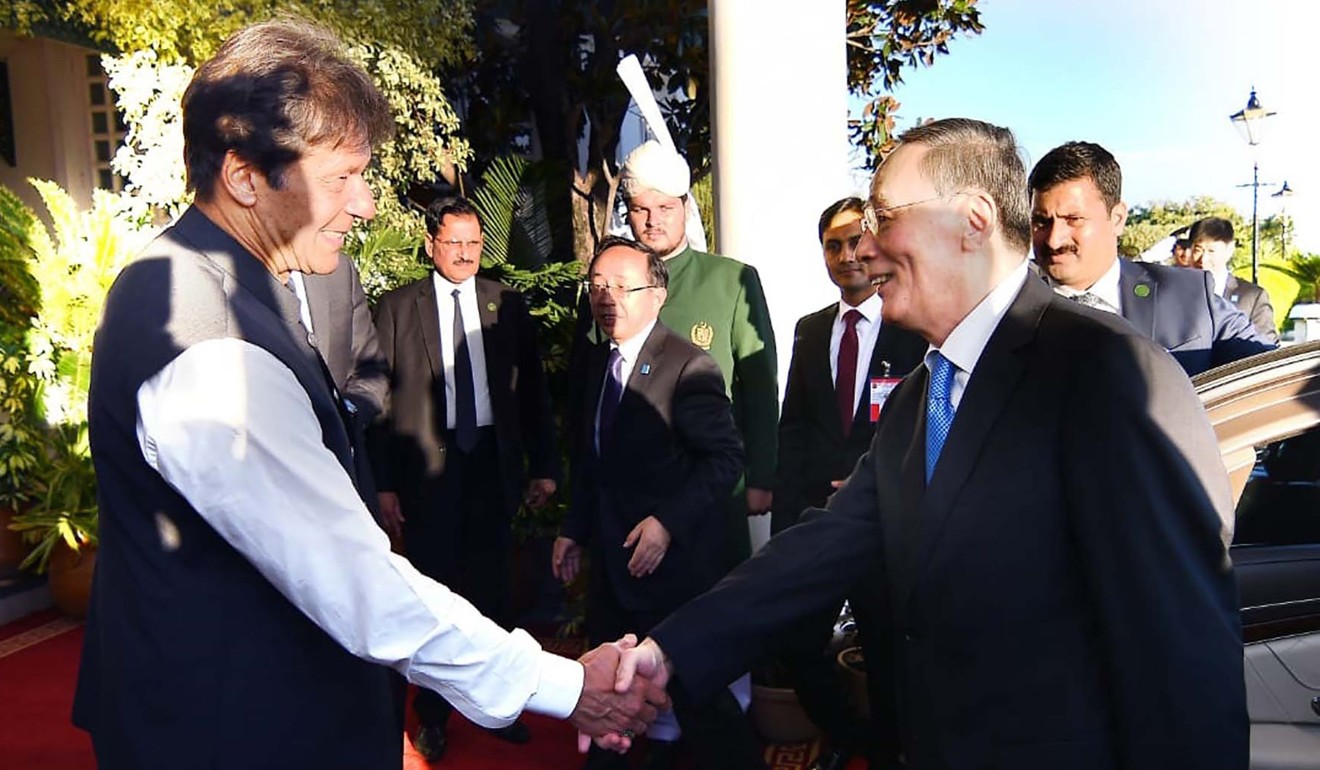
Meanwhile, Vice-President Wang Qishan is visiting Pakistan before he heads to the Netherlands and Germany, according to the Chinese foreign ministry.
Pakistani Prime Minister Imran Khan meets Chinese Vice-President Wang Qishan in Islamabad on Sunday. Photo: AFP
The latest flurry of diplomatic activity comes as competition between China and the US intensifies on several fronts including trade and technology, the South China Sea and the Arctic, where Beijing’s partnership with Moscow –
– has drawn criticism from Washington.
It will be Xi’s second time at the St Petersburg forum, and observers expect the Chinese leader will reaffirm Beijing’s commitment to multilateralism and promote the nation as a champion of openness and cooperation.
China-Russia ties unrivalled, Beijing warns before Pompeo meets Putin
It will also be his second meeting with Putin in two months, after talks on the sidelines of the Belt and Road Forum in Beijing in late April, when the Russian president
for the controversial China-led infrastructure and investment initiative.
With China and Russia edging closer, the latest meeting is likely to see efforts to coordinate their strategies on a range of issues – including Venezuela, North Korea, nuclear weapons and arms control, according to observers. Xi has met Putin more times than any other foreign leader since he took power in 2013.
“This time it is very likely that the latest anti-China moves by the US, such as new tariffs and the Huawei ban, will feature prominently in their conversations,” said Artyom Lukin, an associate professor at Far Eastern Federal University in Vladivostok.
Lukin said Russia’s stagnating economy and sanctions imposed by the West limited its role as a substitute for the foreign markets and technologies China could lose access to because of the US crusade. But he said Putin would “provide political and moral support to Xi”.
“That is also significant as Russia has been withstanding intense US-led sanctions pressure for more than five years already,” Lukin said, referring to sanctions imposed after Russia’s annexation of Crimea in 2014.
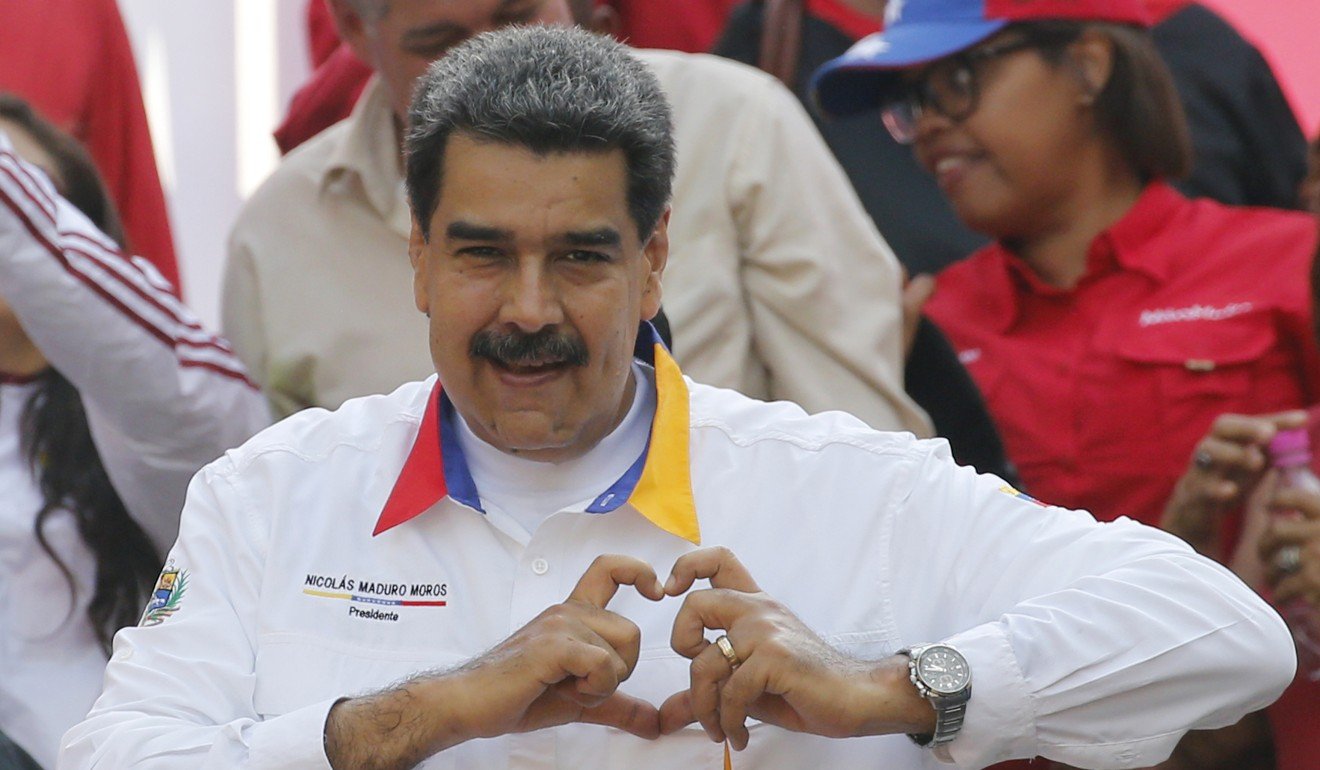
Xi and Putin are also expected to talk about Venezuela, where US-backed opposition leader Juan Guaido is attempting to oust socialist President Nicolas Maduro, who has the support of China and Russia.
Venezuelan President Nicolas Maduro has the backing of China and Russia. Photo: AP
“Moscow and Beijing are not able to seriously hurt Washington by raising tariffs or denying access to high technology. However, there are plenty of areas where coordinated Sino-Russian policies can damage US interests in the short term or in the long run,” Lukin said. “For example, Moscow and Beijing could intensify their joint support for the Venezuelan government of Nicolas Maduro, frustrating Washington’s efforts to dislodge him.”
China and Russia would also be seeking to boost economic ties. Bilateral trade, dominated by Chinese imports of gas and oil, reached US$108 billion last year – falling far short of the target set in 2011 by Xi’s predecessor, Hu Jintao, of US$200 billion by 2020.
China and Russia to forge stronger Eurasian economic ties
Li Lifan, an associate research professor at the Shanghai Academy of Social Sciences, said bilateral trade was a sticking point. “This is one of the potential hindrances in China-Russia relations and Beijing is hoping to [address this] … in the face of a possible global economic slowdown,” Li said.
Given the escalating trade war with Washington, he said China would seek to diversify its investments and markets to other parts of the world, particularly Russia and Europe.
“China will step up its investment cooperation with Europe and Russia and focus more on multilateral investment,” Li said.
But Beijing was not expected to do anything to worsen tensions with Washington.
“China is currently taking a very cautious approach towards the US, trying to avoid heating up the confrontation and further aggravation of the situation,” said Danil Bochkov, a contributing author with the Russian International Affairs Council. “For China it is important to demonstrate that it has a reliable friend – Russia – but that should not be done in an openly provocative manner.”
Stephen Blank, a senior fellow at the American Foreign Policy Council in Washington, said Beijing and Moscow would also seek to contain US influence “as far as possible” from Central Asia, where China has increased its engagement through infrastructure building under the “Belt and Road Initiative”.
Leaders from the region will gather in Bishkek next month for the SCO summit, a security bloc set up in 2001 that now comprises China, Russia, Kazakhstan, Kyrgyzstan, Tajikistan, Uzbekistan, India and Pakistan. Those members account for about 23 per cent of the world’s land mass, 45 per cent of its population, and 25 per cent of global GDP.
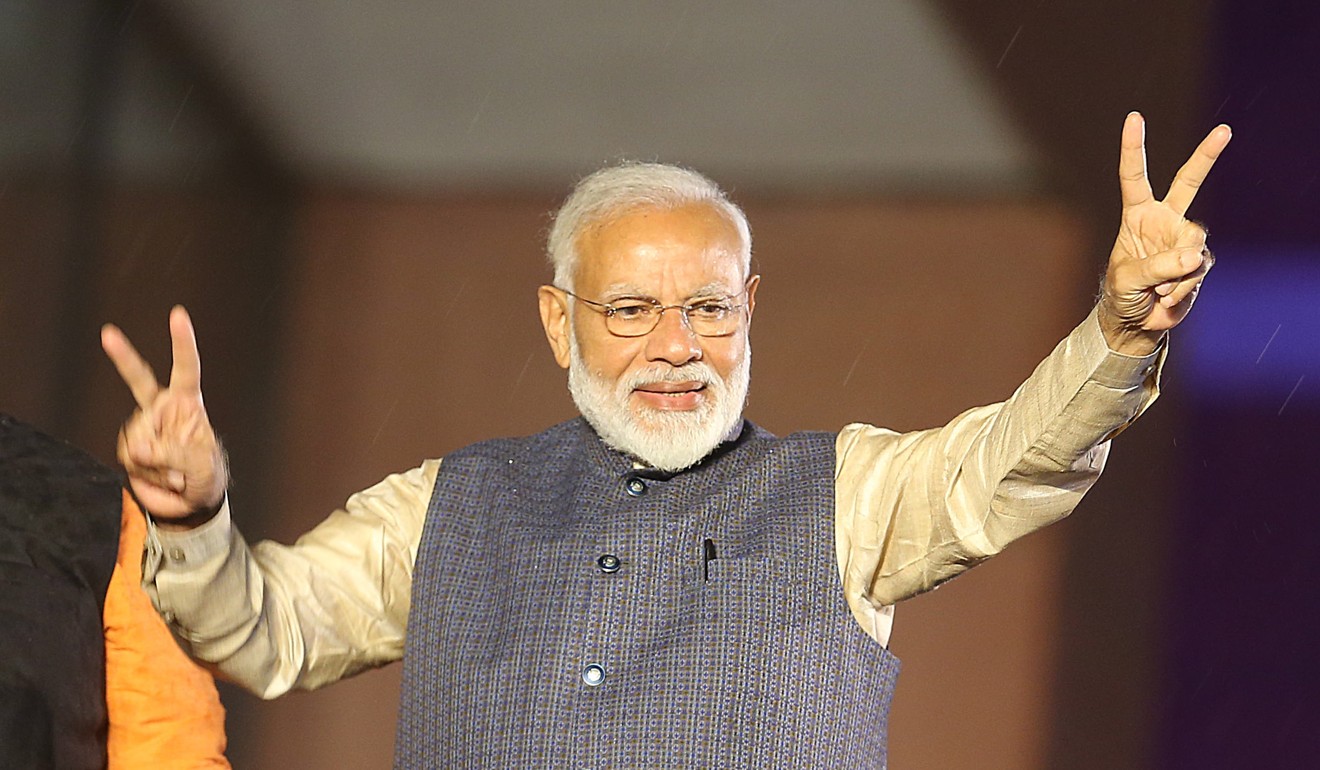
Newly re-elected Indian Prime Minister Narendra Modi could meet the Chinese president for talks in Bishkek next month. Photo: EPA-EFE
There is growing speculation that Xi will meet newly re-elected Indian Prime Minister Narendra Modi on the sidelines of that summit.
Independent analyst and author Namrata Goswami said India would be seeking a commitment to a WTO-led and rules-based multilateral trading system during the SCO talks.
“This is interesting and significant given the current US tendencies under President Donald Trump focused on ‘America first’ and the US-China trade war,” Goswami said.
Counterterrorism will again be a top priority at the SCO summit, amid concerns among member states about the rising number of Islamic State fighters returning from Syria and Iraq. Chinese scholars estimated last year that around 30,000 jihadists who had fought in Syria had gone back to their home countries, including China.
Alexander Bortnikov, chief of the main Russian intelligence agency FSB, said earlier that 5,000 fighters from a group affiliated with Isis had gathered in areas bordering former Soviet states in Central Asia, saying most of them had fought alongside Isis in Syria.
War-torn Afghanistan, which shares a border with four SCO member states – China, Pakistan, Tajikistan and Uzbekistan – is also likely to be high on the agenda at the Bishkek summit.
“With the Trump administration drafting plans to withdraw troops from Afghanistan, the SCO will assess the security situation there and decide whether to provide training for Afghan troops,” Li said.
Eva Seiwert, a doctoral candidate at the Free University of Berlin, expected the security bloc would also discuss Iran after the US withdrew from the 2015 nuclear deal and ordered new sanctions against the country.
Iran, which has observer status with the SCO, was blocked from becoming a full member in 2008 because it was subject to UN sanctions at the time. But its membership application could again be up for discussion.
Iran presses China and Russia to save nuclear deal
“The Trump administration’s unilateral withdrawal from the Iran nuclear deal in 2018 made it easy for China and Russia to present themselves as the proponents of peaceful settlement of conflicts,” Seiwert said. “Discussing the possibility of admitting Iran as a full member state would help the SCO members demonstrate their support of multilateral and peaceful cooperation.
“This would be a strong signal to the US and enhance the SCO’s standing in the international community,” she said.
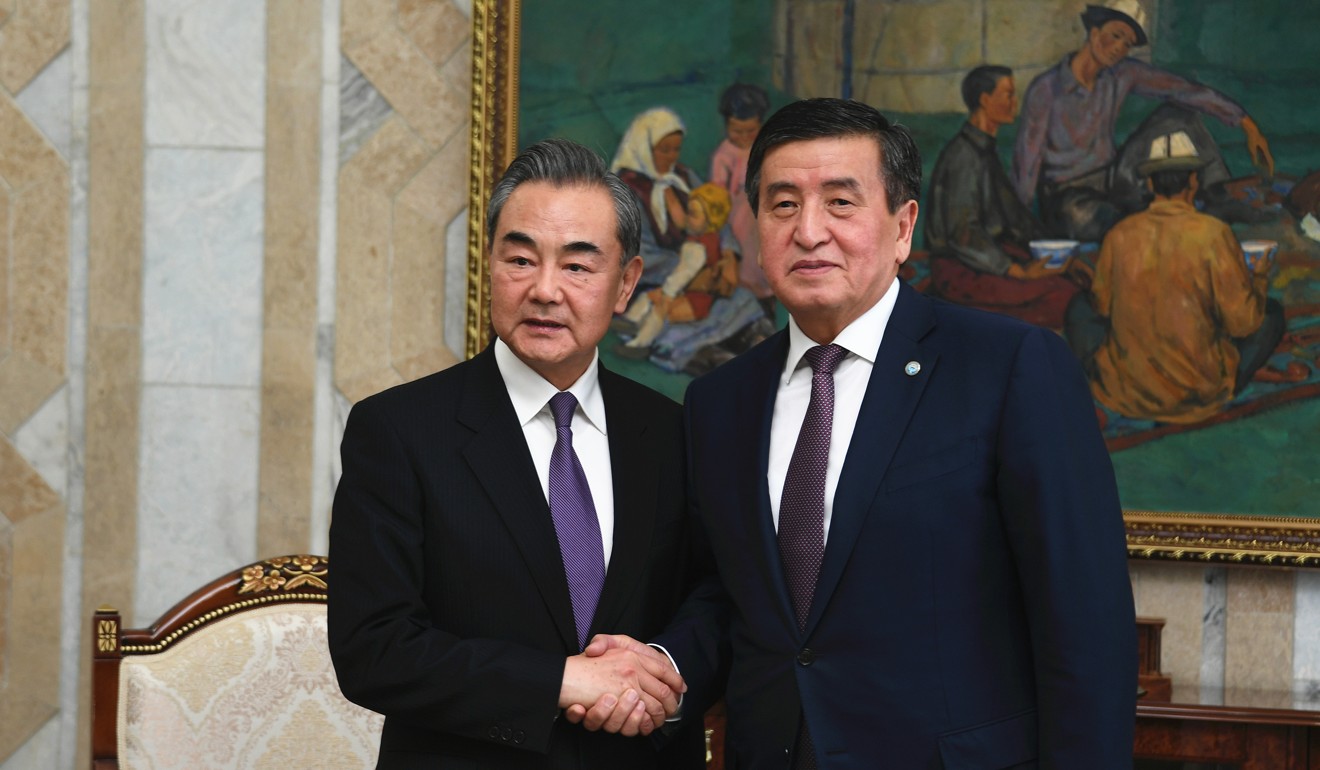
Kyrgyz President Sooronbay Jeenbekov (right) meets Chinese Foreign Minister Wang Yi in Bishkek on Tuesday last week. Photo: Xinhua
As well as security, Xi’s visit to Central Asia is also likely to focus on economic ties. Meeting Kyrgyz President Sooronbay Jeenbekov in Bishkek last week, Chinese Foreign Minister Wang Yi said Beijing would continue to “provide support and help national development and construction in Kyrgyzstan”.
Li said China may increase investment in the Central Asian region, especially in greenfield projects.
“China will continue to buy agriculture products from Central Asia, such as cherries from Uzbekistan, and build hydropower projects to meet local energy demand,” Li said. “Investment in solar and wind energy projects is also expected to increase too.”
Source: SCMP
Posted in American Foreign Policy Council, Arctic, arms control, belt and road forum, Bishkek, Central Asia, Central Asian region, China alert, Chinese foreign minister, Crimea, Eurasian, Europe, Far Eastern Federal University, Free University of Berlin, FSB, Germany, Huawei, Imran Khan, India alert, Iraq, Islamic State fighters, Juan Guaido, Kazakhstan, Kyrgyz President, Kyrgyzstan, Mike Pompeo, Namrata Goswami, Netherlands, North Korea, nuclear weapons, Pakistan, President Nicolas Maduro, President Xi Jinping, Prime Minister Narendra Modi, Russia, Russian intelligence agency, Shanghai Cooperation Organisation (SCO), Sooronbay Jeenbekov, South China Sea, St Petersburg, support, Syria, Tajikistan, tensions, UN sanctions, Uncategorized, US, Uzbekistan, Venezuela, Vice President, Vladimir Putin, Vladivostok, Wang Qishan, Wang Yi, Washington, WTO-led and rules-based multilateral trading system |
Leave a Comment »









 CHINDIA ALERT: You'll be living in their world, very soon