Archive for ‘China alert’

17/05/2019

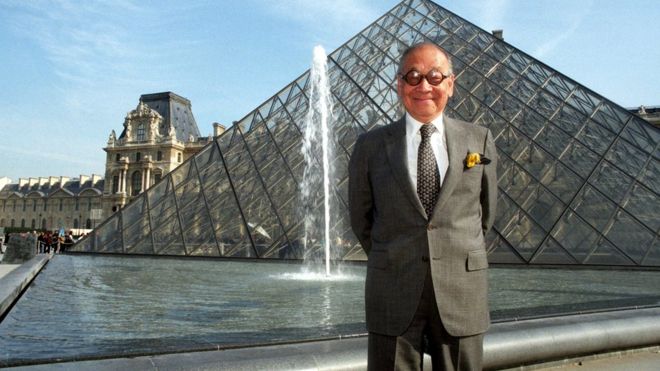
I M Pei, Louvre pyramid architect, dies aged 102

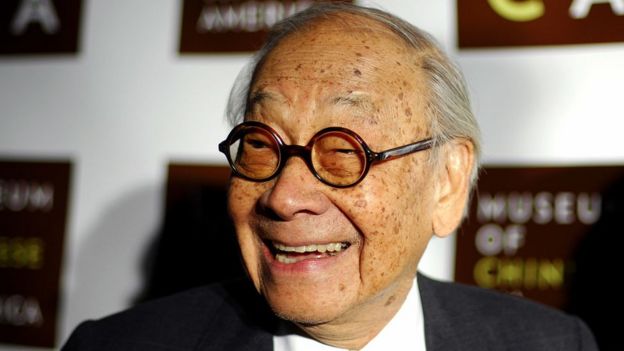
I M Pei on the 10th anniversary of The Pyramid of the Louvre, April 1999Image copyright AFP

I M Pei, the architect behind buildings including the glass pyramid outside the Louvre in Paris, has died aged 102.

Tributes have been pouring in, remembering him for a lifetime of designing iconic structures worldwide.

Pei’s designs are renowned for their emphasis on precision geometry, plain surfaces and natural light.

He carried on working well into old age, creating one of his most famous masterpieces – the Museum of Islamic Art in Doha, Qatar – in his 80s.

A pragmatic artist

Ieoh Ming Pei was born in Guangzhou in 1917, and moved to the US at the age of 18 to study at Pennsylvania, MIT and Harvard.

He worked as a research scientist for the US government during World War Two, and went on to work as an architect, founding his own firm in 1955.

One of the 20th Century’s most prolific architects, he has designed municipal buildings, hotels, schools and other structures across North America, Asia and Europe.

Qatar's Islamic Museum of ArtImage copyright GETTY IMAGES
Image caption Qatar’s Islamic Museum of Art is one of Pei’s most famous designs
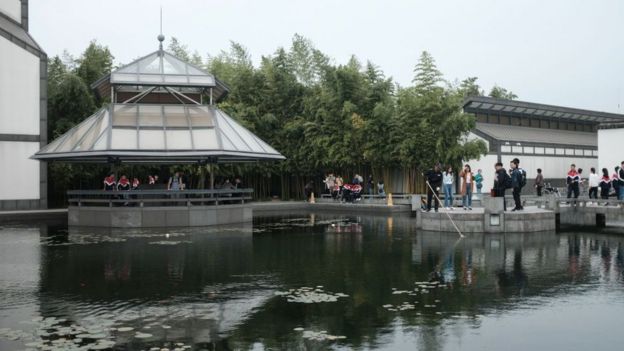
Suzhou Museum in ChinaImage copyright AFP/GETTY
Image caption The architect also designed the Suzhou Museum in China, which was completed in 2006

His style was described as modernist with cubist themes, and was influenced by his love of Islamic architecture. His favoured building materials were glass and steel, with a combination of concrete.

Pei sparked controversy for his pyramid at the Louvre Museum. The glass structure, completed in 1989, is now one of Paris’ most famous landmarks.

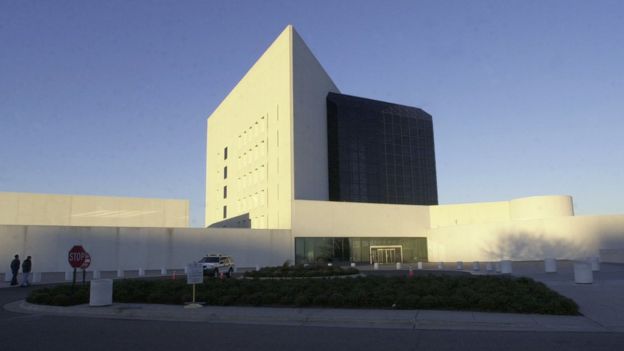
The John F. Kennedy Library and Museum in BostonImage copyright GETTY IMAGES
Image caption Pei designed Boston’s John F Kennedy Library and Museum
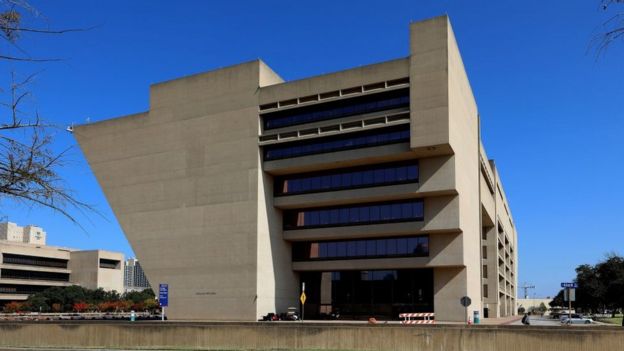
Dallas City Hall, designed by architects I M Pei and Theodore J MushoImage copyright GETTY IMAGES
Image caption I M Pei designed Dallas City Hall with fellow architect Theodore J Musho
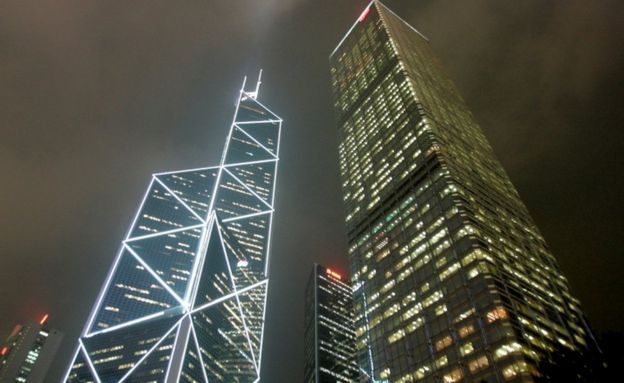
I M Pei's Bank of China tower (L) in Hong KongImage copyright REUTERS
Image caption I M Pei’s Bank of China tower (L) in Hong Kong

His other work includes Dallas City Hall and Japan’s Miho Museum.

“I believe that architecture is a pragmatic art. To become art it must be built on a foundation of necessity,” he once said.

He was won a variety awards and prizes for his buildings, including the AIA Gold Medal, the Praemium Imperiale for Architecture.

In 1983 Pei was given the prestigious Pritzker Prize. The jury said he had he “has given this century some of its most beautiful interior spaces and exterior forms”.

He used his $100,000 prize money to start a scholarship fund for Chinese students to study architecture in America.

I M PeiImage copyright FILM MAGIC/GETTY
Source: The BBC
13/05/2019

China not to compromise on major principles, capable to cope with challenges: think tanks

BEIJING, May 12 (Xinhua) — Facing U.S. tariff hike threats, China has adhered to its bottom line, defended national dignity and people’s interests, experts with domestic think tanks said Sunday at a symposium on China-U.S. trade relations.

Imposing new tariffs goes against the will of the people and the trend of the times. China has the resolution, courage and confidence to rise to all sorts of challenges, they said.

The United States on Friday increased additional tariffs on 200 billion U.S. dollars worth of Chinese imports from 10 percent to 25 percent.

At the 11th round of economic and trade consultations that ended in Washington the same day, the Chinese delegation made clear its consistent and resolute stance: problems can not be solved by increasing tariffs and cooperation is the only right choice for the two sides, but it has to be based on principles. China will never make concessions on major issues of principle.

RAISING TARIFFS MORE DETRIMENTAL TO U.S. ECONOMY

“Increasing tariffs will impact enterprises of both countries, but harm American businesses more,” said Gao Lingyun, a researcher with the Institute of World Economics and Politics under the Chinese Academy of Social Sciences (CASS).

The additional tariffs can not change U.S. demand for Chinese goods and will be eventually passed on to American consumers and retailers by U.S. importers, Gao said.

“If the United States insists on going its way to raise tariffs on all Chinese imports, its domestic prices would be dramatically pushed up, resulting in inflation,” Gao said.

A wide range of U.S. industry associations have expressed strong opposition to imposing additional tariffs on Chinese imports. Raising tariffs to 25 percent could cost nearly one million American jobs and increase volatility of financial market, said the Tariffs Hurt the Heartland campaign.

Of the Chinese goods already under higher tariffs, more than 70 percent are intermediates and investment goods. Such a higher proportion means that the tariffs will be eventually be passed on to American businesses, consumers and farmers, said Chen Wenling, chief economist with the China Center for International Economic Exchanges.

Chen said the trade war provoked by the United States is ineffective. The United States wanted to fix the problem of trade deficit but its trade deficits to China, European Union and other economies rose rather than fell. In addition, the corresponding industry chain restructuring did not benefit the U.S. either. Auto makers Tesla and Ford are moving to the Chinese market instead.

“Some U.S. enterprises may find it difficult to survive if quitting the Chinese market as a very large share of their profits come from China,” said Liang Ming, a researcher with a research institute of the Ministry of Commerce.

Based on an estimate of the effect of having additional tariffs on 200 billion U.S. dollars worth of Chinese goods, Liang said the United States still needs to import a majority of the goods from China. But most of the Chinese products involved are less dependent on the U.S. market, and can be exported to other markets, Liang noted.

Experts said that the spill-over effect of trade wars can reach the whole world, posing severe challenges to the global order, rules, trade systems, supply chains and even bringing negative impact on the peaceful development of the world.

“What China emphasizes, such as avoiding raising tariffs and a balance in the appeals of both sides, is not only the requests of China but also the rational choice for any country when facing unreasonable trade demand,” said Dong Yan, a researcher with the CASS’s Institute of World Economics and Politics.

Analysts agreed at Sunday’s symposium that cooperation benefits China and the Unites States, while conflicts hurt both; cooperation is always the right path to resolve the China-U.S. trade dispute.

NO YIELDING ON PRINCIPLES, FIGHT AND TALK ALTERNATELY

Experts said that the U.S. accusation of China’s “backtracking” for the unsuccessful talks is untenable and irresponsible as the two are still in the process of negotiation. As a matter of fact, the U.S. side is to blame for the negotiating setback as it has been exerting pressure on China and upping the ante.

“The U.S. requests involve China’s core interests and major concerns. They touch the bottom line and China will not compromise,” said Wei Jianguo, executive deputy director of the China Center for International Economic Exchanges.

He noted that a successful agreement must ensure both sides are satisfied for the most part and have both sides to make compromises.

If an agreement satisfies only one side with the concerns of the other side not respected or not taken care of, it can hardly sustain during the implementation and may even be revoked, he said.

After more than a year, both sides have conducted 11 rounds of economic and trade consultations, which experts said fully displays that the consultation is a continuing battle. Taking it easy is necessary while preparations must be fully made psychologically and at working level.

“It’s normal for major countries to have frictions. China must adapt to it,” said Wang Wen, executive dean of the Chongyang Institute for Financial Studies, Renmin University of China.

Chen Wenling said Chinese negotiators have stuck to their principles and stance during the consultation. “It will be normal for both sides to fight and talk alternately. China must not be vague in resolutely safeguarding its core national interests and major concerns and upholding national dignity,” Chen said.

Experts noted that China’s position on upholding the overall interests of the China-U.S. relations and consolidating bilateral economic and trade cooperation remains unchanged. The two countries should meet each other halfway in line with the principles of mutual respect, equality and mutual benefit and resolve their core differences through dialog rather than confrontation.

Dong Yan said that the Sino-U.S. economic and trade friction is a long-term problem, complicated and arduous. Before everything, China and the United States should continue to build mutual trust, step up coordination in bilateral and multilateral areas, and expand common interests.

“We believe that in the face of huge cooperative interests, the U.S. side is also very clear that a trade war will not solve the economic and trade differences between the two countries,” said Liang Ming.

Although the tariff escalation is regrettable, Liang said he believed both sides had hope for the future of their economic and trade relations. A win-win cooperation between China and the United States is in line with the aspirations of the two peoples and the world at large, Liang said.

FACING CHALLENGE WITH CONFIDENCE

“Above 8,000 meters, it is the stratosphere, where the air gets thin. For mountain climbers, this requires extra efforts to overcome, which is similar to the phase that China’s economy has to overcome in order to achieve high-quality development.”

Wang Wen, citing mountain climbing as a metaphor, said the current stage requires China to stay patient and make hard work persistently according to a set route.

With both solid strength and huge potential as well as a strong capability to cope with risks and strikes, China has the confidence, resolution and ability to face all kinds of risks and challenges, said Zheng Shuiquan, deputy secretary of the Party Committee of Renmin University of China.

“No matter how the situation goes in the future, we need to manage our own affairs well,” said Zhang Yansheng, chief research fellow with the China Center for International Economic Exchanges.

Since last year, a series of measures have been taken by the central government to consolidate the growth momentum of the Chinese economy. Wang Jinbin, deputy dean of School of Economics, Renmin University of China, said that stabilizing expectation and confidence is very essential.

Starting this year, transition towards new growth engines from the traditional ones has accelerated, with new industries and businesses constantly emerging, said Yan Jinming, executive director of the National Academy of Development and Strategy of the Renmin University of China.

He said that the Chinese economy has strong resilience and flexibility, a huge market and promising prospect.

“The key is to manage our own affairs now, so as to constantly increase the potential for economic development,” said Yan.

“A win-win cooperation is an unstoppable trend of development. Trade development needs to be aligned with major national strategies. By deepening Belt and Road economic cooperation, China will see its high-quality development path getting broader and broader,” said Chen.

Source: Xinhua

12/05/2019

North and South Korean musicians perform together in China

  • South Korean violinist and North Korean singer hold rare joint performance they hope will help bring the divided Koreas closer together
South Korean violinist Won Hyung Joon performs at the Shanghai Oriental Arts Centre in Shanghai on Sunday. Photo: AP
A South Korean violinist and a North Korean singer on Sunday held a rare joint performance they hope will help bring the divided Koreas closer together via music – especially at a time of emerging tensions amid deadlocked nuclear diplomacy.
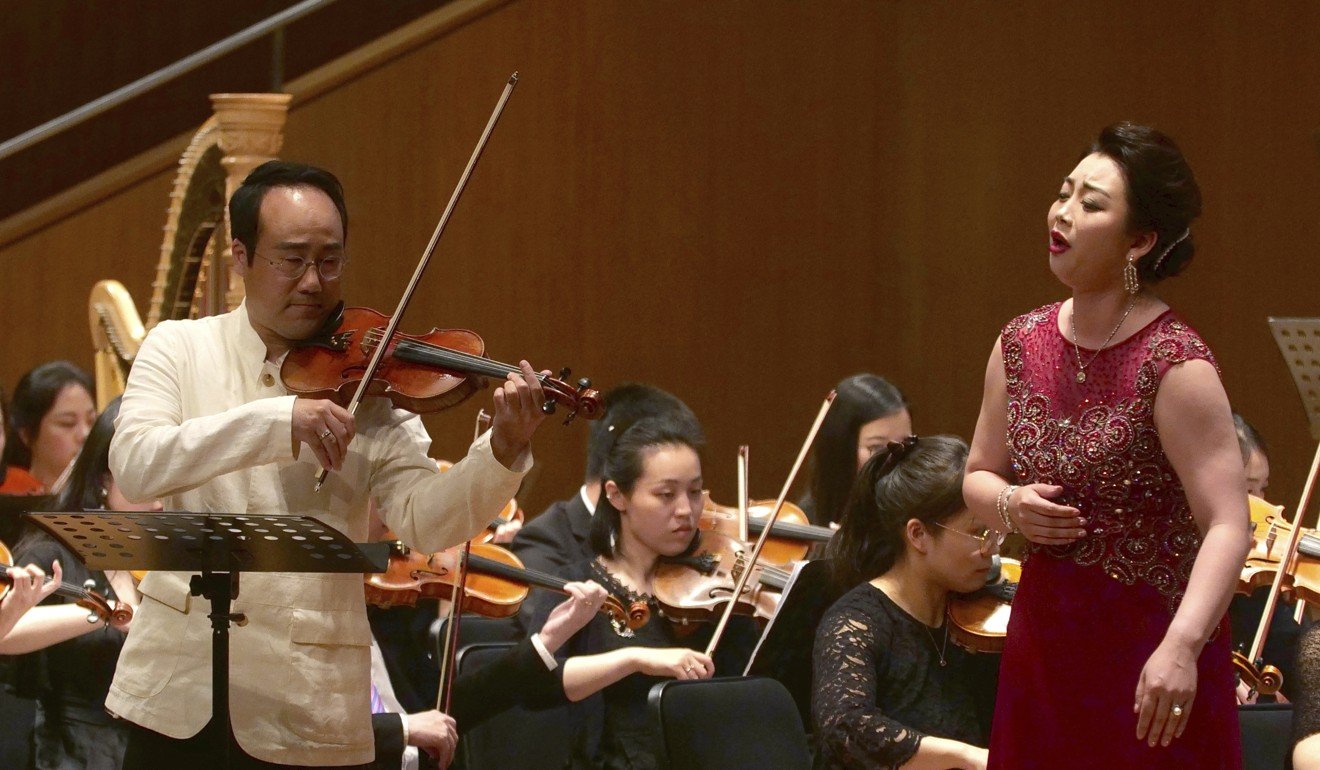
Violinist Won Hyung Joon and his North Korean soprano partner Kim Song Mi performed together at a Shanghai concert hall with a Chinese orchestra. Their concert came three days after North Korea fired two suspected short-range missiles in the second such weapons test in five days.
For both, it was their first concert with a musician from the other side of the Korean border, the world’s most heavily fortified. They met several times last year in Beijing and agreed on a joint performance to help promote peace on the Korean peninsula.
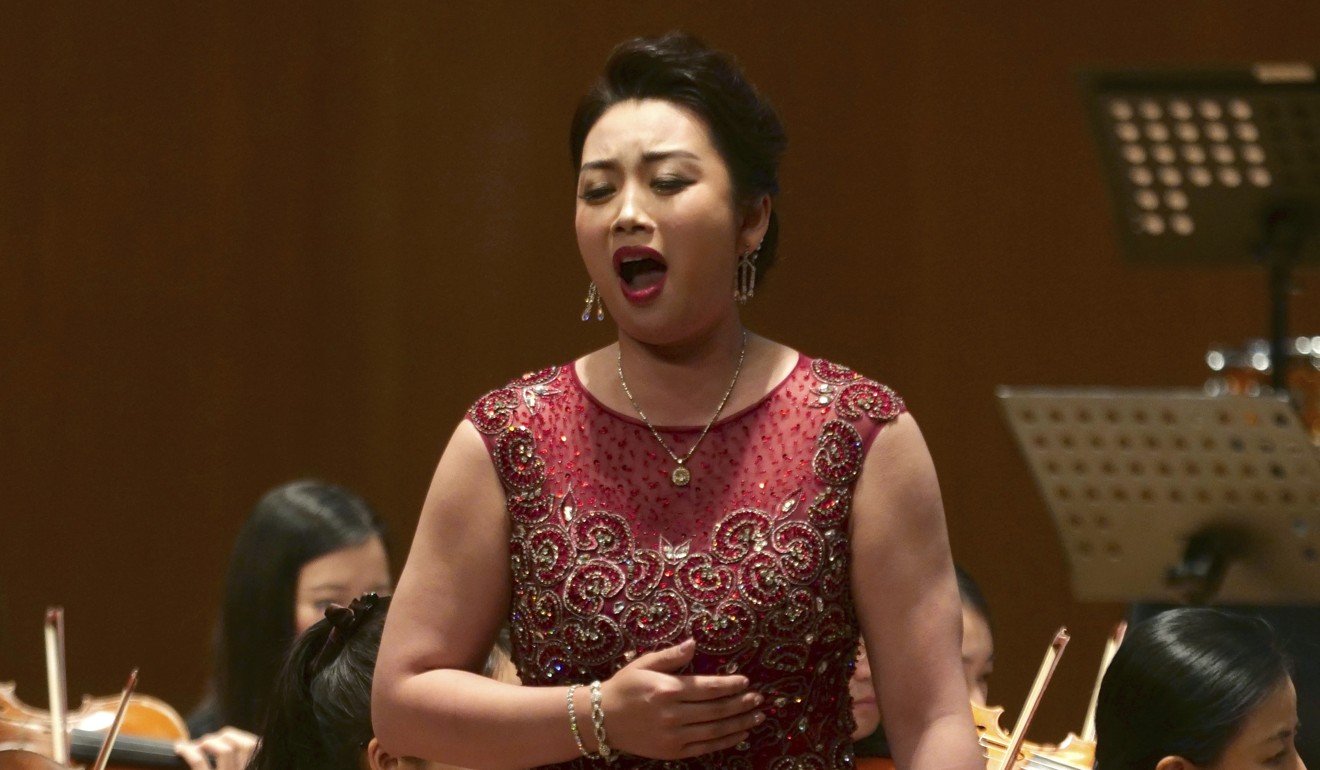
As a duet, Kim sang Antonin Dvorak’s Songs My Mother Taught Me while Won played the violin. Kim later sang Arirang, a Korean traditional folk tune beloved in both countries, while the Shanghai City Symphony Orchestra played the music.
North Korean soprano singer Kim Song Mi performs on Sunday. Photo: AP

“When I met her [Kim] for the first time, I felt like I was reuniting with an old friend who’s been on the same wavelength with me,” Won said before Sunday’s concert. “This performance shouldn’t be the end … and what’s important now is what other dreams we can have together.”

In a written interview, Kim said she “heartily wishes” that her songs would help bring back reconciliation mood.

North Korea’s missile testing is not a ‘breach of trust’, says Donald Trump

“I’m nervous and anxious about what inspiration the audience would have and what reaction North and South Korean compatriots would show to our joint performance,” she said.

North and South Korean musicians performing together is extremely rare as their governments do not even allow their citizens to exchange phone calls, letter and emails without special approvals. Last year saw an unusual wave of cross-border exchanges after North Korean leader Kim Jong-un abruptly entered talks on the fate of his advancing nuclear arsenal. A group of North Korean dancers and singers performed in South Korea during the Pyeongchang Winter Olympics, before South Korean K-pop stars flew to Pyongyang and sang in the presence of Kim and his young wife Ri Sol Ju. Both events were the first of their kind in more than 10 years.

Moon Jae-in begins third year in power
But such exchange programmes are now becoming a rarity again as North Korea is resuming provocative weapons tests in an apparent protest against the lack of progress in nuclear negotiations with the United States. Kim returned home empty-handed from his second summit with US President Donald Trump in Vietnam in February after Trump rebuffed his calls for major sanctions relief in return for his promise to conduct partial disarmament measures. No publicly known high-level meetings between Pyongyang and Washington have since been reported.
Won and Kim performed with a Chinese orchestra. Photo: AP

Sunday’s concert will not likely work as a breakthrough in the stalled nuclear diplomacy but it could still “establish an environment” that could make it easier to improve ties between the Koreas, said analyst Cho Han Bum at Seoul’s Korea Institute for National Unification.

Inspired by the West-Eastern Divan Orchestra founded in 1999 to bring together Arab and Israeli musicians together to promote mutual understanding, Won, 42, has been pushing for the establishment of an inter-Korean orchestra for nearly a decade. He’s contacted both governments on numerous occasions, and sometimes partnered with renowned foreign maestros such as Charles Dutoit and Christoph Poppen.

But his push for a Korean orchestra performance has never been realised and was often scrapped at the last minute due to the delicate nature of ties between the Koreas, which are still technically at war because an armistice that ended the 1950-53 has yet to be replaced with a peace treaty. Incidents that helped spike his past plans included the 2015 mine blasts that maimed two South Korean soldiers, and the 2011 tensions touched off by annual South Korean-US military drills that North Korean sees as an invasion rehearsal.

North Korean weapons test was ‘long-range strike’ drill, state media says
Sunday’s performance appeared less difficult to achieve as it involves just one person from each Korea, not dozens of musicians required for an orchestra, and it was happening in China, a third country and North Korea’s major ally but also South Korea’s biggest trading partner.
Jointly performing with the two Koreans is the Shanghai City Symphony Orchestra, the first and biggest amateur symphony orchestra in China. The orchestra earlier invited Won and Kim to its annual charity concert, Love In The City, Pyongyang Shanghai Seoul, before it and Won’s Lindenbaum Festival Orchestra decided to co-organise the event, according to Won.
In a response to questions last week, South Korea’s Unification Ministry said that it approved Won’s contact with Kim as part of efforts to promote diverse kinds of civilian exchanges between the rivals. The South Korean government is led by President Moon Jae-in, a liberal who espouses greater rapprochement with North Korea and has shuttled between Pyongyang and Washington ahead of two summits between Kim and Trump.
Facebook sues South Korean analytics company Rankwave
Kim, 33, a graduate of Pyongyang’s prestigious Kim Won Gyun University of Music, is the North Korean representative in China of the Korean Association for Art Exchange. She is been living in China since 2010. Known for her classical crossover singing technique, she has also released several music albums with North Korean and well-known pieces of classical music. South Korea media reported she is the first North Korean sent abroad as a singer.
Won said when he first met Kim last spring, he felt it was easier for him to communicate with her and explain his dream than when he dealt with North Korean diplomats.
“When I talked about music with [North Korean] diplomats, I had to explain why we need music and why music is good … But I didn’t need to do that when I met Kim, and we could just get to the point,” Won said.
Kim said Won’s works had led her think again about her “love” of the Korean people and that she was willing to contribute to any efforts to promote inter-Korean cooperation.

Won said he would work together with Kim Song Mi to realise similar joint performances on bigger world stages. But he also understood how difficult it had been for him to have a concert like Sunday’s.

“If we can do music together, that means we can understand each other,” Won said. “People are talking about unification, an inter-Korean railway, a peace treaty and the end of war declaration. But can we really do those while failing to do an easy thing like doing music together?”

Source: SCMP

07/05/2019

China, Japan to hold talks on maritime affairs

BEIJING, May 7 (Xinhua) — China and Japan will hold their 11th round of high-level consultations on maritime affairs in Otaru, Japan, from May 10 to 11, a foreign ministry spokesperson said Tuesday.

Spokesperson Geng Shuang told a routine news briefing that officials from foreign ministries, defense ministries, maritime law enforcement and management departments of both counties will attend the talks.

China expects to fully exchange views with Japan on maritime issues of common concern to strengthen mutual understanding and trust with Japan, Geng said.

The China-Japan high-level consultations on maritime affairs were established in 2012. The last round of consultations was held in Wuzhen of eastern China’s Zhejiang Province last December.

Source: Xinhua

06/05/2019

Summit demonstrates China’s leapfrog into digital world

CHINA-FUJIAN-HUANG KUNMING-DIGITAL CHINA SUMMIT-SPEECH(CN)

Huang Kunming, a member of the Political Bureau of the Communist Party of China (CPC) Central Committee, also head of the Publicity Department of the CPC Central Committee, speaks at the opening ceremony of the second Digital China Summit in Fuzhou, southeast China’s Fujian Province, May 6, 2019. (Xinhua/Ding Lin)

FUZHOU, May 6 (Xinhua) — China on Monday sounded another heartening note for its development of information technologies, as both companies and the government rush to harness the nationwide tech boom to raise efficiency, buoy public satisfaction and even tackle corruption.

The second Digital China Summit opened Monday in eastern China’s Fujian Province, shedding light on the latest information technologies that have penetrated the country’s government, industries and society.

The Chinese government has expected information technologies to nurture new economic engines and upgrade old industries as the country shunts from the high-speed economic growth to the path of high-quality development.

Huang Kunming, a member of the Political Bureau of the Communist Party of China (CPC) Central Committee, in a keynote speech at the summit called for advancing the building of a digital China and smart society, stressing the role of information technology in promoting high-quality development.

Huang, also head of the Publicity Department of the CPC Central Committee, said China’s advantages in internet technology innovation, technology application and as a huge market should be transformed into advantages in developing a digital economy.

The official called for achieving breakthroughs in core technologies, enhancing protection of intellectual property rights, advancing information infrastructure construction and narrowing digital gaps between urban and rural areas.

A report reviewing the country’s digital development in 2018 was also issued at the summit, pointing to rapid growth in sectors including electronic information manufacturing, software service, communications and big data.

The report published by the Cyberspace Administration of China said the country last year recorded more than 9 trillion yuan (1.3 trillion U.S. dollars) in online retail. China’s digital economy reached 31.3 trillion yuan in scale, accounting for one-third of the national GDP in 2018.

Provincial-level e-government platforms have also slashed time for getting government permits by an average of 30 percent, noted the report.

Trendy technologies from driverless vendor vehicles and facial recognition security checks to 5G networks are being used at the event in the city of Fuzhou. A number of tech companies are displaying their cutting-edge products including Baidu’s driverless vehicles, Huawei’s AI chip “Ascend” and Foxconn’s “future factories.”

Pony Ma, CEO of China’s Internet giant Tencent, said at the summit that the company, by working with Fujian police, has used its facial recognition technology to help 1,000 families find missing family members in the past two years.

Hu Xiaoming, president of Ant Financial that runs the popular online payment network Alipay, said at the event that one of every four Chinese now handles government services on Alipay, making it the country’s largest platform that offers access to government services.

E-GOVERNMENT

One of the major highlights at the summit’s exhibition area are the many e-government apps, which have mushroomed across China to incorporate a wide range of government and public services. They are part of the government’s efforts to cut red tape to benefit residents and businesses alike.

In Fuzhou, the host city of the event, a citizen’s typical day now revolves around the e-Fuzhou app, which allows users to buy bus tickets, pay tuition fees and manage social security accounts without the need of visiting government offices.

A slew of digital technology applications, including the big data credit inquiry system, the online tax bureau, and the paperless customs clearance system, have also been developed in the province over the years.

Dingxi, one of the least developed cities in west China’s Gansu Province, has a booth displaying an online monitoring platform, which it launched last year to allow villagers to scrutinize the management of poverty-relief funds and report any signs of corruption.

“We went door-to-door to teach villagers how to use mobile phones to check the subsidies they are entitled to and the sum other families actually received,” said Yang Sirun, an inspector with the city’s discipline inspection commission.

“In the past, some wealthy families feigned poverty to claim subsistence allowances, while some officials fraudulently pocketed subsidies in the names of families that had moved away. The new platform can easily expose such ‘micro corruption,'” Yang said.

The official said since its launch, over 3,400 officials and residents have voluntarily turned in their illegal gains for fear of being reported. “Many hidden problems were also found during the collation of data from different departments, which proves big data’s power in fighting corruption,” he said.

The summit from May 6 to 8 aims to serve as a platform for issuing China’s policies on IT development and displaying the achievements and experience of e-government and the digital economy.

More than 1,500 officials, company representatives and scholars are attending the event, which is co-organized by the Cyberspace Administration of China, National Development and Reform Commission, Ministry of Industry and Information Technology and Fujian provincial government.

Source: Xinhua

06/05/2019

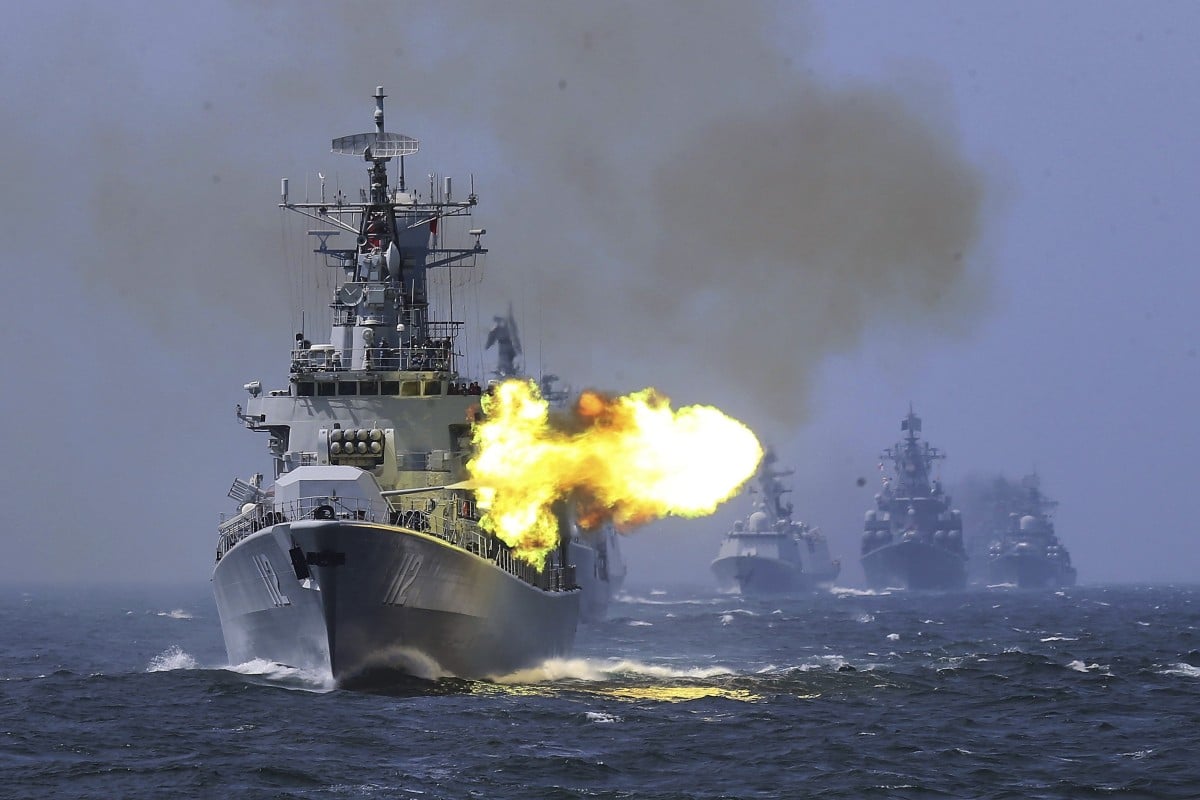
China fires up drills near Taiwan Strait in test of combat strength

  • Military exercises this week meant to foster image that Beijing can win a war over the island, analyst says
The PLA is staging live-fire drills at the northern end of the Taiwan Strait this week. Photo: AP
Beijing is conducting live-fire military drills at the northern end of the Taiwan Strait as it signals its resolve to thwart “pro-independence forces” in Taiwan.
Authorities in the small city of Yuhuan, Zhejiang province, notified the public on Sunday that a “no-sail zone” and “no-fishing zone” would be in effect in the area until Friday night.
It said the drills were part of the People’s Liberation Army’s “annual regular exercise plans” and would involve “actual use of weapons”.
“According to the annual [PLA’s] regular training plan … live-fire exercises involving the use of real weapons will be organised … in the designated areas from 6am on May 5 to 6pm on May 10,” the authorities said.
Collin Koh, a military analyst from the S. Rajaratnam School of International Studies at Singapore’s Nanyang Technological University, said the stress on the live-fire manoeuvres suggested the six-day exercise would simulate real combat conditions.
The drills come hard on the heels of an annual report by the Pentagon warning that China was preparing options to unify Taiwan by force, and there was a need to deter, delay or deny any third-party intervention on Taiwan’s behalf.
Under the Taiwan Relations Act, the United States is bound by law to help defend the self-ruled island. Washington is Taipei’s main source of arms, selling the island more than US$15 billion in weaponry since 2010, according to the Pentagon.
Beijing ‘loses all hope for Taiwan’s Tsai Ing-wen’ as she rallies Washington

Taiwan is one of a growing number of flashpoints in the China-US relationship – along with a trade war, Beijing’s growing influence in emerging economies, and its stronger military posture in the South China Sea. On Monday, two guided-missile destroyers, USS Preble and USS Chung-Hoon passed within 12 nautical miles of Gaven and Johnson reefs in the Spratly Islands, drawing immediate criticism from Beijing.

In addition, Taiwan will hold its annual Han Kuang live-fire drills from May 27 to 31 and held a computer-aided one just last month.

A Taiwan affairs analyst from the Chinese Academy of Social Sciences said the drills off Zhejiang were meant to show Beijing’s determination to defend its position on Taiwan.

“Beijing is trying to build up an image that China can win a war over Taiwan and Beijing’s key goal is to contain pro-independence forces, which are the biggest threat now to the peaceful unification process,” the analyst said.

Koh agreed, saying the drill sent a signal to external and domestic parties after the recent high-profile transits of US warships through the Taiwan Strait.

“The messaging to domestic audience is necessary because Beijing can’t be seen as weak following those reported transits by foreign warships – especially the Americans who are seen as supporting Taipei,” Koh said.

“And regarding external audience, the messaging is quite obviously to demonstrate that Beijing is ready to respond more resolutely to future such transits, following the tough verbal responses from Beijing, including its statement that it considers the strait under its jurisdiction and comprise its internal waters.”

Beijing ‘tones down’ response after US warships sail through Taiwan Strait

Relations between Beijing and Taipei have plunged since Tsai Ing-wen from the independence-leaning Democratic Progressive Party won the presidential election in 2016 and repeatedly refused to accept the “1992 consensus”, which Beijing says is the foundation for cross-strait dialogue.

In response, Beijing ramped up pressure against the island, including conducting more military exercises and establishing diplomatic ties with Taipei’s allies.

Source: SCMP

06/05/2019

Ex-CIA agent Jerry Chun Shing Lee admits spying for China

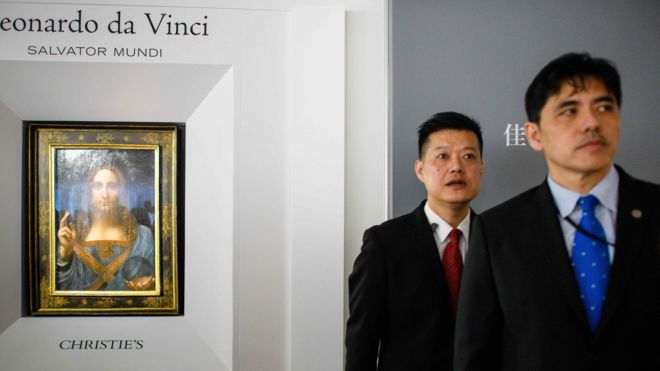
A man (R, wearing blue tie) identified by local Hong Kong media as former CIA agent Jerry Chun Shing LeeImage copyrightAFP
Image caption A man (R in blue tie) identified as Jerry Chun Shing Lee by Hong Kong media

An ex-CIA agent has pleaded guilty to spying for China, the US justice department says, in a case believed to be linked to the dismantling of a US espionage network.

Jerry Chun Shing Lee, 54, left the CIA in 2007 to live in Hong Kong, where he was recruited by Chinese agents.

Prosecutors say the naturalised US citizen was then paid to divulge information on US covert assets.

This led China to bring down a network of informants between 2010 and 2012.

About 20 informants were killed or jailed during that period – one of the most disastrous failures of US intelligence in recent years.

The US Assistant Attorney General for National Security, John Demers, said Lee’s case was the third involving US agents and China in less than a year.

“Every one of these cases is a tragic betrayal of country and colleagues,” he said.

What did Lee do?

Lee, who worked for the CIA between 1994 and 2007, pleaded guilty to conspiracy to deliver national defence information to aid a foreign government in a court in Virginia on Wednesday, the justice department said in a statement.

It said Lee was contacted by the Chinese intelligence agents in 2010. They offered him money, promising to take care of him “for life” in exchange for the required secret information. Hundreds of thousands of dollars were deposited in his Hong Kong bank account between May 2010 and December 2013.

Mr Lee created a document containing information about CIA activities, including locations to which US agents would be assigned.

In 2012, FBI agents searched a hotel room in Hawaii registered in Mr Lee’s name and found a USB drive. Investigators found the document on unallocated space in the drive, suggesting it had been deleted.

The search also revealed Lee to have a day planner and address book containing notes of intelligence provided by CIA agents, their true identities, operational meeting locations and phone numbers, and information about covert facilities.

Lee was interviewed by CIA officers in 2012 during which he said he had met Chinese intelligence officers but concealed the fact that they had set him tasks, the justice department said. In 2013 he first denied knowing about the document on his USB drive and then admitted he had created it but said he had never handed it on to Chinese agents.

Mr Lee was arrested at New York’s JFK airport in January 2018. He will be sentenced in August.


Spy v Spy

By Tara McKelvey, BBC News, Washington DC

The Lee case shows that the battle between Chinese and US spies has intensified over the past year, turning into a new “Cold War”, as Michael Collins, the deputy assistant director of the CIA’s East Asia mission center, called it.

The Chinese are investing more resources into their efforts to ferret out information about the US government, while the US government has become more aggressive in its pursuit of US citizens who have helped Chinese agents.

And when the guilty party is a former CIA officer, one of their own, the men and women who work in the field of US intelligence are ready to “bring the hammer down”, one senior intelligence official said.


CIA spy operation in China: Key dates

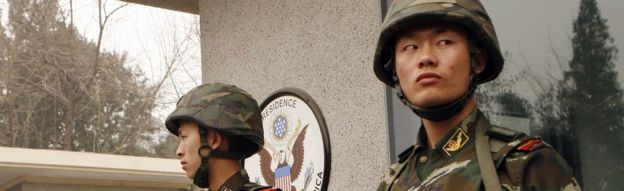
Three armed Chinese policemen guarding the US embassy in BeijingImage copyright AFP
Image caption Chinese police guard the US embassy in the capital, Beijing
  • 2010: Information gathered by the US from sources deep inside the Chinese government bureaucracy start to dry up
  • 2011: Informants begin to disappear. It is not clear whether the CIA has been hacked or whether a mole has helped the Chinese to identify agents
  • 2012: FBI begins investigation
  • May 2014: Five Chinese army officers are charged with stealing trade secrets and internal documents from US companies. Later that same month, China says it has been a main target for US spies
  • 2015: CIA withdraws staff from the US embassy in Beijing, fearing data stolen from government computers could expose its agents
  • April 2017: Beijing offers hefty cash rewards for information on foreign spies
  • May 2017: Four former CIA officials tell the New York Times that up to 20 CIA informants were killed or imprisoned by the Chinese between 2010 and 2012
  • June 2017: Former US diplomatic officer Kevin Mallory is arrested and charged with giving top-secret documents to a Chinese agent
  • January 2018: Former CIA officer Jerry Chun Shing Lee is arrested

Source: The BBC

05/05/2019

2nd Digital China Exhibition held in Fuzhou, China’s Fujian

CHINA-FUJIAN-FUZHOU-DIGITAL CHINA EXHIBITION (CN)

Photo taken on May 5, 2019 shows the booth of Xinhua News Agency at the 2nd Digital China Exhibition in Fuzhou, southeast China’s Fujian Province. The 2nd Digital China Exhibition runs from May 5 to 9 at the Fuzhou Strait International Conference & Exhibition Center. (Xinhua/Wei Peiquan)

Source: Xinhua

05/05/2019

Trump to raise tariffs on $200bn of Chinese goods

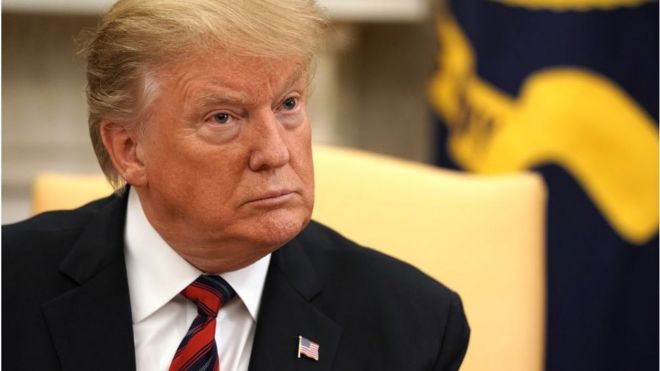
Donald TrumpImage copyright GETTY IMAGES

Donald Trump has said he will raise tariffs on $200bn in Chinese goods this week, because talks on a US-China trade deal are moving “too slowly”.

The US president tweeted that tariffs of 10% would rise to 25% on Friday, saying: “The Trade Deal with China continues, but too slowly, as they attempt to renegotiate. No!”

Some $325bn of untaxed goods will also face 25% duties “shortly”, he said.

It follows signals from Washington that a US-China trade deal was imminent.

The move dramatically increases the pressure on China, after Mr Trump previously delayed the tariff increases earlier in the year, citing progress in talks.

Trade trade talks are due to resume this week, with Chinese Vice Premier Liu He due to travel to Washington.

That follows talks in April in Beijing that US Treasury Secretary Steven Mnuchin called “productive.”

So far, the US has imposed tariffs ranging from 10-25% on $250bn (£191bn) of Chinese goods, having accused the country of various unfair trade practices

Beijing has hit back with duties on $110bn of US goods, blaming the US for starting “the largest trade war in economic history”.

Source: The BBC

05/05/2019

China putting minority Muslims in ‘concentration camps,’ U.S. says

WASHINGTON (Reuters) – The United States accused China on Friday of putting well more than a million minority Muslims in “concentration camps,” in some of the strongest U.S. condemnation to date of what it calls Beijing’s mass detention of mostly Muslim Uighur minority and other Muslim groups.

The comments by Randall Schriver, who leads Asia policy at the U.S. Defense Department, are likely to increase tension with Beijing, which is sensitive to international criticism and describes the sites as vocational education training centres aimed at stemming the threat of Islamic extremism.

Former detainees have described to Reuters being tortured during interrogation at the camps, living in crowded cells and being subjected to a brutal daily regimen of party indoctrination that drove some people to suicide.

Some of the sprawling facilities are ringed with razor wire and watch towers.

“The (Chinese) Communist Party is using the security forces for mass imprisonment of Chinese Muslims in concentration camps,” Schriver told a Pentagon briefing during a broader discussion about China’s military, estimating that the number of detained Muslims could be “closer to 3 million citizens.”

When asked by a reporter why he used the term, Schriver said that it was justified “given what we understand to be the magnitude of the detention, at least a million but likely closer to 3 million citizens out of a population of about 10 million.””So a very significant portion of the population, (given) what’s happening there, what the goals are of the Chinese government and their own public comments make that a very, I think, appropriate description,” he said.
The Chinese embassy in Washington did not immediately respond to a request for comment.
U.S. Secretary of State Mike Pompeo on Thursday used the term re-education camps to describe the sites and said Chinese activity was “reminiscent of the 1930s.”
The U.S. government has weighed sanctions against senior Chinese officials in Xinjiang, a vast region bordering central Asia that is home to millions of Uighurs and other Muslim ethnic minorities. China has warned that it would retaliate “in proportion” against any U.S. sanctions.
The governor of Xinjiang in March directly dismissed comparisons to concentration camps, saying they were “the same as boarding schools.”
U.S. officials have said China has made criminal many aspects of religious practice and culture in Xinjiang, including punishment for teaching Muslim texts to children and bans on parents giving their children Uighur names.
Academics and journalists have documented grid-style police checkpoints across Xinjiang and mass DNA collection, and human rights advocates have decried martial law-type conditions there.
Source: Reuters
Law of Unintended Consequences

continuously updated blog about China & India

ChiaHou's Book Reviews

continuously updated blog about China & India

What's wrong with the world; and its economy

continuously updated blog about China & India