Archive for ‘China alert’

24/05/2012

* 260 Chinese cities build digital geographic system

Xinhua: “More than 260 prefecture-level Chinese cities are building digital geographic systems to provide better services to citizens, the National Administration of Surveying, Mapping and Geoinformation NASMG said on Wednesday.

The NASMG said in a statement that over 100 of those cities have put their systems into full operation, including Taiyuan and Jincheng in Shanxi province, Huizhou and Foshan in Guangdong province, Yantai and Weihai in Shandong province. In the meantime, about 10 lower-level counties have also finished the construction of digital geographic systems. The digitalization of cities has become an important instrument for the government’s decision making, and also helped improve citizens quality of life, the NASMG explained.

The statement said the country will build a digital geographic framework of China by 2015.It said the NASMG will choose some cities with well-developed digital geographic systems as pilot sites to build “smart cities,” referring to urban centers administered with intelligent technology such as cloud computing.”

via 260 Chinese cities build digital geographic systems – Xinhua | English.news.cn.

See also: Chinese innovation

24/05/2012

* Landmark lawsuit demands compensation for pollution victims

Xinhua: “In a landmark lawsuit, two non-governmental organizations NGOs have demanded compensation of 10 million yuan (1.58 million U.S. dollars) from companies which dumped toxic chemicals in southwest China’s Yunnan Province.

Friends of Nature FON and the Chongqing Green Volunteer Association exchanged evidence with the defendant, Luliang Chemical Industry Co. Ltd. and Luliang Peace Technology Co. Ltd. in court on Wednesday. If the the NGOs win the case, the compensation will be used for environmental rehabilitation in the polluted areas in Qujing city, said Guo Jinghui, a spokeswoman of FON.

Qujing city’s environmental protection bureau also joined as plaintiff in the lawsuit, which was filed last September and accepted by the city’s Intermediate Peoples Court in October 2011. The court has set up a special environmental protection tribunal, but the trial date has not been confirmed, said Guo.”

via Landmark lawsuit demands compensation for pollution victims – Xinhua | English.news.cn.

Related posts: https://chindia-alert.org/2012/03/14/premier-wen-says-china-needs-political-reform-warns-of-another-cultural-revolution-if-without/

24/05/2012

* Technology Reaches Remote Tibetan Corners, Fanning Unrest

NY Times: “The young Buddhist monk, his voice hushed and nervous, was discussing the self-immolations and protests that have swept Tibetan regions of China when the insistent rap of knuckle on wood sounded behind him. Knock, knock, knock. His guest flinched, but the monk calmly gestured to a desktop computer next to the religious shrine dominating his cramped bedroom in this monastery town in Qinghai Province. The electronic knocking simply signaled the arrival of a message on Tencent QQ, China’s wildly popular messaging service.

These days, the unmistakable marimba jingle of iPhones and the melodic bleep of Skype can be heard in lamaseries across this remote expanse of snowy peaks and high-altitude grasslands in northwestern China. Even Tibetan nomads living off the grid use satellite dishes to watch Chinese television — and broadcasts from Radio Free Asia and the Voice of America.

“We may be living far away from big cities, but we are well connected to the rest of the world,” said the 34-year-old monk, who, like most Tibetans who speak to foreign journalists, asked for anonymity to avoid harsh punishment. The technology revolution, though slow in coming here, has now penetrated the most far-flung corners of the Tibetan plateau, transforming ordinary life and playing an increasingly pivotal role in the spreading unrest over Chinese policies that many Tibetans describe as stifling. Rising political consciousness has found expression through a campaign of self-immolations that the authorities have been unable to stamp out. Since March 2010, at least 34 people have set themselves ablaze, the vast majority of them current or former Buddhist clerics, many of them young.

Despite government efforts to restrict the flow of information, citizen journalists and ordinary monks have gathered details and photographs of the self-immolators, pole-vaulting them over the country’s so-called Great Firewall. In some cases, blurred images show their final fiery moments or the horrific aftermath before paramilitary police officers haul the protesters out of public view. News accounts, quickly packaged by advocacy groups and e-mailed to foreign journalists, often include the protesters’ demands: greater autonomy and the return of the Dalai Lama, the Tibetan spiritual leader, who has lived in exile since 1959.”

via Technology Reaches Remote Tibetan Corners, Fanning Unrest – NYTimes.com.

23/05/2012

* Detroit’s Wages Take on China’s

WSJ.com: “For the past four weeks, a team of 45 workers in gray smocks have been doing something here that hasn’t been attempted on a large scale in America for at least four years. They’re making TVs.

The new assembly line is tucked inside a cavernous factory in this Detroit suburb that once made old-style tube televisions. Their first product: a 46-inch flat-screen model going on sale soon at Target stores for $499. The project is the unusual result of a partnership between a U.S. branding company and a Chinese producer and is as much about marketing a U.S.-made television as it is about a global shift in manufacturing costs.

“We think the economics favor this,” says Michael OShaughnessy, chief executive of Element Electronics Corp., the Eden Prairie, Minn., company that has sold Chinese-made televisions in the U.S. under its Element brand name for six years. To be sure, costs in China are going up as worker pay and other expenses, such as transportation, rise. Meanwhile, muted wage gains in the U.S. and fast productivity advances have reshaped many U.S. factories into tougher competitors.

A recent survey of large U.S.-based producers by the Boston Consulting Group found more than a third plan to or actively considering bringing work home from China. But Elements televisions also illustrate the limitations in restoring some types of production on U.S. soil. The only other domestically assembled televisions today come from a tiny California producer of waterproof models designed for use outdoors and there is virtually no domestic supply base for crucial parts, such as glass screens. The upshot: Virtually all the key parts needed to make a television today are imported.Few industries have fallen as hard as television manufacturing.

In the 1950s, there were some 150 domestic producers and with employment peaking at about 100,000 people in the 1960s. Then came the imports, first from Japan and later from other parts of Asia. TV manufacturing in the U.S. went all but extinct in the last decade. Syntax-Brillian Corp., a Tempe, Ariz.-based, company opened a production facility in Ontario, Calif., in 2006 to much fanfare—but that operation lasted only two years.

Flat screens tipped the scales even more in favor of the Far East, because as tube televisions grew bigger, the weight and size of the glass made shipping increasingly costly. That was the one thing that kept U.S. production going even in the face of imports. Flat screens, however, are a fraction of the weight and much more compact. Element says the decision to produce in Detroit hinges on savings they gained by avoiding the roughly 5% duty on imported televisions and the reduced cost of shipping final products from the heartland of the U.S. to retailers. All the parts are initially being imported—which is one reason the products can only be marketed as “U.S. assembled. “Mr. OShaughnessy estimates the average savings on duties is about $27 for a 46-inch television—enough “to account for the increase in labor costs” in Detroit. The company declined to give more specifics, but noted that production methods in the U.S. are streamlined, involving component assemblies that in China might be separate steps on the production line.

The first televisions being made for Target have 52 pieces and require 24 production steps, including testing and final packaging.Mickey Cho, chief operating officer of Tongfang-Global, the television-making arm of state-owned Tsinghua Tongfang Co., the Chinese partner, says Canton is only its first move toward what he calls global localization, making more products closer to where they are sold.”

via Detroits Wages Take on Chinas – WSJ.com.

Ironically, the US TVs are being made in CANTON, Michigan!

23/05/2012

* Taiwan spies increase in carrier threat

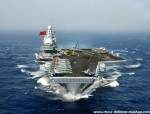
Hong Kong Standard: “Taiwan’s intelligence chief said Beijing plans to build two aircraft carriers to go with the first one in its fleet, a refitted former Soviet carrier currently undergoing sea trials.

“Indeed, the Chinese communists have decided to build two aircraft carriers on their own,” Tsai Teh-sheng, head of the National Security Bureau, told lawmakers. Construction is expected to start next year and in 2015, with the warships, which would be conventionally powered, to be delivered in 2020 and 2022. Tsai said Beijing has conducted six sea trials of its first carrier since the middle of last year, and that Taiwan expects it to go into service before the end of this year. Initially it may simply be used for training purposes but it can be sent for battles when necessary in the future,” he said. The ship’s sea trials have sparked international concern about the mainlands widening naval reach amid growing regional tensions over maritime disputes and a US campaign to assert itself as a Pacific power.”

via Taiwan spies increase in carrier threat – The Standard.

23/05/2012

* U.S. lets China bypass Wall St for Treasury orders

Reuters: “China can now bypass Wall Street when buying U.S. government debt and go straight to the U.S. Treasury, in what is the Treasurys first-ever direct relationship with a foreign government, according to documents viewed by Reuters.

The relationship means the People’s Bank of China buys U.S. debt using a different method than any other central bank in the world. The other central banks, including the Bank of Japan, which has a large appetite for Treasuries, place orders for U.S. debt with major Wall Street banks designated by the government as primary dealers. Those dealers then bid on their behalf at Treasury auctions. China, which holds $1.17 trillion in U.S. Treasuries, still buys some Treasuries through primary dealers, but since June 2011, that route hasn’t been necessary. The documents viewed by Reuters show the U.S. Treasury Department has given the People’s Bank of China a direct computer link to its auction system, which the Chinese first used to buy two-year notes in late June 2011. China can now participate in auctions without placing bids through primary dealers. If it wants to sell, however, it still has to go through the market.”

Incidentally, there is no finance benefit as commissions are not charged for such dealings.

via EXCLUSIVE: U.S. lets China bypass Wall St for Treasury orders – Reuters –.

An example of pragmatism on the part of the US government – giving special treatment to its biggest customer.

21/05/2012

* What the Chinese want

This is a much longer than usual post.  But if you are interested in either Chinese mentalilty or, more importantly, thinking of trading in China, this is a must read.

Consumers in China are increasingly modern in their tastes, but they are not becoming ‘Western.’ How the selling of coffee, cars and pizza sheds light on a nation racing toward superpower status.

By TOM DOCTOROFF, author of the book “What Chinese Want: Culture, Communism & The Modern Chinese Consumer.”

Apple has taken China by storm. A Starbucks can be found on practically every major street corner in coastal cities and beyond. From Nike to Buick to Siemens, Chinese consumers actively prefer Western brands over their domestic competitors. The rise of microbloggers, the popularity of rock bands with names like Hutong Fist and Catcher in the Rye, and even the newfound popularity of Christmas all seem to point toward a growing Westernization.

But don’t be deceived by appearances. Consumers in China aren’t becoming “Western.” They are increasingly modern and international, but they remain distinctly Chinese. If I’ve learned anything from my 20 years working as an advertising executive in China, it is that successful Western brands craft their message here to be “global,” not “foreign”—so that they can become vessels of Chinese culture.

Understanding China’s consumer culture is a good starting point for understanding the nation itself, as it races toward superpower status. Though the country’s economy and society are evolving rapidly, the underlying cultural blueprint has remained more or less constant for thousands of years. China is a Confucian society, a quixotic combination of top-down patriarchy and bottom-up social mobility. Citizens are driven by an ever-present conflict between standing out and fitting in, between ambition and regimentation. In Chinese society, individuals have no identity apart from obligations to, and acknowledgment by, others. The clan and nation are the eternal pillars of identity. Western individualism—the idea of defining oneself independent of society—doesn’t exist.

Various youth subtribes intermittently bubble to the surface—see the recent rise of “vegetable males” (Chinese metrosexuals) and “Taobao maniacs” (aficionados of the auction website Taobao). But self-expression is generally frowned upon, and societal acknowledgment is still tantamount to success. Liberal arts majors are considered inferior to graduates with engineering or accounting degrees. Few dare to see a psychologist for fear of losing “face”—the respect or deference of others—or being branded sick. Failure to have a child is a grave disappointment.

The speed with which China’s citizens have embraced all things digital is one sign that things are in motion in the country. But e-commerce, which has changed the balance of power between retailers and consumers, didn’t take off until the Chinese need for reassurance was satisfied. Even when transactions are arranged online, most purchases are completed in person, with shoppers examining the product and handing over their cash offline.

Even digital self-expression needs to be safe, cloaked in anonymity. Social networking sites such as Sina Weibo (a Chinese version of Twitter), Renren and Kaixing Wang (Chinese versions of Facebook) have exploded. But users hide behind avatars and pseudonyms. A survey conducted by the advertising firm JWT, where I work, and IAC, the Internet holding company, found that less than a third of young Americans agreed with the statement “I feel free to do and say things [online] I wouldn’t do or say offline,” and 41% disagreed. Among Chinese respondents, 73% agreed, and just 9% disagreed.

Chinese at all socioeconomic levels try to “win”—that is, climb the ladder of success—while working within the system, not against it. In Chinese consumer culture, there is a constant tension between self-protection and displaying status. This struggle explains the existence of two seemingly conflicting lines of development. On the one hand, we see stratospheric savings rates, extreme price sensitivity and aversion to credit-card interest payments. On the other, there is the Chinese fixation with luxury goods and a willingness to pay as much as 120% of one’s yearly income for a car.

Every day, the Chinese confront shredded social safety nets, a lack of institutions that protect individual wealth, contaminated food products and myriad other risks to home and health. The instinct of consumers to project status through material display is counterbalanced by conservative buying behavior. Protective benefits are the primary consideration for consumers. Even high-end paints must establish their lack of toxicity before touting the virtues of colorful self-expression. Safety is a big concern for all car buyers, at either end of the price spectrum.

To win a following among Chinese buyers, brands have to follow three rules.

First and most important, products that are consumed in public, directly or indirectly, command huge price premiums relative to goods used in private. The leading mobile phone brands are international. The leading household appliance brands, by contrast, are cheaply priced domestic makers such as TCL, Changhong and Little Swan. According to a study by the U.K.-based retailer B&Q, the average middle-class Chinese spends only $15,000 to fit out a completely bare 1,000-square-foot apartment.

Luxury items are desired more as status investments than for their inherent beauty or craftsmanship. The Chinese are now the world’s most avid luxury shoppers, at least if trips abroad to cities like Hong Kong and Paris are taken into account. According to Global Refund, a company specializing in tax-free shopping for tourists, the Chinese account for 15% of all luxury items purchased in France but less than 2% of its visitors.

Public display is also a critical consideration in how global brands are repositioning themselves to attract Chinese consumers. Despite China’s tea culture, Starbucks successfully established itself as a public venue in which professional tribes gather to proclaim their affiliation with the new-generation elite. Both Pizza Hut and Häagen Dazs have built mega-franchises in China rooted in out-of-home consumption. (The $5 carton of vanilla to be eaten at home is a tough sell in China.)

The second rule is that the benefits of a product should be external, not internal. Even for luxury goods, celebrating individualism—with familiar Western notions like “what I want” and “how I feel”—doesn’t work in China. Automobiles need to make a statement about a man on his way up. BMW, for example, has successfully fused its global slogan of the “ultimate driving machine” with a Chinese-style declaration of ambition.

Sometimes the difference between internal versus external payoffs can be quite subtle. Spas and resorts do better when they promise not only relaxation but also recharged batteries. Infant formulas must promote intelligence, not happiness. Kids aren’t taken to Pizza Hut so that they can enjoy pizza; they are rewarded with academic “triumph feasts.” Beauty products must help a woman “move forward.” Even beer must do something. In Western countries, letting the good times roll is enough; in China, pilsner must bring people together, reinforce trust and promote mutual financial gain.

Emotional payoffs must be practical, even in matters of the heart. Valentine’s Day is almost as dear to the Chinese as the Lunar New Year, but they view it primarily as an opportunity for men to demonstrate their worthiness and commitment. In the U.S., De Beers’s slogan, “A Diamond is Forever,” glorifies eternal romance. In China, the same tagline connotes obligation, a familial covenant—rock solid, like the stone itself.

The last rule for positioning a brand in China is that products must address the need to navigate the crosscurrents of ambition and regimentation, of standing out while fitting in. Men want to succeed without violating the rules of the game, which is why wealthier individuals prefer Audis or BMWs over flashy Maseratis.

Luxury buyers want to demonstrate mastery of the system while remaining understated, hence the appeal of Mont Blanc’s six-point logo or Bottega Veneta’s signature cross weave—both conspicuously discreet. Young consumers want both stylishness and acceptance, so they opt for more conventionally hip fashion brands like Converse and Uniqlo.

Chinese parents are drawn to brands promising “stealthy learning” for their children: intellectual development masked as fun. Disney will succeed more as an educational franchise—its English learning centers are going gangbusters—than as a theme park. McDonald’s restaurants, temples of childhood delight in the West, have morphed into scholastic playgrounds in China: Happy Meals include collectible Snoopy figurines wearing costumes from around the world, while the McDonald’s website, hosted by Professor Ronald, offers Happy Courses for multiplication. Skippy peanut butter combines “delicious peanut taste” and “intelligent sandwich preparation.”

Even China’s love affair with Christmas—with big holiday sales and ubiquitous seasonal music, even in Communist Party buildings—advances a distinctly Chinese agenda. Santa is a symbol of progress; he represents the country’s growing comfort with a new global order, one into which it is determined to assimilate, without sacrificing the national interest. The holiday has become a way to project status in a culture in which individual identity is inextricably linked to external validation.

The American dream—wealth that culminates in freedom—is intoxicating for the Chinese. But whereas Americans dream of “independence,” Chinese crave “control” of their own destiny and command over the vagaries of daily life. Material similarities between Chinese and Americans mask fundamentally different emotional impulses. If Western brands can learn to meet China’s worldview on its own terms, perhaps the West as a whole can too.”

http://online.wsj.com/article/SB10001424052702303360504577408493723814210.html?mod=WSJ_hp_mostpop_read

20/05/2012

* China seeks export recovery

China Daily: “China is now losing an increasing number of export orders to other emerging countries because of rising costs at home. That’s driving the government to consider supportive measures including tax rebates and reduced transportation fees, a commerce official said on Saturday during an investment and trade expo held in Changsha, Hunan province.

“Rising costs of labor and land as well as enhanced environment protection criteria has reduced the competitive edge of Chinese exporters,” said Wang Shouwen, director of the department of foreign trade at the Ministry of Commerce. Chinese labor-intensive exports, including textile, apparel and light industrial products, increased rapidly in such traditional markets as the US, the EU and Japan before 2010. But the first four months of 2012 saw Chinas textile and apparel exports to Japan expand only slightly, by about 7 percent year-on-year, while Japanese imports from other emerging countries surged by more than 40 percent in the same period, Wang said. “Overseas buyers strategy, called China plus one, also contributed to the shifting away of Chinese exporting order. China remained the main supplier for overseas buyers but one alternative procurement source in other emerging countries is established to compare the cost with China. “Further rising costs at home will drive buyers to rely more and more on their plus-one countries,” the director said.

via China seeks export recovery|Economy|chinadaily.com.cn.

Compounding worries about the Greek economy, recessions across many Euro countries, low growth in the US and slowing growth in India, comes the bad news that Chinese exports are not as high as it used to be. Bad news all round.

20/05/2012

* China dissident Chen Guangcheng arrives in the US

BBC News: “Chinese activist Chen Guangcheng has arrived in New York to begin a new life in the United States.

The blind human rights lawyer caused a diplomatic crisis when he escaped house arrest to arrive at the US embassy in Beijing last month. Speaking outside New York University, where he has been offered a fellowship, Mr Chen said China had dealt with the situation with “restraint and calm”. But he raised concerns about ongoing reprisals against his family. “Acts of retribution in Shandong have not been abated and my rights to practice law have been curbed – we hope to see a thorough investigation into this,” he said, referring to the province where he was kept under house arrest. The activist thanked US officials and his supporters for their help and said he had come to the United States for “recuperation in body and spirit”.

Chen Guangcheng and his family were taken from a Beijing hospital, where he was being treated for a foot injury, to the capitals airport on Saturday. A crowd of activists, supporters and curious New Yorkers greeted Chen at the university apartment block in Greenwich Village where he and his family will stay. Wearing dark glasses and hobbling on crutches, he may not have looked like a conquering hero, but that is how he was treated. There were cheers and screams of encouragement. Some had brought flowers, while one woman was led away in tears after failing to secure a hug from her idol.

Former House speaker Nancy Pelosi described his arrival in the US as “a milestone in the cause for human rights in China“.”

via BBC News – China dissident Chen Guangcheng arrives in the US.

Law of Unintended Consequences

continuously updated blog about China & India

ChiaHou's Book Reviews

continuously updated blog about China & India

What's wrong with the world; and its economy

continuously updated blog about China & India