Chindia Alert: You’ll be Living in their World Very Soon
aims to alert you to the threats and opportunities that China and India present. China and India require serious attention; case of ‘hidden dragon and crouching tiger’.
Without this attention, governments, businesses and, indeed, individuals may find themselves at a great disadvantage sooner rather than later.
The POSTs (front webpages) are mainly 'cuttings' from reliable sources, updated continuously.
The PAGEs (see Tabs, above) attempt to make the information more meaningful by putting some structure to the information we have researched and assembled since 2006.
BEIJING, Dec. 12 (Xinhua) — China on Wednesday issued a white paper on progress in human rights since its reform and opening up drive.
The white paper, titled “Progress in Human Rights over the 40 Years of Reform and Opening Up in China,” said reform and opening up has helped liberate and develop social productive forces, opened up a path of socialism with Chinese characteristics, and ushered in a new chapter in the development of human rights.
Over the four decades, the Chinese people have worked hard as one under the strong and coherent leadership of the Communist Party of China (CPC), the white paper said. Huge changes have taken place, and living standards have significantly improved.
The CPC has always prioritized the people’s interests, ensuring that reform is conducted for the people and by the people, and that its benefits are shared by the people, it added.
China has showed respect for, protected and promoted human rights in the course of reform and opening up, blazing a trail of human rights development that conforms to the national conditions, and created new experiences and made progress in safeguarding human rights, it said.
China has summed up its historical experience, drawn on the achievements of human civilization, combined the universal principles of human rights with the realities of the country, and generated a series of innovative ideas on human rights, it said.
China has brought into being basic rights that center on the people and prioritize their rights to subsistence and development, and proposed that China should follow a path of comprehensive and coordinated human rights development under the rule of law.
The white paper said China has carried out extensive exchanges and cooperation in the field of human rights and earnestly fulfilled its international human rights obligations.
BEIJING, Dec. 11 (Xinhua) — A compilation of remarks by President Xi Jinping on the Belt and Road Initiative (BRI) over the past five years has been published by the Central Party Literature Press.
The book contains 42 articles drawn from the speeches and public remarks made by Xi, beginning with a speech he delivered at Nazarbayev University, Kazakhstan, in September 2013 calling for jointly building the Silk Road Economic Belt, and ending with the one he delivered at the opening ceremony of the 8th Ministerial Meeting of the China-Arab States Cooperation Forum in July 2018.
The book, with about 130,000 Chinese characters, was compiled by the Institute of Party History and Literature of the Communist Party of China Central Committee.
The BRI, first proposed by Xi, has received warm responses from the international community, especially the countries along the BRI routes. Jointly pursuing the BRI is becoming a Chinese solution for the country to participate in global opening-up and cooperation, improve the global economic governance, push for common development and prosperity of the world and build a community with a shared future for humanity.
The book will be available nationwide starting Tuesday.
SHIJIAZHUANG, Dec. 11 (Xinhua) — As China seeks to curb air pollution and win the battle for blue skies, more Chinese cities have switched from coal to geothermal heating during this year’s winter heating season, as part of their efforts to become “smokeless cities.”
“My family has replaced coal-fired boiler with geothermal heating this year,” said Sun Shujuan, a villager in Xiongxian County, northern China’s Hebei Province. “Burning coal was dirty and tiring.”
Xiongxian, about 130 kilometers away from Beijing, is part of the Xiongan New Area, another new area of “national significance” established in April 2017 to facilitate the coordinated development of Beijing and the surrounding region.
The county began exploiting its rich geothermal resources, a clean and sustainable energy, in 2009. Now it provides geothermal heating to all its urban areas and is looking to expand in rural households.
“We have provided geothermal heating for about 6,000 households in Xiongxian’s 12 villages this year,” said Chen Menghui, deputy general manager of Sinopec Green Energy Geothermal Development Co., Ltd.
The company, established in 2006, is a joint venture between Arctic Green Energy Corporation of Iceland and Sinopec Star Co., Ltd., a subsidiary of China Petrochemical Corporation (Sinopec), China’s largest geothermal developer.
“Compared with coal-fired boilers, geothermal heating can reduce carbon dioxide emissions by at least half,” Chen said. “It is estimated that we can replace over 10,000 tonnes of coal and cut emissions of more than 40,000 tonnes of carbon dioxide this year in Xiongxian.”
He added that the cost of geothermal heating is about half that of natural gas heating.
Xiongxian is one of the 10 Chinese cities where Sinopec has helped replace coal with geothermal energy, including cities in Shanxi, Shaanxi and Henan provinces.
The company now provides geothermal heating to an area of around 50 square km, and it aims to increase the area by 100 square km by 2023 and help build a total of 20 “smokeless cities” nationwide.
“Local governments are very willing to cooperate with us given the mounting pressure of environmental protection,” Chen said.
China aims to have clean energy replace 74 million tonnes of coal and generate 50 percent of winter heating in northern China by 2019, according to a plan released by Chinese government in 2017.
Rich in resources of geothermal energy, the country now has about 150 square km of geothermal energy heated areas, according to an international forum on geothermal energy held in Shanghai in November.
The areas that have access to geothermal heating or cooling are expected to reach 1,600 square km by 2020, according to a five-year plan for developing geothermal energy released by Chinese government in 2017.
BEIJING, Dec. 12 (Xinhua) — A white paper released Wednesday by the State Council Information Office said China has firmly established a governance principle of respecting and protecting human rights.
“It is the determination and ultimate goal of the Communist Party of China (CPC) and the Chinese government to respect and protect human rights,” said the document, titled “Progress in Human Rights over the 40 Years of Reform and Opening Up in China.”
Since the launch of reform and opening up in 1978, “respecting and protecting human rights” has been written into the reports to CPC National Congresses, the Constitution of the People’s Republic of China, the Constitution of the CPC, and strategies and plans for national development, becoming an important principle of governance for the CPC and the Chinese government, it said.
According to the white paper, that the state respects and protects human rights has been established as an important principle of the Constitution of China.
Also, the CPC pursues human rights protection in its governance, the document said.
The white paper noted that it has become a core goal of national development to respect and protect human rights.
Wang Yang, a member of the Standing Committee of the Political Bureau of the Communist Party of China(CPC) Central Committee and chairman of the National Committee of the Chinese People’s Political Consultative Conference(CPPCC), visits a community in Nanning, capital of south China’s Guangxi Zhuang Autonomous Region, Dec. 11, 2018. Wang led a division of a central delegation to conduct the visit. (Xinhua/Liu Bin)
NANNING, Dec. 11 (Xinhua) — China’s top political advisor Wang Yang on Tuesday visited local people in the city of Nanning, south China’s Guangxi Zhuang Autonomous Region, which is marking its 60th anniversary.
Wang, a member of the Standing Committee of the Political Bureau of the Communist Party of China Central Committee and chairman of the National Committee of the Chinese People’s Political Consultative Conference, led a division of a central delegation to conduct the visit.
During their visit to a local hospital, Wang stressed the importance to develop traditional medicine of ethnic minority groups, calling for efforts to promote the local traditional medicine to better serve the people.
Wang also urged improving public service, environmental governance, and education when visiting a community, a wetland park, and Guangxi University.
When addressing a symposium with local cadres and people, Wang said Nanning’s significant progress is a microcosm of Guangxi’s remarkable achievements during the past 60 years, attributing the progress to the Party’s policies concerning ethnic groups, as well as the joint efforts of different ethnic groups.
Wang called for more hard work to unite the cadres and people of all ethnic groups in the city and lead them to achieve greater success in its development in the new era.
Four other divisions of the central delegation visited other areas of Guangxi on Tuesday.
The delegation arrived in Guangxi on Sunday for the anniversary celebrations.
BEIJING (Reuters) – China and the United States discussed a road map for the next stage of their trade talks on Tuesday, during a telephone call between Vice Premier Liu He and U.S. Treasury Secretary Steven Mnuchin and Trade Representative Robert Lighthizer.
U.S. President Donald Trump and Chinese President Xi Jinping agreed at a Dec. 1 meeting in Argentina to a truce that delayed the planned Jan. 1 U.S. increase of tariffs to 25 percent from 10 percent on $200 billion (157 billion pounds) worth of Chinese goods.
Lighthizer said on Sunday that unless U.S.-China trade talks wrapped up successfully by March 1, new tariffs would be imposed, clarifying there was a “hard deadline” after a week of seeming confusion among Trump and his advisers.
China’s commerce ministry said in a statement Liu had spoken to Mnuchin and Lighthizer on Tuesday morning, Beijing time, on a pre-arranged telephone call.
“Both sides exchanged views on putting into effect the consensus reached by the two countries’ leaders at their meeting, and pushing forward the timetable and roadmap for the next stage of economic and trade consultations work,” the ministry said.
It did not elaborate.
A U.S. Treasury spokesman confirmed that the call with Liu took place, but offered no further details. The U.S. Trade Representative’s office did not immediately respond to a query about the call.
The Wall Street Journal, citing people familiar with the issue, said Liu planned to go to Washington after the new year.
The Harvard-education Liu, Xi’s top economic adviser, is leading the talks on the Chinese side.
In comments reported separately by China’s Foreign Ministry, the government’s top diplomat, State Councillor Wang Yi, said if China and the United States cooperated, it would benefit the whole world.
Stock selloff snowballs on fresh fears for world growth
“If China and the United States are antagonistic, then there are no winners, and it will hurt the whole world,” Wang told a forum.
The United States should look at China’s development in a more positive light, and constantly look to “expand the space and prospects for mutual benefit”, he said.
Global markets are jittery about a growing clash between the world’s two largest economic powers over China’s huge trade surplus with the United States and Washington’s claims that Beijing is stealing intellectual property and technology.
The arrest of a top executive at China’s Huawei Technologies Co Ltd [HWT.UL] has also roiled global markets amid fears that it could further inflame the China-U.S. trade row.
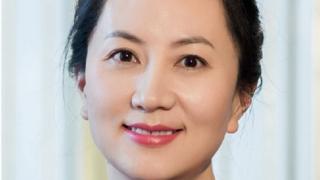
Image copyrightREUTERSImage captionMeng Wanzhou was arrested in Vancouver on 1 December
A high-flying Chinese executive has been caught in the centre of a growing geo-political dispute between two of the world’s largest economies.
Meng Wanzhou is the chief financial officer of Huawei and the elder daughter of the telecom giant’s founder.
She was arrested in Canada last week for allegedly breaking US sanctions on Iran and faces extradition to the US.
China and Huawei insist that she has not broken any laws but she could be jailed for up to 30 years if found guilty.
So who is she?
Ms Meng, also known as Sabrina Meng and Cathy Meng, has risen up the ranks of Huawei, China’s largest private company.
The 46-year-old started her career as a receptionist in 1993, and after graduating with a master’s degree in accountancy from the Huazhong University of Science and Technology in 1999, she joined Huawei’s finance department.
She became the company’s chief finance officer (CFO) in 2011 and was promoted to vice-chair a few months before her arrest.
In 2018, she was ranked 12th on Forbes’ list of top Chinese businesswomen, four spots lower than where she ranked the year before.
Image captionMs Meng has met world leaders like Russia’s Vladimir Putin in 2014
Ms Meng’s links to her father, billionaire Ren Zhengfei, were not known to the public until a few years ago.
At the age of 16, in a practice highly unusual in Chinese tradition, she took the surname of her mother, Meng Jun, who was Mr Ren’s first wife.
What is she charged with?
Ms Meng was taken into custody in Vancouver while she was changing planes on 1 December.
Prosecutors say she conspired to defraud banks by telling banks a Huawei subsidiary was a separate company – thereby helping Huawei circumvent US trade bans.
The US has been investigating the world’s largest smartphone maker since 2016, which it believes used a subsidiary to bring US manufacturing equipment and millions of dollars in transactions to Iran.
Ms Meng’s arrest has now sparked an escalating diplomatic incident between China, Canada and the US.
Life revealed in court
In documents filed in the Supreme Court of British Columbia, where Ms Meng’s case is being heard, details have emerged revealing the CFO’s personal life.
She is a thyroid cancer survivor who suffers from hypertension and a sleep disorder, her lawyers said, in need of daily doses of medication.
“I continue to feel unwell and I am worried about my health deteriorating while I am incarcerated,” she said in the filing. “I currently have difficulty eating solid foods and have had to modify my diet to address those issues.”
Her lawyers are seeking bail for the mother of four, who, they say, is not a flight risk because of her “strong roots” in Vancouver.
She told the court she was a Canadian resident until 2009, after which she returned to China.
Image captionMs Meng and her husband have put up two homes in Vancouver as collateral for bail
However, she bought a six-bedroom house with her second husband in the city and would return regularly to visit him and her children, some of whom attended Canadian schools until 2012.
That home is now reported to be worth C$5.6m (£3.3m, $4.2m), according to property records and an affidavit Ms Meng read out in court.
In 2016, the couple bought a second property, a mansion worth C$16.3m – both homes have been put up as collateral for bail.
Why Vancouver?
The court papers give a fascinating insight into the life of a senior Chinese executive, says BBC World Service Asia-Pacific editor Michael Bristow.
“Vancouver has for some years been a destination of choice for wealthy Chinese people; as a place to live, educate their children, or as an insurance policy against the uncertainties of life back in China.
“People will be intrigued to find out Ms Meng has not one but two homes in Vancouver, and wonder at how she was able to hold seven passports at the same time.”
How does she have seven passports?
This remains somewhat of a mystery.
According to media reports, the tech boss has at least four Chinese passports and three Hong Kong passports.
“In the past 11 years, Meng has been issued no fewer than seven different passports from both China and Hong Kong,” a letter from the US Department of Justice to Canada read, claiming she was a flight risk. It also listed the numbers of the seven passports.
Chinese rules dictate that if citizens want to get a passport from another country or region, they must give up their Chinese one.
Hong Kong immigration officials would not comment on Ms Meng’s case but stated no passport holder would be “in possession of more than one” at a time.
According to arrival and departure records of US Customs and Border Protection, Ms Meng used three different HK passports to enter the US on 33 occasions between 2014 and 2017.
Her second son is said to be studying at a school in Massachusetts but Ms Meng has not been back to the US since March 2017.
Canadian police told the court Huawei executives appeared to have “altered their travel plans” to avoid the US, since becoming aware of a criminal investigation into the company in April 2017.
But county government denies environment department statement, saying the men were ‘criticised and educated’ for using the banned heating fuel
That is according to the local environment department, which said in a statement on Saturday that the men, both surnamed Zhao, were detained by police in Quyang, Hebei province, last week.
But later in the day, the local government denied the department’s statement, saying it was “misinformation” and that the authorities had only “criticised and educated the men who burned low-quality coal”.
The environment department’s statement was later removed from its official account on social network WeChat.
China’s push to clean up its toxic air saw many local governments across the north of the country rush through a coal ban last winter. But a shortage of natural gas to replace coal heating systems left many households shivering in freezing temperatures, forcing the authorities into a U-turn on the ban. Without a reliable energy supply, the ban was relaxed and people in low-income areas were instead asked to choose high-quality coal over the low-end product to reduce emissions.
Ahead of winter this year, Quyang – located about 230km south of Beijing – is one of the local governments in northern China that has again cracked down on heating fuel used by families and businesses with a total ban on low-grade coal since late October.
It vowed to put a stop to pollution caused by low-quality coal and sent 30 law enforcement officers to villages in the county without central heating in late November to check that people were sticking to the ban, according to a statement on the local government’s website.
“Anyone who burns low-quality coal and pollutes the air will be detained and their image will be broadcast on TV so that others can learn a lesson from them,” the Quyang government said on November 27.
Since then, county authorities have confiscated 1,147 tonnes of low-quality coal and warned 13 households that have burned it, according to the local government.
It is not the first time Chinese have been detained for burning low-end coal or other fuel that is prohibited. In early November, Quyang authorities detained a Xiguo man for five days after police found him burning grass and hay on a hillside in the village.
“The hay burning was producing a lot of smoke and polluting the air … so Quyang police decided to detain him for five days,” the local environment department said.
County police said the detention was in line with the Security Administration Punishment Act, which states that “residents who do not obey government regulations in emergency or special times shall be detained for up to 10 days”.
In a case last winter, a man in Kaifeng, in central Henan province, was detained for eight days in December for burning low-quality coal, according to Bianliang Evening Post.
Beijing has said it will be less severe with its pollution curbs this winter as it grapples with slower economic growth and the trade war with the United States.
Last winter, it imposed blanket bans on industrial production in the Beijing-Tianjin-Hebei region, which is often the worst affected by choking smog. But in September the environment ministry said it would let steel plants continue producing as long as their emissions met standards.
Chinese Vice President Wang Qishan delivers a keynote speech during the opening ceremony of the 2018 Imperial Springs International Forum in Guangzhou, south China’s Guangdong Province, Dec. 10, 2018. (Xinhua/Zhang Ling)
GUANGZHOU, Dec.10 (Xinhua) — Chinese Vice President Wang Qishan on Monday said China will follow the trend of history, adapt to and lead economic globalization while eliminating its side effects, maintain the rules-based multilateral trading system, enhance equal consultation and cooperation, and jointly build an innovative, inclusive and open world economy.
The remarks came as Wang attended the opening ceremony of the 2018 Imperial Springs International Forum in China’s southern city of Guangzhou.
Some 200 former world leaders, renowned scholars and business elites gathered here to exchange their views on “Advancing Reform and Opening-up, Promoting Win-win cooperation”.
This year marks the 40th anniversary of China’s reform and opening-up, which, according to Wang, is a glorious chapter for the Chinese nation’s great rejuvenation history, and not only profoundly changed China, but also deeply influenced the world.
Reviewing China’s reform and opening-up, Wang stressed that the process is linked to the exploration and practices of socialism carried out 30 years before 1978, the history of Chinese people’s struggle for national rejuvenation since 1840, as well as the sufferings and glory of the Chinese nation over the past 5,000 years.
“The sufferings and glory of history are the source of the present,” said Wang, adding that socialism with Chinese characteristics has entered a new era and the Chinese nation is closer to the goal of great rejuvenation than any other time in history.
He said the door to China will never be closed and will only be opened wider and wider, and this is a strategic choice based on China’s development needs.
China will firmly adhere to its own path, work in a down-to-earth way on its own tasks, continue mutual learning and cooperation with other countries, build a peaceful world, contribute to global development and maintain international order, Wang said.
Noting that the interests of countries around the world are deeply intertwined nowadays, Wang said China will be committed to the path of peaceful development, uphold new forms of international relations featuring mutual respect, fairness, justice and win-win cooperation, and build a community with a shared future for humanity featuring lasting peace and common prosperity.
Chinese President Xi Jinping (L, front) holds a welcoming ceremony for German President Frank-Walter Steinmeier before their talks at the Great Hall of the People in Beijing, capital of China, Dec. 10, 2018. (Xinhua/Wang Ye)
BEIJING, Dec. 10 (Xinhua) — Chinese President Xi Jinping and visiting German President Frank-Walter Steinmeier agreed Monday to further intensify the all-round strategic partnership between the two countries, to make bilateral cooperation yield more fruits that benefit both nations, both peoples, and the world peace and prosperity.
Noting that the world is undergoing complicated and profound changes, Xi said China and Germany share the same or similar views on many issues.
The two nations need to continue enhancing bilateral and multilateral cooperation to benefit both peoples as well as bring more stability to the world, said Xi.
He made several proposals for future China-Germany cooperation.
Mutual understanding and trust are the basis of deepening bilateral ties, said Xi.
It is the mainstream view of both governments and all circles in both countries to have win-win cooperation, he said.
Xi called on both nations to summarize the successful experiences of bilateral cooperation and continue to surpass ideological differences and respect each other’s development paths.
China stands ready to maintain close high-level exchanges and make the best of various dialogue mechanisms to enhance policy communication, he said.
The two nations need to stick to openness and innovative cooperation to maintain the vitality of bilateral ties, said Xi.
This year marks the 40th anniversary of China’s reform and opening up policy.
German enterprises have grasped the opportunities of China’s new round of reform and opening-up, said Xi.
China is willing to continue to share its dividend of development and at the same time hopes Germany will remain open to Chinese investment, said the president.
On expanding cooperation, Xi said the Belt and Road construction could provide a major platform.
China would like to discuss trilateral cooperation with Europe and Germany and promote the synergy of the Belt and Road Initiative with the EU-proposed connectivity plan, said Xi, adding that China will further cooperate on the China Railway Express with Germany and countries along the route.
He also encouraged both sides to promote people-to-people exchanges and provide more platforms for exchanges in areas including culture, education, youth, and sports.
Xi called on both nations to forge ahead with global governance, jointly build an open world economy, uphold the multilateral free trade system, implement the Paris Agreement on climate change, promote the robust, sustainable, balanced and inclusive growth of the world economy and jointly safeguard multilateralism with the United Nations as the core.
He suggests China and Europe coordinate and support each other to safeguard the international order and promote global governance, adding that he hopes Germany can continue to play an active role to this end.
Steinmeier, who is on his first state visit to China as president, said that his visit to various parts of China has made him admire more the achievements China has made in the past four decades of reform and opening-up, especially the success of getting several hundreds of millions of people out of poverty.
The economic and social development of the areas in the southwestern Chinese province of Sichuan which were hit by an 8.0-magnitude earthquake 10 years ago was very impressive, said Steinmeier.
He said Germany is satisfied with the development of Germany-China relations and willing to enhance dialogue and mutual understanding, expand consensus, narrow differences, intensify coordination in international affairs and uphold free trade.
Germany opposes protectionism in any form, said Steinmeier, adding that the country will continue to promote cooperation between Europe and China and boost connectivity between Eurasia and China.
Before the talks, Xi held a welcoming ceremony for Steinmeier.
Steinmeier’s state visit to China lasts from Dec. 5 to 10. Prior to Beijing, he went to the southern city of Guangzhou and southwestern city of Chengdu.





 CHINDIA ALERT: You'll be living in their world, very soon
