Chindia Alert: You’ll be Living in their World Very Soon
aims to alert you to the threats and opportunities that China and India present. China and India require serious attention; case of ‘hidden dragon and crouching tiger’.
Without this attention, governments, businesses and, indeed, individuals may find themselves at a great disadvantage sooner rather than later.
The POSTs (front webpages) are mainly 'cuttings' from reliable sources, updated continuously.
The PAGEs (see Tabs, above) attempt to make the information more meaningful by putting some structure to the information we have researched and assembled since 2006.
Chinese State Councilor and Foreign Minister Wang Yi (2nd L) poses for a group photo with Brazilian Foreign Minister Ernesto Araujo (3rd L), Russian Foreign Minister Sergey Lavrov (1st L), South African Foreign Minister Naledi Pandor (2nd R) and India’s Minister of State for External Affairs Vijay Kumar Singh in Rio de Janeiro, Brazil, July 26, 2019. Wang Yi attended the Formal Meeting of the BRICS Ministers of Foreign Affairs in Rio de Janeiro. (Xinhua/Xin Yuewei)
RIO DE JANEIRO, July 27 (Xinhua) — The rise of emerging markets and developing countries, represented by the BRICS countries, has bolstered a more multi-polar world, Chinese State Councilor and Foreign Minister Wang Yi said here on Friday.
At the Formal Meeting of the BRICS Ministers of Foreign Affairs, Wang also said BRICS cooperation is not a band-aid solution for the five countries but a strategic choice that focuses on common and long-term development and harbors bright prospects.
The five countries are Brazil, Russia, India, China and South Africa.
Wang said no matter how the international landscape changes, the direction of the BRICS cooperation must not change. Faced with new challenges, the five countries should let their voices be heard, offer more solutions to pressing global issues and play a greater role in world affairs.
Wang pointed out that unilateralism undermines international rules and challenges the international rule of law, which exacerbates the instability and uncertainty of the world.
The BRICS countries must take the lead in maintaining multilateralism and safeguarding the global governance system with the UN as its core and under international law.
Furthermore, the bloc should safeguard the multilateral trading system represented by the WTO and protect the common interests and development space of emerging market and developing countries, he said.
The five countries together must continue to integrate the interests of other emerging market countries and developing countries through flexible and diverse platforms such as “BRICS Plus.”
At the meeting, the five foreign ministers all agreed to safeguard the purposes and principles of the UN Charter, defend multilateralism and free trade, oppose unilateralism and protectionism, strengthen global governance, and build a community with a shared future for humankind.
They agreed that regional hotspot issues should be resolved through dialogue and consultation and that BRICS cooperation should work to benefit the peoples of the five countries.
The foreign ministers also agreed to maintain vigilance on cybersecurity issues and expressed opposition to the use of cybersecurity to suppress the development of science and technology in other countries. They agreed to strive toward an open and non-discriminatory environment for the application of information technology.
The foreign ministers were tasked with preparing for the BRICS summit to be held in Brasilia in November.
Chinese Foreign Minister Wang Yi wraps up tour of Brazil and Chile, as Colombian president heads for Beijing
Ecuador president tells US Secretary of State Mike Pompeo ‘smaller countries pay when the big ones fight’
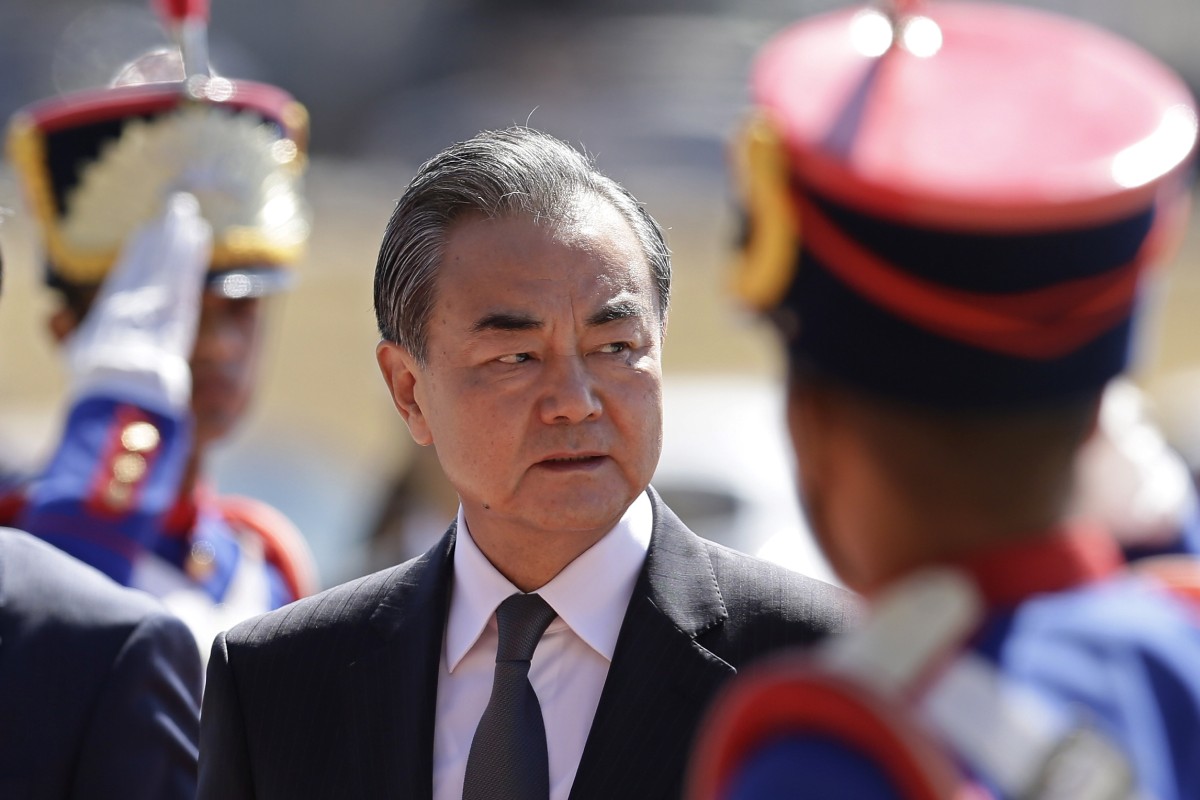
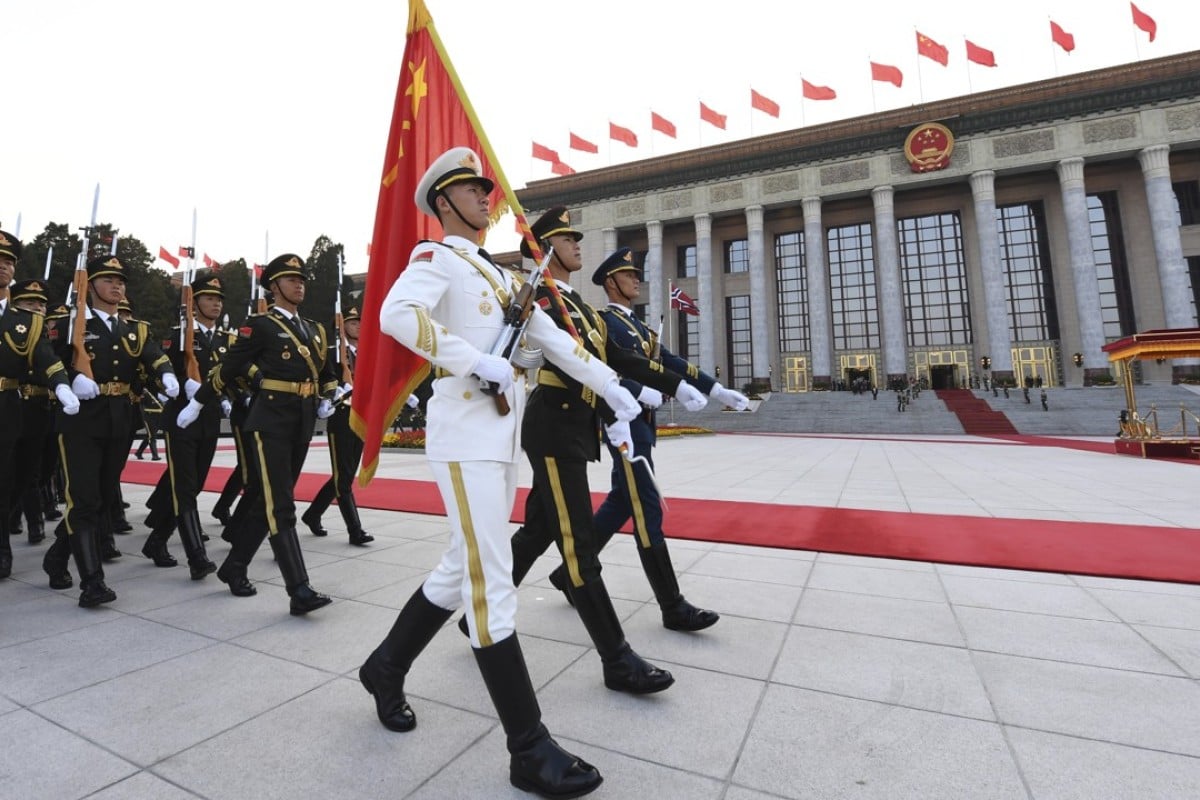
Chinese Foreign Minister Wang Yi is greeted by an honour guard as he arrives at the Itamaraty Palace for a meeting with his Brazilian counterpart Ernesto Araujo on Thursday. Photo: AP
Latin American countries are caught in the middle of a geopolitical tug of war between Beijing and Washington as China boosts its ties in the region in a bid to counterbalance the effects of its trade war with the US.
China’s Foreign Minister Wang Yi wraps up a tour of Latin America on Sunday which began last week in Brazil and ended with an official visit to Chile. He returns to Beijing on the same day Colombia’s President Ivan Duque Marquez arrives for a three-day state visit to China which will include a meeting with Chinese President Xi Jinping.
Wang was in Brazil for the latest summit of foreign ministers from the BRICS countries – an association of emerging countries made up of Brazil, Russia, India, China and South Africa – as well as the third China-Brazil foreign ministers’ comprehensive strategic dialogue with Brazilian Foreign Minister Ernesto Araujo.
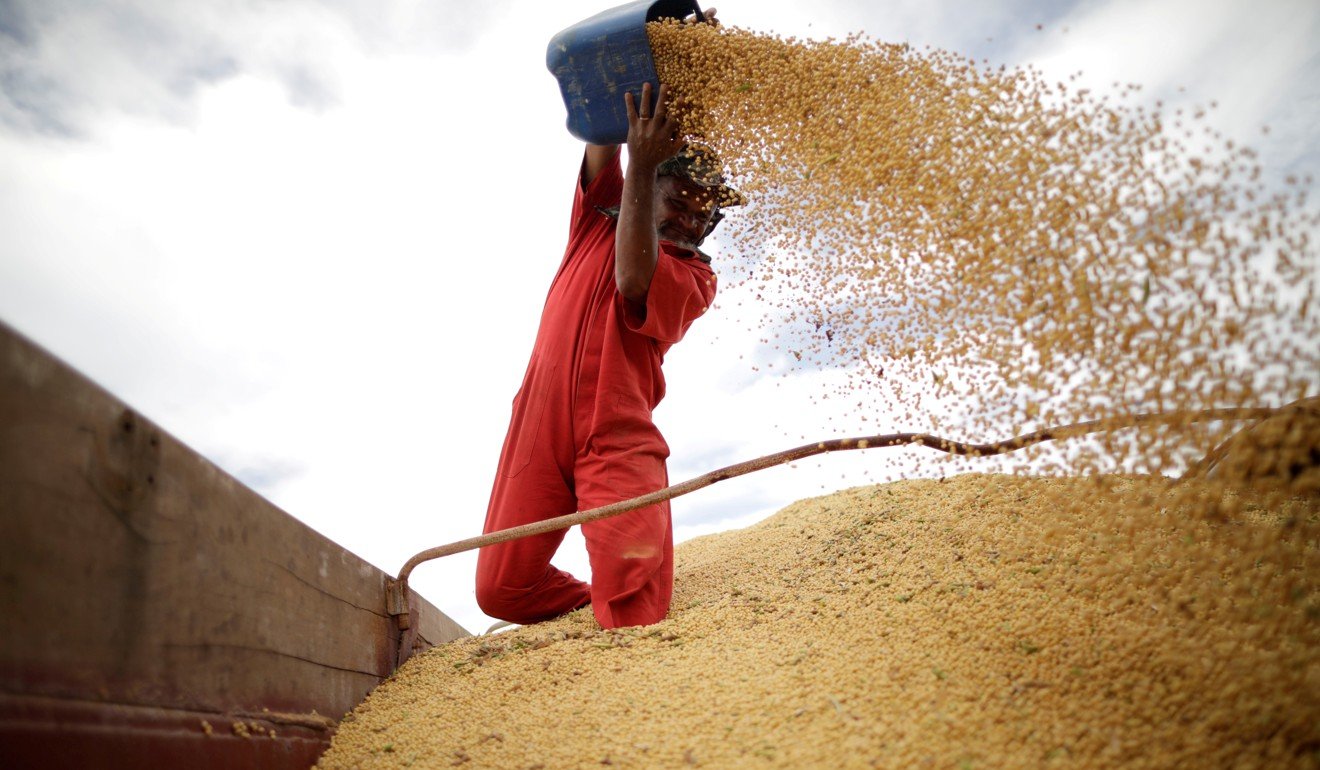
China has overtaken the US as Brazil’s largest trading partner, with Brazilian soybeans – one of the country’s biggest exports – and other agricultural products replacing American imports since the start of the US-China trade war a year ago.
Brazilian soybeans – one of the country’s biggest exports – and other farm products are being sold to China as a result of the trade war. Photo: Reuters
The growing importance of China to Brazil’s economy has created a difficult position for President Jair Bolsonaro, who accused Beijing of trying to buy Brazil during his election campaign, but changed tack on assuming office in January.
In March, Bolsonaro called China his country’s “main partner, politically as well as economically and commercially” and announced plans to travel to Beijing this year, a visit which was confirmed on Tuesday for late October.
China is now Latin America’s second largest trading partner with bilateral trade at US$307.4 billion, growing 18.9 per cent over the previous year, according to China’s ministry of commerce, in a relationship focused on commodity imports, including mining products like copper and energy, as well as soybeans and other agricultural goods.
While the US and China have tentatively agreed to resume talks in Shanghai next week, China and Latin American countries are likely to continue deepening their trade relations as production chains realign as a result of the trade war, according to Gustavo Oliveira, assistant professor of global and international studies at the University of California, Irvine.
“This means Chinese imports of Latin American agricultural and mineral commodities, and Latin American imports of Chinese manufactured products and hi-tech, might contribute to China’s ability to stand its ground against US pressure,” he said.
China in Latin America: partner or predator?
Oliveira said domestic contradictions in most Latin American countries complicated relations with China, as few leaders had the capacity to press or leverage China for much. “Unfortunately, therefore, most in this crop of Latin American leaders are basically placing themselves as junior partners or pawns in the geopolitical tug of war between the US and China.”
US Secretary of State Mike Pompeo put the pressure on Latin American countries over their relationship with China during his four-day tour of the region last weekend, when he visited Argentina, Ecuador, Mexico, and El Salvador.
In a joint interview with Pompeo during the visit, Ecuador’s new President Lenin Moreno defended the country’s China ties, and urged Washington and Beijing to resolve their conflicts for the benefit of other nations in the region.
“We hope that the US and China, the greatest powers in the world now, will find agreement easily because, unfortunately, when the big ones are discussing or fighting and have conflicts, the ones that are paying for all of that are the smaller countries,” he said.
“Now, when two elephants fight, the ones who lose are the insects who are of course being crushed by the elephants in the attempt to evade them.”
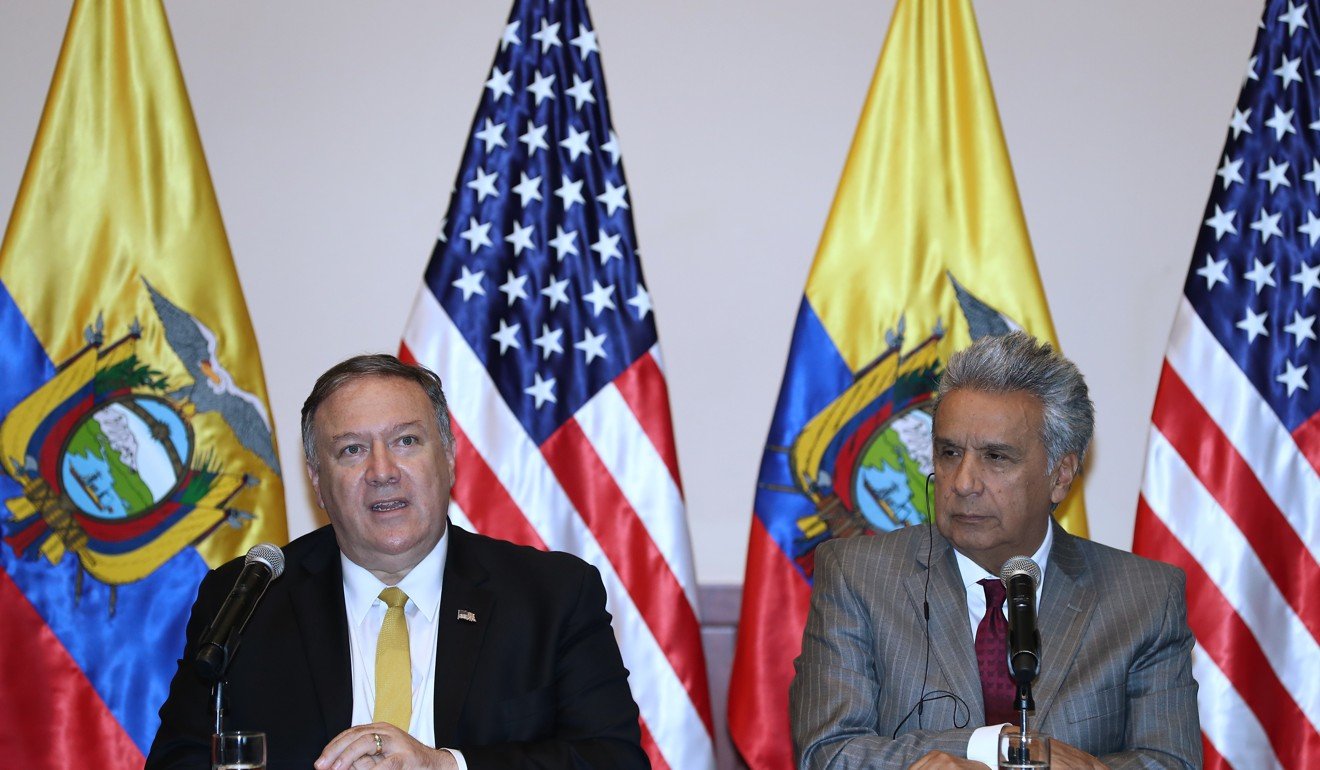
US Secretary of State Mike Pompeo (left) and Ecuadorian President Lenin Moreno hold a joint press conference during Pompeo’s tour of Latin America on July 20. Photo: EPA-EFE
Pompeo blasted China’s role in the region during a previous tour of South America in April, when he singled out Beijing’s support for President Nicolas Maduro of Venezuela. Maduro is backed by Beijing, Russia and other allies, while the US and many European countries have supported opposition leader Juan Guaido as legitimate president since elections in January.
Speaking from Chile on that tour, Pompeo said Beijing’s calls for non-intervention in Venezuela were “hypocritical” and aimed at protecting Beijing’s investments in the country, as well as debts owed to China by Venezuela.
Pompeo also accused Beijing of “sowing discord” in the region through debt traps. “When China does business in places like Latin America, it often injects corrosive capital into the economic bloodstream, giving life to corruption and eroding good governance,” he said.
Professor Cui Shoujun of Renmin University in Beijing said Washington’s concerns about “debt trap diplomacy” in Latin America reflected concerns that China’s growing involvement in financing infrastructure and development projects would make the region more pro-China.
“China’s interests in Latin America go beyond raw materials extraction,” he said. “The biggest point of tension between the US and China in the region is perhaps that China presents an alternative model for development that is very different from the Western model.”
‘Mr Pompeo, you can stop’: China hits back over Latin America criticism
While the US was drumming up tensions about China across the world, Beijing was not openly retaliating but responding with investment and trade for global partners, said Kevin Gallagher, researcher on China-Latin America ties, and professor at Boston University.
“The US points fingers and makes angry speeches in the region as China cuts investment deals and helps address infrastructure needs,” he said.
“Latin American countries’ governments are rightly keeping their heads down on the broader geopolitical winds, and are getting down to business with their largest trading partner.”
PAHALGAM, India (Reuters) – India is hailing a Hindu pilgrimage to a holy cave high in the snow-capped mountains of contested Kashmir as an example of communal harmony, in a region where the Muslim-majority population is overwhelmingly hostile to its rule.
India and arch-rival Pakistan have fought two wars over Kashmir, and came close to a third in February after a suicide-bomb attack by Pakistan-based militants on Indian paramilitary police near the pilgrimage route.
India’s Hindu-nationalist government led by Prime Minister Narendra Modi has made “pilgrimage tourism” a focus, spending huge sums on January’s Kumbh Mela festival, where more than a hundred million Indians came to bathe in the holy Ganges river.
For the Amarnath Yatra pilgrimage in the Pahalgam area, the Jammu and Kashmir state government has spent a record $72 million on preparations for the six-week event that began on July 1.
“It is a perfect example of religious harmony,” said Anup Kumar Soni, additional chief executive of the Amarnath Ji Shrine Board, which organises the pilgrimage.
Amarnath Cave, covered by snow almost all year round, contains an ice stalagmite that is considered a physical manifestation of Lord Shiva, a Hindu god.
Saffron-clad Hindu ascetics, some barefoot and with photos of the cave around their necks, trudge the 46 km (28 mile) route to the cave across glaciers and waterlogged trails.
Muslim Kashmiri villagers in long woollen coats clear the way of snow and ice, and thousands of Indian troops are deployed to guard against attacks by Muslim militant groups.
The route is arduous. One in four of the 300,000 pilgrims who have visited this year have required medical treatment, and 24 have died, mainly from heart attacks and hypertension, according to government statistics.
‘ALWAYS FRIENDLY’
While thousands of Kashmiris work to clear the path, thousands more rent ponies and palanquins to the pilgrims, and tents for them to sleep in.
“Everyone is always friendly, there is no hostility here,” said a Hindu pilgrim who give his name as Abhhinav, hiking up a steep track in driving rain to one of the passes on the route that reaches nearly 4,500 metres (15,000 feet) in places.
The pilgrimage has been attacked repeatedly by militant groups – the last time in 2017 when eight pilgrims were killed in an ambush.
This year, the government has set up a bar-coding system, allowing only registered people onto the trail.
Separatists in Muslim-majority Kashmir have been campaigning against the government of Hindu-majority India for years, including a campaign of violence by militants, and an Indian security force response that Kashmiris often condemn as heavy handed.
The trouble has badly affected the region’s farming and tourism industries.
In Pahalgam, the pilgrimage offers a lifeline for many families.
“There is no private sector here, and so educated youth and many other Kashmiris are depending on the Yatra,” said Firoz Ahmed Wani, a history graduate and part-time tutor renting out two tents to pilgrims paying 200 rupees ($2.90) a night, at a camp along the route.
“We’re ordinary people. The conflict is something for the politicians to decide.”
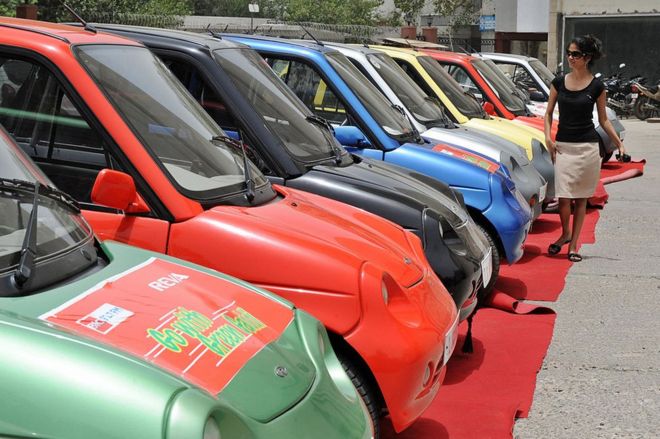
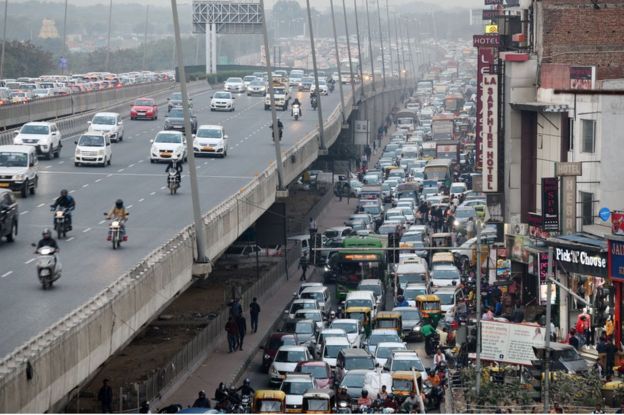
Image copyright GETTY IMAGESImage caption India wants to move to 30% electric cars by 2030
India is making a big push for electric vehicles, signalling a turning point in its clean energy policy, writes energy writer Vandana Gombar.
In 2017, Transport Minister Nitin Gadkari shocked the automobile industry (and the world) when he announced that he intended for India to move to 100% electric cars by 2030.
“I am going to do this, whether you like it or not. And I am not going to ask you. I will bulldoze it,” he said at an industry conference.
That was an ambitious target given that even the UK and France were hoping to phase out conventional combustion-engine cars only by 2040.
Mr Gadkari and his Bharatiya Janata Party or BJP-led government eventually diluted their plans for electric passenger cars – from 100% the target is now down to 30%.
Image copyright GETTY IMAGESImage caption India has some of the world’s most polluted cities, including Delhi
A pushback by the industry and the fear of job losses were among the reasons for the government to do so.
The government has now decided to focus on the segment below cars: two-wheelers, where sales are much higher, and three-wheelers (largely auto-rickshaws).
In the financial year that ended in March, about 3.4 million passenger cars were sold in the country against 21.2 million two-wheelers, according to data released by Indian automobile manufacturers. The number of three-wheelers sold totalled 0.7 million.
The new proposal is to have only electric three-wheelers operating in the country by 2023, and only electric two-wheelers by 2025.
The government seems to have two dominant objectives – to control pollution and take the lead in an emerging industry.
Media caption How an electric car can make money
India wants to become a “global hub of manufacturing of electric vehicles”, Finance Minister Nirmala Sitharaman said in her budget speech earlier this month. The Economic Survey, a government forecast, released a day before the budget envisaged an Indian city possibly emerging as the “Detroit of electric vehicles” in the future.
But it will be a challenge to create a competitive advantage in electric vehicle manufacturing, or even a market for them, given that India does not have the infrastructure or deep pockets that the world’s current leader in electric mobility, China, has.
The American electric carmaker, Tesla, is setting up a manufacturing plant in Shanghai that is expected to be operational by the end of 2019.
India can perhaps learn a few lessons from China. The authorities there spurred sales partly by placing caps on the number of conventional combustion vehicles that can be sold in its most congested and polluted cities. Beijing has also limited the number of electric vehicles that can be sold. Further, car manufacturers now have to ensure that a specified share of their production is of so-called zero emission vehicles.
Another inspiration for India could be Norway, where electric vehicles accounted for half of last year’s total car sales. A phase-out of combustion vehicles in the country is planned by 2025.
Media caption Why is Norway the land of electric cars?
But there are many encouraging signs in India too.
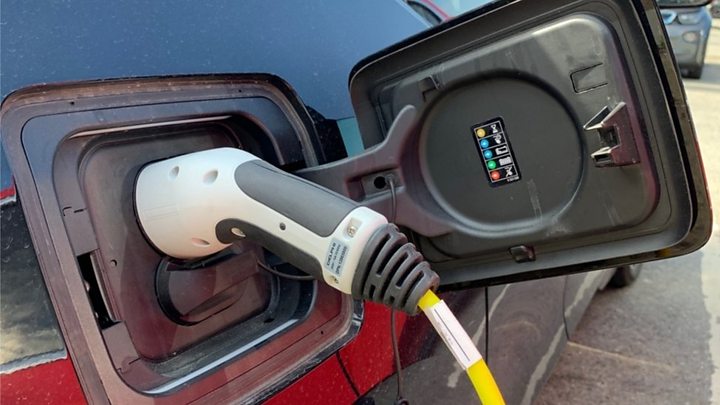
For one, charging stations are being built at government offices, malls and even within neighbourhoods. Government-owned power companies such as Bharat Heavy Electricals and Energy Efficiency Services plan to begin rolling out charging stations soon. The latter is looking at 10,000 stations over the next two years.
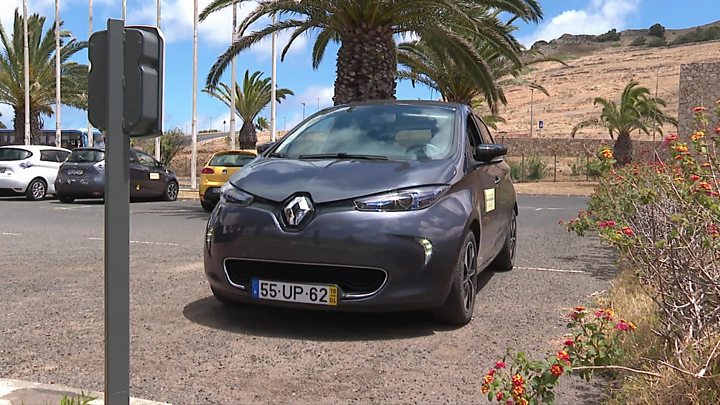
Second, electric vehicle models are proliferating. Hyundai launched its electric Kona car in India in July and Nissan is expected to launch its Leaf model soon. Indian carmakers Mahindra & Mahindra and Tata Motors both sell electric cars.
There are already several models of electric two-wheelers, and bike-sharing companies like Bounce are also going electric. Electric buses too can be spotted in many cities, partly fuelled by incentives. India’s capital, Delhi, is expected to have 1,000 electric buses running on its roads soon.
Even taxi-hailing apps and home delivery services have taken to ferrying parcels and passengers on electric bikes. After a pilot run with electric cabs, Indian ride-hailing giant Ola is now focussing on electric bikes and three-wheelers.
Instead of charging batteries, which could be a time-consuming task, it intends to opt for a battery swapping model where a fully charged battery would quickly replace the discharged one at swapping stations. Bounce too is experimenting with battery swaps.
Image copyright GETTY IMAGESImage caption India sold 3.4 million passenger cars this past financial year
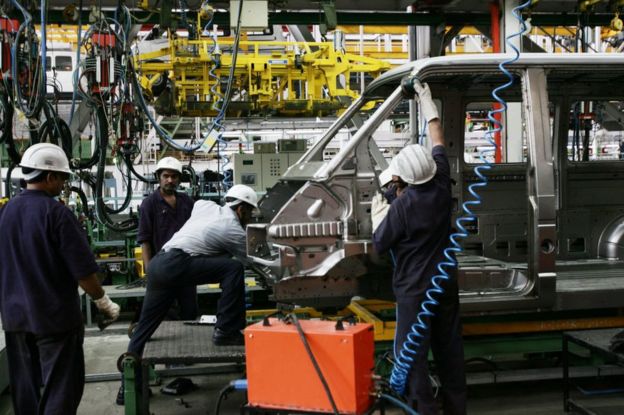
The government is also planning to offer incentives for manufacturing electric vehicles and batteries to boost economic growth and encourage local manufacturing under its Make in India initiative.
The falling cost of batteries could boost India’s electric mobility plans, and make it that much easier for electric vehicles to be competitive with those running on other fuels. And there is the added bonus of cleaner air.
That would push India towards electric mobility in its own unique style and at its own unique pace.
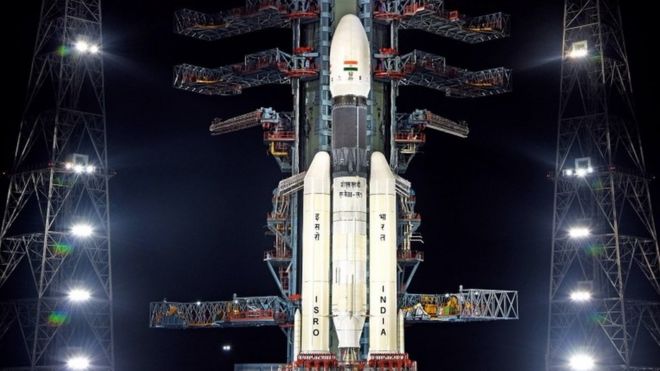
Image copyright EPAImage caption The rocket weighs as much as a fully-loaded jumbo jet
India is set to re-attempt the launch of its second lunar mission a week after it halted the scheduled blast-off due to a technical snag.
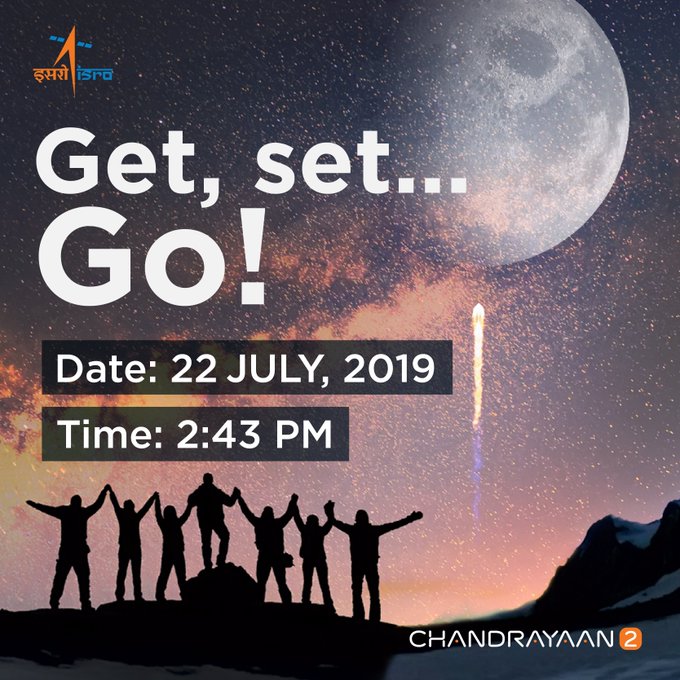
Chandrayaan-2 will be launched at 14:43 local time (09:13 GMT) on Monday, space agency Isro said.
It added the spacecraft was ready “to take a billion dreams to the Moon – now stronger than ever before”.
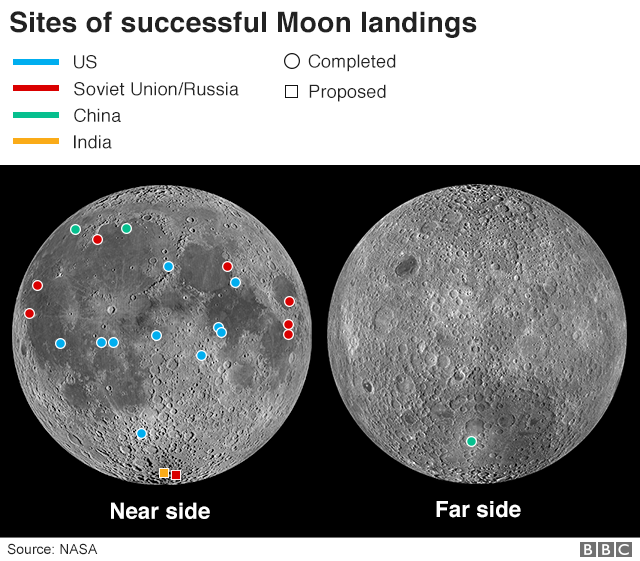
The space agency hopes the $150m (£120m) mission will be the first to land on the Moon’s south pole.
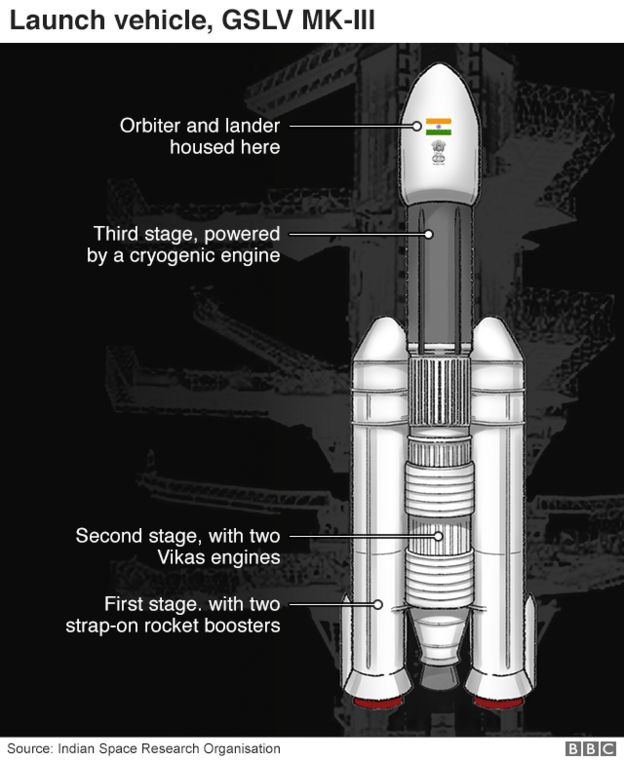
The countdown on 15 July was stopped 56 minutes before launch after a “technical snag was observed in [the] launch vehicle system”, according to Isro. Indian media have reported that a leak from a helium gas bottle in the cryogenic engine of the rocket was to blame.
The fuel from the rocket was drained and the scientists resolved the glitch.
“It was a simple to fix [but it was] a serious problem that could have resulted in total failure,” says a source at Isro.
Isro thanked people for supporting the mission despite the delay.
Chandrayaan 2 is ready to take a billion dreams to the Moon — now stronger than ever before! Join us for the launch on Monday — 22 July, 2019 — at 2:43 PM IST. #Chandrayaan2#GSLVMkIII#ISRO
India’s first lunar mission in 2008 – Chandrayaan-1 – did not land on the lunar surface, but it carried out the first and most detailed search for water on the Moon using radars.
Chandrayaan-2 (Moon vehicle 2) will try to land near the little-explored south pole of the Moon.
The mission will focus on the lunar surface, searching for water and minerals and measuring moonquakes, among other things.
India is using its most powerful rocket, the Geosynchronous Satellite Launch Vehicle Mark III (GSLV Mk-III), in this mission. It weighs 640 tonnes (almost 1.5 times the weight of a fully-loaded 747 jumbo jet) and at 44 metres (144ft) is as high as a 14-storey building.
The spacecraft weighs 2.379kg (5.244lb) and has three distinct parts: an orbiter, a lander and a rover.
The orbiter, which has a mission life of a year, will take images of the lunar surface, and “sniff” the tenuous atmosphere.
The lander (named Vikram, after the founder of Isro) weighs about half as much, and carries within its belly a 27kg Moon rover with instruments to analyse the lunar soil. In its 14-day life, the rover (called Pragyan – wisdom in Sanskrit) can travel up to a half a kilometre from the lander and will send data and images back to Earth for analysis.
“India can hope to get the first selfies from the lunar surface once the rover gets on its job,” Dr K Sivan, the Isro chief, said before the first launch attempt.
Media caption Is India a space superpower?
How long is the journey to the Moon?
The launch is only the beginning of a 384,000km (239,000-mile) journey – Isro is still hoping the lander will touch down on the Moon on 6 or 7 September as planned, despite the week-long delay of the launch.
The journey of more than six weeks is a lot longer than the four days the Apollo 11 mission 50 years ago took to reach the Moon- and land humans on the lunar surface for the first time.
In order to save fuel, India’s space agency has chosen a circuitous route to take advantage of the Earth’s gravity, which will help slingshot the satellite towards the Moon. India does not have a rocket powerful enough to hurl Chandrayaan-2 on a direct path. In comparison, the Saturn V rocket used by the Apollo programme remains the largest and most powerful rocket ever built.
“There will be 15 terrifying minutes for scientists once the lander is released and is hurled towards the south pole of the Moon,” Dr Sivan said.
He explained that those who had been controlling the spacecraft until then would have no role to play in those crucial moments. The actual landing, he added, was an autonomous operation dependent on all systems performing as they should. Otherwise, the lander could crash into the lunar surface.
Nearly 1,000 engineers and scientists have worked on this mission. But for the first time, Isro has chosen women to lead an interplanetary expedition.
Two women are steering India’s journey to the Moon. While programme director Muthaya Vanitha has nurtured Chandrayaan-2 over the years, it will be navigated by Ritu Karidhal.
Relations between the Asian giants had been strained after a 73-day military stand-off at their disputed border last year
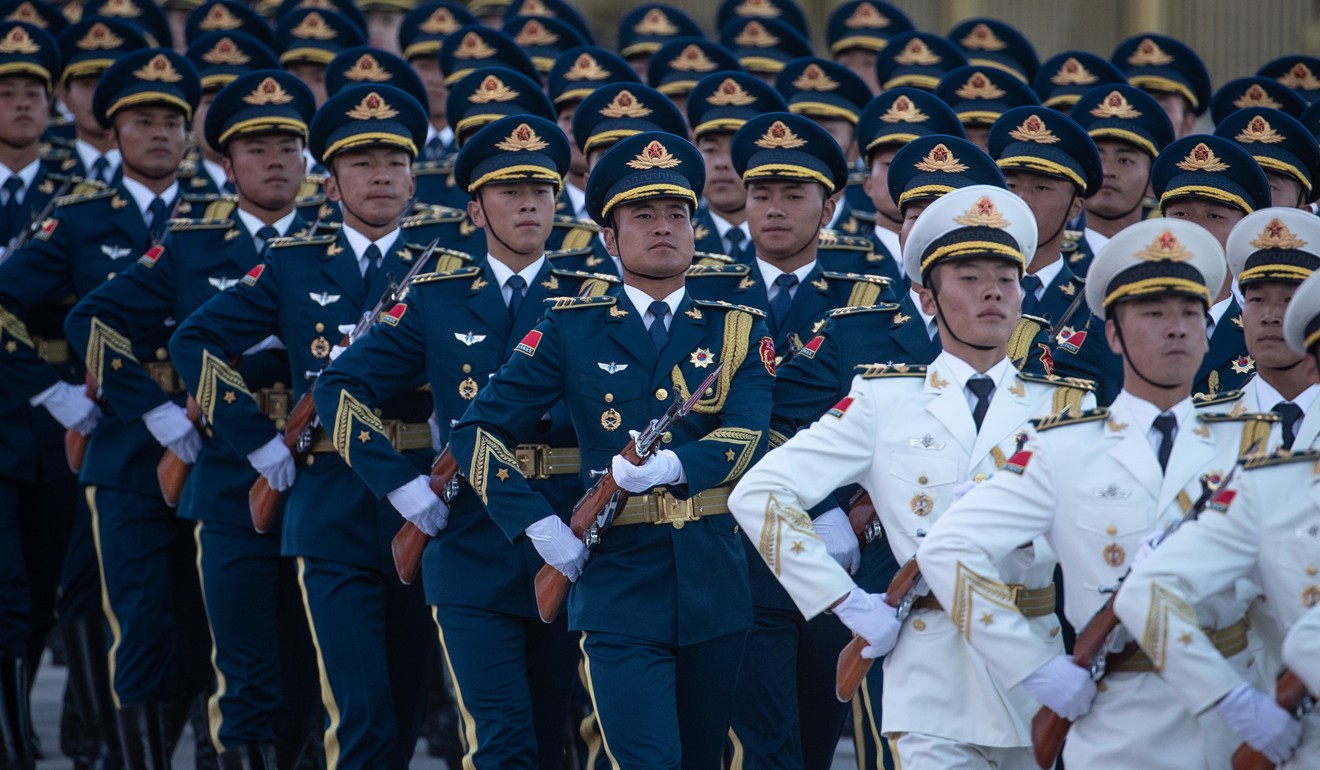
The Chinese People’s Liberation Army in Beijing. Photo: EPA
China and India aim to hold joint army drills in China before the end of this year, China’s Defence Ministry said on Thursday, as the two countries continue a rapid rapprochement.
Relations between the Asian giants were strained last year over a 73-day military face-off in a remote, high-altitude stretch of their disputed Himalayan border.
Chinese ‘tourists’ face 7 years in Indian jail over shahtoosh shawls made from endangered antelope
But the neighbours have over recent months been working on mending ties and Chinese Defence Minister Wei Fenghe met Indian Prime Minister Narendra Modi in New Delhi in August.
Speaking at a regular monthly news briefing, Chinese Defence Ministry spokesman Wu Qian said that the joint exercise was planned for before the end of this year.
China and India are aiming to hold joint army drills this year as part of an ongoing rapprochement. Photo: EPA
The two countries would meet in the southwestern Chinese city of Chengdu next month to discuss the arrangements, he added, without giving other details.
India and China fought a war in 1962 and the unresolved dispute over stretches of their 3,500km (2,200 miles) border has clouded relations ever since.
But the two big Asian economies share similar positions on a host of issues including concern about US tariffs and Chinese President Xi Jinping and Modi agreed in April to improve relations.
Chinese president also called for the three nations to uphold multilateralism in talks with Vladimir Putin and Narendra Modi in Osaka
In a separate meeting with other BRICS leaders, he said Beijing opposed ‘illegal and unilateral sanctions’ and ‘long-arm jurisdiction’
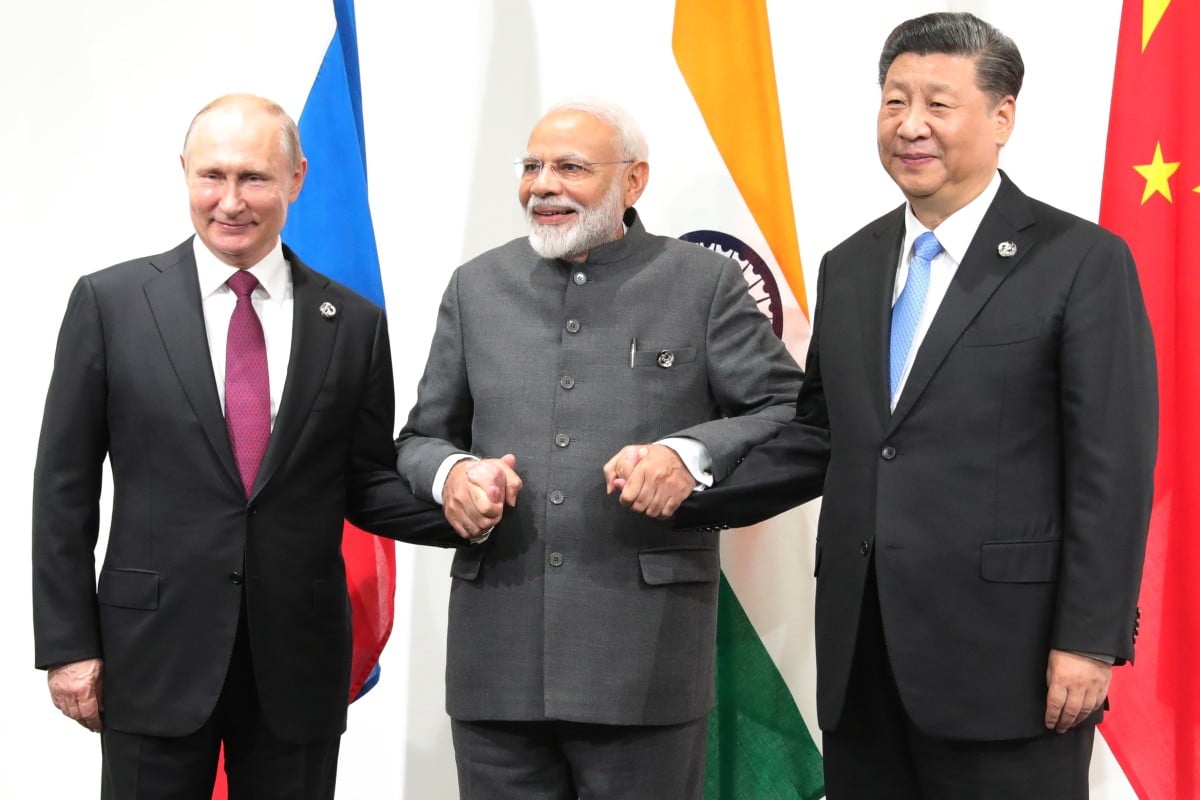
(From left) Russian President Vladimir Putin, Indian Prime Minister Narendra Modi and Chinese leader Xi Jinping meet on the sidelines of the G20 summit in Osaka, Japan, on Friday. Photo: EPA-EFE
Chinese President Xi Jinping on Friday called on the leaders of Russia and India to take “global responsibility” to safeguard the three countries’ interests and uphold multilateralism, as Beijing seeks to rally support amid its protracted trade war with Washington.
Xi made the remarks during a trilateral meeting with Vladimir Putin and Narendra Modi on the sidelines of the annual
with US President Donald Trump, seeking to reach a truce on the year-long trade conflict between the world’s two biggest economies.
“The rise of protectionism and unilateralism has severely affected global stability and economic growth, as well as the existing international order which emerging economies and developing countries have relied on,” Xi was quoted as saying by state broadcaster CCTV.
“China, Russia and India should take on global responsibility to safeguard the fundamental and long-term interests of these three countries and the world,” he said.
Xi also called for the nations to promote “a more multipolar world and the democratisation of international relations” – meaning with less reliance on a US-led world order.
During a meeting with leaders of the other BRICS countries – major emerging economies Brazil, Russia, India, China and South Africa – Xi also said Beijing opposed what it saw as “illegal and unilateral sanctions” and “long-arm jurisdiction”.
The efforts to forge closer ties among China, Russia and India come as all three nations are locked in disputes with the United States.
New Delhi, a key strategic ally in Washington’s Indo-Pacific policy to contain China’s rise, has been upset over tariffs imposed on Indian goods by the Trump administration. Meanwhile, geopolitical rivalry and the Kremlin’s alleged meddling in US elections has strained relations between Moscow and Washington.
Beneath the smiles and handshakes, tensions simmer as world leaders meet for G20
Wu Jianghao, director general of the Chinese foreign ministry’s Asian affairs department, said the trilateral meeting laid out a framework for future cooperation.
“The three countries have spoken with one voice on some major global issues, helping stability and injecting positive energy to the current international situation – which is filled with instability and uncertainties,” Wu said at a briefing on Friday.
Wu said that the leaders did not talk about Huawei Technologies or 5G networks, but that the three countries had maintained good communication on telecoms issues and would continue to cooperate.
Washington has banned US companies from selling American technology to Huawei and put pressure on its allies to block the Chinese tech firm over security concerns.
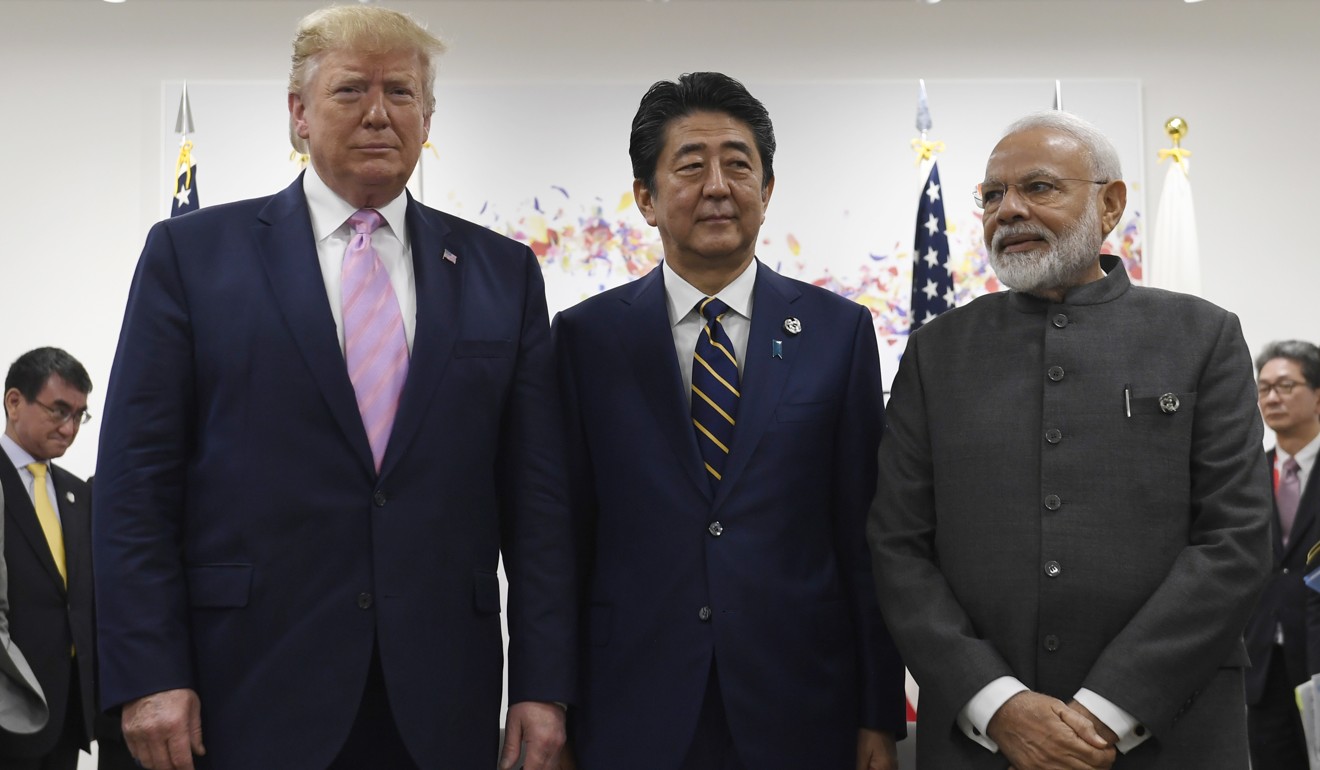
(From left) US President Donald Trump, Japanese Prime Minister Shinzo Abe and Indian Prime Minister Narendra Modi pose for a photo before their meeting. Photo: AP
Meanwhile, the United States is also seeking to build ties with India, with Trump holding trilateral talks with Modi and Japanese Prime Minister Shinzo Abe on Friday.
Indian Foreign Secretary Vijay Gokhale described that trilateral meeting as “very good”, saying it was “short but very productive”.
“The main topic of discussion was the Indo-Pacific, about how the three countries could work together in terms of connectivity, infrastructure and ensuring that peace and stability is maintained, and working together to build upon this new concept so that it would benefit the region as a whole and the three countries,” Gokhale said.
On the Modi-Trump bilateral meeting, he said the two leaders had “a very warm discussion”. They also briefly discussed 5G, with the focus on business cooperation between the two countries to leverage their technology and the potential of the Indian market, according to Gokhale.
He said the discussion of how to develop 5G networks was “in terms of business, not in terms of governments”. “It’s an exciting new area that India and the US can work together [on],” he said.
SRINAGAR, India (Reuters) – Tensions in disputed Kashmir after a deadly suicide bombing earlier this year are having a severe impact on human rights in the region, a United Nations report released on Monday said.
Muslim-majority Kashmir is claimed in full by India and Pakistan, who both rule it in part and have fought two wars over the territory. They came close to a third in February after the suicide bombing of a convoy claimed by a Pakistan-based militant group killed 40 paramilitary police.
India accuses Pakistan of funding these groups, who want independence for Indian-administered Kashmir, a claim Islamabad denies.
The report, by the U.N. Human Rights Council, says that arbitrary detentions during search operations by Indian troops are leading to a range of human rights violations.
Despite the high numbers of civilians killed in the vicinity of gun battles between security forces and militants, “there is no information about any new investigation into excessive use of force leading to casualties”, it said.
The report was also critical of special legal regimes used by India in Kashmir, saying accountability for violations committed by troops remains virtually non-existent.
The report says that in nearly three decades that emergency laws have been in force in Jammu and Kashmir, there has not been a single prosecution of armed forces personnel granted by the central government in a civilian court.
It called for the repeal of special powers protecting troops from prosecution.
The United Nations also flagged a spike in hate crimes against Kashmiris in the rest of India following the February attacks, calling on India to do more to prevent the violence.
In response, India’s Foreign Ministry spokesman Raveesh Kumar said the report presented a “false and motivated narrative” on the state of the region.
“Its assertions are in violation of India’s sovereignty and territorial integrity and ignore the core issue of cross-border terrorism,” Kumar added in a statement.
Though the majority of the allegations in the report pertain to Indian-administered Kashmir, it was also critical of Pakistan for detentions of separatists in its portion of the region.
A spokesman for the Pakistan embassy in New Delhi did not immediately respond to a request for comment.
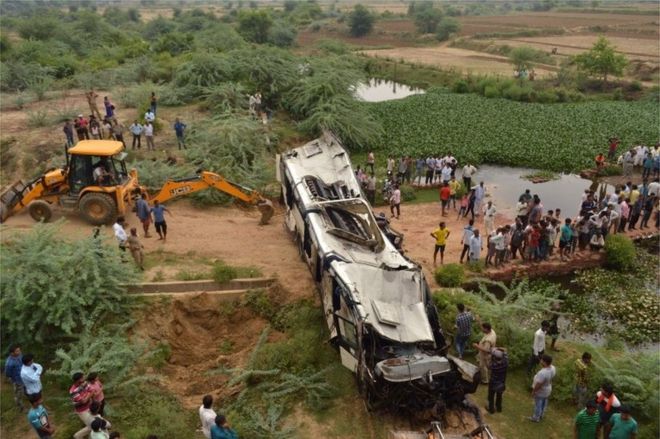
One Sleeper Coach passenger bus travelling from Lucknow to Delhi met with an accident on Yamuna Expressway. It fell into the side fall about 15 feet deep.
20 passengers rescued so far. Efforts are on for the rest.
About 900 people have been killed on the road since it opened in 2012, according to authorities.
Road accidents in India are usually blamed on badly maintained vehicles, poor driving and the state of the roads.
Correspondents say buses in rural India are often old and rickety. Many also do not follow or enforce basic safety measures – it’s not uncommon to see people crowding into buses or even travelling on the roof if they cannot find a seat inside.
BEIJING (Reuters) – China has received a briefing from the United States on the latest meeting between U.S. President Donald Trump and North Korean leader Kim Jong Un, China’s Foreign Ministry said on Saturday, in a call between two senior diplomats.
Trump became the first sitting U.S. president to set foot in North Korea on Sunday when he met Kim in the Demilitarized Zone (DMZ) at Panmunjom between the two Koreas and agreed to resume stalled nuclear talks.
Chinese Vice Foreign Minister Luo Zhaohui and U.S. Special Representative for North Korea Stephen Biegun discussed that meeting in a telephone call on Friday, China’s Foreign Ministry said in a short statement.
“Biegun introduced the meeting between the U.S. and North Korean leaders at Panmunjom, and said the U.S. side is willing to strengthen communication and coordination with the Chinese side on the peninsula issue,” the ministry added.
Luo told Biegun the recent “positive interactions” on the North Korean issue by all parties had important meaning for the peace talks process, the ministry said.
“China supports U.S.-North Korea exchanges and dialogue and hopes that the two sides will meet each other halfway and follow the consensus of the leaders of the two countries to resume consultations at the working level as soon as possible,” it added.
Trump’s meeting with Kim came around a week after Chinese President Xi Jinping met Kim himself during a state visit to Pyongyang.
While China has not officially announced it, Luo is likely China’s new special envoy for the North Korea issue, after predecessor Kong Xuanyou became China’s new ambassador in Tokyo in late May.
Luo was also involved in a briefing to Chinese reporters on Xi’s visit to North Korea before Xi went, according to state media.
Luo is an urbane career diplomat who speaks good English, according to diplomats who have met him.
He previously served as China’s ambassador in Canada, Pakistan and India, and also worked in the Chinese embassy in Washington from 1996-2000.







 CHINDIA ALERT: You'll be living in their world, very soon