Archive for ‘India alert’

06/08/2014

Why Modi’s reference to Buddha’s birthplace was among the highest points of his Nepal visit

Nepal has long been irked by the common misconception that Buddha was from India, even though his accepted birthplace, Lumbini, is across the border.
The Nepalese are so outraged about the Indian appropriation of Buddha, some cable operators blocked Zee TV in the country last year for misidentifying the Enlightened One‘s birthplace.  To correct the record, the country has issued special Rs 100 currency notes proclaiming, “Lumbini: The Birthplace of Lord Buddha.” The controversy has even led a musician named Dhiraj Rai to record an overwrought pop song on the subject.

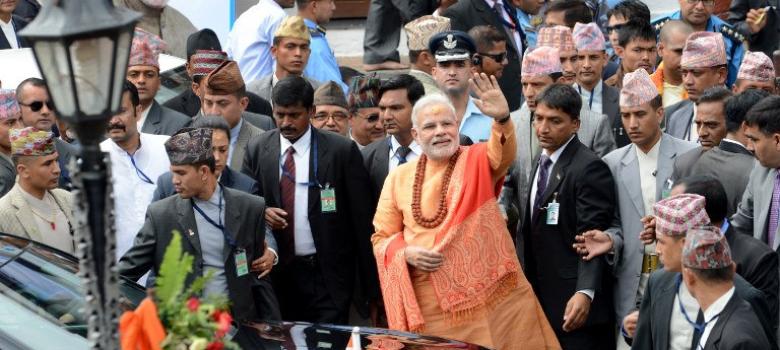
So for many residents of the mountain-kingdom, the highest point of Indian Prime Minister Narendra Modi‘s two-day state visit to their country came during his address to parliament on Sunday, when he referred to Nepal as “the birthplace of Lord Buddha”.

Though the Indian prime minister’s speech to lawmakers included the announcement of a $1 billion line of credit to Nepal and suggested how energy cooperation could be enhanced, the country’s Telegraph Weekly reported the address under the headline, “Indian PM Modi admits Lord Buddha was born in Nepal.”

The Khatmandu Post added more details. “Nepali lawmakers gave a thunderous applause when he mentioned that Buddha was born in Nepal – an issue that rouses deep passion in the country when various quarters of India claim that the former was born in India,” it wrote. “He uttered the word Buddha five times.”

Many Nepalese Twitter users expressed their delight at Modi’s statement.

via Scroll.in – News. Politics. Culture..

05/08/2014

India central bank cautiously optimistic on growth – Businessweek

RBI head office, Delhi

RBI head office, Delhi (Photo credit: Wikipedia)

India’s central bank said Tuesday it sees signs of recovery in Asia’s third-largest economy even though the monsoon season, which is crucial for agriculture, had a weak start.

The Reserve Bank of India left its key interest rate unchanged at 8 percent Tuesday, maintaining a tough stance against stubbornly high inflation. It has faced calls to cut interest rates to help revive flagging growth.

“Domestic economic activity appears to be reviving, with incoming data suggesting a firming up of industrial growth and exports,” RBI Gov. Raghuram Rajan said in a statement.

The central bank remains on guard against inflation partly because of the slow start to the monsoon, which could drive up food costs, hurting the hundreds of millions of poor Indians who live on less than $2 per day.

Wholesale inflation eased to 5.4 percent in June.

“We are not against growth,” Rajan told reporters in a press briefing. But he said growth should be beneficial, not a short-lived mini-boom engineered by easy monetary policy.

via India central bank cautiously optimistic on growth – Businessweek.

05/08/2014

Samsung Loses Top Spot to Micromax in India – India Real Time – WSJ

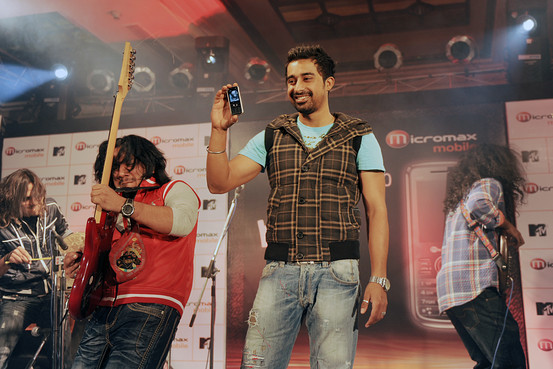
Samsung Electronics Co.005930.SE -0.08% was dethroned as the top cellphone seller in India last quarter as local rival, Micromax Informatics Ltd., undercut and outsold the Korean company for the first time in Asia’s third-largest economy.

Micromax which was launched only five years ago, has taken the pole position in the Indian market—the second largest in the world in terms of handset sales—by undercutting the prices of Samsung and other international brands.

In the April-through-June quarter Micromax’s market share reached 17% of the Indian market compared to Samsung’s 14%, according to Counterpoint Technology Market Research, a research and consulting company based in Hong Kong.

Samsung, the world’s largest cellphone company by sales, is facing tough competition from Micromax and other Indian handset sellers. The South Korean company lost its top spot in terms of handset volumes as it has shifted its focus to smartphones and away from the less-expensive feature phones, said Neil Shah an analyst at Counterpoint.

Micromax has been more successful than most at targeting the Indian consumer. In the past five years it has come out of nowhere by investing heavily in advertising, distribution and developing a portfolio of relatively inexpensive handsets for Indians.

Samsung may be trying to claw back some of its market share. The company, last week, added three more smartphones to its “affordable” category of handsets priced below 10,000 rupees.

via Samsung Loses Top Spot to Micromax in India – India Real Time – WSJ.

04/08/2014

With court ban on illegal mosque loudspeakers, some Mumbai Muslims oppose street prayers too

The performance of religious practices in public spaces has occasionally caused friction in Indian cities. On July 30, the Bombay High Court addressed one particularly vexing source of strain when it asked the city police to take down all illegal loudspeakers attached to mosques in Mumbai and Navi Mumbai.

The court’s directive came in response to a public interest litigation filed by a Navi Mumbai resident against the unauthorised loudspeakers during prayer time at mosques. The court specified that all illegal loudspeakers, whether installed at mosques or at Ganesh or Navratri pandals, should be removed “irrespective of religion, caste or community”.

Even though the loudspeaker issue has been repeatedly politicised in Maharashtra (in 2010, the Shiv Sena had demanded a blanket ban on all mosque loudspeakers after the party was booked for violating noise norms at its Dussehra rally), several Muslim activists came out in support of the court directive.

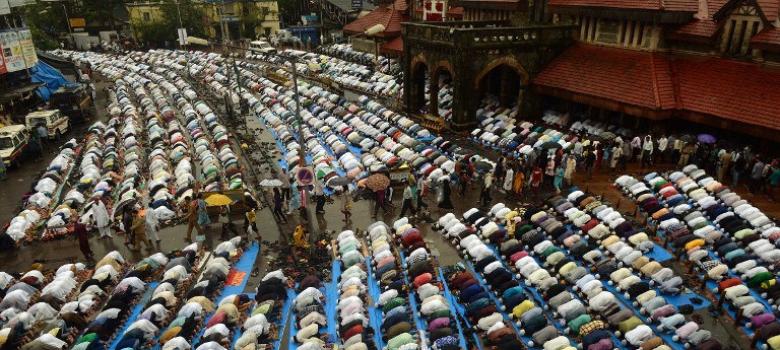
But the call to prayer being announced on loudspeakers is not the only Muslim practice that some members of other communities complain about. In densely-populated cities like Mumbai, when large numbers of devotees gather to pray their Friday namaz, the congregation often spills out of the mosques and into the streets outside, hindering traffic and pedestrian movements for up to 30 minutes.

For many Muslim activists, this phenomenon is as much of an inconvenience to the public as the loudspeakers. But they believe the government has a greater role to play in helping to solve the problem.

“Nobody really likes to pray namaz outside on the streets, because it inconveniences so many people,” said Ghulam Arif, president of the Qartaba Wisdom Club, a Mumbai-based non-profit organisation that works on social issues. The only reason the practice continues, he said, is because the community is too large to fit into the existing mosques.

“The government could give Muslims the permission to organise Friday prayers in open grounds and maidans near mosques,” said Arif.

The community has been recommending a specific solution to the problem for nearly two decades: allowing mosques to expand by granting them additional floor space index. Increasing FSI  – the ratio of plot size to the height of a building that can be erected on it  –  would mean a greater number of floors to accommodate more worshippers.

via Scroll.in – News. Politics. Culture..

04/08/2014

For a country obsessed with fair skin, why are so many Indians buying self-tanners?

Market research firm Euromonitor has just released a study on the grooming habits of the world. It has one rather surprising finding – Indians are slathering on massive dollops of tanning lotions. Indians are apparently second only to Chinese in consuming what the researcher calls self-tanning products.

It doesn’t add up.

Indians are the highest consumers of whitening creams, the same survey shows, and that is unsurprising. The country’s problematic preference for fair skin is well known. Fairness cream ads featuring big Bollywood stars are ubiquitous. In 2010, AC Nielsen estimated the size of the market for skin whitening products at $432 million.

But there is not a single well-known brand of skin-tanning lotions in the country.

via Scroll.in – News. Politics. Culture..

30/07/2014

Indian online retailer Flipkart raises $1 billion – Businessweek

India’s largest online e-commerce company, Flipkart, says it has raised $1 billion in new capital as the company gears up for competition with Amazon‘s push into the Indian market.

Flipkart Flipkart Flipkart!!

Flipkart Flipkart Flipkart!! (Photo credit: samratm)

The company says the funds will be used to invest in expansion, especially in mobile technology.

Flipkart is sometimes called the Amazon of India. It was founded by two Indian brothers who left Amazon and came home to found their own online retailer.

Flipkart says it has 22 million registered users and handles 5 million shipments per month.

Amazon’s India division has been making a big push in the country’s small but fast-growing online retail market. It has been running front-page advertisements in newspapers and touting one-day delivery.

Flipkart itself recently acquired Indian online fashion retailer Myntra to strengthen market share.

via Indian online retailer Flipkart raises $1 billion – Businessweek.

30/07/2014

US official vows to expand India trade, investment – Businessweek

The U.S. secretary of commerce has pledged to help expand investment in India’s infrastructure and to promote trade.

Penny Pritzker spoke Wednesday to business leaders in the Indian financial capital, Mumbai.

She said two-way trade has lagged in recent years but has still expanded by fivefold to $96 billion a year since 2000.

via US official vows to expand India trade, investment – Businessweek.

29/07/2014

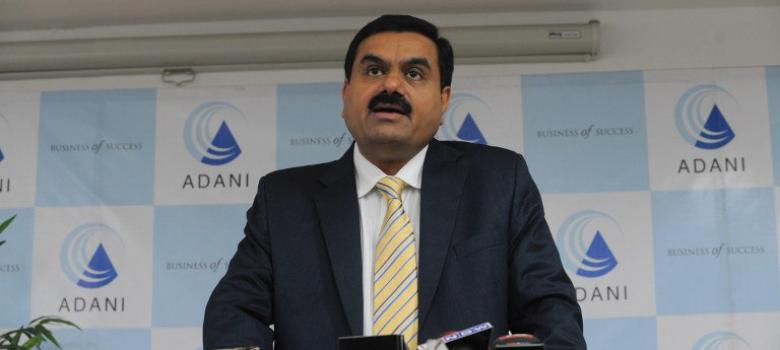
Adani gets clearance for $16.5 billion coal mine in Australia

Adani gets environmental clearance for $16.5 billion coal mine in Australia

Despite serious environmental concerns, the Australian federal government approved the Adani group’s $16.5 billion Carmichael coal mine and rail project. When completed, it will be one of the biggest coal mines in the world.

via Scroll.in – News. Politics. Culture..

29/07/2014

In Delhi, an unintended consequence of free parking: violent deaths

Rajender Bhatia was sitting in his ground floor apartment in central Delhi on Sunday morning when his neighbour turned up. Kartik, who lived on the second floor of the same building, had come to pick a bone with Bhatia about the parking situation around their building. The argument quickly escalated and, according to the police, a couple of other men also joined the fracas that turned into a proper scuffle.

Then suddenly the 55-year-old Bhatia collapsed, prompting the others to run away and his family to take him to the hospital. The doctors there declared Bhatia dead on arrival and a case was registered against Kartik and the other men, who have since been arrested and booked with culpable homicide not amounting to murder.

Bhatia, unfortunately, is not the first to have died in an argument over parking in Delhi: there have been seven other violent incidents related to it this year alone. And, considering the state of parking in the capital, it’s unlikely Bhatia’s case will be the last.

Police records suggest that 15 people have died in the capital over parking-related issues in the past five years, with many more incidents of violent clashes. Other than the capital’s generally high stress levels, which have given it the reputation of being particularly prone to violence and spats, the huge number of cars being added to the roads combined with limited space is mainly what is behind this unique category of crimes. It isn’t uncommon to see car tires being slashed or a parked car being keyed by angry residents who see it as a way to complain about parking.

via Scroll.in – News. Politics. Culture..

29/07/2014

Why India’s family planning program is unhappy with parents

It’s not just politicians resisting sex education, but parents as well, according to Mahinder Watsa, former president of the Family Planning Association of India, which turned 65 last week.

Watsa, perhaps better known today for his newspaper column dispensing often wry advice on sex, was also the first to push for the inclusion of sex education in the FPAI’s programmes in the late 1970s.

“You need to have special classes for parents,” he said. “Parents should be the ones who should be involved deeply, but they pass the job on to teachers.” But teachers, he said, do not take an active part in sex education for fear of being criticised by both parents and politicians.

This fear might partly stem from the pronouncements of political leaders. In the latest instance, last month, health minister Harsh Vardhan, a qualified doctor, advocated the Gandhian route to birth control through abstinence and yoga and said that sex education in its current form should not be taught in schools. He later clarified that he was only against graphical representation of what he termed “vulgarity”.

But his remarks have yet again underlined the political class’s confused and often misguided approach to sex education.

In contrast, over the years, the focus of the FPAI, which was founded in 1949, has expanded from issues of fertility and controlling the number of children a healthy family should have to the rights of young people in accessing information and knowledge about their sexuality.

via Scroll.in – News. Politics. Culture..

Law of Unintended Consequences

continuously updated blog about China & India

ChiaHou's Book Reviews

continuously updated blog about China & India

What's wrong with the world; and its economy

continuously updated blog about China & India