Archive for ‘Chindia Alert’

19/12/2018

Transgender women pray at India’s Sabarimala temple

The transgender women pray at the Sabarimala shrine in Kerala stateImage copyrightA S SATHEESH
Image captionThe transwomen were accompanied by some 20 police officers

Four transgender women have been allowed to pray at an Indian temple at the centre of a bitter row over whether women should be permitted to enter.

Despite a Supreme Court ruling allowing women devotees into the Sabarimala shrine in Kerala state, they have been blocked repeatedly by mobs.

The transgender women, all wearing black sarees, were allowed to enter on Tuesday under police protection.

The temple has historically been closed to women of “menstruating age”.

The group of transgender women had been blocked from accessing the temple on Sunday by police, citing security concerns.

Image captionThe four joined prayers at the temple on Tuesday

Before September’s Supreme Court ruling, transgender women were allowed to enter the shrine, but since the decision – which sparked violent protests – some police officials had suggested that transgender women should dress as men in order to gain access.

They refused and took their case to a committee set up by the Kerala High Court.

The panel agreed that they could pray at the shrine, and temple officials also said they did not object to the transgender women because they do not menstruate.

‘We followed the rituals’

The earlier ban on women between the ages of 10 to 50 entering the Sabarimala shrine was in place partly because the temple deity, Lord Ayyappa, was a bachelor, the shrine’s management had said.

The court ruling ending the ban led to security concerns as women, including activists, were met with protests from members of the Hindu nationalist Bharatiya Janata Party (BJP) and other allied organisations.

These organisations wanted tradition to be followed, despite the ruling of the court on 28 September based on the fundamental rights of women.

Image captionTheir presence was not met with protests or resistance, police said

One of the transgender women, 33-year-old Trupthi, told BBC Hindi on Tuesday that women like her were “very much part of Hinduism” and were respected as such.

“I am very happy that we were able to pray [to Ayyappa]. We are devotees… we had followed all the rituals that a pilgrim should follow to visit the shrine,” Trupthi said.

She added that the other transgender women to pray at the shrine were Ananya, 26, Renjimol, 30, and Avantika, 24.

They were accompanied by some 20 police officers, but their presence at the temple was not met with protests or resistance, police said.

19/12/2018

Indian drug inspectors seize J&J Baby Powder samples – source

NEW DELHI (Reuters) – Drug inspectors have seized samples of Johnson & Johnson (JNJ.N) Baby Powder from a factory in northern India, an industry source said on Wednesday, following a Reuters report that the firm knew for decades that cancer-causing asbestos lurked in the product.

The person, who was not authorised to speak with media and so declined to be identified, said the Central Drugs Standard Control Organization (CDSCO) took samples from the firm’s Baddi plant in Himachal Pradesh state late on Tuesday.

J&J India did not have any immediate comment on the seizure. A CDSCO spokeswoman did not respond to a request for comment.

On Tuesday, Johnson & Johnson said the Reuters article, published on Friday, was “one-sided, false and inflammatory”.

“Johnson & Johnson’s Baby Powder is safe and asbestos free,” the U.S. company said. “Studies of more than 100,000 men and women show that talc does not cause cancer or asbestos-related disease. Thousands of independent tests by regulators and the world’s leading labs prove our Baby Powder has never contained asbestos.”

Surendranath Sai, a regional drug officer in the southern state of Telangana, on Wednesday said he had instructed inspectors to seize samples there.

“On the basis of the news report, we are alerting staff to pick up samples. We will test them in a drug control lab here,” said Sai. “We will take action accordingly. Certainly we are worried because millions of babies may be affected.”

Earlier, the Times of India quoted an official source as saying 100 drug inspectors had been assigned to examine different manufacturing facilities, wholesalers and distributors linked to J&J India, starting early on Wednesday.

A health ministry spokeswoman declined to comment when contacted by Reuters, however a senior official at the ministry said the report was worrying.

“We are concerned about it and will take action,” the official told Reuters, declining to be identified citing the sensitivity of the matter. The official did not elaborate on what kind of action.

On Tuesday, a CDSCO spokeswoman said the Reuters report was “under consideration” but it was too early to say whether a formal investigation would be launched into the baby powder that is ubiquitous in India, a country of 1.3 billion people.

A Reuters examination of company memos, internal reports and other confidential documents, as well as deposition and trial testimony, showed that from at least 1971 to the early 2000s, Johnson & Johnson’s raw talc and finished powders sometimes tested positive for small amounts of asbestos, and that company executives, mine managers, scientists, doctors and lawyers fretted over the problem and how to address it while failing to disclose it to regulators or the public.

The documents also depicted successful efforts to influence U.S. regulators’ plans regarding limiting asbestos in cosmetic talc products and scientific research on talc’s health effects.

Johnson & Johnson said on Monday it planned to buy back up to $5 billion (3.95 billion pounds) of its stock, after $40 billion was wiped from its market value following the Reuters report.

19/12/2018

ISRO launches GSAT-7A satellite that will improve communications for armed forces

The Indian Space Research Organisation (Isro) will launch the country’s newest satellite GSAT-7A, which will give a boost to the defence forces’ communication capabilities, from Andhra Pradesh’s Sriharikota on Wednesday.

INDIA Updated: Dec 19, 2018 16:21 IST

HT Correspondent
Isro,GSAT-7A,satellite
In the third mission in just over a month, the space agency will launch the 2,250 kg operational communication satellite from the second launch pad of Satish Dhawan Space Centre. (AP)

The Indian Space Research Organisation (Isro) on Wednesday launched the country’s newest satellite GSAT-7A, which will give a boost to the defence forces’ communication capabilities, from Andhra Pradesh’s Sriharikota on Wednesday.

In the third mission in just over a month, the space agency launched the 2,250 kg operational communication satellite from the second launch pad of Satish Dhawan Space Centre at 4.10pm on Wednesday.

The satellite was carried by the Geosynchronous Satellite Launch Vehicle-F11 (GSLV-F11), Isro’s 35th communication satellite and the 13th flight of the GSLV rocket to orbit.

The GSLV-Mk II rocket launched the satellite into the temporary orbit after a flight of nearly 20 minutes. The rocket will be taken into the geostationary or circular orbit using the onboard propulsion system and it will take few days after the separation from the launcher to reach its orbital slot.

“GSLV F11 is Isro’s fourth generation launch vehicle with three stages. The four liquid strap-ons and a solid rocket motor at the core form the first stage. The second stage is equipped with high thrust engine using liquid fuel. The Cryogenic Upper Stage forms the third and final stage of the vehicle,” the space agency said on its website.

According to reports, GSAT-7A has been built exclusively for the Indian Air Force (IAF) and the Indian Army and will add to the forces’ communication capabilities.

The satellite will allow IAF to interlink its ground radar stations, airbases and airborne early warning and control (AWACS) aircraft, and reduce the reliance on on-ground control stations for drones, they said. It will also boost the air force’s network-dependent warfare capabilities, enhancing its abilities to operate globally.

Wednesday’s mission will be the space agency’s last mission for this year. This year, Isro launched GSAT-11 on December 5 on a European vehicle from French Guinea’s Kourou, GSAT-29 on November 14 on its GSLV-MkIII vehicle and the ill-fated GSAT-6A on March 29 from Sriharikota.

The launch of Chandrayaan-2 and the PSLV-C44 remote-sensing satellite launch are among the seven missions lined up in 2019.

19/12/2018

British businesses lured by India’s ‘golden opportunities’

India’s large workforce and improving infrastructure have made it an enticing place to invest
FRANCIS MASCARENHAS/REUTERS

Britain is the largest western investor in India, with businesses channelling $26 billion into the country in the past 18 years.

Companies based in the UK contributed 7 per cent of all foreign direct investment into India last year as their expenditure grew by $847 million, according to research by the CBI, the lobby group, and Grant Thornton, the accounting firm.

British businesses, particularly manufacturers, services providers and retailers, have been increasing their presence in India over recent years. This is partly because of the country’s large workforce, improving infrastructure and the business-friendly policies implemented under Narendra Modi, its prime minister since 2014.

Foreign direct investment is when companies buy capital, such as factories or machines, in a foreign country or purchase assets or shares that give investors control in a foreign business.

Increasing corporate investment is welcome news for Britain’s trade relations with India as it looks to its trading partners outside of the European Union before Brexit in March. Both the UK and EU have said that they want to increase trade flows with India.

British investment in India is ahead of that of the United States and the Netherlands, which contribute 6 per cent to the total. In the EU, the UK invests more than Germany, which contributes 3 per cent, and France, which represents 2 per cent. Worldwide, Britain is behind only Mauritius, Singapore and Japan.

The report, Sterling Assets: Britain Meets India, said that about 40 per cent of British companies had made new investments in India last year, creating more than 50,000 new jobs. British firms are believed to have created about 423,000 jobs in India since 2000.

“There’s no question that India will be a vital trading partner as the UK charts a new future out the EU,” Shehla Hasan, CBI director for India, said. She said that there was a “golden opportunity” for UK companies thanks to economic reforms that she said made India more attractive to entrepreneurs and established businesses.

More than half of British companies operating in India are in the services sector, such as restaurants and hotels, while about a third are manufacturers, which include factories. The chemicals industry has received the lion’s share of British investment in India since 2000 at $12 billion, followed by the drugs and pharmaceuticals sector, at $8.8 billion, and services, at $7 billion.

Since 2000, the state of Maharashtra, where Mumbai is located, has attracted the largest share of British investment.

Central bank chief quits
Urjit Patel resigned as government of India’s central bank on Monday (Callum Jones writes). Mr Patel, who has been grappling with ministerial criticism of the bank’s policies, cited “personal reasons” for his departure.

Raghuram Rajan, a former reserve bank governor, raised concerns over the “impasse” that had pushed his successor to quit. He said: “I think this is something all Indians should be concerned about because strength of our institution is really important.”

19/12/2018

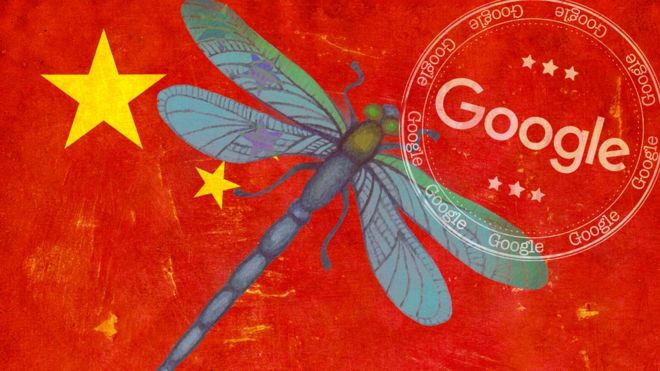
Google China: Has search firm put Project Dragonfly on hold?

China, Google, Project Dragonfly
Image captionGoogle’s plans for a Chinese search engine have reportedly halted

Google has reportedly “effectively ended” plans for a censored search engine in China.

The Intercept, which revealed the existence of Project Dragonfly in August, says Google has been “forced to shut down a data analysis system it was using” to feed the project.

And access to data “integral to Dragonfly… has been suspended for now, which has stopped progress”.

Google said it had no immediate plans to launch a Chinese search engine.

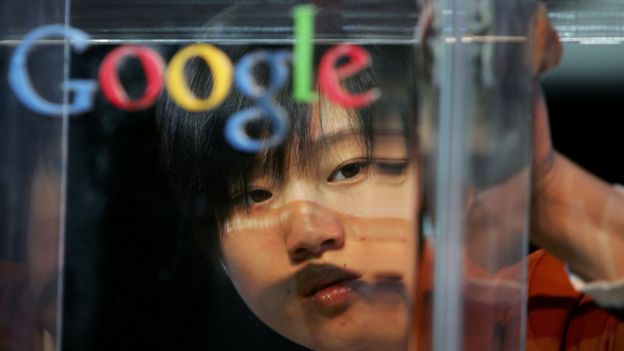
A Chinese woman's face appears behind a Google logoImage copyrightGETTY IMAGES
Image captionGoogle has faced protests about the search engine it was working on for China

What is The Intercept reporting?

Citing internal Google documents and inside sources, the Intercept says Project Dragonfly began in the spring of 2017 and accelerated in December after Google’s chief executive, Sundar Pichai, met a Chinese government official,

An Android app with versions called Maotai and Longfei were developed and could be launched within nine months if Chinese government approved, it says.

Using a tool called BeaconTower to check if users’ search queries on Beijing-based website 265.com would fall foul of China’s censors, Google engineers came up with a list of thousands of banned websites, including the BBC and Wikipedia, which could then be purged from the Dragonfly search engine.

But members of Google’s privacy team confronted the Dragonfly project managers, saying the system had “been kept secret from them”.

And after several discussions, “Google engineers were told that they were no longer permitted to continue using the 265.com data to help develop Dragonfly, which has since had severe consequences for the project”.

China, Google, Project DragonflyImage copyrightREUTERS
Image captionGoogle’s Project Dragonfly is reportedly on hold in China

What are the issues with launching a search engine in China?

The so-called great firewall of China is notorious for not allowing its citizens free access to all the content available on the internet.

China has in the past two years imposed increasingly strict rules on foreign companies, including new censorship restrictions.

Some Western sites are blocked outright, including Facebook, Twitter and Instagram.

Certain topics such as the Tiananmen Square protests in 1989 are also completely blocked.

References to political opposition, dissidents and anti-Communist activity are also banned as are those to free speech and sex.

Any search engine in China would have to comply with the Chinese government’s strict rules on censorship.

Presentational grey line

Analysis

by Dave Lee, BBC North America technology reporter

Even with this news today, I don’t think Google’s ambitions in China are over – just stalled.

Sundar Pichai has clearly decided that China is too important (and lucrative) a market to pass up and so, while Dragonfly has met a significant bump in the road – thanks to its own privacy team, the company will almost certainly find a new approach to serving the Chinese market.

But in doing so it might do serious harm to its brand.

Now more than ever, US technology companies are under pressure to act in the interests of both America and Americans.

Bowing to Beijing’s demands with whatever Project Dragonfly morphs into will be a stain on Google’s principles and its reputation.

Presentational grey line

How advanced were the plans?

We learned from Mr Pichai’s recent appearance on Capitol Hill that more than 100 engineers had been working on the project at one point in time.

When quizzed by lawmakers on the plans, he said: “Right now, we have no plans to launch in China.”

He said all efforts were “internal” and did not currently involve discussions with the Chinese government.

In response to further questions, Mr Pichai said the company would be “fully transparent” with politicians if it released a search service in China.

The BBC understands Project Dragonfly never reached the point of having a full and final privacy review by Google.

A letter from more than 300 Google employees in November, co-signed by Amnesty International, asked the company to halt the project entirely.

China, Google, Project Dragonfly
Image captionGoogle’s Project Dragonfly is reportedly on hold in China

Why does Google want to get back into China?

Quite simply, China is the biggest internet market in the world.

Google launched a search engine in the authoritarian state in 2006, google.cn.

Google was compliant with the Chinese government’s censorship requirements at the time but the search company pulled the plug in 2010, citing increasing concerns about cyber-attacks on activists.

Despite its main search engine and YouTube video platform being blocked, Google still has more than 700 employees and three offices in China and has been developing alternative projects.

Its Google Translate app for smartphones was approved in China last year.

It also invested in Chinese live-stream game platform Chushou in January and has launched an artificial intelligence game on the social media app WeChat.

19/12/2018

China’s staggering 40 years of change in pictures

Forty years ago, China introduced major economic reforms – lifting hundreds of millions of people out of poverty and leading to it becoming the second-largest economy in the world.

Here’s the story of how China changed – in pictures.

1. Wheels and more wheels

This is what Chang’an Avenue – a major street in the capital Beijing – looked like in 1978.

Four decades on, the street looks pretty different.

Car ownership in China has soared – there are now over 300 million registered vehicles in the country – while bike ownership has dropped.

It’s a result of China’s urbanisation and economic growth – but has also come at a price.

Frequent traffic jams in many cities have led to licence plate quotas being imposed.

And the World Health Organization says more than a million people in China die every year due to air pollution.

2. Money money money

Compare a 1978 shop window…

… with one from this decade.

As China’s gross domestic product (GDP) has skyrocketed, its shopping habits have changed too.

Chinese shoppers are among the world’s highest consumers of luxury goods.

President Xi Jinping emphasised China’s economy – and how it had transformed people’s lives – during a long speech on Tuesday marking the anniversary of the economic reforms.

“Grain coupons, cloth coupons, meat coupons, fish coupons, oil coupons, tofu coupons, food ticket books, product coupons and other documents people once could not be without have now been consigned to the museum of history,” he said.

“The torments of hunger, lack of food and clothing, and the hardships which have plagued our people for thousands of years have generally gone and won’t come back.”

Image captionApple is a popular brand in China – though not as popular as Huawei

There’s even a political element to this. As Chinese consumers have grown richer, they’ve become increasingly influential.

Several companies have been forced to apologise after offending Chinese sensibilities, and while foreign brands are generally coveted in China, more and more shoppers are starting to say they prefer local brands.

It’s a sentiment that Mr Xi also touched on in his speech, when he said: “China is increasingly approaching the centre of the world stage.”

“No-one is in a position to dictate to the Chinese people what should or should not be done.”

3. Families and children

Life has changed significantly for children of the 2010s, compared to children of the 1970s.

Image captionA family enjoy tea in a park in Guangzhou, 1978

For starters, they are likely to live longer – China’s life expectancy was 66 back in 1978, and is now about 76.

They’re also more likely to have a better education – literacy rates increased from 66% in the early 1980s to 95% in 2010.

For most Chinese children in the 1970s, going on an overseas holiday would have been almost unthinkable. Today China has the world’s largest number of outbound tourists – who spend billions of dollars while abroad.

Image captionA girl celebrates the golden week national holiday with her dad in October 2018

Chinese students are now also more likely to end up studying abroad.

According to Chinese government figures, China is currently the world’s largest source of international students.

One thing hasn’t changed as much as the government would like though – the birth rate.

In 1979 – a year after starting economic reforms – the government imposed a one-child policy to try and curb population growth.

Birth rates were declining anyway – but the controversial policy was harshly enforced in some cases.

Couples who violated the policy could face punishments ranging from fines and the loss of employment to forced abortions and sterilisation.

China’s population, like those of many other developed countries, is now ageing.

In 2015, the government decided to end the one-child policy and allow couples to have two children.

There is even speculation that the policy may be relaxed further – to allow three or more children – in the near future.

But many Chinese millennials see having more children as too expensive – or a burden on their careers.

4. To market, to market

As economies change, so do people’s diets, and what they want to spend their money on.

Here’s a marketplace in the central city of Xi’an, back in 1978.

And here’s what some of Xi’an’s street markets look like now.

Many of the signs are advertising meat dishes – and statistics show meat consumption in China has risen significantly over the past few decades.

Pork, for example, used to be considered a luxury food reserved for special occasions – now, figures suggest the average Chinese person will consume about 40kg of pork per year.

19/12/2018

How Greenland could become China’s Arctic base

A town in typical Greenland style is pictured - brightly-painted wooden walls and triangular roofs covered in snow are the main features of these sparsely dotted homes
Image captionGreenland’s capital, Nuuk, needs investment – but could it come from China?

China is flexing its muscles. As the second richest economy in the world, its businessmen and politicians are involved just about everywhere in Asia, Africa and Latin America.

Now, though, China is taking a big interest in a very different part of the world: the Arctic.

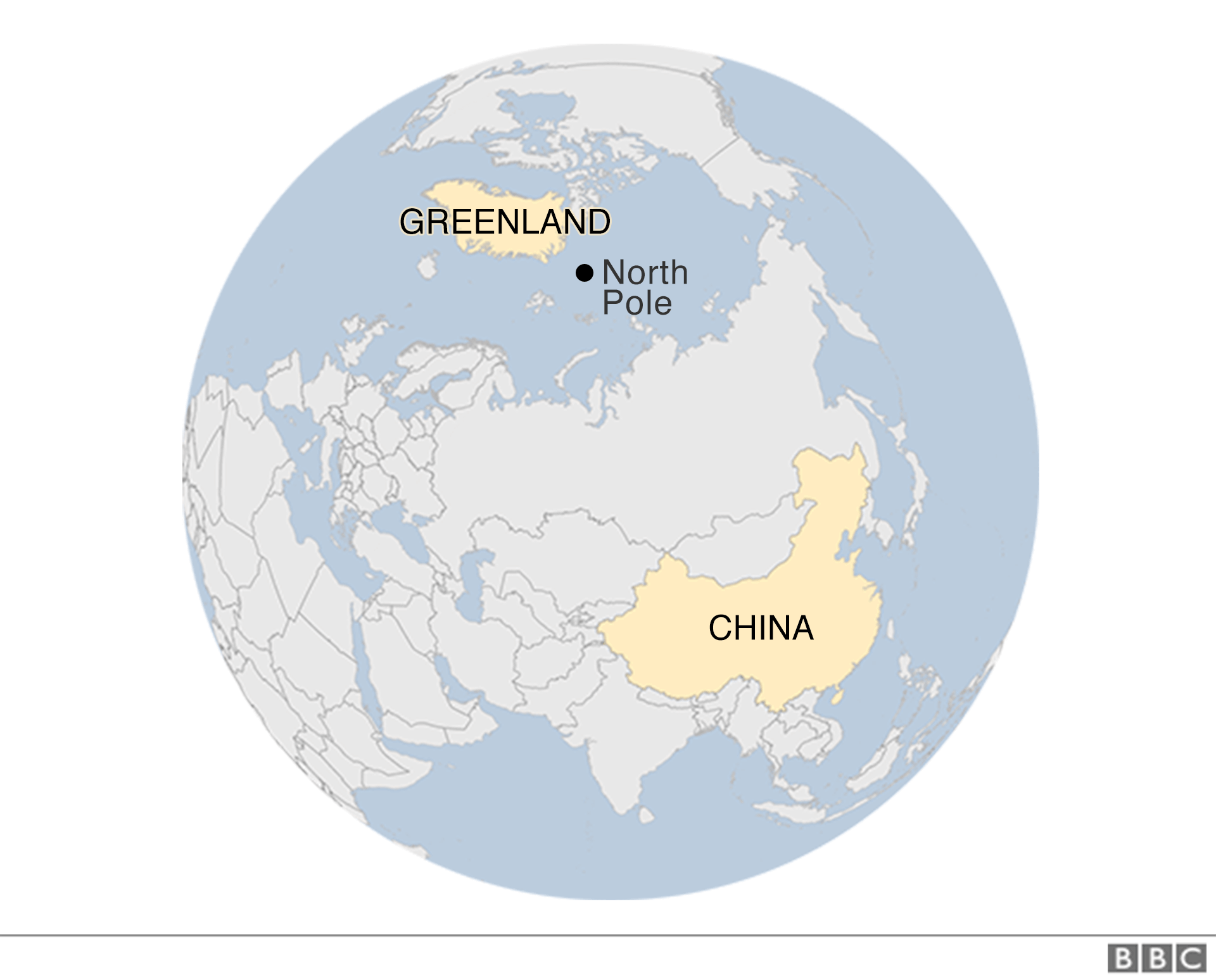
It has started calling itself a “near-Arctic” power, even though Beijing is almost 3,000km (1,800 miles) from the Arctic Circle. It has bought or commissioned several ice-breakers – including nuclear-powered ones – to carve out new routes for its goods through the Arctic ice.

And it is eyeing Greenland as a particularly useful way-station on its polar silk road.

A map is seen on a curved globe surface of the earth -Greenland is marked on the top, just a short distance from the North Pole, also marked - and China's location has two extremely large nations of Mongolia and Russia between it and the pole

Greenland is self-governing, though still nominally controlled by Denmark.

It is important strategically for the United States, which maintains a vast military base at Thule, in the far north. Both the Danes and the Americans are deeply worried that China should be showing such an interest in Greenland.

Least densely populated place on Earth

You’ve got to go there to get an idea of how enormous Greenland is.

It’s the 12th-largest territory in the world, 10 times bigger than the United Kingdom: two million square kilometres of rock and ice.

A vast frozen swathe of Greenland is seen in this aerial shot
Image captionMost of Greenland is covered in permanent ice – a vast frozen wilderness

Yet its population is minuscule at 56,000 – roughly the size of a town in England.

As a result, Greenland is the least densely populated territory on Earth. About 88% of the people are Inuit; most of the rest are ethnically Danish.

In terms of investment neither the Americans nor the Danes have put all that much money into Greenland over the years, and Nuuk, the capital, feels pretty poor. Denmark does hand over an annual subsidy to help Greenland meet its needs.

Every day, small numbers of people gather in the centre to sell things that will generate a bit of cash: cast-off clothes, children’s schoolbooks, cakes they’ve made, dried fish, reindeer-horn carvings. Some people also sell the bloody carcases of the big King Eider ducks, which Inuits are allowed to hunt but aren’t supposed to sell for profit.

China’s air power

At present you can only fly to Nuuk in small propeller-driven planes. In four years, though, that will change spectacularly.

The Greenlandic government has decided to build three big international airports capable of taking large passenger jets.

China is bidding for the contracts.

Media captionAirport officials say the planned work is a huge project – but an important one

There’ll be pressure from the Danes and Americans to ensure the Chinese bid doesn’t succeed, but that won’t stop China’s involvement in Greenland.

Interestingly, I found that opinion about the Chinese tended to divide along ethnic lines.

Danish people were worried about it, while Inuits thought it was a good idea.

The Greenlandic prime minister and foreign minister refused to speak to us about their government’s attitude to China, but a former prime minister, Kuupik Kleist, told us he thought it would be good for Greenland.

But the foreign affairs spokesman of the main Venstre party in the Danish coalition government, Michael Aastrup Jensen, was forthright about Chinese involvement in Greenland.

“We don’t want a communist dictatorship in our own backyard,” he said.

Much-needed wealth

China’s sales technique in other countries where its companies operate is to offer the kind of infrastructure they badly need: airports, roads, clean water.

The Western powers that once colonised many of them haven’t usually stepped in to help, and most of these governments are only too grateful for Chinese aid.

But it comes at a price.

Media captionThe former prime minister says someone – anyone – has to invest in Greenland

China gets access to each country’s raw materials – minerals, metals, wood, fuel, foodstuffs. Still, this doesn’t usually mean long-term jobs for local people. Large numbers of Chinese are usually brought in to do the work.

Country after country has discovered that Chinese investment helps China’s economy a great deal more than it helps them. And in some places – South Africa is one of them – there are complaints that China’s involvement tends to bring greater corruption.

But in Nuuk it’s hard to get people to focus on arguments like these.

What counts in this vast, empty, impoverished territory is the thought that big money could be on its way. Kuupik Kleist put the argument at its simplest.

“We need it, you see,” he said.

19/12/2018

Senior CPC official meets Turkish Justice and Development Party delegation

CHINA-BEIJING-YANG JIECHI-TURKISH DELEGATION-MEETING (CN)

Yang Jiechi(R), a member of the Political Bureau of the Communist Party of China (CPC) Central Committee and director of the Office of the Foreign Affairs Commission of the CPC Central Committee, meets with a delegation of the Turkish ruling Justice and Development Party (AKP), which is led by its deputy chairman Cevdet Yilmaz, in Beijing, capital of China, on Dec. 18, 2018. (Xinhua/Ding Lin)

BEIJING, Dec. 18 (Xinhua) — Yang Jiechi, a member of the Political Bureau of the Communist Party of China (CPC) Central Committee, on Tuesday met with a delegation of the Turkish ruling Justice and Development Party (AKP), which was led by its deputy chairman Cevdet Yilmaz.

Yang, also director of the Office of the Foreign Affairs Commission of the CPC Central Committee, said China is willing to work with the Turkish side to implement the consensus reached by the two heads of state during their sideline meeting at the G20 summit in Buenos Aires.

He said the CPC is willing to make joint efforts with the AKP to deepen the exchange on the experiences of managing the party and the country so as to promote bilateral ties.

Hailing China’s achievements since reform and opening-up 40 years ago, Yilmaz said the AKP is ready to enhance communication and exchange with the CPC to promote bilateral cooperation in fields including the economy, trade, tourism, and anti-terrorism.

19/12/2018

World experts hail China’s miracle-like achievements over 40 years

BEIJING, Dec. 18 (Xinhua) — As China celebrated the 40th anniversary of its reform and opening-up policy on Tuesday, the achievements it has made over the last four decades were hailed as a miracle.

Experts said that China’s reform and opening-up not only is a milestone in the country’s history but also holds global significance.

RIGHT PATH

Addressing a grand gathering Tuesday to celebrate the 40th anniversary, Chinese President Xi Jinping said that the past 40 years eloquently prove the correctness of the path, theory, system and culture of socialism with Chinese characteristics.

Robert Lawrence Kuhn, a leading American expert on China who was honored with China Reform Friendship Medal on Tuesday, said China’s direction is clear, that is, socialism with Chinese characteristics, the leadership of the Communist Party of China (CPC) in all areas, putting people and their well-being and happiness first, and the need to further implement and deepen reforms.

Russian Communist Party leader Gennady Zyuganov said the reform and opening-up policy enacted by the CPC at the third plenary session of the 11th CPC Central Committee in 1978 planned China’s development and raised China to heights unimaginable at that time.

“All the achievements that China has made is inseparable from the country’s adherence to the leadership of the CPC and taking the socialist path,” he told Xinhua in a recent interview.

Manoranjan Mohanty, former chairperson of the Institute of Chinese Studies in Delhi, said the reform and opening-up was a great revolution.

At one time it was called a “New Long March,” which has two things in common with the Long March of the Red Army – one is the determination to unite maximum popular forces and the other is to innovate a strategy of revolution, he said.

QUANTUM LEAP

Describing the reform and opening-up as “a great revolution in the history of the Chinese people and the Chinese nation,” Xi said a quantum leap has been made in the cause of socialism with Chinese characteristics.

Stephen Perry, chairman of Britain’s business networking organization 48 Group Club, said China has undergone incredible transformation since its reform and opening-up in 1978 and the country is sure to achieve its long-term target.

Perry, also recipient of the China Reform Friendship Medal, said that he had seen China turning from a backward country where most of the population lived in countryside into a country where nearly 60 percent of the population now dwell in towns and cities.

During the period, China’s grain output has doubled to over 600 million tons and modern technology is being developed in various industries, Perry noted.

William Jones, Washington bureau chief of the U.S. publication Executive Intelligence Review, told Xinhua in an interview that the 40th anniversary of the reform and opening-up is extremely important and is a pivotal moment.

China has moved from a relatively impoverished country to one of the most important economic powers in the world today, Jones said.

What is done has shown that the policy that was laid out in terms of the reform and opening-up has been a resounding success, he added.

China’s reform and opening-up over the past 40 years has proven to be the “golden key” to reviving its society, said Jin Jianmin, a senior fellow at the Fujitsu Research Institute in Tokyo, believing that the ongoing process will never stop.

Shadrack Gutto, a political analyst at the University of South Africa, recalled that when talking about China 40 years ago, people would think of the “kingdom of bicycle.”

But now automobiles made by China have been exported to the world market, said Gutto, adding that both in material and spiritual terms, Chinese people’s standard of living has been significantly improved.

PROPELLING GLOBAL PROSPERITY

The 40 years of reform and opening-up has benefited both China and the world, said Jin, emphasizing that the great demand created by China’s rapid economic growth has offered opportunities to the international community.

Farooq Sobhan, president of Bangladesh Enterprise Institute, said the China International Development Cooperation Agency, along with the Asian Infrastructure Investment Bank and the New Silk Road Fund, represents the country’s “firm commitment to promote and support economic growth, both globally and regionally.”

These institutions will “benefit Bangladesh and other developing countries to meet their growing development and infrastructure requirements,” said Sobhan.

Appreciating the China-proposed concept of a community with a shared future for mankind, Mohanty believed that “people all over the world wish the people of China even greater successes in pursuing the path of equitable and sustainable development.”

(Xinhua reporters Hu Xiaoguang, Zhang Jianhua, Zhao Xu, Wang Huihui, Jin Jing, Gui Tao, Zhu Dongyang, Hu Yousong, Liu Chen, Jiang Qiaomei, Yang Ting, Jing Jing, Liu Chuntao, Yang Shilong contributed to the story)

19/12/2018

Chinese envoy asks for promotion of Israeli-Palestinian peace talks

UNITED NATIONS, Dec. 18 (Xinhua) — A Chinese envoy on Tuesday asked for international efforts to promote the resumption of peace talks between the Israelis and Palestinians.

There is a need for the international community to remain united and renew its efforts to promote peace talks between the two sides, Ma Zhaoxu, China’s permanent representative to the United Nations, told the Security Council.

The parties should meet each other half-way and avoid any action or rhetoric that will aggravate the situation, refrain from any unilateral action that undermines trust, so as to create necessary conditions for the resumption of dialogue, he said.

Curbing violence with violence will not solve any problem. China urges all parties to bear in mind the safety and security of the people in the region and the imperative of peace and stability by exercising restraint to avoid escalation, he said.

The issue of Palestine is the root cause of the Middle East problem and concerns the long-term peace, stability and development of the region, he noted.

He asked for the cessation of all settlement activities on occupied territory, the lifting of the blockade of Gaza as soon as possible, and measures to prevent violence against civilians.

Parties that have influence in the region should play a constructive role, explore new mechanisms of mediation to break the deadlock in talks between Israelis and Palestinians as soon as possible, he said.

Ma also saw the need to uphold the two-state solution and address the root cause of the conflict.

The international community should adhere to relevant UN resolutions, the principle of “land for peace,” and the Arab Peace Initiative, and persevere in resolving the issue in a comprehensive, just and lasting manner through negotiation, he said.

The Chinese ambassador asked to properly address the final status of Jerusalem.

“This issue is complex and sensitive and concerns the future of the two-state solution and peace and security of the region. All parties should proceed with caution, refrain from imposing a solution that might lead to new confrontation.”

Relevant UN resolutions and international consensus should serve as the basis for a solution through negotiation, accommodating interests of all parties, he said.

China firmly supports and promotes the Middle East peace process, the just cause of Palestinians to restore their legitimate national rights and the establishment of an independent state of Palestine with full sovereignty based on the 1967 borders with East Jerusalem as its capital, he said.

China will work with the rest of the international community to explore innovative mechanisms to facilitate peace in the Middle East and promote the resumption of peace talks between the two sides and make tireless efforts to realize comprehensive, just and lasting peace in the region, he said.

Law of Unintended Consequences

continuously updated blog about China & India

ChiaHou's Book Reviews

continuously updated blog about China & India

What's wrong with the world; and its economy

continuously updated blog about China & India