Archive for ‘Chindia Alert’

16/01/2017

Why do Indians vote for ‘criminal’ politicians? – BBC News

Why do India’s political parties field candidates with criminal charges?

Why do the voters favour them despite their tainted past?

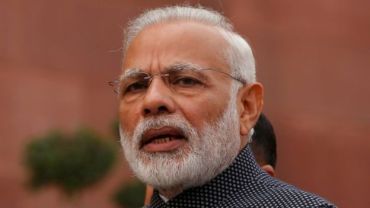
Political scientist Milan Vaishnav has been studying links between crime and democracy in India for many years now. His upcoming book When Crime Pays offers some intriguing insights into what is a disturbing feature of India’s electoral democracy.

The good news is that the general election is a thriving, gargantuan exercise: 554 million voters queued up at more than 900,000 stations to cast their ballots in the last edition in 2014. The fortunes of 8,250 candidates representing 464 political parties were at stake.

The bad news is that a third (34%) of 543 MPs who were elected faced criminal charges, up from 30% in 2009 and 24% in 2004.

Fiercely competitive

Some of the charges were of minor nature or politically motivated. But more than 20% of the new MPs faced serious charges such as attempted murder, assaulting public officials, and theft.

Now, India’s general elections are not exactly a cakewalk.The Indian politicians facing criminal charges

Why do many India MPs have criminal records?

Politics and the barrel of the gun

Over time, they have become fiercely competitive: 464 parties were in the fray in 2014, up from 55 in the first election in 1952.

The average margin of victory was 9.7% in 2009, the thinnest since the first election. At 15%, the average margin of victory was fatter in the landslide 2014 polls, but even this was vastly lower than, say, the average margin of victory in the 2012 US Congressional elections (32%) and the 2010 general election in Britain (18%).

India’s elections are fiercely competitiveAlmost all parties in India, led by the ruling BJP and the main opposition Congress, field tainted candidates. Why do they do so?

For one, says Dr Vaishnav, “a key factor motivating parties to select candidates with serious criminal records comes down to cold, hard cash”.

The rising cost of elections and a shadowy election financing system where parties and candidates under-report collections and expenses means that parties prefer “self-financing candidates who do not represent a drain on the finite party coffers but instead contribute ‘rents’ to the party”. Many of these candidates have criminal records.

There are three million political positions in India’s three-tier democracy; each election requires considerable resources.

Many parties are like personal fiefs run by dominant personalities and dynasts, and lacking inner-party democracy – conditions, which help “opportunistic candidates with deep pockets”.

‘Good proxy’

“Wealthy, self financing candidates are not only attractive to parties but they are also likely to be more electorally competitive. Contesting elections is an expensive proposition in most parts of the world, a candidate’s wealth is a good proxy for his or her electoral vitality,” says Dr Vaishnav, who is senior fellow at the Carnegie Endowment for International Peace.Political parties also nominate candidates with criminal backgrounds to stand for election because, simply put, they win.

During his research, Dr Vaishnav studied all candidates who stood in the last three general elections. He separated them into candidates with clean records and candidates with criminal records, and found that the latter had an 18% chance of winning their next election whereas the “clean” candidates had only a 6% chance.

Many Indians vote on lines on identity and religion

He did a similar calculation for candidates contesting state elections between 2003 and 2009, and found a “large winning advantage for candidates who have cases pending against them”.

Politics also offers a lucrative career – a 2013 study showed that the average wealth of sitting legislators increased 222% during just one term in office. The officially declared average wealth of re-contesting candidates – including losers and winners – was $264,000 (£216,110) in 2004 and $618,000 in 2013, an increase of 134%.

‘Biggest criminal’

Now why do Indians vote for criminal candidates? Is it because many of the voters are illiterate, ignorant, or simply, ill-informed?

Dr Vaishnav doesn’t believe so.

Candidates with criminal records don’t mask their reputation. Earlier this month, a candidate belonging to the ruling party in northern Uttar Pradesh state reportedly boasted to a party worker that he was the “biggest criminal”. Increasing information through media and rising awareness hasn’t led to a shrinking of tainted candidates.

Dr Vaishnav believes reasonably well-informed voters support criminal candidates in constituencies where social divisions driven by caste and/or religion are sharp and the government is failing to carry out its functions – delivering services, dispensing justice, or providing security – in an impartial manner.

“There is space here for a criminal candidate to present himself as a Robin Hood-like figure,” says Dr Vaishnav.
Clearly, crime and politics will remain inextricably intertwined as long as India doesn’t make its election financing system transparent, parties become more democratic and the state begins to deliver ample services and justice.

Prime Minister Narendra Modi has suggested state funding of polls to help clean up campaign financing. Earlier this month, he said people had the right to know where the BJP got its funds from. Some 14% of the candidates his BJP party fielded in the last elections had faced serious charges. (More than 10% of the candidates recruited by the Congress faced charges). But no party is walking the talk yet.

Source: Why do Indians vote for ‘criminal’ politicians? – BBC News
Tags:
16/01/2017

Davos 2017: Can Xi Jinping be star of the show? – BBC News

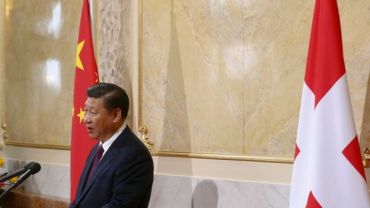
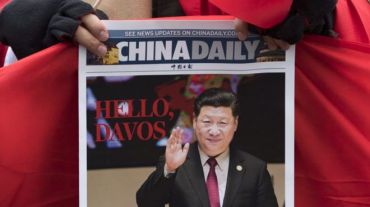
China’s President Xi Jinping heads to Davos this week.

It’s the first time a Chinese head of state is attending the global forum and he’ll be star of the show.

But besides the allure of snow-capped alpine peaks and tasty cups of hot chocolate, why is he doing this? And why now?

First off, let’s not kid ourselves. Davos is a venue where little meaningful gets done.

It has struggled to shake its reputation as a very expensive talking shop that sees the rich and powerful of global business, politics, arts and society meet every year to sip cocktails and connect.

Along the way they’re supposed to think big thoughts about how to improve the world economy.

But given that their wealth and lifestyles are precisely what many parts of the developed world is seeing a backlash against right now, it’s not clear how much their solutions will help.

Davos: Are the global elite in retreat?

Globalisation and free trade are being attacked in the US and Europe. And with a new president about to enter the White House, President Xi’s speech will be watched very carefully.

According to Jiang Jianguo, a minister in China’s State Council Information office, President Xi will be “offering Chinese remedies for the world’s economic ailments”.

So what might he say, and why is this important? Here are three things I’ll be watching for:

1) Free trade is good trade

Globalisation has arguably benefited China more than any other country in the world.As the US pulls out of free trade agreements, President Xi is likely to laud its merits, and position China as the world’s newest and friendliest trading partner.

Of course, there’s always the criticism that China only opens up its economy just enough to benefit itself.But President Xi is likely to tackle that too. Chinese leaders tend to make big announcements in speeches abroad, so watch out for any further possible access to China’s economy.

2) China as a force for peace, not war

China’s growing military might in the South China Sea is a potential flashpoint

It’s part of China’s public diplomacy to convince the world that China’s rise is a good thing for everyone.

President Xi will be likely to present an image of China to the world “as a friend to everyone, a big wonderful panda that everyone should hug, and that everyone should just relax,” says Prof Kerry Brown of the Lau China Institute at King’s College London.

But this may be a hard sell, especially given the lingering concerns about China’s growing military might in the South China Sea.

Davos is a good opportunity to challenge these perceptions, says Jia Xiudong, at the China Institute of International Affairs in Beijing.

“Other countries may see China as an aggressive, assertive country. But this is a misunderstanding. That’s why it’s such a good opportunity for the president to communicate his message.

“Oh, and that no-one will be unfurling Free Tibet flags or heckling him (at least not inside the venue) will probably be an added benefit.

3) It’s all about symbolism, silly

President Xi’s speech comes just three days before Donald Trump is inaugurated as the 45th president of the United States.

“America is downgraded slightly in the eyes of the world because of the election,” says Prof Brown. “And China is more prominent – so it’s quite significant.”

Vanity is also a factor. President Xi enjoys massive popularity at home, and, as you might expect, would like to see that level of respect paid to him on the international stage.

What better way to do that than to praise the virtues of China’s economic wisdom to a receptive crowd, at a time when faith in the US’s ability as the de facto superpower is being questioned and dissatisfaction for the free market system – and the inequality it has created – is rising.

But while President Xi may enjoy being thrust into the spotlight on the Davos stage, it won’t erase some of the hard truths he has to deal with back home.

China’s economy is slowing down and its currency, the yuan, is weakening to lows not seen since 2008.

All of this has Beijing extremely concerned. China knows better than most that a growing gap between the haves and the have nots is devastating for social stability.

Source: Davos 2017: Can Xi Jinping be star of the show? – BBC News

13/01/2017

Opinion is divided on China’s massive infrastructure projects | The Economist

CHINA is proud of its infrastructure: its cavernous airports, snaking bridges, wide roads, speedy railways and great wall. This national backbone (minus the wall) bears the weight of the world’s second-largest economy and its biggest human migration, as hundreds of millions of people move around the country during the lunar new-year holidays—the rush officially begins on January 13th.

Western leaders often shake their heads in disbelief at the sums China spends on its huge projects. And some analysts question how much of it has been wisely spent. In a widely circulated study published last autumn, Atif Ansar of Oxford University’s Saïd Business School and his co-authors say the world’s “awe and envy” is misplaced. More than half of China’s infrastructure projects have “destroyed economic value”, they reckon. Their verdict is based on 65 road and rail projects backed by the Asian Development Bank (ADB) or the World Bank since the mid-1980s. Thanks to the banks’ involvement, these projects are well documented.

One example is a 147-km, four-lane toll road in southern Yunnan province, which was built with the help of an ADB loan approved in 1999. The ADB expected the Yuanjiang-Mohei highway (Yuan-Mo for short) to cut travel times, reduce traffic accidents and lower the costs of fuelling and repairing vehicles, adding up to a compelling economic return of 17.4% a year. By 2004, however, traffic was 49% below projections and costs were more than 20% over budget, thanks to unforgiving terrain prone to landslides.

Were such setbacks enough to damn over half of the projects they examined? As a rule, the ADB and World Bank will approve an undertaking only if they expect its broad benefits (the economic gains from reduced travel times, fewer accidents, etc) to exceed its costs by a large margin, leaving ample room for error. Mr Ansar and his co-authors assume this margin is 40%: they posit a ratio of expected benefits to costs of 1.4 for every project. They scoured the banks’ review documents for examples of cost overruns and traffic shortfalls. Given these assumptions, a project becomes unviable if costs overrun by more than 40%, traffic undershoots by 29%, or some combination of the two. Of the 65 projects, 55% fell into this category. Yuan-Mo was one.

These projects may not be representative of China’s infrastructure-building as a whole. But there is little reason to think they are unusually bad. They are often managed with greater rigour, thanks to the involvement of outside lenders.The authors’ conclusion, however, rests on their assumption about the margin for error built into the projects they looked at. Take Yuan-Mo, for example. Its projected benefits, over its first 20 years of operation, were several times greater than its costs. But as often with roads, the costs arrive early; the benefits are spread thinly over many years. In the time it takes for an investment to pay off, the resources used could have been earning a return elsewhere. So it is necessary to reduce the future payoffs by some annual percentage, known as a “discount rate”. The higher this is, the lower the value placed today on tomorrow’s gains.

So a lot turns on what rate is chosen. For historical reasons, the ADB adopts a high one of 12%. At that rate, Yuan-Mo’s ratio of expected benefits to costs equals 1.5, roughly in line with the authors’ assumptions. But at a gentler rate of 9%, the ratio improves to about 2. At a rate of 5.3% (more in line with government borrowing costs) the ratio rises to 3. With these higher margins for error, many fewer elephants turn white. At a ratio of 2, the share falls to 28%. If the ratio is assumed to be 3, the proportion of duds falls to just 8%.

The authors also assume that any traffic shortfall persists throughout its life. That is not always the case. Traffic on Yuan-Mo, for example, has rebounded, according to the road’s operator. By 2015 it was 31% higher than the ADB projected back in 1999. Around last year’s lunar new-year holiday the road handled record numbers. Some white elephants turn grey with age.

Source: Opinion is divided on China’s massive infrastructure projects | The Economist

13/01/2017

China posts worst export fall since 2009 as fears of U.S. trade war loom | Reuters

China’s massive export engine sputtered for the second year in a row in 2016, with shipments falling in the face of persistently weak global demand and officials voicing fears of a trade war with the United States that is clouding the outlook for 2017.

In one week, China’s leaders will see if President-elect Donald Trump makes good on a campaign pledge to brand Beijing a currency manipulator on his first day in office, and starts to follow up on a threat to slap high tariffs on Chinese goods.

Even if the Trump administration takes no concrete action immediately, analysts say the specter of deteriorating U.S.-China trade and political ties is likely to weigh on the confidence of exporters and investors worldwide.

The world’s largest trading nation posted gloomy data on Friday, with 2016 exports falling 7.7 percent and imports down 5.5 percent. The export drop was the second annual decline in a row and the worst since the depths of the global crisis in 2009.

It will be tough for foreign trade to improve this year, especially if the inauguration of Trump and other major political changes limit the growth of China’s exports due to greater protectionist measures, the country’s customs agency said on Friday.

“The trend of anti-globalization is becoming increasingly evident, and China is the biggest victim of this trend,” customs spokesman Huang Songping told reporters.

“We will pay close attention to foreign trade policy after Trump is inaugurated president,” Huang said. Trump will be sworn in on Jan. 20.

China’s trade surplus with the United States was $366 billion in 2015, according to U.S. customs data, which Trump could seize on in a bid to bring Beijing to the negotiating table to press for concessions, economists at Bank of America Merrill Lynch said in a recent research note.

A sustained trade surplus of more than $20 billion against the United States is one of three criteria used by the U.S. Treasury to designate another country as a currency manipulator.

China is likely to point out that its own data showed the surplus fell to $250.

79 billion in 2016 from $260.91 billion in 2015, but that may get short shrift in Washington.

“Our worry is that Trump’s stance towards China’s trade could bring about long-term structural weakness in China’s exports,” economists at ANZ said in a note.

“Trump’s trade policy will likely motivate U.S. businesses to move their manufacturing facilities away from China, although the latter’s efforts in promoting high-end manufacturing may offset part of the loss.”

On Wednesday, China may have set off a warning shot to the Trump administration. Beijing announced even higher anti-dumping duties on imports of certain animal feed from the United States than it proposed last year.

“Instead of caving in and trying to prepare voluntary export restraints like Japan did with their auto exports back in the 1980s, we believe China would start by strongly protesting against the labeling with the IMF, but not to initiate more aggressive retaliation … immediately,” the BofA Merrill Lynch Global Research report said.

“That said, even a ‘war of words’ could weaken investor confidence not only in the U.S. and China, but globally.”

CHINA’S DECEMBER EXPORTS FALL

China’s December exports fell by a more-than-expected 6.1 percent on-year, while imports beat forecasts slightly, growing 3.1 percent on its strong demand for commodities which has helped buoy global resources prices.

An unexpected 0.1 percent rise in shipments in November, while scant, had raised hopes that China was catching up to an export improvement being seen in some other Asian economies.

China reported a trade surplus of $40.82 billion for December, versus November’s $44.61 billion.

While the export picture has been grim all year, with shipments rising in only two months out of 12, import trends have been more encouraging of late, pointing to a pick-up in domestic demand as companies brought in more raw materials from iron ore to copper to help feed a construction boom.

China imported record amounts of crude oil, iron ore, copper and soybeans in 2016, plus large volumes of coal used for heating and in steelmaking.

“Trade protectionism is on the rise but China is relying more on domestic demand,” said Wen Bin, an economist at Minsheng Bank in Beijing.

Prolonged weakness in exports has forced China’s government to rely on higher spending and massive bank lending to boost the economy, at the risk of adding to a huge pile of debt which some analysts warn is nearing danger levels.

Data next Friday is expected to almost certainly show that 2016 economic growth hit Beijing’s target of 6.5-7 percent thanks to that flurry of stimulus.

But signs are mounting that the red-hot property market may have peaked, meaning China may have less appetite this year for imports of building-related materials.

“It is hard to see what could drive a more substantial recovery in Chinese trade,” Julian Evans-Pritchard, China Economist at Capital Economics, wrote in a note.

“Further upside to economic activity, both in China and abroad, is probably now limited given declines in trend growth. Instead, the risks to trade lie to the downside…,” he said, saying the chance of a damaging China-U.S. trade spat has risen since Trump’s appointment of hardliners to lead trade policy.

A decline in China’s trade surplus in 2016, to just under $510 billion from $594 billion in 2015, may also reduce authorities’ ability to offset capital outflow pressures, which have helped drive its yuan currency to more than eight-year lows, ANZ economists said.

Source: China posts worst export fall since 2009 as fears of U.S. trade war loom | Reuters

Tags:
13/01/2017

India’s Working Women – The Numbers – Briefly – WSJ

India has one of the world’s most lopsided female participation rates in its labor force, an imbalance global chains want to change as they establish foothold in the world’s second-most populous nation.

A Wall Street Journal article outlines how fast-food chains have become an unlikely source of female empowerment and employment.

Here is a look at the numbers behind the country’s female workforce.

Less Than One Third

Only 27% of India’s workforce is female, far below the world average of 50%, according to the World Bank. Tanzania has the highest percentage of women in its workforce, at 88%, while Syria has the lowest, at 14%.

63%

A vast majority of India’s working women–about 63%–are employed as helpers on farms. Women typically account for less than one in five employees in sectors outside agriculture.

1%

It is hardest to find women in the transportation sector in India, partly because families shield their daughters and sisters from traveling alone and forbid them from activities that may involve late nights, such as trucking. Only 1% of India’s transport sector is made up of women.

At Least One Third

At least one in three employees working for a global food chain in India is female. American fast-food chains offer female-only shifts, self-defense classes, mentoring programs and parents’ lunches to draw more women into their stores and convince their families they are a safe place to work. Having 30% workers as women may not seem particularly high, but that’s more than twice the average for the food-service industry in India, where only 14% workers are female.

Source: India’s Working Women – The Numbers – Briefly – WSJ

13/01/2017

India’s Massive Aadhaar Biometric Identification Program – The Numbers – Briefly – WSJ

The rollout of India’s new biometric identification system is not without problems as outlined in a story in The Wall Street Journal Friday.

One of the biggest reasons there are still issues with the biometric IDs–which are already being used widely to distribute subsidies for food and fuel–is the sheer scale of Aadhaar.

Here are a few of the numbers that point to the size of the program which is leading to the problems.

1.1 BILLION

The number of Aadhaar cards issued. Enrollment started in 2009, and now the system can process 1.5 million applications a day. That still leaves out about 150 million Indians without cards.

86%

The percentage of all Indians who hold Aadhaar cards. For those older than 18 the percentage is 99.5%. Most of those left out are infants, because fingerprint recognition isn’t reliable until a certain age. Still the government has already started to assigning numbers to newborns.

15 MILLION

The number of transactions per day involving Aadhaar. That is a five-fold rise from a year ago when there were 3 million a day.

4 BILLION

The total number of times the Aadhaar system has been used so far for authentication and identification.

377 MILLION

Number of Aadhaar number linked to bank accounts. Going forward, the connection to bank accounts will make transactions smoother and allow bank clients to move funds just by using their fingertips.

Source: India’s Massive Aadhaar Biometric Identification Program – The Numbers – Briefly – WSJ

Tags:
12/01/2017

Pen power: China closer to ballpoint success – BBC News

It has sent rockets into space, produced millions of the world’s smartphones and built high-speed trains. But until now, one bit of manufacturing had perhaps unexpectedly eluded China: the ballpoint pen.

A year ago Premier Li Keqiang went on national television and bemoaned the failure of his country to produce a good quality version of this seemingly-simple implement.

Locally-made versions felt “rough” compared to those from Germany, Switzerland and Japan, Mr Li complained.

High precisionThe problem was not the body of the pen, but the tip – the tiny ball that dispenses ink as you write.It might be something we take for granted, but making them requires high-precision machinery and very hard, ultra-thin steel plates.

Put simply, China’s steel has not been good enough. And it has struggled to shape its pen tips accurately.

Li Keqiang has held a few pens in his time as Chinese Premier

Without that ability, China’s 3,000 penmakers have had to import this crucial component from abroad, costing the industry a reported 120m yuan ($17.3m; £14.3m) a year.

But according to People’s Daily, the state-owned Taiyuan Iron and Steel Co thinks it has cracked the problem, after five years of research.

The first batch of 2.3-millimetre ballpoint pen tips has recently rolled off its production lines, the paper says.

And once lab tests are completed, it’s expected China could phase out pen tip imports completely within two years.

Symbolic

On one level, whether China can make a great pen is not hugely important in the scheme of things.

High-tech and innovative manufacturing lie at the heart of the central government’s Made in China 2025 programme – designed to help domestic growth.

Relatively low-value items, like ballpoint pens, have not been a priority.

But the pen-conundrum is a symbolic one.

European firms have dominated the ballpoint pen industry at both the top and lower ends of the market

Despite producing more than half of the world’s crude iron and steel, China has still heavily relied on imports for high-grade steel.

It was a failing that Mr Li said highlighted the need to upgrade China’s manufacturing capabilities.

Different culture

“Historically, China has never been able to do precision engineering very well and the ballpoint pen is an example of that,” says Professor George Huang, head of the University of Hong Kong’s department of industrial and mechanical engineering.

“Its parts are so small and very precise, and it’s not easy to solve this problem”

Precision engineering is thriving only in certain sectors such as aerospace and defence where the government has placed a high priority, says Prof Huang.

Even when it comes to smartphones and computers, the high end computer chips are usually imported from Japan and Taiwan.

Prof Huang says that China lacks a culture of excellence in precision engineering.

He uses the Mandarin term “fuzao” which describes something that is not 100% solid or reliable.

“The culture is different from the Japanese and Germans,” he says, who are known for innovation in engineering.”We Chinese are supposed to be craftsmen, but somehow the spirit is not as good.”

Source: Pen power: China closer to ballpoint success – BBC News

12/01/2017

Amazon Yanks Indian-Flag Doormats as New Delhi Threatens Punishment – India Real Time – WSJ

Amazon.com Inc. pulled doormats emblazoned with the Indian flag from its Canadian website after the South Asian nation’s foreign minister threatened to oust the Seattle company’s employees.

This is unacceptable,” Sushma Swaraj, India’s foreign minister, wrote on Twitter Wednesday in response to a posting from a user showing an image of the doormats for sale.

Ms. Swaraj, who has 7 million followers on the platform, called on Amazon to remove the “insulting” products and threatened to rescind visas for Amazon’s foreign staff in India if action wasn’t taken.Her three tweets on the issue garnered more than 19,000 retweets and more than 30,000 likes, with some users calling on “all angry Indians” to email Amazon founder Jeff Bezos directly.

Source: Amazon Yanks Indian-Flag Doormats as New Delhi Threatens Punishment – India Real Time – WSJ

12/01/2017

Service With a Smile in Xi’an – China Real Time Report – WSJ

In China’s ancient capital Xi’an, police are taking charm lessons from high-end innkeepers.

The Public Security Bureau in the city’s Chang’an district sent more than 20 officers to a nearby luxury hotel to study “Smiling Services” on Sunday, a few days after a local TV news program aired footage criticizing police and other local bureaucrats for poor customer service.

It’s a rare case of public agencies turning to private companies for working advice in a country where officialdom has long enjoyed the superior status.

The news report focused on difficulties people have in getting a Hukou, an essential local residence certificate in China, and the service they received from desk officers at the local police station.

The report came on the heels of a pledge by new Xi’an’s municipal party secretary, Wang Yongkang, that he would serve as a “five-star waiter” for local residents, and drew a sharp response from local Communist Party officials.

“We are all the waiters for the people. We should not only serve people well, but also should serve them better than five-star hotels and try to devote wholeheartedly to become people’s ‘Five-star Waiters,’” an article posted on the website of the Xi’an Communist Party’s municipal committee said.Chinese people have long complained about poor service from bureaucrats, with many saying their sole focus is on pleasing their superiors, not the people they are paid to help.

Mr. Wang’s “five-star pledge” has resonated throughout Xi’an and appears to have inspired the undercover news report on police services. The same news program aired a similar report targeting bureaucrats in the city’s business registration offices two days before it took on the police.In the wake of the latest news story, Public Security Bureau officials said they held emergency meetings to watch the program and criticize involved officials before coming up with a plan to seek advice from a local five-star hotel, which wasn’t identified.

The police officers received a PowerPoint presentation on the hotel staff’s serving standards and observed their work on site, according to sanqin.com, a local media site which was allowed to tag along at the sessions. Public Security Bureau officials declined to comment to The Wall Street Journal.

A photo posted on Chang’an Public Security’s social-media account showed police officers smiling behind the hotel desk counters, attending to “guests” played by hotel employees. Another photo showed police officers listening attentively to lectures and carefully taking notes.

The effort didn’t impress everyone, judging by responses in social and traditional media.“The timely response of local authorities toward local media exposure is worthy of praise,” Nanfang Daily commented, but it went on to question the value of the charm lessons. “Smiling shouldn’t be a fake smile. It’s better to come from the heart.”

One commentator on social media said people would simply be happy if bureaucrats did their jobs correctly.

“Citizens don’t ask you to extend warm welcome and farewell or deliver some star-level service,” this person said. “What we ask for is only that you answer questions and solve problems according to the rules.”

Source: Service With a Smile in Xi’an – China Real Time Report – WSJ

12/01/2017

Edifice Complex: China Is the World’s Largest Skyscraper Factory, Again – China Real Time Report – WSJ

China’s love for megatowers has hit another high.

For the ninth year running, China topped the world last year for the largest number of new skyscrapers 656 feet tall (200 meters) or taller.

A record 84 high-rises were completed in the country out of 128 globally, according to a report by the U.S.-based Council on Tall Buildings and Urban Habitat, which conferred the top ranking on China. Hundreds more are in China’s pipeline for the coming years, with the 1,965-foot Ping An Finance Centre in Shenzhen poised to become the second tallest in the country if finished as planned this year (Shanghai Tower in China’s business capital is the tallest.).

By comparison, seven skyscrapers of comparable height were built last year in the U.S.

Once seen as a sign of China’s progress, the soaring supply of skyscrapers is becoming a symbol of the slowing Chinese economy. Overall office vacancy rates are inching higher as demand wanes from domestic companies facing higher costs and multinational firms cutting back expansion plans.

In China, companies have generally been slow to lease, renting 25% less overall office space over the first three quarters of 2016 compared with a year earlier, due to worries about economic growth and the flight of peer-to-peer lending firms after a regulatory crackdown, according to real-estate broker CBRE Group. The 121-story Shanghai Tower is a prominent example of struggles with leasing.

So why hasn’t momentum slowed?

Partly, it is because local governments in China, hoping to meet economic-growth targets, have a strong incentive to sell long-term leases to developers, who in turn may seek quick returns by building as much rentable space as possible per land parcel, says Daniel Safarik, China director for the Council on Tall Buildings.

“There is also a strong incentive for leaders of large cities to show economic progress in even more tangible ways, such as building the skyline,” Mr. Safarik said.

Developers were particularly aggressive in Shenzhen, a tech hub where 11 high-rises 656 feet or taller were built last year, more than in any country besides China. Four towers of similar height were built in New York City last year.

Office-leasing troubles are starting to surface in the city, according to a third-quarter report from real estate broker Savills. The huge supply delayed some office-project launches, the broker said. Meanwhile, the overall amount of available space that was leased in the third quarter fell 35% from the previous quarter.

The city-wide vacancy rose to 9.9%, compared with the 9.2% average for China’s four first-tier cities, which include Shenzhen. CBRE said in a report that the rate may climb further with more buildings being completed over the next six months.

Office demand has been even more slack in second-tier cities, typically including provincial capitals and other large municipalities. The office vacancy rate for them collectively was 28.3% in the third quarter, CBRE said. In Chongqing, a fast-growing city in central China, the city-wide office vacancy rate was 43% at the end of the third quarter.

Source: Edifice Complex: China Is the World’s Largest Skyscraper Factory, Again – China Real Time Report – WSJ

Tags:
Law of Unintended Consequences

continuously updated blog about China & India

ChiaHou's Book Reviews

continuously updated blog about China & India

What's wrong with the world; and its economy

continuously updated blog about China & India