Archive for ‘Chindia Alert’

10/01/2017

Donald Trump has ‘great meeting’ with Alibaba boss Jack Ma – BBC News

US President-elect Donald Trump has held what he said was a “great meeting” in New York with Jack Ma, chairman of the e-commerce site Alibaba.

After the meeting Mr Ma said that both had agreed that US-China relations “should be strengthened, should be more friendly and do better”.

Mr Ma said he would help US businesses create a million new jobs by using his website to sell to China.

During his campaign Mr Trump threatened to place tariffs on Chinese imports.

“Jack and I are going to do some great things,” Mr Trump told reporters gathering in the Trump Tower lobby as the two emerged from the lift together.

What exactly does Alibaba do?

The man behind Alibaba: Jack MaUS vs China – Trump tools upTrump hints ‘One China’ policy could end

Calling the future US president “smart” and “open-minded”, Mr Ma described his company’s plan to attract one million small US businesses to its platform in order to sell goods to Chinese consumers.

The Alibaba Group tweeted about their job-creation plan after the meeting

Company spokesman Bob Christie said that one million new jobs will be created over the next five years as small American businesses hire new employees who will be tasked with interacting with Alibaba.

Mr Ma, who is one of the richest people in China, specifically said that farmers and small clothing makers in the US Midwest should use the Alibaba online marketplace to reach Chinese consumers.

It is estimated that up to 80% of Chinese online purchases are made on the Alibaba platform.

The New York real estate mogul has said that 45% import taxes could be placed on Chinese goods and would come in response to currency manipulation and illegal subsidies by the world’s second largest economy.

He has been highly critical of Chinese trade practices, and has appointed noted China critics to key economic cabinet positions in the White House.

Market researchers fear that punitive tariffs would lead to a retaliatory response from China, triggering a trade war.

Source: Donald Trump has ‘great meeting’ with Alibaba boss Jack Ma – BBC News

10/01/2017

Will India Get Rid of Plastic Money by 2020? – India Real Time – WSJ

After India’s government took 86% of currency out of circulation a couple of months ago, its main policy think-tank has a new plan for the country: rendering plastic money “irrelevant” by 2020.Amitabh Kant, Chief Executive Officer of NITI Aayog, which helps the government formulate long-term policies, said Sunday that India was in the midst of a “huge disruption” in financial technology and innovation, which will enable the country to transition from using plastic money to mobile transactions.

“By 2020, India will make all debit cards, all credit cards, all ATM machines, all [point-of-sale] machines totally irrelevant,” Mr. Kant said at the Pravasi Bharatiya Divas event inaugurated by Prime Minister Narendra Modi in Bangalore.

“In 30 seconds flat, we’ll all be doing our transactions by using our thumb.”

The annual event is aimed at increasing engagement between the government and Indians living overseas.

Mr. Kant was referring to a new mobile app launched by Mr. Modi last week as the 50-day deadline for depositing invalidated 500- and 1000-rupee bank notes came to an end.

Prime Minister Narendra Modi speaks at the Pravasi Bharatiya Divas event in Bangalore, India on Sunday.

Mr. Modi had on Nov. 8 announced the withdrawal of the country’s largest bank notes to crackdown on corruption and counterfeiting. The move caused a severe cash shortage in the economy, although Mr. Modi said later that the problems would abate in 50 days once new bills were back in circulation.

“Give me time until Dec. 30. After that, if any fault is found in my intentions or my actions, I am willing to suffer any punishment given by the country,” he had said.

After 50 days, queues were still forming outside ATMs to withdraw cash, despite the work to recalibrate almost all of the country’s 215,000 ATM machines to issue the new, slimmer notes being completed.

“Bhim,” the new digital payments app currently allows users of Google’s Android platform to transfer money directly from one bank account to another. The government plans to link the app to “Aadhar,” India’s unique identification program. Once that is done, consumers will be able to transact by using their thumbprints to authorize transactions.

“In the next two years, the power of ‘Bhim’ will be such that you wouldn’t need a smartphone, feature phone or even Internet. Your thumb would be enough,” Mr. Modi said at the unveiling of the app on Dec. 30.

The app has already been downloaded by more than 10 million users, Mr. Modi said in a tweet on Monday.

He also took to twitter to tell Indians how the app was a “fine example” of the government’s ‘Make in India’ plan aimed at encouraging local manufacturing, and also the use of technology to end corruption and black money.

On Sunday, Mr. Modi thanked 30 million Indians living abroad for contributing about $69 billion to India’s economy through remittances and hit back at the critics of his government’s currency move.

“It is unfortunate that some worshipers of black money are calling our move anti-people,” he said.

Source: Will India Get Rid of Plastic Money by 2020? – India Real Time – WSJ

06/01/2017

The high economic costs of India’s demonetisation | The Economist

MOST economists might hazard a guess that voiding the bulk of a country’s currency overnight would dent its immediate growth prospects. On November 8th India took this abstruse thought experiment into the real world, scrapping two banknotes which made up 86% of all rupees in circulation. Predictably, the economy appears indeed to have been hobbled by the sudden “demonetisation”. Evidence of the measure’s costs is mounting, while the benefits look ever more uncertain.

At least the new year has brought a semblance of monetary normality. For seven weeks queues had snaked around banks, the main way for Indians to exchange their old notes for new ones or deposit them in their accounts. That is over, largely because the window to exchange money closed on December 30th. The number of fresh notes that can be withdrawn from ATMs or bank counters is still curtailed, but the acute cash shortage is abating, at least in big cities.

As data trickle through, so is evidence of the economic price paid for demonetisation. Consumers, companies and investors all wobbled in late 2016. Fast-moving consumer goods, usually a reliable growth sector, retrenched by 1-1.5% in November, according to Nielsen, a research group. Bigger-ticket items seem to have been hit harder. Year-on-year sales at Hero Motocorp, the biggest purveyor of two-wheelers, slid by more than a third in December.AdvertisementA survey of purchasing managers in manufacturing plunged from relative optimism throughout 2016 to the expectation of mild contraction. Firms’ investment proposals fell from an average of 2.4trn rupees ($35bn) a quarter to just 1.25trn rupees in the one just ended, according to Centre for Monitoring Indian Economy, a data provider. As a result, corporate-credit growth, already anaemic, has reached its lowest rate in at least 30 years (see chart).

All this amounts to “a significant but not catastrophic” impact, says Shilan Shah of Capital Economics, a consultancy. Annual GDP growth forecasts for the fiscal year ending in March have slipped by around half a percentage point, to under 7%, from an actual rate of 7.3% in the last full quarter before demonetisation. Other factors, such as the rise in the oil price and the surge in the value of the dollar after the election of Donald Trump, are also at play.

Whether the costs of the exercise justify the benefits depends, of course, on what those benefits are. In his speech announcing the measure, Narendra Modi, the prime minister, highlighted combating corruption and untaxed wealth. Gangsters and profiteers with suitcases full of money would be left stranded. But reports suggest that nearly 15trn rupees of the 15.4trn rupees taken out of circulation are now accounted for. So either the rich weren’t hoarding as much “black money” as was supposed, or they have proved adept at laundering it. The Indian press is full of tales of household staff paid months in advance in old notes, or of bankers agreeing to exchange vast sums illegally.

Fans of demonetisation point to three beneficial outcomes.

First, banks, laden with fresh deposits, will lend this money out and so boost the economy. Big banks cut lending rates this week (quite possibly nudged by government, the largest shareholder of most of them). But their lending recently has not been constrained by a lack of deposits, so much as by insufficient shareholder capital to absorb potential losses, and by the over-borrowed balance-sheets of many industrial customers.

Second, Indians will move from living cash in hand into the taxed formal economy. Mr Modi has recently promoted the idea of a cashless, or “less-cash”, India (not something mentioned at the outset), as one reason for demonetisation. Progress towards getting Indians to pay for things electronically is indeed being made, but from an abysmally low base.

The third upshot is the most controversial. Now that the demonetised bank notes are worthless, the government is intent on in effect appropriating the proceeds. The procedure requires trampling on the credibility of the Reserve Bank of India (RBI), the central bank, which must first agree to dishonour the promise, on all banknotes, to “pay the bearer” the value. If it does so, “extinguishing” the notes and its liability for them, it can transfer an equivalent amount to the government budget.

With so much cash handed in at banks, the amount remitted to government by the RBI might amount to perhaps 0.2-0.3% of GDP. Proceeds from a tax-amnesty scheme for cash-hoarders may swell the figure. Even so, it will not be enough to justify the costs of demonetisation—or even, perhaps, the damage to the reputation of the RBI, which is already facing questions about its independence. But having imposed the costs, Mr Modi will be keen to trumpet whatever benefits he can find.

Source: The high economic costs of India’s demonetisation | The Economist

06/01/2017

Xi Jinping is busy arranging a huge reshuffle | The Economist

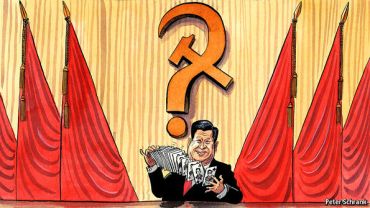
EVERY four years the United States holds an election that can change national policy and unseat many decision-makers. Every five years China holds a selection process that can do the same thing. Communist Party officials tout it as evidence of a well-ordered rhythm in their country’s politics. This year it may turn out as unpredictable as America’s election in 2016.

The people up for re-selection are the 350-odd members of the party’s Central Committee, the political elite, along with its decision-taking subsets: the Politburo, the Politburo’s Standing Committee (a sort of inner cabinet) and the army’s ruling council. The choice of new leaders will be made at a party congress—the 19th since the founding one in 1921—which is expected to be held in Beijing in October or November, and at a meeting of the newly selected Central Committee which will be held directly afterwards.

Party congresses, which are attended by more than 2,000 hand-picked delegates, and the Central Committee meetings that follow them, are little more than rubber-stamp affairs. But they are of huge symbolic importance to Chinese leaders. They matter for three reasons.

First, they endorse a sweeping reshuffle of the leadership that is decided in advance during secretive horsetrading among the elite. The coming congress will be Mr Xi’s first opportunity to pack the Central Committee with his own allies; the outgoing one was picked in 2012, when he took over, not by him but by the people then running the country, including his two predecessors. After previous congresses held five years into a leader’s normally ten-year term—that is, those convened in 2007 and 1997—it became clear who that leader’s successor was likely to be. If the coming meetings are like those earlier ones—a big if—they will give a strong clue to Mr Xi’s choice of successor and start the transition from one generation of leaders to another.

Second, congresses can amend the party’s constitution. China’s leaders like the document to give credit to their favourite ideological themes (and Mr Xi is particularly keen on ideology). When Jiang Zemin stepped down as party chief in 2002 his buzzwords were duly incorporated; so too were those of his successor, Hu Jintao, five years later. Mr Xi’s contribution to party-thought—such as on the need to purge it of corruption while strengthening its grip—is likely to gain similar recognition.

Third, congresses are the setting for a kind of state-of-the-union speech by the party leader, reflecting an elite consensus hammered out during the circulation of numerous drafts. In the coming months, Mr Xi will be devoting most of his political energy to ensuring that his will prevails in all three of these aspects. His authority in the coming years will hugely depend on the degree to which he succeeds. Preparations for the gatherings are under way. They involve a massive operation for the selection of congress delegates. On paper, this is a bottom-up exercise. Party committees down to village level are choosing people who will then choose other representatives who, by mid-summer, will make the final pick. Thousands of party members are also scrutinising the party’s charter, looking for bits that might need changing.It may sound like a vast exercise in democratic consultation, but Mr Xi is leaving little to chance. Provincial party bosses are required to make sure that all goes to (his) plan. Over the past year, Mr Xi has appointed several new provincial leaders, all allies, who will doubtless comply.

Hands up who likes XiT

hose chosen to attend the congress will follow orders, too, especially when it comes to casting their votes for members of the new Central Committee. And the newly selected committee will stick even closer to script. The processes that lead to its selection of the party’s and army’s most senior leaders are obscure—a bit like the picking of cardinals in the Vatican. But an account in the official media of what happened in 2007 suggests that at some point in the summer, Mr Xi will convene a secret meeting of the current Central Committee and other grandees for a straw poll to rank about 200 potential members of the new Politburo (which now has 25 members). This is called “democratic recommendation”, although those taking part will be mindful of who Mr Xi’s favourites are.

Candidates for the Politburo must fulfil certain criteria, such as holding ministerial rank. For the coming reshuffle, Mr Xi has added a new stipulation: faithful implementation of his policies. For all his power, Mr Xi has struggled with widespread passive resistance to his economic reforms. To ram home the importance of obedience, Mr Xi recently held what he called a “democratic life session” at which Politburo members read out Mao-era-style self-criticisms as well as professions of loyalty to Mr Xi as the “core” leader (as the party decided last October to call him).

By August, when Mr Xi and his colleagues hold an annual retreat at a beach resort near Beijing, the initial lists of leaders will be ready. Probably in October, the Central Committee will hold its last meeting before the congress to approve its documents. The “19th Big” will start soon after, and will last for about a week. The first meeting of the new Central Committee will take place the next day, followed immediately by the unveiling before the press of Mr Xi’s new lineup (no questions allowed, if officials stick to precedent).

The process is cumbersome and elaborate, but over the past 20 years it has produced remarkably stable transfers of power for a party previously prone to turbulent ones. This has been helped by the introduction of unwritten rules: a limit of two terms for the post of general secretary, and compulsory retirement for Politburo members if they are 68 or over at the time of a congress. Mr Xi, however, is widely believed to be impatient with these restrictions. He has ignored the party’s hallowed notion of “collective leadership”, by accruing more power to himself than his post-Mao predecessors did.

If precedent is adhered to, five of the seven members of the Politburo’s Standing Committee, six of its other members and four of the 11 members of the party’s Central Military Commission (as the army council is known) will all start drawing their pensions. In addition, roughly half the 200-odd full members of the Central Committee (its other members, known as alternates, do not have voting rights) will retire, or will have been arrested during Mr Xi’s anti-corruption campaign. This would make the political turnover at this year’s gatherings the biggest for decades, akin to changing half the members of the House of Representatives and three-quarters of the cabinet.

Until late in 2016 there was little to suggest any deviation from the informal rules. But in October Deng Maosheng, a director of the party’s Central Policy Research Office, dropped a bombshell by calling the party’s system of retirement ages “folklore”—a custom, not a regulation.

The deliberate raising of doubts about retirement ages has triggered a round of rumour and concern in Beijing that Mr Xi may be considering going further. The main focus is his own role. Mr Xi is in the middle of his assumed-to-be ten-year term. By institutional tradition, any party leader must have served at least five years in the Standing Committee before getting the top job. So if Mr Xi is to abide by the ten-year rule, his successor will be someone who joins the Standing Committee right after the coming congress.

But there is widespread speculation that Mr Xi might seek to stay on in some capacity when his term ends in 2022. He might, for instance, retire as state president (for which post there is a clear two-term limit) but continue as party general-secretary. He faces a trade-off. The more he breaks with precedent, the longer he will retain power—but the more personalised and therefore more unstable the political system itself may become. Trying to square that circle will be Mr Xi’s biggest challenge in the politicking of the year ahead.

Source: Xi Jinping is busy arranging a huge reshuffle | The Economist

06/01/2017

How China uses Shakespeare to promote its own bard | The Economist

LIKE many countries, China had a busy schedule of Shakespeare-themed celebrations in 2016, 400 years after his death. There were plays, lectures and even plans announced for the rebuilding of his hometown, Stratford-upon-Avon, at Sanweng-upon-Min in Jiangxi province. But as many organisers saw it, Shakespeare was just an excuse.

Their main aim was to use the English bard to promote one of their own: Tang Xianzu. Whatever the West can do, their message was, China can do at least as well.Tang is well known in China, though even in his home country he does not enjoy anything like the literary status of his English counterpart—he wrote far fewer works (four plays, compared with Shakespeare’s 37), and is not as quotable. But no matter. The timing was perfect. Tang died in 1616, the same year as Shashibiya, as Shakespeare is called in Chinese. President Xi Jinping described Tang as the “Shakespeare of the East” during a state visit to Britain in 2015. The Ministry of Culture later organised a Tang-themed exhibition, comparing his life and works to those of Shakespeare. It has shown this in more than 20 countries, from Mexico to France.

The two playwrights would not have heard of each other: contacts between China and Europe were rare at the time. But that has not deterred China’s cultural commissars from trying to weave a common narrative. A Chinese opera company created “Coriolanus and Du Liniang”, in which Shakespeare’s Roman general encounters an aristocratic lady from Tang’s best-known play, “The Peony Pavilion”. The musical debuted in London, then travelled to Paris and Frankfurt. Last month Xinhua, an official news agency, released an animated music-video, “When Shakespeare meets Tang Xianzu”. Its lines, set bizarrely to a rap tune, include: “You tell love with English letters, I use Chinese ink to depict Eastern romance.”

The anniversary of Shakespeare’s death is now over, but officially inspired adulation of Tang carries on (a musical about him premiered in September in Fuzhou, his birthplace—see picture). Chinese media say that a recent hit song, “The New Peony Pavilion”, is likely to be performed at the end of this month on state television’s annual gala which is broadcast on the eve of the lunar new year. It is often described as the world’s most-watched television programme. Officials want to cultivate pride in Chinese literature, and boost foreign awareness of it. It is part of what they like to call China’s “soft power”.

Shakespeare’s works only began to take root in China after Britain defeated the Qing empire in the first Opium War of 1839-42. They were slow to spread. After the dynasty’s collapse in the early 20th century, Chinese reformers viewed the lack of a complete translation of his works as humiliating. Mao was less keen on him. During his rule, Shakespeare’s works were banned as “capitalist poisonous weeds”. Since then, however, his popularity has surged in tandem with the country’s growing engagement with the West.

Cong Cong, co-director of a recently opened Shakespeare Centre at Nanjing University, worries that without a push by the government, Tang might slip back into relative obscurity. But Ms Cong says the “Shakespeare of the East” label does Tang a disservice by implying that Shakespeare is the gold standard for literature. Tang worked in a very different cultural environment. That makes it difficult to compare the two directly, she says. Officials, however, will surely keep trying.

Source: How China uses Shakespeare to promote its own bard | The Economist

Tags:
06/01/2017

‘Yeti’ Prints Suggest Humans Settled in Tibet More Than 7,000 Years Ago – China Real Time Report – WSJ

A cluster of ghostly hand- and footprints on a mountain north of Lhasa offers evidence that humans scratched out a permanent existence in the thin air of Tibet much earlier than commonly thought, according to a new study.
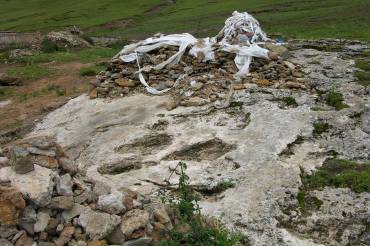
Some locals believe the prints, pressed into an ancient slab of limestone located 14,000 feet above sea level near the present-day village of Chusang, were left behind by mythical beasts. A team of researchers say that the impressions were left by people and that they offer intriguing clues to the puzzle of Tibetans’ ethnic origins.The researchers, whose latest findings are published in the latest issue of Science, say they’ve now developed a clearer picture of the site’s significance. According to their calculations, Chusang was very likely used by inhabitants of a nearby year-round settlement between 7,400 and 12,700 years ago — at least 2,200 years before permanent villages are believed to have been established elsewhere on the Tibetan Plateau.The researchers used radiocarbon dating and other, more advanced tests to determine the age of rock and dirt samples taken near the prints, according to the report.

There are no other reliably dated sites on the central, high-elevation part of the plateau,” said Mark Aldenderfer, a University of California, Merced who lead the study along with geologist Michael Meyer, from the University of Innsbruck.

By positing an earlier date of settlement on the Tibetan plateau, the study is likely to be controversial in Chinese archaeological circles. It could also irk Communist Party officials, for whom the question of where Tibetans came from is freighted with political significance.

Pushing back against advocates for Tibetan independence, the Chinese government recently began arguing that Tibet has been a part of China, not just during the imperial era, but “since ancient times.” The effort to prove that claim has led state-affiliated scholars to reach past China’s first, and some say largely mythical, dynasty, the 4,000-year-old Xia, to a neolithic culture called the Yangshao that existed in China’s Yellow River basin between 7,000 and 5,000 years ago.

Some pottery shards and other artefacts found on the Tibetan Plateau appear similar to remnants of the late Yangshao — proof, these government-backed scholars say, that China and Tibet are branches of the same civilization.“Early history has abruptly become of far greater importance to the issue, and specifically to the Chinese side,” said Robert Barnett, director of the modern Tibet studies program at Columbia University. Previously, Mr. Barnett said, the government had dated its claims over Tibet to the Yuan Dynasty, established by Mongolian leader Kublai Khan in 1271.

A 2015 paper on human settlement of the Tibetan Plateau written by Chinese archaeologists, also published in Science, supports the Yangshao timeline. It says that people didn’t start living in year-round settlements on the plateau until the development of agriculture and herding in what is now Qinghai province around 3,000 B.C.The new paper, however, suggests that migrants bearing pottery and other elements of Yangshao culture into the Tibetan regions would have encountered indigenous inhabitants, according to Mr. Aldenderfer.

“Our argument is fairly simple: There were people on the Tibetan Plateau before these ceramics and other influences came in from lower elevation locations,” he said.

There are 19 handprints and footprints of various sizes pressed into the Chusang limestone, which is believed to have formed by deposits from a now extinguished hot spring. The site was discovered in 1996 by University of Hong Kong geographer David Zhang, who was not part of the Aldenderfer team.

An image of one of the hand prints, taken in 2006. PHOTO: MARK ALDENDERFER“

Locals took me there and said [the prints] were left by a yeti,” Mr. Zhang told China Real Time, referring to the mythical creature better known in the west as the Abominable Snowman.

Mr. Zhang, who said he had seen a copy of the report but not its supplementary material,  disagreed with the conclusions of the new study. He cited tests he conducted that measured when quartz crystals from an ancient hearth found near the prints were last exposed to light. From that, he concluded that the evidence of settlement is closer to 20,000 years old.

Chusang was most likely one of several seasonal sites that people traveled to from primary settlements at lower elevations, he said.

Mr. Aldenderfer said Mr. Zhang’s measurements, taken in 2002, came from a different part of the Chusang site and that his testing methods were outdated. He said it would have taken an improbably long time to travel on foot from Chusang to a base camp at a low elevation.

The existence of smaller handprints suggests children also spent time at the site, he said.

Life would have been hard, with people forced to survive by hunting and foraging wild barley in temperatures only slightly warmer than they are now, but the area also would have had its advantages, Mr. Aldenderfer said.

A view to the north of the valley below the hot springs.
A view to the north of the valley below the hot springs. PHOTO: MARK ALDENDERFER

“It’s a really cool place. It’s perched on a mountainside, and when you’re sitting at the hot spring that has the hand- and footprints, it has an absolutely fabulous view of the valley below,” he said. The hot spring would have offered warmth, and possibly even a chance to bathe, he said.

Source: ‘Yeti’ Prints Suggest Humans Settled in Tibet More Than 7,000 Years Ago – China Real Time Report – WSJ

Tags: ,
04/01/2017

India’s double first in climate battle – BBC News

Two world-leading clean energy projects have opened in the south Indian state of Tamil Nadu.

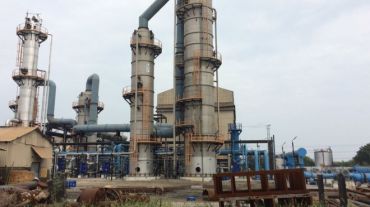
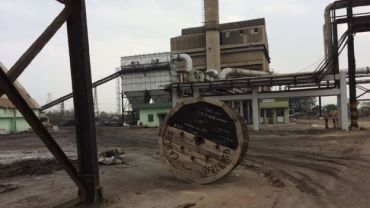
A £3m industrial plant is capturing the CO2 emissions from a coal boiler and using the CO2 to make valuable chemicals. It is a world first.

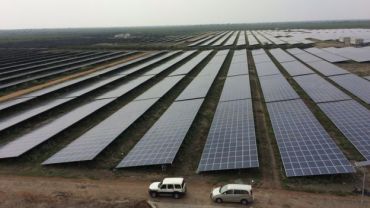
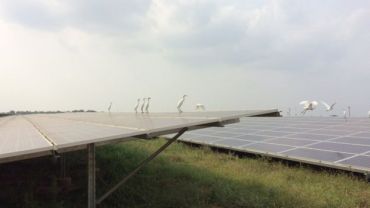
And just 100km away is the world’s biggest solar farm, making power for 150,000 homes on a 10 sq km site.

The industrial plant appears especially significant as it offers a breakthrough by capturing CO2 without subsidy.

Built at a chemical plant in the port city of Tuticorin, it is projected to save 60,000 tonnes of CO2 emissions a year by incorporating them into the recipes for baking soda and other chemicals.

Here’s how it works:

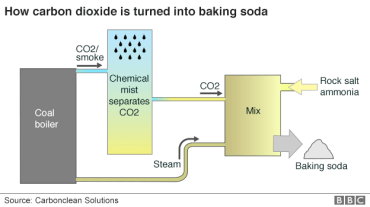
The plant operates a coal-fired boiler to make steam for its chemical operations.CO2 emissions from the boiler’s chimney are stripped out by a fine mist of a new patented chemical.

A stream of CO2 is fed into the chemicals plant as an ingredient for baking soda and other compounds with many uses, including the manufacturing of glass, detergents and sweeteners.

Zero emissions

The owner of the chemicals plant, Ramachadran Gopalan, told a BBC Radio 4 documentary: “I am a businessman. I never thought about saving the planet. I needed a reliable stream of CO2, and this was the best way of getting it.”

He says his operation has now almost zero emissions. He hopes soon to install a second coal boiler to make more CO2 to synthesise fertiliser.

The chemical used in stripping the CO2 from the flue gas was invented by two young Indian chemists. They failed to raise Indian finance to develop it, but their firm, Carbonclean Solutions, working with the Institute of Chemical Technology at Mumbai and Imperial College in London, got backing from the UK’s entrepreneur support scheme.

Their technique uses a form of salt to bond with CO2 molecules in the boiler chimney. The firm says it is more efficient than typical amine compounds used for the purpose.

The plant is projected to save 60,000 tonnes of CO2 emissions a year

They say it also needs less energy, produces less alkaline waste and allows the use of a cheaper form of steel – all radically reducing the cost of the whole operation.

The firm admits its technology of Carbon Capture and Utilisation won’t cure climate change, but says it may provide a useful contribution by gobbling up perhaps 5-10% of the world’s emissions from coal.

Lord Oxburgh, former chairman of Shell, and now director and head of the UK government’s carbon capture advisory group, told the BBC: “We have to do everything we can to reduce the harmful effects of burning fossil fuels and it is great news that more ways are being found of turning at least some of the CO2 into useful products.”

Solar farm

Meanwhile, the nearby giant Kamuthi solar plant offers a marker for India’s ambition for a rapid expansion in renewables.

The world’s largest solar farm at Kamuthi in southern IndiaIt is truly enormous; from the tall observation tower, the ranks of black panels stretch almost to the horizon.Prime Minister Modi is offering subsidies for a plan to power 60 million homes with solar by 2022 and aims for 40% of its energy from renewables by 2030.

For large-scale projects, the cost of new solar power in India is now cheaper than coal. But solar doesn’t generate 24/7 on an industrial scale, so India has adopted a “more of everything” approach to energy.

The firm behind the solar plant, Adani, is also looking to create Australia’s biggest coal mine, which it says will provide power for up to 100 million people in India. Renewables, it says, can’t answer India’s vast appetite for power to lift people out of poverty.

Will India stick to its renewables promises with Donald Trump as US president?And questions have been raised recently as to whether India will stick to its renewables promises now President-elect Donald Trump may be about to scrap climate targets for the US.

At the recent Marrakech climate conference, China, the EU and many developing countries pledged to forge ahead with emissions-cutting plans regardless of US involvement. But India offered no such guarantee.

Some environmentalists are not too worried: they think economics may drive India’s clean energy revolution.

Source: India’s double first in climate battle – BBC News

04/01/2017

‘China freight train’ in first trip to Barking – BBC News

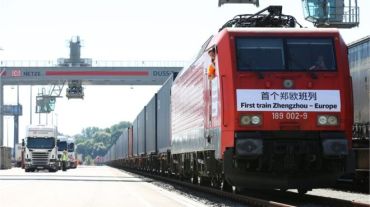
China has launched a direct rail freight service to London, as part of its drive to develop trade and investment ties with Europe.China Railway already runs services between China and other European cities, including Madrid and Hamburg.

The train will take about two weeks to cover the 12,000 mile journey and is carrying a cargo of clothes, bags and other household items.

It has the advantage of being cheaper than air freight and faster than sea.

The first China-Europe Block Train for Madrid left Yiwu Railway Freight Station in November 2014The proliferation of routes linking China and Europe is part of a strategy launched in 2013 aimed at boosting infrastructure links with Europe along the former Silk Road trading routes.London will become the 15th European city to join what the Chinese government calls the New Silk Route.

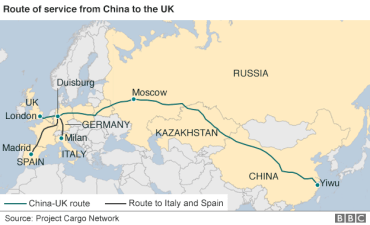
The service will pass through Kazakhstan, Russia, Belarus, Poland, Germany Belgium and France before arriving at Barking Rail Freight Terminal in East London, which is directly connected to the High Speed 1 rail line to the European mainland.

Because of the different railway gauges involved, a single train cannot travel the whole route and the containers need to be reloaded at various points.

The Chinese government is keen to boost its economy in the face of slowing export and economic growth.

Source: ‘China freight train’ in first trip to Barking – BBC News

04/01/2017

What can we expect in China in 2017? | McKinsey & Company

Provided geopolitical movement doesn’t derail his best laid predictions, Gordon Orr sees a year of slowing economic growth, headaches for multinationals, demographic anxiety, and buyer’s remorse for soccer tycoons.

My base case for China’s outlook this year assumes increased trade friction with the United States, with tariffs raised on specific product categories (such as steel and some agricultural goods), and, while I don’t expect across-the-board disruptions, a few high-profile companies will be forced to choose between accommodating the demands of the Chinese or US government.

Of course, if recent statements from US politicians translate into sweeping action on trade, 2017 could develop very differently. Tit-for-tat moves on specific companies and sectors could easily escalate, with many multinationals’ global supply chains caught in the middle and consumers around the world facing product shortages and, when products are available, material price increases. China’s government could implement sweeping actions to sustain employment, restrict further capital outflows, and stimulate the domestic economy. Market-oriented restructuring and reform would be off the table. Economic nationalism, food and energy security, and social stability would be paramount.

But if globally we continue with something recognizably close to current trade arrangements, how will China fare this year? And, most important for a country that regards economic growth as of paramount importance (the centerpiece of China’s 13th five-year plan remains to double GDP and household income in the decade to 2020), can 2016’s GDP growth in the ballpark of 6.5 percent be replicated?

Matching 2016’s economic growth will be a struggle

Where will China’s growth come from this year? It is unlikely to come from exports—even ignoring potential protectionist moves in major export markets, there’s nothing that would significantly increase the world’s demand for Chinese goods. What about currency depreciation to make exports more competitive? That will be quickly offset by rising wages. Could growth come from consumers? Will they feel good enough to increase spending another 8 to 10 percent this year? They will likely spend a lot less on buying property and fitting it out (because of government action to restrain prices and restrict access to mortgage financing) and less on cars if the current tax break expires. Moreover, real salary increases are likely to be the lowest since the Lehman crisis, and with house prices expected to be flat, there won’t be a repeat of last year’s wealth effect. The stimulation of e-commerce making goods available in smaller cities for the first time may help, but technology displacing jobs in services, not just manufacturing, certainly won’t. In fact, its impact is becoming more and more visible, leading more and more consumers to not only worry about losing their jobs but also actually see them eliminated. The impact of technology on creating jobs in fields such as medical and education services will benefit the privileged few with the skills to take advantage, but it will not offset the near-term job losses.

Source: What can we expect in China in 2017? | McKinsey & Company

Tags: ,
31/12/2016

5 Billionaire Families From India’s Powerful Parsi Minority – Briefly – WSJ

India’s Parsis are one of the most successful minority and migrant groups in the world. They make up less than 0.005% of India’s population but three out of the country’s top 10 billionaires.They fled Iran and settled in India in the 10th century and have since played an outsized role in the evolution of India’s economy as pioneers of trade and industry.

For centuries, prominent Parsis have shared their success through philanthropy – their religion encourages wealth creation as well as charity–so the names of top Parsi traders and industrialists are plastered on the hospitals, schools, libraries and streets of Mumbai and other cities.

A Wall Street Journal article looks at how the battle for control of the $100 billion Tata Group–which was founded and headed by Parsis – has caused a lot of stress and soul searching in the proud community. Three of the richest Parsi families – the Tatas, the Mistrys and the Wadias – are involved in the unusually ugly and public brawl which has now shifted to the courts.

Here are snapshots of those three Parsi families and two others that have made billions building the backbone of Indian industry.

1 Tata Head: Ratan Tata

Net worth:  $570 Million

Established: 1868

Industries: Software, steel, autos, hospitality, airlines

Companies: Tata Consultancy Services, Tata Motors, Jaguar Land Rover, Tetley Tea

2 Mistry Head: Pallonji Mistry (father of Cyrus Mistry)

Net worth:  $15 billion

Established: 1865

Industries: Property development, construction, energy

Companies: SP Real Estate, SP Infra, Eureka

3 Wadia Current leader: Nusli Wadia

Net worth:  $3 billion

Established: 1736

Industries: Textiles, property, food, health

Companies: Bombay Dyeing, Britannia, Go Airlines

4 Godrej Current leader: Adi Godrej

Net worth: $12 billion

Established: 1897

Industries: Consumer durables, retail, property

Companies: Godrej Consumer Products, Godrej Properties, Gorej Industries

5 Poonawalla Head: Cyrus Poonawalla

Net worth: $12 billion

Established: 1966

Industries: Biotech, vaccines

Companies: Serum Institute of India, Poonawalla Stud Farms

Source: 5 Billionaire Families From India’s Powerful Parsi Minority – Briefly – WSJ

Tags:
Law of Unintended Consequences

continuously updated blog about China & India

ChiaHou's Book Reviews

continuously updated blog about China & India

What's wrong with the world; and its economy

continuously updated blog about China & India