Chindia Alert: You’ll be Living in their World Very Soon
aims to alert you to the threats and opportunities that China and India present. China and India require serious attention; case of ‘hidden dragon and crouching tiger’.
Without this attention, governments, businesses and, indeed, individuals may find themselves at a great disadvantage sooner rather than later.
The POSTs (front webpages) are mainly 'cuttings' from reliable sources, updated continuously.
The PAGEs (see Tabs, above) attempt to make the information more meaningful by putting some structure to the information we have researched and assembled since 2006.
Gao Feng, spokesperson for China’s Ministry of Commerce (MOC), gestures at a press conference in Beijing, capital of China, Aug. 29, 2019. (Xinhua/Pan Xu)
BEIJING, Aug. 29 (Xinhua) — The economic and trade negotiation teams of China and the United States have maintained effective communication and are discussing to have a meeting in the United States in September, the Ministry of Commerce (MOC) said Thursday.
“It is of great importance right now to create the necessary conditions for the two sides to continue consultations,” MOC spokesperson Gao Feng said at a press conference.
If the Chinese team visits the United States for consultations next month, both sides should make joint efforts and create conditions to push for progress in their negotiations, Gao said.
He said China is lodging solemn representations with the United States over the latter’s decision to raise the additional tariffs on 550 billion U.S. dollars worth of Chinese imports.
“We hope the United States can meet China halfway and properly solve the economic and trade disputes between the two countries on the basis of equality and mutual respect,” Gao said.
Chinese President Xi Jinping meets with visiting Uzbek Prime Minister Abdulla Aripov at the Great Hall of the People in Beijing, capital of China, Aug. 28, 2019. (Xinhua/Yao Dawei)
BEIJING, Aug. 28 (Xinhua) — Chinese President Xi Jinping met with visiting Uzbek Prime Minister Abdulla Aripov here on Wednesday, calling on the two countries to jointly push forward the high-quality construction of the Belt and Road.
Xi asked Aripov to convey his sincere regards to Uzbek President Shavkat Mirziyoyev.
The key to the constant leap-forward development of China-Uzbekistan relations is that both sides always adhere to the spirit of good-neighborliness, mutual benefit and mutual assistance, according to Xi.
Xi stressed that he attaches great importance to the development of the China-Uzbekistan comprehensive strategic partnership, which is in line with the fundamental interests of the two countries and their peoples.
Hailing the achievements of the fifth meeting of the China-Uzbekistan intergovernmental committee of cooperation, Xi said that the cooperation goals set by the two sides will certainly be realized as long as the bilateral relationship stays on the right track.
Xi called on both countries to further promote the high-quality construction of the Belt and Road, enhance synergy between national development strategies, strengthen connectivity through cross-border roads and railways, expand cooperation in trade, investment, high and new technology, energy and other fields, as well as foster new highlight in people-to-people and cultural exchanges.
China is willing to increase imports of Uzbek quality agricultural products, Xi said, adding that Uzbekistan is welcome to attend the second China International Import Expo as guest of honor later this year.
In addition, Xi said that the two sides should work together to combat the “three evil forces” of terrorism, separatism and extremism, fight against drug trafficking and other transnational organized crimes.
The rejuvenation of the Chinese nation is to seek happiness for the Chinese people and will also benefit world peace and human progress, Xi said, stressing that China will absolutely not follow the old path of “a strong country must seek hegemony.”
China is ready to enhance coordination with Uzbekistan on international affairs, safeguard common interests of the two countries, uphold multilateralism and promote democracy in international relations, Xi said.
He also called on the two countries to work with other members of the Shanghai Cooperation Organization (SCO) to raise the awareness of a community with a shared future and lift cooperation in various fields, so as to promote further development of the SCO and benefit peoples of various countries in the region.
Aripov conveyed President Mirziyoyev’s sincere greetings and lofty respect to President Xi and his warm congratulations on the 70th anniversary of the founding of the People’s Republic of China.
President Mirziyoyev sincerely hopes China will achieve greater prosperity and early national rejuvenation under the leadership of President Xi, according to Aripov.
Calling China “the closest and most reliable neighbor and partner” of Uzbekistan, Aripov said that Uzbekistan will work with China to firmly implement the important consensus reached by the two heads of state.
Mirziyoyev has appointed a special agency to synergize development strategies with the Chinese side, actively promote cooperation with China on the construction of the Belt and Road, and expand people-to-people and cultural exchanges, according to Aripov.
Uzbekistan firmly supports China in safeguarding its sovereignty, security and unity, and will continue to actively work with China to combat the “three evil forces” of terrorism, separatism and extremism, said Aripov.
Aripov is paying an official visit to China from Tuesday to Thursday at the invitation of Chinese Premier Li Keqiang.
NEW DELHI (Reuters) – India is set to impose a nationwide ban on plastic bags, cups and straws on Oct. 2, officials said, in its most sweeping measure yet to stamp out single-use plastics from cities and villages that rank among the world’s most polluted.
Prime Minister Narendra Modi, who is leading efforts to scrap such plastics by 2022, is set to launch the campaign with a ban on as many as six items on Oct. 2, the birth anniversary of independence leader Mahatma Gandhi, two officials said.
These include plastic bags, cups, plates, small bottles, straws and certain types of sachets, said the officials, who asked not to be identified, in line with government policy.
“The ban will be comprehensive and will cover manufacturing, usage and import of such items,” one official said.
India’s environment and housing ministries, the two main ministries leading the drive, did not respond to emails from Reuters to seek comment.
In an Independence Day speech on Aug. 15, Modi had urged people and government agencies to “take the first big step” on Oct. 2 towards freeing India of single-use plastic.
Concerns are growing worldwide about plastic pollution, with a particular focus on the oceans, where nearly 50% of single-use plastic products end up, killing marine life and entering the human food chain, studies show.
The European Union plans to ban single-use plastic items such as straws, forks, knives and cotton buds by 2021.
China’s commercial hub of Shanghai is gradually reining in use of single-use plastics in catering, and its island province of Hainan has already vowed to completely eliminate single-use plastic by 2025.
India lacks an organized system for management of plastic waste, leading to widespread littering across its towns and cities.
The ban on the first six items of single-use plastics will clip 5% to 10% from India’s annual consumption of about 14 million tonnes of plastic, the first official said.
Penalties for violations of the ban will probably take effect after an initial six-month period to allow people time to adopt alternatives, officials said.
Some Indian states have already outlawed polythene bags.
The federal government also plans tougher environmental standards for plastic products and will insist on the use of recyclable plastic only, the first source said.
It will also ask e-commerce companies to cut back on plastic packaging that makes up nearly 40% of India’s annual plastic consumption, officials say.
Cheap smartphones and a surge in the number of internet users have boosted orders for e-commerce companies, such as Amazon.com Inc (AMZN.O) and Walmart Inc’s (WMT.N) Flipkart, which wrap their wares – from books and medicines to cigarettes and cosmetics – in plastic, pushing up consumption.
It follows Beijing’s decision earlier this month to turn down an application for two US Navy ships to visit Hong Kong
The countries have traded barbs about the handling of anti-government protests in the city
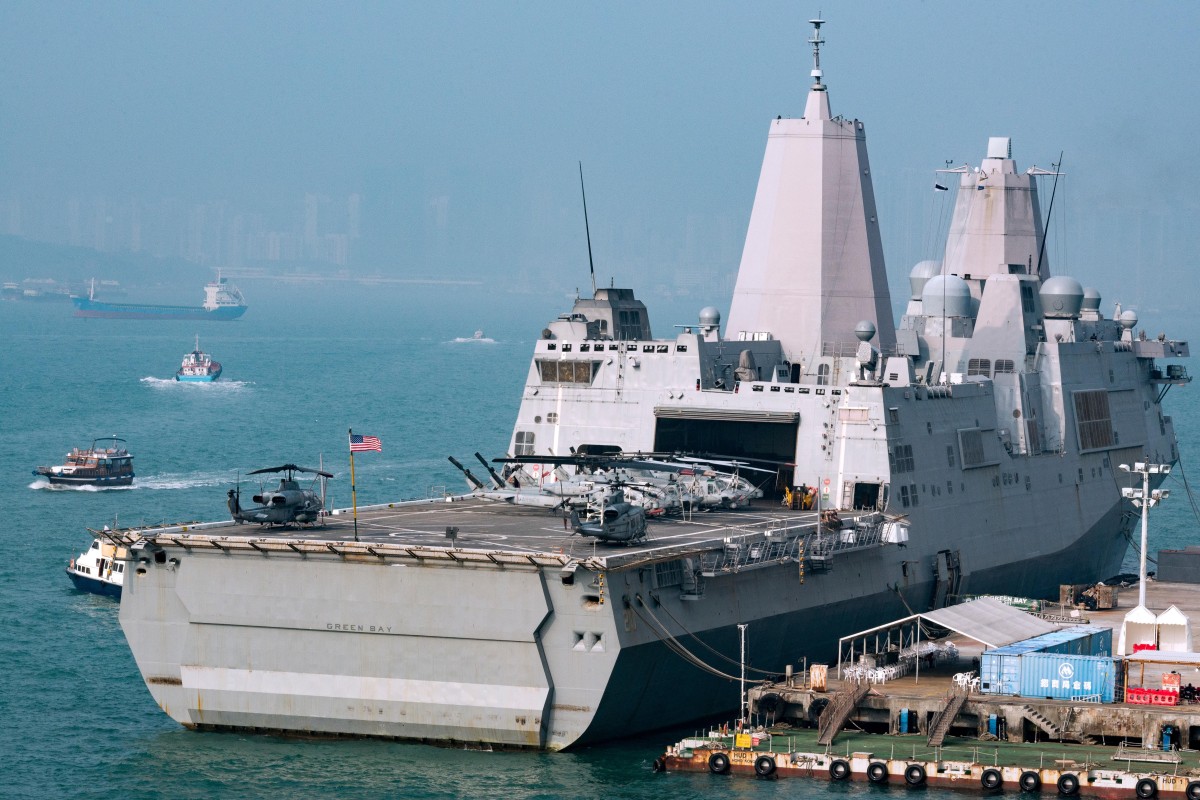
The US has had port visits denied by Chinese authorities twice this month. Photo: Alamy
A US Navy warship was denied a port visit to the eastern Chinese city of Qingdao on Sunday, the US Indo-Pacific Command said on Wednesday.
The request denial comes at a time of heightened tensions between China and the United States, with the countries engaged in a prolonged trade dispute and a war of words over anti-government protests in Hong Kong.
“The PRC [People’s Republic of China] denied the US Navy’s request to visit the Qingdao Port,” Commander Reann Mommsen, public affairs officer for the US Seventh Fleet, said in a statement on Wednesday.
Mommsen declined to name the warship denied entry or when the request was refused, referring questions about the reasons to Beijing.
The blocked visit was first reported by Reuters, which cited an anonymous US defence official as saying that China had denied the request for the destroyer before the intended visit on Sunday.
It is the second time in a month that China has prevented US Navy vessels making a port call.
On August 13, the United States Pacific Fleet said China had denied requests for two US Navy ships to visit Hong Kong.
The USS Green Bay, an amphibious dock landing ship, had been due to make a port call in Hong Kong on August 17, and the guided missile cruiser USS Lake Erie was scheduled to visit next month, according to Nate Christensen, deputy spokesman for the Pacific Fleet.
A source close to the Chinese navy confirmed the Qingdao rejection, saying it was “normal practice” based on the current China-US relationship.
“Hasn’t the [US’] application to visit Hong Kong just been rejected?” the source asked.
Hong Kong has seen 12 weeks of anti-government protests, triggered by a now-shelved
that would have allowed criminal suspects to be transferred to mainland China.
Beijing has increasingly suggested
the protests are being funded by the West, a claim the US has called “ludicrous”
.
Zhou Chenming, a Beijing-based military expert, said the refusal was a natural result of the worsening bilateral ties between China and the US.
“Many bilateral exchanges are bound to deteriorate when countries’ ties worsen, such as during the China-US trade war. And now coupled with the Hong Kong unrest, many exchanges [between China and the US] have been downgraded,” Zhou said.
Liu Weidong, from the Chinese Academy of Social Sciences, echoed Zhou’s view and said a visit from the US warship would be meaningless at present.
“Now the US is very provocative … so China doesn’t want to welcome its warship,” Liu said.
Doubt has been cast on whether trade talks between the two countries are set to resume, with Beijing’s foreign ministry contradicting US President Donald Trump’s claim that China had sought a return to the negotiating table.
The countries had been due to speak on Tuesday, according to a previous statement from China’s Ministry of Commerce after their last telephone call on August 13. But there has been no announcement so far from either side on whether such a conversation took place.
Last week, China said it would levy retaliatory tariffs of 5 to 10 per cent on US$75 billion worth of US goods. The Trump administration responded by announcing a tariff increase from 25 to 30 per cent on US$250 billion of Chinese goods, and from 10 to 15 per cent on US$300 billion worth of Chinese products.
The US also designated Beijing as a currency manipulator, raising fears of an economic cold war between the two countries.
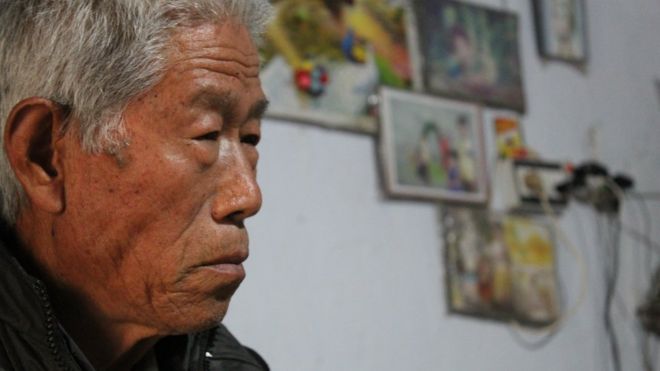
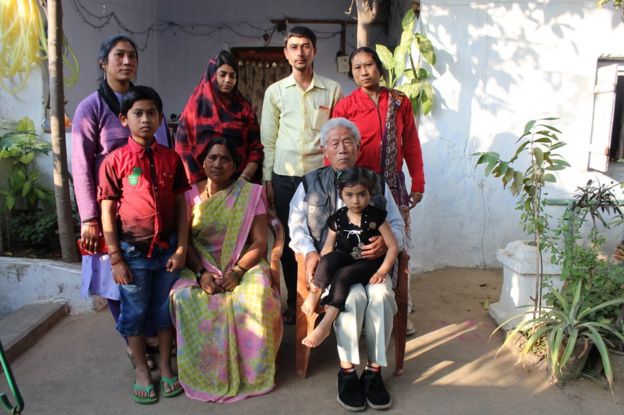
Image caption Wang Qi has been waiting for months to see his family in India
In 1963, a former Chinese army surveyor crossed into India and was captured weeks after a war between the two countries. Wang Qi was then left in a central Indian town for more than five decades before he was allowed to travel back home to China in 2017.
The BBC reported his story at the time and videos of the emotional family reunion in China were watched by millions.
But now, more than 30 months later, his story has taken an unexpected turn – Mr Wang is stuck in China and unable to return to India.
He has been waiting for more than four months for officials to renew his Indian visa so that he can travel back to India where his children and grandchildren live.
“Why are they doing this? I’ve been fighting for such a long time. How much longer can I fight?” Mr Wang told me over the phone from his home city of Xianyang.
The BBC has emailed the Indian embassy in Beijing and is yet to receive a response.
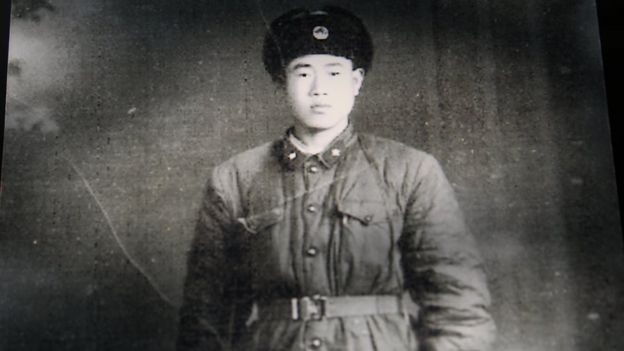
Born to a farmer family in Shaanxi with four brothers and two sisters, he studied surveying and joined China’s People’s Liberation Army in 1960.
Mr Wang says he was “tasked with building roads for the Chinese army” and was captured when he “strayed erroneously” into Indian territory in January 1963.
Image caption He joined China’s People’s Liberation Army in 1960
“I had gone out of my camp for a stroll but lost my way. I was tired and hungry. I saw a Red Cross vehicle and asked them to help me. They handed me over to the Indian army,” he said.
After he was captured, he spent the next seven years in multiple prisons before he was released by a court order in 1969.
Police took him to Tirodi, a far-flung village in the central state of Madhya Pradesh, where he ended up living for most of his life.
Instead he worked at a flour mill, eventually marrying a local woman and raising a family with her. Neighbours said they lived in “utter poverty”.
It was never clear whether Mr Wang was actually a prisoner of war. But he was denied official Indian documents or citizenship, and he was also denied permission to return to China. Officials told the BBC in 2017 that there were “deficiencies” and a “lack of interest” in the case over the years.
A Chinese passport holder, Mr Wang was reunited with his family in China in 2017. After the BBC reported his story, he received a one-year multiple entry Indian visa.
Media caption Wang Qi did not see his family in China for decades
He kept coming back to India to meet his wife, children and grandchildren who continued to live here.
When Mr Wang first arrived in China, he received a rapturous welcome. Crowds met him with banners reading, “Welcome home, soldier, it’s been a rough journey”.
But according to Mr Wang’s son, Vishnu, his father’s request to local officials to clear his salary for the period of his stay in India, remains unanswered.
Vishnu also adds that it’s unclear if his father still has any claim to ancestral property in China after being away for so many years.
“He was ecstatic to have met his family after decades. He didn’t want anything else.”
In 2017, Mr Wang rushed back to India to take care of his wife, who was hospitalised due to “liver complications”.
“Getting funds for the expensive treatment was very difficult. We tried everywhere, begged for money but didn’t receive any response,” Vishnu says.
She died within a fortnight.
Image caption Mr Wang married an Indian woman and raised a family with her
“My father’s visa was renewed in 2018. He applied again in April 2019 but he is still waiting,” Vishnu adds.
Xianyang and Beijing, where the Indian embassy is located, are more than 1,000 kilometres (621 miles) apart – and travelling between the two cities isn’t easy for Mr Wang, who is nearly 80 years old, Vishnu says.
“My father is fed up. He doesn’t understand why this is taking so long.”
The Chief Economic Adviser, K Subramanian, disagreed with the idea of industry-specific incentives and argued for structural reforms in land and labour markets. Members of Prime Minister Narendra Modi’s economic advisory council sound inchoate, resorting to social media and opinion editorials to counter one another.
In essence, the quibble among the members of the economic team of Mr Modi and his government is not about whether India is facing an economic slowdown or not, but about how grave the current economic crisis is.
To put all this in context, it was less than just two years ago, in November 2017, that the global ratings agency Moody’s upgraded India’s sovereign ratings – an independent assessment of the creditworthiness of a country – for the first time in 14 years.
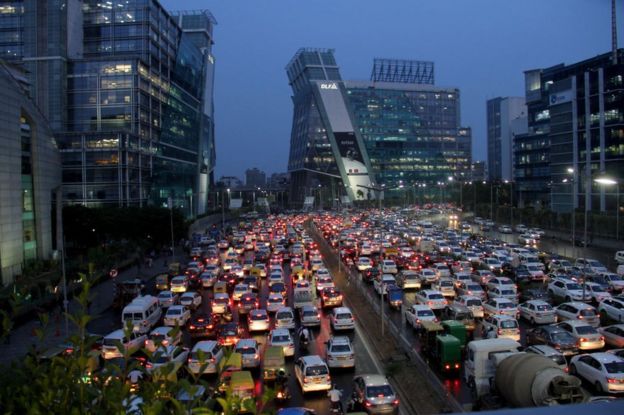
Image copyrightGETTY IMAGESImage captionSales of cars and SUVs have slumped to a seven-year low
Justifying the upgrade, Moody’s had then argued that the economy was undergoing dramatic “structural” reforms under Mr Modi.
In the two years since, Moody’s has downgraded its 2019 GDP growth forecast for India thrice – from 7.5% to 7.4% to 6.8% to 6.2%.
The immediate questions that arise now are: is India’s economic condition really that grim and, if yes, how did it deteriorate so rapidly?
To make matters worse, Finance Minister Nirmala Sitharaman presented her first budget recently with some ominous tax proposals that threatened foreign capital flows and dented investor confidence. It sparked criticism and Ms Sitharaman was forced to roll back many of her proposals.
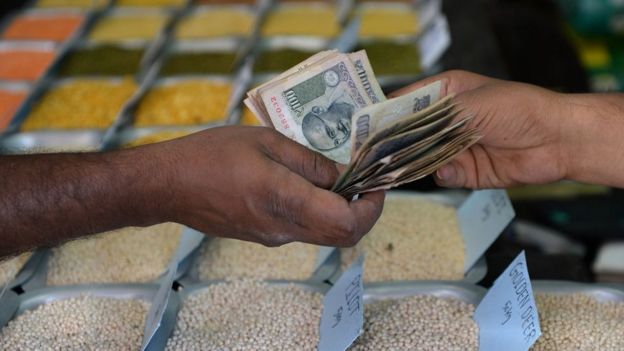
Image copyright GETTY IMAGESImage caption In 2016, India withdrew 85% of all currency notes from the economy
So, it is indeed true that India is facing a sharp economic downturn and severe loss of business confidence.
The alarm over the economic condition is not merely a reflection of a slowdown in GDP growth but also the poor quality of growth.
Private sector investment, the mainstay of sustainable growth in any economy, is at a 15-year low.
In other words, there is almost no investment in new projects by the private sector. The situation is so bad that many Indian industrialists have complained loudly about the state of the economy, the distrust of the government towards businesses and harassment by tax authorities.
But India’s economic slowdown is neither sudden nor a surprise.
Behind the fawning headlines in the press over the past five years about the robustness of India’s growth was a vulnerable economy, straddled with massive bad loans in the financial sector, disguised further by a macroeconomic bonanza from low global oil prices.
India’s largest import is oil and the fortuitous decline in oil prices between 2014 and 2016 added a full percentage point to headline GDP growth, masking the real problems. Confusing luck with skill, the government was callous about fixing the choked financial system.
Media caption What is really happening with India’s economy?
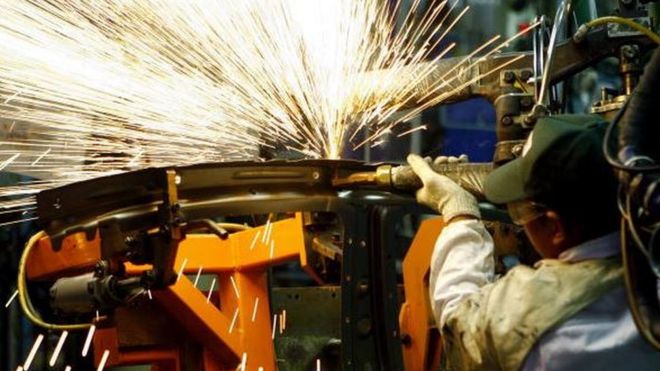
This move destroyed supply chains and impacted agriculture, construction and manufacturing that together account for three-quarters of all employment in the country.
Before the economy could recover from the currency ban shock, the government enacted a transition to a new indirect taxation system of the Goods and Services Tax (GST) in 2017. The GST rollout wasn’t smooth and many small businesses initially struggled to understand it.
Such massive external shocks to the economy, coupled with a reversal in low oil prices, dealt the final blow to the economy. Millions of Indians started to lose their jobs and rural wages remained stagnant. This, in turn, impacted consumption, slowing down the economy sharply.
Not easy
The wobbly state of the economy has also thrown government finances in disarray: tax revenues are much below expectations.
On Monday, the government got a much-needed breather when India’s central bank announced a $24bn (£19bn) one-time payout for the cash-starved government. (This amount is more than the dividend paid by the central bank to the government in all five years of the Congress rule between 2009 and 2014.)
The solutions to the economic crisis are not easy.
Indian industry, fed and fattened with government protection through decades, is once again clamouring for tax cuts and financial incentives.
But it is not clear that such benefits will revive private sector investment and domestic consumption immediately.
For all the hype about the Make in India programme, hailed as the harbinger of the country’s emergence as a manufacturing power, India’s dependence on China for goods has only doubled in the past five years.
India today imports from China the equivalent of 6,000 rupees ($83; £68) worth of goods for every Indian, which has doubled from 3,000 rupees in 2014.
So, India is neither making goods for itself nor for the world.
Image copyright AFPImage caption India’s agrarian crisis is a major stumbling block
Ornamental tax and other fiscal incentives to specific industries are not suddenly going to make Indian manufacturers competitive and stop India’s addiction for affordable Chinese goods. If any, the trade spat between China and the United States only saw countries such as Vietnam and Bangladesh benefit and not India.
More currency or trade tariffs are not the solutions either. The central bank has lowered interest rates and there is some push to lowering the cost of capital for industry. But again, Indian industry will invest more only when demand for goods and services increases. And demand will increase only when wages increase, or there is money in the hands of people.
So, the only immediate solution for India seems to be to boost consumption through a stimulus given directly to people, in the classical Keynesian mould.
Of course, such a stimulus should be combined with reforms to boost business morale and confidence.
In sum, India’s economic picture is not pretty.
It is important for India’s political leadership to see this not-so-pretty picture and not hide behind rose tinted glasses. Prime Minister Modi has a unique electoral mandate to embark on bold moves to truly transform the economy and pull India out of the woods.
A recent joint exercise in Tajikistan is the latest example of Beijing’s growing security and economic interests in the former Soviet republic
Analysts say Moscow may not be happy about China’s growing reach in the lawless, mountainous area and will be keeping an eye on the situation
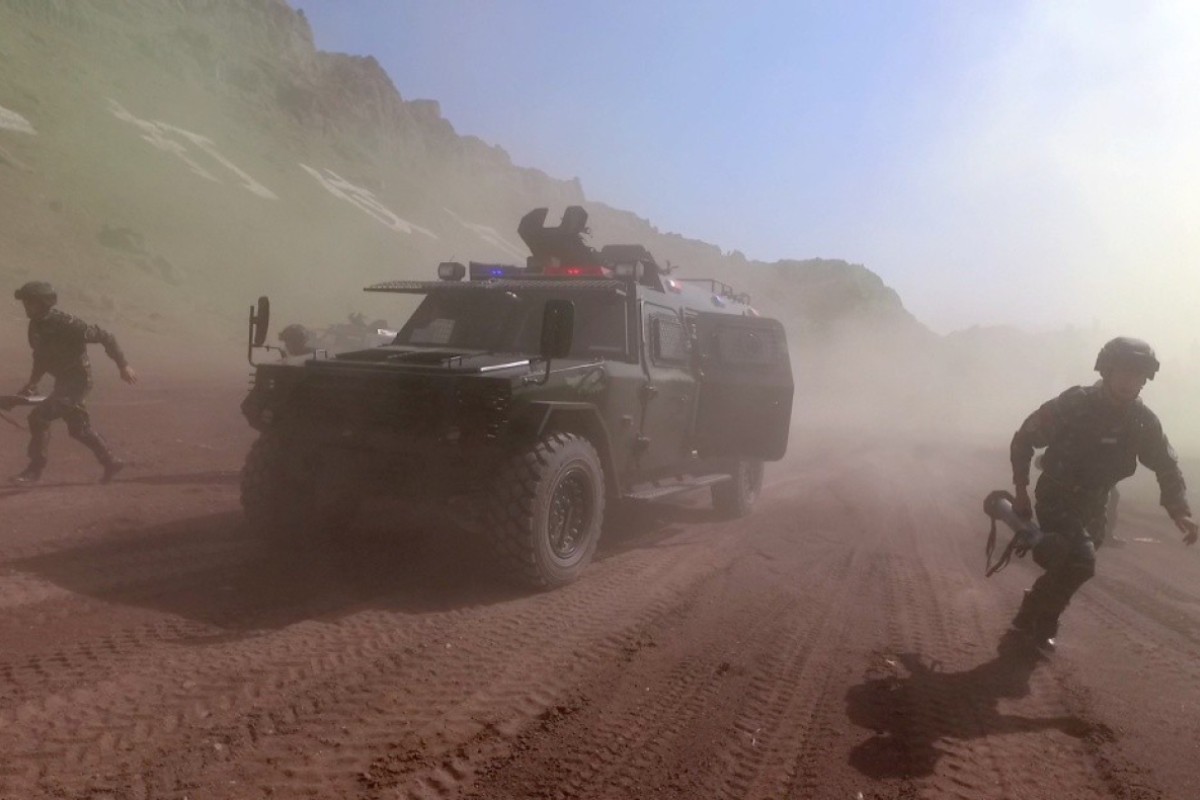
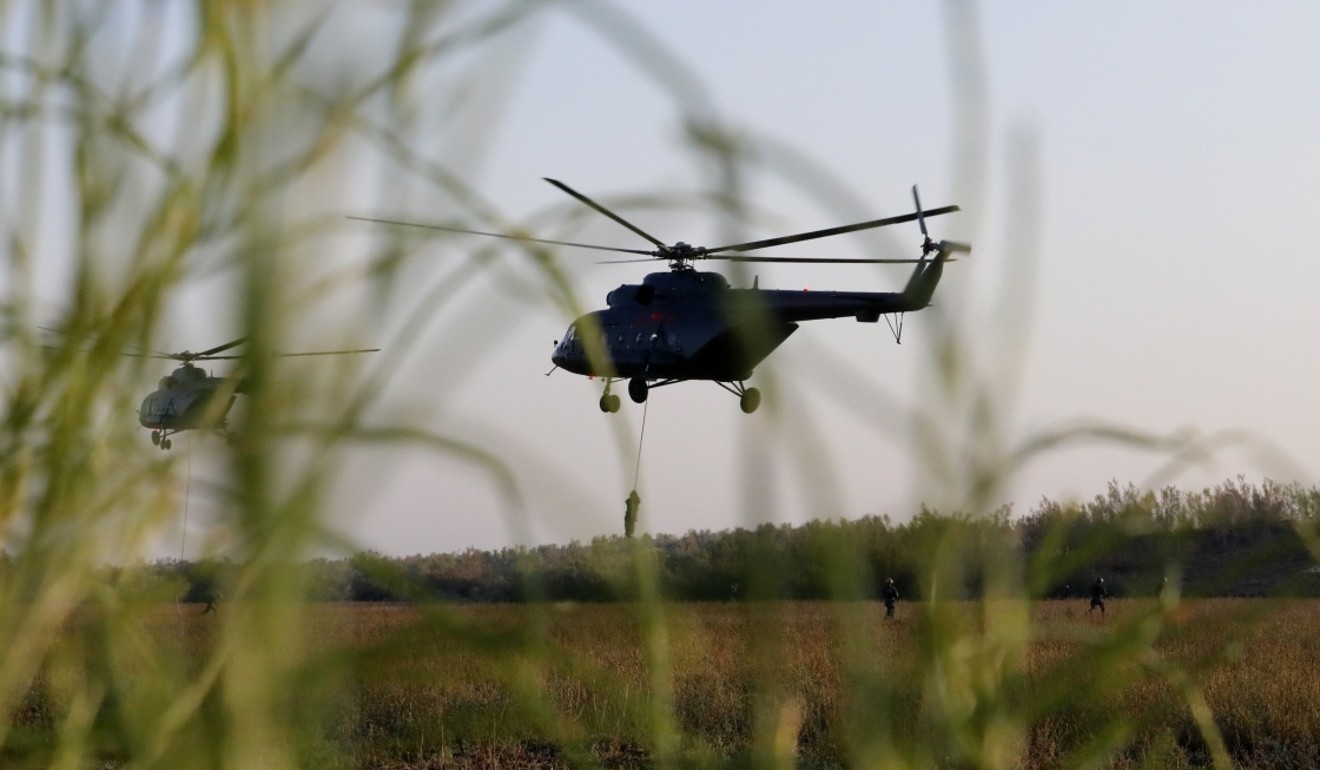
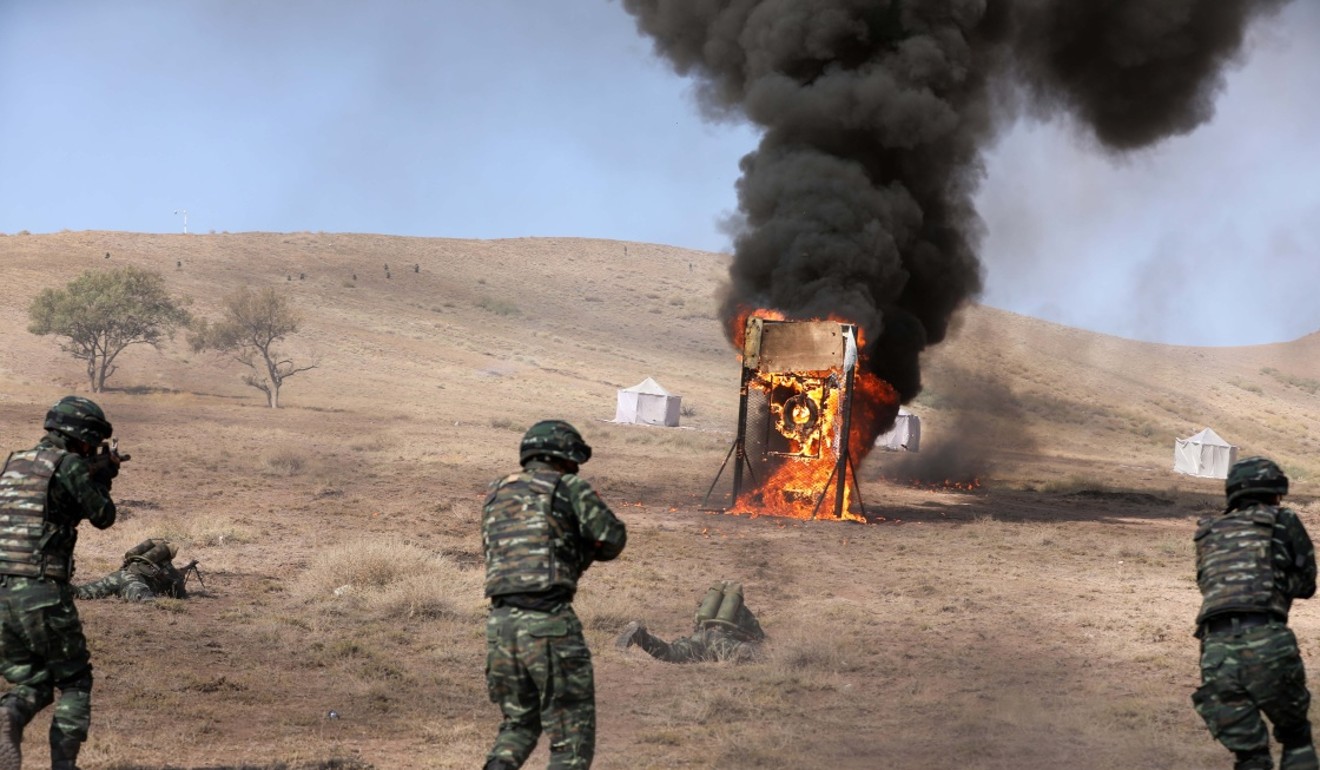
Chinese and Tajik troops completed a joint exercise earlier this month in the mountainous region of Gorno-Badakhshan. Photo: Xinhua
China is increasing its military and economic presence in parts of central Asia that Russia has traditionally considered its sphere of influence – a development some analysts believe could cause concern in Moscow.
While Russia’s influence remains strong in many former Soviet republics, China is steadily building up its military and economic influence in Tajikistan, particularly in the remote, mountainous areas on its western borders where central government authority is weak.
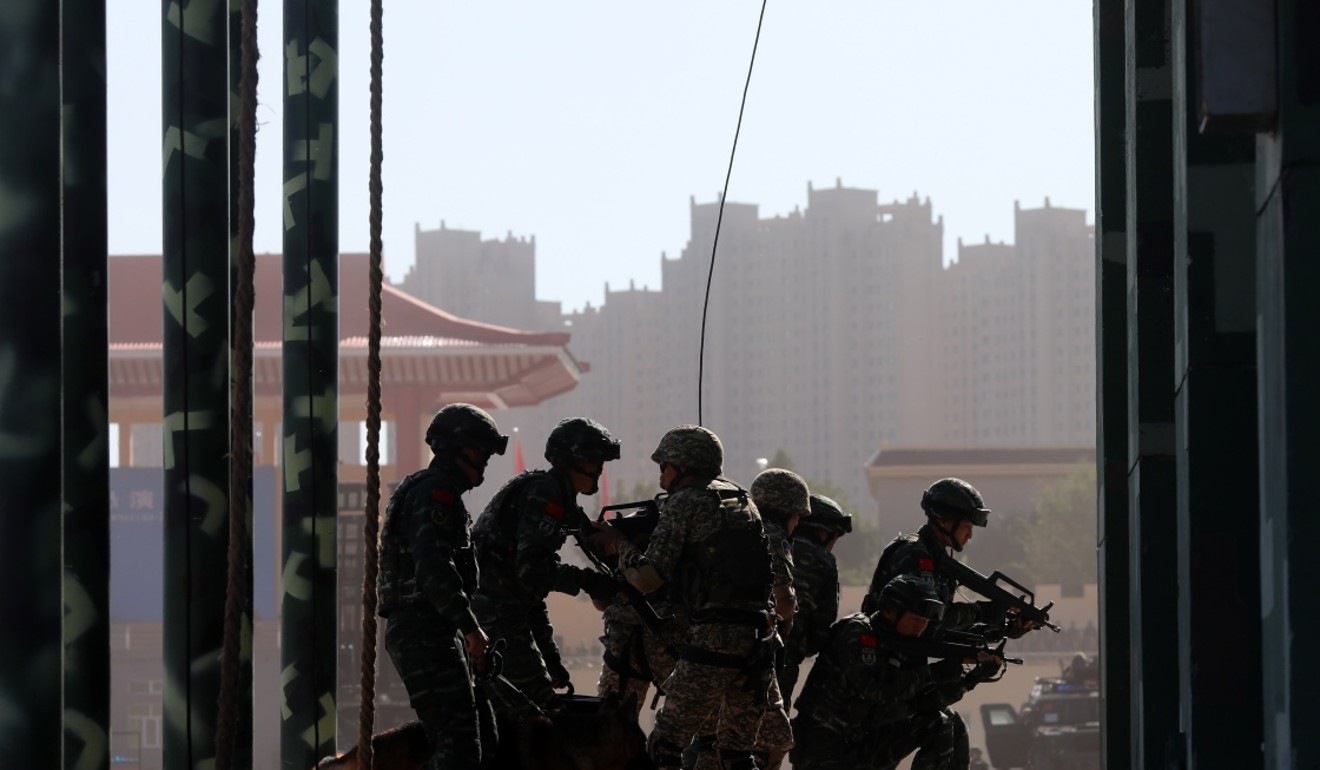
Chinese troops recently concluded a joint drill in eastern Tajikistan involving 1,200 troops from both countries.
The eight-day exercise that finished on August 13 was conducted in the autonomous Gorno-Badakhshan autonomous region, a sparsely populated territory in the high Pamir mountains, which borders China’s Xinjiang region and Afghanistan.
China has been increasing its security presence in the strategically sensitive region. Photo: Xinhua
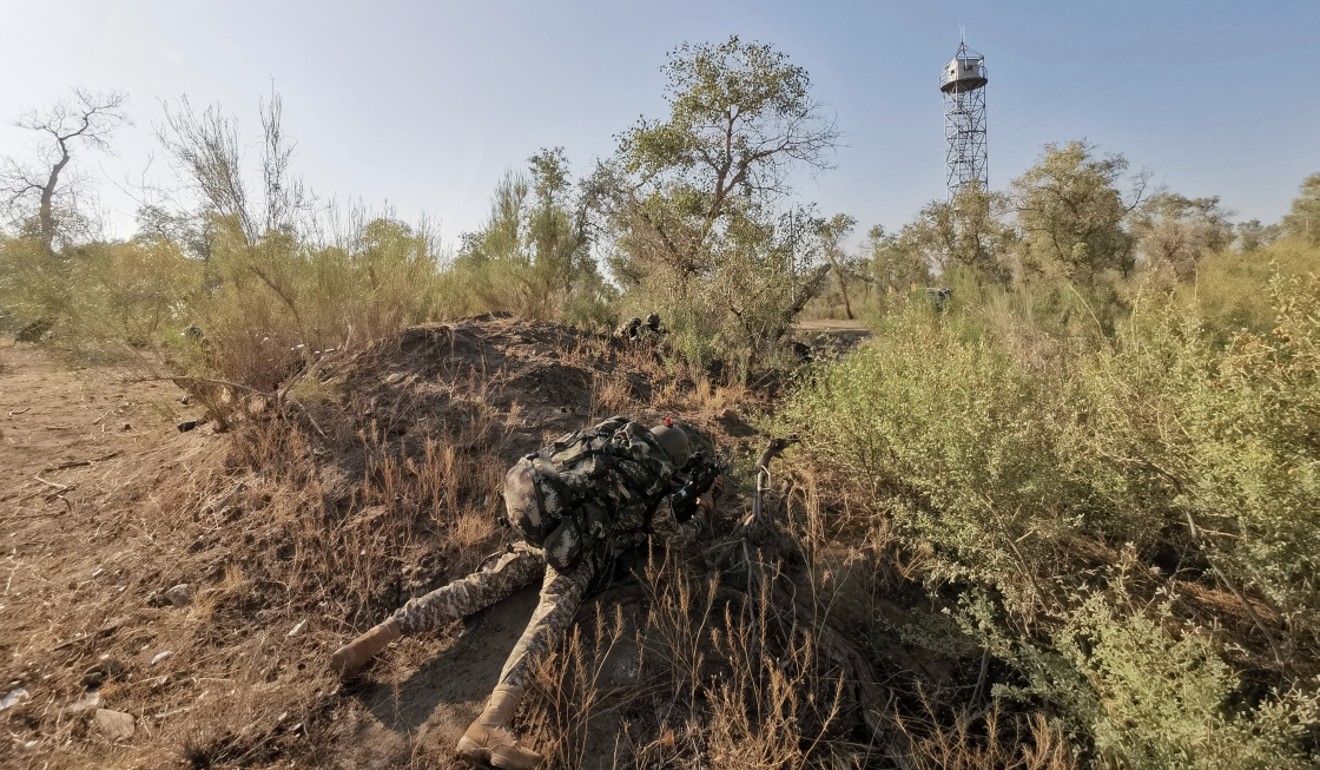
Although this year’s exercise involved fewer troops than the 10,000 involved in a previous drill three years ago, it tested the use of advanced aerial vehicles and ground reconnaissance technology to monitor the area.
The landlocked country is strategically important for China, which is worried that the porous borders will serve as an entry point for drugs and Islamic militants into Xinjiang, where its deradicalisation strategy has led to the detention of a million Muslim minorities in reeducation camps.
It also sits along the trade routes China hopes to develop under the Belt and Road Initiative – Beijing’s flagship plan to expand its global influence through infrastructure, trade and investment – but the area has long been plagued by lawlessness and outbreaks of violence.
The recent exercise tested aerial surveillance techniques. Photo: Xinhua
Artyom Lukin, a professor of international politics at Far Eastern Federal University in Vladivostok, said Russia was not happy about the deployment of Chinese forces in Tajikistan.
“Russia has traditionally considered Central Asia, including Tajikistan, as its sphere of political-military influence,” he said.
Observers said other Central Asian republics – such as Kazakhstan, Uzbekistan and Kyrgyzstan – are likely to stay within Moscow’s orbit, but China is steadily building closer security ties with Tajikistan.
In February, China’s defence ministry denied that it was building a base and stationing troops in the country, but defended its closer military cooperation with Tajikistan.
The recent training exercise was conducted in an area Russia has long seen as part of its sphere of influence. Photo: Xinhua
China has long-standing security interests in the country and in 2016 it agreed to finance 11 border outposts and a training centre for guards along the Afghan border.
This was part of a deal Beijing made through the Quadrilateral Cooperation and Coordination Mechanism – which also involves Pakistan, Afghanistan and Tajikistan – to strengthen cooperation in combating terrorism and improving security.
China has also overtaken Russia economically, becoming the largest foreign investor in Tajikistan in 2016, accounting for 30 per cent of Tajikistan’s total direct accumulated investments, state news agency Xinhua reported.
Banned Muslim political party blamed for deadly attack on tourists in Tajikistan
China’s direct investment in Tajikistan was worth US$95 million in 2017, according to the latest available figures. China has also grown to become the country’s third largest trading partner with bilateral trade reaching around US$1.5 billion in 2018.
A recent opinion piece published by the Russian state-owned news agency Sputnik suggested China may be “getting carried away” by its investments in the region.
The article suggested that China’s growing presence in the country could lead to a “partial loss” of Tajikistan’s sovereignty and argued that Beijing may want to take control of the border with Afghanistan.
China also has economic interests to protect. Photo: Xinhua
But Lukin said even though this growing involvement may be an irritant for Russia, the strategic partnership between China and Russia will remain strong.
The two countries remain the key players in the Shanghai Cooperation Organisation, an economic and security alliance that includes the Central Asian republics and India and Pakistan.
Why Chinese investors are struggling to gain a foothold in Tajikistan
Lukin said: “Moscow no doubt understands that in terms of security, Tajikistan’s border, adjacent to China’s Xinjiang and Afghanistan, is truly a vital concern for Beijing.
“The presence of Chinese troops could actually benefit Russia, because it will be China bearing the costs of policing Tajikistan’s mountainous border areas.”
Stephen Blank, a former professor at the US Army War College and a specialist in Eurasian security, said that while Russia has mostly stayed silent about China’s presence in Tajikistan, it was closely watching the situation.
“What happens in the long run depends on how far China goes to extend its military presence in Central Asia. And if it keeps extending, it may well provoke some expression of concern in Russia beyond the silence that has hitherto been the case,” Blank said.
Chinese troops could play an increasing role in policing the area in future. Photo: Xinhua
“[The recent drills] look like conventional war-fighting exercises as much as anti-terrorist operations and suggest that China may have bigger contingencies than anti-terrorism in mind.”
Mathieu Duchatel, director of the Asia programme at the Institut Montaigne, a French think tank, said both Russia and China share similar concerns about terrorism and drug trafficking in Central Asia.
He said Russia had not objected to the security pact with Pakistan, Afghanistan and Tajikistan because there are more important strategic priorities in China-Russia relations.
“Overall, Russia’s acceptance of a security role for China in Central Asia shows how Russia realistically adjusts to the changing balance of power with China, and is able to avoid a zero-sum game on issues where parallel efforts by China and Russia can serve Russian security interests,” he said.
HANOI (Reuters) – A Chinese survey vessel on Saturday extended its activities to an area closer to Vietnam’s coastline, ship tracking data showed, after the United States and Australia expressed concern about China’s actions in the disputed waterways.
The Haiyang Dizhi 8 vessel first entered Vietnam’s exclusive economic zone (EEZ) early last month where it began a weeks-long seismic survey, triggering a tense standoff between military and coastguard vessels from Vietnam and China.
The Chinese vessel continued to survey Vietnam’s EEZ on Saturday under escort from at least four ships and was around 102 kilometres (63 miles) southeast of Vietnam’s Phu Quy island and 185 kilometres (115 miles) from the beaches of the southern city of Phan Thiet, according to data from Marine Traffic, a website that tracks vessel movements.
The Chinese vessel group was followed by at least two Vietnamese naval vessels, according to the data.
Vietnam’s foreign ministry did not immediately respond to a request from Reuters for comment.
A country’s EEZ typically extends up to 200 nautical miles (370 kilometres or 230 miles) from its coastline, according to an international UN treaty. That country has sovereign rights to exploit any natural resources within that area, according to the agreement.
Vietnam and China have for years been embroiled in a dispute over the potentially energy-rich stretch of waters and a busy shipping lane in the South China Sea.
China’s unilaterally declared “nine-dash line” marks a vast, U-shaped, expanse of the South China Sea that it claims, including large swathes of Vietnam’s continental shelf where it has awarded oil concessions.
On Friday, Vietnamese Prime Minister Nguyen Xuan Phuc and his Australian counterpart expressed their concern about China’s activities in the South China Sea, known in Vietnam as the East Sea.
Earlier in the week, the United States said it was deeply concerned about China’s interference in oil and gas activities in waters claimed by Vietnam, and that the deployment of the vessels was “an escalation by Beijing in its efforts to intimidate other claimants out of developing resources in the South China Sea”
Chinese Foreign Ministry spokesman Geng Shuang, in response to the U.S. statement, said Washington was “sowing division and had ulterior motives”.
“The aim is to bring chaos to the situation in the South China Sea and damage regional peace and stability. China is resolutely opposed to this,” Geng told a daily news briefing on Friday.
Chinese State Councilor and Foreign Minister Wang Yi meets with Japanese Foreign Minister Taro Kono, who is here to attend the upcoming ninth meeting of foreign ministers of China, Japan and the Republic of Korea (ROK), in Beijing, capital of China, Aug. 20, 2019. (Xinhua/Zhang Ling)
BEIJING, Aug. 20 (Xinhua) — Chinese State Councilor and Foreign Minister Wang Yi met here Tuesday with Japanese Foreign Minister Taro Kono, who was here to attend the upcoming ninth meeting of foreign ministers of China, Japan and the Republic of Korea (ROK).
Wang said recently China and Japan saw the improvement of ties and the achievement should be cherished as it did not come easily. He called closer communication between the two sides to create necessary conditions and a good atmosphere for high-level political exchanges in the next stage.
Wang said the two sides should strengthen cooperation in the multilateral arena and jointly oppose all forms of protectionism and unilateralism.
He clarified China’s principles and positions on sensitive issues between China and Japan, stressing that both sides should strengthen risk prevention and control, and handle differences in a constructive manner.
Kono said that Japan is willing to work closely with China to ensure positive results of high-level political exchanges in the next stage.
Wang also clarified China’s opposition to the U.S. attempt to deploy land-based intermediate-range missiles in the region. Kono reiterated that Japan will continue to adhere to the “purely defensive defense” strategy.
The meeting of the three countries’ foreign ministers is scheduled for Wednesday.
LONDON (Reuters) – Crude oil prices rose on Monday following a weekend attack on a Saudi oil facility by Yemeni separatists and as traders looked for signs that U.S.-China trade tensions could ease.
Price gains were, however, capped to some degree by an unusually downbeat OPEC report that stoked concerns about growth in oil demand.
Brent crude LCOc1, the international benchmark for oil prices, was up 65 cents, or about 1.1%, at $59.29 a barrel at 1024 GMT,
U.S. West Texas Intermediate (WTI) crude futures CLc1 were up 61 cents, or 1.1%, at $55.48 a barrel.
A drone attack by Yemen’s Houthi group on an oilfield in eastern Saudi Arabia on Saturday caused a fire at a gas plant, adding to Middle East tensions, but state-run Saudi Aramco said oil production was not affected.
“The oil market seems to be pricing in again a geopolitical risk premium following the weekend drone attacks on Saudi Arabia, but the premium might not sustain if it does not result in any supply disruptions,” said Giovanni Staunovo, oil analyst for UBS.
Tensions around Iran appeared to ease after Gibraltar released an Iranian tanker it seized in July though Tehran warned the United States against any new attempt to seize the tanker in open seas.
Concerns about a recession also limited crude price gains, as traders looked for signs of progress in U.S.-China trade talks.
Meanwhile, China’s announcement of key interest rate reforms over the weekend has fueled expectations of an imminent reduction in corporate borrowing costs in the struggling economy, boosting share prices on Monday.
U.S. energy firms this week increased the number of oil rigs operating for the first time in seven weeks despite plans by most producers to cut spending on new drilling this year.
“WTI in recent weeks has performed relatively better than Brent… Pipeline start ups in the United States have been supportive for WTI, while the ongoing trade war has had more of an impact on Brent,” said Warren Patterson, head of commodities strategy at Dutch bank ING.
The Organization of the Petroleum Exporting Countries (OPEC) cut its forecast for global oil demand growth in 2019 by 40,000 barrels per day (bpd) to 1.10 million bpd and indicated the market would be in slight surplus in 2020.
It is rare for OPEC to give a bearish forward view on the market outlook.
“Such a bearish prognosis will heap more pressure on OPEC to take further measures to support the market,” said Stephen Brennock of oil broker PVM.






 CHINDIA ALERT: You'll be living in their world, very soon